
 Combined association between physical activity and sedentary behavior on the cardiometabolic risk score in students
Objective: This study aimed to verify the combined association of moderate-to-vigorous physical activity (MVPA) with sedentary behavior (SB) on the cardiometabolic risk factors (CMR) of adolescents.
Methods: A cross-sectional study was performed in Londrina/Paraná/Brazil between October 2015 and May 2017 with a representative sample of adolescents of both sexes from the sixth year of primary public schools. The participants consisted of 367 adolescents, with a mean age of 11.8±0.6 years. For the cardiometabolic risk score, the following measures were used: waist circumference (WC), systolic and diastolic blood pressure, and cardiorespiratory fitness (CRF). MVPA and SB were measured through accelerometry. Multiple linear regression controlled for chronological age was used, adopting p<0.05.
Results: For boys, the “High MVPA/Low SB” group compared to the “Low MVPA/High SB” group had significantly lower WC and CMR z-score. For CRF, the “High MVPA/Low SB” group presented better values when compared to “Low MVPA/Low SB” and “Low MVPA/High SB” groups. Adjusted analyses by chronological age show positive association between “High MVPA/Low SB” and “Low MVPA/High SB”, demonstrating that the “High MVPA/Low SB” group has lower WC and lower CMR. Negative association in CRF was also observed between “High MVPA/Low SB” and both “Low MVPA” groups, regardless of SB.
Conclusions: Being physically active is associated with lower cardiometabolic risk score regardless of SB, especially in boys. The current study suggests that adolescents should be encouraged to increase physical activity and reach MVPA recommendations.
Keywords:
Motor activity; Healthy lifestyle; Adolescent; Cardiometabolic risk factors
 Thumbnail
 Thumbnail

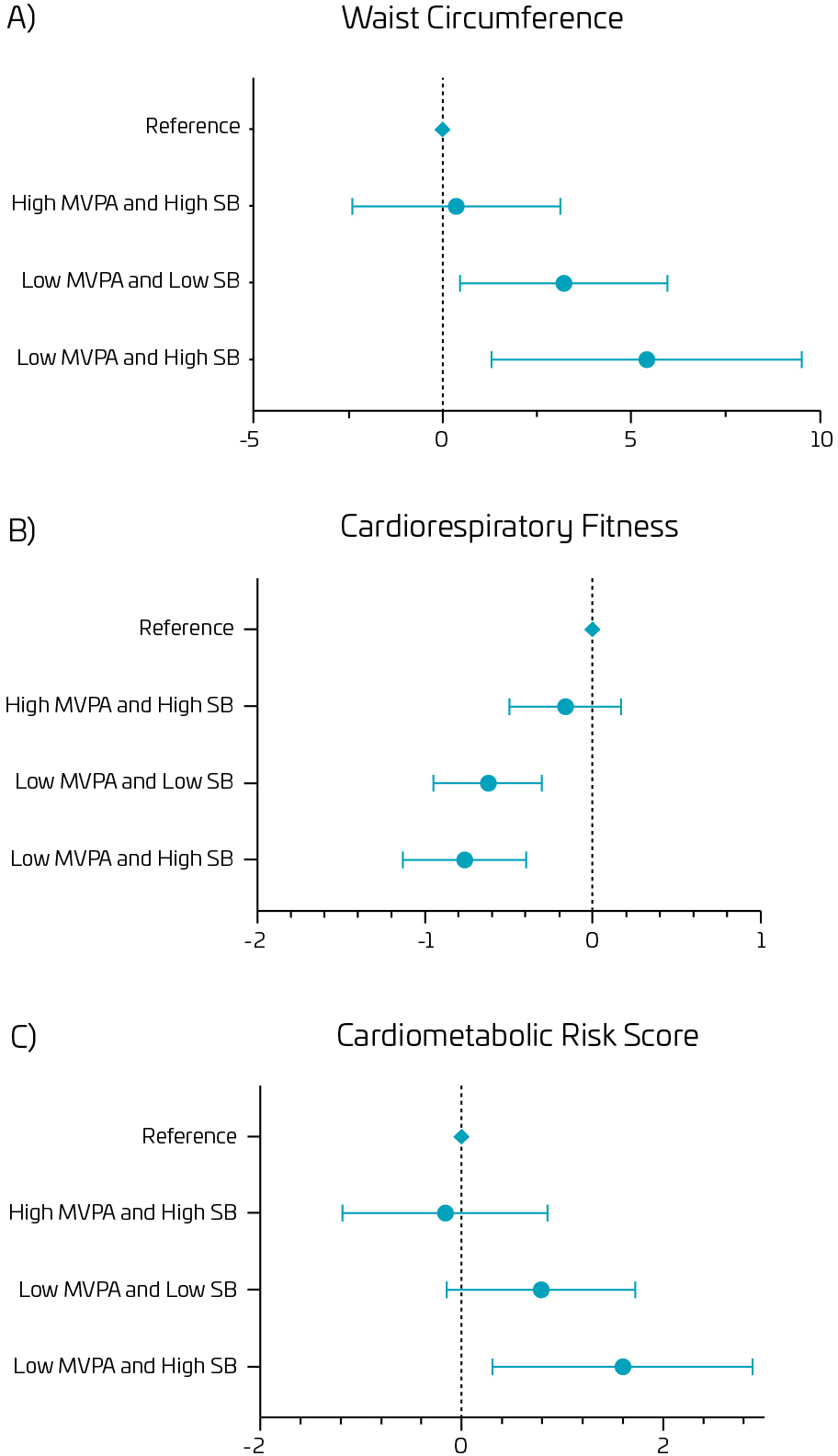 MVPA: moderate/vigorous physical activity; SB: sedentary behavior. High moderate/vigorous physical activity and low sedentary behavior; models adjusted by chronological age and peak height velocity.