
 Food intake of older adults living alone: Brazilian National Dietary Survey
ABSTRACT
Objective The present study compared the food intake of Brazilian older adults living alone with older adults living with other people.
Methods A cross-sectional study with older adults, aged 60 years or older, that had participated in the Brazilian National Dietary Survey conducted in 2017-2018, a representative sample of the Brazilian population (N=8,336). Living alone was defined as living in one-person households. Food intake was evaluated using a 24-hour food recall, and the frequencies and confidence intervals of 95% (95% CI) of the intake of food groups and Prevalence Ratio (PR) - according to housing condition - were estimated for the total population and sex-stratified.
Results The frequency of older adults living alone was 15.8%, and higher among women compared to men (17.4% vs. 13.9%). In the sex-stratified analysis, men and women living alone had lower frequency of coffee intake (PR=0.89 and 0.93), solid fats (PR=0.77 and 0.75) and leafy vegetables (PR=0.68 and 0.74). Men also had lower intake of non-leafy vegetables (PR=0.57), poultry and poultry dishes (PR=0.77) and whole grains (PR=0.47), and higher intake of pasta (PR=1.32) while women had lower intake of fruit juice (PR=0.75) and sauces (PR=0.38) compared to those who lived with other people.
Conclusion Older adults who lived alone consumed less foods considered traditional for the Brazilian population, with distinct characteristics according to sex. Importantly, the condition of living alone should be considered when planning actions to support healthy aging.
Keywords:
Aged; Eating; Family characteristics; Surveys and Questionnaires
RESUMO
Objetivo O presente estudo comparou o consumo alimentar de idosos brasileiros que moram sozinhos com idosos que moram acompanhados.
Métodos Estudo transversal com idosos, com 60 anos ou mais, participantes do Inquérito Nacional de Alimentação realizado em 2017-2018, com amostra representativa da população brasileira (N=8.336). Morar sozinho foi definido como viver em domicílios unipessoais. O consumo alimentar foi avaliado por meio de recordatório alimentar de 24 horas, sendo estimadas as frequências e intervalos de confiança de 95% (IC 95%) do consumo dos grupos de alimentos e Razões de Prevalência (RP) - segundo condição de moradia - para a população total e estratificado por sexo.
Resultados A frequência de idosos morando sozinhos foi de 15,8%, sendo maior entre as mulheres comparadas aos homens (17,4% vs. 13,9%). Na análise estratificada por sexo, homens e mulheres que moravam sozinhos apresentaram menor frequência de consumo de café (RP=0,89 e 0,93), gorduras sólidas (RP=0,77 e 0,75) e vegetais folhosos (RP=0,68 e 0,74). Os homens também apresentaram menor consumo de vegetais não folhosos (RP=0,57) e de aves e preparações (RP=0,77) e grãos integrais (RP=0,47), e maior consumo de macarrão (RP=1,32), enquanto as mulheres apresentaram menor consumo de suco de frutas (RP=0,75) e molhos (RP=0,38) em comparação aos idosos que moravam com outras pessoas.
Conclusão Os idosos que moravam sozinhos consumiam menos alimentos considerados tradicionais para a população brasileira, com características distintas segundo o sexo. É importante ressaltar que a condição de morar sozinho deve ser considerada no planejamento de ações de apoio ao envelhecimento saudável.
Palavras-chave:
Idoso; Ingestão de alimentos; Composição familiar; Inquéritos e Questionários
INTRODUCTION
The increase in the older adult population worldwide corresponds to the higher growth of this population compared to other age groups [1,2]. Aging is a dynamic and complex process, with body and metabolic, as well as psychosocial and cognitive changes, which may cause health problems, e.g., functional dependence, and reduced quality of life [3-5].
The health profile of the older adults has been characterized by multiple diseases [6], with emphasis on non-communicable chronic diseases and physical and mental disabilities that are typical of aging, thus placing a heavy burden on the health system [7]. In addition, high morbidity and mortality rates are common factors resulting from acute conditions of the presence of non-communicable chronic diseases in older adults; however, with adequate management and treatment, one can avoid the limitation of activities or restrictions of participation and performance in social activities [8,9]. Marucci et al. [10] and Ygnatios et al. [11] argued that older adults become vulnerable from a nutritional point of view, which favors increased morbidity and mortality, as well as greater vulnerability to infections and decreased quality of life.
The World Health Organization (WHO) classifies healthy aging as a process of maintaining functional capacity, allowing well-being in old age [12]. In this sense, through the action plan designed for 2016-2030, WHO’s global strategy prioritizes the structural development of policies that emphasize the need for actions to be taken in various sectors for the sake of healthy aging [12].
One of the actions needed for healthy aging is adequate and healthy eating. However, food intake of older adults may be influenced by physiological factors related to fragility, swallowing disorders, decreased taste and olfactory capacity, and reduced appetite [13], as well as sociodemographic [14] and psychosocial characteristics [15,16].
In this context, household composition and the increasing number of older adults living alone, either by choice or by circumstance, are some of the psychosocial characteristics that affect the nutritional status and food intake of older adults [17-21]. Household composition can be defined, among other concepts, as people living together in the same residence; they may have some degree of kinship or be in a specific household relational situation [22], and living alone can be defined as living in one-person households [21].
Thus, considering the increase in the older adult population in Brazil and the nutritional risks associated with household composition, the objective of this study was to compare the food intake of Brazilian older adults living alone with that of older adults living with other people.
METHODS
This is a cross-sectional study with data from the Brazilian National Dietary Survey (NDS), a module of the 2017-2018 National Household Budget Survey (HBS), developed by the Instituto Brasileiro de Geografia e Estatística (IBGE, Brazilian Institute of Geography and Statistics), with a nationally representative sample of the Brazilian population [23]. The HBS employs a two-stage cluster sampling plan. In the first stage, there was geographic and statistical stratification of the Primary Sampling Units (PSU), which correspond to the sectors or aggregates of sectors of the 2010 Demographic Census. These PSUs were stratified, and the selection was carried out through sampling with probability proportional to the number of households existing in the sector, within each final stratum, forming the master sample. Distribution of PSU selection occurred across the four quarters of the research period, ensuring representation of the geographic and socioeconomic strata in selected households throughout study. In the second stage, permanent private households were the secondary sampling units, selected by simple random sampling without replacement for each chosen PSU [23]. Further elucidation on these methodologies can be found in a previous publication by the IBGE [23]. The NDS sample was obtained through simple random sampling from a subset of households, encompassing all residents aged 10 years or older. In the 2017-2018 NDS, data on food consumption were collected for 46,164 individuals from 20,112 households [23].
In the present study, Brazilian older adults aged 60 years or older were evaluated (N=8,336). They answered the questionnaires applied on the “Characteristics of the household and residents and the module of personal food intake”. Data was collected in private and permanent households, with residents of urban and rural areas, from July 2017 to July 2018. The interviewers collected information in people’s households and interviewed the residents by applying questionnaires using electronic equipment and daily records [23].
The present study analyzed the prevalence of Brazilian older adults living alone, defined by the proportion of individuals living in one-person households [21], considering the answer given to the question “How many people live in this household?”. Housing condition was classified into two categories: older adult who lives alone; older adult who lives with other people.
Data on food intake was collected using Block 7 - Personal Food Intake, by applying 24-hour food recalls (R24h) on two non-consecutive days, chosen throughout the week. In the present study, data from the first R24h was used, considering that the first day of evaluation of food intake tends to present better quality in comparison to subsequent collections [24].
The application of R24h was carried out following a structured script, in sequential stages, based on the multiple-pass method [25], using software specifically developed for this assessment. For each food item, the software requested information on quantity consumed (unit of measurement and quantity), time of intake, place, and the occasion of intake. For specific items, the respondents were asked to provide details about preparation, as it may change the nutritional composition of food [23]. In the present study, the foods reported by the older adults were organized into 36 groups, according to nutritional characteristics and intake frequencies (Chart 1).
The following demographic and socioeconomic characteristics were analyzed: sex (male, female), age group (60-64, 65-69, 70-74, 75 or older), the number of residents per household, and monthly family income per capita (estimated by dividing the total family income (estimated from the sum of monthly monetary and non-monetary income of all family members) by the number of individuals in the family). Income was categorized into four categories, based on multiples of the Brazilian official monthly minimum wage effective on January 2018 (BRL 954.00, corresponding to USD 297.00): <0.5 minimum wages per capita; 0.5 to 1.0 minimum wages per capita; 1.0 to 2.0 minimum wages per capita; and ≥2.0 minimum wages per capita.
The statistical analyses considered sample weights and the effect of study design. The frequencies and 95% confidence intervals (95% CI) for food intake were estimated according to housing condition. Statistically significant differences were considered when there was no overlap of 95% CI values. The Prevalence Ratio (PR) of consumption of each food group and its respective 95% confidence interval (95% CI) were estimated considering the frequency of consumption of the food groups as the dependent variable and the household condition as independent variable, with older adult who lives with other people as the reference. The PR and 95% CI were estimated for the total population and sex-stratified. The analyses were adjusted by age, number of residents per household, and monthly per capita family income. Statistical analyses were performed using software Stata version 16.
The Committee of Ethics in Research at the Institute of Social Medicine, State University of Rio de Janeiro (review number 4.316.087), granted exemption in accordance with Brazilian National Health Council Resolution number 46/2012 and Operational Act number 001/2013. This exemption was based on the de-identification and public availability of the data (https://www.ibge.gov.br).
RESULTS
Of the 8,336 older adults assessed, 55.8% were females, 31.7% were between 60 and 64 years old, and 39.6% had per capita family income from 1 to 2 minimum wages. As for housing condition, 15.8% lived alone, and this condition was more frequent among women compared to men (17.4% vs. 13.9%), among individuals aged 70-74 years (18.3%) and 75 years or older (19.2%) compared to those aged 60-64 years (12.7%), and among those whose per capita family income ranged between 1 and 2 minimum wages per capita (15.9%) and >2 minimum wages per capita (23.3%) compared to those with <0.5 minimum wages per capita (4.8%) and between 0.5 and 1 minimum wages per capita (2.5%) (Table 1).
Figure 1 shows the 20 food groups (out of 36) with the highest frequency of intake. The five most frequently reported groups were common for older adults living alone or with other people: coffee, rice and rice dishes, beans and other legumes, sugar, and bread. Among the 20 food items most frequently eaten, there was a significant difference for five of them, with higher intake frequencies for older adults living with other people compared to those who lived alone: coffee (88.6% vs. 80.5%), beans and other legumes (76.9% vs. 69.5%), bread (54.9% vs. 48.0%), leafy vegetables (38.0% vs. 26.0%), solid fats (38.0% vs. 28.5%) and fruit juices (28.0% vs. 22.4%) (Figure 1). Table 2 shows the complete description of intake frequency for the 36 food groups, for the total population and sex-stratified.
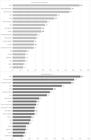
Foods most frequently consumed* by Brazilian older adults according to housing condition (N=8,336). 2017-2018 Brazilian National Dietary Survey.
When comparing intake frequency according to sex, it was found that men who lived alone had lower intake frequency for coffee (PR=0.89), bread (PR=0.86), solid fats (PR=0.77), poultry and poultry dishes (PR=0.77), leafy vegetables (PR=0.68), non-leafy vegetables (PR=0.57), whole grains (PR=0.47), and oilseeds (PR=0.15). By comparison, there was higher intake frequency for pasta (PR=1.32) compared to men who lived with other people. For women living alone, there were lower intake frequencies for coffee (PR=0.93), beans and other legumes (PR=0.85), solid fats (PR=0.75), leafy vegetables (PR=0.74), fruit juices (PR=0.75) and sauces (PR=0.38) compared to women living with other people (Table 3).
DISCUSSION
In the 2017-2018 Brazilian National Dietary Survey, it was found that, in general, older adults living alone had a lower intake frequency for foods considered traditional by the Brazilian population, e.g., coffee, beans and other legumes, bread, leafy vegetables, solid fats and fruit juices, compared to older adults who lived with other people. In addition, men who lived alone also showed lower intake of non-leafy vegetables, poultry and whole grains and higher intake of pasta; women had lower intake of fruit juices and sauces compared to those who lived with other people.
Although traditional Brazilian foods remain the most consumed items between the two groups, the older adults who lived alone showed a lower intake frequency compared to those who lived with other people. The results of the present study are consistent with the findings of the literature, i.e., older adults who live alone show differences in food intake compared to older adults who live with other people [18,26].
A possible explanation for the lower intake of typical and traditional Brazilian foods, including fresh foods, may be the fact that older adults lack motivation to prepare meals, challenges in shopping for fresh food, and lack encouragement to prepare and eat food on their own. The act of eating alone, as well as reduced chewing capacity and changes in the swallowing process, have been shown to be associated with changes in the eating habits of the elderly, with less variety of foods consumed and an increased preference for soft, liquid, and pasty foods [18,26].
The Dietary Guidelines for the Brazilian Population emphasizes the importance of prioritizing the preparation and intake of meals together with other people whenever possible, since it helps to reduce vulnerabilities, enables greater social interaction, increases concentration while eating, reduces the fast-eating habit, and increases the pleasure of eating [27].
In the present study, both male and female older adults who lived alone, showed lower intake frequency for beans, legumes, and leafy vegetables a finding similar to the one reported by Negrini et al. [21] with Brazilian older adults participating in the 2013 National Health Survey. The authors found that older adults living alone had a lower intake frequency for beans and salads [less than 7 days a week], as well as lower intake of meat [less than 5 times a week]. Sharkey et al. [28], when studying older adults in Texas, also found lower intake of vegetables in older adults living alone compared to older adults who lived with other people. In addition, Sharkey et al. [28], as well as Kharicha et al. [29], when assessing older adults in London, found lower fruit intake among older adults who lived alone compared to those who lived with other people. This result is different from the present study: there was no significant difference between the groups for fruit intake.
Many older adults have financial and physical health problems, and this situation is predominant among older adults who live alone, who have difficulties accessing healthy food and access to food to prepare and cook properly [28-31]. Furthermore, the older adults may have a lack of motivation to prepare meals and lack of encouragement to eat, as they are socially isolated (live alone), with a predisposition to depression and loneliness, which may be one of the causes for lower consumption of in natura foods (fruits and vegetables) [19,32-34].
Thus, the food consumption of older adults who live alone may expose this group to inadequate intake of essential micronutrients. A comparison of the data from NDS 2008-2009 with that of the 2017-2018 edition, shows a high percentage of inadequate intake for almost all the nutrients evaluated among older adults, especially calcium, pyridoxine, and vitamins D and E, whose inadequate intake by both males and females exceeded 90% [35]. In addition, there was a high percentage of inadequate intake of Vitamin A and magnesium in older adult males, i.e., exceeding 80%, and increased percentage of inadequate intake - between the two periods - of cobalamin, by both males and females, and of magnesium, phosphorus, zinc, Vitamin A, and riboflavin by older adult women [35].
In the present study, older adult men who lived alone showed lower intake frequency for leafy vegetables, as well as lower intake frequency for non-leafy vegetables, whole grains, and oilseeds, i.e., food groups that are markers of healthy eating, and rich in fiber, vitamins, and minerals, which are essential at this stage of life. Similarly, Nakamura et al. [36], when evaluating Japanese older adults, found a lower intake frequency for vegetables and fruits in older adult men who lived alone compared to those who lived with other people.
On the other hand, older adult men who lived alone had a higher intake frequency for pasta compared to older adults who lived with other people. Tani et al. [32] reported that for older adult men, food intake is more affected by household composition, because they lack cooking skills, which may result in increased intake of unhealthy foods, e.g., quick snacks that have low nutritional quality. Hartmann et al. [37] stressed that older men tend to be less careful about their health and have worse cooking skills compared to women.
In 2017-2018 NDS, older adult women living alone showed lower intake of coffee, beans and other legumes, solid fat, leafy vegetables, fruit juices and sauces compared to those who lived with other people. This result is different from the one reported by Nakamura et al. [36], who did not find differences in intake among older adults who lived alone compared to those who lived with other people.
In the present study, it was not possible to assess the degree of kinship of the other individuals who lived with the older adults who reside with other people. The presence of other people living in the same household with older adults is considered an important factor for adequate food intake, since social support is crucial at this stage of life [15,16,18,19,21]. Similarly, Choi et al. [34] found that having close friends was significantly associated with an increase in the daily intake of fruits and vegetables by older adult women in the United States, while Nakamura et al. [36] reported that a low level of relationship with neighbors was associated with lower intake of fruits and vegetables among Japanese older adult men and women.
Rugel and Carpiano [16] stressed the importance of emotional and social support from close friends, who tend to encourage and support the intake of fruits, legumes, and vegetables in older adult women, in addition to the psychological and emotional benefits that friends, children, and family members can provide to older adults. Nicklett and Kadell [15] pointed out that having friends around and having children can increase the number of social gatherings and help older adults not to eat on their own, thus motivating them to eat and cook with others.
The aging process highlights the importance of developing actions to promote adequate and healthy eating. In this context, nutritional education is a tool for advice on adequate eating. Also, public policies need to be formulated to ensure that people can have a more autonomous living experience with a higher quality of life while aging.
In the present study, the use of food intake data only from the first 24h recall can be considered a limitation. However, a one-day 24-hour recall allows to estimate the average food intake of populations [38], and data on the first day of food intake assessment tends to have a higher quality compared to the records of subsequent days [24]. Furthermore, in the classification of housing condition, the characterization of the older adults’ companion in the household was a limiting factor, as it was not possible to characterize the degree of kinship existing in the household. Thus, the focus of the present study was the older adults who lives alone, as this is the group evaluated in other studies found in the literature [17-21,29,34].
One of the strengths of the present study is its pioneering approach; to date, no study has been found in the literature that has evaluated the food intake of Brazilian older adults according to housing condition in a nationally representative sample of the population. Thus, one should consider the condition of living alone when planning actions to support healthy aging.
CONCLUSION
The older adults who lived alone had a lower intake frequency for food considered traditional by the Brazilian population, compared to the older adults who lived with other people, with distinct characteristics according to sex. Therefore, the recognition of the condition of living alone may be relevant for the establishment of intervention measures based on food and nutrition education, to tailoring and targeting healthy eating promotion actions.
REFERENCES
-
Sander M, Oxlund B, Jespersen A, Krasnik A, Mortensen EL, Westendorp RG, et al. The challenges of human population ageing. Age Ageing. 2015;44(2):185-87. https://doi.org/10.1093/ageing/afu189
» https://doi.org/10.1093/ageing/afu189 -
United Nations; Department of Economic and Social Affairs. World population prospects 2022. Summary of results. United Nations; 2022 [cited 2023 Dec 19]. Available from: https://www.un.org/development/desa/pd/sites/www.un.org.development.desa.pd/files/wpp2022_summary_of_results.pdf
» https://www.un.org/development/desa/pd/sites/www.un.org.development.desa.pd/files/wpp2022_summary_of_results.pdf -
Ellwardt L, van Tilburg T, Aartsen M, Wittek R, Steverink N. Personal networks and mortality risk in older adults: A twenty-year longitudinal study. PLoS One. 2015;10(3):e0116731. https://doi.org/10.1371/journal.pone.0116731
» https://doi.org/10.1371/journal.pone.0116731 -
Moreira LB, Silva SLA, Castro AEF, Lima SS, Estevam DO, Freitas FAS, et al. Factors associated with functional capacity in the elderly enrolled in the Family Health Strategy. Ciênc Saúde Colet. 2020;25:2041-50. https://doi.org/10.1590/1413-81232020256.26092018
» https://doi.org/10.1590/1413-81232020256.26092018 -
Vicerra PMM. Variations in cognition by human capital characteristics: A cross-sectional analysis of Brazilian older adults. Front Public Health. 2023;11:1257961. https://doi.org/10.3389/fpubh.2023.1257961
» https://doi.org/10.3389/fpubh.2023.1257961 -
Gusmão MSF, Cunha PO, Santos BG, Costa FM, Caldeira AP, Carneiro JA. Multimorbidity in community-dwelling older adults: Prevalence and associated factors. Rev Bras Geriatr Gerontol. 2022;25(1):e220115. https://doi.org/10.1590/1981-22562022025.220115.en
» https://doi.org/10.1590/1981-22562022025.220115.en -
Passos VMA, Champs APS, Teixeira R, Lima-Costa MFF, Kirkwood R, Veras R, et al. The burden of disease among Brazilian older adults and the challenge for health policies: Results of the Global Burden of Disease Study 2017. Popul Health Metr. 2020;18 Suppl 1:14. https://doi.org/10.1186/s12963-020-00206-3
» https://doi.org/10.1186/s12963-020-00206-3 -
Ministério da Saúde (Brasil). Guidelines for the care of elderly people in the SUS: Proposal for a comprehensive care model. Brasília: Ministério da Saúde; 2014 [cited 2023 Dec 19]. Available from: https://bvsms.saude.gov.br/bvs/publicacoes/diretrizes_cuidado_pessoa_idosa_sus.pdf
» https://bvsms.saude.gov.br/bvs/publicacoes/diretrizes_cuidado_pessoa_idosa_sus.pdf -
Ministério da Saúde. Secretaria de Vigilância em Saúde; Departamento de Análise em Saúde e Vigilância de Doenças Não Transmissíveis (Brasil). Strategic Action Plan for Tackling Chronic Diseases and Non-Communicable Diseases in Brazil 2021-2030. Brasília: Ministério da Saúde ; 2021 [2023 Dec 19]. Available from: https://www.gov.br/saude/pt-br/centrais-de-conteudo/publicacoes/svsa/doencas-cronicas-nao-transmissiveis-dcnt/09-plano-de-dant-2022_2030.pdf/view
» https://www.gov.br/saude/pt-br/centrais-de-conteudo/publicacoes/svsa/doencas-cronicas-nao-transmissiveis-dcnt/09-plano-de-dant-2022_2030.pdf/view -
Marucci MFN, Roediger MA, Dourado DAQS, Bueno DR. Comparison of nutritional status and dietary intake self-reported by elderly people of different birth cohorts (1936 to 1940 and 1946 to 1950): Health, Wellbeing and Aging (SABE) Study. Rev Bras Epidemiol. 2018;21(2 Suppl 2):e180015. https://doi.org/10.1590/1980-549720180015.supl.2
» https://doi.org/10.1590/1980-549720180015.supl.2 -
Ygnatios NTM, Oliveira C, Mambrini JVM, Andrade FB, Lima-Costa MF, Torres JL. Differences in disability and nutritional status among older Brazilian and English adults: The Brazilian Longitudinal Study of Aging (ELSI-Brazil) and English Longitudinal Study of Aging (ELSA) cohorts. Am J Clin Nutr. 2021;114(2):422-28. https://doi.org/10.1093/ajcn/nqab060
» https://doi.org/10.1093/ajcn/nqab060 -
World Health Organization. Decade of Healthy Ageing. The Global strategy and action plan on ageing and health 2016-2020: Towards a world in which everyone can live a long and healthy life. WHO; 2020 [cited 2023 Dec 19]. Available from: https://apps.who.int/iris/bitstream/handle/10665/355618/A73_INF2-en.pdf?sequence=1&isAllowed=y
» https://apps.who.int/iris/bitstream/handle/10665/355618/A73_INF2-en.pdf?sequence=1&isAllowed=y -
Ygnatios NTM, Lima-Costa MF, Torres JL. Food consumption is associated with frailty in edentulous older adults: Evidence from the ELSI-Brazil study. Ciên Saúde Colet. 2023;28(7):1891-902. https://doi.org/10.1590/1413-81232023287.12032022
» https://doi.org/10.1590/1413-81232023287.12032022 -
Bolbinski P, Nascimento-Souza MA, Lima-Costa MF, Peixoto SV. Consumption of fruits and vegetables among older adults: Findings from the ELSI-Brazil study. Cad Saúde Pública. 2023;39(6):e00158122. https://doi.org/10.1590/0102-311XEN158122
» https://doi.org/10.1590/0102-311XEN158122 -
Nicklett EJ, Kadell AR. Fruit and vegetable intake among older adults: A scoping review. Maturitas. 2013;75(4):305-12. https://doi.org/10.1016/j.maturitas.2013.05.005
» https://doi.org/10.1016/j.maturitas.2013.05.005 -
Rugel EJ, Carpiano RM. Gender differences in the roles for social support in ensuring adequate fruit and vegetable consumption among older adult Canadians. Appetite. 2015;92:102-09. https://doi.org/10.1016/j.appet.2015.05.011
» https://doi.org/10.1016/j.appet.2015.05.011 -
Söderhamn U, Christensson L, Idvall E, Johansson A, Bachrach-Lindström M. Factors associated with nutritional risk in 75-year-old community living people. Int J Older People Nurs. 2012;7(1):3-10. https://doi.org/10.1111/j.1748-3743.2010.00242.x
» https://doi.org/10.1111/j.1748-3743.2010.00242.x -
Kimura Y, Wada T, Okumiya K, Ishimoto Y, Fukutomi E, Kasahara Y, et al. Eating alone among community-dwelling Japanese elderly: Association with depression and food diversity. J Nutr Health Aging. 2012;16(8):728-31. https://doi.org/10.1007/s12603-012-0067-3
» https://doi.org/10.1007/s12603-012-0067-3 -
Conklin AI, Forouhi NG, Surtees P, Khaw KT, Wareham NJ, Monsivais P. Social relationships and healthful dietary behaviour: Evidence from over-50s in the EPIC cohort, UK. Soc Sci Med. 2014;100(100):167-75. https://doi.org/10.1016/j.socscimed.2013.08.018
» https://doi.org/10.1016/j.socscimed.2013.08.018 -
Klinenberg E. Social isolation, loneliness, and living alone: Identifying the risks for public health. Am J Public Health. 2016;106(5):786-87. https://doi.org/10.2105/AJPH.2016.303166
» https://doi.org/10.2105/AJPH.2016.303166 -
Negrini ELD, Nascimento CF, Silva A, Antunes JLF. Elderly persons who live alone in Brazil and their lifestyle. Rev Bras Geriatr Gerontol. 2018;21:523-31. https://doi.org/10.1590/1981-22562018021.180101
» https://doi.org/10.1590/1981-22562018021.180101 -
Areosa SVC, Bulla LC. Human aging and the new familiar configurations: The old person as a supplier. Psicologia. 2010;24:161-71. https://doi.org/10.1590/1981-22562019022.180157
» https://doi.org/10.1590/1981-22562019022.180157 -
Instituto Brasileiro de Geografia e Estatística. National Household Budget Survey. Brazilian National Dietary Survey (NDS 2017-2018). Rio de Janeiro: IBGE; 2020 [cited 2023 Dec 19]. Available from : Available from : https://biblioteca.ibge.gov.br/index.php/biblioteca-catalogo?view=detalhes& id=2101742
» https://biblioteca.ibge.gov.br/index.php/biblioteca-catalogo?view=detalhes& id=2101742 -
Subar AF, Kipnis V, Troiano RP, Midthune D, Schoeller DA, Bingham S, et al. Using intake biomarkers to evaluate the extent of dietary misreporting in a large sample of adults: The OPEN study. Am J Epidemiol. 2003;158(1):1-13. https://doi.org/10.1093/aje/kwg092
» https://doi.org/10.1093/aje/kwg092 -
Moshfegh AJ, Rhodes DG, Baer DJ, Murayi T, Clemens JC, Rumpler WV, et al. The US Department of Agriculture Automated Multiple-Pass Method reduces bias in the collection of energy intakes. Am J Clin Nutr. 2008;88(2):324-32. https://doi.org/10.1093/ajcn/88.2.324
» https://doi.org/10.1093/ajcn/88.2.324 -
Chalermsri C, Rahman SM, Ekström EC, Muangpaisan W, Aekplakorn W, Satheannopakao W, et al. Socio-demographic characteristics associated with the dietary diversity of Thai community-dwelling older people: Results from the national health examination survey. BMC Public Health. 2022;22(1):377. https://doi.org/10.1186/s12889-022-12793-x
» https://doi.org/10.1186/s12889-022-12793-x -
Ministério da Saúde (Brasil). Dietary Guidelines for the Brazilian Population. Brasília: Ministério da Saúde ; 2014 [cited 2023 Dec 19]. Available from: https://bvsms.saude.gov.br/bvs/publicacoes/guia_alimentar_populacao_brasileira_2ed.pdf
» https://bvsms.saude.gov.br/bvs/publicacoes/guia_alimentar_populacao_brasileira_2ed.pdf -
Sharkey JR, Johnson CM, Dean WR. Food access and perceptions of the community and household food environment as correlates of fruit and vegetable intake among rural seniors. BMC Geriatr. 2010;10:32. https://doi.org/10.1186/1471-2318-10-32
» https://doi.org/10.1186/1471-2318-10-32 - Kharicha K, Iliffe S, Harari D, Swift C, Gillmann G, Stuck AE. Health risk appraisal in older people 1: Are older people living alone an “at-risk” group? Br J Gen Pract. 2007;57(537):271-76.
-
Hamulka J, Frackiewicz J, Stasiewicz B, Jeruszka-Bielak M, Piotrowska A, Leszczynska T, et al. Socioeconomic, Eating- and Health-Related Limitations of Food Consumption among Polish Women 60+ Years: The ‘ABC of Healthy Eating’ Project. Nutrients. 2021;14(1):51. https://doi.org/10.3390/nu14010051
» https://doi.org/10.3390/nu14010051 -
Geigl C, Loss J, Leitzmann M, Janssen C. Social Factors of Dietary Risk Behavior in Older German Adults: Results of a Multivariable Analysis. Nutrients. 2022;14(5):1057. https://doi.org/10.3390/nu14051057
» https://doi.org/10.3390/nu14051057 -
Tani Y, Kondo N, Takagi D, Saito M, Hikichi H, Ojima T, et al. Combined effects of eating alone and living alone on unhealthy dietary behaviors, obesity and underweight in older Japanese adults: Results of the JAGES. Appetite. 2015;95:1-8. https://doi.org/10.1016/j.appet.2015.06.005
» https://doi.org/10.1016/j.appet.2015.06.005 -
Stahl ST, Beach SR, Musa D, Schulz R. Living alone and depression: The modifying role of the perceived neighborhood environment. Aging Ment Health. 2017;21(10):1065-71. https://doi.org/10.1080/13607863.2016.1191060
» https://doi.org/10.1080/13607863.2016.1191060 -
Choi YJ, Ailshire JÁ, Crimmins EM. Living alone, social networks in neighbourhoods, and daily fruit and vegetable consumption among middle-aged and older adults in the USA. Public Health Nutr. 2020;23:3315-23. https://doi.org/10.1017/S1368980020002475
» https://doi.org/10.1017/S1368980020002475 -
Verly Junior E, Marchioni DM, Araujo MC, Carli E, Oliveira DCRS, Yokoo EM, et al. Evolution of energy and nutrient intake in Brazil between 2008-2009 and 2017-2018. Rev Saúde Pública. 2021;55 Suppl 1:5s. https://doi.org/10.11606/s1518-8787.2021055003343
» https://doi.org/10.11606/s1518-8787.2021055003343 -
Nakamura H, Nakamura M, Okada E, Ojima T, Kondo K. Association of food access and neighbor relationships with diet and underweight among community-dwelling older Japanese. J Epidemiol. 2017;27(11):546-51. https://doi.org/10.1016/j.je.2016.12.016
» https://doi.org/10.1016/j.je.2016.12.016 -
Hartmann C, Dohle S, Siegrist M. Importance of cooking skills for balanced food choices. Appetite. 2013;65:125-31. https://doi.org/10.1016/j.appet.2013.01.016
» https://doi.org/10.1016/j.appet.2013.01.016 -
Dodd KW, Guenther PM, Freedman LS, Subar AF, Kipnis V, Midthune D, et al. Statistical methods for estimating usual intake of nutrients and foods: A review of the theory. J Am Diet Assoc. 2006;106(10):1640-50. https://doi.org/10.1016/j.jada.2006.07.011
» https://doi.org/10.1016/j.jada.2006.07.011

