
 Frequency of breakfast consumption is associated with anthropometric markers of body adiposity in university students
ABSTRACT
Objective To analyze the frequency of breakfast consumption and its association with body adiposity in university students. Methods Cross-sectional study using baseline data from a cohort of 2,179 students aged 16 to 25, enrolled in 21 full-time courses, collected between 2015 and 2018. The outcomes assessed were overweight, obesity, high waist circumference and high waist-to-height ratio. The frequency of breakfast consumption was assessed as: regular (5-7 times/week); irregular (1-4 times/week) and omission (never/almost never). Associations were estimated using Poisson regression models with robust variance.
Results The prevalence of skipping breakfast and irregular breakfast consumption were, respectively, 14.5% and 23.6% for men and 14.6% and 24.7% for women. In males, skipping breakfast was directly associated with obesity (aPR=1,74; CI95%=1,05;2,88), high waist circumference (aPR=2,10; CI95%=1,31;3,35), and high waist/height ratio (aPR =1,59; CI95%=1,13;2,23). Among women, higher prevalence of obesity (aPR= 1.90, 95%CI= 1.16;3.12) was found among those who had breakfast irregularly, and skipping breakfast was associated with high waist/height ratio (aPR=1,51; CI95%=1,03;2,20). Irregular breakfast consumption was only associated with obesity in women and was not associated with any of the outcomes assessed among men.
Conclusion Skipping breakfast was associated with abdominal adiposity in both sexes, and also with total adiposity among men. Irregular breakfast consumption was associated only with obesity in women. Regular breakfast consumption should be included among the objectives of actions to promote healthy eating habits at universities.
Keywords
Adiposity; Anthropometry; Breakfast; Students; Universities
RESUMO
Objetivo Analisar a frequência do consumo de desjejum e sua associação com a adiposidade corporal em estudantes universitários. Métodos Estudo transversal com dados da linha de base de uma coorte de 2.179 estudantes com idade de 16 a 25 anos, matriculados em 21 cursos de período integral, coletados entre 2015 e 2018. Os desfechos avaliados foram excesso de peso, obesidade, circunferência da cintura elevada e relação cintura/altura elevada. A frequência de consumo do desjejum foi avaliada em: regular (5-7 vezes/semana); irregular (1-4 vezes/semana) e omissão (nunca/quase nunca). As associações foram estimadas por modelos de regressão de Poisson com variância robusta.
Resultados As prevalências de omissão e consumo irregular de desjejum foram, respectivamente, 14,5% e 23,6% para homens e 14,6% e 24,7% para mulheres. No sexo masculino a omissão do desjejum associou-se diretamente à obesidade (RPa=1,74; IC95%=1,05;2,88), à circunferência da cintura elevada (RPa=2,10; IC95%=1,31;3,35) e relação cintura/altura elevada (RPa =1,59; IC95%=1,13;2,23). Entre as mulheres, a omissão do desjejum associou-se à relação cintura/altura elevada (RPa=1,51; IC95%=1,03;2,20). O consumo irregular do desjejum foi associado apenas à obesidade em mulheres e não foi associado a nenhum dos desfechos avaliados entre os homens.
Conclusão A omissão do desjejum associou-se à adiposidade abdominal em ambos os sexos e também à adiposidade total entre os homens. O consumo irregular do desjejum foi associado apenas à obesidade entre as mulheres. O consumo regular do desjejum deve ser incluído entre os objetivos de ações de promoção da alimentação saudável nas universidades.
Palavras-chave
Universities; Antropometria; Desjejum; Estudantes; Universidades
INTRODUCTION
The prevalence of excess weight and obesity is increasing worldwide and, in 2022, 16% of individuals over the age of 18 were obese, and the prevalence of obesity around the world has doubled between 1990 and 2022 [1]. Considering that excess weight is the main trigger for the development of non-communicable chronic diseases [1], the vulnerability to weight gain found among young people entering universities has been a matter of concern for public health [2,3].
University Students’ weight gain has been associated with changes that occur in lifestyle-related behaviors, including reduced physical exercise [4], higher intake of ultra-processed foods and alcoholic beverages [3], as well as meal skipping, especially breakfast [5,6].
Breakfast is considered as an important meal of the day, defined by some authors as the first meal eaten before or at the beginning of the daily routine, covering two hours of wakefulness, at most until 10 am [7]. Eating breakfast can favor the intake of recommended vitamins and minerals and enable individuals closer to have the adequate intake of macronutrients [8].
Previous studies have supported the hypothesis that irregular eating and frequency of breakfast skipping may lead to weight gain and increase the risk of central adiposity, especially among adolescents and young adults [9-12], but few studies have analyzed the independent association of breakfast consumption frequency with total body adiposity and fat location in university students, who are vulnerable to weight gain and undesirable changes in eating habits when they enter university. On the other hand, regular breakfast intake is highlighted as a protective factor for weight gain, contributing to the maintenance of desirable body composition and control of metabolic changes [9,13]. Therefore, the aim of this study was to analyze the frequency of breakfast consumption and its association with body adiposity in university students.
METHODS
This cross-sectional study analyzed baseline data from the Longitudinal Study on the Lifestyle and Health of University Students (ELESEU), a dynamic cohort of university students from a public university in the Midwest region of Brazil, initiated in 2015 and followed up for three years.
The study population consisted of students, aged up to 25 years, enrolled in 21 full-time courses in Agricultural Sciences, Engineering, Exact and Earth Sciences, Biological Sciences, Health Sciences, Applied Social Sciences, and Humanities at a Brazilian public university. Students with physical disabilities that limited the measurement of anthropometric measurements, students who had earned a previous university degree, and pregnant and lactating women were excluded. More details about the study design can be found in the publication that described the methodological procedures of ELESEU [14].
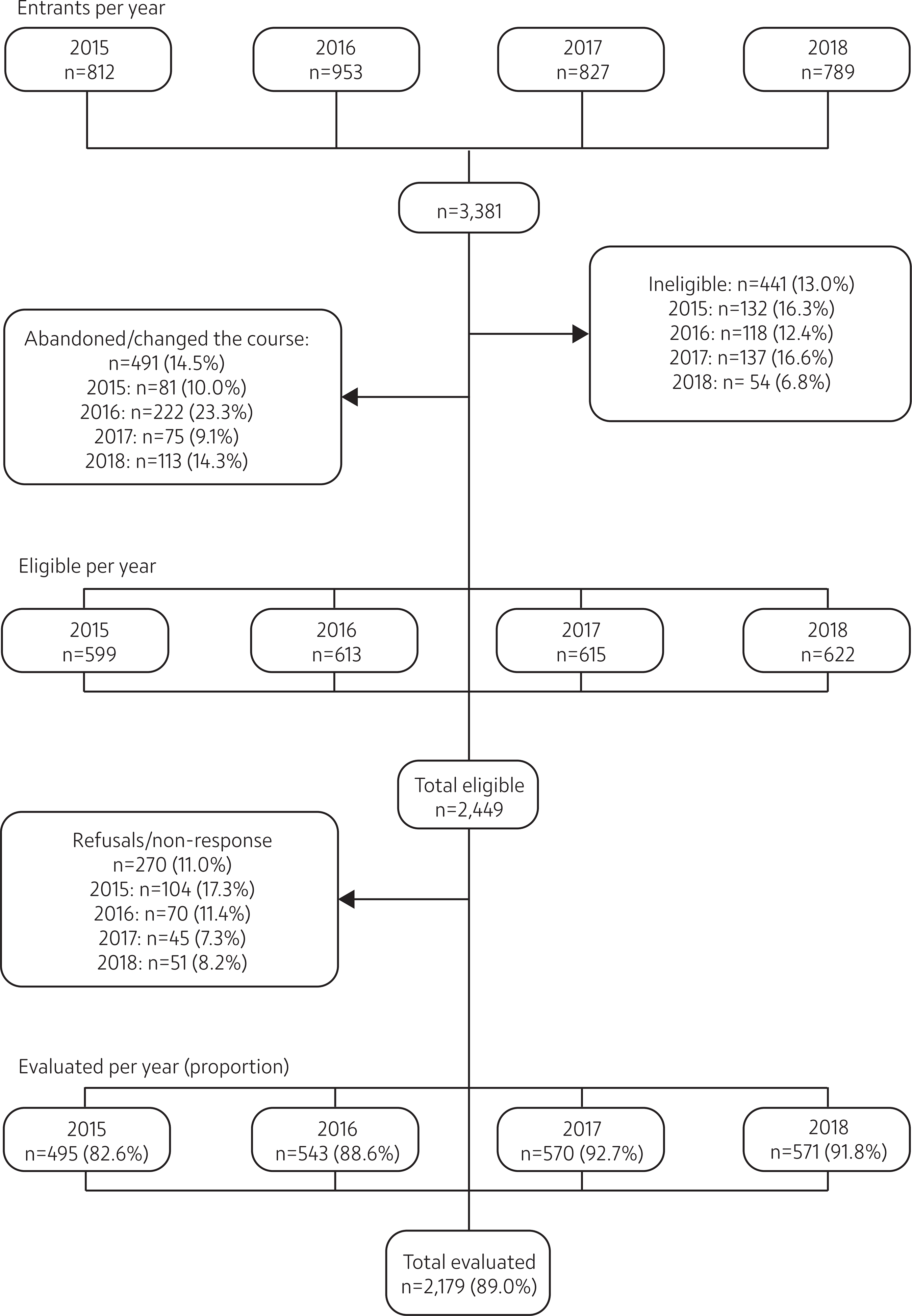
Information about participants recruitment is shown in Figure 1. Data collection was carried out in person during the first semester of each academic year, using a self-administered questionnaire containing sociodemographic and economic information, data on lifestyle behaviors and information on the frequency of breakfast intake. Anthropometric measurements were assessed in all study participants by trained interviewers, following standard techniques.

Independent Variable
Frequency of breakfast consumption was assessed using the question “On average, how often do you have breakfast?” with the following answer options: “daily, 5 to 6 times a week, 3 to 4 times a week, 1 to 2 times a week, and never or almost never.” The options were categorized into regular consumption (5 to 7 times a week), irregular consumption (1 to 4 times a week) and skipping (never or almost never). This categorization model was similar to the one adopted in other studies with adolescents and young adults [5,15].
Dependent Variables
- Excess weight and obesity:
The weight condition was established based on Body Mass Index (BMI), determined by the ratio of body mass (kg) to squared height (m2). Body mass was measured using a Tanita UM-080 body composition analyzer (Tanita, Arlington Heights, USA), with a capacity of 150kg and a variation of 0.1kg. Height was measured in duplicate using a portable Sanny ES 2040 stadiometer, with a maximum length of 210 centimeters and a variation of 1mm. The mean of the two height measurements was considered as the final measurement. Body mass and height were measured using standardized techniques [16].
Excess weight and obesity were identified among adolescents and adults according to criteria recommended by the World Health Organization [17,18]. Adolescents (16-19 years) were classified according to the z-score of the reference curve for BMI, according to sex and age, establishing a cutoff point >+1z-score for excess weight and >+2 z-score for obesity. Among adults, the cutoff point for BMI to identify excess weight was ≥25.0 kg/m2 and for obesity ≥30.0 kg/m2.
- High waist circumference:
Waist Circumference (WC) was measured in duplicate, with a flexible and inelastic measuring tape, in the smallest curvature of the trunk and the mean of the two measurements was considered as the final measurement. Considering the age of the study population (16-25 years), the cutoff point for identifying high waist circumference, both for adolescents and adults was ≥80cm for women and ≥94cm for men, according to the recommendations of the Diretrizes da Sociedade Brasileira de Diabetes 2019-2020 and of the World Health Organization [19,20].
- High Waist-to-Height Ratio (High WHtR)
Waist-to-height ratio (WHtR) was determined by dividing WC by height, both measurements in centimeters. High WHtR was detected for values ≥0.5 [21].
Confounding variables
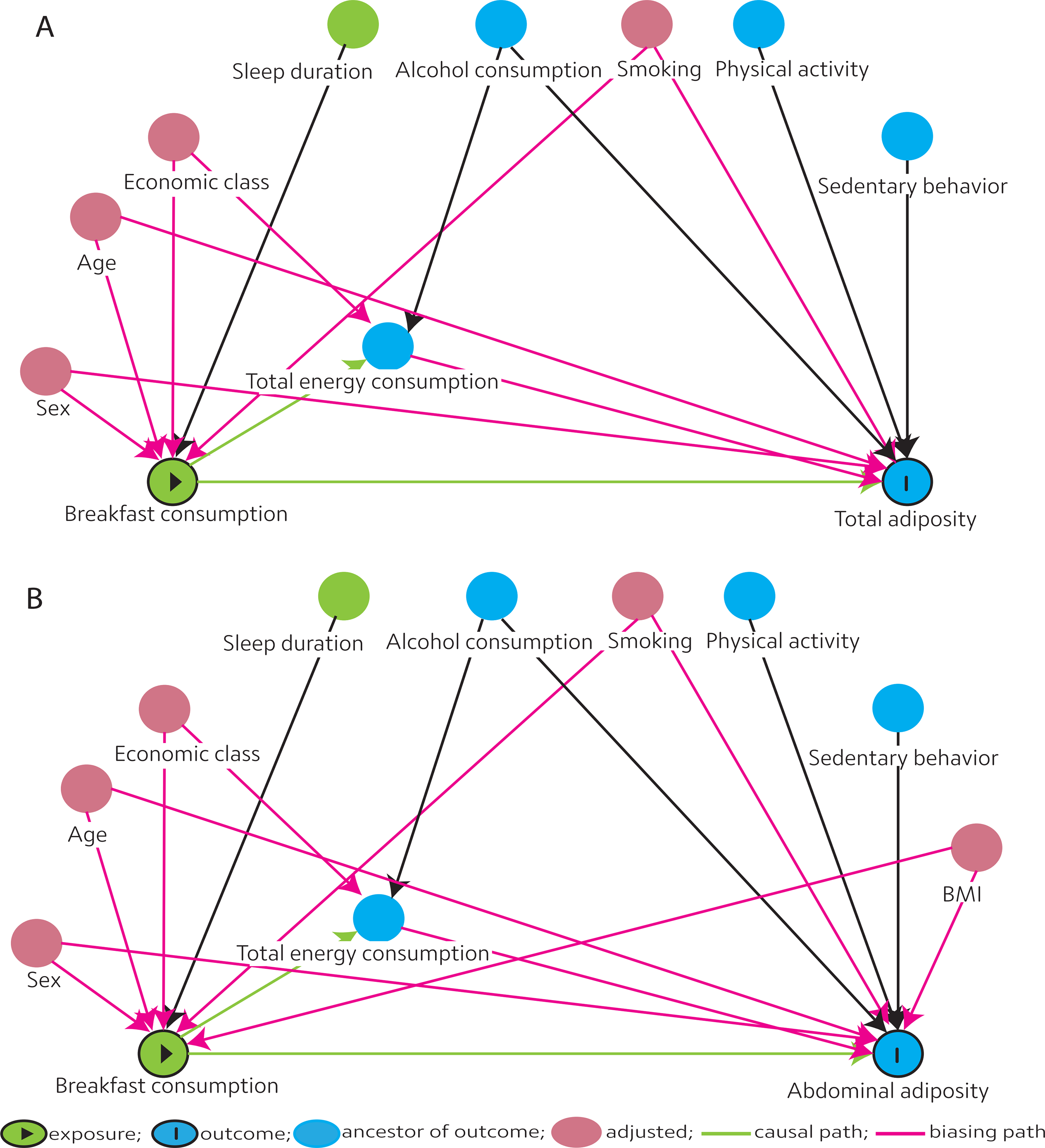
Directed Acyclic Graphs (DAG) was used to determine confounding variables (Figure 2). The minimum sufficient adjustment set was composed of age, smoking and economic class.
Directed acyclic graph demonstrating causal relationships affecting the association between breakfast consumption and total adiposity (A); and central adiposity (B).
Age was assessed in years and grouped into two categories: 16 to 19 years old and 20 to 25 years old. Skin color was self-reported and classified according to the Brazilian Institute of Geography and Statistics [22]. Socio-economic class was assessed using the ‘Brazil criterion’ [23] and categorized into: A/B and C/D/E, according to the score obtained by the count of household items, presence of a maid and education of the head of the family, with category “A” being the highest and “E” the lowest.
Smoking was classified according to the report of cigarette use, in the yes and no categories; a student who smoked at least one cigarette in the 30 days prior to the interview was considered to be a smoker [24].
Statistical analysis
Statistical analyses were stratified by sex. The chi-square test was used in comparisons between proportions to analyze the association of the outcome variables (Excess weight, obesity, high waist circumference and high waist-to-height ratio) with sociodemographic, economic and lifestyle variables. To estimate the associations of the frequency of breakfast intake with the outcome variables, Poisson regression models with robust variance were used, and the adjusted prevalence ratio and its respective 95% confidence intervals (95%CI) were estimated. Covariates identified in DAG were selected for adjustments in the final models. Statistical analyses were made with the IBM®SPSS® version 20.0.
Ethical aspects
The research project was approved by the Research Ethics Committee of the Hospital Universitário Júlio Müller of the Federal University of Mato Grosso, under opinion report nº 1.006.048, of 03/31/2015, and have therefore been performed in accordance with the ethical standards laid down in the 1964 Declaration of Helsinki and its later amendments. Participants gave their informed consent prior to their inclusion in the study.
RESULTS
In the present study, 2,179 university students were evaluated, of whom 49.5% were female, with the youngest age group (16 to 19 years old) being predominant in both sexes (77.5% male and 79.2% of the women). Regarding socio-economic class, 68.1% of men and 66.2% of women belonged to classes A and B (Tables 1 and 2).
Distribution of university students (%) and prevalence (P) of Excess weight, Obesity, High waist circumference (WC) and High waist/height (WHtR) according to sociodemographic, economic and lifestyle variables among men. Cuiabá (MT), Brazil, 2015-2018.
Distribution of university students (%) and prevalence (P) of Excess weight, Obesity, High waist circumference (WC) and High waist/height (WHtR) according to sociodemographic, economic and lifestyle variables among women. Cuiabá (MT), Brazil, 2015-2018.
Irregular breakfast consumption was found for 23.6% of men and 24.7% of women, and breakfast skipping had a frequency of 14.5% for men and 14.6% for women. Smoking was reported by 15.8% of male and 11.2% of female students. More than half of the students reported alcohol intake in the 30 days prior to data collection (59.9% of men and 56% of women). Among men, 41.1% perceived a reduction in physical activity levels after entering university, while this proportion was 44.3% for women. Most students had a sedentary behavior (65.9% of men and 64.7% of women) (Tables 1 and 2).
Among men, the prevalence of the outcomes excess weight, obesity, high waist circumference and high WtHR were, respectively, 26.3%; 8.6%; 7.1%, and 14.7%. In the bivariate analysis, older age groups were significantly associated with excess weight (p<0.01) and abdominal fat markers (high waist circumference; p=0.01 and high WtHR; p<0.01). Prevalence of excess weight was higher among students of higher economic class (p=0.04) (Table 1).
Among women, the prevalence rates of excess weight, obesity, high waist circumference and high WtHR were 21.6%, 6.7%, 12.6% and 11.3%, respectively. In the bivariate analysis, the older age group was associated with high WC (p<0.01) and high WtHR (p=0.01); smoking was associated with excess weight (p=0.03) and obesity (p=0.03) and the perception of change in physical activity was associated with excess weight (p<0.01) and high WC (p=0.01) (Table 2).
In the multiple analysis, after adjusting for confounding factors, men who skipped breakfast (never or almost never had it) were more likely to be obese (aPR= 1.74, 95%CI=1.05; 2.88) and have abdominal obesity, considering both high waist circumference (aPR= 2.10, 95%CI=1.31; 3.35), and high WtHR (aPR=1.59, 95%CI= 1.13; 2.23), compared to those who regularly had this meal (5 to 7 times a week) (Table 3).
Crude Prevalence Ratio (PR), Adjusted Prevalence Ratio (aPR), and Confidence Interval of 95% (CI 95%) of the association between the frequency of breakfast consumption and Excess weight, Obesity, High waist circumference (WC), High waist/height (WHtR) among university students. Cuiabá (MT) Brazil, 2015-2018 (n= 2,179).
As far as women are concerned, in the adjusted models, higher prevalence of obesity (aPR=1.90, 95%CI=1.16;3.12) were found among those who had breakfast irregularly (1 to 4 times a week). Among those who skipped breakfast, there was a higher prevalence of central adiposity for high WHR (aPR=1.51; 95%CI=1.03; 2.20) compared to those who reported regular consumption (5 to 7 times a week) (Table 3).
DISCUSSION
In ELESEU study, among women, breakfast skipping was associated with abdominal adiposity, and irregular breakfast consumption was also associated with global obesity. Among men, breakfast skipping was associated with global obesity and abdominal adiposity.
Breakfast skipping has been evaluated in the university population in studies carried out in various parts of the world, including Brazil. The reported prevalence rates range between 6.8% [25] and 72.7% [26], according to the criteria used to define skipping. The present study and a previous study conducted in Brazil [27] found similar prevalence rates of breakfast skipping among university students.
The prevalence of irregular breakfast consumption also ranges between studies, according to the definition established for the event. The study conducted by Lesani et al. [28] in Iran, considered the answer “sometimes” for frequency of irregular breakfast consumption, which was estimated to be 10.5%. In the study by Fujiwara et al. [29], carried out at a university in Japan, there was a similar prevalence of irregular breakfast consumption to that found in the present study.
Regarding regular breakfast consumption, the prevalence rate found in the present study was lower than the one found among North American university students in the cross-sectional analysis by Yahia et al. [30] but similar to the one reported in a European study [31]. On the other hand, a higher frequency of regular breakfast consumption was found in the study developed with Polish students [32].
Among university students, few studies have shown the association of breakfast consumption frequency with adiposity. In agreement with the results of the present study, cross-sectional studies carried out with African [33] and Japanese [34] university students, which categorized breakfast skipping as “never or almost never”, showed a direct and significant association with excess weight and obesity. The association of breakfast skipping with body adiposity is better documented for the adolescent population, whose ages are similar to those of the majority (almost 80%) of the participants in this study [10,35,36].
The contribution of regular breakfast consumption (>4 days/week) to body weight maintenance was reported by Mansouri et al. [5], in Iran, in a population-based study with university students, who were less likely to be excess weight and obese (15% and 33%, respectively) compared to those who reported intake to be less than once a week, after adjustments for possible confounders. Teixeira et al. [27] found that Brazilian university students who skipped breakfast more than 5 times/week were 1.3 times more likely to be overweight. Corroborating these results, the retrospective cohort by Goto et al. [37], conducted with Japanese university students, found that an increase >5% in the value of BMI was 1.34 times more likely in male students who skipped breakfast at frequency ≥2 days/week.
To date, few studies have analyzed the association between frequency of breakfast consumption and central adiposity in university students. Yahia et al. [38], analyzing American university students, found that healthy habits, including the regular breakfast intake (daily), were practiced by students who did not present risk factors for Metabolic Syndrome (MS). The authors reported that those who skipped breakfast had greater waist circumference (12.6%; p=0.001), which is considered to be an important component of MS.
A cross-sectional analysis carried out with adolescents aged 12 to 19 years from Malaysia showed that young women who ate breakfast less than 5 times a week had greater waist circumference (p<0.01) compared to those who had breakfast ≥5 times a week [35]. Another study, with a representative sample of Brazilian adolescents, of a similar age group to that of the present study, also showed a significant association between breakfast skipping with high waist circumference and high waist-to-height ratio [39]. A longitudinal study with children aged 9 to 15 years followed up into adulthood showed that breakfast skipping in childhood and at the current age was significantly associated with higher levels of waist circumference, suggesting that maintaining this habit for a long period may have effects on cardiometabolic health [40].
Several criteria are used in the literature to define the frequency of breakfast consumption. Dialektakou and Vranas [41] identified 24 different definitions to assess breakfast intake in Greek adolescents, to determine the association of intake frequency with body fat. The authors concluded that this association depends on how the frequency of breakfast intake is defined. Therefore, the lack of standardization makes it difficult to compare the results of different studies, and part of the differences found in such results is a consequence of the way in which the variable was constructed. For this reason, a more in-depth discussion on the topic may result in a more uniform classification of the frequency of breakfast intake, thus enabling greater comparability between studies, so that science can develop better-founded recommendations for the population.
Controlling confounding factors in the analysis is important to show the effect of frequency of breakfast consumption on body adiposity regardless other factors. In this context, the DAG can be used in epidemiological studies to represent a theoretical model to explain the association between exposure factors and outcome [42], by identifying a minimum set of variables that must be controlled, allowing the recognition of those which control is inadequate or unnecessary.
The findings of well-conducted studies associate breakfast skipping with undesirable effects on body composition, both with regard to excess total adiposity and abdominal adiposity [10,43]. There seems to be a consensus among the scientific community that the frequent breakfast consumption can improve the quality of the diet and, consequently, contribute to the maintenance of adequate weight and control of metabolic alterations [43]. Among university students, some factors such as living far from the family, lack of time, changes in sleeping habits and having nocturnal eating habits are considered to be possible reasons for not eating breakfast regularly [44].
Although the mechanisms that explain the influence of breakfast consumption on body composition are not yet well established, it is known that skipping the first meal of the day results in lower energy expenditure at rest, reduces insulin sensitivity, deregulates appetite-regulating hormones and affects the fasting lipid profile [45]. In a study using data from NHANES 2005–2010, Kant et al. 2015 [46] found that energy intake at lunch appears to be higher on the day when breakfast is not served. Thus, individuals who skip breakfast or eat this meal irregularly tend to fast for a long period, resulting in energy compensation in the subsequent meal and a greater feeling of hunger, which is caused by the stimulation of the secretion of the hormone ghrelin. The union of these factors promotes an increase in postprandial insulin, favoring the accumulation of total fat and fat located in the central part of the body [47].
One of the limitations of this study refers to the way in which the explanatory variable (frequency of breakfast consumption) was defined, which was based on the participants’ self-reports. The way in which the question was asked may lead to different interpretations by the respondents, because of their own understanding of breakfast, which interferes with the classification of the frequency of consumption of this meal. Another limitation is the subjectivity present in the classification made by the researchers, when considering the consumption frequency limits to determine irregular consumption and breakfast skipping. Therefore, the categorization used may have influenced the outcomes.
One of the strengths of the study is the scope of the population of university students, which included respondents from different areas of knowledge, thus providing the results from a relatively heterogeneous group. In addition, the study not only investigated total obesity as an outcome, but also used markers of abdominal adiposity, which have greater predictive power for cardiometabolic risk and chronic diseases.
As universities play an important role in promoting healthy habits among students, the results of this study can support intervention strategies, policies and initiatives to prevent undesirable health outcomes resulting from excess adiposity; for example, food and nutrition educational activities that encourage the regular and healthy consumption of breakfast in this population group.
CONCLUSION
This cross-sectional study with university students of both sexes showed that participants who did not eat breakfast regularly were more likely to have high total and abdominal adiposity. This finding is important given the high level of exposure of university students to weight gain and the development of unhealthy eating habits. We suggest the development of longitudinal studies to increase the level of evidence on the role of the frequency of the breakfast consumption on body adiposity, to better support recommendations on breakfast frequency for the population.
-
Article based on the dissertation of LB SILVA, entitled “Associação da frequência de consumo do café da manhã com adiposidade corporal de estudantes universitários”. Universidade Federal de Mato Grosso; 2021.
-
How to cite this article: Silva LB, Pereira LP, Fonseca LB, Rodrigues PRM, Muraro AP, Ferreira MG. Frequency of breakfast consumption is associated with anthropometric markers of body adiposity in university students. Rev Nutr. 2024;37:e240052. https://doi.org/10.1590/1678-9865202437e240052
REFERENCES
-
1 World Health Organization. Obesity and overweight. Geneva: WHO; 2024 [cited 2024 Jul 4]. Available from: World Wide Web: https://www.who.int/news-room/fact-sheets/detail/obesity-and-overweight
» https://www.who.int/news-room/fact-sheets/detail/obesity-and-overweight -
2 Vadeboncoeur C, Townsend N, Foster C. A meta-analysis of weight gain in first year university students: Is freshman 15 a myth? BMC Obes. 2015;2:22. https://doi.org/10.1186/s40608-015-0051-7
» https://doi.org/10.1186/s40608-015-0051-7 -
3 Martin JC, Moran LJ, Harrison CL. Diet quality and its effect on weight gain prevention in young adults: A narrative review. Semin Reprod Med. 2020;38(6):407-13. https://doi.org/10.1055/s-0041-1723776
» https://doi.org/10.1055/s-0041-1723776 -
4 Hernández-Jaña S, Huber-Pérez T, Palma-Leal X, Guerrero-Ibacache P, Campos-Nuñez V, Zavala-Crichton JP, et al. Effect of a single nutritional intervention previous to a critical period of fat gain in university students with overweight and obesity: A randomized controlled trial. Int J Environ Res Public Health. 2020;17(14):5149. https://doi.org/10.3390/ijerph17145149
» https://doi.org/10.3390/ijerph17145149 -
5 Mansouri M, Hasani-Ranjbar S, Yaghubi H, Rahmani J, Tabrizi YM, Keshtkar A, et al. Breakfast consumption pattern and its association with overweight and obesity among university students: A population-based study. Eat Weight Disord. 2020;25(1):379-87. https://doi.org/10.1007/s40519-018-0609-8
» https://doi.org/10.1007/s40519-018-0609-8 -
6 Romero-Blanco C, Hernández-Martínez A, Parra-Fernández ML, Onieva-Zafra MD, Prado-Laguna MDC, Rodríguez-Almagro J. Food addiction and lifestyle habits among university students. Nutrients. 2021;13(4):1352. https://doi.org/10.3390/nu13041352
» https://doi.org/10.3390/nu13041352 -
7 O’Neil CE, Byrd-Bredbenner C, Hayes D, Jana L, Klinger SE, Stephenson-Martin S. The role of breakfast in health: Definition and criteria for a quality breakfast. J Acad Nutr Diet. 2014;114(12):S8-S26. https://doi.org/10.1016/j.jand.2014.08.022
» https://doi.org/10.1016/j.jand.2014.08.022 -
8 Takahashi M, Tahara Y. Timing of food/nutrient intake and its health benefits. J Nutr Sci Vitaminol (Tokyo). 2022;68(Suppl):S2-S4. https://doi.org/10.3177/jnsv.68.S2
» https://doi.org/10.3177/jnsv.68.S2 -
9 Ma X, Chen Q, Pu Y, Guo M, Jiang Z, Huang W, et al. Skipping breakfast is associated with overweight and obesity: A systematic review and meta-analysis. Obes Res Clin Pract. 2020; 14(1):1-8. https://doi.org/10.1016/j.orcp.2019.12.002
» https://doi.org/10.1016/j.orcp.2019.12.002 -
10 Yamamoto R, Tomi R, Shinzawa M, Yoshimura R, Ozaki S, Nakanishi K, et al. Associations of skipping breakfast, lunch, and dinner with weight gain and overweight/obesity in university students: A retrospective cohort study. Nutrients. 2021;13(1):271. https://doi.org/10.3390/nu13010271
» https://doi.org/10.3390/nu13010271 -
11 Bonnet JP, Cardel MI, Cellini J, Hu FB, Guasch-Ferré M. Breakfast skipping, body composition, and cardiometabolic risk: A systematic review and meta-analysis of randomized trials. Obesity. 2020;28(6):1098-109. https://doi.org/10.1002/oby.22791
» https://doi.org/10.1002/oby.22791 -
12 Lee KX, Quek KF, Ramadas A. Dietary and lifestyle risk factors of obesity among young adults: A scoping review of observational studies. Curr Nutr Rep. 2023;12(4):733-43. https://doi.org/ 10.1007/s13668-023-00513-9
» https://doi.org/10.1007/s13668-023-00513-9 -
13 Duan D, Pilla SJ, Michalski K, Laferrère B, Clark JM, Maruthur NM. Eating breakfast is associated with weight loss during an intensive lifestyle intervention for overweight/obesity. Obesity. 2022;30(2):378-88. https://doi.org/10.1002/oby.23340
» https://doi.org/10.1002/oby.23340 -
14 Nogueira PS, Ferreira MG, Rodrigues PRM, Muraro AP, Pereira LP, Pereira RA. Longitudinal Study on the Lifestyle and Health of University Students (ELESEU): Design, methodological procedures, and preliminary results. Cad Saude Publica. 2018;34(4): e00145917. https://doi.org/10.1590/0102-311X00145917
» https://doi.org/10.1590/0102-311X00145917 -
15 Hassan BK, Cunha DB, Valeria da Veiga G, Pereira RA, Sichieri R. Changes in breakfast frequency and composition during adolescence: The adolescent nutritional assessment longitudinal study, a cohort from Brazil. Plos One. 2018;13(7):e0200587. https://doi.org/10.1371/journal.pone.0200587
» https://doi.org/10.1371/journal.pone.0200587 - 16 Gordon C, Chumlea W, Roche A. Stature, recumbent length, and weight: Anthropometric standardization reference manual. Champaign: Human Kinetics Books; 1988. p. 3-8.
-
17 World Health Organization. Physical status: The use of and interpretation of anthropometry, report of a WHO expert committee. Geneva: World Health Organization; 1995 [cited 2024 Jul 4]. Available from: https://apps.who.int/iris/handle/10665/37003
» https://apps.who.int/iris/handle/10665/37003 - 18 World Health Organization. Growth reference data for 5-19 years: Body mass index-for-age, length/height-for-age and weight-for-height. Geneva: World Health Organization; 2007.
- 19 World Health Organization. Obesity: Preventing and managing the global epidemic. Report of a WHO consultation. Geneva: World Health Organization; 1999. World Health Organ Tech Rep Ser. 2000.
- 20 Sociedade Brasileira de Diabetes. Diretrizes SBD 2019-2020. São Paulo: Diretrizes da Sociedade Brasileira de Diabetes; ©2019.
-
21 Ashwell M, Hsieh SD. Six reasons why the waist-to-height ratio is a rapid and effective global indicator for health risks of obesity and how its use could simplify the international public health message on obesity. Int J Food Sci Nutr. 2005;56(5):303-7. https://doi.org/10.1080/09637480500195066
» https://doi.org/10.1080/09637480500195066 - 22 Instituto Brasileiro de Geografia e Estatística. Características étnico-raciais da população: um estudo das categorias de classificação de cor ou raça (2008). Rio de Janeiro: IBGE; 2011.
-
23 Associação Brasileira de Empresas de Pesquisa. Critério Brasil: critério de classificação econômica Brasil 2015. São Paulo: Abep; 2015 [cited 2023 Jul 4]. Available from: https://www.abep.org/criterio-brasil
» https://www.abep.org/criterio-brasil - 24 World Health Organization. Library cataloguing in publication data guidelines for controlling and monitoring the tobacco epidemic. Geneva: World Health Organization; 1998.
-
25 Travé TD. Análisis nutricional del desayuno y almuerzo en una población universitaria. Nutr Hosp. 2013;28(3):1286-90. https://dx.doi.org/10.3305/nh.2013.28.4.6479
» https://doi.org/10.3305/nh.2013.28.4.6479 - 26 Eittah HFA. Effect of breakfast skipping on young females’ menstruation. Health Sci J. 2014;8(4):469-84.
-
27 Teixeira GP, Mota MC, Crispim CA. Eveningness is associated with skipping breakfast and poor nutritional intake in Brazilian undergraduate students. Chronobiol Int. 2018;35(3): 358-67. https://doi.org/10.1080/07420528.2017.1407778
» https://doi.org/10.1080/07420528.2017.1407778 -
28 Lesani A, Mohammadpoorasl A, Javadi M, Esfeh JM, Fakhari A. Eating breakfast, fruit and vegetable intake and their relation with happiness in college students. Eat Weight Disord. 2016;21(1):645-51. https://doi.org/10.1007/s40519-016-0261-0
» https://doi.org/10.1007/s40519-016-0261-0 -
29 Fujiwara T, Ono M, Iizuka T, Sekizuka-Kagami N, Maida Y, Adachi Y, et al. Breakfast skipping in female college students is a potential and preventable predictor of gynecologic disorders at health service centers. Diagnostics. 2020;10(7):476. https://doi.org/10.3390/diagnostics10070476
» https://doi.org/10.3390/diagnostics10070476 -
30 Yahia N, Achkar A, Abdallah A, Rizk S. Eating habits and obesity among Lebanese university students. Nutr J. 2008;7(32). https://doi.org/10.1186/1475-2891-7-32
» https://doi.org/10.1186/1475-2891-7-32 -
31 Akal Yildiz E, Demirduzen S, Burcu Dogan V, Duman S, Turkmen N, Naci Yildiz A, et al. Evaluation of the dietary habits, body images and BMI of Turkish University students who live in dormitory [Internet]. Pak J Med Sci. 2011;27(1):85-9. Available from: https://www.pjms.com.pk/index.php/pjms/article/view/823
» https://www.pjms.com.pk/index.php/pjms/article/view/823 -
32 Suliga E, Wronka I, Pawlińska-Chmara R. Nutritional habits of female university students in relation to selfperception of body. Biomed Hum Kinet. 2012;4(2012):98-102. https://doi.org/10.2478/v10101-012-0018-9
» https://doi.org/10.2478/v10101-012-0018-9 -
33 Niba LL, Atanga MB, Navti LK. A cross sectional analysis of eating habits and weight status of university students in urban Cameroon. BMC Nutr. 2017;3:55. https://doi.org/10.1186/s40795-017-0178-7
» https://doi.org/10.1186/s40795-017-0178-7 -
34 Yasuda J, Asako M, Arimitsu T, Fujita S. Skipping breakfast is associated with lower fat-free mass in healthy young subjects: A cross-sectional study. Nutr Res. 2018;60(1):26-32. https://doi.org/10.1016/j.nutres.2018.09.006
» https://doi.org/10.1016/j.nutres.2018.09.006 -
35 Nurul-Fadhilah A, Teo PS, Huybrechts I, Foo LH. Infrequent breakfast consumption is associated with higher body adiposity and abdominal obesity in Malaysian school-aged adolescents. Plos One. 2013;8(3):e59297. https://doi.org/10.1371/journal.pone.0059297
» https://doi.org/10.1371/journal.pone.0059297 -
36 de Souza MR, Neves MEA, Souza A de M, Muraro AP, Pereira RA, Ferreira MG, et al. Skipping breakfast is associated with the presence of cardiometabolic risk factors in adolescents: Study of Cardiovascular Risks in Adolescents - ERICA. Br J Nutr. 2021;126(2): 276-84. https://doi.org/ 10.1017/S0007114520003992
» https://doi.org/10.1017/S0007114520003992 -
37 Goto M, Kiyohara K, Kawamura T. Lifestyle risk factors for overweight in Japanese male college students. Public Health Nutr. 2010;13(10):1575-80. https://doi.org/10.1017/S1368980009992813
» https://doi.org/10.1017/S1368980009992813 -
38 Yahia N, Brown CA, Snyder E, Cumper S, Langolf A, Trayer C, et al. Prevalence of metabolic syndrome and its individual components among midwestern university students. J Community Health. 2017;42(1):674-87. https://doi.org/10.1007/s10900-016-0304-5
» https://doi.org/10.1007/s10900-016-0304-5 -
39 Sousa KT de, Marques ES, Levy RB, Azeredo CM. Food consumption and depression among Brazilian adults: results from the Brazilian National Health Survey, 2013. Cad Saúde Pública. 2020;36(1):e00245818. https://doi.org/10.1590/0102-311X00245818
» https://doi.org/10.1590/0102-311X00245818 -
40 Smith KJ, Gall SL, McNaughton SA, Blizzard L, Dwyer T, Venn AJ. Skipping breakfast: Longitudinal associations with cardiometabolic risk factors in the childhood determinants of adult health study. Am J Clin Nutr. 2010;92(6):1316-25. https://doi.org/10.3945/ajcn.2010.30101
» https://doi.org/10.3945/ajcn.2010.30101 -
41 Dialektakou KD, Vranas PBM. Breakfast skipping and body mass index among adolescents in Greece: Whether an association exists depends on how breakfast skipping is defined. J Am Diet Assoc. 2008;108(9):1517-25. https://doi.org/10.1016/j.jada.2008.06.435
» https://doi.org/10.1016/j.jada.2008.06.435 -
42 Tennant PWG, Murray EJ, Arnold KF, Berrie L, Fox MP, Gadd SC, et al. Use of directed acyclic graphs (DAGs) to identify confounders in applied health research: Review and recommendations. Int J Epidemiol. 2021;50(2):620-32. https://doi.org/10.1093/ije/dyaa213
» https://doi.org/10.1093/ije/dyaa213 -
43 Pendergast FJ, Livingstone KM, Worsley A, McNaughton SA. Correlates of meal skipping in young adults: A systematic review. Int J Behav Nutr Phys Act. 2016;13(1):1-15. https://doi.org/10.1186/s12966-016-0451-1
» https://doi.org/10.1186/s12966-016-0451-1 -
44 Azadbakht L, Haghighatdoost F, Feizi A, Esmaillzadeh A. Breakfast eating pattern and its association with dietary quality indices and anthropometric measurements in young women in Isfahan. Nutrition. 2013;29(2):420-5. https://doi.org/10.1016/j.nut.2012.07.008
» https://doi.org/10.1016/j.nut.2012.07.008 -
45 Paixão C, Dias CM, Jorge R, Carraça E V., Yannakoulia M, de Zwaan M, et al. Successful weight loss maintenance: A systematic review of weight control registries. Obes Rev. 2020;21(5):e13003. https://doi.org/10.1111/obr.13003
» https://doi.org/10.1111/obr.13003 -
46 Kant AK, Graubard BI. 40-Year Trends in Meal and Snack Eating Behaviors of American Adults. J Acad Nutr Diet. 2015;115(1):50-63. https://doi.org/10.1016/j.jand.2014.06.354
» https://doi.org/10.1016/j.jand.2014.06.354 - 47 Nicklas TA, O’Neil C, Myers L. The importance of breakfast consumption to nutrition of children, adolescents, and young adults. Nutr Today. 2004;39(1):30-9. https://doi.org/10.1097/00017285-200401000-00009
Edited by
-
Editor
Alex Harley Crisp

 Note: Directed acyclic graphs was created using <