 Assessment of machinability and corrosion performance of FRP laminates reinforced with sugarcane and silicon carbide
ABSTRACT
Fiber Reinforced Polymer (FRP) composites, which include sugarcane fiber reinforced, and Silicon Carbide (SiC) filled FRP laminates have evolved as an eco-friendly substitute to traditional materials due to their low weight along with improved mechanical and corrosion properties. Traditional techniques used for evaluating machinability and corrosion do not lead to multi-response behavior, and it appears as if the results are inharmonious too. In the present work, a Taguchi based Machinability and Corrosion Optimization (TM-MCO approach has applied to effectively analyze the influence of important parameters such as feed rate, speed and SiC on complex process factors. It was determined that the tensile strength and impact energy (16.7 J) of the hybrid laminates are 125.6 MPa, and surface roughness can be as low as 1.45 µm at the optimized SiC ratio with minimal tool wear, improved corrosion resistance in salt environments. The innovative approach allows the production of high performance, (low) environmental load products for industrial and long-term environmental degradation and multi-axial loading influence by balancing sustainable material selection with process optimization and scale up these composites for real industrial applications.
Keywords:
FRP laminates; Sugarcane fiber; Silicon carbide; Machinability; Corrosion resistance; Taguchi method
1. INTRODUCTION
The lack of understanding of the functional performance of hybrid natural FRP composite materials, which consist of ceramic fillers such as SiC [1] or agricultural by-products like sugarcane bagasse, is an important knowledge gap that we need to fill. In addition, it is not possible to recognize and subsequently capitalize the advantages other than low cost, biodegradability, and sustainability of natural fiber composites into industrial and structural applications due to (a) poor machinability [2], (b) the inherently inconsistent behavior of the material during processing, and (c) poor resistance in corrosive environments. Machinability of sugarcane–SiC FRP laminates have been evaluated through quantitative metrics rather than using it as a general concept. Key parameters include tool wear, measured via optical microscopy of flank and crater regions after defined cutting intervals; cutting forces (feed, thrust, and radial), recorded in real time using a three-axis dynamometer; material removal rate (MRR), calculated from the volume of material removed per unit time; and surface roughness (Ra, µm), assessed using a contact stylus profilometer [3, 4]. Moreover, the behaviour related to chip formation is studied qualitatively to understand fracture mechanisms while machining. Together, these indicators provide a complete assessment of machinability or workability so as to correlate the composition of composites and to optimize the conditions for cutting. It is believed that robust ceramic particles like SiC can be added to improve strength and resistance to wear. However, it is not known how these materials will affect surface finish quality and machinability at this time [5]. Furthermore, for FRP laminates to be sustainable and dependable over time, it is necessary to understand the impact of hybrid reinforcements on the corrosion resistance of FRP laminates under various environmental conditions [6]. As of now, people do not have enough information. Certain literature that does exist here again is not comprehensive and is mostly mechanistic or focused on specified performance outcomes [7]. This study fills in the gap by offering fresh information regarding the machinability of sugarcane-based FRP (fiber reinforced polymer composites) have examined. According to reference [8], the machinability criteria include cutting forces, surface roughness, tool wear, and corrosion performance. As a result, this study promotes the application of sustainable materials and waste-derived or industrial waste materials. This will generate useful samples for sustainable use at an industrial level [9].
Research on FRP composites has developed diverse ways related to their machinability and performance with respect to corrosion resistance [10]. In turning, drilling, and milling processes surface roughness, tool wear, cutting force and material removal rate has been recommended for the evaluation of machinability and performance of materials [11, 12]. Contemporary techniques like RSM and Taguchi optimization are suitable for optimizing machining parameters [13]. Electrochemical methods such as potentiodynamic polarization and Electrochemical Impedance Spectroscopy (EIS) have been used most often to assess the corrosion performance of FRP laminates in different corrosive environments [14]. Natural fiber composites such as sugarcane bagasse of agricultural waste are not used often compared to manufactured fibers like glass and carbon [15]. The introduction of hard ceramic fillers such as SiC results in an increase in tool wear and thermal stress which complicates the fabricability of the material [16]. The toughness of SiC gives issues to machines due to its mechanical properties like strength and has adverse impact on surface quality and high wear of tool. The bonding of natural fibers with the polymer matrix is inconsistent, resulting in difficulties in machinability and corrosion resistance [17]. The environmental impact can degrade the natural fibers themselves than interfere with their performance over a specified period [18]. While some studies have reported on the machinability and corrosion resistance of natural fiber composites, they are limited in number. This means that there is a growing need for holistic strategies which could maximize effectiveness without compromising cost or sustainability [19].
Problem statement: Natural FRP laminates made from sugarcane bagasse are less widely used in industry due to two primary issues: a lack of uniform corrosion resistance and poor machinability. Although its mechanical properties may be improved with the addition of SiC as a secondary reinforcement, part of its previous research issues, resulting from increasing tool wear and inconsistency of the surface finish, make machining difficult. The behavior of hybrids in terms of corrosion is currently unknown regarding environmental performance, which has been somewhat overlooked in favor of mechanical performance to date. Machinability and corrosion resistance must be characterized and applied to sugarcane-SiC FRP laminates, particularly in conditions that require reliable and durable applications.
Motivation: Natural fiber composites have become a go-to for sustainability-minded materials because they are biodegradable and non-toxic to the ecosystem. All varieties of agricultural waste deriving from sugarcane, such as bagasse, may offer an affordable reinforcement option. The structural properties can be potentially enhanced with the addition of ceramic fillers, such as SiC. Due to the limited scholarly research that addresses both machinability and corrosion resistance simultaneously, the real-world application of these materials remains restricted. To enhance and optimize the processing capabilities and long-term utilizations, full understanding of machined performance and corrosion resistance is necessary. It is recommended to conduct further research on the machining and corrosion response characteristics of hybrid composite which helps in reducing the gap between academia and industry.
Contribution: The current research investigates the machinability as well as corrosion behaviour of sugarcane bagasse and silicon carbide reinforced FRP laminates. It studies the influence of SiC on the cutting force, tool wear, and surface finish, while studying electrochemical evaluation of corrosion resistance. The present research offers a way of testing or a framework to investigate the composite’s durability and structural response that could assist in parameters’ optimization. The study will create tools that can help in developing sustainable composites. Also, the findings open the potential of industrial usage of hybrid composites made from agricultural waste in corrosive and load-bearing conditions.
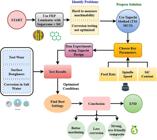
The methods used to assess TM-MCO are demonstrated in TM-MCO for Sugarcane-SiC FRP Laminates. From the beginning, composite laminates are made by reinforcing the polymer resin with silicon carbide particles and sugarcane bagasse fibers, as shown in Figure 1. The test specimens are then cured and shaped. Machining trials are then used to evaluate variables such as cutting force, tool wear, and surface roughness. Several media are simultaneously tested for corrosion using electrochemical techniques. The data gathered is utilized to optimize both corrosion resistance and machinability by incorporating performance evaluation.
Although there have been certain developments in hybrid composites, the systematic study of machinability and corrosion resistance under industrially viable conditions continues to be attractive, especially for sugarcane-SiC FRPs. The above literature review implies a lack of optimization in the previous studies towards manufacturing parameters for better machinability and corrosion resistance as well as explaining TM-MCO (Taguchi-Multi-Criteria Optimization) based study to optimize machining characteristics (such as MRR, SR, Fc and tool wear) with corrosion resistance can lead to sustainable and high-performance composites designed for marine/industrial applications. Mechanical, tribological and electrochemical investigations are combined to understand the behavior of hybrid FRP.
2. LITERATURE SURVEY
With the goal to satisfy the increasing demand for sustainable high-performance composites, researchers are continuously searching for novel combinations of reinforcements and matrix systems. Research on how to enhance the mechanical, thermal, vibrational, and wear properties of Metal Matrix Composites (MMCs) and Fiber-Reinforced Composites (FRCs) through the use of hybrid reinforcements, natural fillers, and enhanced processing methods has been extensive.
Glass Fiber/Epoxy laminate composites: JOSHUA and ARUNACHALAPANDY [20] method involves making Glass Fiber/Epoxy Laminate Composites (GFEL) and evaluating their mechanical and vibrational characteristics using different amounts of sugarcane cellulose nanoparticles (0%, 1%, 3%, and 5%). According to tests, 3% sugarcane cellulose enhanced the impact resistance while 5% sugarcane cellulose boosted tensile and compression strength. The system had the best damp and frequency with 1% cellulose. The investigation provides evidence for the possible use of biodegradable sugarcane cellulose to improve performance for composite materials that can be used for mechanical and aerospace applications.
Graphene oxide (GO) and silicon carbide (SiC) fillers: According to SINGH et al. [21] GFRP composites containing Graphene Oxide (GO) and SiC fillers were created using the hand-layup technique. Mechanical testing and fretting wear analysis located the optimal tensile, flexural, and SBS strengths at 242.73 MPa, 317.13 MPa and 40.05 MPa, respectively, when filler concentration was 0.5% GO.
The best wear resistance was achieved with a hybrid filler mixture consisting of 1% GO and 1% SiC. FE-SEM demonstrated suitability for high-performance industrial applications by verifying reduced material loss and enhanced interfacial bonding [22]. Figure 2 shows the amount of silicon carbide used for the preparation of laminates.

Design of Experiments (DOE): KARTHIK et al. [23] offer a method for examining the drilling performance of CFRP composites by using a Design of Experiments (DOE) approach, varying feed rates and spindle speeds, and with and without silicon carbide reinforcement. The best settings (feed rate of 20 mm/min and speed of 1000 rpm) significantly improved the quality of the holes drilled, according to drilling trial results. By reducing delamination and other defects, silicon carbide enhanced machining performance and offered reliable suggestions for high-performance aircraft fastening applications.
Micro cellulose-infused with Musa Paradisiaca Plant Leaf (MPPL): REDDY et al.’s [24] method involves using compression molding and hand lay-up to create a layered structure made of basalt, jute, and basalt reinforced with epoxy that has been micro cellulose-infused with MPPL as shown in Figure 3. Micro cellulose ranged from 0% to 10%. Test results indicated that composites with 5% MPPL had better thermo-mechanical and water-resistant properties, with higher tensile (99.74 MPa), flexural (77.87 MPa), impact (40.27 kJ/m2), hardness (97 HRRW), and crystallinity (6.3%).

Analysis of Polymer Matrix Composite (PMC): With a focus on processing techniques, strengthening procedures, and mechanical properties like hardness, flexural strength, impact strength, and ultimate tensile strength and tensile load, the proposed study by Gupta et al. [25] offers a comprehensive analysis of PMC. It shows how particle dispersion, bonding at interfaces and reinforcement characteristics affect performance. The assessment shows that PMCs are fit for purpose in high-performance applications in biomedical, automotive, and aerospace sectors. Possible directions for future research and current challenges are also described. Yet the TM-MCO is undeniably superior, compared to such alternatives. Hybrid FRP laminates’ machinability and corrosion resistance can be improved by systematic parameter adjustment. Because of its thorough and statistically sound foundation, TM-MCO is a great option for the development of sustainable composite manufacturing.
A comparison of the mechanical characteristics of Glass Fiber Reinforced Plastic (GFRP) laminates reinforced with sugarcane fiber and silicon carbide is shown in Figure 4. In Figure 4(a), we can see the Ultimate Tensile Strength (UTS) of the composite material, which is the highest stress it can endure before cracking under tension. A greater UTS indicates superior resistance to tensile failure. This number is connected to both the strength and the cross-sectional area of the specimen; it represents the maximum load (in kN) that the specimen can withstand under tension before breaking, as shown in Figure 4(b). One way to evaluate a material’s resistance to deformation under bending force is by looking at its Ultimate Flexural Strength, as shown in Figure 4(c). It measures how well the composite’s outermost fibers withstand flexural stress. The Ultimate Flexural Load, shown in Figure 4(d), is the maximum load that may be given to a specimen before it breaks under bending. In addition to flexural strength, this load-based statistic measures the actual force that the material experienced during testing. These subfigures, taken as a whole, demonstrate that silicon carbide is more effective as a reinforcement than sugarcane fiber in most respects, revealing the material’s mechanical behavior under tensile and bending stresses. Figure 5 shows the Flexural Load.

(a) Ultimate tensile strength (b) ultimate tensile load (c) ultimate flexural strength, (d) ultimate flexural load.

3. MATERIALS AND METHODS
In this research work materials such as Glass Fiber Reinforced Plastic (GFRP) laminates and sugar cane fiber laminates purchased from Emak glass fiber and accessories Pvt ltd, Bangalore, India. Silicon carbide powder purchased from MB micro blasters, Rajasthan, India and the particle size of the powder is about 10 µm. The matrix binder used is Epoxy resin purchased from vashavi bala chemicals, Chennai, India. The TM-MCO framework (Tailored Material- Multi-Criteria Optimization) optimizes machinability and corrosion resistance of sugarcane fiber reinforced silicon carbide FRP laminates. It integrates organized experimental patterns, based on strong measurement protocols and multivariate statistics, in an industrial scale-up. The objectives of the framework are to (1) unravel the material × process interactions, (2) compose multiple performance metrics into feasible composite scores, and (3) provide reliable recommendations for industrial/marine use with minimal environmental duties.
The tensile and flexural test were conducted in the Instron universal testing machine. For the flexural testing customized three-point fixture is used and all the mechanical testing average values were taken out of 5 specimens in each combination of GFRP with sugarcane fiber and GFRP with Silicon carbide. Impact test is carried out in the FIE 300 200MPa capacity chary impact tester. The corrosion test is performed using corrosion testing, salt-spray (salt-fog) testing was used to accelerate and compare the surface degradation and corrosion behaviour of FRP laminates reinforced with sugarcane fiber and silicon carbide. Salt spray testing was conducted using a 5 wt.% NaCl solution at 35 ± 2 °C to simulate marine corrosion. Specimens were exposed for up to 100 hours and periodically inspected for blistering, discoloration, and delamination. Post-test evaluation included mass-loss measurement and surface morphology analysis to assess corrosion resistance. Hardness property is also studied for the prepared composite with Zwick Roell Rockwell hardness tester with diamond ball indentation.
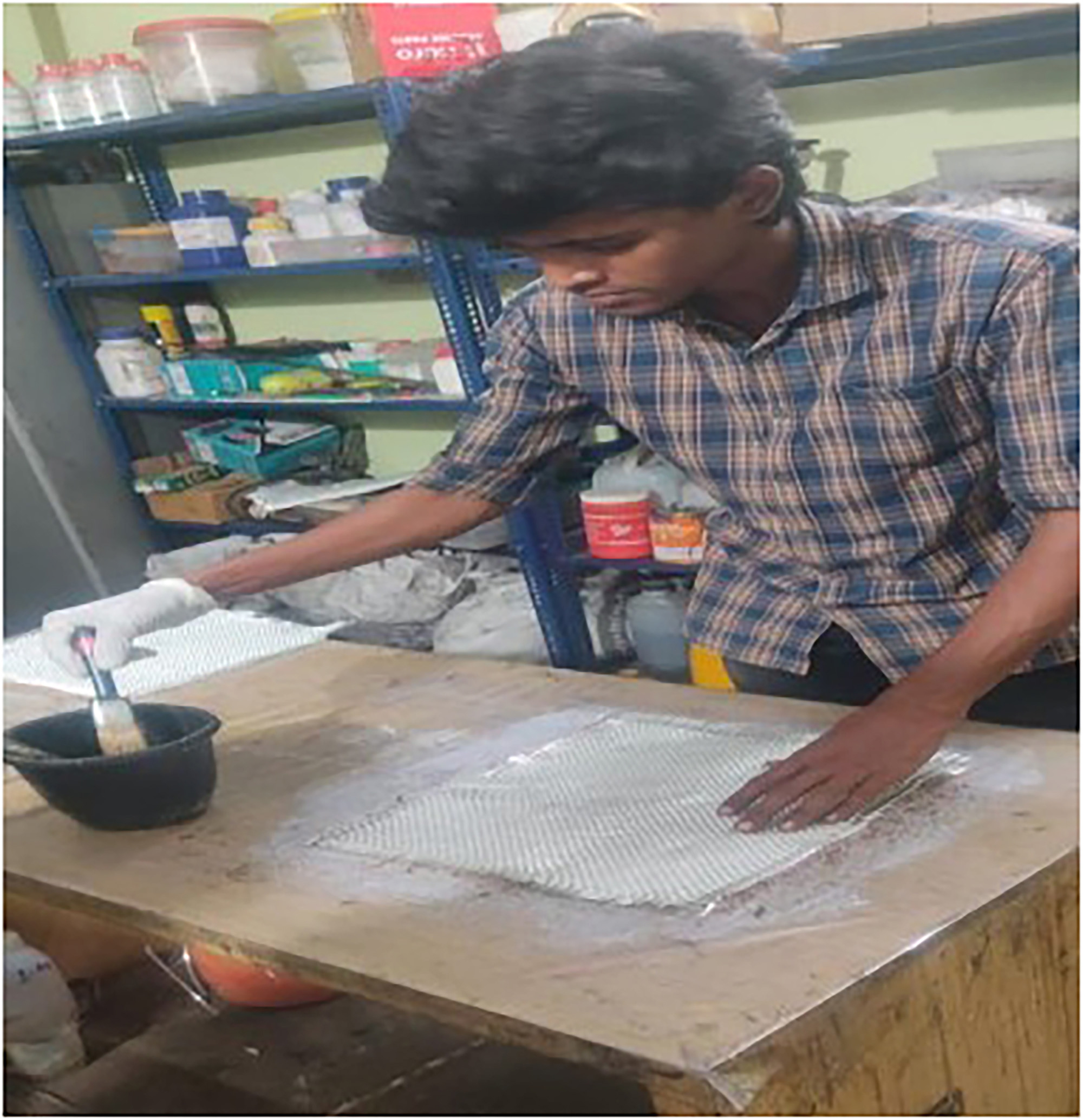
The wear test is carried out in the pin on disc wear testing machine. Tests were conducted by following ASTM standards to ensure the quality of the results and its analysis. The fabrication of the composite is done with hand layup method the size of the laminate is determined as 300 × 300 mm with the constant thickness is maintained about 30 mm which is shown in the Figure 3. The Scanning electron microscopy (SEM) of the prepared composite is anlayzed using Carl Zeiss (Σ-version) SEM equipment with 5 kV accelerating voltage was maintained. Before doing the analysis, gold sputter coating was applied on the outer layer of the fiber to make it conductive. Images were captured at different magnifications to study the fiber matrix interaction and its effect. The GFPR and sugarcane fiber is placed alternatively to follow the sequential order about total of 6 laminates each (3 GFPR and 3 sugarcane fiber) with varying the percentage of the Silicon carbide from 0% to 15% respectively.
3.1. Overview of the TM-MCO framework
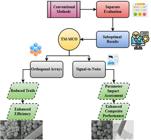
The TM-MCO provides a systematic approach to enhance both performance characteristics of FRP laminates reinforced with sugarcane fiber and SiC. When machinability and corrosion resistance are evaluated independently using conventional approaches, it often yields poor results.
TM-MCO uses a statistically sound technique that allows concurrent optimization to get around this restriction illustrated in Figure 6. It utilizes orthogonal arrangements to simplify experimental test, reduce trial counts, and study many factors simultaneously. According to this work, choosing the optimum feed rate and spindle speed with corresponding SiC content using TM-MCO keeps the integrity of the structure lower tool wear and corrosion.
This above defined equation 1 helps one to roughly estimate Re the rate of material loss ML" during machining MC. It reflects the efficiency and efficacy [δe + δef] of the cutting operations Cope. Higher numbers can lead to surface deterioration sd or more tool wear tw" even if they suggest faster machining fm. Material Removal Rate (MRR) helps to balance machining bm speed with fiber integrity if " and surface polish under certain feed MC[δe + δef] and speed settings in the framework of FRP laminates.
This equation 2 helps one to express εxm the machining cutting force cf which considers the tool-composite [tc" : dt] interaction ∈ int more especially, the abrasive SiC particle properties ∇pp′. Cutting ct with more force wears α fw∃′ down the instrument dn more quickly and calls more energy. Forecasting and optimizing machining parameters for FRP laminates can be done using the equation ∈ int * ∇pp′, therefore guaranteeing stable machining [α fw∃′ - dn], low tool deflection, and smooth cutting.
This equation 3 helps one to forecast surface finish quality FsfQf following machining. It ties roughness ∀RS to cutting speed cs, matrix cracking MC, fiber pull-out ∀cy", and tool geometry tg. On a smooth surface ss", corrosion starts Cr less readily, such that the structure is stronger ∝St. This prediction pr" makes parameter selection Cr [∝St + pr"] that guarantees machinability [∀RS - cs] and downstream performance in demanding environments, such saline exposure, easier.
This model forecasts MFR tool wear-down wn speed when cutting composite CC" laminates LM. Among it are abrasive wear ∀ab′, sticky wear SW, and diffusion wear dw. SiC in the laminate speeds ls wear due to its hardness ∀hd. Monitoring tool mt wear through this equation 4 can help one to extend tool life ls[∀hd - mt] and preserve consistent machining outputs without sacrificing laminate quality or dimensional precision.
This elucidated equation 5 allows one to determine the degree of fiber df delamination under cutting or drilling [ct - dr"]. Dealing with natural fibers NF, including sugarcane ∪ SC, delamination dla" becomes a significant problem ∀dl. The factor is found by using the maximum max delaminated zone to hole size ratio. By varying this factor NF [∪ SC - dla"], the post-machined composite laminate gains lG" structural integrity, defect rate, and load-bearing capability as max [∀dl - lG"].
By lowering post-processing tasks, energy consumption, and material waste, the approach improves efficiency and lifetime. TM-MCO includes the signal-to-noise (S/N) ratio to help to further separate the influence of every parameter on the performance response.
3.2. Selection of key machining and environmental parameters
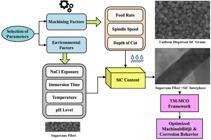
Selecting machining and environmental conditions with great attention will help to ensure complete assessment in the proposed TM-MCO structure. The primary factors to be considered in machining are feed rate, spindle speed, depth of cut, and machining accuracy. Important indicators of machinability; Tool wear, heat generation, and surface roughness all are influenced by these factors.
Furthermore, important for matrix reinforcement and enhanced wear resistance is SiC presence in the composite shown in Figure 7. From an environmental standpoint, corrosion behavior is tested in saline (NaCl) environments, therefore replicating maritime or high-humidity industrial contexts. By adjusting factors including immersion time, temperature, and pH level, consistency among corrosion tests is attained.
The thrust force equation Tceq helps one to understand the vertical force vf experienced [vf - ex] by the tool in drilling DR and cutting ∀ct. High thrust pressures HTP" cause matrix cracking ∀MA and delamination in frp laminates dl". Especially helpful for bio-based fibers +∀MA[ub*∝*dl"] and particle reinforcements DR[∀ct ∝ - HTP"], this predictive equation 6 helps to maximize process parameters lowering vertical stress.
The above-mentioned equation 7 will assist us to ascertain the energy needed to eliminate one volume of material ASu′ [∂vL × mit"]. The efficacy Uef of a cutter is mostly measured by its Hard SiC raises [ct - Hr"] specific energy whereas ideal settings lower it. By means of energy-efficient ∂SS∀ machining ee of bio-composites BC", this method promotes sustainable manufacturing objectives.
Equation 8 relates tool geometry Tl * gm′ and feed to chip thickness CT both before and after cutting. It clarifies the generation process δGP of composite machining chips [δGP + ∇cm * MC"]. The ratio helps one to assess the effects EF on tool wear τtw′ and cutting efficiency 2CF. Working with high speed FRP laminates lms requires careful consideration of chip behavior EF [τtw′ - 2CF ]lms since it reveals the interaction of the fibers and matrix.
This model mimics αmm the heat generated in milling Gmm by deformation and friction (DF)fm. Enough heat (ht)a can alter the polymer matrix αpm and the fiber-connecting structure (fcr). Machining keeps MK within reasonable temperature ranges (TR)n-1 when heat generation shg is known by equation 9. Maintaining the mechanical strength ms and corrosion resistance (crl) of the laminate depends MK(TR)n-1_shg on effective control of heat (ht)a αpm (fcr).
Here the heat distribution between the workpiece and the tool stated |hd(wk, ts, ∇in)|s as an equation 10 at the interface. Maintaining consistent temperature control throughout FRP Ct * Tr machining MN helps to prevent heat damage hd or fiber pull-out |fr|po. The model advises |Ma|d low cooling rates lcr and cutting speeds to maintain integrity , particularly in situations |Ma|d * lcr when the heat sensitivity of the sugarcane fibers could affect performance.
TM-MCO integrates machining data with environmental data for optimization, simulating actual working condition. Using the selection process, this can produce a FRP laminate that degrades resistant and machine well.
3.3. Integration of machinability and corrosion objectives
Merging the optimization frameworks for machinability and corrosion performance is a crucial step forward in composite processing. If these are tuned separately, it can affect performance.
TM-MCO has machinability targets for lowering tool wear, delamination, and surface roughness as well as corrosion targets for raising electrochemical stability and lowering corrosion rate illustrated in Figure 8. Once the framework converts the signals-to-noise ratio and analysis of variance (ANOVA) into quantitative response variables, these performance criteria are evaluated overall. This integration of two objectives means that development in one area will not compromise development in the other.

Common cause C(Ca) of material loss ML in salted environments is corrosion ML(se)cr; this equation 11 tries to estimate that rate |er|. It gauges degradation |∇gd| by tracking weight TW-2 changes over time ∇t. By evaluating the protective properties pp of the matrix MT and fiber components (Fc), it clarifies the robustness pp - MT (Fc) of natural fiber-reinforced laminates over time.
This electrochemical equation 12 allows one to find the corrosion current El(Cc) density by use of anodic Da and cathodic polarization (CP) curve analysis Ac. Comprehensive immersion CI testing helps to project corrosion rates without doing that way Da(CP), Ac - CI. Testing the electrochemical stability of FRP laminates in situations 〈El(Cc) - Da (CP), Ac - CI〉 high in chloride gives a rapid and precise method to assess composite corrosion resistance.
This equation 13 presents an electrochemical link elk between polarization resistance and corrosion rate S[∀pr – rC"]. More resistance indicates ∀ri that corrosion performance [CP] has improved. This reflects the behavior of the matrix and SiC particles PP, which build protective oxide po layers or barriers. This equation allows us to quantitatively QN compare the corrosion rates Cr of several laminate compositions 2LC.
Equation 14 facilitates the prediction PI' of the frequency-dependent fd impedance response ir of the composite Cp". Its aid helps one to better assess BA barrier qualities ∀bq, diffusion rates dr", and complexity CP of corrosion mechanisms ∂(cm)". EIS data fitting helps to evaluate the field performance fd of a material under mu" salty or humid environments by clarifying BA[∀bq – dr"] interfacial behavior CP[∂(cm)" fd – mu"] and patterns of long-term deterioration.
A material containing a high SiC concentration, for instance, can increase tool wear and thus improve corrosion resistance. TM-MCO aids in determining the most suitable equilibrium point. The framework gives multiple response performance indicators that may improve both main objectives at once.
3.4. Optimization strategy using orthogonal arrays
The TM-MCO technique, which is based on orthogonal arrays, considerably reduces the total number of experiments. Some of these include feed rate, spindle speed, and SiC content; orthogonal arrays enable well-ordered assessment of many input parameters at various levels without requiring exhaustive testing.
This approach simplifies the procedure of doing experiments and increases the validity of the findings shown in Figure 9. Every experiment aims to evaluate, both separately and in concert with one another, the effects of the elements on response variables including corrosion rate and surface roughness. With an eye on consistency and quality, the Taguchi S/N ratio helps one ascertain the appropriate level for every component.

Here to find the speed and absorption capacity (AB + SP)lt of water FRP laminates by use of this empirical equation 15. Absorbed water aw can cause swelling, plasticizing , or microbial activity Ma1-l. Analyzing resistance to moisture and finding Armt-fn the link between absorption ab and the degradation dg of mechanical (ab + dg)i-1 and corrosion qualities Ma1-lArmt-fn during service life in wet or salted environments, benefit from this approach.
This law enables the prediction of the passage of ions or moisture through a composite structure. Bio-fibers accelerate their breakdown rate in damp environments. Equation 16 can be used to develop more effective preventive measures for natural fiber composites, thereby guiding the prediction of internal matrix disintegration, loss of adhesion, and swelling over time due to external conditions.
The equation 17 calculates the stress amplification Stam near defects or holes . Natural fibers and particles 2pr can operate as stress concentrators , therefore weakening a material. By modeling stress msin+1 concentration, engineers may predict where failure would start and thereby enhance the laminate design Fld+1, machining strategy , and defect management.
By comparing the signal-to-noise ratio ∂(SR, rt)n which gauges the intended performance. This equation 18 assesses the resilience of a process guΔipXpr. A larger signal-to-noise ratio Δsnr denotes ideal parameter values (IP)v. S/N ratios are utilized to modify feed mf, speed, and SiC concentration sp to reach ideal machinability mf ≥ ≥ sp and corrosion resistance with minimum variation among samples.
ANOVA then quantifies the statistical significance of the most important elements. This method guarantees an effective choice of the ideal combination of parameters through a step-by-step process.
3.5. Implementation plan for industrial applicability
The penultimate stage is applying the recommended TM-MCO framework in actual industrial environments. This means implementing these ideal parameter sets in actual production processes. The aim is to ensure that regularly outstanding machinability and corrosion resistance FRP laminates produced using the TM-MCO technique show.
Part of the implementation process are training operators, calibrating machine tools, combining corrosion prevention systems, and real-time quality monitoring given in Figure 10. Among the several composites uses for the scalability of the framework are those involving automotive, maritime, and infrastructural components. Reducing machining waste and creating the path for sustainable fibers (sugarcane) benefits the environment.

This statistical equation 19 allows one to separate pSi+1 the total variance (1 + TV) in outcomes into its component portions Cpr resulting from different parameters. It determines whether machinability dpmc or corrosion Cr are major concerns. The equation helps statistically confirm the Taguchi experimental design (1 + TV)Cpr thereby increasing confidence in the selected optimum conditions.
Using this linear or nonlinear N/nlEq equation 20 helps one to associate some performance outputs PO related to machining parameters (1 - mp) via use of wear Wr, roughness (rg + 1), and corrosion rate Crdt. Regression models RM have prediction powers pp for unseen parameter combinations pc to support faster development fd cycles and better-informed decision-making dm in bio-composite processing as Wr ∂(rg + 1).
Combining several performance results │|Re - ML"|│ produces MC a single desired score ∀cy" from this optimization tg*ss" equation 21. It finds a balance between conflicting objectives ∀MA, such lowering tool wear [ub*∝*dl"] and raising corrosion resistance MC[∀cy" + tg*ss"]. When optimal optimization of all characteristics is not feasible at once, it guides the choice of compromise solutions by means of TM-MCO.
Equation 22 ranks parameter combinations (ht)aαpm(fcr) using weighted ratings |Ma|d from performance output lcr. One can rank machining |er| |∇gd| configurations to maximize their benefits TW-2∇t. The last phase of TM-MCO, it directs manufacturing engineers ∫|Ma|d * lcr to the ideal FRP laminate machining settings.
Continuous feedback loops help to fine-tune processes by means of real-time performance data. This implementation approach guarantees sustainable, dependable, and reasonably priced industrial-scale manufacturing of bio-composite materials.
Taguchi-based optimization helps the TM-MCO framework effectively combine machining and corrosion parameters. It guarantees pragmatic use, lets one precisely adjust processing conditions, and enhances composite performance. This approach encourages eco-efficiency, quality consistency, and scalability through its industrial implementation strategy to generate next-generation bio-composites for the automotive, marine, and structural domains.
4. RESULTS AND DISCUSSION
FRP laminates that use hybrid reinforcements like sugarcane fibers and SiC have attracted a lot of interest because of their potential to produce high-performance composites that are environmentally friendly and sustainable. These evaluations try to balance the advantages and disadvantages of mechanical strength, environmental resistance, and machinability with the goal to completely comprehend the potential of these hybrid composites for structural and industrial applications. The dataset is chosen from the link [26]. The simulation parameters used in this study are summarized in Table 1. The microstructural features of the sugarcane–SiC reinforced FRP laminates are shown in Figure 11.

Electron microscopy of sugarcane–SiC FRP laminates: (a) Agglomerated SiC (SEM); (b) Dispersed SiC grains (SEM); (c) Angular SiC particles (SEM); (d) Fiber–matrix interface with SiC layer (TEM).
According to an evaluation on surface roughness of sugarcane-SiC reinforced FRP laminates, hybrid composition has a significant impact on machining quality. Silicon carbide particles, which are hard and abrasive, increases the resistance of the cutting tool which causes micro tearing and uneven removal of the material from the surface as shown in Figure 12. The surface defects are aggravated by the natural variation of the sugarcane fibers and also pull out of fiber and uneven bond with the polymer matrix. So, as fibers are loaded and SiC content achieved, Ra values for surface roughness generally increase. The surface appearance is significantly affected by the machining parameters which include cutting speed, feed rate and tool type. When cutting speed is less and feed rate is higher, the surface becomes rough. To achieve the required matching of hybrid composite systems, their strength reinforcing and machining ability are compromised that makes the surface rough which may require additional post-processing for specific applications.

An analysis of tool wear rates revealed that machining tools reinforced with sugarcane-SiC FRP laminates deteriorate considerably more quickly. The addition of silicon carbide, a robust ceramic material, accelerates the cutting tool’s deterioration because of abrasive wear on its edge illustrated in Figure 13. Because sugarcane fibers vary in cutting forces, the tool experiences increased mechanical stress. Abrasive and mechanical wear reduces the tool life and is more noticeable at higher SiC concentrations or after longer milling times. When tools are analysed using Scanning Electron Microscopy (SEM), surface craters, edge chipping, and flank wear are frequently observed. Selecting the appropriate tool material and geometry is essential for controlling wear; for instance, carbide tools are more resilient than high-speed steel ones. Optimizing the cutting parameters and making effective use of cooling and lubrication are essential for minimizing wear. The increased tool wear is a significant barrier to effectively machining these hybrid materials.

Figure 14 presents cutting force results for Sugarcane- SiC reinforced FRP laminates and indicates higher cutting resistance during machining operations. The overall importance of this force increases, given the hardness of the SiC particles and their valuable contribution to tangentially passing strength to the interface between the tool and workpiece. Other factors that contribute to the inconsistent cutting force vary significantly due to the density, bonding strength of materials, and the variable/irregular orientation of the sugarcane fibers. There are multiple contributing factors to the force increase as cutting depth and feed increase, however they may cause the tool to vibrate and/or deflect. These force increases may impact surface finish affecting tool wear rates and could impact consistency and accuracy of dimensional tolerances.

Evaluating sugarcane-SiC reinforced FRP laminates using MRR methodology exhibited complex interactions depending on the machining parameters and the composition of the composite. MRR may be somewhat reduced compared to standard polymer composites, as cutting energy or resistance is increased with additional hard silicon carbides as presented in Figure 15. Since the sugarcane fibers were not homogeneously dispersed or bonded with the matrix, chip formation was varied, and therefore inefficient material removal was evidenced. Although MRR can be increased with feed rate and cutting speed, it was observed that potential surface quality and tool life is sacrificed in the process. On the other hand, MRR decreases, and surface quality improves at lower speeds. Finding the ideal balance between cutting force, tool wear, and machining efficiency is crucial for optimizing MRR. In order to get the most out of hybrid reinforcement, people must be careful with the machining settings because it is difficult to obtain a high and consistent MRR with the package.
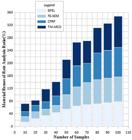
According to corrosion rate studies, sugarcane-SiC reinforced FRP laminates exhibit significantly greater resistance to corrosive environments than conventional natural fiber composites in Figure 16. By slowing down the degradation process and reducing the penetration of corrosive substances, silicon carbide particles are added to the composite to improve its barrier qualities. Furthermore, the SiC in the matrix is uniformly distributed, which lessens the quantity of voids and microcracks, which are the exact locations where corrosion can begin. When properly incorporated into the matrix, treated sugarcane fibers improve the stability of the laminate in the presence of chemicals. Electrochemical tests such as potentio-dynamic polarization show that a lower corrosion current density gives hybrid composite better corrosion resistance. Proper preparation of materials is essential as the composites which are not treated may still pose localized corrosion risks due to fiber swelling or weak interfacial adhesion.

The microstructural integrity study of sugarcane-SiC reinforced FRP laminate seen in Figure 17 indicate the internal bonding, filler dispersion and damage mechanism from machining and corrosion. As seen in SEM, silicon carbide particles provide a compact, denser microstructure that enhances load transfer and lowers void content. The presence of well-distributed SiC particles in the matrix aids in sugarcane fibers’ interaction and impedes delamination and the pull out of fibers, as seen in the microstructure and mechanical properties. In contrast, scattered fiber distribution and weak bonding can cause microcracks, debonding, and matrix cracking. Corrosion testing shows that untreated or improperly processed laminates display matrix degradation and fiber swelling, while treated composites do not. The dispersion of filler, adhesion between resin and fiber, and treatment of filler can affect the microstructural stability of a composite. A robust microstructure of hybrid composite imparts good durability, dimensional stability and mechanical performance in functional applications.

Figure 18 shows the Charpy Impact-Absorbed Energy. The Charpy impact test is a standardized test to predict energy absorption capacity of materials. The absorbed energy measures the material’s ultimate strength during shock loading or sudden impact and indicates its ability to withstand damage. In the case of the GFRP laminates as seen in the image, the experiment compares two different types of reinforcement. One uses sugarcane fiber and the other uses silicon carbide. The outcome revealed that the greater impact resistance was shown by the GFRP laminate reinforced with SiC compared to the one that reinforced with ScF as it absorbs more energy (~18.7 J). This means that under circumstances of dynamic loading, the laminate is strengthened more by silicon carbide than by other components making it a better choice in aerospace components and impact-resistant constructions. Figure 19 shows the Impact test apparatus. The experimental results obtained for the sugarcane–SiC reinforced FRP laminates are summarized in Table 2.


Corrosion testing has shown that the treatment of fibers in particular lowers the vacancies and enhances the chemical stability. Microstructural analysis shows that the hybrid laminate has better filler bonding, less delamination, and more structural and chemical stability. The results shows that sugarcane-SiC reinforced laminates can survive under tough applications with proper machining conditions.
5. IMPLICATIONS FOR FRP LAMINATES REINFORCED WITH SUGARCANE AND SILICON CARBIDE
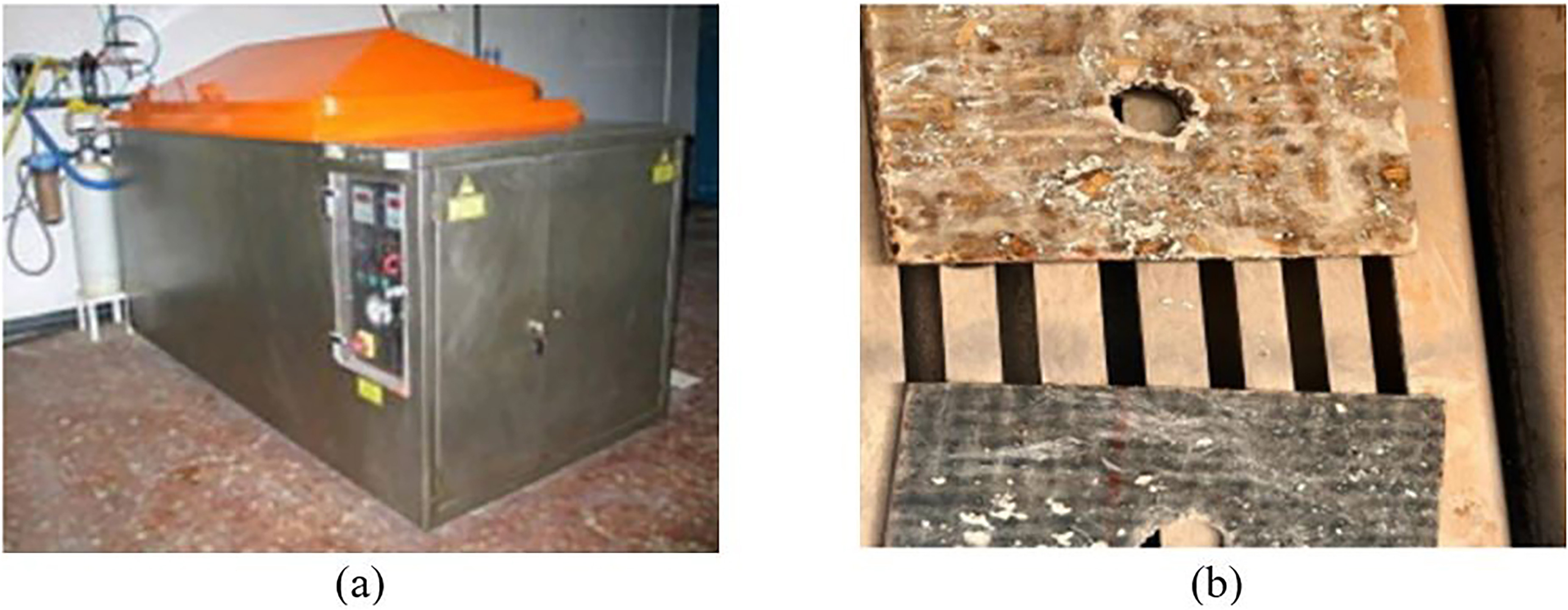
The development of advanced composites can take a significant leap forward thanks to FRP laminates that are reinforced with silicon carbide and sugarcane cellulose. This reinforcement mechanism is a hybrid mechanism that uses environmental-friendly, bio-based materials with ceramic fillers for enhanced durability. The use of sugarcane cellulose which is a renewable and biodegradable agricultural by-product increases the damping capacity, tensile strength and compressive strength of the composite owing to its high aspect ratio and fibrous structure. Silicon carbide is a hard and thermally stable ceramic that improves the surface hardness, wear resistance, and thermal conductivity of laminates. The properties are essential for parts employed in structural, aerospace, and automotive applications that experience mechanical and thermal stresses. These two reinforcements when utilized together, lead to balanced enhancements in mechanical, vibrational and corrosion-resistant properties while using cheap and abundantly available natural resources to enhance cost effectiveness. Sugarcane cellulose lowers dependency on artificial fibers, enabling low carbon footprints and helping to reach various sustainability goals worldwide. By optimizing drilling settings and cutting settings, the industrial-scale production will get further diversified which enables greater machinability and lower tool wear. These hybrid laminates are resistant to decomposition, allowing them to operate for a long time in harsh environments. The salt spray testing setup and specimen preparation used in this study are shown in Figure 20. Using sugarcane and silicon carbide as reinforcing materials in fiber-reinforced polymer (FRP) laminates has a thorough impact, as they provide a means for the development of high-performance eco-friendly materials designed to meet the needs of high demanding engineering sectors, while maintaining a low-cost solution.

The graph comparing strength against the flexural strength of GFRP laminates reinforced with sugarcane and silicon carbide is shown in the Figure 21 and Table 3. The flexural strength of GFRP + Silicon Carbide (~102.3 MPa) is higher than that of GFRP + Sugarcane (~82.1 MPa), suggesting that its ceramic enhances rigidity under bending. Silicon carbide is very strong and helps to improve load transfer and increase stiffness. Sugarcane fibers are sustainable but lead to the inconsistency of bonds resulting in poorer performance. The graph supports that silicon carbide is a better candidate for applications requiring high flexural performance and is applicable for structures or load bearing.

Based on the findings from the Figure 22 and Table 4. The impact energy graphic shows the Charpy impact test impact of energy absorbed by each composite under high strain condition. The GFRP + SiC specimen absorbs more energy (~18.7 J) compared to the GFRP + sugarcane (~16.7 J), indicating that the former is tougher and resistant to shock impacts. The presence of the ceramic SiC particles allows for better energy dissipation in the laminate, allowing it to sustain much higher sudden loads without fracturing. Sugarcane fibers are too light and eco-friendly but do not absorb as much energy due to uneven fiber matrix bonding. The research suggests that SiC-reinforced GFRP is suitable for use with dynamic loading such as in the automotive and aerospace sectors.

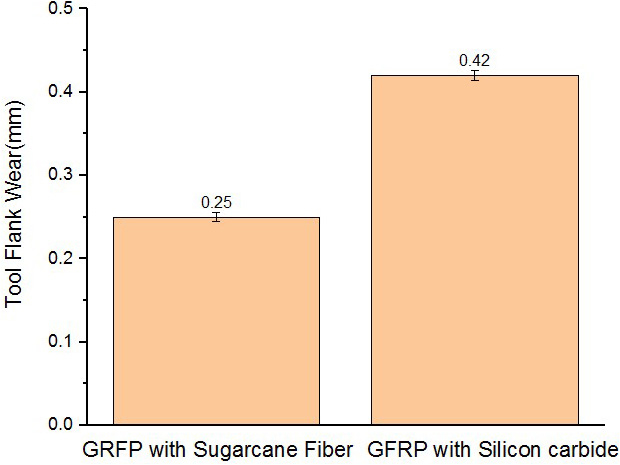
According to the graph (Figure 23) and table (Table 5), the tool wear behaviour of the cutting tool after machining both type of laminate. Due to the hardness and abrasiveness of the SiC particles, GFRP + Silicon Carbide causes significantly high tool wear (0.42 mm flank wear) than GFRP + Sugarcane (0.25 mm). The sharp SiC grains enhance friction and mechanical wear and tear against the tool surface, which results in edge chipping and crater formation. Sugarcane fibers, being softer, cause less abrasive wear. The chart shows that while SiC enhanced material properties, it also resulted in reduced tool life hence some improved tooling material or cutting conditions are required for the economic machining of SiC based FRP composite.

Table 6 and Figure 24 show the corrosion rate graph of the laminates due to weathering in a salt spray environment. GFRP + Sugarcane experiences the highest corrosion rate (100%, baseline) whereas GFRP + Silicon Carbide shows much lower corrosion rate (~62%). Due to the barrier effect of SiC, the incorporation of SiC will reduce the formation of microcracks and chemical inlet. SiC particles which are treated seal the likely paths for moisture and chloride ions and stabilize the matrix. Let the moisture take place in the Saccharum spontaneum of the sugarcane. Therefore, the graph backs up the usage of SiC in high humidity or salinity conditions like the marine environment. The surface roughness values at 15% SiC were slightly higher due to increased abrasiveness of ceramic particles, which can locally scratch the surface during machining. At 5% SiC, lower particle content allowed smoother resin flow and fiber leveling, resulting in reduced roughness. This highlights the trade-off between hardness and surface finish in hybrid FRP composites.

The surface roughness graph obtain from the Figure 25 and Table 7 is to show effect of machining on smoothness of laminates. GFRP + Silicon Carbide has more Ra value (~3.12 µm) than GFRP + Sugarcane (~1.45 µm). This is due to the presence of SiC particles which are abrasive in nature, and they cause micro-tearing of the surface during cutting action. By shearing, these particles provoke tool chatter and roughen the surface. Sugarcane fibers are much softer than bamboo’s, meaning they will be easier to machine and give a better finish. The irregularity of sugarcane may result in surface defects. The graph signifies that the surfaces of SiC-based laminates must either undergo post-machining surface treatment or require precise parameter control, particularly for engineering applications where high surface quality or tight tolerances are essential. The comparative evaluation of corrosion-wear performance of FRP laminates is shown in Table 8.

6. CONCLUSION
The machinability and corrosion behavior of sugarcane fiber/SiC reinforced FRP laminates were studied. Turning experiments showed that the hybrid composite material attained tensile strength of 125.6 MPa and impact energy of 16.7 kJ/m2, while its surface roughness raised from 1.45 µm at 5% SiC to 3.12 µm at 15% SiC; a compromise between hardness and surface finish is considered. MRR and the cutting forces suggested that the machinability of these materials decreased marginally with increasing SiC content by virtue of higher tool wear whereas wear resistance is believed to be increased.
Salt spray corrosion testing demonstrated that the hybrid laminated plates had better corrosion resistance than GFRP under controlled exposure (<0.2 mg/cm2 mass loss and no observable delamination). Addition of sugarcane fibers not only increases sustainability and lowers density but also provides an alternative for lighter weight synthetics fiber composites.
Finally, through the TM–MCO optimization framework, it is shown that 5–10% SiC content with optimized machining parameters provides a trade-off between machinability, surface finish and corrosion resistance. These FRP prepregs are good option for vehicles skis, snowboards, vehicle panels, boat parts and industrial products requiring high strength, durability & the lightest weight/ Impact resistance.
Further work should concentrate on nano-fillers, sophisticated fiber surface treatments, fatigue performance, long-term environmental degradation and multi-axial loading influence. Furthermore, AI or a machine learning-based predictive model can be used to optimize the machining conditions even more and scale up these composites for real industrial applications.
7. ACKNOWLEDGMENTS
The author would like to express his heartfelt gratitude to the supervisor for his guidance and unwavering support during this research for his guidance and support.
8. BIBLIOGRAPHY
-
[1] JOSHUA, J.J., ARUNACHALAPANDY, S. “Epoxy composite laminate reinforced with and without sugarcane cellulose”, Proceedings of the International Conference on Eco-friendly Fibers and Polymeric Materials, v. 60, pp. 181–199, Feb. 2024. doi: https://doi.org/10.1007/978-981-97-7071-7_14.
» https://doi.org/10.1007/978-981-97-7071-7_14 -
[2] SUNDARAMALI, G., AIYASAMY, J.P., KARTHIKEYAN, S., et al., “Experimental investigations of electrodeposited Zn–Ni, Zn–Co, and Ni–Cr–Co–based novel coatings on AA7075 substrate to ameliorate the mechanical, abrasion, morphological, and corrosion properties for automotive applications”, Reviews on Advanced Materials Science, v. 62, n. 1, pp. 20220324, 2023. doi: https://doi.org/10.1515/rams-2022-0324.
» https://doi.org/10.1515/rams-2022-0324 -
[3] TULI, N.T., KHATUN, S., RASHID, A.B., “Unlocking the future of precision manufacturing: A comprehensive exploration of 3D printing with fiber-reinforced composites in aerospace, automotive, medical, and consumer industries”, Heliyon, v. 10, n. 5, pp. e27328, 2024. doi: https://doi.org/10.1016/j.heliyon.2024.e27328. PubMed PMID: 38495162.
» https://doi.org/10.1016/j.heliyon.2024.e27328 -
[4] KOSARAJU, S., TUMMALA, S.K., BOBBA, P., et al., “Manufacturing of green waste-reinforced aluminum composites”, Waste Residue Composites, v. 16, pp. 59–74, 2023. doi: https://doi.org/10.1515/ 9783110766523-003.
» https://doi.org/10.1515/9783110766523-003 -
[5] AKDERYA, T., BABA, B.O., “Thermal properties of vinyl ester-based biocomposites”, In: Thiagamani, S.M.K., Muthukumar, C., Krishnasamy, S., Siengchin, S. (eds), Vinyl ester-based biocomposites, Boca Raton, CRC Press, pp. 57–74, 2023. doi: https://doi.org/10.1201/9781003270997-4.
» https://doi.org/10.1201/9781003270997-4 -
[6] PRADHAN, M.K., GUPTA, S., “Mechanical and wear properties of AL7075 SiC and graphite hybrid composite and optimization using utility additives method”, Hybrid Composites: Processing, Characterization, and Applications, v. 14, pp. 117–150, 2022. doi: https://doi.org/10.1515/9783110724684-007.
» https://doi.org/10.1515/9783110724684-007 -
[7] KOTTEDA, T.K., KUMAR, M., KUMAR, P., et al., “Metal matrix nanocomposites: Future scope in the fabrication and machining techniques”, International Journal of Advanced Manufacturing Technology, pp. 1–19, 2022. doi: https://doi.org/10.1007/s00170-022-09847-0.
» https://doi.org/10.1007/s00170-022-09847-0 -
[8] KUMAR, P.D., RAJENDRAN, B., SUBEETSHA, B., et al., “Study on tensile, flexural and impact strength of GLARE reinforced with sugarcane bagasse ash microparticles”, Materials Today: Proceedings, v. 47, pp. 1059–1064, 2021. doi: https://doi.org/10.1016/j.matpr.2021.06.356.
» https://doi.org/10.1016/j.matpr.2021.06.356 - [9] DANIEL, E., OBIUKWU, O., “Mechanical and physical properties of silicon carbide, aluminum oxide, and epoxy hybrid composite: An overview”, GSJ, v. 9, n. 11, 2021.
-
[10] MAHAKUR, V.K., BHOWMIK, S., PATOWARI, P.K., “Machining parametric study on the natural fiber reinforced composites: A review”, Proceedings of the Institution of Mechanical Engineers. Part C, Journal of Mechanical Engineering Science, v. 236, n. 11, pp. 6232–6249, 2022. doi: https://doi.org/10.1177/09544062211063752.
» https://doi.org/10.1177/09544062211063752 -
[11] NALLUSAMY, S., “Analysis of MRR and TWR on OHNS die steel with different electrodes using electrical discharge machining”, International Journal of Engineering Research in Africa, v. 22, pp. 112–120, 2016. doi: https://doi.org/10.4028/www.scientific.net/JERA.22.112.
» https://doi.org/10.4028/www.scientific.net/JERA.22.112 - [12] LUBNA, M.M., MOHAMMED, Z., BISWAS, M.C., et al., “Fiber-reinforced polymer composites in aviation”, In: Gurgen, S., Hoque, E., Pruncu, C.I. (eds), Fiber-reinforced polymers: Processes and applications, Hauppauge, Nova Science Publishers, pp. 177–210, 2021.
-
[13] AYBARÇ, U., SEYDIBEYOĞLU, M.Ö., “Recycling for a sustainable world with metal matrix composites”, In: Ilyas, R.A., Sapuan, S.M., Bayraktar, E. (eds), Recycling of Plastics, Metals, and Their Composites, Boca Raton, CRC Press, pp. 75–92, 2021. doi: https://doi.org/10.1201/9781003148760-4.
» https://doi.org/10.1201/9781003148760-4 -
[14] RAJAMURUGAN, G., KRISHNASAMY, P., MURALIDHARAN, B., et al., “Contribution of hybrid particles (BaSO4/fly ash) on the drilling and wear performance of flax/aleovera fiber composite”, Particulate Science and Technology, v. 40, n. 5, pp. 638–650, 2022. doi: https://doi.org/10.1080/02726351.2021.1985024.
» https://doi.org/10.1080/02726351.2021.1985024 -
[15] RAZZAQ, A.M., MAJID, D.L., BASHEER, U.M., et al., “Research summary on the processing, mechanical and tribological properties of aluminium matrix composites as effected by fly ash reinforcement”, Crystals, v. 11, n. 10, pp. 1212, 2021. doi: https://doi.org/10.3390/cryst11101212.
» https://doi.org/10.3390/cryst11101212 -
[16] GOUDA, K., BHOWMIK, S., DAS, B., “A review on allotropes of carbon and natural filler-reinforced thermomechanical properties of upgraded epoxy hybrid composite”, Reviews on Advanced Materials Science, v. 60, n. 1, pp. 237–275, 2021. doi: https://doi.org/10.1515/rams-2021-0024.
» https://doi.org/10.1515/rams-2021-0024 -
[17] TCHERDYNTSEV, V.V., “Reinforced polymer composites”, Polymers, v. 13, n. 4, pp. 564, 2021. doi: https://doi.org/10.3390/polym13040564. PubMed PMID: 33668656.
» https://doi.org/10.3390/polym13040564 -
[18] KUMAR, S., SAHA, A., “Graphene nanoplatelets/organic wood dust hybrid composites: Physical, mechanical and thermal characterization”, Iranian Polymer Journal, v. 30, n. 9, pp. 935–951, 2021. doi: https://doi.org/10.1007/s13726-021-00946-5.
» https://doi.org/10.1007/s13726-021-00946-5 -
[19] RAZZAQ, A.M., MAJID, D.L., BASHEER, U.M., et al., “Research summary on the processing, mechanical and tribological properties of aluminium matrix composites as effected by fly ash reinforcement”, Crystals, v. 11, n. 10, pp. 1212, 2021. doi: https://doi.org/10.3390/cryst11101212.
» https://doi.org/10.3390/cryst11101212 -
[20] JOSHUA, J.J., ARUNACHALAPANDY, S., “Experimental investigation on mechanical properties of GFRP/Epoxy composite laminate reinforced with and without sugarcane cellulose nanoparticles”, In: Mavinkere Rangappa, S., Palaniappan, S.K., Siengchin, S. (eds), International Conference on Eco-friendly Fibers and Polymeric Materials, Singapore, Springer, pp. 181–199, 2024. doi: https://doi.org/10.1007/978-981-97-7071-7_14.
» https://doi.org/10.1007/978-981-97-7071-7_14 -
[21] SINGH, S.K., JACKSON SINGH, T., SINGH, L.D., et al., “Experimental study on the impact of hybrid GFRP composites with graphene oxide and silicon carbide fillers on mechanical and wear properties”, Journal of Adhesion Science and Technology, v. 39, n. 7, pp. 1105–1132, 2025. doi: https://doi.org/10.1080/01694243.2024.2438988.
» https://doi.org/10.1080/01694243.2024.2438988 -
[22] NALLUSAMY, S., KARTHIKEYAN, A., “Synthesis and wear characterization of reinforced glass fiber polymer composites with epoxy resin using granite powder”, Journal of Nano Research, v. 49, pp. 1–9, 2017. doi: https://doi.org/10.4028/www.scientific.net/JNanoR.49.1.
» https://doi.org/10.4028/www.scientific.net/JNanoR.49.1 -
[23] KARTHIK, K., MUTHUKUMARASAMY, S., SUBBIAH, G., et al., “Enhancing drilling accuracy and surface quality in carbon fiber/SiC hybrid composites through Taguchi-based parameter optimization”, Results in Engineering, v. 27, pp. 105539, 2025. doi: https://doi.org/10.1016/j.rineng.2025.105539.
» https://doi.org/10.1016/j.rineng.2025.105539 -
[24] REDDY, M.I., SETHURAMALINGAM, P., SAHU, R.K., et al., “Jute/basalt fabrics in microcellulosic-filled epoxy composites for lightweight applications”, Materials Chemistry and Physics, v. 323, pp. 129640, 2024. doi: https://doi.org/10.1016/j.matchemphys.2024.129640.
» https://doi.org/10.1016/j.matchemphys.2024.129640 - [25] GUPTA, P.K., TRIVEDI, A.K., GUPTA, M.K., et al., “Metal matrix composites for sustainable products: A review on current development”, Journal of Materials: Design and Applications, v. 238, n. 10, pp. 1827–1864, 2024.
-
[26] SUHANIAS, A.S., Sugarcane data, https://www.kaggle.com/datasets/suhanias/sugarcane-data, accessed in August, 2025.
» https://www.kaggle.com/datasets/suhanias/sugarcane-data -
[27] VIGNESHWARAN, S., SUNDARAKANNAN, R., JOHN, K.M., et al., “Recent advancement in the natural fiber polymer composites: A comprehensive review”, Journal of Cleaner Production, v. 277, pp. 124109, 2020. doi: https://doi.org/10.1016/j.jclepro.2020.124109.
» https://doi.org/10.1016/j.jclepro.2020.124109 -
[28] ARUNPRASATH, K., SENTHAMARAIKANNAN, P., SUYAMBULINGAM, I., et al., “From degradation to durability: strategies for prolonging the shelf life of natural fiber composites: A comprehensive review”, Journal of Natural Fibers, v. 22, n. 1, pp. 2554897, 2025. doi: https://doi.org/10.1080/ 15440478.2025.2554897.
» https://doi.org/10.1080/15440478.2025.2554897 -
[29] ARUNPRASATH, K., SENTHAMARAIKANNAN, P., SUYAMBULINGAM, I., et al., “Comprehensive review of advances in natural fiber composites for conductive and EMI shielding applications: Materials, mechanisms, and future prospects”, International Journal of Biological Macromolecules, v. 320, n. Pt 3, pp. 145892, 2025. doi: https://doi.org/10.1016/j.ijbiomac.2025.145892. PubMed PMID: 40651637.
» https://doi.org/10.1016/j.ijbiomac.2025.145892 -
[30] SENTHAMARAIKANNAN, P., SARAVANAKUMAR, S.S., KANAGARAJ, A., et al., “A comprehensive review of the characterization of raw and surface-modified cellulosic plant fibers and their polyester-and epoxy-based composites”, International Journal of Biological Macromolecules, v. 318, n. Pt 4, pp. 145310, 2025. doi: https://doi.org/10.1016/j.ijbiomac.2025.145310. PubMed PMID: 40533003.
» https://doi.org/10.1016/j.ijbiomac.2025.145310