 Defective vigna radiata waste as a functional reinforcement in polylactic acid composites for additive manufacturing
ABSTRACT
This study investigates the use of defective Vigna radiata (Vr) powder derived from discolored, broken, or expired mung beans unsuitable for consumption as a natural filler to improve the properties of polylactic acid (PLA) for 3D-printing filaments. As an agricultural byproduct, Vr provides a biodegradable and sustainable alternative to synthetic fillers, aiming to enhance the mechanical and functional performance of PLA composites. Eco-friendly PLA/Vr filaments were developed for Fused Deposition Modeling (FDM). Vr powder was prepared by drying, grinding, and sieving, and incorporated into PLA at 1%, 2%, and 3% weight fractions using single screw melt extrusion. The extruded filaments were 3D-printed using FDM on an Ender 3 V2 with optimized settings (nozzle ~200°C, bed 60–70°C) to fabricate test specimens. Mechanical properties such as tensile, flexural, and compressive strength, hardness, and impact resistance were evaluated, while morphological and structural characteristics were analyzed using SEM, XRD, and FTIR. At 1% Vr loading, tensile strength increased by 8.14%, flexural strength by 9.75%, and compressive strength by 7.64% compared to neat PLA. SEM confirmed uniform filler dispersion, while XRD and FTIR indicated enhanced crystallinity. Overall, Vr-reinforced PLA composites demonstrate improved performance making them promising for biomedical and eco-friendly consumer applications.
Keywords:
Polylactic acid (PLA); Vigna radiata; Natural fiber composites; 3D printing filament and agricultural waste utilization
1. INTRODUCTION
Polylactic acid has gained significant attention in the field of 3D printing due to its biodegradable and renewable nature [1]. PLA functions as a strong replacement for oil-based polymers owing to its production from eco-sustainable crops like corn, wheat, and sugarcane [2]. Due to its propensity for brittleness and relatively poor impact resistance, PLA encounters barriers to its extensive implementation in numerous industries. To solve these problems, researchers have analyzed several tactics, including the amalgamation of polymers, to fortify the endurance of PLA. A particularly intriguing strategy for augmenting the mechanical properties and sustainability of PLA is the formulation of PLA composites that are reinforced with natural Fibers [3]. The goal of this study is to create and evaluate PLA composites for 3D printing filament applications that comprise fibers derived from defective Vigna radiata (Vr) powder (Discolored, broken, or expired mung beans unsuitable for consumption - mung bean). The mung bean, scientifically recognized as Vigna radiata, is a leguminous wonder whose remarkable physical properties, combined with its eco-friendliness, render it a perfect choice for creating organic fibers.
Composite materials based on biopolymers have received much attention owing to their environmentally friendly nature. Polylactic acid is a biopolymer of interest to the environment as well as having some good properties such as transparency, processability and high rigidity, but it has some weaknesses, for example, brittleness and a high rate of crystallization [4]. In order to improve the structural and functional properties of PLA based composites in order to overcome these problems, other fillers such as glass fibers, carbon nanotubes, short carbon fibers and graphene nanoparticles have been combined with PLA. Moreover, the use of natural fibres, namely Vigna radiata fibre, has been investigated for the improvement of properties of PLA composites. Many research papers have been written on the use of natural fibers in the production of PLA composites for 3D printing. TAO et al. [5] investigated the use of PLA composite filaments with wood flour while AUMNATE et al. [6] focused on the development of bio composite filaments from kenaf cellulose for 3D printing. Lee and others have focused on a detailed study of the potential of various natural fibers in improving the properties of PLA filaments for Fused Deposition Modeling [7]. ILYAS et al. [8] presents natural fiber reinforced PLA blends and their composites for advanced applications. SCAFFARO et al. [9], reports the development of green composites from Hedysarum coronarium with good FDM processability and mechanical properties. Also presents green composites of PLA and agricultural or marine waste produced using FDM [10]. Bio-composites reinforced with natural fibers, resins, and functional fillers have been widely investigated to enhance the mechanical and wear properties of PLA for additive manufacturing, although challenges related to impact resistance, processing, and printability in FDM remain [11, 12]. Numerous methods of modification and evaluation of polylactic acid (PLA) composites have been investigated and optimized. For instance, PETCHWATTANA et al. [13] investigated the effect of silane coupling agents and particle size on the 3D printing filaments of teak wood flour filled and enhanced PLA. LIAO et al. [14] explained the three-dimensional printability of the PLA/acetylated tannin composites. Reclaimed polymers and fillers for sustainable polymer composites production using 3D printing technology is described by FICO et al. [15]. A review of the uses of PLA composites in extrusion-based 3D printing is provided by TÜMER and ERBIL [16]. Numerous works have been conducted to investigate the effect of natural fiber reinforcement on the properties of PLA composites for 3D printing. SANIVADA et al. [17] presents a comprehensive review on the use of flax and jute fibers reinforced PLA composites, including the details of mechanical properties, processing parameters and recent developments. ALMEIDA et al. [18] reviewed the use of plant fibers in the production of PLA bio composites for 3D printing filaments. COPPOLA et al. [19] characterized PLA/hemp composites for fused deposition modeling. SANDANAMSAMY et al. [20] reviewed 3D printing of bio polymer composite materials with the focus on the use of PLA and cellulose. A new bio composite material from wheat waste for 3D printing is reported by GIANI et al. [21]. BALAJI et al. [22] compared PLA/bamboo bio composites fabricated via additive manufacturing and compression molding, reporting superior tensile strength and hardness for compression-molded samples, while additively manufactured parts exhibited better impact and wear performance, highlighting the influence of processing route on mechanical behavior. Similarly, NATARAJ et al. [23] investigated agricultural waste–derived turmeric extraction residue reinforced PLA composites produced using FDM and demonstrated that optimized filler content significantly enhanced tensile, flexural, compression, hardness, and wear properties, emphasizing the potential of agro-waste fillers for sustainable and high-performance PLA filaments in additive manufacturing. In a simulated composting bioreactor, PRADHAN et al. [24] assessed the biodegradation and composability of PLA composites with soy and wheat straws. SCAFFARO et al. [25] studied green composites of PLA and marine or agricultural waste obtained by FDM. Also, he discusses multipurpose 3D printed composites of tomato plant waste and biopolymeric matrices. The current research on the development of green composites from biodegradable polymers and fish waste that can be 3D printed is carried out by SCAFFARO et al. [26]. WANG et al. [27] reviewed the modification of bamboo fiber reinforced PLA polymer composites and their mechanical properties and emerging applications. They also pointed out that different natural fibers enhance the efficiency and environmentally friendliness of PLA in 3D printing.
A number of studies have been carried out on the use of natural fiber reinforcements and their effects on the properties of PLA composite for 3D printing. RAZALI et al. [28] tried to enhance the properties of seashell calcined biofiller to enhance the properties of PLA for 3D printing. NAGARJUN et al. [29] assessed the mechanical properties of tamarind kernel filler enhanced PLA filaments. DOMÍNGUEZ-ROBLES et al. [30] have developed an antioxidant lignin filled PLA composites that can find their application in healthcare. KUMAR et al. [31] reviewed the use of cellulose nanocrystals as a filler in PLA to enhance the properties for fused deposition modeling. SANIVADA et al. [17] examined the properties of PLA composites reinforced with flax and jute fibers, whereas BULANDA et al. [32] reviewed the biodegradable polymer composites based on polylactide for various 3D printing processes. NATARAJ and RAMESH BABU [33] reported that horse gram filler improved the strength of PLA filament up to certain concentration but hampered the processing at higher filler content. Numerous studies have been conducted on the development of PLA bio composites for 3D printing with the aim of improving the properties and environmental friendliness. INCARNATO et al. [34] extruded and optimized PLA/micro cellulose bio composite filaments and investigated their rheological, thermal and mechanical behaviors. This paper by MURPHY et al. [35] on wheat waste and microcrystalline cellulose, builds on this work. COPPOLA et al. [36] presented a study of the production of layered silicate filled PLA filaments for production of nanocomposites in 3D printing and Martins de ALMEIDA et al. [18] compared the properties of PLA bio composites from plant fibers for 3D printing filaments. This research reveals how the use of natural fillers and reinforcements can enhance the performance of PLA in 3D printing applications. Vigna radiata fibers are identified as a potential sustainable source of fiber reinforcement for PLA composites with potential to improve the mechanical properties and biodegradability for various applications. At present, there is no particular study on Vigna radiata fiber reinforced PLA composites; however, the general information on natural fiber reinforced PLA composites can be obtained from the literature. ILYAS et al. [37] offers a systematic review on natural fiber reinforced PLA, PLA blends, and their composites with emphasis on processing, properties and applications. Also, TÜMER and ERBIL [16] examine the extrusion-based 3D printing of PLA composites that may help in the processing and assessment of Vigna radiata reinforced PLA filaments. These investigations along with other research on natural fiber reinforced bio composites [38, 39] can be used to understand the possible benefits and challenges of using Vigna radiata fibers in PLA for 3D printing applications.
Despite extensive studies on PLA reinforced with natural fibers such as jute, flax, kenaf, and wheat waste, there has been no report on the use of defective Vigna radiata (mung bean) powder as a reinforcement for PLA. This work uniquely introduces Vigna radiata agricultural waste as a sustainable filler, improving the performance of PLA composites while simultaneously valorizing food waste within a circular economy framework. The purpose of this research is to develop and evaluate PLA composites reinforced with defective mung bean (Vigna radiata) seeds, including discolored or broken grains, for 3D printing filament production. It is expected that Vigna radiata, a common leguminous plant and source of natural fibers, will enhance the mechanical properties of PLA composites. Tensile strength, flexural strength, and impact resistance of the developed composites will be assessed to determine the optimum filler content for improved performance compared to neat PLA. Furthermore, Scanning Electron Microscopy (SEM) will be employed to analyze filler distribution and interfacial adhesion, while X-ray Diffraction (XRD) will be used to evaluate crystallinity and its effect on material properties.
2. MATERIALS AND METHODS
2.1. Materials
3D printing filaments of Vr/PLA composites are developed in this study. As the polymer matrix, biodegradable and easy to process, with good mechanical properties, PLA is chosen, and defective vigna radiata fibers are used as a natural reinforcement to increase the strength and sustainability of the composite. This combination of materials is expected to improve the mechanical properties and the eco-friendly character of the 3D printing filaments.
2.2. Polylactic acid (PLA)
A polylactic acid (PLA) is a biodegradable and bio-based, thermoplastic polymer produced from renewable materials like corn starch, sugarcane and tapioca roots. The latter is used quite frequently in additive manufacturing because it has good printability, high stiffness and low environmental impact. However, the pure PLA is brittle, and this limits its mechanical applications. To this end, reinforcement with natural fibers is investigated to improve the toughness and durability. PLA was procured from the supplier Augment 3Di in Coimbatore, India and then subjected to an elevated temperature of 60°C in an oven to evacuate moisture. This pre-processing is required to avoid hydrolytic degradation and to achieve the best composite processing.
2.3. Defective Vigna radiata (Vr)
Vigna radiata (mung bean) is a natural, lightweight, and renewable agricultural material rich in cellulose, hemicellulose, and lignin, making it suitable as a reinforcing filler for polymer composites. In this study, defective Vigna radiata seeds (discolored, broken, or expired) were procured from a local market and dried under natural sunlight to remove moisture. The dried material was initially crushed and then subjected to size reduction using a bench-top vertical laboratory planetary ball mill. Vigna radiata powder exhibits a rigid lignocellulosic structure with polar functional groups, which contributes to its reinforcing capability in thermoplastic matrices. The high cellulose content provides stiffness and load-bearing ability, while hemicellulose and lignin promote interfacial interactions with PLA through physical bonding. When incorporated into PLA at low concentrations, Vr particles act as effective stress-transfer sites and nucleating agents, enhancing crystallinity, tensile strength, impact resistance, and wear performance. However, at higher filler contents, particle agglomeration and reduced interfacial efficiency may restrict polymer chain mobility, leading to increased hardness and brittleness and a decline in tensile and flexural properties. Thus, the reinforcing effect of Vr on PLA is strongly dependent on filler concentration and dispersion quality.
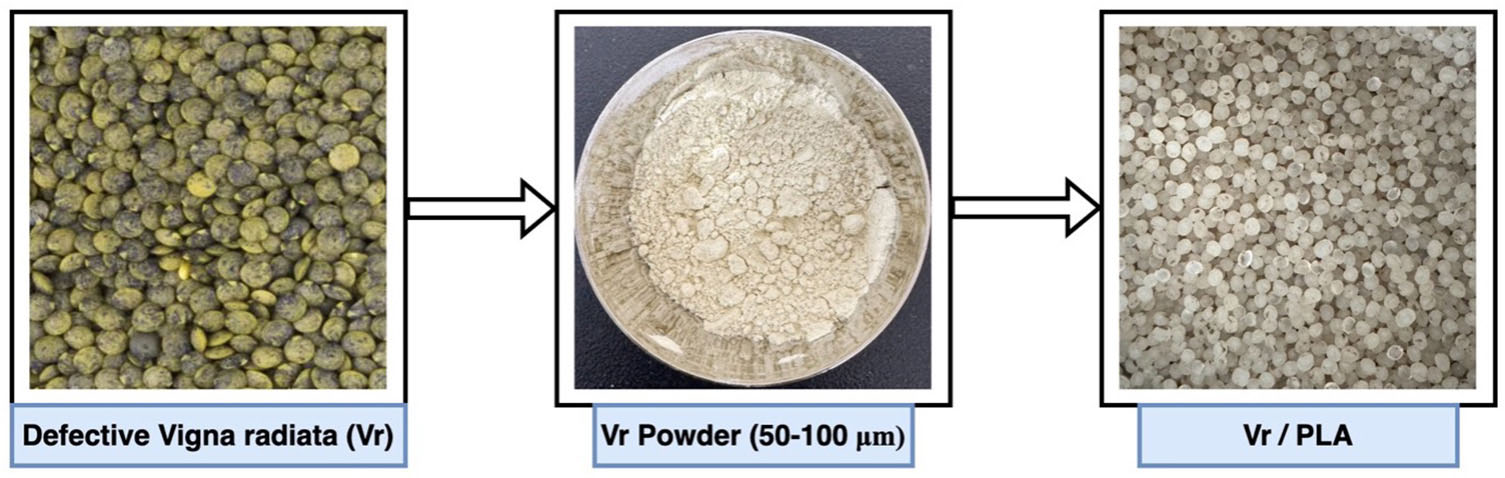
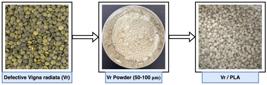
Ball milling was carried out using stainless steel grinding media based on the principle of impact and abrasion. The mill consisted of a rotating hollow cylindrical chamber partially filled with stainless steel balls, where particle size reduction occurred due to repeated collisions between the balls and the material. The input grain size ranged from 30 to 70 µm, and milling was performed at a disc speed of 400 rpm with a maximum powder load of 125 g per bowl. The milling process resulted in fine powder with particle sizes approaching the nano-scale range. The processed Vr powder was then used as a reinforcing filler in PLA to enhance the mechanical performance and sustainability of the composite filament. The filler preparation process is illustrated in Figure 1.
2.4. Method
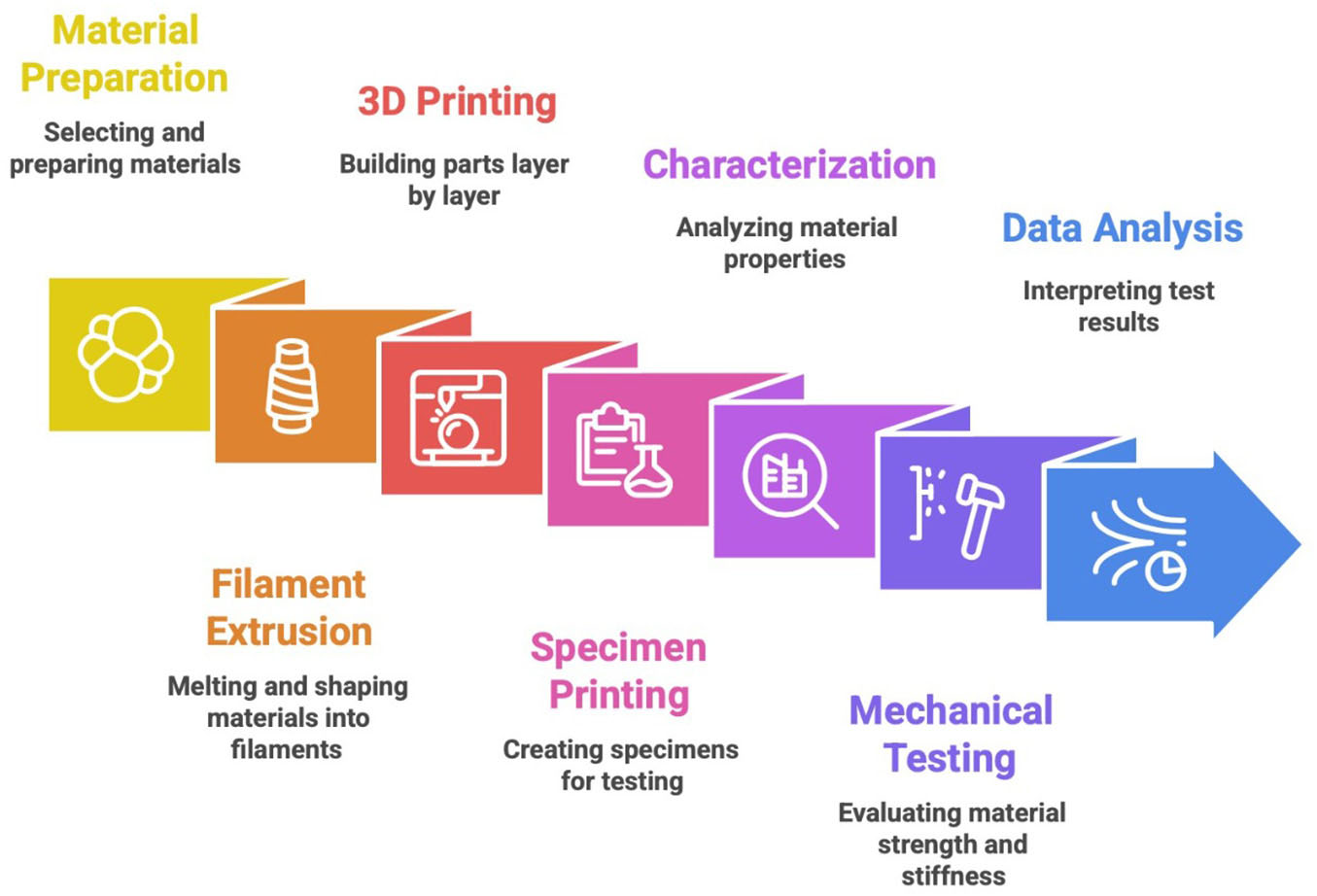
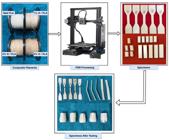
Vr/PLA composite filament was fabricated using a single screw extruder to ensure that the natural filler was evenly dispersed in the polymer matrix. The extrusion process was carried out at certain temperature to ensure that the filament is strong and not degraded. Figure 2 Vr/PLA Process Flow illustrates the steps involved in this fabrication. After the extrusion, the filament was cooled and measured for dimensions before being wound up onto spools. The filament that was produced was then used in Fused Deposition Modeling (FDM) to create test specimens which were then characterized mechanically and structurally.

2.4.1. Filament fabrication on a single-screw extruder
The Vr/PLA composite filament was extruded using a single screw extruder from PSG iTech and manufactured by ACC Machinery, Jiangsu, China for adequate fusion and even distribution of the filler material. The extrusion process was carried out at optimum production parameters to give consistent filament output. After extrusion, the filament was cooled down and stored in a controlled environment and was measured precisely to ensure that it is uniform in diameter before it is reeled up for use. The specifications of Single-Screw Extruder is shown in Table 1.
2.4.2. FDM process
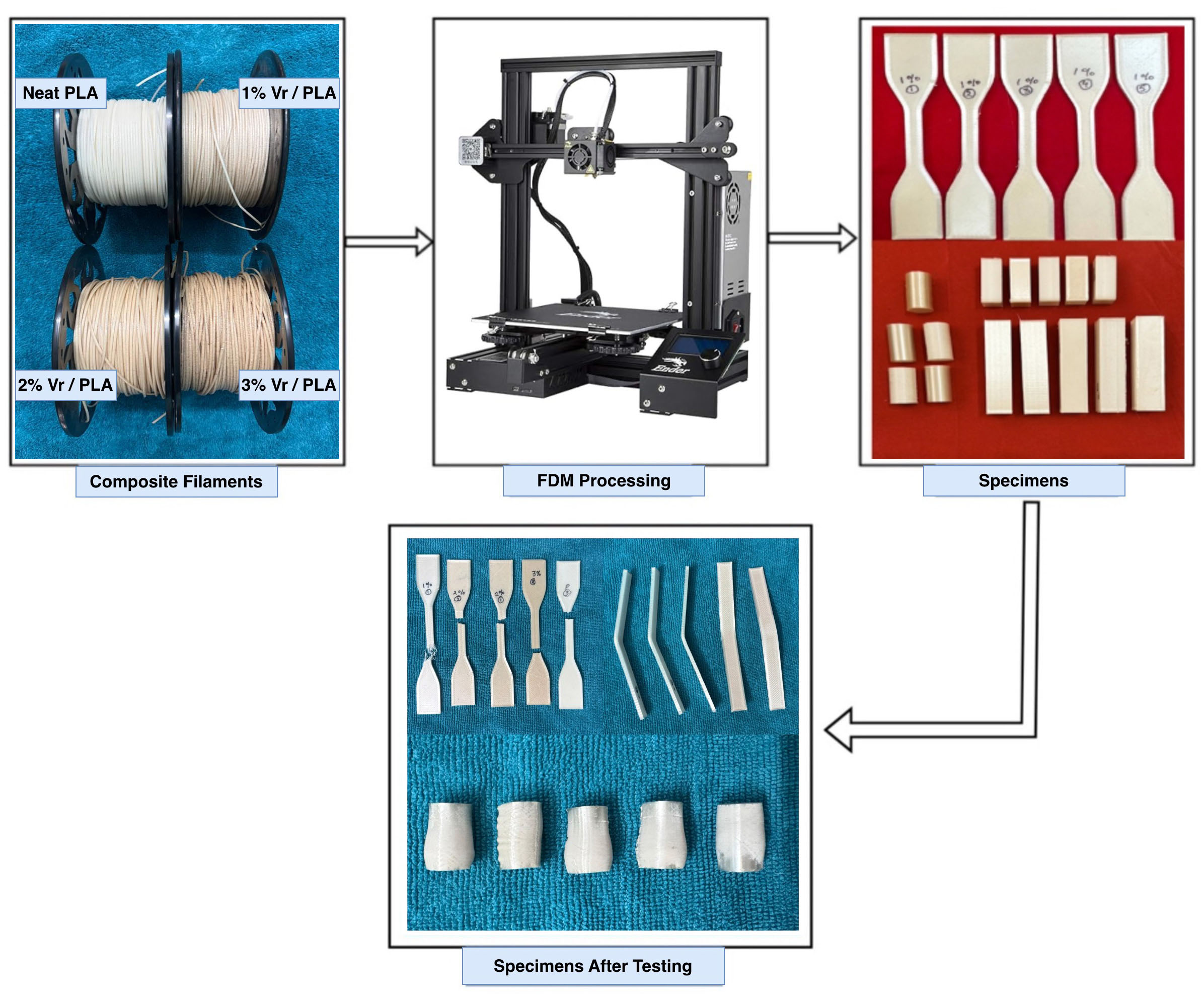
The developed Vr/PLA filament was used to build test specimens (Figure 3) in a 3D printer known as Fused Deposition Modeling (FDM). The process involved accurate extrusion and controlled layer on building to optimize the strength. It was important to have good adhesion to the building platform and the correct temperature to obtain good dimensional accuracy and avoid defects in the built specimens. Specifications of Ender 3 V2 3D Printer is shown in Table 2.
3. FILAMENT CHARACTERIZATION
3.1. Structural and morphological analysis
3.1.1. XRD analysis
The D8 ADVANCE X-Ray Diffractometer (XRD), which includes a Cu anode with a 3kW generator, twin-twin optics with motorized slits, and a Gobel Mirror, was used to do the qualitative and quantitative phase analysis. This device operates at a maximum angular speed of 20°/s and has a maximum usable angular range of 2θ ≤ 168° with the lowest addressable increment of 0.0001°. Accurate analysis of crystalline structures and phase compositions is made possible by the system’s precision, which is improved by the LYNXEYE Family Detector. It can also withstand non-ambient circumstances, such as high temperatures. Neat PLA and composites containing 1%, 2%, and 3% Vr fillings were analyzed using printed square specimens measuring 10 × 10 × 3 mm.
3.1.2. FTIR analysis
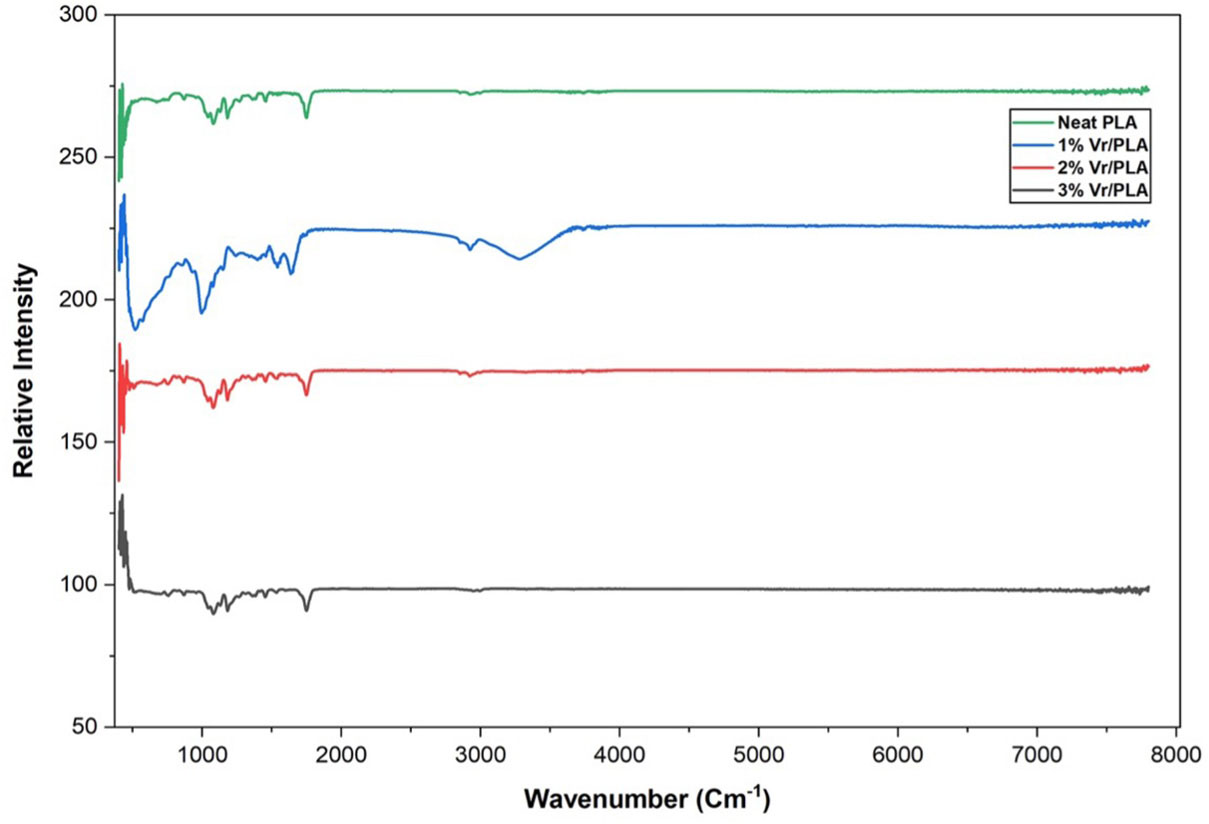
Fourier Transform Infrared Spectroscopy (FTIR) analysis was done on pristine PLA and its composites using a JASCO FTIR-4X spectrometer in Attenuated Total Reflectance (ATR) mode to detect the functional groups present in the materials. The FTIR spectra were collected in the range of 7800–350 cm−1 with 4 cm−1 resolution utilizing a DLATGS detector, KBr beam splitter, and ceramic light source to get the best signal to noise ratio. The Michelson interferometer (45°) was employed for high precision and Spectra Manager software was used for data processing. The ATR Pro 4X accessory with a ZnSe ATR prism was employed, which ensured that spectra were reliable by maintaining a 2.5 mm contact area with a pressure of 400 kg/cm2. Peak shifts and intensity variations were noticed from the analysis of the characteristic peaks, which gave an idea of the molecular interactions and chemical bonding between PLA and Vr filler, which was helpful in predicting the compatibility of the composite.
3.2. Mechanical properties
To evaluate the mechanical performance of the developed Vr/PLA composite filaments, a comprehensive set of mechanical tests was conducted in accordance with relevant ASTM standards. Tensile, flexural, compressive, hardness, impact, and wear tests were performed to assess the strength, stiffness, toughness, surface resistance, and wear behavior of the composites. The detailed testing standards, specimen dimensions, equipment, and experimental parameters used for each mechanical test are summarized in Table 3.
4. RESULT AND DISCUSSION
The composite filaments were successfully produced with 1%, 2%, and 3% filler concentrations. However, initial printing trials revealed adhesion issues, with prints failing to stick properly to the build platform. This was attributed to inadequate bed adhesion, leading to warping and poor first-layer bonding. Adjustments were necessary to optimize the printing conditions and ensure consistent printability of the composite material.
To mitigate adhesion challenges, the bed temperature was increased to 60–70°C, which significantly improved adhesion and minimized warping. Maintaining the nozzle temperature at 200°C ensured proper extrusion and flow consistency of the composite filament. These optimized parameters contributed to better layer bonding and enhanced the overall print quality, making the composite more suitable for additive manufacturing applications.
4.1. Structural and morphological analysis
4.1.1. XRD analysis
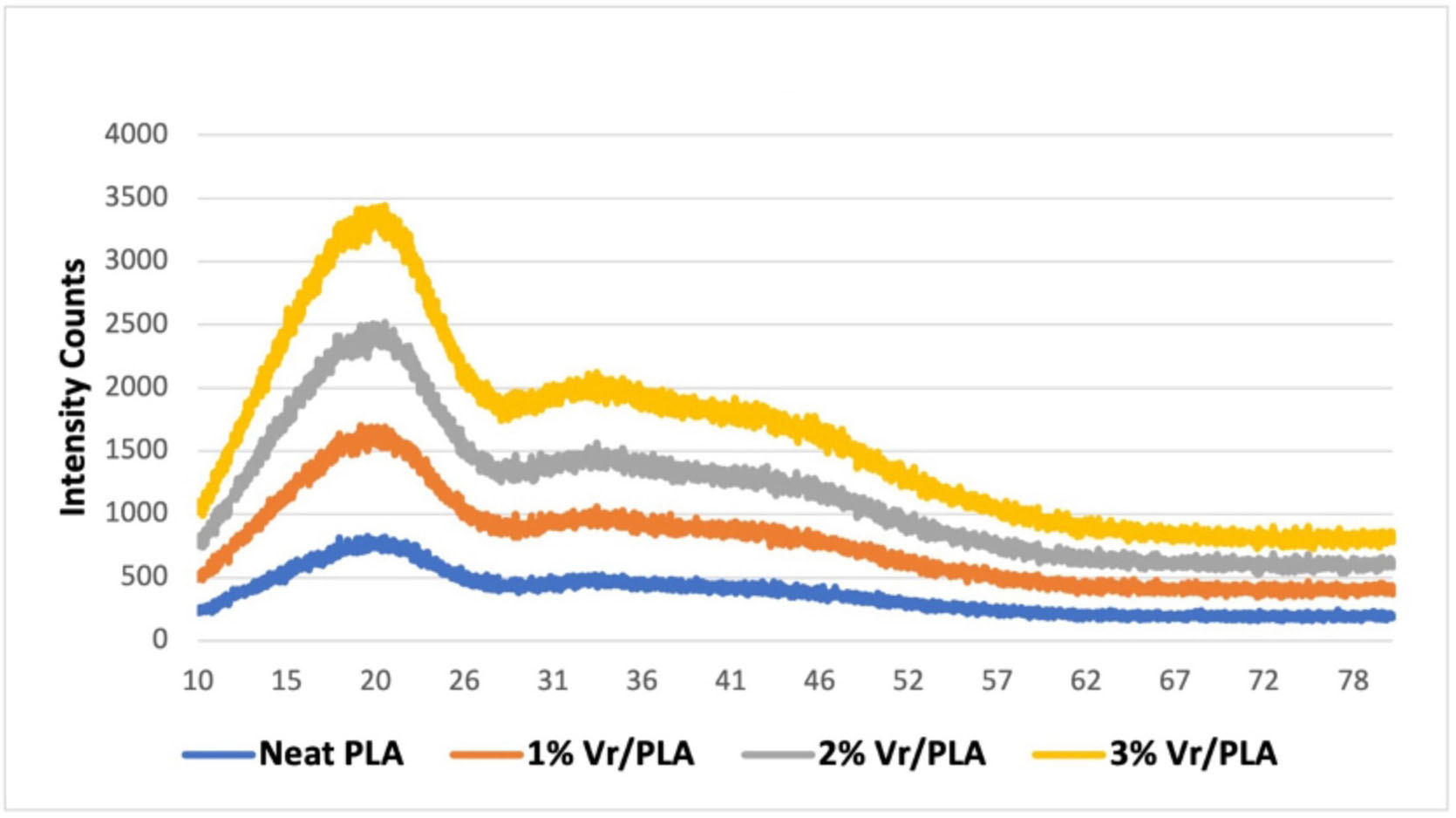
The XRD analysis of Vr/PLA composites in Figure 4 reveals significant changes in crystallinity with varying filler content. The diffraction pattern of neat PLA exhibits a broad amorphous hump, characteristic of its semi-crystalline nature. With the incorporation of Vr filler at 1%, there is a noticeable increase in intensity, indicating an improvement in structural ordering. This suggests that the presence of filler enhances the nucleation sites, promoting partial crystallization. At 2% Vr/PLA, the peak intensity further increases, demonstrating an enhanced degree of crystallinity compared to neat PLA and 1% Vr/PLA. This behavior may be attributed to better filler-matrix interaction, which aids in polymer chain alignment.
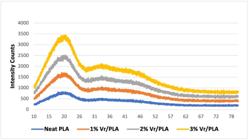
At 3 wt.% Vr/PLA, a further rise in diffraction intensity is observed, indicating increased crystallinity due to the higher availability of nucleation sites. However, excessive filler loading may also promote particle agglomeration, leading to non-uniform crystal growth and structural heterogeneity. The broad nature of diffraction peaks across all samples indicates that although crystallization is enhanced, complete transformation to a fully crystalline structure is not achieved.
The increase in crystallinity observed in Vr/PLA composites compared to virgin PLA can be attributed to the heterogeneous nucleation effect of Vigna radiata particles. The lignocellulosic Vr powder provides numerous solid interfaces that act as nucleation centers during cooling of the PLA melt, facilitating ordered polymer chain arrangement and crystal growth. At low filler contents (1–2 wt.%), well-dispersed Vr particles enable effective nucleation and uniform crystallization. At higher filler loading (3 wt.%), partial agglomeration restricts uniform crystal development, resulting in broader diffraction peaks. These findings confirm that Vr acts as an efficient nucleating agent, enhancing the crystallinity of PLA at optimized filler concentrations.
4.1.2. FTIR analysis
The FTIR spectrum of clean PLA shows distinctive absorption bands related with the molecular structure of the PLA. The prominent peak about 1750 cm−1 represents the C=O stretching vibration of the ester group, a crucial functional component in PLA. Peaks between 1000–1300 cm−1 indicate C=O stretching vibrations, while bands about 2900 cm−1 indicate C=H stretching vibrations. These peaks show the presence of PLA with no further functional changes. The FTIR spectrum of 1% Vr/PLA shown in Figure 5 exhibits a pattern identical to that of plain PLA, but with modest variations in peak intensity. The C=O stretching peak at 1750 cm−1 and the C=O stretching peak about 1100 cm−1 are still visible, but their strength has decreased slightly. This could point to a slight contact between the Vr filler and PLA, possibly via hydrogen bonding or mild physical interactions. There are no substantial peak movements, indicating that the addition of 1% Vr has no significant effect on the PLA chemical structure. The 2% Vr/PLA FTIR spectrum retains PLA’s principal absorption bands, although there are noteworthy variations in peak intensity. A modest widening at 1750 cm−1 and 1000–1300 cm−1 indicates stronger interactions between PLA and Vr. This could be owing to the increased presence of Vr particles, which influence polymer chain mobility. The spectrum displays small changes in the C=H stretching area (~2900 cm−1), potentially due to the dispersion of Vr particles altering PLA’s molecular vibrations.
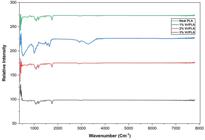
The FTIR spectrum of 3% Vr/PLA reveals generally consistent absorption bands, but with more noticeable peak intensity variations. The C=O stretching peak at ~1750 cm−1 and the C–O stretching region (1000–1200 cm−1) show reduced intensity, indicating increased interactions between Vr and the PLA matrix. Minor peak shifts are also observed, which may be attributed to hydrogen bonding or filler-induced molecular rearrangements. No new functional groups are detected, confirming good compatibility between Vr and PLA and preservation of the polymer’s primary chemical structure. The observed peak intensity changes and slight band broadening indicate intermolecular interactions that restrict PLA chain mobility and promote ordered chain packing, thereby enhancing crystallinity, consistent with the XRD results.
4.2. Mechanical properties
4.2.1. Tensile test
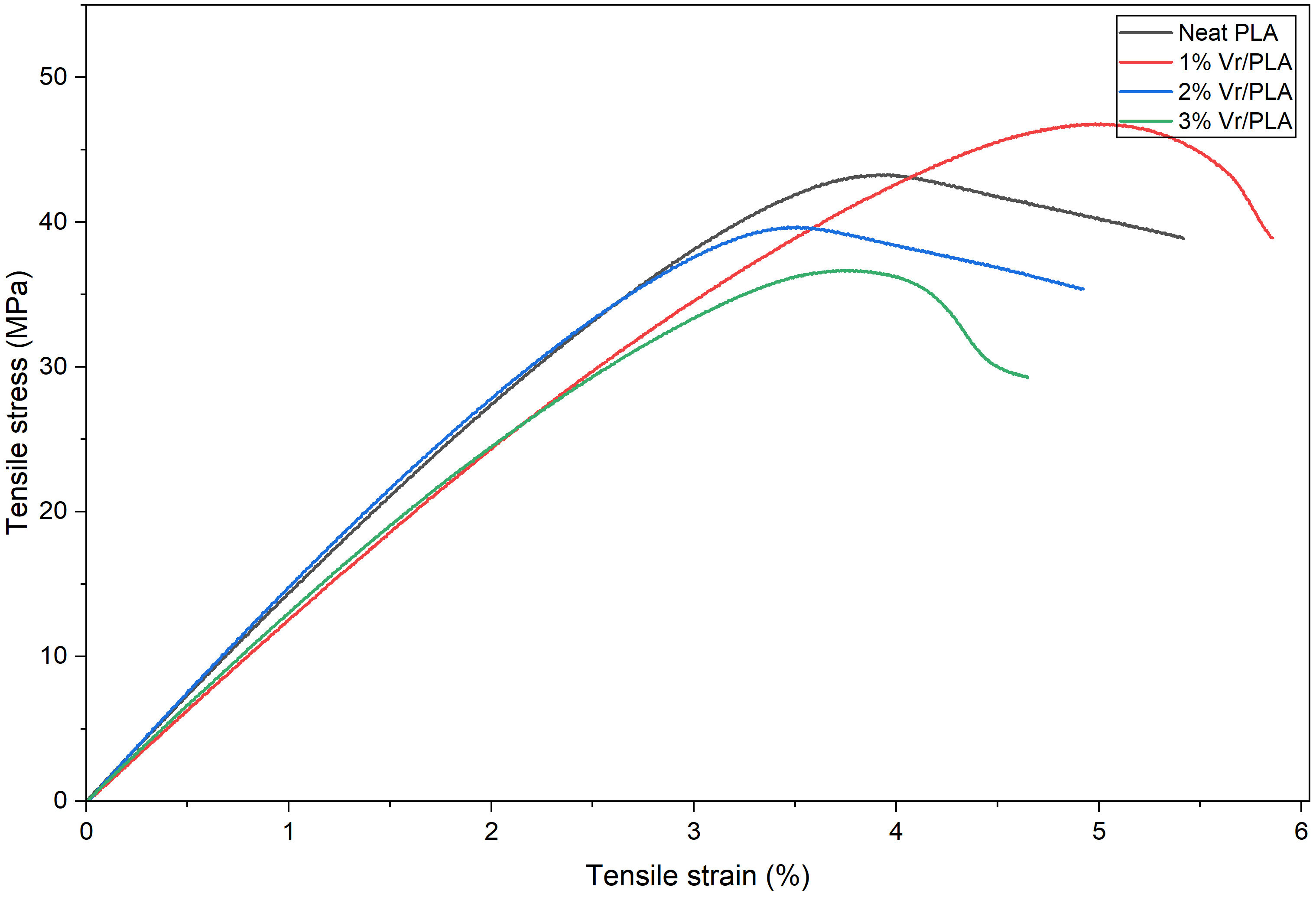
The tensile behavior of neat PLA and Vr/PLA composites was evaluated through tensile stress–strain analysis, as shown in Figure 6. The tensile strength of neat PLA was 43.2 MPa. With the incorporation of 1% Vr filler, the tensile strength increased to 46.72 MPa, indicating an enhancement in mechanical properties due to improved interfacial interaction. However, as the filler content increased further, a reduction in tensile strength was observed. The 2% Vr/PLA composite exhibited a tensile strength of 39.59 MPa, while the 3% Vr/PLA composite showed the lowest value of 36.46 MPa. This decline suggests that excessive filler content may have led to agglomeration, reducing the effective load transfer within the composite matrix.
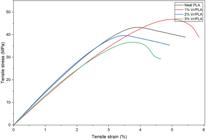
The tensile stress–strain curves corresponding to these compositions further illustrate the deformation behavior of the composites under tensile loading. The 1 wt.% Vr/PLA composite exhibits a higher peak stress and delayed failure compared to neat PLA, indicating improved resistance to tensile deformation. The initial improvement in tensile performance at 1 wt.% Vr loading can be attributed to uniform filler dispersion and effective stress transfer between the PLA matrix and Vr particles, which enhances load-bearing efficiency and restricts matrix deformation. In contrast, at higher filler contents (2–3 wt.%), reduced deformation capability and earlier failure are observed, suggesting that particle agglomeration and stress concentration effects dominate, leading to a decline in tensile performance. Similar tensile stress–strain behavior with moderate tensile strain (≈4–6%) has been reported for PLA composites reinforced with cellulose-based carbon microspheres and woven jute fibers, where improved tensile strength was achieved without significant loss of ductility, supporting the strain values observed in the present study [40, 41].
4.2.2. Flexural test
The flexural strength of Vr/PLA composites was evaluated for different filler concentrations shown in Figure 7, and the results indicate a varying trend. Neat PLA exhibited a flexural strength of 53.66 MPa. With the addition of 1% Vr filler, the flexural strength increased to 58.89 MPa, suggesting improved reinforcement and load distribution within the matrix. However, at higher filler concentrations, a significant decline in flexural strength was observed. The 2% Vr/PLA composite showed a reduced flexural strength of 40.39 MPa, while the 3% Vr/PLA composite further dropped to 37.87 MPa. This reduction can be attributed to weak interfacial adhesion and possible agglomeration of the filler particles, which can create stress concentration points, leading to premature failure under bending loads.
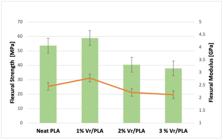
Young’s modulus also followed a similar trend, where neat PLA had a modulus of 2.45 GPa, which increased to 2.78 GPa at 1% Vr/PLA. This increase indicates enhanced stiffness due to better filler-matrix interaction. However, with further filler addition, the modulus values decreased to 2.21 GPa for 2% Vr/PLA and 2.12 GPa for 3% Vr/PLA. The reduction in stiffness at higher filler concentrations suggests that excessive filler loading may lead to weak bonding, reducing the overall rigidity of the composite. These findings highlight that a lower filler content enhances mechanical properties, but beyond a certain threshold, the effectiveness of reinforcement diminishes. The enhancement in flexural strength and stiffness at 1 wt.% Vr loading can be attributed to improved load sharing between the PLA matrix and the dispersed filler particles under bending conditions. At this concentration, the filler effectively restricts matrix deformation and delays crack initiation. Conversely, at higher filler contents (2–3 wt.%), inadequate stress distribution and increased stress concentration within the matrix reduce the material’s resistance to bending, leading to a decline in flexural strength and modulus.
4.2.3. Compression test
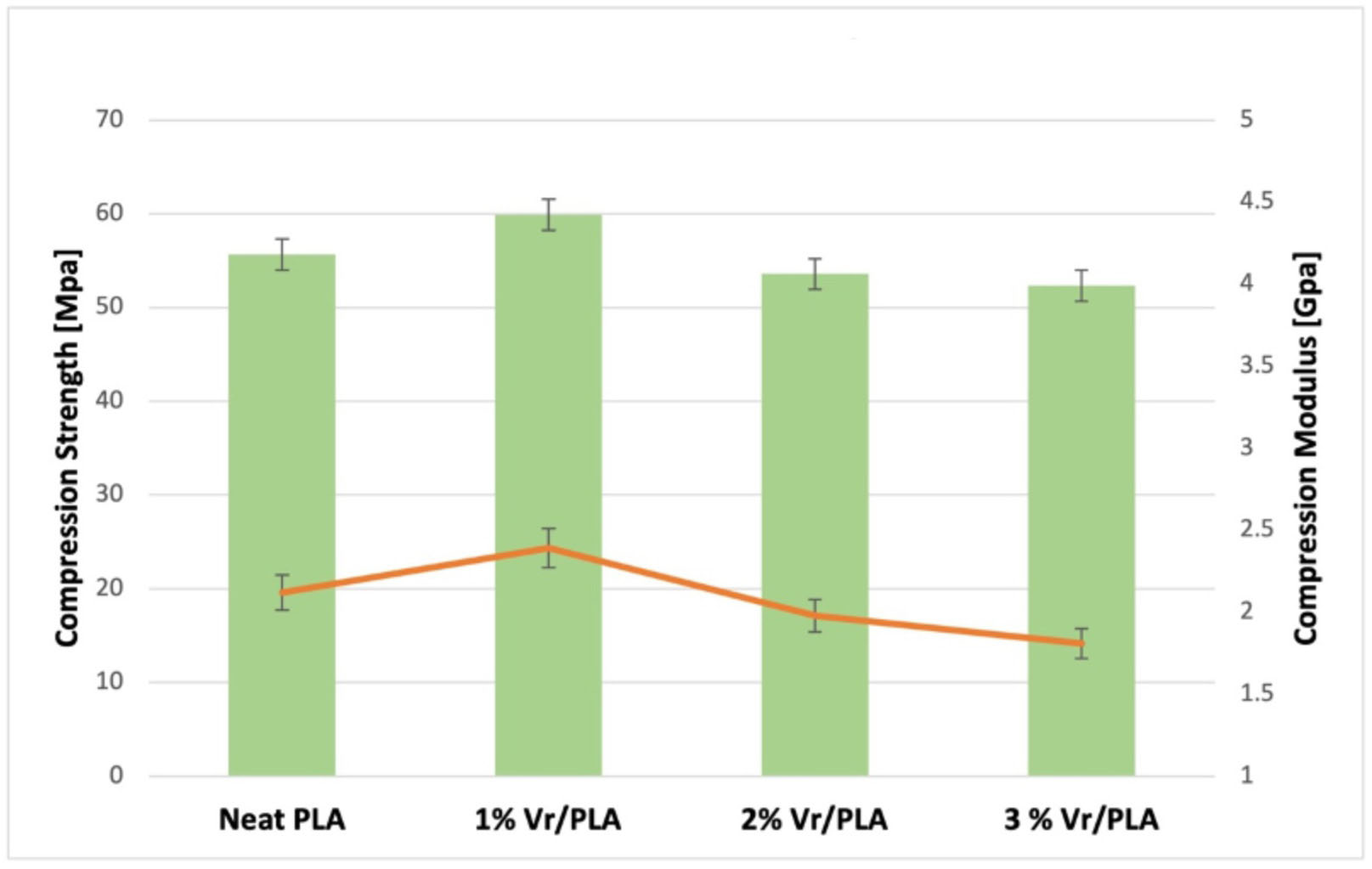
The compression strength of Vr/PLA composites demonstrated variations with different filler loadings. Figure 8: Vr/PLA Composite Compression Strength Analysis illustrates the trend across varying concentrations. Neat PLA exhibited a compression strength of 55.64 MPa. The incorporation of 1% Vr filler led to an increase in strength, reaching 59.89 MPa, likely due to improved load transfer and reinforcement within the polymer matrix. However, as the filler concentration increased beyond 1%, a decline in compression strength was observed. The 2% Vr/PLA composite exhibited a reduced strength of 53.58 MPa, and a further decrease to 52.34 MPa was noted for the 3% Vr/PLA composite. This decline can be attributed to poor filler dispersion and weaker interfacial bonding at higher filler loadings, which may create stress concentration sites, leading to early failure under compressive loads.

The compression modulus also followed a similar pattern, indicating changes in material stiffness. Neat PLA had a modulus of 2.12 GPa, which increased to 2.39 GPa at 1% Vr/PLA, signifying improved rigidity. However, beyond 1% filler concentration, a decrease in modulus values was observed, with 2% Vr/PLA registering 1.98 GPa and 3% Vr/PLA showing the lowest modulus of 1.81 GPa. This reduction suggests that excessive filler loading disrupts the structural integrity of the composite, possibly due to filler agglomeration and inadequate stress distribution. These findings indicate that an optimal filler concentration enhances mechanical performance, while excessive filler addition negatively impacts the compression properties of the composite. The improvement in compressive strength and modulus at 1 wt.% Vr loading can be attributed to the ability of well-dispersed filler particles to effectively support compressive loads and restrict localized matrix deformation. At this concentration, the filler contributes to enhanced resistance against axial compression by improving load-bearing efficiency. In contrast, higher filler contents (2–3 wt.%) result in non-uniform stress distribution within the matrix, promoting localized deformation and early micro buckling, which reduces the composite’s resistance to compressive loading.
4.2.4. Hardness test
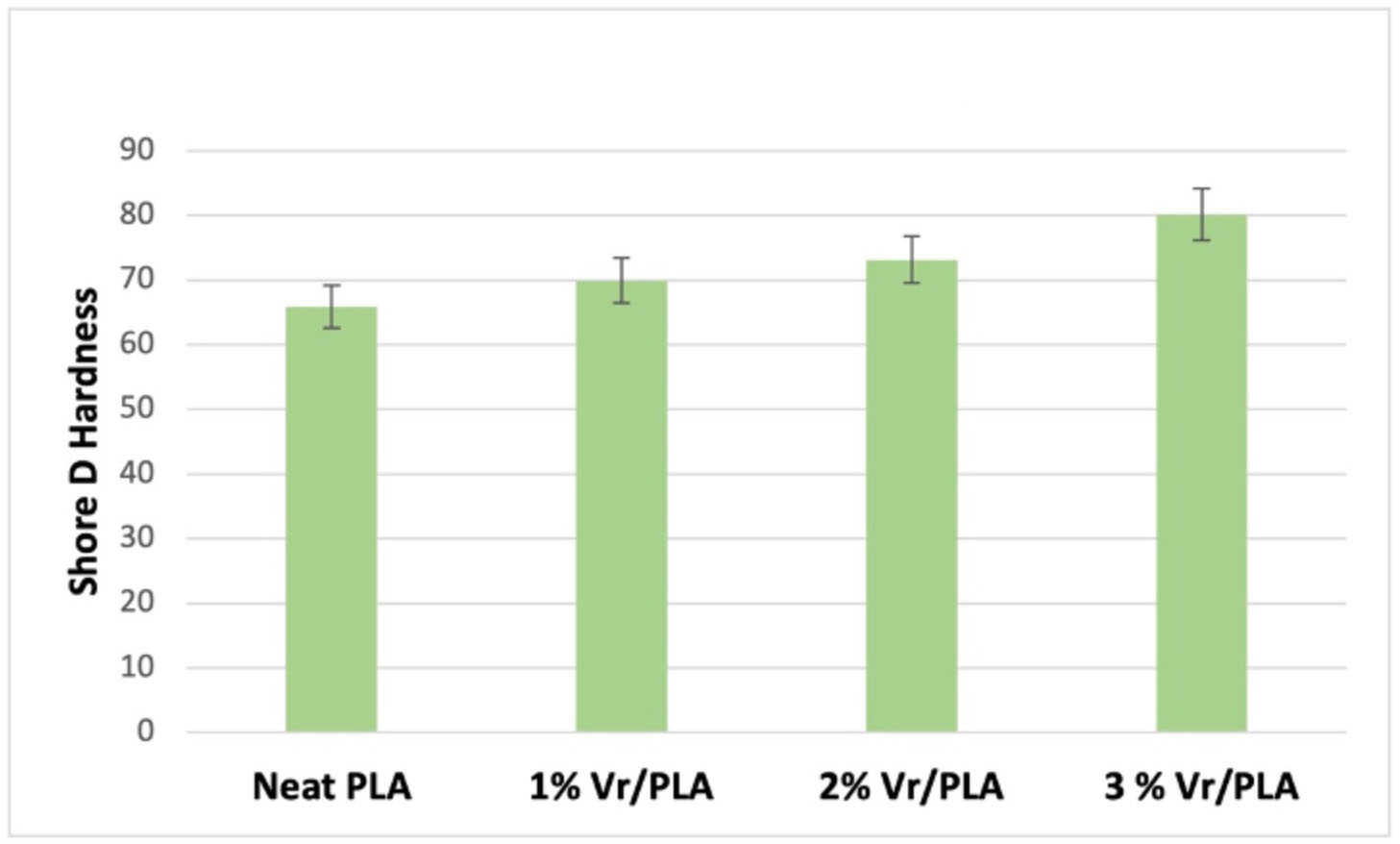
The Shore D hardness test results for the Vr/PLA composites indicate an increasing trend with higher filler concentrations (Figure 9). Neat PLA exhibited a hardness value of 65.83, which increased to 69.94 with the addition of 1% Vr filler. This improvement suggests enhanced material densification and better load distribution due to the presence of the filler. Further increments in filler content resulted in continued enhancement, with the 2% Vr/PLA composite reaching a hardness value of 73.17. The highest hardness was observed for the 3% Vr/PLA composite, recording 80.11, indicating a significant increase in surface rigidity.
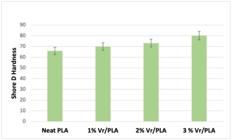
The consistent rise in hardness with increasing Vr content implies improved resistance to surface deformation, making the material more suitable for applications requiring higher wear resistance. The enhancement in hardness can be attributed to the stiffening effect of the filler, which restricts polymer chain mobility and enhances the overall compactness of the composite structure. However, at higher filler loadings, other mechanical properties such as toughness and flexibility may be compromised due to increased brittleness. This trend highlights the potential trade-offs in mechanical behavior when optimizing the filler content in polymer composites. The progressive increase in hardness with higher Vr content is associated with the presence of rigid filler particles that resist localized surface indentation. As the filler concentration increases, the composite exhibits reduced surface compliance and increased resistance to plastic deformation. At higher filler loadings, the increased rigidity limits energy dissipation under localized loading, which contributes to increased brittleness despite higher hardness values.
4.2.5. Impact test
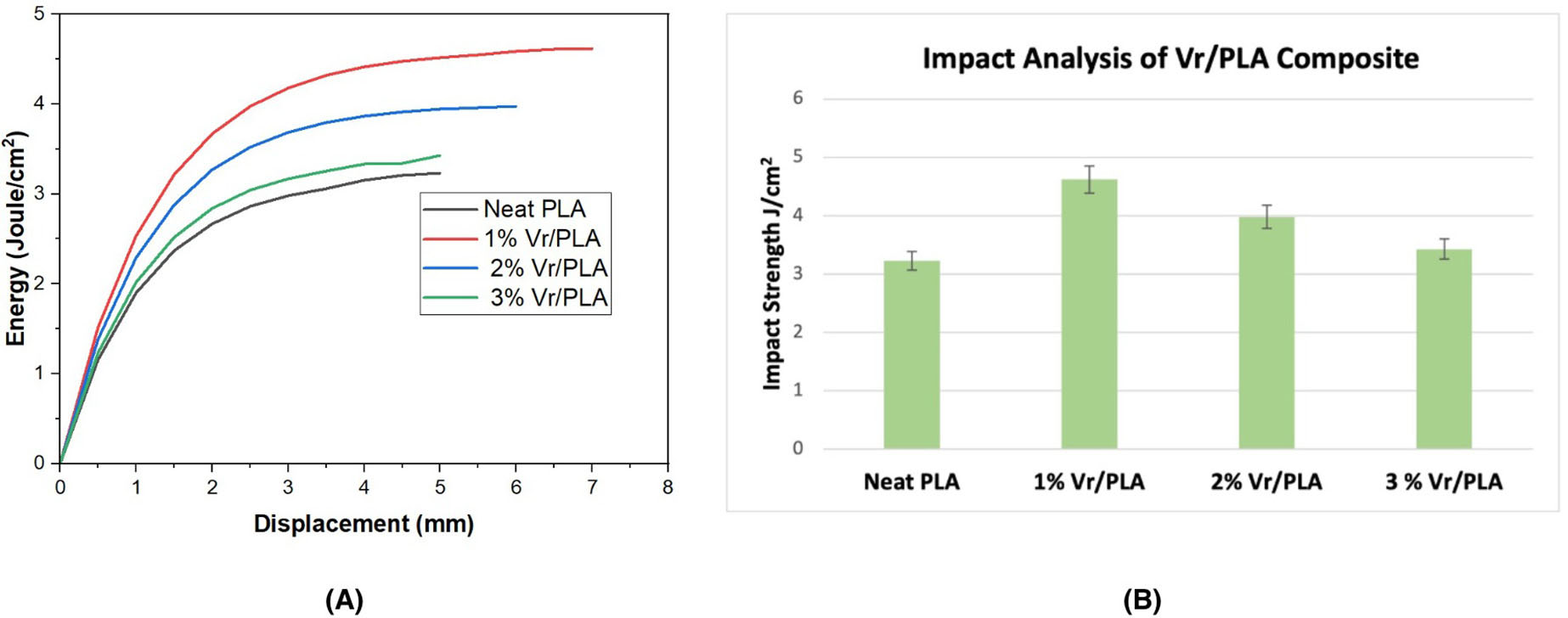
The impact strength of the Vr/PLA composites shows a notable variation with increasing filler content. Figure 10: Vr/PLA Composite Impact Strength Analysis illustrates this trend. Neat PLA exhibited an impact strength of 3.23 J/cm2, which increased significantly to 4.62 J/cm2 with the incorporation of 1% Vr filler. This improvement suggests better energy absorption capabilities due to enhanced interfacial bonding and possible crack deflection mechanisms introduced by the filler particles. However, as the filler content increased to 2%, the impact strength slightly decreased to 3.98 J/cm2, indicating a potential reduction in ductility and toughness due to filler agglomeration.

At 3% Vr/PLA, the impact strength further declined to 3.43 J/cm2, approaching the value of neat PLA. This reduction can be attributed to increased brittleness caused by excessive filler loading, which may lead to stress concentration points and premature failure under impact loads. While moderate filler content enhances impact resistance, excessive amounts may hinder energy dissipation, emphasizing the importance of optimizing the filler percentage for balanced mechanical performance in composite materials. The improvement in impact strength at 1 wt.% Vr loading can be attributed to enhanced energy absorption through localized plastic deformation and effective stress redistribution during sudden loading. At this filler level, the dispersed particles help delay crack initiation and propagation. At higher filler contents 2–3 wt.%, restricted matrix deformation and increased stress concentration reduce the ability of the composite to absorb impact energy, resulting in a gradual decline in impact resistance.
4.2.6. Wear test
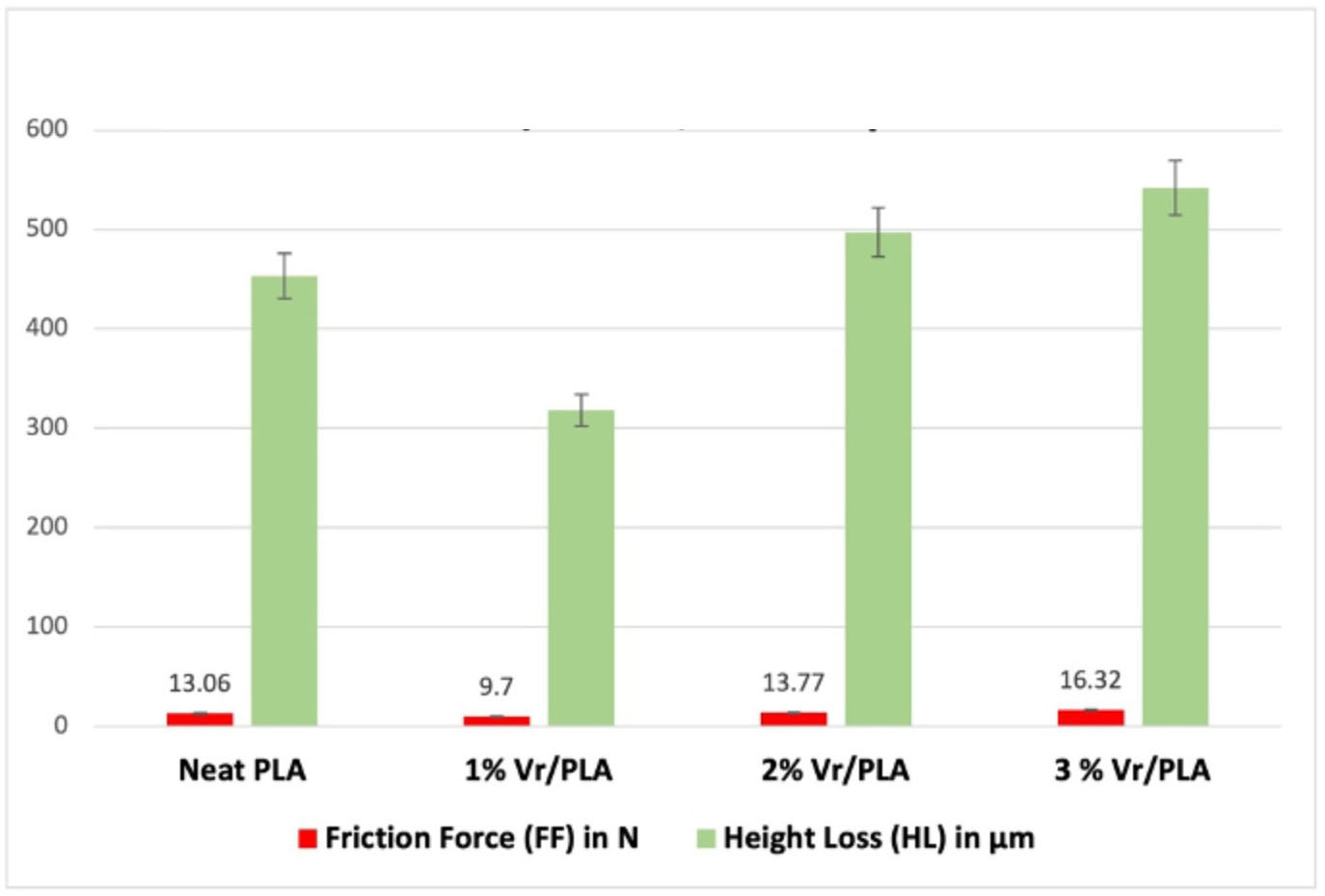
The tribological performance of Vr/PLA composites, assessed through friction force and height loss, demonstrates significant variations with filler incorporation (Figure 11). Neat PLA exhibited a friction force of 13.06 N and a height loss of 453.67 µm, indicating moderate wear resistance. With the addition of 1% Vr filler, both friction force (9.7 N) and height loss (318.12 µm) decreased, suggesting enhanced wear resistance due to better load distribution and reduced surface interaction, possibly caused by the lubricating effect of the filler particles. However, as the filler content increased beyond 1%, the trend shifted.
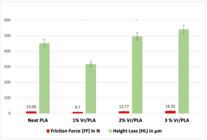
At 2% Vr/PLA, the friction force rose to 13.77 N, and height loss increased to 497.33 µm, indicating reduced wear resistance likely due to filler agglomeration and non-uniform dispersion. A further increase to 3% Vr/PLA led to the highest friction force (16.32 N) and height loss (542 µm), demonstrating increased material degradation under wear conditions. This deterioration can be attributed to excessive filler content causing surface roughness and stress concentration, leading to higher material removal. Thus, while lower filler content improves tribological properties, excessive loading negatively affects wear performance. The enhanced wear resistance at 1 wt.% Vr loading results from improved load support and reduced direct surface contact during sliding. At higher filler contents, increased surface irregularities and stress concentration accelerate material removal, leading to higher friction and wear.
4.2.7. SEM analysis
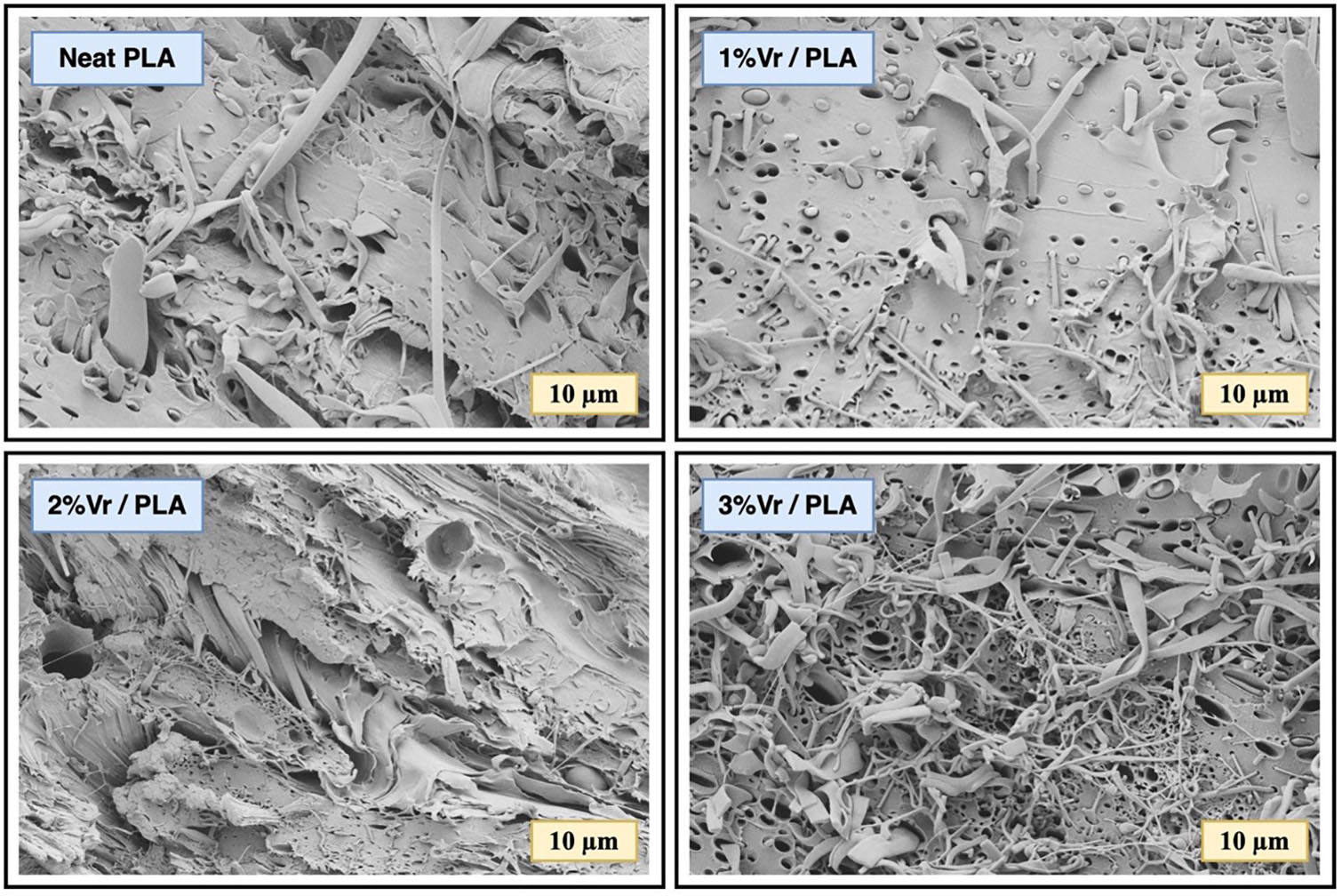
The SEM images in Figure 12 of fractured surfaces after the tensile test reveal distinct morphological differences between neat PLA and Vr/PLA composites at varying filler loadings. The fractured surface of neat PLA exhibits a relatively smooth texture with limited voids and plastic deformation, indicating a brittle failure mechanism. The absence of significant fibrillar structures or rough fracture patterns suggests that neat PLA undergoes catastrophic failure under tensile loading, with minimal energy dissipation. The presence of some elongated structures could be attributed to minor stretching before failure, but the overall morphology confirms that pure PLA lacks significant toughness or ductility.

In contrast, the Vr/PLA composites exhibit noticeable changes in fracture surface morphology with increasing filler content. At 1% Vr loading, the fracture surface displays numerous voids and micropores, likely formed due to poor interfacial adhesion or filler pull-out. The dispersed filler particles appear to disrupt the smooth fracture pattern seen in neat PLA, introducing additional failure mechanisms such as crack deflection and matrix tearing. At 2% Vr loading, the fractured surface becomes rougher with increased fibrillar structures and layered deformation, suggesting improved stress transfer between the filler and PLA matrix. The 3% Vr composite, however, shows a highly rugged and fibrous fracture morphology with extensive void formation, possibly due to excessive filler agglomeration leading to stress concentration points. The increased roughness and fibrillation indicate enhanced energy absorption, but the presence of discontinuities suggests that beyond a certain filler concentration, excessive void formation and poor dispersion can negatively impact mechanical integrity. Based on the observed fracture behavior, a Vr loading of 1–2% appears to be a suitable composition for 3D printing applications, ensuring a balance between mechanical strength and printability.
5. CONCLUSION
This study demonstrated the successful development of PLA composites reinforced with Vigna radiata (Vr) powder derived from agricultural waste, including discolored and broken mung bean seeds unsuitable for consumption. The incorporation of 1% Vr filler significantly enhanced the mechanical performance of the PLA matrix, increasing tensile strength from 43.2 MPa to 46.72 MPa, flexural strength from 53.66 MPa to 58.89 MPa, and compressive strength from 55.64 MPa to 59.89 MPa. Structural and morphological analyses confirmed improved crystallinity and good interfacial bonding, with uniform filler dispersion as observed through SEM. Additionally, the composites exhibited improved wear resistance, making them more suitable for functional applications.
These findings highlight the potential of using agricultural residues as sustainable reinforcement materials in biopolymer composites. Owing to their enhanced mechanical performance, biodegradability, and compatibility with FDM processing, the developed Vr/PLA composites are promising candidates for eco-friendly consumer products, biomedical prototypes, packaging components, and low-load functional parts. Future studies may focus on optimizing fiber surface treatments and exploring higher filler loadings or hybrid composite systems to further expand the application scope.
6. BIBLIOGRAPHY
-
[1] LAMBERTI, P., SPINELLI, G., KUZHIR, P.P., et al, “Evaluation of thermal and electrical conductivity of carbon-based PLA nanocomposites for 3D printing”, In: 9th International Conference on Times of Polymers and Composites: From Aerospace to Nanotechnology, Ischia, Italy, 2018, pp. 020158. doi: https://doi.org/10.1063/1.5046020.
» https://doi.org/10.1063/1.5046020 -
[2] SIAKENG, R., JAWAID, M., ARIFFIN, H., et al., “Natural fiber reinforced polylactic acid composites: a review”, Polymer Composites, v. 40, n. 2, pp. 446–463, 2019. doi: https://doi.org/10.1002/pc.24747.
» https://doi.org/10.1002/pc.24747 -
[3] MURARIU, M., DUBOIS, P., “PLA composites: From production to properties”, Advanced Drug Delivery Reviews, v. 107, pp. 17–46, 2016. doi: https://doi.org/10.1016/j.addr.2016.04.003. PubMed PMID: 27085468.
» https://doi.org/10.1016/j.addr.2016.04.003 -
[4] AL ABIR, A., CHAKRABARTI, D., TRINDADE, B., “Fused filament fabricated poly (lactic acid) parts reinforced with short carbon fiber and graphene nanoparticles with improved tribological properties”, Polymers, v. 15, n. 11, pp. 2451, 2023. doi: https://doi.org/10.3390/polym15112451. PubMed PMID: 37299249.
» https://doi.org/10.3390/polym15112451 -
[5] TAO, Y., WANG, H., LI, Z., et al., “Development and application of wood flour-filled polylactic acid composite filament for 3D printing”, Materials, v. 10, n. 4, pp. 339, 2017. doi: https://doi.org/10.3390/ma10040339. PubMed PMID: 28772694.
» https://doi.org/10.3390/ma10040339 -
[6] AUMNATE, C., SOATTHIYANON, N., MAKMOON, T., et al., “Polylactic acid/kenaf cellulose bio composite filaments for melt extrusion based-3D printing”, Cellulose, v. 28, n. 13, pp. 8509–8525, 2021. doi: https://doi.org/10.1007/s10570-021-04069-1.
» https://doi.org/10.1007/s10570-021-04069-1 -
[7] CEREGATTI, T., PECHARKI, P., PACHEKOSKI, W.M., et al., “Electrical and thermal properties of PLA/CNT composite films”, Matéria, v. 22, n. 3, pp. e11863, 2017. doi: https://doi.org/10.1590/s1517-707620170003.0197.
» https://doi.org/10.1590/s1517-707620170003.0197 -
[8] ILYAS, R.A., ZUHRI, M.Y.M., AISYAH, H.A., et al., “Natural fiber-reinforced polylactic acid, polylactic acid blends and their composites for advanced applications”, Polymers, v. 14, n. 1, pp. 202, 2022. doi: https://doi.org/10.3390/polym14010202. PubMed PMID: 35012228.
» https://doi.org/10.3390/polym14010202 -
[9] SCAFFARO, R., MAIO, A., GULINO, E.F., et al., “Green composites based on PLA and agricultural or marine waste prepared by FDM”, Polymers, v. 13, n. 9, pp. 1361, 2021. doi: https://doi.org/10.3390/polym13091361. PubMed PMID: 33919389.
» https://doi.org/10.3390/polym13091361 -
[10] RECH, F., SILVA, S.M., ROLDO, L., et al., “Formulação e caracterização de potenciais filamentos de matriz polimérica (PLA) e talos de tabaco para aplicação em manufatura aditiva”, Revista Matéria, v. 26, n. 2, pp. e12988, 2021. doi: https://doi.org/10.1590/s1517-707620210002.1288.
» https://doi.org/10.1590/s1517-707620210002.1288 -
[11] BALAJI, D., ARULMURUGAN, B., RAJAKANNU, A., et al., “Experimental investigation of 3D printed bio-resin functionalized hemp–PLA biocomposites for mechanical, tribological and thermal behaviour”, Journal of Materials Research and Technology, v. 39, pp. 2888–2896, 2025. doi: https://doi.org/10.1016/j.jmrt.2025.10.026.
» https://doi.org/10.1016/j.jmrt.2025.10.026 -
[12] SIVALINGAM, S., BHUVANESWARI, V., RAJESHKUMAR, L., et al., “Additive manufacturing of metal-infilled polylactic acid-based sustainable biocomposites—A review of methods, properties and applications abetted with patent landscape analysis”, Polymers, v. 17, n. 11, pp. 1565, 2025. doi: https://doi.org/10.3390/polym17111565. PubMed PMID: 40508809.
» https://doi.org/10.3390/polym17111565 -
[13] PETCHWATTANA, N., CHANNUAN, W., NAKNAEN, P., et al., “3D printing filaments prepared from modified poly (lactic acid)/teak wood flour composites: An investigation on the particle size effects and silane coupling agent compatibilization”, The Journal of Physiological Sciences: JPS, v. 30, n. 2, pp. 169–188, 2019. doi: https://doi.org/10.21315/jps2019.30.2.10.
» https://doi.org/10.21315/jps2019.30.2.10 -
[14] LIAO, J., BROSSE, N., PIZZI, A., et al., “Characterization and 3D printability of poly (lactic acid)/acetylated tannin composites”, Industrial Crops and Products, v. 149, pp. 112320, 2020. doi: https://doi.org/10.1016/j.indcrop.2020.112320.
» https://doi.org/10.1016/j.indcrop.2020.112320 -
[15] FICO, D., RIZZO, D., DE CAROLIS, V., et al., “Sustainable polymer composites manufacturing through 3D printing technologies by using recycled polymer and filler”, Polymers, v. 14, n. 18, pp. 3756, 2022. doi: https://doi.org/10.3390/polym14183756. PubMed PMID: 36145901.
» https://doi.org/10.3390/polym14183756 -
[16] TUMER, E.H., ERBIL, H.Y., “Extrusion-based 3D printing applications of PLA composites: A review”, Coatings, v. 11, n. 4, pp. 390, 2021. doi: https://doi.org/10.3390/coatings11040390.
» https://doi.org/10.3390/coatings11040390 -
[17] SANIVADA, U.K., MÁRMOL, G., BRITO, F.P., et al., “PLA composites reinforced with flax and jute fibers—A review of recent trends, processing parameters and mechanical properties”, Polymers, v. 12, n. 10, pp. 2373, 2020. doi: https://doi.org/10.3390/polym12102373. PubMed PMID: 33076571.
» https://doi.org/10.3390/polym12102373 -
[18] ALMEIDA, V.H.M., JESUS, R.M., SANTANA, G.M., et al., “Polylactic acid polymer matrix (PLA) bio composites with plant fibers for manufacturing 3D printing filaments: A review”, Journal of Composites Science, v. 8, n. 2, pp. 67, 2024. doi: https://doi.org/10.3390/jcs8020067.
» https://doi.org/10.3390/jcs8020067 -
[19] COPPOLA, B., GAROFALO, E., DI MAIO, L., et al., “Investigation on the use of PLA/hemp composites for the fused deposition modelling (FDM) 3D printing”, In: 9th International Conference on Times of Polymers and Composites: From Aerospace to Nanotechnology, Ischia, Italy, 2018, pp. 020086. doi: https://doi.org/10.1063/1.5045948.
» https://doi.org/10.1063/1.5045948 -
[20] SANDANAMSAMY, L., MOGAN, J., HALIM, N.A., et al., “A review on 3D printing bio-based polymer composite”, IOP Conference Series. Materials Science and Engineering, v. 1078, n. 1, pp. 012031, 2021. doi: https://doi.org/10.1088/1757-899X/1078/1/012031.
» https://doi.org/10.1088/1757-899X/1078/1/012031 -
[21] GIANI, N., MAZZOCCHETTI, L., BENELLI, T., et al., “A new bio composite material based on wheat waste and suitable for 3D printing applications”, Macromolecular Symposia, v. 405, n. 1, pp. 2100235, 2022. doi: https://doi.org/10.1002/masy.202100235.
» https://doi.org/10.1002/masy.202100235 -
[22] BALAJI, D., ARULMURUGAN, B., BHUVANESWARI, V., et al., “Comparative analysis of polylactic acid/bamboo biocomposites manufactured by additive manufacturing and compression moulding methods”, Journal of Materials Research and Technology, v. 36, pp. 7035–7042, 2025. doi: https://doi.org/10.1016/j.jmrt.2025.04.332.
» https://doi.org/10.1016/j.jmrt.2025.04.332 -
[23] NATARAJ, G., RAMESH BABU, S., MURUGAN, R., et al. “Enhancing mechanical and morphological properties of PLA composites reinforced with Curcuma longa extraction residue via fused deposition modeling”, In: Proceedings of the Institution of Mechanical Engineers, Part C: Journal of Mechanical Engineering Science, 2025. doi: https://doi.org/10.1177/09544062251381476.
» https://doi.org/10.1177/09544062251381476 -
[24] PRADHAN, R., MISRA, M., ERICKSON, L., et al., “Composability and biodegradation study of PLA-wheat straw and PLA- soy straw based green composites in simulated composting bioreactor”, Bioresource Technology, v. 101, n. 21, pp. 8489–8491, 2010. doi: https://doi.org/10.1016/j.biortech. 2010.06.053. PubMed PMID: 20594827.
» https://doi.org/10.1016/j.biortech.2010.06.053 -
[25] SCAFFARO, R., GULINO, E.F., CITARRELLA, M.C., “Multifunctional 3D-printed composites based on biopolymeric matrices and tomato plant waste for contextual fertilizer release and Cu(II) ion removal”, Advanced Composites and Hybrid Materials, v. 7, n. 3, pp. 95, 2024. doi: https://doi.org/10.1007/s42114-024-00908-4.
» https://doi.org/10.1007/s42114-024-00908-4 -
[26] SCAFFARO, R., CITARRELLA, M.C., CATANIA, A., et al., “Green composites based on biodegradable polymers and anchovy (Engraulis encrasicolus) waste suitable for 3D printing applications”, Composites Science and Technology, v. 230, pp. 109768, 2022. doi: https://doi.org/10.1016/j.compscitech.2022.109768.
» https://doi.org/10.1016/j.compscitech.2022.109768 -
[27] WANG, Y., SULTANA, J., RAHMAN, M.M., et al., “A sustainable and biodegradable building block: Review on mechanical properties of bamboo fibre reinforced PLA polymer composites and their emerging applications”, Fibers and Polymers, v. 23, n. 12, pp. 3317–3342, 2022. doi: https://doi.org/10.1007/s12221-022-4871-z.
» https://doi.org/10.1007/s12221-022-4871-z -
[28] RAZALI, M.S., KHIMECHE, K., MELOUKI, R., et al., “Preparation and properties enhancement of poly(lactic acid)/calcined seashell bio composites for 3D printing applications”, Journal of Applied Polymer Science, v. 139, n. 5, pp. 51591, 2022. doi: https://doi.org/10.1002/app.51591.
» https://doi.org/10.1002/app.51591 -
[29] NAGARJUN, J., KANCHANA, J., RAJESHKUMAR, G., et al., “Enhanced mechanical characteristics of polylactic acid/tamarind kernel filler green composite filament for 3D printing”, Polymer Composites, v. 44, n. 11, pp. 7925–7940, 2023. doi: https://doi.org/10.1002/pc.27676.
» https://doi.org/10.1002/pc.27676 -
[30] DOMÍNGUEZ-ROBLES, J., MARTIN, N.K., FONG, M.L., et al., “Antioxidant PLA composites containing lignin for 3D printing applications: A potential material for healthcare applications”, Pharmaceutics, v. 11, n. 4, pp. 165, 2019. doi: https://doi.org/10.3390/pharmaceutics11040165. PubMed PMID: 30987304.
» https://doi.org/10.3390/pharmaceutics11040165 -
[31] KUMAR, S.D., VENKADESHWARAN, K., ARAVINDAN, M.K., “Fused deposition modelling of PLA reinforced with cellulose nanocrystals”, Materials Today: Proceedings, v. 33, pp. 868–875, 2020. doi: https://doi.org/10.1016/j.matpr.2020.06.404.
» https://doi.org/10.1016/j.matpr.2020.06.404 -
[32] BULANDA, K., OLEKSY, M., OLIWA, R., et al., “Biodegradable polymer composites based on polylactide used in selected 3D technologies”, Polimery, v. 65, n. 7–8, pp. 557–562, 2020. doi: https://doi.org/10.14314/polimery.2020.7.8.
» https://doi.org/10.14314/polimery.2020.7.8 -
[33] NATARAJ, G., RAMESH BABU, S., “Enhancing mechanical properties of PLA-based bio composite filament reinforced with horse gram filler for 3D printing applications”, Journal of Vinyl and Additive Technology, v. 31, n. 2, pp. 453–468, 2024. doi: https://doi.org/10.1002/vnl.22182.
» https://doi.org/10.1002/vnl.22182 -
[34] INCARNATO, L., NOBILE, M.R., SCARFATO, P., “Development of PLA/micro cellulose bio composite filaments for 3D printing”, Macromolecular Symposia, v. 405, n. 1, pp. 2100250, 2022. doi: https://doi.org/10.1002/masy.202100250.
» https://doi.org/10.1002/masy.202100250 -
[35] MURPHY, C.A., COLLINS, M.N., “Microcrystalline cellulose reinforced polylactic acid bio composite filaments for 3D printing”, Polymer Composites, v. 39, n. 4, pp. 1311–1320, 2018. doi: https://doi.org/10.1002/pc.24069.
» https://doi.org/10.1002/pc.24069 -
[36] COPPOLA, B., CAPPETTI, N., DI MAIO, L., et al., “Layered silicate reinforced polylactic acid filaments for 3D printing of polymer nanocomposites”, In: IEEE 3rd International Forum on Research and Technologies for Society and Industry (RTSI), Modena, Italy, 2017, pp. 1–4. doi: https://doi.org/10.1109/RTSI.2017.8065892.
» https://doi.org/10.1109/RTSI.2017.8065892 -
[37] ILYAS, R.A., SAPUAN, S.M., HARUSSANI, M.M., et al., “Polylactic acid (PLA) bio composite: Processing, additive manufacturing and advanced applications”, Polymers, v. 13, n. 8, pp. 1326, 2021. doi: https://doi.org/10.3390/polym13081326. PubMed PMID: 33919530.
» https://doi.org/10.3390/polym13081326 -
[38] ANWAJLER, B., WITEK-KROWIAK, A., “Three-dimensional printing of multifunctional composites: Fabrication, applications, and biodegradability assessment”, Materials, v. 16, n. 24, pp. 7531, 2023. doi: https://doi.org/10.3390/ma16247531. PubMed PMID: 38138674.
» https://doi.org/10.3390/ma16247531 -
[39] AVELLA, M., BUZAROVSKA, A., ERRICO, M.E., et al., “Eco-challenges of bio-based polymer composites”, Materials, v. 2, n. 3, pp. 911–925, 2009. doi: https://doi.org/10.3390/ma2030911.
» https://doi.org/10.3390/ma2030911 -
[40] WANG, S., XU, Q., LI, F., et al., “Preparation and properties of cellulose-based carbon microsphere/polylactic acid composites”, Journal of Composite Materials, v. 48, n. 11, pp. 1297–1302, 2014. doi: https://doi.org/10.1177/0021998313485263.
» https://doi.org/10.1177/0021998313485263 -
[41] HE, H., TAY, T.E., WANG, Z., et al., “The strengthening of woven jute fiber/polylactide biocomposite without loss of ductility using rigid core–soft shell nanoparticles”, Journal of Materials Science, v. 54, n. 6, pp. 1–15, 2019. doi: https://doi.org/10.1007/s10853-018-03206-9.
» https://doi.org/10.1007/s10853-018-03206-9