 Strength and permeability properties of pervious concrete influenced by aggregate size and water-cement ratio
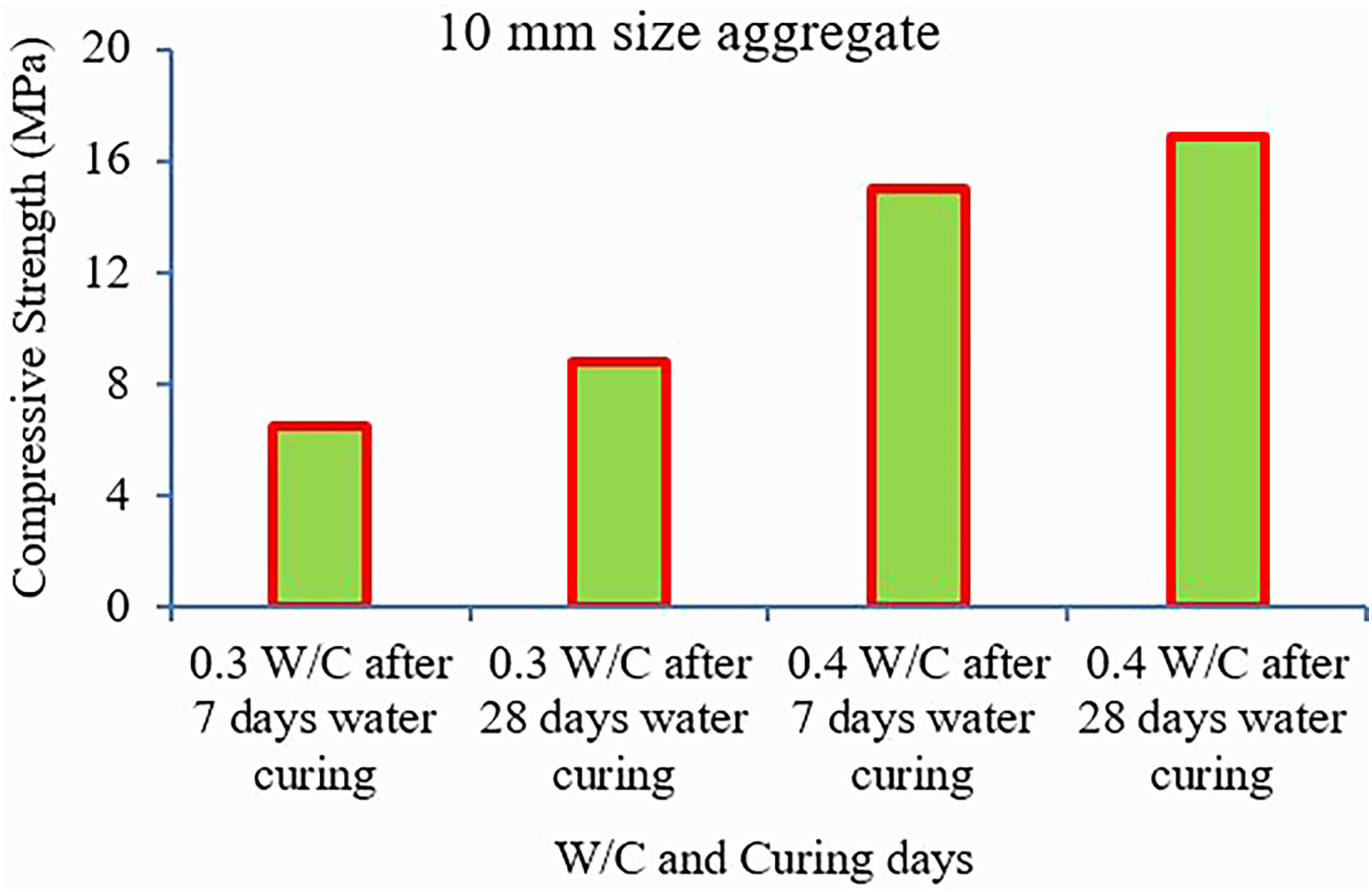
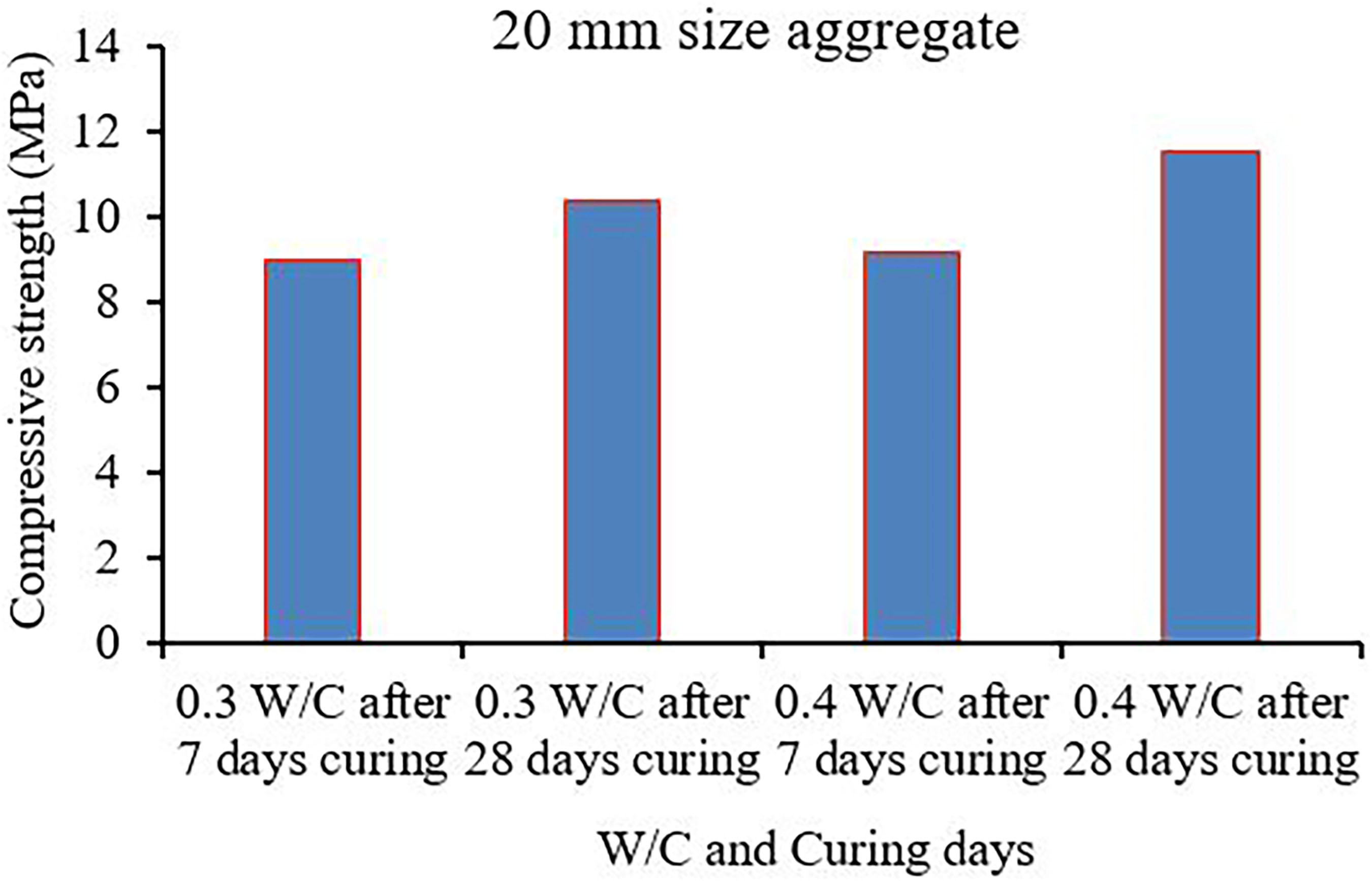
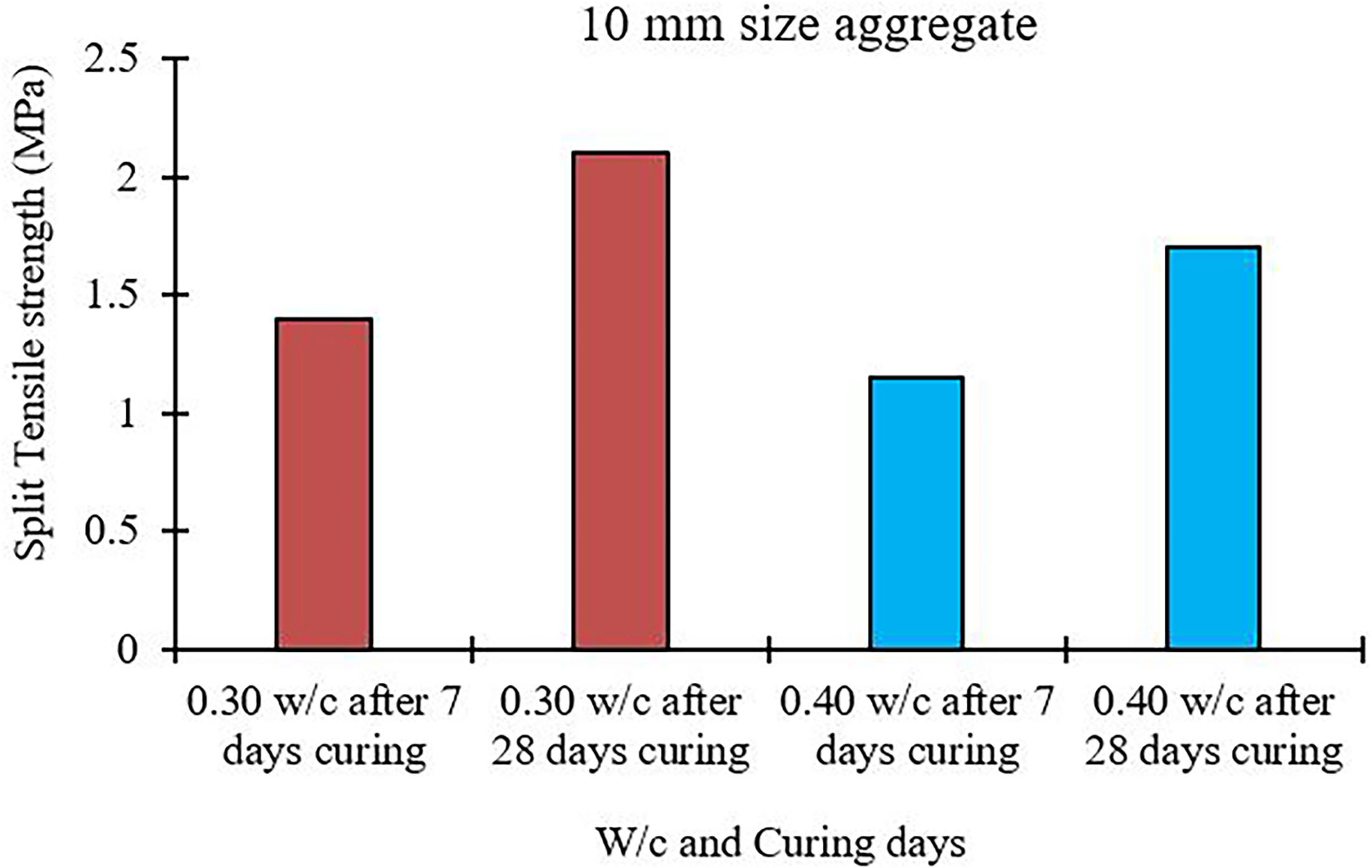
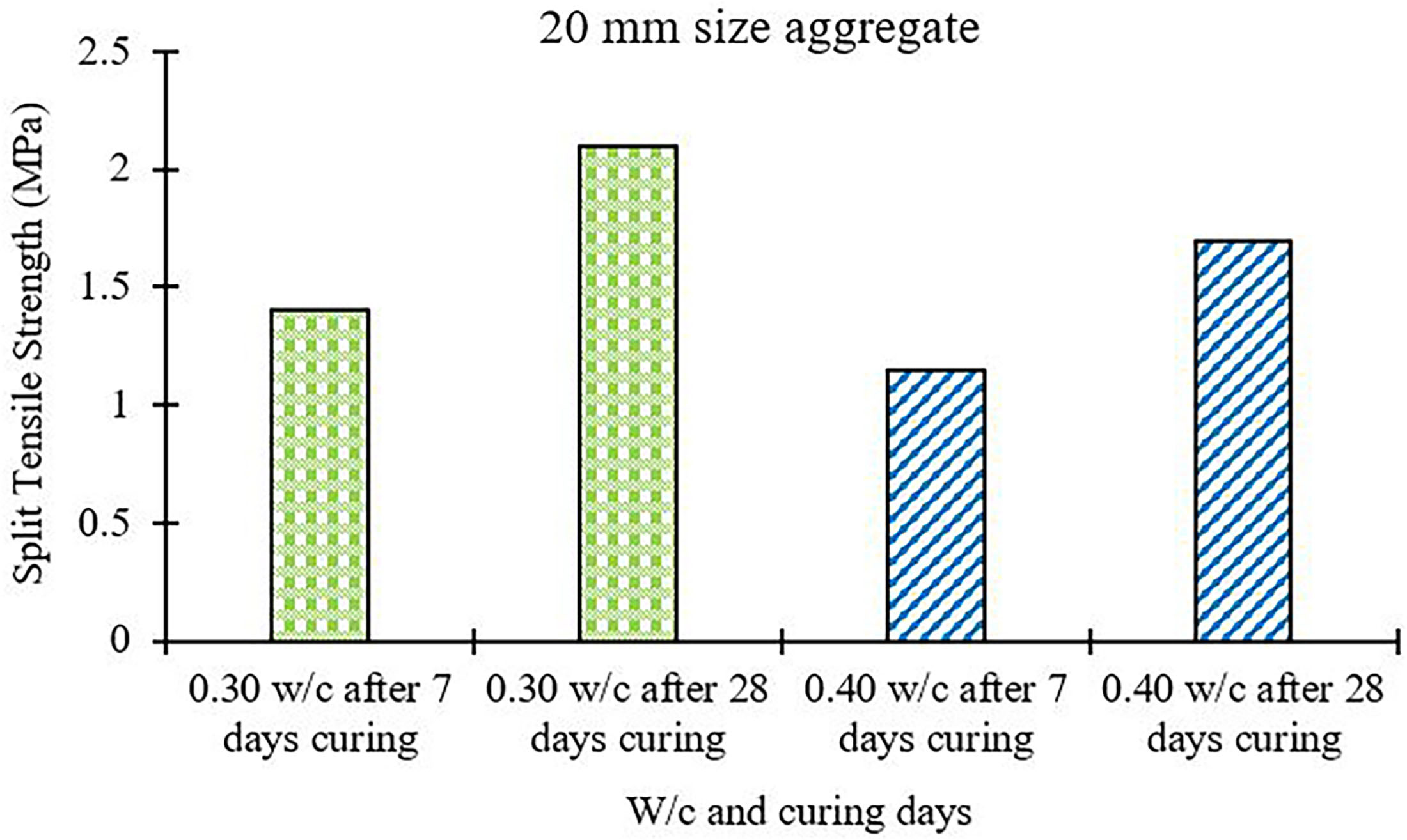
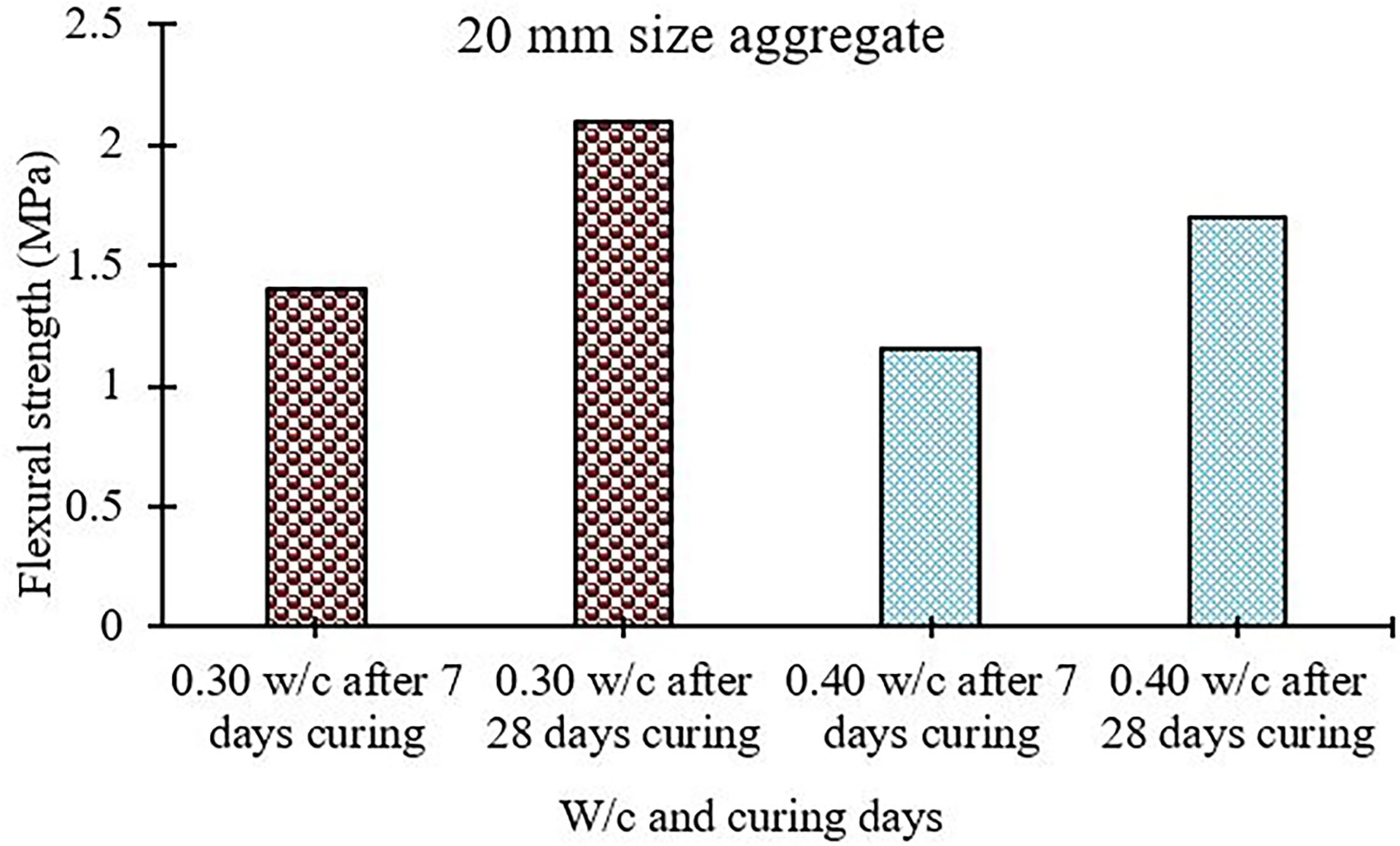
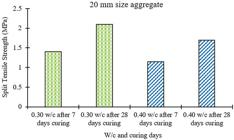
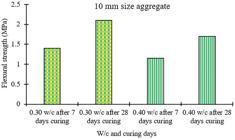
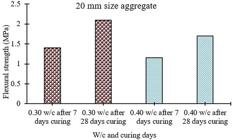
There is a significant problem in Middle Eastern countries with respect to climate change and rainwater management. This research discusses the influence of water-cement ratio (W/C) and aggregate size on pervious concrete strength and permeability. In this research, the impact of different aggregate sizes with different water-cement ratios are examined in the pervious concrete. The main results are that pervious concrete with a 0.4 water-cement ratio and a coarse aggregate of 10 mm got the highest compressive strength (15.7 MPa at 7 days, 16.83 MPa at 28 days). The results show that the W/C directly influenced compression strength, whereas the coarse aggregate’s size directly affected water content, increasing strength. Pervious concrete made with 10 mm aggregate was found to have better compressive strength, flexural strength, and permeability than 20 mm aggregate. Due to working ability, paste coating, and paste density, it acquires strength with a slightly higher water-cement ratio. With a somewhat higher water-cement ratio, the paste contained fewer open pores, which improved the load transfer and enhanced the compressive strength. The void content in the pervious concrete was considerably higher than that of standard concrete, which influenced the formation and strength of hydration products. These findings are instrumental in tuning the performance of pervious concrete to different conditions, especially when its application needs to be more sustainable.
Keywords:
Pervious Concrete; Permeability; Mechanical properties; Aggregates; Water-cement ratio
 Thumbnail
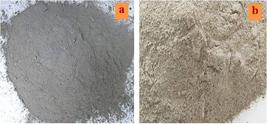 Thumbnail
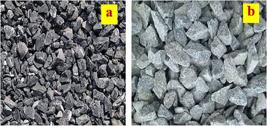 Thumbnail
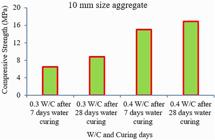 Thumbnail
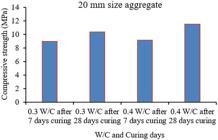 Thumbnail
 Thumbnail
 Thumbnail
 Thumbnail
 Thumbnail
 Thumbnail
 Thumbnail
 Thumbnail
 Thumbnail
 Thumbnail
 Thumbnail
 Thumbnail