 Interaction of concrete beams with hybrid fibers under cyclic loading
ABSTRACT
The unique type of concrete that is most frequently employed is fiber reinforced concrete. Typically, only one fiber is utilized in fiber-reinforced concrete. This research primarily focuses upon the influence of fiber on its addition to concrete. In this study, bending behavior of fiber-reinforced concrete beams under cyclic pressure is investigated using hybridized polypropylene and steel fibers. There have been six different mixtures created, one of which being regular concrete. Monofilaments have been prepared from equal composition of steel and polypropylene with 0.5%. Apart from that hybridized combinations were also prepared using 0.12% steel fiber and 0.38% polypropylene fiber, 0.12% steel fiber and 0.38% polypropylene fiber, and 0.12% steel fiber and 0.38% polypropylene fiber. Superior flexural properties were observed with hybridized mix combinations ensured through experimental and numerical studies.
Keywords:
ANSYS; Fiber Reinforcement; Flexural Testing; Ductility Factor
1. INTRODUCTION
Cementitious materials are widely recognized for their advantageous mechanical properties and strain capacity, making them essential components in construction. However, despite these benefits, cementitious materials are inherently brittle, which limits their ability to withstand tensile and shear stresses effectively [1]. To address this limitation and create a more stable and durable structural material, reinforcements in the form of continuous steel bars and stirrups are incorporated into concrete. These reinforcements significantly enhance the tensile and shear capacities of the concrete, allowing it to bear imposed loads more effectively [2]. For over five decades, another method of improving the brittleness of concrete has involved the addition of fibers. These fibers, which can be made from various materials such as steel, glass, or synthetic polymers, are mixed into the concrete in a discontinuous and random manner [3].
The resulting material, known as Fiber Reinforced Concrete (FRC), comprises cement, fine and coarse aggregates, water, and discrete fibers. The primary role of these fibers is not to replace traditional reinforcing bars but to complement them by improving the post-cracking behavior of concrete [4]. The inclusion of fibers in the concrete mix enhances the material’s toughness and crack resistance. By controlling crack initiation and propagation, fibers help maintain the integrity of the concrete after it has cracked, thus increasing its overall durability. While continuous steel bars primarily contribute to the concrete’s tensile and shear strength, the addition of fibers plays a vital role in enhancing its post-cracking response, ensuring a more resilient and long-lasting structural material [5].
The influence of hybrid fibers on the cracking behavior and stiffness of concrete beams has also been a subject of investigation [6]. The addition of steel fibers in HSC beams improved the secant structural stiffness and controlled the cracking patterns during the pre-peak stage of cyclic loading. However, the study noted that the ductility measurement did not show significant improvement in the post-peak stage [7]. The incorporation of hybrid fibers in UHPFRC beams has been shown to enhance flexural strength and improve crack control when compared to beams reinforced with single-type fibers [8]. Beam-column joints, which are vital elements in reinforced concrete structures, especially in areas prone to seismic activity, were the focus of a study that utilized finite element analysis to evaluate the performance of these joints when reinforced with steel, GFRP, and a hybrid combination of steel and GFRP under reversed cyclic loading [9]. The findings demonstrated that the hybrid steel/GFRP reinforcement delivered effective performance in terms of load vs. story drift response and energy dissipation [10]. In a related experimental study, beam-column joints made from HPC and reinforced with a hybrid mix of crimped steel fibers and polypropylene fibers exhibited improvements in initial cracking load, ultimate load capacity, and ductility [11]. These results underscore the advantages of using hybrid fibers to optimize the structural performance and durability of reinforced concrete elements [12].
The behavior of structural concrete frames reinforced with hybrid materials under cyclic loading was investigated. The study revealed that GFRP-reinforced models primarily exhibited elastic behavior until failure [13]. In contrast, the hybrid steel/GFRP models demonstrated enhanced energy dissipation and greater total story drift capacity, indicating improved performance under cyclic loads. This suggests that hybrid reinforcement can enhance the overall seismic performance of concrete frames [14]. The combination of steel and polypropylene fibers has been widely studied for its synergistic effects on concrete performance [15]. The behavior of HFRC beams under flexure and impact loading and found that the hybridization of steel and polypropylene fibers resulted in superior composite performance compared to single fiber types [16]. They demonstrated that steel fiber-reinforced concrete beams exhibited improved hysteretic response, energy absorption, and ductility under cyclic loading [17]. The influence of fiber length and volume fraction on the performance of HFRC beams was examined [18]. The study tested HSFRC beams with two fiber lengths (30 mm and 60 mm) and found that longer fibers contributed to better energy dissipation and cumulative damage capacity [19]. Additionally, reported that the optimal volume fractions of crimped steel fibers and polypropylene fibers significantly enhanced the energy dissipation capacity and stiffness degradation of beam-column joints [20].
The incorporation of hybrid fibers in concrete beams and structural elements under cyclic loading has shown promising results in enhancing load-carrying capacity, energy dissipation, ductility, and overall structural performance [21]. The synergistic effects of combining different fiber types, such as steel and polypropylene, contribute to improved mechanical properties and durability. In the current work, steel and polypropylene fibers are used to test the flexural performance of FRC.
2. MATERIAL AND METHODS
In this experiment, a standard mix of concrete ingredients was employed, including cement, aggregates (both fine and coarse), water, and superplasticizers. Ordinary Portland Cement (OPC), a commonly used cement due to its durability and strength, was selected as the binding material [22]. The fine aggregate used in this study was Manufactured Sand (M-Sand), which is increasingly popular due to its superior shape and grading when compared to natural sand. Both M-Sand and coarse aggregates were sourced from a local quarry, ensuring consistency in material quality.
The coarse aggregates, the specific size and gradation were chosen based on standard practices, although precise details would typically be provided for replicability [23]. The water used in the experiment was standard potable water, which is vital for achieving the desired workability and hydration of the concrete mix. The quality of water plays a significant role in the chemical reactions that occur during the setting and hardening of concrete, and therefore, only clean, drinkable water was employed.
In addition to the traditional components of concrete, steel and polypropylene fibers were incorporated into the mix [24]. These fibers are used to enhance the mechanical properties of concrete, particularly its tensile strength, toughness, and crack resistance. Steel fibers contribute to the concrete’s overall strength and durability, while polypropylene fibers help in controlling micro-cracking, reducing shrinkage, and improving impact resistance. The inclusion of these fibers makes the concrete suitable for applications where enhanced performance is required. Superplasticizers were also added to the mix to improve the workability and flowability of the concrete without compromising its strength or durability. These admixtures allow for a reduction in water content while maintaining or improving the fluidity of the concrete, leading to a more robust and resilient final product.
3. MIX PROPOSITION
Six HFRC beams were created and evaluated as a part of the experimental investigation under flexural load. Four points of loading were applied to the beam specimens. The beam specimen was cast using M40 grade concrete [25]. Two 10 mm dia bars at the bottom and two 8 mm dia bars at the top, covered by 25 mm clear cover comprise the main reinforcement. Stirrups with 6 mm diameter bars spaced 125 mm apart are part of the shear reinforcement. Table 1 lists the mix proportioning for this experiment. Figure 1 depicts the beam’s cross section and reinforcing details.

3.1. Methodology
3.1.1. Test beam preparation
Six beam specimens were made in both the hybrid fiber reinforced concrete mix and the control mix. Amount of fiber added to the concrete was based on its volume. The ideal fiber content for fiber was determined to be 1%. PP fibers were added in amounts of 25%–75%, 50%–50%, and 75%–25% to steel fiber. For each percentage, a single beam was cast. Concrete was prepared on a spotless, large area. After casting the beams, it was demolded and submerged for 28 days in portable water. Figure 2 depicts the beam specimen after the curing time.

3.1.2. Flexural testing
Four-point loading experiments were performed on the beam to ascertain its flexural behavior. The sample beam was loaded onto the loading device and evaluated as a straightforwardly supported beam. The beam was put to the test until it broke. The beam specimens’ early cracks and cracking patterns were documented. To measure the deflection of the beam as a result of the application of the load, the LVDT is installed in the beam. Figures 3 and 4 depict the test setup and beam testing under cyclic loading, respectively.


4. RESULTS AND DISCUSSION
4.1. Loading ability
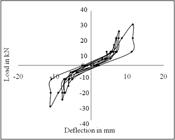
Table 2 lists the experimental findings for the Ultimate fracture load and First Crack load of HFRC beams under cyclic stress. Table 3 displays maximum load and deflections of HFRC beams.
The experimental results demonstrate that the incorporation of steel and polypropylene fibers into the concrete mix significantly enhanced both the cracking load and ultimate load capacities compared to the baseline concrete mix (BCM). The BCM exhibited a cracking load of 29 kN and an ultimate load of 46 kN. Introducing 0.5% steel fibers (BST0.5) increased the cracking load to 35 kN and the ultimate load to 51 kN, highlighting the positive impact of steel fibers on the initial strength of the concrete. Similarly, the addition of 0.5% polypropylene fibers (BPP0.5) resulted in a cracking load of 33 kN and an ultimate load of 50 kN, demonstrating an improvement over the BCM but slightly lower than the mix with steel fibers. The combination mixes, particularly BST0.5PP0.5, which had equal proportions of both steel and polypropylene fibers, showed further improvement, with a cracking load of 38 kN and an ultimate load of 54 kN. The highest performance was observed in the BST0.75PP0.25 mix, with a cracking load of 40 kN and an ultimate load of 58 kN, indicating that a higher proportion of steel fibers combined with a smaller amount of polypropylene fibers yields the best results in terms of load-bearing capacity.
The data indicates that the inclusion of steel and polypropylene fibers in concrete not only enhances the ultimate load capacity but also affects the deflection behavior of the material. The baseline concrete mix (BCM) had an ultimate load capacity of 46 kN with a deflection of 17.90 mm. When 0.5% steel fibers were added (BST0.5), the ultimate load increased to 51 kN, with a corresponding deflection of 23.99 mm. This shows that while the load-bearing capacity improved, the mix became more flexible, as evidenced by the increased deflection.
The mix containing 0.5% polypropylene fibers (BPP0.5) exhibited a slightly lower ultimate load of 50 kN but with a higher deflection of 27.45 mm, indicating that polypropylene fibers significantly increase the ductility of the concrete. The combination mixes, particularly BST0.5BPP0.5, achieved a balanced performance with an ultimate load of 54 kN and a deflection of 28.40 mm, suggesting that a mix of both fiber types optimizes the balance between strength and flexibility.
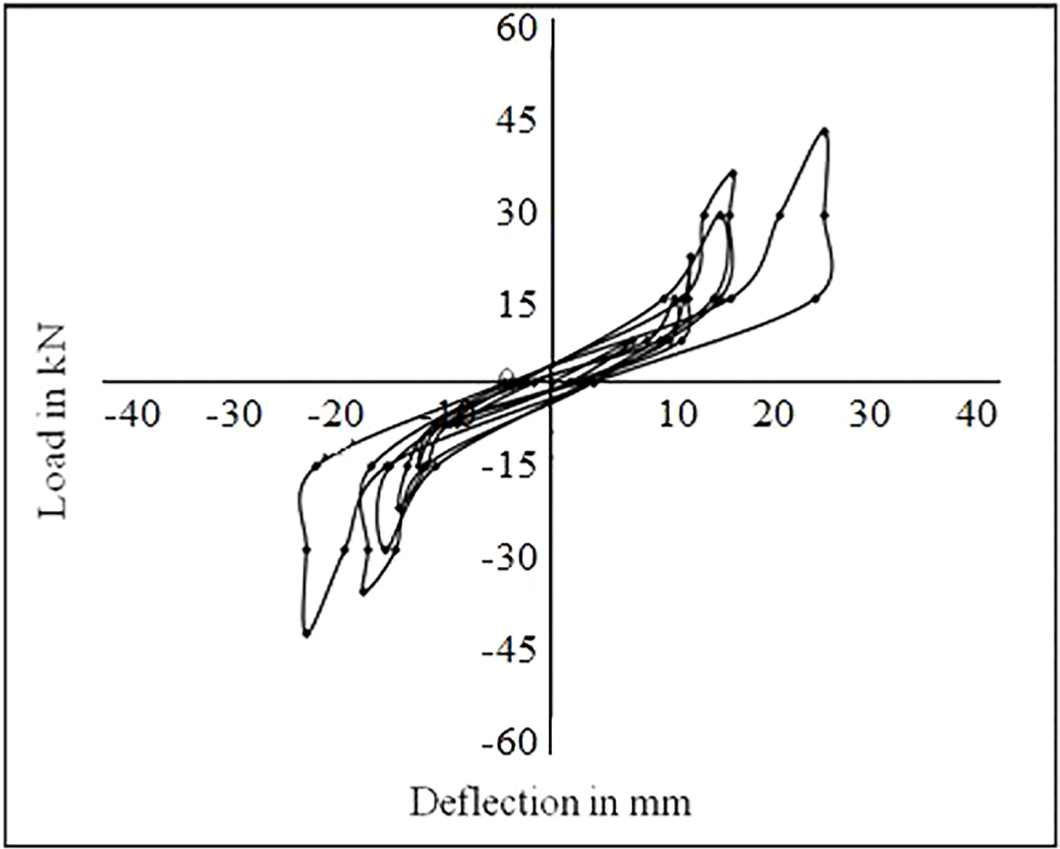
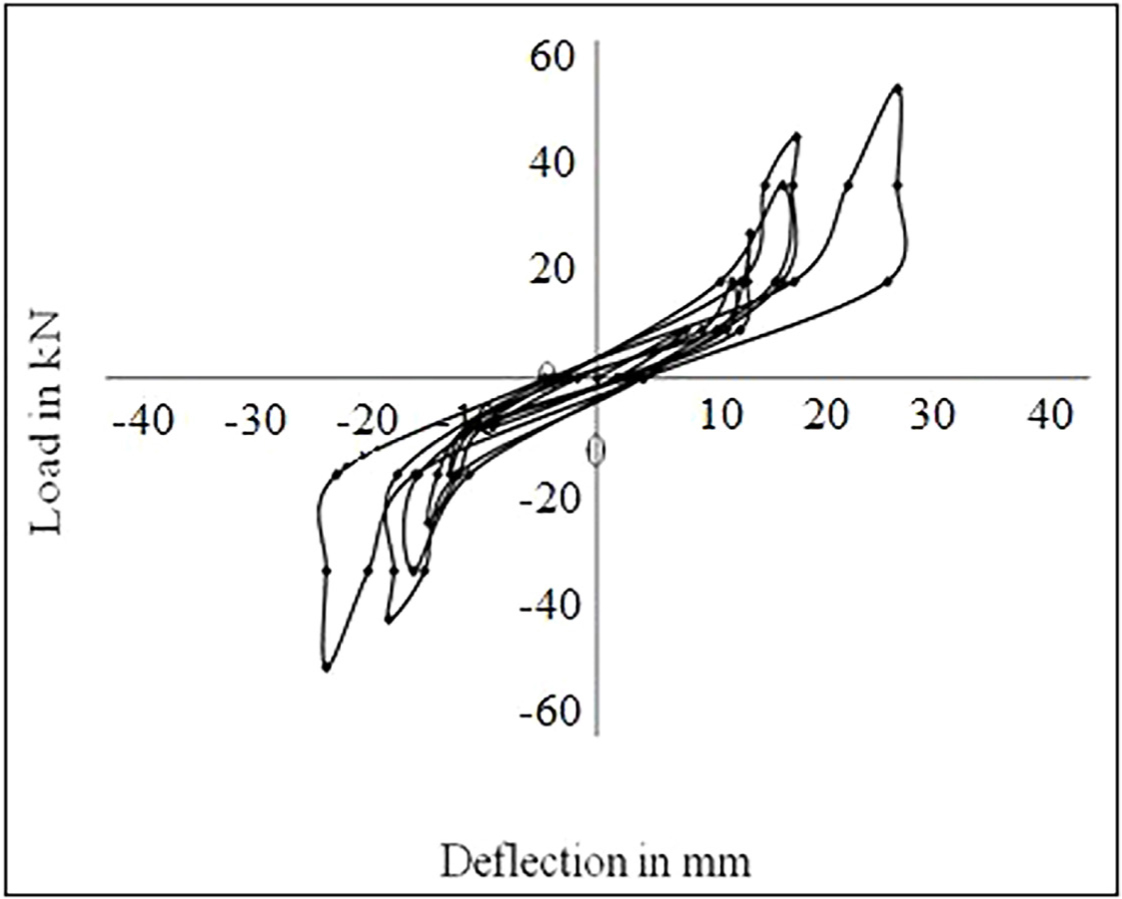
Interestingly, the BST0.75BPP0.25 mix, with a higher proportion of steel fibers, reached the highest ultimate load of 58 kN while maintaining a relatively lower deflection of 22.98 mm, indicating superior strength and controlled deformation, making it ideal for applications requiring high load-bearing capacity with moderate deflection. Figure 5 to 10 shows the deflection profile of various beams.



4.2. Ductility factor
The limitation of the anticipation included an inelastic nature, which is a flexibility issue. The Deformation to Deformation near the Cracking explanation is by far the clearest. Table 4 displays the HFRC’s flexibility parameter.
The results demonstrate that the incorporation of steel and polypropylene fibers in concrete mixes significantly affects the deflection characteristics and ductility of the material. The baseline concrete mix (BCM) exhibited an ultimate deflection of 17.90 mm and a yielding deflection of 3.65 mm, resulting in a ductility factor of 5.0. This indicates a relatively low capacity for deformation before failure.
When 0.5% steel fibers were added (BST0.5), the ultimate deflection increased to 23.99 mm, with a yielding deflection of 3.89 mm, resulting in an improved ductility factor of 6.21. This shows that steel fibers enhance the concrete’s ability to undergo larger deformations without a significant loss of strength. The BPP0.5 mix, containing 0.5% polypropylene fibers, showed an even higher ultimate deflection of 27.45 mm and a yielding deflection of 4.08 mm, yielding a ductility factor of 6.69, indicating that polypropylene fibers contribute more to ductility.
The BST0.5PP0.5 mix, with equal parts steel and polypropylene fibers, demonstrated an ultimate deflection of 28.4 mm and a yielding deflection of 4.19 mm, resulting in a ductility factor of 6.69, suggesting an optimal balance between strength and flexibility. The BST0.75PP0.25 mix, with a higher proportion of steel fibers, displayed an ultimate deflection of 23.99 mm and a notably lower yielding deflection of 2.49 mm, achieving the highest ductility factor of 9.32. This indicates that a higher steel fiber content significantly enhances the ductility, making the mix ideal for applications where high energy absorption and deformation capacity
4.3. Numerical simulation
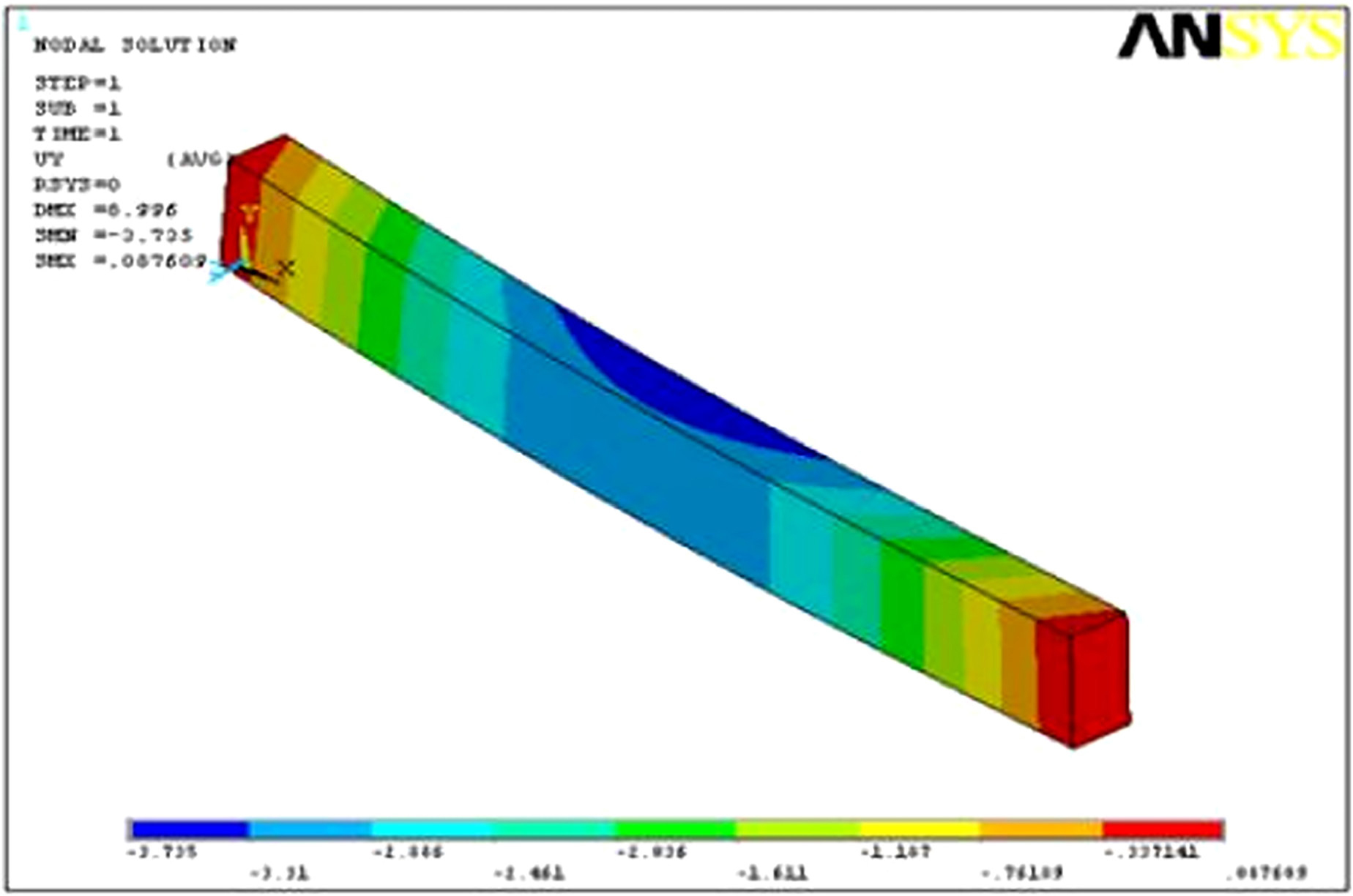
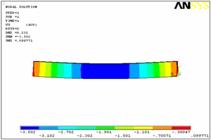
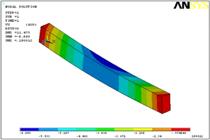
A representation of an ANSYS shaft from Figure 11 to 16 shows the ANSYS model of various beams. The results of the ANSYS assessment for flexural emanates are presented.




5. RESULTS AND DISCUSSIONS
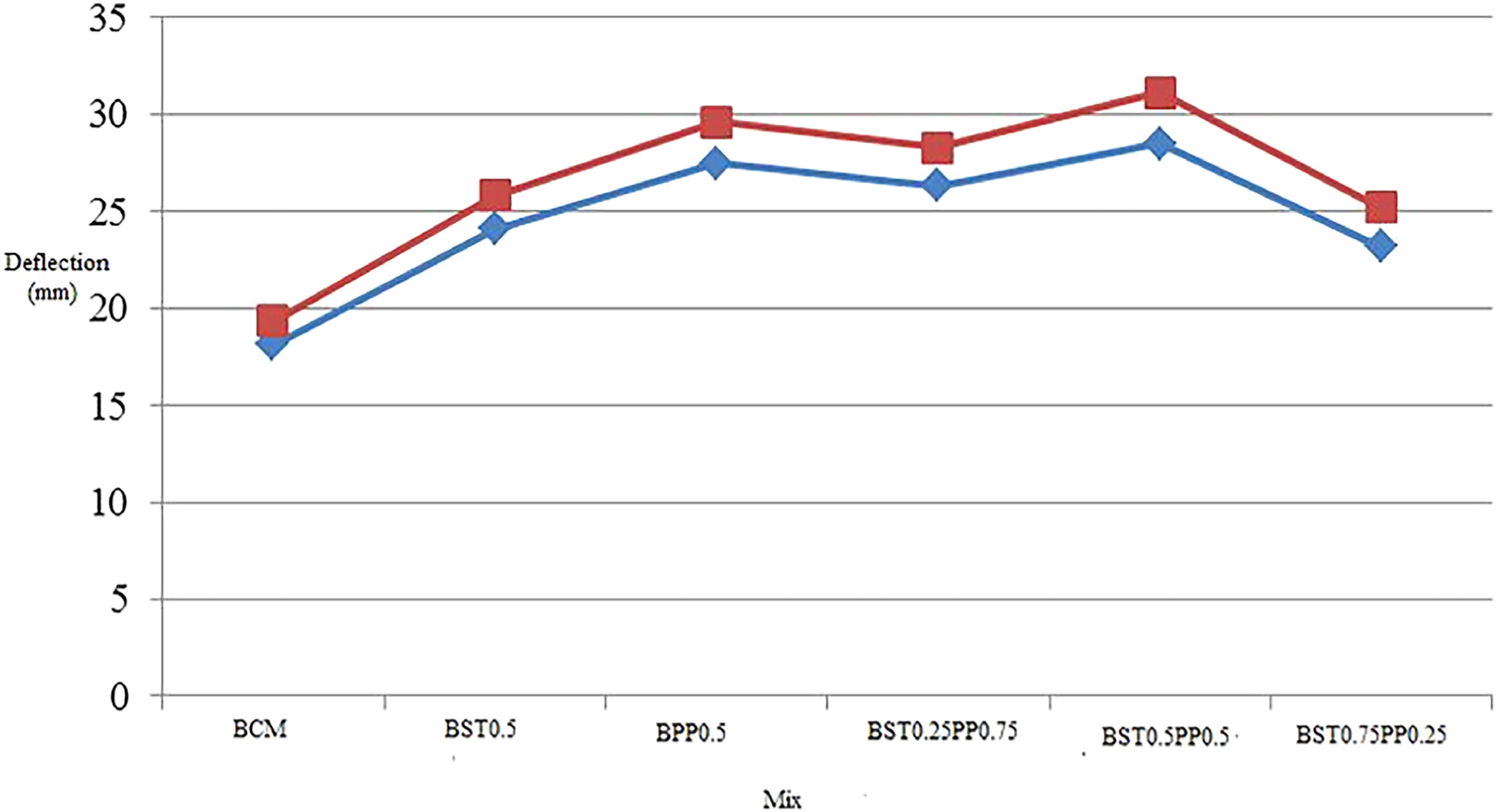
The comparison between experimental and analytical deflection values provides valuable insights into the accuracy of the analytical models used to predict the behavior of FRC. For the baseline concrete mix (BCM), the experimental deflection was 17.90 mm, while the analytical deflection was 19.32 mm, resulting in a deflection variation of 6.89%. This close alignment suggests that the analytical model effectively predicts the deflection behavior of conventional concrete under load.
Incorporating 0.5% steel fibers (BST0.5) resulted in an experimental deflection of 23.99 mm, while the analytical model predicted a deflection of 25.79 mm, leading to a deflection variation of 7.09%. This indicates that the model remains reasonably accurate for concrete mixes reinforced with steel fibers, with only a slight increase in variation compared to the baseline mix.
For the mix containing 0.5% polypropylene fibers (BPP0.5), the experimental deflection was 27.45 mm, while the analytical deflection was 29.59 mm, leading to a deflection variation of 8.01%. This higher variation suggests that while the analytical model is still effective, it may slightly overestimate deflection in mixes with polypropylene fibers, possibly due to the material’s increased ductility.
The mix with 0.25% steel and 0.75% polypropylene fibers (BST0.25PP0.75) showed an experimental deflection of 26.20 mm, while the analytical deflection was 28.31 mm, resulting in a variation of 7.58%. This mix exhibits a balanced deflection variation, indicating that the analytical model can reasonably predict the behavior of HYFRC.
For the mix with equal parts steel and polypropylene fibers (BST0.5PP0.5), the experimental deflection was 28.40 mm, and the analytical deflection was 31.09 mm, resulting in the highest variation of 9.19%. This suggests that the analytical model may slightly overestimate deflection in mixes with a balanced hybrid fiber composition.
Finally, the mix with 0.75% steel and 0.25% polypropylene fibers (BST0.75PP0.25) showed an experimental deflection of 22.98 mm and an analytical deflection of 25.21 mm, with a variation of 8.59%. This mix demonstrates that a higher steel fiber content leads to a more predictable deflection pattern, with moderate variation from the analytical model. The deflection variations across all mixes remain within a reasonable range, indicating that the analytical models provide a reliable estimation of deflection for different fiber-reinforced concrete compositions, though slight discrepancies highlight the inherent complexity of predicting the behavior of fiber-reinforced material.
At the centre of the beam, the deflection values from the ANSYS analysis of the specimen were noted and displayed in Table 5. Figure 17 illustrates the variance between experimental and analytical findings.

6. CONCLUSION
The key findings of the study are outlined as follows:
-
The load-deflection behavior of HFRC beams under cyclic loading was analyzed, revealing consistent incremental deflections across all fiber combinations.
-
The beam reinforced with a blend of 0.5% steel and 0.5% polypropylene fibers exhibited superior deflection performance compared to both single-fiber reinforced concrete and the control mix.
-
For the BST0.75PP0.25 mix, the experimental deflection was measured at 22.98 mm, while the analytical model predicted a deflection of 25.79 mm, representing an 8.01% increase over the experimental value.
-
A comparison between load-deflection results from ANSYS simulations and experimental data indicated that the ANSYS predictions were slightly higher than the observed experimental results.
-
The cracking load for beams reinforced with hybrid fibers increased by 8.82% for the ST0.5PP0.5 mix and by 14.7% for the ST0.75PP0.25 mix, compared to steel fiber-reinforced concrete (SFRC) beams. The addition of fibers effectively bridged cracks and delayed their initial formation.
-
The ultimate load capacity enriched by 14% for the BST0.75PP0.25 hybrid mix compared to the BST0.5 steel fiber-reinforced beam.
-
Ductility improved by nearly 56% in the BST0.75PP0.25 specimen compared to the BST0.25PP0.75 specimen.
-
The BPP0.5 specimens demonstrated greater ductility than the BST0.5 specimens. The study concluded that hybrid fiber reinforcement enhances ductility by arresting crack propagation through fiber bridging, forcing cracks to follow a more complex path and thereby requiring more energy to propagate. Consequently, the proper combination of these complementary fibers leads to improved concrete properties.
7. BIBLIOGRAPHY
- [1] LI, V.C., KONG, H., BIKE, S.G., “Fiber reinforced high performance concrete material”, High Performance Concrete Workability, Strength and Durability, v. 71, pp. 1–3, 2000.
-
[2] SEENIPEYATHEVAR, M.S., SHANMUGAM, B., VELAMALA, D.S., et al, “Green reinforcement: exploring bamboo’s potential in sustainable concrete construction”, Matéria (Rio de Janeiro), v. 29, n. 2, pp. e20240183, 2024. doi: http://doi.org/10.1590/1517-7076-rmat-2024-0183.
» https://doi.org/10.1590/1517-7076-rmat-2024-0183 -
[3] MEESARAGANDA, L.V.P., SAHA, P., LASKAR, A.I., “Behaviour of self-compacting reinforced concrete beams strengthened with hybrid fiber under static and cyclic loading”, International Journal of Civil Engineering, v. 16, n. 2, pp. 169–178, 2018. doi: http://doi.org/10.1007/s40999-016-0114-2.
» https://doi.org/10.1007/s40999-016-0114-2 -
[4] SATHISH KUMAR, V., GANESAN, N., POOKATTU VATTARAMBATH INDIRA, G., “Behaviour of hybrid fibre-reinforced ternary blend geopolymer concrete beam-column joints under reverse cyclic loading”, Polymers, v. 14, n. 11, pp. 2239, 2022. doi: http://doi.org/10.3390/polym14112239.
» https://doi.org/10.3390/polym14112239 -
[5] ELSHAZLI, M.T., SARAS, N., IBRAHIM, A., “Structural response of high strength concrete beams using fiber reinforced polymers under reversed cyclic loading”, Sustain. Struct, v. 2, n. 2, pp. 000018, 2022. doi: http://doi.org/10.54113/j.sust.2022.000018.
» https://doi.org/10.54113/j.sust.2022.000018 - [6] PARTHASAARATHI, R., BALASUNDARAM, N., ARASU, N., “Analysing the impact and investigating Coconut Shell Fiber Reinforced Concrete (CSFRC) under varied loading conditions”, Journal of Advanced Research in Applied Sciences and Engineering Technology, v. 35, n. 1, pp. 106–120, 2024.
-
[7] SIVA CHIDAMBARAM, R., AGARWAL, P., “Performance evaluation of metallic and synthetic fiber hybridization on the cyclic behavior of exterior beam-column joint”, Advances in Civil Engineering Materials, v. 7, n. 1, pp. 381–402, 2018. doi: http://doi.org/10.1520/ACEM20170137.
» https://doi.org/10.1520/ACEM20170137 - [8] ARASU, A., NATARAJAN, M., BALASUNDARAM, N., et al, “Utilizing recycled nanomaterials as a partial replacement for cement to create high-performance concrete”, Global NEST Journal, v. 25, n. 6, pp. 89–92, 2023.
- [9] Sobhy, A., Nour, L.A., Hassan, H. et al, “Behavior of structural concrete frames with hybrid reinforcement under cyclic loading”, Frattura ed Integrità Strutturale, v. 15, n. 57, pp. 70–81, 2021.
-
[10] GANESAN, N., INDIRA, P.V., SABEENA, M., “Behaviour of hybrid fibre reinforced concrete beam-column joints under reverse cyclic loads”, Materials & Design, v. 54, pp. 686–693, 2014. doi: http://doi.org/10.1016/j.matdes.2013.08.076.
» https://doi.org/10.1016/j.matdes.2013.08.076 -
[11] DANIEL, L., LOUKILI, A., “Behavior of high-strength fiber-reinforced concrete beams under cyclic loading”, ACI Structural Journal, v. 99, n. 3, pp. 248–256, 2002. doi: http://doi.org/10.14359/11908.
» https://doi.org/10.14359/11908 - [12] VERAPATHRAN, M., VIVEK, S., ARUNKUMAR, G.E., et al, “Flexural behaviour of HPC beams with steel slag aggregate”, Journal of Ceramic Processing Research, v. 24, n. 1, pp. 89–97, 2023.
-
[13] ARASU, A.N., MUTHUSAMY, N., NATARAJAN, B., et al, “Optimization of high performance concrete composites by using nano materials”, Research on Engineering Structures and Materials, v. 9, n. 3, pp. 843–859, 2023. doi: http://doi.org/10.17515/resm2022.602ma1213.
» https://doi.org/10.17515/resm2022.602ma1213 -
[14] SAHIB, M.M.M., SALIM, S.R., “Influence of fiber hybridization on strength and toughness of RC beams”, Civil Engineering Journal, v. 8, n. 3, pp. 549–566, 2022. doi: http://doi.org/10.28991/CEJ-2022-08-03-010.
» https://doi.org/10.28991/CEJ-2022-08-03-010 -
[15] TÜRKER, K., HASGÜL, U., BIROL, T., et al, “Hybrid fiber use on flexural behavior of ultra high performance fiber reinforced concrete beams”, Composite Structures, v. 229, pp. 111400, 2019. doi: http://doi.org/10.1016/j.compstruct.2019.111400.
» https://doi.org/10.1016/j.compstruct.2019.111400 -
[16] CHALIORIS, C., KOSMIDOU, P., KARAYANNIS, C., “Cyclic response of steel fiber reinforced concrete slender beams: an experimental study”, Materials (Basel), v. 12, n. 9, pp. 1398, 2019. doi: http://doi.org/10.3390/ma12091398.
» https://doi.org/10.3390/ma12091398 - [17] VARTHI, M.K.C., SIVARAJA, M., JEGAN, M., et al, “Experimental study on hybrid fiber reinforced composites using waste fibers”, International Journal of Advanced Science and Technology, v. 29, n. 7, pp. 831–835, 2020.
- [18] VARTHI, M.K.C., MS, A., KRISHNARAJA, M.J., “Flexural performance of hybrid fiber reinforced concrete beams using textile and steel fiber”, International Journal of Advanced Science and Technology, v. 29, n. 7, pp. 844–848, 2020.
-
[19] SEENIPEYATHEVAR, M.S., SHANMUGAM, B., RAMAKRISHNAN, A., et al, “A comprehensive study on advanced strategies to improve the performance, durability, and flexible behavior of cementitious materials”, Matéria (Rio de Janeiro), v. 29, n. 3, pp. e20240217, 2024. doi: http://doi.org/10.1590/1517-7076-rmat-2024-0217.
» https://doi.org/10.1590/1517-7076-rmat-2024-0217 -
[20] ARASU, A.N., NATARAJAN, M., BALASUNDARAM, N., et al, “Development of high-performance concrete by using nanomaterial graphene oxide in partial replacement for cement” In AIP Conference Proceedings, vol. 2861, no. 1., 2023. doi: http://doi.org/10.1063/5.0158487.
» https://doi.org/10.1063/5.0158487 -
[21] GANAPATHY, G.P., ALAGU, A., RAMACHANDRAN, S., et al, “Effects of fly ash and silica fume on alkalinity, strength and planting characteristics of vegetation porous concrete”, Journal of Materials Research and Technology, v. 24, pp. 5347–5360, 2023. doi: http://doi.org/10.1016/j.jmrt.2023.04.029.
» https://doi.org/10.1016/j.jmrt.2023.04.029 -
[22] SEENIPEYATHEVAR, M.S., SHANMUGAM, B., MURUGESAN, V., et al, “Increasing structural resilience in high-strength concrete via microbial-based self-healing”, Matéria (Rio de Janeiro), v. 29, n. 3, pp. e20240253, 2024. doi: http://doi.org/10.1590/1517-7076-rmat-2024-0253.
» https://doi.org/10.1590/1517-7076-rmat-2024-0253 -
[23] SRINIVASAN, S.S., MUTHUSAMY, N., ANBARASU, N.A., “The structural performance of fiber-reinforced concrete beams with nanosilica”, Matéria (Rio de Janeiro), v. 29, n. 3, pp. e20240194, 2024. doi: http://doi.org/10.1590/1517-7076-rmat-2024-0194.
» https://doi.org/10.1590/1517-7076-rmat-2024-0194 -
[24] KUMAR, S.N., NATARAJAN, M., ARASU, A.N., “A comprehensive microstructural analysis for enhancing concrete’s longevity and environmental sustainability”, Journal of Environmental Nanotechnology, v. 13, n. 2, pp. 368–376, 2024. doi: http://doi.org/10.13074/jent.2024.06.242584.
» https://doi.org/10.13074/jent.2024.06.242584 -
[25] KADHAR, S.A., GOPAL, E., SIVAKUMAR, V., et al, “Optimizing flow, strength, and durability in high-strength self-compacting and self-curing concrete utilizing lightweight aggregates”, Matéria (Rio de Janeiro), v. 29, n. 1, pp. e20230336, 2024. doi: http://doi.org/10.1590/1517-7076-rmat-2023-0336.
» https://doi.org/10.1590/1517-7076-rmat-2023-0336