 Correlation of strength parameters, microstructure, and eco-strength efficiency in lightweight concrete using waste polyurethane foam aggregate
ABSTRACT
This study investigates the potential of waste Polyurethane Foam (PF) as a lightweight coarse aggregate in concrete, aiming to promote sustainable construction practices by recycling industrial waste. Waste PF was used as coarse aggregate in concrete mixes, replacing 0–80% by volume in 10% increments. These mixes were tested for compressive strength, split tensile strength, and flexural strength. Correlations between compressive, split tensile, and flexural strengths were derived and compared with international code predictions. Additionally, microstructural investigations using Scanning Electron Microscopy (SEM) with Energy Dispersive X-ray Analysis (EDAX) were conducted. Furthermore, the embodied carbon dioxide emissions and eco-strength efficiency of the mixes were calculated to evaluate their environmental performance. The results indicate that mixes with 30 to 60% Polyurethane Foam Aggregate (PFA) achieved compressive strengths above 17 MPa and density below 2000 kg/m3, thereby meeting the structural lightweight concrete requirements of ACI 213R, with all mixes showing split tensile and flexural strengths above 2 MPa. A strong correlation was found among mechanical strengths, confirming the reliability of experimental results. SEM images showed enhanced bonding between PFA and the cement matrix. The eco-strength efficiency of polyurethane foam concrete mixes dropped by 24–43% at 30–60% replacement compared to conventional concrete.
Keywords:
Polyurethane foam aggregate; Concrete; Correlation; Microstructure; Eco-strength efficiency
1. INTRODUCTION
The global construction sector is one of the largest consumers of natural resources and a major contributor to environmental deterioration, mainly due to the overuse of natural aggregates in concrete manufacturing [1]. Simultaneously, the increased development of non-biodegradable polymeric waste, such as Polyurethane Foam (PF), creates considerable problems for waste management and environmental sustainability. PF is a lightweight, versatile substance used for cushioning and insulation in buildings, vehicles, furniture, and packaging. PF comes in various varieties, each tailored to a specific use [2], [3, 4]. Flexible PF is a soft material often used in furniture cushions, beds, and car seats. Rigid PF is a hard material primarily used for thermal insulation in buildings, freezers, and cold storage [5]. Waste is generated both during production (such as trimmings, defects, and overspray) and after use (from the disposal of unshaped panels, insulation, and packaging) [6, 7]. PF is non-biodegradable; thus, recycling or reusing it, such as in lightweight concrete, is a more environmentally responsible approach. Using waste PF supports circular economy principles by diverting non-biodegradable industrial waste from landfills and repurposing it as lightweight aggregate in concrete. This method reduces the need to extract natural aggregates, promotes resource efficiency, and minimizes environmental harm. The study also indicates that PF-based mixes have lower embodied carbon and sufficient structural performance, aligning with sustainable construction goals. Additionally, SEM analysis shows improved bonding between Polyurethane Foam Aggregate (PFA) and cement paste, demonstrating the material’s technical feasibility. Overall, this reuse strategy encourages waste valorization, reduces the carbon footprint, and helps build more sustainable practices.
In the past several years, there have been efforts made to mix a variety of waste materials into concrete to lessen the impact that concrete has on the environment, conserve natural resources, and support the ideals of a circular economy [8,9,10,11]. Structural safety, extended service life, and improved construction efficiency are key application goals of cementitious mix, emphasizing their role in promoting sustainable infrastructure development [12]. Developed using recycled polyethylene fibers and desert sand, the life-cycle assessment results could reduce both material costs and carbon footprints by nearly 50% compared to conventional concrete applications [13]. Among them, the utilization of lightweight polymeric wastes as partial replacements for coarse aggregates has garnered interest due to the combined benefit of lowering the density of concrete and repurposing waste that would otherwise be non-recyclable [14,15,16]. There has been limited study on utilizing waste PFA as a structural component in concrete, despite studies on the use of waste plastics and rubber. The impact on important performance metrics, such as compressive strength, bonding behavior, and durability, requires a rigorous study [17]. Furthermore, a thorough understanding of the microstructural interaction between the PFA and the cementitious matrix is necessary to assess the viability of utilizing PFA in structural applications [18]. Many investigations have examined the potential use of waste PF as a partial replacement for natural coarse aggregate in concrete, with a focus on how this substitution would affect compressive strength. When PF was used as a fine aggregate in cement concrete, MOUNANGA et al. [19] reported that the compressive strength of the concrete reached only 10.4 MPa. Through the use of PF to partially replace coarse aggregate, BEN FRAJ et al. [20] were able to obtain a maximum compressive strength of 16 MPa. After utilizing finely powdered limestone as a substitute for sand in Polyurethane Foam Concrete (PFC), DVORSKÝ et al. [21] found that the compressive strength values ranged from 2.33 to 2.79 MPa. Using a variety of varying volume percentages of PFA in the mixture, WANG et al. [22] found that the compressive strength ranged from 5.3 to 8.5 MPa. MOHI-UD-DIN et al. [23] investigated the development of sustainable lightweight structural concrete incorporating rigid PF waste, sized between 5 and 10 mm, as a replacement for conventional coarse aggregate. To improve the mechanical performance, silica fume was added as a supplementary cementitious material, replacing 10% of the cement content. Two types of PF concretes—uncoated and cement-coated—were prepared and tested for their 28-day strength. The uncoated PF mix achieved a compressive strength of 19.5 MPa and a flexural strength of 2.78 MPa, satisfying the requirements for structural lightweight concrete. Our earlier research achieved a compressive strength of 22.9 MPa by using waste rigid PF as a partial replacement for coarse aggregate in lightweight concrete [24]. Several researchers ha¿ve extensively investigated the mechanical properties, microstructural behavior, and environmental performance of recycled aggregate concrete, incorporating a wide range of industrial and construction waste by-products as partial or full replacements for conventional aggregates [25,26,27,28]. Several previous studies have shown that waste PF has the potential to be used as a partial substitute for natural aggregates in concrete. The primary focus of these investigations was to evaluate the compressive strength of materials. On the other hand, there has been a limited amount of study conducted on the more comprehensive mechanical behavior, which includes split tensile and flexural strength. The current research fills these gaps by examining the relationships between compressive strength and other mechanical parameters, notably split tensile strength and flexural strength, which are critical for effective predictive modelling and structural design [29, 30]. Environmental evaluation of embodied CO2 emissions and eco-strength efficiency, which offers a thorough assessment of how well mechanical performance and environmental impact are balanced. By integrating these new components with microstructural and ecological research, the study provides a more comprehensive understanding of lightweight concrete containing waste PFA. This study aims to evaluate the mechanical properties of lightweight concrete with waste PFA, focusing on compressive, split tensile, and flexural strengths, and their correlations. It also assesses microstructural characteristics and environmental impact, introducing Embodied CO2 emissions and eco-strength efficiency to measure sustainability alongside performance.
2. MATERIALS AND METHODS
2.1. Materials
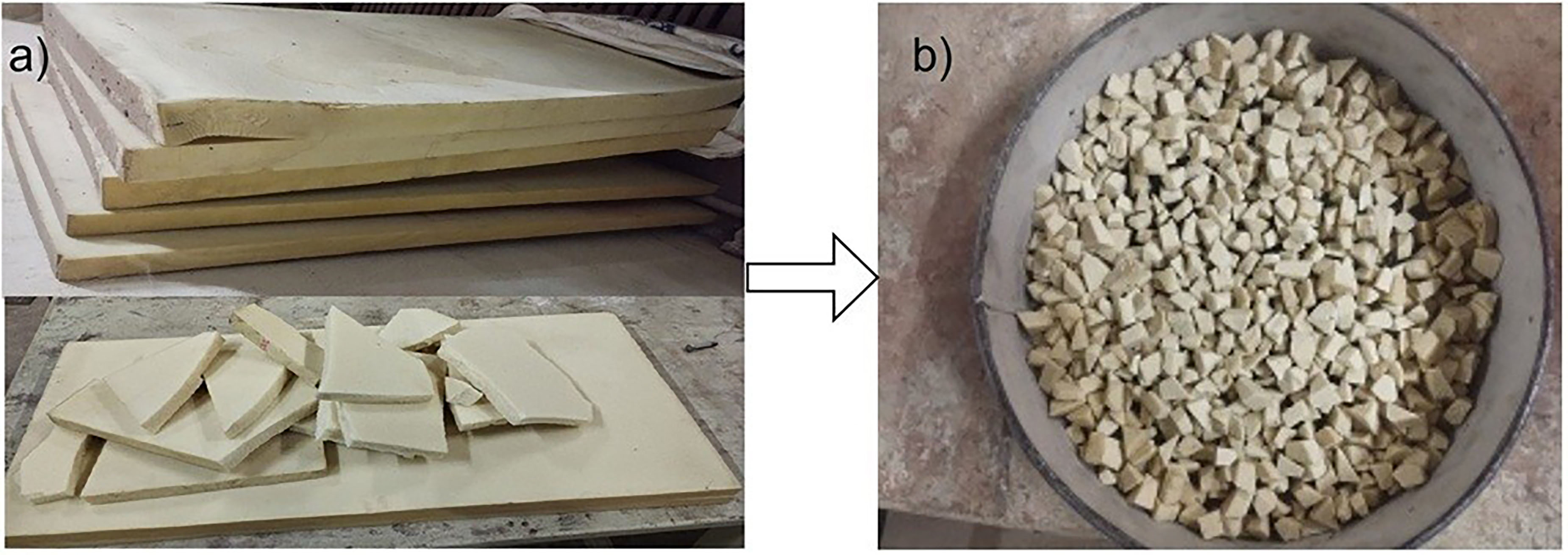
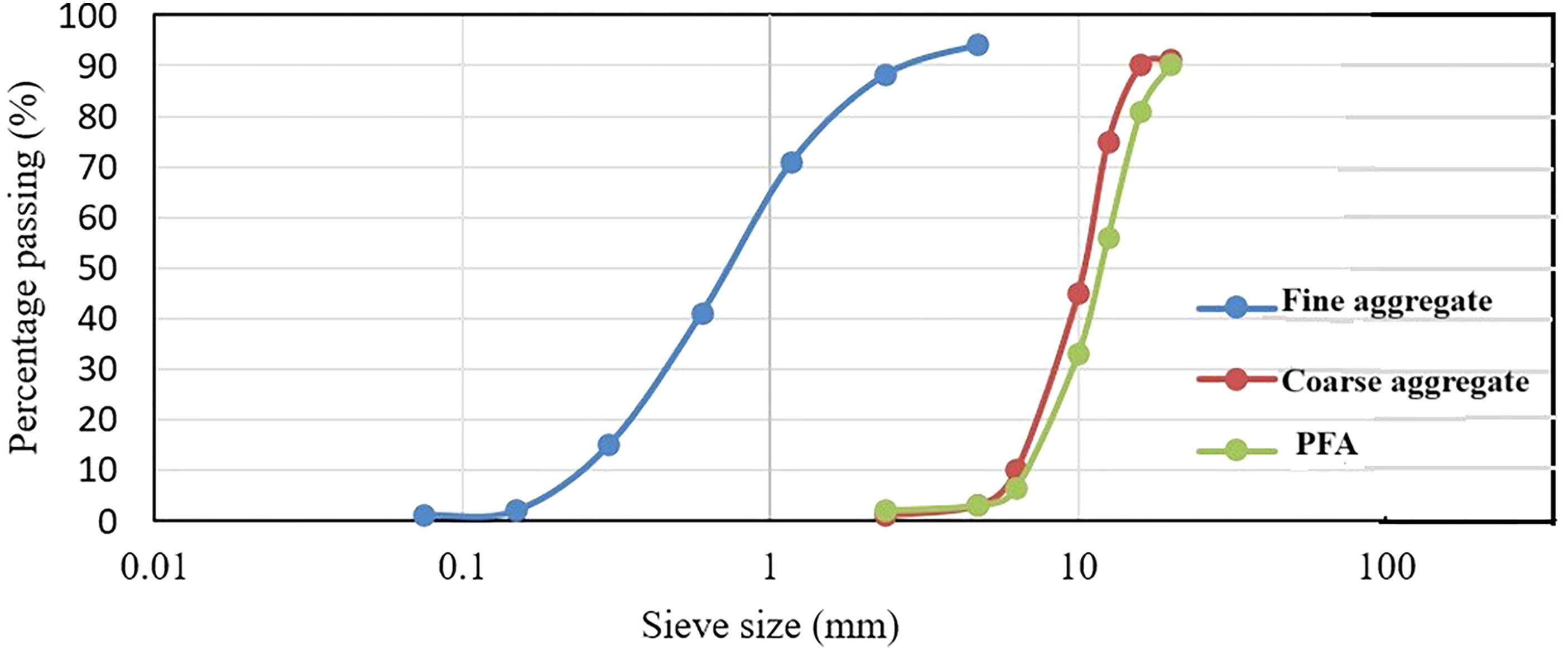
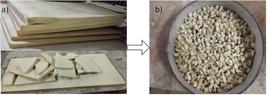
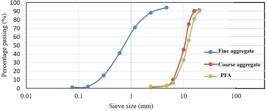
Ordinary Portland Cement of 53 grade was used in the study, along with manufactured sand as fine aggregate, natural coarse aggregate, and waste PF as a partial replacement for coarse aggregate. The PFA was cleaned, dried, and shredded into angular particles of appropriate size. The waste PF material was shredded and sieved to a uniform particle size range of 4.75–20 mm, conforming to the grading limits for coarse aggregate, and any oversized or undersized particles were discarded. The converted waste PF, after shredding, was used as coarse aggregate, as shown in Figure 1. The particle size distribution of fine aggregate, coarse aggregate, and PFA is presented in Figure 2. The bulk density of PFA was measured for each batch as per IS 2386 (Part III), and deviations greater than ±2% were corrected by remixing to ensure consistency. To increase flowability and prevent floating during the mixing process, pre-wetted PFA was used in concrete. As per IS 2386 (Part 3) [31], the specific gravity of cement, sand, coarse aggregate, and PFA was found to be 3.15, 2.65, 2.75, and 0.32, respectively. The PFA had an average bulk density of 200 kg/m3 and a water absorption capacity of 13.5%. Tap water was used for both mixing and curing throughout the study.
2.2. Mix proportions
Concrete mixes were made by partially replacing natural coarse aggregate with waste PFA at replacement levels of 0% (control mix), 10%, 20%, 30%, 40%, 50%, 60%, 70%, and 80% by volume. Based on the requirements of IS 10262:2019 [32], a mix was developed for M25 grade concrete. Table 1 presents the mix proportions for conventional concrete and different PFC mixes. A superplasticizer based on polycarboxylate was added to the mixture to improve its workability in mixtures with a larger percentage of foam. The water-cement ratio was kept at 0.45. The concrete mix proportions were designed with partial replacement of coarse aggregate by PFA at varying percentages.
2.3. Methods
For this study, a total of 81 specimens were prepared and tested to evaluate the mechanical properties of concrete across nine mix proportions—one control mix (CM) concrete and eight PFC mixes. Compressive strength was measured using 27 cube specimens of size 100 × 100 × 100 mm in accordance with IS 516:2021 [33], at a loading rate of 13.7 N/mm2/min, with three cubes tested per mix and the average value reported. Split tensile strength was determined using 27 cylindrical specimens of 150 mm diameter and 300 mm height as per IS 516:2021, at a loading rate of 1.4 N/mm2/min, with three cylinders tested for each mix and the mean value recorded. Flexural strength was assessed using 27 prism specimens of 100 × 100 × 500 mm in accordance with IS 516:2021, at a loading rate of 0.7 N/mm2/min, with three prisms tested per mix and the average value taken. For all tests, the average of three specimens was used to represent the strength of each mix proportion. The compressive strength and split tensile strength tests were performed using a compression testing machine with a capacity of 2000 kN, while the flexural strength test was conducted using a universal testing machine of the same capacity. Each mechanical property test (compressive strength, split tensile strength, and flexural strength) was performed on a minimum of three specimens per mix proportion. Results are presented as mean values with error bars representing ± one standard deviation. The variability was relatively small, indicating consistent behavior among specimens.
In this study, embodied CO2 emissions refer to the total greenhouse gas emissions produced during the conversion of waste rigid PF into coarse aggregate particles. The embodied CO2 emissions from PF processing were estimated based on the energy required for shredding, using standard emission factors for electricity generation, while PFA values were obtained from industrial recycling data. For 1 m3 of concrete, the embodied CO2 emissions were calculated by multiplying the mass of each material by its corresponding emission factor. Eco-strength efficiency was used to evaluate the environmental performance of PFC relative to its mechanical strength. Eco strength efficiency is defined as the ratio of the 28-day compressive strength (MPa) to the embodied CO2 emissions (kgCO2/m3) of the concrete mix, with the resulting unit, MPa/kgCO2 m-3, representing the strength efficiency of PFC in terms of CO2 utilization.
The concrete specimens were examined with a SEM. To avoid surface contamination and carbonation effects, small samples were obtained from the center of the hardened concrete and PFA material. The samples were oven-dried at 60 ± 5 °C to remove residual moisture that could affect image clarity under vacuum. After drying, the samples were mounted on aluminum stubs using conductive carbon tape and sputter-coated with a small layer of gold to improve surface conductivity and picture quality. SEM imaging at various magnifications was utilized to study surface morphology, Interfacial Transition Zone (ITZ) characteristics, and pore structure. Energy Dispersive X-ray Analysis (EDAX) was used alongside SEM to collect qualitative and quantitative data on elemental composition.
3. RESULTS AND DISCUSSIONS
3.1. Workability
Workability was an essential factor in this study, particularly given the utilization of waste rigid PFA. The high porosity of the PFA resulted in substantial water absorption, reducing the available mixing water and significantly affecting workability [34, 35]. To minimize this effect, the PFA was pre-saturated with water before mixing to preserve the intended water–cement ratio and ensure a uniform, workable mixture. According to IS 7320 [36], the slump test was used to evaluate the workability of the freshly mixed concrete. The results showed a consistent decrease in slump values as PFA content increased, confirming the negative effect of PFA’s porous nature and angular shape on the flow properties of concrete. The control concrete (CC) had the highest slump of 90 mm, indicating excellent workability. As the PFA replacement level rose, the slump value gradually lowered to 87 mm for PFC10, 80 mm for PFC20, 75 mm for PFC30, 71 mm for PFC40, 65 mm for PFC50, 60 mm for PFC60, 57 mm for PFC70, and 55 mm for PFC80. The decline in slump indicates that the addition of PFA reduced the fluidity and ease of placement of the concrete mix. This reduction is primarily due to the high porosity of PFA, which absorbs part of the mixing water, and its irregular, rough surface texture. The slump value rapidly dropped as the amount of waste PFA increased, and it ranged from 87 mm to 55 mm. It was determined that the irregular form and high porosity of the foam aggregates were responsible for this decrease in workability. Overall, the findings highlight that while partial substitution of coarse aggregates with waste PFA contributes to sustainability and weight reduction, careful control of moisture content and mix proportions is necessary to maintain acceptable workability levels in PFC.
3.2. Water absorption
The results show that the water absorption of concrete increased as the percentage of PFA used in place of coarse aggregate. The findings show a clear trend of increased water absorption as a higher rate of PFA replaces natural coarse aggregate. The control mix concrete had the lowest water absorption of 2.91%, indicating a dense microstructure with small pore connectivity. However, with the addition of PFA, the water absorption values gradually increased to 3.87% for PFC10, 4.12% for PFC20, 4.98% for PFC30, 5.25% for PFC40, 5.38% for PFC50, 6.10% for PFC60, and 6.71% for PFC70, with a maximum of 6.90% for PFC80. In particular, mixes containing up to 30% PFA (PFC10–PFC30) showed relatively low absorption levels (below 5%), suggesting that partial replacement can strike a good balance between lightweight properties and durability. Mixes with 40–50% PFA (PFC40 and PFC50) exhibited moderate absorption in the range of 5–6%, indicating a shift toward higher porosity. Beyond this level, the PFC60 and PFC80 mixes exhibited noticeably higher absorption values, exceeding 6%, which implies that excessive PFA content creates a more open internal structure. This increase is mainly due to the porous structure and lower density of PFA compared with natural coarse aggregates, which permit greater water penetration into the concrete matrix. Overall, the observed trend highlights the influence of PFA content on the permeability characteristics of lightweight concrete. Although the inclusion of PFA contributes to density reduction and sustainability benefits, its effect on water absorption must be carefully controlled to maintain adequate durability for structural applications.
3.3. Mechanical properties - Compressive strength and density
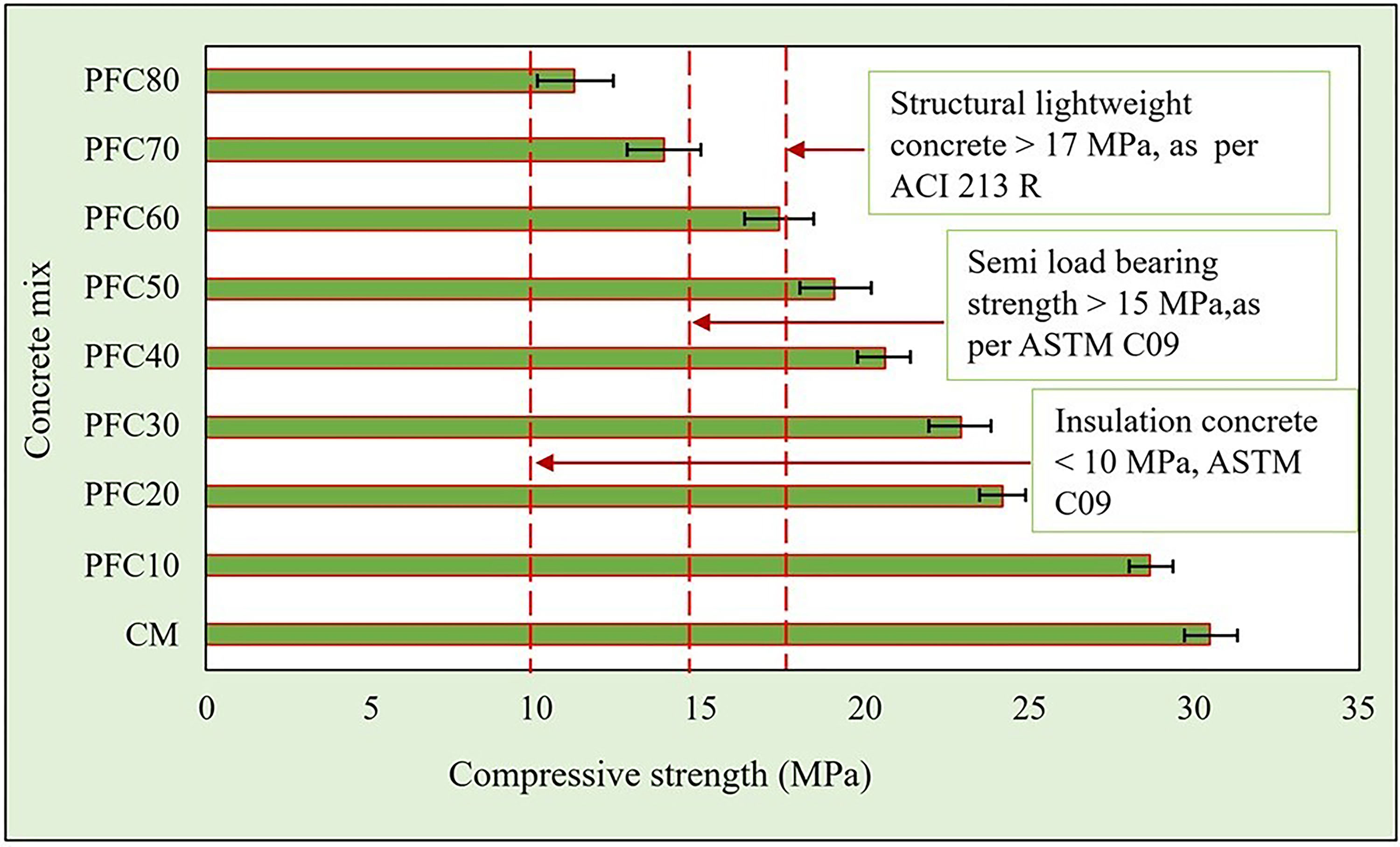
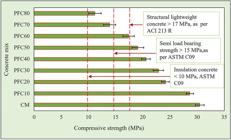
Figure 3 depicts the compressive strength of several concrete mixes containing varying concentrations of waste PFA (denoted as PFC10 to PFC80) compared to a control mix of concrete, tested at 28 days. In our previous studies, we investigated replacement levels ranging from 10% to 40%, while the current study extends this to 50% and 60%, as shown in Figure 3. As the amount of PFA grew from 10% (PFC10) to 80% (PFC80), the compressive strength decreased gradually and significantly. This is mainly due to the low density, the mechanical strength of PF, and the increased porosity. Mixes with 10% and 20% foam replacement (PFC10 and PFC20) had comparatively high 28-day strengths of 28.7 MPa and 24.2 MPa, respectively. This indicates that up to 20% PFA substitution is appropriate for structural or semi-structural applications. According to ACI 213R-14, the minimum 28-day compressive strength required for structural lightweight concrete is 17 MPa. As per ASTM C09 standards, semi-load-bearing lightweight concrete typically achieves around 15 MPa, while insulation-grade concrete has a compressive strength below 10 MPa. After 28 days, the strengths reduced to 22.9 MPa (PFC30), 20.6 MPa (PFC40), 19.1 MPa (PFC50), and 17.4 MPa (PFC60). Mixes PFC70 and PFC80 exhibited the lowest compressive strengths, with 28-day values of less than 17 MPa. The reduced rate of strength development at high replacement levels may be attributed to the low density, low mechanical properties, and higher porosity of PFA. In this study, concrete mixes with 30% to 60% waste PFA achieved compressive strengths above 17 MPa while keeping densities below 2000 kg/m3, satisfied criteria for lightweight concrete structures as per ACI 213R-14 [37]. Therefore, using PFA not only promotes sustainable construction but also ensures compliance with established structural performance standards. The hardened density of concrete consistently decreased as the percentage of PFA replacing natural coarse aggregate increased from PFC10 to PFC80, with values ranging from 2354 kg/m3 to 1626 kg/m3. According to EN 206-1 [38], the maximum density for structural lightweight concrete is 2000 kg/m3, and the mixes with 30% to 60% PFA content met this requirement.
3.4. Mechanical properties - split tensile strength
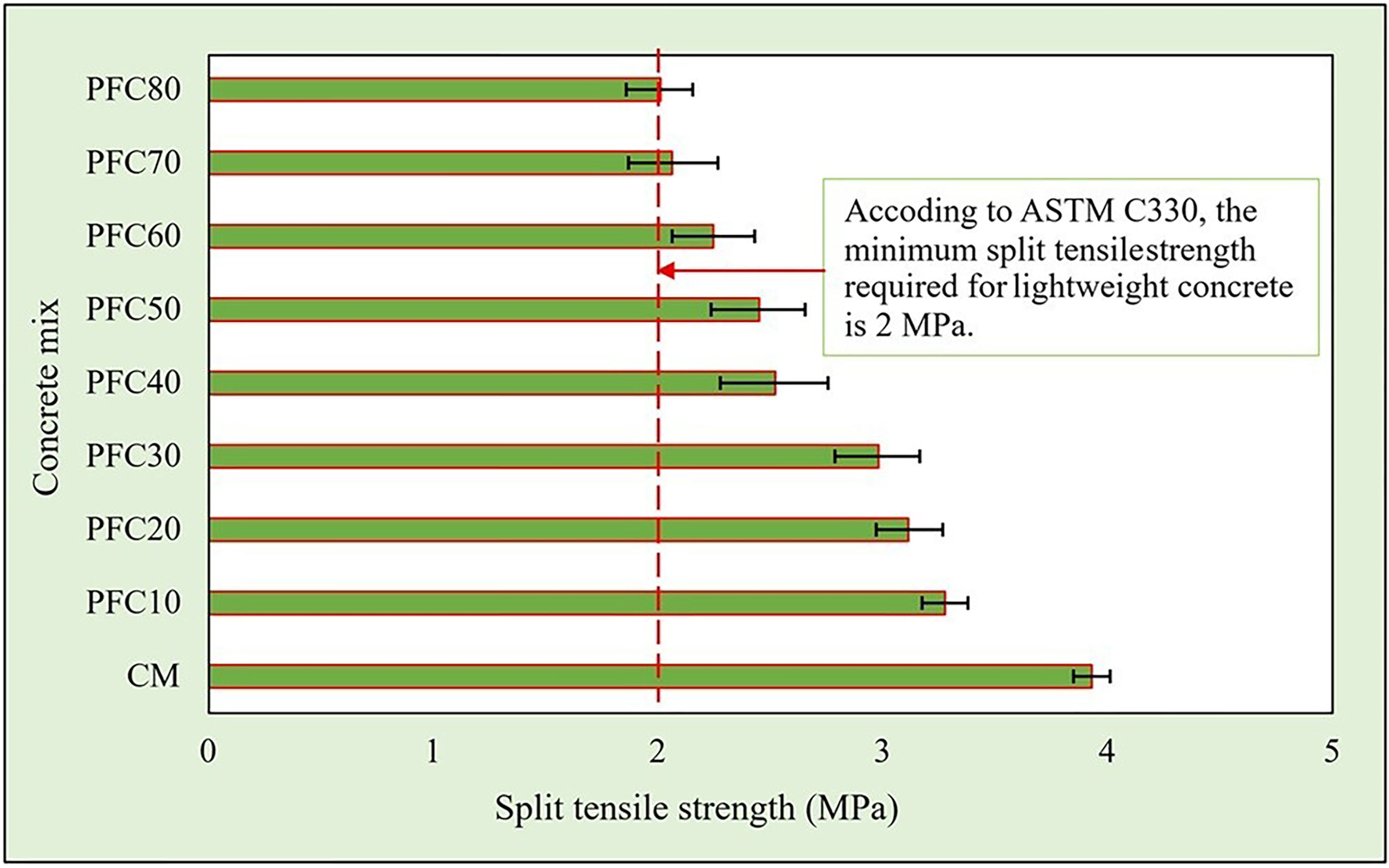
Figure 4 shows the split tensile strength values for concrete mixes that include waste PFA as a partial replacement for coarse aggregate. A general decreasing trend in split tensile strength is found with increasing PFA content. The control mix had the maximum 28-day strength (3.93 MPa), whereas PFC10 and PFC20 showed moderate reductions to 3.28 MPa and 3.12 MPa, showing that up to 20% substitution maintains acceptable performance.
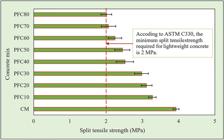
In our previous research, we investigated replacement levels ranging from 10% to 40% and found consistent trends. The recent findings support this range, with PFC30 and PFC40 obtaining 28-day strengths of 2.98 MPa and 2.52 MPa, respectively. Split tensile strength decreased significantly above 40% PFA content. PFC50 and PFC60 reported 2.48 and 2.25 MPa, respectively, while PFC70 and PFC80 decreased to 2.09 and 2.01 MPa. The substantial drop at greater replacement levels is attributable to PFA’s low mechanical strength as well as increasing porosity. However, all mix proportions demonstrated split tensile strength above 2 MPa, meeting ASTM C330 [39] requirements for lightweight concrete.
3.5. Mechanical properties - flexural strength
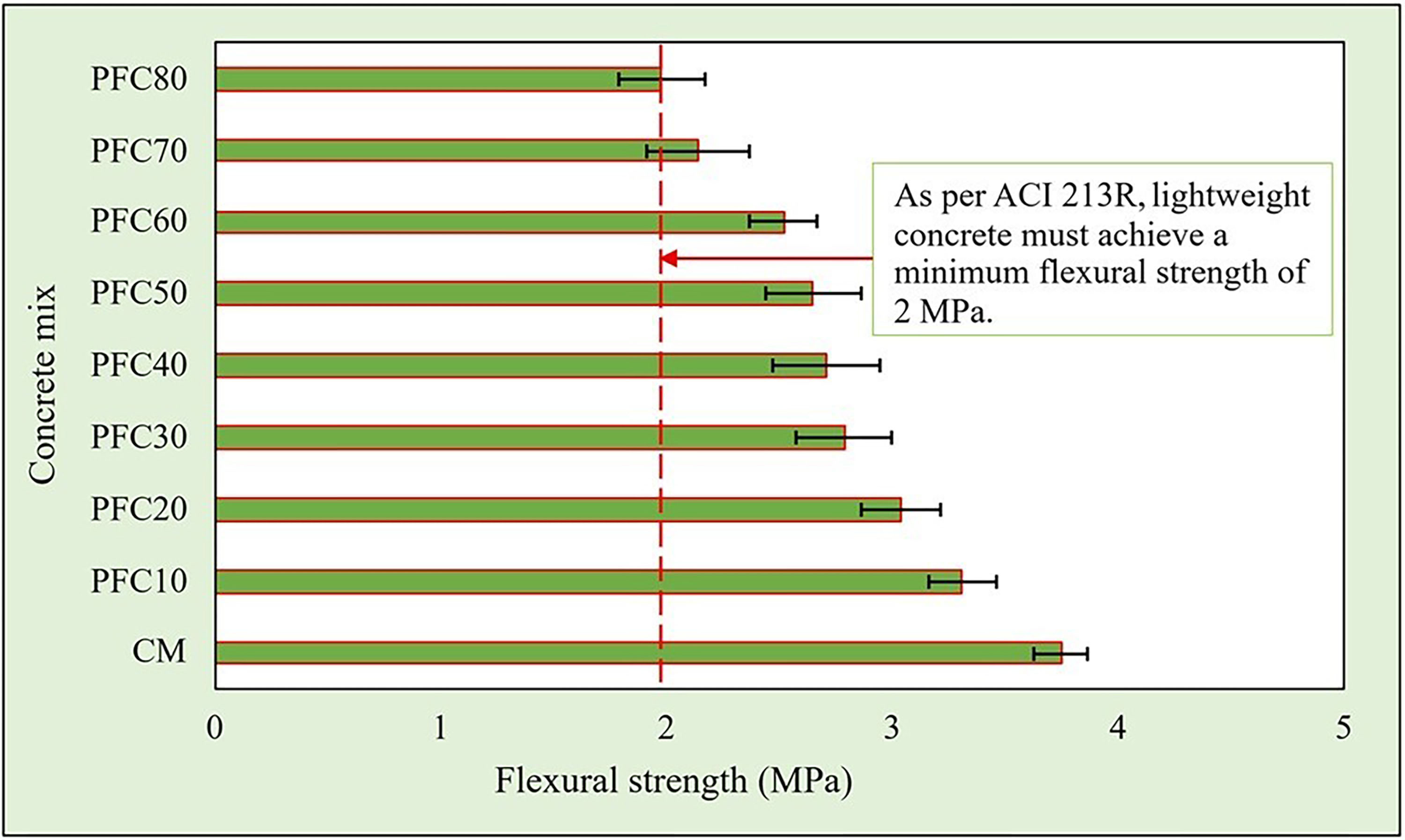
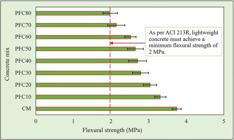
The flexural strength development of concrete mixes with different substitution levels of PFA over 28-day curing periods is shown in Figure 5. Our previous studies investigated replacement levels ranging from 10% to 40%, which are represented in Figure 5. The control mix exhibited the highest 28-day flexural strength at 3.75 MPa, followed closely by PFC10 (3.31 MPa), indicating that a 10% PFA replacement has minimal adverse impact on flexural performance. At 28 days, mixes PFC20 and PFC30 achieved moderate strengths of 3.04 MPa and 2.71 MPa, respectively, remaining within acceptable limits for structural or semi-structural applications. Beyond 30% replacement, the strength declined further, with 28-day values for PFC40 to PFC80 ranging from 2.55 MPa to 1.98 MPa. This reduction is primarily attributed to the lower stiffness and low mechanical properties of the lightweight PFA, which compromise the concrete matrix under flexural strength.
3.6. Correlation between compressive strength and splitting tensile strength
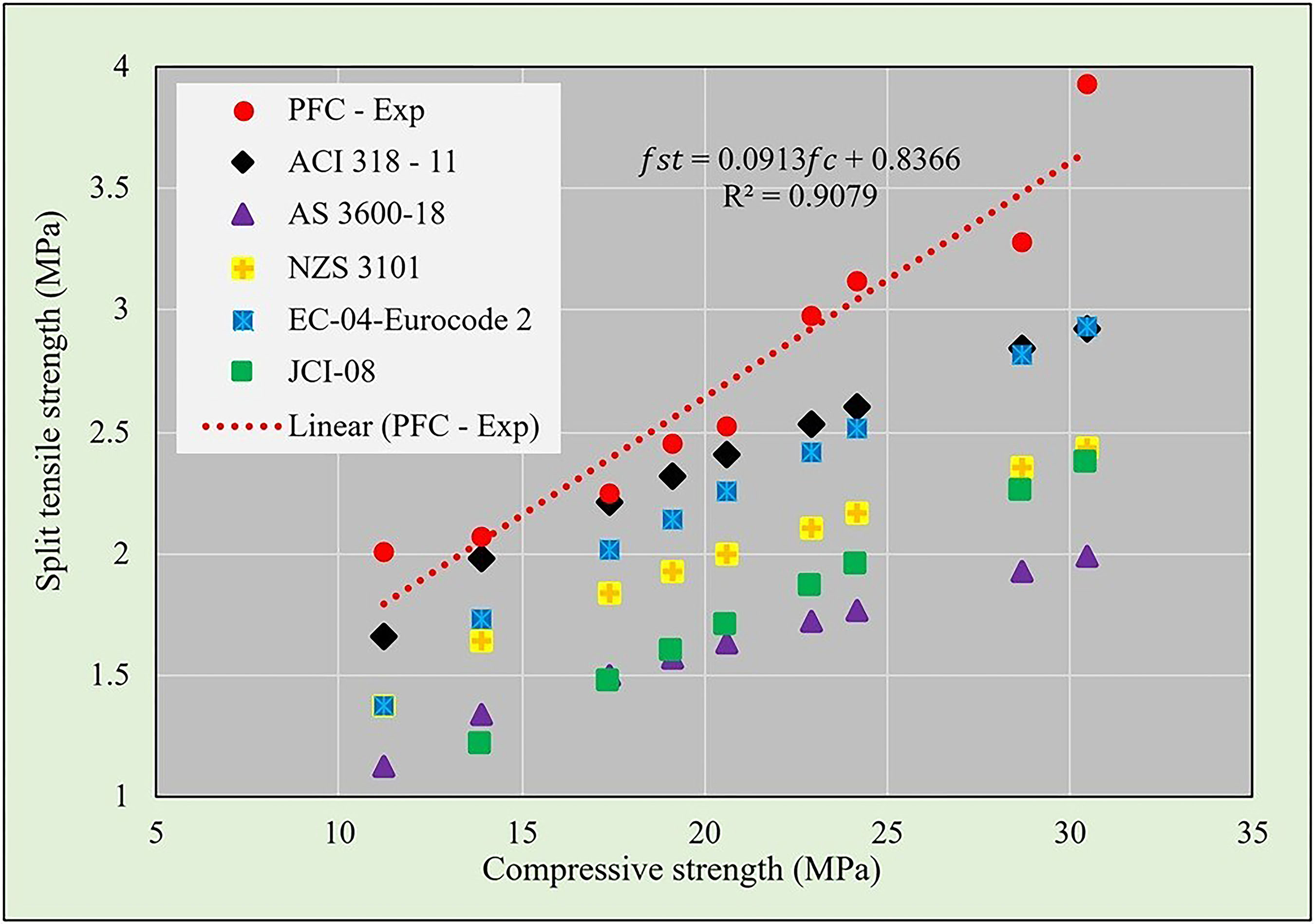
Figure 6 shows the relationship between the compressive and splitting tensile strengths of PFC compared with established international codes such as ACI 318-11 (Equation 2), AS 3600-18 (Equation 3), NZS 3101 (Equation 4), EC-04 Eurocode 2 (Equation 5), and JCI-08 (Equation 6). The experimental data points for PFC are fitted with a linear trendline, revealing a strong correlation with an R2 value of 0.9079. Equation 1 demonstrates a considerable linear relationship between the splitting tensile and compressive strengths, showing a high level of correlation.

where fst is splitting tensile strength in (MPa), and fc is the compressive strength in (MPa).
This linear equation shows that lightweight concrete made from waste PFA increased split tensile strength with compressive strength. The code-based models ACI 318-11 and EC-2 show good agreement with the experimental results for compressive strengths above 15 MPa. Conversely, NZS 3101 and JCI-08 consistently underestimate the split tensile strength, likely due to conservative assumptions based on normal-weight concrete. Among all, AS 3600-18 exhibits the greatest deviation, particularly at lower compressive strengths. Figure 6 shows that the observed splitting tensile strengths in the experiment were much higher than the projected values obtained from all standards.
3.7. Correlation between compressive strength and flexural strength
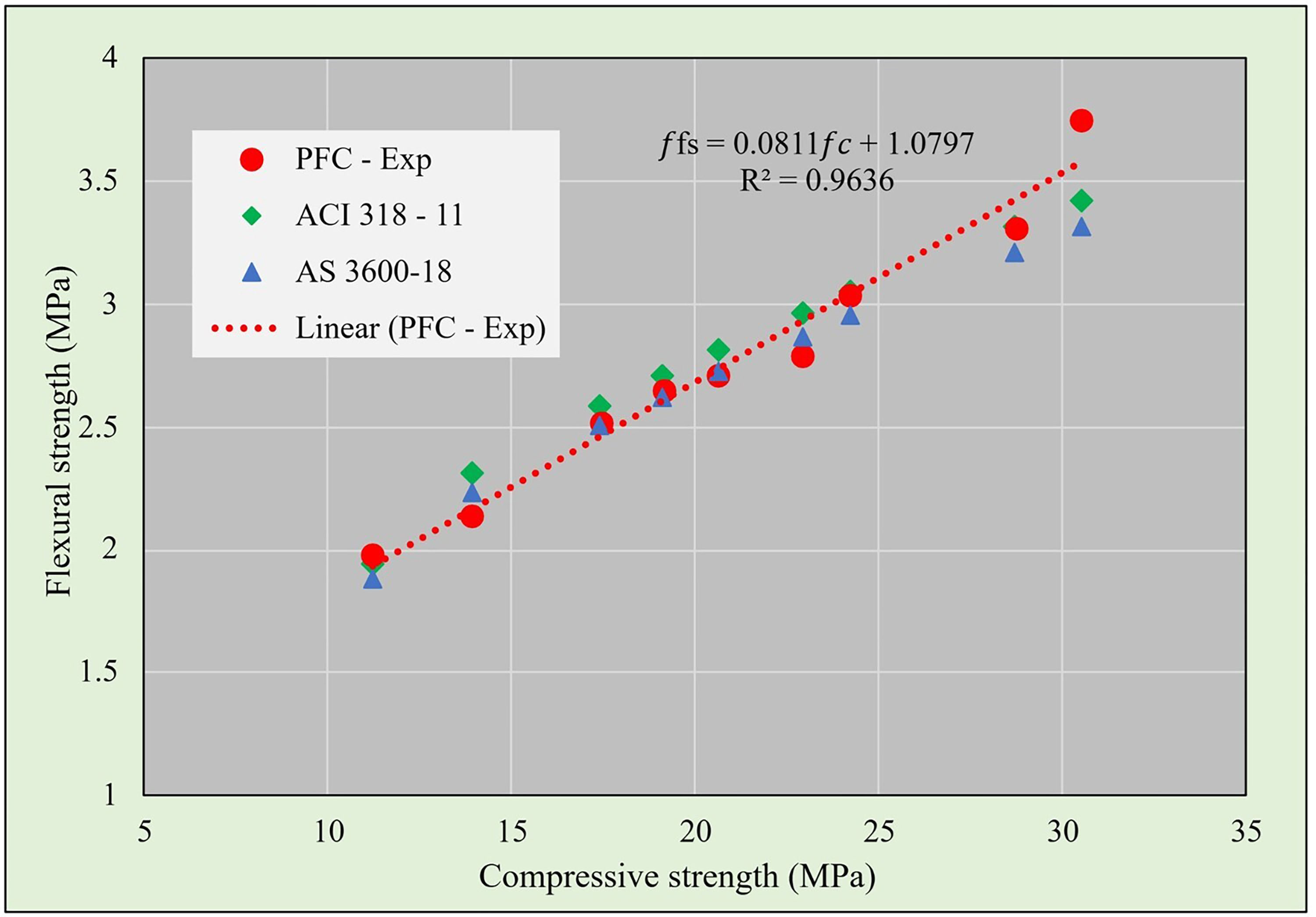
The relationship between PFC flexural and compressive strengths is shown in Figure 7, which compares with the predictions made by ACI 318-11 (Equation 8) and AS 3600-18 (Equation 9). The experimental data points (PFC-Exp) are well-fitted by a linear trendline with Equation 7.
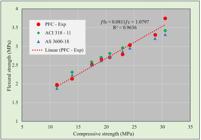
where ffs is splitting tensile strength in (MPa), and fc is the compressive strength in (MPa).
The experimental results are closely aligned with the estimates provided by both ACI 318-11 and AS 3600-18 across the full range of compressive strengths. The close agreement indicates that the flexural performance of the PFC mix is comparable to that of conventional concrete as predicted by these codes, thereby validating the structural applicability of the lightweight concrete that incorporates waste PFA.
3.8. Environmental assessment: embodied carbon emission
Embodied CO2 emissions represent the total greenhouse gas emissions produced during the conversion of waste rigid PF into coarse aggregate particles. The emissions from PFA processing were estimated based on the energy consumed during the shredding process, using standard emission factors for electricity generation. The emission data for PFA were obtained from industrial recycling records of PF manufacturing. For one cubic meter of concrete, the total embodied CO2 emissions were calculated by multiplying the mass of each constituent material by its respective emission factor [40]. The carbon dioxide emissions calculated per cubic meter of concrete with 0% to 80% partial substitution of natural coarse aggregate with waste PFA. In our previous studies, the embodied CO2 emissions gradually decrease with up to 40% replacement (PFC10 to PFC40). Specifically, the Embodied CO2 emissions reduce from 329.16 kgCO2/m3 for the control mix to 327.86 kgCO2/m3 with 40% replacement. In the current research (PFC50 to PFC80), embodied CO2 emissions continue to decrease after 40% replacement. Total emissions decrease to 327.5 and 327.19 kgCO2/m3 with 50% and 60% replacement, respectively. With 70 and 80% replacement (PFC70 and PFC80), embodied CO2 emissions achieve a minimum of 326.88 and 326.59 kgCO2/m3. This steady drop suggests that replacing waste PFA with more natural coarse aggregate may reduce the carbon footprint of concrete production and enhance sustainability.
3.9. Environmental assessment: eco-strength efficiency
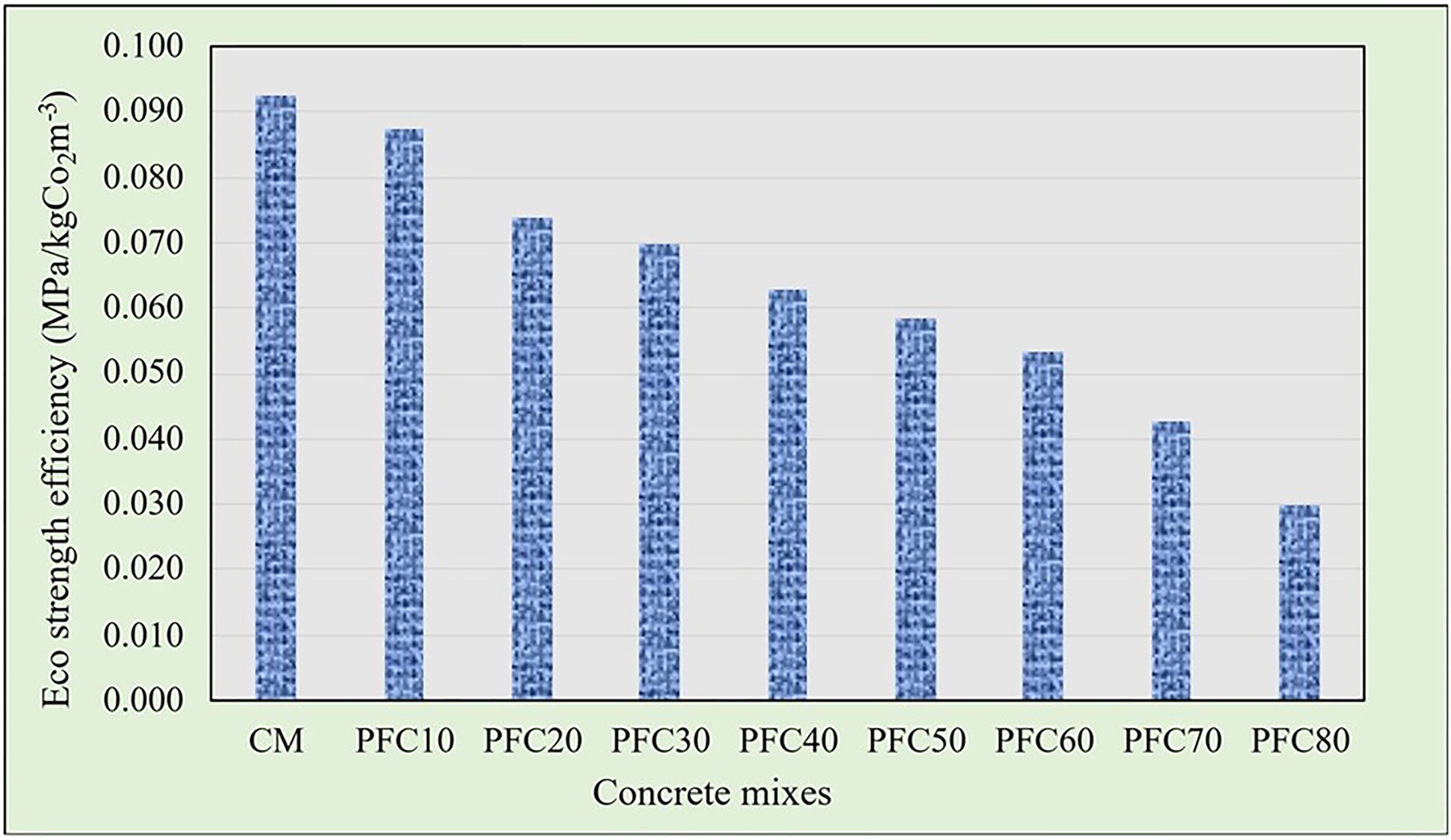
The environmental sustainability of concrete is evaluated by the eco-strength efficiency, which is determined by the ratio of its compressive strength (MPa) to its embodied carbon emission (kgCO2/m3). The objective of this study was to evaluate the mechanical performance while minimizing its negative environmental impacts. As illustrated in Figure 8, the eco strength efficiency values range from 0.03 to 0.093 MPa/kgCO2 m-3.
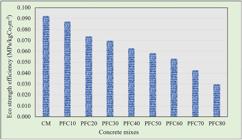
The control mix demonstrates the highest eco-strength efficiency, with PFC10 following closely behind. A progressive decrease in eco-efficiency is observed as the proportion of waste PFA exceeds 10%. The environmental benefit of utilizing waste material is outweighed by the reduction in compressive strength as a result of higher PFA content. It is important to note that PFC20 and PFC30 continue to exhibit relatively high efficiency values, which implies that moderate PFA replacement levels can provide a sustainable alternative without significantly compromising structural performance. The eco-strength efficiency of concrete decreased with increasing PFA content. Mixes containing 30–60% PFA, particularly PFC30 and PFC60, exhibited a 24–43% reduction in eco-strength efficiency compared to conventional concrete. This decline is primarily attributed to the reduction in compressive strength as the proportion of PFA content increased in the concrete mix. While this reduced their cost-effectiveness for structural applications, they may still be economical for non-load-bearing or semi-structural elements where strength requirements are lower but weight reduction and waste utilization are beneficial. At a larger scale, the economic benefit depends on balancing material cost savings (through higher PFA usage and reduced self-weight leading to potential savings in foundation) against the loss of structural efficiency. Therefore, for structural lightweight concrete applications, PFA replacement up to 60% appears optimal, whereas higher PFA contents may be more suitable for low-strength applications or for maximizing waste diversion rather than cost efficiency. The PFC 30 to PFC 60 mixes satisfied the criteria for structural lightweight concrete. Previous studies have reported the eco-strength efficiency of concrete incorporating waste materials. One study examined the addition of 0.20% carbon fiber in concrete and achieved an optimal eco-strength efficiency of 0.083 MPa/kgCO2 m-3, which is 15.6% to 36.1% higher than the values obtained in the present study [41]. Another investigation focused on the use of nano silica and metakaolin, reporting an eco-strength efficiency of 0.13 MPa/kgCO2 m-3 [42]. This value is 43% to 59% higher than that of the current work, primarily due to the relatively lower compressive strength of PFC.
3.10. Microstructural characterization
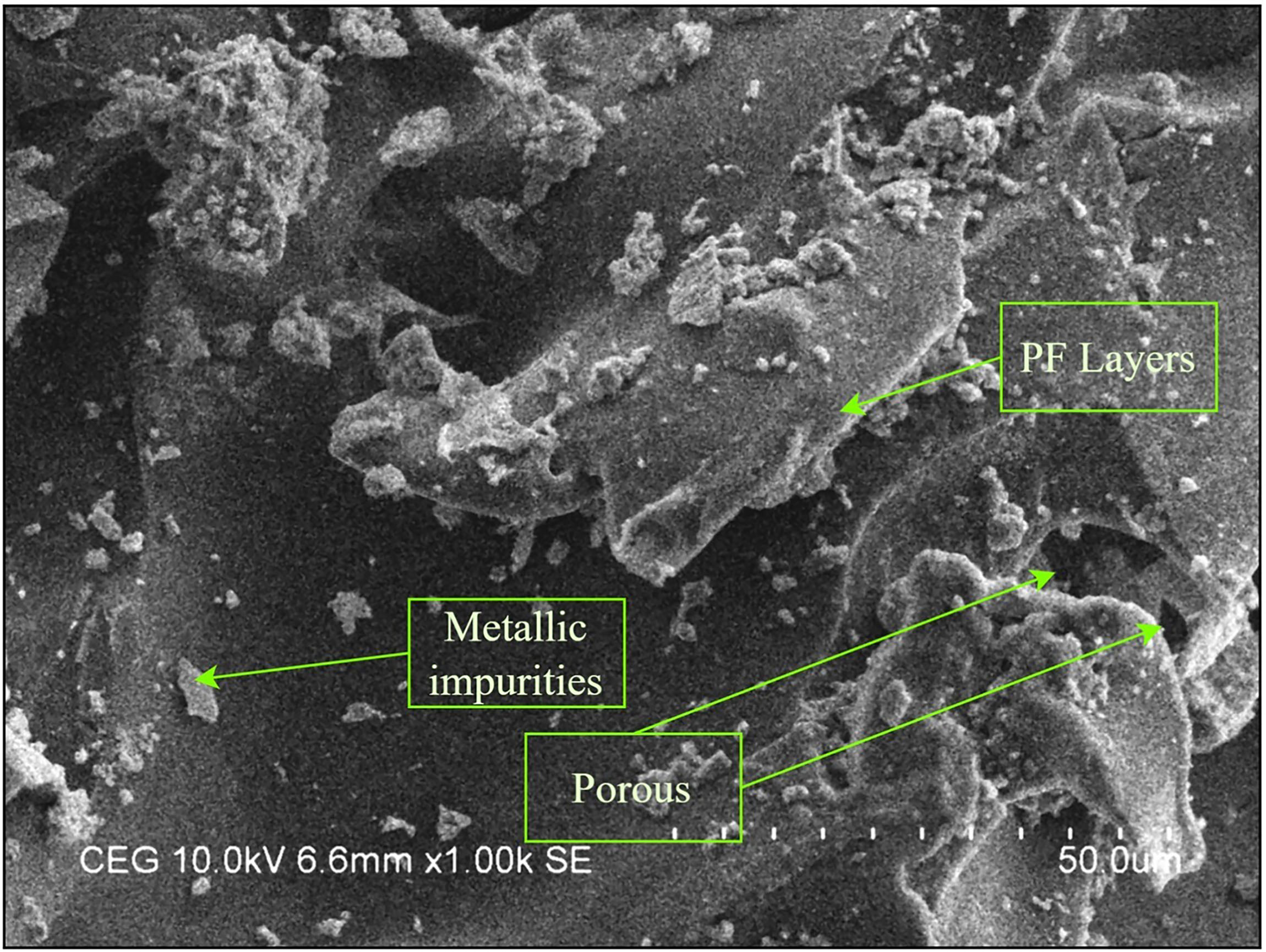
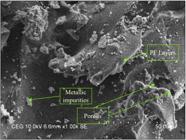
The composition, microstructure, and surface morphology of materials and concrete are evaluated at a very fine scale using SEM imaging. SEM imaging allows researchers to assess the porosity and durability of concrete by looking at its matrix pores, cracks, and voids [43]. It also allows extensive analysis of the aggregate-cement paste ITZ, which is crucial for understanding bond strength and mechanical performance [44, 45]. The elemental composition of different phases can be determined using SEM with EDAX. This picture from SEM Figure 9 displays the sample surface shape, which includes porous PF layers that are crucial for applications. Additionally, metallic impurities can be seen as asymmetrical particles dispersed throughout the surface.
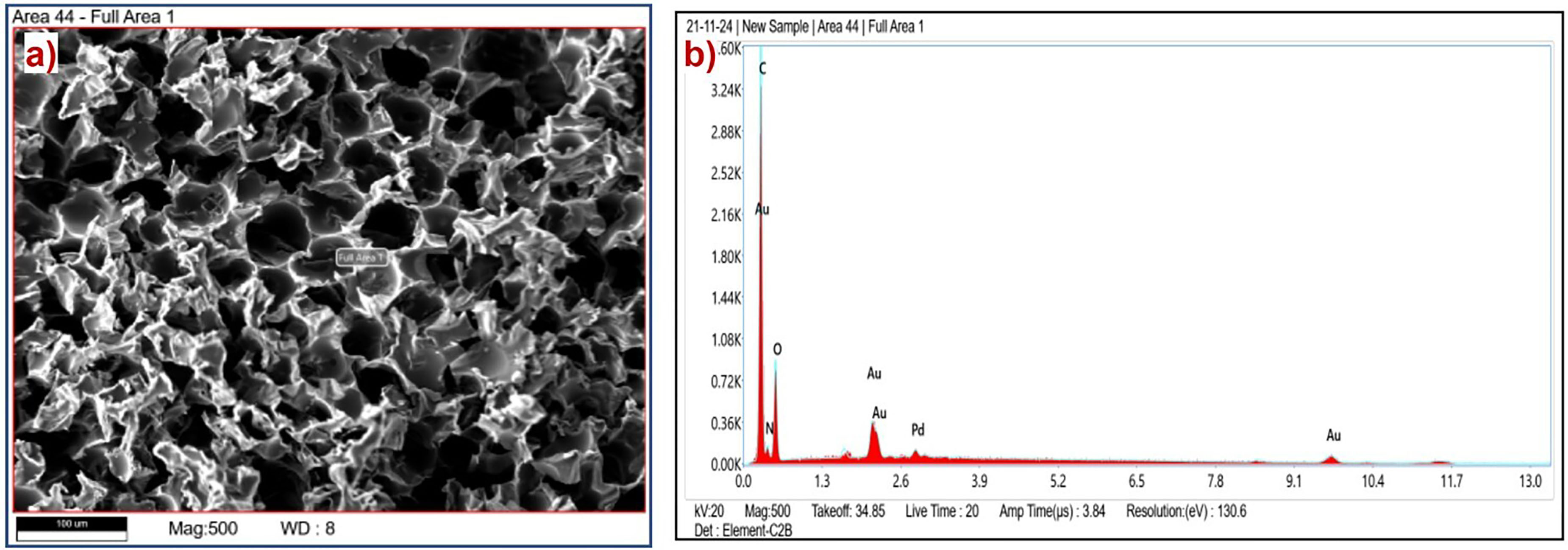
The EDAX spectrum, Figure 10, shows the elemental composition of the scanned region. Carbon (C) and oxygen (O) show major peaks, as predicted, given the organic nature of PFA.
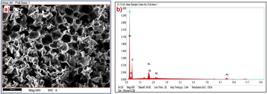
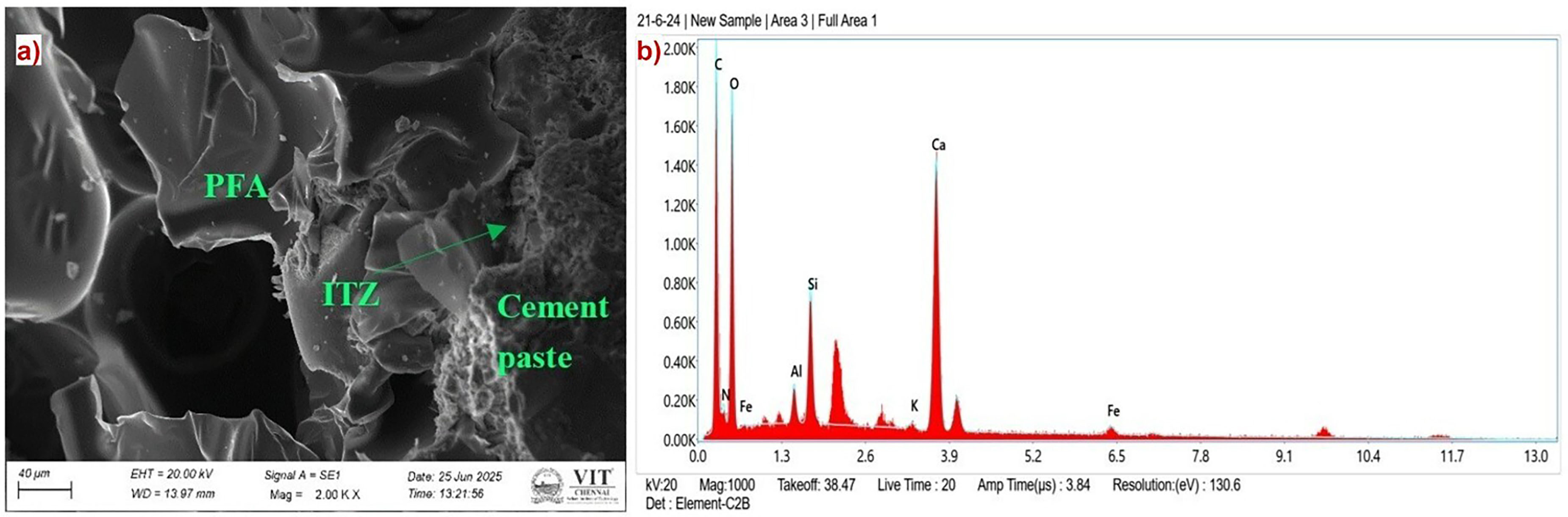
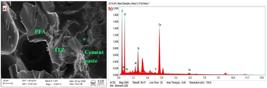
The SEM Figure 11 shows the ITZ between the cement paste and PFA in lightweight concrete. The porous and irregular rough surface texture of PFA allows the cement paste to penetrate the surface pores partially, creating mechanical interlocking that enhances the bond at ITZ. The SEM combined with EDAX analysis provided valuable insights into the ITZ between the PFA and the cementitious matrix. EDAX further confirmed the presence of key hydration compounds within the transition zone. The observed carbon (C) and oxygen (O) peaks correspond to the organic components of PFA and the products of cement hydration. Peaks of calcium (Ca), silicon (Si), and aluminum (Al) are associated with hydrated cement paste constituents and other cementitious phases. Additionally, minor peaks of potassium (K) and iron (Fe) are present, which can influence the overall performance of the cement-based material.
4. CONCLUSIONS
The study shows that waste PFA may efficiently serve as a lightweight coarse aggregate in concrete, helping to promote sustainable building by reusing industrial waste. The experimental results show that adding PFA reduced concrete density while keeping adequate mechanical qualities at specific replacement levels. Mix proportions with 30 to 60% PFA achieved compressive strengths above 17 MPa and density below 2000 kg/m3, thereby meeting the structural lightweight concrete requirements specified in ACI 213R and EN 206-1. All mixes exhibited split tensile and flexural strengths greater than 2 MPa, satisfying the criteria of ASTM C330 for lightweight concrete structures. The observed splitting tensile strengths were significantly higher than international code predictions, while flexural strengths showed good agreement with code-based estimates across all compressive strength ranges. SEM analysis confirmed improved bonding between PFA aggregates and the cementitious matrix, attributed to paste penetration into the surface pores and rough texture of the aggregates. PFC reduced embodied CO2 emissions compared to conventional concrete. The eco-strength efficiency of PFC was found to decrease by 24–43% when 30–60% of the coarse aggregate was replaced with PFA, compared to conventional concrete. Overall, waste PFA is a promising material for lightweight, environmentally friendly, and non-structural concrete applications.
Most of the test results met the criteria for structural lightweight concrete; however, further research is needed to enhance the mechanical performance through the use of physical and chemical admixtures. In addition, durability assessments such as permeability, freeze–thaw resistance, and thermal stability are recommended as part of future investigations.
5. ACKNOWLEDGMENTS
The authors thank Vellore Institute of Technology for providing the “VIT RGEMS SEED GRANT” for carrying out this research work.
DATA AVAILABILITY
Data are available from the corresponding author upon reasonable request.
6. BIBLIOGRAPHY
-
[1] OJEDA, J.P., MERCANTE, I.T., “Sustainability of recycling plastic waste as fibers for concrete: a review”, Journal of Material Cycles and Waste Management, v. 25, n. 5, pp. 2753–2765, Sep. 2023. doi: http://doi.org/10.1007/s10163-023-01729-1.
» https://doi.org/10.1007/s10163-023-01729-1 -
[2] SHARMIN, E., ZAFAR, F., “Polyurethane: an Introduction”, In: Zafar, F., Sharmin, E. (eds), Polyurethane, London, InTech, 2012. doi: http://doi.org/10.5772/51663.
» https://doi.org/10.5772/51663 -
[3] KAUSAR, A., “Polyurethane composite foams in high-performance applications: a review”, Polymer-Plastics Technology and Engineering, v. 57, n. 4, pp. 346–369, Mar. 2018. doi: http://doi.org/10.1080/03602559.2017.1329433.
» https://doi.org/10.1080/03602559.2017.1329433 -
[4] GAMA, N., FERREIRA, A., BARROS-TIMMONS, A., “Polyurethane foams: past, present, and future”, Materials, v. 11, n. 10, pp. 1841, Sep. 2018. doi: http://doi.org/10.3390/ma11101841. PubMed PMID: 30262722.
» https://doi.org/10.3390/ma11101841. -
[5] CZŁONKA, S., BERTINO, M.F., STRZELEC, K., et al, “Rigid polyurethane foams reinforced with solid waste generated in the leather industry”, Polymer Testing, v. 69, pp. 225–237, Aug. 2018. doi: http://doi.org/10.1016/j.polymertesting.2018.05.013.
» https://doi.org/10.1016/j.polymertesting.2018.05.013 - [6] DEFONSEKA, C., Practical guide to flexible polyurethane foams, Shrewsbury, UK, Smithers Rapra Technology Ltd., 2013.
-
[7] YANG, W., DONG, Q., LIU, S., et al, “Recycling and disposal methods for polyurethane foam wastes”, Procedia Environmental Sciences, v. 16, pp. 167–175, 2012. doi: http://doi.org/10.1016/j.proenv.2012.10.023.
» https://doi.org/10.1016/j.proenv.2012.10.023 -
[8] LOGANATHAN, G., SENTHILPANDIAN, M., “Trash to treasure: a review on Integrating nanomaterial and industrial waste for sustainable electromagnetic interference shielding composite”, Advances in Science and Technology Research Journal, v. 19, n. 4, pp. 65–90, Apr. 2025. doi: http://doi.org/10.12913/22998624/200108.
» https://doi.org/10.12913/22998624/200108 -
[9] WONGKVANKLOM, A., POSI, P., KHOTSOPHA, B., et al, “Structural lightweight concrete containing recycled lightweight concrete aggregate”, KSCE Journal of Civil Engineering, v. 22, n. 8, pp. 3077–3084, Aug. 2018. doi: http://doi.org/10.1007/s12205-017-0612-z.
» https://doi.org/10.1007/s12205-017-0612-z -
[10] SHANMUGANATHAN, N., SENTHIL PANDIAN, M., DEEPA NIVETHIKA, S., et al, “Eco-friendly road construction: Harnessing fly ash and waste marble powder for sustainable road construction using a fuzzy logic assessment”, Global NEST Journal, v. 26, n. 4, pp. 1–5, Mar. 2024. doi: http://doi.org/10.30955/gnj.005601.
» https://doi.org/10.30955/gnj.005601 -
[11] KHOKHAR, S.A., AHMED, T., KHUSHNOOD, R.A., et al, “Development of low carbon engineered cementitious composite (ECC) using nano lime calcined clay cement (nLC3) based matrix’”, Case Studies in Construction Materials, v. 20, e02669, Jul. 2024. doi: http://doi.org/10.1016/j.cscm.2023.e02669.
» https://doi.org/10.1016/j.cscm.2023.e02669 -
[12] HAMMAD, M., BAHRAMI, A., KHOKHAR, S.A., et al, “Engineered cementitious composites for sustainable and long-lasting infrastructures”, In: Bahrami, A. (ed), Advances in sustainable concrete for construction, Cham, Springer, pp. 99–120, 2025. doi: http://doi.org/10.1007/978-3-031-85052-3_5.
» https://doi.org/10.1007/978-3-031-85052-3_5 -
[13] HOU, M., LI, Z., LI, V.C., “Green and durable engineered cementitious composites (GD-ECC) with recycled PE fiber, desert sand, and carbonation curing: Mixture design, durability performance, and life-cycle analysis”, Construction & Building Materials, v. 414, pp. 134984, Feb. 2024. doi: http://doi.org/10.1016/j.conbuildmat.2024.134984.
» https://doi.org/10.1016/j.conbuildmat.2024.134984 -
[14] YANG, C., FISCHER, L., MARANDA, S., et al, “Rigid polyurethane foams incorporated with phase change materials: A state-of-the-art review and future research pathways”, Energy and Building, v. 87, pp. 25–36, Jan. 2015. doi: http://doi.org/10.1016/j.enbuild.2014.10.075.
» https://doi.org/10.1016/j.enbuild.2014.10.075 -
[15] ROOBANKUMAR, R., SENTHILPANDIAN, M., “A review of utilization of waste polyurethane foam as lightweight aggregate in concrete”, Heliyon, v. 10, n. 23, e40479, Dec. 2024. doi: http://doi.org/10.1016/j.heliyon.2024.e40479. PubMed PMID: 39660207.
» https://doi.org/10.1016/j.heliyon.2024.e40479. -
[16] SOUZA, F.B., MONTEDO, O.R.K., GRASSI, R.L., et al, “Lightweight high-strength concrete with the use of waste cenosphere as fine aggregate”, Matéria, v. 24, n. 4, e12509, 2019. doi: http://doi.org/10.1590/s1517-707620190004.0834.
» https://doi.org/10.1590/s1517-707620190004.0834 - [17] ROOBANKUMAR, R., SENTHILPANDIAN, M., “Physical and mechanical properties of lightweight concrete with the incorporation of waste disposal polyurethane foam as coarse aggregate”, Global NEST Journal, n. Jul, pp. 1–10, 2024. doi: http://doi.org/10.30955/gnj.05845.
-
[18] ISLAM, M.N., NOAMAN, M.A., ISLAM, K.S., et al, “Mechanical properties and microstructure of brick aggregate concrete with raw fly ash as a partial replacement of cement’”, Heliyon, v. 10, n. 7, e28904, Apr. 2024. doi: http://doi.org/10.1016/j.heliyon.2024.e28904. PubMed PMID: 38633645.
» https://doi.org/10.1016/j.heliyon.2024.e28904. -
[19] MOUNANGA, P., GBONGBON, W., POULLAIN, P., et al, “Proportioning and characterization of lightweight concrete mixtures made with rigid polyurethane foam wastes”, Cement and Concrete Composites, v. 30, n. 9, pp. 806–814, Oct. 2008. doi: http://doi.org/10.1016/j.cemconcomp.2008.06.007.
» https://doi.org/10.1016/j.cemconcomp.2008.06.007 -
[20] BEN FRAJ, A., KISMI, M., MOUNANGA, P., “Valorization of coarse rigid polyurethane foam waste in lightweight aggregate concrete”, Construction & Building Materials, v. 24, n. 6, pp. 1069–1077, Jun. 2010. doi: http://doi.org/10.1016/j.conbuildmat.2009.11.010.
» https://doi.org/10.1016/j.conbuildmat.2009.11.010 - [21] DVORSKÝ, T., VÁCLAVÍK, V., ŠIMÍČEK, V., et al, “Research of the use of waste rigid polyurethane foam in the segment of lightweight concretes”, Inżynieria Mineralna, n. 2, pp. 51–56, 2016.
-
[22] WANG, G., LIU, Y.Q., CUI, Y., “Performance studies of lightweight concrete mixtures made with rigid polyurethane foam wastes”, Applied Mechanics and Materials, v. 204, pp. 4007–4010, Oct. 2012. doi: http://doi.org/10.4028/www.scientific.net/AMM.204-208.4007.
» https://doi.org/10.4028/www.scientific.net/AMM.204-208.4007 -
[23] MOHI-UD-DIN, M.M., KHAN, M.Z.N., HAFEEZ, M.O., et al, “Exploring the potential of rigid polyurethane foam waste in structural lightweight concrete”, Next Materials, v. 6, pp. 100399, Jan. 2025. doi: http://doi.org/10.1016/j.nxmate.2024.100399.
» https://doi.org/10.1016/j.nxmate.2024.100399 -
[24] ROOBAN KUMAR, R., SENTHIL PANDIAN, M., “Utilisation of solid waste polyurethane foam as coarse aggregate in concrete: an experimental study with ecological and cost assessment”, Journal of Material Cycles and Waste Management, v. 27, n. 1, pp. 241–256, Jan. 2025. doi: http://doi.org/10.1007/s10163-024-02106-2.
» https://doi.org/10.1007/s10163-024-02106-2 -
[25] HASHIM, A.A., ANAEE, R., NASR, M.S., et al, “Mechanical properties, corrosion resistance and microstructural analysis of recycled aggregate concrete made with ceramic wall waste and ultrafine ceria”, Journal of Materials Research and Technology, v. 36, pp. 627–640, May. 2025. doi: http://doi.org/10.1016/j.jmrt.2025.03.154.
» https://doi.org/10.1016/j.jmrt.2025.03.154 -
[26] HASHIM, A.A., ANAEE, R., NASR, M.S., “Enhancing the sustainability, mechanical and durability properties of recycled aggregate concrete using calcium-rich waste glass powder as a supplementary cementitious material: An experimental study and environmental assessment”, Sustainable Chemistry and Pharmacy, v. 44, pp. 101985, Apr. 2025. doi: http://doi.org/10.1016/j.scp.2025.101985.
» https://doi.org/10.1016/j.scp.2025.101985 -
[27] HASHIM, A.A., ANAEE, R., NASR, M.S., “Improving the mechanical, corrosion resistance, microstructural and environmental performance of recycled aggregate concrete using ceramic waste powder as an alternative to cement”, Ceramics, v. 8, n. 1, pp. 11, Jan. 2025. doi: http://doi.org/10.3390/ceramics8010011.
» https://doi.org/10.3390/ceramics8010011 -
[28] ROOBANKUMAR, R., SENTHILPANDIAN, M., “Investigating the correlation between ultrasonic pulse velocity and compressive strength in polyurethane foam concrete”, Scientific Reports, v. 15, n. 1, pp. 23995, Jul. 2025. doi: http://doi.org/10.1038/s41598-025-07666-3. PubMed PMID: 40615442.
» https://doi.org/10.1038/s41598-025-07666-3. - [29] MANOJ KUMAR, U., PRADEEP REDDY, D., ROHAN RAJESH PATEL, M., “A study on flexural capacity of steel beams with corrugated web”, International Journal of Civil Engineering and Technology, v. 9, n. 4, pp. 679–689, 2018.
-
[30] LOKESH, R., PANDIAN, M.S., KARTHIKEYAN, N.K., et al, “Performance of different post-tensioning slab systems and their environmental constraints”, AIP Conference Proceedings, v. 2764, pp. 050008, 2023. doi: http://doi.org/10.1063/5.0144285.
» https://doi.org/10.1063/5.0144285 - [31] BUREAU OF INDIAN STANDARDS, IS 2386 Methods of test for aggregate for concrete – part III specific gravity, density, voids, absorption and bulking, New Delhi, BIS, 2002.
- [32] BUREAU OF INDIAN STANDARDS, IS 10262 Concrete mix proportioning – guidelines, New Delhi, BIS, 2019.
- [33] BUREAU OF INDIAN STANDARDS, IS 516 Hardened concrete – methods of test, part 1 testing of strength of hardened concrete, section 1 compressive, flexural and split tensile strength, New Delhi, BIS, 2021.
-
[34] AÏSSOUN, B.M., HWANG, S.-D., KHAYAT, K.H., “Influence of aggregate characteristics on workability of superworkable concrete”, Materials and Structures, v. 49, n. 1–2, pp. 597–609, Jan. 2016. doi: http://doi.org/10.1617/s11527-015-0522-9.
» https://doi.org/10.1617/s11527-015-0522-9 -
[35] CHEN, B., LIU, J., “Experimental application of mineral admixtures in lightweight concrete with high strength and workability”, Construction & Building Materials, v. 22, n. 4, pp. 655–659, Apr. 2008. doi: http://doi.org/10.1016/j.conbuildmat.2006.10.006.
» https://doi.org/10.1016/j.conbuildmat.2006.10.006 - [36] BUREAU OF INDIAN STANDARDS, IS 7320 Specification for concrete slump test apparatus, New Delhi, BIS, 2008.
- [37] AMERICAN CONCRETE INSTITUTE, ACI 213R Guide for structural lightweight aggregate concrete, Farmington Hills, ACI, 2014.
- [38] BRITISH STANDARDS INSTITUTION, BS EN. 206-1 Concrete – specification, performance, production and conformity, London, BSI, 2013.
- [39] AMERICAN SOCIETY FOR TESTING AND MATERIALS, ASTM C330/C330M-09 Standard specification for lightweight aggregates for structural concrete, West Conshohocken, ASTM, 2017.
-
[40] ZABALZA BRIBIÁN, I., VALERO CAPILLA, A., ARANDA USÓN, A., “Life cycle assessment of building materials: comparative analysis of energy and environmental impacts and evaluation of the eco-efficiency improvement potential”, Building and Environment, v. 46, n. 5, pp. 1133–1140, May. 2011. doi: http://doi.org/10.1016/j.buildenv.2010.12.002.
» https://doi.org/10.1016/j.buildenv.2010.12.002 -
[41] KHAN, M.B., WAQAR, A., BHEEL, N., et al, “Optimization of fresh and mechanical characteristics of carbon fiber-reinforced concrete composite using response surface technique”, Buildings, v. 13, n. 4, pp. 852, Mar. 2023. doi: http://doi.org/10.3390/buildings13040852.
» https://doi.org/10.3390/buildings13040852 -
[42] RAVEENDRAN, N., KRISHNAN, V., “Engineering performance and environmental assessment of sustainable concrete incorporating nano silica and metakaolin as cementitious materials”, Scientific Reports, v. 15, n. 1, pp. 1482, Jan. 2025. doi: http://doi.org/10.1038/s41598-025-85358-8. PubMed PMID: 39789147.
» https://doi.org/10.1038/s41598-025-85358-8. -
[43] OLIVE SHARO, R.P., SENTHILPANDIAN, M., “Interactive influence of basalt fibres and pozzolanic additives on the mechanical and microstructural properties of self-compacting concrete”, Case Studies in Construction Materials, v. 22, e04650, Jul. 2025. doi: http://doi.org/10.1016/j.cscm.2025.e04650.
» https://doi.org/10.1016/j.cscm.2025.e04650 -
[44] ZHANG, M.-H., GJØRV, O.E., “Microstructure of the interfacial zone between lightweight aggregate and cement paste”, Cement and Concrete Research, v. 20, n. 4, pp. 610–618, Jul. 1990. doi: http://doi.org/10.1016/0008-8846(90)90103-5.
» https://doi.org/10.1016/0008-8846(90)90103-5 -
[45] MENG, L., ZHANG, C., WEI, J., et al, “Mechanical properties and microstructure of ultra-high strength concrete with lightweight aggregate”, Case Studies in Construction Materials, v. 18, e01745, Jul. 2023. doi: http://doi.org/10.1016/j.cscm.2022.e01745.
» https://doi.org/10.1016/j.cscm.2022.e01745