 Exploring the metaverse in the education of healthcare students: A scoping review
 Objective: to map the literature on the incorporation of the metaverse in the education of undergraduate healthcare students.
Method: scoping review following the recommendations of the JBI and Preferred Reporting Items for Systematic Reviews and Meta-Analyses Extension for Scoping Reviews (PRISMA-ScR), performed on Web of Science, Medical Literature Analysis and Retrieval System Online (MEDLINE) via PubMed, Embase, Scopus, Cumulative Index to Nursing and Allied Health (CINAHL), Latin American and Caribbean Health Sciences Literature (LILACS) and ProQuest.
Results: a total of 23 records were included, published between 2020 and 2023, and developed in 10 countries. The metaverse allows the simulation of hypothetical cases, making education interactive and attractive. However, it faces limitations, including the possibility of depersonalizing students, concerns about data security and privacy, and the high cost of implementing and maintaining its infrastructure.
Conclusion: the metaverse enables the development of clinical competencies that support the construction of students’ professional identity. However, it may not be equitable, as it requires resources and knowledge from educators to implement it, contributing to increasing inequality in the education of healthcare students.
Descriptors:
Education; Teaching; Students, Health Occupations; Technology; Educational Technologies; Virtual Reality
Highlights:
(1) The metaverse is promising in the education of undergraduate healthcare students.
(2) The metaverse makes education interactive and attractive.
(3) It promotes the protagonism of students in the teaching-learning process.
(4) It presents risks related to data security and privacy.
(5) High cost of implementing and maintaining its infrastructure.
Objetivo: mapear la literatura respecto de incorporar el metaverso a la educación de estudiantes de carreras del área de salud.
Método: revisión de alcance, acorde recomendaciones del JBI y Preferred Reporting Items for Systematic Reviews and Meta-Analyses Extension for Scoping Reviews (PRISMA-ScR), realizada en Web of Science , Medical Literature Analysis and Retrieval System Online (MEDLINE) vía PubMed, Embase, Scopus, Cumulative Index to Nursing and Allied Health (CINAHL), Latin American and Caribbean Health Sciences Literature (LILACS) y ProQuest.
Resultados: fueron incluidos 23 registros, publicados entre 2020 y 2023, desarrollados en 10 países. El metaverso destaca por permitir simular casos hipotéticos, haciendo que la educación resulte interactiva y atractiva. Sin embargo, enfrenta limitaciones, incluyendo la posible despersonalización de los estudiantes, preocupación por la seguridad y privacidad de los datos, además del elevado costo de implementación y mantenimiento de su infraestructura.
Conclusión: el metaverso posibilita el desarrollo de competencias clínicas que facilitan la construcción de identidad profesional del estudiante. No obstante, puede no ser equitativo, considerando que demanda recursos y educadores con conocimientos para implementarlo, contribuyendo a acentuar desigualdades en la educación de estudiantes.
Descriptores:
Educación; Enseñanza; Estudiantes del Área de la Salud; Tecnología; Tecnología Educacional; Realidad Virtual
Destacados:
(1) El metaverso es promisorio en la educación de estudiantes de carreras del área de la salud.
(2) El metaverso hace que la educación se muestre interactiva y atractiva.
(3) Promueve el protagonismo de los estudiantes en el proceso enseñanza-aprendizaje.
(4) Demuestra riesgos relacionados con la seguridad y privacidad de los datos.
(5) Costos elevados de implementación y mantenimiento de su infraestructura.
Objetivo: mapear a literatura a respeito da incorporação do metaverso na educação de estudantes de graduação na área da saúde.
Método: revisão de escopo de acordo com as recomendações do JBI e Preferred Reporting Items for Systematic Reviews and Meta-Analyses Extension for Scoping Reviews (PRISMA-ScR), conduzida na Web of Science , Medical Literature Analysis and Retrieval System Online (MEDLINE) via PubMed, Embase, Scopus, Cumulative Index to Nursing and Allied Health (CINAHL), Literatura Latino-Americana e do Caribe em Ciências da Saúde (LILACS) e ProQuest.
Resultados: foram incluídos 23 registros publicados de 2020 a 2023 e desenvolvidos em 10 países. O metaverso destaca-se por permitir a simulação de casos hipotéticos, tornando a educação interativa e atrativa. Apesar disso, enfrenta limitações, incluindo possibilidade de despersonalização dos estudantes, preocupações com segurança de dados e privacidade, além do custo elevado de implementação e manutenção de sua infraestrutura.
Conclusão: o metaverso viabiliza o desenvolvimento de competências clínicas que subsidiam a construção da identidade profissional do estudante. Todavia, pode não ser equitativo, na medida em que demanda recursos e educadores com domínio para implementá-lo, contribuindo para acentuar a desigualdade na educação de estudantes.
Descritores:
Educação; Ensino; Estudantes de Ciências da Saúde; Tecnologia; Tecnologias Educacionais; Realidade Virtual
Destaques:
(1) O metaverso é promissor na educação de estudantes de graduação na área da saúde.
(2) O metaverso torna a educação interativa e atrativa.
(3) Promove o protagonismo dos estudantes no processo ensino-aprendizagem.
(4) Apresenta riscos relacionados à segurança e privacidade de dados.
(5) Custo elevado de implementação e manutenção de sua infraestrutura.
Introduction
The world is constantly evolving technologically, which has not only influenced the way people relate to each other but also the teaching-learning process, especially in the education of undergraduate healthcare students ( 1 - 2 ) . The metaverse is one of the most recent and promising innovations, offering various possibilities and resources beyond physical and geographical restrictions ( 3 ) . For this reason, as this is an innovative topic, even though students belong to a generation with greater technological preparation, it is essential to have a scientific understanding of the use of this environment in education, given the scientific evidence with positive outcomes related to the use of educational technologies in improving the quality of care and the quality of life of patients ( 4 ) .
The metaverse is a technological educational environment composed of virtual and real forms, with almost indistinguishable boundaries ( 3 ) . Although seen as an emerging theme, the term “metaverse” was introduced in 1992 in a well-known work of science fiction by Neal Stephenson ( 5 ) . The metaverse is reiterated as a technological educational environment with the potential to revolutionize the teaching-learning process, creating immersive and interactive virtual environments that promote student motivation and engagement, thus favoring personalized learning ( 6 ) .
As a three-dimensional, interactive, and immersive technological environment, the metaverse offers a range of possibilities in which people can connect, collaborate, and experience engaging educational experiences ( 7 - 9 ) . In the context of training healthcare professionals, evidence demonstrates the effectiveness of this reality in proposing the teaching-learning process, as it enables the transition from theory to practice ( 10 - 11 ) . Nevertheless, some ethical repercussions relating to the metaverse application have been mentioned in various areas of knowledge, as well as limitations related to the scarcity of resources for its implementation and sustainability ( 8 , 12 ) .
Although review studies have been developed showing the application and use of the metaverse as an educational environment ( 13 - 14 ) , they do not synthesize the evidence in the context of the education of undergraduate healthcare students. These studies have shown that, due to its ability to facilitate innovative social interactions and provide immersive experiences ( 13 ) , the metaverse has been adapted for use in the context of education over time ( 14 ) . For this reason, this study aimed to map the literature on the incorporation of the metaverse into the education of undergraduate healthcare students.
Method
This scoping review was conducted in compliance with the recommendations of the JBI ( 15 ) and reported in accordance with the guidelines of the Preferred Reporting Items for Systematic Reviews and Meta-Analyses Extension for Scoping Reviews (PRISMA-ScR) ( 16 ) .
Protocol
Preliminary searches were carried out in the literature and no protocol or study relating to the incorporation of the metaverse in the education of undergraduate healthcare students was identified. The protocol for this study was then registered in the Open Science Framework (OSF) ( 17 ) , as per the recommendations of the JBI ( 15 ) .
Research question
The acronym PCC (Population, Concept, and Context) ( 15 ) was used to establish the research question, whose “P” refers to undergraduate students; “C” to the metaverse; and “C” to healthcare education.
The higher education courses included in the healthcare context were defined based on the classification proposed by the World Health Organization (WHO) in 2019 ( 18 ) , which aims to map the occupations of health workers based on the differences assumed in the level of skills required for professional performance on a global scale. Thus, the following were considered as health courses: nursing, pharmacy, physical therapy, speech therapy, medicine (alternative and generalist), midwifery, nutrition, dentistry, and occupational therapy.
The definition of metaverse followed the concept described by Zhang X, Chen Y, Hu L, and Wang Y ( 3 ) , which highlights such reality as an educational environment composed by up-to-date technologies, which are essential for ensuring components in the real and fictional world with a view to a successful educational experience. Therefore, given the scientific progress and consequent continuous implementation of digital strategies in the context of education, there is a need to understand not only the applicability of the metaverse but also its limitations so that it can be incorporated into the education of undergraduate healthcare students.
Thus, the following research question was established: “What is the state of knowledge regarding the incorporation of the metaverse in the education of undergraduate healthcare students?”. This question was subdivided into sub-questions:
What is the applicability of the metaverse in the education of undergraduate healthcare students?
What are the limitations of the metaverse in the education of undergraduate healthcare students?
Search strategy
A preliminary search was conducted on the Medical Literature Analysis and Retrieval System Online (MEDLINE) via PubMed in July 2023 to identify the usual descriptors adopted by the scientific community related to the topic, considering that, at the time of the literature searches, “metaverse” was not a descriptor. Meetings were held between the research team and an experienced librarian to establish the search strategy, which was adjusted and standardized according to the different databases consulted.
The searches were carried out on July 20, 2023, in ISI Web of Science, MEDLINE via PubMed, Embase, Scopus, EBSCOhost Cumulative Index to Nursing and Allied Health (CINAHL), BVShost Latin American and Caribbean Health Sciences Literature (LILACS), and ProQuest. The search terms included: “metaverse*, metaverse environment, metaverse experience, metaverse for learning, metaverse healthcare, metaverse in education, metaverse technolog*”, “educa*, workshop*, training program*, educational activit*, literacy program*, education service, intellectual training, training support.”, and “health”. Descriptors and/or keywords were combined according to the Medical Subject Headings (MeSH), CINAHL Titles, Emtree, and Health Sciences Descriptors (DeCS) index terms available in each database.
Selection criteria
Records that mapped the applicability and limitations of the metaverse in the education of undergraduate healthcare students published in Portuguese, English, and/or Spanish (the authors’ languages of proficiency) were included. Records relating strictly to Virtual Reality (VR) and Augmented Reality (AR) for the education of undergraduate healthcare students were excluded. It should be noted that no time frame was adopted.
Selection of evidence sources
The identified records were exported to EndNote ® Web to remove duplicates. Subsequently, the files were transferred to Rayyan ( 19 ) for simultaneous and independent screening by two reviewers, to improve reliability and methodological accuracy. A third reviewer with expertise in the subject was consulted to resolve disagreements in the sample definition process. The screening process for the full texts followed the same procedures. A hand search was performed, and the remaining records composed the final sample.
Data extraction and analysis
The records included were analyzed and their data was extracted by one reviewer and validated by a second, considering: (1) characteristics of the record: author, year of publication, and country (origin of the first author); (2) publication: type (discussion or research study), design, population (characterization and number of participants, if applicable), and main findings; (3) applicability of the metaverse in the education of undergraduate healthcare students; and (4) limitations of the metaverse in the education of undergraduate healthcare students. The data was analyzed using descriptive and content analysis, which included information on the applicability and limitations of the metaverse in the education of undergraduate healthcare students.
Results
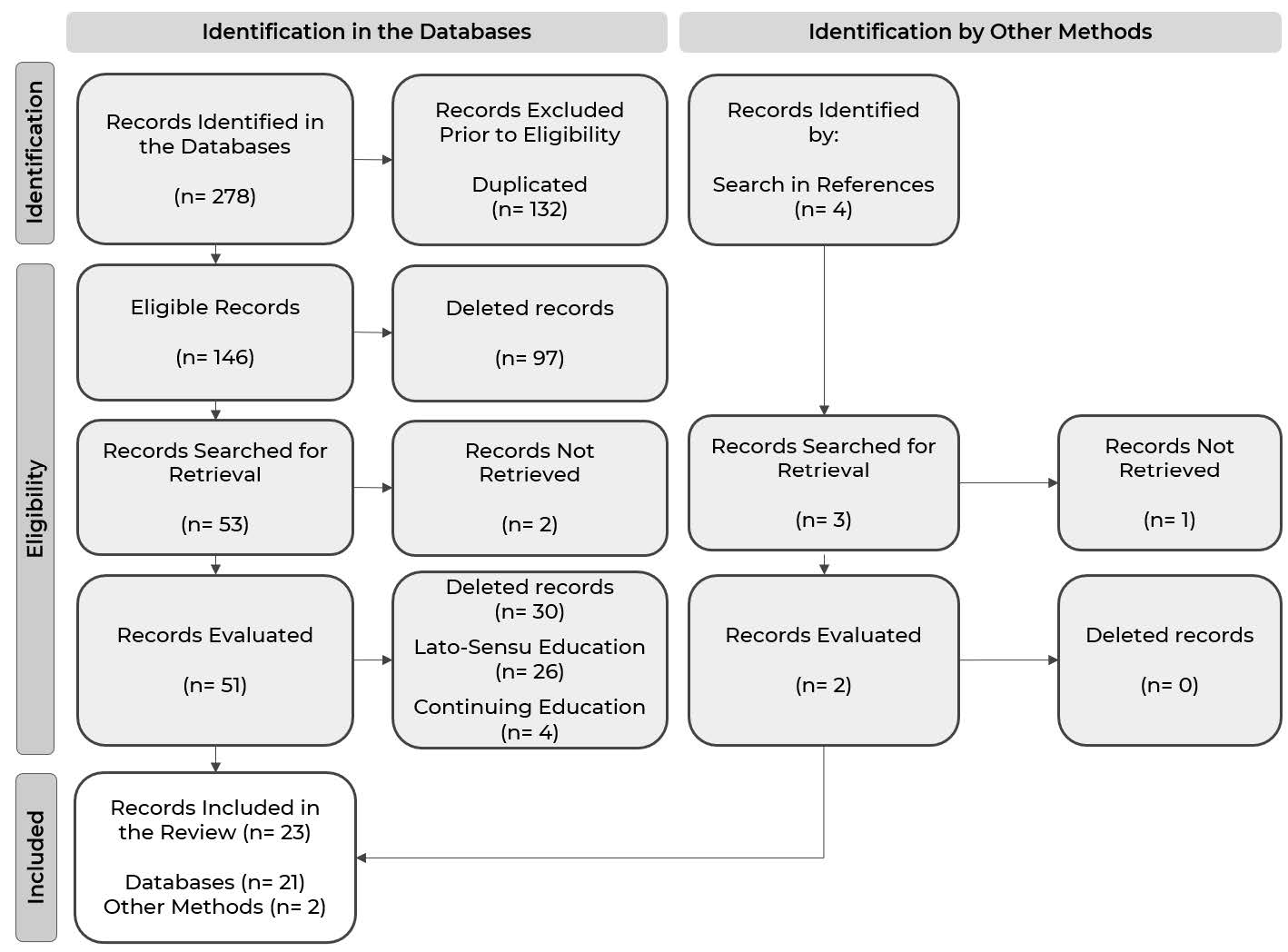
The results of this study were guided by PRISMA-ScR ( 16 ) , whose review process is described in Figure 1 .
Of the 278 records mapped, 23 were included in this review ( 20 - 42 ) . These were published between 2020 and 2023 in 10 countries, spread across four continents: Asia (11, ~48%) ( 23 - 26 , 39 , 42 ) , Europe (5, ~22%) ( 27 - 29 , 40 - 41 ) , America (4, ~17%) ( 30 - 33 ) , and Oceania (3, ~13%) ( 20 - 22 ) . Most of the records included were scientific studies (17, ~74%) ( 23 - 29 , 33 - 42 ) . Among the methods used, literature review studies were prevalent (16, ~70%) ( 23 , 25 , 27 - 28 , 33 - 42 ) . Although the type of review was not characterized by the authors for the most part (10, ~44%) ( 23 , 25 , 28 , 34 - 38 , 41 - 42 ) , scoping (2, ~9%) ( 39 - 40 ) , systematic (1, ~4%) ( 27 ) , and umbrella reviews (1, ~4%) ( 33 ) composed the final sample.
Considering that this review included several healthcare courses in a multidisciplinary context, it can be seen that, for most of the productions (18, ~78%) ( 20 - 21 , 23 , 25 , 27 - 28 , 30 - 33 , 35 - 42 ) , the definition of the population by course does not apply, considering that literature review studies were prevalent. However, a descriptive analysis shows that the medical course is predominant (14, ~61%) ( 21 , 25 , 28 - 32 , 34 - 36 , 38 - 41 ) compared to nursing (3, ~13%) ( 20 , 24 , 33 ) , and dentistry (1, ~4%) ( 42 ) . Figure 2 shows the characteristics of the records included in this review.
- Preferred Reporting Items for Systematic Reviews and Meta-Analyses Extension for Scoping Reviews (PRISMA-ScR) ( 16 ) . Ribeirão Preto, SP, Brazil, 2023
Figure 3 shows the summary table of the records included in the final sample. The results elucidate the applicability and limitations of the metaverse in the education of undergraduate healthcare students. Although some studies detail only one of the axes observed, the majority (15, ~65%) ( 21 - 25 , 29 , 31 - 32 , 34 - 35 , 37 - 40 , 42 ) describe both applicability and limitations in their entirety.
Discussion
The results of this study show that only three of the nine courses included in the classification of higher education courses in the healthcare area have incorporated the metaverse into their students’ education; a scenario in which medicine takes the lead. It can therefore be seen that the incorporation of the metaverse in education is incipient and, as a result, investments are needed to ensure that education in undergraduate healthcare courses is equitable. The evidence summarized highlights the applicability and limitations of the metaverse in higher education in the healthcare context, showing a reality that permeates theory and practice.
Applicability of the metaverse in the education of undergraduate healthcare students
Indeed, the metaverse supports education by simulating hypothetical cases that resemble reality ( 21 , 23 , 27 - 28 , 34 - 35 , 37 , 41 ) , thus contributing to the development of students’ competencies. Among the main applications of the metaverse, anatomy teaching ( 22 , 28 - 30 , 32 , 35 - 36 , 38 , 40 - 42 ) was largely explored by the records included, given its ability to facilitate understanding of the dimensions of the human body through anatomical visualization at different angles. This strategy is an advance on traditional teaching with cadavers, especially as it makes it possible to observe microscopic structures ( 22 , 43 ) .
Still from a theoretical perspective, the metaverse contributes to making the teaching-learning process not only interactive but also attractive. Thus, students’ intuition and imagination must be awakened and stimulated so that they can be motivated to learn since the metaverse has a lot to contribute to academic performance as a technological educational environment. However, for that to happen, students must accept the metaverse.
Although the applicability of the metaverse is related to theoretical teaching, it enhances the development of clinical competencies ( 20 , 23 - 24 , 28 - 32 , 34 - 35 , 38 , 40 , 42 ) , such as surgical training (regardless of the specialty) ( 25 , 28 - 32 , 34 - 36 , 38 , 40 , 42 ) and training in emergencies with multiple victims ( 31 ) . By allowing procedures to be repeated ( 21 ) without causing any risk to the patient or student ( 20 , 28 , 31 ) , the metaverse allows the dynamics of the clinical scenario to be monitored, making it possible to understand the procedures and the size of the work team and even contributing to teaching patient safety.
Established in 2011 by the World Health Organization (WHO), the Multi-Professional Patient Safety Curriculum Guide emphasizes that patient safety should be incorporated into the pedagogical proposals of interprofessional health education ( 44 ) . This makes it possible to train professionals who can act in accordance with best practices, not only providing safe and qualified patient care but also contributing to strengthening health systems. For this reason, it is essential to invest in incorporating patient safety into the teaching-learning process ( 45 - 47 ) , with the metaverse being a strategy.
In the context of the COVID-19 pandemic, the imminent need for non-face-to-face education has led to reflections on the teaching-learning process ( 39 ) . The metaverse has been boosted by the dizzying search for ways to facilitate interaction and collaboration between educators and students in different locations ( 25 ) . As a result, the boundaries between the real and virtual worlds have sometimes become almost indistinguishable, increasing education and networking ( 34 ) between students and educators around the world through emergency remote teaching ( 22 ) .
The synthesis of evidence covered three of the four possible applications of the metaverse: blended learning, competency-based education, and inclusive education ( 3 ) . In terms of theoretical applicability, the metaverse can be a technological educational environment aimed at promoting student protagonism in the teaching-learning process. In addition, concerning practical applicability, it enables the development of clinical competencies that support the construction of professional identity, reiterating its commitment to professionalism.
Limitations of the metaverse in the education of undergraduate healthcare students
Certainly, there is still much progress to be made in incorporating the metaverse into the education of undergraduate healthcare students. Therefore, the idea of only emphasizing infrastructure as a necessary factor for the metaverse to be used in education must be disassociated. Antagonistically, educators must have the skills to use this technological educational environment as a pedagogical resource, especially when considering the possibility of weakening interpersonal relationships in the educator-student dyad. For this reason, educators need to develop basic competencies that must be imbued with pedagogical knowledge ( 48 ) .
Although the Multi-Professional Patient Safety Curriculum Guide does not specifically mention the metaverse, this document highlights the difficulty students have in discerning between virtual and physical reality as a concern that should be considered by educators ( 44 ) . The use of the metaverse by educators who do not have specific knowledge can lead to a process of depersonalization of students ( 21 - 23 , 32 , 40 ) . As a result, students can be detached from reality by feeling disconnected from their own bodies and thoughts, since the environment and activities inherent in the metaverse “resemble” real life (even if it has limitations) ( 24 , 29 , 33 , 37 ) , making it difficult to equate what is real with what is virtual.
Nevertheless, when it comes to the limitations of the metaverse in the education of undergraduate healthcare students, data security and privacy ( 22 - 23 , 25 , 31 - 32 , 34 - 35 , 38 , 42 ) must be highlighted as a restrictive factor. As the real world is reproduced in the metaverse, risks related to cybercrime, such as identity theft and data breaches, as well as cyberbullying and harassment ( 25 , 38 ) , can be triggered. For this reason, maintenance and protection resources must be considered for the metaverse to be implemented. In the global context, higher education is not equal, as it is related to economic development ( 49 ) . In this sense, when considering the metaverse as a technological educational environment, limiting factors include not only the high cost of implementation ( 22 , 25 , 32 , 34 - 35 , 38 - 39 ) , but also the maintenance of the technology.
Despite its applicability, the metaverse has limitations that must be considered. For its adoption to be effective, educators must be instructed in the use of technology to minimize negative repercussions for students. Implementation measures must be taken along with maintenance strategies so that data security and privacy can be guaranteed. Finally, the use of the metaverse may not be equitable, insofar as not all Higher Education Institutions (HEIs) have resources, conditions, and educators with the skills to implement it, which may contribute to accentuating inequality in the education of undergraduate healthcare students.
This study did not include analysis by courses in the healthcare context, as well as physical and psychological aspects related to the use of the metaverse (effects induced by the virtual environment: cybersickness, simulator sickness, movement sickness, cognitive loss, dizziness, physical discomfort). Furthermore, as this is an emerging topic in various areas of knowledge, the concept of “metaverse” is still fluid, as evidence is continually being developed to qualify it. This may have limited the search for records.
Conclusion
The metaverse contributes to making the teaching-learning process for undergraduate healthcare students not only interactive but also attractive. This enables the development of clinical competencies that support the construction of professional identity. Despite this, the metaverse has limitations that need to be considered, especially data security and privacy and the high cost associated with its implementation and maintenance. The metaverse may not be equitable, as not all HEIs have the resources, conditions, and professionals with the skills to implement it, which may contribute to accentuating inequality in education. The different applications of the metaverse have proven promising for proposing qualified higher education in the global context. However, as an evolving field, there are still challenges in integrating it into the education of undergraduate healthcare students.
Acknowledgements
We would especially like to thank Dr. Heimar de Fátima Marin and Osmeire Chamelette Sanzovo, members of the Digital Nursing Technical Chamber (CTED) of the São Paulo Regional Nursing Council (COREn-SP), Brazil, for their collaboration in designing the study; and Adriana Sayuri Ota, Librarian at the University of São Paulo (USP), Brazil, for technical advice on establishing the search strategy.
References
-
1. Raja R, Nagasubramani PC. Impact of modern technology in education. J Exerc Nutr. 2018:3(Suppl1);S33-5. https://doi.org/10.21839/jaar.2018.v3S1.165
» https://doi.org/10.21839/jaar.2018.v3S1.165 -
2. Kalolo JF. Digital revolution and its impact on education systems in developing countries. Educ Inf Technol. 2019;24:345-58. https://doi.org/10.1007/s10639-018-9778-3
» https://doi.org/10.1007/s10639-018-9778-3 -
3. Zhang X, Chen Y, Hu L, Wang Y. The metaverse in education: Definition, framework, features, potential applications, challenges, and future research topics. Front Psychol. 2022;13:1016300. https://doi.org/10.3389/fpsyg.2022.1016300
» https://doi.org/10.3389/fpsyg.2022.1016300 -
4. Lira JAC, Rocha ASC, Bezerra SMG, Nogueira PC, Santos AMR, Nogueira LT. Effects of educational technologies on the prevention and treatment of diabetic ulcers: A systematic review and meta-analysis. Rev. Latino-Am. Enfermagem. 2023;31:e3944. https://doi.org/10.1590/1518-8345.6628.3945
» https://doi.org/10.1590/1518-8345.6628.3945 - 5. Stephenson N. Snow Crash. New York: Bantam Books; 1992. 470 p.
-
6. Mustafa B. Analyzing education based on metaverse technology. Technium Soc Sci J. 2022;32(1):278-95. https://doi.org/10.47577/tssj.v32i1.6742
» https://doi.org/10.47577/tssj.v32i1.6742 -
7. Erturk E, Reynolds GB. The expanding role of immersive media in education. In: International Conference on E-learning [Internet]; 2020 July 21-25; Zaghreb, Croatia. [s.l.]: IADIS; 2020 [cited 2023 Sep 20]. p. 191-4. Available from: https://www.elearning-conf.org/wp-content/uploads/2020/07/04_202007R028_R064.pdf
» https://www.elearning-conf.org/wp-content/uploads/2020/07/04_202007R028_R064.pdf -
8. Kaddoura S, Al Husseiny F. The rising trend of Metaverse in education: challenges, opportunities, and ethical considerations. PeerJ Comput Sci. 2023;9:e1252. https://doi.org/10.7717/peerj-cs.1252
» https://doi.org/10.7717/peerj-cs.1252 -
9. Dwivedi YK, Hughes L, Baabdullah AM, Ribeiro-Navarrete S, Giannakis M, Al-Debei MM, et al. Metaverse beyond the hype: Multidisciplinary perspectives on emerging challenges, opportunities, and agenda for research, practice and policy. Int J Inf Manage. 2022;66(102542). https://doi.org/10.1016/j.ijinfomgt.2022.102542
» https://doi.org/10.1016/j.ijinfomgt.2022.102542 -
10. Pimentel D, Fauville G, Frazier K, McGivney E, Rosas S, Woolsey E. An Introduction to Learning in The Metaverse [Internet]. Washington (DC): Meridian Treehouse; 2022 [cited 2023 Sep 20]. Available from: https://scholar.harvard.edu/files/mcgivney/files/introductionlearningmetaverse-april2022-meridiantreehouse.pdf
» https://scholar.harvard.edu/files/mcgivney/files/introductionlearningmetaverse-april2022-meridiantreehouse.pdf -
11. Çalişir EÇ, Sabuncu FH, Altun E. Reflections of Metaverse-Based Education on E-Learning. In: Conference Proceedings of International Eurasian Educational Research Congress [Internet]; 2022 June 22-25; Izmir, Turkey. Ankara: Ani Publications; 2022 [cited 2023 Sep 20]. p. 1-13. Available from: https://files.eric.ed.gov/fulltext/ED624172.pdf
» https://files.eric.ed.gov/fulltext/ED624172.pdf -
12. Prieto JF, Lacasa P, Martínez-Borda R. Approaching metaverses: Mixed reality interfaces in youth media platforms. New Techno-Human. 2022;2:136-45. https://doi.org/10.1016/j.techum.2022.04.004
» https://doi.org/10.1016/j.techum.2022.04.004 -
13. Kye B, Han N, Kim E, Park Y, Jo S. Educational applications of metaverse: possibilities and limitations. J Educ Eval Health Prof. 2021;18:32. https://doi.org/10.3352/jeehp.2021.18.32
» https://doi.org/10.3352/jeehp.2021.18.32 -
14. Sarıtaş MT, Topraklıkoğlu K. Systematic literature review on the use of metaverse in education. Int J Technol Educ. 2022;5(4):586-607. https://doi.org/10.46328/ijte.319
» https://doi.org/10.46328/ijte.319 -
15. Peters MDJ, Godfrey C, McInerney P, Munn Z, Tricco AC, Khalil, H. Chapter 11: Scoping Reviews (2020). In: Aromataris E, Munn Z (Editors). JBI Manual for Evidence Synthesis. Adelaide: JBI; 2020. https://doi.org/10.46658/JBIMES-20-12
» https://doi.org/10.46658/JBIMES-20-12 -
16. Tricco AC, Lillie E, Zarin W, O’Brien KK, Colquhoun H, Levac D, et al. PRISMA extension for scoping reviews (PRISMA-ScR): checklist and explanation. Ann Intern Med. 2018;169(7):467-73. https://doi.org/10.7326/M18-0850
» https://doi.org/10.7326/M18-0850 -
17. Bernardes A, Motta RA, Gardim L, Jensen R, Peres HHC, Lima RR, et al. Metaverse and Health Education: A Scoping Review Protocol [Internet]. 2023 [cited 2024 Jan 10]. https://doi.org/10.17605/OSF.IO/TQGPJ
» https://doi.org/10.17605/OSF.IO/TQGPJ -
18. World Health Organization. Classifying health workers [Internet]. Geneva: WHO; 2019 [cited 2024 May 10]. Available from: https://cdn.who.int/media/docs/default-source/health-workforce/dek/classifying-health-workers.pdf?sfvrsn=7b7a472d_3&download=true
» https://cdn.who.int/media/docs/default-source/health-workforce/dek/classifying-health-workers.pdf?sfvrsn=7b7a472d_3&download=true -
19. Ouzzani M, Hammady H, Fedorowicz Z, Elmagarmid A. Rayyan-a web and mobile app for systematic reviews. Syst Rev. 2016;5(1):210. https://doi.org/10.1186/s13643-016-0384-4
» https://doi.org/10.1186/s13643-016-0384-4 -
20. van Weelderen T. From mannequin to metaverse: the evolution and future of training nurses - opinion [Internet]. 2022 Sept 20 [cited 2023 Aug 14]. Available from: https://www.nursingreview.com.au/2022/09/from-mannequin-to-metaverse-the-evolution-and-future-of-training-nurses-opinion/
» https://www.nursingreview.com.au/2022/09/from-mannequin-to-metaverse-the-evolution-and-future-of-training-nurses-opinion/ -
21. Mah ET. Metaverse, AR, machine learning & AI in Orthopaedics? J Orthop Surg. 2023;31(1). https://doi.org/10.1177/10225536231165362
» https://doi.org/10.1177/10225536231165362 -
22. Moro C. Utilizing the metaverse in anatomy and physiology. Anat Sci Educ. 2023;16(4):574-81. https://doi.org/10.1002/ase.2244
» https://doi.org/10.1002/ase.2244 -
23. Chen X, Zou D, Xie H, Wang FL. Metaverse in Education: Contributors, Cooperations, and Research Themes. IEEE T Learn Technol. 2023:1-18. https://doi.org/10.1109/TLT.2023.3277952
» https://doi.org/10.1109/TLT.2023.3277952 -
24. Yang SY, Kang MK. Efficacy Testing of a Multi-Access Metaverse-Based Early Onset Schizophrenia Nursing Simulation Program: A Quasi-Experimental Study. Int J Environ Res Public Health. 2022;20(1):449. https://doi.org/10.3390/ijerph20010449
» https://doi.org/10.3390/ijerph20010449 -
25. Musamih A, Yaqoob I, Salah K, Jayaraman R, Al-Hammadi Y, Omar M et al. Metaverse in Healthcare: Applications, Challenges, and Future Directions. IEEE Consum Electr M. 2022:33-46. https://doi.org/10.1109/MCE.2022.3223522
» https://doi.org/10.1109/MCE.2022.3223522 -
26. Al-Kfairy M, Al-Fandi O, Alema M, Altaee M. Motivation and Hurdles for the Student Adoption of Metaverse-based Classroom: A Qualitative Study. In: 2022 International Conference on Computer and Applications (ICCA) [Internet]; 2022 Dec 20-22; Cairo, Egypt. New York, NY: IEEE; 2022 [cited 2024 Jan 10] p. 1-5. Available from: https://doi.org/10.1109/ICCA56443.2022.10039672
» https://doi.org/10.1109/ICCA56443.2022.10039672 -
27. Gonzalez-Moreno M, Andrade-Pino P, Monfort-Vinuesa C, Piñas-Mesa A, Rincon E. Improving Humanization through Metaverse-Related Technologies: A Systematic Review. Electronics. 2023;12(7):1727. https://doi.org/10.3390/electronics12071727
» https://doi.org/10.3390/electronics12071727 -
28. Román-Belmonte JM, Rodríguez-Merchán EC, Corte-Rodríguez HD. Metaverse applied to musculoskeletal pathology: Orthoverse and Rehabverse. Postgrad Med. 2023;135(5):440-8. https://doi.org/10.1080/00325481.2023.2180953
» https://doi.org/10.1080/00325481.2023.2180953 -
29. Méndez JAJ, Marcos-Pablos S, Izard SG. The Metaverse in Medical Education and Clinical Practice. In: Proceedings TEEM 2022: Tenth International Conference on Technological Ecosystems for Enhancing Multiculturality [Internet]; 2022 Oct 19-21; Salamanca, Spain. Berlin: Springer-Verlag; 2022 [cited 2023 Oct 05]. p. 157-62. Available from: https://link.springer.com/chapter/10.1007/978-981-99-0942-1_15
» https://link.springer.com/chapter/10.1007/978-981-99-0942-1_15 -
30. López-Ojeda W, Hurley RA. Digital Innovation in Neuroanatomy: Three-Dimensional (3D) Image Processing and Printing for Medical Curricula and Health Care. J Neuropsychiatry Clin Neurosci. 2023;35:3. https://doi.org/10.1176/appi.neuropsych.20230072
» https://doi.org/10.1176/appi.neuropsych.20230072 -
31. Ford TJ, Buchanan DM, Azeez A, Benrimoh DA, Kaloiani I, Bandeira ID, et al. Taking modern psychiatry into the metaverse: Integrating augmented, virtual, and mixed reality technologies into psychiatric care. Front Digit Health. 2023;5:1146806. https://doi.org/10.3389/fdgth.2023.1146806
» https://doi.org/10.3389/fdgth.2023.1146806 -
32. Ahuja AS, Polascik BW, Doddapaneni D, Byrnes ES, Sridhar J. The Digital Metaverse: Applications in Artificial Intelligence, Medical Education, and Integrative Health. Integr Med Res. 2023;12(1):100917. https://doi.org/10.1016/j.imr.2022.100917
» https://doi.org/10.1016/j.imr.2022.100917 -
33. De Gagne JC, Randall PS, Rushton S, Park HK, Cho E, Yamane SS, et al. The Use of Metaverse in Nursing Education: An Umbrella Review. Nurse Educ. 2023;48(3):E73-8. https://doi.org/10.1097/nne.0000000000001327
» https://doi.org/10.1097/nne.0000000000001327 -
34. Bhatia B, Joshi S. Applications of Metaverse in the Healthcare Industry. In: 2023 International Conference on Innovative Data Communication Technologies and Application (ICIDCA) [Internet]; 2023 Mar 14-16; Uttarakhand, India. New York, NY: IEEE; 2023. p. 344-50. Available from: https://doi.org/10.1109/ICIDCA56705.2023.10099897
» https://doi.org/10.1109/ICIDCA56705.2023.10099897» https://doi.org/10.1109/ICIDCA56705.2023.10099897 -
35. Kawarase MA, Anjankar A. Dynamics of Metaverse and Medicine: A Review Article. Cureus. 2022;14(11):e31232. https://doi.org/10.7759/cureus.31232
» https://doi.org/10.7759/cureus.31232 -
36. Pandey A, Chirputkar A, Ashok P. Metaverse: An Innovative Model for Healthcare Domain. In: 2023 International Conference on Innovative Data Communication Technologies and Application (ICIDCA) [Internet]; 2023 Mar 14-16; Uttarakhand, India. New York, NY: IEEE; 2023. p. 334-7. Available from: https://doi.org/10.1109/ICIDCA56705.2023.10099764
» https://doi.org/10.1109/ICIDCA56705.2023.10099764» https://doi.org/10.1109/ICIDCA56705.2023.10099764 -
37. Mohamed ES, Naqishbandi TA, Veronese G. Metaverse! Possible Potential Opportunities and Trends in E-Healthcare and Education Int J E-Adopt. 2023;15(2);1-21. https://doi.org/10.4018/IJEA.316537
» https://doi.org/10.4018/IJEA.316537 -
38. Bhugaonkar K, Bhugaonkar R, Masne N. The Trend of Metaverse and Augmented & Virtual Reality Extending to the Healthcare System. Cureus. 2022;14(9):e29071. https://doi.org/10.7759/cureus.29071
» https://doi.org/10.7759/cureus.29071 -
39. Garavand A, Aslani N. Metaverse phenomenon and its impact on health: A scoping review. Inform Med Unlocked. 2022;32:101029. https://doi.org/10.1016/j.imu.2022.101029
» https://doi.org/10.1016/j.imu.2022.101029 -
40. Petrigna L, Musumeci G. The Metaverse: A New Challenge for the Healthcare System: A Scoping Review. J Funct Morphol Kinesiol. 2022;7(3):63. https://doi.org/10.3390/jfmk7030063
» https://doi.org/10.3390/jfmk7030063 -
41. Massetti M, Chiariello GA. The metaverse in medicine. Eur Heart J Suppl. 2023;25(Suppl B):B104-7. https://doi.org/10.1093/eurheartjsupp/suad083
» https://doi.org/10.1093/eurheartjsupp/suad083 -
42. Bansal G, Rajgopal K, Chamola V, Xiong Z, Niyato D. Healthcare in Metaverse: A Survey on Current Metaverse Applications in Healthcare. IEEE Access. 2022;10:119914-46. https://doi.org/10.1109/ACCESS.2022.3219845
» https://doi.org/10.1109/ACCESS.2022.3219845 -
43. Gonzales-Romo NI, Mignucci-Jiménez G, Hanalioglu S, Gurses ME, Bahadir S, Xu Y. Virtual neurosurgery anatomy laboratory: A collaborative and remote education experience in the metaverse. Surg Neurol Int. 2023;14:90. https://doi.org/10.25259/sni_162_2023
» https://doi.org/10.25259/sni_162_2023 -
44. World Health Organization. WHO patient safety curriculum guide: multiprofessional edition [Internet]. Geneva: WHO; 2011 [cited 2023 Nov 25]. Available from: https://www.who.int/publications/i/item/9789241501958
» https://www.who.int/publications/i/item/9789241501958 -
45. Rocha RC, Nunes BMVT, Araújo AAC, Faria LFL, Bezerra MAR. Patient safety in nursing technician training. Rev Bras Enferm. 2022;75(1):e20201364. https://doi.org/10.1590/0034-7167-2020-1364
» https://doi.org/10.1590/0034-7167-2020-1364 -
46. Rocha RC, Avelino FVSD, Borges JWP, Araújo AAC, Bezerra MAR, Nunes BMVT. Nursing technicians’ professional training in patient safety: A mixed-methods study. Rev. Latino-Am. Enfermagem. 2023;31:e3819. https://doi.org/10.1590/1518-8345.6214.3819
» https://doi.org/10.1590/1518-8345.6214.3819 -
47. Wu AW, Busch IM. Patient safety: a new basic science for professional education. GMS J Med Educ. 2019;36(2):Doc21. https://doi.org/10.3205/zma001229
» https://doi.org/10.3205/zma001229 -
48. De Felice F, Petrillo A, Iovine G, Salzano C, Baffo I. How Does the Metaverse Shape Education? A Systematic Literature Review. Appl Sci. 2023;13:5682. https://doi.org/10.3390/app13095682
» https://doi.org/10.3390/app13095682 -
49. United Nations. Recognizing and Overcoming Inequity in Education [Internet]. New York, NY: United Nations; 2020 [cited 2023 Nov 25]. Available from: https://www.un.org/en/un-chronicle/recognizing-and-overcoming-inequity-education
» https://www.un.org/en/un-chronicle/recognizing-and-overcoming-inequity-education
-
*
The publication of this article in the Thematic Series “Digital health: nursing contributions” is part of Activity 2.2 of Reference Term 2 of the PAHO/WHO Collaborating Centre for Nursing Research Development, Brazil.
-
How to cite this article
Bernardes A, Gardim L, Araújo AAC, Jensen R, Motta RA, Almeida DM, et al. Exploring the metaverse in the education of healthcare students: A scoping review. Rev. Latino-Am. Enfermagem. 2024;32:e4347 [cited year month day]. Available from: URL . https://doi.org/10.1590/1518-8345.7256.4347
Edited by
-
Associate Editor:Maria Lúcia Zanetti