 Streptococcus suis infection as an emerging zoonotic threat in Brazil: a One Health-based review
ABSTRACT
Streptococcus suis infection is an emerging zoonotic pathogen of growing concern in Brazil, particularly in the Northeast—a region lacking swine-focused surveillance. Although human contamination remains rare, they have been increasingly reported among individuals exposed to pigs or pork products, and most commonly present as central nervous system infections. Diagnostic challenges persist, especially related to culture-based methods, highlighting the need for advanced molecular tools like polymerase chain reaction and metagenomic Next-Generation Sequencing. Veterinary data reveal a high diversity of serotypes and concerning rates of antimicrobial resistance. These studies remain scarce in regions with reports of human infection. This review highlights the clinical, epidemiological, and microbiological aspects of S. suis in Brazil and underscores the importance of One Health approaches to enhance detection and prevention.
KEYWORDS:
Streptococcus suis; Zoonosis; Emerging diseases; One Health
INTRODUCTION
Among zoonotic bacterial pathogens, Streptococcus suis represents a recent emerging challenge in Brazil1. Primarily an animal pathogen responsible for significant infections in the swine industry, it occasionally infects humans, causing endocarditis, pneumonia, sepsis, pyogenic arthritis, and meningitis, among other diseases, with most cases reported in Southeast Asia1. In humans, the most frequent symptoms include headache, fever, neck stiffness, and skin lesions related to contact with pigs1. It can cause human meningitis which may evolve to death or leave permanent sequelae, most commonly bilateral sensorineural hearing loss2. In pigs, under certain conditions, S. suis can cross mucosal barriers and enter the bloodstream, spreading to various organs such as the joints and the central nervous system (CNS), leading to systemic infection3.
S. suis is a Gram-positive, facultative anaerobic bacterium with an ovoid to round shape, typically arranged in pairs or short chains, and exhibits α-hemolysis on sheep blood agar4. Its polysaccharide capsule is a major virulence factor, facilitating evasion of host immune defenses, particularly phagocytosis4,5. It can be isolated from affected tissues and identified based on biochemical and morphological characteristics5,6. Biochemical analysis often reveals a profile consistent with catalase-negative, Voges–Proskauer-negative, and α-hemolytic characteristics on sheep blood agar6. The organism typically ferments trehalose, salicin, and sucrose, but not inositol or sorbitol. It is generally positive for leucine aminopeptidase, negative for bile esculin hydrolysis, and non-motile. Traditional identification may include optochin resistance and growth in 6.5% NaCl to differentiate S. suis from other streptococcal species6.
Although inexpensive and widely accessible, the culture-based approach often lacks the accuracy needed to reliably differentiate S. suis serotypes and therefore commonly requires complementary diagnostic methods6. Specificity is further limited by phenotypic overlap with other Streptococcus species. Other limitations include prolonged turnaround times and modest positivity rates6. Serotyping of S. suis strains is typically performed by detecting capsular polysaccharide–specific antigens via coagglutination or multiplex PCR assays targeting the capsule synthesis gene cluster7. Currently, 29 serotypes of S. suis are recognized (serotypes 1 to 34 and 1/2, the latter referring to a variant of serotype 1 that shares antigenic features with serotype 2)7, which are distinguished by differences in their capsular polysaccharide antigens. Serotype 2 is the one most frequently associated with clinical infections in both pigs and humans7.
Notably, reports of S. suis infection are increasing in non-endemic regions outside Asia, including South America, with documented cases particularly concentrated in northeastern Brazil2,8,9 despite the country being the fourth-largest pork producer globally10. Between 2020 and 2025, cases of S. suis meningitis were reported in states like Bahia and Ceara, with ongoing reports by specialized meningitis surveillance groups2,9. However, veterinary epidemiological studies on swine production in northeastern Brazil are limited, and the etiological factors contributing to this regional distribution remain poorly elucidated, despite the predominance of human cases in this area9,10.
Zoonotic diseases remain under-researched, with limited studies addressing this issue, and the continuous emergence of cases highlights a critical knowledge gap and reinforces the need to prioritize research aimed at achieving a more comprehensive understanding of this phenomenon. Herein, we present a review of the clinical, epidemiological, and veterinary aspects of S. suis infection in swine and human cases reported in Brazil. Additionally, we describe two recently diagnosed human S. suis infections from northeastern Brazil.
MATERIALS AND METHODS
The primary question guiding this review was "What is the current epidemiological situation of S. suis infections in humans and swine in Brazil?" To address this question, a comprehensive literature search was conducted using the following primary databases: MEDLINE® (via PubMed), LILACS, and Google Scholar, covering the period from January 1970 to October 2025 and including the following terms to retrieve relevant articles: "Streptococcus suis" AND ("Pigs" OR "Swine" OR "Swine Infection") OR ("Brazil" AND ("Meningitis" OR "Human infection").
The review only included articles published in English, Spanish, and Portuguese. Information were compiled from previously published, peer-reviewed studies to describe the clinical, epidemiological, and veterinary aspects of S. suis infections in Brazil. Inclusion criteria encompassed descriptive cross-sectional studies, observational studies, serotyping reports, outbreak investigations, and descriptive prevalence studies. Case reports, case series, and letters were included when addressing human or swine S. suis infection in Brazil. We also reviewed the reference lists of all retrieved articles to identify additional relevant primary sources that might have been missed in the initial search strategy, using a manual snowballing approach. The extracted data were organized into four thematic categories: (1) Epidemiology – S. suis outbreaks in Brazilian farms; (2) S. suis in pigs – Brazilian data; (3) Human S. suis cases in Brazil; and (4) One Health aspects and control measures.
Two newly identified human cases of S. suis infection were incorporated into this review. Clinical information was obtained by retrospective evaluation of medical records from patients hospitalized in October 2022 and September 2025 at Sao Jose Hospital of Infectious Diseases (HSJ), a regional referral center for infectious diseases in northeastern Brazil.
Ethics
This research is part of a retrospective cohort study approved by the HSJ Research Ethics Committee (protocol Nº 7.529.553; CAAE: 52811521.7.0000.5044). Both patients of the newly identified cases provided informed consent for publication of their information.
RESULTS
Bibliographic search initially identified 9,210 studies which were screened by title and abstract, reducing the selection to 32 articles reporting Brazilian data. Following a full-text analysis, 25 articles met the inclusion criteria. Studies were published in English (n = 18, 72%) and Portuguese (n = 7, 28%). Analyzing the publications per year, the number of articles increased over time, with one in the 70s, two in the 80s, one in the 90s, ten between 2000 and 2018, and an apparent increase in publications in the last five years compared with the previous two decades: 2019 (n = 1), followed by 2020 (n =3), 2021 (n = 1), 2022 (n = 3), 2023 (n = 1), 2024 (n = 2). Studies were divided into human infection cases (n = 4) and carriage (n = 1), epidemiological and prevalence studies (n = 11), swine infection case series (n = 3), focus on genetic analysis, serotyping and antimicrobial resistance (n = 5), and a swine case report (n = 1).
Epidemiology – S. suis outbreaks in Brazilian farms
Most documented S. suis infection outbreaks in Brazil have occurred in swine, with no human outbreaks reported to date—only individual case reports2,9. The main Brazilian regions affected by S. suis outbreaks in swine include Parana, Sao Paulo, Minas Gerais, Santa Catarina States, and the Distrito Federal11. A total of 18 studies were used to better describe the epidemiology of swine outbreaks in Brazil (Table 1). Researched identified 6 (50%) outbreak investigations, most occurring within Brazil's South-Southeast axis (Figure 1). Serotype 2 was the most commonly identified isolate. Other serotypes implicated in the disease included 1, 2, 1/2, 3, 4, 5, 1/14, 6, 7, 8, 9, 10, 14, 18, 28, and 2711-19. One recorded outbreak in Parana involved 30 nursery farms, 10 of which had confirmed S. suis infection caused by serotype 919.
Summary of S. suis reports, prevalence studies, isolates and outbreak investigations in pigs across Brazil
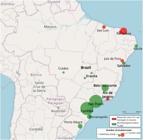
Reported cases of S. suis human meningitis in Brazil (red) vs. states with published studies on microbiological aspects of S. suis infection in pigs (green).
Outbreaks due to S. suis infection in piglets have been reported since the 1980s in Sao Paulo, Minas Gerais, Rio de Janeiro, and Parana States12,13. The first two series, reported in 1981 and 1988, documented outbreaks in piglets involving three and nine animals, respectively12,13. At that time, diagnosis relied on brain tissue culture and conventional biochemical testing, which identified serotype 212,13. The largest and most recent outbreak recorded in Brazil occurred in the Santa Catarina State. Among 4,733 piglets, 1,942 presented clinical signs of infection14. Six animals evolved to death and underwent necropsy, with tissue samples collected for bacteriological culture and molecular biology analyses, which confirmed S. suis as the causative agent14.
In the Midwest, four studies were conducted15,16-18. PCR-based prevalence studies on 201 slaughtered healthy pigs from Mato Grosso detected serotype 2 presence at levels higher than the average reported in the literature15. Calderaro et al.17 observed lower genotypic diversity in Goias compared to Sao Paulo and Santa Catarina. Although the comprehensive study by Matajira et al.11 includes strains from Goias, it does not provide sufficient data to discuss the specific characteristics of S. suis in that state. Data regarding S. suis infection in swine in Northeastern Brazil is scarce, with reports only from Bahia and Pernambuco15. States with documented human cases like Ceara and Bahia have not reported frequent S. suis identification or outbreaks in swine (Figure 1)2,9. In a study involving 215 strains of S. suis focusing on serotyping identification, Matajira et al.11 included data from Bahia and Pernambuco with an emphasis on CNS isolates. A similar study encompassing 113 S. suis strains from 103 pigs also included data from Bahia and Pernambuco to better define the main serotypes in Brazil11,18. However, neither study specify the number of samples submitted from these states or the serotypes identified by state15,18. No data on S. suis infection in swine from Northern Brazil were found.
Four studies focusing on S. suis prevalence data among healthy swine found that prevalence in Brazil ranges from 10.27% to 55.88%20-24. Lara et al.21, who analyzed 34 samples collected from multiple farms in Santa Catarina, reported the highest prevalence. Among these samples, 19 tested positive for S. suis serotype 2, resulting in a prevalence of 55.88%.
Many factors may explain the resurgence of S. suis disease outbreaks among swine in Brazil. Clinical reports from Brazilian farms consistently describe outbreaks affecting pigs under physiological or immunological stress, particularly during the nursery and grower phases, when meningitis, septicemia, arthritis, and pneumonia are most frequently observed17,19. These outbreaks are strongly influenced by individual animal factors that predispose pigs to bacterial invasion and systemic disease15,20. Many Brazilian outbreaks in swine are related to stressors like weaning, transport, mixing of litters, and inadequate colostral immunity, which are repeatedly associated with increased susceptibility as these conditions impair mucosal defenses and facilitate bacterial spread from the tonsils, a common site of asymptomatic carriage11-19. Additional factors contributing to Brazilian outbreaks include co-infections with viruses or Mycoplasma spp. and environmental or management deficiencies that compromise immune competence, thereby increasing individual vulnerability and enabling the expression of virulence determinants such as suilysin, MRP, and EF15,17,20,23,24. Moreover, the genetic diversity of circulating S. suis serotypes—including serotypes 2 and 9—may shape disease emergence, as some strains exhibit greater pathogenic potential, exemplified by the serotype 9 outbreak reported in Parana18,19,23,24.
S. suis in pigs – Brazilian data
S. suis infection in swine in Brazil was first reported in 1977 during an investigation of synovial samples from cases of bacterial arthritis across 33 farms in Minas Gerais, Sao Paulo, and Rio de Janeiro25. S. suis was identified in three samples and was initially classified as belonging to Lancefield Group D, but was later found to be very similar to Group R12,13. During the 1980s, reports of S. suis meningitis in swine increased in Brazil12,13. Meningoencephalitis caused by this microorganism in pigs was first described in 198112. Eighteen strains of alpha-haemolytic streptococci were obtained during 1979 from the brains of piglets 6–10 weeks old with nervous disorders, and another 10 strains during 198012. Five of these 10 strains (sent to Atlanta, Georgia, USA for typing) were S. suis serotype 2, at that time known as group R12. In 1988, an outbreak of neurological symptoms was reported in nine suckling pigs. Of these, three died within a median of five days and six recovered after treatment with oxytetracycline, some of which developed neurological sequelae and reduced responsiveness. S. suis serotype 2 was identified through culture and biochemical testing13.
A series of two piglets from Parana with clinical meningitis from the same farm revealed atypical neurological signs related to an S. suis CNS infection such as ataxia, opisthotonus, paddling movements26. The 14-day-old piglet survived after treatment with procaine benzylpenicillin for three days, whereas the 30-day-old piglet died despite therapy with amoxicillin and gentamicin26. According to Matajira et al.11, meningitis constitutes the most frequent clinical manifestation in swine, followed by polyarthritis, endocarditis, pneumonia, septicemia, polyserositis, and sudden death. Rarely, it can also present as endometritis or miscarriage11. During the largest S. suis outbreak in piglets in Santa Catarina, necropsies performed on six pigs with fatal outcomes revealed suppurative polyarthritis in five cases and meningitis in one14. Other case reports from Brazil highlight other atypical manifestations such as orchitis on a four-year-old, crossbred male pig with orchitis from a private property, who was later confirmed for S. suis etiology27. Overall, post-weaning piglets aged 5 to 10 weeks seem particularly more susceptible to clinical infection, with common clinical signs including fever, anorexia, neurological symptoms, lameness, and death being frequently described in Brazilian studies, mainly in Southeastern Brazil (Figure 1)12,24,27,28.
Brazilian data suggests a combination of individual, environmental, and management-related risk factors that predispose pigs to systemic disease12,13,26-28. Most clinical reports describe swine under physiological stress—particularly during the nursery, growing, and finishing phases—as being at higher risk, with weaning, mixing of litters, transport, and failures in passive immunity transfer identified as major contributors to disease onset28,29. Histopathological evaluations commonly document suppurative CNS inflammation, vasculitis, fibrinosuppurative exudate, and bacterial emboli—hallmarks aligned with the known capacity of the pathogen to cross the blood–brain barrier and trigger intense neutrophilic responses (Figure 2)12,19,28.

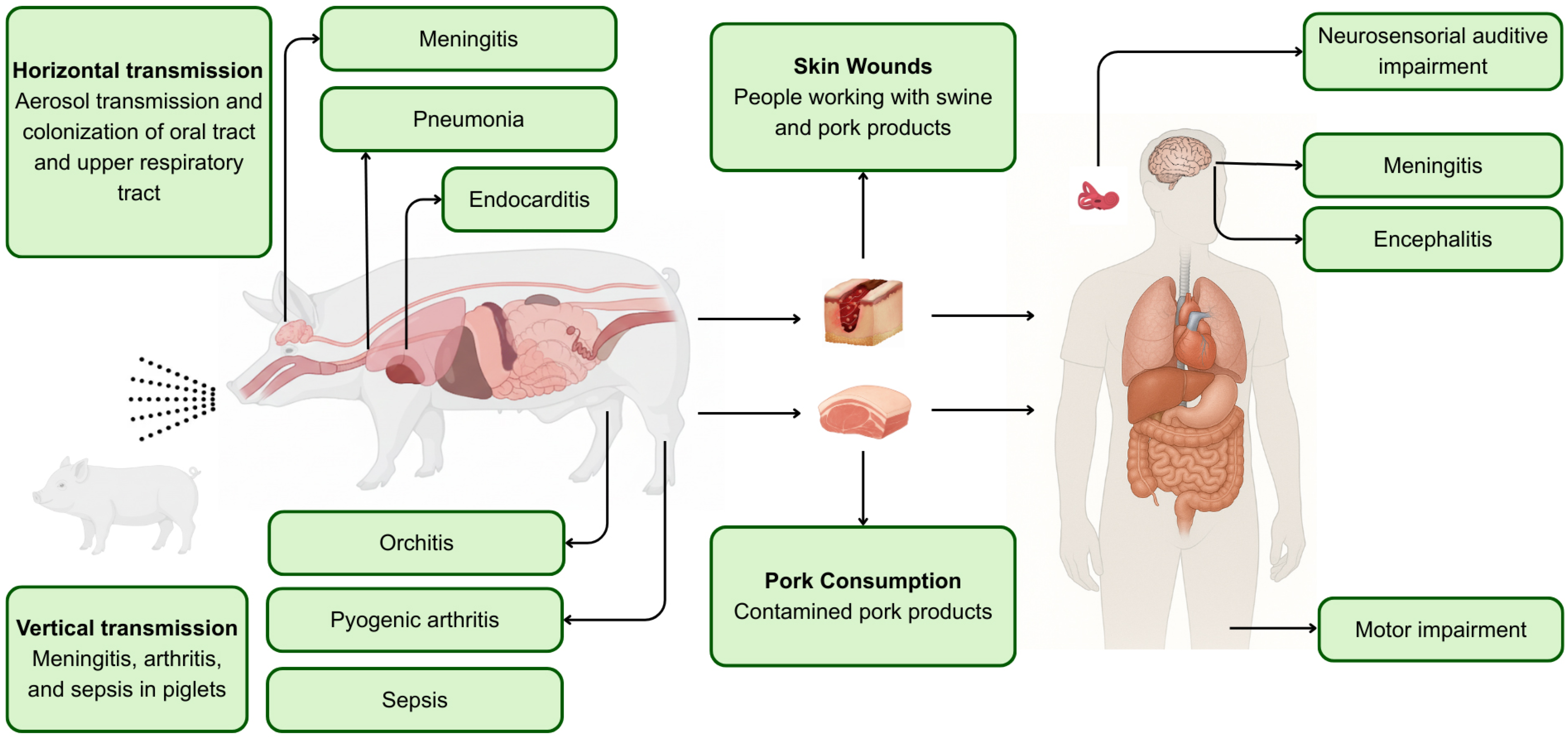
Main transmission routes and clinical manifestations of S. suis infection in swine and humans in Brazil. Horizontal and vertical transmission in pigs lead to meningitis, pneumonia, arthritis, and sepsis. Human infection occurs primarily through skin wounds or consumption of contaminated pork, resulting in meningitis, encephalitis, neurosensory hearing loss, and motor impairment.
Antimicrobial resistance in swine
Four studies directly investigate antimicrobial resistance in swine in Brazil10,11,22,29. Antimicrobial resistance is an increasingly significant concern among S. suis isolates in swine. Brazilian veterinary studies on the antimicrobial susceptibility of S. suis are limited and primarily concentrated in Sao Paulo State10,11. Antimicrobial susceptibility testing of 260 Streptococcus suis isolates from clinically healthy swine in Sao Paulo revealed widespread multidrug resistance, with over 99% of strains resistant to at least three antimicrobial classes. These findings are comparable to, or even more concerning than, those reported internationally10. A high resistance rate was observed for tetracyclines (97.69%), sulfonamides/trimethoprim (100%), macrolides (46.54%), and lincosamides (84.61%)10. However, β-lactams (particularly ceftiofur and cephalexin) showed good activity (n = 260)10. Notably, the study did not identify meaningful resistance differences among farms within the sampled region10.
Matajira et al.11 characterized 215 S. suis isolates collected from pigs across several Brazilian states between 2001 and 2016, finding a predominance of serotype 2 and ½ (86%) by molecular serotyping. They identified nine distinct antimicrobial resistance profiles, with some strains resistant to as many as eight antimicrobial classes. Multidrug resistance was particularly frequent, affecting 72.1% of the isolates, and resistance increased in strains isolated after 200911. Nonetheless, β-lactams (e.g., penicillin, ceftiofur) and florfenicol remained among the most effective agents11. In an earlier study published in 2008, amoxicillin and florfenicol showed the greatest antimicrobial activity, with 90% of S. suis isolates (n = 70) exhibiting susceptibility at the established minimal inhibitory concentration (MIC) levels29.
S. suis human cases in Brazil
Despite the high prevalence of S. suis in pigs (with the bacterium detected in 58.8% of animals on farms in Sao Paulo, Minas Gerais, and Parana11, particularly serotypes 2 and 9) in Brazil, cases of S. suis meningitis in humans are rare. In 2014, a study conducted in three pig farms in Sao Paulo tested 28 farm workers for S. suis carriage, confirming the first case in the country of a human carrier, without any signs and symptoms at the time30.
Human cases of S. suis meningitis in Brazil remain rarely reported in the literature, primarily as isolated case reports or small case series2,9,31,32. To date, five human cases have been documented in the country, as reported in four peer-reviewed publications up to 20202,9,31,32. No cases had been recorded before 2020. Herein, we describe the clinical and laboratory characteristics of each previously reported case and include two additional cases recorded at our infectious diseases center between 2022 and 2025, summarizing key clinical findings, exposure risks, laboratory data, and outcomes.
Most patients were male (5:2 ratio) with a median age of 63.1 years, from Northeast Brazil, specifically Ceara State. Exposure risk was identified in five out of seven individuals (71.4%), four through occupational exposure and one through pork consumption. In recent years, three cases were reported in Ceara and Bahia, all with detailed epidemiological histories involving pig farming and direct contact with swine2,9,31,32. Most patients (5/7; 71.4%) presented with neutrophilic pleocytosis, elevated protein levels, and decreased glucose in the CSF analysis. Gram staining revealed Gram-positive cocci in all cases. Diagnosis was predominantly established by CSF culture (6/7; 86.7%). Serotyping was performed in four cases, identifying two S. suis serotype 2 isolates (Ceara and Bahia) and one serotype 1 isolate (Ceara)2,9. No deaths were reported; however, three patients (42.8%) developed sensorineural hearing loss, and two (28.6%) presented significant motor deficits.
Case 1
The first case reported was documented in 2020, in Rio de Janeiro, in an 82-year-old Brazilian man, without previous comorbidities, three days after pork consumption. The patient was admitted in September 2019 with a clinical picture of meningitis (fever, nuchal pain, and headache). Lumbar puncture revealed an opening pressure of 29 mmHg, a cloudy appearance, a white blood cell (WBC) count of 2,133/µL with 75% neutrophils, total protein of 126 mg/dL, and glucose of 66 mg/dL. Gram stain revealed rare cocci, and Gram-positive diplococci were observed. CSF culture was negative. Blood samples were analyzed using matrix-assisted laser desorption ionization-time of flight mass spectrometry (MALDI-TOF MS), confirming identification of S. suis. The strain was susceptible to penicillin and ceftriaxone (MIC < 0.06 μg/mL and < 0.12 μg/mL). Serotype identification was not achieved. He was initially treated with ceftriaxone, vancomycin, and acyclovir, which were later de-escalated to ceftriaxone alone at 2 g every 12 h. He required intensive care unit (ICU) admission but had a favorable clinical progression. He was discharged in good condition, and no data regarding sequelae were available. The authors believe that the S. suis infection was possibly acquired through pork consumption, without any prior direct contact with pigs31.
Case 2
The second case was documented in 2021, in Ceara State, northeastern Brazil. A 60-year-old male butcher who worked in a pig slaughterhouse, with previous alcoholism and chronic obstructive pulmonary disease, presented with fever, headache, and meningeal signs. Curiously, he already presented hypoacusis and tinnitus at symptoms onset. CSF analysis revealed 82 WBC/μL with 48% polymorphonuclear (PMN) leukocytes, glucose of 5 mg/dL, CSF protein of 143 mg/dL and presence of Gram-positive diplococci. CSF culture identified S. suis serotype 2, susceptible to ceftriaxone. The patient was treated with ceftriaxone (2 g every 12 h for 14 days) and dexamethasone (4 mg every 6 h for 5 days), achieving complete clinical recovery. Follow-up audiometry, however, revealed bilateral sensorineural hearing loss2.
Case 3
This case was registered simultaneously to case 2, in the same year. A 68-year-old male pig farmer presented with fever, headache, nuchal stiffness, loss of consciousness, and dysarthria. Given the suspicion of meningoencephalitis, computer tomography (CT) of the brain was performed and abnormal and CSF analysis showed glucose levels of 22 mg/dL, a protein concentration of 320 mg/dL, a cell count of 1,322 cells/μL with 44% polymorphonucleocytes, and a Gram stain with no findings. CSF culture identified S. suis serotype 1 by VITEK® 2, susceptible to piperacillin-tazobactam (MIC < 0.06 µg/dL). Initial therapy with piperacillin-tazobactam (4.5 g every 6 h for 7 days) was switched to meropenem (1 g every 8 h for 14 days) and polymyxin B (25,000 IU/kg/day for 7 days) due to secondary pulmonary infection with Pseudomonas aeruginosa. The patient showed a favorable clinical response and was discharged after nearly one month, with no signs of relapse on follow-up2.
Case 4
A case from Maranhao State, similar to the first documented case in Brazil, was admitted with a classic presentation of acute bacterial meningitis but had no previously known compatible epidemiological history35. The patient was a 52-year-old woman with typical meningitis and dizziness that progressed to tinnitus and bilateral hearing loss. CSF analysis showed 160 WBC/μL (32% PMN, 68% mononuclear), protein of 114 mg/dL and glucose of 3 mg/dL. Gram-positive cocci in a single chain were observed, and cultures grew S. suis. Serotype identification was not performed. She was treated with ceftriaxone and dexamethasone, with full clinical recovery and no sequelae at discharge. Despite the initial picture with additional auditive symptoms, such as hearing loss, was not documented32.
Case 5
In 2022, another case involving a Brazilian woman from Ceara presenting clinical features compatible with severe acute meningitis and sensory loss, without prior risk or epidemiological factors, was admitted in an infectious diseases hospital. CSF analysis revealed 76 WBC/μL with 54% PMN, glucose of zero mg/dL, CSF protein of 410 mg/dL, adenosine deaminase 17,4 U/L (reference: < 9 U/L) and presence of Gram-positive diplococci. She was treated with ceftriaxone 2g every 12 h, vancomycin 15mg/kg/day every 12 h, and dexamethasone 0,4 mg/kg/day. The patient required ICU admission with invasive mechanical ventilation for eight days. After a 20-day hospitalization, she was discharged without sequelae. Epidemiological investigation revealed no notable association with occupational exposure or pork consumption.
Case 6
In 2024, a 68-year-old man from Bahia State, northeastern Brazil, with no comorbidities, who works as a pig farmer, was admitted with meningitis. Examination revealed meningeal signs and papilledema. During hospitalization, he developed bilateral hearing loss, balance disturbances, and difficulty walking even with mobility aids. CSF analysis showed 350 WBC/μL, with 89% PMN, CSF protein of 119 mg/dL and glucose of 32 mg/dL. Gram-positive cocci grouped in pairs and short chains were evinced, with culture confirming S. suis serotype 2. He was treated with ceftriaxone for 14 days, leading to clinical and laboratory improvement, though motor and auditory deficits persisted at discharge, requiring ongoing rehabilitation. This case provided the first evidence of motor deficits after S. suis meningitis in Brazil9.
Case 7
A 73-year-old male pig farm worker responsible for the swine castration sector was admitted in September 2025 with high fever, headache, and sensory loss. CT of the brain was unremarkable. Lumbar puncture revealed turbid CSF with 7.205 WBC/μL (97% PMN), protein of 712.5 mg/dL, and glucose of 8 mg/dL. CSF lactate was markedly elevated at 115 mg/dL (reference: 9–16 mg/dL). Culture grew S. suis, though the serotype was not identified and susceptibility data were unavailable (Figure 3). The patient was initially treated with ampicillin-sulbactam 2g every 6 h and later switched to ceftriaxone 2 g every 12 h. After 21 days of hospitalization, he was discharged with bilateral sensorineural hearing loss and severe motor sequelae, including inability to walk due to limb weakness and ataxia. Cochlear implantation was subsequently performed, resulting in improved hearing.

No human cases have been documented in the medical literature from Northern, Midwestern, or Southern Brazil. Table 2 provides a summary of the key clinical manifestations, main CSF findings, corticosteroids use, therapeutic approaches, sequelae, and clinical outcomes for each case.
Antimicrobial resistance in human infections
Among the seven patients, four responded to ceftriaxone. Some initially received combined therapy with ceftriaxone and vancomycin, likely administered due to an early suspicion of Streptococcus pneumoniae infection2,9,31,32. MIC susceptibility data were available for three cases, specifically cases 1, 2, and 3, showing susceptibility to penicillin and ceftriaxone (MIC < 0.06 μg/mL and < 0.12 μg/mL), ceftriaxone (MIC < 0.25 µg/mL) and to piperacillin–tazobactam (MIC < 0.06 µg/mL), respectively2,31. The sixth patient did not respond to ceftriaxone and, due to the emergency situation, was ultimately treated with a combination of vancomycin and cefepime. Most human data from cases reported in Brazil are based on CSF isolates and usually do not include antimicrobial susceptibility profiles.
One Health aspects and control measures
S. suis infection represents a potential emerging pathogen threat in Brazil and Latin America, affecting human and swine populations. This scenario underscores the urgent need for integrated veterinary and human health approaches31. Antimicrobial resistance of S. suis, originating in industrial swine reservoirs, is a concerning issue that could potentially result in resistant zoonotic diseases, as already documented in Brazil10,29. The prolonged and indiscriminate use of tetracyclines and macrolides in pig farms, leading to breeding grounds for antibacterial resistance, must be regulated and addressed more comprehensively at both scientific and policy levels. Fortunately, antimicrobial resistance surveillance programs in veterinary medicine, such as the European Antimicrobial Resistance Surveillance Network in Veterinary Medicine (EARS-Vet), are being implemented, proposing intercontinental vigilance regarding these potential zoonotic pathogens (or resistant reservoirs)33. Similarly, Brazil has created the National Action Plan for Prevention and Control of Antimicrobial Resistance in Agriculture (PAN-BR AGRO)34. However, likely due to the relatively new emergence of this pathogen in Latin America, the PAN-BR AGRO document, unlike articles published by the EARS-Vet group, does not yet specifically address S. suis. Currently, the Brazilian government, through MAPA (Ministry of Agriculture, Livestock and Supply), coordinates surveillance, enforces reporting of outbreaks, and oversees transport and trade of animals to limit disease spread, but with no specific measures regarding S. suis infection35,36.
Studies of human S. suis cases are limited. A proactive control measure would involve establishing government-funded research (possibly related to PAN-BR AGRO programs) or veterinary health programs to investigate the prevalence, clinical relevance, and antimicrobial resistance of S. suis infection in veterinary settings, particularly in industrial swine production, especially in regions with confirmed human cases but lacking published research on swine, such as northeastern Brazil (Figure 1)34. While bacterial culture remains a widely used method for pathogen identification in research and monitoring, it is both costly and time-consuming6,7. Molecular methods offer excellent tools for veterinary surveillance, but their use is limited in regions such as northeastern and northern Brazil2,7. In these areas, S. suis is not considered a significant pathogen as it is in Asia, and research resources are less readily available compared to southern and southeastern Brazil2,9,11-19. New methods to facilitate surveillance are being developed. Hatrongjit et al.37, for example, discuss the challenge of lacking a readily available diagnostic tool for this bacterium and propose a gene ROK-based multiplex PCR assay capable of distinguishing all 29 S. suis serotypes and predicting the pathogenic pathotypes of S. suis isolates from humans and pigs in a single assay. Moreover, PCR-based methods can facilitate intensive surveillance of antimicrobial resistance, enabling the mapping of bacterial resistance genes6,37.
DISCUSSION
This review highlights the emergence of S. suis infection in humans and pigs in Brazil. Until 2020, no human cases of S. suis infection had been reported in the country8. Over the past five years, however, the emergence of human cases raised concerns within the scientific community concerning epidemiology changes and highlights the need for public health measures to prevent further occurrences2,9,31,32.
S. suis infection represents a global zoonotic concern with striking regional differences in prevalence and clinical presentation. The disease is most prevalent in Southeast Asia, where it constitutes a major public health issue strongly linked to occupational exposure and consumption of raw pork or pig blood4. Large outbreaks in China (1998 and 2005) and the increasing number of human cases in Vietnam and Thailand have driven a marked rise in reported infections, with estimated incidence rates of 5–8 cases per million inhabitants and mortality rates ranging from 2% to 4%4,38,39. In China, which harbors the world's largest pig population, prevalence of S. suis infection in swine averages 40.8%, reaching over 70% in certain provinces with recurrent human outbreaks38. In Hong Kong, occupational exposure increases infection risk by over 300-fold compared with the general population39. Sporadic cases have been documented in Europe, particularly in the Netherlands, the United Kingdom, Denmark, Germany, and Spain, accounting for roughly 8.5% of global infections40. European cases predominantly affect middle-aged men exposed occupationally, presenting mainly as meningitis (83%) and sepsis (68%), with fatality rates of 13–30%41. In North America, despite large-scale pork production, only a handful of human infections have been reported in Canada and the United States, possibly reflecting diagnostic underreporting or lower virulence of circulating strains42,43. In contrast, South America has recently documented increasing numbers of human and swine infections, with 47 human cases reported between 1995 and 2024—mostly meningitis (85%)—and a case fatality rate of 4%8. Cases were registered in Argentina (n = 29), followed by Chile (n = 7), Brazil (n = 5), Uruguay (n = 5), and French Guiana (n = 1)8. Argentina and Brazil account for most recently described cases, paralleling their expanding pork industries and highlighting occupational exposure among farm and abattoir workers as a key risk factor8.
Brazil exhibits a pattern similar to that observed in Europe, where most human infections are associated with occupational exposure among pig industry workers and farmers8,40,41. In contrast, in several Asian countries—particularly China, Vietnam, and Thailand—the primary risk factor related to the consumption of raw or undercooked pork4,38,39. Although South America, including Brazil, has shown a recent increase in identified S. suis human cases, the overall incidence in the region remains considerably lower than in Asia and even some European countries8,38-41. This discrepancy may reflect not only true epidemiological differences but also variations in surveillance intensity, diagnostic capacity, and reporting practices across regions. Notably, Argentina has shown a similar upward trend, reporting a higher number of cases (n = 29) and more available sequencing data than Brazil8. Similarly, serotype 2 predominates in both clinical cases and zoonotic infections worldwide; other serotypes—such as 9 in parts of Europe and 3, 7, and 8 in Asia—are more frequently associated with the disease in specific regions8,38-41. Brazil exhibits high S. suis serotype diversity, with most human infections linked to serotype 2, although numerous other serotypes have been associated with swine disease (1, 2, 1/2, 3, 4, 5, 1/14, 6, 7, 8, 9, 10, 14, 18, 27, and 28)11-19.
S. suis epidemiology in Brazil may be changing, and this is possibly related to factors such as the scale of the country's industrial pig farming sector, which currently ranks as the fourth largest pork exporter in the world44,45. Working on pig farms exposes rural workers to an increased risk of contracting zoonoses2. S. suis is a well-known pathogen that forms part of the commensal microbiota of young and adult swine in Brazil, with prevalence studies evincing its presence in tonsil swabs and documenting its involvement in swine disease outbreaks11-19. It may be transmitted in swine throughout aerosol (horizontal transmission) or vertical transmission (Figure 2)1. Piglets under physiological or immunological stress—especially during the grower phase in nursery farms—may develop invasive S. suis disease, a condition already described in Brazilian outbreaks11-19. Pig farmers and workers who have daily contact with these animals may acquire the microorganism and progress to clinically significant disease2,9,31,32. This cycle and the intrinsic connection between humans, pork production, and swine health underscore the urgent need for integrated veterinary, including veterinary management and outbreak control measures, as well as human health approaches, including molecular and whole-genome sequencing (WGS) investigations1. Strengthening of the pig farming sector in the Brazilian market, particularly in the southern region, has increased biological risks associated with the production process. In this context, workers in direct contact with pigs are susceptible to infection through skin lesions exposed to the animals, accidental bites, accidental exposure of mucous membranes, aerosols, among other routes44. Likewise, the growing importance of the pork industry in Brazil also increases the risk of oral transmission via consumption of contaminated and undercooked pork45.
Counterintuitively, some reported cases lacked an epidemiological link such as the report from Maranhao and the last case from Ceara2,32. This may be related to an unidentified exposure or may highlight the involvement of S. suis in other everyday practices not yet recognized as risk factors. The emergence or resurgence of more virulent strains, coupled with increased disease pressure within swine production systems, may also contribute to the observed rise in human cases. However, it remains possible that the true epidemiological incidence has not substantially changed and that the apparent increase in reported cases primarily reflects improved clinical recognition and diagnostic capacity2,9,31,32. Moreover, grater awareness among healthcare providers, broader access to molecular diagnostic methods, and strengthened surveillance systems may be identifying infections that previously went unrecognized or were misclassified5,38. On the other hand, access to modern diagnostic tools like molecular methods remains limited in northeastern Brazil2,9,32. Consequently, the perceived rise in incidence may largely represent improved case ascertainment rather than a genuine shift in transmission dynamics. Additionally, although the total number of documented human cases remains low, the short time frame in which they were detected—mainly after 2020—may still be epidemiologically significant and suggest emerging tendencies8.
Currently, Ceara is one of the largest states in Northeastern Brazil with the highest number of reported S. suis human cases2, all presenting predominantly as CNS infections2. The complete absence of reports from pig farming operations in Ceara is a notable finding (Figure 1). Most research on swine diseases in this state has focused on classical swine fever, which reemerged in 201846. Data on classical swine fever abounds, but no data are available regarding other pathogens of human health interest, such as S. suis, Mycoplasma suis, and others46. This disconnect is noteworthy, as a One Health approach is essential to prevent infections in both animals and humans1,31,33,46. S. suis infections in humans occurring in previously unaffected areas of Brazil should foster research development and stimulate interest in epidemiological surveillance and veterinary microbiology in these regions. Interestingly, other zoonotic CNS infections have emerged in Ceara, possibly related to the advancement of molecular diagnostic methods not available before such as Streptococcus equi subsp. zooepidemicus meningitis, which affected five individuals in 2019, an outbreak related to unpasteurized milk47.
Such contrast between the geographic distribution of human cases and the lack of swine-focused studies indicates that unrecognized porcine circulation may exist in these regions, but available evidence is insufficient to establish any causal relationship. Northeast states, particularly Ceara, lack veterinary laboratories for diagnosing zoonotic pathogens like S. suis, which can contribute to infections in humans at risk2. Other contributing factors include the distribution of pig farming, which is most concentrated in the South, Southeast, and Midwest, followed by the Northeast and North48. Notably, however, countries like the United States and Canada, despite having a livestock population of over 115 million pigs, report very few human cases of S. suis infection42,43. This suggests that the mere presence of the infection in pigs is not sufficient; close occupational exposure without appropriate personal protective equipment and infrastructure may be key contributing factors2,9,39. Moreover, the high number of human diagnoses in the Northeast may result from Ceara's strong infectious disease surveillance and our group's active retrospective investigation, which identified 4 of the 7 Brazilian cases2. Although S. suis infection in swine has been known in Brazil since 1977, epidemiological studies and surveillance remain insufficient, mainly in northeastern Brazil25.
All documented human infections reported in Brazil have exclusively involved CNS manifested as acute meningitis or meningoencephalitis2,9,31,32. We found no data of human infection causing other clinical manifestations such as endocarditis, arthritis, or sepsis in Brazil. Notably, while no fatalities have been reported, a relatively high proportion of patients developed auditory sequelae, affecting over 50% of cases, and, less common, motor impairments, observed in approximately 28% of patients. Similarly, Romania has experienced an emergence of S.suis invasive infection in humans, reporting eight cases with very similar patterns. Most cases were male, with diagnosed meningitis (n = 7; 87.5%) and had deafness as a sequelae (n = 4; 50%)49. The Romanian series presented endocarditis cases and ataxia as a post-infectious sequelae, which was not observed in Brazil. Comparable to our findings, no fatalities were reported in Romania49. The absence of deaths in our study aligns with existing literature, which describes S. suis mortality as generally low—approximately 3–4% in meningitis—and higher, up to 10–13%, in invasive forms of the disease4. Hearing loss is a well-documented sequelae, and its pathophysiological mechanisms are attributed to intense inflammatory damage within the inner ear, particularly involving the cochlea. The infection triggers cytokine-mediated injury and disruption of the blood–labyrinth barrier, ultimately resulting in sensorineural hearing impairment2.
S. suis can be isolated from affected tissues and identified by biochemical and morphological features using low-cost culture methods; however, these approaches often fail to accurately differentiate serotypes and may confuse S. suis with closely related species such as S. mitis and S. viridans, leading to underestimation of its true prevalence50. In Ceara, all four registered cases were diagnosed using VITEK® 22. A recent review highlights the potential for misidentification by automated systems like VITEK® 2, as S. suis may be incorrectly classified as other streptococcal species, contributing to the underreporting of human cases50. In human outbreak settings, VITEK® 2 has been used to identify S. suis with relatively high probability scores; however, these results typically require confirmation by PCR or mNGS51,52. Molecular techniques, particularly PCR, have become the preferred diagnostic tools due to their superior sensitivity, specificity, and rapid turnaround, enabling precise serotype differentiation and reliable detection even after antimicrobial therapy37,52. More recently, advanced molecular tools, including metagenomic, Enzyme-Linked Immunosorbent Assay (ELISA), immunosensor-based assays, and MALDI-TOF MS, have further improved diagnostic accuracy53-55. Studies show that metagenomic Next-Generation Sequencing (mNGS) outperforms traditional culture methods in detecting S. suis in cerebrospinal fluid, whereas MALDI-TOF MS provides a rapid, high-throughput identification platform whose reliability continues to increase as spectral databases expand, reinforcing its potential as a frontline diagnostic approach when complemented by confirmatory molecular analyses53-55. A key limitation of molecular methods lies in their restricted availability and high cost in developing countries such as Brazil.
One factor possibly contributing to the discrepancies in S. suis identification between swine and human cases is the distinct availability of diagnostic tools between Brazilian regions. Advances in diagnostic techniques may have facilitated human case detection; however, the availability of molecular methods for diagnosing swine cases remains limited in Brazil5,6,53-55. In contrast, laboratories in Asian countries—where the pathogen is endemic and cases are relatively frequent—are better equipped and prepared for early detection of S. suis infection38,39,53-55. Another aspect is the absence of reports including WGS of S. suis isolates originating from Brazil, which severely limits our ability to assess the genomic diversity, clonal lineages, and virulence factors of Brazilian strains in a global context8. One of the first studies to map the S. suis genome by WGS was a comparative analysis of strains P1/7 and 89-1591, which revealed their genomic organization and average nucleotide identity (ANI)56. The lack of WGS data from Brazil also hinders implementing ANI-based comparative analyses, epidemiological tracking, and source attribution between human and swine isolates. It is therefore essential that diagnostic laboratories in newly affected or emergent regions become familiar with this pathogen. S. suis is a well-recognized pathogen in diagnostic laboratories for both human and swine diseases in Asia, relatively well known in Europe, but remains largely underrecognized in the Americas8.
Antimicrobial resistance is a growing concern for livestock services worldwide10,11,22,29,33,34. Use of antimicrobial agents, including not only classical antibiotics but also antimicrobial metal ions, combined with the intensive practices of the food animal industry can significantly contribute to this problem57. Pig farming is no exception to this pattern: the absence of vaccines against S. suis has led to widespread antibiotic use to control this pathogen worldwide58. A recent review of antimicrobial resistance mechanisms in S. suis highlights the high global prevalence of resistance to tetracyclines, lincosamides, and macrolides58. However, additional resistance patterns have also been reported, including mutations affecting β-lactams—primarily through alterations in penicillin-binding proteins (PBPs)—and resistance to pleuromutilins, amphenicols, trimethoprim, aminoglycosides, glycopeptides, and quinolones10,11,22,29,34. Antibiotics not routinely used in human medicine, such as florfenicol, were included in this study to better reflect antimicrobial exposure within swine production environments58. Florfenicol is extensively employed in veterinary practice for treating respiratory and systemic infections in pigs and represents a major selective pressure for resistance development in S. suis populations10,11,22,29,41. An adaptive mechanism contributing to both virulence and antibiotic resistance in most S. suis strains is biofilm formation, which typically reaches maturity after approximately 60 h58. Biofilms confer significant resistance, particularly to β-lactams but also to quinolones, lincosamides, aminoglycosides, tetracyclines, and macrolides58.
Antimicrobial resistance data from human S. suis isolates in Brazil is limited2,9,31,32. Moreover, no organism-specific interpretative breakpoints exist for this species, and susceptibility assessments rely on Clinical and Laboratory Standards Institute (CLSI) criteria for viridans group streptococci59. This extrapolation constrains the accuracy and clinical relevance of susceptibility interpretations in human infections. Understanding antibiotic usage patterns in the swine industry allows for a more precise assessment of resistance dynamics in animal isolates and provides critical insight into cross-resistance mechanisms that could affect zoonotic transmission and treatment outcomes in humans. A long-term French study (1994–2020, n = 200) nonetheless confirmed that β-lactams remain the standard treatment for both human and swine infections60. Brazilian data from swine and human isolates also contribute to understanding the preserved activity of β-lactams and florfenicol2,9,10,12,31,32.
In Brazil, one of the world's major pork-producing countries, targeted prevention and surveillance of S. suis outbreaks remain scarce and unaddressed by the main national institutions responsible for swine production, such as the PAN-Br AGRO program34. Its increasing prevalence in humans in Brazil, and throughout Latin America8, highlights the urgent need for specific control measures within pig farming. Availability of resources in underserved regions, close monitoring of S. suis in outbreak areas, and effective containment strategies are still lacking. In Ceara, which accounts for most human cases reported in Brazilian literature, no microbiological studies on S. suis in swine production have been conducted. Additionally, training and education of farm personnel on biosecurity measures and disease recognition are critical components of outbreak prevention11-19. Ultimately, addressing this zoonosis within the scope of the PAN-Br AGRO antimicrobial resistance program is of evident importance, particularly given the propensity of certain S. suis strains to develop antimicrobial resistance34,58.
Veterinary management recommendation for swine S. suis outbreaks primarily involves implementing strict biosecurity measures, including controlled entry and exit of animals and personnel on farms, applying appropriate sanitary downtime, and correcting environmental predisposing factors35,36,44,45,60. In this context, environmental improvements are needed to mitigate risks associated with inadequate ventilation, overcrowding, and poor hygiene conditions, which contribute to the accumulation of ammonia, elevated thermal fluctuations, and ultimately create an environment favorable to pathogen establishment11-19,29. During clinical outbreaks, in addition to supportive symptomatic treatment, causal therapy is based on the preferential use of β-lactam antibiotics, which remain first-line drugs due to their high efficacy and low resistance rates compared with other antimicrobial classes, even against biofilm-producing strains29,33,40,59,60. Effective management and control of swine S. suis infection may contribute to mitigating future human cases and potential outbreaks.
Limitations
Several study limitations warrant consideration here. First, the scarcity of available and standardized data limits the realization of a systematic review or meta-analysis focused on the clinical aspects of S. suis infection in humans or swine. Second, most existing studies focus on prevalence and serotype identification in swine, with minimal data addressing the diagnosis, treatment, and prognosis of human cases in Brazil. Third, access to molecular diagnostic methods for CNS infections across the country remains limited, which may contribute to underdiagnosis and underreporting of human cases. Counterintuitively, the improved availability of advanced diagnostic methods in several tertiary centers, such as infectious disease referral hospitals in northeastern Brazil, may have facilitated the detection of human cases via techniques like PCR and MALDI-TOF MS53,54,56. In the swine sector, northeastern Brazil continues to experience a significant lack of diagnostic infrastructure for detecting and managing swine diseases, including S. suis. Most S. suis isolates sequenced in South America have originated from Argentina8; to date, no human-derived Brazilian strains have undergone genomic sequencing. Obtaining such data would provide valuable insights into the virulence factors and epidemiological origins of Brazilian strains capable of infecting humans. Finally, human S. suis meningitis is not a notifiable disease in Brazil, and additional cases may have occurred without proper investigation or documentation in the medical literature.
Herein, we outline key areas for improvement to enhance awareness of this pathogen. Brazil is a continental country, and many regions—particularly in the North and Northeast—remain socioeconomically disadvantaged and have limited veterinary surveillance within the swine industry45-47. Additionally, clinicians should remain vigilant regarding this pathogen and the potential for misidentification, particularly when evaluating patients with acute meningitis and relevant occupational exposures,5,6,50. As human S. suis meningitis is not a notifiable disease in Brazil, additional cases may have occurred without proper investigation or documentation in the medical literature. Most laboratories do not routinely perform comprehensive phenotypic identification to accurately characterize antimicrobial susceptibility profiles and resistance patterns5,6,53,55,59. Genomic investigation of S. suis from human infections and swine outbreaks is essential to elucidate strain characteristics, virulence determinants, transmissibility, and potential sources of infection8,56. Strengthened surveillance of the disease in both animals and humans is imperative to improve understanding of the epidemiology, associated risk factors, and overall burden of S. suis infections in Brazil.
CONCLUSION
This review highlighted the emergence of S. suis infection in humans and swine in Brazil. S. suis infection is an emerging zoonosis in the country, with recent human cases signaling a shifting epidemiological landscape and revealing substantial gaps in surveillance and diagnostic capacity. The growing industrial pig farming combined with occupational exposure and limited access to molecular tools, particularly in the Northeast, creates conditions that may favor underrecognition of both human and swine disease. Although the number of Brazilian human cases remains low and all reported infections have so far presented as CNS disease with no fatalities, the high burden of auditory sequelae underscores the clinical relevance of this pathogen. The mismatch between human case distribution and the scarcity of swine-focused studies highlights urgent structural deficiencies in veterinary diagnostics and monitoring. Strengthening a One Health approach is essential, integrating improved laboratory capacity, outbreak investigation, genomic surveillance, and targeted biosecurity measures in pig production. Broader adoption of advanced methods such as PCR, mNGS, and WGS is critical for clarifying transmission dynamics and characterizing circulating strains. Ultimately, coordinated public health and veterinary strategies are needed to mitigate disease burden, prevent future spillover, and guide national policies, including incorporation of S. suis into antimicrobial resistance programs.
ACKNOWLEDGMENTS
We would like to thank the Institutional Program for Undergraduate Research Scholarships (PIBIC) of the Federal University of Ceara (UFC) for providing research scholarships to OMVN and EPLS during the development of this study. We also thank Christus University Center and Sao Jose Hospital for Infectious Diseases for their valuable support during the research and data collection. We thank Dr. Angela Maria Veras Stolp for providing Figure 3.
DATA AVAILABILITY
The complete anonymized dataset supporting the findings of this study is included within the article itself.
REFERENCES
- 1 Feng Y, Zhang H, Wu Z, Wang S, Cao M, Hu D, et al. Streptococcus suis infection: an emerging/reemerging challenge of bacterial infectious diseases?. Virulence. 2014;5:477-97.
- 2 Matos FB, Farias LA, Dias CM, Mendes LP, Bessa PP. Meningitis due to Streptococcus suis in two patients with occupational exposure from Northeastern Brazil. Case Rep Infect Dis. 2021;2021:5512303.
- 3 Segura M, Calzas C, Grenier D, Gottschalk M. Initial steps of the pathogenesis of the infection caused by Streptococcus suis: fighting against nonspecific defenses. FEBS Lett. 2016;590:3772-99.
- 4 van Samkar A, Brouwer MC, Schultsz C, van der Ende A, van de Beek D. Streptococcus suis meningitis: a systematic review and meta-analysis. PLoS Negl Trop Dis. 2015;9:e0004191.
- 5 Donsakul K, Dejthevaporn C, Witoonpanich R. Streptococcus suis infection: clinical features and diagnostic pitfalls. Southeast Asian J Trop Med Public Health. 2003;34:154-8.
- 6 Xia X, Wang X, Wei X, Jiang J, Hu J. Methods for the detection and characterization of Streptococcus suis: from conventional bacterial culture methods to immunosensors. Antonie Van Leeuwenhoek. 2018;111:2233-47.
- 7 Segura M, Fittipaldi N, Calzas C, Gottschalk M. Critical Streptococcus suis virulence factors: are they all really critical? Trends Microbiol. 2017;25:585-99.
- 8 Bakpatina-Batako MV, Li K, Lacouture S, Cipolla L, Gianecini A, Prieto M, et al. Human Streptococcus suis infections, South America, 1995-2024. Emerg Infect Dis. 2025;31:1277-86.
- 9 Ramos GS, Rego RF, Oliveira MF, Rocha VF, Oliveira EP, Reis JN. Streptococcus suis meningitis: an emerging zoonotic disease in Brazil. Rev Soc Bras Med Trop. 2024;57:e00805.
- 10 Soares TC, Paes AC, Megid J, Ribolla PE, Paduan KS, Gottschalk M. Antimicrobial susceptibility of Streptococcus suis isolated from clinically healthy swine in Brazil. Can J Vet Res. 2014;78:145-9.
- 11 Matajira CE, Moreno LZ, Poor AP, Gomes VT, Dalmutt AC, Parra BM, et al. Streptococcus suis in Brazil: genotypic, virulence, and resistance profiling of strains isolated from pigs between 2001 and 2016. Pathogens. 2019;9:31.
- 12 Farinha FB, Bersano JG, Rodrigues FM, Genicolo L, Reiter SC. Meningite em suinos causada por Streptococcus suis tipo R.. Arq Inst Biol (Sao Paulo). 1981;48:91-5.
- 13 Garcia RG, Schonhofen CA. Meningoencefalite em suínos por Streptococcus suis tipo II. Rev Setor Cienc Agrarias. 1988;10:207-9.
- 14 Coldebella PH, Konradt G, Kummer AD. Diagnóstico de um surto de infecções por Streptococcus suis em leitões na fase de creche. Rev Inovação Gest Tecnol Agronegócio. 2023;2:118-29
- 15 Almeida AM. Streptococcal meningitis in a swine farming in the Distrito Federal. Braz J Dev. 2022;8:24600-7.
- 16 Faria AC, Silva MC, Oliveira Filho JX, Oliveira JT, Paula DA, Chitarra CS, et al. Prevalência de Streptococcus suis tipo 2 por meio da técnica de reação em cadeia da polimerase em suínos abatidos no Estado do Mato Grosso. Cienc Rural. 2010;40:130-4.
- 17 Calderaro FF, Doto DS, Baccaro MR, Paixão R, Gomes CR, Castro AF, et al. Detecção dos genes codificadores das proteínas EF, MRP e suilisina em amostras de streptococcus suis sorotipo 2 isoladas em suínos no Brasil. Arq Inst Biol. 2024;71:15-9.
- 18 Doto DS, Moreno LZ, Calderaro FF, Matajira CE, Gomes VT, Ferreira TS, et al. Genetic diversity of Streptococcus suis serotype 2 isolated from pigs in Brazil. Can J Vet Res. 2016;80:106-11.
- 19 Hammerschmitt ME, Schwertz CI, Lopes BC, Pereira PR, Frandoloso R, Driemeier D. Clinical and pathological aspects of an outbreak of Streptococcus suis serotype 9 infection in pigs. Pesq Vet Bras. 2022;42:e07004.
- 20 Barcellos DE, Borowski SM, Oliveira SJ. Infecção de suínos pelo Streptococcus suis tipo II no Rio Grande do Sul: pesquisa de portadores pelo exame bacteriológico de amígdales coletadas em frigoríficos. Arq Fac Vet UFRGS. 1995;23:101-6.
- 21 Lara AC, Mores MA, Soncini RA, Alberton GC. Prevalência de Streptococcus suis sorotipo 2 em tonsilas de suínos sadios em idade de abate no estado de Santa Catarina. Arch Vet Sci. 2007;12:31-4.
- 22 Bosco SM, Pezerico SB, Cabral KG, Silva AV, Langoni H. Streptococcus suis tipo II em suínos e perfil de susceptibilidade a antimicrobianos. Arq Inst Biol. 2000;67:157-60.
- 23 Martinez G, Castro PA, Pagnani RK, Nakazato G, Silveira DW, Gottschalk M. Clonal distribution of an atypical MRP+, EF*, and suilysin+ phenotype of virulent Streptococcus suis serotype 2 strains in Brazil. Can J Vet Res. 2003;67:52-5.
- 24 Costa AT, Lobato FC, Abreu VL, Assis RA, Reis R, Uzal FA. Serotyping and evaluation of the virulence in mice of Streptococcus suis strains isolated from diseased pigs. Rev Inst Med Trop Sao Paulo. 2005;47:113-5.
- 25 Clifton-Hadley FA. Studies of Streptococcus suis type 2 infection in pigs. Vet Res Commun. 1984;8:217-27.
-
26 Klein EM, Piassa MM. Caso clínico: meningite estreptocócica em suínos na fase crescimento/terminação em uma granja localizada no oeste do estado do Paraná. In: 2º Congresso Nacional de Medicina Veterinária FAG. 2018; Cascavel, Paraná, Brazil. [cited 2026 Jan 7]. Available from: https://themaetscientia.fag.edu.br/index.php/ACNMVF/article/view/63
» https://themaetscientia.fag.edu.br/index.php/ACNMVF/article/view/63 - 27 Magalhães MI, Pelaquim IF, Doretto IL, Callegarette NC, Porto CD, Hataka A. Orquite por Streptococcus suis em suínos: relato de caso. Rev Unimar Cienc. 2020;26:1-14.
- 28 Piva MM, Schwertz CI, Bianchi RM, Kemper RT, Henker LC, Nagae RY, et al. Causes of death in growing-finishing pigs in two technified farms in southern Brazil. Pesq Vet Bras. 2020;40:758-75.
- 29 Salvarani FM, Pinto FF, Lobato FC, Assis RA, Gonçalves LA, Martins NE, et al. Concentração inibitória mínima (CIM) de oitoantimicrobianos frente isolados de Streptococcussuis. Braz J Vet Res Anim Sci. 2007;45:41-4.
- 30 Soares TC, Gottschalk M, Megid J, Ribolla PE, Paes AC. Streptococcus suis in a swine farm worker: first isolation in Brazil. Vet Zootec. 2014;21:399-402.
- 31 Silva NC, Varaschin PA, Castanho CR, Santos RS, Camargos VS, Garcia RA. Streptococcus suis meningitis in humans: the cause of emerging bacterial infectious diseases in Brazil?. SN Compr Clin Med. 2020;2:2933-4.
- 32 Batista R, Correia C. A rare case of Meningitis due to Streptococcus suis in an immunocompetent patient (P8-9.007). Neurology. 2022;98 Supl 18:1122.
- 33 Mader R, Bourély C, Amat JP, Broens EM, Busani L, Callens B, et al. Defining the scope of the European Antimicrobial Resistance Surveillance network in Veterinary medicine (EARS-Vet): a bottom-up and One Health approach. J Antimicrob Chemother. 2022;77:816-26.
-
34 Brasil. Ministério da Saúde. Secretaria de Vigilância em Saúde. Departamento de Vigilância das Doenças Transmissíveis. Plano de Ação Nacional de Prevenção e Controle da Resistência aos Antimicrobianos no Âmbito da Saúde Única: 2018–2022: PAN BR. Brasília: Ministério da Saúde; 2019. [cited 2026 Jan 7]. Available from: http://bvsms.saude.gov.br/bvs/publicacoes/plano_prevencao_resistencia_antimicrobianos.pdf
» http://bvsms.saude.gov.br/bvs/publicacoes/plano_prevencao_resistencia_antimicrobianos.pdf -
35 Brasil. Ministério da Agricultura, Pecuária e Abastecimento, Secretaria de Defesa Agropecuária. Instrução Normativa nº 113, de 16 de dezembro de 2020. Estabelecer as boas práticas de manejo e bem-estar animal nas granjas de suínos de criação comercial. Diário Oficial da União, Brasília, 18 dez. 2020. Seção 1:5. [cited 2026 Jan 7]. Available from: https://www.gov.br/agricultura/pt-br/assuntos/sanidade-animal-e-vegetal/saude-animal/programas-de-saude-animal/sanidade-suidea/legislacao-suideos/2020IN113de16dedezembroBPMeBEAgranjasdesunoscomerciais.pdf/view
» https://www.gov.br/agricultura/pt-br/assuntos/sanidade-animal-e-vegetal/saude-animal/programas-de-saude-animal/sanidade-suidea/legislacao-suideos/2020IN113de16dedezembroBPMeBEAgranjasdesunoscomerciais.pdf/view -
36 Brasil. Ministério da Agricultura e Pecuária. Secretaria de Defesa Agropecuária. Departamento de Saúde Animal. Relatório do plano integrado de vigilância de doenças dos suínos: 1º ciclo. Brasília: MAPA; 2023. [cited 2026 Jan 7]. Available from: https://www.gov.br/agricultura/pt-br/assuntos/sanidade-animal-e-vegetal/saude-animal/programas-de-saude-animal/sanidade-suidea/arquivos-suideos/Relatorio1cicloPlanoIntegradodeVigilancia.pdf
» https://www.gov.br/agricultura/pt-br/assuntos/sanidade-animal-e-vegetal/saude-animal/programas-de-saude-animal/sanidade-suidea/arquivos-suideos/Relatorio1cicloPlanoIntegradodeVigilancia.pdf - 37 Hatrongjit R, Sittichottumrong K, Boueroy P, Chopjitt P, Gottschalk M, Nuanualsuwan S, et al. Modified multiplex PCR for serotyping and pathotyping of Streptococcus suis. J Med Microbiol. 2025;74:001950.
- 38 Huong VT, Ngo H, Huy NT, Horby P, Nghia HD, Thiem VD, et al. Epidemiology, clinical manifestations, and outcomes of Streptococcus suis infection in humans. Emerg Infect Dis. 2014;20:1105-14.
- 39 Ma E, Chung PH, So T, Wong L, Choi KM, Cheung DT, et al. Streptococcus suis infection in Hong Kong: an emerging infectious disease? Epidemiol Infect. 2008;136:1691-7.
- 40 Brizuela J, Roodsant TJ, Hasnoe Q, van der Putten BC, Kozakova J, Slotved HC, et al. Molecular epidemiology of underreported emerging zoonotic pathogen Streptococcus suis in Europe. Emerg Infect Dis. 2024;30:413-22.
- 41 Dutkiewicz J, Sroka J, Zając V, Wasiński B, Cisak E, Sawczyn A, et al. Streptococcus suis: a re-emerging pathogen associated with occupational exposure to pigs or pork products. Part I - Epidemiology. Ann Agric Environ Med. 2017;24:683-95.
- 42 Haleis A, Alfa M, Gottschalk M, Bernard K, Ronald A, Manickam K. Meningitis caused by Streptococcus suis serotype 14, North America. Emerg Infect Dis. 2009;15:350-2.
- 43 Gomez-Torres J, Nimir A, Cluett J, Aggarwal A, Elsayed S, Soares D, et al. Human case of Streptococcus suis disease, Ontario, Canada. Emerg Infect Dis. 2017;23:2107-9.
- 44 Ribas AS, Michaloski AO. Saúde e segurança na suinocultura no Brasil: um levantamento dos riscos ocupacionais. Rev Espacios. 2017;38:13.
- 45 Zanella JR, Morés N, Barcellos DE. Principais ameaças sanitárias endêmicas da cadeia produtiva de suínos no Brasil. Pesq Agropec Bras. 2016:51:443-53.
- 46 Corrêa PG, Sousa Júnior PF, Oliveira FA, Marinho GL, Schwarz DG. Geographic risk of classical swine fever in non-free regions in Brazil. Prev Vet Med. 2024;234:106368.
- 47 Farias LA, Sousa MM, Cavalcante KF, Jucá MP, Castro AO, Mello LP, et al. Streptococcus equi subspecies zooepidemicus: an emergent cause of meningoencephalitis in Northeastern Brazil. Rev Inst Med Trop Sao Paulo. 2024;66:e51.
-
48 Instituto Brasileiro de Geografia e Estatística. Censo Agro 2017. [cited 2026 Jan 7]. Available from: https://censoagro2017.ibge.gov.br
» https://censoagro2017.ibge.gov.br - 49 Benea SN, Moroti R, Deaconu T, Ciont C, Benea MA, Savulescu Fiedler I. Streptococcus suis: a possible emerging zoonotic pathogen in Romania. Microorganisms. 2025;13:335.
- 50 Tarini NM, Setiabudy M, Susilawathi NM, Fatmawati NN, Mayura IP, Darwinata EA, et al. Misidentification of S. suis as a zoonotic agent. Open Access Maced J Med Sci. 2019;7:2309-12.
- 51 Susilawathi NM, Tarini NM, Fatmawati NN, Mayura PI, Suryapraba AA, Subrata M, et al. Streptococcus suis-Associated Meningitis, Bali, Indonesia, 2014-2017. Emerg Infect Dis. 2019;25:2235-42.
- 52 Brizuela J, Kajeekul R, Roodsant TJ, Riwload A, Boueroy P, Pattanapongpaibool A, et al. Streptococcus suis outbreak caused by an emerging zoonotic strain with acquired multi-drug resistance in Thailand. Microb Genom. 2023;9:mgen000952.
- 53 Zhao E, Wang D, Zhao Z, Xie L, He X, Huang P, et al. The value of next-generation sequencing for the diagnosis of Streptococcus suis meningitis. Rev Assoc Med Bras. 2022;68:1663-7.
- 54 Werinder A, Aspán A, Söderlund R, Backhans A, Sjölund M, Guss B, et al. Whole-genome sequencing evaluation of MALDI-TOF MS as a species identification tool for Streptococcus suis. J Clin Microbiol. 2021;59:e0129721.
- 55 Su Y, Meng J, Zhao M, Li C, Zhai S, Li Y, et al. Rapid detection of zoonotic Streptococcus suis serotype 2 and 14 by enzyme-activated probe fluorescence quantitative PCR method. BMC Vet Res. 2024;20:510.
- 56 Wu Z, Li M, Wang C, Li J, Lu N, Zhang R, et al. Probing genomic diversity and evolution of Streptococcus suis by whole-genome sequencing of strains P1/7 and 89/1591. BMC Genomics. 2011;12:219.
- 57 Ma Z, Lee S, Jeong KC. Mitigating antibiotic resistance at the livestock-environment interface: a review. J Microbiol Biotechnol. 2019;29:1683-92.
- 58 Uruén C, García C, Fraile L, Tommassen J, Arenas J. How Streptococcus suis escapes antibiotic treatments. Vet Res. 2022;53:91.
- 59 Clinical and Laboratory Standards Institute. Performance standards for antimicrobial susceptibility testing: supplement M100. 33rd ed. Wayne: CLSI; 2023.
- 60 Dechêne-Tempier M, Jouy E, Bayon-Auboyer MH, Bougeard S, Chauvin C, Libante V, et al. Antimicrobial resistance profiles of Streptococcus suis isolated from pigs, wild boars, and humans in France between 1994 and 2020. J Clin Microbiol. 2023;61:e0016423.
Edited by
-
Editor:
Thelma Suely Okay https://orcid.org/0000-0001-9316-7288