 Temporal tendencies and spatial patterns of human sporotrichosis in Rio de Janeiro State, Brazil, 2007 to 2023
ABSTRACT
Cat-transmitted sporotrichosis is one of the fastest spreading zoonosis in Rio de Janeiro State, Brazil. A retrospective study was conducted with analysis of incidence of human sporotrichosis complemented with spatial methodologies. Data from case reported to the Notifiable Diseases Information System (SINAN) from 2007 to 2023 were studied. Incidence, demographic variables, temporal, and spatial dynamics of this endemic disease were investigated. During 2007–2023, 15,401 cases of sporotrichosis were reported. Most cases (64.4%) occurred with women. The annual incidence from 2007 to 2023 was 5.6 cases per 100,000 inhabitants. The incidence in 2016–2023 was 2.3 times higher than in 2007–2015. No significant differences were found regarding age between the two periods, but there were differences regarding gender: with a higher proportion of women in 2007–2015. The endemic is heterogenous with variations in time and space. Spatial analysis showed statistically significant clusters spread throughout Rio de Janeiro, in the periods of low incidence (2007–2015) and high incidence (2016–2023). In the period of high incidence, clusters were more numerous and had a greater range. In conclusion, the incidence levels and the proportion of affected territories increased over time. This study may contribute to understanding the dynamics of the endemic disease in the Rio de Janeiro State and guide control actions in places where they are most needed.
KEYWORDS:
Sporotrichosis; Zoonosis; Epidemiology; Spatial analysis; Neglected infectious disease
INTRODUCTION
Sporotrichosis is one of the most important zoonoses in the Rio de Janeiro State, currently considered the region with the highest incidence in Brazil and in the world. This is a disease caused by species of fungi of the genus Sporothrix. The classic mode of transmission occurs via contaminated organic material (saprobiosis), with traumatic implantation leading to the development of cutaneous and subcutaneous lesions. This form of transmission originated the name "rose gardener's disease" by which sporotrichosis is also known1, due to the possibility of infection via trauma with thorns. Throughout most endemic areas of the world, sporotrichosis is associated with a saprobiotic origin, generally affecting rural workers and people who handle plants due to their professional or leisure activities2-8. The involvement of domesticated animals or rodents has been recognized since the beginning of the 20th century9,10, and cases of human sporotrichosis acquired from cats were reported decades later11. This zoonotic mode of transmission from infected animals is currently the predominant one in the Rio de Janeiro State.
Sporothrix genus comprises dozens of species, most of which are non-pathogenic, with the so-called pathogenic clade including S. schenckii, S. brasiliensis, S. globosa, and S. luriei12-14. Virulence varies greatly among the different pathogenic species, with S. brasiliensis being considered a highly virulent species12,13,15.
The disease already existed sporadically in the Rio de Janeiro State in the last century. However, from 1998 onwards, an increase in the number of human cases was identified and associated with bites or scratches from infected cats16. These patients lived mainly in the capital of the Rio de Janeiro State and in some neighboring cities17. Fungi isolated from the nails of some cats involved in the transmission to humans were Sporothrix spp., which reinforced the epidemiological link between cats and humans.16 Currently, it is established that the zoonotic endemic in Rio de Janeiro is caused by S. brasiliensis18,19, with the occurrence of cases by S. schenckii sensu stricto being much rarer18. Additionally, S. brasiliensis remains in the environment for years, further enabling the transmission to animals and humans20.
The increase in the number of human and feline cases led to the establishment of sporotrichosis as a notifiable disease in the Rio de Janeiro State in 201321, which only became a Brazilian national policy in 2025, after the spread of the zoonosis to other states. In the current scenario, it is essential to conduct epidemiological analyses to understand the impact on the territories and the dynamics of the disease. This study aims to identify territorial patterns of sporotrichosis over time in different cities of Rio de Janeiro, based on indicators and spatial analyses.
MATERIALS AND METHODS
Study design
A retrospective study was conducted with analysis of incidence of human sporotrichosis complemented with spatial methodologies. This study was approved by the Research Ethics Committee of the Evandro Chagas National Institute of Infectious Diseases, Oswaldo Cruz Foundation (CAAE Nº 35591220.3.0000.5262).
Study area
The study area was the Rio de Janeiro State (area: 43,753 km2), located in the Southeast region of Brazil, with a population of approximately 17 million people distributed across 92 cities.
Study population and data source
Data from patients diagnosed with sporotrichosis reported to the Notifiable Diseases Information System (SINAN) in the Rio de Janeiro State, from 2007 to 2023, were studied. The reported cases included in this study were classified as "confirmed" in the SINAN system. Confirmation was based on laboratory and/or clinical-epidemiological criteria. Information included skin color (race), gender, age, residence address (city, neighborhood, street), probable city of infection (self-referred), work-related infection or not, method of diagnosis, disease progression (outcome). Population data were obtained from population estimates by the Brazilian Institute of Geography and Statistics (IBGE).
Procedures
-
Temporal analysis of cases: annual time series interval.
-
Incidence rates: annual incidence rates in the Rio de Janeiro State and in the different cities were calculated per 100,000 inhabitants.
-
Analysis of sociodemographic characteristics: distribution of cases according to gender in different age groups, comparing the men/women variation (gender ratio) according to age progression. Missing data related to these variables were not considered in the analyses.
-
Georeferencing: it was performed using the coordinates (latitude and longitude) of the centroid of the cities of residence of the affected people. This georeferencing at the municipal level (cities) was performed for cluster analysis.
-
Clusters: refers to a geographic or spatiotemporal area where there is a statistically significant concentration of sporotrichosis cases regarding what would be expected by random distribution based on the size of the population and the territorial area. In this study, a proportion of 50% of the population was used to avoid negative clusters and the radius selected was 40 km. For these analyses, Space-Time scan statistics was used with the program SaTScan (version 10.1, July 2022, Boston, Massachusetts, USA). Poisson model was employed for the risk estimation (space-time) in the affected cities. This relative risk of the cluster considers the incidence rate of the cluster in relation to the incidence rate of the total affected territory. Construction of clusters was performed in the period of low incidence (2007-2015) and of high incidence (2016-2023). Thematic maps were elaborated to allow better visualization.
Statistical analysis
Chi-square test was used to compare categorical variables and t-test to compare averages in two groups. Simple correlation analysis was used in numerical variables. Regression analysis was conducted for specific forecasting by determining the correlation (R), R2, adjusted R2 coefficients, and standard error of the estimate. Significance level was fixed at p < 0.05. Statistical analysis was conducted via R software (version 4.2.1, University of Auckland, Auckland, New Zealand).
RESULTS
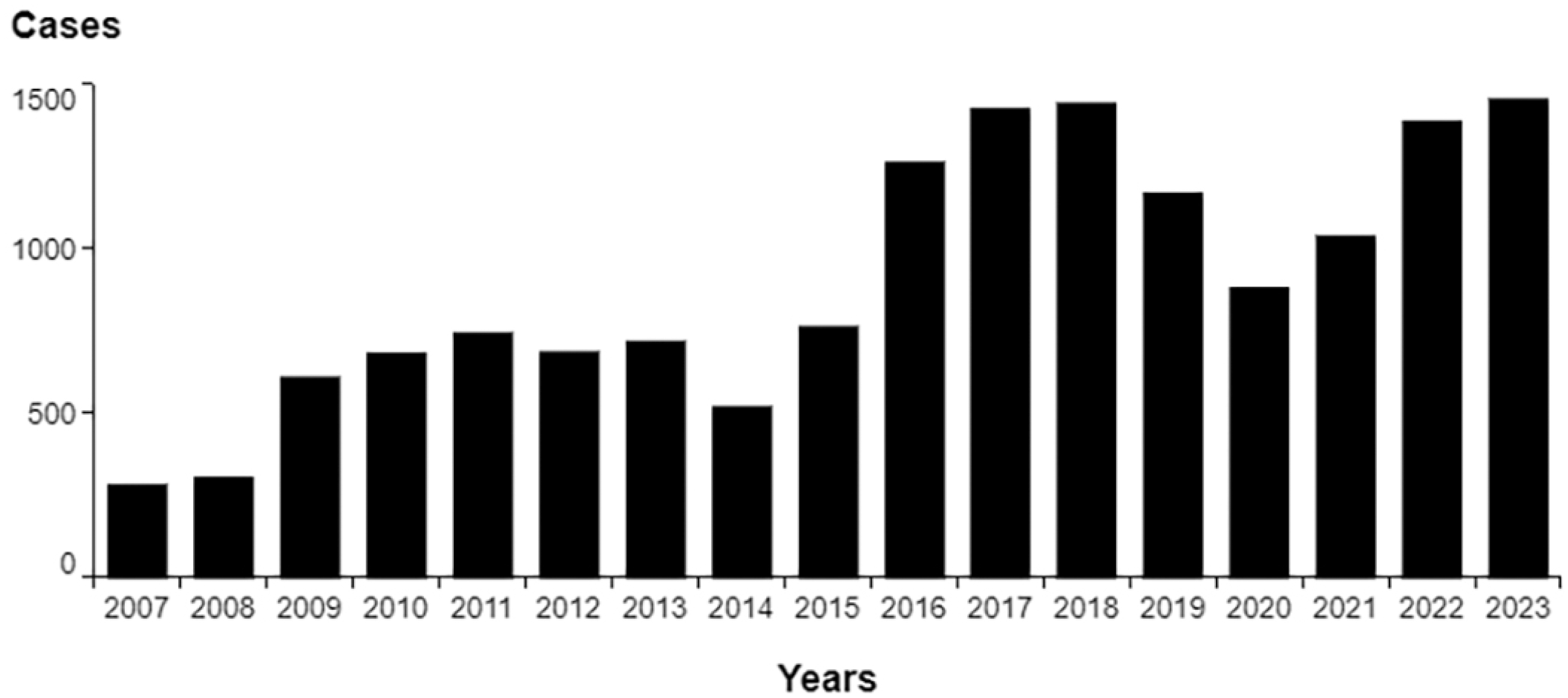
In the Rio de Janeiro State, 15,401 new cases of sporotrichosis were reported for 2007–2023. Our analyses show a positive correlation between sporotrichosis cases and the studied years (R = 0.839; R2 = 0.704; adjusted R2 = 0.384; p-value = 0.001; confidence interval [CI] = 0.007 ∼ 0.015). This indicates that the number of cases increases as the years go by. However, there is a greater increase from 2015 onwards (Figure 1).
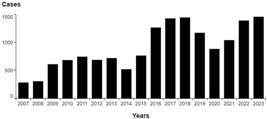
Table 1 shows the distribution of cases in association with age groups and gender. Most cases (64.4%) occurred in women, with a ratio of 1.8:1. The ratio between women and men intensified with increasing age, with the women/man ratio exceeding two from the age of 40.
Socio-demographic characteristics and outcome of patients with sporotrichosis in the Rio de Janeiro State, Brazil, 2007–2023
Most of the infected people were in their productive phase of life, between 20 and 59 years old. The mean age in the women's group (43.81 years) was higher than in the men's group (39.59 years) (p-value 0.001, CI −4.86 ∼ −3.56). This difference between the means did not change over time. Most patients lived in urban areas (98.6%) and there were no differences between genders regarding this issue. White people (36.5%) and those with Mixed ethnicity (30.3%) predominated. There was no information on race in 25% of cases. Table 1 shows that most infections occurred in the cities of residence and were not related to work. Laboratory tests were used in most cases for the confirmatory diagnosis. More than 99% of patients were cured, considering those who had information related to the outcome. When comparing deaths by gender and age, women (eight cases) had twice as many cases of death from sporotrichosis compared to men (four cases). Among the women who died, 62.5% were over 40 years of age, while among the men only 25% were in this age group.
Analyzing gender, we observed that the proportion of women declined mildly over time (R = 0.55; R2 = 0.305; adjusted R2 = 0.259; p-value < 0.001; confidence interval = 0.849–0.932). In the first period (2007–2015), women accounted for 66.8% of cases, and in the second period (2016–2023), they accounted for 62.8%.
Incidence analysis
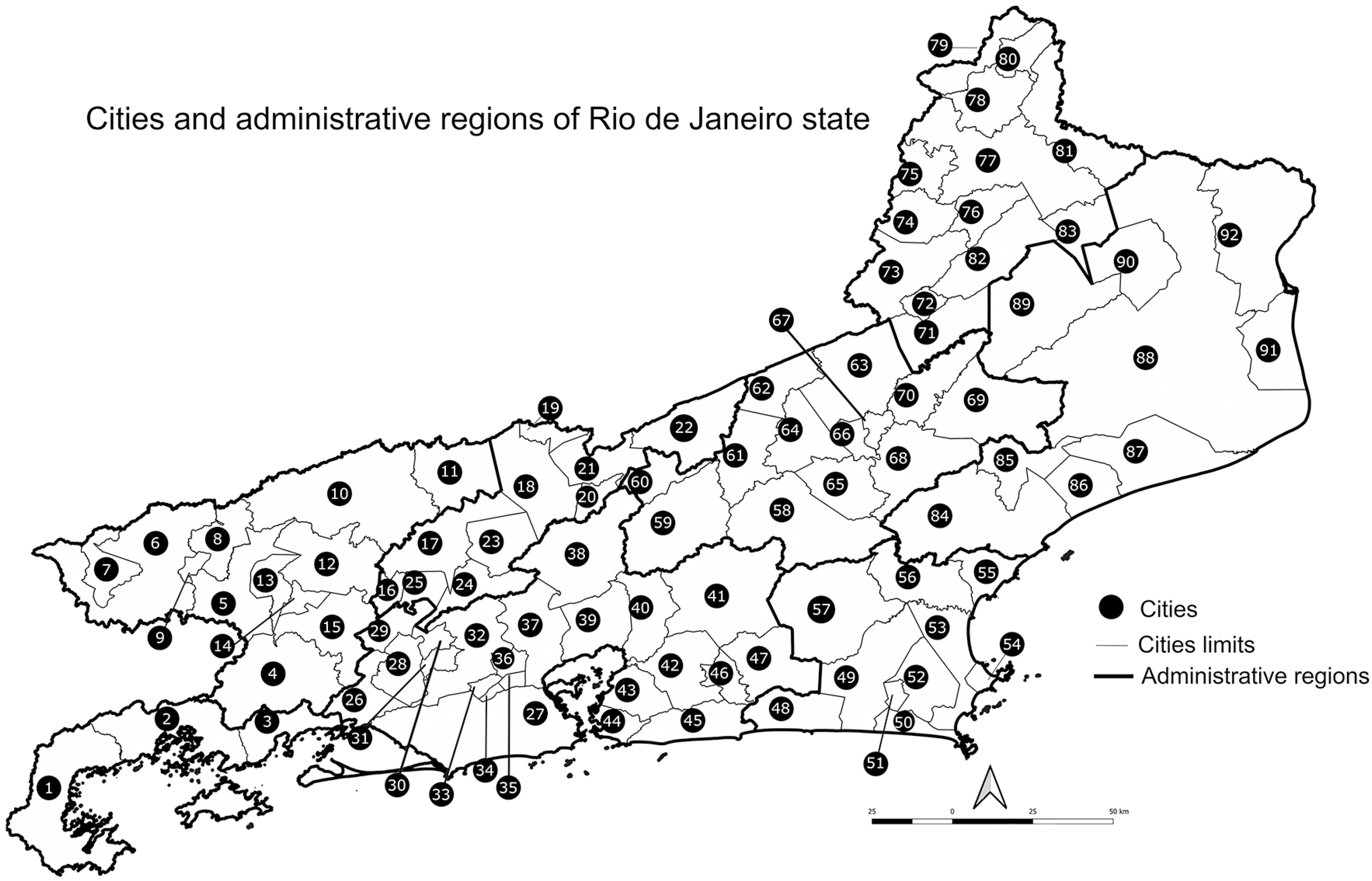
The annual incidence was 5.6 cases per 100,000 inhabitants in the Rio de Janeiro State, from 2007 to 2023. Figure 2 shows the 92 cities in the state. Table 2 shows the cities grouped into their administrative regions, their populations, number of cases, and respective annual incidences of sporotrichosis for the studied period. Of the 92 cities, 82 (89.1%) had cases of sporotrichosis between 2007–2023. Considering the population at risk, which includes only people of the affected municipalities, the incidence reached 5.9/100,000 inhabitants. The Metropolitan region had the highest number of cases (12,955 cases, 84.1%). Of the nine cities with more than 300 cases (2, 27, 32, 35, 36, 37, 39, 43, 45 in Figure 2), eight are in the Metropolitan region. Those nine cities had 11,870 people with sporotrichosis in the studied period, which represented 77.1% of all reported cases. Regarding the administrative regions, the highest incidence rates were found in the Green Coast (11.1) and Metropolitan (6.3) regions, while the lowest incidence rates were found in the North (2.0) and Northwest (1.0) regions.
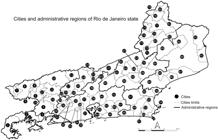
Cities and administrative areas of the Rio de Janeiro State in terms of to their populations, and average incidence rate of sporotrichosis during 2007–2023 according to data from the Information System for Notifiable Diseases (SINAN).
Our cohort can be divided into two periods, according to the magnitude of the endemic disease: the first, which runs from 2007 to 2015, has a lower number of notifications and an annual incidence rate of 3.6 cases per 100,000 inhabitants; and the second, which runs from 2016 to 2023, has a higher number of notifications and an annual incidence rate of 7.4 cases per 100,000 inhabitants (RR 2.05, p-value 0.0001; CI 1.771 ∼ 1.893).
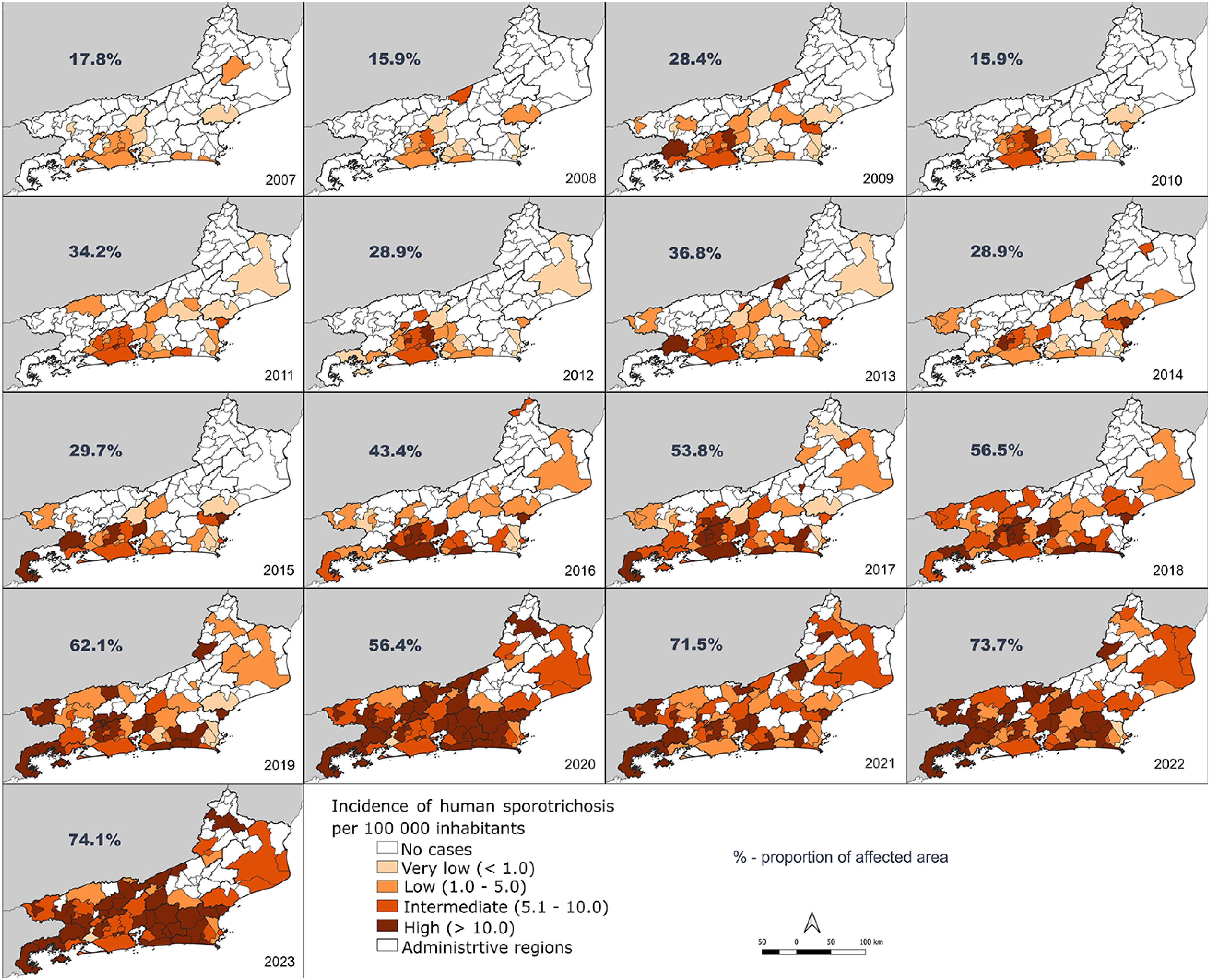
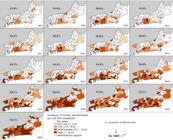
Figure 3 shows the annual incidence rate levels of sporotrichosis per 100,000 inhabitants in the different cities in each year of the period 2007–2023. Incidence rate levels corresponded to very low (< 1.0), low (1.0–5.0), intermediate (5.1–10.0), and high (> 10) incidence. The incidence rate levels have been increasing over time, as has the proportion of affected territories. Most cities have gone from very low to low incidences, from low to intermediate or high incidences. The area with cases, which represented an extension of 7,782.0 km2 (17.8%) of the state's territory in 2007, increased to 18,969.1 km2 (43.4%) in 2016, reaching 32,418.2 km2 (74.1%) of the territory in 2023. The very low incidence (< 1 case/100,000 inhabitants) and low incidence (1–5 cases/100,000 inhabitants), which represented an important portion of the endemic territory in the early years, corresponded to a much smaller portion of the endemic territory in recent years. Since 2020, a worsening of the endemic situation has been observed in the Rio de Janeiro State.
Cluster analysis
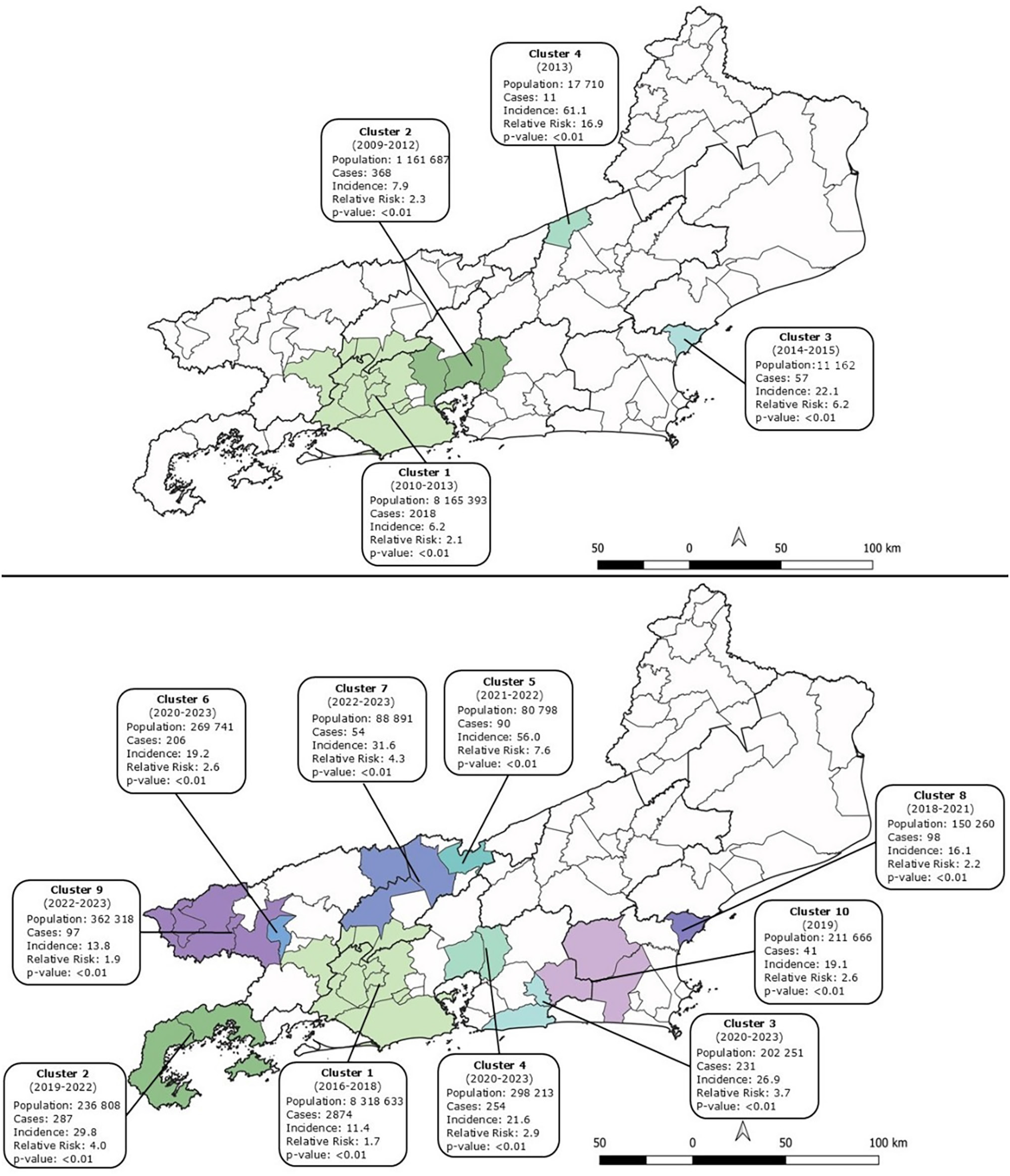
The cluster analysis, considering space, incidence levels, and relative risk in the period, showed statistically significant clusters spread throughout Rio de Janeiro, in the periods of low incidence rate (2007-2015) and high incidence rate (2016-2023). Figure 4 shows these clusters with different heterogeneity indices. We can observe five elements comparing both periods: 1) There was a smaller number of clusters in the first period (four clusters) compared to the second period (ten clusters); 2) There was a greater number of cities incorporated into the clusters in the second period (32 cities), compared to the first period (18 cities); 3) The four clusters configured a smaller area (5,440.98 km2) in the low incidence rate period compared to the high incidence rate period (12,979.27 km2), which was equivalent to 2.38 times the affected territory in the first period. In the period of low incidence, the two main clusters were in the Metropolitan region and in some border cities. In the period of high incidence, the clusters had a greater range, being distributed in the Metropolitan, Green Coast, Paraiba Valley, Center-South, and Coastal Lowlands regions. The regions that did not show clusters in any period were the North and Northwest; 4) The relative risks of the clusters in both periods were heterogeneous, showing different probabilities of occurrence in the affected areas; 5) The clusters in this central area (Metropolitan region) had lower relative risks than the clusters in the more peripheral areas, both in the first period (2007–2015) and in the second period (2016–2023).
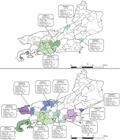
Clusters of human sporotrichosis in the Rio de Janeiro State in the periods: (A) 2007-2015; (B) 2016-2023.
DISCUSSION
Sporotrichosis has gained importance recently due to its prevalence in several countries around the world. The causative fungi have different ways of infection linked to human activities, lifestyles, and environmental and zoonotic interactions that influence their distribution and potential for geographic dispersion. In Brazil and some neighboring countries such as Argentina22 and Paraguay23, an increasing number of cases are mainly associated with zoonotic transmission through scratches or bites by infected cats. Rio de Janeiro has been considered the focus of this zoonotic endemic since the late 1990s, which has spread widely throughout the national territory24. Other Brazilian states were progressively affected in the Southeast25, South26, Northeast27, Central-West28, and North29 regions, where S. brasiliensis became the main agent responsible for transmission by cats.
In this study, we will discuss our results based on the peculiarities of Rio de Janeiro. Sporotrichosis is currently the fastest growing zoonosis in Rio de Janeiro, and if in the first studied years it covered less than 20% of the territory, recently it has affected more than 70% of the state. During the analyzed period, the expansion did not occur in a constant or homogeneous manner, nor did it have the same speed of cases over time, configuring different territorial risks related to epidemiological, cultural, geographic, and zoonotic nuances. This epidemiological dynamic is shown in the spatial analysis in the formation of significant clusters with different risks spread throughout the territory. These relative risks represent probabilities of territorial expansion. The clusters were more widespread in the second period, occupying previously unaffected areas.
One way to confirm this expanding trend was by analyzing the incidence rate levels. We concluded that the incidence of sporotrichosis, in all regions, without exception, increased over time, as it spread throughout the territory. This clear expansion did not show differences over time in age but showed a decline in the proportion of women.
Considering the number of cases and the high incidence level, the Metropolitan region (around the capital Rio de Janeiro city) seems to be the place from which the endemic disease spread to distant municipalities in the Rio de Janeiro State. Interestingly, this expansion occurred in a ‘hand fan-like’ fashion, in all directions. This epicenter presented lower relative risks in the clusters than the more peripheral areas, which shows that the probability of the occurrence of the disease intensifies as it expands. Theoretically, the incorporation of the disease into a new territory depends on the set of epidemiological, ecological, labor, cultural, and environmental characteristics. Thus, it seems that the south of the state (Green Coast and Paraiba Valley regions) has more favorable conditions for the expansion and endemic incorporation of the disease.
Although not all the variables related to this expansion are known, the role of the cat and the etiological agent are fundamental. Studies show that the feline epizootics precede the human endemics24. The movement of infected animals to areas free of the disease could allow the expansion of endemic areas22. However, this is not fully revealed. The behavior of a cat with access to the street enables the transmission between nearby cats, due to mating habits and fights over territorial disputes30. Nonetheless, molecular studies emphasize the existence of differences in susceptibility and potential for pathogenicity and virulence of different species in the Sporothrix genus, with S. brasiliensis being considered a particularly virulent species13,15.
Other findings were important in this study. There was a predominance of women, which did not change according to the geographic area or over time. Although there are no specific publications on sporotrichosis, this difference between genders could be explained by the greater contact with cats, since women are culturally more dedicated to caring for domestic animals. Therefore, there would be a greater probability of transmission to women if the cat became infected31. Since the beginning of the endemic disease due to the zoonotic transmission, in the late 1990s, the disease has occurred more in women who are not in the labor market or who conduct work activities in the domestic environment, predominantly in home care tasks, exposed to infection via contact/care/trauma with infected cats, which constitutes the profile of the most affected group17.
Studies conducted in other countries point to regional differences regarding gender and age, influenced mainly by the professional activities that favor transmission32. This is seen in rural workers in Colombia33 and Japan6, where the disease predominated in men. Women were more affected in Northeast China5. Note that there may be overlapping epidemiological patterns in the same country, due to sociocultural and labor characteristics. The states of Puebla34 and Guerrero7, in Mexico, had an inverted gender distribution: in the first, men predominated, and in the second, women.
In our study, most patients were in the productive phase of life. The age participation in the disease, like the gender variable, is linked to human activities with environmental and zoonotic interactions. In Peru, adults are the most affected in poor areas with a hot and humid climate35, whereas in other parts of the country there is a predominance among children3. There is a higher occurrence in adults in India8; in people over 50 years old in China5 and Japan6; and a balance between adults and children in Mexico7,34, where children in rural work were particularly affected7. Therefore, there seems to be no predisposition related to gender or a specific age group. Thus, in countries where sporotrichosis of sapronotic origin predominates, this diversity is influenced by the opportunity for exposure to the fungus via professional or recreational activities36. The disease was reported in Rio de Janeiro as being directly related to work in only 2% of cases, which is supported by the literature17.
Our data show that there was a predominance of White people, immediately followed by Black people and those with Mixed ethnicity (when aggregated). However, these data are not accurate, because they obey cultural factors of the understanding of the racial element. Nevertheless, there is much missing data regarding this variable. The literature points to similar results, with a predominance of White people17. This was observed at the time before the mandatory notification of cases and seems to have remained as a characteristic of the most affected group over time.
A very relevant result is the finding of 98.6% of the reported cases in individuals residing in urban areas. This profile of zoonotic sporotrichosis as a disease fundamentally of urban characteristics is corroborated by several studies conducted since the beginning of the endemic in the Rio de Janeiro State17,32,37, and clearly contrasts with the sapronotic cases in other areas of the world, fundamentally from rural areas3,5,6,7,8,33. A small percentage of cases in rural areas of Rio de Janeiro seems to be compatible with sporadic cases of sapronotic transmission that continue to occur amid zoonotic transmission. This hypothesis cannot be proven based on the notifications made to SINAN, due to the lack of information on the source of infection. However, during a short period (2019) in which the notification to SINAN in the Rio de Janeiro State was accompanied by the notification on a form that contained more detailed information about the mode of acquisition of the infection, contact with or handling of soil/garden was indicated as the exclusive source of infection in 11.7% of the cases confirmed by laboratory tests or clinical-epidemiological criteria38. It should be considered that infected cats, due to the abundance of fungi in their lesions, may also contaminate the soil and plants, therefore rendering them sources of infection20,22.
A total of 12 deaths attributed to sporotrichosis were detected over the 17 years of our study, but there is no description in the SINAN form regarding the cutaneous or disseminated form of sporotrichosis, nor information regarding comorbidities, such as immunosuppressive diseases, in these individuals. Literature has shown that deaths from sporotrichosis are often related to this class of diseases, particularly HIV infection39,40. Other factors, such as malnutrition, alcoholism, and unspecified immunodeficiencies, are also related to deaths from sporotrichosis39. Therefore, sporotrichosis should receive greater attention in these populations.
An important limitation of the study is the underreporting of cases, which hinders the epidemiological surveillance of sporotrichosis26 and has already been reported previously in a municipality in the Rio de Janeiro State37. Nevertheless, variables such as race/skin color, education, occupational exposure, and place where the infection occurred almost always showed relevant amounts of missing or inconsistent data in SINAN. Professionals should be made aware of the importance of these variables, which are fundamental to establishing effective control actions in vulnerable populations. Assessing the impact of poor reporting for some variables should be considered when adjusting the reporting system. We hope that the recent decision by the Brazilian Ministry of Health to make it a disease of mandatory notification in the national territory can improve the quality of notification, perhaps with the creation of a specific form for sporotrichosis in SINAN, facilitating the surveillance of the disease.
Understanding the dynamics of the disease and the epidemiological and ecological components of the endemic disease are essential for developing effective control programs. Human and feline sporotrichosis are treatable diseases. Rapid and accurate diagnosis is essential for the institution of antifungal treatment, which, in the case of cats, can interrupt the chain of transmission to humans and other animals. We must prevent the emergence of cases based on the diagnosis of infected human and cat cases, and on environmental studies. Ecological studies on reservoirs of Sporothrix spp. in the environment are necessary. Descriptive epidemiological analyses, complemented by spatial analyses, are important tools to support control measures to limit the expanding frontiers and emergence and re-emergence of sporotrichosis.
CONCLUSIONS
The sporotrichosis endemics in the Rio de Janeiro State is dynamic and heterogeneous. Although it is expanding, there are temporal and spatial variations, configuring different risks. Urbanization processes, combined with cultural and zoonotic characteristics, favor the expansion of sporotrichosis. Contextualized research on affected territories is important to guide surveillance and control measures. Spatial analyses are essential for their potential to identify geographic patterns in the distribution of the disease, as they facilitate understanding of environmental, demographic, and social factors related to the worsening and spread of endemic diseases such as sporotrichosis.
DATA AVAILABILITY
The complete anonymized dataset supporting the findings of this study is included within the article itself.
ACKNOWLEDGMENTS
We thank the Health Department of the Rio de Janeiro State for the supplied data from SINAN, Fundacao Oswaldo Cruz for the support in the funding for publication, and CAPES for the grant to the development of the study.
REFERENCES
- 1 Barros MB, Paes RA, Schubach AO. Sporothrix schenckii and sporotrichosis. Clin Microbiol Rev. 2011;24:633-54.
- 2 Coles FB, Schuchat A, Hibbs JR, Kondracki SF, Salkin IF, Dixon DM, et al. A multistate outbreak of sporotrichosis associated with sphagnum moss. Am J Epidemiol. 1992;136:475-87.
- 3 Pappas PG, Tellez I, Deep AE, Nolasco D, Holgado W, Bustamante B. Sporotrichosis in Peru: description of an area of hyperendemicity. Clin Infect Dis. 2000;30:65-70.
- 4 Carrada Bravo T. New observations on the epidemiology of sporotrichosis and Sporothrix schenckii complex. 1. Sources of infection and occupational risks. Rev Latinoamer Patol Clin. 2012;59:88-100.
- 5 Song Y, Li SS, Zhong SX, Liu YY, Yao L, Huo SS. Report of 457 sporotrichosis cases from Jilin province, northeast China, a serious endemic region. J Eur Acad Dermatol Venereol. 2013;27:313-8.
- 6 Takenaka M, Yoshizaki A, Utani A, Nishimoto K. A survey of 165 sporotrichosis cases examined in Nagasaki prefecture from 1951 to 2012. Mycoses. 2014;57:294-8.
- 7 Estrada-Castanon R, Chavez-Lopez G, Estrada-Chavez G, Bonifaz A. Report of 73 cases of cutaneous sporotrichosis in Mexico. An Bras Dermatol. 2018;93:907-9.
- 8 Sharma R, Mahajan VK, Chauhan PS, Mehta KS, Sharma A, Sharma J. The clinico-epidemiological characteristics and therapeutic experience of 152 patients with cutaneous sporotrichosis: a 10-year retrospective study from India. Int J Dermatol. 2021;60:99-106.
- 9 Lutz A, Splendore A. Sobre uma mycose observada em homens e ratos: contribuição para o conhecimento das assim chamadas esporotricoses. Rev Med Sao Paulo. 1907;21:433-50.
- 10 Freitas DC, Moreno G, Saliba AM, Bottino JA, Mós EN. Esporotricose em cães e gatos. Rev Fac Med Vet. 1965;7:381-8.
- 11 Dunstan RW, Langham RF, Reimann KA, Wakenell PS. Feline sporotrichosis: a report of five cases with transmission to humans. J Am Acad Dermatol. 1986;15:37-45.
- 12 Rodrigues AM, de Hoog GS, Camargo ZP. Molecular diagnosis of pathogenic Sporothrix species. PLoS Negl Trop Dis. 2015;9:e0004190.
- 13 Lopes-Bezerra LM, Mora-Montes HM, Zhang Y, Nino-Veja G, Rodrigues AM, de Camargo ZP, et al. Sporotrichosis between 1898 and 2017: the evolution of knowledge on a changeable disease and on emerging etiological agents. Med Mycol. 2018;56 Suppl 1:126-43.
- 14 Ribeiro-Marques MD, Maschio-Lima T, Lemes TH, Siqueira JP, Brizzotti-Mazuchi NS, Caetano MH, et al. Sporothrix pathogenic clade: molecular analysis of animal and human clinical isolates. Med Mycol. 2022;61:myac096.
- 15 Almeida-Paes R, Oliveira LC, Oliveira MM, Gutierrez-Galhardo MC, Nosanchuk JD, Zancopé-Oliveira RM. Phenotypic characteristics associated with virulence of clinical isolates from the Sporothrix complex. Biomed Res Int. 2015:2015:212308.
- 16 Schubach TM, Valle AC, Gutierrez-Galhardo MC, Monteiro PC, Reis RS, Zancopé-Oliveira RM, et al. Isolation of Sporotrix schenckii from the nails of domestic cats (Felis catus). Med Mycol. 2001;39:147-9.
- 17 Silva MB, Costa MM, Torres CC, Galhardo MC, Valle AC, Magalhaes MA, et al. Esporotricose urbana; epidemia negligenciada no Rio de Janeiro, Brasil. Cad Saude Publica. 2012;28:1867-80.
- 18 Oliveira MM, Almeida-Paes R, Muniz MM, Gutierrez-Galhardo MC, Zancopé-Oliveira RM. Phenotypic and molecular identification of Sporothrix isolates from an epidemic area of sporotrichosis in Brazil. Mycopathologia. 2011;172:257-67.
- 19 Rodrigues AM, Teixeira MM, de Hoog GS, Schubach TM, Pereira SA, Fernandes GF, et al. Phylogenetic analysis reveals a high prevalence of Sporothrix brasiliensis in feline sporotrichosis outbreaks. PLoS Negl Trop Dis. 2013;7:e2281.
- 20 Rabello VB, Almeida-Silva F, Scramignon-Costa BS, Motta BS, Macedo PM, Teixeira MM, et al. Environmental isolation of Sporothrix brasiliensis in an area with recurrent feline sporotrichosis cases. Front Cell Infect Microbiol. 2022;12:894297.
-
21 Rio de Janeiro. Secretaria de Estado de Saúde. Resolução SES Nº 674 de 12/07/2013. Redefine a relação de doenças e agravos de notificação compulsória no âmbito do Estado do Rio de Janeiro. Diário Oficial do Estado do Rio de Janeiro, Rio de Janeiro, 16 jul. 2013. [cited 2025 Sep 29]. Available from: https://www.legisweb.com.br/legislacao/?id=256527
» https://www.legisweb.com.br/legislacao/?id=256527 - 22 Etchecopaz AN, Toscanini MA, Gisbert A, Mas J, Scarpa M, Iovannitti CA, et al. Sporothrix brasiliensis: a review of an emerging South American fungal pathogen, its related disease, presentation and spread in Argentina. J Fungi (Basel). 2021;7:170.
- 23 García Duarte JM, Wattiez Acosta VR, Fornerón Viera PM, Aldama Caballero A, Gorostiaga Matiauda GA, Rivelli de Oddone VB, et al. Esporotricosis transmitida por gato domestico: reporte de un caso familiar. Rev Nac (Itaugua). 2017;9:67-76.
- 24 Rodrigues AM, Gonçalves SS, Carvalho JA, Borba-Santos LP, Rozental S, Camargo ZP. Current progress on epidemiology, diagnosis, and treatment of sporotrichosis and their future trends. J Fungi (Basel). 2022;8:776.
- 25 Bittencourt AA, Oyafuso LK, Cavalin RF, Palhares RB, Benard G, Gimenes VM, et al. A neglected disease: human sporotrichosis in a densely populated urban area in São Paulo, Brazil: clinical–epidemiological and therapeutic aspects. Braz J Microbiol. 2022;53:739-48.
- 26 Munhoz LS, Poester VR, Severo CB, Trapaga MR, Madrid IM, Benelli JL, et al. Update of the epidemiology of the sporotrichosis epidemic in the state of Rio Grande do Sul, Brazil. Mycoses. 2022;65:1112-8.
- 27 Araujo AK, Gondim AL, Araujo EA. Esporotricose felina e humana: relato de um caso zoonótico. Rev Bras Hig Sanid Animal. 2020;14:237-47.
- 28 Mantovani C, Ferreira CG, Godoy KC, Marques AV, Pinto IB, Araújo CP. Transmissão de esporotricose no estado de Mato Grosso do Sul, Brasil: adotando uma estratégia de Saúde Única. Rev Saude Publica Mato Grosso Sul. 2024;7:23-30.
- 29 Mesquita VA, Talhari S, Leturiondo AL, Souza GC, Brito EM, Andrade SL, et al. Zoonotic sporotrichosis outbreak: emerging public health threat in the Amazon State, Brazil. PLoS Negl Trop Dis. 2024;18:e0012328.
- 30 Montenegro H, Rodrigues AM, Dias MA, Silva EA, Bernardi F, Camargo ZP. Feline sporotrichosis due to Sporothrix brasiliensis: an emerging animal infection in São Paulo, Brazil. BMC Vet Res. 2014;10:269.
- 31 Falcão EM, Romão AR, Magalhães MA, Lima Filho JB, Valle AC, Bastos FI, et al. A spatial analysis of the spread of hyperendemic sporotrichosis in the State of Rio de Janeiro, Brazil. J Fungi (Basel). 2022;8:434.
- 32 Chakrabarti A, Bonifaz A, Gutierrez-Galhardo MC, Mochizuki T, Li S. Global epidemiology of sporotrichosis. Med Mycol. 2015;53:3-14.
- 33 Barros MB, Schubach AO, Schubach TM, Wanke B, Lambert-Passos SR. An epidemic of sporotrichosis in Rio de Janeiro, Brazil: epidemiological aspects of a series of cases. Epidemiol Infect. 2007;136:1192-6.
- 34 Rubio G, Sanchez G, Porras L, Alvarado Z. Esporotricoses: prevalência, perfil clinico y epidemiológico em um centro de referencia em Colombia. Rev Iberoam Micol. 2010;27:75-9.
- 35 Macotela-Ruiz E, Nochebuena-Ramos E. Esporotricosis en algunas comunidades rurales de la Sierra Norte de Puebla: informe de 55 casos (Septiembre 1995 - Diciembre 2005). Gac Med Mex. 2006;142:377-80.
- 36 Oyarce JA, García C, Alave J, Bustamante B. Caracterización epidemiológica, clínica y de laboratório de esporotricosis en pacientes de un hospital de tercer nivel em Lima-Perú, entre los años 1991 y 2014. Rev Chilena Infectol. 2016;33:315-21.
- 37 Alzuguir CL, Pereira AS, Magalhaes MA, Almeida-Paes R, Freitas DF, Oliveira LF, et al. Geo-epidemiology and socioeconomic aspects of human sporotrichosis in the municipality of Duque de Caxias, Rio de Janeiro, Brazil, between 2007 and 2016. Trans R Soc Trop Med Hyg. 2020;114:99-106.
-
38 Rio de Janeiro. Secretaria de Estado de Saúde. Cenário epidemiológico: esporotricose no estado RJ: ano de 2019. [cited 2025 Sep 29]. Available from: http://www.riocomsaude.rj.gov.br/Publico/MostrarArquivo.aspx?C=qEn%2BgM7lw8A%3D#:~:text=No%20ano%20de%202019%20(at%C3%A9,atrav%C3%A9s%20do%20crit%C3%A9rio%20cl%C3%ADnico%20epidemiol%C3%B3gico
» http://www.riocomsaude.rj.gov.br/Publico/MostrarArquivo.aspx?C=qEn%2BgM7lw8A%3D#:~:text=No%20ano%20de%202019%20(at%C3%A9,atrav%C3%A9s%20do%20crit%C3%A9rio%20cl%C3%ADnico%20epidemiol%C3%B3gico - 39 Falcão EM, Lima Filho JB, Campos DP, Valle AC, Bastos FI, Gutierrez-Galhardo MC, et al. Hospitalizações e óbitos relacionados à esporotricose no Brasil (1992-2015). Cad Saude Publica. 2019;35:e00109218.
- 40 Freitas DF, Valle AC, Silva MB, Campos DP, Lyra MR, Souza RV, et al. Sporotrichosis: an emerging neglected opportunistic infection in HIV-infected patients in Rio de Janeiro, Brazil. PLoS Negl Trop Dis. 2014;8:e3110.
Edited by
-
Editor:
Thelma Suely Okay https://orcid.org/0000-0001-9316-7288