 Phosphorescent compounds in civil construction materials: functional applications
Abstract
Abstract This paper presents the development of a luminescent waterproofing membrane using strontium aluminate doped with europium and dysprosium (SrAl2O4:Eu2+,Dy3+), aimed at sustainable applications in signaling and energy efficiency in civil construction. Samples containing 20%, 30%, and 40% of phosphorescent powder were prepared and analyzed for workability, light emission, and physicochemical properties. The 40% sample showed the highest quantum yield (63%) and residual emission lasting up to 810 s, evidencing the role of Dy3+ ions in forming electronic traps and prolonging the emission. The increase in phosphorescent content compromised workability, requiring formulation adjustments. The results indicate the potential of the material for use in low-light environments, such as escape routes and safety signage.
Keywords:
phosphorescence; photoluminescence; strontium aluminate; civil construction; waterproofing membrane
Resumo
Resumo Este artigo apresenta o desenvolvimento de uma manta impermeabilizante luminescente com aluminato de estrôncio dopado com európio e disprósio (SrAl2O4:Eu2+,Dy3+), visando aplicações sustentáveis em sinalização e eficiência energética na construção civil. Foram preparadas amostras com 20%, 30% e 40% de pó fosforescente, analisadas quanto à trabalhabilidade, emissão de luz e propriedades físico-químicas. A amostra com 40% apresentou maior rendimento quântico (63%) e emissão residual de até 810 segundos, evidenciando a atuação dos íons Dy3+ na formação de armadilhas eletrônicas, prolongando a emissão. O aumento do teor de pó comprometeu a trabalhabilidade, exigindo ajustes na formulação. Os resultados indicam o potencial do material para uso em ambientes com baixa luminosidade, como rotas de fuga e sinalizações de segurança.
Palavras-chave:
fosforescência; fotoluminescência; aluminato de estrôncio; construção civil; manta impermeabilizante
1 INTRODUCTION
Considering the growing global energy demand driven by economic expansion and population growth, the pursuit of clean and sustainable energy sources capable of balancing production and consumption has become imperative [1]. Within this context, smart materials that enable passive lighting in built environments are gaining increasing attention in the construction sector.
Luminescence refers to the emission of light by certain materials without the involvement of heat, and it is typically classified into two primary types: fluorescence and phosphorescence. These processes are mainly distinguished by the duration of light emission following excitation. In photoluminescent phenomena, excitation occurs through the absorption of photons, promoting electrons to higher energy states; light is then emitted as the electrons return to lower energy levels.
Fluorescence is a rapid emission process in which the release of light ceases almost instantaneously—typically within nanoseconds—once the excitation source is removed, with no change in the electron’s spin state. Conversely, phosphorescence is characterized by a delayed emission, often persisting from several minutes to hours after excitation. This prolonged afterglow is attributed to spin-forbidden transitions, where electrons remain in metastable triplet states before gradually returning to the ground state [2].
Phosphorescent materials have the capacity to absorb energy from an external source, temporarily store it, and later release it as visible light. Due to this capability, they have been extensively employed to improve safety and visibility in dark or low-light environments, particularly in applications such as emergency signage, evacuation path marking, and passive signaling systems [3], [4].
Aiming to combine energy efficiency and environmental sustainability, the present study investigates the feasibility of incorporating phosphorescent compounds into civil construction materials, with a particular focus on the development of a functional waterproofing membrane. A preliminary literature review was conducted to identify the most widely used luminescent materials, their respective decay times, and previously explored application methods, thereby informing the selection of both the phosphorescent compound and the integration technique adopted in this work.
The experimental methodology consists of incorporating phosphorescent compounds into a waterproofing membrane in order to evaluate its photoluminescent emission performance and to assess potential changes in its physical and mechanical properties. Strontium aluminate doped with europium and dysprosium (SrAl2O4:Eu2+,Dy3+) was selected as the luminescent agent, owing to the synergistic effects of its dopants: europium (Eu2+) serves as the primary emissive center, while dysprosium (Dy3+) acts as a charge-trapping agent that prolongs afterglow duration [5], [6].
2 MATERIALS AND EXPERIMENTAL PROGRAM
In this study, the reagent employed was strontium aluminate doped with europium (Eu3+) and dysprosium (Dy3+), with the chemical formula SrAl2O4:Eu2+,Dy3+. It was acquired in ready-to-use form from a commercial supplier, requiring no further synthesis or purification. Solvents such as toluene and ethanol were obtained from SERVILAB® and used as received, without additional treatment. A commercially available super-flexible waterproofing membrane, supplied by BRASILFIX, was also used without modification.
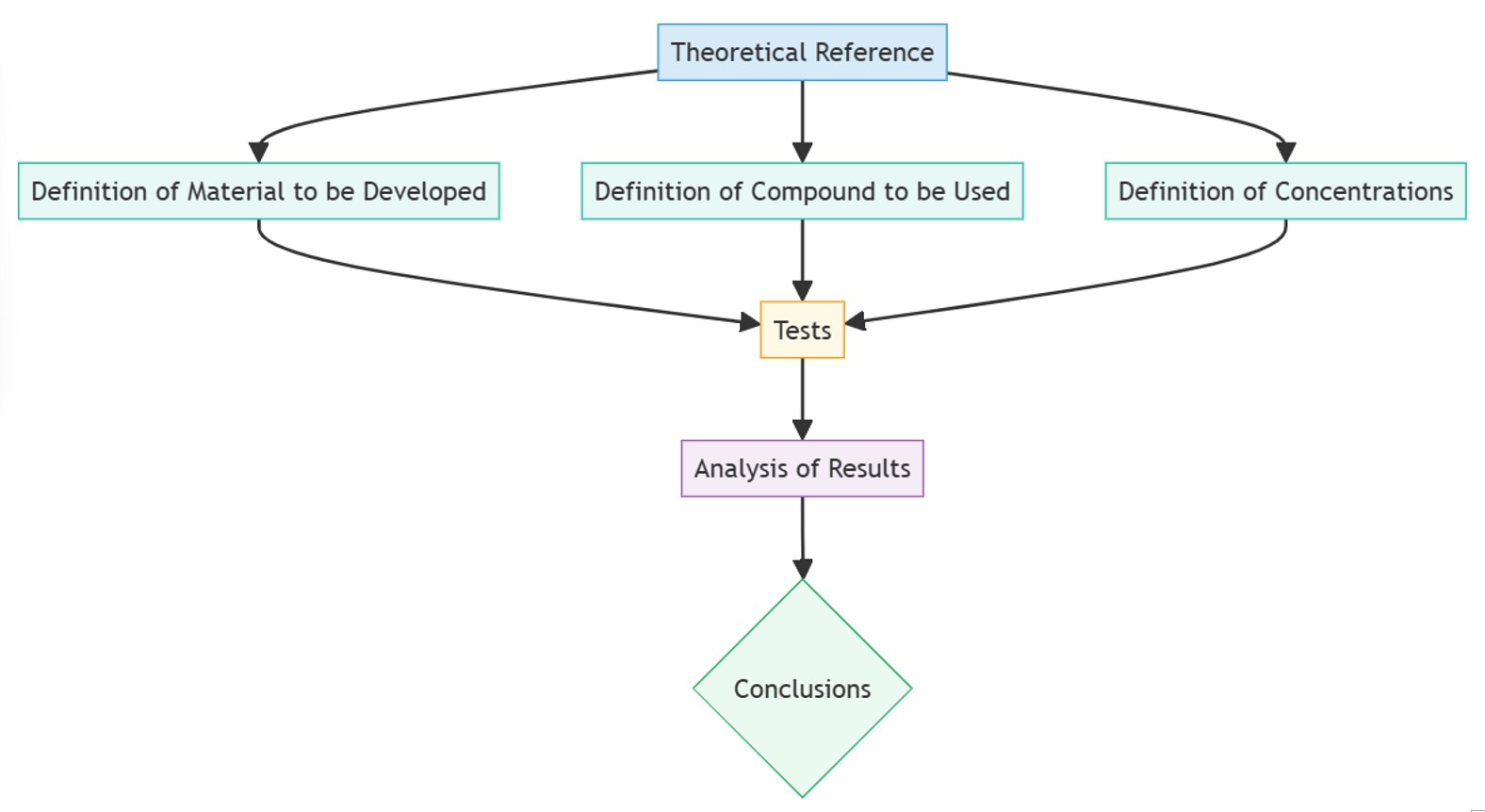
Figure 1 presents a flowchart summarizing the main stages of the study. The process began with a literature review based on prior research, including scientific articles, technical texts, and books, which served as the foundation for the following steps: selection of materials, solvents, and reagents; definition of compound proportions; experimental procedures; and analysis of results.
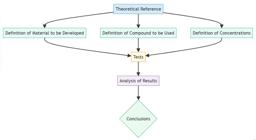
The selection of strontium aluminate doped with europium and dysprosium (SrAl2O4:Eu2+, Dy3+) as the phosphorescent compound in this study was based on several factors that make it highly suitable for civil construction applications.
Although other luminescent materials—such as zinc sulfide (ZnS:Cu) and rare-earth-based compounds—also exhibit satisfactory efficiency, strontium aluminate stands out for its prolonged afterglow, high emission intensity, and superior thermal and chemical stability. In particular, SrAl2O4:Eu2+,Dy3+ emits intense green light (~513 nm), a wavelength to which the human eye is especially sensitive in low-light conditions. These characteristics are especially beneficial for safety signage and applications in dimly lit environments [7]–[9].
Another decisive factor is the compound’s low toxicity and enhanced durability, which make it more appropriate for integration into construction materials exposed to environmental weathering and demanding extended service life [10]. The presence of Dy3+ ions as co-dopants enables the formation of deep electron traps, promoting sustained luminescence even after the excitation source is removed. In addition to these functional advantages, the compound’s commercial availability and relatively low cost support its use as the luminescent base material in this study [11], [12].
The substrate employed was a single-component acrylic emulsion waterproofing membrane. This membrane is cold-applied, super-flexible, fast-drying, and ready-to-use. It provides high surface coverage, forming a continuous and impermeable protective layer with excellent finishing properties. It also exhibits strong resistance to fungi, bacteria, and positive hydrostatic pressure.
This product can be applied to concrete or precast slabs, pitched roofs, eaves, and various types of roofing materials such as fiber cement, clay, zinc, and eco-friendly tiles, as well as gutters and channels of different substrates. It is intended for non-trafficable roof surfaces.
Samples of the waterproofing compound were prepared for subsequent luminescence testing and physicochemical characterization.
3 RESULTS AND DISCUSSIONS
3.1 Optimization of the Phosphorescent Powder and Waterproofing Membrane
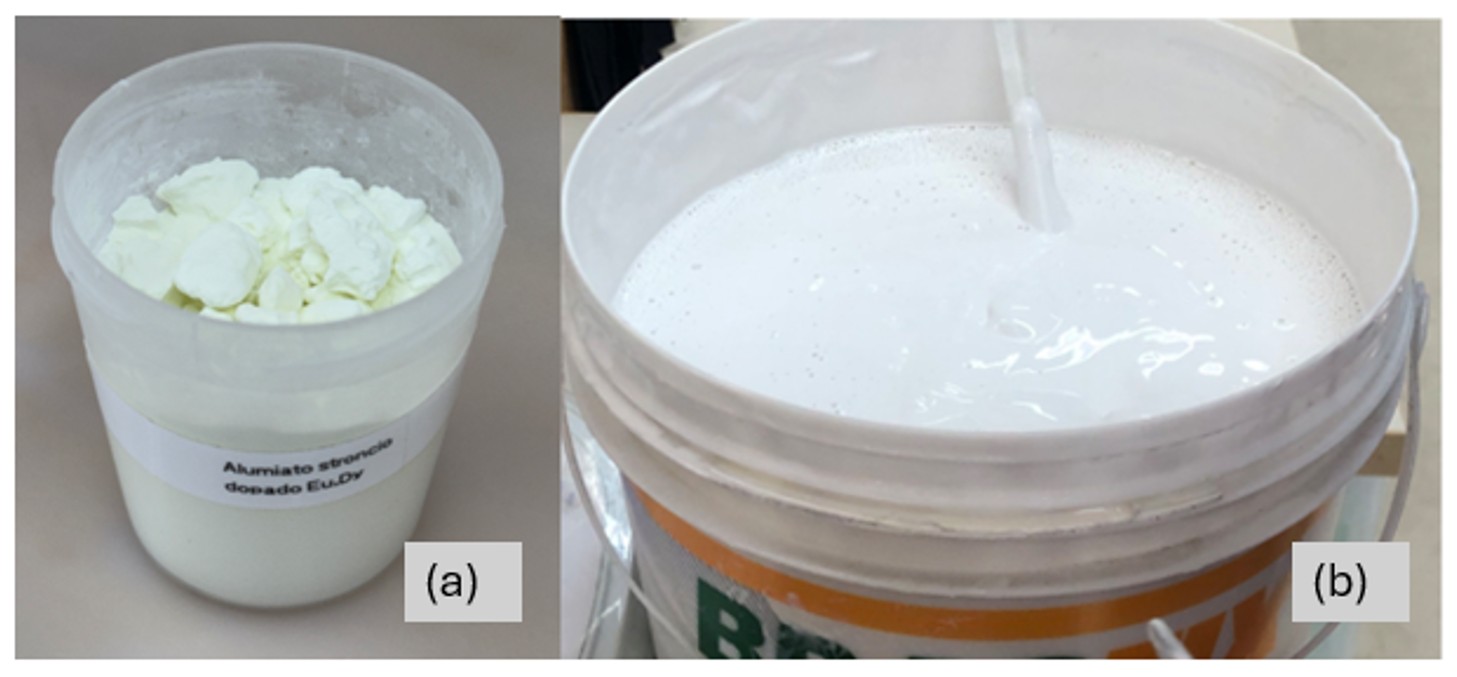
Initially, a phosphorescent powder was selected based on its spectral and stability characteristics. Subsequently, an optimization stage was conducted to determine the most effective proportions of phosphorescent powder, waterproofing membrane, and water as a solvent (Figure 2). A series of formulations was prepared and tested to evaluate parameters such as dispersion homogeneity and photoluminescent performance. The investigation focused on establishing a formulation that maximized luminous efficiency while ensuring uniform distribution and material stability [13]–[21].
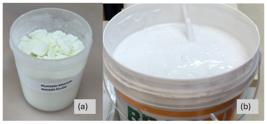
a) Phosphorescent compound – Strontium aluminate doped with Eu and Dy, b) Waterproofing membrane
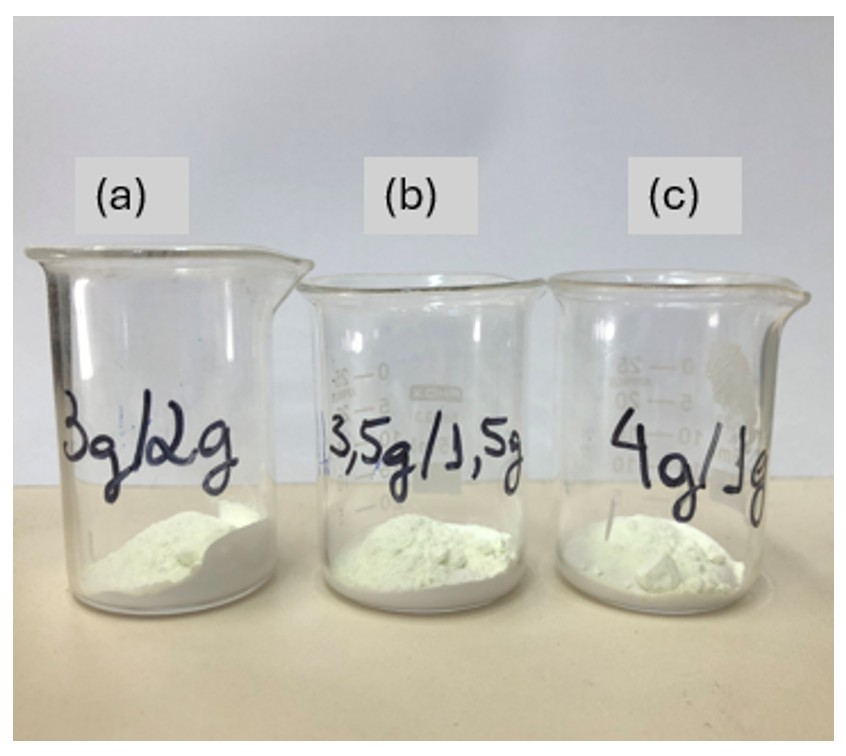
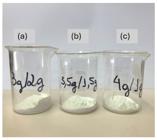
Preliminary experiments were conducted using the proportions specified in Table 1, assessing phosphorescent compound concentrations of 20%, 30%, and 40%.
Sample formulations: (a) 20% phosphorescent powder, (b) 30% phosphorescent powder, and (c) 40% phosphorescent powder.
Figure 3 illustrates the weighing procedure of the phosphorescent compound, highlighting the precise amount of luminescent material incorporated into the membrane matrix. The membrane exhibited limited workability during mixing, due to the hygroscopic nature of the phosphorescent compound, which accelerated water uptake and induced premature hardening. To address this limitation and ensure consistent rheological behavior, an additional 2.0 mL of deionized water was added to each formulation.
3.2 Visual Results of the Samples
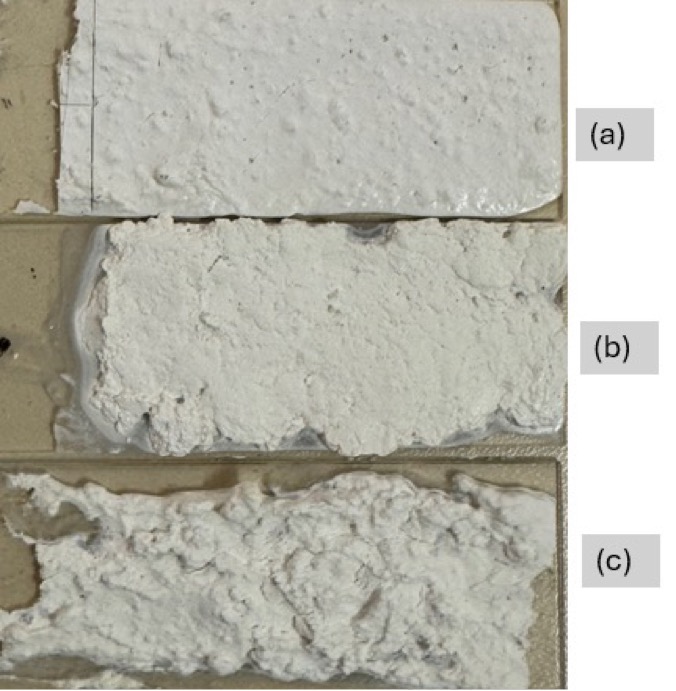
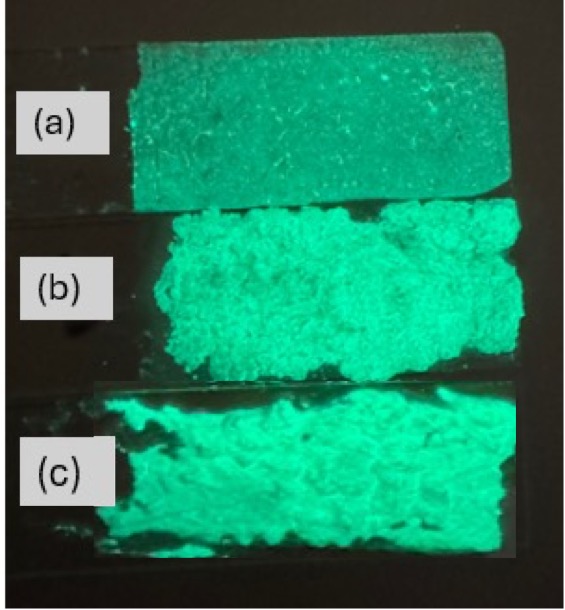
The visual characteristics of samples (a), (b), and (c) are shown in Figure 4. Sample (a) exhibited superior film formation, with enhanced workability and a uniform dispersion of the phosphorescent compound. Sample (b) also demonstrated satisfactory film formation and adequate dispersion. However, sample (c) presented reduced workability in obtaining homogeneous film, suggesting that a higher water content may be necessary to improve handling and application consistency.

Sample with 20% phosphorescent (a), sample with 30% phosphorescent (b), and sample with 40% phosphorescent (c)
Fluorescence emission under excitation light revealed that all samples (a), (b), and (c) emitted in the green spectral region (Figure 5). Sample (a), formulated with the lowest concentration of luminescent powder, exhibited noticeably lower emission intensity compared to the others. Samples (b) and (c) displayed similar photoluminescent responses; however, sample (c) presented a slightly higher emission intensity, particularly evident to the naked eye.
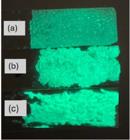
Sample with 20% phosphorescent (a), sample with 30% phosphorescent (b), and sample with 40% phosphorescent (c) with light emission
3.3 Spectrophotometry
Spectrophotometric analyses were performed using a HORIBA fluorescence spectrophotometer to determine the emission wavelengths (λ) and intensities of the samples. In addition to samples (a), (b), and (c), a control sample containing only the waterproofing membrane—without the phosphorescent compound—was prepared for comparison.
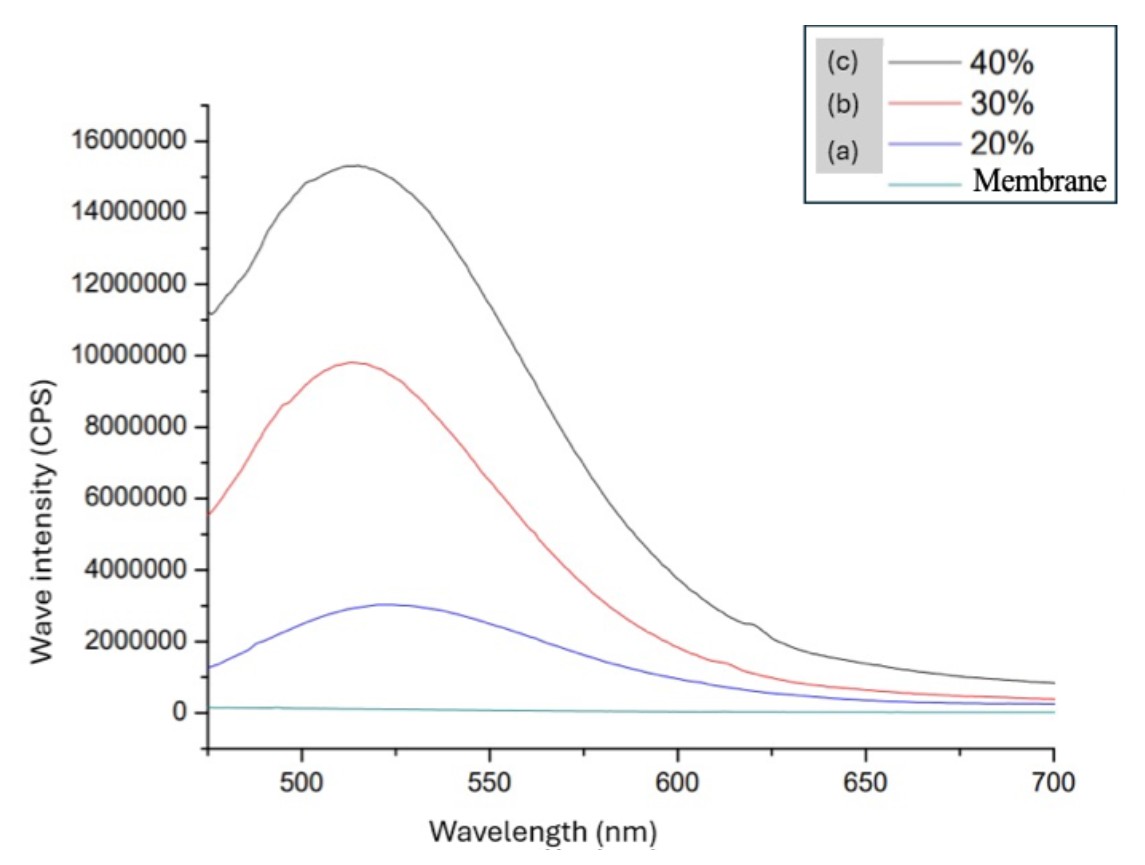
The obtained results, summarized in Figure 6, confirm the absence of fluorescence emission in the control sample, as anticipated. In contrast, samples (a), (b), and (c), which incorporated the phosphorescent compound, exhibited a pronounced emission peak at 514 nm in the solid state, consistent with green-light emission, as illustrated in Figure 7. Furthermore, the data reveal that increasing the concentration of the phosphorescent powder correlates with enhanced emission intensity and improved fluorescence quantum yield (ϕ_FL), which was determined to be 22% for sample (a), 56% for sample (b), and 63% for sample (c).
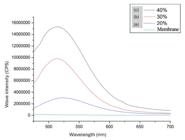
Emission wavelength range of the membrane mixed with 20% phosphorescent compound (a), 30% phosphorescent compound (b), and 40% phosphorescent compound (c).

3.4 Analysis of Luminescence and Afterglow Intensity
Afterglow intensity represents a critical parameter for evaluating the visibility of luminescent materials, as the emitted light must reach a perceptible threshold for detection by the naked eye. Moreover, prolonged luminescence duration enhances the suitability of these materials for applications requiring sustained emission without continuous excitation, such as safety signage and emergency indicators. Characterization of emission decay time is therefore fundamental to elucidating the photophysical behavior of such materials. This parameter quantifies the duration over which light emission persists following the cessation of excitation, offering valuable insight into both phosphorescence efficiency and long-term emission stability [22].
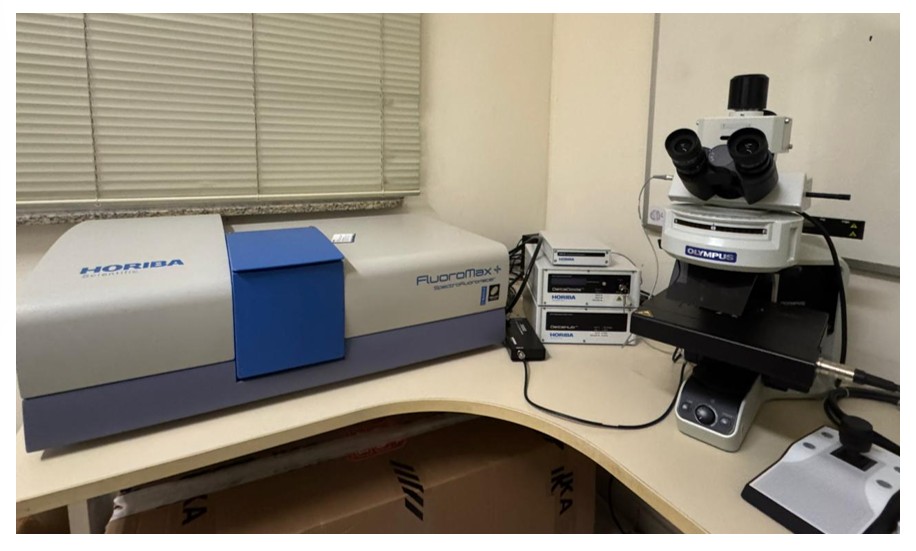
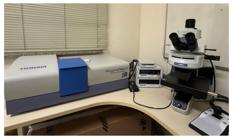
In this study, luminescence lifetime measurements were conducted using a Horiba FluoroMax+ spectrofluorometer (Figure 8), a high-sensitivity instrument capable of detecting time-resolved emissions with spectral accuracy suitable for rare-earth-doped systems. The experimental protocol involved excitation of the samples at a defined wavelength, followed by time-resolved monitoring of the emission intensity. The resulting data were employed to model the decay profile and extract key parameters, including the decay time constant and emission half-life.
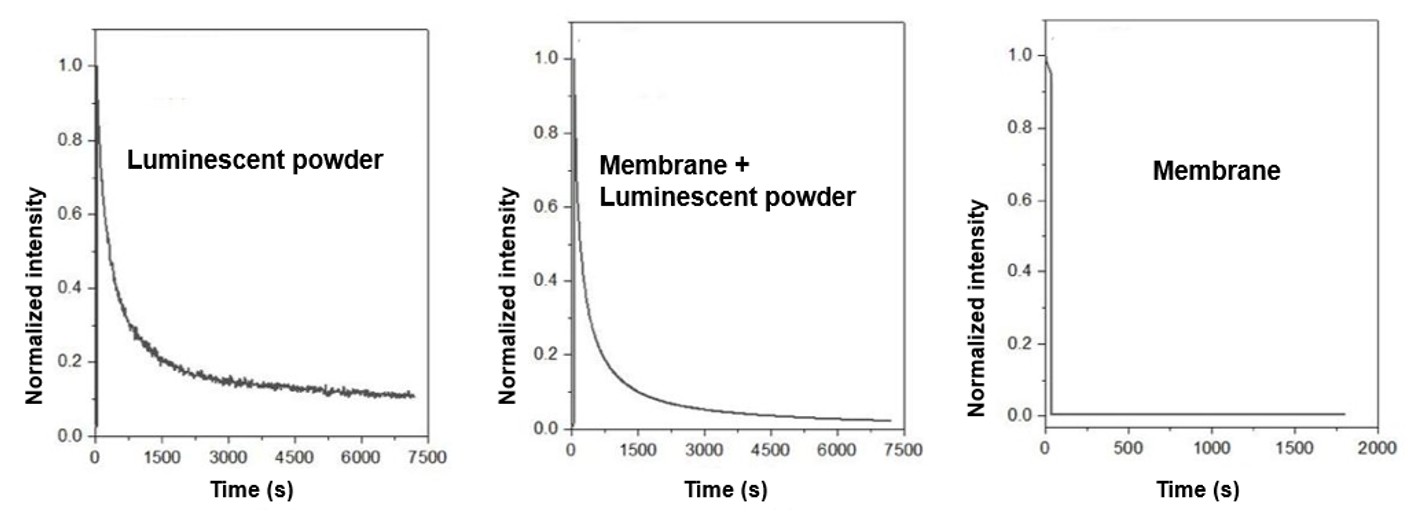
The afterglow decay curve is a key parameter for evaluating the effect of phosphorescent powder concentration on the luminous efficiency of the samples. For this analysis, the excitation wavelength corresponding to the maximum emission intensity—previously identified from the emission spectrum—was employed. The samples were irradiated with ultraviolet (UV) light for 300 s, after which the emission intensity was monitored as a function of time. These time-resolved measurements enabled the determination of characteristic decay constants associated with the phosphorescent processes. Figure 9 displays the luminescence decay profiles of the pure phosphorescent powder, sample (c) (membrane containing 40% phosphorescent powder), and the control sample lacking the luminescent compound, respectively.
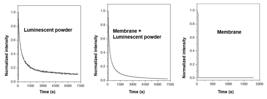
Luminescence decay time of the samples (respectively: Luminescent powder, waterproof membrane + luminescent powder, and waterproof membrane)
The pure phosphorescent powder exhibited a total decay time of approximately 1200 s following the cessation of the excitation source. The initial rapid decay phase is predominantly attributed to allowed electronic transitions of Eu2+ ions, governed by spectroscopic selection rules. The subsequent long-lasting emission phase is associated with the presence of Dy3+ ions, which facilitate the formation of deep electron traps. These lattice defects act as temporary charge storage sites, delaying electron–hole recombination and thereby sustaining the luminescence [12].
The sample (c), incorporating 40% of the luminescent compound within the waterproofing membrane, demonstrated a comparable decay profile—characterized by an initial rapid decline in intensity followed by prolonged afterglow—resulting in a total decay time of approximately 810 s. This behavior reinforces the contribution of Dy3+ ions to persistent luminescence, even when embedded in a polymeric matrix.
In contrast, the control sample (P0), composed solely of the membrane material without phosphorescent additives, exhibited no afterglow. Upon removal of the excitation source, the emission intensity dropped immediately to zero, confirming the absence of persistent luminescence phenomena [22].
The analysis of these results contributes to a deeper understanding of the energy storage and release mechanisms in the investigated material, while also enabling direct comparisons with literature-reported data concerning luminescence efficiency and long-term stability.
3.5 Density Analysis
An important characteristic of the waterproofing membrane is its ease of application, which is closely related to its density. To support the physicochemical characterization of the material, density measurements were conducted on both the standard white waterproofing membrane and the membrane modified with the phosphorescent compound. These measurements were performed using a 5 mL pycnometer.
The standard white membrane exhibited a density of 7.86354 g/mL, whereas the membrane modified with the phosphorescent compound reached a density of 8.8735 g/mL. This rise in density is associated with the higher viscosity and diminished workability observed in the modified material during application.
4 CONCLUSIONS
Considering the growing demand for sustainable and energy-efficient solutions in the construction industry, this study investigates the technical viability of incorporating phosphorescent compounds into waterproofing membranes, with a specific focus on strontium aluminate doped with europium and dysprosium. These aluminates are widely recognized in the literature as highly efficient luminescent materials, distinguished by their extended afterglow duration, high emission intensity, and superior thermal and chemical stability in comparison to traditional sulfide-based phosphors [10].
Furthermore, previous studies have demonstrated that key synthesis parameters—including atmospheric conditions and sintering temperature—exert a significant influence on the photoluminescent performance of these materials, with optimal results typically achieved through sintering at 1300 °C for three hours under a reducing atmosphere. Although a commercially available phosphorescent powder was employed in the present study, such foundational insights were essential for interpreting its photophysical behavior upon incorporation into the polymeric waterproofing matrix.
Mixtures containing varying proportions of phosphorescent powder were prepared employing water as the solvent. Comprehensive physicochemical, optical, and workability analyses were conducted to assess the performance of the developed materials. The formulation containing 20% phosphorescent powder exhibited superior workability and more uniform film formation, whereas the 40% formulation yielded the highest emission intensity and the longest afterglow duration.
Spectrophotometric analysis confirmed emission within the green spectral region (514 nm), a characteristic signature of SrAl2O4-based phosphors. Luminescence decay measurements validated the effectiveness of the phosphorescent compound, with the 40% formulation achieving a decay time of 810 s following 300 s of excitation.
The incorporation of 40% strontium aluminate into the waterproofing membrane demonstrated promising potential for low-light applications, such as emergency egress pathways and passive safety signage. However, this concentration negatively impacted workability, underscoring the need for further formulation optimization to balance luminescent performance with practical applicability. These findings provide a robust foundation for the development of advanced construction materials that integrate technological functionality, safety, aesthetics, and environmental sustainability.
5 ACKNOWLEDGMENTS
The authors thank the Postgraduate Program in Energy and Sustainability, Advanced Materials Laboratory (LMA), Federal University of Santa Catarina –Campus Araranguá, for the technical support, facilities, and conducive environment provided for conducting the analyses and experiments necessary for the development of this study, as well as the Research and Innovation Support Foundation of the State of Santa Catarina (FAPESC).
-
Financial support:
None.
-
Data Availability:
The data that support the findings of this study are available from the corresponding author, Tiago Elias Allievi Frizon, upon reasonable request.
-
How to cite:
J. P. B. Birolo, F. Pelisser, F. Ely, and T. E. A. Frizon, “Phosphorescent compounds in civil construction materials: functional applications,” Rev. IBRACON Estrut. Mater., vol. 18, no. 5, e18507, 2025, https://doi.org/10.1590/S1983-41952025000500007
6 REFERENCES
- 1 J. Goldemberg, Energy, Environment and Development, São Paulo, Brazil: Univ. of São Paulo Press, 1998.
-
2 J. R. Lakowicz, Principles of Fluorescence Spectroscopy, 3rd ed. New York: Springer Science, 2010. https://doi.org/10.1007/978-0-387-46312-4
» https://doi.org/10.1007/978-0-387-46312-4 -
3 A. Jain, A. Kumar, S. J. Dhoble, and D. R. Peshwe, "Persistent luminescence: an insight," Renew. Sustain. Energy Rev., vol. 65, pp. 135–153, Aug. 2016, https://doi.org/10.1016/j.rser.2016.06.081
» https://doi.org/10.1016/j.rser.2016.06.081 -
4 H. Lin, F. Chen, and H. Zhang, "Active luminous road markings: a comprehensive review of technologies, materials, and challenges," Constr. Build. Mater., vol. 363, pp. 129811, 2023, https://doi.org/10.1016/j.conbuildmat.2022.129811
» https://doi.org/10.1016/j.conbuildmat.2022.129811 -
5 H. Yamamoto and T. Matsuzawa, "Mechanism of long phosphorescence of SrAl2O4:Eu2+, Dy3+ and CaAl2O4:Eu2+, Nd3+," J. Lumin., vol. 72–74, pp. 287–289, Jun. 1997, https://doi.org/10.1016/S0022-2313(97)00012-4
» https://doi.org/10.1016/S0022-2313(97)00012-4 -
6 T. Matsuzawa, Y. Aoki, N. Takeuchi, and Y. Murayama, "A new long phosphorescent phosphor with high brightness, SrAl2O4:Eu2+, Dy3+," J. Electrochem. Soc., vol. 143, no. 8, pp. 2670–2673, Aug. 1996, https://doi.org/10.1149/1.1837067
» https://doi.org/10.1149/1.1837067 -
7 N. N. Awang et al., “Luminescent properties of SrAl2O4 Activated Eu2+, Dy3+ for transparent glaze ceramics,” in Proc. 2nd Proc. Int. Colloq. Art Des. Educ. Res., Jan. 1 2016, pp. 51–59. https://doi.org/10.1007/978-981-10-0237-3_6
» https://doi.org/10.1007/978-981-10-0237-3_6 -
8 R. E. Rojas-Hernandez, M. A. Rodriguez, F. Rubio-Marcos, A. Serrano, and J. F. Fernandez, "Designing nanostructured strontium aluminate particles with high luminescence properties," J. Mater. Chem. C Mater. Opt. Electron. Devices, vol. 3, no. 6, pp. 1268–1276, Jan. 2015, https://doi.org/10.1039/C4TC02262A
» https://doi.org/10.1039/C4TC02262A -
9 R. E. Rojas-Hernandez, F. Rubio-Marcos, M. Á. Rodriguez, and J. F. Fernandez, "Long lasting phosphors: SrAl2O4:Eu, Dy as the most studied material," Renew. Sustain. Energy Rev., vol. 81, pp. 2759–2770, Jan. 2018, https://doi.org/10.1016/j.rser.2017.06.081
» https://doi.org/10.1016/j.rser.2017.06.081 -
10 C. Kanjanapokin et al., "Possibility to Apply Strontium Aluminate to Produce Light‐Emitting Plants: Efficiency and Safety," Chem. Biodivers., vol. 20, no. 8, pp. e202300552, Jul. 2023, https://doi.org/10.1002/cbdv.202300552
» https://doi.org/10.1002/cbdv.202300552 -
11 Y. Lu, Y. Li, Y. Xiong, D. Wang, and Q. Yin, "SrAl2O4:Eu2+, Dy3+ phosphors derived from a new sol–gel route," Microelectronics J., vol. 35, no. 4, pp. 379–382, Apr. 2004, https://doi.org/10.1016/S0026-2692(03)00250-7
» https://doi.org/10.1016/S0026-2692(03)00250-7 -
12 Z. Qiu, Y. Zhou, M. Lü, A. Zhang, and Q. Ma, "Combustion synthesis of long-persistent luminescent MAl2O4: Eu2+, R3+ (M=Sr, Ba, Ca, R=Dy, Nd and La) nanoparticles and luminescence mechanism research," Acta Mater., vol. 55, no. 8, pp. 2615–2620, May 2007, https://doi.org/10.1016/j.actamat.2006.12.018
» https://doi.org/10.1016/j.actamat.2006.12.018 -
13 O. Hai, E. Yang, D. Li, W. Bai, Q. Ren, and X. Wu, "Plasma effect: A simple method for improving the persistent luminescence and light response range of persistent luminescent materials," J. Lumin., vol. 217, pp. 116785, 2020, https://doi.org/10.1016/j.jlumin.2019.116785
» https://doi.org/10.1016/j.jlumin.2019.116785 - 14 V. S. Bagnato and M. B. Requena, Terapia fotodinâmica São Carlos: Even3 Publicações Editora, 2023. https://doi.org/10.29327/terapia-fotodinamica-dermatologica-programa-tfdbrasil-309087.
-
15 J. Andre and D. A. Owens, "The twilight envelope: a user-centered approach to describing roadway illumination at night," Hum. Factors, vol. 43, no. 4, pp. 620–630, 2001, https://doi.org/10.1518/001872001775870331
» https://doi.org/10.1518/001872001775870331 -
16 A. Wiese, T. Washington, B. Tao, and W. J. Weiss, "Assessing performance of glow-in-the-dark concrete," Transp. Res. Rec., vol. 2508, no. 1, pp. 31–38, 2015, https://doi.org/10.3141/2508-04
» https://doi.org/10.3141/2508-04 -
17 L. Wang, S.-Q. Ni, C. Guo, and Y. Qian, "One-pot synthesis of ultrathin boron nitride nanosheet-supported nanoscale zerovalent iron for rapid debromination of polybrominated diphenyl ethers," J. Mater. Chem. A Mater. Energy Sustain., vol. 1, no. 21, pp. 6379, Jan. 2013, https://doi.org/10.1039/c3ta10282c
» https://doi.org/10.1039/c3ta10282c -
18 W. Wang, A. Sha, Z. Lu, D. Yuan, W. Jiang, and Z. Liu, "Cement filled with phosphorescent materials for pavement: afterglow decay mechanism and properties," Constr. Build. Mater., vol. 284, pp. 122798, 2021, https://doi.org/10.1016/j.conbuildmat.2021.122798
» https://doi.org/10.1016/j.conbuildmat.2021.122798 -
19 W. Wang, W. Jiao, A. Sha, X. Li, W. Jiang, and D. Yuan, "Study on the mechanics and functionalities of self-luminous cement-based materials with energy storage and slow release properties," Sol. Energy, vol. 259, pp. 72–85, 2023, https://doi.org/10.1016/j.solener.2023.04.049
» https://doi.org/10.1016/j.solener.2023.04.049 -
20 M. Ge, X. Guo, and Y. Yan, "“Preparação e estudo da estrutura e propriedades da fibra luminescente de terras raras," Textile Res. J., vol. 82, no. 7, pp. 677–684, 2012, https://doi.org/10.1177/0040517511429606
» https://doi.org/10.1177/0040517511429606 -
21 P. Rodrigues et al., "Photoluminescence in materials with structural disorder," Ceramica, vol. 50, no. 314, pp. 138–144, 2004, https://doi.org/10.1590/S0366-69132004000200011
» https://doi.org/10.1590/S0366-69132004000200011 -
22 F. M. S. Soares and G. Valerio, "Laser sintering of strontium aluminate doped via modified sol–gel for application as ceramic pigment," Ceramica, vol. 63, no. 365, pp. 90–98, Mar. 2017, https://doi.org/10.1590/0366-69132017633652038
» https://doi.org/10.1590/0366-69132017633652038
Edited by
-
Editors:
Antonio Carlos dos Santos, Daniel Cardoso.
The data that support the findings of this study are available from the corresponding author, Tiago Elias Allievi Frizon, upon reasonable request.