 Exercise intensity and periodontitis: a narrative review
ABSTRACT
Periodontitis is a prevalent chronic inflammatory disease that affects the tooth-supporting tissues and is associated with systemic conditions. Regular physical activity is recognized for its role in preventing and managing chronic diseases, with potential benefits for periodontal health. This review aimed to examine the influence of varying exercise intensities on the inflammatory response in periodontitis. A literature review was conducted using the PubMed database, employing the descriptors “periodontitis” and “physical activity”. Original articles published between 2019 and 2025, in English, Portuguese, and Spanish, open access, were included; reviews and duplicates were excluded. The analysis comprised clinical and experimental studies, without a specific geographic focus, involving adults, athletes, and animal models, with varying sample sizes. Evidence suggests that regular exercise, particularly moderate aerobic activity, reduces inflammatory markers and tissue damage in animal models and patients with type 2 diabetes, promoting periodontal health. Conversely, elite athletes under intense training often exhibit compromised periodontal conditions, indicating that excessive exertion may negatively impact oral health. Outcomes are influenced by exercise intensity, type, and factors such as oral hygiene, with leisure-time physical activity showing superior outcomes compared to occupational physical activity. The review concludes that moderate-to-vigorous exercise intensities may mitigate periodontitis signs, while excessive intensities may increase risk. Further research is needed to elucidate the underlying mechanisms and contextual factors, to develop tailored preventive strategies.
Indexing terms
Athletes; Periodontitis; Physical exertion; Subgingival curettage
RESUMO
A periodontite é uma doença inflamatória crônica não transmissível que acomete os tecidos de suporte dentário. Possui alta prevalência mundial e se associa a condições sistêmicas. A prática habitual de atividade física é amplamente reconhecida por seu papel na prevenção e no manejo de doenças crônicas, com possíveis benefícios à saúde periodontal. Este estudo teve como objetivo revisar a literatura acerca dos efeitos de distintas intensidades de exercício físico sobre a resposta inflamatória na periodontite. Foi realizada uma revisão bibliográfica na base de dados PubMed, empregando os descritores “periodontite” e “atividade física” e “atletas”. Foram selecionados artigos originais publicados entre 2019 e 2025, em português, inglês e espanhol, disponíveis na íntegra. Excluíram-se revisões e duplicatas. A análise abrangeu estudos clínicos e experimentais, envolvendo populações variadas, como adultos, atletas e modelos animais, com amostras de tamanhos diversos. Os resultados demonstram que exercícios regulares, particularmente aeróbicos de intensidade moderada, atenuam marcadores inflamatórios e danos teciduais, tanto em modelos animais quanto em pacientes com diabetes, promovendo melhora nos quadros periodontais. Contudo, atletas de elite, submetidos a regimes intensos, frequentemente manifestam periodontite, o que sugere que esforços extremos possam ter impactos deletérios à saúde bucal. Tais efeitos variam conforme intensidade, tipo de atividade e fatores como higiene bucal, sendo atividades de lazer mais benéficas do que as laborais. Conclui-se que intensidades moderadas a vigorosas favorecem a redução da periodontite, enquanto excessos podem exacerbar o risco. É recomendado aprofundar os mecanismos subjacentes e os fatores contextuais para o desenvolvimento de estratégias preventivas individualizadas.
Termos de indexação
Atletas; Periodontite; Esforço Físico; Curetagem Subgengival
INTRODUCTION
Periodontitis is a chronic Non-Communicable Disease (NCD) with a high prevalence among humans [1]. It is characterized by the progressive destruction of tooth-supporting tissues resulting from an inflammatory response to a dysbiotic plaque biofilm [2]. As a multifactorial condition, it manifests clinically through bleeding on probing, clinical attachment loss, periodontal pocket formation, tooth mobility, and, in advanced stages, tooth loss [2]. It compromises aesthetics, phonation, and nutrition, exerting a significant impact on quality of life [2,3]. In Brazil, the Ministry of Health identifies periodontitis as the primary cause of tooth loss [4], while its most severe stages exacerbate the loss of masticatory function and promote systemic inflammation [3], associating it with conditions such as cardiovascular diseases [5,6], diabetes [5,7], chronic kidney disease [8], asthma, pneumonia, chronic obstructive pulmonary disease [9,10], Parkinson’s [11,12], and Alzheimer’s disease [12,13].
It is estimated that periodontitis affects more than one billion individuals globally, according to World Health Organization data, with a worldwide prevalence ranging between 20% and 50%. It most frequently affects the elderly (82%), followed by adults (73%) and adolescents (59%) [14,15]. In the United States, between 2009 and 2012, 46% of adults presented with the disease, with the prevalence nearly doubling in groups with lower socioeconomic status, as measured by education levels or poverty indicators [16]. In Brazil, the prevalence appears to exceed that of developed countries, affecting more than 50% of the population [17]. A study in Curitiba revealed that more than half of the 536 participants exhibited some stage of periodontitis [18].
The chronic inflammatory process occurring during periodontitis transcends local effects and promotes a systemic inflammatory response that can interact with various health conditions [1,2]. This inflammation, mediated by pro-inflammatory cytokines such as TNF-α and IL-6, establishes a bidirectional connection with chronic non-communicable diseases, amplifying their severity and progression [2,3]. Such systemic impact renders periodontitis a significant risk factor for general health [2,12].
In this context, regular physical activity emerges as a consolidated strategy for the prevention and management of NCDs, including arterial hypertension, overweight, and obesity, while also promoting benefits for mental health, quality of life, and overall well-being [19-24]. Recent evidence indicates that physical exercise also exerts positive effects on periodontal diseases, contributing to the reduction of alveolar bone loss and improving the inflammatory profile through the release of anti-inflammatory cytokines (e.g., IL-10, IL-1ra) and the inhibition of pro-inflammatory mediators (ex., TNF-α) [25,26]. Paradoxically, elite athletes, who undergo intense training regimens, frequently exhibit compromised periodontal conditions [27]; therefore, it is suggested that extreme intensities may induce immunological changes unfavorable to oral health [27].
This review explores how different exercise intensities may influence the inflammatory response in periodontal disease.
METHODS
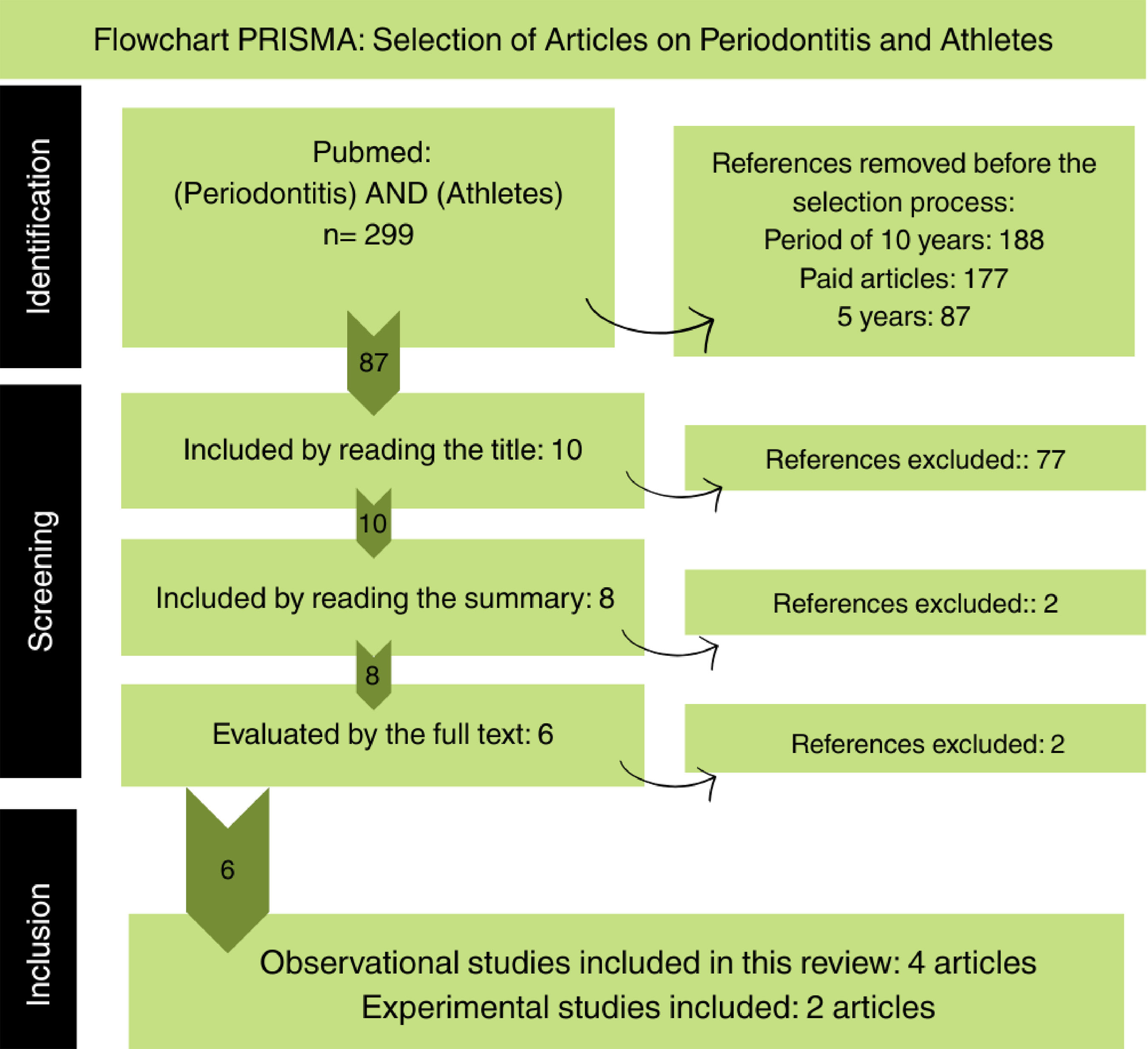
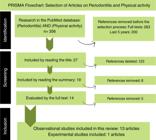
The present narrative review utilized a systematic approach through two distinct search strategies. A bibliographic survey was conducted by two reviewers (IAS and RTM) using the U.S. National Library of Medicine (PubMed) database with combinations of Health Sciences Descriptors (DeCS) and Medical Subject Headings (MeSH), specifically “Periodontitis” and “Athletes” alongside “Physical activity” and “Periodontitis”. Inclusion criteria comprised scientific articles published within the last five years, covering the period from 2019 to 2025, written in Portuguese, English, or Spanish, and available in full-text format. Literature reviews and duplicate entries were excluded, as represented in figures 1 and 2. No formal criteria for the evaluation of methodological quality were applied to the studies included in this review.

The query using the keywords “Periodontitis” and “Athletes” initially yielded 299 articles. After applying a five-year filter and excluding restricted-access or paid publications, 87 articles were retained for screening. Title screening resulted in the exclusion of 77 articles that did not align with the selected theme. Consequently, 10 articles proceeded to abstract screening, and 8 articles were selected for full-text evaluation. Following a comprehensive analysis, six articles were included in this narrative review, consisting of four observational studies and two experimental studies specifically, one murine model and one pilot clinical trial.
In parallel, a second search strategy was implemented utilizing the descriptors “Physical activity” and “Periodontitis”. Applying the same filters for publication period (five years) and accessibility (excluding paid articles), the number of results was reduced to 200 articles. The title screening process resulted in the exclusion of 123 articles due to a lack of thematic adherence, leaving 27 articles for abstract review. The assessment of abstracts led to the selection of 19 articles for full-text reading. After a complete analysis, 18 articles were included in this review, comprising 13 observational studies and three experimental studies specifically, one involving murine models and one blinded randomized controlled trial.
Across both search strategies, a total of 20 articles were included in the final synthesis.
RESULTS
DISCUSSION
Research regarding the influence of physical exercise on the modulation of the clinical manifestations of periodontitis has gained significant relevance, predicated on the premise that exercise may play a regulatory role in the systemic inflammatory response, thereby mitigating the signs and symptoms of periodontal disease [28-37]. However, it remains unclear which specific frequencies and intensities of exercise can exert such a protective effect on the periodontium.
Regular physical exercise is consistently associated with the reduction of critical systemic inflammatory markers, such as C-Reactive Protein (CRP), Tumor Necrosis Factor-alpha (TNF-α), and, at resting levels, Interleukin-6 (IL-6) [45]. Although IL-6 increases significantly during acute exercise, it assumes an anti-inflammatory role by inhibiting the production of TNF-α and Interleukin-1 (IL-1) [45]. Physical exercise can reduce pro-inflammatory TNF-α in the serum or gingival tissue, corroborating its positive impact on periodontal disease [25].
A pre-clinical study utilizing murine models demonstrated that moderate aerobic training in a group with apical periodontitis reduced plasma levels of pro-inflammatory cytokines and minimized tissue damage [25]. Furthermore, a clinical study involving patients with type 2 diabetes observed a 40% reduction in the mean probing depth of 4-6 mm following the implementation of a six-month recreational physical training regimen, highlighting direct benefits for periodontal health in populations with metabolic conditions [42]. Additionally, physical activity improves insulin sensitivity and metabolic health – factors that can bolster defenses against periodontal infections, as demonstrated in both population-based and experimental analyses [18,31].
The modulation of this systemic inflammatory response is a complex process occurring, in part, because IL-6 is one of the first cytokines to exhibit increased plasma concentrations during physical exercise, potentially rising up to 100-fold [45]. This IL-6, which is a myokine derived from contracting muscles, functions similarly to a hormone by mobilizing energy substrates [45]. Crucially, at physiological levels, IL-6 stimulates the production of anti-inflammatory cytokines, such as Interleukin-1 Receptor Antagonist (IL-1ra) and Interleukin-10 (IL-10), while simultaneously inhibiting the synthesis of Tumor Necrosis Factor-alpha (TNF-α ) in the circulation [45]. Thus, physical exercise especially at moderate intensity contributes to the establishment of a systemic anti-inflammatory environment, which may justify the observed benefits in periodontal health by attenuating disease progression and promoting tissue repair [25,46]. It is suggested that the protective effect is contingent upon the intensity and the type of activity performed [18,29,31,44,46].
The literature highlights certain controversies: the prevalence of periodontal disease among elite athletes is paradoxically high, despite the expected anti-inflammatory benefits of intense training [38-41]. Consequently, other factors, such as prolonged physiological stress, specific athletic diets (high carbohydrate consumption), inadequate hydration, and the use of sports drinks, may influence oral health in this population [27]. Intense or excessive physical exercise can induce immunosuppression, oxidative stress, and reduced salivary flow, potentially aggravating inflammatory conditions in some contexts [45]. Khan et al. [38] found a 26.9% prevalence of periodontitis in Pakistani elite athletes, while Botelho et al. [39] identified a rate of 40.9% in professional football players, suggesting that extreme exercise intensity may not be beneficial. This discrepancy underscores the complexity of the relationship between physical activity and periodontitis, indicating that factors such as intensity, exercise type, genetic predisposition, and oral hygiene habits play a determining role in modulating the periodontal response [32,43].
In a study utilizing NHANES data, it was observed that high levels of physical activity were associated with a lower prevalence of periodontitis; however, excess (>300 min/week) could be deleterious, possibly due to oxidative stress or immune suppression, highlighting the need for balance [32]. In contrast, Qiu and colleagues reported that high-intensity exercise reduced the incidence of periodontitis, while individuals who did not meet minimum physical activity recommendations had a higher probability of the disease, suggesting a specific protective effect of vigorous activities [36]. Tsai et al. [35] categorizing physical activity into <150 min/week (low), 150-299 min/week (moderate), and ≥300 min/week (high) according to American cardiovascular guidelines, found that young adults with less than 150 minutes per week presented a higher risk of periodontitis with no additional benefits above 300 minutes, pointing to a plateau in the protective effects. Physical inactivity, likewise, also predisposes to periodontal inflammatory diseases [45].
The heterogeneity of findings is even more evident when considering the context of physical activity, with population studies highlighting significant differences between domains [18,31]. Anjos and Lu [18] observed that only leisure-time activity, at moderate to high intensity, was associated with better self-perceived oral health and lower tooth loss [31]. Conversely, the domains of work, transportation, and domestic activities were correlated with worse outcomes, raising the hypothesis that the context and socioeconomic influences of the activity may be as important as its intensity [18,31]. In alignment with these benefits at moderate to high intensities, Lu and colleagues, in an analysis of NHANES, observed that a higher physical exercise score, measured by “Life’s Essential 8,” was associated with a lower prevalence of periodontitis in a representative sample of American adults [31].
However, pre-clinical studies present controversial results. Souza and Baptista [43] in an experimental study with 30 rats, did not observe any influence of aerobic swimming exercise on the progression of periodontitis over 21 days. These findings contrast with the results of Ferreira et al. [45] in a study with 28 rats and treadmill running exercise for 30 days, in which the authors observed an improvement in the clinical conditions of periodontitis in the exercise group. This emphasizes that the modality of exercise (treadmill running vs. swimming) can evoke distinct physiological and inflammatory responses in the animal organism, affecting the modulation of periodontal disease in different ways. Mechanical stress, muscular engagement, and the cardiovascular response can vary substantially between modalities [25].
Once established, periodontitis can trigger a cascade of pathophysiological events that compromise athletic performance and general health, especially in elite athletes [38-44]. The chronic inflammation characteristic of periodontal disease can induce a state of muscular catabolism, delay post-exercise recovery, and increase the risk of musculoskeletal injuries, which directly impacts training and competition capacity [39]. Botelho and colleagues, through an analysis of non-traumatic muscle injuries in football players with periodontitis, suggest a potential relationship that warrants further investigation [39]. Merle et al. [44] in a cross-sectional study, found that athletes with clinical signs of periodontitis (BPE ≥3$) presented lower $VO{2max}$ values, while those with less gingival inflammation achieved a higher relative maximum load on the ergometric bicycle, indicating that periodontal health influences physiological parameters relevant to athletic performance. Additionally, the pain and discomfort associated with periodontitis can compromise the psychological well-being and quality of life of athletes, further impairing their performance [38]. Khan et al. [38] reported that 65% of Pakistani elite athletes with periodontitis stated that the disease negatively affected their daily activities, including athletic performance, highlighting the systemic impact of the condition.
The issue of periodontitis in athletes requires specific strategies, such as the development of personalized prevention and treatment protocols that consider the demands of each sporting modality and individual risk factors [41]. It is also important to highlight the role of dental prevention and treatment prior to sporting events. At the 2019 Pan-American Games, it was observed that most dental emergencies in athletes resulted from pre-existing conditions [41]. The implementation of oral health education programs, integrated into training routines, and regular dental monitoring with an emphasis on early detection and control of periodontitis are essential to optimize periodontal health and athletic performance [38]. An integrative model suggests that moderate to vigorous exercise (150-300 min/week) reduces systemic inflammation, reflecting a lower prevalence of periodontitis, while excessive intensities may neutralize benefits through oxidative stress, highlighting the need for balance [31,32,36,45]. Gaps in the literature, such as the scarcity of randomized clinical trials and longitudinal studies, besides the under-exploration of socioeconomic factors as mediators, reinforce the need for a more in-depth and multifaceted investigative approach [18,31,32,35,36,43-46].
The way physical activity is assessed whether by self-report in questionnaires like the IPAQ (International Physical Activity Questionnaire) or by objective methods such as accelerometers – can introduce significant biases and distinct categorizations of “intensity.” The study by Baumeister et al. [34], for example, which utilized accelerometers, found no significant association, suggesting that the precision of measurement impacts results. Observational studies, predominantly cross-sectional, rely on diverse samples and varied approaches to verify the association between physical exercise and periodontitis [33]. Works such as those by Marruganti et al. [33] and Torrejon-Moya et al. [37] examine dental clinic patients with clinical periodontal examinations, finding an inverse association between higher levels of physical activity and lower periodontitis severity. Baumeister et al. [34], using accelerometers for objective measurement of physical activity, found no significant association, suggesting that more precise methods may reveal different results. Studies focused on workers, such as Buti et al. [40], explore occupational contexts and report complex associations with potential socioeconomic influences. These approaches differ in scale (clinical vs. population), measurement method (subjective vs. objective), and population (general vs. specific), indicating that moderate to vigorous intensities tend to protect against periodontitis, while occupational contexts may exacerbate the risk, although findings vary in consistency due to biases such as self-reporting and the lack of longitudinality [33,34,37,40].
Experimental studies, on the other hand, adopt controlled designs to explore causality and mechanisms, varying between animal models and human clinical trials [29]. Staufenbiel et al. [29], in a human clinical study, combined diet and exercise, reporting a positive influence on inflammatory signs of induced gingivitis, suggesting benefits from moderate intensities. These studies diverge in population (humans vs. animals), intervention (isolated vs. combined exercise), and outcomes (inflammation vs. clinical signs), pointing out that moderate intensities modulate the inflammatory response, but effects depend on the model and protocol, with methodological disagreements limiting direct comparisons [29]. Therefore, balance in exercise intensity and frequency is a determining factor for optimizing its benefits to periodontal and general health [45].
The relationship between physical exercise and periodontitis presents complex results, with divergent findings in human and animal studies [31,32,35]. Xu et al. [32], using NHANES data, indicated that moderate to vigorous exercise (150-300 min/week) reduces the prevalence of periodontitis, but excess (>300 min/week) could be harmful, possibly due to oxidative stress or immune suppression. In contrast, Qiu et al. [36] suggested that high-intensity exercises decrease the incidence of periodontitis. Tsai et al. [35] observed higher risk with less than 150 min/week, with no additional benefits above 300 min/week, indicating a plateau in the protective effects. The controversies may stem from: 1) methodological differences, such as the use of self-reporting (IPAQ) versus objective measures (accelerometers), which may underestimate or overestimate physical activity [34]; 2) population variations, including factors such as age, oral hygiene, and socioeconomic level, which influence periodontal health [31]; 3) the impact of specific factors in elite athletes, such as physiological stress and high-carbohydrate diets, which can negate anti-inflammatory benefits, as observed by Khan et al. [38] and Botelho et al. [39]; and 4) distinctions in physical activity domains, with only leisure-time activities associated with better oral outcomes [18,31].
In studies on rats, Ferreira et al. [45] demonstrated that moderate aerobic treadmill training for 4 weeks reduced systemic pro-inflammatory cytokines (such as CRP and IL-1β) and minimized tissue damage, such as alveolar bone loss, in rats with ligature-induced periodontitis. In contrast, Souza et al. [43] observed no influence of swimming on the progression of periodontitis in rats after 14 days of disease induction, with no impact on bone loss or IL-1β levels. These discrepancies can be explained by: 1) differences in exercise modalities, with treadmill running and swimming potentially evoking distinct physiological and inflammatory responses, which is corroborated by the high heterogeneity observed in meta-analyses that include both modalities [43]. It is important to note that another study, Ribas et al. [47], also using swimming, found benefits in periodontal repair and inflammatory modulation in rats, adding complexity to the interpretation of modality results. 2) Exercise intensity is also a factor, as Souza [43] indicated that intense physical exercise associated with periodontal disease can potentiate inflammatory changes and delay muscle repair, with a higher presence of inflammatory cells, contrasting with the benefits observed with moderate exercise in other studies [45]. 3) Variations in experimental protocols, including training duration and the type of periodontitis induction, also affect the comparison and extrapolation of results [25,43,45]. These findings reinforce the need for rigorous standardization of exercise intensity, modality, and duration in future research to clarify its effects on periodontitis in both animal models and human studies [25,43,45-48].
The quality of studies varies, impacting the robustness of conclusions [18,31,32,35,36,45,46]. Data from the National Health and Nutrition Examination Survey (NHANES), with large samples (>10,000 individuals) and standardized measures like probing depth, offer high external validity but rely on self-reporting for physical activity, which is subject to recall bias [31,32]. Experimental studies, like that of Ferreira et al., present high internal validity, but their applicability to humans is limited [45,46]. Cross-sectional studies, such as those by Tsai et al. [35] and Qiu et al. [36], categorize intensity clearly (<150, 150-299, ≥300 min/week), but lack longitudinal data to establish causality. Confounding factors, including age, sex, race, socioeconomic status, oral hygiene, and diet, also influence this association [18, 28,31-37].
CONCLUSION
The relationship between periodontitis and physical exercise is fundamentally complex. A sedentary lifestyle and the absence of regular physical activity are associated with a higher prevalence of the disease. Conversely, recurrent exercise, when performed at moderate-to-vigorous intensities, demonstrates the potential to reduce the clinical signs of periodontitis. However, excessively intense training regimens may counteract these anti-inflammatory benefits. Experimental studies randomized controlled trials, and longitudinal investigations particularly involving athletic populations are essential to elucidate the biological mechanisms underlying the relationship between intense physical exercise and periodontal health. The standardization of assessments regarding exercise intensity, modality, and duration is fundamental to ensuring the comparability of results across disparate studies. Furthermore, preventive interventions must be personalized, considering the individual and contextual factors that modulate this association. The sports dentist assumes a central role within interdisciplinary teams, both in research contexts contributing to the advancement of knowledge regarding periodontitis in sports and within professional club environments and the direct monitoring of athletes. Their expertise is crucial for the development, implementation, and supervision of specific oral health strategies tailored to high-performance demands. The integration of oral health education programs and regular dental follow-ups, led by these professionals in collaboration with other health specialists, constitutes an essential measure for early detection and disease control. This collaborative leadership is vital to ensuring periodontal stability and the optimization of athletic performance in elite athletes.
How to cite this article
Data Availability
The research data are available from the corresponding author upon reasonable request.
REFERENCES
-
1 Sanz M, Herrera D, Kebschull M, Chapple I, Jepsen S, Berglundh T, et al. Treatment of stage I-III periodontitis – The EFP S3 level clinical practice guideline. J Clin Periodontol. 2021;48(Suppl 24):4-71. doi: https://doi.org/10.1111/jcpe.13413
» https://doi.org/10.1111/jcpe.13413 -
2 Papapanou PN. Periodontitis and systemic health: an update. Periodontol 2000. 2018;78(1):7-9. doi: https://doi.org/10.1111/prd.12236
» https://doi.org/10.1111/prd.12236 -
3 Tonetti MS, Greenwell H, Kornman KS. Staging and grading of periodontitis: framework and proposal of a new classification and case definition. J Periodontol. 2018;89(Suppl 1):S159-72. doi: https://doi.org/10.1002/JPER.17-0368
» https://doi.org/10.1002/JPER.17-0368 - 4 Ministério da Saúde (Brasil). Oral health in Brazil: current panorama. Ministério da Saúde; 2022.
- 5 Cardoso EM, Reis C, Manzanares-Céspedes MC. Chronic periodontitis and systemic diseases: a bidirectional relationship. J Clin Periodontol. 2018;45(3):345-52.
- 6 Carrizales-Sepúlveda EF, Ordaz-Farías A, Vera-Pineda R, Flores-Ramírez R. Periodontal disease and cardiovascular risk: an update. Int J Cardiol. 2018;262:51-6.
- 7 Chi YC, Tsai CC, Chang HP. Periodontitis and diabetes mellitus: a two-way street. J Dent Res. 2010;89(10):1045-50.
- 8 Manikowski D, Andrukhov O, Rausch-Fan X, Jonke E. Association between periodontitis and chronic kidney disease. Clin Oral Investig. 2021;25(6):3645-52.
-
9 Moghadam SA, Shirzaiy M, Risbaf S. Periodontitis and respiratory diseases: a systematic review. J Int Oral Health. 2017;9(3):103-9. doi: https://doi.org/10.4103/jioh.jioh_25_17
» https://doi.org/10.4103/jioh.jioh_25_17 -
10 Gomes-Filho IS, Cruz SSD, Trindade SC, Passos-Soares JS, Carvalho JS, Figueiredo ACMG, et al. Periodontitis and respiratory diseases: a bidirectional association. Oral Dis. 2020;26(5):956-64. doi: https://doi.org/10.1111/odi.13228
» https://doi.org/10.1111/odi.13228 -
11 Kaur T, Uppoor A, Naik D. Parkinson’s disease and periodontitis: the missing link? Gerodontology. 2016;33(4):434-8. doi: https://doi.org/10.1111/ger.12188
» https://doi.org/10.1111/ger.12188 -
12 Plachokova AS, Andreu-Sánchez S, Noz MP, Fu J, Riksen NP. Oral and systemic health in the elderly: the role of the microbiome. J Clin Periodontol. 2024;51(2):132-45. doi: https://doi.org/10.1111/jcpe.13885
» https://doi.org/10.1111/jcpe.13885 -
13 Sansores-España D, Carrillo-Ávila BA, Melgar-Rodríguez S, Díaz-Zúñiga J, Vernal R. Periodontitis and neurodegenerative diseases: Alzheimer’s as a model. Brain Sci. 2020;10(12):933. doi: https://doi.org/10.3390/brainsci10120933
» https://doi.org/10.3390/brainsci10120933 -
14 Jain N, Dutt U, Radenkovic M, Jain S. Prevalence of periodontal diseases globally: a systematic review. J Indian Soc Periodontol. 2023;27(1):12-20. doi: https://doi.org/10.4103/jisp.jisp8122
» https://doi.org/10.4103/jisp.jisp8122 -
15 Nazir M, Al-Ansari A, Al-Khalifa K, Alhareky M, Gaffar B, Almas K. Global prevalence of periodontal disease and lack of its surveillance. ScientificWorldJournal. 2020;2020:2146160. doi: https://doi.org/10.1155/2020/2146160
» https://doi.org/10.1155/2020/2146160 -
16 Eke PI, Dye BA, Wei L, Thornton-Evans GO, Genco RJ. Prevalence of periodontitis in adults in the United States: 2009 and 2010. J Dent Res. 2012;91(10):914-20. doi: https://doi.org/10.1177/0022034512457373
» https://doi.org/10.1177/0022034512457373 -
17 Medeiros CA. Periodontitis prevalence in Brazil: an epidemiological analysis. Rev Bras Odontol. 2022;79(3):45-52. doi: https://doi.org/10.18363/rbo.v79.2022.e1071
» https://doi.org/10.18363/rbo.v79.2022.e1071 -
18 Anjos SD, de Medeiros TCC, Ferro RM, Daufenbach L, de Oliveira RS, Leutz ACN, et al. Occurrence of periodontal diseases according to the ACES 2018 Classification Framework and the CDC/AAP definition: a cross-sectional study in a major Brazilian city. J Clin Periodontol. 2024;51(9):1178-87. doi: https://doi.org/10.1111/jcpe.14035
» https://doi.org/10.1111/jcpe.14035 -
19 Hartmann C. Exercise and chronic disease prevention: a review. Int J Sports Med. 2021;42(5):389-400. doi: https://doi.org/10.1055/a-1275-9549
» https://doi.org/10.1055/a-1275-9549 -
20 Vieira MC, Almeida TA, Silva RR, Lima FF, Prado RL, Santos JM. Physical activity and mental health: a systematic review. Rev Bras Med Esporte. 2023;29:e20230123. doi: https://doi.org/10.1590/1517-86922023290120230123
» https://doi.org/10.1590/1517-86922023290120230123 -
21 Lima DF, Almeida SB, Costa RV, Prado RL, Santos JM, Hartmann C. Impacts of physical activity on quality of life. J Phys Educ. 2019;30:e3045. doi: https://doi.org/10.4025/jphysedu.v30i1.3045
» https://doi.org/10.4025/jphysedu.v30i1.3045 -
22 Prado RL, Santos JM, Lima DF, Hartmann C, Vieira MC, Almeida TA. Physical exercise and general well-being. Braz J Health Rev. 2020;3(4):9876-85. doi: https://doi.org/10.34119/bjhrv3n4-231
» https://doi.org/10.34119/bjhrv3n4-231 -
23 Santos JM, Prado RL, Lima DF, Hartmann C, Vieira MC, Almeida TA. Benefits of regular physical activity. Rev Saúde Pública. 2021;55:23. doi: https://doi.org/10.11606/s1518-8787.2021055002712
» https://doi.org/10.11606/s1518-8787.2021055002712 - 24 World Health Organization. Global action plan on physical activity 2018–2030. Geneva: WHO; 2018.
-
25 Yu T, Zhao L, Zhang X. Exercise and periodontal health: a new perspective. J Periodontal Res. 2023;58(4):678-89. doi: https://doi.org/10.1111/jre.13780
» https://doi.org/10.1111/jre.13780 -
26 Rebouças RP, Alencar GP. Effects of physical exercise on periodontal inflammation. Rev Bras Odontol. 2018;75(2):34-40. doi: https://doi.org/10.18363/rbo.v75.2018.e1136
» https://doi.org/10.18363/rbo.v75.2018.e1136 -
27 Santos LR. Periodontal health in elite athletes: a paradox. J Sports Dent. 2022;12(1):15-22. doi: https://doi.org/10.1590/1981-86372022003820210089
» https://doi.org/10.1590/1981-86372022003820210089 -
28 Fu J, Li X, Zhang Y. Leisure physical activity and periodontitis risk: role of smoking. Community Dent Oral Epidemiol. 2024;52(2):189-97. doi: https://doi.org/10.1111/cdoe.12870
» https://doi.org/10.1111/cdoe.12870 -
29 Staufenbiel I, Adam K, Schulz M, Berger K, Weinmann N, Bleich S. Exercise and diet in periodontal health: a clinical study. J Clin Periodontol. 2023;50(8):987-96. doi: https://doi.org/10.1111/jcpe.13808
» https://doi.org/10.1111/jcpe.13808 -
30 Schulze A. Exercise intensity and periodontal inflammation: a review. Clin Oral Investig. 2023;27(6):2456-67. doi: https://doi.org/10.1007/s00784-023-04986-9
» https://doi.org/10.1007/s00784-023-04986-9 -
31 Lu Q, Wang Y, Li J. Physical activity and periodontitis: evidence from NHANES. J Dent Res. 2024;103(3):289-97. doi: https://doi.org/10.1177/00220345231215629
» https://doi.org/10.1177/00220345231215629 -
32 Xu F, Zhang Q, Chen J. Exercise dose and periodontal health: a balance. Oral Dis. 2024;30(5):1234-43. doi: https://doi.org/10.1111/odi.14819
» https://doi.org/10.1111/odi.14819 -
33 Marruganti C, Romandini M, Gaeta C, Ferrari M, Discepoli N, Grandini S. Physical activity and periodontal health: a cross-sectional study. J Periodontol. 2022;93(11):1345-54. doi: https://doi.org/10.1002/JPER.22-0087
» https://doi.org/10.1002/JPER.22-0087 -
34 Baumeister SE, Reckelkamm S, Nolde M, Leitzmann M, Karch A, Baumeister H. Objectively measured physical activity and periodontitis: no association. BMC Oral Health. 2023;23:456. doi: https://doi.org/10.1186/s12903-023-03106-9
» https://doi.org/10.1186/s12903-023-03106-9 -
35 Tsai YC, Chen HM, Lai WY, Chen CY, Huang YF, Lin YH. Physical activity levels and periodontitis risk in young adults. J Dent Sci. 2024;19(3):876-83. doi: https://doi.org/10.1016/j.jds.2024.01.006
» https://doi.org/10.1016/j.jds.2024.01.006 -
36 Qiu X, Zhang L, Wang H. High-intensity exercise and periodontitis incidence: a cohort study. J Sports Sci. 2025;43(1):45-53. doi: https://doi.org/10.1080/02640414.2024.2351235
» https://doi.org/10.1080/02640414.2024.2351235 -
37 Torrejon-Moya A, Lopez-Garces M, Izquierdo-Gomez R, Martin-Martinez C, Garcia-Unanue J, Sanchez-Sanchez J. Physical activity and periodontal status in clinical patients. Med Oral Patol Oral Cir Bucal. 2021;26(5):e645-51. doi: https://doi.org/10.4317/medoral.24474
» https://doi.org/10.4317/medoral.24474 -
38 Khan MS, Khan ZU, Ahmed S, Ali S, Khan AA, Bokhari SA. Periodontitis in elite athletes: a Pakistani study. J Pak Dent Assoc. 2022;31(2):89-95. doi: https://doi.org/10.25301/JPDA.31.2.89
» https://doi.org/10.25301/JPDA.31.2.89 -
39 Botelho J, Machado V, Proença L, Mendes JJ. Periodontal health in professional football players. Dent J (Basel). 2021;9(8):94. doi: https://doi.org/10.3390/dj9080094
» https://doi.org/10.3390/dj9080094 -
40 Buti J, Baccini M, Ricci S, Graziani F, Cairo F. Occupational physical activity and periodontitis: a complex interplay. J Clin Periodontol. 2025;52(1):56-65. doi: https://doi.org/10.1111/jcpe.13992
» https://doi.org/10.1111/jcpe.13992 - 41 Opazo-García A, Jaramillo A, Romo F, Campusano C, Michea L. Dental emergencies in athletes: lessons from the 2019 Pan American Games. Rev Chil Odontol. 2021;15(3):112-8.
-
42 Schulze A, Busse M. Exercise intervention in type 2 diabetes patients with periodontitis. Diabetes Metab Syndr. 2023;17(6):102718. doi: https://doi.org/10.1016/j.dsx.2023.102718
» https://doi.org/10.1016/j.dsx.2023.102718 -
43 Souza JP, Baptista RM. Aerobic exercise and periodontitis progression in rats: no effect. Braz Oral Res. 2023;37:e056. doi: https://doi.org/10.1590/1807-3105/2023.v37.e056
» https://doi.org/10.1590/1807-3105/2023.v37.e056 -
44 Merle CL, Richter L, Challakh N, Haak R, Schmalz G, Wicht MJ. Periodontitis and athletic performance: an exploratory study. Sports Med Open. 2022;8(1):78. doi: https://doi.org/10.1186/s40798-022-00560-6
» https://doi.org/10.1186/s40798-022-00560-6 -
45 Ferreira RO, Silva AC, Lima TT, Pereira DF, Corrêa MG, Casarin RC. Physical training minimizes immunological dysfunction, oxidative stress and tissue destruction in experimental periodontitis in rats. Clin Oral Investig. 2024;28(1):88. doi: https://doi.org/10.1007/s00784-023-05490-x
» https://doi.org/10.1007/s00784-023-05490-x -
46 Ferreira RO, Silva AC, Lima TT, Pereira DF, Corrêa MG, Casarin RC. Physical training attenuates systemic cytokine response and tissue damage triggered by apical periodontitis in rats. Clin Oral Investig. 2024;28(3):156. doi: https://doi.org/10.1007/s00784-023-05362-9
» https://doi.org/10.1007/s00784-023-05362-9 -
47 Ribas PAT. Impacto do exercício físico sobre o reparo periodontal – estudo in vivo sobre o momento da atividade no tratamento periodontal [tese de doutorado]. Curitiba: Universidade Federal do Paraná; 2025. http://hdl.handle.net/1884/96783
» http://hdl.handle.net/1884/96783 -
48 Hou K, Zhang H, Song W, Li S, Liu J, Ma Z. Association between life’s essential 8 and periodontitis: a study based on NHANES 2009–2014. Front Med (Lausanne). 2024;11:1342792. http://dx.doi.org/10.3389/fmed.2024.1342792
» https://doi.org/10.3389/fmed.2024.1342792