 Implementation of the care agreements of the CACTO program for mothers of children with autism spectrum disorder
ABSTRACT
Objective: to analyze the implementation of care agreements developed in the CACTO program for mothers of children with Autism Spectrum Disorder.
Method: exploratory, qualitative study, guided by Unitary Caring Science and the Implementation Science methodological framework, based on the Consolidated Conceptual Framework for Implementation Research. Conducted with 20 mothers of children with Autism Spectrum Disorder, between April 2023 and February 2024, during care meetings developed in a non-governmental organization. For analysis, deductive thematic content analysis was used.
Results: the agreements were categorized into three dimensions of human existence: body-mind-soul. The health needs of mothers determined the implementation of the agreements, such as: difficulties in body acceptance, sedentary lifestyle, lack of awareness of their own potential, insufficient self-care, unresolved past conflicts, self-blame, family conflicts, signs and symptoms of overload and fragility in the relationship with God. The lack of time and oppressive relationships were barriers, while motivation and spirituality served as strengths for the mothers in applying the agreement device.
Final considerations: in-depth dialogue and the leading role of the mothers were decisive in the implementation of the agreements. Professional caregivers play a fundamental role in epistemological development while triggering innovative care in the health field.
Descriptors:
Autism Spectrum Disorder; Caregivers; Disabled Children; Maternal-Child Health Services; Mother-Child Relations; Nursing Theory.
RESUMO
Objetivo: analisar a implementação dos acordos de cuidado desenvolvidos no programa CACTO para mães de crianças com Transtorno do Espectro Autista.
Método: estudo exploratório, qualitativo, norteado pelo referencial teórico da Ciência do Cuidado Unitário e metodológico da Ciência da Implementação, a partir do Quadro Conceitual Consolidado para Pesquisa de Implementação. Realizado com 20 mães de crianças com Transtorno do Espectro Autista, entre abril de 2023 e fevereiro de 2024, durante encontros de cuidado desenvolvidos em uma organização não governamental. Para análise, explorou-se a análise de conteúdo temática dedutiva.
Resultados: os acordos foram categorizados em três dimensões da existência humana: corpo-mente-alma. As necessidades de saúde das mães determinaram a implementação dos acordos, a exemplo: dificuldade de aceitação do corpo, sedentarismo, desconhecimento das próprias potencialidades, autocuidado insuficiente, conflitos passados não resolvidos, autoculpabilidade, conflitos familiares, sinais e sintomas de sobrecarga e fragilidade na relação com Deus. A escassez de tempo e as relações opressoras foram barreiras, enquanto que motivação e espiritualidade são potencialidades das mães para aplicação do dispositivo acordo.
Considerações finais: diálogo em profundidade e protagonismo das mães foram determinantes na implementação dos acordos. Os cuidadores profissionais assumem pilar fundamental de desenvolvimento epistemológico enquanto disparadores de cuidados inovadores na área da saúde.
Descritores:
do Espectro Autista; Cuidadores; Crianças com Deficiência; Serviços de Saúde Materno-Infantil; Relações Mãe-Filho; Teoria de Enfermagem.
RESUMEN
Objetivo: analizar la implementación de los acuerdos de atención desarrollados en el programa CACTO para madres de niños con Trastorno del Espectro Autista.
Método: estudio exploratorio, cualitativo, marco teórico de la Ciencia del Cuidado Unitario y un marco metodológico de la Ciencia de la Implementación, del Marco Conceptual Consolidado para la Investigación de Implementación. Realizado con 20 madres de niños con Trastorno del Espectro Autista, entre abril de 2023 y febrero de 2024, durante reuniones de atención realizadas en una organización no gubernamental. Para el análisis se exploró el análisis de contenido temático deductivo.
Resultados: los acuerdos se categorizaron en tres dimensiones de la existencia humana: cuerpo-mente-alma. Las necesidades de salud de las madres determinaron la implementación de los acuerdos, por ejemplo: dificultad para aceptar su cuerpo, sedentarismo, desconocimiento de sus propias potencialidades, insuficiente autocuidado, conflictos del pasado no resueltos, autoculpabilidad, conflictos familiares, signos y síntomas. de sobrecarga y fragilidad en la relación con Dios. La falta de tiempo y las relaciones opresivas fueron barreras, mientras que la motivación y la espiritualidad son el potencial de las madres para aplicar el dispositivo de acuerdo.
Consideraciones finales: el diálogo en profundidad y el protagonismo de las madres fueron decisivos para la implementación de los acuerdos. Los cuidadores profesionales son un pilar fundamental del desarrollo epistemológico como detonantes de cuidados innovadores en el sector salud.
Descriptores:
Trastorno del Espectro Autista; Cuidadores; Niños con Discapacidad; Servicios de Salud Materno-Infantil; Relaciones Madre-Hijo; Teoría de Enfermería.
INTRODUCTION
This article explores the implementation of the unitary care agreements developed in the CACTO program1, based on the phases of planning, engagement, execution, reflection and evaluation. The “agreement” is a device of the CACTO Program that emerges from the narratives of mothers of children with Autism Spectrum Disorder (ASD) as a trigger for care to address their health needs. To achieve this, a broad analytical dialogue is applied between mother and professional caregiver about the barriers and difficulties of implementing the agreement, followed by a consensual definition of the care to be practiced. Additional characteristics of the “agreement” are described in the method section.
The CACTO is a unitary caring program developed in 20221 and in the process of implementation from 2023, classified as a social technology to respond to the health needs of mothers of children with Congenital Zika Virus Syndrome (CZS). It aims to restore the balance between body-mind-soul of mothers through care modalities and to promote the autonomy of the professional caregiver2, grounded in philosophical/theoretical foundations as a systematic practice of nursing and health activities based on the transpersonal model of care for praxis and teaching in the training of professionals, as well as research development.
CACTO is based on the Unitary Caring Science (UCS), conceived by nurse Jean Watson in 2018, in favor of humanitarian values, considering unitary caring as an expression of doing good between a professional caregiver and another person, based on the encounters of universal cosmic energy between beings, with a vision of unitary existence, in a continuous ethical, epistemic and ontological manner2. Unitary caring is the core of the implementation of CACTO; Therefore, “professional caregiver” is understood as a worker who provides quality and efficient unitary care, regularly registered with the respective professional association2.
The unitary caring program is defined as a set of specific care that promotes well-being, validates and highlights vulnerabilities, and recognizes and strengthens human existence in certain population groups according to their needs 1-2. CACTO has been expanded to care for mothers of children with ASD and/or disabilities, a modification justified by the similarity of health needs that these mothers also experience3.
The prevalence of children with ASD has been increasing4, and given the complexity of the diagnosis, the mother’s suffering in accepting the suspicion, experiencing it, and adopting a care routine that requires the construction of new therapeutic itineraries is evident. The United Nations estimates that one in every 160 children in the world lives with ASD4. When relating this data with the National Household Sampling Survey (Pesquisa Nacional por Amostragem de Domicílios), it is estimated that there are between 714 and 1,653 children between the ages of 2 and 9 with ASD in Brazil5. The complexity of the diagnosis hinders the notification of ASD cases, limiting the availability of indicators that support the formulation of public policies directed at this group and their families.
When children are affected by chronic illness, they experience a change of the perfect child, a change in routine, the desire and hope for a cure, as well as facing judgments and prejudices6. It is in this context that mothers face daily challenges, requiring adjustment and a support network for ongoing support. Mothers take on a leading role in caring for the child, investing significant time in navigating health and social assistance6. As a result, they give up their own self-care, resign or are fired from their jobs, postpone or abandon personal and professional projects, and experience high levels of anxiety, depression, and caregiving overload6.
The health needs of mothers are undervalued in health services; professional caregivers focus their attention on the child's development; and care initiatives aimed at mothers are scarce6. After an extensive search in the main health databases, conducted in July 2024, only one implementation of a program aimed at mothers of children with ASD diagnosed with depression was found in Bangladesh7.
In view of the above, the implementation of the care agreements of the CACTO is an unprecedented initiative that lies in the possibility of implementing counter-hegemonic unitary caring for a group of women in vulnerable situations, such as mothers of children with ASD. Furthermore, this article aims to respond to the current challenges in the field of Implementation Science8, by aligning the theoretical-methodological approach of implementation and the theoretical construct of Care praxis, being developed by professionals in clinical practice, responding to a relevant social problem and discussing the methodological process of implementing an intervention and not its impacts/results.
This article seeks to answer the following question: how did the implementation of unitary care agreements developed in CACTO occur? Its objective is to analyze the implementation of unitary care agreements developed in the CACTO program for mothers of children with ASD.
METHOD
This is an exploratory study, with a qualitative approach, on the implementation of the unitary care agreements developed in the CACTO program, with a theoretical framework based on the UCS2 and a methodological framework based on Implementation Science, especially the Consolidated Conceptual Framework for Implementation Research (CFIR)9. The writing of this article followed the guidelines of the Revised Standards for Quality Improvement Reporting Excellence (SQUIRE 2.0), which ensures the information necessary to communicate new modes of care in favor of quality, safety and improvement in health care.
The CFIR aims to guide the systematic evaluation of implementation based on five domains: characteristics of the intervention, including the source and quality of evidence, adaptability, complexity, intervention advantage, and implementation cost, external context, analyzing the characteristics and circumstances of the implementation setting, such as people's needs, social relationships and competition between institutions, and external incentives favoring implementation; internal context, dealing with the structural and cultural characteristics of the institution, such as alignment and cooperation among participants, maintenance of communication networks and climate of implementation in the environment; characteristics of the individuals, considering the knowledge, beliefs and principles of the people involved, as well as motivation and adherence to implement the intervention; and implementation process, respecting the stages of planning, engagement, execution, reflection and evaluation9.
The methodological process of implementing the care agreements developed in CACTO will be described below according to these domains.
Characteristics of the intervention
CACTO is a social technology developed during the doctoral thesis of the first author. The legitimacy of the intervention source lies in the validation conducted by researchers who are experts in UCS, by professional caregivers of family members of children with disabilities and mothers of children with disabilities, achieving a global Content Validity Index ≥ 0.88 and a critical Content Validity Ratio above the suggested level1.
The care agreements were created and adjusted on a case-by-case basis in respect the mother’s health needs, however, under no circumstances do they deviate from the theoretical elements of UCS, the Caritas-Veritas. The Caritas-Veritas guides professional caregivers to practice unitary care and achieve healing (restoration of the being), corresponding to what needs to be Appreciated (Caritas) and Virtues and Values (Veritas) that cannot be abandoned in the caregiving process. Caritas-Veritas are: Love-Kindness; Faith-Hope; Transpersonal-Self; Nurture-Relate; Forgive; Self-create; Learn; Caritas Environment; Humanity; Infinity2.
The implementation of the unitary care agreements developed at CACTO begins during the care meeting between the professional caregiver and the mother. These are individual moments held every two weeks or months, lasting an average of 60 minutes, audio-recorded, and conducted concurrently with the time that the children were in therapy with other healthcare professionals. In the final moments of the care meeting, the professional caregiver and the mother implement the care agreement device consensually, emerging from the in-depth dialogue produced throughout the meeting, and the mother defines a need or a set needs that causes her distress, pain, sadness, or discomfort at that moment. Afterwards, different care measures are listed; the barriers and facilities for adherence of each are assessed; the ideal care to meet the respective health need is defined; the strength of the evidence, the feasible timeframe and the final consensus are discussed, resulting in the care agreement. Figure 1 illustrates the systematic process of constructing the care agreement.

Systematic process of constructing the care agreement device developed in the CACTO program. Santo Antônio de Jesus, BA, Brazil, 2024.
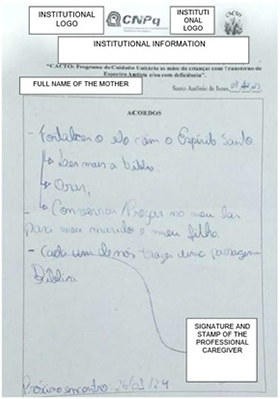
It is from the implementation of the agreements, exemplified in Figure 2, that unitary care is triggered, sealing a motivating commitment for the necessary transformations in the mothers’ lives; subsequently, the results of the agreements are evaluated in the subsequent caregiving meeting.

Unitary care agreement form filled out between the professional caregiver and the mother. Santo Antônio de Jesus, BA, Brazil, 2024.
The care agreements implemented in CACTO have the strength and quality of evidence, allowing them to be recommended for care directed towards mothers, as will be presented in the “Results” section.
The relative advantage can be seen in the mothers’ reports, when they emphasize the importance of the agreements, valuing maternal role and the applicability of care specifically directed at them1, until then invisible6. CACTO is in the process of implementation that began in the second half of November 2023, with caregiving meetings held at the TEAbracoSAJ Institute, respecting the principles of adaptability, capacity to test, and complexity. The unitary care agreement is highly adaptable, allowing responses to the specific needs and characteristics of each mother, enabling adjustments to cater to the uniqueness of each case. At the same time, it is a highly complex intervention, considering its longitudinal nature, the alignment of actions with UCS, the profile of the mothers, and the duration of the caregiving meetings.
Before the caregiving sessions began, the program was carefully crafted and presented clearly and attractively in the form of a health program, through printed materials, social media of CACTO and the TEAbracoSAJ Institute, the website of the Universidade Federal do Recôncavo da Bahia (UFRB), and face-to-face conversations with the mothers. The mothers were invited to participate in the research during a discussion circle called by the institute’s management.
The implementation of the care agreements has a moderate implementation cost, including the professional caregiver’s fees, physical infrastructure, provision of furniture and office materials, mobile phone access, internet access, water, and electricity, which facilitate the caregiving meetings.
External context
For the implementation of CACTO, financial support was obtained from the National Council for Scientific and Technological Development (Conselho Nacional de Desenvolvimento Científico e Tecnológico - CNPq), the Institutional Program for Scientific Initiation Scholarships (Programa Institucional de Bolsas de Iniciação Científica - PIBIC), and the Institutional Program for University Extension Scholarships (Programa Institucional de Bolsas de Extensão Universitária - PIBEX) of UFRB. The implementation of care agreements is motivated by the lack of other forms of care aimed at mothers; it seeks to establish itself as the first care device for mothers with efficient results.
The health needs and the limited resources available to the mothers guide the care agreements, encompassing cultural, socioeconomic, and religious/spiritual factors that sustain their existence and allow for inferences about the barriers and facilitators in favor of care. In this context, to ensure the sustainability of the agreements, professional caregivers cultivate strong cosmopolitanism and established relationships with the TEAbracoSAJ Institute, professionals working in Family Health Units (FHU), municipal managers, community leaders, public figures, mass media actors, research groups, and intra- and extra-institutional faculty.
Internal context
The TEAbracoSAJ Institute was chosen to be the pioneer in implementing CACTO, considering its character as a non-profit organization, its broad visibility in the city and region, and the number of mothers associated with it. Founded in 2022, it emerged as an initiative of mothers, supporters, and advocates for the rights of individuals with autism spectrum disorder (ASD) or Down syndrome. Currently, it has about 200 mothers and families associated, standing out for its principles of fraternity, cooperation, care, and social responsibility, as well as offering children assistance in psychology, physiotherapy, speech therapy, and psychopedagogy for free or at low cost.
CACTO maintains two networks and communication modes: internal and external. Internal communication is restricted to the team of students and faculty coordinators and members of the program, who communicate through their own medical records, file sharing via Google Drive®, messaging through mobile apps, and during scientific sessions. External communication is characterized by the dissemination of information of interest to the general public through the official website of the university and municipality, radio channels, as well as CACTO’s and the institute’s social media, and the profiles of stakeholders.
It is reported that, at the initiative of the management of the TEAbracoSAJ Institute, virtual collective consultations and group activities, mediated by psychology professionals, were conducted before the implementation of CACTO. However, these strategies did not correspond to the mothers’ desires, a situation that promoted the environment of implementation for CACTO, considering its individual and unique approach. In favor of this environment, the institute's coordination made available the shifts of the week with the highest presence of mothers at the institute, reorganizing the therapists’ schedule, setting up a complete room with chairs, table, mats, stretcher, and providing office supplies and all the physical structure.
Characteristics of the individuals
Mothers who met the following inclusion criteria were included in CACTO: self-identified mother of a child with ASD and/or disability, diagnosed or suspected, and being associated with the TEAbracoSAJ Institute. Considering the aforementioned criteria and the inclusive and unique nature of the program, no exclusion criteria were adopted, allowing caregiving meetings to be held with all mothers who wished to participate.
Twenty-five mothers were invited, five of whom declined the invitation without providing justification or attributed it to lack of time or even feeling uncomfortable participating. By February 2024, 20 mothers had been included. In the first caregiving meeting, the professional caregiver individually invited the participants, signed the Informed Consent Form (ICF), and after the mother's agreement was expressed through her signature, the record was filled out. The data produced during the care meetings were recorded in the CACTO medical record, organized into sections designed to collect sociodemographic and economic data; previous and current clinical history; relationships, social support network, and life projects. The medical record was stored virtually on Google Drive, along with recordings of the caregiving meetings, transcriptions, and the agreements constructed, with exclusive access for professional caregivers and authorized research team members.
The mothers’ knowledge and beliefs about the program were consolidated through motivational cards on social media, the availability of caregivers to clarify doubts at the reception or welcoming room, or through messaging apps. Additionally, the mothers themselves created a “resonant” effect of encouragement among one another, expressing individual identification with CACTO.
The analysis of personal attributes, such as barriers and facilitators, conditions for the implementation of care agreements, regarding self-efficacy and commitment of individuals to the personal stage of change(10), will be addressed in the “Discussion” section in light of the theoretical framework(9).
Implementation process
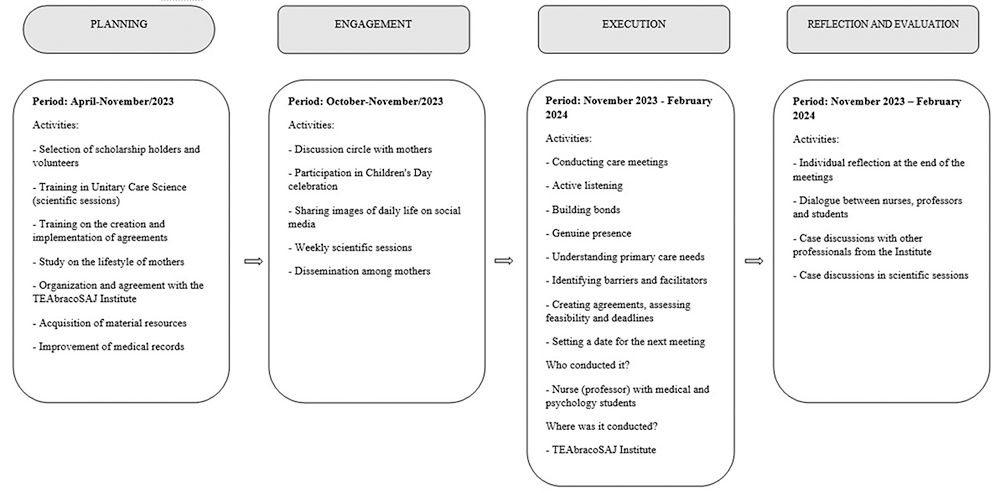
The team implementing the unitary care agreements included a nursing faculty member with a doctoral qualification, expert in UCS, two undergraduate medical students, and one undergraduate psychology student. All participated in and conducted the four stages of the implementation process, as illustrated in Figure 3.
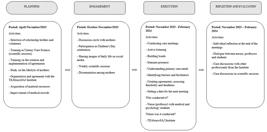
Stages of the implementation process of the unitary care agreements developed in CACTO and activities performed. Santo Antônio de Jesus, BA, Brazil, 2024.
Data analysis followed the principles of the UCS and the dimensions of human existence. Therefore, a deductive analysis was performed, categorizing the agreements based on their immersion in body, mind, and soul2. To achieve categorization, thematic content analysis11) was explored based on the following steps: identification and listing of all agreements produced (23 agreements) available on Google Drive after transcription of the audio recordings; definition of the predominant dimension of the agreements; grouping of similar agreements by theme, resulting in four initial groupings, such as relational, behavioral, spiritual, and self-discovery; exclusion of seven agreements due to repetition; and classification of the initial groupings into deductive categories (body, mind, soul).
Subsequently, a consensual analysis meeting of the categories was held with three experienced authors, when four agreements from the relational and self-discovery groupings were allocated to the body dimension, joining those classified as behavioral. Others were classified in the mind dimension, and those categorized as spiritual were categorized in the soul dimension, resulting in four agreements in the body dimension, nine in the mind dimension and three in the soul dimension.
Upon completion of the categorization, the evidence available in scientific databases was reviewed and updated, seeking the most recent, with the highest degree of recommendation and applied to mothers of children with ASD and/or disabilities. For the analysis of the facilitators and barriers to the implementation of the agreements, researchers accessed the transcripts from the care meetings. All identified facilitators and barriers were grouped without exclusion, respecting the previously conducted deductive categorization.
This study was approved by the Research Ethics Committee of the Universidade Federal do Recôncavo da Bahia through the Certificate of Presentation for Ethical Assessment (CAAE) 65573422,5,1001.0056 and Opinion no. 5,866,634 of January 27, 2023.
RESULTS
The sociodemographic and economic characterization of the mothers participating in the study is presented in Table 1.
The unitary care agreements developed in CACTO are presented in Chart 1, categorized by their purpose across the three dimensions of human existence: body, mind and soul(2). For better understanding, Table 1 includes the health needs identified by the mothers themselves and reported during the care meetings, along with the respective scientific evidence that justified the implementation of each agreement.
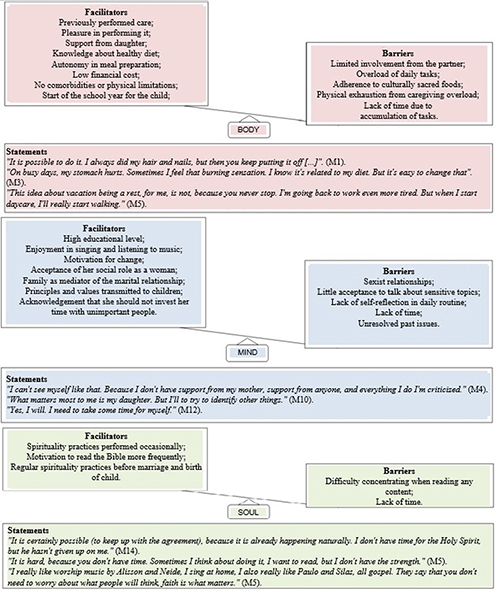
Figure 4 illustrates the barriers and facilitators for the implementation of care agreements, including the mothers’ perceptions and statements during caregiving meetings and their self-efficacy in adopting the necessary care identified by themselves.
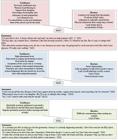
Barriers and facilitators for the implementation of unitary care agreements developed in CACTO. Santo Antônio de Jesus, BA, Brazil, 2024
DISCUSSION
The care agreement device exemplifies infinite possibilities for innovative practices in health services. The agreements presented in this study indicate new modes of providing evidence-based care that, at the same time, value subjectivity, understanding, presence, dialogue, silence, listening, and the sharing of energy during care encounters.
To reach the consensual agreements, it was necessary to give up important and dominant aspects of the current hegemonic model of care, such as consultation time, restricted emphasis on signs and symptoms, fragmentation of the human body, motivation for intervention of bodies, medicalization and excessive request for exams. The professional caregivers linked to CACTO attributed equal significance both to conventional and non-conventional care practices, respecting each and every form of knowledge existing in the universe2.
Given the importance of unitary care, triggered by the agreements and evidence cited in this study, it is important that professors, students, healthcare professionals and the community be motivated to create unique and creative forms of care. Therefore, it is necessary to improve the curricula of undergraduate and graduate health courses, including the UCS and other Care Theories in the curricular matrices and in various teaching spaces, such as in continuing education meetings. In this context, professional caregivers must value pedagogical action by practicing openness to dialogue, valuing positivity, patience and motivation, essential aspects for the reflective thinking of the professional caregiver24.
The process of implementing the care agreement device raises questions about the model of “training” individuals into “professional caregivers” as if newcomers to universities and colleges lack the values and principles necessary to cultivate caregiving encounters, even informal or popular ones. Becoming a health professional requires cultivating human intersubjectivity integrated with scientific and technical knowledge25. Therefore, health education must respect the diverse ways of existing, alongside the ethical and professional duty, to avoid promoting cultural epistemicide in favor of the “education” of automated caregivers. The aim is to create a teaching-learning relationship and more humanitarian, ethical, aesthetic and supportive spaces of care, as well as the consolidation of Implementation Science as an interdisciplinary field8, with successful experience based on collaboration between clinical, behavioral and social assistance perspectives26.
Understanding the main health needs of mothers is the driving force behind the care agreement. The mother is encouraged to self-reflect and identify the aspects that unbalance body-mind-soul, a highly complex stage, considering that few perform the analytical task of discovering themselves, their priorities, desires and the actions necessary to achieve them. This comprehensive stage is ongoing; with each encounter, something new is understood, along with identifying essential risk and protective factors to negotiate the agreement.
Expanded dialogue is one of the main tools24 for developing the agreement, respecting individualities and considering the uniqueness of each mother. This is a process in which mothers play a central role when sharing their concerns and anxieties, which are welcomed by the care team to jointly develop strategies that aim to reestablish the balance between body-mind-soul2. The professional caregiver is responsible for ensuring the strength of evidence27) of each agreement proposed by the mother. Therefore, there is an urgent need to explore scientific databases, delve into public policies and the latest recommendations of professional associations/entities, participate in various scientific events and build a continuing education agenda.
As with any care process, it is essential to discuss not only the barriers, but also the facilitators for making each agreement. Given the context of overload in which many mothers find themselves6, it is important to build accessible and achievable agreements. In this scenario, the main barrier arises, as finding time to take care of oneself is complex in the daily lives of these mothers. Thirty percent of mothers are housewives; another 35% are self-employed and farm workers, using the domestic environment to generate income; 20% are hired to work in the domestic environment of others; and 85% of women perform tiring and socially undervalued work activities. Maternal and household demands constitute major obstacles to adhering to agreements, as it is common for them to neglect self-care due to their living environment. Therefore, the challenge lies in creating feasible agreements within an exhausting routine of social impositions and, at the same time, ensuring that the agreement itself does not convey a sense of obligation or of yet another task to be accomplished.
For long-term adherence to agreed care, it is important to establish bonds2) and overcome possible barriers, which is why it is necessary to negotiate adjustments, such as changes in routine, financial adaptation, definition of supportive partners, identification of social spaces and other potential strengths of the mothers. The creation of agreements is primarily aligned with the CFIR domain of individual characteristics. Notably, the sample consisted of 80% over 31 years old, only 25% of those who had not entered high school and 5% who were not religious; therefore, positive previous experiences, years of schooling and spiritual practices facilitated the implementation of the agreements. These findings corroborate evidence showing the directly proportional association between strengthening the spiritual dimension and reducing signs and symptoms of depression23, as well as age and social relationships as conditioning factors for lifestyle changes10.
The mothers' statements highlight the duality of consciousness when living immersed in oppressive relationships, concomitant with the desire for change. Mothers directly associate the father’s lack of participation with the caregiving overload and consequently with high levels of stress, and this situation can be the cause of frequent family conflicts21. In this context, after long attempts at dialogue, they seek separation or divorce from their partner, yet require family or social support to make this decision21.
It is important to highlight that, historically, hegemonic social relationships have been, and still are, influenced by patriarchy and toxic masculinity28. Thus, for the effective implementation of agreements, it is necessary to foster relationships that value an emancipated woman who is a protagonist of her own life, beyond her roles as a mother, partner, or homemaker. Statements such as “it is possible”, “I will try” and “I need to change” indicate that motivating them to change may be the primary care action, that is, the existence of a professional caregiver immersed in Caritas-Veritas, with a unified view of the sacred existence2 of the mother, may favor the implementation of care agreements.
Self-discovery, recognizing one’s history, freely respecting one’s principles and values, identifying one’s potential, defining one’s personal and professional projects with autonomy are essential self-care for addressing certain health needs. The ways of discovering the world and understanding it can mobilize liberating power, when the person uses the jurisdiction given to them to mobilize what others are not capable of doing. This includes one’s own desires, which drive the hope of existing, achieving autonomy, and recognizing one’s knowledge, allowing the professional to have therapeutic impact in the person’s care process29.
The implementation of care agreements developed at CACTO can result in infinite impacts that are complex to measure scientifically. However, it is known that the healing of mothers positively affects their life projects, child development, and interpersonal relationships. The implementation of care agreements developed at CACTO are aligned with the Millennium Sustainable Development Goals (SDGs), such as promoting gender equality and empowering women (SDG3), improving child and maternal health (SDG4), and achieving gender equality and empowering all women and girls (SDG5)30.
The potential for creating innovative care with a humanitarian character is a powerful strategy for overcoming separatist, individualistic, competitive and profitable ways of living. The power of unitary care between two sacred beings seeks peace, liberation, solidarity, mutual co-responsibility and social justice25. Therefore, the implementation of care agreements also contemplates SDG 16: Promote peaceful and inclusive societies for sustainable development, provide access to justice for all and build effective, accountable and inclusive institutions at all levels30.
The SDGs envision a society where all lives matter, abolishing situations of poverty, inequity, exclusion and hunger. Caring is an action of solidarity-based humanity through which we can empower and nurture not only economic livelihoods, but also people as human beings who have highly individualized and sacred stories and narratives. In this way, USC offers both an artistic texture and a scientific premise for creating new connections between loving kindness, peace, social and moral justice2.
The exhaustive process that mothers faced to obtain a diagnosis and access care may have impacted their willingness and ability to create and implement agreements. Furthermore, the predominance of a medicalizing approach in previous care may have shaped the expectations and practices of participants, limiting the creation and implementation of agreements. The specific principles of voluntarism, welcoming, and associativism of the TEAbracoSAJ Institute contributed to the creation of agreements with unique characteristics, making it difficult to generalize the evidence. Therefore, the results of this study can be applied with caution to other healthcare settings.
New longitudinal action-research studies are recommended, adopting implementation science as a methodological model with sequential, interdependent, and interrelated stages, exploring the triangulation of qualitative and quantitative data for analysis and reflection on the main barriers and facilitators for professionals in unitary care practices.
FINAL CONSIDERATIONS
The implementation of the unitary care agreements developed in CACTO occurred through in-depth dialogue and the mothers' leading role. They understood their health needs and agreed, consensually with the professional caregiver, on innovative care that addresses the body-mind-soul dimensions in search of healing. The mothers judged that the implementation of the agreements could be limited by the lack of time, due to the accumulation of tasks and oppressive interpersonal relationships. On the other hand, they expressed motivation for change and spiritual practices as potential for implementation.
The results at this initial stage of the CACTO Program provoke discussions about the ideal care model for mothers. There is a lack of self-expression, self-discovery and being a protagonist, practices related to the unitary, humanitarian, comprehensive care model, based on the UCS. Therefore, it is worthwhile advancing in the search for a balance between technical work and unitary action that valuesacred relationships and triggers innovative care by professional caregivers, a fundamental pillar for contributing to epistemological development.
Acknowledgments
Institutional Program of University Extension Scholarships (Programa Institucional de Bolsas de Extensão Universitária - PIBEX) da Universidade Federal do Recôncavo da Bahia (UFRB).
REFERENCES
-
1. Vale PRLF, Costa JSP, Freitas KS, Lacerda MR, Carvalho RC, Carvalho ESS. CACTO development: care program for mothers of children with congenital zika syndrome. Texto Contexto Enferm. 2023;32:e20230007. https://doi.org/10.1590/1980-265X-TCE-2023-0007en
» https://doi.org/10.1590/1980-265X-TCE-2023-0007en - 2. Watson J. Unitary caring science: the philosophy and praxis of nursing Jean Watson. Louisville: University Press of Colorado; 2018.
-
3. Smith SL, McQuade HB. Exploring the health of families with a child with autism. Autism. 2021;25(5):1203-15. https://doi.org/10.1177/1362361320986354
» https://doi.org/10.1177/1362361320986354 -
4. World Health Organization (WHO). Autism [Internet]. Geneva: WHO; 2023 [cited 2024 mar 16]. Available from: https://www.who.int/news-room/fact-sheets/detail/autism-spectrum-disorders
» https://www.who.int/news-room/fact-sheets/detail/autism-spectrum-disorders -
5. Instituto Brasileiro de Geografia e Estatística (IBGE). PNAD, Pesquisa Nacional por Amostra de Domicílios Contínua: características gerais dos domicílios e dos moradores [Internet]. 2022 [cited 2024 Feb 12]. Available from: https://www.ibge.gov.br/estatisticas/sociais/populacao/9103- pesquisa-nacional-por-amostra-de-domicilios-continua-trimestral.html
» https://www.ibge.gov.br/estatisticas/sociais/populacao/9103- pesquisa-nacional-por-amostra-de-domicilios-continua-trimestral.html -
6. Vale PRLF, Araújo PO, Cardoso SSS, Santos Junior H, Carvalho RC, Carvalho ESS. Health needs of mothers of children with Congenital Zika Syndrome: an integrative review. Rev Bras Enferm. 2022;75(Suppl 2):e20210540. https://doi.org/10.1590/0034-7167-2021-0540
» https://doi.org/10.1590/0034-7167-2021-0540 -
7. Naheed A, Koly KN, Ahmed HU, Akhter S, Uddin MMJ, Fawzi MCS. Implementing a mental health care program and home-based training for mothers of children with Autism Spectrum Disorder in an urban population in Bangladesh: protocol for a feasibility assessment study. JMIR Res Protoc. 2017;6(12):e251. https://doi.org/10.2196/resprot.8260
» https://doi.org/10.2196/resprot.8260 -
8. Chambers DA, Emmons KM. Navigating the field of implementation science towards maturity: challenges and opportunities. Implementation Sci. 2024;19:26. https://doi.org/10.1186/s13012-024-01352-0
» https://doi.org/10.1186/s13012-024-01352-0 -
9. Damschroder LJ, Aron DC, Keith RE, Kirsh SR, Alexander JA, Lowery JC. Fostering implementation of health services research findings into practice: a consolidated framework for advancing implementation science. Implement Sci. 2009;7(4):50. https://doi.org/10.1186/1748-5908-4-50
» https://doi.org/10.1186/1748-5908-4-50 -
10. Gutierrez MAG, Ledezma CR. La salud y sus determinantes, promoción de la salud y educación sanitaria. JNNPR [Internet]. 2020[cited 2024 Feb 12];5(1):81-90. https://scielo.isciii.es/pdf/jonnpr/v5n1/2529-850X-jonnpr-5-01-81.pdf
» https://scielo.isciii.es/pdf/jonnpr/v5n1/2529-850X-jonnpr-5-01-81.pdf -
11. Braun V, Clarke V. Reflecting on reflexive thematic analysis. Qual Res Sport Exerc Health. 2019;11(4):589-97. https://doi.org/10.1080/2159676X.2019.1628806
» https://doi.org/10.1080/2159676X.2019.1628806 -
12. Zamiri-Miandoab N, Kamalifard M, Mirghafourvand M. Relationship of self-esteem with body image and attitudes toward motherhood and pregnancy. J Psychosoc Nurs Ment Health Serv. 2022;60(10):29-37. https://doi.org/10.3928/02793695-20220330-01
» https://doi.org/10.3928/02793695-20220330-01 -
13. Wang C, Yao M, ZhongH, Meena SS, Shu F, Nie S, et al. Natural foods resources and dietary ingredients for the amelioration of Helicobacter pylori infection. Front Med (Lausanne). 2023;10:1324473. https://doi.org/10.3389/fmed.2023.1324473
» https://doi.org/10.3389/fmed.2023.1324473 -
14. Ministério da Saúde (BR). Guia de atividade física para a população brasileira. Brasília: Ministério da Saúde; 2021. Available from: https://bvsms.saude.gov.br/bvs/publicacoes/guia_atividade_fisica_populacao_brasileira.pdf
» https://bvsms.saude.gov.br/bvs/publicacoes/guia_atividade_fisica_populacao_brasileira.pdf -
15. Yu J, Wei Z, Wells JC, Fewtrell M. Effects of relaxation therapy on maternal psychological status and infant growth following late preterm and early-term delivery: a randomized controlled trial. Am J Clin Nutr. 2023;117(2):340-9. https://doi.org/10.1016/j.ajcnut.2022.12.002
» https://doi.org/10.1016/j.ajcnut.2022.12.002 -
16. Wang P, Wang X. Effect of time management training on anxiety, depression, and sleep quality. Iran J Public Health [Internet]. 2018 [cited 2024 Feb 05];47(12):1822-31. Available from: https://pubmed.ncbi.nlm.nih.gov/30788296/
» https://pubmed.ncbi.nlm.nih.gov/30788296/ -
17. Kim J, Hulett J, Heiney SP. Forgiveness and health outcomes in cancer survivorship: a scoping review. Cancer Nurs. 2021;44(4):e181-92. https://doi.org/10.1097/NCC.0000000000000809
» https://doi.org/10.1097/NCC.0000000000000809 -
18. Sun Y, Ji M, Leng M, Li X, Zhang X, Wang Z. Comparative efficacy of 11 non-pharmacological interventions on depression, anxiety, quality of life, and caregiver burden for informal caregivers of people with dementia: a systematic review and network meta-analysis. Int J Nurs Stud. 2022;129:104204. https://doi.org/10.1016/j.ijnurstu.2022.104204
» https://doi.org/10.1016/j.ijnurstu.2022.104204 -
19. Tseng AA. Scientific evidence of health benefits by practicing mantra meditation: narrative review. Int J Yoga [Internet]. 2022 [cited 2024 jan 05];15(2):89-95. Available from: https://www.ncbi.nlm.nih.gov/pmc/articles/PMC9623891/
» https://www.ncbi.nlm.nih.gov/pmc/articles/PMC9623891/ -
20. Silva K, Ford CA, Miller VA. Daily parent-teen conflict and parent and adolescent well-being: the moderating role of daily and person-level warmth. J Youth Adolesc. 2020;49(8):1601-16. https://doi.org/10.1007/s10964-020-01251-9
» https://doi.org/10.1007/s10964-020-01251-9 -
21. Feldman R, Masalha S, Derdikman-Eiron R. Conflict resolution in the parent-child, marital, and peer contexts and children’s aggression in the peer group: a process-oriented cultural perspective. Dev Psychol. 2010;46(2):310-25. https://doi.org/10.1037/a0018286
» https://doi.org/10.1037/a0018286 -
22. Murugan Y, Nagarajan P, Subrahmanyam D, Kattimani S. Severity of loneliness, depression and perceived social support in adults in the emptynest stage of the family lifecycle and the influence of using digital technology. Asian J Psychiatr. 2022;76:103245. https://doi.org/10.1016/j.ajp.2022.103245
» https://doi.org/10.1016/j.ajp.2022.103245 -
23. Czyżowska N, Raszka M, Kalus A, Czyżowska D. Posttraumatic Growth and Spirituality in Mothers of Children with Pediatric Cancer. Int J Environ Res Public Health. 2021;18(6):2890. https://doi.org/10.3390/ijerph18062890
» https://doi.org/10.3390/ijerph18062890 -
24. Oliveira SN, Martini JG, Caravaca-Morera JA, Prado ML, Canever BP, Bortolato-Major C, et al. Debriefing, a dialogical space for the development of reflective thinking in nursing. Rev Gaúcha Enferm. 2024;45:e20230041. https://doi.org/10.1590/1983-1447.2024.20230041.en
» https://doi.org/10.1590/1983-1447.2024.20230041.en -
25. Saldukaitytė J. Emmanuel Levinas and Ethical Materialism. Religions. 2021;12(10):870. https://doi.org/10.3390/rel12100870
» https://doi.org/10.3390/rel12100870 -
26. Bunger AC, Chuang E, Girth AM, Lancaster KE, Smith R, Philips RJ, et al. Specifying cross-system collaboration strategies for implementation: a multi-site qualitative study with child welfare and behavioral health organizations. Implementation Sci. 2024;19:13. https://doi.org/10.1186/s13012-024-01335-1
» https://doi.org/10.1186/s13012-024-01335-1 -
27. Roberts NA, Young AM, Duff J. Using implementation science in nursing research. Seminars Oncol Nurs. 2023;39(2):151399. https://doi.org/10.1016/j.soncn.2023.151399
» https://doi.org/10.1016/j.soncn.2023.151399 -
28. Stone M. The poisoned father: Jane Campion’s the power of the dog and the unexpected relevance of Lacan to psychiatric practice. Australasian Psychiatry. 2023;31(6):758-60. https://doi.org/10.1177/10398562231186114
» https://doi.org/10.1177/10398562231186114 -
29. Tonin L, Lacerda MR, Favero L, Nascimento JD, Rocha PK, Girardon-Perlini NMO. Transpersonal caring model in home-care nursing for children with special care needs. JNEP. 2019;9(1):105-12. https://doi.org/10.5430/jnep.v9n1p105
» https://doi.org/10.5430/jnep.v9n1p105 -
30. Roma JC. Os objetivos de desenvolvimento do milênio e sua transição para os objetivos de desenvolvimento sustentável. Cienc Cult. 2019;71(1):33-9. https://doi.org/10.21800/2317-66602019000100011
» https://doi.org/10.21800/2317-66602019000100011
Access to the dataset can be obtained upon request to the corresponding author.

 Source: Research data, 2024.
 Source: Research data, 2024.
 Source: Research data, 2024.
 Source: Research data, 2024.