 Pelvic-joint and muscle mobility exercises in preparing for childbirth: a scoping review
ABSTRACT
Objective: To characterize the use of pelvic-floor muscle and joint mobility exercises in prenatal care, as well as their impact on labor and delivery.
Method: This is a scoping review conducted in the following databases: PubMed and PubMed Central, BVS/Bireme, CINAHL, Web of Science, Scopus, EMBASE, PEDro, SPORTDiscus, and the ProQuest Dissertations and Theses Global repository in January 2025. Original articles, literature reviews, care protocols, and expert opinions were included. Descriptive statistics and thematic analyses were used.
Results: Twenty-eight studies were included, of which 13 focused on pelvic floor muscle training exercises and 15 on pelvic joint mobility exercises, covering resistance and strength, aerobic, aquatic and flexibility modalities. The findings were inconsistent across studies, but they suggested benefits such as a higher rate of vaginal births, bladder incontinence prevention, pelvic floor strengthening, and reduced labor duration.
Conclusion: Pelvic joint and muscle mobility exercises are safe methods that can help during pregnancy and childbirth. However, the significance of conducting systematic reviews and meta-analyses in accordance with the exercise modality is underscored.
Descriptors:
Pregnancy; Prenatal care; Exercise and movement techniques; Pelvic floor; Complementary therapies
RESUMO
Objetivo: Caracterizar o uso de exercícios de mobilidade das articulações e músculos pélvicos na assistência pré-natal, bem como seus impactos no trabalho de parto e parto.
Método: Trata-se de revisão de escopo, realizada nas bases de dados: PubMed, PubMed Central, BVS/Bireme, CINAHL, Web of Science, Scopus, EMBASE, PEDro, SPORTDiscus e no repositório ProQuest Dissertations and Thesis Global, em janeiro de 2025. Foram incluídos artigos originais, revisões na literatura, protocolos assistenciais e opiniões de especialistas. Realizou-se análise temática e estatística descritiva dos dados.
Resultados: Foram incluídos 28 estudos, destes, 13 estudos acerca de exercícios de treinamento dos músculos do assoalho pélvico e 15 estudos relacionados a exercícios de mobilidade das articulações pélvicas, abrangendo modalidades de resistência e força, aeróbicas, aquáticas e de flexibilidade. Os resultados indicaram vantagens, tais como a diminuição da duração do trabalho de parto, o fortalecimento do assoalho pélvico, a prevenção da incontinência urinária, uma maior taxa de partos vaginais, embora os achados não tenham se mostrado consistentes entre os estudos.
Conclusão: Exercícios de mobilidade das articulações e músculos pélvicos são práticas seguras, que podem proporcionar benefícios durante a gravidez e o parto. Entretanto, ressalta-se a relevância de desenvolver revisões sistemáticas e metanálises segundo a modalidade de exercício.
Descritores:
Gravidez; Cuidado pré-natal; Técnicas de exercício e de movimento; Diafragma da pelve; Terapias complementares
RESUMEN
Objetivo: Caracterizar el uso de ejercicios de movilidad articular y muscular del suelo pélvico en la atención prenatal, así como su influencia en el trabajo de parto y el parto.
Método: Se realizó una revisión del alcance en las siguientes bases de datos: PubMed y PubMed Central, BVS/Bireme, CINAHL, Web of Science, Scopus, EMBASE, PEDro, SPORTDiscus y el repositorio global de disertaciones y tesis de ProQuest en enero de 2025. Se incluyeron artículos originales, revisiones bibliográficas, protocolos de atención y opiniones de expertos. Se efectuó un análisis temático y estadística descriptiva.
Resultados: Se incluyeron 28 estudios, de los cuales 13 abordaron ejercicios de entrenamiento muscular del suelo pélvico y 15 ejercicios de movilidad articular pélvica, que incluyen tipos de resistencia, fuerza, aeróbicos, acuáticos y de flexibilidad. Los resultados indicaron beneficios como la reducción de la duración del parto, el fortalecimiento del suelo pélvico, la prevención de la incontinencia urinaria y una mayor tasa de partos vaginales, aunque los hallazgos fueron inconsistentes entre los estudios.
Conclusión: Los ejercicios de movilidad articular y muscular pélvica son prácticas seguras que pueden proporcionar beneficios durante el embarazo y el parto. No obstante, se subraya la importancia de realizar revisiones sistemáticas y metanálisis de acuerdo con la modalidad de ejercicio.
Descriptores:
Embarazo; Cuidado prenatal; Técnicas de ejercicio y movimiento; Diafragma pélvico; Terapias complementarias
INTRODUCTION
Preparing a woman for childbirth involves performing physical mobility activities, such as mild-to-moderate aerobic exercises, in addition to health education, relaxation, and emotional support practices. Studies suggest that physical and educational preparation programs help improve the childbirth process, reducing the need for interventions and increasing women's satisfaction (1).
Recommended evidence-based practices prioritize safety and the autonomy of women at the time of birth, providing receptive environments, non-pharmacological methods of pain relief, the presence of a person of their choice, and respect for the physiology of childbirth(2). The Alyne Network, which has replaced and improved upon the old Rede Cegonha in Brazil, increases the strength of a humane model of care that is integral and egalitarian, promoting specialized obstetric care that focuses on reducing unnecessary interventions, maternal death, and eliminating inequality(3).
Currently, the World Health Organization (WHO) recommends Robson Classification as a global standard tool to evaluate, monitor, and compare cesarean rates over time, within the same hospital and among different institutions, to prevent unnecessary recommendations of c-section and interventions (4). Despite this guideline, in Brazil, cesarean sections are a common form of birth, with a rate of 56.6% from 2017 to 2022(5). Some factors could be related to these high rates of cesarean. They include fear of pain, lack of knowledge about the risks and benefits of each type of delivery, and lack of autonomy of the woman, which is still a reality in several services(5-6).
In prenatal care, educational strategies play a crucial role, as they provide information about pregnancy, labor, and childbirth(7). When combined with exercise programs - such as stretching, aerobic activities, or adapted strength training -they promote positive changes for women(8). These actions are directly linked to a substantial increase in well-being during pregnancy. This includes a decrease in symptoms of depression and anxiety, less fatigue, a relief of the discomfort in the lumbar and pelvic regions, as well as improvements in mood and sleep quality, not compromising maternal-fetal health (9-10).
Preparing a woman for childbirth includes non-pharmacological approaches, such as exercises for pelvic-joint mobility (11-13), as well as activities to strengthen pelvic floor muscles (14-15) and the perineum(15-16). Using these strategies during pregnancy can reduce labor time (11), increase vaginal delivery rates (13), and reduce cases of urinary incontinence (UI) (14-15), in addition to reducing episiotomy rates and grade III and IV lacerations (15-16).
Pelvic joint mobility exercises include alternating between standing, sitting, or lying positions; adduction and abduction movements; internal and external rotation of the legs; and exercises such as lunges. These can be performed using the weight of their own body, additional loads, or with the aid of accessories such as Swiss balls, peanut balls, or pelvic swings (11,17-19). For pregnant women, Swiss balls help promote alignment and increase their perception of their body and the changes in their center of gravity, thus reducing pelvic and lumbar pain (20-21). The Spinning Babies® method (22-23) describes pelvic exercises and positions that enable pelvic floor relaxation, pain relief during pregnancy, and, in labor, increased flexibility, rotation, and the descent of the baby through the maternal pelvis.
Pelvic floor muscle training exercises (PFMT) are often used to assist pregnant women and recommended to prevent pelvic dysfunctions, such as organ prolapse, UI, and perineal trauma, as well as to reduce the length of the second stage of labor (24-25). There are different protocols for the execution of these exercises in literature. Most women conduct their PFMT at home, at a time they are free, and under the guidance of a professional(24,26).
Thus, these exercises, by offering more adequate physical and psychological conditions to women, help them prepare for childbirth, which can culminate in beneficial results during pregnancy, at the time of delivery, and in the postpartum period. As a result, the satisfaction of the woman is greater, and there are fewer hospital interventions (11-13,15-16).
A synthesis of studies that gather strategies to prepare for labor that use joint mobility and pelvic muscle exercise would be relevant to provide this type of care, seeing as few revisions in this regard have been found(27). Given the need to identify and analyze studies about the topic, this scoping review aims to characterize the use of mobility exercise in the articulations and pelvic muscles in regard to prenatal assistance, as well as their impact on childbirth and labor.
METHODS
Study design
This scope review followed the Joanna Briggs Institute (JBI)(28) method, using as its tool the Flowchart of Preferred Report Items for Systematic Reviews and Meta-Analyses for Scope Reviews (PRISMA-ScR). Its protocol was registered in the Open Science Framework (OSF) platform under DOI 10.17605/OSF.IO/KQJU9.
Research Question, Inclusion and Exclusion Criteria, and Search Strategy
To formulate the research question, we adopted the mnemonic strategy PCC (Population, Concept, and Context). In this review, the population (P) was formed by pregnant women; the concept (C) of interest was joint mobility and pelvic muscle exercises; and the context (C) was prenatal health care services. Thus, the following research question was made: "What are the studies available about joint mobility and pelvic muscle exercises during prenatal care, presenting results during labor and childbirth?"
Were included original articles, literature reviews, health care protocols, and specialist opinions, in any language, published up to January 27, 2025. Research protocols, studies that were not available in full, and those that did not answer our question were excluded.
The following controlled descriptors were used: Pregnancy; Prenatal Care; Exercise Movement Techniques; Exercise Therapy; Exercise; Physical Therapy Modalities; Patient Positioning; Pelvic Floor, in addition to the associated English keywords from the websites Health Sciences Descriptors (DeCS) and Medical Subject Headings (MeSH).
The search strategy, including all descriptors and keywords, was adapted for each database with the help of a librarian. The databases included were: PubMed, PubMed Central (PMC), BVS/Bireme, CINAHL, Web of Science, Scopus, EMBASE, PEDro, SPORTDiscus, in addition to unconventional (gray) literature from the repository ProQuest Dissertations and Thesis Global (Chart 1).
Data Selection, Analysis, and Treatment
After the searches in the databases were conducted, the studies selected were included in the web platform Rayyan®, and duplicates were removed. The option to blind the data was activated, allowing two reviewers to analyze and select titles and abstracts independently, according to the inclusion and exclusion criteria previously established. At the end of this stage, the blinding was deactivated, and any disagreements were mediated by a third reviewer.
The studies selected by the reviewers went into a second triage stage, in which their full text was reviewed with regard to their eligibility criteria. After the texts were read in full, any disagreement was resolved after discussions were held, and the three evaluators reached a consensus. JBI appraisal tools were used to evaluate the methodological quality and the risk of bias of the studies. To deal with diverging data, the components of these tools were used by two reviewers, ensuring exactitude and reducing biases.
The researchers developed a spreadsheet for data extraction. It included eleven items aligned with the goals of this research, including: ordinal number, type and year of publication, authors, objectives, study design, place of study, population and sample, exercise(s) used during prenatal (antenatal) care, results, methodological quality, and final decision for its inclusion or not.
The results were organized in tables and charts and later summarized in narratives that aimed to describe the joint and pelvic-muscle mobility exercises. Data was submitted to a thematic analysis and descriptive statistics, being presented in absolute numbers and percentages.
Ethical aspects
This review followed pertinent ethical and methodological guidelines, preserving author rights, and it did not use artificial intelligence in its analysis. As it did not involve human beings as subjects, there was no need to submit it to ethical committees.
RESULTS
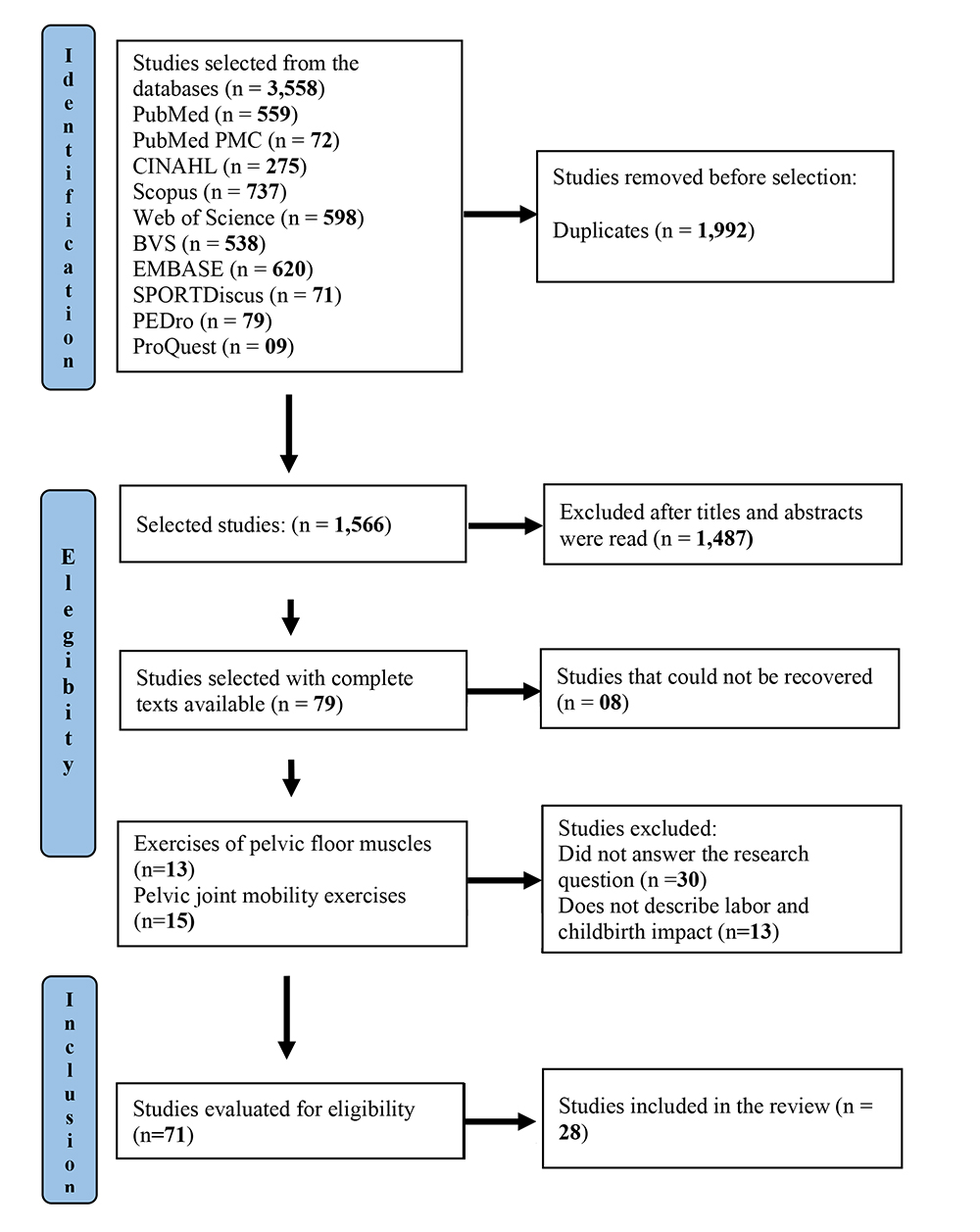
3,558 studies were found, 1,992 of which were duplicates in the databases. From the remaining 1,566, 1,487 were excluded after their titles and abstracts were read, as they were not in accordance with eligibility criteria. From the remaining 79 studies, eight did not have full texts available, 30 were excluded as they did not respond to the review question, and 13 did not describe their outcomes in labor and delivery. As a result, this revision included 28 studies. The flowchart below presents the synthesis of the study selection process (Figure 1).

PRISMA-ScR flowchart describing the process of identification of th studies included in the revision - Campinas, São Paulo, Brazil, 2025.
The quality of the studies was evaluated using JBI appraisal tools. 14 presented high-quality, (12-13,24,26,29-38); 10 , moderate (14,39-47) ;and 4, low(15,16,48-49). The studies in this review included four from Brazil (15-16,29,38); three from the United States(30,39-40), Norway(31,41-42), Spain (26,32,48), Egypt(13,31,33) , Australia(14,24,34), and China(12,35,43); two from the United Kingdom(37-38); and one each from Canada(44), India(45), Italy(46), and Poland(49). Regarding their date of publication, 10(12-13,15-16,24,26,31,34-35,39) were published in the last five years (2020 to 2024); 11(29-30,32-33,37-38,43-47) from 2015 to 2019; and 7 (14,36,40-42,48-49) between 2004 and 2013.
The studies were categorized as: 1) pelvic floor muscle training (PFMT); and 2) pelvic joint mobility exercises. Table 1 shows the exercises divided by modality, applied during prenatal (antenatal) care, and the recommendations these studies provide for these exercises.
13 studies were evaluated (14-16,24,26,33-34,37,39,42-44,46) that concerned pelvic floor muscle training, and as such were identified as PFMT. They are also known as Kegel exercises, affecting labor and delivery (Chart 1). Five studies (15,24,33-34,43) gave a report of their first PFMT session, which was supervised by physical therapists or other researchers, after which the women were monitored weekly or monthly through daily records, until their pregnancy was over.
The exercises used for PFMT showed some divergences between the protocols, starting between the 8th and 34th weeks of pregnancy (14,33,36,41-43,45), most after the 20th week(34,36,42), during prenatal. Exercise sessions were carried out daily, or from one (14)to three times a week(33). The number of repetitions per session varied from 3 to 12 contractions of the muscle of the pelvic floor(34,36,43). A systematic review with 30 ECR showed that the interventions were performed in the three trimesters of pregnancy(26). The guidance provided in all studies included carrying out exercises at home and making daily field journals.
Most studies about PFMT were conducted by physical therapists(14-16,24,33-34,36,38,41-43), followed by nurses (15,45), and obstetricians(15,34). The total number of women in the studies involving PFMT exercises was 38,118. However, two revisions (15-16) did not inform how many women participated (Chart 2).
Two reviews about the PFMT exercises showed results with the use of the Epi-No(16,39). One study described that the device significantly reduced severe lacerations and episiotomies in three of the four studies it evaluated(16), but did not report the values. Another research(24) found that two out of three studies did not identify any benefit for pregnancy and childbirth.
Among 15 studies on pelvic joint mobility exercises, 11 were about aerobic exercises and walking (12-13,30-32,37,39,44,46,47-49); 10 about resistance and strength exercises (12,29-30,35,39-40,46-49); 8 about flexibility exercises (12,29-32,40,44,48), as associated with breathing exercises (31,40); and 4 were aquatic exercises (31,40,44,46).
Protocols related to pelvic joint mobility exercises showed variations ranging from daily sessions to weekly meetings (12,32,35,44,46), lasting between 10 and 120 minutes(12,44,46). Exercising between the first(46) and second trimesters of pregnancy(13). All protocols carried out the exercises up to the end of prenatal care, except for one study, which stopped the exercises in the third trimester(37).
Studies on pelvic joint mobility exercises involved 86,822 women. One review(48) did not provide details regarding its population; for four other studies, this information did not apply (29,30,39-40). Most studies were conducted by physical therapists(29,44,47-49), followed by obstetricians(35,37) and sports specialists (32,39), nurses(35) and obstetric nurses (13). Further characteristics of these studies can be found in Chart 3.
DISCUSSION
The analysis of the studies showed a significant increase in publications during the last decade, especially those conducted by physical therapists, showing how they contributed to getting pregnant women ready for labor through joint mobility and pelvic muscle exercises during prenatal (antenatal) and the dissemination of related research.
The pelvic muscle training known as PFMT combines strength and flexibility(50). The regular evaluation of these muscles by a professional is essential, and can be conducted via surface electromyography (EMG); bidigital palpation (adapted Oxford or Ortiz scales), which is simple, well tolerated, and minimally invasive; or perineometry, which measures muscle pressure using a perineometer(16,51).
In regard to PFMT exercises, one study (26) found they were more likely to prevent severe perineal lacerations (levels III and IV), but three others (34,35,42) found no differences. Lacerations of the 3rd and 4th degrees can compromise the structures and function of the pelvic floor, leading to sexual, urinary, and coloproctological dysfunctions, as well as to prolapse, requiring multiprofessional care(52).
Although perineal massages are not the focus of this review, studies included reported a reduction of severe lacerations(16), episiotomy rates(14-16,41,49), and postpartum perineal pain(38) among women who had it performed. In 2018, the WHO recommended perineal massages starting in the 35th week of pregnancy to prevent severe lacerations(53).
Two reviews(16,38) about PFMT exercises analyzed Epi-no, a vaginal dilation device that uses an inflatable silicone balloon, in addition to the manometer and a manual bomb that leads to a gradual stretching. Studies suggest that Epi-no can reduce the risk of vaginal lacerations, reduce the length of the second stage of labor, as well as the need for analgesia(16). These findings, however, were not clearly defined by one study(16) and a systematic review(38), which were unable to find solid evidence to suggest these recommendations.
The frequency of episiotomies was lower in women who did PFMT exercises in an ECR(43), but three studies did not find significant differences(38,31,45). The WHO recommends that the rates of episiotomies should be below 10%(54), although it is still high in developing countries such as
Regarding labor length, PFMT exercises showed a reduction in the first(43) and second (24,43) stages, although a systematic review (24) did find a decrease in the second stage in women who did not practice PFMT. Two ECRs(36,42) and another review(15) did not find differences, and others studies(14,16,26,33-34) According to the WHO and the Ministry of Health in Brazil(54,57), the first period starts with regular contractions until complete dilation is reached; for a nulipara, the active stage lasts a mean of 3.8-4.3 hours, and the second stage starts with a 10 cm dilation, lasting for about 1 hour for primiparous and multiparous women. Meta-analysis indicated a reduction from 10-21 minutes in the second stage (24,43), but its results were not consistent with other studies.
As for the time of delivery, there were no differences between women who carried out PFMT exercises and those who did not(15,24,26,34,36,41,43). Only one RCT(33) found a lower percentage of cesarians, but its sample was limited, with only 20 women. Recent systematic reviews(24,26) and an RCT (58) suggest that prenatal programs with PFMT do not present consistent evidence of reduced rates of c-sections or instrumental delivery (forceps/vacuum).
A systematic review(45) found that pain during labor was lower in women who did PFMT exercises. Another study(59), started in the 30th week of pregnancy and maintained for six weeks after delivery, showed a significant reduction in pain and in the Pelvic Floor Distress Inventory-20. Furthermore, other results found (45) included increased strength in pelvic floor muscles and UI prevention during pregnancy. UI shows a prevalence of 31% in primiparous women (based on four studies: CI 95% 26,0-36,0%; I² 90,6%) and 42% in women with any number of pregnancies (27 studies, CI 95% 32,0-53,0%; I² 99,8%), explaining measures of care and prevention(60).
These findings reiterate how important it is to implement PFMT exercises as a safe and efficient strategy to reduce pain, strengthen the pelvic floor, and prevent UI, bringing benefits for the gestational and the postpartum periods(45,59,60).
Different types of exercise during pregnancy can bring significant benefits, promoting a healthier gestational period, with less risks(50). Recommended exercises include resistance and strength training (light free weights, elastic bands, body weight), aerobic (walking, light runs, biking, low-impact dancing), aquatic (swimming, water aerobics), and flexibility (stretching, pilates, yoga), respecting the physical conditioning of the pregnant woman and their previous history with these practices(61). The Brazilian Society of Cardiology states that women with no comorbidities or obstetric complications should carry out these activities to promote mother, fetus, and neonate health(50).
In prenatal care programs, resistance and strength training included postural reeducation, gluteus and quadriceps strength training, squats and crunches(12,29-30,37,39,40,46-49). Aerobic exercise involved different modalities, such as fast walking and running (12-13,30-32,37,39,44,46,48-49), while water exercises were represented by swimming and water aerobics (31,40,44,46). Flexibility exercises included yoga, stretching, table-top position, and pelvic exercises with a Swiss ball(12,29-32,40,44,48). Only four studies(13,35,37,47) evaluated a modality in isolation; the others combined strength, aerobic, aquatic, flexibility, and breathing exercises in programs to prepare for labor.
Labor preparation, including resistance and strength training, such as fast walking(37), flexibility activities (stretching and yoga)(45), and water exercises (32,46) did not increase the risk of premature labor or low weight of the baby at birth. The studies (12-13,32,35,44,46) did not find any adverse effects for the woman, the fetus, or the neonate after implementing the proposed protocols. Some authors found that strength exercises, aerobic exercises, and stretching exercises, such as the use of the Swiss ball, can help decrease lumbar pain during pregnancy(30,48).
Studies found that strength and flexibility training, and aerobics during pregnancy can reduce labor length(30-32,35,40,47). In an RCT(32), women who practiced strength training, aerobics, and stretching, showed a reduction in the first stage of their labor. Another study(35) found a reduction in the second stage, which corroborated three other studies(31,35,48). However, a meta-analysis(31) of strength training, aerobics, yoga, and stretching, associated with breathing exercises, did not find differences in the length of the first and second stages of labor.
Studies about pelvic joint mobility training found a significant increase in the rates of vaginal delivery in women who exercised by walking (37), did strength training, aerobics, or water aerobics(47), strength and flexibility training(12), aerobics and flexibility training (Swiss ball and yoga)(12), and only aerobics(13).
The American College of Obstetricians and Gynecologists (ACOG) recommends that prenatal programs include aerobic activities, resistance exercises, and flexibility, which are safe for most pregnant women and are associated with a higher chance of vaginal delivery and a lower rate of cesarean sections(62). The ACOG recommends that women with no contraindications should start these exercises in the first trimester (≥12 weeks), continuing until delivery when possible, with moderate-intensity sessions of 30 to 60 minutes three to four times a week (or even daily).
A systematic review found that water aerobics, walking, stretching, and yoga reduced the likelihood of instrumental delivery(44). Four other studies(29-30,39,49) described a reduction in cesarean rates, but only one exercise program, which focused on strengthening the gluteus, quadriceps, and abdominal muscles, led to a significant reduction (35), while the others (32,44,47) found no differences between the groups.
Studies using resistance and strength training coupled with daily aerobic exercise found that pelvic muscles were stronger (40,47), in addition to a significant increase in the likelihood that the perineum would remain intact postpartum(13). However, the studies presented heterogeneous results when it comes to evaluating lacerations and episiotomy(31,44,47-49). The authors of an RCT(63) also found no significant difference in episiotomy rates in a Swiss ball flexibility exercise program. Episiotomies were performed in 71.1% (95% CI: 55.7%-83.6%) of women in the intervention group and 80.1% (95% CI: 74%-96%) in the control group (p-value = 0.051).
This review evaluated different types of exercise for joint mobility and pelvic muscles, in the context of preparing for prenatal (antenatal) care. These exercises were applied to pregnancy and their impact was evaluated during labor, childbirth, and postpartum. Thus, it was found that, in addition to emotional and physical preparations for childbirth, these practices can encourage women to carry out part of these exercises during their hospitalization for delivery, a time in which mobility exercises and pelvic joints are often stimulated.
Exercises for pelvic joint mobility, standing posture, and movement freedom seek to optimize the physiology of childbirth, increase pelvic diameter, sacrum mobility, facilitate the descent of the fetus, and increase the efficacy of uterine contractions and second stage pulls, helping labor and delivery evolve better and increasing the participation of the woman(64).
Regarding the limitations of the study, if different descriptors or databases were included in the study, they might have helped find further research. Furthermore, the lack of relevant symptoms, of descriptors in other languages, such as Portuguese and Spanish, in addition to the lack of other descriptors, such as the thesaurus at CINAHL and the Emtree at Embase, might have been a bias in study identification. Thus, relevant research might have been neglected due to the search strategy employed.
CONCLUSION
This scoping review found that PFMT exercises were the most commonly studied, with consistent effects in preventing urinary incontinence, muscle strength, and, in some cases, in reducing the second stage of labor. Strength and resistance training brought benefits by reducing lumbar pain, improving muscle strength, and, in some studies, reducing the length of the first and second stages of labor and cesarean rates. Aerobic exercise, such as walking, was associated with physical condition improvement, increased proportion of vaginal delivery, and shorter labor and obstetric interventions. Aquatic exercises, such as swimming and water aerobics, increased mother-fetus safety and physical well-being, with no reports of significant adverse effects.
Flexibility exercises, including yoga, table-top position, and Swiss ball, helped relaxation, anxiety control, and reduced lumbar pain, while potentially leading to shorter labor. In general, all types of exercise were safe and beneficial for the physical and emotional conditioning of pregnant women, with positive effects on labor processes and child delivery. However, it is worth noting that systematic reviews and meta-analyses should be carried out for each type of pelvic joint mobility exercise, in order to consolidate evidence that could guide obstetric practices.
Acknowledgments
Fundo de Apoio ao Ensino, Pesquisa e Extensão - FAEPEX - UNICAMP.
REFERENCES
-
1. Gascoigne EL, Webster CM, Honart AW, Wang P, Smith-Ryan A, Manuck TA. Physical activity and pregnancy outcomes: an expert review. Am J Obstet Gynecol MFM. 2023;5(1):00758. https://doi.org/10.1016/j.ajogmf.2022.100758
» https://doi.org/10.1016/j.ajogmf.2022.100758 -
2. Sutcliffe KL, Dahlen HG, Newnham E, Levett K. “You are either with me on this or not”: a meta-ethnography of the influence birth partners and care-providers have on coping strategies learned in childbirth education and used by women during labour. Women Birth. 2023;36:e428-e438. https://doi.org/10.1016/j.wombi.2023.02.001
» https://doi.org/10.1016/j.wombi.2023.02.001 -
3. Ministério da Saúde (Brasil). Governo Federal lança nova estratégia para reduzir mortalidade materna em 25% até 2027 - Rede Alyne [Internet]. Brasília: Ministério da Saúde; 2024 [cited 2025 Sep 8]. Available from: https://www.gov.br/saude/pt-br/assuntos/noticias/2024/setembro/governo-federal-lanca-nova-estrategia-para-reduzir-mortalidade-materna-em-25-ate-2027
» https://www.gov.br/saude/pt-br/assuntos/noticias/2024/setembro/governo-federal-lanca-nova-estrategia-para-reduzir-mortalidade-materna-em-25-ate-2027 -
4. World Health Organization (WHO). Robson classification: implementation manual. 2017 [cited 2025 Sep 10]. Available from: https://iris.who.int/handle/10665/259512
» https://iris.who.int/handle/10665/259512 -
5. Barbosa BD, Guisard KK, Ferreira LM, Mendonça NF, Ferreira KCB. As taxas de cesáreas no brasil de 2017 a 2022: um estudo ecológico utilizando a classificação de robson. Braz. J. Implantol. Health Sci. 2024;6(12):893-905. https://doi.org/10.36557/2674-8169.2024v6n12p893-905
» https://doi.org/10.36557/2674-8169.2024v6n12p893-905 -
6. Morais MK, Castro VM, Costa Neto AM, Souza CM, Pereira ER, Souza JD, et al. Parto cesáreo no Brasil: prevalência, indicações e riscos acarretados para o binômio mãe e filho. Res Soc Dev. 2022 [cited 2025 Sep 15];11(10):e191111032466. Available from: https://rsdjournal.org/index.php/rsd/article/view/32466
» https://rsdjournal.org/index.php/rsd/article/view/32466 -
7. Abreu HD, Almeida LP, Mouta RJ, Silva SC, Zveiter M, Medina ET, et al. Contribuição do pré-natal no preparo da gestante para o trabalho de parto. Res Soc Dev [Internet]. 2021 [cited 2025 Sep 15];10(10):e405101017886. Available from: https://rsdjournal.org/index.php/rsd/article/view/17886
» https://rsdjournal.org/index.php/rsd/article/view/17886 -
8. Budler LC, Budler M. Physical activity during pregnancy: a systematic review for the assessment of current evidence with future recommendations. BMC Sports Sci Med Rehabil 2022;14:133. https://doi.org/10.1186/s13102-022-00524-z
» https://doi.org/10.1186/s13102-022-00524-z -
9. Cai C, Busch S, Wang R, Sivak A, Davenport MH. Physical activity before and during pregnancy and maternal mental health: a systematic review and meta-analysis of observational studies. J Affect Disord. 2022;15(309):393-403. https://doi.org/10.1016/j.jad.2022.04.143
» https://doi.org/10.1016/j.jad.2022.04.143 -
10. Sánchez-Polán M, Nagpal TS, Zhang D, Silva-Jose C, Montejo R, Barakat R. The influence of physical activity during pregnancy on maternal pain and discomfort: a meta-analysis. J Pers Med. 2024;14:44. https://doi.org/10.3390/jpm14010044
» https://doi.org/10.3390/jpm14010044 -
11. Delgado A, Maia T, Melo RS, Lemos A. Birth ball use for women in labor: a systematic review and meta-analysis. Complement Ther Clin Pract. 2019;35:92-101. https://doi.org/10.1016/j.ctcp.2019.01.015
» https://doi.org/10.1016/j.ctcp.2019.01.015 -
12. Ji MF, Li RB, Wei KJ, Zeng F. Influence of physical exercise interventions during pregnancy on natural childbirth: a meta-analysis. Chin Gen Pract. 2022;25(15):1897-905. https://doi.org/10.12114/j.issn.1007-9572.2021.02.136
» https://doi.org/10.12114/j.issn.1007-9572.2021.02.136 -
13. Ibrahim AA, Yousef FK. Effect of evidence-based guidelines regarding prenatal activity on maternal and neonatal health outcomes. Int J Afr Nurs Sci. 2022;100456. https://doi.org/10.1016/j.ijans.2022.100456
» https://doi.org/10.1016/j.ijans.2022.100456 -
14. Sherburn M. Critically Appraised Paper: Salvesen KA, Morkved S. Randomised controlled trial of pelvic floor muscle training during pregnancy. Aust J Physiother [Internet]. 2004 [cited 2025 Sep 15];50(4):258. Available from: https://www.sciencedirect.com/journal/australian-journal-of-physiotherapy/vol/50/issue/4
» https://www.sciencedirect.com/journal/australian-journal-of-physiotherapy/vol/50/issue/4 -
15. Biana CB, Cecagno D, Porto AR, Cecagno S, Marques VD, Soares MC. Non-pharmacological therapies applied in pregnancy and labor: an integrative review. Rev Esc Enferm USP. 2021;55:e03681. https://doi.org/10.1590/S1980-220X2019019703681
» https://doi.org/10.1590/S1980-220X2019019703681 -
16. Lima EG, Pisco DD, Oliveira CD, Batista PA, Francisco RP, Tanaka C. Intervenções fisioterapêuticas para os músculos do assoalho pélvico no preparo para o parto: revisão da literatura e proposta de manual de orientação. Fisioter Bras [Internet]. 2021 [cited 2025 Sep 15];22(2):216-32. Available from: https://docs.bvsalud.org/biblioref/2021/08/1284162/intervencoes-fisioterapeuticas-para-os-musculos-do-assoalho-pe_FACZNV1.pdf
» https://docs.bvsalud.org/biblioref/2021/08/1284162/intervencoes-fisioterapeuticas-para-os-musculos-do-assoalho-pe_FACZNV1.pdf -
17. Cavalcanti AC, Henrique AJ, Brasil CM, Gabrielloni MC, Barbieri M.. Terapias complementares no trabalho de parto: ensaio clínico randomizado. Rev Gauch Enferm. 2019;40:e20190026. https://doi.org/10.1590/1983-1447.2019.20190026
» https://doi.org/10.1590/1983-1447.2019.20190026 -
18. Rodrigues VA, Abreu YR, Santos CA, Gatti AF, Murer GM, Gontijo BD, et al. Non Pharmacological labor pain management methods and risk of cesarean birth: a retrospective cohort study. Birth; 2022;49(3):464-73. https://doi.org/10.1111/birt.12617
» https://doi.org/10.1111/birt.12617 -
19. Sousa JL, Silva IP, Gonçalves LR, Nery IS, Gomes IS, Sousa LF. Percepção de puérperas sobre a posição vertical no parto. Rev Baiana Enferm. 2018;32. https://doi.org/10.18471/rbe.v32.27499
» https://doi.org/10.18471/rbe.v32.27499 -
20. Zhang R, Xiao Y, Wei W, Wu B. Effect of birth ball abdominal core training on pregnancy fatigue, waist pain and delivery outcomes. Int J Gynaecol Obstet. 2022;158(3):613-618. https://doi.org/10.1002/ijgo.14045
» https://doi.org/10.1002/ijgo.14045 -
21. Surtiningsih YL, Sukmaningtyas W. The Effectiveness of Pelvic Rocking Exercises on the Length of Time of the First and the Second Stage of Labor. In: 1st International Conference on Community Health (ICCH). 2019. https://doi.org/10.2991/ahsr.k.200204.028
» https://doi.org/10.2991/ahsr.k.200204.028 -
22. Prata JA, Pamplona ND, Progianti JM, Mouta RJ, Correia LM, Pereira AL. Tecnologias não invasivas de cuidado utilizadas por enfermeiras obstétricas: contribuições terapêuticas. Esc Anna Nery. 2022;26. https://doi.org/10.1590/2177-9465-ean-2021-0182
» https://doi.org/10.1590/2177-9465-ean-2021-0182 - 23. Tully G. Spinning babies: guia de consulta rápida. São Paulo: Lexema; 2016.
-
24. Sobhgol SS, Smith CA, Dahlen HG. The effect of antenatal pelvic floor muscle exercises on labour and birth outcomes: a systematic review and meta-analysis. Int Urogynecology J. 2020;31(11):2189-203. https://doi.org/10.1007/s00192-020-04298-1
» https://doi.org/10.1007/s00192-020-04298-1 -
25. Nascimento SL, Godoy AC, Surita FG, Pinto e Silva JL. Recomendações para a prática de exercício físico na gravidez: uma revisão crítica da literatura. Rev Bras Ginecol Obstet. 2014; 36(9):423-31. https://doi.org/10.1590/so100-720320140005030
» https://doi.org/10.1590/so100-720320140005030 -
26. Zhang D, Bo K, Montejo R, Sánchez-Polán M, Silva-José C, Palacio M, Barakat R. Influence of pelvic floor muscle training alone or as part of a general physical activity program during pregnancy on urinary incontinence, episiotomy and third- or fourth-degree perineal tear: systematic review and meta-analysis of randomized clinical trials. Acta Obstet Gynecol Scand. 2024;103(6):1015-27. https://doi.org/10.1111/aogs.14744
» https://doi.org/10.1111/aogs.14744 -
27. Mafetoni RR, Rubira ACA, Carmona EV, Balaminut T, Sanfelice CFO, Lopes MHBM. Exercícios de mobilidade da pelve na assistência pré-natal: um protocolo de revisão de escopo. Rev Enferm UFJF. 2023:9(1). https://doi.org/10.34019/2446-5739.2023.v9.42257
» https://doi.org/10.34019/2446-5739.2023.v9.42257 -
28. Peters MD, Marnie C, Tricco AC, Pollock D, Munn Z, Alexander L, et Al. Updated methodological guidance for the conduct of scoping reviews. JBI Evid Synth. 2020;18(10):2119-26. https://doi.org/10.11124/jbies-20-00167
» https://doi.org/10.11124/jbies-20-00167 -
29. Miquelutti M, Cecatti J, Makuch M. Developing strategies to be added to the protocol for antenatal care: an exercise and birth preparation program. Clinics. 2015;70(4):231-6. https://doi.org/10.6061/clinics/2015(04)02
» https://doi.org/10.6061/clinics/2015(04)02 -
30. Ziel E, Smith KM. Guidelines and practical tips for training the prenatal client. Strength Cond J. 2017;39(4):55-63. https://doi.org/10.1519/SSC.0000000000000320
» https://doi.org/10.1519/SSC.0000000000000320 -
31. Masoud AT, AbdelGawad MM, Elshamy NH, Mohamed OM, Hashem ZY, Abd Eltawab AK, et al. The effect of antenatal exercise on delivery outcomes: a systematic review and meta-analysis of randomized controlled trials. J Gynecol Obstet Hum Reprod. 2020;49(6):101736. https://doi.org/10.1016/j.jogoh.2020.101736
» https://doi.org/10.1016/j.jogoh.2020.101736 -
32. Barakat R, Franco E, Perales M, López C, Mottola MF. Exercise during pregnancy is associated with a shorter duration of labor: a randomized clinical trial. Eur J Obstet Amp Gynecol Reprod Bio. 2018;224:33-40. https://doi.org/10.1016/j.ejogrb.2018.03.009
» https://doi.org/10.1016/j.ejogrb.2018.03.009 -
33. El-Shamy FF, Abd El Fatah E. Effect of antenatal pelvic floor muscle exercise on mode of delivery: a randomized controlled trial. Integr Med Int. 2018;4(3-4):187-97. https://doi.org/10.1159/000488351
» https://doi.org/10.1159/000488351 -
34. Sobhgol SS, Smith CA, Thomson R, Dahlen HG. The effect of antenatal pelvic floor muscle exercise on sexual function and labour and birth outcomes: a randomised controlled trial. Women Birth . 2022;35(6):607-14. https://doi.org/10.1016/j.wombi.2022.02.009
» https://doi.org/10.1016/j.wombi.2022.02.009 -
35. Huang S, Mao X, Li Y, Chen A, Qiu J. Are pelvic-abdominal mechanics exercises effective for cesarean delivery rate and postpartum pelvic floor function: a randomized controlled trial. J Sci Med Sport. 2024;27(10):678-683. https://doi.org/10.1016/j.jsams.2024.04.009
» https://doi.org/10.1016/j.jsams.2024.04.009 -
36. Agur W, Steggles P, Waterfield M, Freeman R. Does antenatal pelvic floor muscle training affect the outcome of labour? a randomised controlled trial. Int Urogynecology J . 2007;19(1):85-8. https://doi.org/10.1007/s00192-007-0391-z
» https://doi.org/10.1007/s00192-007-0391-z -
37. Kuhrt K, Harmon M, Hezelgrave NL, Seed PT, Shennan AH. Is recreational running associated with earlier delivery and lower birth weight in women who continue to run during pregnancy? an international retrospective cohort study of running habits of 1293 female runners during pregnancy. BMJ Open Sport Amp Exerc Med. 2018;4(1):e000296. https://doi.org/10.1136/bmjsem-2017-000296
» https://doi.org/10.1136/bmjsem-2017-000296 -
38. Schreiner L, Crivelatti I, Oliveira JM, Nygaard CC, Santos TG. Systematic review of pelvic floor interventions during pregnancy. Int J Gynecol Amp Obstet. 2018;143(1):10-8. https://doi.org/10.1002/ijgo.12513
» https://doi.org/10.1002/ijgo.12513 -
39. Wojnowich K, Dhani R. Care of the active female. Am Acad Fam Physicians [Internet]. 2022 [cited 2025 Sep 15];106(1):52-60. Available from: https://www.aafp.org/pubs/afp/issues/2022/0700/active-female.html
» https://www.aafp.org/pubs/afp/issues/2022/0700/active-female.html -
40. Teare T. Ready, set, push! Fit Pregnancy [Internet]. 2010 [cited 2025 Sep 15];17(3):40. Available from: https://research.ebsco.com/linkprocessor/plink?id=e408421e-e6d0-376f-8fc4-a830b571ce2e
» https://research.ebsco.com/linkprocessor/plink?id=e408421e-e6d0-376f-8fc4-a830b571ce2e -
41. Bø K, Fleten C, Nystad W. Effect of antenatal pelvic floor muscle training on labor and birth. Obstet Amp Gynecol. 2009;113(6):1279-84. https://doi.org/10.1097/AOG.0b013e3181a66f40
» https://doi.org/10.1097/AOG.0b013e3181a66f40 -
42. Salvesen KÅ, Mørkved S. Randomised controlled trial of pelvic floor muscle training during pregnancy. BMJ. 2004;329(7462):378-80. https://doi.org/10.1136/bmj.38163.724306.3A
» https://doi.org/10.1136/bmj.38163.724306.3A -
43. Du Y, Xu L, Ding L, Wang Y, Wang Z. The effect of antenatal pelvic floor muscle training on labor and delivery outcomes: a systematic review with meta-analysis. Int Urogynecology J . 2015;26(10):1415-27. https://doi.org/10.1007/s00192-015-2654-4
» https://doi.org/10.1007/s00192-015-2654-4 -
44. Davenport MH, Ruchat SM, Sobierajski F, Poitras VJ, Gray CE, Yoo C, et al. Impact of prenatal exercise on maternal harms, labour and delivery outcomes: a systematic review and meta-analysis. Br J Sports Med. 2018;53(2):99-107. https://doi.org/10.1136/bjsports-2018-099821
» https://doi.org/10.1136/bjsports-2018-099821 -
45. Prince EJ, Seshan V. The effect of selected antenatal exercises in reduction of labor pain among primigravid women: implication for practice. J South Asian Fed Obstet Gynaecol. 2015;7(3):185-90. https://doi.org/10.5005/jp-journals-10006-1353
» https://doi.org/10.5005/jp-journals-10006-1353 -
46. Di Mascio D, Magro-Malosso ER, Saccone G, Marhefka GD, Berghella V. Exercise during pregnancy in normal-weight women and risk of preterm birth: a systematic review and meta-analysis of randomized controlled trials. Am J Obstet Gynecol. 2016;215(5):561-71. https://doi.org/10.1016/j.ajog.2016.06.014
» https://doi.org/10.1016/j.ajog.2016.06.014 -
47. Bø K, Hilde G, Stær-Jensen J, Siafarikas F, Tennfjord MK, Engh ME. Does general exercise training before and during pregnancy influence the pelvic floor “opening” and delivery outcome? a 3D/4D ultrasound study following nulliparous pregnant women from mid-pregnancy to childbirth. Br J Sports Med . 2014;49(3):196-9. https://doi.org/10.1136/bjsports-2014-093548
» https://doi.org/10.1136/bjsports-2014-093548 -
48. Romero-Morante M, Jiménez-Reguera B. Actuación del fisioterapeuta durante la gestación, parto y posparto. Fisioterapia. 2010;32(3):123-30. https://doi.org/10.1016/j.ft.2009.11.002
» https://doi.org/10.1016/j.ft.2009.11.002 -
49. Szumilewicz A, Wojtyła A, Zarębska A, Drobnik-Kozakiewicz I, Sawczyn M, Kwitniewska A. Influence of prenatal physical activity on the course of labour and delivery according to the new Polish standard for perinatal care. Ann Agric Environ Medice [Internet]. 2013 [cited 2025 Sep 15];20(2):380-9. Available from: https://www.aaem.pl/Influence-of-prenatal-physical-activity-on-the-course-of-labour-and-delivery-according,71946,0,2.html
» https://www.aaem.pl/Influence-of-prenatal-physical-activity-on-the-course-of-labour-and-delivery-according,71946,0,2.html -
50. Campos MSB, Buglia S, Colombo CSSS, Buchler RDD, Brito ASX, Mizzaci CC, et al. Posicionamento sobre Exercícios Físicos na Gestação e no Pós-Parto - 2021. Arq Bras Cardiol. 2021;117(1):160-80. https://doi.org/10.36660/abc.20210408
» https://doi.org/10.36660/abc.20210408 -
51. Marques J, Botelho S, Pereira LC, Lanza AH, Amorim CF, Palma P, et al. Pelvic floor muscle training program increases muscular contractility during first pregnancy and postpartum: electromyographic study. Neurourol Urodyn. 2012;32(7):998-1003. https://doi.org/10.1002/nau.22346
» https://doi.org/10.1002/nau.22346 -
52. Mamede L, Marano D, Dias MAB, Souza Jr PRB. Prevalence and factors associated with the perception of perineal laceration: a cross-sectional study with data from the Nascer no Brasil Survey, 2011 and 2012. Epidemiol Serv Saúde. 2024;33: e2023621. https://doi.org/10.1590/S2237-96222024V33E2023621.EN
» https://doi.org/10.1590/S2237-96222024V33E2023621.EN -
53. World Health Organization. Intrapartum Care for Positive Childbirth Experience [Internet]. Geneva: WHO; 2018 [cited 2025 Sep 15]. Available from: https://www.who.int/publications/i/item/9789241550215
» https://www.who.int/publications/i/item/9789241550215 -
54. World Health Organization (WHO). World Health Organization recommendations: intrapartum care for a positive childbirth experience [Internet]. Geneva: WHO ; 2018 [cited 2025 Sep 15]. Available from: https://www.who.int/publications/i/item/9789241550215
» https://www.who.int/publications/i/item/9789241550215 -
55. Juraci AC, Mendoza-Sassi RA, Marmitt LP. Evolution of care during pregnancy and childbirth in the extreme south of Brazil. Rev. de Saúde Pública. 2021:55. https://doi.org/10.11606/s1518-8787.2021055003128
» https://doi.org/10.11606/s1518-8787.2021055003128 -
56. Djusad S, Permatasari II, Futihandayani A, Shahnaz P, Hadiwinata D, Herianti HF. Analysis of episiotomy incidence and risk factors in vaginal deliveries: a single-center. AJOG Glob Rep. 2024;4(3):100371. https://doi.org/10.1016/j.xagr.2024.100371
» https://doi.org/10.1016/j.xagr.2024.100371 -
57. Ministério da Saúde (BR). Diretrizes nacionais de assistência ao parto normal [Internet]. Brasília: MS; 2017 [cited 2025 Sep 15]. Available from: https://www.gov.br/conitec/pt-br/assuntos/noticias/2017/marco/diretrizes-nacionais-de-assistencia-ao-parto-normal
» https://www.gov.br/conitec/pt-br/assuntos/noticias/2017/marco/diretrizes-nacionais-de-assistencia-ao-parto-normal -
58. Johannessen HH, Mørkved S, Salvesen KÅ, Lukasse M, Mørkved S, Stafne SN. Regular antenatal exercise including pelvic floor muscle training reduces urinary incontinence 3 months postpartum: follow up of a randomized controlled trial. Acta Obstet Gynecol Scand . 2021;100(2):294-301. https://doi.org/10.1111/aogs.14010
» https://doi.org/10.1111/aogs.14010 -
59. Yetişkin G, Dinç Kaya H. The effect of pelvic floor muscle exercises applied during pregnancy on genito-pelvic pain level in postpartum period. Int Urogynecol J. 2022;33(10):2791-99. https://doi.org/10.1007/s00192-022-05225-2
» https://doi.org/10.1007/s00192-022-05225-2 -
60. Moossdorff-Steinhauser HFA, Berghmans BCM, Spaanderman MEA, Bols EMJ. Prevalence, incidence and bothersomeness of urinary incontinence in pregnancy: a systematic review and meta-analysis. Int Urogynecol J. 2021;32(7):1633-52. https://doi.org/10.1007/s00192-020-04636-3
» https://doi.org/10.1007/s00192-020-04636-3 -
61. Gregg VH, Ferguson JE. Exercise in pregnancy. Clin Sports Med. 2017;36(4):741-52. https://doi.org/10.1016/j.csm.2017.05.005
» https://doi.org/10.1016/j.csm.2017.05.005 -
62. American College of Obstetricians and Gynecologists. Physical activity and exercise during pregnancy and the postpartum period: ACOG Committee Opinion No. 804. Obstet Gynecol [Internet]. 2020 [cited 2025 Sep 25]. Available from: https://www.acog.org/clinical/clinical-guidance/committee-opinion/articles/2020/04/physical-activity-and-exercise-during-pregnancy-and-the-postpartum-period
» https://www.acog.org/clinical/clinical-guidance/committee-opinion/articles/2020/04/physical-activity-and-exercise-during-pregnancy-and-the-postpartum-period -
63. Ghandali NY, Iravani M, Habibi A, Cheraghian B. The effectiveness of a Pilates exercise program during pregnancy on childbirth outcomes: a randomised controlled clinical trial. BMC Pregnancy Childbirth. 2021;21:480. https://doi.org/10.1186/s12884-021-03922-2
» https://doi.org/10.1186/s12884-021-03922-2 -
64. Costa AC, Prata JA, Oliveira KR, Silva CRF, Progianti JM, Mouta RJO, et al. Liberdade de movimentos e posicionamentos no parto com as tecnologias não invasivas de cuidados de enfermagem. Cogitare Enferm. 2023;28:e84830. https://doi.org/10.1590/ce.v28i0.84830
» https://doi.org/10.1590/ce.v28i0.84830
The data can be accessed via contact with the corresponding author.