 Implementation of a line of care for older adults in a teaching hospital
ABSTRACT
Objective: To outline the design and implementation processes of a Line of Care for older adults at a teaching hospital in Southern Brazil.
Methods: This cross-sectional study was conducted at the Hospital de Clínicas de Porto Alegre using the improvement model based on Plan-Do-Study-Act (PDSA) cycles. The results analyzed were collected from the institution's databases for the period between 2019 and 2024. A descriptive statistical analysis was performed on the data.
Results: The Care Line was implemented for hospitalized patients in wards and emergency departments, as well as for outpatients, considering the prevalent conditions in older adults. The actions were related to mental health, mobility, and drugs used, from the perspective of the older patients and their caregivers, developed according to the improvement model. Stand out the formation of a team of champions, situational diagnoses, the construction of multiprofessional protocols for the care of the older adult, and the prevention and treatment of delirium, as well as the monitoring of processes to guide new actions based on the results obtained.
Conclusion: The Care Line is being implemented through a program grounded in the science of improvement and practices for older adults' care, enhancing clinical practice, education, and care management.
Descriptors:
Aged people; Health services for the aged; Quality of Healthcare; Total Quality Management
RESUMO
Objetivo: Descrever o processo de desenvolvimento e implementação da Linha de Cuidado à Pessoa Idosa por meio de um projeto de melhoria
Métodos: Estudo transversal, realizado no Hospital de Clínicas de Porto Alegre baseado no modelo de melhoria com ciclos de Planejar-Fazer-Estudar-Agir com resultados do período entre 2019 a 2024 coletados em bancos de dados da instituição. Realizada análise estatística descritiva.
Resultados: A Linha de Cuidado foi implementada nas internações, emergência e ambulatório, baseada na necessidade de cuidados complexos e considerando as condições mais prevalentes em pessoas idosas. As ações foram relacionadas à saúde mental, à mobilidade, à prescrição de medicações, na perspectiva das pessoas idosas e seus cuidadores, desenvolvidas com base no modelo de melhoria. Destacam-se as atividades de formação de time de campeões, diagnóstico situacional, construção de protocolos multiprofissionais de cuidado à pessoa idosa e de prevenção e tratamento de delirium, monitoramento de processos e novas ações com base nos resultados obtidos.
Conclusão: A Linha de Cuidado segue em implementação por meio de programa baseado em evidências da ciência da melhoria e das melhores práticas com pessoas idosas, permitindo qualificar a prática clínica, o ensino e a gestão do cuidado.
Descritores:
Pessoas idosas; Serviços de saúde para idosos; Qualidade da assistência à saúde; Gestão da Qualidade Total
RESUMEN
Objetivo: Describir el proceso de implementación de la Línea de Atención al Adulto Mayor en un hospital universitario.
Métodos: Estudio transversal, realizado en el Hospital de Clínicas de Porto Alegre a partir del modelo de mejora con ciclos Planificar-Hacer-Estudiar-Actuar con presentación de los resultados encontrados en el período comprendido entre 2019 y 2024 recuperados de las bases de datos de la institución. Se realizó análisis estadístico descriptivo.
Resultados: Se implementó la Línea de Atención en internaciones, urgencias y ambulatorios para pacientes mayores hospitalizados, de acuerdo con las condiciones prevalentes en estas personas. Se realizó acciones desarrolladas utilizando el modelo de mejoría, con respecto a la salud mental, la movilidad, y los medicamentos, desde la perspectiva de los adultos mayores y sus cuidadores. Actividades destaque incluyen la formación de un equipo de campeones, el diagnóstico situacional, la construcción de protocolos multiprofesionales de cuidado para la persona mayor, incluyendo la prevención y tratamiento de delirium, para allá del seguimiento de procesos, orientando nuevas acciones en función de los resultados obtenidos.
Conclusión: La Línea de Atención sigue implementándose a través de un programa basado en evidencia de mejoramiento científico y mejores prácticas con personas mayores, permitiendo calificar la práctica clínica, la docencia y la gestión del cuidado.
Descriptores:
Anciano; Servicios de salud para ancianos; Gestión continuada de la calidad; Gestión de la Calidad Total
INTRODUCTION
The Brazilian demographic and epidemiological transition has led to a substantial change in the use of services and required many adaptations to the health care network. Older adults are the age group that most often uses health resources, especially in their last years of life. In developing countries, 60-year-old or older people are considered older adults, and those who are 75 or above are considered "oldest-old" people. In Brazil, a research from 2023 showed that 3.6% of the population was 75 or older, and data from the Hospital Information System showed that these people represented 10.99% of the hospitalizations in the Single Health System (SUS) from January to December, 20231,2.
Absolute and relative hospitalization numbers in this specific population should considerably increase in the next two decades, considering the epidemiological transition that has been taking place, which is characterized by a high prevalence and incidence of non-communicable chronic diseases (NCDs)3. The growth of NCD is directly related to the growing need of care among older people, including urgent care and elective hospitalization4. Since this is an age group with common physical vulnerabilities (ex., weakness, multimorbidity), as well as mental and social ones, clinical and functional complications associated with the hospitalization period are common. Some conditions stand out among these, including delirium (or an acute confused state), polypharmacy, frailty, immobility, falls, pressure wounds, nutritional impairment, social support, and others5-7.
It is also relevant to note that complications associated with hospitalizations are preventable, and a significant part of them are caused by failures in the health care process as a whole. These are high complexity settings, associated with the presence of concurrent risks and multisystem vulnerabilities. Thus, they demand integrated and horizontal actions, with multiple components. Works showing the effectiveness of multicomponent programs to prevent adverse events in elderly patients were published more than two decades ago, but the planning and implementation of elderly care in hospitals is still mostly composed of isolated interventions8. Integral action is significant, especially in teaching and general hospitals, especially in institutions that provide patient care through the Unified Health System.
When it comes to initiatives to improve hospital care, especially for the most vulnerable, it is fundamental to implement institutional policies to diagnose, treat, and prevent the many conditions prevalent in older adults. Doing so would enable the delivery of quality care, aligned with therapeutic objectives to minimize iatrogenesis (9.
From a perspective of quality and safety, the approach to older persons should include interventions that preserve their autonomy, encourage mobility, monitoring the medications they use and their cognitive conditions, in line with the individual preferences and values of each older person10,11. Preserving the functionality of the older adult during hospitalization is not only a therapeutic goal, but an important prognostic marker, even more important than that of individual diseases, considered in isolation. Additionally, scores of frailty, vulnerability, functionality, and delirium have been used as indicators of care quality 12.
Other principles that are important to improve the care provided to older adults include the awareness of health professionals and support teams about the limitations that aging imposes, and the identification of environmental and behavioral barriers that hinder safe and quality care (13. Therefore, since this is a highly complex scenario, in which many different elements interact, including institutional culture and built environment structures, projects to improve the care of hospitalized older people should be anchored in multidimensional approaches applied by interprofessional teams, in order to achieve the expected results 14.
In 2019, the Institute for Healthcare Improvement (IHI), in partnership with The John A. Hartford Foundation, proposed the Age-Friendly Health Systems initiative. This initiative adopted the "4Ms", namely, What Matters, Medication, Mentation, and Mobility. The 4Ms are related to complex acute care and rehabilitation settings. For a service to be an Age-Friendly Health System, the Institute added to the care references a proposal to adopt the changes using the "Improvement Model". The Improvement Model provides a structure for the implementation of changes that need to be adopted for an effective approach. This approach involves organizing the goals of the change, the actions necessary to reach it, and how to monitor it. To do so, iterative change tests are used on a small scale, being safely and consistently adopted, with the participation of the teams involved in the execution of the new process15.
In order to structure care for older adults, the Hospital de Clínicas de Porto Alegre (HCPA) included, in its 2019 Business and Strategic Management Plan, the development of a Line of Care for Older Adults. To this end, the Institutional Older Adult Care Program was designed, proposing actions based on the IHI framework, aimed at assistance, continued education, management, teaching, and research.
As a result, the objective of this study is to describe the process of development and implementation of the Line of Care for Older Adults through an improvement project, based on the following questions: How to implement a line of care directed at older adults that would allow a sustainable change? And what is the perceived impact can of this implementation? The thorough detailing of a wide-ranging multidisciplinary and horizontal project is intended to encourage and enable its replication in other hospitals.
METHOD
Design and context
Cross-sectional study, with data from 2019 to 2024,in accordance with the recommendations of the Standards for Quality Improvement Reporting Excellence tool (SQUIRE 2.0)16. It was carried out at the Hospital de Clínicas de Porto Alegre (HCPA), a public university hospital with 850 beds for specialized care, located in southern Brazil. One clinical unit specializes in the care of older people, who, preferably, are attended by the geriatric teams, although people from this age group can be admitted to any unit. The Line of Care for the Older Adults started to be structured in 2019, with the Institutional Care Program for the Elderly Patient of the HCPA, which was released in the same year. The Line aims to focus on providing care for older adults and their needs.
Interventions
The actions implemented were based on the references proposed by the IHI through the initiative of Age-Friendly Health Systems. This initiative provides support and tools for health services to implement this system. It is not a program, but a framework for each institution to develop its own program, according to its context, based on a set of measures that reflect best practices 15.
To implement in-hospital older patient care, the IHI proposes the adoption of the 4Ms and the Improvement Model methodology, using Plan-Do-Study-Act (PDSA) cycles to support the adoption of practices associated with this set of measures. In the planning stage, the IHI15 proposes, as a first measure, a situational diagnosis of the baseline care context, identifying the previously installed institutional actions, care plans and institutional protocols that are in line with the 4Ms. Champions, that is, professionals who work in the institution and have training and/or are involved with the geriatrics/gerontology field, are also identified to be a part of the project team.
The second stage, "Do", aims to implement actions on a small scale. It is essential to implement the care protocols in a gradual and systematic manner, defining which indicators must be monitored. In the HCPA, after performing a situational diagnosis, the professionals who participated in the project team held monthly meetings to propose improvements and define how to implement them on a small scale, as reported. A member of the group was chosen to be responsible for implementations, and a work subgroup was formed to act on each initiative. A deadline was defined for evaluating the performance of each action in the larger group. After making necessary adjustments, the last step - "act" - was related to expanding the action to a greater scale within the institution. During the third stage, "study", the performance of the actions was evaluated and, in the last stage, "act", the improvements were discussed, as well as how to implement them. New improvements to the local context involved structuring the management of older people, which was a co-responsibility of the geriatric and surgical teams. This included an Early Care and Treatment Plan, actions directed at caregivers, volunteer projects, and care transition strategies. These actions will be described in the results.
Assessment of Interventions
After planning and the first actions, the adherence of the teams and their performance started to be monitored. The process indicators used to monitor the interventions were: prevalent cases and cases of delirium, proportion of patients using the Confusion Assessment Method (CAM) scale 17), adherence of professionals to the records according to the care protocol and proportion of potentially inappropriate drug prescriptions to older adults. The training of the professionals who joined the institution was also monitored. Data was obtained by manually reviewing the electronic medical records, which were electronic forms input into a panel to monitor the results monthly. In addition to adherence, the monthly analyses allowed the work group to ascertain whether or not there were improvements in the processes implemented, resume actions, identify weaknesses, and propose new interventions.
Instruments
The database from which process indicators data was extracted was created from clinical information recorded in the electronic medical records. Data about production and care indicators was gathered from the hospital's information system (proportion of people aged 60 or older, considering all those aged 20 or older and excluding obstetric patients), such as length of stay of patients who were 60 or older, proportion of readmissions in 30 days, and specialties and units to which older people were admitted and prescription of medications. Before and during the implementation of the Program, surveys were conducted with the older adults and/or their caregivers. Point-prevalence observations for specific conditions were also conducted.
The appropriateness of drug prescriptions was evaluated considering the prevalence of potentially inappropriate drugs as assessed by the Anticholinergic Risk Scale 18. Patients making use of any anticholinergic drug and high risk for delirium (3 points or more) were identified in a pre-implementation survey of the program. We also identified which drugs are not recommended for prescription in older people with delirium19 (IV antipsychotics and antihistamines) in a pre-implementation survey; their use was also periodically monitored by the program.
The CAM scale was used to identify the presence of delirium 17.
Analysis
A descriptive statistical analysis was performed.
Ethical considerations
The project was approved by the HCPA Research Ethics Committee under register 2024-0160.
RESULTS
The following are the results obtained during the implementation of the Line of Care for the Older Adults at the Hospital de Clínicas de Porto Alegre, showing a collaborative effort of professionals from many fields. Our results express actions involving the planning of the line, the first interventions and how the group conducted the study of the performance of the line and proposed new actions.
To establish the program, colleagues from different professional categories (administration, pharmacy, physiotherapy, speech therapy, nursing, medicine, nutrition, psychology, social work) who were interested in the field of aging and/or training in the field of geriatrics or gerontology were identified, and an initial group of champions with 21 people was formed.
Diagnosing the institutional context in the care of the older adults was the next step. Patients who were 60 or older were separated into two groups: from 60 and 74, and 75 or older. Approximately 43% of adults hospitalized at the institution are 60 or older, receive care for in emergency, surgical, clinical, and psychiatric units, as well as in intensive care (Table 1). Table 1 also shows the results of some indicators monitored in the Line of Care, demonstrating a reduction in length stay, rehospitalizations of up to 28 days, number of falls, and pressure injuries in the older population.
There was a mean of 5.53 (range 1 to 15) morbidities in older people aged 75 or older. Cardiovascular, infectious, neoplastic, and neurological diseases were the most common. We also found that 14% of HCPA patients in this age group had no previous register with the health and social care network, a proportion that has remained constant. Regarding delirium, the first results were found considering point prevalence, with the support of a team of specialists in the field of geriatrics and gerontology. It was found that 20% of people aged 75 or older were in delirium in the emergency department.
As for the prescription of potentially inappropriate drugs to older adults, there was a prevalence of 92.3% of patients aged 75 or older with these prescriptions in 2019. 46.4% of these patients had been prescribed drugs with high anticholinergic risks. IV antipsychotics and antihistamines were also in 3.4% of prescriptions. Today, we monitor inappropriate antipsychotics (intravenous haloperidol, chlorpromazine, and levomepromazine) and antihistamines prescriptions in patients aged 75 or older who are in delirium; as a result, these inadequacies have been reduced to near zero.
At the time, a diagnosis was also made from the perspective of older adults and their caregivers, through a survey on what mattered or impacted them in issues related to communication and architectural barriers. The main difficulties reported included the access when arriving at the hospital; signage within the hospital; lighting in the units; posters with small letters; distances to be traveled within the institution; uncomfortable armchairs in the emergency room; and lack of communication between multidisciplinary teams. Improvements such as multiprofessional rounds, better distribution of lighting, and support bars in some units have already been carried out.
Protocols for the Assistance to Hospitalized Older Adults and for the Prevention and Management of Delirium were developed using the 4Ms intervention package and the information about care already provided by the institution. They targeted the 75 or older population, since the likelihood of acquiring chronic diseases or disability increases with age. The progressive decrease in capacity and functional reserves also increases the susceptibility to health problems and, consequently, the possibility of death. The Protocol for the Assistance to Hospitalized Older Adults involves a multidimensional assessment to identify a vulnerable elder, as well as the care to be implemented by each professional of the team in these cases. In addition, it states that all professionals must be aware of the possibility of physical and psychological violence and neglect. As the Protocol for the Assistance to Hospitalized Older Adults was created, the Delirium Protocol for nursing wards and emergency units was established and implemented (Figure 1). A systematized screening for delirium was structured for all elders above 75 (Figure 2).
Before publication and availability in the electronic system used by all HCPA professionals, the institutional protocols for the care of the older adults were opened for public consultation.
Flowchart of the Protocol for the Assistance to Hospitalized Older Adults, Porto Alegre, Rio Grande do Sul, Brazil, 2019.

Flowchart of the prevention and management of delirium in hospitalization and emergency units. Porto Alegre, Rio Grande do Sul, Brazil, 2019.
Starting with their publication, the implementation of the protocols was carried out in in cycles, gradually increasing in scale in the most relevant care units. A task force was established to train the multidisciplinary team. Its goal was training 90% of the teams, which was done.
The systematized assessment of delirium was performed in a surgical unit, at first. Later, it was expanded to other hospitalization units and the emergency service. After teams adopted the PDSA cycle assessment, the scale was adapted and included in the computer system, allowing users to visualize the presence of delirium through a visual warning placed in the patients' medical records. Figure 3 shows the percentage of 75 or older people who presented delirium at admission. The prevalence of elective cases (those admitted directly to the clinical or surgical wards, without going through emergency) ranged from 0% to 7%. Among those admitted into emergency, from 10% to 23% presented delirium.

Proportion of delirium at admission according to the Confusion Assessment Method scale between January 2022 and December 2023. Porto Alegre, Rio Grande do Sul, Brazil, 2024.
In order to reduce complications and hospitalization time and avoid readmissions, older adults were co-managed by geriatrics and surgical specialists, due to a partnership with the Vascular Surgery Service started in March 2020, since this is one of the surgical specialties that attends the highest percentage of older individuals. All elders who were 75 or older and hospitalized for vascular surgery were automatically followed by the co-management team and went through geriatrics consultations, so clinical situations could be addressed and actions taken to protect them from adverse in-hospital events. Other surgical specialties may consult with the geriatrics team to receive a specialized opinion or even daily clinical follow-up.
The Early Care and Treatment Plan (PACTo) was established for all adults in 2020-2021. The PACTo supports discussions regarding therapeutic decisions, considering values, beliefs and expectations regarding the disease, its prognosis, and preferences for therapeutic measures, in view of the clinical framework that led to hospitalization. The plan allows taking health care decisions in line with the principles of patient-centered care, especially in the case of fragile patients, such as those with incurable diseases and close to the end of life.
Monitoring the indicators allowed to plan a gradual and systematized implementation of the interventions described above. It also guided the actions improvement actions proposed to improve the safety of elder care.
The COVID-19 pandemic affected the implementation of the line of care. Actions to expand its scope into outpatient clinics and intensive care units, in addition to considerations about caregivers, could only be resumed after the pandemic period.
Expanding the the line of care into the outpatient clinic aimed at providing care focused on the needs of older persons. A protocol for the Outpatient Care of Older Adults (Figure 4) was elaborated by a multiprofessional team. It provided orientations about the particularities of health and prescriptions made to older patients in this context of care. It established referral criteria for outpatient clinics specialized in geriatrics when a person aged 60 years or older is monitored by some other specialty. For the elder to consult with the specialized team, they must be classified as frail/vulnerable, a process which involve attending to at least two of the following criteria: frailty (progressive physical and functional declines), functional disability (inability to perform daily activities without assistance), high risk of falls (previous fall in the last year OR changes in gait OR reported feeling of imbalance/weakness in the lower limbs), palliative care of chronic diseases (organ insufficiencies in advanced stages), cognitive changes (memory complaints, executive function, language, mood), age ≥ 85 years.
The patient is referred to each multiprofessional field depending on a consultation with a geriatrics physician, who evaluates the need of each elder through a Broad Geriatric Assessment. The multidisciplinary team assessment can be carried out in person or on-line. Every 15 days, the team meets to discuss cases, proposing potential solutions to challenging situations, or following up and returning to their previous cases. This ensures efficient communication and brings benefits to the patient.
Outpatient geriatric care also prioritizes the 4Ms, consisting of a cognitive evaluation with the application of scales to use in the triage of depression symptoms (mentation) and in the definition of an advance plan of care (what matters) carried out by the physician since the first consultation. Medication use is assessed in consultations with a pharmacist, who also follows up on the adherence and the potential adverse effects and interactions of medical prescriptions, through on-line follow up consultations. Regarding mobility, the physician starts evaluating it using balance, strength, and physical performance tests. If the physical performance tests detects any alteration that leads to decreased functionality, the patient is referred for a physiatry consultation, seeking to promote rehabilitation. The multidisciplinary team requests an evaluation from the nurse if they need guidance for any specific type of care, such as: use of special drugs, health care devices, wound dressings, and when caregiver overload is identified. After evaluating the initial results, the nurse investigates who are the most vulnerable elders in the cases discussed in a multiprofessional round.

Flowchart of Older Adult Outpatient Care Protocol. Porto Alegre, Rio Grande do Sul, Brazil, 2023.
Regarding the most important aspects of older persons’ care, a Booklet for Caregivers was elaborated and made available in the webpage of the institution. It includes interdisciplinary information, validated with the caregivers. The booklet involves the following topics: communication and interaction with the elder; hygiene, clothing, and comfort; nutrition and food; swallowing difficulties; medication; emotional aspects; falls; physical and respiratory exercises; pressure injuries; rights of the older adult; municipal service networks; and the contact of municipal health services. The organization of education and support groups with family members who stayed in the clinical units to provide company to hospitalized older people was tested, but later discontinued, as caregivers did not feel comfortable moving away from the bed, mainly because, in some cases, the room where the group met with the education team was not close to the units where the older person was hospitalized. Therefore, we chose to only carry out actions that involved the caregivers within each unit.
Analyzing the service in the new user access configuration in 2022, there were opportunities for improvement in the guidance of the older adult. Thus, workshops have been held periodically to raise awareness about elder care, but aimed at employees in the administrative field, guards, and others. Their objective is to raise awareness about the risks or difficulties that can involve older people from the moment they enter the hospital onwards. In the workshop, simulations are carried out in which employees use weights and bands on the upper and lower limbs to experience difficulties when walking, glasses with blocked lenses to make it difficult to see, and ear protectors to limit hearing. Thus, they experience difficulties in understanding guidance and moving from the different parts of the hospital. After the simulated experience, a conversation round is held about the aging process and the physical and emotional conditions associated with old age. Elements of effective communication for the care process, care for older persons, as well as their rights and ageism are also addressed.
Seen as many elders stayed alone during hospitalization, a Volunteer Project was tested in 2023 for students in the field of health, placing two students in the specialized unit. The main task of these students is monitoring the elderly, as if they were relatives or friends. The elderly, students, and teams evaluated this activity as positive, and the number of students increased to 12 in early 2023.
Since 2023, the working group also planned and implemented care transition strategies at the specialized clinic. Some of the activities tested were continued, such as: social workers contacted the basic health units; the outpatient nursing team provided information about the hospitalization of users and predicted date of discharge, in addition to on-line consultations one week after discharge; verifications were conducted on whether the older person sought primary care services; the discharge plan was reviewed; and doubts the older adult or their family might have were clarified.
In 2023, the work implemented in the HCPA reached is culmination as it was recognized by the Institute for Healthcare Improvement, becoming the first Latin American institution to receive the Age-Friendly Service badge.
The inclusion of the Intensive Care Unit (ICU) is being planned as the next step of the expansion of the Line of Care. By expanding the Line of Care to the ICU, we understand that any elder that needs intensive care is considered to eb vulnerable, and, thus, will benefit from a multidmensional assessment. The main goal of this expansion is improving the overall functionality (mental and physical) of the older person admitted to the ICU as much as possible. Later, the Line will be expanded into the psychiatric and oncological hospitalization units.
DISCUSSION
Since the establishment of the Line of Care, the team has implemented multidimensional and multiprofessional actions, such as mapping topics related to what really matters to hospitalized older people. It also developed and implemented a multiprofessional care protocol for hospitalized older patients; a protocol for identifying, preventing, and managing delirium; a protocol for the interprofessional care of older individuals in the outpatient context; and a protocol regarding hospital care for clinical-surgical management (Geriatrics and Vascular Surgery). As reported, expansions in the line of care are planned, in order to include the Intensive Care Unit and expand health care transition actions.
Complementarily, training to raise awareness about older patient care and its particularities was implemented, as well as a booklet for caregivers, and a volunteer project for health students who want to accompany older patients. The monitoring of indicators showed that effective measures led to a reduction in length of stay and in readmissions within 28 days, reducing the prescription of potentially inappropriate drugs, as well as the number of falls and pressure lesions in the general elder population and in those above 75. In subjective terms, multiprofessional interactions were enhanced, as was the relevance of particular care to the elder population in this institution.
The continuity and expansion of the line of care for older individuals were facilitated by the use of an implementation method and gradual tests to adopt the best practices, guided by the monitoring of results. These actions are in line with the current principles of implementation science, involving the integration of evidence-based interventions into the usual practice of health systems. Carney (2024)20 also described the adoption of the 4Ms program as a model of care for older adults, using a gradual approach in the incorporation of actions, with a pilot in a unit, involving leaders and representatives of multidisciplinary teams to ensure success in the institution. Its objective is to promote the application, continuous use and sustainability of these interventions over time21. The monthly meetings of the multidisciplinary team which manages the line of care have ensured the sustainability of actions, by observing and analyzing the results found in each period and planning actions to achieve improvements and increase the number of units that adopt the line of care proposed in the hospital's strategic planning.
Likewise, the intervention package proposed by the 4Ms also supports a better management of the conditions that involve complex, hospitalized older people. A recent study described the implementation of the 4Ms in the United States, highlighting that the use of this approach led to person-centered care that considered the wellbeing of the elders, as opposed to focusing only on disease control. It also reiterated that this strategy can be applied to complex geriatric patients, in a variety of contexts of care4.
To develop and implement care protocols, it was essential to know existing institutional practices before implementing a line of care, as well as analyzing the hospital context, identifying strengths, and finding opportunities to improve and barriers to be overcome when implementing care. The involvement of interested parties, from planning to the implementation of actions, including elders, caregivers, and multidisciplinary and interprofessional teams, also ensured the diversity of perspectives, being essential to organize health care to 75-year-old or older hospitalized people. It is worth noting that the health care practices incorporated targeted that assessment and management of clinical-functional vulnerability and delirium, contemplating actions carried out at admission, hospitalization, and in preparation for discharge. These have a significant impact in reducing negative outcomes and often have to contend with undervalued and often unidentified conditions in the hospital context, which are strongly associated with a worse prognosis among the older adults22.
The implementation of delirium assessment using the CAM scale was a highlight since the beginning of the project. When a nurse recognizes the presence of delirium earlier, this is a sign that leads to the search and correction of the factors that are triggering it (drugs, constipation/urinary retention, uncontrolled infection, and others). This strategy is associated with health care assistance as it enables a fast response, in addition to helping prioritize the transfer to nursing wards. The implementation was made in a small scale, and priorities were defined in regard to which changes would be adopted at first, and in what units. Thus, it was possible to incorporate changes safely, monitoring indicators and making all adjustments needed to increment efficiency.
Since adherence to institutional protocols tends to decrease with time23, we planned to monitor indicators associated with the adherence and adaptation of the conducts predicted in the protocols implemented. This monitoring model found changes in the real-time adherence patterns, making it possible to propose new strategies and mechanisms to overcome the issue. Nonetheless, we recognize that the current monitoring strategy can be improved. The implementation of new computerized solutions, considering that all patient data is in electronic medical records, is one of the challenges to be overcome. When data is computerized, it enables improvements to health care processes, contributing for the prediction of events and complications and signaling these predictions for health workers.
Specifically, monitoring the prescription of drugs that may be inappropriate for the older patients increased awareness in all those who make these prescriptions regarding the use of antipsychotic, hypnotic, and sedative drugs for the treatment of cases of hyperactive delirium. Recommendations from the delirium protocol found greater adherence as, after it started, the agents responsible for prescriptions that were not in accordance with the protocol were contacted, in order to be educated in regard to the best strategy to act and prevent the use of medications or routes of administration that were not prescribed by the protocol. Another initiative that ensures greater elderly safety and reduces the risk of delirium during hospitalization is the evaluation of the anticholinergic load of the medications listed in the current prescription. The higher the anticholinergic load, the greater the risk of developing delirium and prolonging the length of stay. The pharmacist records the anticholinergic load in the electronic medical record and the care teams are responsible for reassessing the prescription. These actions are described in literature as essential for care18.
It is worth mentioning the actions planned to educate professionals, carried out during the implementation of protocols and the arrival of new professionals. These actions provide adequate knowledge and understanding, giving professionals the tools to be more proactive to recognize the clinical manifestations of delirium, detect the vulnerability of the older adults, and prescribe interventions that are specific to this age group 24.
Regarding the presence of delirium, patients admitted to the emergency room have a higher prevalence than those whose admission was elective, which is in line with their health conditions. It is essential for the nurses in the working group to monitor the adherence to the scale and the doubts of new professionals in regard to the application of the scale, so that these patients can be diagnosed early and treated. We believe that this action was one of the strengths of the Line of Care, with an impact on the results found.
Although many actions were developed for the care of the hospitalized elder, there are still challenges, such as expanding functional capacity and mobility assessment to a larger number of patients and increasing physical-structural improvements. A research on functional capacity has already been carried out in the emergency service, finding that 17.9% of people aged 75 or older were entirely dependent25. A mobility assessment was established for all 75 years old or older patients in the ICU. Another major challenge is the transition from care to HCPA rehabilitation services and other services that are part of the care network, since the availability of care is very restricted.
Another important element is the implementation of the care protocol for people under 75 years of age. Considering the number of individuals in this age group that receive care in the institution, this is still seen as a great challenge when it comes to incrementing and ensuring the sustainability of actions associated to the program. Thus, the risks and benefits to push this project forward must be considered.
Concerning the limitations of this study, it is noteworthy that it describes an intervention in a service, making it impossible to compare the results using a control group. Moreover, the use of secondary data from management and medical records may not help identifying other factors that contribute to our findings. Nevertheless, adopting an organized structure to implement actions, with small-scale tests and a gradual monitoring of the measures adopted, is a strategy used in implementation studies, and allows assuming that the interventions from the Line of Care were associated to the improvements in indicators, in line with other studies with similar methodology.
CONCLUSION
This study described the process of development and implementation of the HCPA Line of Care for the Older Adults, which was based on the 4Ms at the IHI: mental health (focused on delirium); mobility; prescription of appropriate drugs; and preferences/perspectives of older persons and their caregivers in regard to their care plan. The line of care proved to be sustainable in its almost 5 years of existence. Based on the evaluation and intervention focus aimed at patients aged 75 years or older, the actions were progressively implemented in the emergency, inpatient, and outpatient units. As part of the gradual advancement scheduled, the line of care for older adults is being implemented in critical care units.
As for the care of hospitalized elderly, in relation to the 4Ms, the assessment of delirium was systematized using the CAM scale, which is applied by nurses. This enables a quarterly evaluation of the incidence and prevalence of this syndrome in the emergency and hospitalization units, so interventions can be applied. The development and implementation of care and delirium prevention and management protocols were considered key points in the care of the older patients of the institution. Thus, as planned, there are systematic and continued training sessions for the application of the protocol. Mobility issues were also addressed, from improvements in architectural barrier according to user's opinions, to the training of the care team on how to mobilize patients. Regarding the prescription of inappropriate drugs to the older patients, the monitoring of prescriptions by the pharmacist allowed medications with a high cholinergic load to be signaled directly in the medical records, in a direct flow with the physician which made the prescription. This, in addition to promoting patient safety, has an educational function, and a role in preventing negative events. Regarding the marker "patient's opinion is what matters most", the inputs generated by interviews directly applied to the target audience were essential in the process of diagnosing barriers, including communicative and architectural ones. Still in this regard, the implementation of the PACTo tool favored implementing care and treatment plans in line with the values and desires of patients. We believe that the PACTo functioned as an invitation to an open dialogue between patients and the care teams. Given the findings presented here, we believe that submitting the processes and protocols instituted to peer review is a fundamental step for a transparent and accurate disclosure of what was developed in our institution, focusing on safe and quality care for the older adults. Disclosing the processes of development and implementation of the line of care described above, from a perspective of continuous improvement, will open opportunities for others to replicate the methods used here in other institutions.
REFERENCES
-
1. Ministério da Saúde (BR), Datasus. Sistema de Informações Hospitalares do SUS. : morbidade hospitalar do SUS [Internet]. 2024[cited 2024 Apr 26]. Available from: https://datasus.saude.gov.br/acesso-a-informacao/morbidade-hospitalar-do-sus-sih-sus/
» https://datasus.saude.gov.br/acesso-a-informacao/morbidade-hospitalar-do-sus-sih-sus/ -
2. Pirâmides Populacionais. Pirâmides Populacionais do Mundo desde 1950 até 2100 [Internet]. 2023 [cited 2024 Apr 26]. Available from: http://populationpyramid.net/pt/brasil/2023/
» http://populationpyramid.net/pt/brasil/2023/ -
3. Associação Nacional de Hospitais Privados (Anahp) . Manual De Gerenciamento e Assistência à pessoa idosa [Internet]. 2018[cited 2024 Apr 26]. Available from: https://www.anahp.com.br/publicacoes/observatorio-anahp-2018/
» https://www.anahp.com.br/publicacoes/observatorio-anahp-2018/ -
4. Murphy SC, Severance JJ, Camp K, Knebl JA, Fairchild TJ, Soto I. Lessons learned from age-friendly, team-based training. Geriatrics (Basel). 2023;8(4):78. https://doi.org/10.3390/geriatrics8040078
» https://doi.org/10.3390/geriatrics8040078 -
5. Balu SR, Khoo A, Hunter CL, Ní Chróinín D. Does case-finding for admission to aged care rapid investigation and assessment unit for older patients improve hospital length of stay? evaluation of ARIA Unit. Int J Integr Care. 2023;23(4):1-9. https://doi.org/10.5334/ijic.7038
» https://doi.org/10.5334/ijic.7038 -
6. Won SH, Suh SY, Yim E, Ahn HY. Risk factors related to serious adverse drug reactions reported through electronic submission during hospitalization in elderly patients. Korean J Fam Med. 2022;43(2):125-31. https://doi.org/10.4082/kjfm.21.0086
» https://doi.org/10.4082/kjfm.21.0086 -
7. Davies LE, Spiers G, Kingston A, Todd A, Adamson J, Hanratty B. Adverse outcomes of polypharmacy in older people: systematic review of reviews. J Am Med Dir Assoc. 2020;21(2):181-7. https://doi.org/10.1016/j.jamda.2019.10.022
» https://doi.org/10.1016/j.jamda.2019.10.022 -
8. Mudge AM, McRae P, Hubbard RE, Peel NM, Lim WK, Barnett AG, et al. Hospital-Associated complications of older people: a proposed multicomponent outcome for acute care. J Am Geriatr Soc. 2019;67(2):352-6. https://doi.org/10.1111/jgs.15662
» https://doi.org/10.1111/jgs.15662 -
9. Bláhová H, Bártová A, Dostálová V, Holmerová I. The needs of older patients in hospital care: a scoping review. Aging Clin Exp Res.2020;33(8):2113-22. https://doi.org/10.1007/s40520-020-01734-6
» https://doi.org/10.1007/s40520-020-01734-6 -
10. Institute for Healthcare Improvement (US). Age-Friendly Health Systems: overview [Internet]. 2019 [cited 2024 Apr 26]. Available from: https://www.ihi.org/initiatives/age-friendly-health-systems
» https://www.ihi.org/initiatives/age-friendly-health-systems -
11. Schneberk T, Bolshakova M, Sloan K, Chang E, Stal J, Dinalo J, et al. Quality indicators for high-need patients: a systematic review. J Gen Intern Med. 2022;37(12):3147-61. https://doi.org/10.1007/s11606-022-07454-z
» https://doi.org/10.1007/s11606-022-07454-z -
12. Molnar F, Frank CC. Optimizing geriatric care with the GERIATRIC 5Ms. Can Fam Physician [Internet]. 2019[cited 2024 Apr 26];65(1):39. Available from: https://www.ncbi.nlm.nih.gov/pmc/articles/PMC6347324/
» https://www.ncbi.nlm.nih.gov/pmc/articles/PMC6347324/ -
13. Souza AS, Andrade CC, Reis Junior AP, Meira EC, Menezes MR, Gonçalves LHT. Atendimento ao idoso hospitalizado: percepções de profissionais de saúde. Ciênc Cuid Saúde [Internet]. 2013[cited 2024 Apr 26];12(2):274-281. Available from: https://www.revenf.bvs.br/pdf/ccs/v12n2/en_10.pdf
» https://www.revenf.bvs.br/pdf/ccs/v12n2/en_10.pdf -
14. Gutierrez BAO, Silva HS, Chubaci RYS, Borja-Oliveira CR. Complexidade assistencial de idosos hospitalizados e sua relação com características sociodemográficas e de independência funcional. Rev Bras Geriatr Gerontol. 2019;22(6). https://doi.org/10.1590/1981-22562019022.190167
» https://doi.org/10.1590/1981-22562019022.190167 - 15. Langley GL, Moen R, Nolan KM, Nolan TW, Norman CL, Provost LP. The improvement guide: a practical approach to enhancing organizational performance. 2nd Ed. San Francisco: Jossey-Bass Publishers; 2009.
-
16. SQUIRE. Revised Standards for Quality Improvement Reporting Excellence SQUIRE 2.0 [Internet]. 2020 [cited 2024 Apr 26]. Available from: http://squire-statement.org/index.cfm?fuseaction=Page.ViewPage&PageID=471
» http://squire-statement.org/index.cfm?fuseaction=Page.ViewPage&PageID=471 -
17. Fabbri RMA, Moreira MA, Garrido R, Almeida OP. Validity and reliability of the Portuguese version of the Confusion Assessment Method (CAM) for the detection of delirium in the elderly. Arq Neuro-Psiquiatr. 2001;59(2A):175-9. https://doi.org/10.1590/S0004-282X2001000200004
» https://doi.org/10.1590/S0004-282X2001000200004 -
18. Rudolph JL, Salow MJ, Angelini MC, McGlinchey RE. The anticholinergic risk scale and anticholinergic adverse effects in older persons. Arch Intern Med. 2008;168(5):508-13. https://doi.org/10.1001/archinternmed.2007.106
» https://doi.org/10.1001/archinternmed.2007.106 -
19. Korkatti-Puoskari N, Tiihonen M, Caballero-Mora MA, Topinkova E, Szczerbińska K, Hartikainen S; on the Behalf of the EuGMS Task & Finish group on FRIDs. Therapeutic dilemma's: antipsychotics use for neuropsychiatric symptoms of dementia, delirium and insomnia and risk of falling in older adults, a clinical review. Eur Geriatr Med. 2023;14(4):709-20. https://doi.org/10.1007/s41999-023-00837-3
» https://doi.org/10.1007/s41999-023-00837-3 -
20. Carney MT, Kwiatek S, Burns EA. Transforming health care: a large health organizations' journey to become an age-friendly health system (AFHS) and beyond. J Am Geriatr Soc. 2024;72(2):579-88. https://doi.org/10.1111/jgs.18646
» https://doi.org/10.1111/jgs.18646 -
21. Sáenz V, Patino CM, Carvalho FJ. Implementation research and its role in public health and health policies. J Bras Pneumol. 2021;e20210443. https://doi.org/10.36416/1806-3756/e20210443
» https://doi.org/10.36416/1806-3756/e20210443 -
22. Murdaca G, Banchero S, Casciaro M, Paladin F, Tafuro M, Monancelli F, et al. Multiparametric evaluation of geriatric patients admitted to intermediate care: impact on geriatric rehabilitation. Diagnostics (Basel). 2023;13(18):2906. https://doi.org/10.3390/diagnostics13182906
» https://doi.org/10.3390/diagnostics13182906 -
23. Fischer F, Lange K, Klose K, Greiner W, Kraemer A. Barriers and strategies in guideline implementation: a scoping review. Healthcare (Basel). 2016;4(3):36. https://doi.org/10.3390/healthcare4030036
» https://doi.org/10.3390/healthcare4030036 -
24. Woodhouse R, Burton JK, Rana N, Pang YL, Lister JE, Siddiqi N. Interventions for preventing delirium in older people in institutional long-term care. Cochrane Database Syst Rev. 2019;4(4):CD009537. https://doi.org/10.1002/14651858.CD009537.pub3
» https://doi.org/10.1002/14651858.CD009537.pub3 -
25. Milanesi TC. Funcionalidade e mobilidade avaliadas na Emergência predizem desfechos clínicos durante a internação em pessoa idosas acima de 75 anos? [Dissertação] [Internet]. Hospital de Clínicas de Porto Alegre (HCPA); 2023[cited 2024 Apr 26]. Available from: https://lume.ufrgs.br/handle/10183/270419
» https://lume.ufrgs.br/handle/10183/270419
The dataset may be accessed upon request to the corresponding author.

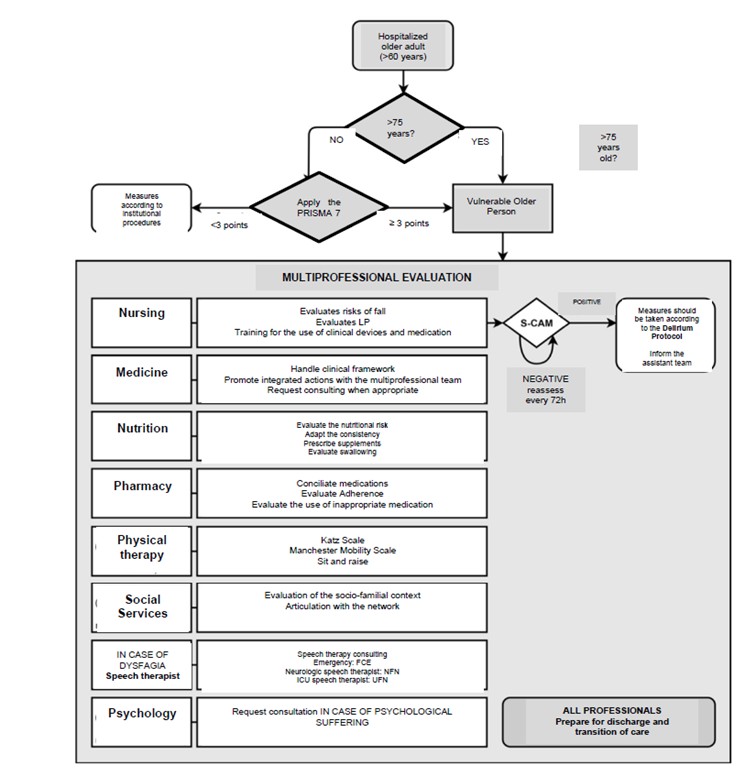 Source: Protocol for the Assistance to Hospitalized Older Adults, Hospital de Clínicas de Porto Alegre, 2019.
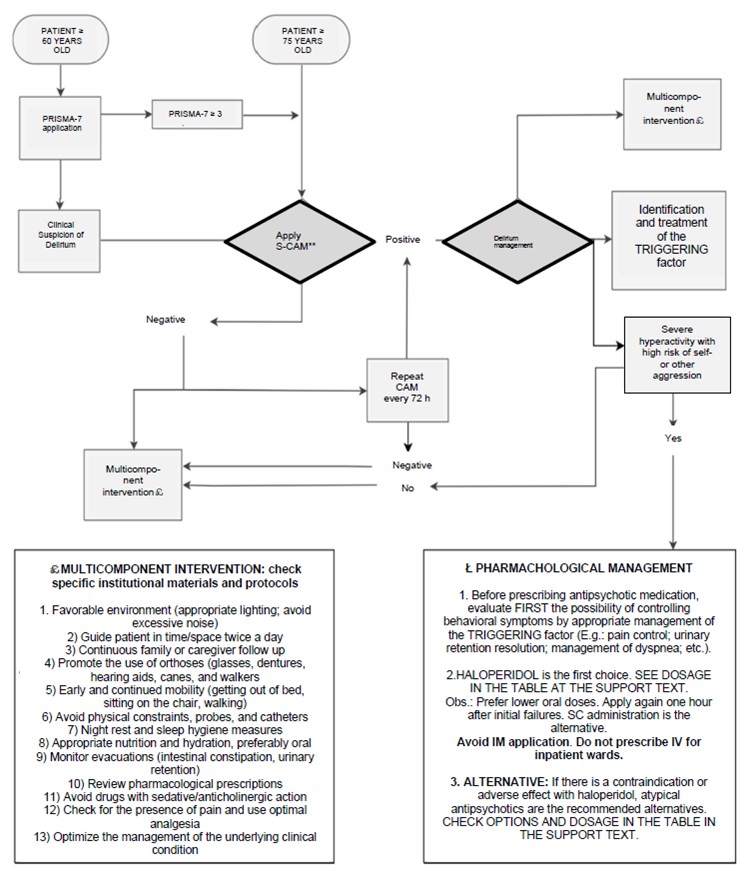 Source: Protocol for the prevention and management of delirium in hospitalization and emergency units, Hospital de Clínicas de Porto Alegre, 2019.
 Source: Management, Hospital de Clínicas de Porto Alegre, 2024.
 Source: Older Adult Outpatient Care Protocol, Hospital de Clínicas de Porto Alegre, 2023.