 COVID-19 preventive behavior and associated factors in nursing students
ABSTRACT
Objective: To evaluate COVID-19 preventive behavior and associated factors in nursing students.
Methods: Cross-sectional study carried out between March and October 2023, involving 126 nursing graduates. An instrument was applied to assess the knowledge, behaviors, symptoms, and vaccination status in regard to COVID-19. COVID-19 tests were carried out to detect IgG/IgM antibodies, as well as RT-PCR. Descriptive and multivariate analyses were performed.
Results: 54.8% of participants reported they followed the recommendations for preventing and controlling the spread of COVID-19 and 10.3% said they used masks in crowded situations in open spaces, while 41.3% said they did so in closed places. All participants obtained reactive results for antibodies against COVID-19 and reported being vaccinated, with no cases of active infection. Factors associated with adequate preventive behaviors include self-declared black skin color and the use of masks when in crowds.
Conclusion: This study found self-care indicators that may contribute to the development of public policies for disease prevention and health promotion in the university environment.
Descriptors:
Behavior; COVID-19; Students in Nursing
RESUMO
Objetivo: Avaliar o comportamento preventivo de estudantes de enfermagem quanto à COVID-19 e os fatores associados.
Métodos: Estudo transversal realizado em um município da região centro-oeste mineira, entre março e outubro de 2023, envolvendo 126 graduandos de enfermagem. Aplicado instrumento para avaliar conhecimento, comportamentos, sintomas e status vacinal relacionados à COVID-19. Foram realizados testes de COVID-19 para detecção dos anticorpos IgG/IgM e o teste RT-PCR. Foi realizada análise descritiva e multivariada.
Resultados: Entre os participantes, 54,8% relataram seguir as recomendações de prevenção e controle da disseminação da COVID-19 e 10,3% afirmaram utilizar máscaras em situações de aglomeração em espaços abertos, 41,3% relataram fazê-lo em locais fechados. Todos os participantes apresentaram resultados reagentes para anticorpos contra COVID-19 e informaram estar vacinados, não havendo casos de infecção ativa. Os fatores associados ao comportamento preventivo adequado incluem cor da pele autodeclarada preta e uso de máscaras em situações de aglomeração.
Conclusão: O estudo apresenta indicadores de autocuidado que podem contribuir para a elaboração de políticas públicas de prevenção de doenças e promoção da saúde no ambiente universitário.
Descritores:
Comportamento; COVID-19; Estudantes de Enfermagem
RESUMEN
Objetivo: Evaluar la conducta preventiva de estudiantes de enfermería frente a la COVID-19 y factores asociados.
Métodos: Estudio transversal realizado entre marzo y octubre de 2023, con 126 estudiantes de enfermería. Se aplicó un instrumento para evaluar conocimientos, conductas, síntomas y estado de vacunación relacionados con el COVID-19. Se realizaron pruebas de COVID-19 para detección de anticuerpos IgG/IgM y la prueba RT-PCR para detectar casos activos. Se realizaron análisis descriptivo y multivariado.
Resultados: Entre los participantes, el 54,8% dijo seguir las recomendaciones para prevenir, controlar la propagación del COVID-19 y el 10,3% dijo usar mascarillas en situaciones de aglomeración en espacios abiertos, mientras el 41,3% dijo que lo hacía en lugares cerrados. Todos los participantes obtuvieron resultados reactivos cuanto a sus anticuerpos contra COVID-19 y reportaron estar vacunados, sin casos de infección activa. Los factores asociados con una conducta preventiva adecuada incluyen el color de piel negro autodeclarado y el uso de mascarillas en situaciones de hacinamiento.
Conclusión: El estudio presenta indicadores de autocuidado que pueden contribuir al desarrollo de políticas públicas de prevención de enfermedades y promoción de la salud en el ámbito universitario.
Descriptores:
Conducta; COVID-19; Estudiantes en Enfermería
INTRODUCTION
The COVID-19 pandemic is the most severe global public health issue of contemporary times, with a high impact on mortality and morbidity in a short period of time1. Although in May 2023 the World Health Organization (WHO) decreed the end of the Public Health Emergency of International Concern (PHEIC) regarding the coronavirus, the virus and its variants are still present around the world, which doubtlessly justifies further research on the topic2.
In this context, students in the field of health play an active role in preventing the dissemination of COVID-19, as they directly influence the behavior of the communities around them. As they adopt preventive practices, such as the appropriate use of masks and the adherence to vaccination campaigns, they become examples for society, contributing to efforts to mitigate the transmission of the virus3.
According to the Integrated Behavior Module, several factors determine human actions, including demographic characteristics, level of knowledge, attitudes, habits, social norms, media influence, and environmental conditions4. Social inequality is indeed expressed by inequality in socioeconomic markers, such as educational level and the digital access to correct information, such as pages of scientific societies, which does influence health behavior5. In this setting, health undergraduates not only were an important group during the COVID-19 pandemic, but also in the continuous struggle against further dissemination of the virus. However, although they are directly involved with health topics, they may have insufficient knowledge about how to prevent the disease6. Disinformation does lead to inadequate behavior regarding infection. This includes vaccine hesitancy and low COVID-19 vaccine coverage, increasing the risk of contracting the disease and transmitting it in environments where there is a large number of people, such as universities5
As the COVID-19 pandemic emerged, there was an exponential and simultaneous growth of the so-called "infodemic". This issue, which is still present today, is characterized by an excess of information, some of which is precise, and some of which is not. Providing intentional misinformation to dubious ends further aggravated the pandemic context, since it led to an increase in inappropriate behaviors when it comes to COVID-19 infection prevention7.
Nowadays, after the PHEIC due to COVID-19 was lifted, and considering that the virus is still around and continues infecting people around the globe, it is essential to understand behavior related to disease prevention and the factors that determine it. This is especially true for nursing students, given that they form the frontline of population health care8. Many authors agree on the importance of individual behavior to prevent virus transmission, especially in university settings. Adhering to existing preventive measures, such as mask use, isolation, social distancing, hand washing, and vaccination, are essential activities to control virus dissemination, especially among nursing students, since they are part of the health care context5,6.
There has been research addressing student behavior regarding COVID-19 infection prevention9,10. Our study evaluated the factors that influence the preventive behavior of nursing students in a public university, considering social determinants of health. Our focus is the COVID-19 pandemic aftermath, analyzing elements such as preventive measures, vaccine hesitancy, and behavioral changes after this sanitary emergency came to an end. The guiding question of this research is: What are the social, demographic, and contextual factors that influence the adoption of preventive behaviors by nursing students in regard to COVID-19, and how do these factors relate to social determinants of health? This study aims to evaluate the preventive behavior of students regarding COVID-19 and its associate factors.
This research sought to fill the gaps left by international studies, many of which were carried out during the PHEIC, with samples from other countries9,10, calling attention to the relevance of investigating national data and to the scarcity of similar studies in Brazilian literature. Furthermore, our investigation can help academic planning and interventions that are more in line with the needs of public universities, considering the continuous risks that COVID-19 still represents to our society.
METHOD
This is a cross-sectional epidemiological study, in accordance with the Strengthening the Reporting of Observational Studies in Epidemiology11. The research was conducted in a public federal university in a city in the Midwest of Minas Gerais, Brazil.
The eligible population included all students enrolled in the nursing undergraduate course in 2022, a total of 258 students. The nursing course lasts for nine semesters, receives a mean of 30 new students per semester, and inclusion criteria considered only those that were regularly attending the course. Sample calculation was conducted using the open-source software Open Epi, version 3.01, considering a proportion of 89.9% of positive COVID-19 preventive behavior3 and a finite population of 258 students. Considering a 5% sample error, the sample had to include at least 96 students from the nine semesters of the course. It is worth noting that the analysis included students from all semesters, with no criterion that limited student participation depending on the year they entered the course.
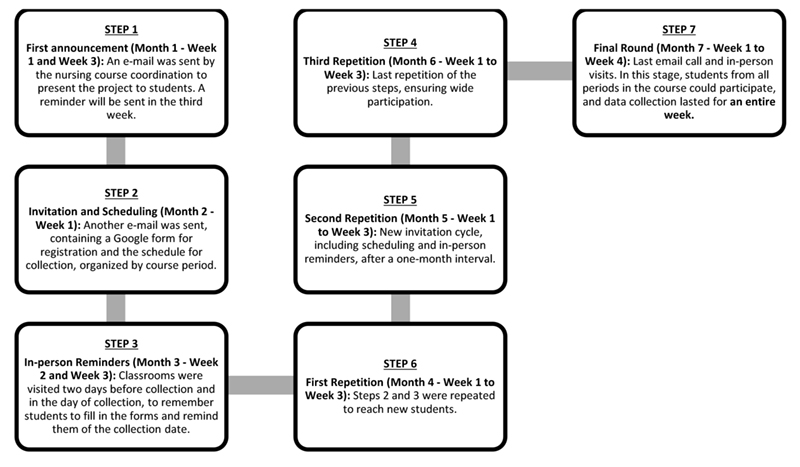
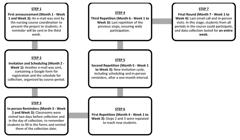
Data collection took place from March to October 2023, as described in Flowchart 1, which outlines the stages of participant recruitment. At first, the coordination of the course sent an e-mail to students, presenting the research and making available a link to Google® Forms. Clicking the link, they could access the Consent Form and answer the questionnaire. The process included announcements of the research, invitations, in-person reminders, and periodical repetition of these same steps to increase participation. In the end, there was a final round in which students from any semester could participate.
The questionnaire, elaborated by the researchers, was based on the official document from the Ministry of Health about the clinical management of COVID-19 patients and related preventive measures12. It included 26 questions, 9 of which were about sociodemographic characteristics, while 16 were related to COVID-19 infections, preventive measures, vaccination, and knowledge about the disease.
After each student accepted participating in the research, a date was scheduled to collect biological materials from each of them in the abilities laboratory. A serological test and an RT-PCR test were conducted for each. One class was considered at a time, being reminded of the date scheduled for each activity and in which shift it would take place, in order to motivate student participation (Figure 1).
To evaluate whether the participant had had any previous contact with the virus, a serological exam was carried out. More specifically, a rapid test was conducted to verify for the presence of IgG and IgM antibodies using a whole blood sample from a finger prick. The blood sample was then transferred into a cassette, and two-to-three drops of the buffer solution were added. In up to 15 minutes, the results were read. Results are expressed by a single stripe when there are immunoglobulins (IgG and IgM). When there were no visible colored stripes in the control line, the test was considered to be invalid and done again. To perform the tests, we used the Wondfo® SARS-CoV-2 antibody test®.
Additionally, we carried out an RT-PCR test to check for active infections. To do so, the participant received 1mL of drinking water to gargle for 30 seconds. After that period, the participant spat the resulting liquid in a collector. This procedure was repeated three times. The materials collected were stored in a refrigerator, at temperatures from 2 to 8ºC, or frozen at -80ºC, being processed 48 hours later. RNA extraction was carried out using a viral RNA extraction technique with commercial kits (ReliaPreTM Viral DNA MiniPrep, Custon - PROMEGA®) and vats to purify the genetic materials. The protocol followed to conduct the RT-qPCR was in accordance with the American CDC and the Charité Hospital in Berlin, Germany. The amplified products were compared to positive SARS-CoV-2 controls, in order to confirm the diagnosis.
The dependent variable of this study is the self-reported preventive behavior in regard to COVID-19 (adequate/inadequate), a binary and categorical variable. The Ministry of Health, through its Technical Note 83/2023 13, had prescribed all measures of control and prevention against COVID-19 that were to be taken in Brazil, including behavioral conducts such as hand washing and social isolation. Based on this document, on the norms of the Centers for Disease Control and Prevention 14, and on those of the Pan American Health Organization 15, we adopted a concept of preventive behavior that is appropriate for COVID-19. We considered a student's behavior to be appropriate when they reported washing their hands from three to five times a day, completely adopted social isolation and distancing, and when they acted in accordance with recommendations from the local health secretariat 13-15, that is, when all three of these measures were adopted simultaneously.
The sociodemographic and independent variables of this research included: age, sex, semester in the nursing course, marital status (widowed, married, single, divorced, common-law marriage), self-declared color (black, brown, yellow, indigenous), occupation, level of education of the head of the family(incomplete and complete elementary school, incomplete and complete high school, incomplete and complete higher education), monthly family income (in minimum wages). Clinical variables include cough, fatigue, loss of taste, loss of smell, sore throat, headache, pain and discomfort, diarrhea, skin irritations, red eyes, difficulty breathing, and no symptoms. Behavioral variables include history of infection, vaccination, concern with the contamination of family members by COVID-19, perception of risk of infection by COVID-19, measures to protect against the spread of the virus, hand hygiene, mask use, social isolation.
Data was analyzed using the software Statistical Package for the Social Sciences (SPSS), version 21. Categorical variables were presented in frequency distribution tables, and continuous variables in position measures (median, minimum, and maximum), given that the Shapiro-Wilk test identified an asymmetric distribution.
A univariate analysis was carried out for COVID-19 preventive behavior, for each explanatory variable. This analysis applied the chi-squared and Fisher's exact statistical tests. Variables with p<0.20 in the univariate analysis went through a multivariate logistic regression to ascertain whether they had an association with COVID-19 preventive behavior. The significance level considered was 5%.
This study was authorized by the Research Ethics Committee under opinion 5.954.038, and we carried out all procedures necessary to meet the requirements from Resolution 466/2012.
RESULTS
This study included 126 nursing students, 108 (85.7%) of which were female, with a mean age of 22 years of age. Regarding marital status, 117 participants (92.9%) were single, and 9 (7.1%) were married or in common-law marriage. Most participants were in the third semester of the nursing graduation course 34 (27%).
Regarding the educational level of the head of the family of the participant, most of them (83 - 65.9%) had complete high school or incomplete higher education, with 28 (22.2%) having complete elementary school, and 15 (11.9%), complete higher education or post-graduation. Regarding self-reported skin color, 70 (55.6%) participants declared themselves white and 56 (44.4%) black or brown.
The most common occupation among participants was that of student (121 - 96%), while 5 (4%) worked jobs that required only high school. Most students had a family income of more than one to five minimum wages (72 - 57.2%). 15 (11.9%) had a family income of up to 1 minimum wage, and 39 above 5 minimum wages (30.9%).
As for their behavior in regard to the COVID-19 pandemic, 65 (51.6%) were not worried about contracting the disease and 52 (41.3%) stated that they wear masks when they are in crowds or closed spaces (Table 1).
All participants had antibodies that were reactive for COVID-19. Although there was no active COVID-19 infection, 6 (4.8%) presented with coughs, 4 (3.2%) with fever, 10 (7.9%) with fatigue, 12 (9.5%) with headache, and 2 (1.6%) with difficulty breathing or shortness of breath.
Most participants (51.6%) have a history of COVID-19 infection, but there is some uncertainty about when they were infected, as 48.4% do not know.
All participants reported having been vaccinated against COVID-19. 62 (49.2%) had four doses and 54 (42.9%) received the last dose of the vaccine six months before or earlier.
121 (96%) participants also stated that they know the appropriate procedures they should take if they present COVID-19 symptoms. 70 (55.6%) considered themselves at low risk of acquiring the disease (Table 2).
Table 3 shows the multivariate model considering the outcome "preventive behavior in regard to COVID-19". Participants who self-declared black were 3.75 times more likely to have appropriate behavior than white ones. Those who mentioned that they always use masks in crowds or closed spaces also had a higher chance of presenting appropriate preventive behavior (CR 9.236 and 2.974, respectively).
DISCUSSION
In this study, we found that 43.6% of nursing students did not follow the guidance to prevent contamination and dissemination of COVID-19, while 38.1% stated they would not adopt these recommendations in case of a new pandemic. Although 96% of participants reported being concerned about being infected by COVID-19, 40% were classified as having a high or very-high risk behavior regarding the disease. This low level of adherence to preventive measures may be associated to the period in which this research was carried out (March to October 2023), a moment in which the pandemic was already widely contcontrolled, infection levels had significantly diminished.
Considering this context, even after the suspension of more rigid regulatory measures, nursing graduation courses must maintain, in their pedagogical projects, content related to pandemic management. This initiative is necessary to appropriately prepare future professionals, ensuring that future pandemics will not be neglected or underestimated. Understanding the mechanisms that involve infectious health issues increase the intention to implement preventive health measures12, giving them support in the case of new pandemics.
Responses about behavior related to COVID-19 were grouped in a questionnaire that addressed topics such as COVID-19 infection, preventive behavior, vaccination, and knowledge about the disease. We found that 96% of students reported having appropriate knowledge about COVID-19. Most of them knew how to use a mask, that it was correct to use it in public places and wash one's hands regularly. Furthermore, a study from Egypt and another, from Cine, indicate that younger populations have learned from the pandemic and that, since they are more skilled in using the Internet, they find access to more precise information16,17. A Brazilian study with 4180 participants from all around the country also showed that, in general, respondents had a satisfactory basic knowledge about COVID-19, reaching a mean of 86.59% of the maximum possible score in the research, with younger participants being more likely to give correct answers to the questions.
Although there are few publications about the behavior of nursing students regarding COVID-19 prevention, a study with Korean university students9 showed a positive correlation between self-efficacy and COVID-19-related stress. High self-efficacy can be interpreted as a strong determination to deal with problems in a more active way, in order to overcome stressing situations. Nevertheless, this research was conducted in 2021, when the curve of infections and the impacts of the pandemic were still quite high. Nevertheless, nursing graduation courses should consider adopting a program to improve self-efficacy, which can improve the prevention of infectious diseases.
Araújo et al.19 described the difficult trajectory to publish COVID-19 related data related to ethnicity, in a study that evaluated experiences in Brazil and in the United States. Even though the evidence found that was classified according to color/ethnicity was of low quality, the study indicated that the number of COVID-19 among black people was higher than its part of the population in several regions. Our research was the first to find that being black and wearing masks in crowds and closed spaces increase the likelihood that one is going to take appropriate preventive measures regarding COVID-19.
The fact that self-declared black participants are more likely to present appropriate preventive behavior reflects an awareness that may result from the social inequalities experienced by the black population. The contemporary black movement is heir to the experience of many generations, inheriting a tradition of struggle. This movement gave support to the fight for one's rights and helped raise the political awareness of this ethnic group20.
It is also worth noting that the university is an environment for the development of social and autonomous critical awareness. Despite often being more vulnerable, black students in this context can develop critical thought, which may also help them develop this preventive behavior against COVID-1921. In recent decades, Brazilian ethnic quotas and an increased number of seats in public universities have been mechanisms to help slightly reduce social inequality, especially in regard to access to scientific knowledge22.
This research also pointed out that the use of masks is in accordance with the preventive behavior that is appropriate to deal with COVID-19. This is a common conduct among nursing students, as a Japanese investigation shows. It pointed out that, after theoretical and practical classes on the topic, nursing students started wearing masks in their internships, which is an appropriate action to prevent against COVID-1923. The efficiency of mask use as a preventive behavior is reiterated by studies that show a substantial reduction in SARS-CoV-2 transmission when this individual protection equipment is used24.
Although the study mentioned above did not verify in which situations the students washed their hands, it considered that the number of times they did so was appropriate for most participants. The WHO states that health workers should wash their hands at five different moments: before getting in touch with a patient; before conducting aseptic procedures; after risk of exposure to body fluids; after getting in touch with a patient; and after getting in touch with areas near the patient. Executing the technique correctly, at the right time, enables reducing the incidence of infections associated with the health service16.
The evidence we found, it is worth noting, also suggests that most students reported that they stay isolated and perform social distancing, which is essential to prevent COVID-19 transmission. These activities were important strategies to contain the dissemination of COVID-19, as observed in other research25. Additionally, even after the PHEIC had been decreed, social distancing remained an important conduct to avoid the dissemination of the disease26.
Going back to our results on information about the disease, most participants highlighted health professionals as their source. Nevertheless, a considerable number stated that they obtain information about COVID-19 from traditional and social media. These media enable the democratization of means of communication, favoring debates and increasing access to information, especially during the PHEIC. In no other environment was freedom of speech manifested in such an intense way, seeing as there was no control about the content being posted. Still, although these mass communication means bring great benefits, they are responsible for the deterioration of organizations and true information27.
The infodemic that grew during the COVID-19 pandemic led individuals to act inappropriately in regard to orientations about COVID-19 prevention, increasing the risk of infection. Thus, regulating social media information more effectively is essential for individuals to acquire safe and correct information about health28.
Regarding the clinical profile of the participants, all had been vaccinated against COVID-19. That may be why all of them presented a "reactive" result in the SARS-CoV-2 serological test. This finding is important since, in addition to behavioral measures, the vaccine is extremely important in controlling and battling the disease29. However, it is worth noting that, in Brazil, the adherence to the vaccines has not been a unanimity. Despite its decades of success in the fight against vaccine-preventable diseases, as part of the Brazilian National Immunization Program (PNI), anti-vaccine movements led to a drop in vaccine coverage. The increase in vaccine hesitancy has become a public health issue6.
Health professionals and students must share the information they have, given that, according to an integrative review carried out in 2023, many guardians have a low level of knowledge about vaccines30.
This study has some limitations. One of them is the low number of students in the final semesters of the course, seeing as these students are more advanced and should understand better the responsibilities of a health worker, which leads to different results when compared to their behavior during the COVID-19 pandemic. Another limitation is the fact that we did not evaluate their intention of having this behavior. Intention has been associated with health behavior, which could influence results12.
Nonetheless, the results presented here provide a valuable contribution to understanding the profile of nursing students regarding COVID-19 prevention, bringing information about behaviors and knowledge on the topic.
CONCLUSION
Students who self-declared black and those who use masks in crowds or closed spaces were the ones who best adhered to the recommended COVID-19 prevention measures. The findings of this research pointed at potential indicators of preventive behavior which may help improve institutional policies and educational strategies to mitigate COVID-19, especially in the university environment.
Acknowledgements
This study received support from the Coordination for the Improvement of Higher Education Personnel - Brazil (CAPES) - Financing Code 001.
REFERENCES
-
1. Moura EC, Cortez-Escalante J, Cavalcante FV, Barreto ICHC, Sanchez MN, Santos LMP. Covid-19: evolução temporal e imunização nas três ondas epidemiológicas, Brasil, 2020-2022. Rev Saúde Pública [Internet]. 2022[cited 2024 Jul 30];56:105. Available from: Available from: https://www.revistas.usp.br/rsp/article/view/205194
» https://www.revistas.usp.br/rsp/article/view/205194 -
2. Torner N. The end of Covid-19 public health emergency of international concern (PHEIC): and now what? Vacunas. 2023;24:3. https://doi.org/10.1016/j.vacune.2023.05.001
» https://doi.org/10.1016/j.vacune.2023.05.001 -
3. Bani VD, Gusti PK, Rawul ME, Pakpahan M, Silitonga E. Nursing Students’ Knowledge and Attitude in Relation to COVID-19 Prevention Behavior. Rev Bras Enferm. 2023;76(Suppl-1):e20220588. https://doi.org/10.1590/0034-7167-2022-0588
» https://doi.org/10.1590/0034-7167-2022-0588 -
4. Ajzen I, Fishbein M. The theory of planned behavior. Organ Behav Hum Decis Process. 1991;50(2):179-211. https://doi.org/10.1016/0749-5978(91)90020-T
» https://doi.org/10.1016/0749-5978(91)90020-T -
5. Silva GM, Sousa AAR, Almeida SMC, Sá IC, Barros FR, Sousa Filho JES, et al. Desafios da imunização contra COVID-19 na saúde pública: das fake News à hesitação vacinal. Ciênc Saúde Coletiva. 2023;28(3). https://doi.org/10.1590/1413-81232023283.09862022
» https://doi.org/10.1590/1413-81232023283.09862022 -
6. Souza NO, Sena MLM, Freitas ALL, Nascimento VGC, Dias TS, Parente AT, et al. Conhecimento de graduandos em Enfermagem sobre Covid-19 em Pediatria: uso da técnica de associação livre de palavras. Acervo Saúde. 2022;15(7). https://doi.org/10.25248/reas.e10372.2022
» https://doi.org/10.25248/reas.e10372.2022 -
7. Organização Pan Americana de Saúde (OPAS). Histórico da emergência internacional de COVID-19 [Internet]. 2020[cited 2024 Jul 30]. Available from: Available from: https://www.paho.org/pt/historico-da-emergencia-internacional-covid-19
» https://www.paho.org/pt/historico-da-emergencia-internacional-covid-19 -
8. Lloyd B, Bradshaw C, McCarthy J, Tighe SM, Noonan M, Atkinson S. Midwifery students experiences of their clinical intership placement during the COVID-19 pandemic in Ireland: a qualitative descriptive study. Midwifery. 2023;127. https://doi.org/10.1016/j.midw.2023.103861
» https://doi.org/10.1016/j.midw.2023.103861 -
9. Yang SK, Kim M. Factors influencing preventive behavior of COVID-19 among nursing students in South Korea. Int J Environ Res Public Health. 2022;19(9):12094. https://doi.org/10.3390/ijerph191912094
» https://doi.org/10.3390/ijerph191912094 -
10. Jung YM, Kim NY. Factors affecting preventive health behaviors Against COVID-19 in nursing students: a cross-sectional study. Int J Environ Res Public Health. 2022;19(9):5496. https://doi.org/10.3390/ijerph19095496
» https://doi.org/10.3390/ijerph19095496 -
11. Malta M, Cardoso LO, Bastos FI, Magnanini MMF, Silva CMFP. Iniciativa STROBE: subsídios para a comunicação de estudos observacionais. Rev Saúde Pública. 2010;44(3):559-65. https://doi.org/10.1590/S0034-89102010000300021
» https://doi.org/10.1590/S0034-89102010000300021 -
12. Brasil. Ministério da Saúde. Protocolo de Manejo Clínico do Coronavírus (COVID-19) na Atenção Primária à Saúde. [Internet]. 2020[cited 2024 Jul 20] Avaliable from: 2020[cited 2024 Jul 20] Avaliable from: https://egestorab.saude.gov.br/image/?file=20200327_N_01ProtocoloManejover0620200327l_4724439690741830970.pdf
» https://egestorab.saude.gov.br/image/?file=20200327_N_01ProtocoloManejover0620200327l_4724439690741830970.pdf -
13. Brasil. Ministério da Saúde. Nota Técnica 83/2023. 2023. [cited 2024 Jul 18]. Available from: Available from: https://www.gov.br/saude/pt-br/centrais-de-conteudo/publicacoes/notas-tecnicas/2023/nota-tecnica-no-83-2023-cgvdi-dpni-svsa-ms
» https://www.gov.br/saude/pt-br/centrais-de-conteudo/publicacoes/notas-tecnicas/2023/nota-tecnica-no-83-2023-cgvdi-dpni-svsa-ms -
14. Centers for Disease Control and Prevention (CDC). Quando e como lavar as suas mãos [Internet]. 2020[cited 2024 Jul 30]. Available from: Available from: https://www.cdc.gov/clean-hands/about/index.html
» https://www.cdc.gov/clean-hands/about/index.html -
15. Organização Pan-Americana de Saúde (OPAS). No Dia Mundial de Higienização das Mãos, OMS alerta para prevenção da sepse nos cuidados de saúde [Internet]. 2018[cited 2024 Jul 30]. Available from: Available from: https://www.paho.org/pt/noticias/4-5-2018-no-dia-mundial-higienizacao-das-maos-oms-alerta-para-prevencao-da-sepse-nos
» https://www.paho.org/pt/noticias/4-5-2018-no-dia-mundial-higienizacao-das-maos-oms-alerta-para-prevencao-da-sepse-nos -
16. Abdel Wahed WY, Hefzy EM, Ahmed MI, Hamed NS. Assessment of knowledge, attitudes, and perception of health care workers regarding COVID-19, a cross-sectional study from Egypt. J Commun Health. 2020;45:1242-51. https://doi.org/10.1007/s10900-020-00882-0
» https://doi.org/10.1007/s10900-020-00882-0 -
17. Shixian L, Jing X, Jie C, Hongyu L, Sining Z. Survey of public knowledge, attitudes, and practices regarding personal protection against COVID-19 in the post-pandemic era. Front Psychol. 2024;15. https://doi.org/10.3389/fpsyg.2024.1411055
» https://doi.org/10.3389/fpsyg.2024.1411055 -
18. Guimarães VHA, Oliveira-Leandro M, Cassiano C, Marques ALP, Motta C, Freitas-Silva AL, et al. Knowledge About COVID-19 in Brazil: Cross-Sectional Web-Based Study. JMIR Public Health Surveill. 2021;7(1):e24756. https://doi.org/10.2196/24756
» https://doi.org/10.2196/24756 -
19. Araujo EM, Caldwell KL, Santos MPA, Souza IM, Rosa PLFS, Santos ABS, et al. Morbimortalidade pela Covid-19 segundo raça/cor/etnia: a experiência do Brasil e dos Estados Unidos. Saúde Debate [Internet]. 2022 [cited 2024 Jul 30];44(esp-4):191-205. Available from: Available from: https://revista.saudeemdebate.org.br/sed/article/view/4430
» https://revista.saudeemdebate.org.br/sed/article/view/4430 -
20. Gariboti DF, Silva Júnior FMR. Ethinic-racial disparity and mortality due to Covid-19: case study of two médium-sized cities. Soc Nat. 2022;34. https://doi.org/10.14393/SN-v34-2022-64009
» https://doi.org/10.14393/SN-v34-2022-64009 -
21. Oliveira MAC, Silva AB, Álvaro JF, Andrade FS. Black movements in Brazil and the scenarios of the struggle for education. Educ Soc. 2022;43. https://doi.org/10.1590/ES.262801
» https://doi.org/10.1590/ES.262801 -
22. Vieira KE, Albino LAM, Dell’Agli BAV, Caetano LM. Individual, social, and racial experiences with affirmative action at Brazilian universities: a scoping review. Educ Pol Anal Arch. 2023;31. https://doi.org/10.14507/epaa.31.7674
» https://doi.org/10.14507/epaa.31.7674 -
23. Nakagawa H, Sasai H. Nursing students practicums during the COVID-19 crisis and the effect on infecton-prevetion behaviour in students: a mixed-methos approach. Medicina (Kaunas). 2021;57(12):1354. https://doi.org/10.3390/medicina57121354
» https://doi.org/10.3390/medicina57121354 -
24. Organização Pan-Americana de Saúde (OPAS). Uso de máscara no contexto da COVID-19 [Internet]. 2020[cited 2024 Jul 30]. Available from: Available from: https://iris.paho.org/bitstream/handle/10665.2/53101/OPASWBRAPHECOVID-1920162_por.pdf
» https://iris.paho.org/bitstream/handle/10665.2/53101/OPASWBRAPHECOVID-1920162_por.pdf -
25. Schneider APH, Gaedke MA, Koepp J, Reuter EM, Darsie C, Possuelo LG, et al. Social distancing as protection fator Against Covid-19 in a non-metropolitan área in the state of Rio Grande do Sul, Brazil. Rev Panam Salud Publica. 2021;45:e145. https://doi.org/10.26633/RPSP.2021.145
» https://doi.org/10.26633/RPSP.2021.145 -
26. Courtemanche C, Garuccio J, Le A, Pinkston J, Yelowitz A. Strong social distancing measures in the United States reduced the Covid-19 growth rate. Health Aff. 2020;39(7):1237-46. https://doi.org/10.1377/hlthaff.2020.00608
» https://doi.org/10.1377/hlthaff.2020.00608 -
27. Brega GR. The regulation of contente on social networks: a brief comparative analysis between netzdg and the Brazilian solution. Rev Direito GV. 2023;19. https://doi.org/10.1590/2317-6172202305
» https://doi.org/10.1590/2317-6172202305 -
28. Freire NP, Cunha ICKO, Ximenes neto FRG, Vargas FL, Santiago BK, Lourenção LG. Impactos da infodemia sobre a COVID019 para profissionais de saúde no Brasil. Ciênc saúde coletiva. 2023;28 (10):3045-56. Available from: https://doi.org/10.1590/1413-812320232810.13902022
» https://doi.org/10.1590/1413-812320232810.13902022 -
29. Polack F, Thomas SJ, Kitchin N, Absalon J, Gurtman A, Lockhart S, et al. Safety and efficacy of the BNT162b2 mRNA Covid-19 vaccine. N Engl J Med. 2020;31(27):2603-15. https://doi.org/10.1056/NEJMoa2034577
» https://doi.org/10.1056/NEJMoa2034577 -
30. Viana IS, Cursino EG, Miranda PS, Silva LF, Machado MED. Vaccine hesitancy of parentes and Family members of children and the control of immunopreventable disease. Cogitare Enferm. 2023;28. https://doi.org/10.1590/ce.v28i0.84290
» https://doi.org/10.1590/ce.v28i0.84290
The dataset may be accessed upon request to the corresponding author.