 Implementation of Basic Patient Safety Protocols: a quality improvement project
ABSTRACT
Objective: To analyze the effect of an improvement project on the implementation of Basic Patient Safety Protocols in Brazilian public hospitals.
Method: This is an intervention study aimed at comparing measurements before-and-after the implementation of an improvement project in 35 public hospitals across three Brazilian regions, between July 2021 and September 2023. The intervention consisted of a set of activities to support the implementation of six Basic Patient Safety Protocols, with semimonthly collection of indicators. The data were analyzed using descriptive statistics, with the use of trend charts to demonstrate improvements, considering the first seven collection points as the baseline for comparisons.
Results: After the intervention period, all Patient Safety Protocols showed improvements in their indicators. The prevention of falls and safe surgery stood out, with a 73% reduction in prevalence and a 675% increase in adherence to the safe surgery checklist, respectively, compared to the group of hospitals.
Conclusion: The improvement project had a positive effect on patient safety in the institutions, evidenced by the improvement in indicators of all analyzed protocols.
Descriptors:
Patient safety. Patient harm. Safety management. Implementation science. Quality improvement. Outcome assessment; health care
RESUMO
Objetivo: Analisar o efeito de um projeto de melhoria na implementação de Protocolos Básicos de Segurança do Paciente em hospitais públicos brasileiros.
Método: Trata-se de um estudo de intervenção voltado para comparação de medidas tipo antes e depois da implementação de um projeto de melhoria em 35 hospitais públicos de três regiões brasileiras, entre julho de 2021 e setembro de 2023. A intervenção consistiu em um conjunto de atividades de apoio à implementação de seis Protocolos Básicos de Segurança do Paciente, com coleta quinzenal de indicadores. Os dados foram analisados por estatística descritiva, com uso de gráficos de tendência para demonstrar a ocorrência de melhorias, considerando os sete primeiros pontos de coleta como linha de base para medidas de comparação.
Resultados: Após o período de intervenção, todos os Protocolos Básicos de Segurança do Paciente apresentaram melhoria nos indicadores. Destacaram-se prevenção de quedas e cirurgia segura que, respectivamente, apresentaram redução de 73% na prevalência e aumento de 675% na adesão à lista de verificação de cirurgia segura, em relação ao conjunto de hospitais.
Conclusão: O projeto de melhoria demonstrou efeito positivo na segurança do paciente dentro das instituições, evidenciado pela melhora nos indicadores de todos os protocolos analisados.
Descritores:
Segurança do paciente; Dano ao paciente; Gestão da segurança; Ciência da implementação; Melhoria de qualidade; Avaliação de resultados em cuidados de saúde
RESUMEN
Objetivo: Analizar el efecto de un proyecto de mejora en la implementación de Protocolos Básicos de Seguridad del Paciente en hospitales públicos brasileños.
Método: Estudio de intervención destinado a comparar medidas antes y después de la implementación de un proyecto de mejora en 35 hospitales públicos de tres regiones brasileñas, entre julio de 2021 y septiembre de 2023. La intervención consistió en un conjunto de actividades de apoyo a la implementación de seis Protocolos Básicos de Seguridad del Paciente, con recolección quincenal de indicadores. Se analizó a los datos mediante estadística descriptiva, utilizando gráficos de tendencia para demostrar la ocurrencia de mejoras, considerando los siete primeros puntos de recolección como base para medidas de comparación.
Resultados: Después del período de intervención, todos los Protocolos Básicos de Seguridad del Paciente mostraron mejoras en sus indicadores. Se destacaron la prevención de caídas y la cirugía segura, que presentaron una reducción del 73% en la prevalencia y un aumento del 675% en la adherencia a la lista de verificación de cirugía segura, respectivamente, en comparación con el conjunto de hospitales.
Conclusión: El proyecto de mejora demostró un efecto positivo en la seguridad del paciente dentro de las instituciones, evidenciado por la mejora en los indicadores de todos los protocolos analizados.
Descriptores:
Seguridad del paciente; Daño del paciente; Administración de la seguridad; Ciencia de la implementación; Mejoramiento de la calidad; Evaluación de resultado en la atención de salud
INTRODUCTION
Patient safety is a relevant topic in the field of health, and has increasingly become a central topic of discussion and research in the last couple of decades, pushing forward global and national initiatives aimed at improving health care standards1,2. The main goal of patient safety is to ensure that preventable mistakes in health care services are kept at a minimum acceptable level, avoiding damages to patients by implementing preventive protocols2. Thus, quality and safety in health care are intrinsically connected. Patient safety is an indissociable component of quality in health, since it is one of the fundamental pillars upon which it is constructed3.
Despite the expressive advances in policies, programs, and health care, patient safety is still an important challenge in health institutions, as shown by the expressive number of adverse events related to health care4. Hospitals stand out among the several environments where health care is provided, since in these institutions the prevalence of adverse events is the highest4,5. These events are intrinsically connected to the quality of health services, as they reflect the health care provided to the patient, as opposed to the natural progress of a certain medical condition3,6,7. Most of these events are classified as preventable and, therefore, are susceptible to control and prevention3,7.
Adverse events are related to expressive rates of morbidity and mortality, while also having a costly impact on the financial management of health services, as they lead to increased costs due to longer hospitalizations, the need for more supplies, and the need for additional services to manage the consequences of the damage caused to the patient3,8.
In the United States, adverse events are the third most common cause of death, after cancer and cardiac health issues1,9. In Brazil, 272,777 health care-related events of this type were recorded from 2014 to 201810. Furthermore, data shows that, in low and medium income countries, the loss of productivity generated by adverse events varies from US$1.4 trillion to US$1.6 trillion annually11.
In the context of patient safety, the Ministry of Health created, on April 1, 2013, the National Program of Patient Safety (PNSP), through Decree No. 529. Its goal was to prevent, monitor, and reduce the incidence of adverse events, constructing a process of continuous improvement in patient safety2. To support and instrumentalize health services regarding their impact on adverse events, Basic Patient Safety Protocols were created (correct patient identification, safety in drug administration, safe surgery, hand hygiene, fall prevention, and prevention of pressure injuries), thus consolidating one of the axis of the PNSP2.
It is widely known that, despite the advances made, PNSP still faces significant challenges. Addressing patient safety as a whole and covering its complexity requires more than implementing protocols and specific measures, since searching for continuous improvement is a gradual process3,12. The effective implementation of patient safety measures is often hindered by issues related to scarce or ill-managed financial and human resources, gaps in interprofessional communication, and resistance to change within health care institutions. Furthermore, the standardization and adherence to best practices are not always uniform. This can lead to changes in the quality of care. Considering these challenges, a joint effort must be made to promote a comprehensive and sustainable culture of safety in all instances of the Brazilian health system3,13.
Methodologies based on the Improvement Model have emerged as promising approaches to strengthen strategies aimed at implementing institutional changes in complex contexts, such as in hospital environments 14. Literature highlights that these approaches employ systematic methods to identify the areas that can be improved, implement effective interventions, and evaluate their developments14-17. However, to implement these projects it may be necessary to overcome several obstacles, from resistance to change to the scarcity of resources and sustainability challenges14. On the other hand, this methodology brings tangible benefits that can be observed in interprofessional collaboration, prioritizing patient safety and promoting a culture of continuous improvement 14,18,19.
To adapt these models to different contexts, it is paramount to adjust strategies according to their needs and to the specific resources of each institution, engaging all parties involved from the outset and ensuring their active participation, in order to guarantee that the implementation will be successful and sustainable in the long term14,18,19. The Improvement Model is a recognized approach in health. It is used to promote positive changes in processes, practices, and outcomes, despite not being used or studied widely. It is based on the setting of clear goals, data collection and analysis, recognition of opportunities, implementation of interventions, and continuous evaluation. The Improvement Model seeks not only to solve specific problems, but also to promote a culture of learning, innovation, and excellence, emphasizing collaboration, leadership, and patient participation, enabling professionals to deal with complex challenges in a sustainable manner 14,18,19.
In order to support the implementation of the PNSP in Brazilian hospitals, the Hospital Moinhos de Vento, in the city of Porto Alegre, capital of the state of Rio Grande do Sul, launched the project "Safe Patient - Implementation of the Patient Safety Program and Development of Management Tools, Education and Shared Practices", through the Program of Support for Institutional Development of the Single Health System (PROADI-SUS). The PROADI-SUS, created in 2009, is a pact formed between six high-quality Brazilian hospitals and the Ministry of Health, in order to support and improve the Single Health System (SUS)20. To achieve this goal, the project Safe Patient was conducted from 2016 to 2023, providing consulting services for Brazilian public hospitals in order to help them implement Basic Patient Safety Protocols using support tools, training courses for health professionals, and monitoring strategies.
This study aims to answer the following research question: What was the effect of a project to improve quality of life on the implementation of Basic Patient Safety Protocols? To answer this question, this study was designed to analyze the effects of a project to improve the implementation of Basic Patient Safety Protocols in Brazilian public hospitals.
METHOD
Context
This is an intervention study, carried out to compare outcomes before and after implementing a quality-improvement project in 35 Brazilian public hospitals14,18. It was carried out from July 2021 to November 2023, following the theoretical and methodological framework of the Institute for Healthcare Improvement (IHI) and the guidelines of the Standards for Quality Improvement Reporting Excellence (SQUIRE 2.0)14,18,21.
Hospitals voluntarily applied to be selected for the project, after it was promoted by the technical area of the Ministry of Health. No financial incentive was offered to those that participated.
The hospitals interested in applying had to be in accordance with the following inclusion criteria: located in the North, Northeast, and Midwest, and close to airports (at a maximum distance of 100km); being public or philanthropic hospitals; having at least 80 active beds, including 10 intensive care beds; having a group of workers interested in implementing patient safety practices; and having institutional support for their application. The exclusion criteria were: hospitals without formalized quality and patient safety departments and/or which did not have a patient safety plan.
Intervention
The Brazilian hospitals selected were submitted to an intervention based on the Improvement Model, which compared measures before and after the 11-month monitoring period. The implementation of the Improvement Model has been an innovative and promising approach, especially in complex hospital environments18. This method has two steps that are interconnected and complement each other. The firs is the conceptual model formed by three essential questions: "What are we trying to do?", "How do we know if a change is an improvement?", and "What changes can we make that will lead to improvement?"14,18. These questions help determining the goals of the improvement, establishing measures to evaluate the progress and identifying effective interventions.
The three questions are the basis that supports the development of the learning cycle, guiding the determination of goals, the choice of interventions, and the evaluation of their progress14,18. Therefore, the second part of the Improvement Model is the improvement method, which is the process used to test changes in order to achieve measurable improvements in quality and performance14,18. The learning cycle allows testing and refining changes in an iterative way, leading to the continuous improvement of the improvement initiative 14,18.
The structure of the intervention was constructed by the team of specialists from the Moinhos de Vento hospital, together with the Ministry of Health. Hospitals from 12 different Brazilian states participated. The hospitals were public or philanthropic, with a mean of 255 active beds, and provided medium-to-high complexity care to adult, pediatric, and neonate patients.
The team that conducted the implementation was formed by one operational leader and eight consultants, experts in patient safety, graduated in nursing and pharmacy. Professionals from these categories were chosen because the contents and topics addressed by the basic protocols had much in common with their fields of knowledge. To prepare the field teams to begin implementation, work group meetings were held to help mold the content and refine technical issues.
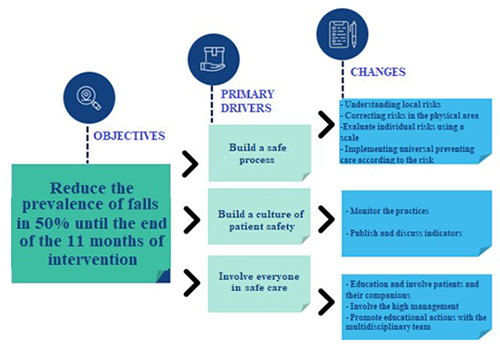
To answer the third essential question, "What changes can we do that will lead to improvement?", the Theory of Change was adopted, according to the guiding diagram. This diagram is a result of a process of construction tat involved the group, which searched for solutions to a certain problem associated with the goals of the project. In the Improvement Model, the guiding diagram illustrates the ideas of change generated by specialists, which are organized in this visual tool in order to guide the actions developed by the teams14.
The diagram was divided into three primary directions: to build a safe process; to build a culture of patient safety; and to involve everyone in the care. In this regard, this tool recommends paths or alternatives that can be used by a working group14. The implementation team determined these three primary drivers, since the safe process included the changes that were necessary to reach the goals established. The driver of cultural change, in turn, addressed the ideas necessary to change the culture of safety and to involve everyone in the process of care, describing the necessary changes related to different roles in the team. The last two drivers are understood as pillars for a change in the process to be possible and reach its goals.
In this study, we constructed guided diagrams for each basic patient safety protocol. The diagrams included items related to changes in care processes, including preventive measures, risk evaluation, promotion of educational action, involvement of high management, and others, according to the example presented in Figure 1, below.
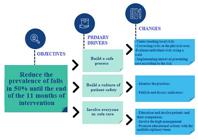
Example of a guiding diagram about fall prevention. Porto Alegre, Rio Grande do Sul, Brazil, 2023
The Improvement Method is a process used to test changes in order to achieve measurable improvements in quality and performance14,18. Generally, it involves the cycle "Plan-Do-Study-Act" (PDSA) to plan, implement, evaluate, and adjust the changes14,18. The changes proposed by the guiding diagram can be tested and improved in testing cycles represented by the PDSA. This pragmatic method unfolds in four stages of the cycle: the formulation of a hypothesis, data collection to test said hypothesis, data analysis, and results interpretation22. The PDSA cycle completes the Improvement Model structure. It can be used to transform ideas in action and to connect action to learning14,18. This tool is used on a small scale to test interventions, allowing a fast and flexible assessment, minimizing risks to patients, and reducing expenses, since it can be improved throughout the cycles14,18. Furthermore, the health care team's resistance to change is lower, since the intervention, at first, is on a smaller scale, in order to adjust itself to the processes22.
Intervention study
After the early planning period and the selection of the participating hospitals, the intervention started. The intervention was composed of a set of different activities to train and instrumentalize the hospital teams that participated, so they could conduct cycles of improvement in patient safety, giving support to the practical implementation of patient safety based on the six basic protocols of patient safety (correct patient identification, safe use of medication, safe surgery, hand hygiene, fall prevention, and pressure injury prevention)2.
To do so, each participating hospital, together with the Patient Safety Center and the Moinhos de Vento Hospital team, created a "pilot" care unit and selected a leader to work in each safety protocol. In this work methodology, leaders do not need to be people with leadership positions, but people with the intrinsic desire of leading the unit14,18.
Then, "improvement teams" were created. They were formed by multidisciplinary teams of direct assistance, designated to work in each of the Basic Patient Safety Protocols. The goals were determined individually, according to the baseline, for each product, in order to answer the first essential question of the Improvement Model: "What are we trying to accomplish?”, according to the examples in Chart 1.
From this stage on, the intervention took place as follows. During the first visit, we assessed the adherence of participant hospitals to patient safety practices using instruments elaborated by the team that led the project. This was done to verify each institution’s weakness, and how each one adhered to safety practices. Then, guiding diagrams for each of the Basic Patient Safety Protocols were standardized and adapted to the context of each hospital, considering the evidence found in the first evaluation visit. The improvement cycles and PDSAs, which were later developed by the work teams, were based on these diagrams.
To start the intervention period in the pilot units, teams started to test the ideas of change in the guiding diagram and to implement processes and gather data. This generated indicators to measure the impact of the changes implemented. The teams in the pilot units also sent monthly reports to be evaluated by the team that managed the project, receiving feedback. Additionally, the teams received support from the management team in weekly virtual meetings during the entire intervention period. This was a way of providing support and collaborating with the team regardless of distance, as they tested new ideas. These meetings were paramount to monitor the activities prescribed by the guiding diagrams, action plans, data collection, and analysis of care indicators.
Among the key elements of the intervention strategy, were technical visits that monitored the participating hospitals. These face-to-face visits to help implement the project of improvement were essential in the monitoring processes of the hospitals. Each visit took place in three shifts and helped enhance direct contact with the care teams. During these visits, strategic workshops were also held to detail indicators and compile data to improve the improvement teams and the Patient Safety Center. They were held in loco in the pilot units, in order to align the data collection methodology.
Several additional activities were carried out to assist the teams in the implementation of the protocols, such as the delivery of educational games and support materials. Virtual training sessions were also held to train the professionals from the participating hospitals. They addressed the following topics: The Improvement Model and the Improvement Project; Communication, Leadership, and Teamwork; Indicators in Improvement Projects; Risk Management and Safety Culture. Furthermore, on-line classes were taught discussing topics such as: guiding diagrams, fall and pressure injury prevention; culture of fairness and disclosure.
The intervention model was finished in a final evaluation visit to the participating hospitals, to verify their level of adherence to good safety practices proposed by the project. In these visits, the same instruments used in the first evaluation were applied.
The intervention adopted allowed implementing changes directed to patient safety, establishing robust mechanisms to make the possibility and effectiveness of these changes possible. By conducting improvement cycles, teams were able to not only identify areas of opportunity and implement interventions, but also to measure and monitor outcomes over time. The systematic approach allowed a careful analysis of the relationship between interventions performed and results observed.
Measures
Improvement projects are developed using tests, adjustments, and, finally, through the implementation of changes. As a result, the only way to answer the second essential question "How can we know whether a change is an improvement?", is by using data expressed by the indicators. Therefore, measurements have an essential role in this type of methodological approach, since, in more complex systems, measurements or other types of data are almost always necessary to answer this question18.
During the intervention, indicators were collected every 15 days by the improvement teams in the pilot units dedicated to each protocol. After collection, data was compiled and reviewed by the conducting team, in order to evaluate the evolution of hospitals regarding the activities proposed by the project and the implementation of each safety protocol.
The main indicators used in this study were categorized as process and outcome indicators. Process indicators are measures that quantify the activities and procedures performed during the provision of health care. Outcome indicators, in turn, measure the performance of the system being studied, evaluating its effects or the impact of health interventions on patients18, as Chart 1 shows.
In addition, we explored essential questions to better define our goals, such as: "What is the intended area for improvement?"; "Where do we need to act?"; "What is our goal?"; and "What is our deadline for reaching these results?". The specific goals for each patient safety protocol were determined individually for each improvement team in their respective pilot units. The goals was to achieve a 95% adherence rate to process indicators over the 11 months of intervention - the period investigated in this study - and a 50% reduction in outcome indicators during the same period.
The team that conducted the project trained the teams of each participating hospital to carry out the collections. To standardize the collection of data from the indicators, we elaborated technical sheets for all indicators, including title, objective, type, reference values, unit of measurement, numerator and denominator, goal, inclusion and exclusion criteria, frequency, parties responsible for collection, among other information. Collection sheets were also delivered to the teams of all hospitals, to help standardize the data. The indicators collected were sent to the team of experts responsible for conducting the project, which organized, counted, and compiled them for later discussion and analysis together with the hospital teams.
Analysis
Trend charts were chosen, since it was necessary to visualize the changes in interest variables throughout time in order to graphically show if the changes tested led to improvement, and whether the improvement was maintained over time. Data were submitted to statistical analyses using the software Microsoft Excel version 2016. Data was evaluated considering the first seven data points collected as a baseline for comparison (before intervention), and the later observations as measures adjusted for the intervention period.
Ethical considerations
The study was promoted and implemented by the Brazilian Ministry of Health, according with national ethical recommendations. It was approved and published in the Federal Official Gazette under Single Opinion 25000.012571/2021-51. It was approved for the years from 2021-2023 on April 16, 2021. The legal responsible for each hospital signed a consent form to participate and enter the Safe Patient project. This form described the rights and duties related to participation and monitoring. From an ethical standpoint, it should be noted that Resolution No. 466 does not apply to this work, since it was not applied to humans. The data from the analyses was aggregated, and the institutions that participated were not individually identified, which exempted this work from an evaluation by a research ethics committee.
RESULTS
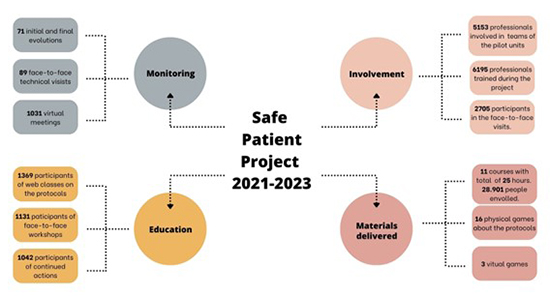
Throughout the follow-up period, hospitals worked with the six Basic Patient Safety Protocols in pilot units. The management team of the project used several continuous strategies to generate engagement and train the teams in the participating institutions. These activities were provided equally to each hospital, throughout a total of 1,370 hours of consulting. Figure 2 summarizes the complexity of the intervention, considering the set of activities developed and performed for the participating hospitals.

Work processes conducted by the management team during the intervention period in the 35 participating hospitals. Porto Alegre, Rio Grande do Sul, Brazil, 2023
During the intervention period, the improvement teams carried out cycles of PDSA tests, which had an essential role in the realization of the ideas determined in the guiding diagram. These tests not only allowed transforming theoretical concepts into practical action, but also provided a valuable learning process. By testing the interventions proposed, the teams could discover more effective approaches to implement patient safety practices.
It is essential to note that the improvement cycles were elaborated individually by each of the 35 participating hospitals. Each institution developed its own PDSA cycle according to their peculiarities, characteristics, and specific needs, in order to address the ideas of change from the guiding diagrams of the six Basic Patient Safety Protocols. The progress of the PDSA tests was monitored in virtual meetings with the project management team. In these meetings, questions related to the stages of the tests and other doubts from the participating hospitals were discussed and clarified.
As a result, PDSAs played a crucial role in stimulating indicators, showing that the changes in the hospital environment had a positive impact. Table 1 shows a detailed stratification of the number of PDSAs in each basic safety protocol in all 35 hospitals that participated in the study.
The tests performed in the PDSA cycles which were considered relevant by the teams, according with the protocols, were guided by the actions in the guiding diagrams. In regard to fall and pressure injury prevention, for example, tests were conducted evaluating the risk and the implementation of preventive measures. Concerning hand hygiene, tests were made regarding the five moments, proper supplies, and the correct technique. For the identification protocol, devices with standardized identifiers were tested, as well as the period in which they should be verified. As for safe surgery, tests aimed to adjust and guarantee adherence to the items in the surgical verification checklist. In the medication safety protocol, the main tests used were related to double checking when dispensing drugs, organizing the environment, and the flagging of potentially dangerous drugs. It is worth noting that some actions were different between institutions.
Every fifteen days, participating hospital teams sent their results and the process indicators of each basic patient safety protocol for analysis. All hospitals reported their data.
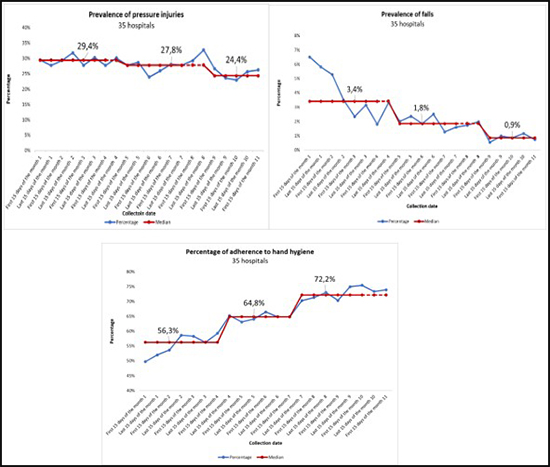
All hospitals applied the pressure injury prevention protocol, and the indicator of pressure injury prevalence had decreased by 17% at the end of the intervention (Figure 3 A ). Regarding fall prevention, all 35 hospitals applied this protocol, and the prevalence of falls was the outcome indicator collected from them. Figure 3 B shows that these hospitals managed to reduce the prevalence of falls by 73%. Regarding the hand hygiene protocol, it was also applied by all participating hospitals, leading to a 28% increase at the end of the intervention period (Figure 3 C ).

Trend charts. (A) Prevalence of pressure injury. (B) Prevalence of falls. (C) Percentage of adherence to hand hygiene Porto Alegre, Rio Grande do Sul, Brazil, 2023
The other protocols were not applied to all participating hospitals, since not all of them met the technical requirements to address all activities proposed by the management team. These conditions included limitations of the Patient Safety Center, when this center was formed by a single health worker, there was a small number of health care units, or there were obstacles to the team building process. The protocols for the correct identification of the patient and the safe use of medication were applied in 30 participating hospitals. The percentage of patients correctly identified increased by 21% (Figure 4 D ), while the indicator of mistakes in the dispensation of drugs reduced in 57% (Figure 4 E ). The safe surgery protocol, in turn, was applied in 27 hospitals, showing an expressive 675% increase (Figure 4 F ).

Trend charts. (D) Percentage of correctly identified patients. (E) Percentage drug dispensing mistakes. (F) Adherence rate to full safe surgery checklist use. Porto Alegre, Rio Grande do Sul, Brazil, 2023
In addition to presenting indicators of improvement, this study introduced a new method adapted to the Brazilian reality of SUS, strengthening the ties between health professionals, hospital managers, and health departments. The team that managed this project could immerse themselves into the reality of the participating hospitals, ascertaining which were their strengths and which areas needed to be improved, working with these institutions to increase patient safety.
In health projects conducted in hospitals, generating value means providing measurable and tangible benefits to patients, health care professionals, and the organization itself. In the context of a hospital, value is closely linked to quality care, operational efficiency, patient satisfaction, and clinical results. This study highlighted the importance of informing patients and involving them and their relatives in the process of care, training them to play a more active role in order to receive safer care, with a lower risk of adverse events. In the long term, we expect to establish a network for the dissemination of good practices, in order to promote changes in the culture of health organization, especially when it comes to patient safety, and to encourage the continuous implementation of improvements in the entirety of the health system.
DISCUSSION
This study contributed to the implementation and consolidation of patient safety practices, which can help reduce incidents and adverse events related to safety failures. The methodology used by this project in the participating institutions favors the sustainability and expansion of improvements into other units and their dissemination to other hospitals, since it allows fast improving cycles that boost learning. The improvement observed in the indicators of all basic safety protocols shows the progress of institutions in improving their processes and enhancing the safety of the patients assisted, reflecting the interventions implemented.
The results of this study increase the existing knowledge, providing concrete data on the efficacy of the approach. By showing the tangible benefits of these interventions, this research also validated the practical importance of adopting systematic methodologies for the continuous improvement of hospital care processes. The teams of the participating hospitals improved greatly in the implementation of science-based changes, in clinical and procedural axes, and, essentially, in their outcomes. This contribution to the body of knowledge not only informs innovative practices, but also encourages other health care institutions to promote a patient safety culture, reaching safer and more effective results.
Studies that addressed similar methodologies also found good results. A recent Brazilian study compared result measurements before and after implementing a quality improvement program which reduced mistakes in vaccine administration 15. A North American study also used the model of change proposed by the IHI to reduce radiographic mistakes in a sports medicine outpatient clinic. The prevalence of errors was 9% before the intervention, and no errors were found after two months of application16. Another study from the United States used a similar approach to redesign the provision of care, improve adherence to treatment, and reduce rehospitalizations of patients with lung disease. At the end of the study, the readmission rates had dropped from 22.7% to 14.7% in 30 days17.
Regarding the results found in this study, the pressure injury prevention protocol reached similar or even lower numbers than those in other studies. A Brazilian cross-sectional study in Intensive Care Units found a 42% prevalence of pressure injuries23. Another Brazilian research showed that the second most common adverse event was related to pressure injuries (22%)24. A global systematic review and meta-analysis published in an American journal evaluated the incidence of pressure injuries. In the 35 studies analyzed, the incidence rates of first, second, third, and fourth level injuries were 45%, 45%, 4%, and 4%, respectively 25.
The fall protocol reached an expressive reduction in prevalence. An international study recently published in a British journal carried out a comprehensive systematic review of data on the prevalence of falls around the world26. The worldwide prevalence of falls was 26.5%, and the second highest prevalence rate of falls in the elderly was in America, with 27.9%26. Another study that carried out a situational diagnosis of adverse events notified by the Patient Safety Center found that 14.6% of them were related to falls27.
Regarding hand hygiene, the results achieved with the hand hygiene adherence indicator stand out when compared to previous studies. Earlier research show a low adherence to this indicator in Brazilian hospitals, with rates from 19% to 55%, showing how necessary it is to increase awareness about this protocol28. It should be pointed out that hand hygiene is one of the most important measures to avoid infections, with low cost and high effectiveness29.
Hospital that implemented the protocol of correct patient identification showed positive results, indicating that the bracelet is being efficiently used. A recent investigation found that 21% of the adverse events notified were related to errors in patient identification27. Therefore, it is essential to highlight that the use of the bracelet is as important as guiding the team to check it properly.
The final percentage of mistakes in drug dispensation was better than the result from other studies. A research in the Brazilian northeast found that in 2.13% of cases there were mistakes in the dispensation of drugs30. Another national investigation found a rate of 1.81% dispensation errors31. In both studies, the most common mistake was not administering a medication30,31.
In surgery, the adherence to the Safe Surgery Checklist is necessary to reduce issues with the work process of the surgical team. This study led to an expressive increase in the adherence to the Safe Surgery Checklist verification, improving the quality of care with safer, more adequate, and more patient-centered processes. This result is important, since most hospitals did not practice safe surgery protocol verification at the beginning of the project. International research has shown that the use of the Safe Surgery Checklist is a cost-effective strategy in relation to the surgical process 32,33.
Recently, a Spanish study conducted at the Vall d'Hebron University Hospital in Barcelona showed that the implementation of Safe Surgery Checklist contributed to the reduction of operating room use time, in addition to reducing 110 days of bed use per 100 hospitalizations32. Still in regard to cost reduction, a study estimated that, for every 100 hospitalizations, the use of the checklist saved US$55,899 dollars32. Another study, carried out by a group of researchers from New Zealand and Brazil, evaluated the impact of the implementation of the Safe Surgery Checklist on postoperative outcomes 33. The results showed a significant reduction in the mean number of alive postoperative days after the implementation of the checklist (p < 0.001)33. Additionally, there was a decrease in the rate of hospital readmissions within 30 days after surgery33.
It is worth noting that a potential limitation of this study is related to the COVID-19 pandemic. This exceptional occurrence led to changes in work teams during the project, due to the number of workers who were removed and to the need to reorganize work process, since some hospitals that participated in the project became centers for COVID-19 care and needed to be adapted. Furthermore, it should be mentioned that this project did not follow the hospitals after the intervention was finished, despite providing them with theoretical tools to continue the actions carried out and expand them into other areas. This may also be considered a limitation of this study.
CONCLUSION
The changes found in the participating pilot units, focusing on the strengthening of the work process, the implementation of preventive measures, the monitoring of risks, communication, and teamwork, showed the positive effect this project had in the improvement of the implementation of Basic Patient Safety Protocols, as made clear by the results found in all care indicators. These positive results were made possible due to the intervention model, whose design was based on the Improvement Model, which was found to be a viable and promising approach to Brazilian hospitals. Additionally, the implementation of science-based change packages is a strategy with a high potential to achieve notable results regarding patient safety. New research that addresses similar methodologies should be carried out in other health contexts and realities.
Acknowledgements:
The data presented was obtained in partnership with the Ministry of Health of Brazil, through the Support Program for Institutional Development of the Unified Health System (PROADI-SUS). Therefore, we would like to thank the technical area of the Specialized Care Secretariat of the Ministry of Health for the support and monitoring.
We would also like to thank the hospitals that participated in the Safe Patient project, as well as all profesisonals who formed the work team in the Moinhos de Vento Hospital. The commitment and dedication of each individual involved were essential for the success of this enterprise.
We would like to thank, especially, Vania Rohsig, for her support and encouragement to this project. Your collaboration was essential for this important initiative to be carried out , to improve safety and quality in the care for patients.
REFERENCES
-
1. Institute of Medicine (US) Committee on Quality of Health Care in America; Kohn LT, Corrigan JM, Donaldson MS, editors. To err is human: building a safer health system. Washington (DC): National Academies Press (US); 2000 [cited 2024 Mar 1]. Available from: https://www.ncbi.nlm.nih.gov/books/NBK225182 /
» https://www.ncbi.nlm.nih.gov/books/NBK225182 - 2. Ministério da Saúde (BR). Documento de referência para o Programa Nacional de Segurança do Paciente. Brasília, DF: Ministério da Saúde; 2014.
-
3. Sousa P, Mendes W, organizadores. Segurança do paciente: criando organizações de saúde seguras [Internet]. Brasília, DF: Editora Fiocruz; 2019 [citado 2024 mar 1]. Disponível em: Disponível em: http://books.scielo.org/id/bskw2
» http://books.scielo.org/id/bskw2 -
4. Maia CS, Freitas DRC, Gallo LG, Araújo WN. Registry of adverse events related to health care that results in deaths in Brazil, 2014-2016. Epidemiol Serv Saude. 2018;27(2):e2017320. doi: https://doi.org/10.5123/S1679-49742018000200004
» https://doi.org/10.5123/S1679-49742018000200004 -
5. Sanchis DZ, Haddad MCFL, Girotto E, Silva AMR. Patient safety culture: perception of nursing professionals in high complexity institutions. Rev Bras Enferm. 2020;73(5):e20190174. doi: https://doi.org/10.1590/0034-7167-2019-0174
» https://doi.org/10.1590/0034-7167-2019-0174 -
6. Gustafsson N, Leino-Kilpi H, Prga I, Suhonen R, Stolt M; RANCARE consortium COST Action - CA15208. Missed care from the patient’s perspective - a scoping review. Patient Prefer Adherence. 2020;14:383-400. doi: https://doi.org/10.2147/PPA.S238024
» https://doi.org/10.2147/PPA.S238024 -
7. Rocha MS, Gabriel CS, Moura AA, Inácio ALR, Mendonça DF, Bernardes A, et al. Incidence and avoidability of adverse events in emergency care: a retrospective study. Acta Paul Enferm. 2023;36:eAPE02192. doi: https://doi.org/10.37689/acta-ape/2023AO021922
» https://doi.org/10.37689/acta-ape/2023AO021922 -
8. Matta ACG, Matsuda LM, Paulino GME, Haddad MCL, Ferreira AMD, Camillo NRS. Analysis of infectious adverse health event costs. Acta Paul Enferm. 2022;35:eAPE01187. doi: https://doi.org/10.37689/acta-ape/2022AO011877
» https://doi.org/10.37689/acta-ape/2022AO011877 -
9. Makary MA, Daniel M. Medical error-the third leading cause of death in the US. BMJ. 2016;353:i2139. doi: https://doi.org/10.1136/bmj.i2139
» https://doi.org/10.1136/bmj.i2139 -
10. Braga CS, Cunha KCS, Pereira QVC, Peixoto EM. Eventos adversos relacionados à assistência à saúde no Brasil: Estudo ecológico no período 2014-2018. Res Soc Dev. 2021;10(5): e23710514956. doi: https://doi.org/10.33448/rsd-v10i5.14956
» https://doi.org/10.33448/rsd-v10i5.14956 -
11. Berwick DM, Kelley E, Kruk ME, Nishtar S, Pate MA. Three global health-care quality reports in 2018. Lancet. 2018;392(10143):194-5. doi: https://doi.org/10.1016/S0140-6736(18)31430-2
» https://doi.org/10.1016/S0140-6736(18)31430-2 -
12. Hang AT, Faria BG, Ribeiro ACR, Valadares GV. Desafios à segurança do paciente na terapia intensiva: uma teoria fundamentada. Acta Paul Enferm. 2023;36:eAPE03221. doi: https://doi.org/10.37689/acta-ape/2023AO03221
» https://doi.org/10.37689/acta-ape/2023AO03221 -
13. Gabriel CS. 10 years of the National Patient Safety Program: progress, obstacles and Nursing protagonism [editorial]. Rev Gaúcha Enferm. 2023;44:e20230194. doi: https://doi.org/10.1590/1983-1447.2023.20230194.en
» https://doi.org/10.1590/1983-1447.2023.20230194.en -
14. Institute for Healthcare Improvement [Internet]. How to improve: model for improvement. 2024 [cited 2024 Mar 1]. Available from: https://www.ihi.org/resources/how-to-improve
» https://www.ihi.org/resources/how-to-improve -
15. Nunes MBM, Teixeira TCA, Gabriel CS, Gimenes FRE. Impact of plan-do-study-act cycles on the reduction of errors related to vaccine administration. Texto Contexto Enferm. 2021;30:e20200225. doi: https://doi.org/10.1590/1980-265X-TCE-2020-0225
» https://doi.org/10.1590/1980-265X-TCE-2020-0225 -
16. Valasek AE, Gallup J, Wheeler TA, Valleru J. Decreasing radiograph errors in pediatric sports medicine clinic. Pediatr Qual Saf. 2018;3(4):e089. doi: https://doi.org/10.1097/pq9.0000000000000089
» https://doi.org/10.1097/pq9.0000000000000089 -
17. Zafar MA, Panos RJ, Ko J, Otten LC, Gentene A, Guido M, et al. Reliable adherence to a COPD care bundle mitigates system-level failures and reduces COPD readmissions: a system redesign using improvement science. BMJ Qual Saf. 2017;26(11):908-18. doi: https://doi.org/10.1136/bmjqs-2017-006529
» https://doi.org/10.1136/bmjqs-2017-006529 - 18. Thomas W, Nolan CLN. Modelo de melhoria: uma abordagem prática para melhorar o desempenho organizacional. Campinas: Mercado de Letras; 2011.
- 19. Portela MC, Lima SML, Martins M, Travassos C. Ciência da melhoria do cuidado de saúde: bases conceituais e teóricas para a sua aplicação na melhoria do cuidado de saúde. Cad Saúde Pública. 2016;32:e00105815.
-
20. Programa de Desenvolvimento Institucional do Sistema Único de Saúde. Rev Saúde Pública. agosto de 2011;45(Suppl 2):808-11. doi: https://doi.org/10.1590/0102-311X00105815
» https://doi.org/10.1590/0102-311X00105815 -
21. Ogrinc G, Davies L, Goodman D, Batalden P, Davidoff F, Stevens D. SQUIRE 2.0 (Standards for QUality Improvement Reporting Excellence): revised publication guidelines from a detailed consensus process. BMJ Qual Saf. 2016;25(12):986-92. doi: https://doi.org/10.1136/bmjqs-2015-004411
» https://doi.org/10.1136/bmjqs-2015-004411 -
22. Reed JE, Card AJ. The problem with plan-do-study-act cycles. BMJ Qual Saf. 2016;25(3):147-52. doi: https://doi.org/10.1136/bmjqs-2015-005076
» https://doi.org/10.1136/bmjqs-2015-005076 -
23. Melo CM, Bueno ALG, Rossetto TL, Almeida BG, Moretto LB, Diniz MBC. Pressure Injury in Intensive Care Unit: prevalence and associated factors in patients with COVID-19. Rev Gaúcha Enferm. 2023;44:e20210345. doi: https://doi.org/10.1590/1983-1447.2023.20210345.en
» https://doi.org/10.1590/1983-1447.2023.20210345.en -
24. Assis SF, Vieira DFVB, Sousa FREG, Pinheiro CEO, Prado PR. Adverse events in critically ill patients: a cross-sectional study. Rev Esc Enferm USP. 2022;56:e20210481. doi: https://doi.org/10.1590/1980-220X-REEUSP-2021-0481en
» https://doi.org/10.1590/1980-220X-REEUSP-2021-0481en -
25. Afzali Borojeny L, Albatineh AN, Hasanpour Dehkordi A, Ghanei Gheshlagh R. The incidence of pressure ulcers and its associations in different wards of the hospital: a systematic review and meta-analysis. Int J Prev Med. 2020;11:171. https://doi.org/10.4103/ijpvm.IJPVM_182_19
» https://doi.org/10.4103/ijpvm.IJPVM_182_19 -
26. Salari N, Darvishi N, Ahmadipanah M, Shohaimi S, Mohammadi M. Global prevalence of falls in the older adults: a comprehensive systematic review and meta-analysis. J Orthop Surg. 2022;17(1):334. doi: https://doi.org/10.1186/s13018-022-03222-1
» https://doi.org/10.1186/s13018-022-03222-1 -
27. Moura MES, Maria RC, Silva MCS, Silva MM. Gestão de riscos dos eventos adversos em uma maternidade. Rev Gaúcha Enferm. 2022;43:e20210255. doi: https://doi.org/10.1590/1983-1447.2022.20210255.pt
» https://doi.org/10.1590/1983-1447.2022.20210255.pt -
28. Contreiro KS, Jantsch LB, Arrué AM, Oliveira DC, Bandeira D. Adhesion to the hand hygienization of health professionals in a neonatal intensive care unit. J Contemp Nurs. 2021;10(1):25-32. doi: https://doi.org/10.17267/2317-3378rec.v10i1.3094
» https://doi.org/10.17267/2317-3378rec.v10i1.3094 -
29. Oliveira AC, Lucas TC, Iquiapaza RA. What has the covid-19 pandemic taught us about adopting preventive measures? Texto Contexto Enferm. 2020;e20200106. doi: https://doi.org/10.1590/1980-265X-TCE-2020-0106
» https://doi.org/10.1590/1980-265X-TCE-2020-0106 -
30. Araruna GBA. Erros de dispensação de medicamentos em uma unidade de terapia intensiva adulto de um hospital universitário [trabalho de conclusão de curso]. Recife: Universidade Federal de Pernambuco; 2022 [citado 2024 mar 1]. Disponível em: Disponível em: https://repositorio.ufpe.br/handle/123456789/51445
» https://repositorio.ufpe.br/handle/123456789/51445 -
31. Moreira LR, Matsunaga PAS, Galete J, Moreira RS, Lima LYR, Barbosa SRM, et al. Erros de dispensação de medicamentos e intervenções farmacêuticas relacionadas. Braz J Dev. 2020;6(12):100887-900. doi: https://doi.org/10.34117/bjdv6n12-543
» https://doi.org/10.34117/bjdv6n12-543 -
32. Healey A, Søfteland E, Harthug S, Haaverstad R, Mahesparan R, Hjallen BM, et al. A health economic evaluation of the world health organization surgical safety checklist: a single center assessment. Ann Surg. 2022;275(4):679-84. doi: https://doi.org/10.1097/SLA.0000000000004300
» https://doi.org/10.1097/SLA.0000000000004300 -
33. Moore MR, Mitchell SJ, Weller JM, Cumin D, Cheeseman JF, Devcich DA, et al. A retrospective audit of postoperative days alive and out of hospital, including before and after implementation of the WHO surgical safety checklist. Anaesthesia. 2022;77(2):185-95. doi: https://doi.org/10.1111/anae.15554
» https://doi.org/10.1111/anae.15554

 Source: research data, 2023.
 Source: research data, 2023.
 Source: research data, 2023.
 Source: research data, 2023.