 Prevention of non-invasive ventilation injuries in preterm infants: a systematic review
ABSTRACT
Objective: To identify scientific evidence regarding preventive care for pressure injuries related to the use of noninvasive ventilation in preterm newborns.
Method: Systematic literature review, conducted in the databases PubMeb/Medline, EMBASE, Scopus, Web of Science, CINAHL-EBSCO, and LILACS, via the Virtual Health Library. Randomized controlled clinical trials were included, with no language restrictions and no time frame. Methodological quality was assessed using the Grading of Recommendations Assessment, Development and Evaluation system, and risk of bias was assessed using the Revised Cochrane risk-of-bias tool for randomized trials.
Results: The search identified nine randomized clinical trials, published in English, between 2010 and 2021. Most studies were rated as having high quality of evidence. All performed random allocation and had low risk of bias.
Conclusion: High-quality evidence recommends the adoption of systemic rotation between mask and nasal prongs, associated with the use of a hydrocolloid protective barrier, as a priority preventive intervention to reduce pressure injuries in preterm infants undergoing noninvasive ventilation. Integrated with daily inspection of skin integrity and adequate maintenance of humidification, this strategy promotes safe, effective, and high-quality care.
Descriptors:
Pressure Ulcer; Continuous Positive Airway Pressure; Infant Premature; Neonatal Nursing; Intensive Care Units; Neonatal
RESUMO
Objetivo: Identificar as evidências científicas quanto aos cuidados preventivos de lesão por pressão relacionada ao uso de ventilação não invasiva em recém-nascidos prematuros.
Método: Revisão sistemática da literatura, realizada nas bases PubMeb/Medline, EMBASE, Scopus, Web of Science, CINAHL-EBSCO e LILACS via Biblioteca Virtual de Saúde. Foram incluídos ensaios clínicos randomizados controlados, sem restrição de idiomas e sem recorte temporal. A qualidade metodológica foi avaliada por meio do sistema Grading of Recommendations Assessment, Development and Evaluation, e o risco de viés por meio da Revised Cochrane risk-of-bias tool for randomized trials.
Resultados: A busca identificou nove ensaios clínicos randomizados, publicados em inglês, entre os anos de 2010 e 2021. A maioria dos estudos foi classificada com alta qualidade de evidência. Todos realizaram alocação aleatória e com baixo de risco viés.
Conclusão: Evidências de alta qualidade recomendam a adoção da rotação sistêmica entre máscara e pronga nasal, associada ao uso de barreira protetora com hidrocoloide, como intervenção preventiva prioritária para reduzir as lesões por pressão em prematuros submetidos à ventilação não invasiva. Integrada à inspeção diária da integridade da pele e à manutenção adequada da umidificação, essa estratégia promove um cuidado seguro, eficaz e de alta qualidade.
Descritores:
Lesão por Pressão; Pressão Positiva Contínua Nas Vias Aéreas; Recém-Nascido Prematuro; Enfermagem Neonatal; Unidades de Terapia Intensiva Neonatal
RESUMEN
Objetivo: Identificar evidencia científica sobre el cuidado preventivo de las lesiones por presión relacionadas con el uso de ventilación no invasiva en recién nacidos prematuros.
Método: Revisión sistemática en las bases de datos PubMeb/Medline, EMBASE, Scopus, Web of Science, CINAHL-EBSCO y LILACS. Se incluyeron ensayos clínicos controlados aleatorizados, sin restricciones de idioma ni marco temporal. La calidad metodológica se evaluó utilizando el sistema de Clasificación de Recomendaciones, Evaluación, Desarrollo y Valoración, y el riesgo de sesgo se evaluó utilizando la herramienta Cochrane revisada de riesgo de sesgo para ensayos aleatorios.
Resultados: La búsqueda identificó nueve ensayos clínicos aleatorizados, publicados en inglés, entre 2010 y 2021. La mayoría de los estudios fueron clasificados como de alta calidad de evidencia. Todos realizaron asignación aleatoria y con bajo riesgo de sesgo.
Conclusión: La evidencia de alta calidad recomienda la adopción de la rotación sistémica entre mascarilla y cánula nasal, asociada al uso de una barrera protectora con hidrocoloide, como intervención preventiva prioritaria para reducir las lesiones por presión en prematuros sometidos a ventilación no invasiva. Integrada con la inspección diaria de la integridad de la piel y el mantenimiento adecuado de la humedad, esta estrategia promueve una atención segura, eficaz y de alta calidad.
Descriptores:
Úlcera por Presión; Presión de las Vías Aéreas Positiva Contínua; Recien Nacido Prematuro; Enfermería Neonatal; Unidades de Cuidado Intensivo; Neonatal
INTRODUCTION
Preterm newborns (PTNB) are those who are born before completing 37 weeks of gestational age (GA). They are subdivided into late preterm, born from 34 to 36 weeks and 6 days, and extreme preterm, born before 28 weeks 1-3. Worldwide, prematurity is the leading cause of death among children under 5 years of age. However, there has been a noteworthy decrease in prematurity mortality rates, especially in extreme preterm infants, due to advances in neonate intensive care 4-6. The Neonatal Intensive Care Unit (NICU) is an appropriate therapeutic environment to diagnose, treat, rehabilitate, and mature the PTNB7.
The third trimester of pregnancy is remarkable due to fast fetal development. When the baby is born preterm, their main vital organs are yet to be completely formed. The respiratory system still has underdeveloped alveoli and thus has little volume; and pulmonary vascular development is harmed, leading to troubled breathing8. In this context, non-invasive ventilation (NIV) has an essential role to provide respiratory support to the PTNB9.
Support using the NIV as a modality of continuous positive airway pressure (CPAP) is used due to the respiratory immaturity of the preterm infant. Its administration using masks or nasal prongs constantly exerts transpulmonary oxygen (O2) pressure during a respiratory cycle, avoiding the complete elimination of O2 by managing the functional residual capabilities, increasing stability and interalveolar pressure, and culminating in pulmonary maturation and rehabilitation10.
The short nasal prong CPAP is less invasive, less costly to the health service, and reduces the risks for infections and the number of intubations. It also improves neonate neurodevelopmental results by reducing unnecessary stimuli and handling11. Its risks include pneumothorax, abdominal distension, nostril dilation, and rupture of the nasal skin or mucosa12.
Nasal trauma on the columella and nasal septum is due to the immature vascularization, the anatomy of the region, and the model of interface positioning, coupled with increased pressure in the region8,9,13,14. The causes of pressure injury (PI) are multifactorial. It takes place on the skin and near soft tissues, generally over bony prominences or related to the use of medical devices. It can cause skin dryness, erythema, skin rupture, and other issues, with the presence of pain15,16. It is a result of pressure on the site of the injury, associated with friction, shear, and later ischemia. Its stages are classified as I, II, III, IV, non-classifiable, and deep tissue pressure injury 15.
When the PTNB is routinely exposure of procedures, equipment, and medical devices, especially considering the vulnerability of their skin, there is a high risk of adverse events13,17,18. Here, we understand medical devices as those used for diagnostic and/or therapeutic ends during health care19. Nursing care must provide nasal CPAP care to preterm infants, periodically inspecting their skin based on clinical experience in the management of its several interfaces, while also preventing adverse events20.
Prevention is essential for nursing care and the preservation of health. Thus, conducting research on interventions capable of preventing PIs related to medical devices (RDM) in PTNB helps reduce the incidence of these injuries and their complications. In order to improve neonatal care, this study aimed to answer: What are the effects of preventive care related to pressure injuries caused by the use of nasal CPAP in PTNB?
Considering the existence of RDM PI in preterm infants, identifying preventive care in scientific evidence allows consolidating the knowledge available, which is essential to subsidize the standardization and implementation of effective interventions in clinical practice, focusing on the quality and safety of neonatal care.
Our goal, therefore, was to find scientific evidence about the preventive care against pressure injuries related to the use of non-invasive ventilation in preterm newborns.
METHOD
This is a systematic review of the literature carried out according to the recommendations of the Cochrane Handbook for Systematic Reviews of Interventions21. The study was carried out after its protocol was registered in the International Prospective Register of Systematic Reviews (PROSPERO) under number CDR42022321919.
A systematic review about preventive care against pressure injuries in preterm infants submitted to non-invasive ventilation is essential for the development of care technologies aimed at preventing these injuries and associated complications. It is noteworthy that we could not identify any ongoing or finished research protocol published in PROSPERO or in the Cochrane Library of Systematic Reviews.
The research question was created using the acronym PICOS, where P is for population/problem; I for Intervention; C for comparison; O for outcomes; and S for Study design 21,22. For this study, the Population/problem were preterm newborns hospitalized in NICU and using nasal CPAP; the Intervention was the preventive care against nasal CPAP injuries; the Comparison was made between a control and an intervention group; the Outcome was prevention and reduced number of lesions; and as for Study design, we considered controlled randomized, non-randomized, and quasi-experimental clinical trials. The resulting question was: What are the effects of preventive care in the prevention of pressure injuries related to the use of nasal CPAP in preterm newborns?
The research was conducted in the following databases: the journal database of the Coordination for the Improvement of Higher Education Personnel (CAPES); PubMeb, via Medical Literature Analysis and Retrieval System Online (MEDLINE); EMBASE; Scopus; Web of Science (WoS); Cumulative Index to Nursing and Allied Health Literature (CINAHL-EBSCO); and Latin American and Caribbean Literature in Health Sciences (LILACS) via Virtual Health Library (VHL).
This review included clinical randomized controlled trials (blinded, double-blind, triple-blind). Were excluded: studies that did not detail preventive interventions against PI related to nasal CPAP, uncontrolled trials and observational studies (ecological, cohort, case-control, editorials, comments, reviews, and qualitative research). There were no restrictions regarding language or specific time frames for the studies analyzed, in order to expand the diversity of our findings.
We used controlled descriptors available at the Health Science Descriptors (DECS) and Medical Subject Headings (MeSH), in association with the Boolean operators AND and OR. Considering the specificities of each database, we established a strategy/search equation. Seen as equation 1 did not lead to a significant number of articles, we decided to combine them to improve our search results. Thus, we made the combinations 1, 2, 3, and 4, using parentheses, brackets, quotation marks, and others, as Chart 1 shows.
As for the search in LILACS, owing to the fact it is a database with articles in Portuguese, we used descriptors in Portuguese from DeCS (Health Science Descriptors) , namely: "Recém-nascido”, “Lesão por Pressão”, “Ferimentos e Lesões”, “Prestação de cuidados de saúde Cuidados Críticos”; “Unidades de Terapia Intensiva Neonatal”, with their respective synonyms, and associated using the Boolean operators AND and OR.
The consequent search in the databases is illustrated in Figure 1, which detailes the identification, triage, eligibility, and inclusion processes23.
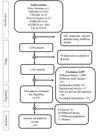
Flowchart for the identification and selection of studies in the systematic review using the Preferred Reporting Items for Systematic Review and Meta-Analyses(23).
The articles found in the databases were exported into EndNote Web® (Clarivate Analytics PA, USA), where duplicates were removed. Later, they were input into the software Rayyan® (Qatar Computing Research Institute, Doha, Qatar). The search was carried out in February 2022 and updated in January 2024.
The process of searching, selecting, and evaluating the studies was carried out by two reviewers. When they disagreed, a third reviewer was consulted. In the first stage, a triage of the studies was conducted, including an independent reading of their titles and abstracts. In the second stage, reviewers analyzed the differences and similarities of the studies included, reading them in full and having a consensus meeting.
Data collection was carried out using an instrument elaborated according to the guidelines from Cochrane Collaboration21, including the variables: identification of the study (author(s), title, journal, year of publication), objectives and method (randomization, blinding, allocation sequence, sample size, inclusion and exclusion criteria, intervention and control groups, data analysis, and outcome)21. We also gathered further information from the studies, including country, database consulted, place of intervention, justification, clinical profile, sex, age, and ethnicity. Regarding PI characterization, we also included data about whether the PI was related to the use of nasal CPAP, and on interventions to prevent PI, such as type of intervention, indication of intervention/care, contributions, and time or permanence of the intervention.
It was not possible to carry out a meta-analysis due to the lack of homogeneity of procedures and methodological differences, such as: the corrected age of the newborn, association measures, comparison, and intervention groups, differences in clinical outcomes, and different forms of care. Therefore, this review presents a descriptive analysis of evidence.
The methodological quality was evaluated using the system Grading of Recommendations Assessment, Development and Evaluation (GRADE) to measure the quality of evidence, the force of recommendation, and risk of bias considering the revised Cochrane Risk-of-Bias tool for randomized trials (RoB 2.0) 24,25. RoB 2 has seven domains, which are: random sequence generation, allocation concealment, blinding of participants, blinding of outcome assessors, incomplete outcomes, selective outcome reporting, other sources of bias25.
This helps classify the trials as having a "low risk of bias" and a "low general risk of bias", while others may show a "high general risk of bias". The GRADE online was also used to determine the strength of the recommendations for health care, which was classified as "high", "moderate", "low", or "very low"24,25.
RESULTS
Our findings are presented in descriptive form, using images and tables. The search found nine (9) studies, all of which were randomized clinical trials and answered the research question. Nine of them were written in English. As for their country of origin, three were from India (E1, E5, E8) and two from Iran (E3, E7); Australia (E2), Brazil (E4), Turkey (E6), and the United States (E9) presented one article each. All articles were published in international journals from 2010 to 2021. Some years stood out as having two papers each, namely: 2017 (E5, E7) and 2020 (E3, E8).
Chart 2 shows the characterization of the studies in this review.
The number of participants in the studies varied from 33 to 229, with three studies (E1, E4, E9) dividing participants into three groups. For five studies (E1, E4, E6, E8, E9), the primary outcome was related to the context of nasal trauma, considering the incidence and severity of the nasal injury. Only one study (E2) discussed the incidence of the problem. In three studies (E5, E6, E7), nasal trauma was the secondary outcome.
Regarding CPAP care, the following stood out: skin barrier associated with air humidification and heating (E1), care protocol (E7), pins for fixation of the CPAP device (E8), and application of Neonatal Skin Condition Score (E9). Regarding skin protective barriers: hydrocolloid skin barrier (E1, E2, E3, E4, E8) and silicone gel tape (E4, E6). Hydrocolloid dressings (E3, E4, E8) were effective in reducing the frequency and severity of injuries, in addition to being cost-effective.
Regarding the prevention of lesions using the nasal CPAP, three studies (E1, E5, E7) suggested that the incidence and severity of PI is lower with the use of masks, when compared to nasal prongs. Three other studies (E1, E7, E9), however, suggested that alternating between prong and mask reduces the frequency of PI when compared to the use of only one of these methods.
The main types of care were evaluated using the GRADE system to ascertain the quality of evidence. The system indicated a high reliability in many types of care, namely: the alternation of mask and prong (E1, E9); the use of a protective barrier on the skin of the PTNB (E3, E3, E5, E8); the use of hydrocolloid (E3, E4,E5, E8); daily inspection of the skin of the PTNB, especially of the nose; evaluating the pressure points of the CPAP interface (E4); prioritizing the use of a nasal mask, as opposed to that of a prong (E1, E5, E9); using instruments, scales, and classifications of injury in premature infants (E2); and humidification of nasal CPAP to maintain the integrity of the nasal mucosa (E2). Additionally, the use of silicone gel dressings (E6) as a protective barrier presented a moderate level of reliability, according to the GRADE system.
Regarding the quality of evidence, according to the GRADE, four studies were classified as having a high evidence level (E1, E5, E8, E9), while one had moderate (E6) and one had a very low (E7) evidence levels. In two articles (E6, E7), the domains of risk of bias and inconsistency received the lowest score, which dragged down the evidence quality, as Chart 3 shows.
As for the quality of evidence, all studies were randomly allocated. Seven (E1, E2, E4, E5, E6, E8, E9) were classified by the Evidence Level scale (35,36) as 1b and two (E3, E7) were classified as 2b.
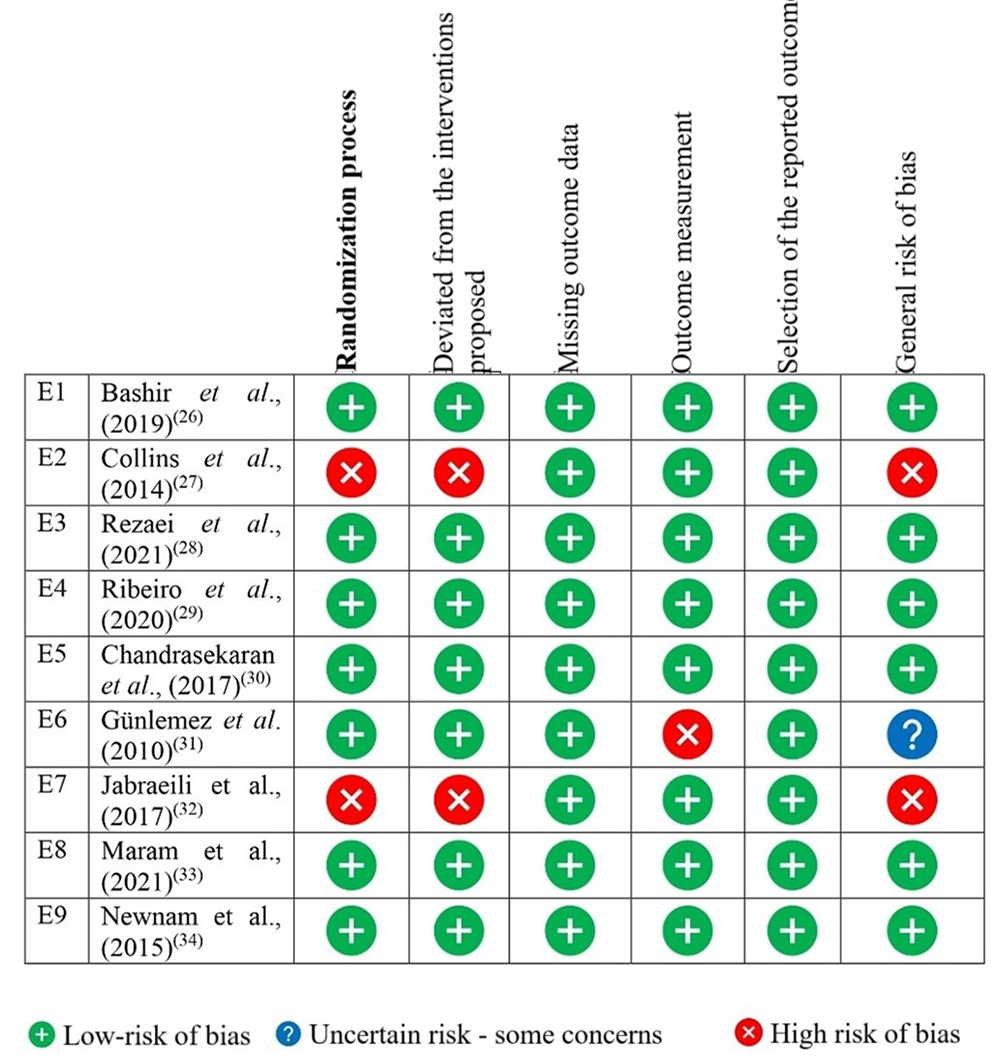
Regarding the risk of bias, as evaluated by RoB 2, five studies (E1, E3, E5, E8, E9) were classified as having a low risk of bias, one (E6) as having an uncertain risk (some concerns), and two as having a high risk (E2, E7)25. The high risk of bias classifications in some domains were related to the randomization process (E2, E7). Two (E2, E7) showed deviations in their intended interventions, and one (E6) in its outcome measurement, according to Figure 2.

Individual assessment of the risk of bias of Randomized Controlled Clinical Trials, according to the revised Cochrane Risk-of-Bias tool for randomized trials (25). Iguatu, Ceará, Brazil, 2022
DISCUSSION
The immaturity of the preterm newborn pulmonary system means that they require ventilatory support. Oxygenation with positive airway pressure is one of the most used treatments to the Respiratory Distress Syndrome (RDS) in the neonate period. Nasal CPAP is the less invasive option, but presents a risk of injury to the nasal septum, columella, and nostrils with the use of prongs. Safe care requires a careful evaluation to manage the device and choose the oxygen provision interface during treatment37.
The medical device being used may cause skin injuries, and its choice is important to prevent adverse events and health issues in the newborn, medical device-related pressure injury (MDRPI)37, since the PTNB skin is more vulnerable to the development of injuries, even under minimal pressure, a situation made even worse in the case of extreme preterm infants38.
The main interfaces of CPAP provision are the facial mask and the prongs (single short nasal prong, nasopharyngeal prong, and short nasal prong). Nasal prongs, when compared to the masks, are significantly associated with a higher incidence of nose skin rupture (E1, E5, E8, E9)26,30,33,34. The most likely sites for the development of injuries are the nasal septum, followed by the columella and the nostrils (E1, E4, E7)25,28,32.
Corroborating these findings, the most commonly used type of CPAP is via short nasal prongs, which are installed early to treat respiratory difficulties in newborns10,39. The characteristics of the material of the prong, as well as its size and appropriate fixation, are factors that increase the risks of nasal septum lesions. These characteristics must be taken into consideration, since they are among the most common interfaces, considered to be practical, less invasive, and low cost37. Therefore, it stands out that three articles recommend using the mask, when compared to the prong, to reduce PI (E1, E5, E9)26,30,34.
Alternating the use of mask and prong, what is called systematic alternation, significantly reduces the likelihood of nasal injuries (E1, E9), showing efficacy in changes every 8h (E1) and every 4h (E9)26,34. This is one of the most recommended procedures, as it favors skin decompression, reducing the risk of developing PI and eventually advancing the lesion20. This study found that systemic alternation every 8h was more effective to prevent PI, when compared to continuous use 20. Furthermore, the study shows the importance of systemic alternation that is not more frequent than every 4h for PTNB weighing less than 1,500g40.
Alternating the interfaces ensured that pressure on the sites where the device was located changed and reduced the time of pressure on the nasal skin of the preterm infant(E9)34. In a review study, systemic alternations helped reduce the pressure points in sensitive areas of the body, such as the nasal septum, nostrils, and other structures of the face40.
It is worth repeating that skin injuries with the same form or standard of the device being used usually develop in the region of the nose, following the standard PI classification system 41,42. Thus, ensuring ideal humidification is important to maintain the integrity of the respiratory mucosa (E1, E3, E7, E9)26,28,32,34. All air inspired must be at 37ºC and 100% humidity; the intensity of the airflow, especially when it is not humidified, leads to dryness in the nose and the resulting formation of thick secretions43.
Regarding protective covers and dressings, this study showed that hydrocolloid dressings protect against the rupture of nasal skin and reduce the incidence and severity of nasal trauma. Other measures would be an appropriate fixation of nasal prongs and the consequent reduction of air leakage (E3, E5, E9), as well as the choice of a dressing, considering weight, form, and size of the nose (E3)28,30,34.
Decreases in the frequency of PI are related to the potential effects of the hydrocolloid in reducing the attrition between the prong and the nasal septum and columella; the use of a dressing under the devices, in turn, represents a barrier to the skin, reducing pressure and shearing44. Although it is effective due to its high adhesiveness, the removal of the hydrocolloid must be done with care, to avoid trauma to the nasal skin of the PTNB (E4)29. Although the studies recommend its use to prevent lesions, there is scarce evidence regarding how best to remove it.
To remove the hydrocolloid, the skin under it must be lightly pressured, while its edges are slightly raised; thus, all sides can be detached, and it can be carefully removed. The dressing should be exchanged as soon as it starts to detach, the stage of the lesion changes, or according to recommendations29.
The silicone gel tape was seen as a protective factor against MDRPI, if compared to the hydrocolloid plate in the use of double pronged CPAP (E6)31. It is an elastomeric adhesive membrane, which has polydimethylsiloxane with variable concentrations in its composition. This ensures that the material is soft and flexible, helping prevent PI and protecting the nasal base when using prongs29.
Despite its efficacy, the silicone gel tape must be periodically replaced due to the low adherence and ease with which it becomes detached, changes in the protective barrier and the need to evaluate the lesion and its stage31. In cases where the PI is identified and an intervention starts early, the places in which the device exerts pressure should be periodically inspected (E4, E7)29,32. This daily inspection strongly contributes to reducing the effects of lesions by enabling fast actions/decisions to be taken about the injury45.
Thus, the places that must be observed with greater care in the nasal physical examination are: nostrils, columella, nasal septum, filter, and tip of the nose (E7)32. An evaluation that goes beyond the nasal area is also recommended, focusing on the temporozygomatic and parieto-occipital-temporal regions 46.
Daily evaluations in the care of PTNB commonly measure the nasal lesion using standardized scores. For the precise prevention, identification, and treatment of nasal lesions, one must adopt evaluation tools and classify its stage (E1, E2, E3, E8)26,27,28,33.
This review also showed the use of the Neonatal Skin Condition Score (E7, E9), due to the fact its use allows evaluating the skin condition of the PTNB. Developed in the United States and validated for use in Brazil in 2012, the Neonatal Skin Condition Score (ECPRN) is an intervention to prevent PI in preterm children (E7, E9)32,34,47.
Therefore, the clinical management of extreme preterm babies using nasal CPAP must be supported by evidence-based practices (E1, E7)26,32. The use of practical, evidence-based clinical practices significantly reduces nasal skin damage to preterm babies using CPAP.
This review included studies that showed measures of prevention and care that allowed the nurse to act towards preventing MDRPI in preterm infants. Its limitations include the fact that the studies had different methodologies, sample sizes, patient profiles, and used different forms of prevention and dressings, making it impossible to create a meta-analysis from the data. Further research should seek broader evidence and test other preventive measures and forms of care.
Considering the scientific evidence involving the implementation of care in the clinical decision making process of the nurse, certain strategies to prevent MDRPI stand out, including the systemic alternation between mask and prong, the use of hydrocolloid protective barriers, siliconee gel tapes, and daily and routine inspection of skin humidity, all in tandem with clinical protocols and guidelines with validity evidence.
CONCLUSION
This systematic review allowed identifying the main forms of care for the prevention of pressure lesions related to the use of non-invasive ventilation in preterm newborns, from systematic alternation to the use of protective barriers using hydrocolloid and siliconee gel. In addition, professionals must inspect the skin of the newborn daily, monitoring its humidification and using clinical protocols and guidelines based on robust studies as preventive care tools.
Evidence found showed that alternating between a mask and a nasal prong reduced lesions when compared to the isolated use of each device. Furthermore, the use of barriers to protect the skin, especially hydrocolloid, was superior in terms of cost-benefit, in addition to being more effective than alternatives, such as silicone tape, as a preventive measure.
Therefore, current evidence highlights the need to effectively implement these interventions in clinical practice, to ensure safe, effective, and quality care.
Acknowledgements
The authors would like to thank the Coordination for the Improvement of Higher Education Personnel (CAPES) for the support granted to carry out this research, provided through an academic Master's scholarship.
REFERENCES
-
1. Dias BAS, Leal MDC, Martinelli KG, Nakamura-Pereira M, Esteves-Pereira AP, Santos Neto ETD. Recurrent preterm birth: data from the study “Birth in Brazil.” Rev Saúde Pública. 2022;56(7). https://doi.org/10.11606/s1518-8787.2022056003527
» https://doi.org/10.11606/s1518-8787.2022056003527 -
2. Guimarães EADA, Vieira CS, Nunes FDD, Januário GDC, Oliveira VCD, Tibúrcio JD. Prevalência e fatores associados à prematuridade em Divinópolis, Minas Gerais, 2008-2011: análise do Sistema de Informações sobre Nascidos Vivos. Epidemiol Serv Saúde. 2017;26(1):91-8. https://doi.org/10.5123/s1679-49742017000100010
» https://doi.org/10.5123/s1679-49742017000100010 -
3. Vanin LK, Soncini HZ, Nunes RD, Siqueira LLBS. Fatores de risco materno-fetais associados à prematuridade tardia. Rev Paul Pediatr. 2020;38:e2018136. https://doi.org/10.1590/1984-0462/2020/38/2018136
» https://doi.org/10.1590/1984-0462/2020/38/2018136 -
4. United Nations Inter-Agency Group for Child Mortality Estimation (UN IGME). Levels & trends in child mortality: report 2022 . 2023. Available from: https://childmortality.org/wp-content/uploads/2023/01/UN-IGME-Child-Mortality-Report-2022.pdf
» https://childmortality.org/wp-content/uploads/2023/01/UN-IGME-Child-Mortality-Report-2022.pdf -
5. Souza GAB, Hanel MP, Herter EC, Pinto LA, Jones MH. Chronic lung disease of prematurity and bronchopulmonary dysplasia. J Bras Pneumol. 2024;50(4):e20240279. https://doi.org/10.36416/1806-3756/e20240279
» https://doi.org/10.36416/1806-3756/e20240279 -
6. Walicka-Serzysko K, Postek M, Borawska-Kowalczyk U, Szamotulska K, Kwasniewicz P, Polak K, et al. Long-term pulmonary outcomes of Young adults born prematurely: a Polish prospective cohort study Prematuritas 20. BMC Pulm Med. 2024;24;126. https://doi.org/10.1186/s12890-024-02939-5
» https://doi.org/10.1186/s12890-024-02939-5 -
7. Moura BLA, Alencar GP, Silva ZPD, Almeida MFD. Fatores associados à internação e à mortalidade neonatal em uma coorte de recém-nascidos do Sistema Único de Saúde, no município de São Paulo. Rev Bras Epidemiol. 2020;23:e200088. https://doi.org/10.1590/1980-549720200088
» https://doi.org/10.1590/1980-549720200088 -
8. Pravia CI, Benny M. Long-term consequences of prematurity. Cleve Clin J Med. 2020;87(12)759-67. https://doi.org/10.3949/ccjm.87a.19108
» https://doi.org/10.3949/ccjm.87a.19108 -
9. Boel L, Hixson T, Brown L, Sage J, Kotecha S, Chakraborty M. Non-invasive respiratory support in preterm infants. Pediatr Respir Rer. 2022;43:53-59. https://doi.org/10.1016/j.prrv.2022.04.002
» https://doi.org/10.1016/j.prrv.2022.04.002 -
10. Falk M, Gunnarsdottir K, Baldursdottir S, Donaldsson S, Jonsson B, Drevhammar T. Interface leakage during neonatal CPAP treatment: a randomised, cross-over trial. Arch Dis Child Fetal Neonatal Ed . 2021;106(6):663-7. https://doi.org/10.1136/archdischild-2021-321579
» https://doi.org/10.1136/archdischild-2021-321579 -
11. Abelenda VLB, Valente TCO, Marinho CL, Lopes AJ. Effects of underwater bubble CPAP on very-low-birth-weight preterm newborns in the delivery room and after transport to the neonatal intensive care unit. J Child Health Care. 2018;22(2):216-27. https://doi.org/10.1177/1367493517752500
» https://doi.org/10.1177/1367493517752500 -
12. Jatana KR, Oplatek A, Stein M, Phillips G, Kang DR, Elmaraghy CA. Effects of nasal continuous positive airway pressure and cannula use in the neonatal intensive care unit setting. Arch Otolaryngol Head Neck Surg. 2010;136(3):287-91. https://doi.org/10.1001/archoto.2010.15
» https://doi.org/10.1001/archoto.2010.15 -
13. Domingos JEP, Tavares ARBS, Santos MSN, Abreu CCT, Chaves EMC. Fatores de risco associados a lesão por dispositivos médicos em neonatos: uma revisão integrativa. Rev Enferm Atual Derme. 2021;95(34). https://doi.org/10.31011/reaid-2021-v.95-n.34-art.1098
» https://doi.org/10.31011/reaid-2021-v.95-n.34-art.1098 -
14. Biazus GF, Kaminski DM, Silveira RC, Procianoy RS. Incidence of nasal pressure injury in preterm infants on nasal mask noninvasive ventilation. Rev Paul Pediatr. 2023;41:e2022093. https://doi.org/10.1590/1984-0462/2023/41/2022093
» https://doi.org/10.1590/1984-0462/2023/41/2022093 - 15. Mondragon N, Zito PM. Pressure injury. In: StatPearls. Treasure Island (FL): StatPearls Publishing; 2024.
-
16. Ferreira EMC, Pereira ARC, Montoito AIM, Curado MAS. Validação clínica da Neonatal Skin Condition Score com recém-nascidos portugueses. Rev Gaúcha Enferm. 2023;44:e20220059. https://doi.org/10.1590/1983-1447.2023.20220059.pt
» https://doi.org/10.1590/1983-1447.2023.20220059.pt -
17. Ribeiro- Junior OC, Oliveira AG, Lima TM, Gouveia JS, Ribeiro NA, Araújo TS, et al. As tecnologias de cuidados empregadas por enfermeiros no cuidado a recém-nascidos na unidade de terapia intensiva. In: Silva MCAS (org.). A enfermagem centrada na investigação científica 2. Ponta Grossa, PR: Atena; 2020. https://doi.org/10.22533/at.ed.140200903
» https://doi.org/10.22533/at.ed.140200903 -
18. Chandler AJ, Lewis J, Hare R. Medical device-related pressure ulcers in premature babies. Wounds UK . 2016;12(4). https://wounds-uk.com/journal-articles/medical-device-related-pressure-ulcers-in-premature-babies/
» https://wounds-uk.com/journal-articles/medical-device-related-pressure-ulcers-in-premature-babies/ -
19. Martins COA, Curado MAS. Escala de Observação do Risco de Lesão da Pele em Neonatos: validação estatística com recém-nascidos. Rev Enferm Referência. 2017;4(13):43-52. https://doi.org/10.12707/RIV16082
» https://doi.org/10.12707/RIV16082 -
20. Gautam G, Gupta N, Sasidharam R, Thanigainathan S, Yadav B, Singh K, et al. Systematic rotacion versus continuous application of ‘nasal prongs’ or ‘nasal mask’ in preterm infants on nCPAP: a randomized controlled trial. Eur J Pediatr. 2023;186(6):2645-54. https://doi.org/10.1007/s00431-023-04933-1
» https://doi.org/10.1007/s00431-023-04933-1 -
21. Higgins J, Green S, editors. Cochrane handbook for systematic reviews of interventions version 5.1.0. Chichester: John Wiley & Sons; 2011. Available from: https://training.cochrane.org/handbook
» https://training.cochrane.org/handbook -
22. Huang X, Lin J, Demner-Fushman D. Evaluation of PICO as a knowledge representation for clinical questions. AMIA Annu Symp Proc. 2006:359-63. Available from: https://pmc.ncbi.nlm.nih.gov/articles/PMC1839740/
» https://pmc.ncbi.nlm.nih.gov/articles/PMC1839740 -
23. Mendes KDS, Silveira RCCP, Galvão CM. Uso de gerenciador de referências bibliográficas na seleção dos estudos primários em revisão integrativa. Texto Contexto Enferm. 2019;28:e20170204. https://doi.org/10.1590/1980-265X-TCE-2017-0204
» https://doi.org/10.1590/1980-265X-TCE-2017-0204 -
24. Guyatt G, Oxman AD, Akl EA, Kunz R, Vist G, Brozek J, et al. GRADE guidelines: one. Introduction-GRADE evidence profiles and summary of findings tables. J Clin Epidemiol. 2011;64(4):383-94. https://doi.org/10.1016/j.jclinepi.2010.04.026
» https://doi.org/10.1016/j.jclinepi.2010.04.026 -
25. Ministério da Saúde (BR) Secretaria de Ciência, Tecnologia e Insumos Estratégicos. Departamento de Ciência e Tecnologia . Diretrizes metodológicas: Sistema GRADE - Manual de graduação da qualidade da evidência e força de recomendação para tomada de decisão em saúde. Brasília (DF): Ministério da Saúde; 2014 ;72p. Available from: https://bvsms.saude.gov.br/bvs/ct/PDF/diretriz_do_grade.pdf
» https://bvsms.saude.gov.br/bvs/ct/PDF/diretriz_do_grade.pdf -
26. Bashir T, Murki S, Kiran S, Reddy VK, Oleti TP. ‘Nasal mask’ in comparison with ‘nasal prongs’ or ‘rotation of nasal mask with nasal prongs’ reduces the incidence of nasal injury in preterm neonates supported on nasal continuous positive airway pressure (nCPAP): a randomized controlled trial. PLoS One. 2019;14(1):e0211476. https://doi.org/10.1371/journal.pone.0211476
» https://doi.org/10.1371/journal.pone.0211476 -
27. Collins CL, Barfield C, Horne RSC, Davis PG. A comparison of nasal trauma in preterm infants extubated to either heated humidified high-flow nasal cannulae or nasal continuous positive airway pressure. Eur J Pediatr. 2014;173(2):181-6. https://doi.org/10.1007/s00431-013-2139-8
» https://doi.org/10.1007/s00431-013-2139-8 -
28. Rezaei P, Jafari-Mianaeib S, Sadeghnia A, Heidari Z. Protective dressings, injury, and device failure in preterm infants receiving nasal continuous positive airway pressure: a randomized controlled trial. Adv Skin Wound Care. 2021;34(9):1-6. https://doi.org/10.1097/01.ASW.0000767344.37591.b6
» https://doi.org/10.1097/01.ASW.0000767344.37591.b6 -
29. Ribeiro DDFC, Barros FS, Fernandes BL, Nakato AM, Nohama P. Hydrocolloid versus siliconee gel for the prevention of nasal injury in newborns submitted to noninvasive ventilation: a randomized clinical trial. Heliyon. 2020;6(7):e04366. https://doi.org/10.1016/j.heliyon.2020.e04366
» https://doi.org/10.1016/j.heliyon.2020.e04366 -
30. Chandrasekaran A, Thukral A, Jeeva Sankar M, Agarwal R, Paul VK, Deorari AK. Nasal masks or binasal prongs for delivering continuous positive airway pressure in preterm neonates: a randomised trial. Eur J Pediatr . 2017;176(3):379-86. https://doi.org/10.1007/s00431-017-2851-x
» https://doi.org/10.1007/s00431-017-2851-x -
31. Günlemez A, Isken T, Gökalp AS, Türker G, Arisoy EA. Effect of silicone gel sheeting in nasal injury associated with nasal CPAP in preterm infants. Indian Pediatr. 2010;47(3):265-7. https://doi.org/10.1007/s13312-010-0047-9
» https://doi.org/10.1007/s13312-010-0047-9 -
32. Jabraeili M, Mahallei M, Arshadi M, Mohammadpoorasl A, Shamshiri M, Salimi Z, et al. The efficacy of protocolized nursing care on nasal skin breakdown in preterm neonates receiving nasal continuous positive airway pressure. Int J Pediatr. 2017;5(1):4217-25. https://doi.org/10.22038/ijp.2016.7875
» https://doi.org/10.22038/ijp.2016.7875 -
33. Maram S, Murki S, Nayyar S, Kadam S, Oleti TP, Anne RP, et al. RAM cannula with Cannulaide versus Hudson prongs for delivery of nasal continuous positive airway pressure in preterm infants: an RCT. Sci Rep. 2021;11(1):23527. https://doi.org/10.1038/s41598-021-02988-4
» https://doi.org/10.1038/s41598-021-02988-4 -
34. Newnam KM, McGrath JM, Salyer J, Estes T, Jallo N, Bass WT. A comparative effectiveness study of continuous positive airway pressure-related skin breakdown when using different nasal interfaces in the extremely low birth weight neonate. Appl Nurs Res. 2015;28(1):36-41. https://doi.org/10.1016/j.apnr.2014.05.005
» https://doi.org/10.1016/j.apnr.2014.05.005 - 35. Nobre MR, Bernardo WM. A prática clínica baseada em evidências: adaptação para português. Oxford Centre for Evidence-Based Medicine; 2006
- 36. Nobre MR, Bernardo WM, Jatene FB. Evidence based clinical practice Evidence based clinical practice: Part III - Critical appraisal of clinical research. Rev Assoc Med Bras. 2004;50:221-8.
-
37. Ribeiro DFC, Barros FS, Fernandes BL, Nakato AM, Nohama P. Nasal prongs: risks, injuries incidence and preventive approaches associated with their use in newborns. J Multidiscip Healthcare. 2020;19(13):527-37. https://doi.org/10.2147/JMDH.S252017
» https://doi.org/10.2147/JMDH.S252017 -
38. Reed RC, Johnson DE, Nie AM. Preterm infant skin structure is qualitatived and quantitatively different from that of term newborns. Pediatr Develop Pathol. 2021;24(2):96-102. https://doi.org/10.1177/1093526620976831
» https://doi.org/10.1177/1093526620976831 -
39. Sweet DG, Carnielli V, Greisen G, Hallman M, Ozek E, Pas A, et al. European Consensus Guidelines on the management of respiratory distress syndrome: 2019 update. Neonatol. 2019;115(4):432-50. https://doi.org/10.1159/000499361
» https://doi.org/10.1159/000499361 -
40. Fu Y, Li X, Yu Y, Li R, Shi T. Summary of the best evidence for the prevention of nasal injury in preterm infants with nasal noninvasive ventilation. Transl Pediatr. 2024;13(2):224-35. https://doi.org/10.21037/tp-23-465
» https://doi.org/10.21037/tp-23-465 -
41. Montero AG, Muguerza LL, Esteban LP, Sebastián ST, Também MA, Cuesta DG, et al. Incidence of pressure injuries associated with oxygen therapy devices in the neonatal intensive care unit. Rev Esp Salud Publica. 2024 ;98:e202404032. Available from: https://scielo.isciii.es/pdf/resp/v98/1135-5727-resp-98-e202404032.pdf
» https://scielo.isciii.es/pdf/resp/v98/1135-5727-resp-98-e202404032.pdf -
42. Sousa IC, Freitas KSM, Silveira HFT, Mourão CML. Lesão por pressão associada a tecnologias de saúde. Rev Fac Paulo Picaço. 2022;2(3). https://doi.org/10.59483/rfpp.v2n3.43
» https://doi.org/10.59483/rfpp.v2n3.43 -
43. Magalhães PAF, D'Amorim ACG, Oliveira EFAL, Ramos MEA, Mendes APDA, Barbosa JFS, et al. Rotating nasal masks with nasal prongs reduces the incidence of moderate to severe nasal injury in preterm infants supported by noninvasive ventilation. Rev Bras Ter Intensiva. 2022;34(2):247-54. https://doi.org/10.5935/0103-507X.20220022-pt
» https://doi.org/10.5935/0103-507X.20220022-pt -
44. Santos SV, Ramos FRS, Costa R, Batalha LMC. Evidências sobre prevenção de lesões de pele em recém-nascidos: revisão integrativa. ESTIMA Braz J Enterostomal Ther. 2019;17:e2219. http://dx.doi.org/10.30886/estima.v17.787_PT
» http://dx.doi.org/10.30886/estima.v17.787_PT -
45. Deng H, Li C, Yu N. Factors influencing iatrogenic skin injury in neonates and Nursing strategies. Altern Ther Health Med 2024 ;30(11):185-9. Available from: https://pubmed.ncbi.nlm.nih.gov/38687850/
» https://pubmed.ncbi.nlm.nih.gov/38687850/ - 46. Luz HAS. Efeito do óleo de girassol comparado ao hidrocoloide para prevenção de lesão cutânea nos prematuros em uso de CPAP nasal: estudo piloto de ensaio clínico randomizado. Alfenas: Universidade Federal de Alfenas; 2020.
-
47. Tenfen C, Barreto GMS, Moreira NM, Ferreira H, Zill A, Silva RMM. Skin injuries in newborns hospitalized in neonatal intensive care: a cross-sectional study. Rev Esc Enferm USP. 2024;58:e20240058. https://doi.org/10.1590/1980-220X-REEUSP-2024-0058pt
» https://doi.org/10.1590/1980-220X-REEUSP-2024-0058pt
-
Availability of Data and Materials
Access to the dataset may be made upon request to the corresponding author. Part of the data used in this systematic review was from restricted access databases, whose guidelines do not allow their full public availability. Thus, any request will be evaluated according to the licensing terms of the databases consulted and ethical principles of use and disclosure of scientific data.
Access to the dataset may be made upon request to the corresponding author. Part of the data used in this systematic review was from restricted access databases, whose guidelines do not allow their full public availability. Thus, any request will be evaluated according to the licensing terms of the databases consulted and ethical principles of use and disclosure of scientific data.

 Source: The authors, 2022.
 Source: The authors, 2022.