 History of the implementation of public health emergency management in Brazil
Abstract
Public health emergencies can cause significant social, economic and health impacts. To mitigate these effects, approaches and programs at national and global levels have been developed, focusing on preparedness, surveillance and response, especially for emergencies of international concern (1). As a Member State of the World Health Organization and signatory of its agreements and conventions, Brazil is committed to ensuring the execution of health actions with a focus on public health emergencies. Despite successful experiences in emergency management, this is still an emerging field, with limited scientific production. This article describes the history of public health emergency management at the federal level and its strategies for preparing, surveillance and responding to these events in the Brazilian National Health System.
Keywords
Public Health Surveillance; Surge Capacity; Brazilian National Health System; Declaration of Emergency
Resumo
As emergências de saúde pública podem causar impactos significativos nas esferas social, econômica e de saúde. Para mitigar esses efeitos, abordagens e programas em níveis nacionais e globais têm sido desenvolvidos, com foco na preparação, vigilância e resposta, especialmente para emergências de importância internacional (1). Como Estado-membro da Organização Mundial da Saúde e signatário de seus acordos e suas convenções, o Brasil possui o compromisso de garantir a execução de ações em saúde com foco nas emergências em saúde pública. Apesar de experiências bem-sucedidas na gestão de emergências, esse ainda é um campo emergente, com limitada produção científica. Este artigo descreve o histórico da gestão das emergências em saúde pública no nível federal e suas estratégias na preparação, vigilância e resposta a esses eventos no Sistema Único de Saúde.
Palavras-chave
Vigilância em Saúde Pública; Capacidade de Resposta ante Emergências; Sistema Único de Saúde; Declaração de Estado de Emergência
Resumen
Las emergencias de salud pública pueden causar impactos significativos en los ámbitos social, económico y sanitario. Para mitigar estos efectos, se han desarrollado enfoques y programas a nivel nacional y global, centrados en la preparación, la vigilancia y la respuesta, especialmente para emergencias de importancia internacional (1). Como Estado Miembro de la Organización Mundial de la Salud y signatario de sus acuerdos y convenciones, Brasil se compromete a garantizar la ejecución de acciones de salud con foco en emergencias de salud pública. A pesar de las experiencias exitosas en el manejo de emergencias, este es todavía un campo emergente, con producción científica limitada. Este artículo describe la historia de la gestión de emergencias de salud pública a nivel federal y sus estrategias para la preparación, vigilancia y respuesta ante estos eventos en el Sistema Único de Salud.
Palabras clave
Vigilancia en Salud Pública; Capacidad de Reacción; Sistema Único de Salud; Declaración de Emergencia
Introduction
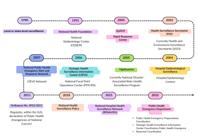
The National Health Foundation (2), created in 1991, played an essential role by integrating the National Epidemiology Center to promote the use of epidemiology in the formulation of health policies in the Brazilian National Health System (Sistema Único de Saúde - SUS). In the 1990s, emergency response was decentralized and depended on external support, such as that from the United States Centers for Disease Control and Prevention (3,4). To improve the response, the Training Program in Epidemiology Applied to Services of the Brazilian National Health System was established in 2000, training professionals to investigate and control public health events that required support from federal health service management (4). At the same time, the Rapid Emergency Response Center was created, strengthening the management of outbreaks and epidemics (5).
With the creation of the Health Surveillance Secretariat (6) in 2003, replacing the National Epidemiology Center, national actions were structured. Hospital Epidemiological Surveillance (7,8) was created in 2004 to improve the reporting and investigation of diseases, especially communicable diseases, with the support of the Hospital Epidemiology Centers, which became part of the National Hospital Epidemiological Surveillance Network in 2021 (9). The Vigidesastres program (10,11), established in 2005, is based on management of risks associated with disasters, including risk reduction actions (prevention, preparedness and monitoring), disaster management (alert, communication and response) and recovery (rehabilitation and reconstruction) from disaster exposure, with 52 focal points distributed throughout Brazil (12).
The revision of the International Health Regulations (13) in 2005 led to the creation of National Focal Points in signatory countries for communication with the World Health Organization. In 2006, the Health Surveillance Secretariat became the focal point (14) in Brazil and, in the same year, the National Strategic Health Surveillance Information Center was created, responsible for implementing the International Health Regulations and communicating about public health emergencies (15). In 2007, the National Public Health Emergency Alert and Response Network (CIEVS Network) was structured to expand these capacities nationally (16).
Ordinance No. 2952/2011 (17) regulated, within the SUS, declaration of Public Health Emergencies of National Concern, used in situations of outbreaks, epidemics, disasters or insufficient of health care that require urgent prevention, control and mitigation measures, with a coordinated national response.
The 2018 National Health Surveillance Policy (18) emphasizes the importance of cooperation between different spheres of health service management to strengthen capacity for preparedness, surveillance and response to public health emergencies, ensuring efficient and coordinated actions to prevent, control and mitigate the impacts of these emergencies. In 2022, the creation of the Public Health Emergency Department, currently structured into three coordinations, strengthened the national coordination of these actions, acting through a surveillance network articulated at all levels of management (19) (Figure 1).
Public Health Emergency Management
Addressing public health emergencies requires preparedness, surveillance and response actions, which should occur in an interconnected and complementary manner. With regard to preparedness, the Training Program in Epidemiology Applied to SUS Services plays a central role, offering training at fundamental, intermediate and advanced levels (4). The Public Health Emergency Training Program complements this initiative, promoting continuing education and simulations to improve response skills and identify vulnerabilities in contingency plans (20).
Contingency plans have a structuring function, guiding procedures and responsibilities for responding to emergencies. At the federal level, the Public Health Emergency Response Plan has as its principle the use of a coordination and control system (21). In 2024, the Contingency Plan Preparation Guide was launched with the aim of standardizing these plans throughout the SUS (22). There are also contingency plans for emergencies caused by chemical, biological, radiological and nuclear agents, natural disasters, epidemics and outbreaks, among others (23).
Another essential action is the logistics of strategic inputs. This action ensures the maintenance of health services and the most effective response during emergencies (24) (Table 1).
Within the scope of surveillance, the CIEVS Network is a strategic monitoring structure made up of units spread across states, strategic municipalities, capitals and border regions, in addition to indigenous health districts. The network acts as a sentinel for detecting emergencies, evaluating events under the criteria of the International Health Regulations (16,25). These events, classified as unexpected, impacting public health, or with potential for spreading internationally, may be reported to the World Health Organization.
The CIEVS Network uses event-based surveillance strategies, which consider formal and informal sources, and indicator-based surveillance, which analyzes data from national information systems (16). The Vigidesastres program complements surveillance actions, monitoring impacts of disasters (12). Surveillance of chemical, biological, radiological and nuclear factors was strengthened in 2023, with the creation of a specific technical area for monitoring these factors.
The Hospital Epidemiology Centers support the CIEVS Network in reporting and investigation of hospital deaths, in addition to monitoring outbreaks and epidemics through the National Hospital Surveillance Network (7).
The Event Monitoring Committee coordinates the analysis and discussion of events of public health concern. Large mass events are monitored by the Integrated Health Joint Operations Center, strengthening the response capacity between the three spheres of government. Brazil also carries out voluntary external evaluations to monitor basic surveillance and response capabilities.
The National Epidemiological Intelligence Center is being structured, which will integrate epidemiological models and quantitative forecasts into surveillance strategies. This move forward promises to strengthen early warning systems and optimize the capacity to respond to public health emergencies, ensuring more agile and informed action throughout the national territory (26) (Table 1).
Among response actions, Emergency Operations Centers are fundamental for emergency management, using the Operations Command System to organize resources and actions. Emergency Operations Centers are characterized by the ability to lead, coordinate and support the response to an event that has implications for the health of the population or health services (27).
At the national level, these Centers are triggered when a public health emergency exceeds local or state response capacity (17). This can also be used to prepare and forestall the emergency response, even if it has not yet been confirmed in Brazilian territory. Examples of action include the COVID-19 pandemic, the Yanomami crisis, disasters such as Brumadinho and situations of forced migration. Although migration does not always constitute a public health emergency, health surveillance has recognized its relevance, creating specific groups for monitoring it (28).
The work of the Emergency Operations Centers requires transparency through reports and records, which are essential for engaging authorities, health service managers, health professionals and the population. Risk communication and community engagement are essential elements in this process (29). In 2024, the increase in financial resources was regulated to support responses to emergencies in the SUS, covering primary and specialized care and health surveillance. These resources aim to strengthen actions, reducing impacts on the population’s health and health services (30).
Rapid response teams, such as those of the Vigidesastres Program, the Training Program in Epidemiology Applied to the SUS (advanced) and the SUS National Force, play a crucial role in emergencies. These teams are made up of trained specialists and act as a task force that can be quickly mobilized (Table 1).
Addressing public health emergencies in Brazil has become more complex, demanding effective and coordinated responses throughout the national territory. Since the creation of the SUS, several strategies have been implemented to improve preparedness, surveillance and response to emergencies, focusing on intersectorality and the involvement of all spheres of health service management.
Guaranteeing specific financial resources for emergencies is essential to enable quick and coordinated actions, providing greater agility in implementing measures during crises and reinforcing the health system’s response capacity.
References
- 1 Allen T, Spencer R. Barriers and enablers to using an emergency operations center in public health emergency management: a scoping review. Disaster Med Public Health Prep. 2023;17(e407):1-9.
-
2 Brasil. Decreto nº 100, de 16 de abril de 1991. Institui a Fundação Nacional de Saúde e dá outras providências. Diário Oficial da União. 1991 Apr 17 [cited 2025 Feb 11]. Available from: https://legislacao.presidencia.gov.br/atos/?tipo=DEC№=100&ano=1991&ato=cafQTRq5EMFpWT42f
» https://legislacao.presidencia.gov.br/atos/?tipo=DEC№=100&ano=1991&ato=cafQTRq5EMFpWT42f - 3 Teixeira MG, Costa MCN, Carmo EH, Oliveira WK, Penna GO. Vigilância em Saúde no SUS – construção, efeitos e perspectivas. Ciênc Saúde Colet. 2018;23:18118.
-
4 Organização Pan-Americana da Saúde. EpiSUS – “Além das Fronteiras”: contribuindo para o fortalecimento da epidemiologia aplicada aos serviços do SUS [Internet]. 1. ed. Brasília: OPAS; 2015 [cited 2024 Feb 5]. 588 p. Available from: https://bvsms.saude.gov.br/bvs/publicacoes/episus_alem_fronteiras_contribuindo_fortalecimento_epidemiologia_aplicada_servicos_sus.pdf
» https://bvsms.saude.gov.br/bvs/publicacoes/episus_alem_fronteiras_contribuindo_fortalecimento_epidemiologia_aplicada_servicos_sus.pdf -
5 Fundação Nacional de Saúde. Portaria nº 474, de 31 de agosto de 2000. Regulamenta a coleta de dados, fluxo e periodicidade de envio das informações sobre óbitos para o Sistema de Informações sobre Mortalidade (SIM) [Intenet]. Brasília: Ministério da Saúde; 2000 [cited 2025 Feb 11]. Available from: http://www.funasa.gov.br/documents/20182/47176/portaria_474_2000.pdf/0b672f51-b2b7-423c-a0b6-d03364c201be?version=1.0#:~:text=NACIONAL%20DE%20SA%C3%9ADE-,PORTARIA%20N.%C2%BA%20474%20%2C%20DE%2031%20DE%20AGOSTO%20DE%202000,de%20Informa%C3%A7%C3%B5es%20sobre%20Mortalidade%20%E2%80%93%20SIM
» http://www.funasa.gov.br/documents/20182/47176/portaria_474_2000.pdf/0b672f51-b2b7-423c-a0b6-d03364c201be?version=1.0#:~:text=NACIONAL%20DE%20SA%C3%9ADE-,PORTARIA%20N.%C2%BA%20474%20%2C%20DE%2031%20DE%20AGOSTO%20DE%202000,de%20Informa%C3%A7%C3%B5es%20sobre%20Mortalidade%20%E2%80%93%20SIM -
6 Brasil. Presidência da República. Decreto nº 4.726, de 9 de junho de 2003. Aprova a Estrutura Regimental e o Quadro Demonstrativo dos Cargos em Comissão e das Funções Gratificadas do Ministério da Saúde, e dá outras providências. Diário Oficial da União. 2003 June 10. Available from: https://legislacao.presidencia.gov.br/atos/?tipo=DEC№=4726&ano=2003&ato=064UzYq1EeRpWTb09
» https://legislacao.presidencia.gov.br/atos/?tipo=DEC№=4726&ano=2003&ato=064UzYq1EeRpWTb09 - 7 Secretaria de Estado da Saúde de São Paulo. Vigilância Epidemiológica em âmbito hospitalar. Rev Saúde Pública. 2007;41:487-91.
-
8 Brasil. Ministério da Saúde. Portaria nº 2.529/GM, de 23 de novembro de 2004. Institui o Subsistema Nacional de Vigilância Epidemiológica em Âmbito Hospitalar, define competências para os estabelecimentos hospitalares, a União, os estados, o Distrito Federal e os municípios, cria a Rede Nacional de Hospitais de Referência para o referido Subsistema e define critérios para qualificação de estabelecimentos [Internet]. 2004 [cited 2025 Feb 12]. Available from: http://www2.saude.ba.gov.br/hgpv/portaria_n_2529-2004-svs.htm
» http://www2.saude.ba.gov.br/hgpv/portaria_n_2529-2004-svs.htm - 9 Brasil. Ministério da Saúde. Portaria GM/MS nº 1.694, de 23 de julho de 2021. Institui a Rede Nacional de Vigilância Epidemiológica Hospitalar (Renaveh). Diário Oficial da União. 2021 July 26;139(Seção 1):142.
-
10 Brasil. Ministério da Saúde. Portaria GM/MS nº 4.185, de 1º de dezembro de 2022. Altera a Portaria de Consolidação GM/MS nº 5, de 28 de setembro de 2017, para instituir o Programa Nacional de Vigilância em Saúde dos Riscos Associados aos Desastres (Vigidesastres), no âmbito do Sistema Único de Saúde (SUS). Diário Oficial da U nião. 2022 Dec 2. Available from: https://bvsms.saude.gov.br/bvs/saudelegis/gm/2022/prt4185_05_12_2022.html
» https://bvsms.saude.gov.br/bvs/saudelegis/gm/2022/prt4185_05_12_2022.html -
11 Brasil. Ministério da Saúde. Instrução Normativa nº 1, de 7 de março de 2005. Regulamenta a Portaria nº 1.172/2004/GM, no que se refere às competências da União, estados, municípios e Distrito Federal na área de vigilância em saúde ambiental. Diário Oficial da União. 2005 July 8. Available from: https://bvsms.saude.gov.br/bvs/saudelegis/svs/2005/int0001_07_03_2005_rep.html
» https://bvsms.saude.gov.br/bvs/saudelegis/svs/2005/int0001_07_03_2005_rep.html - 12 Musmanno CP, Rohlfs DB, Silva EL, Santana VA. A Vigilância em Saúde Ambiental dos Riscos Associados aos Desastres (VIGIDESASTRES) no Ministério da Saúde. Ci. Tróp. 2016;40(1):133-44.
-
13 World Health Organization. International health regulations (2005) [Internet]. 3. ed. Geneva: WHO; 2016 [cited 2025 Feb 11]. 84 p. Available from: https://iris.who.int/bitstream/handle/10665/246107/9789241580496-eng.pdf?sequence=1
» https://iris.who.int/bitstream/handle/10665/246107/9789241580496-eng.pdf?sequence=1 -
14 Brasil. Ministério da Saúde. Plano de operação do ponto focal nacional para o regulamento sanitário internacional [Internet]. Brasília: Ministério da Saúde; 2016 [cited 2025 Feb 12]. Available from: https://bvsms.saude.gov.br/bvs/publicacoes/plano_operacao_ponto_focal_nacional_regulamento_sanitario_internacional.pdf
» https://bvsms.saude.gov.br/bvs/publicacoes/plano_operacao_ponto_focal_nacional_regulamento_sanitario_internacional.pdf -
15 Brasil. Ministério da Saúde. Portaria nº 1.865, de 10 de agosto de 2006. Estabelece a Secretaria de Vigilância em Saúde como Ponto Focal Nacional para o Regulamento Sanitário Internacional (2005) junto à Organização Mundial da Saúde. Diário Oficial da União. 2006 Aug 11. Available from: https://bvsms.saude.gov.br/bvs/saudelegis/gm/2006/prt1865_10_08_2006.html
» https://bvsms.saude.gov.br/bvs/saudelegis/gm/2006/prt1865_10_08_2006.html - 16 Dimech GS. A experiência do Centro de Informações Estratégicas e Respostas em Vigilância em Saúde (CIEVS/SVS/MS). Salas Situaç Em Saúde. 2010;101.
-
17 Brasil. Ministério da Saúde. Portaria nº 2.952, de 14 de dezembro de 2011. Regulamenta, no âmbito do Sistema Único de Saúde (SUS), o Decreto nº 7.616, de 17 de novembro de 2011, que dispõe sobre a declaração de Emergência em Saúde Pública de Importância Nacional (ESPIN) e institui a Força Nacional do Sistema Único de Saúde (FN-SUS). Diário Oficial da União. 2011 Dec 15. Available from: https://bvsms.saude.gov.br/bvs/saudelegis/gm/2011/prt2952_14_12_2011.html
» https://bvsms.saude.gov.br/bvs/saudelegis/gm/2011/prt2952_14_12_2011.html - 18 Conselho Nacional de Saúde. Resolução nº 588, de 12 de julho de 2018. Fica instituída a Política Nacional de Vigilância em Saúde (PNVS), aprovada por meio desta resolução. Diário Oficial da União. 2018 Aug 13; Seção 1:87.
-
19 Brasil. Decreto nº 11.098, de 20 de junho de 2022. Aprova a Estrutura Regimental e o Quadro Demonstrativo dos Cargos em Comissão e das Funções de Confiança do Ministério da Saúde e remaneja e transforma cargos em comissão e funções de confiança. Diário Oficial da União. 2022 June 19. Available from: https://www.planalto.gov.br/ccivil_03/_ato2019-2022/2022/decreto/d11098.htm
» https://www.planalto.gov.br/ccivil_03/_ato2019-2022/2022/decreto/d11098.htm - 20 Brasil. Ministério da Saúde. Portfólio – Programa de Formação em Emergências em Saúde Pública (Profesp) [Internet]. Brasília: Ministério da Saúde; 2023 [cited 2025 Feb 12]. 88 p. Available from: file:///C:/Users/t003708724/Downloads/Portfolio_%20Programa%20de%20Forma%C3%A7%C3%A3o%20em%20Emerg%C3%AAncias%20em%20Sa%C3%BAde%20P%C3%BAblica.pdf
-
21 Brasil. Ministério da Saúde. Plano de Resposta às Emergências em Saúde Pública [Internet]. Brasília: Ministério da Saúde; 2014 [cited 2025 Feb 12]. Available from: https://bvsms.saude.gov.br/bvs/publicacoes/plano_resposta_emergencias_saude_publica.pdf
» https://bvsms.saude.gov.br/bvs/publicacoes/plano_resposta_emergencias_saude_publica.pdf -
22 Brasil. Ministério da Saúde. Guia para elaboração de planos de contingência [Internet]. Brasília: Ministério da Saúde; 2024 [cited 2024 Mar 4]. 46 p. Available from: https://www.gov.br/saude/pt-br/centrais-de-conteudo/publicacoes/svsa/emergencia-em-saude-publica/guia-para-elaboracao-de-planos-de-contingencia
» https://www.gov.br/saude/pt-br/centrais-de-conteudo/publicacoes/svsa/emergencia-em-saude-publica/guia-para-elaboracao-de-planos-de-contingencia -
23 Brasil. Ministério da Saúde. Publicações de Vigilância em Saúde [Internet]. Brasília: Ministério da Saúde; 2024 [cited 2024 Mar 4]. Available from: https://www.gov.br/saude/pt-br/centrais-de-conteudo/publicacoes/svsa
» https://www.gov.br/saude/pt-br/centrais-de-conteudo/publicacoes/svsa - 24 Brasil. Ministério da Saúde. Portaria GM/MS nº 874, de 4 de maio de 2021. Altera a Portaria de Consolidação GM/MS nº 1, de 28 de setembro de 2017, para dispor sobre o kit de medicamentos e insumos estratégicos para a assistência farmacêutica às Unidades da Federação atingidas por desastres. Diário Oficial da União. 2021 May 6.
-
25 Brasil. Ministério da Saúde. Portaria nº 30, de 7 de julho de 2005. Institui o Centro de Informações Estratégicas em Vigilância em Saúde, define suas atribuições, composição e coordenação. Diário Oficial da União. 2005 July 8. Available from: https://bvsms.saude.gov.br/bvs/saudelegis/svs/2005/prt0030_07_07_2005.html
» https://bvsms.saude.gov.br/bvs/saudelegis/svs/2005/prt0030_07_07_2005.html - 26 Maciel ELN. 20 anos da Secretaria de Vigilância em Saúde e Ambiente: análise de duas décadas e perspectivas. Epidemiol Serv Saude. 2023;32(4):e2023373.
-
27 National Academies of Sciences, Engineering, and Medicine, Health and Medicine Division, Board on Population Health and Public Health Practice, Board on Population Health and Public Health Practice, Committee on Evidence-Based Practices for Public Health Emergency Preparedness and Response. Activating a Public Health Emergency Operations Center. Evidence-Based Practice for Public Health Emergency Preparedness and Response [Internet]. 5. ed. Washington: National Academies Press; 2020 [cited 2024 Feb 24]. 500 p. Available from: https://www.ncbi.nlm.nih.gov/books/NBK563981/
» https://www.ncbi.nlm.nih.gov/books/NBK563981/ -
28 Brasil. Ministério da Saúde. Portaria GM/MS nº 763, de 26 de junho de 2023. Institui Grupo de Trabalho, no âmbito do Ministério da Saúde, com a finalidade de elaborar proposta para estabelecimento da Política Nacional de Saúde das Populações Migrantes, Refugiadas e Apátridas. Diário Oficial da União. 2023 June 27. Available from: https://bvsms.saude.gov.br/bvs/saudelegis/gm/2023/prt0763_29_06_2023.html
» https://bvsms.saude.gov.br/bvs/saudelegis/gm/2023/prt0763_29_06_2023.html -
29 Organização Pan-Americana da Saúde. Comunicação de risco e engajamento comunitário (CREC): Prontidão e resposta ao novo coronavírus de 2019 (2019- nCoV) [Internet]. OPAS; 2020 [cited 2024 Mar 11]. 7 p. Available from: https://iris.paho.org/bitstream/handle/10665.2/51935/OPASBRANCOV20010_por.pdf?sequence=5&isAllowed=y
» https://iris.paho.org/bitstream/handle/10665.2/51935/OPASBRANCOV20010_por.pdf?sequence=5&isAllowed=y - 30 Brasil. Ministério da Saúde. Portaria GM/MS nº 3.160, de 9 de fevereiro de 2024. Altera a Portaria de Consolidação GM/MS nº 6, de 28 de setembro de 2017, para regulamentar o incremento financeiro de que trata o art. 8º, inciso II, no caso de custeio de resposta a emergências em saúde pública no âmbito da Atenção Primária à Saúde, da Atenção Especializada à Saúde e da Vigilância em Saúde do Sistema Único de Saúde(SUS). Diário Oficial da União. 2024 Feb 9;29-A(Seção 1):46.
Edited by
-
Editor-in-chief
Jorge Otávio Maia Barreto
-
Scientific editor
Wildo Navegantes de Araújo
-
Associate editor
Sandra Maria do Valle Leone de Oliveira
-
Peer review administrator
Izabela Fulone
-
Peer reviewers
Nathan ArataniAndréia Insabralde de Queiroz-Cardoso