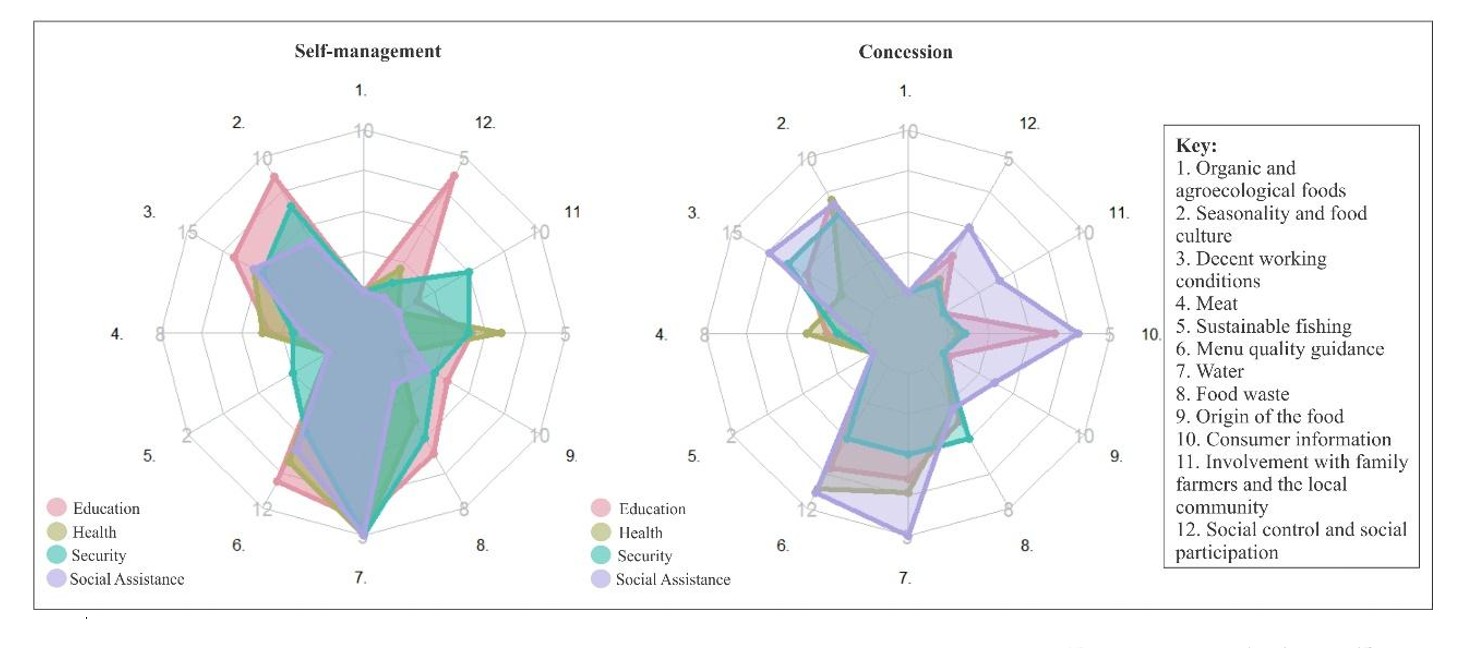
| 1.Organic and agro-ecological foods (10 points) |
● % of foods (including fruits and vegetables) have a seal, certificates, or compliance mechanisms; |
● % of foods (including fruits and vegetables) have a seal, certificates, or compliance mechanisms; |
| ● % of food in the public tender/call for the purchase of organic and agroecological products. |
● % of organic and agroecological food in the tender/public call. |
| 2. Seasonality and food culture (10 points) |
● Include foods from local food culture on the menu; |
● Include foods from local food culture on the menu; |
| ● Change the menu according to seasonality; |
● Change the menu according to seasonality; |
| ● Respect the food seasonality calendar; |
● Respect the food seasonality calendar; |
| ● Growing food for your own consumption. |
● Growing food for your own consumption. |
| 3. Decent working conditions (15 points) |
● Respect for labor laws in public calls, tenders and contracts; |
● Respect for labor laws in public calls, tenders and contracts; |
| ● Priorities when purchasing food from micro and small businesses; |
● Priorities when purchasing food from micro and small businesses; |
| ● Purchases from family farming; |
● Carrying out a specific public call for Family Farming; |
| ● Number of women and men employees managing public procurement; |
● Number of women and men employees managing public procurement; |
| • Number of women and men employees in the collective food service; |
● Number of women and men employees in the collective food service; |
| ● Presence of Affirmative Actions. |
● Presence of Affirmative Actions. |
| 4. Meat (8 points) |
● % of total meat budget spent on beef; |
● % of total meat budget spent on beef; |
| ● % of main dishes made from beef; |
● % of main dishes made from beef; |
| ● Concern when purchasing meat that takes animal welfare into account; |
● Concern when purchasing meat that takes animal welfare into account; |
| ● Offer vegan and/or vegetarian diets. |
● Offer vegan and/or vegetarian diets. |
| 5. Sustainable fishing (2 points) |
● Presence of certification attesting to the sustainability of purchased fish; |
● Presence of certification attesting to the sustainability of purchased fish; |
| ● Requiring the origin of fish in tenders. |
● Requiring the origin of fish in tenders. |
| 6. Quality of the menu offered (12 points) |
● % of budget for ultra-processed products in relation to fresh foods / day; |
● % of budget for ultra-processed products in relation to fresh foods / day; |
| ● % of budget for processed products in relation to fresh foods/day; |
● % of budget for processed products in relation to fresh foods/day; |
| ● % of the budget allocated to the purchase of fresh and minimally processed foods. |
• ● % of the budget allocated to the purchase of fresh and minimally processed foods. |
| 7. Water (5 points) |
● Water sources available to users; |
● Water sources available to users; |
| ● Offering another type of drink with the meal; |
● Offering another type of drink with the meal |
| ● Presence of water quality control measure. |
● Presence of water quality control measure. |
| 8. Food waste (8 points) |
● Training of the food handling team to minimize general waste; |
● Training of the food handling team to minimize general waste; |
| ● Existence of selective collection; |
● Existence of selective collection; |
| ● % of remainder ingested (healthy community) or % of remainder ingested (sick community); |
● % of remainder ingested (healthy community) or % of remainder ingested (sick community); |
| ● Sending organic material for composting or animal feed; |
● Sending organic material for composting or animal feed; |
| ● Destination of unconsumed food; |
● Destination of unconsumed food; |
| ● Existence of cooking techniques that minimize the amounts of oils and fats used; |
● Existence of cooking techniques that minimize the amounts of oils and fats used; |
| ● Other waste reduction initiatives. |
● Other waste reduction initiatives. |
| 9. Origin of the food (10 points) |
● Origin of six types of food (animal protein; vegetables; fruits; grains; tubers, pasta and flour; and eggs) according to their location; |
● Origin of six types of food (animal protein; vegetables; fruits; grains; tubers, pasta and flour; and eggs) according to their location; |
| ● Number of intermediaries between producer and consumer. |
● Number of intermediaries between producer and consumer. |
| 10.Consumer information (5 points) |
● Existence of nutritional information available to consumers; |
● Existence of nutritional information available to consumers; |
| ● Information encouraging healthy living and nutritional education; |
● Information encouraging healthy living and nutritional education; |
| ● Presence of health promotion/ sustainability activity; |
● Presence of health promotion/ sustainability activity; |
| ● Information about the origin of the food. |
● Information about the origin of the food. |
| 11. Involvement with family farmers and the local community (10 points) |
● Participation in meetings/events with family farmers before purchasing food; |
● Publicity of public calls for small local producers and/or bidding for small local businesses; |
| ● Training employees regarding product information (origin, environmental and social quality of products); |
● Training employees regarding product information; |
| ● Carrying out activities to promote local food. |
● Carrying out activities to promote local food. |
| 12. Social Control and social participation (5 points) |
● Monitoring menus and food quality through some social control mechanism (e.g. a council); |
● Monitoring menus and food quality through some social control mechanism (e.g. a council); |
| ● Participation of social control in the concessionaire's bidding process; |
● Existence of social control in the process of preparing tenders and public calls; |
| ● Monitoring social control regarding the acquisition and purchase of foodstuffs from family farming; |
● Existence of social control in the accountability process. |
| ● Involvement with opinion research with diners. |
● Involvement with opinion research with diners. |
 A contribuição das Compras Públicas Alimentares na construção de Sistemas Alimentares Sustentáveis: uma proposta metodológica
 Thumbnail
 Thumbnail
 Source: Prepared by the authors
 Source: Prepared by the authors