
 Structural change and environmental degradation: Evidence on the determinants of CO2e emissions in Brazilian states (2003-2022)
This paper investigates the relationship between the Brazilian development model, characterized by the re-primarization and deindustrialization of its productive structure, and the increase in greenhouse gas emissions (GHG). For that, the study provides estimates using a panel data model for Brazilian states to investigate the relationship between carbon dioxide equivalent (CO2e) emissions and some key variables between 2003 and 2022. Our findings suggest that the composition of productive structure is crucial in determining the gas emissions in Brazil. Furthermore, our results also point out the importance of increasing sophistication and knowledge intensity of its produced goods as a strategy to reduce GHG emissions.
KEYWORDS:
Structural change; climate change; CO2e emissions
 Thumbnail
 Thumbnail
 Thumbnail
 Thumbnail
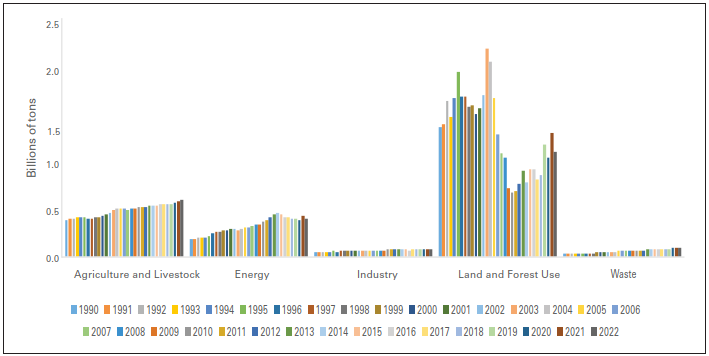 Source: Author’s own elaboration based on SEEG data (
 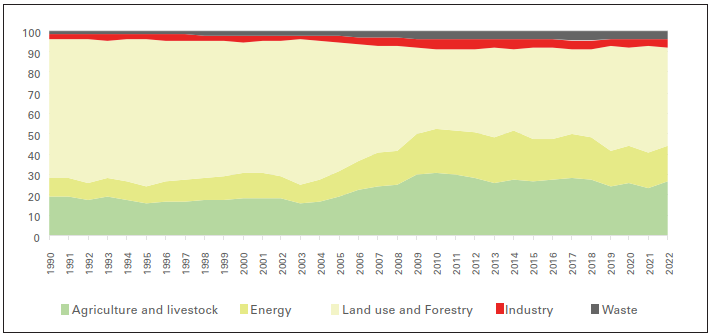 Source: Author’s own elaboration based on SEEG data (
 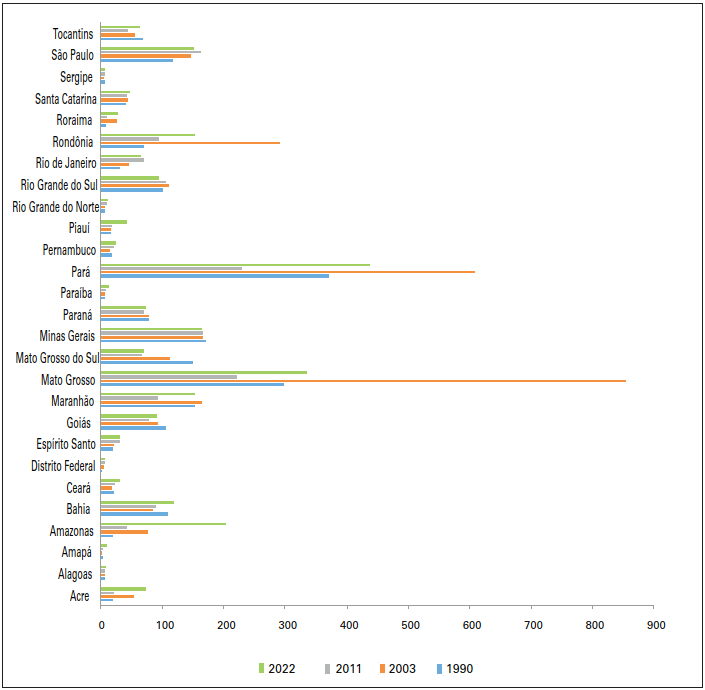 Source: Author’s own elaboration based on SEEG data (
  Source: Author’s own elaboration based on SEEG data (