
 Central Bank Digital Currencies (CBDCs) and Instant Payments: alternatives to global digital asset markets for Brazil and India
This article aims to analyse the strategy of central banks in emerging market economies (EMEs) as they navigate the increasing digitalized financial landscape. Evidence indicates a trend of declining physical cash usage, particularly among younger adults. This study utilizes qualitative data from Brazil and India, sourced from the Bank of International Settlements (BIS) spanning 2012-2020, and incorporates an extrapolation exercise to support its findings. This shift towards digital payments has raised concerns regarding the potential loss of monetary autonomy and domestic macroeconomic stability. However, some central banks in EMEs, such as in Brazil and India, have proactively advanced in the implementation of Central Bank Digital Currencies (CBDCs) and fast payment instruments to address the rapid growth of unregulated global digital asset markets.
KEYWORDS:
Central bank digital currencies; emerging market economies; cash ratios
 Thumbnail
 Thumbnail
 Thumbnail
 Thumbnail
 Source: Bank of International Settlements (BIS) and World Bank (2022). Author’s calculations.
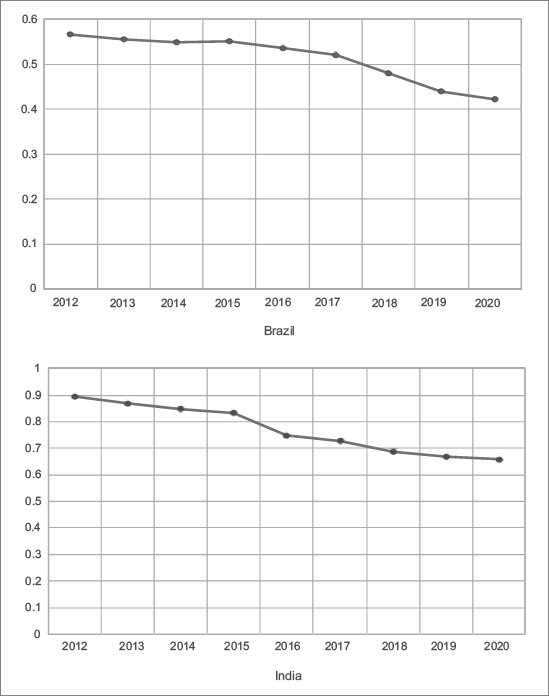 Source: Bank of International Settlements (BIS) and World Bank (2022). Author’s calculations.
 Source: Author’s calculations.
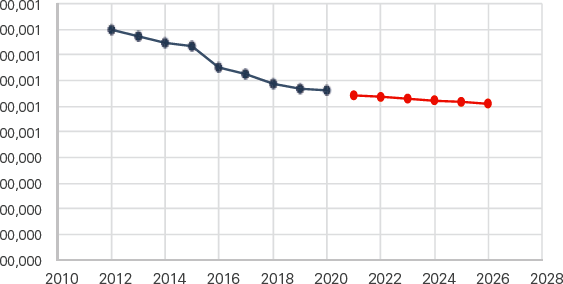 Source: Author’s calculations.