 Seroprevalence of markers and immunization for hepatitis B in community health workers: a scoping review
ABSTRACT
Objective: To map the scientific evidence concerning the prevalence of hepatitis B virus (HBV) and immunization among Community Health Workers (CHWs) worldwide.
Method: A scoping review was conducted using the LILACS, Medline (via PubMed), Embase, and Scopus databases, as well as grey literature (Google Scholar, Pro-Quest), employing the recommendations of PRISMA-ScR (extension for scoping review) and the Joanna Briggs Institute Manual.
Results: Eleven studies were included, all conducted in Brazil and without parameterization of the outcome measure. The estimated prevalence of HBV infection ranged from 8.2% to 11.1%, while vaccination coverage varied between 41% and 88.8%. Only one study used the anti-HBs serological marker to assess immunization, estimating that 71.6% of community health workers were immunized. Two additional studies were based on self-reported anti-HBs, with prevalences of 30.0% and 30.2%.
Conclusion: The overall estimate of HBV infection prevalence and immunization among community health workers could not be determined due to the scarcity and geographical limitations of existing studies, as well as the measurements deparameterization.
DESCRIPTORS
Community Health Workers; Hepatitis B; Biomarkers; Vaccination; Primary Health Care
RESUMO
Objetivo: Mapear as evidências científicas acerca da prevalência do vírus da hepatite B (VHB) e da imunização entre Agentes Comunitários de Saúde (ACS) mundialmente.
Método: Revisão de escopo realizada nas bases de dados LILACS, Medline (via PubMed), Embase e Scopus, além da literatura cinzenta (Google Scholar, Pro-Quest), empregando as recomendações do PRISMA-ScR (extensão para revisão de escopo) e do Manual do Instituto Joanna Briggs.
Resultados: Foram incluídos 11 estudos, todos realizados no Brasil e sem parametrização da medida de desfecho. A prevalência estimada de infecção pelo VHB situou-se entre 8,2% e 11,1%, enquanto a cobertura vacinal apresentou variação entre 41% e 88,8%. Apenas um estudo utilizou o marcador sorológico anti-HBs para avaliar a imunização, estimando 71,6% de ACS imunizados. Dois estudos adicionais basearam-se no autorrelato do anti-HBs, com prevalências de 30,0% e 30,2%.
Conclusão: A estimativa global da prevalência da infecção pelo VHB e imunização entre os ACS não pôde ser determinada em virtude da escassez e limitação geográfica dos estudos existentes, assim como a desparametrização das medidas.
DESCRITORES
Agentes Comunitários de Saúde; Hepatite B; Biomarcadores; Vacinação; Atenção Primária à Saúde
RESUMEN
Objetivo: Mapear la evidencia científica relativa a la prevalencia del virus de la hepatitis B (VHB) y la inmunización entre los trabajadores de salud comunitarios (TSC) en todo el mundo.
Método: Se realizó una revisión del alcance utilizando las bases de datos LILACS, Medline (a través de PubMed), Embase y Scopus, así como literatura gris (Google Scholar, ProQuest), empleando las recomendaciones de PRISMA-ScR (extensión para revisiones exploratorias) y el Manual del Instituto Joanna Briggs.
Resultados: Se incluyeron once estudios, todos realizados en Brasil y sin parametrización de la medida de resultado. La prevalencia estimada de la infección por VHB osciló entre el 8,2% y el 11,1%, mientras que la cobertura de vacunación varió entre el 41% y el 88,8%. Solo un estudio utilizó el marcador serológico anti-HBs para evaluar la inmunización, estimando que el 71,6% de los TSC estaban inmunizados. Dos estudios adicionales se basaron en autoinformes de anti-HBs, con prevalencias del 30,0% y el 30,2%.
Conclusión: No se pudo determinar la estimación global de la prevalencia de la infección por VHB y la inmunización entre los TSC debido a la escasez y las limitaciones geográficas de los estudios existentes, así como a la falta de mediciones estandarizadas.
DESCRIPTORES
Agentes Comunitarios de Salud; Hepatitis B; Biomarcadores; Vacunación; Atención Primaria de Salud
INTRODUCTION
Hepatitis B virus (HBV) infection represents a global challenge as it is a leading cause of chronic liver disease, leading to approximately 1.1 million deaths annually, primarily due to cirrhosis and liver cancer(1). According to updated estimates from the World Health Organization (WHO), approximately 254 million people worldwide are living with hepatitis B, with a disproportionately high burden on young people and in low- and middle-income countries(2). In this context, WHO emphasizes the urgent need to eliminate hepatitis B as a public health threat by 2030. However, data reveals that, by the end of 2022, only 13% of people living with chronic hepatitis B infection had been diagnosed and approximately 3% had received antiviral therapy(2).
HBV is one of the main etiological agents of occupational infections among healthcare workers (HCWs), due to frequent exposure to blood and other bodily fluids in the workplace(3,4). It is estimated that HCWs are up to four times more likely to get infected with HBV compared to the general population(5,6). Annually, approximately 3 million healthcare workers are exposed to the hepatitis B virus in their work activities, resulting in up to 66,000 HBV infections(6).
Once infected, these workers, besides having the risk of developing the chronic form of the disease, can transmit HBV to patients under their care. This reinforces the importance of this group strictly adhering to precautionary measures, since, when they are properly followed, transmission is rare(7). Due to the increased occupational risk, the Centers for Disease Control and Prevention (CDC) and the WHO recommend HBV vaccination as a pre-exposure prophylaxis measure for all workers in healthcare settings, whether providing direct or indirect care. Furthermore, HBV infection is considered one of the few vaccine-preventable sexually transmitted infections(3,8).
There is already robust evidence regarding the high efficacy and safety of the hepatitis B vaccine, including a significant reduction in cases over the years with the gradual implementation of successful immunization programs(9,10). A global assessment study on vaccination policies have identified that among healthcare professionals, the hepatitis B vaccine is the most widely adopted immunobiological worker in healthcare policies for these workers(11). However, authors emphasize that the increasing number of healthcare professionals who are not immunized and do not respond to vaccination represents a serious public health concern(4,12).
From this perspective, several studies characterize the serological and immunological status of occupational health workers in various work environments, including Primary Health Care (PHC)(3,4,8,13,14). However, knowledge about this topic among Community Health Workers (CHWs) worldwide is still limited(15,16), very possibly resulting from the absence of a universal concept for this category of workers, as well as clarity regarding their roles within PHC healthcare teams(17). Although studies on community health workers are still in their early stages, those identified have shown that this group has work functions that often exceed the limits of their duties, exposing them to biological material(16,18), and has low knowledge about hepatitis B(19). Furthermore, the vast majority of CHWs are young adults, vulnerable to risky sexual behaviors(20).
Given this, we conducted a scoping review to map the scientific evidence on the prevalence of HBV and immunization among community health workers, aiming to assist in the formulation of strategies to ensure the achievement of the Sustainable Development Goals and Universal Health Coverage. Prior to conducting this review, a preliminary search was performed in the PROSPERO, Open Science Framework, Figshare, MEDLINE via PubMed, JBI Evidence Synthesis, and Cochrane Database to ascertain the existence of systematic or scoping reviews on the subject; however, no studies or protocols were found.
METHOD
Design of Study
This is a scoping review conducted in accordance with the methodology of Joanna Briggs Institute (JBI)(21), registered in Open Science Framework (https://doi.org/10.17605/OSF.IO/36YRP), which followed a previously published and peer-reviewed protocol(22). The PRISMA Extension for Scoping Reviews (PRISMA-ScR) was used for transparent reporting of the data(23).
Research Question
What is the global prevalence of hepatitis B virus among community health workers? What percentage of these workers are immunized?
Eligibility Criteria
Participants
This review considered studies including Community Health Workers as professionals who provide health promotion, prevention, and education services to individuals and families through home visits and support in primary health care services(24).
Concept
Serological markers and vaccination were considered in the analysis to identify the serological status of CHWs regarding the hepatitis B virus(25–27):
-
Individuals infected with the hepatitis B virus: positive for HBsAg and/or total anti-HBc.
-
Immunized individuals: anti-HBs ≥ 10 mIU/ml
-
Vaccinated individuals: vaccination report or verification of vaccination records showing three doses of the vaccine against the virus.
Context
This review considered studies conducted in facilities providing primary health care, defined as the provision of health actions and services according to the needs of the local population, based on scientific evidence, at low cost, and considered the first step for an individual’s contact with other health care systems(28).
Types of Sources of Evidence
Primary articles published in full, in any language, with quantitative, qualitative, or mixed study designs were included as sources of evidence. Preprints, dissertations, theses, and grey literature were also consulted. Reviews were excluded from the study. In addition, a manual search of the reference lists of records eligible for full-text reading was conducted to identify additional articles.
Search Strategy
A preliminary search using the keywords “Community Health Workers” and “hepatitis B” was conducted in MEDLINE via PubMed to identify if there were eligible studies on the study topic. After this stage, the databases that would comprise this review were selected. The search strategy was conducted in the Latin American and Caribbean Literature in Health Sciences (LILACS), Medline via PubMed, Embase, and Scopus. The PRISMA-Statement for Reporting Literature Searches in Systematic Reviews (PRISMA-S) extension was used for transparent reporting of the search strategy (Chart 1).
An additional search was conducted in the MedRxiv database for preprints, and in Google Scholar, OpenGrey, ProQuest Dissertations and Theses Global, the Catalog of Theses and Dissertations via the Capes Journals portal, and the Brazilian Digital Library of Theses and Dissertations (BDTD) for grey literature. Only the first 200 relevant publications available on Google Scholar were considered(29).
The search was conducted using the following descriptors in English, according to the acronym PCC (Participants: Community Health Workers, Concept: Hepatitis B, Context: Primary Health Care). Since there were different concepts of CHWs in the literature, some keywords (Chart 1) were used to broaden the search(17,30,31). Furthermore, due to the absence of articles identified in the preliminary search using the context acronym (Primary Care), it was not included in the final search. There were no language or year restrictions for the selection of articles.
Screening and Selection of Evidence Sources
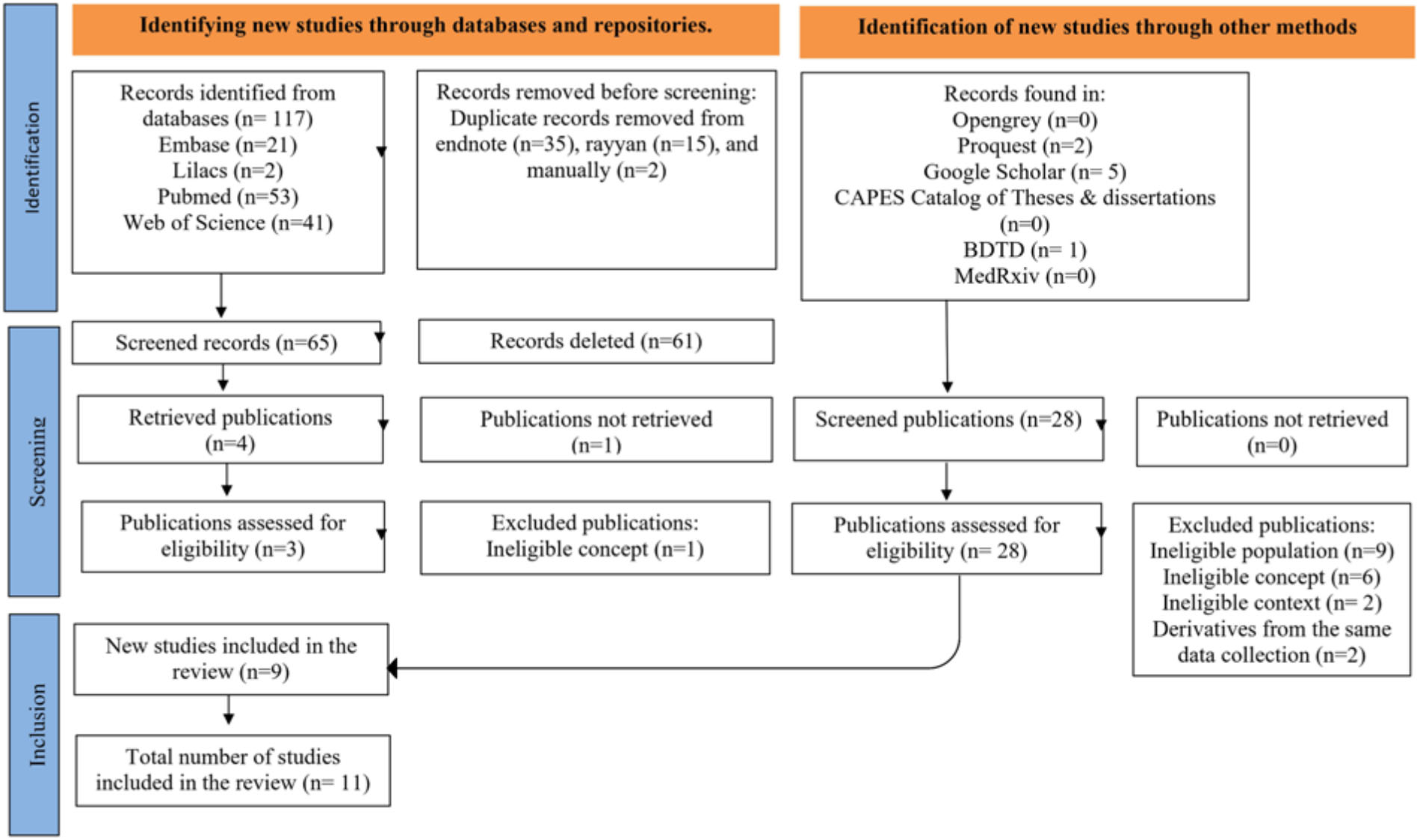
The identified citations were combined and uploaded to EndNote Online (Clarivate Analytics, PA, USA) for removing duplicates. A pilot test using six references was previously conducted by two reviewers to ensure agreement on the eligibility of the studies. Subsequently, the studies were entered into the Rayyan software for two-step screening. In stage 1, two reviewers (TSA and SOS) independently read the titles and abstracts and selected those that likely met the eligibility criteria. In stage 2, the complete text was examined. The two reviewers held a consensus meeting at each stage, and any disagreements that arose in the selection of records were resolved through discussion or with a third reviewer (MAM). The results of the literature search and the study inclusion process were fully reported in the final scoping review, and a flowchart was included to present the study selection steps (Figure 1).
Flowchart for searching, selecting, and including sources of evidence – Goiânia, GO, Brazil, 2025.
Data Extraction
Data extraction was performed by the researcher TSA, and the reviewer SOS verified the described data. An instrument containing information about the publication, study characteristics, study participants, and results was developed for this phase, as suggested by the JBI (Chart 2). Previously, a pilot test was conducted by the reviewers to verify the suitability of the instrument.
Analysis and Presentation of Results
The included evidence was presented in a summary chart containing a descriptive overview of the study characteristics, as per the data extraction form included in the review protocol(22). Due to the scarcity of studies, two articles were included in this review because of their epidemiological importance, although they did not use marker titration for hepatitis B, but rather self-reporting(32,33). Other forms of visual data presentation were also explored after data extraction and analysis were completed, such as heat maps and waffle charts(34).
RESULTS
Figure 1 represents the selection, screening, and inclusion processes of the records that comprised the review. The eleven studies included were carried out between 2007 and 2023 and conducted exclusively in Brazil. A total of 9 articles had a descriptive cross-sectional study design(15,16,32,33,35–39), and only 2 analytical cross-sectional articles, both of which found that time in the occupation was statistically associated with hepatitis B vaccination(40,41).
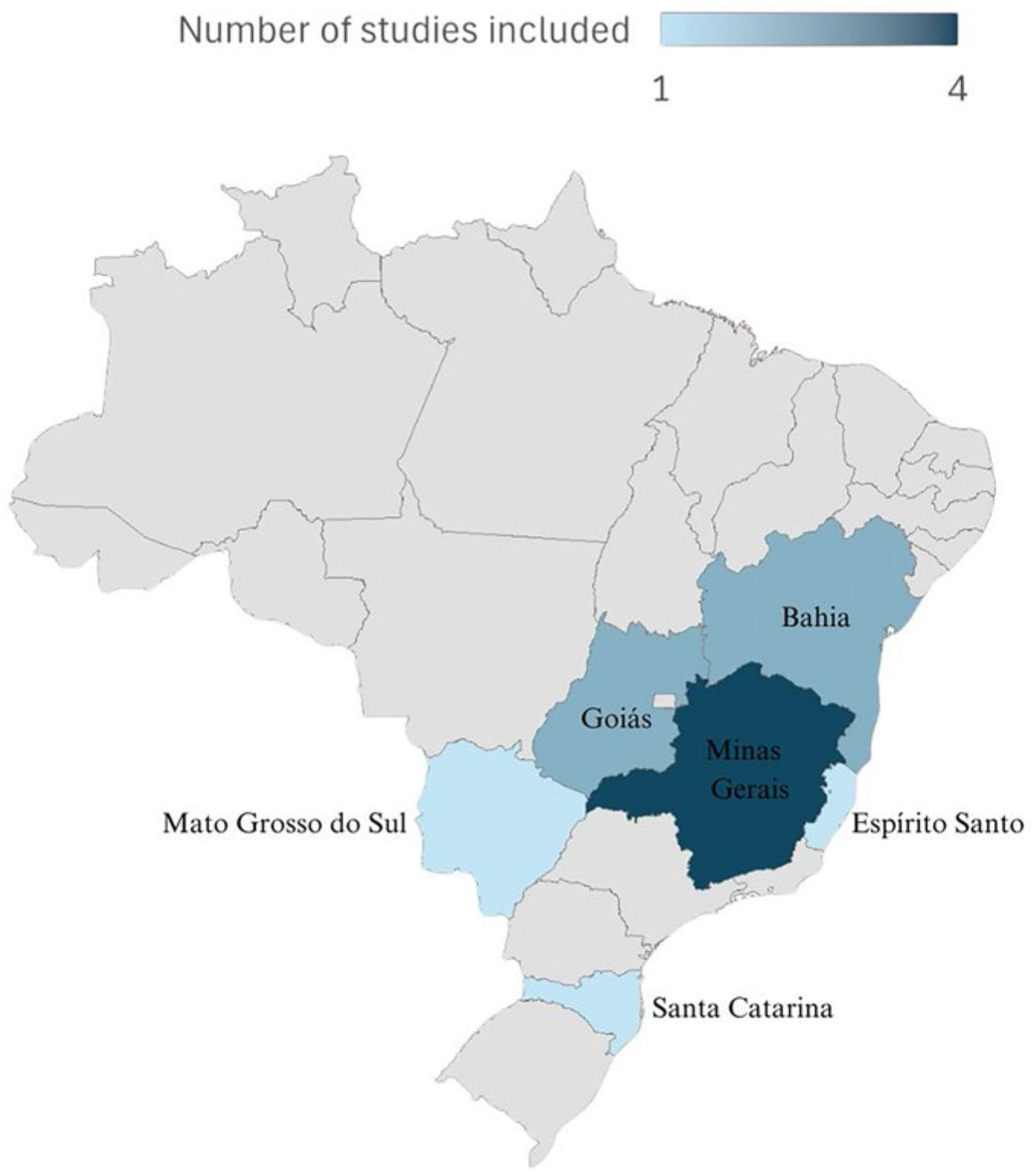
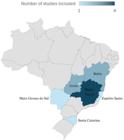
Figure 2 shows the heat map of the number of studies included by Brazilian state. It was observed that of the 11 articles, five were conducted in the Southeast region(33,36,37,40,41), three in the Midwest(15,16,32), two in the Northeast(38,39), and one in the South of the Country(35).
It was found that only two studies used serological markers for hepatitis B through blood testing(15,16), one of which was conducted solely with the CHWs(16), in which an overall prevalence of HBV was estimated at 8.2% (95% CI; 4.4%–15.5%)(16). However, the lateral flow immunochromatographic test was used to detect HBsAg. The same investigation also included a cohort study to verify the anamnestic response to quantitative anti-HBs(16). The second study was conducted with all primary healthcare workers and estimated an overall prevalence of hepatitis B of 11.1% (95% CI = 7.72%–14.48%) and 13.5% (95% CI = 4.78%–22.22%) when considering only CHWs(15). This study did not evaluate the immunization status of CHW in isolation, but rather of the entire sample(15).
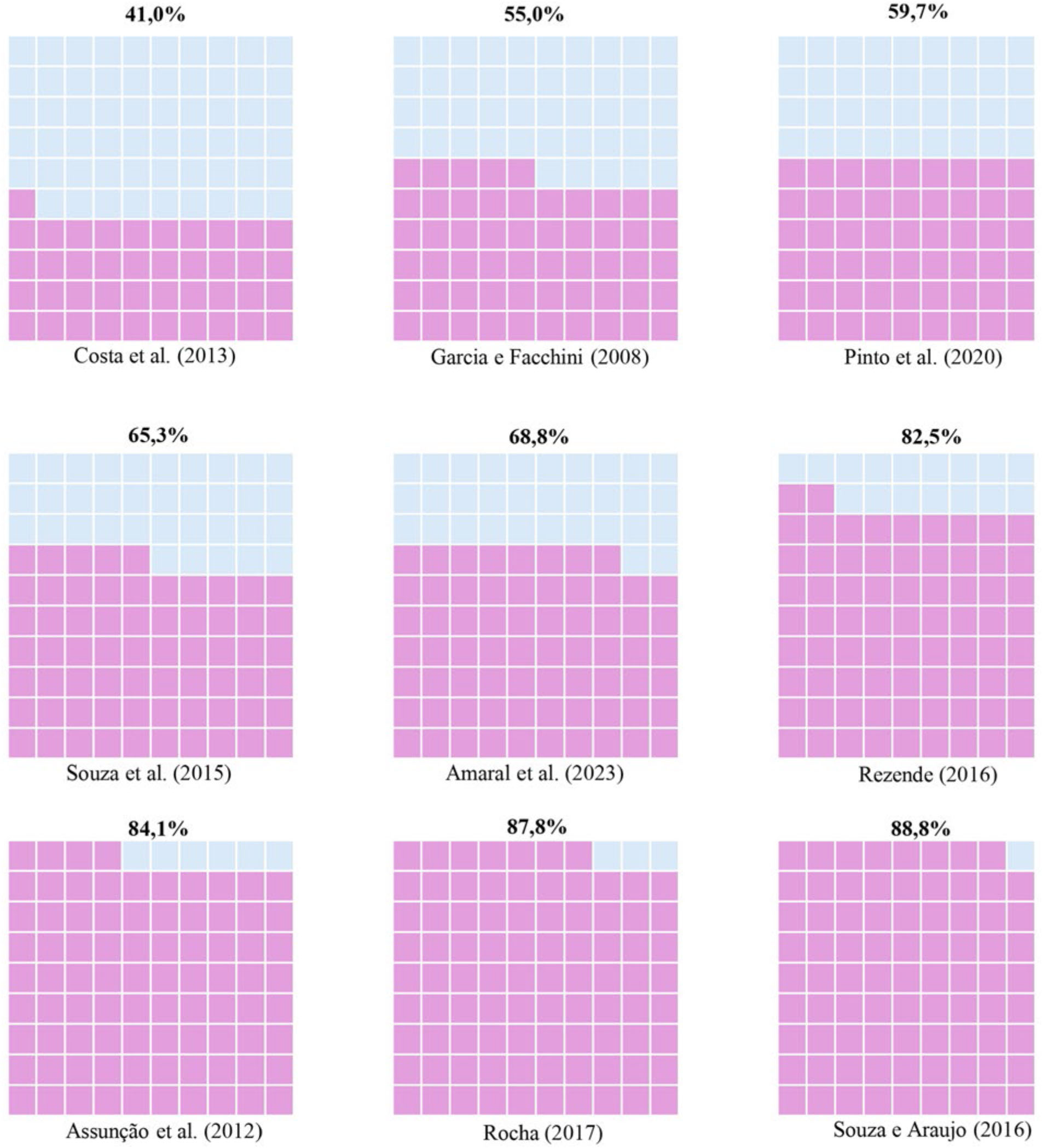
Of the total number of articles selected, nine(16,32,35,36,37,38,39,40,41) addressed vaccination among CHWs, with prevalence rates ranging from 41.0% in a study conducted in the city of Montes Claros, Minas Gerais(37) to 88.8% carried out in five cities – Feira de Santana, Itabuna, Jequié, Santo Antônio de Jesus and the Sanitary District of the Historic Center in Salvador, Bahia(39) (Figure 3). Only two articles used the vaccination record card to verify the doses in the vaccination schedule(16,32). The others used self-reporting(35–41).

Waffle chart of vaccination prevalence among Community Health Workers found in the studies. The color purple represents the percentage of vaccinated community health workers, while the color blue represents those who are not vaccinated – Goiânia, GO, Brazil, 2025.
Regarding the methodology used to identify immunization, only one article used the serological marker for hepatitis B (anti-HBs), estimating a prevalence of 71.6% (95% CI; 62.5%–79.2%) of immunized community health workers(16). Furthermore, two articles used self-reported assessment of this marker, with estimated prevalences of 30.0%(32) and 30.2%(33).
DISCUSSION
The analysis of the available evidence, as outlined in this scoping review, revealed a scarcity of studies that comprehensively investigate the global prevalence and immunization rates against hepatitis B. Only two studies included in the sample addressed the evaluation of hepatitis B serological markers in community health workers(15,16). However, both lack methodologies based on sensitive laboratory tests for the accurate detection of these markers. Specifically, the study by Amaral et al.(16) used a rapid test to identify the hepatitis B surface antigen (HBsAg); however, the exclusive use of this method may limit diagnostic accuracy, given the possibility of false-positive results. The adoption of confirmatory techniques, such as enzyme immunoassays or molecular tests, would be advisable to ensure greater reliability in the findings. Scientific literature recommends that prevalence and vaccination coverage studies include the evaluation of HBsAg, anti-HBc, and anti-HBs markers using more sensitive tests, to ensure a more accurate assessment of population immunity and virus circulation(6,27).
This finding highlights the deparameterization and lack of knowledge regarding the diagnosis of hepatitis B and serves as an important warning to reinforce the urgency in training healthcare professionals, professional qualification, and the availability of more sensitive laboratory tools(42). Evidence-based clinical practice underscores the need to use a complete panel of serological markers, since the absence of comprehensive testing can lead to false positive or false negative results, unnecessary treatments, and underestimation of population immunity, hindering the identification of susceptible individuals and the implementation of effective preventive measures, which can lead to failures in epidemiological surveillance(26).
Furthermore, nine of the analyzed articles evaluated seroprevalence and immunization against hepatitis B using self-report as a data collection method(32,33). Despite being a practical, low-cost, and easy-to-apply tool, especially in population studies and in contexts where access to vaccination records is restricted, self-reporting has important limitations, such as recall bias, which can compromise the reliability of the results(6). One possible justification for adopting this approach is the limited funding for research, since conducting laboratory tests, although more accurate, involves significantly higher costs compared to using self-reporting.
Available studies indicate that supplementing self-reporting with analysis of vaccination records, such as vaccination record cards, or with laboratory tests, such as the measurement of serological markers, significantly increases the accuracy in assessing vaccination status(3,43). However, access to vaccination records still represents an obstacle for healthcare professionals and researchers, since the general population does not have the habit of considering this document as something essential that should be properly stored(44). In this context, the need to computerize vaccination records becomes evident, although this reality is still far off in many scenarios due to the structural and digital inequalities faced by health units globally.
All the selected studies were conducted in Brazil, most likely because CHWs are considered healthcare professionals(45), which demonstrates the importance of the Brazilian Public Health System. In contrast, in other countries, CHWs often work as volunteers, receive low pay, and lack due professional recognition(46).
Furthermore, this understanding is supported by specific legislation for the category, which establishes fundamental guidelines related to unhealthy working conditions, the performance of periodic occupational health examinations, and the provision and proper use of Personal Protective Equipment (PPE)(47). Additionally, the findings reinforce the ongoing efforts of Brazil’s National Immunization Program (PNI), which plays a crucial role in monitoring and improving immunization rates, as well as contributing to the identification of gaps in local health systems(48).
Brazil’s leadership in implementing vaccination and public health strategies highlights the need to expand international research, allowing for a more comprehensive comparison between different global contexts and solutions.
Most studies on hepatitis B in Brazil have been conducted in the Southeast region(33,36,37,40,41), while states with a higher prevalence of infection, such as those in the Northeast region(38,39), were underrepresented in the scientific literature(49). This disparity underscores inequities in access to healthcare, reflecting structural inequalities that directly impact epidemiological surveillance and the implementation of effective public policies.
Given this scenario, it becomes essential to invest in worker health programs that consider the specific needs of this professional category, especially in historically neglected regions. Expanding vaccination coverage, strengthening epidemiological surveillance, and implementing targeted prevention strategies can significantly contribute to reducing inequalities and improving occupational health.
Although CHWs play a fundamental role in health promotion in Brazil, it is observed that most available studies address HCW broadly, without considering their specificities(15,33,35–39). This limitation indicates a gap in knowledge about the specific role of CHWs in different regional contexts.
Moreover, there is an urgent need to implement programs to encourage immunization and verify immunity, considering the disparities in vaccination coverage among the various regions of the country. Inequality in adherence to vaccination strategies can compromise the effectiveness of public health policies, making it essential to develop approaches targeted at vulnerable populations and to expand the role of CHWs in community mobilization for immunization(50).
It is important to emphasize that nurses play an essential role in the health of CHWs, contributing to efficient management, health education, safe administration of vaccines, and epidemiological monitoring(51). The work of these professionals is fundamental to ensuring high vaccination coverage, preventing disease outbreaks, and strengthening public health(51).
The working relationship between nurses and CHWs is essential for the effectiveness of Primary Health Care actions, ensuring the implementation of the guidelines of the Brazilian Public Health System (SUS)(52,53). This partnership is based on supervision, coordination, and collaboration, ensuring that the activities carried out by the CHWs are aligned with the needs of the population and public health policies(53).
The nurse plays a strategic role in the efficient management of services, promoting the continuing education of community health workers and ensuring the epidemiological monitoring of working conditions. Furthermore, they are responsible for implementing biosecurity measures, including immunization, which protects both professionals and the community served(52).
The integrated work between nurses and CHWs strengthens the reach of primary care, expanding access to health services and contributing to disease prevention and health promotion. Therefore, this work relationship is a fundamental pillar for improving health indicators and for equity in care for the population(52).
Some limitations should be considered in this study. Due to the diversity of nomenclatures for CHWs, it is possible that some studies were not included in the search, although we have tried to minimize this limitation by adding additional keywords. Moreover, it is worth noting that this type of review does not aim to assess the methodological quality of the studies.
CONCLUSION
The information gathered through this scoping review could not estimate the overall prevalence of serological markers or vaccination among CHWs due to a lack of scientific evidence and deparameterization of outcome measures. A research agenda is required to address the knowledge gap regarding occupational exposure to the hepatitis B virus among CHWs, with topics related to the main occupational exposures in different countries/spheres of activity, studies to identify the prevalence of serological markers and vaccination, and biosafety training in the curriculum for these professionals.
DATA AVAILABILITY
The entire dataset supporting the results of this study is available upon request to the corresponding author.
REFERENCES
-
1. Easterbrook PJ, Luhmann N, Bajis S, Min MS, Newman M, Lesi O, et al WHO 2024 hepatitis B guidelines: an opportunity to transform care. Lancet Gastroenterol Hepatol. 2024;9(6):493–5. doi: https://doi.org/10.1016/S2468-1253(24)00089-X. PubMed PMID: 38614110.
» https://doi.org/10.1016/S2468-1253(24)00089-X -
2. World Health Organization. Global hepatitis report 2024: action for access in low- and middle-income countries [Internet]. Geneva: WHO; 2024 [cited 2025 Feb 3]. Available from: https://www.who.int/publications/i/item/9789240091672
» https://www.who.int/publications/i/item/9789240091672 -
3. Mahamat G, Kenmoe S, Akazong EW, Ebogo-Belobo JT, Mbaga DS, Bowo-Ngandji A, et al Global prevalence of hepatitis B virus serological markers among healthcare workers: A systematic review and meta-analysis. World J Hepatol. 2021;13(9):1190–202. doi: https://doi.org/10.4254/wjh.v13.i9.1190. PubMed PMID: 34630885.
» https://doi.org/10.4254/wjh.v13.i9.1190 -
4. Nikolopoulou GB, Tzoutzas I, Tsakris A, Maltezou HC. Hepatitis B in healthcare personnel: an update on the global landscape. Viruses. 2023;15(12):2454. doi: https://doi.org/10.3390/v15122454. PubMed PMID: 38140695.
» https://doi.org/10.3390/v15122454 -
5. Prüss-Ustün A, Rapiti E, Hutin Y. Estimation of the global burden of disease attributable to contaminated sharps injuries among health-care workers. Am J Ind Med. 2005;48(6):482–90. doi: https://doi.org/10.1002/ajim.20230. PubMed PMID: 16299710.
» https://doi.org/10.1002/ajim.20230 - 6. Schillie S, Murphy TV, Sawyer M, Ly K, Hughes E, Jiles R, et al CDC guidance for evaluating health-care personnel for hepatitis B virus protection and for administering postexposure management. MMWR Recommendations and Reports. 2013;62(RR-10):1–19. PubMed PMID: 24352112.
-
7. Lewis JD, Enfield KB, Sifri CD. Hepatitis B in healthcare workers: transmission events and guidance for management. World J Hepatol. 2015;7(3):488–97. doi: https://doi.org/10.4254/wjh.v7.i3.488. PubMed PMID: 25848472.
» https://doi.org/10.4254/wjh.v7.i3.488 -
8. Senoo-Dogbey VE, Ohene LA, Wuaku DA. Occupational exposure to Hepatitis B virus, disease burden and pathways for postexposure prophylaxis management: recommendations for healthcare workers in highly endemic settings. Infect Prev Pract. 2024;6(2):100354. doi: https://doi.org/10.1016/j.infpip.2024.100354. PubMed PMID: 38559369.
» https://doi.org/10.1016/j.infpip.2024.100354 -
9. Qiu J, Zhang S, Feng Y, Su X, Cai J, Chen S, et al Efficacy and safety of hepatitis B vaccine: an umbrella review of meta-analyses. Expert Rev Vaccines. 2024;23(1):69–81. doi: https://doi.org/10.1080/14760584.2023.2289566. PubMed PMID: 38055218.
» https://doi.org/10.1080/14760584.2023.2289566 -
10. Shattock AJ, Johnson HC, Sim SY, Carter A, Lambach P, Hutubessy RCW, et al Contribution of vaccination to improved survival and health: modelling 50 years of the Expanded Programme on Immunization. Lancet. 2024;403(10441):2307–16. doi: https://doi.org/10.1016/S0140-6736(24)00850-X. PubMed PMID: 38705159.
» https://doi.org/10.1016/S0140-6736(24)00850-X -
11. Young S, Goldin S, Dumolard L, Shendale S, McMurren B, Maltezou HC, et al National vaccination policies for health workers - A cross-sectional global overview. Vaccine. 2024;42(4):757–69. doi: https://doi.org/10.1016/j.vaccine.2023.04.083. PubMed PMID: 37321897.
» https://doi.org/10.1016/j.vaccine.2023.04.083 -
12. Bianchi FP, Stefanizzi P, Migliore G, Martinelli A, Vimercati L, Germinario CA, et al Prevalence of healthcare workers fully vaccinated against hepatitis B without circulating antibodies in Italy and role of age at baseline cycle vaccination: a systematic review and meta-analysis. Expert Rev Vaccines. 2023;22(1):139–47. doi: https://doi.org/10.1080/14760584.2023.2162507. PubMed PMID: 36564923.
» https://doi.org/10.1080/14760584.2023.2162507 -
13. Mota GA, Fernandes LVP, Fonseca LA, Ferreira MIA, Mendes VLB, Lima CRS, et al Factors associated with immunization against hepatitis B among primary health care professionals. Rev Bras Med Trab. 2023;20(4):563–73. doi: https://doi.org/10.47626/1679-4435-2022-790. PubMed PMID: 37101436.
» https://doi.org/10.47626/1679-4435-2022-790 - 14. Šegalo S, Kiseljaković E, Berhamović L, Pašalić A, Mahmutović Vranić S, Berhamović E, et al Hepatitis B vaccination coverage rate and immune response among primary health care workers in Sarajevo Canton, Bosnia and Herzegovina. Microbes Infect Dis. 2021;2(1):60–7.
- 15. Sanches GBS. Hepatite B: caracterização do status imune de profissionais de saúde no estado de Mato Grosso do Sul [tese]. Brasília: Universidade de Brasília; 2007.
-
16. Amaral TS, Alves CMDS, Rezende FR, Caetano KAA, Tipple AFV. Serological and vaccine evaluation for hepatitis B among Community Health Workers. Rev Lat Am Enfermagem. 2023;31:e3765. doi: https://doi.org/10.1590/1518-8345.6107.3765. PubMed PMID: 36722634.
» https://doi.org/10.1590/1518-8345.6107.3765 -
17. Hodgins S, Kok M, Musoke D, Lewin S, Crigler L, LeBan K, et al Community health workers at the dawn of a new era: 1. Introduction: tensions confronting large-scale CHW programmes. Health Res Policy Syst. 2021;19(S3 Suppl 3):109. doi: https://doi.org/10.1186/s12961-021-00752-8. PubMed PMID: 34641886.
» https://doi.org/10.1186/s12961-021-00752-8 -
18. Rezende FR, Mendonça KM, Galdino Jr HG, Salgado TA, Alves CMS, Amaral TS, et al A vulnerabilidade de agentes comunitários de saúde frente ao risco biológico. Revista Eletrônica de Enfermagem. 2021;23:62222. doi: https://doi.org/10.5216/ree.v23.62222.
» https://doi.org/10.5216/ree.v23.62222 -
19. Borchardt SKL, Ferrarini LA, Rocha TS, Almeida AV, Capellini VK, Paro FM. Conhecimento dos Agentes Comunitários de Saúde sobre Hepatites Virais antes e após palestras. Saude Pesqui. 2021;14(2):299–306. doi: https://doi.org/10.17765/2176-92062021v14n2e8027.
» https://doi.org/10.17765/2176-92062021v14n2e8027 -
20. Rocha ALF, Oliveira PA, Barbosa LARR, Popoff DAV, Rocha JSB, Freitas RF. Fatores associados ao estilo de vida em Agentes Comunitários de Saúde. PsychTech & Health Journal. 2023;6(2):41–9. doi: https://doi.org/10.26580/PTHJ.art49-2023.
» https://doi.org/10.26580/PTHJ.art49-2023 -
21. Peters MDJ, Godfrey C, McInerney P, Munn Z, Tricco AC, Khalil H. Scoping Reviews (2020). In: Aromataris E, Lockwood C, Porritt K, Pilla B, Jordan Z, editors. JBI manual for evidence synthesis [Internet]. Adelaide: JBI; 2024 [cited 2025 Feb 3]. Available from: https://jbi-global-wiki.refined.site/space/MANUAL/355862497/10.+Scoping+reviews
» https://jbi-global-wiki.refined.site/space/MANUAL/355862497/10.+Scoping+reviews -
22. Amaral TS, Matos MA. Seroprevalence of markers for Hepatitis B in Community Health Workers: scoping review protocol. REVISA. 2025;14(2): 1394–401. doi: https://doi.org/10.36239/revisa.v14.n2.p1394a1401.
» https://doi.org/10.36239/revisa.v14.n2.p1394a1401 -
23. Tricco AC, Lillie E, Zarin W, O’Brien KK, Colquhoun H, Levac D, et al PRISMA Extension for Scoping Reviews (PRISMA-ScR): checklist and Explanation. Ann Intern Med. 2018;169(7):467–73. doi: https://doi.org/10.7326/M18-0850. PubMed PMID: 30178033.
» https://doi.org/10.7326/M18-0850 -
24. World Health Organization. Classifying health workers: mapping occupations to the international standard classification [Internet]. Geneva: WHO; 2019 [cited 2025 Feb 3]. Available from: https://www.who.int/publications/m/item/classifying-health-workers
» https://www.who.int/publications/m/item/classifying-health-workers - 25. Brasil, Ministério da Saúde, Secretaria de Ciência, Tecnologia, Inovação e Complexo da Saúde, Secretaria de Vigilância em Saúde e Ambiente. Protocolo clínico e diretrizes terapêuticas de Hepatite B e coinfecções. Brasília: Ministério da Saúde; 2023.
-
26. Conners EE, Panagiotakopoulos L, Hofmeister MG, Spradling PR, Hagan LM, Harris AM, et al Screening and testing for Hepatitis B virus infection: CDC recommendations – United States, 2023. MMWR Recomm Rep. 2023;72(1):1–25. doi: https://doi.org/10.15585/mmwr.rr7201a1. PubMed PMID: 36893044.
» https://doi.org/10.15585/mmwr.rr7201a1 -
27. Jeng WJ, Papatheodoridis GV, Lok ASF. Hepatitis B. Lancet. 2023;401(10381):1039–52. doi: https://doi.org/10.1016/S0140-6736(22)01468-4. PubMed PMID: 36774930.
» https://doi.org/10.1016/S0140-6736(22)01468-4 -
28. World Health Organization. Declaration of alma-ata [Internet]. Geneva: WHO; 1978 [cited 2025 Feb 3]. Available from: https://www.who.int/publications/i/item/WHO-EURO-1978-3938-43697-61471
» https://www.who.int/publications/i/item/WHO-EURO-1978-3938-43697-61471 -
29. Bramer WM, Rethlefsen ML, Kleijnen J, Franco OH. Optimal database combinations for literature searches in systematic reviews: a prospective exploratory study. Syst Rev. 2017;6(1):245. doi: https://doi.org/10.1186/s13643-017-0644-y. PubMed PMID: 29208034.
» https://doi.org/10.1186/s13643-017-0644-y -
30. Olaniran A, Smith H, Unkels R, Bar-Zeev S, van den Broek N. Who is a community health worker? - a systematic review of definitions. Glob Health Action. 2017;10(1):1272223. doi: https://doi.org/10.1080/16549716.2017.1272223. PubMed PMID: 28222653.
» https://doi.org/10.1080/16549716.2017.1272223 -
31. Van Iseghem T, Jacobs I, Vanden Bossche D, Delobelle P, Willems S, Masquillier C, et al The role of community health workers in primary healthcare in the WHO-EU region: a scoping review. Int J Equity Health. 2023;22(1):134. doi: https://doi.org/10.1186/s12939-023-01944-0. PubMed PMID: 37474937.
» https://doi.org/10.1186/s12939-023-01944-0 - 32. Rezende FR. Risco biológico entre Agentes Comunitários de Saúde [dissertação]. Goiânia: Universidade Federal de Goiás; 2016.
-
33. Costa FM, Martins AMECL, Lima CA, Rodrigues QF, Santos KKFS, Ferreira RC. Fatores associados à verificação pós-vacinação contra hepatite B entre trabalhadores da Atenção Primária. Cad Saude Colet. 2017;25(2):192–200. doi: https://doi.org/10.1590/1414-462x201700020136.
» https://doi.org/10.1590/1414-462x201700020136 -
34. Pollock D, Peters MDJ, Khalil H, McInerney P, Alexander L, Tricco AC, et al Recommendations for the extraction, analysis, and presentation of results in scoping reviews. JBI Evid Synth. 2023;21(3):520–32. doi: https://doi.org/10.11124/JBIES-22-00123. PubMed PMID: 36081365.
» https://doi.org/10.11124/JBIES-22-00123 -
35. Garcia LP, Facchini LA. Vacinação contra hepatite B entre trabalhadores da atenção básica à saúde. Cad Saude Publica. 2008;24(5):1130–40. doi: https://doi.org/10.1590/S0102-311X2008000500020. PubMed PMID: 18461242.
» https://doi.org/10.1590/S0102-311X2008000500020 -
36. Assunção AA, Araújo TM, Ribeiro RBN, Oliveira SVS. Vacinação contra hepatite B e exposição ocupacional no setor saúde em Belo Horizonte, MG. Rev Saude Publica. 2012;46(4):665–73. doi: https://doi.org/10.1590/S0034-89102012005000042. PubMed PMID: 22735274.
» https://doi.org/10.1590/S0034-89102012005000042 -
37. Costa FMD, Martins AMEDBL, Santos No PED, Veloso DNDP, Magalhães VS, Ferreira RC. Is vaccination against Hepatitis B a reality among Primary Health Care workers? Rev Lat Am Enfermagem. 2013;21(1):316–24. doi: https://doi.org/10.1590/S0104-11692013000100005. PubMed PMID: 23546314.
» https://doi.org/10.1590/S0104-11692013000100005 -
38. Souza FO, Freitas PSP, Araújo TM, Gomes MR. Vacinação contra hepatite B e anti-HBs entre trabalhadores da saúde. Cad Saude Colet. 2015;23(2):172–9. doi: https://doi.org/10.1590/1414-462X201500020030.
» https://doi.org/10.1590/1414-462X201500020030 -
39. Souza FO, Araújo TM. Perfil vacinal dos trabalhadores do setor saúde da Bahia. Revista de Saúde Coletiva da UEFS. 2016;6(1):1–7. doi: https://doi.org/10.13102/rscdauefs.v6i1.1088.
» https://doi.org/10.13102/rscdauefs.v6i1.1088 - 40. Rocha RS. Prevenção de doenças na perspectiva do estado vacinal em Agentes Comunitários de Saúde [dissertação]. Juiz de Fora: Universidade Federal de Juiz de Fora; 2017.
-
41. Pinto PK, Amorim SS, Rocha TS, Feriane LR, Almeida AV, Capellini VK, et al Adherence of Community health Workers to hepatites B vaccination. ABCS Health Sci. 2021;46:e021219. doi: https://doi.org/10.7322/abcshs.2020058.1500.
» https://doi.org/10.7322/abcshs.2020058.1500 -
42. Schleiff MJ, Aitken I, Alam MA, Damtew ZA, Perry HB. Community health workers at the dawn of a new era: 6. Recruitment, training, and continuing education. Health Res Policy Syst. 2021;19(S3 Suppl 3):113. doi: https://doi.org/10.1186/s12961-021-00757-3. PubMed PMID: 34641898.
» https://doi.org/10.1186/s12961-021-00757-3 -
43. Le MH, Yeo YH, So S, Gane ED, Cheung RC, Nguyen MH. Prevalence of hepatitis B vaccination coverage and serologic evidence of immunity among US-born children and adolescents from 1999 to 2016. JAMA Netw Open. 2020;3(11):e2022388. doi: https://doi.org/10.1001/jamanetworkopen.2020.22388. PubMed PMID: 33175174.
» https://doi.org/10.1001/jamanetworkopen.2020.22388 -
44. Tareke AA, Tewabe Ayelign A, Yewodiaw TK, Shiferaw EW, Eshetu HB, Enyew EB. Retention rate of vaccination card and its associated factors among vaccinated children aged 12–23 months in Ethiopia: multilevel logistic regression analysis. PLoS One. 2024;19(7):e0306421. doi: https://doi.org/10.1371/journal.pone.0306421. PubMed PMID: 38990882.
» https://doi.org/10.1371/journal.pone.0306421 - 45. Brasil. Lei n°14.536, de 20 de janeiro de 2023. Altera a Lei n° 11.350, de 5 de outubro de 2006, a fim de considerar os Agentes Comunitários de Saúde e os Agentes de Combate às Endemias como profissionais de saúde, com profissões regulamentadas, para a finalidade que especifica. Diário Oficial da União; Brasília; 20 jan. 2023; Seção 1:1.
-
46. LeBan K, Kok M, Perry HB. Community health workers at the dawn of a new era: 9. CHWs’ relationships with the health system and communities. Health Res Policy Syst. 2021;19(S3 Suppl 3):116. doi: https://doi.org/10.1186/s12961-021-00756-4. PubMed PMID: 34641902.
» https://doi.org/10.1186/s12961-021-00756-4 - 47. Brasil. Lei n°13.595, de 5 de janeiro de 2018. Diário Oficial da União; Brasília; 8 jan. 2018; Seção 1:1.
-
48. Pércio J, Fernandes EG, Maciel EL, Lima NVT. 50 years of the Brazilian National Immunization Program and the Immunization Agenda 2030. Epidemiol Serv Saude. 2023;32(3):e20231009. doi: https://doi.org/10.1590/s2237-96222023000300001.en. PubMed PMID: 38055500.
» https://doi.org/10.1590/s2237-96222023000300001.en - 49. Sociedade Beneficente Israelita Brasileira Albert Einstein. HEPAVI: estudo das características epidemiológicas e clínicas das hepatites virais agudas em serviços de saúde brasileiros 2018–2023. São Paulo: SBIBAE; Ministério da Saúde; 2024.
-
50. Liu S, Durantini MR, Calabrese C, Sanchez F, Albarracin D. A systematic review and meta-analysis of strategies to promote vaccination uptake. Nat Hum Behav. 2024;8(9):1689–705. doi: https://doi.org/10.1038/s41562-024-01940-6. PubMed PMID: 39090405.
» https://doi.org/10.1038/s41562-024-01940-6 -
51. Toso BRGO, Orth BI, Vieira LB, Dalla Nora CR, Geremia DS, Mendonça AVM, et al Practices developed by nurses in primary health care in southern Brazil. Rev Gaúcha Enferm. 2024;45:e20230154. doi: https://doi.org/10.1590/1983-1447.2024.20230154.en. PubMed PMID: 39082492.
» https://doi.org/10.1590/1983-1447.2024.20230154.en -
52. Brasil, Ministério da Saúde. Portaria de Consolidação n° 2. Consolidação das normas sobre as políticas nacionais de saúde do Sistema Único de Saúde [Internet]. Diário Oficial da União; Brasília; 2022 [cited 2022 Jul 18]. Available from: https://bvsms.saude.gov.br/bvs/saudelegis/gm/2017/MatrizesConsolidacao/Matriz-2-Politicas.html
» https://bvsms.saude.gov.br/bvs/saudelegis/gm/2017/MatrizesConsolidacao/Matriz-2-Politicas.html -
53. Westgate C, Musoke D, Crigler L, Perry HB. Community health workers at the dawn of a new era: 7. Recent advances in supervision. Health Res Policy Syst. 2021;19(S3 Suppl 3):114. doi: https://doi.org/10.1186/s12961-021-00754-6. PubMed PMID: 34641909.
» https://doi.org/10.1186/s12961-021-00754-6