
 Leadership and job performance: relationships with autonomy, intrinsic motivation and engagement
ABSTRACT
Purpose This study examines the relationship between engaging leadership and job performance through a mediation and moderation model, incorporating engagement as a mediator and intrinsic motivation and autonomy as moderators.
Design/Methodology A cross-sectional study was conducted involving 425 workers from various economic sectors, predominantly consisting of women (53.6%), individuals with a college degree (64%), and private-sector employees (61.6%), with a mean age of 36.7 years (SD = 10.7) The participants completed the Engaging Leadership, Engagement, Autonomy, Intrinsic Motivation, and Job Performance Scales.
Findings Engagement mediates the relationship between engaging leadership and performance, while autonomy moderates the relationship between engagement and job performance.
Originality Our findings suggest that engagement precedes improvements in job performance, and that workers with high autonomy levels rely less on engagement to achieve high performance. Practically, this study highlights the importance of leaders fostering a healthy organizational environment through practices encouraging communication, mutual support, and continuous encouragement between leaders and employees. This approach signifies a contemporary and innovative leadership style, emphasizing the satisfaction of workers’ basic psychological needs as central to achieving organizational goals effectively and sustainably.
Keywords
Engaging leadership; Motivation; Work engagement; Performance
RESUMO
Objetivo Este estudo investigou a relação entre a liderança engajadora e o desempenho no trabalho por meio de um modelo de mediação e moderação, que incluiu o engajamento como mediador e a motivação intrínseca e a autonomia como moderadores.
Desenho/Método Os participantes preencheram as escalas de Liderança Engajadora, Engajamento, Autonomia, Motivação Intrínseca e Desempenho no Trabalho. A amostra consistiu predominantemente de mulheres (53,6%), indivíduos com diploma universitário (64%), funcionários do setor privado (61,6%), com idade média de 36,7 anos (DP = 10,7).
Descobertas O engajamento mediou a relação entre a liderança engajadora e o desempenho, enquanto a autonomia moderou a relação entre o engajamento e o desempenho no trabalho.
Originalidade Os resultados sugerem que o engajamento precede as melhorias no desempenho no trabalho e que os trabalhadores com altos níveis de autonomia dependem menos do engajamento para alcançar altos níveis de desempenho. Do ponto de vista prático, este estudo destaca a importância de os líderes promoverem um ambiente organizacional saudável, com base em práticas que incentivem o diálogo aberto, o apoio mútuo e o estímulo contínuo entre líderes e seus colaboradores. Essa abordagem reflete um estilo de liderança contemporâneo e inovador, que enfatiza a satisfação das necessidades psicológicas básicas dos trabalhadores como um elemento central para atingir as metas organizacionais de forma eficaz e sustentável.
Palavras-chave
Liderança engajadora; Motivação; Engajamento no trabalho; Desempenho
1 INTRODUCTION
The competitive capacity of an organization is significantly influenced by various management factors, among which leadership plays a key role. making it crucial in facilitating interactions within teams and employees and directly impacts job performance and organizational outcomes. Job performance is widely acknowledged for its multidimensional nature (Schaufeli, 2021; Sonnentag & Frese, 2002), encompassing intrinsic factors such as cognitive and motivational processes (Fay & Frese, 2001; Rich et al., 2010), and measurable outcomes aligned with organizational goals. Hence, the work environment, motivation, and emotional state significantly influence employees’ ability to complete tasks and achieve organizational objectives (Andrade & Valentini, 2020).
The management of individuals in a corporate setting is pivotal in shaping their contributions to business success (Abualoush et al., 2018). Leadership behaviors are key in guiding and motivating workers, thereby helping them to align more effectively with organizational goals (Sandall & Mourão, 2023). Evidence suggests that engaging leadership grounded in self-determination theory (SDT) benefits employees and consequently organizational performance (Ryan & Deci, 2000). This leadership style, focusing on meeting workers’ basic psychological needs, leads to a more humanized, positive, and productive work environment (Schaufeli, 2015). Unlike traditional leadership approaches, engaging leadership is people-centered, focusing on inspiring, empowering, and connecting workers to cultivate a more humanized, positive, and productive work environment.
Schaufeli (2015, 2021) demonstrated that engaging leaders motivate employees by acknowledging their abilities, which can foster a healthier work environment, resulting in reduced fatigue, elevated engagement, and improved team performance (Schaufeli, 2021, 2015). Indeed, engaging leadership is associated with enhanced team well-being and an increased likelihood of achieving organizational objectives (Schaufeli, 2021, 2015). Despite leadership style significantly influencing job performance, other factors such as engagement, intrinsic motivation, and autonomy also affect productivity.
Work engagement is defined as a positive psychological state of being energized, connected, and immersed in one’s activities (Kuok & Taormina, 2017; Schaufeli et al., 2020). Intrinsic motivation refers to a genuine desire to perform tasks for their inherent satisfaction, often aligning with personal values and bringing pleasure and fulfillment (McLachlan & Hagger, 2011; Ryan & Deci, 2000). Autonomy is characterized by decision-making in various aspects of the work process, with highly autonomous workers possessing the competence to determine the best methods and sequences of operations (Breaugh, 1985; Hackman & Oldham, 1976).
Various studies have sought to better understand the impact of engaging leadership on job performance (Kilroy et al., 2023; Robijn et al., 2020; Selander et al., 2023), and although evidence suggests that worker productivity is positively influenced by leader support and satisfaction with human resources practices (Chen et al., 2020; Stirpe et al., 2022), the mechanisms and conditions underlying this relationship remain underexplored. It is still unclear how engagement mediates this relationship and the conditions under which the magnitude of this effect may be modified. Unlike previous studies, which analyzed these variables independently (Kilroy et al., 2023; Robijn et al., 2020; Selander et al., 2023), we proposed an integrated theoretical model based on SDT (Deci & Ryan, 2000), in which: (i) engagement mediates the relationship between engaging leadership and job performance; (ii) intrinsic motivation strengthens the effect of engaging leadership on engagement; and (iii) autonomy bolsters the impact of engagement on job performance. By testing this model, we aimed to clarify some of the psychological mechanisms underpinning the leadership and job performance relationship, thereby contributing to developing more productive and humanized work environments.
2 THEORETICAL MODEL
2.1 Relationships between engaging leadership, engagement, and job performance
Numerous studies have established a direct link between engaging leadership and job performance, particularly when engagement serves as a measure of performance (Schaufeli, 2015; Van Tuin et al., 2020). One quasi-experimental study, for instance, demonstrated that a program focused on engaging leadership led to an increase in workdays and a reduction in medical leave rates (Van Tuin et al., 2020). Conversely, other studies have demonstrated that a rise in engagement precedes enhancements in both individual and collective performance (Schaufeli, 2015; Rahmadani et al., 2020; Salas-Vallina et al., 2021). In particular, Salas-Vallina et al. (2021) found that engaging leadership creates a favorable environment for well-being, thereby positively influencing worker performance. Another study noted that individual-centered leadership increased engagement, which consequently increased employee productivity (Schaufeli, 2015). Such findings lead one to suggest that leadership impacts both inherent aspects and the organizational context, thereby influencing job performance. Given these insights, we propose the following hypotheses:
-
H1: Engaging leadership positively affects job performance.
-
H2: Engaging leadership positively affects engagement.
-
H3: Engagement positively affects job performance.
-
H4: Engagement mediates the relationship between engaging leadership and job performance.
2.2 Intrinsic motivation’s moderating effect on the relationship between engaging leadership and engagement
The extent to which engaging leadership affects employee engagement is influenced by intrinsic motivation (Van Tuin et al., 2020). Evidence suggests that engaging leadership mitigates amotivation by creating an environment that enhances workers’ intrinsic motivation and engagement in their activities. According to Van Tam et al. (2022), intrinsic motivation is strongly correlated with work engagement, particularly when leadership fosters autonomy and positive workplace relationships. Khan et al. (2024) showed that intrinsic motivation is associated with engagement, leading to increased innovation and greater commitment by workers to the organization. Given that leadership style directly impacts engagement (Schaufeli, 2015; Van Tuin et al., 2020), we expect the magnitude of this effect to vary with employees’ levels of intrinsic motivation. This anticipation is corroborated by the Job Demands-Resources model (Bakker & Demerouti, 2017), which posits that personal resources (e.g., intrinsic motivation) strengthen the positive effects of job resources (e.g., leadership) on work engagement. In this sense, intrinsically motivated employees are more likely to benefit from the supportive actions of engaging leaders, which can enhance their engagement. Conversely, employees with low intrinsic motivation may be less responsive to leadership efforts, diminishing the impact of engaging leadership on engagement. Thus, we proposed the following hypothesis:
H5: Intrinsic motivation moderates the relationship between engaging leadership and work engagement.
2.3 Autonomy’s moderating effect on the relationship between engagement and job performance
A substantial body of evidence supports the direct impact of engagement on job performance, contributing to the achievement of organizational objectives (Lee & Jo, 2023; Schaufeli, 2015; Van Tuin et al., 2020). Engaged employees typically show higher levels of dedication and involvement with organizational goals, which in turn translate into superior job performance (Schaufeli, 2015). Nevertheless, this relationship may vary depending on the fulfillment of basic psychological needs. The SDT suggests that satisfying these needs fosters employee initiative, autonomy, and creativity (Deci & Ryan, 2000). Workers who perceive greater autonomy experience a stronger sense of control over their tasks, which enhances internal processes such as intrinsic motivation and engagement (Deci & Ryan, 2000). Evidence has also suggested that greater autonomy promotes innovation and productivity within teams (Dewi & Alviani, 2023; Jindal et al., 2023). Within the Job Demands-Resources framework, autonomy is conceptualized as a job resource that not only fosters engagement but also enables individuals to convert their energy and dedication into tangible performance results (Bakker & Demerouti, 2007). Therefore, autonomy can both amplify or constrain the extent to which engagement predicts job performance. A lack of autonomy may restrict opportunities for innovation and problem-solving, potentially leading to frustration and lower performance. Based on this reasoning, we proposed the following hypothesis:
H6: The relationship between engagement and job performance is moderated by autonomy.
Hence, the hypotheses outlined herein guided the development of our theoretical model, depicted below in Figure 1.

– Theoretical model showing the mediation and moderation model formed by observable variables
3 METHOD
This cross-sectional study included 425 workers from various economic sectors in Brazil. Participants were required to be ≥18 years old, hold a formal employment relationship for at least 12 months, and be literate. The sample comprised 53.6% women, with a mean age of 36.7 years (SD = 10.7). Most participants were employed at private institutions (61.6%) and held higher education degrees (64%). On average, respondents had 15.9 years (SD = 10.2) of professional experience and had been in their current positions for 8.8 years (SD = 9.3). Workers from 14 Brazilian states participated, predominantly from Goiás State (81.2%) in central-western Brazil.
3.1 Instruments
Engaging Leadership Scale: Developed by Schaufeli (2021, 2015), this 12-item scale, undergoing cultural adaptation for Brazil, assesses leadership behaviors. Examples include: “My leader encourages collaboration among team members” and “My leader provides the team with sufficient freedom and responsibility to complete their tasks.” Responses were rated on a scale from 1 (strongly disagree) to 5 (strongly agree), with higher scores indicating greater perceived engaging leadership.
Work Motivation Scale: Developed by Gagné et al. (2010) and adapted for Brazil by Cunha (2013), this 12-item scale measures four dimensions: external regulation, introjected regulation, identified regulation, and intrinsic motivation. For our study, we employed three items from the intrinsic motivation dimension: “Because I enjoy my work,” “Because I have fun doing my job,” and “For the moments of pleasure my work provides me.” Each item was rated on a scale from 1 (not at all) to 7 (exactly). The Cronbach’s alpha coefficient for the intrinsic motivation dimension in the Brazilian version was 0.86 (Cunha, 2013).
Utrecht Work Engagement Scale-9: Developed and validated by Schaufeli et al. (2006) and adapted for Brazil by Vazquez et al. (2015), this 9-item scale measures vigor, dedication, and absorption. Examples include: “At my job, I feel bursting with energy” (vigor), “I am enthusiastic about my job” (dedication), and “I am happy when I am working intensely” (absorption). Items were rated from 1 (strongly disagree) to 5 (strongly agree). Although originally proposed with a three-factor structure, recent studies suggest good factorial fit with a unidimensional structure, evidenced by a Cronbach’s alpha of 0.87 (Rahmadani & Schaufeli, 2022).
Work Autonomy: Assessed using the autonomy dimension of the Work Design Questionnaire by Morgeson and Humphrey (2006), translated by Cardoso (2021). The instrument, comprising 77 items, comprises a 9-item scale specifically related to “scheduling,” “decision-making,” and “work methods.” Examples include “The job I perform allows me to make my own decisions about how to schedule my tasks,” “The job I perform gives me the opportunity to take initiative or make decisions in carrying out my tasks,” and “The job I perform allows me to make decisions about the work methods I use to complete my tasks.” Participants rated the items on a scale from 1 (strongly disagree) to 5 (strongly agree). In the original version, the Cronbach’s alpha ranged from 0.85 to 0.89 for the autonomy categories.
Job Performance: The Self-Assessment Scale of Job Performance, adapted for Brazil by Queiroga et al. (2015) and validated in its short, 10-item version by Andrade et al. (2020), assesses task- and context-oriented job performance. Examples of items include “I perform hard tasks properly,” “I do my job according to what the organization expects from me,” and “I plan the execution of my job by defining actions, deadlines, and priorities.” Participants rated each item on a scale from 1 (never) to 5 (always). The hierarchical omega (ωh) for the general factor was 0.88, indicating that the general factor accounts for the majority of reliable variance, supporting a unidimensional scoring approach.
3.2 Procedures
Data collection was conducted virtually using Google Forms using a chain sampling method, also known as “snowballing” (Costa, 2018). Participants accessed and completed the research form, then shared the link with others in their social networks who met the study’s eligibility criteria. This approach enabled the recruitment of workers from 14 Brazilian states. To participate, respondents had to read and agree to the consent form before being directed to the data collection instruments. This study was approved by the Research Ethics Committee of the Pontifical Catholic University of Goiás (registration number blinded for review) and adhered to the guidelines of Resolution no. 510/2016 of the Brazilian National Health Council.
3.3 Statistical analysis
Descriptive statistics were used to describe the study variables. The Shapiro-Wilk test was applied to determine whether the continuous variables were normally distributed. A Pearson correlation matrix was conducted exploratorily to identify bivariate associations among continuous variables. Analytical procedures were used to identify potential mediators or moderators by estimating direct, indirect, and total effects. A Path Analysis was performed to test a model comprising five observed variables, one mediation effect, and two moderation effects, as outlined in the theoretical model.
Model quality was assessed using the chi-square/degrees-of-freedom ratio (χ2/df; desired < 3), and model fit was assessed with the Tucker–Lewis index (TLI) and comparative fit index (CFI) (cutoffs: ≥ .95 for good fit; ≥ .90 for acceptable), in addition to examining residuals with the root mean square error of approximation (RMSEA) and the standardized root mean square residual (SRMR) (RMSEA ≤ .06 for good fit, ≤ .08 acceptable; SRMR ≤ .08).
Mean centering was employed to address multicollinearity issues. The estimation method used was robust maximum likelihood due to violations of the normality assumption in most observed variables. The statistical power for the moderation effect was estimated post hoc via regression analysis, using the R2 increment method to calculate the effect size (f2) for the interaction term. The calculation was performed with the “pwr.f2.test” function from the “pwr” package in R. A simple slope analysis was conducted to determine whether the effect of engagement on job performance varied across different levels of the moderating variable. For this purpose, three levels of autonomy were proposed: low (mean – 1 standard deviation), medium (mean), and high (mean + 1 standard deviation). A 5% level of statistical significance (α = .05) was adopted, and analyses were performed using the R Studio (v. 12.0) and JASP software (v. 0.18.3).
4 RESULTS
The descriptive statistics and correlation matrix for the study variables are listed in Table 1. We observed that engagement was strongly correlated (r ≥ 0.50) with engaging leadership and engagement itself, whereas age demonstrated a strong correlation with organizational tenure and professional experience. Notably, some weak correlations were noted (r < 0.30), with the correlation between autonomy and job performance being particularly noteworthy.
The results of the path analysis revealed highly satisfactory parameters. Although the Chi-Square test was statistically significant (χ2 = 9.52; df = 4; p = 0.049), indicating a good overall model fit (χ2/df = 2.38). Additionally, the fit indices (TLI = 0.96; CFI = 0.99) and residuals were within acceptable ranges (RMSEA = 0.06 [90%CI: 0.03–0.10]; SRMR = 0.02).
Table 2 presents the coefficients from path analysis, which show that the direct effect of engaging leadership on job performance was not statistically significant. Conversely, the effects of engaging leadership on engagement and subsequently engagement on job performance were statistically significant. These results suggest that engagement mediates the relationship between engaging leadership and job performance. Moreover, the interaction between engagement and autonomy was associated with job performance, indicating that autonomy negatively moderates the relationship between engagement and job performance; as autonomy increases, the positive impact of engagement on performance diminishes. Furthermore, the interaction between engaging leadership and intrinsic motivation did not significantly predict engagement (p > 0.05). A post-hoc power analysis revealed that this interaction accounted for only a small proportion of variance in engagement (ΔR2 = 0.01; f2 = 0.01), with an estimated statistical power of 0.48. The standardized regression coefficients (β) indicated that the effect sizes of engaging leadership and intrinsic motivation on engagement are similar, albeit with a slight edge for intrinsic motivation. Hence, it is evident that the variable with the most significant impact on job performance is employee engagement (Table 2).
Figure 2 presents the path analysis diagram. The unstandardized coefficients indicate that, for every 1-point increase in both the perception of engaging leadership and intrinsic motivation, there is a corresponding increase of 0.25 and 0.81, respectively, in the mean level of work engagement. Furthermore, with each 1-point increase in engagement, the mean level of job performance increases by 0.28. Additionally, it is observed that autonomy negatively moderates the relationship between engagement and job performance. Specifically, for every 1-point increase in autonomy, the positive effect of engagement on job performance decreases by 0.01.
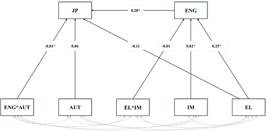
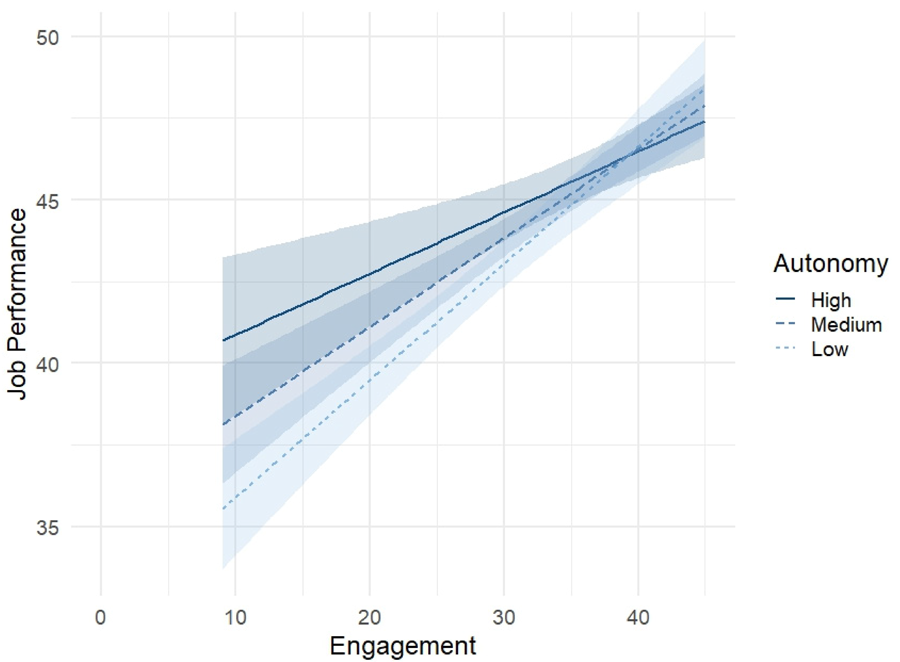
Figure 3 presents the results of the simple slope analysis. The effects of engagement on job performance were observed to be stronger when autonomy levels were low, indicated by a coefficient of 0.357 (SE = 0.04; p < 0.001). As autonomy increased to a medium level, the impact of engagement on job performance diminished, resulting in a coefficient of 0.272 (SE = 0.03; p < 0.001). Conversely, at high levels of autonomy, the impact of engagement on job performance became even weaker, with a coefficient of 0.187 (SE = 0.04; p < 0.001). The graphical analysis and simple slope coefficients indicate that while the effect of engagement on performance remains consistently positive, it decreases in magnitude as autonomy increases.

5 DISCUSSION
This study investigated the association between engaging leadership and job performance through a mediation and moderation model, and the results revealed that job engagement mediates the relationship between engaging leadership and job performance (H2–H4). Additionally, autonomy was found to moderate the relationship between engagement and performance (H6). However, H1 and H5 did not receive support.
To comprehend the indirect effect of engaging leadership on job performance, it is important to consider the influence of leadership behaviors on workplace relationships. Leaders who communicate effectively, acknowledge employees’ contributions, and support decision-making are pivotal in fostering a work environment that is conducive to positive outcomes, such as higher commitment, belonging, satisfaction, and engagement (Mazzetti & Schaufeli, 2022; Schaufeli, 2015). Engaged employees exhibit higher levels of vigor, dedication, and absorption, as well as greater confidence and persistence, promoting individual and organizational success (Schaufeli, 2021). Hence, our findings corroborate previous evidence showing that engaging leadership enhances engagement in corporate settings, which in turn is associated with enhanced performance, learning, and innovation (Rahmadani et al., 2020; Schaufeli, 2021). Therefore, engaging leadership is likely to initially foster more positive relationships in the workplace, subsequently contributing to increased productivity on both individual and collective levels.
Autonomy has been positively linked with engagement and productivity (Bakker, 2017; Johannsen & Zak, 2020; Tisu et al., 2023). Employees with greater autonomy are often required to manage resources and allocate efforts independently, which can augment their effectiveness (Rattini, 2023). Leaders who endorse autonomy enable employees’ ability to regulate their actions more effectively, reducing psychological pressures and external regulations (Deci et al., 2017; Juyumaya et al., 2024). Contrary to our expectations, we found that higher levels of autonomy weakened the effect of engagement on job performance (Table 2 and Figure 2). A possible explanation is that highly autonomous workers may already possess intrinsic motivation, reducing their reliance on engagement for maintaining satisfactory performance levels. This hypothesis is supported by a significant study showing that employee autonomy is directly linked to the internalization of motivation and the satisfaction of basic psychological needs, which are indicative of superior individual and collective outcomes (Slemp et al., 2018). Notably, in bivariate analyses, the strongest correlation involving autonomy was with intrinsic motivation (r = 0.45; Table 1). It is critical to recognize that autonomy should not be mistaken for unchecked freedom or independence, as organizational demands often outweigh individual preferences (Rigby & Ryan, 2018). In other words, autonomy pertains to how tasks are performed and not whether they are performed (Rigby & Ryan, 2018). Thus, while autonomy is a desirable trait, leadership must align personal goals with organizational objectives in order to prevent behavioral deviations that may compromise team cohesion and effectiveness.
The anticipated association between intrinsic motivation and engagement is rooted in the proposition that the internalization of motivation is connected to pleasure, meaning, satisfaction, and personal interest (Slemp et al., 2018). The SDT itself posits that intrinsic motivation is associated with engagement (Ryan & Deci, 2000), as corroborated by Gans (2024), Khan et al. (2024), and Slemp et al. (2018). Nevertheless, the hypothesis that intrinsic motivation moderates the relationship between engaging leadership and engagement (H5) was not statistically supported (p = 0.053; Table 2). A post-hoc power analysis indicated that the probability of detecting this interaction effect was only 0.48, due to the small effect size observed (ΔR2 = 0.009; f2 = 0.009). The low statistical power suggests an elevated risk of a Type II error, indicating that the results may reflect the limited sensitivity of the test rather than the absence of an effect in the population. Thus, although the findings did not confirm the proposed moderation, it cannot be ruled out that intrinsic motivation exerts a subtle influence, which would require larger samples to be reliably detected.
Regarding the associations between engaging leadership, engagement, and job performance, we identified several obstacles that still hinder a comprehensive understanding of these relationships, one being the limited exploration of how engaging leadership can mitigate negative outcomes (e.g., emotional exhaustion and employee turnover). Furthermore, it is highly relevant to further investigate how this leadership style mediates the impacts of emerging organizational challenges, including adapting to diverse teams and fostering innovation in high-pressure environments. Researchers should investigate the role of engaging leadership in organizational contexts that focus on balancing well-being and job performance, emphasizing strategies that align corporate goals with human needs. Addressing these gaps would advance the practical applicability and theoretical significance of this leadership style.
Despite the promising findings, our study was limited by having a sample comprising highly educated individuals with extensive corporate experience and predominantly residing in Goiás State (central-western Brazil), which restricts the generalizability of the findings to other populations. Another notable limitation pertains to the sole use of self-report measures, particularly concerning job performance. Therefore, conducting longitudinal studies is important for shedding more light on the impact of engaging leadership on job performance, as well as the mediating and moderating effects of engagement, autonomy, and intrinsic motivation.
6 CONCLUSIONS
This study provides significant contributions to organizational psychology and human resource management. Theoretically, it underscores the engagement as a central mechanism linking engaging leadership to employee performance. Our findings validated engaging leadership as a people-centered management style that significantly affects engagement. From a practical perspective, leaders should prioritize individuals and their basic psychological needs, fostering an organizational environment marked by communication, support, encouragement, and inclusivity. Leadership effectiveness transcends mere strategy application, institutional policies, and technical skills. The essence of this process lies in leaders’ ability to cultivate an environment that nurtures employees’ psychological well-being. When leadership focuses on relationships and human aspects, employee engagement is more likely to increase. These contributions motivate managers to create a corporate environment that enables individuals to develop and apply their full potential in the workplace.
Implementing this leadership style requires leaders to develop both technical and relational skills and the creation of organizational environments that foster communication, trust, and alignment between organizational goals and employees’ individual needs. This perspective broadens the understanding that workplace well-being and job performance are not isolated elements but interdependent factors, thereby requiring approaches that promote balance and sustainability in the organization-worker relationship. As a result, engaging leadership emerges as a strategic tool to strengthen organizational competitiveness while also contributing to workplace quality of life and fostering humanized relationships within the work environment. This perspective also opens avenues for further research to validate and expand these findings in different organizational contexts.
Acknowledgments
This study was financed, in part, by the São Paulo Research Foundation (FAPESP), Brazil, Process Number 2025/05925-0, and the Coordination for the Improvement of Higher Education Personnel (CAPES) - Brazil - Funding Code 001, Process Number 88887.709191/2022-00.
REFERENCES
-
Abualoush, S., Masa'deh, R., Bataineh, K., & Alrowwad, A. (2018). The role of knowledge management process and intellectual capital as intermediary variables between knowledge management infrastructure and organization performance. Interdisciplinary Journal of Information, Knowledge, and Management, 13, 279-309. https://doi.org/10.28945/4088
» https://doi.org/10.28945/4088 -
Andrade, E. G. S. A., & Valentini, F. (2020). Suporte à aprendizagem e desempenho no trabalho: Modelo de mediação moderada. Estudos de Psicologia, 25 (1), 44-56. https://doi.org/10.22491/1678-4669.20200005
» https://doi.org/10.22491/1678-4669.20200005 -
Andrade, E. G. S. A., Queiroga, F., & Valentini, F. (2020). Short version of self-assessment scale of job performance. Anales de Psicología, 36 (3), 543-552. https://doi.org/10.6018/analesps.402661
» https://doi.org/10.6018/analesps.402661 -
Bakker, A. B. (2017). Strategic and proactive approaches to work engagement. Organizational Dynamics, 46 (2), 67-75. https://doi.org/10.1016/j.orgdyn.2017.04.002
» https://doi.org/10.1016/j.orgdyn.2017.04.002 -
Breaugh, J. A. (1985). The measurement of work autonomy. Human Relations, 38 (6), 551-570. https://doi.org/10.1177/001872678503800604
» https://doi.org/10.1177/001872678503800604 -
Cardoso, M. B. M. (2021). Relação entre autonomia no trabalho e satisfação com os papéis de vida: Estudo com uma amostra em teletrabalho e trabalho misto [Doctoral dissertation, University of Lisbon]. UL Campus Repository. https://repositorio.ul.pt/handle/10451/56451
» https://repositorio.ul.pt/handle/10451/56451 -
Chen, T., Hao, S., Ding, K., Feng, X., Li, G., & Liang, X. (2020). The impact of organizational support on employee performance. Employee Relations, 42 (1), 166-179. https://doi.org/10.1108/ER-01-2019-0079
» https://doi.org/10.1108/ER-01-2019-0079 - Costa, B. R. L. (2018). Bola de neve virtual: O uso das redes sociais virtuais no processo de coleta de dados de uma pesquisa científica. Revista Interdisciplinar de Gestão Social, 7 (1), 15-37.
-
Cunha, L. D. V. (2013). A motivação no trabalho como antecedente da satisfação, do comprometimento e do desempenho: Um estudo em um hospital público [Doctoral dissertation, Federal University of Santa Maria]. UFSM Repository. https://repositorio.ufsm.br/handle/1/4686
» https://repositorio.ufsm.br/handle/1/4686 -
Deci, E. L., Olafsen, A. H., & Ryan, R. M. (2017). Self-determination theory in work organizations: The state of science. Annual Review of Organizational Psychology and Organizational Behavior, 4 (1), 19-43. https://doi.org/10.1146/annurev-orgpsych-032516-113108
» https://doi.org/10.1146/annurev-orgpsych-032516-113108 -
Deci, E. L., & Ryan, R. M. (2000). The "what" and "why" of goal pursuits: Human needs and the self-determination of behavior. Psychological Inquiry, 11 (4), 227-268. https://doi.org/10.1207/S15327965PLI1104_01
» https://doi.org/10.1207/S15327965PLI1104_01 -
Dewi, P., & Alviani, D. (2023). The role of women's leadership characteristics in shaping job autonomy and its effects on employee innovation performance. Jurnal Manajemen Bisnis, 14 (2), 297-312. https://doi.org/10.18196/mb.v14i2.17648
» https://doi.org/10.18196/mb.v14i2.17648 -
Fay, D., & Frese, M. (2001). The concept of personal initiative: An overview of validity studies. Human Performance, 14 (1), 97-124. https://doi.org/10.1207/S15327043HUP1401_06
» https://doi.org/10.1207/S15327043HUP1401_06 -
Gagné, M., Forest, J., Gilbert, M. H., Aubé, C., Morin, E., & Malorni, A. (2010). The motivation at work scale: Validation evidence in two languages. Educational and Psychological Measurement, 70 (4), 628-646. https://doi.org/10.1177/0013164409355698
» https://doi.org/10.1177/0013164409355698 -
Gans, R. (2024). How motivation type accounts for problematic levels of pro-social engagement across domains of politics, health, and the workplace. Western Journal of Communication, 89 (1), 180-206. https://doi.org/10.1080/10570314.2024.2366221
» https://doi.org/10.1080/10570314.2024.2366221 -
Hackman, J. R., & Oldham, G. R. (1976). Motivation through the design of work: Test of a theory. Organizational Behavior and Human Performance, 16 (2), 250-279. https://doi.org/10.1016/0030-5073 (76)90016-7
» https://doi.org/10.1016/0030-5073 (76)90016-7 -
Jindal, D., Boxall, P., Cheung, G. W., & Hutchison, A. (2023). How do work engagement and work autonomy affect job crafting and performance? An analysis in an Indian manufacturer. Personnel Review, 52 (8), 2008-2024. https://doi.org/10.1108/PR-11-2019-0646
» https://doi.org/10.1108/PR-11-2019-0646 -
Johannsen, R., & Zak, P. J. (2020). Autonomy raises productivity: An experiment measuring neurophysiology. Frontiers in Psychology, 11, Article 963. https://doi.org/10.3389/fpsyg.2020.00963
» https://doi.org/10.3389/fpsyg.2020.00963 -
Juyumaya, J., Torres-Ochoa, C., & Rojas, G. (2024). Boosting job performance: The impact of autonomy, engagement and age. Revista de Gestão 31 (4), 397-414. https://doi.org/10.1108/REGE-09-2023-0108
» https://doi.org/10.1108/REGE-09-2023-0108 -
Khan, M. T., Ali, S. A., & Rehman, H. U. (2024). How intrinsic motivation augments innovation and commitment? A moderated mediation model of employee's trust and engagement. Pakistan Journal of Humanities and Social Sciences, 12 (2), 1188-1201. https://doi.org/10.52131/pjhss.2024.v12i2.2179
» https://doi.org/10.52131/pjhss.2024.v12i2.2179 -
Kilroy, S., Fu, N., Bosak, J., Hayes, R., & Schaufeli, W. (2023). Reducing day-level emotional exhaustion: The complementary role of high involvement work systems and engaging leadership. Human Resource Management Journal, 33 (4), 846-867. https://doi.org/10.1111/1748-8583.12482
» https://doi.org/10.1111/1748-8583.12482 -
Kuok, A. C. H., & Taormina, R. J. (2017). Work engagement: Evolution of the concept and a new inventory. Psychological Thought, 10 (2), 262-287. https://doi.org/10.5964/psyct.v10i2.236
» https://doi.org/10.5964/psyct.v10i2.236 -
Lee, D. Y., & Jo, Y. (2023). The job demands-resource model and performance: The mediating role of employee engagement. Frontiers in Psychology, 14, Article 1194018. https://doi.org/10.3389/fpsyg.2023.1194018
» https://doi.org/10.3389/fpsyg.2023.1194018 -
Mazzetti, G., & Schaufeli, W. B. (2022). The impact of engaging leadership on employee engagement and team effectiveness: A longitudinal, multi-level study on the mediating role of personal- and team resources. PLoS ONE, 17 (6), e0269433. https://doi.org/10.1371/journal.pone.0269433
» https://doi.org/10.1371/journal.pone.0269433 -
McLachlan, S., & Hagger, M. S. (2011). The influence of chronically accessible autonomous and controlling motives on physical activity within an extended theory of planned behavior. Journal of Applied Social Psychology, 41 (2), 445-470. https://doi.org/10.1111/j.1559-1816.2010.00721.x
» https://doi.org/10.1111/j.1559-1816.2010.00721.x -
Morgeson, F. P., & Humphrey, S. E. (2006). The Work Design Questionnaire (WDQ): Developing and validating a comprehensive measure for assessing job design and the nature of work. Journal of Applied Psychology, 91 (6), 1321-1339. https://doi.org/10.1037/0021-9010.91.6.1321
» https://doi.org/10.1037/0021-9010.91.6.1321 - Queiroga, F., Borges-Andrade, J. E., & Coelho Junior, F. A. (2015). Desempenho no trabalho: Escala de avaliação geral por meio de autopercepções. In K. Puente-Palacios & A. Peixoto (Eds.), Ferramentas de diagnóstico para organizações e trabalho: Um olhar a partir da psicologia (pp. 36-45). Artmed.
-
Rahmadani, V. G., & Schaufeli, W. B. (2022). Engaging leadership and work engagement as moderated by "diuwongke": An Indonesian study. International Journal of Human Resource Management, 33 (7), 1267-1295. https://doi.org/10.1080/09585192.2020.1799234
» https://doi.org/10.1080/09585192.2020.1799234 -
Rahmadani, V. G., Schaufeli, W. B., Stouten, J., Zhang, Z., & Zulkarnain, Z. (2020). Engaging leadership and its implication for work engagement and job outcomes at the individual and team level: A multi-level longitudinal study. International Journal of Environmental Research and Public Health, 17 (3), 776. https://doi.org/10.3390/ijerph17030776
» https://doi.org/10.3390/ijerph17030776 -
Rattini, V. (2023). Worker autonomy and performance: Evidence from a real-effort experiment. Journal of Economics & Management Strategy, 32 (2), 300-327. https://doi.org/10.1111/jems.12511
» https://doi.org/10.1111/jems.12511 -
Rich, B. L., Lepine, J. A., & Crawford, E. R. (2010). Job engagement: Antecedents and effects on job performance. Academy of Management Journal, 53 (3), 617-635. https://doi.org/10.5465/amj.2010.51468988
» https://doi.org/10.5465/amj.2010.51468988 -
Rigby, C. S., & Ryan, R. M. (2018). Self-Determination Theory in Human Resource Development: New directions and practical considerations. Advances in Developing Human Resources, 20 (2), 133-147. https://doi.org/10.1177/1523422318756954
» https://doi.org/10.1177/1523422318756954 -
Robijn, W., Euwema, M. C., Schaufeli, W. B., & Deprez, J. (2020). Leaders, teams and work engagement: A basic needs perspective. Career Development International, 25 (4), 373-388. https://doi.org/10.1108/CDI-06-2019-0150
» https://doi.org/10.1108/CDI-06-2019-0150 -
Ryan, R. M., & Deci, E. L. (2000). Self-determination theory and the facilitation of intrinsic motivation, social development, and well-being. American Psychologist, 55 (1), 68-78. https://doi.org/10.1037/0003-066X.55.1.68
» https://doi.org/10.1037/0003-066X.55.1.68 -
Salas-Vallina, A., Alegre, J., & López-Cabrales, A. (2021). The challenge of increasing employees' well-being and performance: How human resource management practices and engaging leadership work together toward reaching this goal. Human Resource Management, 60 (3), 333-347. https://doi.org/10.1002/hrm.22021
» https://doi.org/10.1002/hrm.22021 -
Sandall, H., & Mourão, L. (2023). Desempenho individual no trabalho: Proposições para uma mensuração personalizada e um diagnóstico abrangente. Revista de Administração Mackenzie, 24 (3), 1-25. https://doi.org/10.1590/1678-6971/eramg230023.pt
» https://doi.org/10.1590/1678-6971/eramg230023.pt -
Schaufeli, W. (2021). Engaging leadership: How to promote work engagement? Frontiers in Psychology, 12, 754556. https://doi.org/10.3389/fpsyg.2021.754556
» https://doi.org/10.3389/fpsyg.2021.754556 -
Schaufeli, W. B. (2015). Engaging leadership in the job demands-resources model. Career Development International, 20 (5), 446-463. https://doi.org/10.1108/CDI-02-2015-0025
» https://doi.org/10.1108/CDI-02-2015-0025 -
Schaufeli, W. B., Bakker, A. B., & Salanova, M. (2006). The measurement of work engagement with a short questionnaire: A cross-national study. Educational and Psychological Measurement, 66 (4), 701-716. https://doi.org/10.1177/0013164405282471
» https://doi.org/10.1177/0013164405282471 -
Schaufeli, W. B., Desart, S., & De Witte, H. (2020). Burnout Assessment Tool (BAT)-Development, validity, and reliability. International Journal of Environmental Research and Public Health, 17 (24), 9495. https://doi.org/10.3390/ijerph17249495
» https://doi.org/10.3390/ijerph17249495 -
Selander, K., Korkiakangas, E., Toivanen, M., Yli-Kaitala, K., Kangas, H., Nevanperä, N., & Laitinen, J. (2023). Engaging leadership and psychological safety as moderators of the relationship between strain and work recovery: A cross-sectional study of HSS employees. Healthcare, 11 (7), 1045. https://doi.org/10.3390/healthcare11071045
» https://doi.org/10.3390/healthcare11071045 -
Slemp, G. R., Kern, M. L., Patrick, K. J., & Ryan, R. M. (2018). Leader autonomy support in the workplace: A meta-analytic review. Motivation and Emotion, 42 (5), 706-724. https://doi.org/10.1007/s11031-018-9698-y
» https://doi.org/10.1007/s11031-018-9698-y -
Sonnentag, S., & Frese, M. (2002). Performance concepts and performance theory. Psychological Management of Individual Performance, 23 (1), 3-25. https://doi.org/10.1002/0470013419.ch1
» https://doi.org/10.1002/0470013419.ch1 -
Stirpe, L., Profili, S., & Sammarra, A. (2022). Satisfaction with HR practices and employee performance: A moderated mediation model of engagement and health. European Management Journal, 40 (2), 295-305. https://doi.org/10.1016/j.emj.2021.06.003
» https://doi.org/10.1016/j.emj.2021.06.003 -
Tisu, L., Vîrga, D., & Mermeze, I. (2023). Autonomy and performance: Proactive vitality management and work engagement as sequential mediators of the relationship. Psychological Reports, 126 (1), 411-433. https://doi.org/10.1177/00332941211048470
» https://doi.org/10.1177/00332941211048470 -
Van Tam, N., Watanabe, T., & Hai, N. L. (2022). Importance of autonomous motivation in construction labor productivity improvement in Vietnam: A self-determination theory perspective. Buildings, 12 (6), 763. https://doi.org/10.3390/buildings12060763
» https://doi.org/10.3390/buildings12060763 -
Van Tuin, L., Schaufeli, W. B., & van Rhenen, W. (2020). The satisfaction and frustration of basic psychological needs in engaging leadership. Journal of Leadership Studies, 14 (2), 6-23. https://doi.org/10.1002/jls.21695
» https://doi.org/10.1002/jls.21695 -
Vazquez, A. C. S., Magnan, E. S., Pacico, J. C., Hutz, C. S., & Schaufeli, W. B. (2015). Adaptation and validation of the Brazilian version of the Utrecht Work Engagement Scale. Psico-USF, 20 (2), 207-217. https://doi.org/10.1590/1413-82712015200202
» https://doi.org/10.1590/1413-82712015200202
-
Plagiarism Check:
The ReA/UFSM maintains the practice of submitting all documents approved for publication to the plagiarism check, using specific tools, e.g.: Turnitin.
-
Data availability statement:
Data will be available upon request
Edited by
-
Edited by:
Jordana Marques Kneipp
Data will be available upon request

 Source: Developed by the authors (2025)
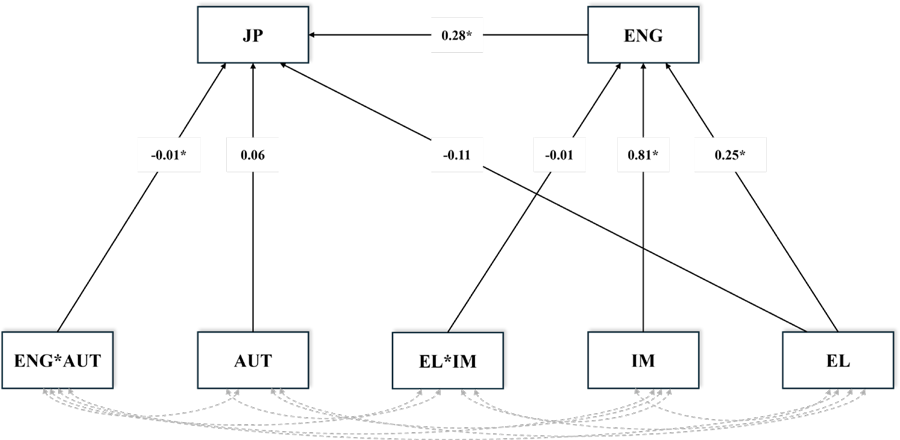 Note: AUT: Autonomy; JP: job performance; ENG: engagement; EL: engaging leadership; IM: intrinsic motivation; *p < 0.05. Source: Developed by the authors (2025)
 Source: Developed by the authors (2025)