 Evaluation of the Transboundary Aquifer Agreements from the WEFE Nexus perspective
ABSTRACT
Purpose Recognizing the holistic perspective that encompasses the interconnections between water, energy, food, and ecosystems, it becomes important to highlight the discussion about aquifer studies integrating the concepts of WEFE Nexus. Considering that the management of transboundary aquifers relies on agreements signed between countries, it is relevant to investigate this topic by including it in the framework of the WEFE Nexus. In this regard, the objective of this study is to understand how the water-energy-food-ecosystem Nexus context is addressed in transboundary aquifer agreements.
Methodology The study adopted a qualitative approach, developing a core concept for the WEFE Nexus, composed of five analytical perspectives. This framework was developed through a systematic review of the literature based on SCOPUS and Web of Science databases. Transboundary aquifer agreements were subsequently analyzed according to each analytical perspective, facilitating the identification of key issues, gaps, and opportunities in alignment with the WEFE Nexus context.
Findings We noted that none of the agreements fulfilled all the created perspectives. None of the agreements included data illustrating synergy among water, energy, food, and ecosystem resources, nor did they provide guidelines concerning the trade-offs among these resources. There are opportunities to enhance agreements and advance the objectives of the WEFE Nexus through improvements in Monitoring, Stakeholders, and Governance perspectives.
Originality/value The WEFE Nexus approach seeks to achieve a better balance in the use of natural resources essential for human well-being. However, technical improvements are necessary within the agreements, taking into account the individual characteristics and requirements of each aquifer within the context of the WEFE Nexus. Finally, the primary contributions of the research are associated with providing a fresh approach and perspective to the discourse surrounding the management and governance of transboundary aquifers. In this regard, it extends beyond the scope of water alone and encompasses the other interconnected resources within this context.
Transboundary Aquifer Agreements; WEFE Nexus; Evaluation
RESUMO
Objetivo Reconhecendo as lentes holísticas que abrangem as interconexões entre água, energia, alimentos e ecossistemas, torna-se importante a discussão sobre estudos de aquíferos integrando os conceitos do WEFE Nexus. Considerando que a gestão dos aquíferos transfronteiriços depende de acordos assinados entre países, é relevante investigar este tema incluindo-o no âmbito do WEFE Nexus. Desta forma, o objetivo deste estudo é compreender como o contexto do nexo água-energia-alimentos-ecossistema é observado nos acordos de aquíferos transfronteiriços .
Metodologia O estudo seguiu uma abordagem qualitativa, desenvolvendo um conceito central para o WEFE Nexus, composto por cinco lentes analíticas, por meio de uma revisão sistemática da literatura baseada nas bases SCOPUS e Web of Science. Os acordos dos aquíferos transfronteiriços foram analisados segundo cada lente analítica, permitindo a exploração de questões-chave, lacunas e oportunidades em alinhamento com o contexto do WEFE Nexus.
Resultados Foi observado que nenhum dos acordos atendia às lentes de análise criadas. De fato, nenhum dos acordos incluía dados que ilustrassem a sinergia entre os recursos hídricos, energéticos, de alimento e ecossistemas, nem forneceram orientações sobre as compensações entre estes recursos. Logo, existem oportunidades para melhorar os acordos e avançar os objectivos do Nexus WEFE através de melhorias nas perspectivas de Monitorização, Partes Interessadas e Governação.
Originalidade A abordagem WEFE Nexus procura alcançar um melhor equilíbrio na utilização dos recursos naturais essenciais para o bem-estar humano. No entanto, são necessárias melhorias técnicas dentro dos acordos, tendo em conta as características e requisitos individuais de cada aquífero no contexto do Nexus WEFE. Finalmente, as principais contribuições da investigação estão associadas ao fornecimento de uma nova abordagem e lente de análise ao discurso em torno da gestão e governação dos aquíferos transfronteiriços. Neste sentido, esta abordagem estende-se para além do âmbito da água e abrange os outros recursos interligados neste contexto.
Acordos de Aquíferos Transfronteiriços; WEFE Nexus; Avaliação
1 INTRODUCTION
The global population is projected to reach 9.1 billion people by the year 2050, according to Food and Agriculture Organization of the United Nations (FAO). This rapid population growth is accompanied by a pressing issue: a severe shortage of finite natural resources, with particular emphasis on the scarcity of water resources. Recognizing this growing concern, the 2030 Water Resources Group (2030 WRG) was established in 2008, consisting of influential stakeholders from the food and beverage industry who identified water scarcity as a significant global challenge. The group´s mission is to secure a future where safe water supply meets the needs of people, the environment, and the economy through effective water management practices (Leese & Meisch, 2015; Loucks & Gladwell, 1999; Molajou et al., 2023).
However, despite advancements and efforts in recent years, water management remains one of the most complex public health challenges of the twenty-first century. Nearly one billion people worldwide lack access to clean and safe water, and over two billion lack proper sanitation facilities (Adams et al., 2016). Furthermore, issues surrounding the scarcity and contamination of freshwater are anticipated to intensify in the coming years, primarily due to a substantial rise in water demand coupled with a decrease in availability and deterioration in quality (Ercin & Hoekstra, 2014). According to Water Resources Group (2009), global water withdrawal is projected to increase from the current level of 4,500 billion cubic meters per year to 6,900 billion cubic meters per year by 2030.
Within this context, groundwater, especially aquifers, plays a vital role in meeting water demands and is considered a crucial reserve to address water stress. Currently, groundwater accounts for approximately one-third of the global water supply. However, the unsustainable extraction of groundwater worldwide is leading to an ongoing decline in reserves that surpasses the rate at which it naturally replenishes. This extraction is happening at a yearly rate of 1-2%, resulting in a gradual reduction in accessible groundwater resources. As a result, around 20% of the world’s aquifers are being overexploited, with some reaching critical levels (Artioli et al., 2017; Connor & Koncagül, 2014; Kemper et al., 2003; United Nations, 2012).
For this reason, transboundary aquifer agreements are crucial for fostering cooperation among neighboring countries in the sustainable and equitable management of these valuable water resources. They play a vital role in preventing conflicts, ensuring responsible utilization of aquifers, safeguarding water quality, and preserving associated ecosystems (Teyefeh et al., 2023). Furthermore, these agreements facilitate the exchange of information and knowledge, leading to a better understanding of aquifers and the development of collaborative management strategies (Puri & Aureli, 2005).
While water management is a central focus, it is equally important to consider other interconnected elements, such as energy, food production, and ecosystems, which are intrinsically linked to water resources, according to relevant studies (Bai & Sarkis, 2022; Bidoglio et al., 2019). Energy generation, for example, often relies on water, and food production is directly shaped by its availability. At the same time, ecosystems provide essential services that regulate water quality and availability. These interconnections highlight the need for an integrated approach that addresses not only water but also its relationship with these other important resources. The WEFE Nexus (Water-Energy-Food-Ecosystem) framework embodies this holistic perspective, aiming to manage the trade-offs and synergies between these sectors to ensure sustainable and equitable resource use (Petrariu et al., 2021; Rasul & Sharma, 2016; Srigiri & Dombrowsky, 2022).
In this context, recognizing the holistic perspective that encompasses the interconnections between water, energy, food, and ecosystems, it becomes imperative to enrich the discussion on aquifer studies by integrating the concepts of the water-energy-food-ecosystem (WEFE) Nexus. This integration aims to enhance the policies and management of these systems. Furthermore, considering that the management of transboundary aquifers relies on agreements forged between countries, it is pertinent to investigate this topic by including it into the framework of the WEFE Nexus. Thus, the objective of this study is to understand how the water-energy-food-ecosystem Nexus context is considered in transboundary aquifer agreements.
Hence, this research adopts a qualitative approach, drawing upon specialized literature concerning the water-energy-food-ecosystem Nexus and relevant documents pertaining to transboundary aquifers. These documents encompass agreements between nations responsible for overseeing the six global aquifers. The study’s findings allow for the examination of the alignment between these six transboundary aquifer agreements and the criteria set forth in the WEFE Nexus, thereby shedding light on discrepancies, notable aspects, and opportunities in a systematic manner to enhance the refinement of these documents.
This research carries significant value due to its originality, relevance, and feasibility, as underscored by Castro (2006). It addresses a gap in existing scholarly work by investigating transboundary aquifer agreements in the context of the WEFE Nexus and identifying possibilities for harmonizing the management of these interconnected resources. No prior studies have been identified that explicitly outline opportunities for achieving alignment in the management of transboundary aquifers concerning the interrelated resources of water, energy, food, and ecosystems, as advocated in studies by Voulvoulis (2012), Lee et al. (2018), and Lawford et al. (2013).
Moreover, the relevance of this research is demonstrated by its emergence and current presence in the literature. Although the discussion integrating water management is not recent, it was only in 2011 that the first studies were published regarding the nexus between water, energy, food, and their relationship with the ecosystem (Molajou et al., 2023; Purwanto et al., 2021). A more extensive volume of research is still needed to foster maturity on this topic in the literature, encompassing various perspectives (Batista et al., 2021). Thus, this research contributes to the ongoing discussion and enriches scientific understanding.
In terms of feasibility, this research has been made possible through the scientific resources provided by the Coordination for the Improvement of Higher Education Personnel (CAPES), a Brazilian government institution that grants access to scientific databases and facilitates the bibliographic research necessary to acquire knowledge about the WEFE Nexus context. The availability of a repository containing the six cross-border aquifer agreements in english, accessible through the International Water Law portal, has also been instrumental in conducting this research, as it provides a common language for evaluation by the author. Consequently, data could be collected and analyzed to finalize the research and achieve its objectives.
The main contributions of this research are expected to offer a fresh perspective to the discussion on the management and governance of transboundary aquifers. It goes beyond the issue of water alone and considers the other resources intertwined within this context, thus enabling a more integrated and holistic approach to their management.
2 THEORETICAL FRAMEWORK
The concept of the Water-Energy-Food-Ecosystem (WEFE) Nexus emerged in response to the pressing need to address the complex interconnections among these essential resources for global sustainability (Zhang et al., 2018). While the first publications using the term Nexus date back to the 2010s, the discussions leading up to this point are not so recent (Purwanto et al., 2021).
As early as the 1970s, debates on environmental resource management primarily focused on water scarcity and its societal impacts, often treated individually with specific actions to address each issue. Nevertheless, these discussions evolved to focus on broader issues, including but not limited to water shortages, rising energy requirements, and worries about the production and accessibility of food. By the 1990s, discussions intensified, emphasizing the intrinsic interconnectedness of water, energy, and food resources, under the premise that effective management of one resource should consider its impact on the others (Molajou et al., 2023).
During the early 21st century, discussions on resource interconnections gained further prominence, with international conferences and agendas taking up the cause. One notable conference was Bonn 2011, titled ‘The Water, Energy and Food-Security Nexus - Solutions for the Green Economy’. Hosted by the German government in cooperation with organizations such as the International Food Policy Research Institute, World Economic Forum, and World Wide Fund for Nature, this high-level event played a pivotal role. The conference resulted in the publication of the background paper ‘Understanding the Nexus’, which remains a major reference point for Nexus debates (Leese & Meisch, 2015).
It can be affirmed that the Water-Energy-Food Nexus (initially named) framework was formally introduced by the Bonn 2011 Conference, emphasizing the need for an integrated approach to managing water, energy, and food resources. The conference paper presented initial evidence of how a nexus approach could enhance water, energy, and food security by increasing efficiency, reducing trade-offs, building synergies, and improving governance across sectors (Hoff, 2011).
Since then, the Water-Energy-Food Nexus has gained widespread recognition as an essential tool for achieving sustainable development goals (SDGs) and has been incorporated into the policies and strategies of many governments, international organizations, and other stakeholders worldwide (Giupponi & Gain, 2017). The Nexus approach recognizes that actions taken in one sector can significantly impact the others, emphasizing the need to consider trade-offs and synergies carefully (Artioli et al., 2017).
In this context, the ecosystem has been added to the Nexus relationships. Karabulut et al. (2016) argue that the ecosystem must be included in the Nexus relationships as the main component of the system, supporting the existence and maintenance of all other elements. To ensure the sustainable use of natural resources through sectoral cooperation in synergy with ecosystems and biodiversity, the Nexus approach requires the integration of life cycle thinking for each type of sectoral use to avoid burden shifting and assess trade-offs among different environmental pressures and impacts (Bidoglio et al., 2019; Tayefeh et al., 2023).
Furthermore, the environmental impacts reduce the availability of resources, and as water, energy, and food are influenced by factors like climate change, land use, population growth, urbanization, globalization, institutional political aspects, and international economic relations, the fundamental idea behind the WEFE Nexus is to recognize that these elements can no longer be treated in isolation due to their intrinsic relationships’ significant implications for sustainable development and water, energy, food, and environmental security.
In fact, Lazzaro et al. (2022) argue that the literature on the Nexus approach often revolves around three core themes: the nature of the relationships between water, energy, and food, impacting on the ecosystem; the consequences of changes in one sector for changes in the other sectors; and the implications for policy making. The last theme is relatively unexplored, with a lack of evidence and knowledge about governance, institutional, and political economy factors that determine the effectiveness of the Nexus approach.
Hence, there is an opportunity to advance the topic concerning the application of the WEFE Nexus context to analyze existing formal agreements among countries that share transboundary aquifers. These agreements play a crucial role in the sustainable management and preservation of existing resources, defining the public policies that must be observed by all parties involved. However, to enable the analysis process, a clear definition is needed about the perspectives that should guide this process. Therefore, there was an attempt to uncover the core attributes of the WEFE Nexus approach within existing literature, with the aim of establishing a comprehensive framework that offers the essential perspectives for its examination and facilitates a holistic analysis (Salam et al., 2017; Srigiri & Dombrowsky, 2022).
Among the observed points, integration is a central characteristic of the WEFE Nexus, involving the simultaneous and coordinated consideration of water, energy, food, and ecosystem resources. Instead of addressing each separately, the Nexus seeks connections that are synergistic, optimizing the use of these resources together (Batista et al., 2021; Teyefeh et al., 2023; Voulvoulis, 2012).
However, the pursuit of synergy is often accompanied by the recognition of inevitable trade-offs. As decisions are made to optimize one resource, such as food production, challenges may arise concerning other aspects, such as ecosystem conservation, such as in the use of pesticides. These trade-offs require careful analysis to minimize negative impacts and maximize benefits in the context of the WEFE Nexus (Petrariu et al., 2021; Molajou et al., 2023; Rasul & Sharma, 2016).
To provide information that allows for an understanding of the interactions between resources and enables the management of all existing elements in the system, monitoring plays a crucial role in the WEFE Nexus. This involves collecting accurate and comprehensive data on resource availability, use, and environmental impact. Effective monitoring helps guide informed decisions and assess progress toward sustainability goals, making it essential for process improvement and enhancement (Arcoverde et al., 2023; King & Carbajales-Dale, 2016).
Another significant point concerning the WEFE Nexus context, advocated by authors in the field, is the active participation of multiple stakeholders, including governments, the private sector, civil society, and local communities. Each plays an important role in policy formulation, sustainable practice implementation, and support for effective governance of these shared resources. Collaboration among these actors is essential to achieve holistic solutions and meet resource sustainability goals (Bai & Sarkis, 2022; Harwood, 2018).
Finally, governance stands as a pivotal component within the WEFE Nexus framework, shaping the systems and procedures that steer resource management and coordinating mechanisms that drive goal attainment. Successful governance necessitates the development of cohesive policies that account for the interplay between water, energy, food, and ecosystems. It also entails fostering transparency, accountability, and public involvement in decision-making processes to ensure that endeavors are suitably implemented (Artioli et al., 2017; Purwanto et al., 2021; Tayefeh et al., 2023).
Therefore, by synthesizing the knowledge acquired through the literature review, it was feasible to formulate a comprehensive concept of the WEFE Nexus. This conceptual framework provides the necessary elements for evaluating agreements related to the nexus. The constructed WEFE Nexus concept, as developed in this research, is presented in Frame 1.
3 METHODOLOGICAL PROCEDURES
Seeking to address the research question and achieve the defined objective, this study employs a qualitative approach (Gray, 2021) by consulting specialized literature on the water-energy-food-ecosystem Nexus context and relevant documents concerning transboundary aquifers. These documents encompass the agreements between countries that bear the responsibility of managing the six transboundary aquifers presently established on a global scale. The research findings make it possible to determine how well the six transboundary aquifer agreements align with the criteria specified in the WEFE Nexus, shedding light on areas that need improvement, emphasizing strengths, and pinpointing opportunities in a structured manner to enhance the enhancement of these agreements (Rodrigues et al., 2023).
Essentially, the research is based on two sets of collected data. The first aspect is related to the theoretical framework, which lays the foundation for understanding the WEFE Nexus context and the development of the concept that guides result assessment. The second set involves the collection of documents related to transboundary aquifer agreements.
The process of data collection begins with the construction of the research’s theoretical framework, which encompasses information related to the WEFE Nexus. This includes formulating the conceptual framework and delineating the characteristics of its constituent elements, as well as exploring the aquifers, particularly those associated with cross-border agreements. The theoretical framework plays a vital role in developing the necessary knowledge to establish a comprehensive understanding of the WEFE Nexus, which serves as a guiding concept throughout the research analysis.
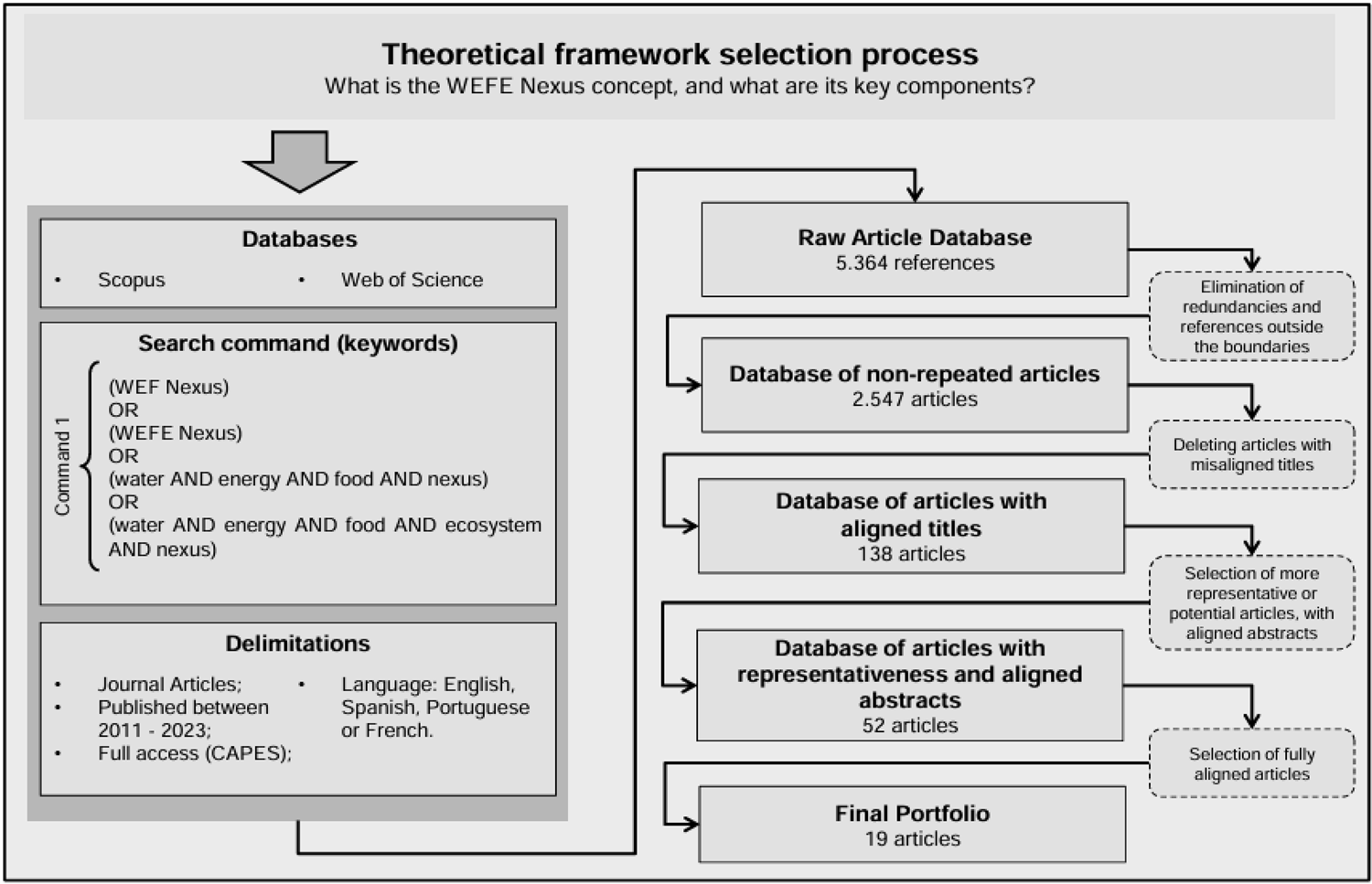
The SCOPUS and Web of Science databases were used to select a list of references to understand the topic. Using a targeted search command composed of keywords aligned to the subject, relevant references were sought to acquire the knowledge necessary to approach WEFE Nexus. The figure 1 presents an overview of the literature process based on the ProKnow-C methodology.

Thus, through the selected references, it was possible to build a comprehensive concept for the WEFE Nexus, composed of five perspectives, which allow evaluating the set of agreements on transboundary aquifers that are the subject of this research.
Regarding the transboundary aquifers agreements, firstly, we identify all the existing agreements worldwide. For each of them, the formalization documents of the relationship were sought. Therefore, were selected six documents related to: (a) Genevese Aquifer (France and Switzerland); (b) NSAS - Nubian Sandstone Aquifer System (Chad, Egypt, Libya, and Sudan); (c) IAS - Iullemeden Aquifer System (Cameroon, Chad, Cote d’Ivoire, and Guinea); (d) NWSAS - North-Western Sahara Aquifer System (Algeria, Libya, and Tunisia); (e) GAS - Guarani Aquifer System (Argentina, Brazil, Paraguay, and Uruguay); (f) Al-Sag/Al Disi Aquifer (Jordan and Saudi Arabia).
These agreements are often written in various languages such as Arabic, Spanish, Portuguese, French, among others, which the researcher does not fully understand. To facilitate the analysis of these agreements, the International Water Law Project database was utilized, as it provides a compilation of agreements in the English language, enabling a consistent and uniform analysis.
Once the concept of WEFE Nexus has been established and documents relating to transboundary aquifer agreements have been collected, the analysis process begins. A systemic analysis is proposed, utilizing a holistic understanding of the WEFE Nexus, to assess the alignment between the content of transboundary aquifer agreements and the conceptual framework that emphasizes the interconnectedness and interdependence of water, energy, food, and environmental and ecosystem resources. The aim is to examine the extent to which these agreements reflect the need for integrated management of these resources.
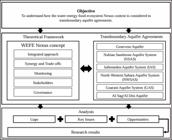
The results are presented separated by the criteria identified in the WEFE Nexus concept. For each criterion, reference levels were developed, in an ordinal scale, to facilitate the assessment of the adequacy of each agreement with the aspect studied, enabling the identification of the existing key issues, gaps and opportunities for improving the agreements. These reference levels were developed drawing from the understanding of the elements identified in the specialized literature and provide a structured framework for evaluating the alignment between the transboundary aquifer agreements and the WEFE Nexus criteria, enhancing the comprehensiveness of our analysis. The summarized research process is presented in the figure 2.
4 RESULTS
The collective analysis of the agreements provides insight into the current status of the agreements from a WEFE Nexus perspective. According to the basic concept presented previously, five perspectives guide the analysis of agreements: (i) integrated approach; (ii) Synergy and Trade-offs; (iii) Monitoring; (iv) Stakeholders; and (v) Governance.
The initial perspective, the integrated approach, pertains to the agreement’s need to promote comprehensive natural resource management, as proposed by Voulvoulis (2012) in his publication. This entails recognizing the interconnectedness between water, energy, agriculture, and ecosystem conservation. Consequently, for the agreement to be regarded as an integrated approach, it must encompass elements of water security, energy security, food security, and ecosystem protection concurrently. Therefore, we first analyze the consideration of each of the elements separately.
The research data, presented in the Frame 2, reveals that NWSAS, GAS and Al-Sag/Al Disi agreements mention aquifers as significant sources of drinking water, they only touch upon certain key elements pertaining to combating water scarcity. On the other hand, the Nubian Sandstone and IAS agreements exhibit a higher level of focus on the issue, as they include standards and guidelines that facilitate access to water. Among all the aquifers, the Genevese aquifer stands out with the most comprehensive measures outlined in the agreement, such as monitoring water extraction volumes, analyzing water quality, setting extraction limits, and implementing artificial water recharge systems. However, this aquifer does not prioritize the matter with a specific ranking or list.
Regarding energy and food security, a similar pattern emerges across all agreements, with none of them addressing or even acknowledging the need to consider the interplay between these aspects. This can be understood considering that the concept of the WEFE Nexus is relatively new, and the objective is to use this analysis to develop an agreement that encompasses concerns related to water, energy, food, and ecosystems collectively. All studied agreements fall short in overlooking the importance of resource conservation, particularly considering that several of the examined aquifers have experienced the detrimental consequences of overexploitation of water resources, leading to adverse impacts on food production, among other factors.
The situation remains largely unchanged when it comes to ecosystem security, as illustrates de Frame 3. However, in two particular cases, IAS agreement takes a different approach by including several points pertaining to ecosystems in its agreement. While it may not define specific standards, guidelines, or a priority list, it stands out as the agreement that demonstrates the greatest commitment to addressing ecosystem concerns in this analysis. Although not as comprehensive as the IAS, the GAS agreement shows a degree of environmental concern in a broader and more limited manner. The remaining agreements do not specifically address or mention the issue of ecosystems, as their focus is primarily on water resources.
The assessment of the six agreements reveals that none of them fully satisfies the integrated approach proposed in the initial analysis perspective. Similarly, when examining synergies and trade-offs, it was observed that the agreements do not promote the integration of water, energy, food, and ecosystem resources, nor do it address the mitigation of interdependencies among these elements.
Regarding the second perspective, which addresses synergy and trade-offs, it needs to be examined from two aspects. First, it is essential for agreements to include mechanisms that promote synergies among water, energy, food production, and ecosystem concerns, leading to mutual benefits. The second aspect pertains to actions that promote the reduction of trade-offs, aiming to prevent one sector from benefiting at the expense of another (Rasul & Sharma, 2016).
In terms of synergy, none of the agreements studied demonstrated concern with the potentialization of resources when interrelated, as shown in Frame 4.
The second aspect pertains to actions that promote the reduction of trade-offs, aiming to prevent one sector from benefiting at the expense of another (Rasul & Sharma, 2016). However, the agreements are not concerned about the impacts and conflicts that may occur on resources. Frame 5 demonstrates the evaluated data regarding trade-offs.
In terms of monitoring, the WEFE Nexus concept emphasizes the importance of measuring and tracking the utilization of natural resources. This enables the evaluation of performance across various aspects, facilitating the enhancement of necessary actions and enabling effective management of the entire system (World Health Organization, 2010). To accomplish this, the use of indicators is essential for visualizing the level of performance in actions and the progress of activities aligned with WEFE Nexus resources. Therefore, within these perspectives, it is anticipated that the agreement may exhibit certain characteristics that demonstrate compliance with monitoring requirements.
The Monitoring perspective was divided into two aspects, and in both cases, none of the agreements achieved the highest score. At the first aspect, the agreements failed to establish monitoring standards and ensure responsible monitoring. The agreements of Genevese, NSAS and IAS were relatively better positioned as they not only defined the parameters to be monitored, but also provided guidelines for their evaluation. Among them, the Genevese agreement stands out as the most comprehensive, as it specifies the maximum annual volume allowed for water extraction, for instance. However, despite acknowledging the importance of monitoring in other aspects, the agreement does not identify specific standards for this purpose. The Frame 6 presents the assessment about indicators.
Regarding the publication and sharing of monitored data, referring to the second aspect of monitoring, the majority of agreements include provisions for sharing data. However, it’s noteworthy that only the Genevese agreement goes a step further by explicitly committing to making this data publicly accessible. In contrast, the remaining agreements primarily focus on establishing guidelines for data sharing among the signatory parts, yet they do not progress toward the practical implementation of these provisions, as depicted in Frame 7.
In the fourth perspective, its emphasis on involving all stakeholders in the context of aquifers. This encompasses those directly involved in aquifer management and responsible for achieving the objectives outlined in the agreements, as well as those affected by the decisions made. Various actors such as politicians, farmers, ranchers, government officials, industry representatives, civil society organizations, local communities, researchers, and others can be considered in this analysis (Medema, Furber, Adamowski, Zhou, & Mayer, 2016).
The results obtained from the stakeholder perspective are presented in Frame 8. It can be observed that none of the agreements achieved the best or worst position on the scale. The Genevese agreement, along with agreements IAS and Al-Sag/Al Disi, occupied a median position as they identified the parts involved in the agreement. Agreements Nubian Sandstone, NWSAS and GAS only identified the directly related signatory countries. None of the agreements showed explicit concern for the population affected by changes in the aquifer area.
It is a significant deficiency that people’s central role in water resources management is overlooked in the agreements. People are directly impacted by water availability and quality, and their active participation is crucial for identifying and tackling water-related issues. Engaging communities promotes a sense of ownership and responsibility for sustainable water management practices. Embracing diverse perspectives and empowering marginalized groups is essential for ensuring equitable access to water resources. Ultimately, the engagement and participation of people are vital in achieving effective and inclusive water management for both current and future generations.
Finally, the governance perspective emphasizes the importance of having a set of mechanisms that ensure or enhance the level of engagement in achieving defined objectives. When evaluating the agreements, all the mechanisms used to ensure the fulfillment of objectives outlined in the agreements are taken into consideration.
Several governance mechanisms can contribute to strengthening the scope of objectives in transboundary aquifer agreements. These include: existence of committees, councils, or strategic groups that facilitate discussions and have a deliberative and decision-making role in aquifer management, particularly involving all the countries concerned; mechanisms for conflict resolution that mediate issues that may arise and find equitable and fair solutions, considering the interests of all involved parts; inclusion of strategic plans with defined timeframes that outline specific and operational actions, assign responsibilities for task execution, and monitor activities; demand for transparency in sharing information of mutual interest related to aquifer management, establishing forums with the participation of all relevant parts; establishment of clear norms, policies, and regulations that provide guidelines for the desired conditions outlined in the agreements and enable the achievement of objectives (Burchi, 2018; Linton & Brooks, 2011; UNECE, 2010).
Within this perspective, robust regulations can be established in agreements regarding the use of pesticides and agrochemicals in agriculture. Joint policies can be implemented to invest in technologies that diversify the energy mix, reducing the impact on water resources. Collective and local goals can be defined for water resource conservation and ecosystem restoration. Data audits can be conducted to ensure the accuracy and reliability of disclosed information, among other measures (Press & Arnould, 2014).
The first assessment of the governance perspective, as shown in Frame 9, comprises two levels, and it is worth mentioning that all agreements feature established management structures, thus meeting the criteria of this scale. It is important to highlight that while most countries have well-structured committees and consultation mechanisms, the Nubian Sandstone and GAS agreements lack specific provisions for a technical group and clear delineation of the functions of these structures.
While each of the examined agreements includes a management structure for the aquifer, none of them incorporate sanctions for non-compliance, revealing a significant deficiency. Thus, none of the agreements fulfill the criteria of the second assessment in the governance perspective, as shown in Frame 10.
In terms of Regulations, notably, the Genevese agreement distinguishes itself by outlining measures in its third chapter to restrict water extraction and implement fees for surpassing predetermined limits. These provisions safeguard the aquifer against excessive exploitation and ensure penalties and charges for exceeding the established withdrawal thresholds.
On the other hand, it is worth noting the absence of any additional sanctions mentioned in this agreement, which is particularly concerning when it comes to critical situations like contamination. In contrast, the other agreements primarily prioritize the involvement of relevant actors in resolving conflicts between countries.
None of the agreements reached the maximum level, as they did not tolerate non-compliance with the specified clauses. The Genevese and IAS agreements stood out as they provided guidelines for adhering to the prescribed regulations. On the other hand, the GAS and Al-Sag/Al Disi agreements only offered general guidelines in their documents, while the Nubian Sandstone and NWSAS agreements lacked mandatory rules within their agreements.
The absence of clauses for non-compliance in an agreement can pose several problems. It creates a lack of accountability and enforcement mechanisms, making it challenging to ensure adherence to the agreed-upon rules. In the absence of repercussions for failing to comply, there is limited motivation for parties to meet their commitments, potentially eroding the agreement’s efficacy and credibility. Additionally, it may foster mistrust among the involved parties and impede the resolution of potential disputes or conflicts. In such a scenario, the omission of non-compliance clauses diminishes the agreement’s capacity to accomplish its intended objectives and safeguard shared resources. Frame 12 provides an assessment of the third aspect within governance perspective.
About the veracity aspect, the Frame 13 depicts the assessment of the governance perspective, where only the Genevese agreement achieved the highest level. Within the Genevese agreement, there is a provision for auditing the investments made in the artificial recharge of the aquifer, which implies an audit of the aquifer level data as well. On the other hand, the other agreements do not address any specific mechanism for rigorous data verification, although the NWSAS aquifer agreement holds potential in this regard, as it emphasizes the validation of collected data.
Finally, the absence of data veracity check undermines decision-making, transparency, accountability, and monitoring. Without reliable data, decisions are flawed, stakeholders mistrust information, and evaluations become ineffective. Lack of data veracity hinders problem-solving and evidence-based solutions, so can be considered another challenge in transboundary agreements worldwide.
5 CONCLUSIONS
The exponential growth of the global population has exerted excessive pressure on natural resources, and this pressure is expected to increase in the coming years. Among the affected resources, water stands out as one of the most extensively studied, with recognized levels of stress and scarcity worldwide. Furthermore, studies indicate that this situation is likely to worsen in the future as aquifers, the underground water reserves, are being overexploited and degraded, compromising access to this vital resource. Managing aquifers is highly complex, and the complexity is amplified when dealing with transboundary aquifers. While a few countries have established agreements with neighboring countries to manage shared aquifers, these agreements are still limited in scope and require further refinement, considering other resources and the unique characteristics of each country.
In this context, the WEFE nexus emerges as a promising approach, advocating for the integrated management of natural resources to reduce trade-offs and optimize resource use efficiency.
The aim of this study was to analyze the six existing transboundary aquifer agreements, examining their existing gaps within the context of the WEFE Nexus. To achieve this objective, an exploratory and systematic analysis of the agreements was conducted, utilizing analytical perspectives derived from the concept of the WEFE Nexus. The study also sought to explore key issues, gaps, and opportunities related to transboundary aquifer agreements, while considering their alignment with the principles of the WEFE Nexus.
The analysis revealed significant gaps across all criteria assessed. None of the agreements fully addressed the analytical lenses proposed, which highlights the urgent need for improvements in key aspects such as resource integration, monitoring mechanisms, stakeholder engagement, and governance. However, some agreements, such as the Genevese agreement, demonstrated notable strengths, particularly in defining monitoring standards and ensuring transparency through public data sharing.
On the other hand, the North-Western Sahara agreement exhibited significant weaknesses across most of the analytical perspectives, indicating the need for substantial enhancements. The Iullemeden and Al-Sag/Al Disi agreements showed promise but also identified areas for improvement in terms of monitoring elements.
Both the Guarani and Nubian Sandstone agreements demonstrated similar performance, scoring low in six out of the nine analytical perspectives. These agreements require attention to enhance monitoring, stakeholder engagement, and governance practices.
The study underscores that none of the agreements fully integrated the interconnections between water, energy, food, and ecosystems as envisioned by the WEFE Nexus. Synergies that could optimize resource efficiency and reduce trade-offs remain underexplored, and the absence of specific provisions to address these trade-offs further limits the agreements’ effectiveness. Additionally, the findings revealed that stakeholder inclusion is often restricted to signatory nations, neglecting the broader communities and actors directly affected by aquifer management decisions. This lack of inclusivity diminishes the potential for equitable governance and long-term sustainability.
Despite these shortcomings, this study contributes by identifying areas for improvement within the agreements and providing a roadmap for advancing transboundary aquifer management. Future agreements should explicitly incorporate the principles of the WEFE Nexus, promoting integrated resource management and fostering synergies while addressing trade-offs. Strengthening monitoring systems with clear indicators and ensuring public data sharing are crucial steps. Moreover, broadening stakeholder engagement to include local communities and developing enforcement mechanisms, such as sanctions for non-compliance, would significantly enhance the effectiveness of these agreements.
It is important to note, however, that given the substantial differences among the studied aquifers, this research was unable to extensively explore the unique characteristics of each aquifer. Subsequent studies should focus on individual aquifers to develop more targeted and efficient management plans that address their specific local requirements. By addressing these gaps and leveraging the WEFE Nexus approach, transboundary aquifer agreements can evolve into more robust and effective tools for sustainable resource governance, ensuring equitable access and long-term viability in an increasingly resource-constrained world.
REFERENCES
- Adams, E. A., Boateng, G. O., Amoyaw, J. A. (2016). Socioeconomic and demographic predictors of potable water and sanitation access in Ghana. Social Indicators Research, 126(2), 673-687. doi: 10.1007/s11205-015-0912-y.
-
Arcoverde, G. F. B., Menezes, J. A., Paz, M. G. A., Barros, J. D., Guidolini, J. F., Branco, E. A., Ometto, J. P. H. B., Andrade, P. R. de., & Pulice, S. M. P. (2023). Sustainability assessment of Cerrado and Caatinga biomes in Brazil: A proposal for collaborative index construction in the context of the 2030 Agenda and the Water-Energy-Food Nexus. Frontiers in Physics, 10, 1060182. doi: 10.3389/fphy.2022.1060182
» https://doi.org/10.3389/fphy.2022.1060182 - Artioli, F., Acuto, M., & Arthur, J. Mc. (2017). The water-energy-food nexus: An integration agenda and implications for urban governance. Political Geography, 61, 215-223. doi: 10.1016/j.polgeo.2017.08.009
- Bai, C. G., Sarkis, J. (2022). The Water, Energy, Food, and Sustainability Nexus Decision Environment: A Multistakeholder Transdisciplinary Approach. IEEE Transactions on Engineering Management, 69(3), 656-670. doi: 10.1109/TEM.2019.2946756
- Batista, C. S. M., Souza, D. B. d., & Ferreira, P. A. F. Jr. (2021). Nexus água, alimento, energia (AAE) sob a perspectiva do trilema da sustentabilidade: uma revisão sistemática da literatura baseada no método rother. Revista de Administração e Negócios da Amazônia, 13(4), 252-263. doi: 10.18361/2176-8366/rara.v13n4p252-263
-
Bidoglio, G., Vanham, D., Bouraoui, F., & Barchiesi, S. (2019). The Water-Energy-Food-Ecosystems (WEFE) Nexus. In B. Fath (Ed.), Encyclopedia of Ecology (2nd ed., pp. 459-466). Elsevier. doi: 10.1016/B978-0-12-409548-9.11036-X
» https://doi.org/10.1016/B978-0-12-409548-9.11036-X -
Burchi, S. (2018). Legal frameworks for the governance of international transboundary aquifers: Pre-and post-ISARM experience. Journal of Hydrology: Regional Studies, 20, 15-20. doi: 10.1016/j.ejrh.2018.04.007
» https://doi.org/10.1016/j.ejrh.2018.04.007 - Castro, C. M. (2006). A prática da pesquisa (2nd ed.). Pearson Prentice Hall.
-
Connor, R., & Koncagül, E. (2014). The United Nations world water development report 2014: Water and Energy. UNESCO. https://unesdoc.unesco.org/ark:/48223/pf0000225741
» https://unesdoc.unesco.org/ark:/48223/pf0000225741 - Ercin, A. E., Hoekstra, A. Y. (2014). Water footprint scenarios for 2050: A global analysis. Environment International, 64, 71-82. doi: 10.1016/j.envint.2013.11.019
- Gray, D. E. (2021). Doing research in the real world (4 th ed.). Sage.
- Giupponi, C., Gain, A. K. (2017). Integrated spatial assessment of the water, energy and food dimensions of the sustainable development goals. Regional Environmental Change, 17, 1881-1893. doi: 10.1007/s10113-016-0998-z
-
Harwood, S. A. (2018). In search of a (WEF) nexus approach. Environmental Science & Policy, 83, 79-85. doi: 10.1016/j.envsci.2018.01.020
» https://doi.org/10.1016/j.envsci.2018.01.020 -
Hoff, H. (2011). Understanding the Nexus. Background Paper for the Bonn 2011 Conference: The Water, Energy and Food Security Nexus. Stockholm Environment Institute (SEI). https://www.sei.org/publications/understanding-the-nexus/
» https://www.sei.org/publications/understanding-the-nexus/ -
Karabulut, A. A., Crenna, E., Sala, S., & Udias, A. (2018). A proposal for integration of the ecosystem-water-food-land-energy (EWFLE) nexus concept into life cycle assessment: A synthesis matrix system for food security. Journal of Cleaner Production, 172, 3874-3889. doi: 10.1016/j.jclepro.2017.05.092
» https://doi.org/10.1016/j.jclepro.2017.05.092 - Kemper, K. E., Mestre, E., Amore, L. (2003). Management of the Guarani Aquifer System: Moving towards the future. Water International, 28(2), 185-200. doi: 10.1080/02508060308691684
- King, C. W., Carbajales-Dale, M. (2016). Food–energy–water metrics across scales: project to system level. Journal of Environmental Studies and Sciences, 6(1), 39-49. doi: 10.1007/s13412-016-0390-9
-
Lawford, R., Bogardi, J., Marx, S., Jain, S., Wostl, C. P., Knüppe, K., Ringler, C., Lansigan, F., & Meza, F. (2013). Basin perspective on the Water-Energy-Food Security Nexus. Current Opinion in Environmental Sustainability, 5 (6), 607-616. doi: 10.1016/j.cosust.2013.11.005
» https://doi.org/10.1016/j.cosust.2013.11.005 - Lazzaro, L. L. B., Giatti, L. L., Oliveira, J. A. P. de. (2022). Water-energy-food nexus approach at the core of businesses – How businesses in the bioenergy sector in Brazil are responding to integrated challenges? Journal of Cleaner Production, 303, 127102. doi: 10.1016/j.jclepro.2021.127102
- Lee, E., Jayakumar, R., Shrestha, S., Han, Z. (2018). Assessment of transboundary aquifer resources in Asia: Status and progress towards sustainable groundwater management. Journal of Hydrology: Regional Studies, 20, 103-115. doi: 10.1016/j.ejrh.2018.01.004
- Leese, M., & Meisch, S. (2015). Securitising sustainability? Questioning the 'water, energy and food-security nexus'. Water Alternatives, 8 (1), 695-709.
-
Linton, J., & Brooks, D. B. (2011). Governance of transboundary aquifers: new challenges and new opportunities. Water International, 36 (5), 606-618. doi: 10.1080/02508060.2011.599312
» https://doi.org/10.1080/02508060.2011.599312 - Loucks, D. P., & Gladwell, J. S. (1999). Sustainability criteria for water resource systems Cambridge University Press.
- Medema, W., Furber, A., Adamowski, J., Zhou, Q., Mayer, I. (2016). Exploring the potential impact of serious games on social learning and stakeholder collaborations for transboundary watershed management of the St. Lawrence River Basin. Water, 8(5), 175. doi: 10.3390/w8050175
-
Molajou, A., Afshar, A., Khosravi, M., Soleimanian, E., Vahabzadeh, M., & Variani, H. A. (2023). A new paradigm of water, food, and energy nexus. Environmental Science and Pollution Research, 30 (49), 107487-107497. doi: 10.1007/s11356-021-13034-1
» https://doi.org/10.1007/s11356-021-13034-1 - Petrariu, R., Constantin, M., Dinu, M., Pătărlăgeanu, S. R., Deaconu, M. E. (2021). Water, energy, food, waste nexus: Between synergy and trade-offs in romania based on entrepreneurship and economic performance. Energies, 14(16), 5172. doi: 10.3390/en14165172
- Press, M., Arnould, E. J. (2014). Narrative transparency. Journal of Marketing Management, 30(13-14), 1353-1376. doi: 10.1080/0267257X.2014.925958
- Puri, S., Aureli, A. (2005). Transboundary Aquifers: A Global Program to Assess, Evaluate, and Develop Policy. Groundwater, 43(5), 661-668. doi: 10.1111/j.1745-6584.2005.00100.x
-
Purwanto, A., Sušnik, J., Suryadi, F. X., & Fraiture, C. de. (2021). Water-energy-food nexus: Critical review, practical applications, and prospects for future research. Sustainability, 13 (4), 1919. doi: 10.3390/su13041919
» https://doi.org/10.3390/su13041919 - Rasul, G., Sharma, B. (2016). The nexus approach to water–energy–food security: an option for adaptation to climate change. Climate Policy, 16(6), 682-702. doi: 10.1080/14693062.2015.1029865
- Rodrigues, K. T., Matos, L. S., Ensslin, S. R., Ensslin, L., Dutra, A., Mussi, C. C. (2023). Evaluation of public sector innovation: systematic review. Public Administration Issues, Special Issue I, 165-188. doi: 10.17323/1999-5431-2023-0-5-165-188
- Salam, P. A., Shrestha, S., Pandey, V. P., & Anal, A. K. (Eds.). (2017). Water-energy-food nexus: Principles and practices (Vol. 229). John Wiley & Sons.
- Shivakoti, G., Pradhan, U., Helmi, H. (2016). Redefining diversity and dynamics of natural resources management in Asia: Sustainable natural resources management in dynamic Asia (Vol. 1). Elsevier. doi:10.1016/C2015-0-04333-7
- Srigiri, S. R., Dombrowsky, I. (2022). Analysing the Water-Energy-Food Nexus from a polycentric governance perspective: conceptual and methodological framework. Frontiers in Environmental Science, 10, 725116. doi: 10.3389/fenvs.2022.725116
- Tayefeh, A., Abdous, M., Zahedi, R., Aslani, A., Zolfagharzadeh, M. M. (2023). Advanced bibliometric analysis on water, energy, food, and environmental nexus (WEFEN). Environmental Science and Pollution Research, 30(47), 103556-103575. doi: 10.1007/s11356-023-29379-8
-
UNECE. (2010). Protocol on strategic environmental assessment to the convention on environmental impact assessment in a transboundary context. United Nations Economic Commission for Europe. https://unece.org/DAM/env/eia/documents/legaltexts/protocolenglish.pdf
» https://unece.org/DAM/env/eia/documents/legaltexts/protocolenglish.pdf -
United Nations. (2012). United Nations world water development report 4: managing water under uncertainty and risk. UNESCO. https://unesdoc.unesco.org/ark:/48223/pf0000215644
» https://unesdoc.unesco.org/ark:/48223/pf0000215644 -
Voulvoulis, N. (2012). Water and sanitation provision in a low carbon society: The need for a systems approach. Journal of Renewable Sustainable Energy, 4 (4), 041403. doi: 10.1063/1.3665797
» https://doi.org/10.1063/1.3665797 - Ward, D. R. (2003). Water wars: Drought, flood, folly, and the politics of thirst. Riverhead Books.
-
Water Resources Group. (2009). Charting our water future: Economic frameworks to inform decision-making. 2030 Water Resources Group. https://2030wrg.org/wp-content/uploads/2009/12/Charting-Our-Water-Future-Final.pdf
» https://2030wrg.org/wp-content/uploads/2009/12/Charting-Our-Water-Future-Final.pdf -
World Health Organization. (2010). Monitoring the building blocks of health systems: a handbook of indicators and their measurement strategies. World Health Organization. https://iris.who.int/bitstream/handle/10665/258734/9789241564052-eng.pdf
» https://iris.who.int/bitstream/handle/10665/258734/9789241564052-eng.pdf - Zhang, C., Chen, X., Li, Y., Ding, W. & Fu, G. (2018). Water-energy-food nexus: Concepts questions and methodologies. Journal of Cleaner Production, 195, 625-639. doi: 10.1016/j.jclepro.2018.05.194
-
Copyrights
Authors of articles published by ReA/UFSM retain the copyright of their works.
-
Plagiarism Check:
The ReA/UFSM maintains the practice of submitting all documents approved for publication to the plagiarism check, using specific tools, e.g.: Turnitin.
Edited by
-
Edited by:
Jordana Marques Kneipp

 Source: the authors
 Source: the authors

