 Circular economy and business performance assessment models: a case study in the glass packaging value system
Abstract
Purpose – This study investigates how a representative company in the glass industry has incorporated Circular Economy variables and practices as a dimension of its performance assessment.
Design/methodology/approach – Based on a proposed investigative framework for the theme, a qualitative approach was adopted through an exploratory and descriptive single-case study, using documentary research and interviews as data collection techniques, followed by documentary and content analysis.
Findings – The results suggest that, given the complexity of Circular Economy processes and principles, despite the company‘s efforts, only one phase of the cycle has been developed, with considerable room for advancement. Furthermore, it was found essential to establish specific internal methods and routines, including employee training.
Practical implications - The practical contributions of this study lie in investigating how a company in the glass sector integrates Circular Economy practices into its performance assessment, proposing a new framework. In addition, the study highlights the importance of developing specific internal methods and routines emphasizing the need for employee training as an essential part of advancing circularity within organizations.
Originality/value – The originality of this study lies in the applied analysis of Circular Economy in a specific company in the glass sector, a field that is still underexplored regarding monitoring and control practices within traditional business performance benchmarks. The proposed framework provides an unprecedented contribution to guide other companies in their implementations.
Business performance; Circular economy; Sustainability
RESUMO
Objetivo – O presente estudo investiga como uma empresa representativa da indústria do vidro tem incorporado variáveis e práticas da Economia Circular como dimensão da avaliação de seu desempenho.
Método – A partir da proposição investigativa de framework para o tema, foi adotada a abordagem qualitativa por meio de estudo de caso único exploratório e descritivo, sendo utilizadas como técnicas de coletas de dados a pesquisa documental e entrevistas, seguidas da análise documental e de conteúdo.
Resultados – Os resultados sugerem que, dada a complexidade de processos e fundamentos da Economia Circular, a despeito dos esforços da empresa, apenas uma fase do ciclo foi desenvolvida, tendo espaço considerável para avanços. Ademais, registrou-se imprescindível a elaboração de métodos e rotinas internas específicas, inclusive para capacitar os funcionários.
Contribuições práticas – As contribuições deste estudo estão na investigação de como uma empresa do setor vidreiro integra práticas da Economia Circular na avaliação de seu desempenho, propondo um framework inédito. Além disso, o estudo destaca a importância de desenvolver métodos e rotinas internas específicas, apontando para a necessidade de capacitação dos funcionários como parte essencial para o avanço da circularidade nas organizações.
Originalidade – A originalidade deste estudo reside na análise aplicada da Economia Circular em uma empresa específica do setor vidreiro, um campo ainda pouco explorado em relação a práticas de monitoramento e controle dentro dos referenciais tradicionais de desempenho empresarial. O framework proposto fornece uma contribuição inédita para guiar outras empresas em suas implementações.
Desempenho empresarial; Economia circular; Sustentabilidade
1 INTRODUCTON
The theme of sustainability has gained central importance in academic research and its application to organizational contexts across various sectors. Despite being a constantly evolving concept, often polysemic, sustainability in the business context is generally grounded in the social, economic, and environmental dimensions (Rehman, 2021). In its environmental dimension, with a focus on ecological issues, there is an increasing presence in studies and reflections on the relationships established between business economic activities - particularly in the industrial sector - and the environment.
As noted by Gray et al. (2015), companies worldwide are committed to strengthening commitments and striving to implement programs and measures that result in lower levels of environmental impact to ensure ecological sustainability understood, following Starik and Rands (1995), as the ability of one or more organizations, either collectively or individually, to exist and thrive over extended periods in such a way that the existence and flourishing of other collective entities are possible over time.
From this perspective, the challenge for a company to become ecologically sustainable lies precisely in enabling its activities to be continuously executed without negatively and substantially altering the factors and scarce resources needed for other activities (Starik & Rands, 1995). For Starik and Rands (1995), being ecologically sustainable ultimately means that a company, in using natural resources, does so no faster than the renewal or recycling periods of such resources, or in ways that do not exceed the regenerative capacities of ecosystems, given the available technological reality. It is no coincidence that the 21st century has been marked by the pursuit of corporate actions focused on mitigation measures aimed at “neutralizing” or “offsetting” their ecological externalities, as well represented by carbon footprint initiatives (Starik & Rands, 1995).
A prominent extension of these propositions and actions is found in the paradigm of the Circular Economy, whose premises imply moving beyond the linearity of industrial production toward circular aspects, by reintegrating waste into the value system to mitigate harmful environmental outcomes. According to Spring and Araujo (2017), the Circular Economy is a concept designed to eliminate waste through cycles of assembly, use, disassembly, reuse, and recycling. It is, therefore, a new way of recapturing the value of inputs, products, resources, and post-consumer packaging by replacing a linear material flow with one characterized by circularity, where production and consumption systems are understood as closed loops, that is, circular (where the end connects back to the beginning) (Jabbour et al., 2019).
However, although already well positioned within the integrative debate between business economic activity and environmental/ecological sustainability, Murray et al. (2015) demonstrate that there are significant opportunities and challenges for the Circular Economy. Among these challenges is the incorporation of Circular Economy principles into company processes, organization, and performance evaluation. In other words, consideration must be given to the best practices a company should adopt when integrating Circular Economy elements into its operations, in order to establish, as Naranjo-Gil (2016) describes, a management and control system capable of measuring the impacts of adopted environmental sustainability measures and their outcomes on company performance.
This issue is pertinent because, while environmental/ecological initiatives should occur, they must also contribute to the company’s performance and be incorporated into its strategy, monitoring, and control models (Rehman, 2021). Inevitably, an intrinsic relationship is established between company performance evaluation models and Circular Economy variables. After all, as extensively developed in the field of Strategy, a company’s performance, particularly in profitability, is a reflection of an effective strategy amid the competitive business environment and results from its internal organizational capacity to sustain its positioning (Porter, 1989).
Consequently, within the field of Strategy, a series of studies and methodological developments have been undertaken to create frameworks that enable the establishment of performance evaluation systems aimed at monitoring and controlling achieved results, as well as facilitating alignment, communication, and learning (Franco-Matos et al., 2014). The most widely recognized contributions include, for example, the Tableau de Bord (TdB), Balanced Scorecard (BSC), and Performance Prism (PP), among others, which seek to establish monitoring and control parameters for performance evaluation.
However, although it is a relatively developed field, studies and reference models for organizational performance evaluation that incorporate Circular Economy variables remain scarce. The main methodologies and tools for performance evaluation models available and established globally are still heavily rooted in variables and dimensions of the competitive business environment, aligned with a linear logic of value systems.
Mapping this gap opens opportunities for exploring the topic across different sectors. In this context, it is essential to consider how an industrial company, embedded in a value system where circularity is critical, has incorporated Circular Economy practices into its performance evaluation to monitor and control outcomes based on its actions aimed at mitigating negative environmental externalities. In other words, the aim is to consider how a company has customized its performance evaluation model based on the Circular Economy practices it has adopted. As pointed out by Carneiro da Cunha (2011) and Hourneaux Junior (2005), given the need for companies to have these monitoring and control parameters, performance evaluation models find fertile ground for development, constantly seeking to meet sectoral specificities and, above all, the unique context of each organization these models should encompass each company’s reality.
To address this inquiry, the following objectives were established: to develop an integrative framework on business performance evaluation models and dimensions of the Circular Economy; to identify the business performance model used by the company in light of the proposed framework; and to investigate how the Circular Economy dimensions are being addressed and incorporated by the company.
For this study, a qualitative approach was chosen, through an exploratory and descriptive single-case study. Data collection techniques included documentary research and interviews, followed by document and content analysis (Godoy, 1995; Eisenhardt, 1989). The choice of a representative Brazilian glass packaging company is justified by the fact that recycling (circularity) of waste is critical in this industrial value system, as it helps mitigate negative externalities through reduced CO2 emissions, energy use, among others (Streit, Guarnieri, & Batista, 2020), making it illustrative of the challenges faced by the Circular Economy.
The article is organized as follows: during the diagnosis of the problem situation, additional information on the relevance of the discussion for the sector was presented, as well as a detailed account of the application of Circular Economy principles through the glass packaging recycling system. The description of the mechanisms adopted to solve the problem is found in the detailing of the proposed intervention, given the importance of glass packaging circularity, regarding the choice of the Circular Economy as a business model. It also highlights the adoption of Organizational Performance Evaluation (OPE) mechanisms to elucidate research questions related to the value system in the glass packaging sector and to propose the investigative framework to be tested in the analyzed case study.
The results obtained were described in alignment with the investigation framework, enabling greater depth for validating the research and the proposed objectives, followed by technological and social contributions, as well as discussed in the final considerations of this study and contributions in response to the research problem.
2 THEORETICAL FRAMEWORK
The Sustainability agenda is central to contemporary business debates. A prominent extension of this agenda lies in the paradigm of the Circular Economy, whose premises assume the shift from linear industrial production to circular aspects through the reintegration of waste into the value system, aiming to mitigate harmful environmental impacts. However, there are considerable challenges regarding best practices for operationalizing this concept within companies, particularly in monitoring and control, within the more traditional business performance frameworks associated with conventional Organizational Performance Evaluation (OPE) models.
Glass is one of the preferred materials for packaging food, beverages, pharmaceuticals, and personal hygiene products. Its excellent barrier properties, sterility, and reusability make it a superior packaging material. Additionally, a significant advantage of glass packaging in the industrial context is its ability to be molded into various shapes and sizes, facilitating its use across different sectors (Mordor Intelligence, 2024).
These advantages increasingly attract consumers and have made glass a promising material in the packaging sector, representing 5.4% of the gross production value (GPV) in 2023, totaling R$ 144.4 billion and accounting for 2.8% of the total GPV of the manufacturing industry. Formal employment in this sector represents 3% of the packaging industry, with most usage concentrated on food and beverage packaging (ABRE, 2024).
Additionally, as defined by Torres and Gonçalves-Dias (2018), glass is infinitely recyclable and can be transformed into new products. The use of cullet prevents the use of virgin raw materials, saving energy and reducing CO2 emissions. This is due to the fact that the melting temperature of cullet is much lower than that required for melting virgin raw material, consequently resulting in lower energy consumption for glass transformation. However, according to Koefender and Amaral (2020), a crucial factor for ensuring the viability of glass recycling involves the collection and separation of cullet. According to Caetano and Luna (2018), although glass packaging has great potential for returning to the production chain whether through reuse, as in the case of returnable bottles, or recycling, as with other packaging types its value recovery through these processes has not been adequately explored in Brazil, especially regarding recycling. Among the various factors influencing this scenario is the lack of incentives for the collection and commercialization of cullet. Furthermore, Caetano and Luna (2018) suggest that municipalities could execute cullet collection, or contract collector companies as formal agents within the municipal waste management system.
Additionally, regarding the advantages of the recycling process, Souza-Dal-Bó (2019) highlights the prevention of several negative externalities inherent to production processes, such as the depletion of natural resources and biodiversity; damage to the hydrological cycle; impacts on occupational health and human health due to CO2 emissions; and, finally, the energy consumption which requires a strong energy input during manufacturing (Souza-Dal-Bó, 2019), as it necessitates high temperatures (up to 1550°C) to melt the raw material (Koefender and Amaral, 2020). For this reason, the glass sector is considered energy-intensive and, therefore, a significant CO2 emitter, as well as a substantial consumer of mineral and non-mineral raw materials (Souza-Dal Bó, 2019).
In this regard, and aiming to reduce energy input in glass melting, the greatest challenge in this sector is glass recycling, which primarily involves increasing cullet collection. According to Koefender and Amaral (2020), glass represents 11.2% of all recovered recyclable material, and new glass packaging can be produced with 90 to 100% recycled material sourced from waste collector cooperatives and other recyclable material collection entities. However, to achieve these rates, greater availability of glass cullet is needed for the industry, through improved public policies for recyclable waste collection, increased efficiency in the selective collection system, and greater responsibility from consumers and waste generators.
Considering the importance of measuring the circularity of this material’s packaging through OPE in large Brazilian companies in the glass packaging sector, this study seeks to address the issue of how a large company evaluates the performance of glass packaging circularity.
3 METHODOLOGICAL PROCEDURES
This study aimed to investigate how a representative company in the glass industry has incorporated Circular Economy variables and practices as a dimension of its performance evaluation. Based on the proposed investigative framework for the topic, a qualitative approach was adopted through an exploratory and descriptive single-case study. Data collection techniques included documentary research and interviews, followed by document and content analysiso.
In the context of increasing industrial competitiveness, OPE emerges as an indispensable tool for organizations seeking to improve their efficiency, quality, and market positioning. Thus, this study aims to explore the importance and adoption of OPE, investigating its multiple dimensions, methodologies, and impacts related to the chosen object of study. By conducting a comprehensive and in-depth analysis of this topic, the study intends not only to highlight the tangible and intangible benefits associated with the effective adoption of this practice but also to understand how it can be optimally adapted to the specificities of the glass supply chain. Through this investigation, valuable insights are sought not only for managers and leaders but also for researchers interested in contributing to the ongoing evolution of OPE strategies in the industrial context.
To achieve the desired outcome, this study adopted a qualitative approach, using the case study method. Data collection techniques included documentary research and semi-structured interviews based on an interview guide. Analysis techniques employed were document analysis and content analysis (using software).
The case selection is justified by its relevance within the business environment and contemporary discussions related to ESG aspects, as well as the company’s representativeness in reaching the third position globally in the glass packaging manufacturing sector.
Following the methodological procedures previously described, field research was conducted through semi-structured interviews based on an interview guide, with the goal of addressing the general objective of the study: to describe the OPE practices of an investigative framework within a glass packaging manufacturing company. This objective was further divided into two specific objectives:
SO1: Identify and describe the company‘s OPE practices within the context of the investigative framework.
SO2: Investigate the OPE practices and their relationship with CE in a glass packaging company
To analyze the data, document and content analysis techniques were used through the Atlas.Ti.com software, which generated a total of 30 analysis codes for the nine dimensions studied, enabling the in-depth analysis proposed by this study. This study highlights the importance of glass packaging circularity, based on the Circular Economy as a business model, and also emphasizes the adoption of OPE mechanisms to elucidate research questions related to the value system in the glass packaging sector.
4 ANALYSIS AND DISCUSSION OF RESULTS
The intellectual foundation of this work provides a solid framework based on the concept of the Circular Economy, which emerged due to growing concern over the environmental impacts caused by the use of agricultural chemical agents, linking their use to diseases like cancer, the extinction of pollinating insects, and even threats to eagles in the United States (Carson, 1962). This concept gained traction through the discussions presented in Economics of Natural Resources and the Environment by Pearce and Turner (1989).
Later, it was expanded by the Ellen MacArthur Foundation, which defines CE as an essentially restorative and regenerative process (Streit, Guarnieri, and Batista, 2020), as it shifts from a linear economic model extraction, use, and disposal to a Circular Economy model reduction, reuse, and recycling. The nomenclature adopted by the Ellen MacArthur Foundation (EMC), a reference in CE studies, is known as the 3R framework (reduce, reuse, and recycle). This framework can result in lower production costs, increased customer engagement, and, consequently, greater market value and attraction of investors.
In parallel, Braungart and McDonough (2009) address the new business model, Cradle to Cradle (C2C), proposing that companies create a material circularity system in which waste returns to the beginning of the production chain as raw material, a sustainability model inspired by natural systems and the biological cycle.
Subsequently, other authors began to discuss the topic, noting that many resources necessary for human survival are finite or subject to constraints imposed by renewal rates and land availability, leading to a need to rethink consumption habits. This, in turn, has required greater responsibility from companies, which have shifted to the circular model with a commitment to reduce waste and consume wisely (Webster e Johnson, 2010; Weetman, 2019).
Over the years, through various approaches on the need for a circular system, there has been a growing movement towards sustainable business models supported by academics and management practitioners, seen as an alternative in production methods, with cases found in both public and private administration. Thus, the CE has been promoted as a strategy to address the unsustainable use of resources and to help companies better understand the natural inputs that sustain them.
However, among the different challenges associated with the transition to CE are the deepening and understanding of organizational values, which can foster and encourage sustainable innovations and behaviors. In this context, performance evaluation within an organization becomes even more challenging, as there is still a lack of in-depth research on CE evaluation and indicators, particularly at the micro level (Elia; Gnoni; Tornese, 2017).
Moreover, the OPE models studied so far in the management field do not necessarily align with the best practices of the ESG/CE agenda, thus justifying an analysis and comparison of various OPEs presented in the literature across different sectors. This will enable the development of an investigative OPE framework specifically for a glass packaging manufacturing company, as highlighted in Table 1.
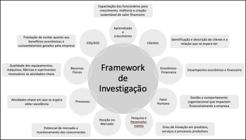
Based on this mapping, it was possible to develop an investigative framework presented in Table 2, which aimed to reflect the literature review while allowing for analysis of the phenomenon to be studied in the sector in question. The framework was developed from the main dimensions of the 12 OPE methodologies previously presented and adjusted to the glass packaging segment. It was studied to gain the necessary knowledge for selecting the OPE dimensions most suitable for the sector.
As a methodology for validating the framework, a qualitative research approach was developed. The first step involved generating a questionnaire aligned with the investigative framework described in Figure 1. The second step was the face validation of the research instrument by OPE specialists, qualitative research experts, and specialists in glass packaging manufacturing. The third step was the field research itself, using a qualitative method to study in detail the dimensions of the investigative framework in an exploratory and descriptive single-case study, as this method enables the researcher to construct theories based on the collected data and obtained results, thus developing potential contributions to the glass packaging sector.
As an investigative strategy for the case study, three actions were carried out: (i) document analysis; (ii) semi-structured interviews based on a guide; and (iii) content analysis.
It is important to note that the theoretical framework, developed from the literature, aimed to delve into the glass packaging sector with the primary goal of identifying and describing the OPE dimensions and their alignment with the investigative framework. After reviewing the models in the literature, 12 OPE models were selected to form the basis for defining the dimensions of the investigative framework used in the case study, underpinning the adopted investigative strategies.
The results and analyses are presented in alignment with the investigative framework, developed and described in more detail in the obtained results, followed by the technological and social contributions, and discussed in the final considerations of this study and contributions in response to the research problem.
The analysis of OPE practices in a glass packaging company is of great importance in the field of management, as it provides insights for implementing evaluation strategies in companies that incorporate product recycling into their production processes, thereby contributing to the reduction of CO2 emissions. In this regard, this study offers significant contributions in identifying organizational performance evaluation practices in a glass packaging company. These contributions include a literature review on OPE models and the Circular Economy, as well as the definition of an OPE investigative framework and the description of the company‘s OPE practices within this investigative framework.
The academic relevance of this study includes a comprehensive review of OPE models found in the literature, detailing the concepts of each model, as well as a literature review on the Circular Economy, presenting definitions of the concept from the perspective of researchers in the field.
To ensure the robustness of the research, a validation of the investigative framework was conducted, providing the necessary elements for developing the interview guide used in the interviews, in addition to serving as a basis for future studies and the development of conceptual models applicable to other industries.
The most significant contributions of this study relate to the practices adopted within each of the dimensions proposed in the investigative framework, providing a comprehensive view of the glass packaging business and highlighting the importance of an OPE model that enables measuring company performance and offering valuable insights for decision-makers. The evidence suggests a convergence between what is recommended by academic literature and the OPE practices adopted by the company studied, making this topic relevant and a potential reference in the glass packaging segment.
Following the rigorous application of the interview guide, this research offers four key considerations regarding OPE and CE practices. Firstly, the labor market does not offer specific training for the skills required in glass packaging manufacturing, making the training of professionals aligned with these practices a critical task for the company. In this sense, it is essential to adopt specific methodologies that enable the training of professionals aligned with the company’s expectations. The technical focus of these training sessions reinforces the industrial nature of the company and the complexity of the production processes, which rely heavily on manual interventions and value the individual experiences of employees.
The second point is that the company’s approach to promoting glass circularity is directly related to reducing CO2 emissions through glass recycling and activities associated with this process. However, the Circular Economy goes beyond the mere glass recycling process, and it is evident that the company primarily adopts practices that directly contribute to only one stage of this broader process.
In addition, the customer dimension is essential for companies and influences the outcomes associated with all other dimensions. The adoption of a rigorous process for analyzing customers’ financial performance is crucial in defining the expected relationship. Customer satisfaction is ensured by the quality of products and supply, and in this regard, the company should adopt practices aligned with internationally recognized production process standards.
Finally, implementing a specific methodology to monitor the economic-financial performance of the industrial sector daily is a critical factor for the company’s success. Monthly reporting of results by all sectors of the company constitutes a second methodology for continuous monitoring and improvement, ensuring that deviations are promptly identified and actions to address them are implemented quickly and effectively. Centralizing all financial performance information from sectors in the controllership is essential to prevent distortions in the process.
5 FINAL CONSIDERATIONS
Analyzing the manufacturing process of a glass packaging company and its relationship with the Circular Economy can provide valuable insights that contribute to building knowledge and can assist the management sector of similar companies interested in adopting similar practices. The results point to a complex and distinct reality that presents a significant challenge in implementing a circular glass production process. The company’s reality indicates actions primarily focused on reducing CO2 emissions - one of the benefits gained from the Circular Economy - and on corporate social responsibility initiatives.
Initially, it was found that engagement - both within the company and in the market - plays a crucial role in actions related to glass circularity and is highly dependent on reverse logistics efforts, as well as consumer awareness about the proper disposal of packaging at the end of its life cycle. Thus, adopting a business model that measures engagement actions in each dimension will provide a competitive advantage to companies seeking to increase glass circularity.
Additionally, it is important to emphasize that this study is highly relevant not only to the glass packaging sector but to the entire packaging industry and its various segments, such as cardboard packaging, corrugated paper packaging, wooden packaging, cardboard and paperboard packaging, metal packaging, and plastic packaging. Through the OPE models conceptualized in the literature and presented in this study, a foundation is provided for future studies in each segment, and their applicability can be further developed by analyzing the specific dimensions for each segment, similar to what was done in this study.
REFERENCES
-
ABIVIDRO. (2023). Porque o vidro é a melhor opção para reciclar Recuperado de: https://abividro.org.br
» https://abividro.org.br -
ABRE. (2024). Dados do Setor - ABRE Recuperado de: www.abre.org.br
» www.abre.org.br - Buenos, R. F. (2024). Modelos de avaliação de desempenho e Economia Circular: Um estudo na cadeia de embalagens de vidro (Dissertação de Mestrado Profissional em Gestão de Negócios) - FIA Business School, São Paulo, SP, Brasil.
- Caetano, A., Luna, M. (2018). Logística reversa de embalagens de vidro: Alternativas de coleta e suas implicações. In 1º Congresso Sul-Americano de Resíduos Sólidos e Sustentabilidade, Florianópolis, SC.
- Carneiro da Cunha, J. A. (2011). Avaliação de desempenho e eficiência em organizações de saúde: Um estudo em hospitais filantrópicos (Tese de Doutorado) - Faculdade de Economia, Administração e Contabilidade, Universidade de São Paulo, São Paulo, SP, Brasil.
- Carson, R. (1962). Silent spring Penguin Books.
- Eisenhardt, K. M. (1989). Building theories from case study research. Academy of Management Review, 14 (4), 532-550.
- Elia, V., Gnoni, M., Tornese, F. (2017). Measuring circular economy strategies through index methods: A critical analysis. Journal of Cleaner Production, 142, 2741-2751.
-
Ellen Macarthur Foundation (EMF). (2022). Circular Economy Recuperado de: https://ellenmacarthurfoundation.org
» https://ellenmacarthurfoundation.org - Godoy, A. (1995). Pesquisa qualitativa: Tipos fundamentais. Revista de Administração de Empresas, 35, 20-29.
- Gray, R. (2015). Sustainability and accounting education: The elephant in the classroom. In Sustainability in Accounting Education (pp. 9-33). Routledge.
- Hourneaux, F. (2005). Avaliação de desempenho organizacional: Estudo de casos de empresas do setor químico (Tese de Doutorado) - Universidade de São Paulo, São Paulo, SP, Brasil.
- Jabbour, C. J. C., De Sousa Jabbour, A. B. L., & Sarkis, J. (2019). Unlocking effective multi-tier supply chain management for sustainability through quantitative modeling: Lessons learned and discoveries to be made. International Journal of Production Economics, 217, 11-30.
- Koefender, A., & Amaral, F. (2020). Investigação da aderência de embalagens de vidro à Economia Circular e a realidade do Brasil. In XXVII SIMPEP Simpósio de Engenharia de Produção, Bauru, SP, Brasil.
- Málovics, G., Csigéné, N. N., & Kraus, S. (2008). The role of corporate social responsibility in strong sustainability. The Journal of Socio-Economics, 37 (3), 907-918.
-
Mordor Intelligence. (2024). Tamanho do mercado de embalagens de vidro e análise de participação - Tendências e previsões de crescimento (2024 - 2029). Recuperado de: https://www.mordorintelligence.com/pt/industry-reports/glass-packaging-market
» https://www.mordorintelligence.com/pt/industry-reports/glass-packaging-market - Murray, A., Skene, K., & Haynes, K. (2017). The circular economy: An interdisciplinary exploration of the concept and application in a global context. Journal of Business Ethics, 140, 369-380.
- Naranjo-Gil, D. (2016). Role of management control systems in crafting realized strategies. Journal of Business Economics and Management, 17 (6), 865-881.
- Pearce, D., & Turner, R. (1989). Economics of natural resources and the environment Johns Hopkins University Press.
- Porter, M. E. (1989). Vantagem competitiva: Criando e sustentando um desempenho superior Rio de Janeiro: Campus.
- Rehman, S. U., Bressan, A., Garzella, S., & Goni, F. A. (2021). The role of environmental management control systems for ecological sustainability and sustainable performance. Management Decision, 59 (9), 2217-2237.
- Souza-Dal Bó, G. (2019). Estudo da cadeia de reciclagem de vidro: Perspectivas para os municípios da região carbonífera (AMREC) a partir da Economia Circular (Dissertação de Mestrado) - Universidade do Extremo Sul Catarinense, Criciúma, SC, Brasil.
- Spring, M., & Araujo, L. (2017). Product biographies in servitization and the circular economy. Industrial Marketing Management, 60, 126-137.
- Starik, M., Rands, G. P. (1995). Weaving an integrated web: Multilevel and multisystem perspectives of ecologically sustainable organizations. Academy of Management Review, 20(4), 908-935.
- Streit, J., Guarnieri, P., & Batista, L. (2020). Estado da arte em Economia Circular de embalagens: O que diz a literatura internacional? Revista Metropolitana de Sustentabilidade, 1I0(3), 76-100.
- Torres, A., & Gonçalves-Dias, S. (2018). Entendendo a estrutura da cadeia reversa das garrafas de vidro em São Paulo. In Anais do International Workshop Advances in Cleaner Production, Barranquilla, Colômbia.
- Webster, K., & Johnson, C. (2010). Sense & sustainability: Educating for a circular economy. TerraPreta.
- Weetman, C. (2019). Economia circular: Conceitos e estratégias para fazer negócios de forma mais inteligente, sustentável e lucrativa. Autêntica Business.
- Yin, R. K. (2001). Estudo de caso: Planejamento e métodos Porto Alegre: Bookman.
-
Plagiarism Check:
The ReA/UFSM maintains the practice of submitting all documents approved for publication to the plagiarism check, using specific tools, e.g.: Turnitin.
Edited by
-
Edited by:
Jordana Marques Kneipp

 Source: