 SBU 40 years: a view through its managers (1983-2023)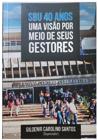
Organized by Gildenir Carolino Santos and released at the end of 2024, the work celebrates:
the 40 years of existence of the State University of Campinas Library System (SBU). Through accounts from the directors who have passed through the Library System, the book delves into the history of the libraries at the State University of Campinas, which began shortly after the university's creation in 1963. The Medical School Library was the first to start its activities. With the university's growth, the need to improve the libraries' infrastructure arose. There was no library system until the Central Library (BC) emerged in 1983, taking on the responsibility of implementing techniques and methods for cataloging and organizing collections in a more technically organized and centralized manner (Santos, Introduction, p. 9-11).
Professor Maria Luiza Moretti, from the Medical School and general coordinator of the university, emphasizes that the work:
(...) aims to uncover the rich history of the UNICAMP Library System (SBU), from its beginnings, marked by challenges and bold dreams, to its consolidation as one of the most respected university library systems in the country (Moretti, Preface, p. 18).
The work is divided into seven chapters. The first chapter, authored by Professor Ataliba Teixeira de Castilho (p. 29-35), recounts his experience after participating in a visiting researcher program at the University of Texas (Austin) in 1970. Upon returning to Campinas, he was approached by Rector Pinotti, leading to the following dialogue:
-- Dr. Lane told me that you have been saying that our libraries are our Achilles' heel. Is that true?
--- Yes, it is true. I have always found it strange that a dynamic university like UNICAMP has not managed to achieve the same pace with its libraries.
-- Well, do you see all these drawers here in the Rector's office? They are full of projects! I don't want another one. Bring a solution to solve this problem. (Castilho, Chapter 1, p. 30; our emphasis).
As a result of this conversation, Professor Castilho was appointed Coordinator of Information and Dissemination, thus beginning the task of setting up the library system. At the end of the chapter, the author pointed out that, like professors, librarians should also be concerned with professional development, including visits and internships in foreign libraries, as well as postdoctoral studies. "The university is not a place for incompetents... After all, this is UNICAMP!" (Castilho, p. 35).
The second chapter (p. 37-53) covers the period from 1983 to 1998, during which the SBU was directed by librarian Leila Mercadante. During this 15-year period, the system was implemented, overcoming numerous obstacles, including the completion of the 12,000 m2 building in 1989. Mercadante comments on the main actions taken and astutely points out that securing funding was vital:
The University has always been an institution that provides opportunities. I soon learned that a lot could be done here, as long as you also sought the necessary funding... I offered resources, and together we began to energize these cited actions." (Mercadante, p. 48; our emphasis).
At the end of the chapter, Mercadante confesses that,
She was never a cataloging and classification librarian. She was always an administrative librarian. "I was born an administrator, and I love to lead... but I want to remind you that all this was not easy to achieve. The life of a librarian is a constant struggle, requiring a lot of study, especially now with new information technologies, which demand a lot of updating, effective action, participation, and integration with the community in which it is inserted (Mercadante, p. 53; our emphasis).
The period from 1998 to 2011, covered in the third chapter, analyzes the management of librarian Maria Alice Rebello do Nascimento. In this part, the work's organizer recalled that this management
was marked by a profound technological transformation, driven by her expertise in automated systems. The modernization of UNICAMP libraries' technological infrastructure, with investments in state-of-the-art software and infrastructure, was a milestone for the time (Santos, Chapter 3, p. 61).
Librarian Luiz Atílio Vicentini is the author of the fourth chapter (p. 63-84), where he analyzes his management from 2001 to 2014. Having been with the institution since 1995, he recalls that:
In 2001, with the vacancy of the position of Director of the Central Library/Library System, in accordance with the SBU regulations, he assumed this role with its responsibilities. "Counting from 1999 to 2014, in management roles, it was 15 years of hard work and learning. I learned how institutions move, function, and got to know various professionals not only from libraries but also professors, students, and a diversity of professionals from all areas in an institution that has plurality as its founding philosophy" (Vicentini, Chapter 4, p. 65; our emphasis).
The fifth chapter, covering the period from 2014 to 2018, is authored by librarian Regiane Alcântara Bracchi, focusing on the following areas: the development of the strategic plan (2015-2019), innovative projects and processes carried out during the period. The author mentions that her management:
Faced challenges typical of public institutions, but by working collaboratively and in partnership with each of the system's libraries and their teams, as well as with other sectors and leaders of the university, and having clearly defined objectives that guided all our actions, it was possible to achieve remarkable progress (Bracchi, Chapter 5, p. 108; our emphasis).
Oscar Eliel authored the sixth chapter, where he analyzed the 27 most relevant actions of librarian Valéria dos Santos Gouveia Martins' management from 2018 to 2022. Eliel also highlighted that:
The period was marked by challenging moments such as the completion of the Rare Books Library (BORA)... The management was also marked by the receipt of important collections from renowned intellectuals... the creation of the Research Data Management Committee (CGDP) and the launch of the Research Data Repository (REDU) also stood out... The COVID-19 pandemic, with its challenges, spurred the implementation of remote service protocols, acquisition of new digital collections, and creation of informational materials for students (Eliel, p. 132-133; our emphasis).
The period from 2022 to 2026 was commented on by Oscar Eliel and Márcio Souza Martins, respectively, director and associate director of the SBU. In this seventh chapter (p. 135-186), the authors detailed dozens of actions contained in six areas of focus: 1) democratic, participatory, and transparent management; 2) innovation in products, services, and physical and technological infrastructure; 3) process management; 4) human resources, knowledge, and training; 5) open science, good research practices, institutional repository, and research data; 6) cultural heritage, memory, and culture.
According to the authors,
These areas guide many of our actions and efforts, ensuring management aligned with the strategic objectives of the university and the SBU and the needs of the academic community and society in general (Eliel, Martins, p. 138; our emphasis).
At the end, the work includes the final considerations by Gildenir Carolino Santos (p. 187-188) and an afterword by Maria Solange Pereira Ribeiro (p. 189-191). In this last part, the author emphasizes that
This book aims to highlight the work of colleagues who held important positions in the general administration of the university representing the libraries, now SBU, informing new generations of information professionals about what has already been done. Additionally, it conveys the legacy and implicitly assigns responsibility to new professionals, who must continue the efforts of the old guard in developing library services (Ribeiro, Afterword, p. 190; our emphasis).
Thus, it is important to highlight here the important and meticulous work of librarian Gildenir Carolino Santos in organizing a document that shows the importance of the UNICAMP Library System, the challenges faced by its managers, and the results achieved over these 40 years. I hope that other Brazilian library systems can organize similar works, thus contributing to the memory of our institutions and their managers.
The work on UNICAMP, timely, fills a gap in Brazilian library literature, where in-depth texts on the evolution of our university libraries are scarce. Among these texts, it is worth mentioning: Carneiro (2007), Carvalho (2019), Fonseca (1973), Mattos (2000), Mayrink (2017), Moreira (2019), Pereira (1966), Sousa (2002). Thus, I hope that other Brazilian library systems can organize similar works, contributing to the memory of our institutions and their managers, as well as serving as didactic material in the teaching of Librarianship.
Acknowledgments:
Not applicable.
References
-
CARNEIRO, Maria Graciete Pinto. Dos leitores: o espaço da leitura na biblioteca da Faculdade de Direito de São Paulo (1887-1920). 2007. Dissertação (Mestrado em História Social) - Faculdade de Filosofia, Letras e Ciências Humanas, Universidade de São Paulo, São Paulo, 2007. doi: https://doi.org/10.11606/D.8.2007.tde-26102007-154708 Acesso em: 2025-02-25.
» https://doi.org/10.11606/D.8.2007.tde-26102007-154708 -
CARVALHO, Gracilene Maria de; NATIVA, Neide. Sistema de Bibliotecas e Informação (Sisbin): um breve histórico. Ouro Preto, 2019. 6f. Não publicado. Disponível em: https://sisbin.ufop.br/sites/default/files/sisbin_historia.pdf
» https://sisbin.ufop.br/sites/default/files/sisbin_historia.pdf - FONSECA, Edson Nery da. Biblioteca Central da Universidade de Brasília: história com um pouco de doutrina e outro tanto de memórias. Revista de Biblioteconomia de Brasília, Brasília, DF, v. 1, n. 1, p. 35-42, jan./jun. 1973.
- MATTOS, Maria Antonia Ribas Pinke Belfort de. A biblioteca da Pontifícia Universidade Católica de Campinas: (seus primeiros anos). Campinas, SP: Pontifícia Universidade Católica de Campinas, 2000.
- MAYRINCK, Marina. Universidade e biblioteca universitária no Brasil: o caso da Biblioteca Central do Gragoatá da (história e memórias: 1994-2015). Niterói: Universidade Federal Fluminense, Programa de Pós-Graduação em Ciência da Informação, 2017. 150 p.
- PEREIRA, Cleide Ancilon de Alencar. As bibliotecas da Universidade Federal do Ceará. Boletim da Universidade Federal do Ceará, Fortaleza, p. 92-96, mar./abr. 1966.
- MOREIRA, Adeli Gomes (org.). Biblioteca de Ciências da Saúde da Universidade Federal do Ceará: 70 anos. Fortaleza: Imprensa Universitária da Universidade Federal do Ceará, 2019.
- SOUZA, Ieda Maria de. Biblioteca Universitária da UFSC: memória oral e documental Florianópolis: Universidade Federal de Santa Catarina, 2002. 257 p. ISBN 8587103113.


Not applicable.


