
 Earnings management in Brazil (2000-2025): synthesis, evidence, and research agenda
ABSTRACT
This article offers a systematic, analytical, and narrative review of earnings management research in Brazil from 2000 to 2025. It integrates methods, findings, and mechanisms with an emphasis on the role of the Accounting & Finance Review (A&FR) and the formulation of a 2026-2030 agenda guided by credible identification, replicability, and regulatory utility. The methodology involved searching SciELO, SPELL, Google Scholar, and the CAPES Portal (PT/EN) for empirical studies focused on Brazil that used quantitative proxies (e.g., accruals, real activities, earnings quality, and earnings distribution). Screening was performed in two stages, with coding by thematic axes [International Financial Reporting Standards (IFRS), governance/auditing, accounting-tax, and sectoral/ownership] and proxy families (Jones/Kothari, Dechow-Dichev/McNichols, Roychowdhury, and hybrid/AI). A narrative summary was supported by a timeline and tables. Research gaps include limited causal evidence specific to norms (IFRS 15/16/17), an incomplete understanding of governance and audit mechanisms [committees, sector specialization, and American depositary receipts (ADRs)], the integration of text and numbers with interpretability, the micro-impacts of digital transformation [enterprise resource planning (ERP), continuous auditing, and smart contracts], and the effects of base erosion and profit shifting (BEPS) on the accounting and tax link. The results indicate that, on average, convergence with IFRS is associated with a moderate reduction in accruals-based management conditioned by governance, auditing (Big Four), and enforcement. There are also signs of substitution for real activities under greater accounting scrutiny. Abnormal book-tax differences (BTDs) and low tax-accounting compliance are related to lower earnings persistence and higher informational risk. The A&FR standardized protocols, aligned designs with Brazilian specifics, and connected results to regulatory issues. The article consolidates best practices, such as sector benchmarks, fixed effects, clustering, and sensitivity tests, and proposes a 2026-2030 agenda with five focus areas: accruals-real trade-offs, specific IFRS, governance and audit mechanisms, text and numbers integration, and digital transformation. The relevance of the topic lies in its useful synthesis for researchers (a map of validity and gaps), regulators and auditors (prioritization of oversight), and information users (warning signs). By integrating 25 years of evidence into a unified explanatory framework, the study reorganizes the field by clarifying the channels, conditions, and limits of management, standardizes protocols for the Brazilian context, and defines high-return priorities for 2026-2030. This reinforces the cumulative nature of the literature and brings the national debate closer to international standards.
Keywords:
earnings management; earnings quality; IFRS; corporate governance; auditing; Brazil
RESUMO
O objetivo deste artigo é oferecer uma revisão sistemática analítico-narrativa da pesquisa sobre gerenciamento de resultados no Brasil (2000-2025), integrando métodos, achados e mecanismos, com ênfase no papel editorial da Revista Contabilidade & Finanças (RC&F) e na formulação de uma agenda 2026-2030 orientada por identificação crível, replicabilidade e utilidade regulatória. A metodologia utilizada foi a busca em SciELO, SPELL, Google Scholar e no Portal CAPES (PT/EN), com critérios de elegibilidade para estudos empíricos focados no Brasil e uso de proxies quantitativas (accruals, atividades reais, qualidade dos lucros, distribuição de resultados). Foram realizadas triagem em duas etapas e codificação por eixos temáticos [International Financial Reporting Standards (IFRS), governança/auditoria, contábil-fiscal, setorial/propriedade] e famílias de proxies (Jones/Kothari; Dechow-Dichev/McNichols; Roychowdhury; híbridas/IA), assim como síntese narrativa apoiada por linha do tempo e tabelas. Como lacuna de pesquisa, têm-se: evidência causal norma-específica (IFRS 15/16/17) ainda restrita; compreensão incompleta de mecanismos de governança/auditoria [comitês, especialização setorial, American depositary receipts (ADRs)]; integração texto + números com interpretabilidade; impactos micro da transformação digital [enterprise resource planning (ERP), auditoria contínua, smart contracts]; e efeitos de base erosion and profit shifting (BEPS) sobre o elo contábil-fiscal. Os resultados indicam que uma convergência às IFRS se associa, em média, à redução moderada do gerenciamento por accruals, condicionada à governança, auditoria (Big Four) e enforcement; há indícios de substituição para atividades reais sob maior escrutínio contábil. Book-tax differences (BTDs) anormais e baixa conformidade fiscal-contábil relacionam-se a menor persistência dos lucros e maior risco informacional. A RC&F padronizou protocolos, alinhou desenhos às especificidades brasileiras e conectou resultados a problemas regulatórios. O artigo consolida boas práticas (benchmarks setoriais, efeitos fixos, clustering, testes de sensibilidade) e propõe agenda 2026-2030 em cinco frentes: trade-off accruals-real; IFRS específicas; mecanismos de governança/auditoria; integração texto + números; e transformação digital. A relevância do tema está na síntese útil a pesquisadores (mapa de validade e lacunas), reguladores e auditores (priorização de fiscalização) e usuários da informação (sinais de alerta). Ao integrar 25 anos de evidência em um quadro explicativo unificado, o estudo reorganiza o campo (canais, condições e limites do gerenciamento), normaliza protocolos para o contexto brasileiro e delimita prioridades de alto retorno para 2026-2030, reforçando a cumulatividade da literatura e aproximando o debate nacional dos padrões internacionais.
Palavras-chave:
gerenciamento de resultados; qualidade dos lucros; IFRS; governança corporativa; auditoria; Brasil
1. INTRODUCTION
Earnings management (EM), defined as management practices that deliberately shape reported earnings within regulatory limits to achieve goals such as avoiding losses or meeting projections (Healy & Wahlen, 1999), has become a central theme in accounting research. In Brazil, this topic gained momentum in the 2000s due to the internationalization of capital markets and, most importantly, convergence with International Financial Reporting Standards (IFRS) at the end of the decade. Martinez (2008) served as a domestic milestone along the way by adapting and applying discretionary accrual models on a large scale. He offered systematic evidence of the phenomenon in publicly traded companies and established an estimation protocol (by sector-year, with performance control) that became a benchmark. Twenty-five years later, the field incorporates new methods and more demanding questions of causal identification within an institutional environment that differs from that of the early studies. This justifies a comprehensive and updated review.
This systematic, analytical, and narrative review covers the Brazilian literature from 2000 to September 2025 and has three objectives. First, it aims to systematize the repertoire of models and proxies, including discretionary accruals (Jones and variants, such as Kothari's adjustment), earnings quality (Dechow-Dichev and extensions), real activities (Roychowdhury), and integrated approaches combining accounting, operational, and textual signals. It will explain the underlying assumptions, validity boundaries, and good estimation practices within the national context. Second, it aims to integrate empirical evidence on the levels, determinants, and consequences of management with attention to Brazilian institutional contingencies, such as the role of the Brazilian Securities and Exchange Commission (CVM) and enforcement, the evolution of governance and auditing [including the Big Four and American depositary receipts (ADRs)], ownership structure (family-owned and state-owned), sectoral differences, and the accounting-tax interface, as captured by book-tax differences (BTDs) and tax-accounting compliance. Third, it aims to position the University of São Paulo's Accounting & Finance Review (A&FR) as a central forum for the methodological maturation of the topic by connecting methods to problems of regulatory utility and professional practice.
The time frame highlights three structural movements. In the first half of the 2000s, accrual proxies were consolidated with the standardization of choices, such as estimation by sector-year, winsorization, and clustered standard errors. The introduction of IFRS in 2010/2011 altered incentives and increased scrutiny of accounting choices. This stimulated expansion into operational decisions in the following decade, such as offering discounts to inflate sales at closing, producing more to dilute fixed costs, and cutting discretionary expenses to increase current profits. Meanwhile, earnings quality metrics, such as earnings-cash consistency, and designs with fixed effects and the generalized method of moments (GMM) to address endogeneity and heterogeneity, gained ground. In the 2020s, textual signals and artificial intelligence (AI), as well as enforcement-anchored analyses, have emerged. The literature is shifting from "detecting signals" to evaluating the mechanisms and channels through which IFRS reduces accruals, the conditions under which substitution by real activities emerges, the extent to which governance and auditing compress discretionary margins, and how abnormal BTDs signal informational and tax risk.
The contribution here is synthetic and critical, not bibliometric. Rather than "counting articles," we discuss the conditions under which results are valid, the consistency between proxies and research questions, and the implications for designing audit and reporting policies and practices. For researchers, we provide a guide to methodological choices that tend to generate more reliable inferences in Brazil and identify gaps that support the 2026-2030 agenda (e.g., the norm-specific effects of IFRS, governance and audit mechanisms, integrating text and numbers, and the micro effects of digital transformation). For regulators and standard setters, we organize evidence on effective practices and the conditions under which they are effective. For example, we discuss the effectiveness of combining IFRS with active audit committees and the Big Four, monitoring BTDs and reconciliations as risk filters, and the disciplinary role of the media and analysts. For information users, we identify operational and accounting warning signs that should inform due diligence and risk pricing.
The article is organized into eight sections. Section 2 covers methodology. Section 3 discusses the methodological-regulatory timeline from 2000 to 2025. Section 4 discusses models and proxies. Section 5 discusses Brazilian evidence regarding IFRS, governance, auditing, taxation, and sectoral context. Section 6 discusses the contribution of the A&FR. Section 7 discusses the agenda for 2026-2030, guided by credible identification, replicability, and institutional utility. Section 8 summarizes the conclusions and implications for researchers, regulators, auditors, and investors.
2. REVIEW METHODOLOGY
We conducted a systematic, analytical, and narrative review from 2000 to September 2025 in SciELO, SPELL, Google Scholar, and the CAPES Portal. We combined the following sets of terms in Portuguese and English with Boolean operators (AND/OR):
-
Topic: "gerenciamento de resultados" OR "earnings management" OR "gestão de resultados" OR "qualidade dos lucros";
-
Proxies/Methods: "accruals discricionários" OR "discretionary accruals" OR "Jones modificado" OR Kothari OR Dechow-Dichev OR McNichols OR Roychowdhury OR "atividades reais" OR "distribuição de resultados" OR "classification shifting" OR "medidas não-GAAP" OR "textual/NLP/ML";
-
Institutional context: "IFRS" or "CPC" or "CVM" or "governança corporativa" or "comitê de auditoria" or "auditoria Big Four" or "ADRs" or "diferenças livro-fisco/BTD/ABTD."
The eligibility filters, screening stages, and coding are as described below. We included articles from national and international journals with empirical evidence for the Brazilian context. We excluded purely conceptual works. As for theses, dissertations, and annals, we chose not to include them in the main body of evidence because, as a rule, they do not undergo peer review equivalent to that of journals. We only used them in a complementary manner for historical or technical contextualization. The exception is the pioneering 2001 thesis, which is considered a historical and methodological milestone in the field in Brazil.
Selection took place in two stages (titles/abstracts and full reading) with predefined eligibility criteria: a focus on Brazilian companies (or samples that could be isolated); use of quantitative EM proxies (accrual models, real activities, accrual quality, or earnings distribution); and transparent empirical design (definition of the sample, period, variables, and estimation strategy). We compiled a main body of approximately 30 studies published in journals and supplemented it with basic international references. The samples include publicly traded non-financial companies, as well as financial companies in some cases. There are also breakdowns by regulated sectors and ownership structure (family-owned or state-owned).
During the extraction and coding process, we recorded the following information for each study: period and sample universe; data sources; proxies/specifications (modified Jones/Jones, Kothari adjustment, Dechow-Dichev/McNichols, Roychowdhury); econometric strategy (fixed effects, GMM, quantile regression, clustered standard errors); institutional controls and dummies (post-IFRS, Big Four, ADRs, governance levels); and main findings. We classified the studies by thematic axis (IFRS and quality, governance/auditing, accounting-tax/BTDs, and sector context and ownership) and by proxy family to allow for internal and cross-method comparisons.
Specifically, we mapped the A&FR by reviewing indexes and archives (2000-2025) to identify studies that directly or indirectly addressed EM (earnings quality, smoothing, regulatory impacts). We cataloged relevant articles by topic, method, and contribution in five-year periods to support the discussion in Section 6 on the editorial role of the A&FR. We did not perform bibliometrics, prioritizing qualitative synthesis and methodological consistency instead.
3. METHODOLOGICAL AND REGULATORY TIMELINE (2000-2025)
Inaugural milestone (2001): Antonio Lopo Martínez's doctoral thesis was pioneering in introducing and defining "earnings management" in the Brazilian context, as well as establishing the methodological basis for accrual measurement in national samples. This work paved the way for subsequent publications in journals, notably Martinez's (2008) article, which became the domestic empirical reference.
Early 2000s (2000-2004): Empirical production was still sparse and adopted Jones' (1991) model with variations in sectoral cutouts and short windows under the Brazilian Generally Accepted Accounting Principles (BR GAAP) regime. The focus was on proving the occurrence of the phenomenon in Brazilian companies in an environment with fewer informational standards and less demanding disclosure practices. The creation of the Novo Mercado/Levels 1-2 (from 2000 onwards) introduced reputational and contractual incentives for transparency. However, the academic agenda primarily focused on proving the existence of management before moving on to containment mechanisms.
Late 2000s (2005-2009): The use of accrual models was consolidated. The modified Jones model (Dechow et al., 1995) and the performance adjustment model (Kothari et al., 2005) became the standard for reducing biases in firms with extreme results. An important milestone was reached with the work of Martinez (2008), which estimated large-scale discretionary accruals by sector-year and established a domestic reference protocol. Meanwhile, Law No. 11,638, enacted on December 28, 2007, initiated convergence with IFRS. Pronouncements by the Brazilian Accounting Standards Board (CPC) gradually aligned corporate accounting with international standards. By the end of the five-year period, complementary indicators, such as discontinuities à la Burgstahler and Dichev (1997), gained traction. These indicators suggest that management should avoid small losses.
IFRS transition (2010-2011): The mandatory adoption of IFRS (consolidated in 2010 and individual in 2011) created a pre- and post-IFRS period that has been explored by studies comparing management levels before and after the new regime. In addition to accrual models, the assessment of earnings quality via Dechow and Dichev (2002) and McNichols (2002) increased, shifting the focus partially from "signal metrics" to intertemporal reliability (earnings-cash consistency). This agenda aligns with the context of the post-2008 crisis (financial stress and covenants), and the CVM's public databases became more usable. Empirical designs evolved from cross-sections to panels with fixed effects and sectoral controls.
Early 2010s (2010-2014): After convergence was established, the national literature adopted Roychowdhury's (2006) real activity proxies to examine channel substitution (i.e., accounting tightening leading to operational decisions). Studies reported a moderate decline in accruals after the implementation of IFRS and a greater use of opportunistic discounts, overproduction, and discretionary cuts within target windows. Institutionally, CVM enforcement intensified and good governance practices, such as audit committees and greater board independence, emerged as moderators. From a contingency perspective, Joia and Nakao (2014) demonstrate that the net IFRS effect depends on size and indebtedness, which calls into question the expectation of uniform standards.
Late 2010s (2015-2019): Methodological sophistication (e.g., firm-year fixed effects, GMM, and quantile regression) advanced to address endogeneity and heterogeneity. The literature began to explicitly address the accruals versus real trade-off anchored in Zang (2012) (sequence: first operational intervention, then accrual-based adjustment). In the A&FR, Reis and Costa (2015) document operational decisions made to avoid losses, and Boina and Macedo (2018) demonstrate the greater predictive power of accruals over post-IFRS flows. This suggests a reduction in informational noise. The introduction of IFRS 15/16 motivated specific tests. Initial results do not indicate aggregate changes but reveal specific opportunities regarding revenues and leases.
Recent years (2020-2025): The frontier has shifted toward textual analysis (tone, complexity, and narrative coherence) and machine learning (ML) models for anomaly screening. Meanwhile, studies anchored in CVM processes and sanctions, as well as external monitoring (media and analysts), have grown. The regulatory debate has incorporated base erosion and profit shifting (BEPS) actions, such as fiscal transparency, and environmental, social, and governance (ESG) has begun to interact with reporting incentives. Sometimes ESG acts as a reputational brake, and other times it acts as a new arena for window dressing. In governance and auditing, evidence clarifies roles. Prata and Flach (2021) associate effective audit committees with lower accruals in the post-IFRS era, and Marques and Ramos (2022) relate the Big Four and ADRs to a reduction in accrual management. There is evidence of substitution for real activities in some contexts. Recent studies suggest that media coverage has a disciplining effect on opportunistic practices. In the 2020s, advances in text and natural language processing (NLP) and ML have led to a proliferation of studies anchored in enforcement (CVM) and external governance (media and analysts). In this environment, the hypothesis of channel substitution has gained empirical traction.
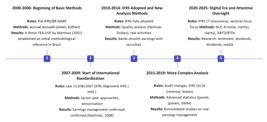
From 2000 to 2025 (Figure 1), Brazil transitioned from focusing almost exclusively on accruals to focusing on an integrated portfolio (including accruals, real activities, earnings quality, and, more recently, textual and AI-based approaches) under a mature IFRS regime and a denser governance and oversight ecosystem. Evidence indicates a moderate reduction in the space for opportunistic accruals after convergence, advances in empirical designs, and a greater emphasis on institutional mechanisms (CVM, auditing, and the media) without eliminating substitute strategies at the operational level.
4. PROXIES AND METHODS: MAIN MODELS AND COMPARISON
The Brazilian literature has identified four categories of measures to detect EM, which can be used alone or in combination: (i) discretionary accruals (the Jones model and its variants, such as the modified Jones model and the Kothari performance adjustment); (ii) accrual quality (the Dechow-Dichev model and its extensions); (iii) real activities (the Roychowdhury model); and (iv) hybrid and alternative approaches (signal combinations, earnings distribution, and, more recently, textual and AI techniques).
4.1 Discretionary Accruals (Jones, Modified Jones, and Kothari)
The idea is that managers adjust accounting estimates (which have no immediate effect on cash) to manipulate earnings. The Jones model (1991) estimates non-discretionary accruals based on Δsales and property, plant, and equipment (PPE). Modified Jones (Dechow et al., 1995) separates Δaccounts receivable to mitigate premature revenue recognition. Kothari et al. (2005) add return on assets (ROA) to control performance.
In the Brazilian context, Martinez (2008) anchored the use of modified Jones with estimation by sector-year, a practice that improves specification by respecting sectoral heterogeneities. The strengths are that it is applicable with standardized public data and favors incidence and long series analyses. Limitations include specification risk (false positives or negatives if relevant variables are omitted), sensitivity to outliers, and the need for a minimum sample size per sector-year to ensure stability. Even with the Kothari model, legitimate operational shocks can be confused with discretion. Thus, robustness is recommended (e.g., winsorization, fixed effects, and clustered errors). Mixing accounting regimes without controls also poses a risk. Cardoso et al. (2015) warn of biases when combining pre- and post-IFRS without separating the regimes.
4.2 Accruals Quality Models (Dechow-Dichev and Extensions)
The emphasis here is on the intertemporal reliability of earnings. Dechow and Dichev (2002) model working capital as a function of cash flow from operations (CFO) at time periods t-1, t, and t+1. The greater the variance of the residuals (σ), the poorer the quality (i.e., greater noise). McNichols (2002) aggregates ΔRevenue and PPE to refine the normal/abnormal decomposition.
In Brazil, this model is mainly used to qualify information and for consequence studies (e.g., persistence, cost of capital) rather than to detect specific episodes. Post-IFRS evidence suggests informational improvement. Boina and Macedo (2018) demonstrate that accruals have become more predictive of future cash flows, which is consistent with less noise. The advantage is that it captures profit-cash misalignments from multiple sources. The limitation is that it does not distinguish between honest error, uncertainty, and deliberate manipulation. It also does not indicate the direction of intervention and recommends complementary use with other proxies.
4.3 Real Activities (Roychowdhury)
Roychowdhury (2006) identifies three types of abnormal operating decisions given sales: abnormal CFO (discounts and terms increase sales but reduce cash flow), abnormal production (overproduction dilutes fixed costs), and abnormally low discretionary expenses [cuts to marketing and research and development (R&D)].
According to the international literature, governance and enforcement shocks can reduce accruals and simultaneously shift discretion to alternative channels, such as real activities and non-GAAP measures. A landmark study by Cohen et al. (2008) in The Accounting Review shows a decline in accrual management after the passage of the Sarbanes-Oxley Act (SOX) and an increase in real earnings management and the use of non-GAAP measures. These findings are consistent with Brazilian results suggesting channel substitution under greater scrutiny, such as Big Four audits, ADRs, and audit committees. This reinforces the importance of jointly evaluating accrual proxies, real activities, and alternative disclosures.
In Brazil, the use of proxies increased after the implementation of IFRS, which may have induced channel substitution due to accounting tightening. There are two recurring findings: (i) companies avoid losses through operational decisions (Reis & Costa, 2015) and (ii) operational EM reduces future profitability (Cupertino et al., 2016). These findings show that short-term gains come at a price in terms of performance. Additionally, there are indications that greater scrutiny (e.g., Big Four audits and ADRs) reduces the accounting channel and leads to migration to the operational channel in some firms (Marques & Ramos, 2022). The strength is that it reveals what does not appear in the entries. Limitations include dependence on "normal" functions that are well-specified by sector-year, as well as the risk of classifying legitimate strategies as "abnormal" if the benchmark is weak. For this reason, combining signals (CFO↓, PROD↑, and EXP↓) and focusing on incentive windows (offers, targets, and covenants) is recommended.
For an updated, international overview of real earnings management, see Habib et al. (2022) in Accounting & Finance. Their review systematizes empirical choices, measurement biases, and research priorities - inputs that help calibrate the specifications used in the Brazilian context.
4.4 Hybrid Approaches and Emerging Techniques
Combining signals increases robustness and reduces single-proxy bias. There are two classic approaches: earnings distribution, as described by Burgstahler and Dichev (1997), which detects breaks around milestones (zero/minimum variation) and is useful for macro screening; and composite indices.
Three recommendations emerge from the Brazilian evidence. First, use multiple proxies. Accruals and real activities capture different margins of intervention and respond differently to IFRS, auditing, and governance. Quality and distribution metrics help qualify the picture. Second, calibrate by sector-year and by regime. Estimating by sector-year and using winsorization (1%/99%), as well as including fixed effects (firm/year) and clustered errors, has become the baseline in the country. Respecting pre- and post-IFRS regimes avoids biases [cf. Cardoso et al. (2015)]. Third, align the proxy to the question. Incidence and long series favor accruals (with Kothari), while target tests, windows, and operational seasonality require real activities. Economic consequences (persistence, cost of capital, and risk) combine better with accrual quality.
Table 1 summarizes the main detection proxies used in Brazil, their assumptions and caveats, and the best practices consolidated in the A&FR.
5. BRAZILIAN EVIDENCE: IFRS, GOVERNANCE, AUDITING, TAXATION, AND SECTOR CONTEXT
This section integrates empirical evidence produced in Brazil on EM in five areas: (i) the effects of convergence to IFRS, (ii) the role of governance and auditing, (iii) accounting-tax signaling [BTDs/abnormal (ABTD)], (iv) sectoral and ownership structure heterogeneity, and (v) institutional constraints (CVM, media, and analysts). The objective is to highlight convergences, tensions, and validity conditions in light of studies published in national (especially the A&FR) and international journals.
5.1 IFRS and Earnings Quality
The main regulatory shock of the period is convergence with IFRS (2010/2011). Brazilian evidence suggests a modest decrease in EM through accruals in the post-IFRS period, contingent upon the existence of control mechanisms. Regarding governance, Prata and Flach (2021) found that discretionary accruals were lower when there was an effective AC, suggesting that the standard "works better" when coupled with good governance. Regarding accrual quality, Boina and Macedo (2018) demonstrate that accruals have greater predictive power over CFO after convergence, suggesting less informational noise. However, the literature is not monolithic. Joia and Nakao (2014) relativize the idea of a uniform effect by showing that controls based on size and indebtedness can nullify average differences. Standard-specific studies (IFRS 15/16) find no systematic aggregate changes but point to specific opportunities for choices regarding revenues and leases. Methodologically, Cardoso et al. (2015) caution against biases when combining pre- and post-IFRS data without regime controls. Sector-specific estimates and separating periods tend to produce more consistent results.
The IFRS effect is conditional; it raises the reporting standard, but its effectiveness depends on internal governance, auditing, and oversight. Where these pillars are present, the decline in opportunistic accruals is more pronounced. Without them, the gains are tenuous.
5.2 Governance and Auditing: Checks and Balances
When present and functioning, governance mitigates EM. In auditing, Pelucio-Grecco et al. (2014) found that the Big Four are associated with lower accruals in scenarios that encourage earnings inflation, a robust result in alternative specifications. Regarding internal governance, evidence such as that from Silva et al. (2021) - including more independent boards and active committees - reinforces the disciplining effect of internal mechanisms. However, Erfurth and Bezerra (2013) found no effect of the differentiated listing label (Novo Mercado/Levels 1-2) on the level of EM, suggesting that formal credentials without concrete control practices have limited impact.
A consistent finding is the substitution effect between EM channels. Marques and Ramos (2022) demonstrate that the Big Four and ADRs diminish the accounting channel, indicating a shift towards operational decisions in certain firms. Regarding ownership, Holanda and Coelho (2016) demonstrate that shareholding control, base composition, participation in listings/governance levels, and trading aspects are associated with the level of EM in Brazilian publicly-traded companies. These results suggest that ownership and listing characteristics influence incentives and opportunities for manipulation. This reinforces the idea that formal credentials (e.g., governance levels) only reduce EM when they lead to effective control practices. Regarding external governance, the media acts as a disciplinary mechanism. Passos and Gonçalves (2024) found a negative association between media coverage and EM, indicating that greater public visibility increases the reputational cost of opportunistic practices.
This pattern aligns with international evidence post-SOX [e.g., Cohen et al. (2008)], which documents accrual compression and increased use of real activities and non-GAAP metrics when accounting scrutiny intensifies.
5.3 Book-Tax Differences and Tax Aggressiveness
Differences between corporate profit and taxable profit (BTDs) indicate misalignment. In the A&FR, Morais and Macedo (2023) demonstrate that ABTD captures discretionary actions. ABTD+ tends to reflect an artificial increase in accounting profit above taxable profit ("upward" EM), while ABTD − reflects the opposite. Similarly, Martinez and Leal (2019) found that low tax-accounting compliance, indicated by many reconciliations between bases, is associated with greater EM, particularly in smaller and less profitable firms. The implication is that ABTD/BTDs serve as red flags for auditors and regulators. The BEPS agenda, which is international in scope, increases transparency and information exchange. This makes aggressive tax strategies more expensive and reduces the scope for accounting manipulations linked to tax objectives. This is a promising area for new studies of Brazilian multinationals.
5.4 Sectors, International Listing, and Cycles
Sector characteristics influence incentives and opportunities. In regulated sectors such as energy and concessions, reports indicate a softening of regulatory targets and schedules, with less emphasis on meeting or beating them. In the banking sector, regulatory provisions and supervision by the Central Bank create their own dynamics, which are not entirely comparable to those of non-financial institutions. International listing adds scrutiny. Marques and Ramos (2022) demonstrate that, on average, firms with ADRs have fewer accruals; however, the adjustment may migrate to the operational channel. The economic cycle also matters. Paulo and Mota (2019) found that during a recession or contraction, accruals increase and/or real EM rises. During recovery, accruals decline in an adjustment to the cycle. There are also records of "big baths" during adverse shocks (e.g., 2015-2016) and smoothing during boom periods (e.g., retention of gains to cushion declines). Regarding the workforce, Rocha et al. (2022) observe "downward" EM in labor-intensive sectors, which is consistent with negotiating pressure. Regarding dividends, Martins et al. (2021) demonstrate that EM reduces dividend persistence in emerging markets. Finally, life cycle phase also influences choices. Ribeiro et al. (2025) indicate real EM during growth, spending cuts during maturity, and a predominance of accruals during decline.
Taken together, these studies suggest that IFRS moderately reduced the scope for opportunistic accruals; however, EM persisted through substitution in real activities and in less monitored institutional windows. Effective governance, such as independent boards and audit committees, and high-quality auditing act as consistent brakes. ABTD/BTDs and low compliance are useful alerts for low quality. CVM enforcement, media scrutiny, and market discipline increase the cost of visible manipulation. Meanwhile, sector, ownership, economic cycles, and life cycle modulate the remaining incentives. Table 2 summarizes the Brazilian evidence (2000-2025) by thematic axis.
6. CONTRIBUTION OF THE ACCOUNTING & FINANCE REVIEW (2000-2025)
For 25 years, the A&FR has been a decisive editorial laboratory for the Brazilian EM agenda. It has adapted international methods to our context, raised the methodological bar with sector-year estimation, performance control, winsorization, clustered errors, and pre- and post-IFRS cuts, and connected evidence to governance, auditing, and supervision issues. Table 3 provides an overview of the A&FR articles and their key findings by five-year periods.
Martinez (2008) consolidates the empirical turning point by applying the modified Jones model to sector-year estimates, establishing a domestic protocol and demonstrating the incidence of discretionary accruals in Brazilian companies on a broad basis. Next, Nardi and Nakao (2009) show that greater EM is linked to higher debt costs, emphasizing the economic repercussions of accounting opportunism and indicating that creditors price "embellished" earnings.
Following the mandatory adoption of IFRS in 2010/2011, the A&FR now welcomes studies that adhere to the pre- and post-IFRS cutoff and employ performance controls. Dantas et al. (2013) validate a two-stage model in banks to detect smoothing via securities (unrealized gains), which is more prevalent in small/private institutions. This model illustrates how discretionary margins vary with the sectoral regulatory framework. This stage paves the way for the A&FR to systematically incorporate proxies for real activities in the following five-year period.
From 2015 to 2019, the journal expanded its use of fixed-effects panels, robustness to outliers, and inference with clustered errors. Four results stand out. First, Cupertino et al. (2016) demonstrate that operational EM reduces future profitability (return on assets, ROA) and highlight the loss of informational quality when managers "pull" earnings with suboptimal decisions. Second, Sincerre et al. (2016) reveal earnings inflation in the period before debt issuance and explain incentive windows that precede fundraising. Third, Cunha and Piccoli (2017) show that board interlocking disseminates opportunistic practices among firms. Finally, Consoni et al. (2017) suggest that voluntary disclosure alone does not reduce EM and challenge the notion that "more disclosure" is sufficient for discipline. Also in the A&FR, Paulo and Mota (2019) demonstrate that economic cycles modulate accruals and real EM (recession/contraction increases; recovery decreases), reinforcing the need to calibrate tests to the phase of the cycle.
From 2020 to 2025, the A&FR remained at the forefront of the field. Santana et al. (2020) demonstrate the association between investor sentiment and accruals (optimism increases them, while pessimism decreases them), linking behavioral finance to accounting choices. Martins et al. (2021) reveal that EM reduces dividend persistence in emerging markets, aligning earnings quality with payout metrics. Rocha et al. (2022) link labor-intensive sectors to "downward" EM (smoothing under labor pressure). Morais and Macedo (2023) validate ABTD as an indicator of EM, depending on the direction of manipulation, offering a practical shortcut for accounting-tax screening. Passos and Gonçalves (2024) demonstrate that greater media coverage leads to less EM, confirming the role of public visibility in disciplining firms. Finally, Ribeiro et al. (2025) suggest that life cycle conditions influence the channel, with growth associated with real EM, maturity with cost cutting, and decline with accruals, suggesting that auditors and analysts should consider the phase of a firm's life cycle when assessing risks.
Overall, the A&FR's contribution is organized into three planes. From a methodological standpoint, a national estimation standard was consolidated from Martinez (2008) onwards (sector-year, performance/Kothari, winsorization, clustered errors, pre- and post-IFRS). The journal welcomed advances when the mapping of the proxy ↔ question was clear (goals/avoiding losses → real activities; economic consequences → accrual quality). Institutionally, the A&FR anchored the topic in Brazil: IFRS as a cut-off point, the CVM as a disciplinary mechanism, governance levels as imperfect signals, the Big Four as quality filters, and state- and family-owned companies as laboratories for specific incentives. Editorially, the A&FR helped shift the agenda from "detecting signals" to "evaluating mechanisms and consequences": when IFRS reduces discretionary space, how boards and committees limit choices, when the media raises reputational costs, and where EM relocates when the accounting margin narrows.
The A&FR can still lead in the following areas: qualitative and process studies, such as interviews and case studies in state- and family-owned companies or companies under strong regulatory pressure, to explain the "how" and "why" of reporting decisions; controlled international comparisons, such as Brazil vs. Latin American peers, to isolate enforcement, ownership, and market depth; refined quasi-experiments for IFRS 15, 16, and 17, such as discontinuities, timelines, and exposed groups; and integration of text and numbers with pipeline transparency, such as out-of-sample validation, open code, and dictionaries.
In summary, the A&FR has done more than record EM in Brazil; it has shaped the way it is studied. The journal has consolidated empirical milestones, connected methods to relevant questions, and outlined what we still need to understand so that the evidence remains actionable for regulators, auditors, and investors. This is evident from Martinez (2008) to Nardi and Nakao (2009), from Dantas et al. (2013) to Cupertino et al. (2016) and Sincerre et al. (2016), from Cunha and Piccoli (2017) and Consoni et al. (2017) to Paulo and Mota (2019), and more recently, from Santana et al. (2020) to Ribeiro et al. (2025).
7. RESEARCH AGENDA FOR THE NEXT FIVE YEARS (2026-2030)
The agenda is based on gaps identified in the Brazilian literature (the A&FR and other journals) and promising areas, proposing operational directions that focus on credible identification, consistent measurement, and institutional utility. The central idea is to transform relevant issues into practical designs using national data sources such as CVM quarterly information and standardized financial statements, Economatica, explanatory notes, reference forms, sector databases, and enforcement records to produce cumulative, actionable results.
Methodologically, the trade-off between accruals and real activities must be quantified in an integrated manner by combining the modified Jones method (performance adjustment) and Roychowdhury anomalies (CFO, production, and discretionary expenses). According to Zang (2012), the model must impose consistency between series and consider the manager's sequential choice (real before accounting) with plausible instruments (demand shocks, working capital costs, and changes in audit or regulatory guidelines). Measurement requires dynamic sector benchmarks, winsorization (1%/99%), fixed effects (firm and year), clustered errors, and sensitivity analyses. To ensure cumulativeness, pre-registration and disclosure of code and dictionaries are recommended.
At the regulatory level, convergence to IFRS is well established; the next step is to estimate the effects specific to each standard. Projects focused on IFRS 15 (revenue) and IFRS 16 (leases) can use quasi-experiments with groups that are more exposed (such as sectors with customer contracts or leases) and apply difference-in-differences (DiD) with parallelism tests and pre-adoption placebos. For IFRS 17 (insurance), sectoral regulatory microdata can be used to determine if changes in measurement shift the accrual-to-real ratio. Regarding taxes, BEPS actions and country-by-country reporting offer transparency that enables event studies and staggered DiD in Brazilian multinationals. The question is whether greater transparency reduces ABTD and, through spillover, tightens EM margins. In all cases, it is crucial to distinguish level effects (a permanent change in accrual levels) from composition effects (migration to real activities), which requires the use of multiple proxies.
At the institutional level, the focus shifts from "does it work" to "when and how it works." It is necessary to isolate the effects of audit committees and independent boards (e.g., partner rotation, specialization, and budget intensity) and separate reputation from capacity. In state-owned companies, exogenous variations (e.g., elections, executive changes) are examined to determine if political pressures affect results and if committees mitigate them. In ESG, integrating scores with textual variables (tone, consistency between the Management Discussion & Analysis section and the numbers, and evasiveness) and the accruals/real portfolio can differentiate genuine transparency from greenwashing. In ownership, we can explore when families exhibit conservatism (negative accruals) and when they do not. In banks, prudential effects can be separated from opportunistic ones.
Technologically speaking, language and predictive models can generate traceable explanatory variables, such as caution, optimism, readability, and evasiveness, which can be tested in traditional regressions. For predictive classification, it is recommended to use out-of-time training and ex-post validation (republications, CVM rulings). Digitalization, including integrated enterprise resource planning (ERP), continuous auditing, blockchain, and smart contracts, redefines points in the reporting cycle, creating or reducing discretionary loopholes. Sector case studies combined with panels can identify areas of rigidity and residual risk.
Three cross-cutting guidelines anchor the 2026-2030 agenda. First is identification before measurement: make the causal design explicit (e.g., hypotheses, common trends, placebos, and sensitivities) and, when feasible, explore exogenous sources (e.g., standards, sectoral shocks, regulatory timelines, and elections). Second is replicability: publish code and dictionaries (and, when permitted, treated samples); revisit classic protocols with updated windows and pre-registered specifications; and adopt transparent reporting of exclusions, filters, and winsorization decisions. Third, institutional relevance: align questions with enforcement priorities (the CVM, the Brazilian Federal Revenue Service, and sectoral agencies), audit governance (committees, rotation, and scope), and user decisions (investors and creditors). Examples include measuring the marginal gain of committees under IFRS 15/16, assessing whether ABTDs signal supervision targets, and estimating the informational benefit of traceable textual variables in accounting risk models.
In summary, the agenda combines an in-depth examination of familiar topics, such as accruals-real balance and the effects of IFRS, with new frontiers, such as text/AI, ESG, and the micro impacts of standards. The guiding thread is clear: integrated models, credible identification, openness of materials, and useful questions. Table 4 organizes questions, designs, and risks, serving as a roadmap for impact and regulatory utility research in Brazil.
8. CONCLUSION
This article provides a practical overview of EM in Brazil, converting scattered evidence into clear guidelines on where EM tends to arise, how it manifests (accruals versus real activities), and the most effective methods of containment (governance, auditing, and enforcement). Rather than repeating the authors' findings, the summary aims to make them actionable for decision-makers, supervisors, and auditors, focusing on information quality and market confidence.
For internal and independent auditors, the results support risk-based planning. Signs such as high and persistent discretionary accruals, a decline in accrual quality (earnings not aligned with cash flow), abnormal activity patterns (low CFO compared to sales, production above plausible levels, and unusual discretionary expense compression), and ABTDs should inform the nature, extent, and timing of substantive tests and controls. In operational terms, it is advisable to prioritize revenue (cutoff, aging, and provisions), inventory and production (deliberate overproduction and margins), SG&A expenses and R&D (opportunistic reductions), as well as accounting and tax reconciliations that expose discrepancies between "earnings for the market" and the basis for taxation. Incorporating these signals into the risk matrix and discussing them with the AC increases the likelihood of detecting distortions before reputational or liquidity issues arise.
For regulators and integrity supervisors (CVM and related agencies), the evidence suggests priorities. It is recommended that they build risk panels combining BTDs, accrual quality, and proxies for real activities as triggers for monitoring. They should also reinforce attention to critical windows, such as pre-issuances, debt renegotiations, and election cycles in state-owned companies, when incentives for opportunism increase. They should also require narrative transparency, ensuring consistency between MD&A and numbers, as well as substance in key audit matters. Finally, they should expand cooperation with tax authorities to cross-check accounting and tax evidence on a risk basis. Directing enforcement to areas with the highest probability of deviation increases the expected benefit of oversight and discourages recurring strategies.
For issuers and boards, the implication is to strengthen effective governance. Having independent and active audit committees, financial experts on the board, clear policies for revenue and lease recognition, and continuously monitoring operating indicators reduces discretionary space and raises the cost of opportunistic practices. Short-term incentives (binary targets around zero or guidance) fuel window decisions and should be reviewed. Variable compensation should be aligned with quality metrics (earnings persistence, cash generation, and accounting-tax reconciliations). For state-owned companies, limiting power accumulation and designing decision-making processes that shield reporting from political and electoral cycles are prerequisites for credibility.
For investors and analysts, the literature offers a concise set of warning signs, including marginal and recurring beats, deterioration in accrual quality despite stagnant CFO, "stretched" production or compressed SG&A without a strategic rationale, persistently high BTDs, and abrupt changes in the tone and consistency of narrative reports. Incorporating these signals into screening and pricing models helps distinguish actual performance from noise, adjust multiples, and demand additional disclosures when necessary.
Recent accounting scandals in the country reinforce the urgency of this agenda because late detection of anomalies can generate economic losses, liquidity runs, litigation, and erosion of trust. The next step in transforming accumulated knowledge into prevention is connecting the 2026-2030 agenda to concrete actions, such as risk panels for continuous supervision, targeted testing in audits, and data governance for accounting-tax reconciliations.
In short, this review reconnects research and practice by organizing a common lexicon of proxies, assumptions, and precautions and a coherent set of best practices for the Brazilian context. The benefit lies not in listing studies but in operationalizing evidence by guiding audits toward material risks, supervision toward informational weaknesses, boards toward control design choices, and investors toward early signs of distortion. This convergence improves reporting quality, reduces information asymmetry, and increases confidence in the capital market. These improvements are sufficient reasons to sustain a research program applied to EM in the coming years that continues to integrate methods, credible identification, and institutional utility.
REFERENCES
-
Baptista, E. M. B. (2009). Teoria em gerenciamento de resultados. Revista de Contabilidade da UFBA, 3(2), 5-20. https://doi.org/10.9771/rcufba.v3i2.3381
» https://doi.org/10.9771/rcufba.v3i2.3381 -
Burgstahler, D., & Dichev, I. (1997). Earnings management to avoid earnings decreases and losses. Journal of Accounting and Economics, 24(1), 99-126. https://doi.org/10.1016/S0165-4101(97)00017-7
» https://doi.org/10.1016/S0165-4101(97)00017- -
Cardoso, R. L., de Souza, F. S. R. N., & Dantas, M. M. (2015). Impactos da adoção do IFRS na acumulação discricionária e na pesquisa em gerenciamento de resultados no Brasil. Revista Universo Contábil, 11(2), 65-84. https://doi.org/10.4270/ruc.2015212
» https://doi.org/10.4270/ruc.2015212 -
Cohen, D. A., Dey, A., & Lys, T. Z. (2008). Real and accrual-based earnings management in the pre- and post-Sarbanes-Oxley periods. The Accounting Review, 83(3), 757-787. https://doi.org/10.2308/accr.2008.83.3.757
» https://doi.org/10.2308/accr.2008.83.3.757 -
Consoni, S., Colauto, R. D., & Lima, G. A. S. F. (2017). Divulgação voluntária e gerenciamento de resultados contábeis: evidências no mercado de capitais brasileiro. Revista Contabilidade & Finanças, 28(74), 249-263. https://doi.org/10.1590/1808-057x201703360
» https://doi.org/10.1590/1808-057x201703360 -
Cunha, P. R. da, & Piccoli, M. R. (2017). Influência do board interlocking no gerenciamento de resultados. Revista Contabilidade & Finanças, 28(74), 179-196. https://doi.org/10.1590/1808-057x201701980
» https://doi.org/10.1590/1808-057x201701980 -
Cupertino, C. M., Martinez, A. L., & Costa, N. C. A., Jr. (2016). Consequências para a rentabilidade futura com o gerenciamento de resultados por meio de atividades operacionais reais. Revista Contabilidade & Finanças, 27(71), 232-242. https://doi.org/10.1590/1808-057x201602520
» https://doi.org/10.1590/1808-057x201602520 -
Dantas, J. A., Medeiros, O. R., Galdi, F. C., & Costa, F. M. (2013). Gerenciamento de resultados em bancos com uso de TVM: validação de modelo de dois estágios. Revista Contabilidade & Finanças, 24(61), 37-54. https://doi.org/10.1590/S1519-70772013000100005
» https://doi.org/10.1590/S1519-70772013000100005 -
Dechow, P. M., & Dichev, I. D. (2002). The quality of accruals and earnings: The role of accrual estimation errors. The Accounting Review, 77(supplement), 35-59. https://doi.org/10.2308/accr.2002.77.s-1.35
» https://doi.org/10.2308/accr.2002.77.s-1.35 -
Dechow, P. M., Ge, W., Larson, C. R., & Sloan, R. G. (2011). Predicting material accounting misstatements. Contemporary Accounting Research, 28(1), 17-82. https://doi.org/10.1111/j.1911-3846.2010.01041.x
» https://doi.org/10.1111/j.1911-3846.2010.01041.x -
Dechow, P. M., Sloan, R. G., & Sweeney, A. P. (1995). Detecting earnings management. The Accounting Review, 70(2), 193-225. https://www.jstor.org/stable/i302551
» https://www.jstor.org/stable/i302551 -
Erfurth, A. E., & Bezerra, F. A. (2013). Gerenciamento de resultados nos diferentes níveis de governança corporativa. BASE - Revista de Administração e Contabilidade da Unisinos, 10(1), 32-42. https://doi.org/10.4013/base.2013.101.03
» https://doi.org/10.4013/base.2013.101.03 -
Habib, A., Ranasinghe, D., Wu, J. Y., Biswas, P. K., & Ahmad, F. (2022). Real earnings management: A review of the international literature. Accounting & Finance, 62(3), 3647-3698. https://doi.org/10.1111/acfi.12968
» https://doi.org/10.1111/acfi.12968 -
Healy, P. M., & Wahlen, J. M. (1999). A review of the earnings management literature and its implications for standard setting. Accounting Horizons, 13(4), 365-383. https://doi.org/10.2308/acch.1999.13.4.365
» https://doi.org/10.2308/acch.1999.13.4.365 -
Holanda, A. P., & Coelho, A. C. (2016). Gerenciamento de resultados e estrutura de propriedade. REUNIR Revista de Administração Contabilidade e Sustentabilidade, 6(2), 17-35. https://doi.org/10.18696/reunir.v6i2.326
» https://doi.org/10.18696/reunir.v6i2.326 -
Joia, R. M., & Nakao, S. H. (2014). Adoção de IFRS e gerenciamento de resultado nas empresas brasileiras de capital aberto. Revista de Educação e Pesquisa em Contabilidade (REPeC), 8(1), 84-100. https://doi.org/10.17524/repec.v8i1.1014
» https://doi.org/10.17524/repec.v8i1.1014 -
Jones, J. J. (1991). Earnings management during import relief investigations. Journal of Accounting Research, 29(2), 193-228. https://doi.org/10.2307/2491047
» https://doi.org/10.2307/2491047 -
Kothari, S. P., Leone, A. J., & Wasley, C. E. (2005). Performance matched discretionary accrual measures. Journal of Accounting and Economics, 39(1), 163-197. https://doi.org/10.1016/j.jacceco.2004.11.002
» https://doi.org/10.1016/j.jacceco.2004.11.002 -
Law No. 11,638, of December 28, 2007. (2007, December 28). Amends and repeals provisions of Law No. 6,404, of December 15, 1976, and Law No. 6,385, of December 7, 1976, and extends to large companies provisions relating to the preparation and disclosure of financial statements. https://www.planalto.gov.br/ccivil_03/_ato2007-2010/2007/lei/l11638.htm
» https://www.planalto.gov.br/ccivil_03/_ato2007-2010/2007/lei/l11638.htm -
Marques, J. da S., & Ramos, F. (2022). Custos considerados na escolha das modalidades de gerenciamento de resultados: estudo empírico em empresas listadas na B3. Contabilidade Vista & Revista, 33(2), 84-105. https://doi.org/10.22561/cvr.v33i2.6829
» https://doi.org/10.22561/cvr.v33i2.6829 -
Martinez, A. L. (2001). “Gerenciamento” dos resultados contábeis: estudo empírico das companhias abertas brasileiras [Tese de Doutorado]. Universidade de São Paulo. https://doi.org/10.11606/T.12.2002.tde-14052002-110538
» https://doi.org/10.11606/T.12.2002.tde-14052002-110538 -
Martinez, A. L. (2008). Detectando earnings management no Brasil: estimando os accruals discricionários. Revista Contabilidade & Finanças, 19(46), 7-17. https://doi.org/10.1590/S1519-70772008000100002
» https://doi.org/10.1590/S1519-70772008000100002 -
Martinez, A. L., & Leal, L. V. (2019). Conformidade contábil-fiscal e gerenciamento de resultados contábeis no Brasil. RACE - Revista de Administração, Contabilidade e Economia, 18(1), 9-30. https://doi.org/10.18593/race.18854
» https://doi.org/10.18593/race.18854 -
Martins, O. S., Sousa, R. A. M., & Girão, L. F. A. P. (2021). Persistência dos dividendos e gerenciamento de resultados em mercados emergentes. Revista Contabilidade & Finanças, 33(88), 130-149. https://doi.org/10.1590/1808-057x202113040
» https://doi.org/10.1590/1808-057x202113040 -
McNichols, M. F. (2002). Discussion of the quality of accruals and earnings: The role of accrual estimation errors. The Accounting Review, 77(supplement), 61-69. https://doi.org/10.2308/accr.2002.77.s-1.61
» https://doi.org/10.2308/accr.2002.77.s-1.61 -
Morais, H. C. B., & Macedo, M. A. S. (2023). Relação entre gerenciamento de resultado e abnormal book-tax differences no Brasil. Revista Contabilidade & Finanças, 32(85), 46-64. https://doi.org/10.1590/1808-057x202009230
» https://doi.org/10.1590/1808-057x202009230 -
Nardi, P. C. C., & Nakao, S. H. (2009). Gerenciamento de resultados e custo da dívida das empresas brasileiras abertas. Revista Contabilidade & Finanças, 20(50), 116-132. https://doi.org/10.1590/S1519-70772009000300006
» https://doi.org/10.1590/S1519-70772009000300006 -
Passos, G. A., & Gonçalves, R. S. (2024). O efeito da cobertura da mídia no gerenciamento de resultados: evidências das companhias brasileiras. Revista Contabilidade & Finanças, 35(94), 283-301. https://doi.org/10.1590/1808-057x20231869.en
» https://doi.org/10.1590/1808-057x20231869.en -
Paulo, E., & Mota, R. H. G. (2019). Business cycles and earnings management strategies: A study in Brazilian public firms. Revista Contabilidade & Finanças, 30(80), 216-233. https://doi.org/10.1590/1808-057x201806870
» https://doi.org/10.1590/1808-057x201806870 -
Pelucio-Grecco, M. C., Geron, C. M. S., Grecco, G. B., & Lima, J. P. C. (2014). The effect of IFRS on earnings management in Brazilian non-financial public companies. Emerging Markets Review, 21, 42-66. https://doi.org/10.1016/j.ememar.2014.07.001
» https://doi.org/10.1016/j.ememar.2014.07.001 -
Prata, B. C., & Flach, L. (2021). Gerenciamento de resultados e governança corporativa: uma análise a partir da adoção das IFRS no Brasil. Revista Ambiente Contábil, 13(2), 41-62. https://doi.org/10.21680/2176-9036.2021v13n2ID20193
» https://doi.org/10.21680/2176-9036.2021v13n2ID20193 -
Silva, N. D., Peixoto, F. M., & Tizziotti, C. P. P. (2021). Características do conselho de administração e earnings management no Brasil: as estatais são diferentes? GESTÃO.Org: Revista Eletrônica de Gestão Organizacional, 19(1), 52-71. https://doi.org/10.51359/1679-1827.2021.239657
» https://doi.org/10.51359/1679-1827.2021.239657 -
Reis, E. M., & Costa, F. M. (2015). Evitar divulgar perdas: um estudo empírico do gerenciamento de resultados por meio de decisões operacionais. Revista Contabilidade & Finanças, 26(69), 120-133. https://doi.org/10.1590/1808-057x201501070
» https://doi.org/10.1590/1808-057x201501070 -
Ribeiro, J. P. M., Paulo, E., & Dal Magro, C. B. (2025). Transição entre os estágios do ciclo de vida da firma e estratégias de gerenciamento de resultados. Revista Contabilidade & Finanças, 35(96), e1954. https://doi.org/10.1590/1808-057x20231954.en
» https://doi.org/10.1590/1808-057x20231954.en -
Rocha, M. C., Pereira, A. G., & Oliveira, J. S. C. (2022). Força de trabalho e gerenciamento de resultados: evidências no mercado de capitais brasileiro. Revista Contabilidade & Finanças, 33(89), 300-314. https://doi.org/10.1590/1808-057x202113310
» https://doi.org/10.1590/1808-057x202113310 -
Roychowdhury, S. (2006). Earnings management through real activities manipulation. Journal of Accounting and Economics, 42(3), 335-370. https://doi.org/10.1016/j.jacceco.2006.01.002
» https://doi.org/10.1016/j.jacceco.2006.01.002 -
Santana, C. V. S., Santos, L. P. G. dos, Carvalho, C. V. de O., Jr., & Martinez, A. L. (2020). Sentimento do investidor e gerenciamento de resultados no Brasil. Revista Contabilidade & Finanças, 31(83), 283-301. https://doi.org/10.1590/1808-057x201909130
» https://doi.org/10.1590/1808-057x201909130 -
Sincerre, B. P., Sampaio, J. O., Famá, R., & Santos, J. O. (2016). Emissão de dívida e gerenciamento de resultados. Revista Contabilidade & Finanças, 27(72), 291-305. https://doi.org/10.1590/1808-057x201601660
» https://doi.org/10.1590/1808-057x201601660 -
Zang, A. Y. (2012). Evidence on the trade-off between real activities manipulation and accrual-based earnings management. The Accounting Review, 87(2), 675-703. https://doi.org/10.2308/accr-10196
» https://doi.org/10.2308/accr-10196
-
4
This is a bilingual text. This article was originally written in Portuguese and published under the DOI https://doi.org/10.1590/1808-057x2026100-2.pt.
-
5
The author produced this article specifically for Issue 100 of the Accounting & Finance Review at the invitation of the General Editor-in-Chief.
-
DATA AVAILABILITY STATEMENT
Datasets related to this article are included in the article.
Datasets related to this article are included in the article.

 ABTD = abnormal book-tax differences (BTD); BR GAAP = Brazilian Generally Accepted Accounting Principles; FEA-USP = School of Economics, Business, and Accounting of the University of São Paulo; GMM = generalized method of moments; AI = artificial intelligence; IFRS = International Financial Reporting Standards; NLP = natural language processing.
Source:
Prepared by the author.
ABTD = abnormal book-tax differences (BTD); BR GAAP = Brazilian Generally Accepted Accounting Principles; FEA-USP = School of Economics, Business, and Accounting of the University of São Paulo; GMM = generalized method of moments; AI = artificial intelligence; IFRS = International Financial Reporting Standards; NLP = natural language processing.
Source:
Prepared by the author.