
 Measurements of urban noise and its impact on human health: A scoping review
ABSTRACT
Purpose: to review scientific literature on urban noise measurement methods and its effects on human health.
Methods: this scoping review of urban noise measurement methods and its effects on human health surveyed the following scientific databases: VHL, LILACS, PubMed, MEDLINE, Cochrane Library, and Scopus. It included articles that investigated the effects of urban noise on human health and described noise measurement methods and values in decibels (dB) and excluded those reporting the effects of urban noise on animal health.
Literature Review: the final sample comprised 33 articles. Noise measurement, using the logarithmic scale, has become more widely used in recent years. The main health effects of noise were stress or irritability, sleep disturbances, cardiovascular diseases, interference with activities of daily living and/or quality of life, increased heart or respiratory rate, hearing impairment and tinnitus, and breast cancer.
Conclusion: the effects of urban noise on human health are most evident in extra-auditory symptoms. It is necessary to develop and validate reliable instruments to measure people’s perception of urban noise.
Keywords:
Noise; Noise, Transportation; Noise Effects; Public Health; Quality of Life
RESUMO
Objetivo: revisar a literatura científica sobre os métodos de aferição do ruído urbano e os efeitos deste na saúde humana.
Métodos: trata-se de revisão de escopo acerca dos métodos de aferição do ruído urbano e seus efeitos na saúde humana. O levantamento foi realizado nas bases de dados científicas: BVS, LILACS, Pubmed, MEDLINE, Cochrane Library e Scopus. Foram incluídos artigos que investigaram os efeitos do ruído urbano na saúde humana e que descrevessem os métodos de aferição do ruído e os valores em decibels (dB). Foram excluídos os artigos que referiram efeitos do ruído urbano na saúde animal.
Revisão da Literatura: a amostra final foi composta por 33 artigos. A medida do ruído considerando a escala logarítmica tem sido mais utilizada nos últimos anos. Os principais efeitos do ruído provocados na saúde foram: estresse ou irritabilidade; alterações no sono; doenças cardiovasculares; interferência nas atividades de vida diária e/ou qualidade de vida; aumento na frequência cardíaca ou respiratória; prejuízo na audição e zumbido e câncer de mama.
Conclusão: os efeitos do ruído urbano na saúde humana estão mais evidenciados nos sintomas extra auditivos. Ainda, faz-se imperiosa a elaboração e validação de instrumentos confiáveis para medir a percepção do ruído urbano pelos indivíduos.
Descritores:
Ruído; Ruído dos Transportes; Efeitos do Ruído; Saúde Pública; Qualidade de Vida
INTRODUCTION
Urban noise is undoubtedly a public health problem. The advent of technology, the expansion of transportation, and the increased concentration of people in urban centers have been cited in the literature as the main sources of urban noise worldwide1. The World Health Organization (WHO) classifies urban noise as noise pollution. Despite its obvious impacts on human health, it is still overlooked by a large portion of the population2.
The presence of urban noise interferes with the daily lives of residents and workers in large cities, directly impacting their well-being. Regardless of the noise source - whether urban noise or noise from sound devices, occupational noise, or recreational activities - it is recognized for its harmful effects3. The literature presents evidence linking the effect of noise to sleep disorders, discomfort, risk of cardiovascular disease, interference with activities of daily living, anger, displeasure, exhaustion, and stress4-7.
The degree of noise's harmfulness to cause such damage depends on factors such as exposure time and emission intensity. The rules established by the Brazilian Association of Technical Standards (ABNT) through NBR 10.152 and 10.151 set limits for indoor and outdoor noise levels and for noise that causes interference inside homes8. According to NBR 10.151, the maximum permitted values to avoid harm to health are 60 dB during the day and 55 dB at night8. Sound intensity above these levels affects the population's quality of life. Other countries also have regulations establishing maximum acceptable noise levels in urban areas. Following the WHO's warning about the effects of noise, Directive 2002/49/EC stands out in Europe, setting the maximum road traffic noise level at 55 dB during the day and 50 dB at night9. Moreover, Germany established that traffic noise should not exceed 53 dB during the day and 45 dB at night9. In Asia, Japan stands out for its guidelines that establish a limit of 60 dB for residential areas during the day and 50 dB at night10. Despite these guidelines and laws, all these countries are subject to noise levels higher than those established, as described elsewhere2,11-14. This situation is worrying and demands discussion among all sectors of society.
In addition to auditory effects, there is evidence of other health problems caused by continuous noise exposure and impacts on quality of life9. Although the literature described auditory and non-auditory effects of noise, it was appropriate to conduct a scoping review to systematically map the publications produced on this topic and identify any gaps in knowledge. Thus, to further contribute to the compilation of the main methods for investigating urban noise and reduce potential confusion regarding which logarithmic units the specialized literature uses, the research question was, “What methods are used to measure urban noise and what are its main impacts on human health?”
METHODS
Research protocol and eligibility criteria
This scoping review aimed to investigate the methods of measuring urban noise, as well as its effects on human health. The protocol for this review was registered in the public OSF database under the DOI: 10.17605/OSF.IO/Z98SK.
First, the research question was formulated using the PCC strategy, in which P (Population) referred to human studies; C (Concept), to measurement methods and levels of urban noise; and C (Context), to the effects of urban noise on human health. The research question was, "What methods are used to measure urban noise and what are its main impacts on human health?”
This review included scientific articles and papers from gray literature and all studies investigating urban noise levels and its relationship with human health for any age group, describing the harm caused by noise and its values in decibels (dB) and dB(A). The inclusion period for the articles was from 2012 to 2022, aiming to cover the most current evidence on the topic. The database search period was from February to September 2023. This review is presented according to the guidelines of the Preferred Reporting Items for Systematic Reviews and Meta-analyses - Extension for Scoping Reviews (PRISMA-ScR)15.
Databases and article searches
The articles were searched in the VHL, Cochrane Library, Medline, and Scopus portals. The LILACS database was accessed via the VHL portal, and the Medline database was accessed via the PubMed portal. The searches were conducted separately by two reviewers, both following the same criteria for evaluation, inclusion, and exclusion of articles. A consensus meeting was held among the reviewers, and all disagreements were resolved. Article selection involved the identification of controlled terms (DeCS/MeSH descriptors) and free terms (keywords).
The search used descriptors in Portuguese, French, Spanish, and English: “Ruído”, (“Bruit”), (“Ruido), (“Noise”); “Ruído dos Transportes”, (“Bruit des transports”), (“Ruido del transporte”), (“Noise, Transportation”); “Efeitos do ruído”, (“Effets du bruit”), (“Efectos del ruido”), (“Noise effects”); “Saúde Pública”, (“Santé Publique”), (“Salud Pública”), (“Public Health”); “Qualidade de vida”, (“Qualité de vie”), (“Quality of life”). Free terms, such as synonyms, related terms, spelling variations, acronyms, and keywords were also used, namely: Ruído Urbano, Urban Noise, Noise Pollution, Noises, Transportation Noise, Transportation Noises, HRQOL, Health Related Quality of Life, Health-Related Quality of Life, Life Quality.
These descriptors and terms were organized into search equations using AND and OR operators. The search equations were adapted to each database (Table 1), as each has unique search mechanisms. Gray literature used in this review came from VHL, as it allows for the filtering of such publications.
Selection from databases and articles
The search results were imported into an Excel spreadsheet, and the titles and abstracts were independently screened by two reviewers. There were no disagreements at this stage, so the full texts were also independently screened and read by the same two reviewers. At this stage, disagreements were resolved in meetings, eliminating the need to invite a third reviewer to reach consensus. Finally, the following data were collected from the remaining articles:
-
Year of publication.
-
City/country where the research was conducted.
-
Study sample.
-
Study design.
-
Instruments and methods of noise measurement.
-
Urban noise levels found.
-
Relationship between measurements and human health.
The studies included in the review were organized into two charts: one with reviewed scientific articles and the other containing dissertations and theses, highlighting the relevant data of interest to the research.
LITERATURE REVIEW
Selection from databases and articles
The databases were searched from February to September 2023, identifying 568 articles in the VHL Portal, 581 in the PubMed database, 50 in the Cochrane Library, and 1,656 in the Scopus database, totaling 2,855 articles. After screening, 2,482 articles were excluded in the stage prior to full reading, the most prevalent justification for this being the lack of a relationship between titles and abstracts and the research topic. A total of 373 articles remained for full-text reading. Some articles could only be accessed in full via the Capes Portal and Acesso CAFe. After reading them in full, 340 articles were excluded, the most prevalent justification being the lack of noise measurement methods, followed by a focus on occupational hearing health and unreported or related health conditions. Other justifications for excluding articles are presented in the PRISMA-ScR flowchart (Figure 1).
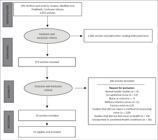
Review steps according to the Preferred Reporting Items for Systematic Reviews and Meta-Analysis - Extension for Scoping Reviews - (PRISMA-ScR)
Characteristics of articles across databases
After the steps of identifying, screening, and applying eligibility criteria to articles across platforms, 33 articles remained eligible for full reading. Of these, 11 articles came from VHL.7-13, two from PubMed21,22, five from the Cochrane Library16-20, and 15 from Scopus21-35. The sample profile investigated in the articles ranged from the relationship between noisy areas and the effects on individuals living in their surroundings7,8,11,13,16,19,22,25-27,29,33,34,36-39 to those who surveyed the entire city or a representative sample34,35. Other articles measured noise and directly interviewed the population21,25,28,31,34,38.
Considering that noise is a global health problem, we chose to present the evidence by continent. Thus, we found that 18 (54.5%) studies originated in Europe9,10,14,15,17,22-24,27-29,31,32,39, eight (24.2%) in South America7,8,11-13,36-38, five (12.1%) in Asia10,18,23,29,38, two (6%) in North America33,37, and one (3%) in Oceania36. Table 3 lists the 18 countries from which the articles were published. Moreover, most articles were published in English.
Regarding their study designs, one was a cohort study34, five were systematic reviews5,17,18,22,27, one was a narrative review33, and one was a scoping review23. There were also three case-control studies21,25,29,15 cross-sectional studies7,8,22,24,26-29,33-39, two case studies12,35, two dissertations14,20, and one doctoral thesis19. Several reviewed studies used cross-sectional designs to investigate the relationships between urban noise and health4,7,13,26,28,39. This type of design is advantageous because it offers a broad overview and identifies associations between variables. However, it lacks outcomes that consider the determination of causal relationships, since noise exposure and health effects are assessed simultaneously, without the longitudinal follow-up necessary to determine how cumulative exposure affects health over time. Nonetheless, these studies identified significant associations between high noise levels and the incidence of problems such as sleep disorders and cardiovascular disease, although with limited conclusions in terms of causality due to their cross-sectional design.
In contrast, the systematic reviews and meta-analyses included in this article allow for a more robust analysis by bringing together evidence from multiple studies on the impact of urban noise. These reviews broaden understanding of the topic, offering an overview of the negative effects of noise in different contexts and populations. However, they face challenges related to the methodological heterogeneity of the reviewed studies, as each one used different measurement methods and noise ranges, making direct comparisons between results difficult.
Summary of results
Noise measurement procedures varied between articles. A temporal analysis reveals that articles published between 2012 and 20148,19,33-35 were concerned with establishing noise measurements from measuring devices. However, other articles published throughout 2014 had measurement methods using devices associated with logarithmic scales for predicting urban noise33,34. This is also reproduced in later years, such as 201526,27 and 201623. There was also a concern on the part of researchers throughout 2014 in analyzing the regulatory standards for tolerance and emission of urban noise in countries25,27-29. These researchers describe in their articles a parallel between the effectiveness of the standards and the reality of cities.
The measured urban noise levels varied. Moreover, the measured values were above the determined limits in the articles that cited regulatory standards for urban noise emissions and tolerance11,30,31,36. The maximum values obtained in these articles were 56.7dB31, 60 to 80 dB30, 65 to 70 dB(A)11, and 55 to 65 dB36. Other articles pointed out more intense values of urban noise, such as 85.8 dB10 on a highway connecting Paka, Dungun, and Terengganu in Kuala Lumpur (Malaysia). Other articles obtained 93.3 dB37 in a residential area in Canada. Another study found 94 dB16 in the vicinity of a public market in João Pessoa (Brazil). Systematic reviews presented more intense values ranging from 96.5 dB24 to 120 dB27. A study investigated the noise produced by drones and reported noise measurements of up to 102.6 dB, highlighting that drone noise was substantially more bothersome than traffic noise24. Research conducted in South Korea observed noise levels of up to 100 dB in high-exposure areas. The study reported sleep disturbances because of the noise29.
Chart 1 describes all the articles and data collected for this scoping review, whereas Chart 2 presents the evidence from gray literature. In most studies, the relationship between the effects of noise on human health was assessed using semi-structured questionnaires.7,11,16,18,19,21,38, prediction/inference of the impact of urban noise on human health4,13, and by applying questionnaires concomitantly with physical and blood tests after noise exposure32.
The consequences of noise on human health varied depending on the purpose of each research project. Thus, some authors concluded that there is a significant effect on cognitive impairment, reading ability, language, and executive function24. Another author found that drone noise is substantially more bothersome6 than other noises. Noise levels obtained by researchers in Santiago, Chile, revealed associations between noise exposure and sleep disturbances, risk of cardiovascular disease, interference with daily activities, anger, displeasure, exhaustion, and stress.4. In Brazil, research has shown an association between noise exposure and discomfort, displeasure19, discomfort11, interference with work activity, tinnitus, headache, stress, lack of concentration, irritability16, malaise, stress, reduced physical performance7, negative effects on the overall health13, discomfort, irritability14, and hearing loss20. Other studies have highlighted other symptoms associated with exposure to high noise levels, such as hyperactivity/inattention5. A qualitative systematic review of five articles points to effects such as sympathetic arousal, increased respiratory rate, and perceptual variations in response to noise22. A case-control study of students revealed that traffic noise can increase walking speed, suggesting an environmentally stimulated stress response21. Another case-control study of women near Frankfurt Airport suggests an association between aircraft engine noise and the risk of breast cancer25.
Summary of evidence
This review aimed to analyze the main evidence that measured urban noise and established the relationship between the identified noise levels and the effects on human health. Because this is a scoping review, it analyzed the methodologies employed in the reviewed studies and the methods of measuring urban noise. Such analyses can establish critical reasoning regarding the methods of noise measurement and analysis, noise levels, and their effects/impacts on human health. The articles collected in this review express scientific concern in understanding the phenomena of illness related to urban noise. None of these articles addressed speech perception difficulties or categorized the sample into hearing and non-hearing individuals.
Identifying urban noise is important for establishing noise prevention and control measures. This action needs to be carried out in a standardized manner, considering the physical nature of the noise and its source. In this review, many of the methods of research that investigated field noise met this prerogative7,8,11,13,21,24-26,32,34,36-38. It is noteworthy that urban noise measurements were taken on streets and highways, during periods of heavy traffic, as well as during quiet periods. In other studies, authors compared values measured in outdoor and indoor environments of homes. These strategies have important applications for characterizing the sources and levels of urban noise, areas of greater or lesser acoustic contamination, and population exposure. This brings scientific evidence closer to the reality to which individuals are exposed. The study subjects varied in age, sex, and nationality, with the majority being adults with no apparent or reported health conditions16,21,25,26,28,30,31,37,38. These characteristics align with the objectives of the studies contained in this review.
The urban noise levels found and described in the reviewed articles were, for the most part, above the values established as acceptable by both the World Health Organization (WHO) and the laws and regulations of their respective countries11,13,16,19,21,39. The WHO specifies that the sound pressure level should not exceed 50 dB LAeq 16 hour in outdoor areas during the day and 30 dB LAeq 8 hour in areas outside the bedroom at night18. According to the WHO, noise exposure levels that do not harm quality of life and health are 55 dB(A), being reduced to 45 dB(A) during sleep. The WHO also points out that values above 65 dB(A) can have negative effects11.In Brazil, NBR 10.151 establishes the equivalent sound pressure level (LAeq) in decibels weighted in dB(A) and the daytime (from 7 am to 10 pm) and nighttime periods (from 10 pm to 7 am), limiting the values to 55 dB and 50 dB respectively40. As a result, several health effects are described for the individuals studied. This review found evidence that noise levels above 80 dB promote hearing loss, tinnitus, discomfort, interference with work activities, headaches, stress, lack of concentration, and anxiety16,20. A literature review found an association between exposure to aircraft and traffic noise and the cognitive ability of attention in children24. Although auditory symptoms are the first to be noticed, subjective perception also deserves attention, as it impacts the individual's entire body. None of the studies included in this review mentioned the type or degree of hearing loss caused by urban noise.
Among the articles reviewed, some researchers analyzed the subjective aspects of urban noise perception and concluded that they are related to non-auditory effects7,11,16. These authors highlighted annoyance, discomfort, decline in mental performance, and irritability. A systematic review found declines in reading, speaking, and language skills. The authors describe the relationship between worsening reading performance and distraction caused by aircraft noise, whose measured noise level was 60 dB LAeq24. Urban noise also had negative effects on quality of life13,18, quality of sleep4,10,23,27,29,34, and cardiovascular health17,22,27,33,39. A systematic review identified an increase in heart rate associated with exposure to high noise levels, specifically the sound of sirens. Using regression analysis, the authors established this relationship and highlighted that the observed impact on heart rate was equivalent to that recorded during physical activities, such as tennis22. The literature indicates that, in addition to these signs, increased systolic and diastolic blood pressure causes the release of stress hormones, such as catecholamines and glucocorticoids22. Additionally, high noise levels have been associated with other cardiovascular symptoms, including hypertension, ischemic cardiovascular disease, and heart attack39.
This evidence supports health authorities' concerns about rising urban noise levels. It's plausible to hypothesize that these effects may culminate in an increased prevalence of medication use to regulate blood pressure, sleep, and concentration. This could impact public and private health systems. Preventive measures must be discussed with society, and further studies must investigate the socio-interactional and health system impacts of urban noise.
Examples of current Brazilian legislation include CONAMA Resolution No. 001, of March 3, 1990, which established the National Program for Education and Control of Noise Pollution - Silence40, and ABNT Standards No. 10.151 and 10.152. Even so, this review found that noise levels exceed the standards in this country7,11,13,14,16,20. This evidence once again reinforces the need to discuss this issue with society and government sectors involved with infrastructure and urban planning.
Methods for measuring urban noise and its relationship with human health
Some authors have considered factors such as location and time of day26,36-38 when measuring noise. Most of this consideration is related to the fact that traffic flow is the most prevalent source of urban noise in studies. Other authors have predicted urban noise using logarithmic scales23,33,34. This methodology proved to be more specific, and although they did not justify choosing this method, it is known that the logarithmic scale represents large variations in sound intensity more understandably and practically. Some authors have specified the use of the LAeq, justifying it by the fact that this scale is often used to summarize sound levels over a given period. Other authors have also pointed out that this scale is more accurate11,23. These same authors pointed to the evidence that community noise at night is more dangerous than during the day, and proposed the scales LAeq,dn and LAeq,den, in which the noise descriptors refer to the day (d) and evening (e). Other authors also considered the specificity of noise during the measurement periods; they proposed the scales Lden and Ln to calculate noise activity in urban spaces26. A review article highlighted the evidence that supported the WHO in developing a guideline that recommends the logarithmic limit of 45 dB Lden to avoid adverse health effects from aircraft18. The human ear perceives sound logarithmically, making this scale more suitable for assessing the effect of noise on human perception and health. Other researchers have used previously established values of urban noise levels in the study sites as a basis and then used logarithmic scales26,27 to predict the effects of noise. This demonstrates organizational progress in these countries, as it indicates that the infrastructure and urban planning sectors have characterized regions and zones through direct noise measurements.
The methodology for measuring urban noise is established and published in some countries, such as Austria with the Austrian Guidelines32, Bulgaria with the French National Method (NMPB-Routes-96)30, Spain with the European Noise Directive 2002/49EC (END)31, which uses the Traffic Noise Prediction Method-96, and Portugal with the Traffic Noise Prediction Method-9612. These instruments demonstrate that these European countries have long investigated and been concerned about urban noise. In Brazil, there is current legislation that limits and promotes the control of noise pollution40, in addition to ABNT Standards No. 10.151 and 10.152, which reflect awareness of the harm caused by urban noise and efforts to address its effects. This information is relevant because the physical characteristics of noise and its source require measurement precision and criteria.
The measurement methods presented in the studies compiled in this review are reproducible, and the urban noise levels identified demonstrate the accuracy of the methods employed, given the symptoms reported by all interviewees. Most authors also highlight the devices and techniques used to measure urban noise. It is important to emphasize that there was a wide variability in the devices used; however, the description of the techniques employed stood out most among the articles7,8,11-13,24,26,28,34,36-38. It should be noted that the objectives of each study involved different measurement methods, positions, times, and periods. The characteristics of the measurement devices also varied, from portable (hand-held) devices with a windshield attached to the microphone11, to a sound level meter attached to an external microphone4, a sound level meter (SLM)20, Type 1 sound level meter with octave bands, sound level calibrator specifications ANCI S1.40-1984 and IEC 942:1998 Class 1. Frequency: 1000 Hz. Amplitude: 114 dB14, digital sound pressure meter (decibel meter)7,16 and a Type II sound pressure meter with "A" compensation circuit and fast response13. Only one systematic review presented details on the noise measurement devices; these studies included 22 microphones, an intensity probe, and a hemispherical measuring surface6. However, we believe that the diversity of devices and the lack of information on calibration and measurement accuracy may have somehow influenced the study results. The articles established the relationship between the effects of urban noise and human health through interviews and questionnaires. This methodology is practical, inexpensive, and quick; however, it may not fully reflect the reality of these effects on the part of the interviewee, as in those studies that inferred the effects of urban noise on health based on predictive models. It is imperative to consider the development of other study methodologies to reduce biases in data collection.
The effects of urban noise are not uniform, varying according to socioeconomic and cultural factors and geographic conditions. The study conducted in the neighborhoods of Santiago, Chile4, and the study conducted in Campos do Jordão, São Paulo, Brazil, demonstrate variations in the levels of discomfort and health in regions with different characteristics. These differences highlight the need for local policies adapted to each reality, considering population density, urban activity patterns, and the resources available to mitigate the effects of noise. In densely populated urban areas, such as large metropolises, the concentration of vehicles, commercial, and industrial activities contributes to higher and more persistent noise levels. Some studies show that neighborhoods with high urban traffic tend to have higher noise levels, negatively impacting residents' quality of life4,14. Increased discomfort and health problems, such as stress and sleep disorders, are especially common in these regions due to continuous exposure to noise above 60 dB, which exceeds the limits considered safe for health.
The effects of urban noise can be even more severe in lower-income communities, where there are fewer resources for investment in soundproofing infrastructure and less access to quiet areas. A study conducted in Capivari, Campos do Jordão13, found that lower-income populations generally reside in areas closer to sources of intense noise and are less subject to regulatory interventions. These communities may face considerable risks of cardiovascular and mental health problems due to prolonged exposure to noise without the possibility of mitigation through adequate structures22. Cultural factors also influence how noise is perceived and how it affects individuals. In areas with a more tolerant culture of coexistence regarding noise, such as certain metropolitan regions, residents may report less subjective discomfort, although the effects on physical health are still present. Conversely, in countries like Switzerland, where noise standards are stricter and residents are accustomed to quieter environments, even small increases in noise levels are perceived as a nuisance, as noted in a survey6.
The influence of climate and geography must be considered, as these factors can amplify or reduce the effects of noise. In areas with high temperatures, it's common for people to keep windows open for longer periods, which can increase exposure to external noise. On the other hand, in more mountainous regions, sound tends to reverberate, intensifying the sensation of discomfort. A study conducted in specific areas located in mountainous regions of Kuala Lumpur10 indicates that traffic noise can propagate more intensely, affecting residents' quality of life and well-being.
Advances and Recommendations
A range of interventions can be considered to reduce urban noise. Although the included articles do not present noise prevention strategies, the literature shows that measures such as installing noise barriers in high-traffic areas and creating quiet zones in residential neighborhoods are effective strategies in many cities. Additionally, real-time monitoring can allow for rapid adjustments in urban noise levels. These solutions, combined with public awareness and rigorous monitoring of traffic noise, can offer significant improvements in the population's quality of life and health. In some European cities, strict noise control policies, such as those following the European Noise Directive, offer additional protection to the population by imposing maximum limits and encouraging quiet zones. This contrasts with areas in countries with less regulation, where noise levels are less controlled and the population is more exposed. A study comparing airports in cities in Europe and Asia2 highlights that differences in regulations and public policies are a determining factor in the variation in quality of life and the incidence of health problems in different regions.
Limitations
Despite the high level of criteria used in identifying the selected articles and the fact that the search followed strategies suggested in the literature, many studies were still discarded. Most retrieved articles were cross-sectional, a study design that does not allow for generalization of the results. Therefore, even if further reviews are conducted, it is plausible to encourage other study designs within this topic to understand the long-term effects of urban noise and the effectiveness of prevention measures.
Not all reviewed articles pointed out their limitations, whereas those that did highlighted the influence of the context in which noise perception was collected on the results4, and difficulty in mapping noise by street11. Among the systematic reviews, the scarcity of research by period was the most prevalent limitation6,22,24,25. Another article highlighted the relatively low level of evidence in its results39. None of the reviewed articles reported interference factors between the measurement equipment and the results.
It is worth noting that the evidence found in this review highlights the importance of analyzing the effects of urban noise on human health. Likewise, this review highlights the need for health and public infrastructure sectors to establish science-based actions and prevent health problems demonstrated by previously published evidence. Therefore, this review serves as a foundational tool for recognition and a starting point for decision-making.
CONCLUSION
The results of this review highlight the growing interest of researchers in exploring the non-auditory effects of urban noise on human health. The articles selected for this review presented diverse noise measurement methods, all of which were based on scientific evidence and the current regulations of their respective countries. The use of the logarithmic scale has increased in recent years in the articles selected for this review. Establishing the relationship between urban noise and its effects on human health was mostly done through questionnaires and prediction models or by inference - i.e., the most prevalent effects of urban noise on human health in this review were supported in an unobjective manner. This evidence reinforces the concern of researchers and health authorities in addressing noise, advocating for and implementing preventive measures. Furthermore, the development and validation of reliable instruments to measure individuals' perception of noise is imperative.
REFERENCES
-
1 Warner-Czyz AD, Loy BA, Evans C, Wetsel A, Tobey EA. Self-esteem in children and adolescents with hearing loss. Trends Hear. 29 December 2015;19:233121651557261. https://doi.org/10.1177/2331216515572615 PMID: 25755025. PMCID: PMC4355008.
» https://doi.org/10.1177/2331216515572615 -
2 Yano T, Lee S, Gjestland T. Community response to noise. Noise Health. 2012;14(61):303. https://doi.org/10.4103/1463-1741.104898 PMID: 23257582.
» https://doi.org/10.4103/1463-1741.104898 -
3 Paz EC da, Ferreira AMC, Zannin PHT. Comparative study of the perception of urban noise. Rev Saude Publica. 2005;39(3):46-72. https://doi.org/10.1590/s0034-89102005000300019 PMID: 15997324.
» https://doi.org/10.1590/s0034-89102005000300019 -
4 Alburquenque MF, Ríos AM, Lambarri MC, Arellano RT, Lillo DC, Orellana SA. Identification of daily environmental noise patterns in two different urban sites in Santiago, Chile. Rev Med Chil. 2020;148(5):582-93. https://doi.org/10.4067/s0034-98872020000500582 PMID: 33399751.
» https://doi.org/10.4067/s0034-98872020000500582 -
5 Schubert M, Hegewald J, Freiberg A, Starke KR, Augustin F, Riedel-Heller SG et al. Behavioral and emotional disorders and transportation noise among children and adolescents: A systematic review and meta-analysis. Int J Environ Res Public Health. 2019;16(18):1-16. https://doi.org/10.3390/ijerph16183336 PMID: 31510007. PMCID: PMC6765874.
» https://doi.org/10.3390/ijerph16183336 -
6 Schäffer B, Pieren R, Heutschi K, Wunderli JM, Becker S. Drone noise emission characteristics and noise effects on humans-A systematic review. Int J Environ Res Public Health. 2021;18(11):5940. https://doi.org/10.3390/ijerph18115940 PMID: 34205949 PMCID: PMC8198898.
» https://doi.org/10.3390/ijerph18115940 -
7 Bressane A, Mochizuki PS, Caram RM, Roveda JAF. A system for evaluating the impact of noise pollution on the population's health. Cad Saude Publica. 2016;32(5):1-11. https://doi.org/10.1590/0102-311x00021215 PMID: 27192022.
» https://doi.org/10.1590/0102-311x00021215 - 8 NBR10151. Associação Brasileira de Normas Técnicas. Acústica - Avaliação do ruído em áreas habitadas, visando o conforto da comunidade - Procedimento. 2000;1-4.
-
9 Clark C, Paunovic K. WHO Environmental Noise Guidelines for the European Region: A systematic review on environmental noise and quality of life, wellbeing and mental health. International Journal of Environmental Research and Public Health. 2018;15(11):2400. https://doi.org/10.3390/ijerph15112400 PMID: 30380665. PMCID: PMC6266190.
» https://doi.org/10.3390/ijerph15112400 - 10 Daruis DDI, Awang NW, Deros BM, Ismail AR. The effects of night-time road traffic noise on discomfort - A case study in Dungun, Terengganu, Malaysia. Iran J Public Health. 2014;43(Supple 3)58-66.
-
11 Suriano MT, de Souza LCL, da Silva ANR. A decision-support tool for the control of urban noise pollution. Cien Saude Colet. 2015;20(7):2201-10. https://doi.org/10.1590/1413-81232015207.10792014 PMID: 26132260.
» https://doi.org/10.1590/1413-81232015207.10792014 -
12 Silva LT, Mendes JFG. City noise-air: An environmental quality index for cities. Sustain Cities Soc. 2012;4(1):1-11. https://doi.org/10.1016/j.scs.2012.03.001
» https://doi.org/10.1016/j.scs.2012.03.001 -
13 de Brito LAPF. The use of acoustic maps as excess noise identification tool in urban areas. Engenharia Sanitaria e Ambiental. 2017;22(6):1095-107. https://doi.org/10.1590/S1413-41522017152589
» https://doi.org/10.1590/S1413-41522017152589 -
14 Palma MI. O mapa de ruído como instrumento de planejamento: o caso da poluição sonora causada pelos automóveis no município de São Paulo [dissertation]. São Paulo (SP): Universidade de São Paulo, Faculdade de Saúde Pública; 2018. https://doi:10.11606/D.6.2018.tde-22082018-154740
» https://doi:10.11606/D.6.2018.tde-22082018-154740 -
15 Tricco AC, Lillie E, Zarin W, O'Brien KK, Colquhoun H, Levac D et al. PRISMA Extension for Scoping Reviews (PRISMA-ScR): Checklist and explanation. Ann Intern Med. 2018;169(7):467-73. https://doi.org/10.7326/m18-0850 PMID: 30178033.
» https://doi.org/10.7326/m18-0850 -
16 Antas LOF dos SL, Silva BBC, Mascarenhas VVD, Souza VVM, Andrade WWTL de. Nuisance generated by urban noise among traders around a public market in João Pessoa, PB. Revista Brasileira de Ciências da Saúde. 2014;18(2):97-102. https://periodicos.ufpb.br/index.php/rbcs/article/view/13676
» https://periodicos.ufpb.br/index.php/rbcs/article/view/13676 -
17 Stansfeld SA. Noise effects on health in the context of air pollution exposure. Int J Environ Res Public Health. 2015;12(10):12735-60. https://doi.org/10.3390/ijerph121012735 PMID: 26473905. PMCID: PMC4626997.
» https://doi.org/10.3390/ijerph121012735 -
18 Gjestland T. A systematic review of the basis for WHO's new recommendation for limiting aircraft noise annoyance. Int J Environ Res Public Health. 2018;15(12):2717. https://doi.org/10.3390/ijerph15122717 PMID: 30513834. PMCID: PMC6313593.
» https://doi.org/10.3390/ijerph15122717 -
19 Santos DCJV. Paisagem sonora: uma ferramenta para a saúde pública [thesis]. São Paulo (SP): Universidade de São Paulo, Faculdade de Saúde Pública; 2020. https://doi:10.11606/T.6.2020.tde-09032020-095914
» https://doi:10.11606/T.6.2020.tde-09032020-095914 -
20 Forcetto ALS. Poluição sonora urbana: a influência de modificações em escapamentos de motocicletas na emissão de ruído [dissertation]. São Paulo (SP): Universidade de São Paulo, Faculdade de Saúde Pública; 2016. https://doi:10.11606/D.6.2016.tde-19042016-140141
» https://doi:10.11606/D.6.2016.tde-19042016-140141 -
21 Franĕk M, Režný L, Šefara D, Cabal J. Effect of traffic noise and relaxations sounds on pedestrian walking speed. Int J Environ Res Public Health. 2018;15(4):752. https://doi.org/10.3390/ijerph15040752 PMID: 29661990. PMCID: PMC5923794.
» https://doi.org/10.3390/ijerph15040752 -
22 Erfanian M, Mitchell AJ, Kang J, Aletta F. The psychophysiological implications of soundscape: A systematic review of empirical literature and a research agenda. Int J Environ Res Public Health. 2019;16(19):1-20. https://doi.org/10.3390/ijerph16193533 PMID: 31546577. PMCID: PMC6801404.
» https://doi.org/10.3390/ijerph16193533 -
23 Kageyama T. Adverse effects of community noise as a public health issue. Sleep Biol Rhythms. 2016;14(3):223-9. https://doi.org/10.1007/s41105-016-0069-3
» https://doi.org/10.1007/s41105-016-0069-3 -
24 Thompson R, Smith RB, Bou Karim Y, Shen C, Drummond K, Teng C et al. Noise pollution and human cognition: An updated systematic review and meta-analysis of recent evidence. Environ Int. 2022;158 (June 2021):106905. https://doi.org/10.1016/j.envint.2021.106905 PMID: 34649047.
» https://doi.org/10.1016/j.envint.2021.106905 -
25 Hegewald J, Schubert M, Wagner M, Dröge P, Prote U, Swart E et al. Breast cancer and exposure to aircraft, road, and railway noise: A case-control study based on health insurance records. Scand J Work Environ Health. 2017;43(6):509-18. https://doi.org/10.5271/sjweh.3665 PMID: 28813586.
» https://doi.org/10.5271/sjweh.3665 -
26 De Paiva Vianna KM, Alves Cardoso MR, Rodrigues RMC. Noise pollution and annoyance: An urban soundscapes study. Noise Health. 2015;17(76):125-33. https://doi.org/10.4103/1463-1741.155833 PMID: 25913551. PMCID: PMC4918656.
» https://doi.org/10.4103/1463-1741.155833 -
27 Filová A, Samohýl M, Argalášová L. Environmental noise exposure and its effect on population health. Hygiena. 2015;60(4):155-62. http://dx.doi.org/10.21101/hygiena.a1396
» http://dx.doi.org/10.21101/hygiena.a1396 -
28 Nowakowska-Kotas M, Pokryszko-Dragan A, Brodowski M, Szydlo M, Podemski R. Effects of noise and mental task performance upon changes in cerebral blood flow parameters. Noise Health. 2015;17(79):422-8. https://doi.org/10.4103/1463-1741.169709 PMID: 26572702. PMCID: PMC4900476.
» https://doi.org/10.4103/1463-1741.169709 -
29 Kim SJ, Chai SK, Lee KW, Park JB, Min KB, Kil HG et al. Exposure-response relationship between aircraft noise and sleep quality: A community-based cross-sectional study. Osong Public Health Res Perspect. 2014;5(2):108-14. https://doi.org/10.1016/j.phrp.2014.03.004 PMID: 24955321. PMCID: PMC4064632.
» https://doi.org/10.1016/j.phrp.2014.03.004 -
30 Dzhambov A, Dimitrova D. Neighborhood noise pollution as a determinant of displaced aggression: A pilot study. Noise Health. 2014;16(69):95-101. https://doi.org/10.4103/1463-1741.132090 PMID: 24804713.
» https://doi.org/10.4103/1463-1741.132090 -
31 Foraster M, Künzli N, Aguilera I, Rivera M, Agis D, Vila J et al. High blood pressure and long-term exposure to indoor noise and air pollution from road traffic. Environ Health Perspect. 2014;122(11):1193-200. https://doi.org/10.1289/ehp.1307156 PMID: 25003348. PMCID: PMC4216159.
» https://doi.org/10.1289/ehp.1307156 -
32 Lercher P, Widmann U, Thudium J. Hypotension and environmental noise: A replication study. Int J Environ Res Public Health. 2014;11(9):8661-88. https://doi.org/10.3390/ijerph110908661 PMID: 25162707. PMCID: PMC4198985.
» https://doi.org/10.3390/ijerph110908661 -
33 Münzel T, Gori T, Babisch W, Basner M. Cardiovascular effects of environmental noise exposure. Eur Heart J. 2014;35(13):829-36. https://doi.org/10.1093/eurheartj/ehu030 PMID: 24616334. PMCID: PMC3971384.
» https://doi.org/10.1093/eurheartj/ehu030 -
34 Héritier H, Vienneau D, Frei P, Eze IC, Brink M, Probst-Hensch N et al. The association between road traffic noise exposure, annoyance and health-related quality of life (HRQOL). Int J Environ Res Public Health. 2014;11(12):12652-67. https://doi.org/10.3390/ijerph111212652 PMID: 25489999. PMCID: PMC4276638.
» https://doi.org/10.3390/ijerph111212652 -
35 Urban J, Máca V. Linking traffic noise, noise annoyance and life satisfaction: A case study. Int J Environ Res Public Health. 2013;10(5):1895-915. https://doi.org/10.3390/ijerph10051895 PMID: 23652784. PMCID: PMC3709355.
» https://doi.org/10.3390/ijerph10051895 -
36 Welch D, Shepherd D, Dirks KN, McBride D, Marsh S. Road traffic noise and health-related quality of life: A cross-sectional study. Noise Health. 2013;15(65):224-30. https://doi.org/10.4103/1463-1741.113513 PMID: 23771420.
» https://doi.org/10.4103/1463-1741.113513 -
37 King G, Roland-Mieszkowski M, Jason T, Rainham DG. Noise levels associated with urban land use. Journal of Urban Health. 2012;89(6):1017-30. https://doi.org/10.1007/s11524-012-9721-7 PMID: 22707308. PMCID: PMC3531357.
» https://doi.org/10.1007/s11524-012-9721-7 -
38 Pande B, Rathod G, Vaidya N, Nag C, Parganiha A, Pati AK. Non-auditory effect of community noise on interval timing in humans: An exploration. Biol Rhythm Res. 2012;43(6):585-601. http://dx.doi.org/10.1080/09291016.2011.629829
» http://dx.doi.org/10.1080/09291016.2011.629829 -
39 Escobar C, Divisón JA. Noise and cardiovascular disease. Semergen. 2016;42(6):e65-6. https://doi.org/10.1016/j.semerg.2015.11.011 PMID: 26803461.
» https://doi.org/10.1016/j.semerg.2015.11.011 - 40 Resolução CONAMA no 001, 8 March 1990. 1990. p. 1.
-
A study conducted at the Universidade Federal de Minas Gerais, Belo Horizonte, MG, Brazil.
-
Financial support
This study was financed in part by the Coordenação de Aperfeiçoamento de Pessoal de Nível Superior - Brazil (CAPES) - Finance Code 001
-
Data sharing statement
All data collected in this review will be made available immediately after publication, along with the research protocol, which will remain accessible indefinitely to researchers who present methodologically sound proposals.
All data collected in this review will be made available immediately after publication, along with the research protocol, which will remain accessible indefinitely to researchers who present methodologically sound proposals.

