
 Story understanding involving theory of mind in children with autism spectrum disorder
ABSTRACT
Purpose: to evaluate the story understanding involving Theory of Mind in children with autism spectrum disorder (ASD).
Methods: this a cross-sectional study conducted on a sample of 13 children with ASD, aged five to ten years old. The children's book “Claro, Cleusa. Claro, Clóvis” was used, whose characters are geometric figures that interact in a social context. The story was narrated by a speech pathologist and then the child was encouraged to produce his/her own retelling and answer questions related to the narrated events. The Wilcoxon and Spearman’s correlation tests were applied. A significant level of 0.05% was considered.
Results: on average, 8.2 (28.7%) sentences were retold. Physical terms were mentioned more frequently than mental ones (p=0.002). Regarding the questions, there was predominance of correct answers regarding the identification of characters, setting, and context; and difficulty in interpreting events involving mental states.
Conclusion: in this study, children had difficulty retelling important parts of the story and interpreting facts involving the Theory of Mind.
Keywords:
Autism Spectrum Disorder; Theory of Mind; Understanding; Speech, Language and Hearing Sciences; Child
RESUMO
Objetivo: avaliar a compreensão de história envolvendo Teoria da Mente em crianças com Transtorno do Espectro do Autismo (TEA).
Métodos: trata-se de estudo transversal. A amostra foi constituída por 13 crianças com TEA, entre cinco e dez anos. Utilizou-se o livro infantil - Claro, Cleusa. Claro, Clóvis, cujos personagens são figuras geométricas que interagem em contexto social. A narração da história foi realizada uma por fonoaudióloga e em seguida, a criança foi incentivada a produzir seu reconto e a responder questões relativas aos eventos narrados. Aplicou-se os testes de Wilcoxon e Correlação de Spearman. Considerou-se nível de significância de 0,05%.
Resultados: foram recontados, em média, 8,2 (28,7%) frases. Houve predomínio de menção de termos físicos em detrimento aos termos mentais (p=0,002). Em relação às questões observou-se predomínio de acertos quanto à identificação dos personagens, cenário e contexto; e dificuldade na interpretação dos eventos envolvendo estados mentais.
Conclusão: portanto verificou-se que as crianças tiveram dificuldade em recontar partes importantes da história e em interpretar fatos envolvendo a Teoria da Mente.
Descritores:
Transtorno do Espectro Autista; Teoria da Mente; Compreensão; Fonoaudiologia; Criança
INTRODUCTION
During early childhood, children refine their perceptions on their interpersonal relationships and begin to understand that a person's actions depend on how they see and notice the world around them1,2. The theoretical construct that allows a typical child to recognize, assign, and interpret mental states of beliefs, desires and intentions, in themselves and in others, is called Theory of Mind1-4.
It is known that the acquisition of Theory of Mind skills also occurs according to the development of linguistic capacity, especially pragmatics1-4. This means that, as children become skilled at understanding the perspective of others, they also expand their linguistic domain, for example, in their explanatory and justification behaviors.
The discursive productions of children while reading images can provide behavioral clues about Theory of Mind and show that explanatory behaviors demand some appropriation of linguistic and pragmatic knowledge1,2. At four years of age, typical children are already able to understand, interpret and predict the social behavior of their interlocutors and are able to narrate facts from different perspectives. Therefore, failures in Theory of Mind skills are strong indicators of impairments in communicative and socio-cognitive development1-5.
There is consensus that, among the various clinical manifestations observed in individuals with autism spectrum disorder (ASD), difficulty in Theory of Mind stands out1-4. Autism Spectrum Disorder is a neurobiological condition characterized by severe and persistent impairments in the fields of social interaction and communication and by the presence of a restricted and stereotyped set of interests and activities5. The inability to assign mental states has been considered a basic flaw that greatly compromises interaction and social communication in the autistic spectrum.
The first Theory of Mind tests began in the 1980s with application of the Sally-Ann Test by British researchers to compare the performance of children with autism, Down syndrome and typical children. Subsequently, tests with different levels of cognitive complexity1-4 and others involving content with figurative language6-10 were constructed and applied. However, few studies have analyzed the direct impact of such failures on the interpretation of information and explanatory approaches in a naturalistic context, such as reading images in books.
The study hypothesis was that children will present a deficit in Theory of Mind by using more physical than mental terms, both in retelling and in their explanatory approaches. Thus, the goal of this study was to evaluate the story understanding involving Theory of Mind in children presented with autism spectrum disorder. The specific objectives were to analyze the frequency of use of physical and mental terms in retelling, and to evaluate the interpretation of information and explanatory approaches involving the assignment of mental states to the characters.
METHODS
This is a cross-sectional, experimental, quantitative study; and an integral part of the study for conclusion of Speech-Language Pathology course of the first author.
All parents or caretakers were aware of the methodological procedures of the study and signed an Informed Consent Form as suggested by the Institutional Review Board of the Federal University of São Paulo - UNIFESP, Brazil (IRB Approval N. 0671/2021, CAAE: 48383321.3.0000.5505).
The sample consisted of 13 children of both genders, aged five to seven years, evaluated and diagnosed with ASD by a multidisciplinary team, according to the DSM-55 criteria and treated at the Speech-Language Research Center for Children and Adolescents with Autism Spectrum Disorder - NIFLINC-TEA of the Speech-Language Department at UNIFESP.
The following inclusion criteria were considered: diagnosis of ASD, age range (five to seven years) and presence of verbal production (sentences).
The exclusion criteria were the presence of neurological alterations, malformations and/or identified genetic syndromes, physical, auditory/visual and/or motor disabilities and the absence of speech.
The children's book Claro, Cleusa. Claro, Clóvis11 was used. The characters in this story are geometric figures that interact in a social context. The story was narrated by a speech pathologist, in an individual session, in telehealth format, since the study was conducted during the period of social isolation of the Covid-19 pandemic. As the story was narrated, the pages of the book were simultaneously shown.
Then, each child was encouraged to produce their retelling and answer questions related to the narrated events. All oral productions of the child were transcribed. The mean time for application of the procedures was 20 minutes. From the transcripts, qualitative and quantitative analyses of speech of each child were performed, as follows.
In the quantitative analysis, the following parameters were considered:
-
Total number of sentences reproduced from the book.
-
Total number of words or sentences emitted in a distorted manner (addition of information external to the story or inappropriate to the context, such as idiosyncratic speech).
-
Number of terms referring to physical states: motor actions (action verbs: jump; description of perceptual characters: shape; naming of concrete objects: pencil).
-
Number of terms that refer to mental states: abstract words (verbs as think, feel; naming of feelings: sadness, joy).
The qualitative analysis considered the answers to questions regarding:
-
Names of characters?
-
Where does this story take place?
-
What happened to Clóvis?
-
How did Cleusa feel when Clóvis skipped a class?
-
Why did Cleusa feel like half?
-
How did Clóvis feel when he met his colleagues?
-
Why did he need to build courage?
All answers were classified as appropriate or inappropriate according to the context of the story.
Sample characterization was based on sociodemographic information of the families and results of the following instruments, collected from the medical records:
-
Autism Behavior Checklist12: a list of 57 non-adaptive behaviors divided into five areas: sensory, use of body and object, relational, language and personal-social, which measures the severity of autistic behaviors, by a previous interview with the parents.
-
SON-R 2½-7[a]13: a nonverbal intelligence test, previously administered to each child by the neuropsychologists of the team.
Descriptive analyses were performed on all study variables. The Wilcoxon test was applied for comparative analysis between the number of mental and physical terms. The Spearman’s correlation test was used to analyze the correlations between the sample characterization variables, retelling of phrases use of terms (physical and mental) by children. The significance level was set at 0.05%.
RESULTS
Table 1 shows information on the sample characteristics (age, non-adaptive behaviors and IQ) and performance in retelling the story.
Table 2 shows the comparative analysis between the use of mental terms versus physical terms in the spontaneous retelling by children.
Figure 1 shows the percentage of responses to qualitative questions related to story understanding.
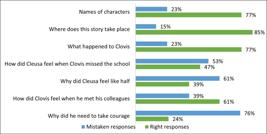
Table 3 shows the correlation between the sample characterization variables and the retelling performance of children and use of mental and physical terms.
DISCUSSION
Concerning the sample characterization, the mean age of children was six years and three months (SD = 9.32). It should be emphasized that the sample consisted of children older than five years, since Theory of Mind skills can only be demonstrated and evaluated after four years of age1-5.
The mean IQ score, obtained by applying the SON-R 2½-7[a]13 test, was 82.23 (SD = 9.20). Regarding non-adaptive behaviors, analyzed using the Autism Behavior Checklist12, a mean score of 72.3 (SD = 9.99) was found, which showed high rates of atypical behaviors in children evaluated in this study.
In the analysis of story retelling, there were originally 28 phrases (Table 1); however, the mean retelling by children was 8.23 phrases (SD = 7.15), i.e., only one third of sentences that made up the story were mentioned by children. It is important to mention that the phrases recounted by children did not always refer to the main episodes, such as the identification of characters, setting, events that trigger the story outcome (Clóvis skipped a class; Catarina proposed to play with Cleusa; Clóvis returned to school; Clóvis proposed to play with his two colleagues). Some children restricted themselves to retelling the characters' actions ("they were close", "they played"). These results corroborate the descriptions of inabilities in understanding and interpreting information that greatly impact the establishment of narrative discourse by children and adolescents with ASD mentioned in the literature14-30. Approximately 1.31 sentences were also produced and classified as distorted (SD = 1.03), since they mentioned elements that were not part of the original story, e.g., “are they geometric figures?”
Regarding analysis of the number of mental terms mentioned in the story, there were six mental terms described in the text (for example: anger, courage); however, the mean reported by children was only 0.92 (SD = 1.61). There was a total of eight physical terms in the book (for example: glue, played), and the mean mention by the children was 3.92 (SD = 2.78). In the comparative analysis (Table 2) between physical and mental terms, a significant difference was found (p = 0.002), with greater mention of physical terms. These results highlight the failures in assigning mental states, mentioned in different studies that stated that children with ASD demonstrate some deficit in the Theory of Mind1-10,14-30.
In the quantitative analysis (Figure 1), children were asked seven questions related to the story. The first question concerned the identification of characters (names), and among the thirteen children in the sample, 77% responded adequately. It is believed that the difficulty in responses for some children was most likely due to lack of familiarity with the names of characters, which are not common (Clóvis, Cleusa).
The second question referred to the setting where the story took place (school) and the accuracy rate was again high, with 85% of correct answers. The next question had 77% of correct answers and concerned what happened to Clovis (he skipped a class). It is interesting to note that, although most children omitted this information in the spontaneous retelling, it was possible to recover their understanding through the questions.
In the next question: "How did Cleusa feel when Clovis skipped a class?", whose content refers to the assignment of mental states, about 47% of children were able to describe the feeling of sadness that the character demonstrated upon noticing the absence of her friend in school. When asked "Why did Cleusa feel like half?", the accuracy rate decreased, since only 39% of children were able to properly assign the feeling to the character. The children were also asked "How did Clovis feel when he met his colleagues again?", and 61% answered correctly.
The last question, "Why did Clovis need to build courage?", was answered correctly by only 24% of children. These results show that children, again, had difficulty in correctly answering the questions assigning feelings to the characters20-30.
In the correlation between the sample characterization variables (age, autism behavior checklist, and IQ) and the retelling performance (Table 3), significant correlation was only observed between the mention of distorted phrases and IQ (p = 0.001). This result shows that children with greater cognitive potential were probably able to interpret and question the information related to the story.
Finally, it is believed that it was possible to assess the story understanding involving Theory of Mind in the sample studied. The hypothesis that children would use more physical than mental terms, both in retelling and in their explanatory approaches, was investigated and observed20-30.
It is suggested that other studies could be conducted on larger samples, relating Theory of Mind tests with morphosyntactic performance and analyzing therapeutic strategies to develop the assignment of mental states in individuals with ASD.
CONCLUSIONS
For the sample analyzed, a mean of 8.2 (28.7%) sentences were retold. There was predominance of mention of physical terms rather than mental ones (p=0.002). As for the questions, predominance of correct answers was observed regarding the identification of characters, setting and context; and difficulty in interpreting events involving mental states. Therefore, it was found that children had difficulty in retelling important parts of the story and in interpreting facts involving the Theory of Mind.
REFERENCES
-
1 Holopainen A, de Veld DMJ, Hoddenbach E, Begeer S. Does theory of mind training enhance empathy in Autism? J Autism Dev Disord. 2019;49(10):3965-72. https://doi.org/10.1007/s10803-018-3671-1 PMID: 30074122.
» https://doi.org/10.1007/s10803-018-3671-1 -
2 Livingston LA, Carr B, Shah P. Recent advances and new directions in measuring theory of mind in autistic adults. J Autism Dev Disord. 2019;49(4):1738-44. https://doi.org/10.1007/s10803-018-3823-3 PMID: 30515619.
» https://doi.org/10.1007/s10803-018-3823-3 -
3 Nowell SW, Watson LR, Boyd B, Klinger LG. Efficacy study of a social communication and self-regulation intervention for school-age children with autism spectrum disorder: A randomized controlled trial. LSHSS. 2019;50(3):416-33. https://doi.org/10.1044/2019_LSHSS-18-0093 PMID: 31287766.
» https://doi.org/10.1044/2019_LSHSS-18-0093 -
4 Paunov AM, Blank IA, Fedorenko E. Functionally distinct language and theory of mind networks are synchronized at rest and during language comprehension. J. Neurophysiol. 2019;121(4):1244-65. https://doi.org/10.1152/jn.00619.2018 PMID:30601693.
» https://doi.org/10.1152/jn.00619.2018 - 5 American Psychiatric Association. Manual Diagnóstico e Estatístico de Transtornos Mentais - DSM-5. 5 Ed. Artmed. Porto Alegre, 2014.
-
6 Andreou M, Skrimpa V. Theory of mind deficits and neurophysiological operations in autism spectrum disorders: A review. Brain Sci. 2020;20(10):393. https://doi.org/103390/brainsci10060393 PMID:32575672.
» https://doi.org/103390/brainsci10060393 -
7 Green CC, Brown NJ, Yap VMZ, Scheffer IE, Wilson SJ. Cognitive processes predicting advanced theory of mind in the broader autism phenotype. Autism Res. 2020;13(6):921-34. https://doi.org/10.1002/aur.2209 PMID:31566923.
» https://doi.org/10.1002/aur.2209 -
8 Rosello B, Berenguer C, Baixauli I, Garcia R, Miranda A. Theory of mind profiles in children with autism spectrum disorder: Adaptative social skills and pragmatic competence. Front Psychol. 2020;17:11:567401. https://doi.org/10.3389/fpsyg.2020.567401 PMID: 33041932.
» https://doi.org/10.3389/fpsyg.2020.567401 -
9 Cardillo R, Mammarella IC, Demurie E, Giofre D, Roeyers H. Pragmatic language in children and adolescents with autism spectrum disorder: Do theory of mind and executive functions have a mediating role? Autism Res. 2021;14(5):932-45. https://doi.org/ 10.1002/aur.2423 PMID: 33111475.
» https://doi.org/ 10.1002/aur.2423 -
10 Eigsti IM, Irvine CA. Verbal mediation of theory of mind in verbal adolescents with autism spectrum disorder. Lang Acquis. 2021;28(2):195-213. https://doi.org/ 10.1080/10489223.2021.1877705 PMID: 35548704.
» https://doi.org/ 10.1080/10489223.2021.1877705 - 11 Matsushita R. Claro, Cleusa. Claro, Clóvis. Ed do Brasil, São Paulo, 2017.
-
12 Marteleto MRF, Pedromônico MRM. Validity of Autism Behavior Checklist (ABC): Preliminary study. Revista Brasileira de Psiquiatria. 2005;27(4):295-301. https://doi.org/10.1590/S1516-44462005000040008 PMID: 16358111.
» https://doi.org/10.1590/S1516-44462005000040008 - 13 Tellegen PJ, Laros JA, Jesus GR, Karino CA. SON-R 21/2-7 [a] Manual do Teste Não Verbal de Inteligência. São Paulo: Hogrefe, 2015.
-
14 Lee SC, Tsai CH, Lin YC, Li HJ, Jiang DR, Fu IN et al. Factorial validity of the theory of mind inventory-2 in children with autism spectrum disorder. Autism Res. 2021;14(11):2424-31. https://doi.org/10.1002/aur.2581 PMID:34288576.
» https://doi.org/10.1002/aur.2581 -
15 Yu YT, Li HJ, Tsai CH, Lin CH, Lai SS, Chen KL. Cool executive function and verbal comprehension mediate the relation of hot executive function and theory of mind in children with autism spectrum disorder. Autism Res. 2021;14(5):921-31. https://doi.org/10.1002/aur.2412 PMID: 33058557.
» https://doi.org/10.1002/aur.2412 -
16 Zivrali YE, Howlin P, Charlton R, Happé F. Age-related effects on social cognition in adults with autism spectrum disorder: A possible protective effect on theory of mind. Autism Res. 2021;14(5):911-20. https://doi.org/10.1002/aur.2410 PMID: 33067894.
» https://doi.org/10.1002/aur.2410 -
17 Egawa J, Kawasaki K, Hayashi T, Akikawa R, Someya T, Hasegawa I. Theory of mind tested by implicit false belief: A simple and full-fledged mental state attribution. FEBS J. 2022;289(23):7343-58. https://doi.org/10.1111/febs.16322 PMID: 34914205.
» https://doi.org/10.1111/febs.16322 -
18 Hirsch J, Zhang X, Noah JA, Dravida S, Naples A, Tiede M et al. Neural correlates of eye contact and social function in autism spectrum disorder. Plos One. 2022;17(11):e0265798. https://doi.org/10.1371.journal.pone.0265798 PMID:36350848.
» https://doi.org/10.1371.journal.pone.0265798 - 19 Klin A. Frontiers in the research of autism pathogenesis. Medicina (Buenos Aires). 2022;82(supl I):33-6. PMID:35171805.
-
20 McDaniel J, Brady NC, Warren SF. Effectiveness of responsivity intervention strategies on prelinguistic and language outcomes for children with autism spectrum disorder: A systematic review and meta-analysis of group and single case. J Aut Dev Disord. 2022;52:4783-816. httpshttps://doi.org/10.1007/s10803-021-05331-y PMID: 34779992.
» https://doi.org/10.1007/s10803-021-05331-y -
21 Richards G, Baron Cohen S, Warrier V, Mellor B, Davies J, Gee L et al. Evidence of partner similarity for autistic traits, systemizing and theory of mind via facial expressions. Sci Rep. 2022;12(1):8451. https://doi.org/10.1038/s41598-022-11592-z PMID:35589769.
» https://doi.org/10.1038/s41598-022-11592-z -
22 Sprung M, Burghardt J, Mazza M, Riffer F. Misunderstanding others: Theory of mind in psychological disorders. Front Psychol. 2022;7,13:838853. https://doi.org/10.3389/fpsyg.2022.838853 PMID: 35197910.
» https://doi.org/10.3389/fpsyg.2022.838853 -
23 Wang X, Auyeung B, Pan N, Lin LZ, Chen JJ, Liu SY et al. Empathy, theory of mind, and prosocial behaviors in autistic children. Front Psychiatry. 2022; Mar 25:13:844578. https://doi.org/10.3389/fpsyt.2022.844578 PMID: 35401285.
» https://doi.org/10.3389/fpsyt.2022.844578 -
24 Alkire D, McNaughton KA, Yarger HA, Shariq D, Redcay E. Theory of mind in naturalistic conversations between autistic and typically developing children and adolescents. Autism. 2023;27(2):472-88. https://doi.org/10.1177/136336132211033699 PMID: 35722978.
» https://doi.org/10.1177/136336132211033699 -
25 Chiu HM, Chen CT, Tsai CH, Li HJ, Wu CC, Huang CY et al. Theory of mind predicts social interaction in children with autism spectrum disorder: A two-year follow-up study. J Autism Dev Disord. 2023;53(9):3659-69. https://doi.org/10.1007/s10803-002-05662-4 PMID: 35829943.
» https://doi.org/10.1007/s10803-002-05662-4 -
26 Dowker A, Frye D, Tsuji H. Theory of mind in relation to other cognitive abilities. Front Psychol. 2023;18(13):1123321. https://doi.org/10.3389/fsyg.20222.2223321 PMID:36743640.
» https://doi.org/10.3389/fsyg.20222.2223321 -
27 Duvall L, May KE, Waltz A, Kana RK. The neurobiological map of theory of mind and pragmatic communication in autism. Soc Neurosci. 2023;18(4):191-204. https://doi.org/1080.17470919.2023.2242095 PMID: 37724352.
» https://doi.org/1080.17470919.2023.2242095 -
28 Lim A, Brewer N, Aistrope D, Young RL. Response format changes the reading the mind in the eyes test performance of autistic and non-autistic adults. Autism. 2023;27(8):2560-65. https://doi.org/10.1177/13623613231167226 PMID: 37139588.
» https://doi.org/10.1177/13623613231167226 -
29 Ma W, Mao J, Xie Y, Li S, Wang M. Examining the effects of theory of mind and social skills training on social competence in adolescents with autism. Behav Sci. 2023;20(13):860. https://doi.org/10.3390/bs13100860 PMID: 37887510.
» https://doi.org/10.3390/bs13100860 -
30 Njhof AD. Recent neural advances in studies of the theory of mind and Autism. Soc Neurosci. 2023;18(4):205-6. https://doi.org/10.1080/17470919.2023.2259535 PMID: 37706678.
» https://doi.org/10.1080/17470919.2023.2259535
The data generated and analyzed in this article will not be available for sharing.

