
 Monitoring auditory training in individuals after chronic subdural hematoma: Use of questionnaires
ABSTRACT
Purpose: to characterize and compare the responses to self-assessment questionnaires in individuals after surgical treatment of chronic subdural hematoma, having or not having undergone acoustically controlled auditory training.
Methods: 13 individuals, aged 45 to 64 years, who had undergone surgery for drainage of chronic subdural hematoma. Seven of them underwent a nine-session acoustically controlled auditory training program, each session lasting 50 minutes; the other six did not undergo any intervention (no-training group). The questionnaires (Scale of Auditory Behaviors and Post-Formal Auditory Training Questionnaire) were applied to both groups at three different time points with equal intervals. The analysis used the Friedman and Wilcoxon tests. Confidence intervals were constructed with 95% statistical confidence, and the significance level was set at 0.05 (5%).
Results: the Scale of Auditory Behaviors verified a decrease in complaints between time points in 11 of the 12 questions and in the total score in the intervention group, and in one question and the total score in the non-intervention group. The Post-Formal Auditory Training Questionnaire showed a decrease in complaints in one question and the total score in both the intervention and non-intervention groups.
Conclusions: the responses to the questionnaires improved significantly, which was more evident in the intervention group and in the Scale of Auditory Behaviors, in the comparison between time points. The results remained stable in the longitudinal follow-up.
Keywords:
Speech-Language Pathology; Hearing; Hearing Disorders; Auditory Perception; Surveys and Questionnaires; Hematoma, Subdural, Chronic
RESUMO
Objetivo: caracterizar e comparar as respostas aos questionários de autoavaliação em indivíduos pós-tratamento cirúrgico de um Hematoma Subdural Crônico, submetidos ou não a treinamento auditivo acusticamente controlado.
Métodos: participaram 13 indivíduos, com idades entre 45 e 64 anos, submetidos à cirurgia de drenagem de hematoma subdural crônico. Sete indivíduos foram submetidos a um programa de Treinamento Auditivo Acusticamente Controlado de nove sessões com duração de 50 minutos cada; e seis indivíduos não realizaram intervenção (grupo sem treinamento). Os questionários, Escala de Funcionamento auditivo e Questionário pós Treinamento Auditivo Formal foram aplicados em três momentos com intervalos de tempo iguais para ambos os grupos. Os testes utilizados foram: Teste de Friedman e Teste de Wilcoxon.Os intervalos de confiança foram construídos com 95% de confiança estatística e foi estabelecido nível de significância de 0,05 (5%).
Resultados: na Escala de Funcionamento auditivo, quando comparada a evolução dos momentos, notou-se diminuição das queixas em 11 das 12 questões e no escore total para o grupo com intervenção e 01 questão e escore total para o grupo sem intervenção. No Questionário pós Treinamento Auditivo Formal, notou-se diminuição das queixas em 01 questão e no escore total para o grupo com intervenção e sem intervenção.
Conclusões: houve melhora significativa nas respostas aos questionários. Tal melhora foi mais evidente no grupo que realizou a intervenção e na Escala de Funcionamento Auditivo, ao comparar os momentos de aplicação. Os resultados mantiveram-se estáveis no acompanhamento longitudinal.
Descritores:
Fonoaudiologia; Audição; Transtornos da Audição; Percepção Auditiva; Inquéritos e Questionários; Hematoma Subdural Crônico
INTRODUCTION
Chronic Subdural Hematoma (CSDH) is one of the most frequent forms of intracranial hemorrhage1,2, considered a benign lesion with a chronic and progressive course, located between the dura mater and the arachnoid. It is usually a consequence of traumatic brain injury (TBI)1.
Individuals who have suffered TBI may present alterations in various aspects of communication, such as auditory and visual comprehension, verbal fluency, reading, writing, and pragmatics3.
The rehabilitation process should involve a multidisciplinary team, including occupational therapists, physiotherapists, speech-language-hearing pathologists, social workers, psychologists, and neuropsychologists4. The field of speech-language-hearing therapy has found that individuals who suffered TBI had complaints regarding auditory behavior and had alterations in auditory processing, showing the need to assess and monitor these aspects for future intervention5.
Individuals with central auditory processing disorders may, for instance, present with social behavior disorders and specific clinical hearing problems related to sound source localization, sound discrimination, identification, and memory6.
Such changes can be found in individuals with CSDH and may compromise communication from an auditory, linguistic, and cognitive standpoint. Hence, acoustically controlled auditory training (ACAT) can be indicated as a rehabilitation option to improve the brain's acoustic signal processing, with strategies involving memory, cognition, and metacognition. These help to enhance plasticity and cortical reorganization7-9, thus contributing to these individuals’ better quality of life. Numerous studies have demonstrated behavioral and electrophysiological changes after ACAT in different communication disorders10-13.
Assuming that the search for future intervention begins with complaints reported by the patients or their family members, these perceptions must be thoroughly investigated for the therapeutic process to be more focused on their specific difficulties and provide a better quality of life in their daily tasks. Behavioral questionnaires stand out among monitoring alternatives. However, this type of monitoring is usually applied mainly to schoolchildren8 to improve academic performance, which explains the scarcity of studies that use auditory behavior questionnaires in adults3.
This study aimed to characterize and compare the responses to self-assessment questionnaires in individuals who had undergone surgical treatment for CSDH, with or without ACAT.
METHODS
The project was submitted to the Ethics and Research Committee of the Universidade Federal de São Paulo - Hospital São Paulo - UNIFESP, SP, Brazil, before its commencement and was approved under number 0841/2015 and CAAE number 47056315.0.0000.5505. The volunteers signed an informed consent form, in accordance with the standards recognized by Resolution number 466/2012 of the National Health Council, Ministry of Health, Brazil.
This prospective, longitudinal, clinical study was conducted at the Integrated Center for Assistance, Research, and Teaching in Hearing (NIAPEA) of the Hearing Disorders Course, in the auditory processing and electrophysiology assessment service at UNIFESP’s Speech-Language-Hearing Department.
The study selected 13 volunteers aged 45 to 64 years, allocating them into two groups:
-
Intervention group (IG, undergoing ACAT): Seven individuals who underwent surgery for CSDH, with alterations in behavioral/electrophysiological tests, and who participated in ACAT sessions.
-
Non-intervention group (NIG): Six individuals who underwent surgery due to CSDH, with alterations in behavioral/electrophysiological tests, but who did not participate in ACAT sessions.
The research inclusion criteria were individuals who underwent surgical treatment due to CSDH (Glasgow Coma Scale of 11 to 15 at hospital admission)14, being followed up in UNIFESP’s Neurotrauma Department, with 1 to 30 months between surgical treatment and initial participation in the study, age range of 20 to 65 years, of both sexes, with hearing thresholds within normal standards (i.e., less than 25 dB HL in sound frequencies between 500 and 4000 Hz)15, and bilateral type A tympanograms with presence of contralateral acoustic reflexes16.
The research exclusion criteria were individuals who had already undergone any type of speech-language-hearing therapy, were unable to attend the research clinic on the estimated date, or had comorbidities or pacemakers.
After the assessments (behavioral and electrophysiological auditory processing), individuals who had alterations in two or more behavioral tests and one or more electrophysiological tests were recruited. They were referred for a random selection using envelopes to form the groups. Thus, the individuals were randomly distributed among the groups at this initial stage.
Two questionnaires were used to monitor the auditory behavior of individuals during the research: the Scale of Auditory Behaviors (SAB)17 and the Post-Formal Auditory Training Questionnaire (FAT)18. They were administered in the form of a structured interview.
The self-assessment questionnaires were administered at three time points: initial assessment, designated T0; after 9 weeks, designated T1; and 3 months after the end of the second administration, designated T2. NIG participants underwent the same procedures at the same time points. The FAT was only administered at T1 and T2.
The SAB was developed to identify auditory behavior as perceived by parents and/or teachers regarding auditory processing. It consists of 12 questions that provide data on behavioral difficulties experienced in an individual's daily life. This application aims to establish relevant evidence that may indicate signs of deficits in particular behavioral patterns and that could guide the recommendation for an auditory processing assessment.
Study volunteers were interviewed and instructed to choose the number corresponding to the response that best represented the behavior being researched. The term corresponding to each frequency is shown at the top of the column of numbers. Hence, participants classified the situations as 1 (often), 2 (almost always), 3 (sometimes), 4 (sporadic), or 5 (never)17. If they did not understand the item, the researcher, who administered the questionnaire, used everyday examples to illustrate/facilitate the questions. The values were summed, resulting in a final score ranging from 12 to 60 points. The questionnaire was applied to both groups at three time points (T0, T1, and T2) to verify the participants' progress over time.
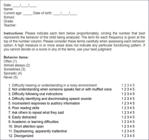
The FAT, translated into Brazilian Portuguese18, has 12 questions on auditory improvement perception, instruction comprehension, academic progress, requests for statement repetition, reduction of misunderstandings, increased attention span, auditory performance in noisy environments, and self-esteem after a specific approach for central auditory processing disorder. The subject was asked to assign a response to each item, representing their self-perception after ACAT, ranging from 0 to 4: 0 represents no improvement; 1, subtle but important improvement; 2, moderate improvement; 3, considerable improvement; and 4, significant improvement. This questionnaire was applied to both groups only at T1 and T2; since it is intended to evaluate post-intervention efficacy, its application at T0 was not justified. The questionnaire was also applied to the control group in order to compare IG with NIG.

This study’s ACAT was organized into nine individual 50-minute sessions held once a week19,20. The activities of each ACAT session involved monotic, dichotic, or binaural tasks, and were organized in progressive levels of complexity - i.e., the tasks became more difficult as the individual's performance improved. Thus, the auditory training program began with easier tasks considering stimulus redundancy until reaching the most difficult stimuli, phrases and syllables, respectively. The signal-to-noise ratio followed this same paradigm, from the most favorable (positive) to the least favorable (negative)18. The difficulty of each ACAT task in the booth was adjusted for each skill worked on and for each session to maintain the success/error rate approximately at 70/30%10. Auditory training included activities such as pointing to figures, phrases, and words, reproducing and naming sound patterns (imitation and naming), and repeating verbal stimuli, encompassing the stimulation of figure-ground skills for verbal and nonverbal sounds, auditory closure, and temporal processing (simple and complex temporal ordering). Activity items could be repeated during the training sessions when requested by the volunteer or determined by the speech-language-hearing pathologist. The patient's responses were recorded in specific protocols.
This article will address the results of the subjective evaluation of ACAT effectiveness - i.e., how much the therapeutic approach modified the patient's behavior from their own point of view.
Non-parametric tests were used because the dataset had a small sample size (less than 30 subjects). Hence, the analysis used the Friedman and Wilcoxon Tests. Confidence intervals were constructed with 95% statistical confidence, and the significance level was set at 0.05 (5%).
RESULTS
Regarding the sample size, the mean ages (in years) were similar between the groups, with no statistically significant difference: 58.4 years for the IG and 57.8 years for the NIG. They were not statistically significantly different regarding sex; the IG had a higher occurrence of males (71.4%), while the NIG had no female participants. As for education level, the majority in both groups were high school graduates (57.1% in the IG and 83.3% in the NIG). In both groups, the majority were classified with a Glasgow Coma Scale score of 15 before surgery, which is the highest possible score. The groups were not statistically significantly different regarding the length of hospital stay (days); the means were 2.9 days in the IG and 1.7 days in the NIG.
Descriptive analyses of the SAB, comparing the assessment points per group, are presented in Chart 1.
Questions 1 to 8, 10 to 12, and the total score were statistically significantly different in the IG between all time points (T0, T1, and T2), demonstrating that the volunteers perceived an improvement in auditory behavior and, consequently, their complaints decreased.
Question 10 and the total score were statistically significantly different in the NIG between all time points (T0, T1, and T2). Therefore, the volunteers noticed an improvement in auditory behavior.
The descriptive analyses of the TAF, comparing the evaluation time points per group, are presented in Chart 2.
Question 6 was statistically significantly different in the IG between T1 and T2. Therefore, the volunteers noted a decrease in complaints.
The total score was statistically significantly different in the IG and NIG between T1 and T2. Therefore, the individuals reported a significant improvement in auditory behavior.
DISCUSSION
It is important to emphasize that no studies were found that correlated these questionnaires with the theme of this project. However, the patient's self-perception of a therapeutic intervention is essential to assess its effectiveness and to contribute to the understanding of issues of adherence and motivation to treatment.
Implementing these subjective measures in the long term also makes it possible to study the maintenance of the gains provided by the intervention and to identify additional gains perceived over time, which allows for the proposal or not of new rehabilitation strategies.
SAB in the IG
SAB’s questions 1 to 8, 10 to 12, and its total score were statistically significantly different in the IG (Table 1), when comparing T0, T1, and T2 with each other. It can be said that complaints decreased at the end of the ACAT and 3 months after its completion. This improvement was observed in all questions, except for question 9, which refers to academic or learning difficulties. This is consistent with the participants' condition, since none of them were engaged in academic activities during the research period. Thus, the volunteers perceived an improvement in auditory behavior reflected in the decrease in complaints.
Analyzing the evolution of IG’s responses over the time points, it is important to note that questions 1 and 2 (Chart 1) address, respectively, comprehension in noisy environments and difficulty understanding when the speaker speaks quickly. Studies21,22 have stated that individuals with auditory processing disorder may have speech comprehension difficulties, which worsen in acoustically unfavorable environments. It is believed that the improvement in this study group is directly related to the objectives of the ACAT.
They also improved significantly in question 3, which addresses the difficulty in following oral instructions (Chart 1). However, some authors23 have indicated that this complaint also involves language and cognitive issues, varying according to the complexity of the instruction. Being able to follow instructions better can help the person resume professional and academic activities.
Question 4, which addresses difficulty in identifying and discriminating speech sounds (Chart 1), also improved significantly. This question was often compared to the reports of the IG volunteers, with the ease of syllable discrimination in the figure-ground task in their reassessments. It is known that the better the ability to differentiate sounds, the better the accuracy in decoding what is heard.
Question 5, which addresses the inconsistency of responses to auditory information (Chart 1), also improved significantly. Individuals reported a decrease in misunderstandings in their daily lives, which effectively contributes to better communicative interaction.
They also improved significantly in question 6, which addresses poor reading ability (Chart 1). Although this difficulty is more frequently linked to aspects of language23,24, the individuals in the IG reported greater speed and better comprehension when reading newspaper articles.
As mentioned earlier, none of the individuals were engaged in academic activities. Therefore, it is hypothesized that the improvement in reading is related to the acoustically unfavorable environment, since the participants reported that reading news largely took place on public transport and in their own homes, where there is usually distracting noise.
Likewise, they improved significantly in questions 7 and 11, which address, respectively, the request for repetition of the other person's speech and daydreaming and appearing inattentive (Chart 1). According to ASHA25, these complaints are frequent in individuals with auditory processing disorders. Therefore, it can be said that ACAT played its role in improving the attention of individuals, since there was a decrease in these complaints.
Question 8, which addresses easy distraction (Chart 1), improved significantly, corroborating authors26-28 who observed that ACAT was able to improve auditory attention. By reporting an improvement in attention capacity, we can hypothesize that communicative situations may have become less challenging and may have required less listening effort.
Question 10, which addresses short attention span (Chart 1), improved significantly, corroborating research26,27 that also observed improvement in this aspect post-ACAT in children/adolescents. Attention is an essential cognitive aspect in communicative exchanges and in reading and writing skills.
They also improved significantly in question 12, which addresses disorganized behavior (Chart 1). Many individuals in the IG associated this improvement with aspects related to attention and memory. According to Luria29, attention is the individual's ability to select an important stimulus and inhibit those that do not seem relevant; and, according to Grieve30, memory is associated with aspects of the individual's daily life and experience.
It can be said that ACAT had a positive impact in this regard. During the sessions, participants had to listen to the requests, maintain attention to retain the information, and recall it later. It is worth noting that memory complaints are very common in cases of brain injuries1.
The total score (Chart 1) improved significantly in the IG - it went from 27.4 at T0 to 40.7 at T1 and 44.3 at T2. This result corroborates the findings of a study22 that verified significant post-ACAT improvement in children. Its authors found a total score of 28.7 pre-ACAT and 35.8 post-ACAT.
It can be inferred that the group in the present research and the group in the comparative study had similar scores before ACAT, and that the IG improved noticeably after the intervention. The evidence observed in the IG, based on this questionnaire, demonstrated good applicability in individuals who underwent surgical intervention due to CSDH and were then submitted to an ACAT program.
SAB in the NIG
Question 10 (which addresses the attention span) and the total score were statistically significantly different in the NIG (Chart 1) between all time points (T0, T1, and T2). Therefore, the volunteers noticed an improvement in auditory behavior. This can be explained by the fact that most individuals in the NIG (about 65%) had already resumed their routine activities, mainly regarding work, unlike the IG (about 43%). It is important to note that, in question 10, while most IG participants progressed from "Almost always (2)" to "Sporadic (4)" in all three time points, those in the NIG progressed from "Almost always (2)" to "Sometimes (3)".
Regarding the total score, it is worth highlighting a statistically significant difference between the two groups when comparing the time points, meaning that the score improved and the complaints decreased. However, as mentioned earlier, there was also a difference between the groups at T1 and T2 (Chart 2), which shows that despite the simultaneous improvement, the improvement in the IG was significant and more robust.
FAT
The scarcity of studies using the FAT questionnaire and the absence of studies comparing its results after ACAT made it difficult to compare the literature with the findings of the present study.
This questionnaire aims to observe the effect of ACAT on the individuals' complaints. Although the NIG did not undergo any type of intervention, it was applied to both groups to compare their responses.
They improved significantly in question 6, which addresses misunderstandings in communication (Chart 3). Individuals reported a decrease in these episodes in their daily lives, which corroborates the findings of SAB question 5 in this study, in which a similar situation was reported.
The change observed in question 12 in most volunteers was a decrease in anxiety, which can indicate doubt or a certain powerlessness of the organism in the face of a given situation. As this complaint decreases, the person begins to show greater competence, reflecting confidence in their ability to respond to adverse situations, which can lead them to engage in more communicative situations31.
IG’s total score was statistically significantly different between T1 and T2 (Chart 3). Therefore, the volunteers noted a significant improvement in auditory behavior after long-term ACAT, ranging from 34.6 to 38.9 points. These scores were higher than those in a case study27, which found a score of 28 in an individual who performed ACAT. However, that questionnaire had 10 questions, while this study's questionnaire has two extra items. It is important to note that the highest frequency of responses in both studies was concentrated on items 2 and 3, which address moderate improvement and considerable improvement.
The comparison of time points per group in the SAB found an improvement in most questions, unlike what occurred in this questionnaire. This can be explained by the fact that the application only occurred in the last two time points, which may have left the volunteers without parameters to measure the responses, whereas they were familiar with the SAB from the first moment. Moreover, if the study had used a visual analog scale and a script with examples from the participants' daily lives, it could have helped them choose alternatives to ensure they understood the questions and provided more reliable answers about their own performance.
Although both the SAB and FAT have five response classifications, the latter has a more distinct vocabulary. Thus, the meaning of "subtle, moderate, considerable, and significant" may have led participants to different interpretations, even with the evaluator's assistance at the time of application.
The total score was also statistically significantly different between the time points in both groups, meaning their scores improved and their complaints decreased. However, as already mentioned, there was also a difference between the groups at T1 and T2 (Chart 3), showing that despite the improvement in both groups, the improvement in the IG was significant and more evident (Chart 4). The volunteers noted a significant improvement in long-term behavior, ranging from 27.7 to 29.3 points in the total score, demonstrating not only the stability of the changes perceived after the ACAT but also continued improvement.
Concluding remarks
Many studies have addressed the self-perception of hearing in individuals who underwent ACAT. However, most of these studies were conducted with children or adolescents, and they found a decrease in complaints.
The present research also found a significant decrease in complaints in adults, reinforcing the idea that the intervention improves the individual's quality of life, measuring the benefit subjectively.
It is worth noting that the intervention’s objective is not to reallocate them within the normality standards defined by behavioral and electrophysiological tests, but rather to provide greater confidence and autonomy in their daily communication situations.
A recent study32 applied questionnaires to an adult population with central auditory processing disorder and found that certain complaints correlated with auditory behavioral tests, proving the importance of separating peripheral auditory aspects (audiometry) and central ones (assessment of central auditory processing). The authors suggest that administering questionnaires at different time points during interventions can provide more data on the intervention and its evolution in order to overcome certain limitations encountered when rehabilitating adults with complaints of noise comprehension and discrimination of certain sounds.
The SAB was developed as a screening questionnaire, initially to be applied to parents and teachers. In this sense, this study presents a new clinical application for the instrument, since the questionnaire was used to demonstrate ACAT’s impact on their auditory and attentional behaviors according to the patient's own opinion.
These findings reinforce the need to use questionnaires to assist speech-language-hearing pathologists in screening auditory processing in adults, thus expanding the possibilities of early diagnoses and monitoring of future interventions.
These analyses show the need to develop tools for monitoring auditory behavior aimed at adults and older adults, since the vast majority of those surveyed are children.
Individuals with CSDH presented complaints regarding speech comprehension in noisy environments. A proposed minimum battery of tests to detect such complaints and refer them to services, when necessary, would be the application of the SAB questionnaire, as it revealed complaints of auditory behavior impacting the individual's routine when applied at T0. Afterward, they should be evaluated and rehabilitated to provide them with a better quality of life.
CONCLUSION
The responses to self-perception questionnaires improved significantly, being most evident in participants who underwent auditory training and in the SAB questionnaire, when comparing the application time points. The results remained stable during longitudinal follow-up.
REFERENCES
-
1 Ernestus RI, Beldzinski P, Lanfermann H, Klug N. Chronic subdural hematoma: Surgical treatment and outcome in 104 patients. Surg Neurol. 1997;48(3):220-5. https://doi.org/10.1016/S0090-3019(97)80031-6
» https://doi.org/10.1016/S0090-3019(97)80031-6 -
2 Yasuda CL, Morita ME, Nishimori FY, Yasuda AM, Alves HL. Hematoma subdural crônico: estudo de 161 pacientes operados e a relação com alterações no coagulograma. Arq Neuro-Psiquiatr. 2003;61(4):1011-4. https://doi.org/10.1590/S0004-282X2003000600023
» https://doi.org/10.1590/S0004-282X2003000600023 - 3 Mitchell R, Kreutzer JS, Griffith ER, Pentland B. Rehabilitation of the adult and child with traumatic brain injury. 3rd ed. Philadelphia: F. A. Davis Company; 1999.
-
4 Peres ACD, Asano C, Carvalhaes CLL, Cesar MF. Clinical impairments of patients with acquired encephalic lesions that interfere with their dental treatment. Acta Fisiátr. [journal on the Internet]. 2011 [accessed on 16 mar 2022]; 18(3):119-23. Available at: https://www.revistas.usp.br/actafisiatrica/article/view/103635
» https://www.revistas.usp.br/actafisiatrica/article/view/103635 -
5 Marangoni AT, Suriano IC, Buriti AKL, Gil D. Formal auditory training with individuals after traumatic brain injury. Health. 2017;9(6):975-86. https://doi.org/10.4236/health.2017.96070
» https://doi.org/10.4236/health.2017.96070 - 6 Ribas A. Alterações no processamento auditivo central e as dificuldades de aprendizagem. J Bras Fonoaudiol. 2000;1(3):16-20.
-
7 American Speech-Language-Hearing Association (ASHA) [webpage on the internet]. (2005). Central Auditory Processing Disorders. American Speech-Language-Hearing Association [accessed on 3 jan 2025]. Available at: https://www.asha.org/practice-portal/clinical-topics/central-auditory-processing-disorder
» https://www.asha.org/practice-portal/clinical-topics/central-auditory-processing-disorder -
8 Musiek FE, Shinn J, Hare C. Plasticity, auditory training, and auditory processing disorders. Semin Hear. 2002;23(4):263-75. https://doi.org/10.1055/s-2002-35862
» https://doi.org/10.1055/s-2002-35862 -
9 Chermak GD. Neurobiological connections are key to APD. Hear J. 2004;57(4):58-9. https://doi.org/10.1097/01.HJ.0000292421.45244.9e
» https://doi.org/10.1097/01.HJ.0000292421.45244.9e -
10 Musiek F, Schochat E. Auditory training and central auditory processing disorders: A case study. Semin Hear. 1998;19(4):357-66. https://doi.org/10.1055/s-0028-1082983
» https://doi.org/10.1055/s-0028-1082983 -
11 Jirsa RE. Clinical efficacy of electrophysiologic measures in APD management programs. Semin Hear. 2002;23(4):349-56. https://doi.org/10.1055/s-2002-35883
» https://doi.org/10.1055/s-2002-35883 -
12 Sweetow RR. Training the adult brain to listen. Hear J. 2005;58(6):10-7. https://doi.org/10.1097/01.HJ.0000324238.75342.25
» https://doi.org/10.1097/01.HJ.0000324238.75342.25 -
13 Mahncke HW, Connor BB, Appelman J, Ahsanuddin ON, Hardy JL, Wood RA et al. Memory enhancement in healthy older adults using a brain plasticity-based training program: A randomized, controlled study. Proc Natl Acad Sci USA. 2006;103(33):12523-8. https://doi.org/10.1073/pnas.0605194103
» https://doi.org/10.1073/pnas.0605194103 -
14 Meredith W, Rutledge R, Fakhry SM, Emery S, Kromhout-Schiro S. The conundrum of the Glasgow Coma Scale in intubated patients: A linear regression prediction of the Glasgow verbal score from the Glasgow eye and motors scores. J Trauma. 1998;44(5):839-45. https://doi.org/10.1097/00005373-199805000-00016 PMID: 9603086.
» https://doi.org/10.1097/00005373-199805000-00016 -
15 Lloyd L, Kaplan H. Audiometric interpretation: A manual of basic audiometry. Press, 1978. https://doi.org/10.1001/archotol.1970.04310040005002 PMID: 5455571.
» https://doi.org/10.1001/archotol.1970.04310040005002 - 16 Jerger J. Clinical experience with impedance audiometry. Arch Otolaryng. 1970;92(4):311-24.
- 17 Nunes CL, Pereira LD, Carvalho GS. Contribution of Scale Auditory Behavior (SAB) in the diagnosis of Auditory Processing Disorder in Portuguese children. Global Perspectives on Central Auditory Processing Disorder. Boston: USA; 2012 Mar 30-31.
- 18 Dias KZ. Treino auditivo formal nos distúrbios de processamento auditivo. In: Bevilacqua MC, Martinez MAN, Balen SA, Pupo AC, Reis ACMB, Frota S, editors. Tratado de audiologia. São Paulo: Santos; 2014. p. 829-44.
- 19 Ziliotto ZN, Pereira LD. Estimulação auditiva em cabina acústica: relato de caso. In Pereira LD, Azevedo MF, Machado LP, Ziliotto KN, editors. Processamento auditivo: terapia fonoaudiológica. Uma abordagem de reabilitação. São Paulo: Lovise; 2007.
- 20 Jerger J, Musiek F. Report of the consensus conference on the diagnosis of auditory processing disorders in school-aged children. J Am Acad Audiol. 2000;11(9):467-74. PMID: 11057730.
- 21 Pereira LD, Schochat E. Processamento auditivo central: manual de avaliação. São Paulo: Lovise; 1997.
-
22 Sobreira ACO, Gil D. Scale of auditory behaviors in the monitoring of acoustically controlled auditory training. Rev. CEFAC. 2021;21(1):e2720. https://doi.org/10.1590/1982-0216/20212312720
» https://doi.org/10.1590/1982-0216/20212312720 -
23 Lucas PA, Zacare CC, Alves Filho OC, Amantini RCB, Bevilacqua MC, Zaidan E. Scan: Performance profile of children with seven to eight years. Pró-Fono R. Atual Cient. 2007;19(4):370-3. https://doi.org/10.1590/50104-56872007000400008 PMID: 18200386.
» https://doi.org/10.1590/50104-56872007000400008 -
24 Sharma M, Purdy SC, Kelly AS. Comorbidity of auditory processing, language, and reading disorders. J Speech Lang Hear Res. 2009;52(3):706-22. https://doi.org/10.1044/1092-4388(2008/07-0226)
» https://doi.org/10.1044/1092-4388(2008/07-0226) -
25 American Academy of Audiology [webpage on the internet]. (2010). Guidelines for the diagnosis, treatment, and management of children and adults with central auditory processing disorder [accessed on 3 jan 2025]. Available at: https://audiology-web.s3.amazonaws.com/migrated/CAPD%20Guidelines%208-2010.pdf_539952af956c79.73897613.pdf
» https://audiology-web.s3.amazonaws.com/migrated/CAPD%20Guidelines%208-2010.pdf_539952af956c79.73897613.pdf -
26 Garcia VL, Pereira LD, Fukuda Y. Selective attention: PSI performance in children with learning disabilities. Rev Bras Otorrinolaringol. 2007;73(3):404-11. https://doi.org/10.1590/S0034-72992007000300017
» https://doi.org/10.1590/S0034-72992007000300017 -
27 Musiek F, Schochat E. Auditory training and central auditory processing disorders: A case study. Semin Hear. 1998;19(4):357-66. https://doi.org/10.1055/s-0028-1082983
» https://doi.org/10.1055/s-0028-1082983 -
28 Cibian AP, Pereira LD. Use of a questionnaire in monitoring auditory training outcomes. Distúrb. Comunic. [journal on the internet]. 2015 [accessed on 3 jan 2025]; 27(3):470-82. 2015. Available at: https://revistas.pucsp.br/index.php/dic/article/view/22907
» https://revistas.pucsp.br/index.php/dic/article/view/22907 - 29 Luria AR. Percepção. In: Luria AR, editor. Fundamentos de neuropsicologia. São Paulo: EDUSP; 1981. p.199-212.
- 30 Grieve J. Neuropsicología para terapeutas ocupacionales: evaluación de lapercepción y cognición. 2 ed. Madri: Médica Panamericana; 2000.
-
31 Santos JS, do Nascimento BKM, da Silva MS, de Souza EA, Fermoseli AF de O. A relação da neurofisiologia do transtorno da ansiedade com a neurofisiologia do tabaco. CBS [journal on the internet]. 5 Jun 2017 [accessed on 23 apr 2025]; 4(1):51. Available at: https://periodicos.set.edu.br/cdgsaude/article/view/3847
» https://periodicos.set.edu.br/cdgsaude/article/view/3847 -
32 Bamiou DE, Iliadou VV, Zanchetta S, Spyridakou C. What can we learn about auditory processing from adult hearing questionnaires? J Am Acad Audiol. 2015;26(10):824-37. https://doi.org/10.3766/jaaa.15009 PMID: 26554488.
» https://doi.org/10.3766/jaaa.15009
-
A study conducted at the Universidade Federal de São Paulo, São Paulo, SP, Brazil.
-
Financial support
Nothing to declare
-
Data sharing statement
Data to be shared: medical records, analysis results, charts, and tables. Availability period: the data will be available for 5 years. Access criteria: the aggregated data and analysis results will be available for consultation in an online repository for 5 years. Individual participant data will be shared with other researchers after the completion of the research, upon signing a confidentiality agreement.
Data to be shared: medical records, analysis results, charts, and tables. Availability period: the data will be available for 5 years. Access criteria: the aggregated data and analysis results will be available for consultation in an online repository for 5 years. Individual participant data will be shared with other researchers after the completion of the research, upon signing a confidentiality agreement.


