
 The journey of mothers who experience difficulty to breastfeed
ABSTRACT
Purpose: to understand the journey of mothers who face breastfeeding difficulties.
Methods: a study comprising 10 nursing mothers of full-term infants who had difficulty breastfeeding and attended the Human Milk Bank. Data were collected through the application of a semi-structured questionnaire about breastfeeding difficulties, answered through directed interviews conducted and recorded using the Google Meet platform, transcribed into a Microsoft Word document and analyzed qualitatively. For the qualitative analysis of the data, the ATLAS.ti software was used.
Results: nipple fissure was the most frequent interference (90%), 40% of the participants had problems related to latching, 20% of the infants presented alteration of the lingual frenulum, 40% of the sample reported weak/insufficient milk, and 10% had postpartum depression. Among the professionals/services consulted, maternity hospital, emergency care unit, basic health unit, Pediatrics, Gynecology, Dentistry and Breastfeeding Consultancy were cited. Six of the ten mothers were unable to maintain breastfeeding until their infants were six months old.
Conclusion: nursing mothers share similar aspects regarding the stages of difficulty emergence, problem identification, and the journey, often long, to establishing effective breastfeeding.
Keywords:
Breastfeeding; Weaning; Maternal-Child Health Services
RESUMO
Objetivo: descrever o percurso de nutrizes com dificuldades para amamentar.
Métodos: essa pesquisa foi realizada com 10 nutrizes de bebês a termo, que apresentaram dificuldade para amamentar e frequentaram o Banco de Leite Humano. Os elementos foram colhidos por meio da aplicação de um questionário semiestruturado sobre dificuldades de amamentação respondido em entrevista dirigida. As entrevistas foram realizadas e gravadas pela plataforma “Google Meet”, transcritas em documento do Word e analisadas de maneira qualitativa. Para a análise qualitativa dos dados, foi utilizado o software ATLAS T.I.
Resultados: a fissura mamilar foi o acometimento mais frequente; 40% das participantes tiveram problemas relacionado a pega. 20% dos lactentes apresentaram alteração de frênulo lingual; 40% da amostra relatou leite fraco/insuficiente; 10% apresentou depressão pós-parto. Dentre os profissionais/serviços consultados estiveram: hospital maternidade; unidade de pronto atendimento; unidade básica de saúde; Pediatria; Ginecologia; Odontologia e Consultoria de amamentação. Seis das 10 mães não conseguiram manter o aleitamento materno até os seis meses de vida de seu filho.
Conclusão: mães que amamentam compartilham aspectos semelhantes em relação aos estágios de surgimento de dificuldades, identificação de problemas e a jornada, muitas vezes longa, para estabelecer uma amamentação efetiva.
Descritores:
Aleitamento materno; Desmame; Serviços de Saúde Materno-Infantil
INTRODUCTION
Breastfeeding is an effective and low-cost ancestral practice. Studies have shown that this practice, in addition to nutrition for the infant, provides many other benefits such as reducing morbidity and mortality from infectious and chronic diseases and allergies, cognitive development, development of the oral cavity, as well as strengthening the mother-child affective bond1. The World Health Organization (WHO) recommends breastfeeding for up to two years or more, and exclusively for up to six months of life. Breastfeeding can be classified into five categories: exclusive breastfeeding; predominant breastfeeding; breastfeeding; supplemented breastfeeding and mixed or partial breastfeeding2.
Speech-Language and Hearing Therapy is fundamental in the effectiveness of breastfeeding and in promoting the health of the mother and infant, as it provides guidance on sucking and swallowing during breastfeeding, as well as the impact that these phenomena have on the orofacial muscles3, helping to prevent precocious weaning. The interruption of breastfeeding before six months of life is described as early weaning, with important consequences for the development of the infant, since no type of food or formula replaces breast milk, which is very rich in nutrients4.
As for breastfeeding obstacles presented by primiparous women, a study pointed out that there were frequent complaints that they felt ashamed to expose themselves when breastfeeding, had difficulties related to the infant’s position, incorrect latching, nipple cracks, breast stiffness, and even the idealization that breast milk is weak and insufficient to nourish the infant5. Another important point are beliefs such as “breasts will sag a lot when breastfeeding”, “breast milk alone does not nourish”; “if the milk drips on the floor, the breast dries up”; “if the child burps at the breast, the milk freezes”, which can affect the mother's behavior regarding breastfeeding6. Among the factors that lead to early weaning are the lack of encouragement from health professionals to practice exclusive breastfeeding, pain and nipple trauma, the use of pacifiers, insufficient milk and the mother's lack of knowledge about breastfeeding7.
Studies on patient journeys, with the aim of identifying the trajectory of patients facing a health issue, whether in search of diagnosis, treatment or to solve some health condition, have gained space in the health area. There are patient journey studies in areas such as: patient journey in the hospital8, non-radiographic axial spondyloarthritis9, quality in burn care10, patients with chronic diseases 11, acquired hearing impairment12, hip replacement surgery13, fibromyalgia14, cancer15, and schizophrenia16. However, no studies, that described the journey taken by mothers who experience difficulties in breastfeeding, were found.
Thus, the aim of this study was to understand the journey of mothers who face breastfeeding difficulties. It is expected that this study will contribute to understanding the journey of nursing mothers with breastfeeding difficulties and, based on the results obtained, increase the awareness of health professionals about what their needs are and providing that strategies and awareness programs are created, addressing exactly the points that are obstacles in the journey.
METHODS
Qualitative, cross-sectional and exploratory study approved by the Ethics and Research Committee of the Bauru School of Dentistry, University of São Paulo, SP, Brazil, with CAAE nº 50012221.2.0000.5417 and opinion nº 5.471.494, and by the Scientific Committee of the Bauru Health Division. The participants were previously informed about the procedures and signed the Informed Consent Form (ICF) before the beginning of the study.
The sample consisted of 10 nursing mothers. Inclusion criteria: mothers of full-term infants linked to the Human Milk Bank of Bauru (HMB), SP, Brazil, who presented difficulties in breastfeeding. Exclusion criteria: mothers of infants with a history of prematurity, diagnosis of neurological disorders, syndromes and/or craniofacial anomalies. Initially, an invitation was made to potential participants. Those that met the inclusion criteria and were available were directed for data collection. The interviews were scheduled and, before carrying out the interview, care was taken to confirm that the participant had signed the ICF, agreeing to participate in the research.
The Google Meet platform was used to carry out the directed interviews, where the participants answered a semi-structured questionnaire and reported their trajectory on breastfeeding. The interviews were recorded on the platform and literally transcribed into a Microsoft Word document by the researcher.
When conducting the interviews, the researcher allocated herself to a quiet and reserved room with good lighting, used headphones and positioned the camera appropriately, for better quality and greater confidentiality of the collected material. The participant was also asked to be in a quiet room, use headphones, and keep the camera and microphone open during the interview. The mother was allowed to be in the company of the infant.
The investigation of breastfeeding difficulties was carried out using a semi-structured questionnaire, with initially closed questions, being opened based on the response of each participant, that is, based on the structured response, the participant was invited to make a more detailed report on the subject discussed. The data collection instrument (Appendice 1) was developed based on the main obstacles to breastfeeding found in the literature3-7 and divided into “Demographic Data” and “Questionnaire” itself. The questionnaire included six thematic domains: Breast body parts; Infant; Lingual frenulum; Breast milk, Psychosocial aspects and Professionals/services consulted. Patient journey surveys are usually carried out by collecting data from interviews and the questions are prepared based on the experience of the authors and the literature available on the subject11-13.
The reports were analyzed using thematic analysis17, following the stages of familiarization with the data, namely, generation of initial codes (categories) and identification and review of themes (patterns/themes). The information reported by the mothers was organized in tables, considering the different categories of the questionnaire. In qualitative studies, the saturation factor is considered to stipulate the necessary number of participants for analysis17. In this way, the interviews were conducted until the moment when the research team noticed that the inclusion of new participants would not bring relevant information to the aim of the study, understanding that the subject was saturated, ending the collection.
For the qualitative analysis of the data, the ATLAS.ti software, version 23 for desktop (Windows), which is a computer-assisted qualitative data analysis software that acts facilitating the analysis of qualitative data for qualitative, quantitative studies and research of mixed methods, was used.
RESULTS
The nursing mothers' ages ranged from 26 to 40 years old, with an average age of 32.9 years old. Nine participants were married; seven of them had completed higher education; five had more than 1 child; and four previously had difficulty breastfeeding (Chart 1).
The participants, in total, felt pain when breastfeeding and had some alteration in the breasts. The nipple fissure was identified as the main interference related to the “breast body parts” factor (90%). Other factors that appeared associated with the breasts were breast engorgement; nipple hypersensitivity, bleeding, loss of breast tissue and mastitis (Chart 2).
When observing the responses regarding the description of milk, from the participant's point of view, six out of ten participants believed that their milk was “strong” and with all the nutrients needed for the infant. Among the other four participants (40%), three judged their milk as “weak” and one reported finding the milk in her right breast “weak” and thin.
As for aspects of personal life, it was observed that one of the participants (10%) had postpartum depression. In addition, another participant reported episodes of sadness after the birth of her infant and three participants reported having difficulty in their personal and social life.
The infant’s latch was classified as partially correct or still in need of adequation, according to the mother, in four out of ten cases (40%). Five participants (50%) claimed crying and/or agitation of their babies, after breastfeeding, and all participants wanted their pregnancy (Chart 3).
As for the lingual frenulum, 100% of the sample performed the evaluation, two infants (20%) were indicated for the surgical procedure, among which one infant underwent frenotomy. Even with the procedure, breastfeeding was not successful.
Regarding the professionals and services consulted, it was observed that 90% of the sample sought more than one service to try to establish efficient breastfeeding. Among them, nursing mothers cited the HMB, maternity hospital, emergency care unit, basic health unit, Pediatrics; Gynecology, Dentistry and Breastfeeding Consultancy (Chart 4).
Finally, it was observed that six of the ten mothers interviewed (60%) were unable to maintain breastfeeding until their infant was six months old, having their breastfeeding journey ended by early weaning.
For the thematic analysis, literary findings on the main obstacles to breastfeeding were used as a basis. There was a familiarization with the data, with the aim of looking for patterns and meanings before starting the coding process. A code was formulated for each section that addressed the breastfeeding journey. The most frequently reported words were gathered in a cloud of words generated by the ATLAS.ti software for each theme. From the analysis, 21 codes/categories were generated (Chart 5), which are presented in Chart 5.
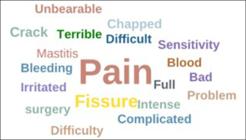
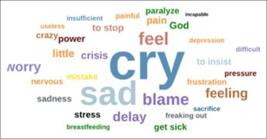
Through coding and deductive analysis, the following patterns/themes were established: Breast body parts, infant, lingual frenulum, breast milk, psychosocial aspects and professionals/services consulted. With the coding, identification and construction of themes, individual discussion was carried out for each theme and the words reported in greater frequency were gathered in a cloud of words generated by the ATLAS.ti software (Figures 1, 2, 3 and 4). The nursing mothers' quotations were described in the discussion according to their relevance to the theme.
DISCUSSION
This is the first study that investigated the journey of nursing mothers with breastfeeding difficulties. This study was conducted to understand the journey of nursing mothers with difficulty breastfeeding. Thus, a semi-directed interview was carried out, respecting the thematic domains of the questionnaire mentioned in the methods. To facilitate the analysis of patterns (themes), the discussion was divided according to them.
Breast body parts
The breast body parts were observed considering the symptoms attributed to them, pain when breastfeeding and difficulty in previous breastfeeding. The nipple fissure, a condition found in greater prominence in this theme, is the lesion of the epithelial tissue that constitutes the nipple, which may be a gateway for bacteria through the lactiferous ducts or periductal lymphatics. This condition, associated with pain and sensitivity, was a trigger for nursing mothers to seek intervention, and can be understood as the beginning of the journey towards effective breastfeeding. Although women may experience nipple tenderness or mild initial discomfort when beginning breastfeeding, it is important to emphasize that effective breastfeeding dynamics should not be accompanied by pain.
Primiparous women had a higher frequency of involvement, which can be explained by inexperience or even breast exposure for the first time18. This condition has an incidence of approximately 80% in puerperal women19. In the analyzed sample, the incidence of this condition was 90%, a result superior to the literary findings.
“It is a very intense pain, because when the infant sucks on it, in addition to making a fissure [..] it starts to turn red, it was a very strong pain, like seeing stars” (Sample 1).
“[...] It was right on the nipple. But I didn't have bleeding, it didn't crack a lot, it was a sensitivity. I couldn’t put my clothes on, it was that kind of pain.” [...] there, at the milk bank, they called it "little scratches" (nipple fissure)”. (Sample 2).
“It was very strong and unbearable. I almost stopped breastfeeding because of the pain. I felt like he was biting my breasts. I cried a lot in pain, but I was aware that he needed that milk a lot, so I didn't stop. [...] it cracked a lot and had loss of tissue, both nipples became raw, he even sucked blood, it was really complicated” (Sample 3).
“I had cracks in my breast, I didn't know how to breastfeed. Pain that felt like pins and needles, that was tearing through the breast. [...] A lot of blood came out. When I started going to the milk bank, they helped me a lot, now the infant latches well, it hurts even more, but less” (Sample 4).
“A lot of pain in the breasts. I had no idea it was like this, it's a terrible pain. Not even the labor contractions were as painful as this pain I felt. [...] I had a fissure and also had a beginning of mastitis”. (Sample 5).
“I even had bleeding from my breasts, I think it was because of the cracked nipples. It hurt a lot. [...] I have a short “breast nipple”. (Sample 6).
“As my infant had a frenulum problem, it hurt when he was breastfeeding. [...] And since I had little milk production and fissures, it was no use for him to be sucking”. (Sample 8).
“Fissures in the nipples, I felt a lot of pain to breastfeed. [...] no further changes”. (Sample 9).
“In the first months, as I had little milk, my nipples ended up hurting [...] small cracks” (Sample 10).
Another notable factor was puerperal mastitis, which is an inflammation of the glandular tissue and usually appears within the first six weeks after childbirth. Factors such as family activity without support, lack of guidance, low income and primiparity are risk factors for the appearance of mastitis20. Among the studied group, there is a participant with the condition described above (Sample 5). Making an analogy with the literature, the primiparity factor and unsupported family network coincide with the risk factors. In the set of most frequent words of this theme (Figure 1), it was possible to observe greater prominence for the word “pain”, which was referred to by the sample as a whole, thus demonstrating the greatest characteristic of this theme.
Infant
According to the Ministry of Health21, regarding the position for breastfeeding, the infant must be facing the mother, next to her body and completely supported and arms free. The infant's head should be facing the nursing mother's breast and right in front of the nipple. It is recommended that the nursing mother only put the infant to suck when the infant opens the mouth wide. As for latching, the infant's chin should touch the breast, the lips will be turned outward, and the nose will be free. The infant should bite beyond the nipple, as far as possible from the areola.
“The latch is not 100% okay, because the girls at the milk bank taught how to do it correctly, keep pulling the chin for her to open the mouth, because they are born with a very small mouth, right?” (Sample 1)
“I still feel pain. I can only do the latch if I'm standing, belly to belly.” (Sample 4)
“It was verified that his tongue was straight, it didn't go up to the roof of his mouth, it stopped in the middle, you know? This made the latch difficult, along with my inexperience” (Sample 6)
“The tongue was cut and a few more follow-up to help with the correct latch was done” (Sample 8)
When breastfeeding is established, the infant can communicate various needs and even feelings to the mother22. The infant can inform if he does not want more milk, that he is hot, that he has colic or other pain.
Ankyloglossia is associated with unsuccessful breastfeeding and maternal well-being and can prevent the practice of exclusive breastfeeding. The prevalence of ankyloglossia can vary from 0.88% to 16%23,24. Assessment of the lingual frenulum in babies has been mandatory in Brazil since 2014, according to law number 13.002/201423. In the sample studied, an incidence of 20% of cases of ankyloglossia was observed, which is higher than literature findings, presenting itself as a factor for early weaning.
“[...] It was performed at the milk bank, not at the maternity hospital. [...] He's going to have to do a frenotomy, he did all the tests on the milk bank and the pediatric dentist said he's going to have to do the surgery. He got an 8 on the test.” (Sample 3)
“He was born tongue-tied. But I had the help I needed at the milk bank. A cut was made on the tongue and a few more follow-ups were done to improve the latch” (Sample 8).
Ankyloglossia is a congenital anomaly that occurs when embryological remnant tissues, which should have undergone apoptosis during embryonic development, remain on the underside of the tongue, restricting tongue mobility. The tongue plays an important role in swallowing, articulating words and sucking. Ankyloglossia restricts the range of motion of the tongue, thus impairing its functions 25.
Breast milk
The characteristics of breast milk can be considered as aggravating the mother's suffering and the perception of severity in the breastfeeding journey. According to the literature, among the causes of early weaning, in one study, 78% of mothers reported that “my milk is weak, it does not nourish”, and the baby's crying was an important factor, as it was interpreted by mothers as a confirmation that the milk xfwas not nourishing the baby26. In the present study, 40% of participants reported having weak milk, as well as little milk production. Regarding the “crying after feeding” factor, 75% of mothers participating in the present study related crying after feeding to weak milk. In the word cloud (Figure 2), regarding the theme “Milk”, the highlighted words were “little”, “weak”, “low”, “thick”, “insufficient”, “formula” and “complementary”, suggesting that, in addition to factors related to breast milk, participants reported supplementation or replacement with infant formula.

Four participants claimed crying and/or agitation after feeding, among the causes they cited “colic” and “weak milk” or “insufficient milk”. The perception of breast milk as "weak" highlights the importance of education about the natural variability in the composition of milk and the factors that can influence production. Furthermore, strategies to address maternal insecurity regarding milk quality can be integrated into counseling practices. The perception of breast milk, lack of identification of hunger, post-feeding crying and breastfeeding experience were grouped under this theme.
“I notice that in the left breast only that thinner milk comes out, first milk, you know?! In the left breast, the milk is always thicker. [...] I think my amount of milk is not good. [...] My breast is big and flaccid” (Sample 2).
“My breast does not produce enough milk, so I am supplementing with 45 ml of supplement. The milk bank nurse advised me to give up to 60 ml of supplement” (Sample 4).
"My milk is insufficient, due to this difficulty, pain and the infant's development, I preferred to start the formula after the first week after the follow-up, interspersing it with breast milk expressed with the electric pump". (Sample 6)
“I think it's weak and insufficient, since the first time they tried to put the infant on my breast to breastfeed, he couldn't because of the inverted nipple, in the maternity hospital the introduction of formula has already started. As I stayed for two days, the nursing team and I tried to put the infant to breastfeed, but without success” (Sample 7).
“My milk was insufficient for the infant. I was taking Domperidone to increase production since his second month of life. [...] I think it was very weak” (Sample 10).
Psychosocial aspects
Availability to breastfeed, psychological and social aspects and perceptions of others regarding the problem were the attributes observed in this theme. The prevalence of postpartum depression ranged from 5% to 9%.
“[...] I felt happy breastfeeding, imagining that I was being a source of food and nutrition for my son. After the first consultation with the pediatrician came the frustration and sadness of realizing after the evaluation that even with all the sacrifice and pain, the milk was insufficient and the latch was incorrect. [...] I had depression, especially after the first consultation with the pediatrician, I experienced a lot of sadness and a lot of crying”. (Sample 6)
“[...] Going back to work was a difficult factor, I work six hours a day. Other than that, there was no social factor that made it difficult” (Sample 10).
Primiparous women are at greater risk for mental disorders such as Postpartum Blues. Characterized by self-limited emotional outburst, disappearing spontaneously over days and weeks. Occasionally, it appears as a feeling of sudden sadness and anxiety27. Family support is vital for coping with this problem. In this study, one participant reported postpartum depression (10%), a result superior to literary findings. Among the most frequent words in this theme (Figure 3), it was observed that the words “cry”; "to feel" and “sad” were the most frequent, being the words that best defined the theme “Psychosocial Aspects”.
Returning to work causes frustration in working mothers because they are unable to maintain breastfeeding as they wish, because of interrupting free demand. These nursing mothers create strategies to maintain breastfeeding after maternity leave28.
Professionals/services consulted
In view of the information conceived, it is important to understand that the process for establishing effective breastfeeding, for women with difficulty, requires patience and motivation so that there is no early weaning. The categories identified were: consulted professionals, guidelines received, guidelines followed, discontinued breastfeeding, introduction of infant formula and dissatisfaction and satisfaction with the professional. The results showed that all complaints need to be heard and the patient needs to be seen as a whole by health professionals. In addition, satisfaction with the professionals represents a fundamental factor in guiding the nursing mother during her journey. Participants often praised the professionals who assisted them, both in public and private services, but there is still a portion of professionals who were not praised, which is an aspect that probably contributed to one of the participants continuing to try to breastfeed alone (Sample 5).
“I went to my gynecologist again, because he wanted to see me and then he gave me a moral lesson, he called me irresponsible, that I was acting like a spoiled child. He also advised me to go to the Milk Bank. [...] And then the day came when she went to the pediatrician and he said that since she was underweight, she would be retarded, with cognitive delay. [...] From then on, I started trying on my own. (Sample 5).
Another notable factor was the conflict in the guidance received from professionals during the journey, which proved to be another obstacle to the establishment of breastfeeding. In the literature, a gap was observed between the health professional's view on early weaning and the report of nursing mothers29, in addition to health professionals having greater knowledge of breastfeeding theory and less practical mastery30, leading to ineffective strategies for nursing mothers. Among the most frequent words in the theme (Figure 4), the word Milk Bank, was observed with greater emphasis due to the inclusion criteria of this study (the participant should be linked to the HMB). Other words cited were hospitals, maternity, and pharmacists.

This was the first study that investigated the journey of nursing mothers with breastfeeding difficulties. The results of this research as a whole can help health professionals who work with nursing mothers, in demystifying the breastfeeding process and in understanding the experience of these women during breastfeeding difficulties, in order to promote a more humanized and patient-centered treatment, so that breastfeeding is established more effectively. It is relevant to highlight the significant contribution of the Milk Bank and other specialized services. Recognizing the role of these institutions in promoting and supporting breastfeeding increases the importance of an integrated maternal and child health care network. Additionally, when confronting the discrepancies in the guidance provided by professionals, it becomes clear that consistency in approach is vital for effective care. Resolving the factors that cause these divergences is essential, as they directly influence the experience of mothers, which can generate confusion and demotivation.
It is important to continue the study with different groups of mothers, making it possible to compare those who were successful in the breastfeeding process and those who were not able to breastfeed. Thus, we highlight the importance, for future research, that the specificities of this study be considered, proposing an analysis with patients from different groups, addressing socioeconomic factors, prematurity, craniofacial anomalies, among other aspects, in order to know, on a larger scale, the journey of nursing mothers with difficulty breastfeeding and follow them for a longer period.
CONCLUSION
Nursing mothers share similar aspects regarding the stages of difficulty emergence (pain during breastfeeding), problem identification (nipple fissure, ankyloglossia, low milk production, postpartum depression), and the journey, often long, to establishing effective breastfeeding. Satisfaction with health professionals significantly influences the mother's experience, while conflicts in the guidance received contribute to difficulties.
ACKNOWLEDGMENTS
To the Coordination for the Improvement of Higher Education Personnel (CAPES), the Unified Scholarship Program, the Bauru Municipal Government - Municipal Health Secretariat, the Bauru Human Milk Bank, and the University of São Paulo, campus at Bauru.
REFERENCES
- 1 Battaus MRB, Liberali R. A promoção do aleitamento materno na estratégia de saúde da família - revisão sistemática. Rev APS. 2014;17(1):93-100.
- 2 World Health Organization. Indicators for assessing infant and young child feeding practices: conclusions of a consensus meeting held 6-8 November. Washington, DC: WHO, 2007.
-
3 Medeiros AMC, Batista BG, Barreto IDC. Breastfeeding and speech-language pathology: Knowledge and acceptance of nursing mothers of a maternity. Audiol., Commun. Res. 2015;20(3):183-90. https://doi.org/10.1590/2317-6431-ACR-2015-1565
» https://doi.org/10.1590/2317-6431-ACR-2015-1565 -
4 Almeida IS, Ribeiro IB, Rodrigues BMRD, da Costa CCP, Freitas NS, Vargas EB. Amamentação para mães primíparas: perspectivas e intencionalidades do enfermeiro ao orientar. Cogitare Enfermagem. 2010;15(1):19-25. https://doi.org/10.5380/ce.v15i1.17139
» https://doi.org/10.5380/ce.v15i1.17139 -
5 Silva AM, Santos MCS, Silva SRM, Ferreira FA, Freitas RSC, Santos REA et al. Aleitamento materno exclusivo: empecilhos apresentados por primíparas. Rev enferm UFPE. 2018;12(12):3205-11. https://doi.org/10.5205/1981-8963-v12i12a236599p3205-3211-2018
» https://doi.org/10.5205/1981-8963-v12i12a236599p3205-3211-2018 -
6 Oliveira AC, Dias IKR, Figueiredo FE, Oliveira JD, Cruz RSBLC, Sampaio KJAJ. Aleitamento materno exclusivo: causas da interrupção na percepção das mães adolescentes. Rev enferm UFPE. 2016;10(4):1256-63. https://doi.org/10.5205/reuol.8464-74011-1-SM.1004201612
» https://doi.org/10.5205/reuol.8464-74011-1-SM.1004201612 -
7 Lima APC, Nascimento DS, Martins MMF. A prática do aleitamento materno e os fatores que levam ao desmame precoce: uma revisão integrativa. J Health Biol Sci. 2018;6(2):189-96. https://doi.org/10.12662/2317-3076jhbs.v6i2.1633.p189-196.2018
» https://doi.org/10.12662/2317-3076jhbs.v6i2.1633.p189-196.2018 -
8 Gualandi R, Masella C, VIglioni D, Tartaglini D. Exploring the hospital patient journey: What does the patient experience? PLoS One. 2019;14(12):e0224899. https://doi.org/10.1371/journal.pone.0224899 PMID: 31805061.
» https://doi.org/10.1371/journal.pone.0224899 -
9 Otón T, Sastre C, Carmona L. The journey of the non-radiographic axial spondyloarthritis patient: The perspective of professionals and patients. Clin Rheumatol. 2021;40(2):591-600. https://doi.org/10.1007/s10067-020-05269-z PMID: 32632698
» https://doi.org/10.1007/s10067-020-05269-z -
10 Fraser S, Mackean T, Grant J, Hunter K, Ryder C, Kelly J et al. Patient journey mapping to investigate quality and cultural safety in burn care for Aboriginal and Torres Strait Islander children and families - Development, application and implications. BMC Health Serv Res. 2022;22(1):1428. https://doi.org/10.1186/s12913-022-08754-0 PMID: 36443783
» https://doi.org/10.1186/s12913-022-08754-0 -
11 Maas VK, Dibbets FH, Peters VJT, Meijboom BR, Van Bijnen D. The never-ending patient journey of chronically ill patients: A qualitative case study on touchpoints in relation to patient-centered care. PLoS One. 2023;18(5):e0285872. https://doi.org/10.1371/journal.pone.0285872 PMID: 37195966
» https://doi.org/10.1371/journal.pone.0285872 -
12 Manchaiah VK, Stephens D. The 'patient journey' of adults with sudden-onset acquired hearing impairment: A pilot study. J Laryngol Otol. 2012;126(5):475-81. https://doi.org/10.1017/S0022215111003197 PMID: 22214561
» https://doi.org/10.1017/S0022215111003197 -
13 Saunderns R, Seaman K, Emery L, Crompton D, Lynch C, Penjor D et al. My hip journey: A qualitative study of patients' experiences of an eHealth program for patient preparation and recovery from hip replacement surgery. J Clin Nurs. 2022;31(11-12):1580-7. https://doi.org/10.1111/jocn.16011 PMID: 34427362
» https://doi.org/10.1111/jocn.16011 -
14 Choy E, Perrot S, Leon T, Kaplan J, Petersel D, Ginovker A et al. A patient survey of the impact of fibromyalgia and the journey to diagnosis. BMC Health Serv Res. 2010;26;10:102. https://doi.org/10.1186/1472-6963-10-102 PMID: 20420681
» https://doi.org/10.1186/1472-6963-10-102 -
15 Gualandi R, De Benedictis A, De Marinis MG, Tartaglini D. Managing the journey of patients under chemotherapy in a pandemic era: A Nursing Perspective. Chemotherapy. 2021;4;65(5-6):1-4. https://doi.org/10.1159/000513140 PMID: 33540409
» https://doi.org/10.1159/000513140 -
16 Percudani ME, Iardino R, Porcellana M, Lisoni J, Brogonzoli L, Berlati S et al. The patient journey of schizophrenia in mental health services: Results from a co-designed survey by clinicians, expert patients and caregivers. Brain Sci. 2023;13(5):822. https://doi.org/10.3390/brainsci13050822 PMID: 37239294
» https://doi.org/10.3390/brainsci13050822 -
17 Braun V., Clarke V. Usando análise temática em psicologia. Qualitative Research in Psychology. 2006;3(2):77-101. https://doi.org/10.1191/1478088706qp063oa
» https://doi.org/10.1191/1478088706qp063oa -
18 Cirilo MOV, Shimoda GT, Oliveira RNG. Healthcare quality in breastfeeding: implementation of the nipple trauma index. Rev Gaúcha Enferm. 2016;37(4):1-8. https://doi.org/10.1590/1983-1447.2016.04.60546 PMID: 28225853
» https://doi.org/10.1590/1983-1447.2016.04.60546 -
19 Niazi A, Rahimi VB, Soheili-Far S, Askari N, Rahmanian-Devin P, Sanei-Far Z et al. A systematic review on prevention and treatment of nipple pain and fissure: Are they curable? J Pharmacopuncture. 2018;21(3):139-50. https://doi.org/10.3831/KPI.2018.21.017 PMID: 30283701
» https://doi.org/10.3831/KPI.2018.21.017 -
20 Sales AN, Vieira GO, Moura MSQ, Almeida SPTMA, Vieira TO. Mastite puerperal: estudos de fatores predisponentes. Rev Bras Ginecol Obstet. 2000;22(10):Dez. https://doi.org/10.1590/S0100-72032000001000005
» https://doi.org/10.1590/S0100-72032000001000005 -
21 Ministério da Saúde (Brasil) [Webpage on the internet]. Amamentação. Biblioteca Virtual em saúde; 2016. [Accessed on 2024]. Available at: https://bvsms.saude.gov.br/amamentacao/
» https://bvsms.saude.gov.br/amamentacao/ -
22 Linde K, Lehnig F, Nagl M, Kersting A. The association between breastfeeding and attachment: A systematic review. Midwifery. 2020 Feb;81:102592. https://doi.org/10.1016/j.midw.2019.102592 PMID: 31830673
» https://doi.org/10.1016/j.midw.2019.102592 -
23 Martinnelli RLC, Marchesan IQ, Berretin G. Protocol for infantis: Relationship between anatomic and functional aspects. Rev. CEFAC. 2013;15(3):5999-610. https://doi.org/10.1590/S1516-18462013005000032
» https://doi.org/10.1590/S1516-18462013005000032 -
24 O'shea JE, Foster JP, O'donnell CP, Breathnach D, Jacobs SE, Todd DA et al. Frenotomy for tongue-tie in newborn infants. Cochrane database syst. Rev 2017;3:CD011065. https://doi.org/10.1002/14651858.CD011065.pub2 PMID: 28284020
» https://doi.org/10.1002/14651858.CD011065.pub2 -
25 Melo NSFO, Lima AAS, Fernandes A, Silva RPGVC. Anquiloglossia: relato de caso. RSBO. 2011;8(1):102-7. https://doi.org/10.21726/rsbo.v8i1.1046
» https://doi.org/10.21726/rsbo.v8i1.1046 - 26 Siqueira R, Durso N, Almada AGP, Moreira MT, Massad GB. Reflexões sobre as causas do desmame precoce observadas em dinâmicas de grupo de incentivo ao aleitamento materno. J Pediatr (Rio J). 1994;70(1):16.
-
27 Nascimento IMN, Teodoro LPP, Vidal ECF, Pinto AGA. Concepções e práticas para o aleitamento materno: Revisão Integrativa. Rev enferm UFPE. 2017;11(Supl. 3):1513-9. https://doi.org/10.5205/1981-8963-v11i3a13997p1520-1527-2017
» https://doi.org/10.5205/1981-8963-v11i3a13997p1520-1527-2017 -
28 Almeida LMN, Goulart MCL, Goes FGBG, Avila FMVP, Pinto CBP, Naslausk SG. A influência do retorno ao trabalho no aleitamento materno de Trabalhadoras de enfermagem. Esc Anna Nery. 2022;26:e20210283. https://doi.org/10.1590/2177-9465-EAN-2021-0183
» https://doi.org/10.1590/2177-9465-EAN-2021-0183 -
29 Azeredo CM, Maia TM, Rosa TCA, Silva FF, Cecon PR, Cotta RMM. Percepção de mães e profissionais de saúde sobre o aleitamento materno: encontros e desencontros. Rev Paul Pediatr. 2008;26(4):336-44. https://doi.org/10.1590/S0103-05822008000400005
» https://doi.org/10.1590/S0103-05822008000400005 -
30 Almeida JM, Luz SAB, Ued FV. Apoio ao aleitamento materno pelos profissionais de saúde: revisão integrativa da literatura [Support of breastfeeding by health professionals: integrative review of the literature]. Rev Paul Pediatr. 2015 Jul-Sep;33(3):356-63. doi: 10.1016/j.rpped.2014.10.002. PMID: 26141902
» https://doi.org/10.1016/j.rpped.2014.10.002
Appendice 1. Questionnaire - difficulty breastfeeding
Survey data will not be shared

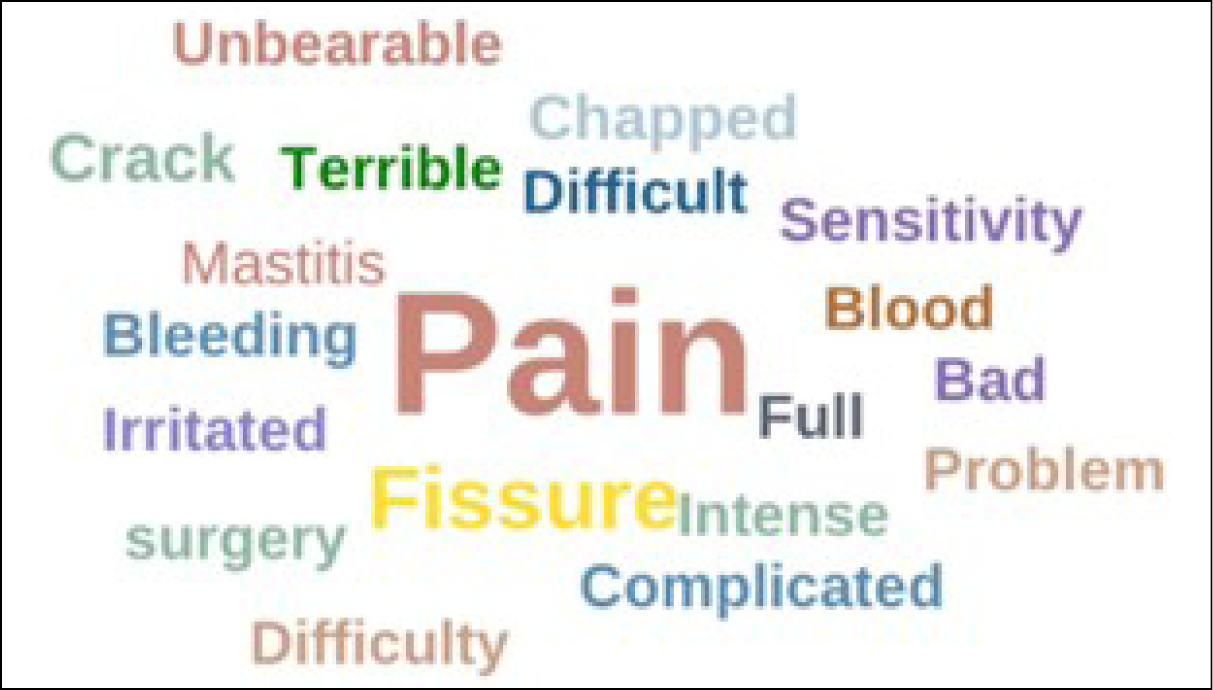 Source: Developed by ATLAS.ti software
 Source: Developed by ATLAS.ti software
 Source: Developed by ATLAS.ti software
 Source: Developed by ATLAS.ti software