 Completeness of notifications of work injuries in the Notifiable Diseases Information System (SINAN), Brazil, from 2007 to 2022
Abstract
Introduction Work injuries are compulsory notifiable conditions in Brazil and represent a public health challenge due to their social impact. Obtaining consistent and high-quality information is essential to support prevention, surveillance, and occupational health promotion actions.
Objective To analyze the data quality of work injury notifications in the Brazilian Information System for Notifiable Diseases (SINAN).
Methods This was a ecological time-series study with a spatial approach using SINAN data in Brazil from 2007 to 2022. Completeness of work injury notifications was assessed considering a set of 11 variables, applying Prais-Winsten regression to identify annual percentage changes (APC), and performing spatial analyses.
Results Between 2007 and 2022, a total of 1,631,961 work injuries were reported. The state with the highest completeness was Tocantins (94.1%), and the lowest was Rio de Janeiro (81.0%). The variables Outcome (APC: 5.10%), Race/ethnicity (APC: 2.51%), Education level (APC: 1.62%), and Occupation (APC: 5.20%) showed significant upward trends in data completeness. The Brazilian National Classification of Economic Activities (CNAE) variable showed a downward trend (APC: -6.58%). The remaining variables showed stable trends.
Conclusion There was a significant increase in the number of work injury notifications, accompanied by an improvement in data completeness over the years. The Southeast and Northeast regions had lower data quality, indicating areas that require greater attention for training actions.
Keywords:
Work Injuries; Workers’ Health Surveillance; Descriptive Epidemiology; Public Health; Health Surveillance System
Resumo
Introdução Acidentes de trabalho (AT) são agravos de notificação obrigatória no Brasil e representam desafio à saúde pública pelo seu impacto social. As informações são fundamentais para subsidiar ações de prevenção, vigilância e promoção da saúde do trabalhador.
Objetivo Analisar a completude de variáveis selecionadas nas notificações de acidentes de trabalho no Sistema de Informação de Agravos de Notificação (SINAN).
Métodos Estudo ecológico de séries temporais e abordagem espacial, utilizando dados do SINAN no Brasil, de 2007 a 2022. Analisou-se a completude de 11 variáveis. Empregaram-se regressões de Prais-Winsten para identificar variações percentuais anuais (VPA) e análises espaciais.
Resultados De 2007 a 2022, foram notificados 1.631.961 acidentes de trabalho. O estado com maior completude foi o Tocantins (94,10%) e o com menor foi o Rio de Janeiro (81,00%). As variáveis evolução (VPA: 5,10%), raça/cor (VPA: 2,51%), escolaridade (VPA: 1,62%) e ocupação (VPA: 5,20%) apresentaram tendências de crescimento da completude. A variável Classificação Nacional de Atividades Econômicas (CNAE) apresentou tendência decrescente (VPA: -6,58%). As demais variáveis apresentaram tendências estáveis.
Conclusão Observou-se aumento na quantidade de notificações de AT acompanhada por melhoria na completude dos dados ao longo dos anos. As regiões Sudeste e Nordeste apresentaram menor completude, indicando necessidade de capacitação.
Palavras-chave:
Acidentes de Trabalho; Vigilância em Saúde do Trabalhador; Epidemiologia Descritiva; Saúde Pública; Sistema de Vigilância em Saúde
Introduction
Work is a fundamental determinant of health that directly influences people’s lifestyles, well-being and integrity. However, it can also represent a health risk factor, capable of causing or aggravating illness, suffering and even death1.
The characteristics, methods, and organization of production processes are intrinsically related to the dynamics between capital and labor, economic benefits, and technological innovations, all of which have led to significant transformations over time. In Brazil, there is currently a process of making labor standards more flexible and the loss of other social rights, which poses new challenges for health promotion, social protection, and guaranteeing decent living conditions for the working population2.
Entering the labor market, especially in contexts marked by informality and precariousness, increases the vulnerability of workers. These contexts are characterized by weak employment relationships, low pay, low social and labor protection coverage, as well as generational inequalities and discriminatory practices3. At the intersection between capitalist logic and the need to generate a livelihood, occupational risks emerge4-6.
A work injury is defined as any event that interferes with or interrupts the normal course of work activity, whether in an expected or unplanned way, resulting in loss of time, material damage, and/or injuries to the worker, which can range from functional disturbances and bodily harm to death or reduced working capacity. Most of these events are predictable and preventable. Thus, the occurrence of accidents in the workplace can be considered an indicator of poor working conditions5.
Workers’ Health Surveillance (VISAT), a component of the Brazilian National Health Surveillance System, aims to promote health and reduce morbidity and mortality among workers, through actions that intervene in the problems and determinants associated with development models and production processes7.
Considering that one of the objectives of the Unified Health System (SUS) is to “collaborate in the protection of the environment, including the work environment” and that Occupational Health involves “a set of activities that, through Health and Epidemiological Surveillance actions, is aimed at the promotion and protection, recovery, and rehabilitation of occupational health, from the risks and problems caused by working conditions”8,9, it is essential that VISAT actions have access to qualified information on such accidents, to act more efficiently to protect the health of this population, based on a real picture of the epidemiological situation5,10.
In Brazil, the health information system of greatest interest to VISAT is the Brazilian Information System for Notifiable Diseases (SINAN), managed by the Ministry of Health’s Health and Environmental Surveillance Secretariat. Given its importance, it is imperative to continually assess the quality of notifications. Among the quality dimensions of a surveillance system, the completeness of the information is paramount. Completeness refers to the proportion of fields or variables in an information system with recorded data, regardless of whether they are correct or consistent with expected standards. It is a crucial indicator, since omissions or gaps can compromise the integrity and usefulness of the information set. Low completeness can reflect weaknesses in surveillance actions, such as technical failures or non-compliance with filling-in guidelines, while high completeness allows for a more qualified analysis of recorded events11.
Given the need for periodic review and continuous improvement of health information systems, this study aims to analyze the completeness of selected variables in work injuries notifications on SINAN in Brazil from 2007 to 2022.
Methods
Study design, location, and period
An ecological time-series study with a spatial approach was carried out on the completeness of 11 variables in work injuries notifications on SINAN. The analysis included data from all Brazilian states from 2007 to 2022.
Data source
We used data from SINAN, a national information system fed mainly by the notification and investigation of cases of diseases and illnesses on the national list of notifiable diseases, which is periodically updated12.
In 2004, the notification of work-related diseases was introduced in SINAN, with a specific list of occupational diseases and accidents for notification and investigation in the sentinel network (Ordinance No. 777/GM/MS)13. In 2014, the list was revised with the inclusion of serious, fatal work injuries, accidents involving exposure to biological material and exogenous intoxications, as universally notifiable diseases throughout the health network, while other conditions (cancer, dermatoses, repetitive strain injury - RSI/work-related musculoskeletal disorders - WMSD, etc.) continued to be notified by sentinel units (Ordinances No. 1,271 and No. 1,984/GM/MS)14,15.
In 2023, all cases of work injuries became compulsorily notifiable on SINAN, no longer just severe work injuries (Ordinance No217/GM/MS)16. This study used data up to 2022, before the aforementioned ordinance came into force, which made compulsory notification of work injuries universal in Brazil.
A work injury is notified by filling out a specific notification and investigation form17. This form consists of 68 variables divided into seven thematic blocks: general data, individual notification, residence data, epidemiological background, accident data, medical care data, and conclusion. The questions are structured in three formats: multiple choice, single choice, and open18.
Data extraction and organization
The SINAN data was extracted in July 2023 from the website of the Department of Informatics of the Unified Health System (DATASUS) of the Ministry of Health (https://datasus.saude.gov.br/informacoes-de-saude-tabnet/"), which provides data from the Ministry’s health information and management systems.
Data from the state of Espírito Santo, as of 2019, was not analyzed because it was not available, since the state uses e-SUS/Health Surveillance.
The information was downloaded as dbc files and imported into the R environment using the read.dbc package to read the files, and the tidyverse package was used to organize and process the data. The data was aggregated to carry out the ecological analyses. The (non-nominal) data and analysis scripts used were made available on the GitHub platform (link: https://github.com/MVMLima/acidentes_trabalho).
Variables of interest
For the completeness analysis, 11 mandatory and non-mandatory SINAN variables were used, which are essential for the epidemiological characterization of work injuries, recognized in the literature as strategic fields for VISAT:
a) sociodemographic variables: race/ethnicity (white, black, yellow, indigenous, and unknown); schooling (illiterate, elementary school, secondary school, higher education, unknown, and not applicable);
b) variables of an occupational nature: occupation (according to the Brazilian Classification of Occupations); work status (registered employee, self-employed, unregistered employee, statutory public servant, contractual public servant, temporary work, self-employed, cooperative worker, retired, employer, unemployed, other, unknown); CNAE (National Classification of Economic Activities);
c) related to the circumstances and outcomes of the accident: location (contractor’s premises, public highway, third-party premises, own home, unknown); type of accident (typical, commuting, unknown); issuing of a Work Accident Report (CAT) (yes, no, not applicable, and unknown); outcome (temporary incapacity, cure, partial permanent incapacity, death due to serious work accident, other, total permanent incapacity, death due to other causes, unknown);
d) geographical variables: UF; municipality of occurrence.
Information on the area covered by the Workers’ Health Reference Centers (CEREST) was also used. The list of municipalities within the coverage area of each Regional CEREST was provided by the Ministry of Health’s General Coordination of VISAT. This variable made it possible to identify areas with greater or lesser completeness and subsidize the targeting of VISAT qualification actions.
Data analysis
The total number of reported work injuries cases per municipality was calculated. Maps were produced to show the spatial distribution according to municipality and CEREST coverage area.
Completeness for each of the 11 variables was calculated according to the formula:
Completeness (Variable) = Number of observations with valid values / Total number of observations * 100
Records with the options “ignored”, “blank”, or “NA” (not available) were considered invalid values. The other records were considered valid because they could be used to analyze the health situation. For analysis at state or municipal level, the average completeness of the selected variables was considered.
The time trend analysis was carried out using the Prais-Winsten (PW) generalized linear regression model, considering the years as independent variables (X), and the percentage of completeness of the selected variables (Y) as dependent variables. The functional form of the adjusted model is based on the following equation:
log(Yt) = β0 + β1 · t + εt
Where:
Yt is the number of notifications in year t,
β0=-336.23\beta_0 = -336.23 β0=-336.23 is the intercept,
β1=0.1725\beta_1 = 0.1725 β1=0.1725 is the coefficient associated with the year (time),
εt are the transformed errors to correct for serial autocorrelation (via the Prais-Winsten method).
The logarithmic transformation was applied to the number of cases to ensure that the model met the regression assumptions. The PW model is recommended for correcting serial autocorrelation in time series. The Durbin-Watson test, whose result is expressed in values between zero and four, measures the level of correlation. Values close to zero indicate high positive autocorrelation, while values close to four indicate negative serial autocorrelation19.
Therefore, the time series values of the percentage of completeness were log-transformed and the b1 values for each rate were applied to the following formula to identify the annual percentage change (APC):
APC = [-1 + eb1] * 100%
When analyzing the APC, three possible interpretations of the trend were established: (i) increasing, in the case of a positive APC; (ii) decreasing, in the case of a negative APC; and (iii) stationary, when the values of the 95% confidence interval of the APC pass through zero. The final stage of the modeling involved calculating the confidence intervals (CI) of the study measures, according to the following formula19:
APC(%) = [-1 + eb1] * 100
IC95%(%) = [-1 + 10minimum beta * 100; [-1 + 10maximum beta] * 100
In this formula, the minimum and maximum beta values are captured in the CI generated by the statistical analysis program: the minimum b value represents the minimum point of the CI, while the maximum beta value represents the maximum point of the CI. The level of statistical significance considered in this study was 5%.
Microsoft Excel 365, Qgis and the R language (R Foundation for Statistical Computing), version 4.0.2, were used to analyze the data.
Ethical aspects
The research project was submitted to the Research Ethics Committee of União Educacional do Norte - Uninorte, and approved under No. 5.770.141, on November 22, 2022.
Results
From 2007 to 2022, 1,631,961 work injuries were reported on SINAN in Brazil, rising from 19,725 in 2007 to 307,345 in 2022, an increase of 1,558.2% (Figure 1A). The APC was 48.7% (95%CI: 33.8%; 65.3%), showing an upward trend with statistical significance (Figure 1B).

Number of notifications of work injuries in the Brazilian Information System for Notifiable Diseases (SINAN) and trend, Brazil, 2007 to 2022*
*Data from 2020 to 2022 for Espírito Santo is not included.
Legend: a) Number of notifications of work injuries in Brazil, 2007 to 2022; b) Trend of work injuries notifications in Brazil, 2007 to 2022.
Source: SINAN - Ministry of Health.
The states with the highest average completeness were: Tocantins (94.1%), São Paulo (90.8%), Roraima (90.3%); and the states with the lowest averages were: Rio de Janeiro (81.0%), Espírito Santo (84.0%) (data from 2020 to 2022 for Espírito Santo is not included) and Paraíba (85.3%).
Figure 2 shows the distribution of the completeness of the selected variables of work injuries notifications in Brazil between 2007 and 2022 by municipality of notification. It can be seen that most of Brazil’s municipalities have a completeness above 50%.

Distribution of the completeness of the selected variables according to the municipality in which work injuries were notified in the Brazilian Information System for Notifiable Diseases (SINAN), Brazil, 2007 to 2022*
*Data from 2020 to 2022, for Espírito Santo, are not included.
Source: SINAN - Ministry of Health.
It is noteworthy that in the Northeast there are many municipalities between the ranges of more than 50% and less than 80%, and the same is true for the states of Espírito Santo and Rio de Janeiro, with the latter having the worst average of all the states. It is also possible to note that some municipalities do not have any information - mainly in the state of Piauí - because they have not made any work injuries notifications in the historical series.
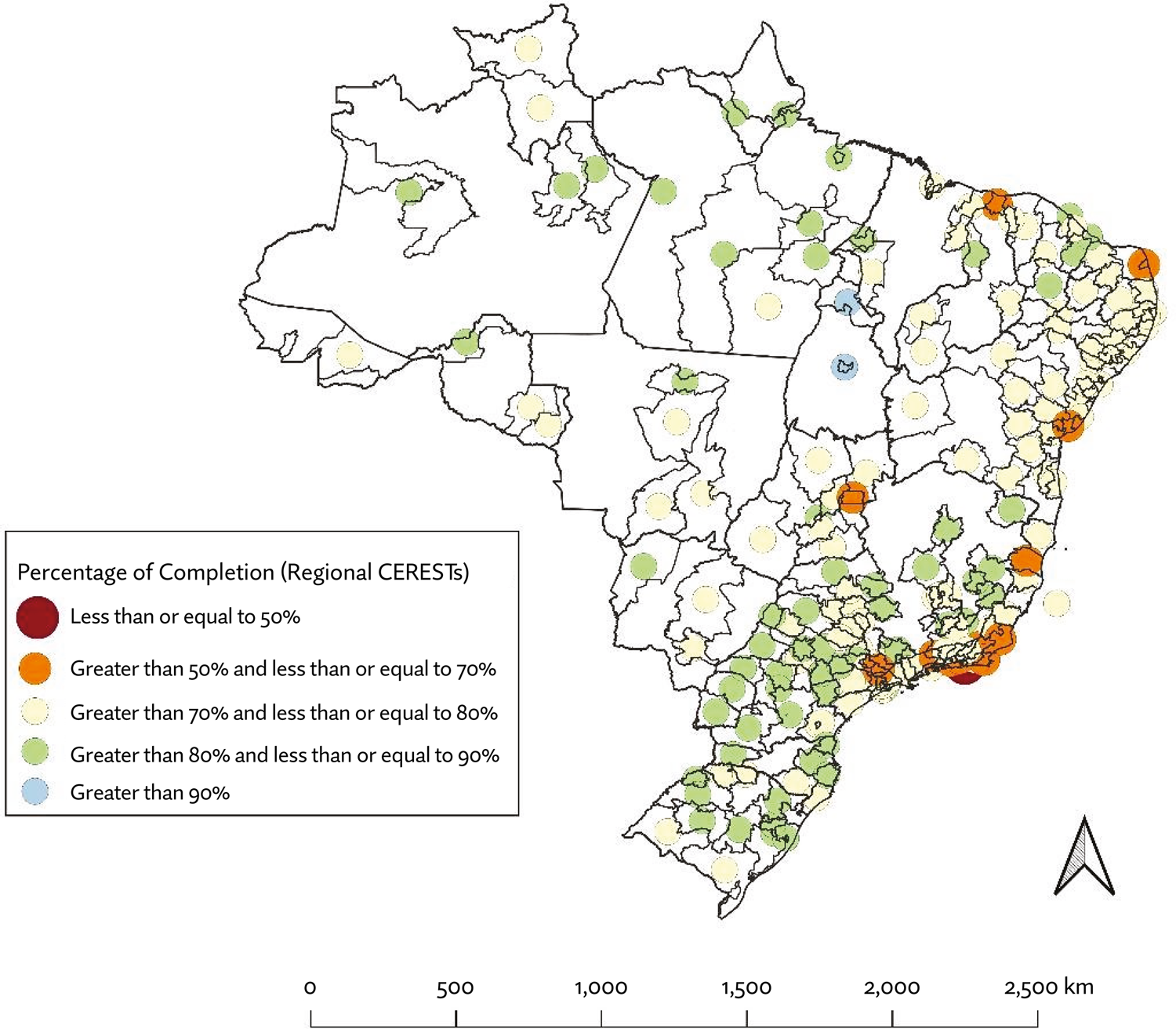
Figure 3 shows the distribution of completeness according to the area covered by the CEREST-Regional. It can be seen that those with the lowest completeness are in the states of Rio de Janeiro, Espírito Santo, Rio Grande do Norte, Piauí, and the Distrito Federal.

Distribution of completeness in selected variables according to the coverage area of the CEREST-Regional for notification of work injuries in the Brazilian Information System for Notifiable Diseases (SINAN), Brazil, 2007 to 2022*
*Data from 2020 to 2022 for Espírito Santo is not included.
Source: SINAN - Ministry of Health.
Table 1 shows the distribution of the completeness of selected variables in work injuries notifications in Brazil according to the year of notification. The data shows a positive trend in the improvement of records for multiple variables. Notably, data completeness for the occupation variable has risen from 69.8% in 2007 to 96.7% in 2022. Similarly, other variables such as place of accident and outcome also showed a substantial increase in the proportion of complete data over the period studied.
Table 2 shows the Prais-Winsten regression coefficient for the variables of interest from the work injuries notification database in Brazil between 2007 and 2022. Among the variables analyzed, the following stood out: outcome - APC = 5.10 (95%CI: 2.19; 8.08), p = 0.003; race/ethnicity - APC = 2.51 (95%CI: 1.43; 3.59), p = 0.003; education - APC = 1.62 (95%CI: 0.53; 2.73), p = 0.001; occupation - APC = 5.20 (95%CI: 3.34; 7.10), p = 0.006, with significant increasing trends. On the other hand, most of the variables, including type of accident, UF, work situation, place of accident, municipality of accident, and CAT, showed a stationary trend.
The p-values for these variables indicated that there were no significant changes in notification rates over the years. The APCs for these variables were both slightly negative and positive, and the confidence intervals also showed a wide variation, reinforcing the instability of these trends. It is noteworthy that the CNAE variable showed a significant downward trend, which indicates a decrease in the filling in of this variable.
Discussion
From 2007 to 2022, there was a significant increase in work injuries notifications in Brazil (APC: 48.7%; 95%CI: 33.8%; 65.3%). This growth reflects significant changes in reporting mechanisms over time, with the expansion of the reporting network and the list of compulsorily notifiable diseases, as well as the expansion of the national network for comprehensive occupational health care in the country.
This expansion is the result of the implementation of new CERESTs, specialized services which, in conjunction with the Health Care Network, develop specialized care and VISAT actions, reducing morbidity and mortality among workers. It is estimated that there are currently around 227 CEREST in Brazil, covering more than 84 million Brazilian workers17.
It is also possible to see that there are few municipalities without work injuries notifications, but they persist even over a time series of 16 years. These municipalities, which are silent when it comes to detecting work injuries, highlight a weakness in the scope of VISAT actions in the country.
The SINAN data collection tool for work injuries provides valuable information for surveillance of work environments and processes and is an important tool for achieving VISAT’s objectives20. This includes assessing the completeness of the fields CNAE, occupation, place of accident, CAT, among other aspects.
Notably, insufficient data collection on these variables compromises the effectiveness of VISAT actions, especially those associated with economic activity21. This scenario raises questions about the perception of the professionals responsible for investigating and reporting work-related health problems, especially regarding the relevance of this information and how they deal with the classification tables provided by SINAN.
Analysis of how the occupation variable is filled in shows that making it compulsory has made a significant contribution to improving completeness, although there are still challenges in correctly coding occupational categories according to the CBO and the list provided by SINAN22.
According to Vasconcellos et al23, the quality of health records can be improved by implementing mandatory fields. Regarding the CNAE variable, only the state of Tocantins had completeness classified as regular; all the other states had completeness below regular, especially Espírito Santo and Rio de Janeiro, which recorded the worst performances. In view of these disparities, it is essential that the Ministry of Health carries out specific assessments to elucidate the causes of these differences.
Low completeness was observed for the CNAE variable in most states, with a downward trend over the period studied. This variable is fundamental for characterizing the economic sector associated with the accident and is therefore strategic for planning specific preventive actions by branch of activity. The poor quality of filling in the CNAE compromises the ability to identify the most vulnerable sectors and makes it difficult to monitor occupational risks, highlighting the need to strengthen the training of notifiers and review the usability of collection instruments24.
Among the variables that showed a significant upward trend in completeness (outcome, race/ethnicity, schooling, and occupation), only occupation is mandatory in SINAN, which possibly explains part of the improvement observed. The other variables are not compulsory, and the increase in completeness suggests progress in raising awareness and in training the teams responsible for registration, indicating that awareness-raising strategies can have a positive effect even for optional fields. In the study carried out by Brito et al., the completeness of notifications of accidents by venomous animals on SINAN in Brazil between 2007 and 2019 was assessed25, the authors argued that the quality of the information recorded can affect the planning of actions to prevent and control these accidents in various ways. For example, inequalities in data loss can mask the occurrence of certain events, resulting in the underestimation of vulnerabilities.
Furthermore, completeness is not homogeneous in Brazil, which can hinder analysis of the health situation at national or state level26. Therefore, it is essential to consider the differences in the quality of the records. This study also highlights the importance of time series studies of notifications to support the monitoring, planning and evaluation of surveillance actions in VISAT.
In this context, the loss of information in SINAN compromises the reliability of the information, generating misinterpretations of the health situation and hindering the definition of interventions on work-related accidents. Moreover, the absence of socio-economic, occupational, and economic activity-related information makes it difficult to identify vulnerable groups, making analysis from a social perspective impossible. Therefore, the loss of information negatively affects the robustness of analyses and health interventions aimed at work injuries27-29.
Despite this scenario, some strategies can be implemented to improve data completeness on health information systems, such as the publication of normative ordinances, integration between different information systems and the use of linkage techniques30,31.
In addition, it is essential to make health professionals aware of the importance of properly filling in the socioeconomic, occupational and accident-related variables in the notifications, allowing consistent analysis for planning, intervention, and evaluation of health actions according to the SUS guidelines32-33.
It is also important to continuously monitor the quality of surveillance data and train professionals to fill in the notification forms correctly34,35. In this study, the variables outcome, race/ethnicity, schooling, and occupation showed a significant upward trend, while the other variables remained stationary.
The main limitations of this study refer to the absence of data from Espírito Santo, as of 2019, and the exclusive consideration of completeness as a quality attribute of SINAN.
It should be noted that the use of secondary data is a methodologically appropriate strategy for identifying gaps in VISAT, favoring the improvement of information quality and, consequently, the strengthening of public policies and actions to protect occupational health.
Furthermore, in small municipalities, the low frequency of work injuries notifications can influence the stability of completeness estimates. Although this limitation does not directly compromise the descriptive analysis carried out on a municipal scale - since all available notifications were considered - it is recognized that the calculation of averages can be subject to the influence of extreme values (outliers). Even so, it was decided to keep the analysis at municipal level, considering that these are essential and strategic for guiding localized interventions to improve the quality of surveillance information in the territories.
In view of the above, it is recommended that further studies be carried out to assess other SINAN quality attributes for work injuries surveillance in Brazil, such as consistency of information and duplication of data11. VISAT is in the process of being consolidated, which impacts both the way information is collected and the detection of cases.
Based on the results presented, it is recommended that VISAT directs its efforts towards qualifying the filling in of non-mandatory variables, through training and awareness-raising actions for professionals. We suggest prioritizing the states in the Southeast and Northeast regions, to obtain more complete information on the characteristics of the economic sectors and accidents.
Moreover, it is recommended that VISAT be integrated with the other Health Surveillance centers to strengthen preventive actions and promote surveillance of work environments and processes. Coordinated action between the centers will facilitate the exchange of information and experiences, contributing to more effective control of work injuries.
Conclusions
This study highlights the increase in work injuries notifications and a significant variation in completeness between the UFs. It highlights the need to strengthen training actions in certain regions of the country, as a strategic measure for improving the epidemiological surveillance process in occupational health. It is recommended that new studies be carried out, covering a period after Ordinance GM MS No. 217 of 2023, which made it compulsory to report all work injuries on SINAN.
Acknowledgments
The General Coordination of Workers’ Health Surveillance of the Ministry of Health (CGSAT/MS), the Training Program in Epidemiology Applied to the Services of the Unified Health System (EpiSUS - Advanced), and the Acre State Health Department.
References
- 1 Gonçalves FGA, Souza NVDO, Pires AS, Santos DM, D'Oliveira CAFB, Ribeiro LV. Modelo neoliberal e suas implicações para a saúde do trabalhador de enfermagem. Rev Enferm UERJ. 2014 jul/ago;5:22(4):19-25.
-
2 Santos TS. Globalização e exclusão: a dialética da mundialização do capital. Sociologias. 2001;6(3):170-98. https://doi.org/10.1590/S1517-45222001000200008
» https://doi.org/10.1590/S1517-45222001000200008 - 3 Matsuo M. Trabalho informal e desemprego: desigualdades sociais. São Paulo: Universidade de São Paulo; 2009.
- 4 Farias CMNE, Serejo GMM. Saúde do trabalhador: manual para uso do SINAN NET. Fortaleza: Secretaria de Estado de Saúde do Ceará; 2017.
- 5 Sales EC, Ramos JCL. Guia para análise da situação de saúde do trabalhador. Salvador: Secretaria de Estado de Saúde da Bahia; 2014.
- 6 Ministério da Saúde (BR). Saúde do trabalhador e da trabalhadora. Brasília, DF: Secretaria de Vigilância em Saúde; 2018. (Cadernos de atenção básica, v. 41).
- 7 Ministério da Saúde (BR). Portaria MS/GM Nº 1.378, de 9 de julho de 2013. Regulamenta as responsabilidades e define diretrizes para execução e financiamento das ações de Vigilância em Saúde pela União, Estados, Distrito Federal e Municípios, relativos ao Sistema Nacional de Vigilância em Saúde e Sistema Nacional de Vigilância Sanitária. Diário Oficial da União. 10 jul 2013.
- 8 Senado Federal (BR). Constituição da República Federativa do Brasil. Brasília. DF: Secretaria de Documentação do Supremo Tribunal Federal; 2022.
-
9 Brasil. Lei nº 8.080, de 19 de setembro de 1990. Dispõe sobre as condições para a promoção, proteção e recuperação da saúde, a organização e o funcionamento dos serviços correspondentes e dá outras providências. Diário Oficial da União. 20 set 1990. http://www.planalto.gov.br/ccivil_03/leis/L8080.htm
» http://www.planalto.gov.br/ccivil_03/leis/L8080.htm -
10 Bordoni PHC, Bordoni LS, Silva JM, Drumond EF. Utilização do método de captura-recaptura de casos para a melhoria do registro dos acidentes de trabalho fatais em Belo Horizonte, Minas Gerais, 2011. Epidemiol Serviços Saúde. 2016 jan/mar;25(1):95-94. https://doi.org/10.5123/S1679-49742016000100009
» https://doi.org/10.5123/S1679-49742016000100009 - 11 German RR, Lee LM, Horan JM, Milstein RL, Pertowski CA, Waller MN. Updated guidelines for evaluating public health surveillance systems. Morb Mortal Wkly Rep. 2001 jul;50(13):1-35.
- 12 Ministério da Saúde (BR). Portaria GM/MS nº 5.201, de 15 de agosto de 2024. Altera o Anexo 1 do Anexo V à Portaria de Consolidação MS nº 4, de 28 de setembro de 2017, para incluir novas doenças na Lista Nacional de Notificação Compulsória de doenças, agravos e eventos em saúde pública, nos serviços de saúde públicos e privados em todo o território nacional, e modifica o Anexo XLIII à Portaria de Consolidação MS nº 5, de 28 de setembro de 2017, para revogar o item I da Lista Nacional de Doenças e Agravos a serem monitorados pela Estratégia de Vigilância Sentinela. Diário Oficial da União. 19 ago 2024.
-
13 Ministério da Saúde (BR). Portaria nº 777/GM, de 28 de abril de 2004. Dispõe sobre os procedimentos técnicos para a notificação compulsória de agravos à saúde do trabalhador em rede de serviços sentinela específica, no Sistema Único de Saúde - SUS. [citado 19 dez 2025] Disponível em: https://bvsms.saude.gov.br/bvs/saudelegis/gm/2004/prt0777_28_04_2004.html
» https://bvsms.saude.gov.br/bvs/saudelegis/gm/2004/prt0777_28_04_2004.html -
14 Ministério da Saúde (BR). Portaria nº 1.271/GM/MS, de 6 de junho de 2014. Define a Lista Nacional de Notificação Compulsória de doenças, agravos e eventos de saúde pública nos serviços de saúde públicos e privados em todo o território nacional, nos termos do anexo, e dá outras providências. Brasília, DF: Ministério da Saúde; 2014 [citado 19 dez 2025]. Disponível em: https://bvsms.saude.gov.br/bvs/saudelegis/gm/2014/prt1271_06_06_2014.html
» https://bvsms.saude.gov.br/bvs/saudelegis/gm/2014/prt1271_06_06_2014.html -
15 Ministério da Saúde (BR). Portaria nº 1.984/GM/MS, de 12 de setembro de 2014. Brasília, DF: Ministério da Saúde; 2014 [citado 19 dez 2025]. Disponível em: https://bvsms.saude.gov.br/bvs/saudelegis/gm/2014/prt1984_12_09_2014.html
» https://bvsms.saude.gov.br/bvs/saudelegis/gm/2014/prt1984_12_09_2014.html -
16 Ministério da Saúde (BR). Portaria GM/MS nº 217, de 1º de março de 2023. Altera o Anexo I do Anexo V à Portaria de Consolidação GM/MS nº 4, de 28 de setembro de 2017, para substituir o agravo "Acidente de trabalho: grave, fatal e em crianças e adolescentes" por "Acidente de Trabalho" na Lista Nacional de Notificação Compulsória de doenças, agravos e eventos em saúde pública, nos serviços de saúde públicos e privados em todo o território nacional. Brasília, DF: Ministério da Saúde; 2023 [citado 19 dez 2025]. Disponível em: https://bvsms.saude.gov.br/bvs/saudelegis/gm/2023/prt0217_02_03_2023.html
» https://bvsms.saude.gov.br/bvs/saudelegis/gm/2023/prt0217_02_03_2023.html - 17 Ministério da Saúde (BR). Guia de vigilância em saúde. 6a ed. Brasília, DF: Ministério da Saúde; 2024.
-
18 Ministério da Saúde (BR). Sistema de Informação de Agravos de Notificação. Ficha de investigação: acidente de trabalho. Brasília, DF: Ministério da Saúde; 2007 [citado 19 dez 2025]. Disponível em: https://portalsinan.saude.gov.br/images/DRT/DRT_Acidente_Trabalho_Grave.pdf
» https://portalsinan.saude.gov.br/images/DRT/DRT_Acidente_Trabalho_Grave.pdf -
19 Antunes JLF, Cardoso MRA. Uso da análise de séries temporais em estudos epidemiológicos. Epidemiol Serviços Saúde. 2015 set;24(3):565-76. https://doi.org/10.5123/S1679-49742015000300024
» https://doi.org/10.5123/S1679-49742015000300024 - 20 Ministério da Saúde (BR). Política Nacional de Saúde do Trabalhador e da Trabalhadora. Brasília, DF: Ministério da Saúde; 2012.
-
21 Alvares JK, Pinheiro TMM, Santos AF, Oliveira GL. Avaliação da completitude das notificações compulsórias relacionadas ao trabalho registradas por município polo industrial no Brasil, 2007 - 2011. Rev Bras Epidemiol. 2015 mar;18(1):123-36. https://doi.org/10.1590/1980-5497201500010010
» https://doi.org/10.1590/1980-5497201500010010 -
22 Ministério da Saúde (BR). Portaria nº 458, de 20 de março de 2020. Altera a Portaria de Consolidação nº 1/GM/MS, de 28 de setembro de 2017 e nº 2, de 28 de setembro de 2017, para dispor sobre a inclusão e o preenchimento obrigatório dos campos Classificação Brasileira de Ocupações (CBO) e Classificação Nacional de Atividades Econômicas (CNAE) nos sistemas de informação. Ministério da Saúde. 2020 [citado 19 dez 2025]. Disponível em: https://bvsms.saude.gov.br/bvs/saudelegis/gm/2020/prt0458_20_03_2020.html
» https://bvsms.saude.gov.br/bvs/saudelegis/gm/2020/prt0458_20_03_2020.html -
23 Vasconcellos MM, Gribel EB, Moraes IHS. Registros em saúde: avaliação da qualidade do prontuário do paciente na atenção básica, Rio de Janeiro, Brasil. Cad Saude Publica. 2008;24(suppl 1):173-82. https://doi.org/10.1590/S0102-311X2008001300021
» https://doi.org/10.1590/S0102-311X2008001300021 - 24 Ministério da Saúde (BR), Universidade Federal da Bahia. A epidemiologia da saúde do trabalhador no Brasil. Brasília, DF: Ministério da Saúde; 2020.
-
25 Brito M, Almeida ACC, Cavalcante F, Mise YF. Completeness of notifications of accidents involving venomous animals in the Information System for Notifiable Diseases: a descriptive study, Brazil, 2007-2019. Epidemiol Serv Saude. 2023;32(1):e2022666. https://doi.org/10.1590/S2237-96222023000100002
» https://doi.org/10.1590/S2237-96222023000100002 - 26 Neri SCC. A qualidade dos dados dos sistemas de informação em saúde aplicados na atenção à saúde materno-infantil [tese]. Salvador: Instituto de Saúde Coletiva, Universidade Federal da Bahia; 2016.
-
27 Menegon L S, Menegon FA, Kupek E. Mortalidade por acidentes de trabalho no Brasil: análise de tendência temporal, 2006-2015. Rev Bras Saude Ocup. 2021;46:e8. https://doi.org/10.1590/2317-6369000025219
» https://doi.org/10.1590/2317-6369000025219 -
28 Correa PRL, Assunção AA. A subnotificação de mortes por acidentes de trabalho: estudo de três bancos de dados. Epidemiol Serv Saude. 2003 Dec;12(4):203-12. https://doi.org/10.5123/S1679-49742003000400004
» https://doi.org/10.5123/S1679-49742003000400004 -
29 Messias KLM, Bispo Junior JP, Pegado MFQ, Oliveira LC, Peixoto TG, Sales MAC, et al. Qualidade da informação dos óbitos por causas externas em Fortaleza, Ceará, Brasil. Cienc Saude Coletiva. 2016;21(4):1255-66. https://doi.org/10.1590/1413-81232015214.07922015
» https://doi.org/10.1590/1413-81232015214.07922015 -
30 Garcia KKS, Miranda CB, Sousa FNEF. Procedures for health data linkage: applications in health surveillance. Epidemiol Serv Saude. 2022 Oct 10;31(3):e20211272. https://doi.org/10.1590/S2237-96222022000300004
» https://doi.org/10.1590/S2237-96222022000300004 -
31 Drumond EF, Silva JM. Avaliação de estratégia para identificação e mensuração dos acidentes de trabalho fatais. Cien Saude Colet. 2013;18(5):1361-5. https://doi.org/10.1590/S1413-81232013000500021
» https://doi.org/10.1590/S1413-81232013000500021 -
32 Calazans MIP, Nery AA. Perfil epidemiológico dos acidentes de trabalho graves no estado da Bahia entre os anos de 2007 e 2017. Rev Eletronica Acervo Saude. 2021 fev;13(2):e5897. https://doi.org/10.25248/reas.e5897.2021
» https://doi.org/10.25248/reas.e5897.2021 - 33 Ministério da Saúde (BR). Acidentes de transporte relacionados ao trabalho no Brasil, 2007-2016. Brasília, DF: Ministério da Saúde; 2018. (Boletim epidemiológico, v. 49).
-
34 Lima CRDA, Schramm JMDA, Coeli CM, Silva MEM. Revisão das dimensões de qualidade dos dados e métodos aplicados na avaliação dos sistemas de informação em saúde. Cad Saude Publica. 2009;25(10):2095-109. https://doi.org/10.1590/S0102-311X2009001000002
» https://doi.org/10.1590/S0102-311X2009001000002 -
35 Galdino A, Santana VS, Ferrite S. Fatores associados à qualidade de registros de acidentes de trabalho no Sistema de Informações sobre Mortalidade no Brasil. Cad Saude Publica. 2020;36(1):e00218318. https://doi.org/10.1590/0102-311X00218318
» https://doi.org/10.1590/0102-311X00218318