 Prevalence and associated factors of anxiety and depression symptoms among basic education teachers in Espírito Santo, Brazil: a cross-sectional study
Abstract
Objective To assess the prevalence and factors associated with symptoms of anxiety and depression among teachers from a regional education department in Espírito Santo, Brazil.
Methods A cross-sectional study was conducted with teachers from state schools, with schools selected through random sampling. A semi-structured questionnaire was applied, containing sociodemographic and occupational data and scales to screen for symptoms of anxiety (Generalized Anxiety Disorder-7) and depression (Patient Health Questionnaire-9). Poisson regression with robust variance was used.
Results 453 teachers participated, 65.3% of whom were cisgender women. The prevalence of anxiety symptoms was 32.7% (95%CI 28.4; 37.1) and depression 35.1% (95%CI 31.3%; 39.3). The prevalence of anxiety was higher in cisgender women (PR = 2.43; 95%CI 1.20; 4.89) and people with clinical insomnia symptoms (PR = 3.18; 95%CI 1.76; 5.72) and emotional exhaustion (PR = 2.51; 95%CI 1.36; 4.64). The prevalence of depression was also higher among cisgender women (PR = 1.70; 95%CI 1.15; 2.52), people with insomnia (PR = 1.88; 95%CI 1.29; 2.74), and emotional exhaustion (PR = 1.61; 95%CI 1.06; 2.47).
Conclusion Approximately one third of the teachers presented symptoms of anxiety as well as depression. The presence of these symptoms was associated with gender, insomnia, and emotional exhaustion.
Keywords:
School Teachers; Mental Health; Anxiety; Depression; Cross-Sectional Studies; Occupational Health
Resumo
Objetivo Analisar a prevalência e os fatores associados a sintomas de ansiedade e depressão entre professores de uma superintendência regional de educação do Espírito Santo, Brasil.
Métodos Estudo transversal, realizado com professores de escolas estaduais, selecionadas por amostragem aleatória. Utilizou-se questionário semiestruturado, contendo dados sociodemográficos, laborais e escalas de rastreamento de sintomas de ansiedade (Generalized Anxiety Disorder-7) e depressão (Patient Health Questionnaire-9). Empregou-se regressão de Poisson com variância robusta.
Resultados Participaram 453 professores, 65,3% eram mulheres cisgênero. A prevalência de sintomas de ansiedade foi 32,7% (IC95% 28,4; 37,1) e de depressão, 35,1% (IC95% 31,3%; 39,3). A prevalência de ansiedade foi maior em mulheres cisgênero (RP = 2,43; IC95% 1,20; 4,89) e pessoas com sintomas de insônia clínica (RP = 3,18; IC95% 1,76; 5,72) e exaustão emocional (RP = 2,51; IC95% 1,36; 4,64). A prevalência de depressão também foi maior em mulheres cisgênero (RP = 1,70; IC95% 1,15; 2,52), pessoas com insônia (RP = 1,88; IC95% 1,29; 2,74) e exaustão emocional (RP = 1,61; IC95% 1,06; 2,47).
Conclusão Aproximadamente um terço dos professores apresentou sinais de ansiedade, assim como de depressão. A presença de tais sintomas associou-se ao gênero e à presença de insônia e exaustão emocional.
Palavras-chave:
Professores Escolares; Saúde Mental; Ansiedade; Depressão; Estudos Transversais; Saúde do Trabalhador
Introduction
The prevalence of mental disorders such as anxiety and depression is considered a major public health problem worldwide1. It is estimated that the global prevalence of mental disorders is 13.0%, 4.1% for anxiety disorders, and 3.8% for depressive disorders2. Factors such as job insecurity, lack of appreciation, high work demands, and imbalance between effort and reward have been identified as contributors to the development of these disorders among workers3. In certain professional categories, the prevalence may be higher, including sex workers, social workers, bank employees, waste pickers, and teachers4.
A scoping review of 70 studies carried out on different continents showed that the prevalence of anxiety symptoms among teachers ranged from 38.0% to 41.2%, while the prevalence of depressive symptoms varied widely, from 0.6% to 85.7%, reflecting a high degree of heterogeneity in the findings5. During the COVID-19 pandemic, there was an increase in the prevalence of generalized anxiety disorder, depression, and burnout syndrome in this category, accompanied by increased consumption of alcohol and psychotropic medications, as well as sleep problems and reduced quality of life6,7.
Sociodemographic and organizational factors are related to the high prevalence of mental disorders among teachers, especially gender identity, age, marital status, job satisfaction, length of teaching experience, workload, and pressure to carry out school activities outside of working hours5. In Brazil, studies on the working conditions and health of primary and secondary school teachers have attracted increasing interest from the scientific community in recent years, especially regarding mental and behavioral disorders4,8,9. Work overload, low professional appreciation, and exposure to violence in the school environment, including aggression, armed threats, and drug trafficking, contribute directly to the illness of this category, reflected in high occurrences of mental disorders and absenteeism10.
Despite the growing national scientific production on teachers’ mental health, to date no scientific publications have been identified that investigate the prevalence of mental health disorders among basic education teachers in the state of Espírito Santo. This gap limits understanding of the magnitude and factors associated with teachers’ psychological distress in the region. Thus, it is necessary to carry out studies that explore this scenario, to subsidize public policies and institutional actions aimed at protecting the mental health of teachers in Espírito Santo. With this in mind, this study aimed to analyze the prevalence and factors associated with symptoms of anxiety and depression among teachers in a Regional Department of Education in Espírito Santo, Brazil.
Methods
Study design
This cross-sectional study is part of the “Mental Health of Teachers” research project, carried out between 2023 and 2024. It is an epidemiological study designed to analyze aspects related to mental health, such as anxiety, depression, burnout, and insomnia, as well as the use of psychotropic medication among teachers in the state of Espírito Santo, Brazil. This study followed the Strengthening the Reporting of Observational Studies in Epidemiology (STROBE) guidelines13.
Study site
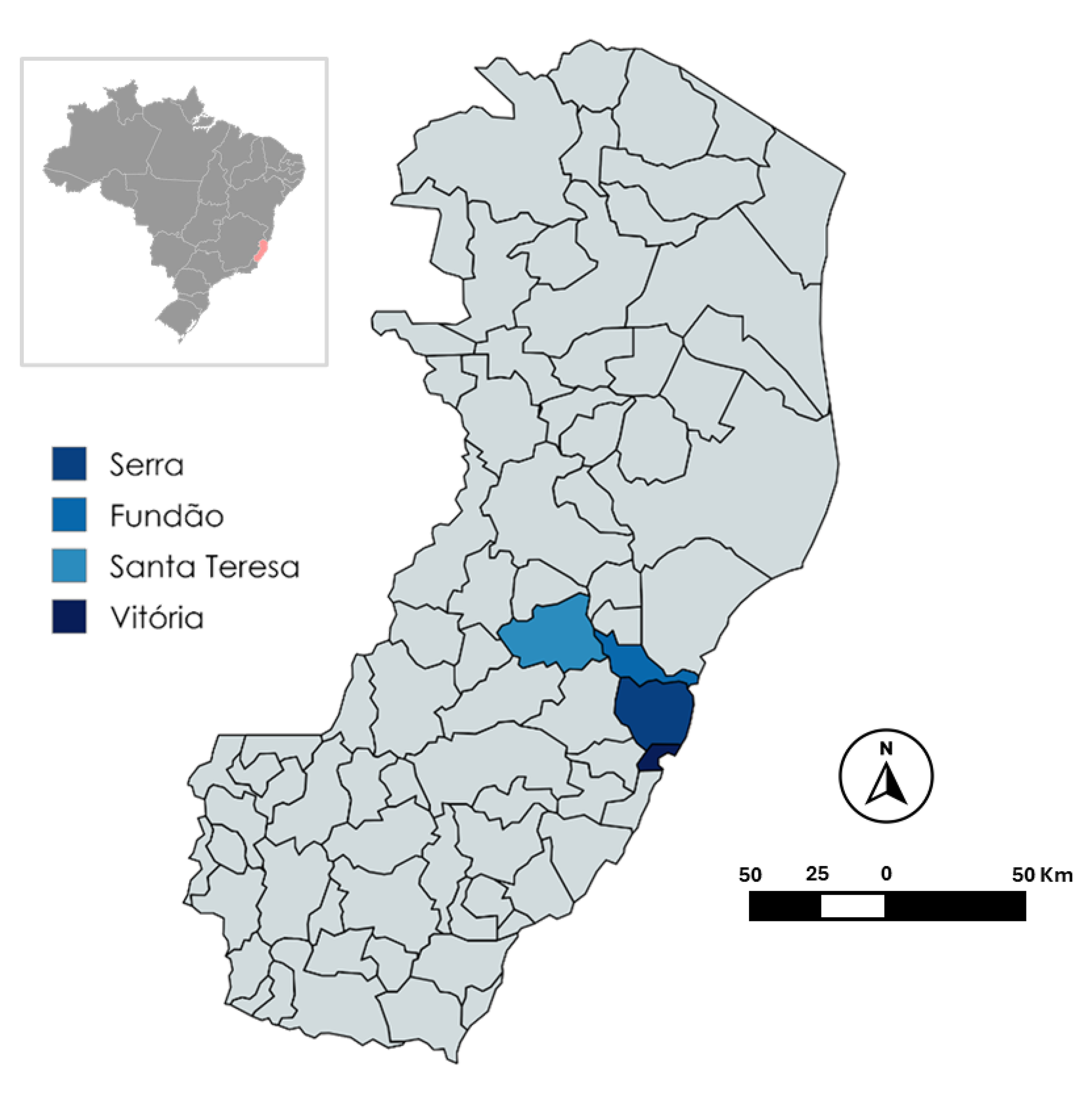
The study was conducted in the area covered by the Carapina Regional Department of Education (SRE-Carapina), located in the state of Espírito Santo, Brazil. This administrative region covers the municipalities of Vitória, Serra, Santa Teresa, and Fundão, which have different population and socio-economic characteristics (Figure 1).
Geographical location of the municipalities covered by the Regional Department of Education (SRE-Carapina), Espírito Santo, Brazil
According to data from the Brazilian Institute of Geography and Statistics (IBGE, 2022), Vitória, the capital of Espírito Santo, had a population of 322,869 inhabitants, making it one of the state’s main urban and administrative centers. The city of Serra, on the other hand, is the most populous municipality in Espírito Santo, with 520,653 inhabitants, and is characterized as an important industrial and commercial hub in Greater Vitória. Santa Teresa, with 22,808 inhabitants, is known for its agriculture-based economy and ecological and cultural tourism. Finally, Fundão, with 18,014 inhabitants, is a smaller municipality, also with a strong agricultural vocation and located in the metropolitan region of Greater Vitória. According to the School Census of the Department of Education of the Government of Espírito Santo (2023), at the time of data collection, there were 65 state public schools in the SRE-Carapina territory, distributed among the municipalities of Vitória (14 schools), Serra (46 schools), Santa Teresa (three schools), and Fundão (two schools).
Study participants
The study included teachers of both sexes from state schools in Espírito Santo linked to the SRE-Carapina. Teachers who were not teaching because they held other positions (e.g. coordinators, principals, etc.) were excluded. The exclusion of these individuals was aimed at achieving greater homogeneity in the sample in terms of the activities carried out.
Study size
The total number of teachers in the network was obtained from the payroll for January 2024, available on the control panel of the Espírito Santo State Court of Auditors (https://paineldecontrole.tcees.tc.br/). The sample was calculated using OpenEpi and resulted in a minimum size of 446 teachers, considering a finite population (N = 2,662), a 95% confidence level, a tolerable error of 5%, an estimated proportion of the outcome in the population of interest of 32%4, and a deff = 1.5.
The schools were drawn by probability proportional to size, based on the number of teachers as a reference. Within each school drawn, all teachers present and eligible were invited to take part in the study; there was no individual probabilistic drawing of teachers. To reach the calculated sample, 20 schools were drawn, 11 of which were in Serra, 4 in Vitória, two in Fundão, and three in Santa Teresa.
Data collection
Data collection took place in three stages. The first stage involved presenting the research project to the school management (principals and coordinators), obtaining their consent and scheduling meetings with the teachers. The second stage involved raising awareness, inviting them and handing them envelopes containing the research questionnaire, the Informed Consent Form and educational materials on mental health. The third stage consisted of returning the completed self-administered questionnaires. Stages 2 and 3 were carried out during the Pedagogical Planning Day, an initiative of mandatory participation for all teachers, which seeks to promote reflection, debate, and plan pedagogical activities to improve the quality of teaching, which took place between January and February 2024.
Variables
The study’s dependent variables were anxiety symptoms and depression symptoms. To assess anxiety symptoms, we used the Brazilian version of the Generalized Anxiety Disorder-7 (GAD-7), a scale made up of seven items scored from zero to three, related to the frequency of anxiety symptoms in the last 2 weeks. The total score of GAD-7 can vary from 0 to 21 points. Severity is estimated as follows: 0-4 points - no or minimal anxiety; 5-9 points - mild and/or non-pathological anxiety; 10-14 points - moderate anxiety; 15-21 points - severe anxiety. A total score of 10 or more was adopted as the cut-off point for the presence of anxiety symptoms14. The GAD-7 presents evidence of validity and reliability for the Brazilian population15.
To assess symptoms of depression, we used the Brazilian version of the Patient Health Questionnaire-9 (PHQ-9), a scale made up of nine items scored from zero to three, reflecting the frequency of symptoms of depression in the last 2 weeks. The total PHQ-9 score can vary from 0 to 27. Severity is estimated as follows: 0-4 points - no depression; 5-9 points - mild and/or non-pathological depressive disorder; 10-14 points - moderate depressive disorder; 15-19 points - moderately severe depressive disorder; 20 to 27 points - severe depressive disorder. A total score of 10 or more was adopted as the cut-off point for the presence of symptoms of depression18. PHQ-9 presents evidence of validity and reliability for the Brazilian population18,19.
The independent variables included: gender identity (cisgender man, cisgender woman, gender minorities [including transgender and non-binary]), sexual orientation (heterosexual, homosexual, bisexual, pansexual/asexual), age group (18-24 years, 25-34 years, 35-44 years, 45-59 years, ≥ 60 years), race/ethnicity (white, brown, black, Asian/indigenous), family income (up to 3 minimum wages; >3-5 minimum wages; > 5 minimum wages), having a partner (yes, no), number of children (no children, one child, two children, > two children), highest academic degree (undergraduate, specialization, master’s/doctorate), employment relationship (permanent, temporary), school location (Vitória, Serra, Fundão, Santa Teresa), job satisfaction (dissatisfied, neutral, satisfied), other occupation (yes, no), length of experience in teaching (up to 5 years, 6-10 years, 11-15 years, 16-20 years, > 20 years), weekly workload (up to 25 hours, 26-40 hours, 41-50 hours, > 50 hours), work shift (day or night), health insurance (yes, no), symptoms of insomnia (yes, no), symptoms of emotional exhaustion (yes, no).
The presence of insomnia symptoms was assessed using two items derived from the Brazilian version of the Insomnia Severity Index (ISI), each with five response options and a maximum total score of 10. A score ≥ 6 points indicates the presence of clinical insomnia symptoms20. The presence of symptoms of emotional exhaustion was assessed using the six-item domain of the Brazilian version of the Oldenburg Burnout Inventory (OLBI). The items are assessed on a 4-point Likert scale, ranging from 1 (totally disagree) to 4 (totally agree). The cut-off point for the presence of emotional exhaustion was established from the mean value of the domain plus the value of one standard deviation23,24. OLBI shows evidence of validity and reliability for the Brazilian population25.
The presence of diagnosed mental disorders was assessed by self-report using the following question: have you ever been diagnosed with one or more of the following mental health conditions? The following options were given: generalized anxiety disorder, panic disorder, agoraphobia, obsessive-compulsive disorder, post-traumatic stress disorder, depressive disorder.
Data analysis
The data was analyzed using the Stata software version 14.2. For categorical variables, descriptive statistics were calculated with absolute and relative frequencies, while for continuous variables the mean and standard deviation were calculated. Prevalence ratios (PR) were calculated for symptoms of anxiety and depression, with 95% confidence intervals (CI) for different independent variables. Poisson regression with robust variance was used to estimate PRs. Variables with p < 0.20 in the crude analyses, calculated using the chi-squared test, were included in the multiple model, which was built using the stepwise regression method. After including the variables in the model, the Wald test was used to test the association between variables with multiple categories and the outcomes. A significance level of 5% was adopted. The adequacy of the fit of the regression model was assessed using the goodness-of-fit chi-square test (p > 0.05 representing adequacy of the adjustments).
Ethical aspects
The study was approved by the Human Research Ethics Committee of the Federal University of Espírito Santo (CAAE: 70203023.4.0000.5060) on September 27, 2023. Authorization was obtained from the Espírito Santo State Department of Education to conduct the research in the schools. All participants were informed about the research and signed the informed consent form. The identity of the participants was fully preserved, guaranteeing their anonymity.
Results
Sociodemographic and work characterization
Of the 814 teachers in the 20 schools selected, 453 (55.65%) took part. The average age of the participants was 42.1 years (standard deviation: 10.4). The average weekly workload was 37.8 hours (standard deviation: 11.3) and the average career length was 13.5 years (standard deviation: 9.2). The sociodemographic and work characteristics are detailed in Table 1.
Sociodemographic and work characteristics of teachers from the Carapina Regional Department of Education in the state of Espírito Santo, Brazil, 2024 (n = 453)
Self-reported diagnosis of anxiety and depression disorders among teachers
A previous diagnosis of anxiety disorders was reported by 29.6% of teachers (95%CI 25.8%; 33.3%; n = 134), while 14.8% (95%CI 11.5%; 17.9%; n = 67) reported having been diagnosed with depression. Among the 85 teachers who reported the medical specialty responsible for diagnosing anxiety disorders, the majority (n = 52) were diagnosed by a psychiatrist, while 23 were diagnosed by a general practitioner and 10 by other specialists. Among the 61 who reported the medical specialty responsible for depression diagnoses, 46 were made by psychiatrists, 10 by general practitioners, and five by other specialists. Among the teachers who reported the health network through which they were diagnosed, the majority reported receiving professional follow-up through the private health system (n = 91; 69.5%).
Prevalence of anxiety and depression symptoms among teachers
Analysis of the results of the GAD-7 and PHQ-9 scales showed that 32.7% (95%CI 28.4%; 37.1%) (n = 148) of the teachers had symptoms of anxiety, and 35.2% (95%CI 30.8%; 39.6%) (n = 159) had symptoms of depression. The severity of anxiety and depression symptoms among teachers is shown in Table 2.
Factors associated with symptoms of anxiety and depression
In the adjusted analysis, cisgender women had a significantly higher prevalence of anxiety symptoms compared to cisgender men (PR = 2.43; 95%CI 1.20; 4.89). In addition, teachers with another occupation had a higher prevalence of anxiety symptoms compared to the others (PR = 1.74; 95%CI 1.00; 3.01). Teachers who reported symptoms of insomnia (PR = 2.89; 95% CI: 2.09; 3.99) and burnout (PR = 3.06; 95%CI 2.16; 4.34) also had a higher prevalence of anxiety (Table 3).
Regarding symptoms of depression, cisgender women had a higher prevalence compared to cisgender men (PR = 1.70; 95%CI 1.15; 2.52). Similarly, teachers who reported clinical insomnia (PR = 1.88; 95%CI: 1.29; 2.74) and emotional exhaustion (PR = 1.61; 95%CI 1.06; 2.47) also had a high prevalence of symptoms of depression. The goodness-of-fit chi-square test indicated that, for both outcomes, the regression adjustments were adequate (p>0.05). The full results of the Poisson regressions with robust variance, including all independent variables, are available in the Appendix 1.
Discussion
The findings of this study point to a high prevalence of symptoms of anxiety and/or depression among state school teachers in Espírito Santo. These prevalences exceed the estimates available for the general population and those observed in studies carried out in other countries2,26,27. However, they are within the range estimated by a meta-analysis carried out by Coledam et al.4, which reported a pooled prevalence of 40% of common mental disorders among Brazilian teachers (95%CI 32%; 48%).
The results obtained in this study, carried out with basic education teachers in Espírito Santo, are in line with the evidence produced in different regions of Brazil, although the prevalences vary according to the context studied and the instruments used. In the Southeast, for example, Ferreira-Costa & Silva28 identified prevalences of 41.9% for symptoms of anxiety and 30.5% for symptoms of depression among elementary school teachers in São Paulo/SP. In the South, Tostes et al.29 observed 40.6% of anxiety and 19.0% of depression among state school teachers in Paraná in 2014 and 2015, while Moraes Cruz et al.30 reported 21.7% and 28.9%, respectively, among teachers at a children and youth education institution in 2020. In the Northeast, Silva et al.31 reported 56.8% of common mental disorders among teachers in Rio Grande do Norte in 2021, and in the North of the country, Baldaçara et al.32 reported 49.5% among teachers in Palmas/TO in 2012. When compared to these findings, the prevalences observed in this study (32.7% for anxiety symptoms and 35.1% for depression symptoms) are within the national variation, reinforcing the magnitude of teachers’ mental suffering described in the literature. It is important to note, however, that methodological, contextual, and design differences contribute to the heterogeneity observed between studies.
More recently, a study published by Coledam33and carried out with 530 basic education teachers in Londrina/PR in 2014, identified a prevalence of 31.6% of common mental disorders, associated with factors related to working conditions, such as inadequate infrastructure, experiences of violence and low institutional support, as well as health conditions such as musculoskeletal symptoms, chronic illnesses, and emotional exhaustion. These findings reinforce that the prevalence observed in our investigation is not limited to a specific context but reflects a broader trend in Brazilian teaching. Taken together, this evidence indicates that public policies aimed at teachers’ mental health should include not only individual care strategies but also structural and organizational improvements in the school environment, to mitigate psychosocial risks and reduce mental illness among teachers.
The results of this study, however, not only indicate the high prevalence of mental suffering among teachers working in schools in Espírito Santo but also highlight important weaknesses in mental health care for these professionals. The discrepancy identified between self-reported clinical diagnoses and the severity of symptoms detected by the GAD-7 and PHQ-9 scales suggests the occurrence of underdiagnosis of mental disorders in this category, which indicates shortcomings in both surveillance and mental health care in the school environment. Although the Ministry of Health has made progress in officially recognizing work-related voice disorders as an occupational problem, through the publication of a specific protocol for the management of this condition in the Unified Health System (SUS)34, there are still no national protocols that systematically cover mental disorders related to teaching.
The results of the adjusted analyses showed a higher prevalence of anxiety and depression symptoms among cisgender women compared to cisgender men. This finding becomes even more relevant when you consider that, among the almost 2.5 million Brazilian teachers in Basic Education, approximately 80.0% are female35. Women’s greater vulnerability to mental disorders has been attributed to a complex interaction between psychological, social and biological factors36. In Brazil, women take on most of the responsibility for unpaid domestic work, as well as experiencing more conflicts between the different dimensions of life, such as work, family, and time for themselves. Furthermore, they are affected by situations of effort-reward imbalance in the domestic environment, which has contributed significantly to mental illness in this group12,37.
The presence of symptoms of emotional exhaustion was related to a higher prevalence of symptoms of anxiety and/or depression. These results are consistent with the findings of Coledam33, who found that the presence of emotional exhaustion was associated with an almost twofold higher prevalence of common mental disorders among teachers (95%CI 1.47; 2.56). The literature shows that workers with multiple jobs and exposed to high psychological demands are more vulnerable to mental illness38. In Brazil, the need for teachers to have multiple jobs is largely due to the historical devaluation of their profession39. The equalization of the average salary of basic education teachers with other professionals with equivalent schooling, provided for in the National Education Plan, is still not a reality in the country, nor in Espírito Santo, where teachers are paid, on average, around 22% less than other professionals with the same level of schooling in the state42.
The results of this study should be interpreted with caution due to some methodological limitations. Data collection was based on self-reporting, which can introduce response biases, such as underestimating or overestimating symptoms of anxiety and/or depression. Moreover, the findings are specific to public school teachers in the state of Espírito Santo, with a limited proportion of participation among those invited to the schools sampled, which limits the validity of the study. The possible healthy-worker effect should also be considered, since only teachers working at the time of data collection took part in the study, while those on sick leave, possibly with more serious mental health conditions, were not included. This factor could lead to an underestimation of the real prevalence of mental health disorders among state schoolteachers.
Another important limitation of this study is that, although a random sample of 20 schools was used, the statistical analyses did not consider the effect of the sampling design. Due to operational limitations and the relatively small number of clusters, no weighting or clustering adjustment techniques were applied, which may have led to an underestimation of the standard errors and, therefore, of the confidence intervals and p-values. In future studies, with larger samples and a higher number of clusters, analyses that take these characteristics into account are recommended for greater inferential precision.
Conclusion
This study revealed a high prevalence of anxiety and/or depression symptoms among teachers at SRE-Carapina in Espírito Santo. Cisgender women, as well as people with symptoms of clinical insomnia and emotional exhaustion exhibited a higher prevalence of symptoms of anxiety and depression, reinforcing the influence of individual and occupational determinants on teachers’ mental health.
These findings highlight the need for policies aimed at promoting teachers’ mental health, including strategies to reduce work overload, expand access to mental health care in primary care and strengthen preventive actions in the school environment. Although this study adopts a symptom-based epidemiological approach to assessing the prevalence of mental disorders among teachers, it is recognized that this perspective presents limitations for a comprehensive understanding of the phenomenon, which also involves social, institutional and environmental determinants that go beyond the traditional clinical scope. Future studies, especially with longitudinal designs, are essential to better understand the evolution of these symptoms and evaluate interventions to mitigate the impact of these disorders.
References
-
1 Charlson F, van Ommeren M, Flaxman A, Cornett J, Whiteford H, Saxena S. New WHO prevalence estimates of mental disorders in conflict settings: a systematic review and meta-analysis. Lancet. 2019;394(10194). https://doi.org/10.1016/S0140-6736 (19)30934-1
» https://doi.org/10.1016/S0140-6736 (19)30934-1 -
2 Castaldelli-Maia JM, Bhugra D. Analysis of global prevalence of mental and substance use disorders within countries: focus on sociodemographic characteristics and income levels. Int Rev Psychiatry. 2022;34(1). https://doi.org/10.1080/09540261.2022.2040450
» https://doi.org/10.1080/09540261.2022.2040450 -
3 Harvey SB, Modini M, Joyce S, Milligan-Saville JS, Tan L, Mykletun A, et al. Can work make you mentally ill? A systematic meta-review of work-related risk factors for common mental health problems. Occup Environ Med. 2017;74. https://doi.org/10.1136/oemed-2016-104015
» https://doi.org/10.1136/oemed-2016-104015 -
4 Coledam DHC, Alves TA, de Arruda GA, Ferraiol PF. Prevalence of common mental disorders among Brazilian workers: systematic review and meta-analysis. Cien Saude Colet. 2022;27:579-91. https://doi.org/10.1590/1413-81232022272.46012020
» https://doi.org/10.1590/1413-81232022272.46012020 -
5 Agyapong B, Obuobi-Donkor G, Burback L, Wei Y. Stress, burnout, anxiety and depression among teachers: a scoping review. Int J Environ Res Public Health. 2022;19. https://doi.org/10.3390/ijerph191710706
» https://doi.org/10.3390/ijerph191710706 -
6 Santiago ISD, dos Santos EP, da Silva JA, de Sousa Cavalcante Y, Gonçalves Júnior J, de Souza Costa AR, et al. The impact of the COVID-19 pandemic on the mental health of teachers and its possible risk factors: a systematic review. Int J Environ Res Public Health. 2023;20(3). https://doi.org/10.3390/ijerph20031747
» https://doi.org/10.3390/ijerph20031747 -
7 Silva NSS, Barbosa RCE, Leão LL, Pena GG, Pinho L, Magalhães TA, et al. Working conditions, lifestyle and mental health of Brazilian public-school teachers during the COVID-19 pandemic. Psychiatriki. 2021 Nov 26;32:282-9. https://doi.org/10.22365/jpsych.2021.045
» https://doi.org/10.22365/jpsych.2021.045 -
8 Silva JP da, Fischer FM. O perfil das publicações sobre condições de trabalho e saúde dos professores: um aporte para (re) pensar a literatura. Saude Soc. 2021;30(4). https://doi.org/10.1590/S0104-12902021210070
» https://doi.org/10.1590/S0104-12902021210070 -
9 Cortez PA, Souza MVR de, Amaral LO, Silva LCA da. A saúde docente no trabalho: apontamentos a partir da literatura recente. Cad Saude Colet. 2017;25(1). https://doi.org/10.1590/1414-462X201700010001
» https://doi.org/10.1590/1414-462X201700010001 -
10 Torres de Lima AF, Silva Coêlho VM, Costa de Ceballos AG. Violência na escola e transtornos mentais comuns em professores. Rev Port Enferm Saude Ment. 2017;(18). http://dx.doi.org/10.19131/rpesm.0189
» http://dx.doi.org/10.19131/rpesm.0189 -
11 Leao AL de M, Barbosa-Branco A, Rassi Neto E, Ribeiro CAN, Turchi MD. Sickness absence in a municipal public service of Goiania, Brazil. Rev Bras Epidemiol. 2015;18(1). https://doi.org/10.1590/1980-5497201500010020
» https://doi.org/10.1590/1980-5497201500010020 -
12 Viegas MF. Trabalhando todo o tempo: sobrecarga e intensificação no trabalho de professoras da educação básica. Educ Pesqui. 2022;48. https://doi.org/10.1590/S1678-4634202248244193
» https://doi.org/10.1590/S1678-4634202248244193 -
13 von Elm E, Altman DG, Egger M, Pocock SJ, Gøtzsche PC, Vandenbroucke JP. The Strengthening the Reporting of Observational Studies in Epidemiology (STROBE) statement: guidelines for reporting observational studies. J Clin Epidemiol. 2008 Apr;61(4):344-9. https://doi.org/10.1016/j.jclinepi.2007.11.008
» https://doi.org/10.1016/j.jclinepi.2007.11.008 -
14 Spitzer RL, Kroenke K, Williams JW, Löwe B. A brief measure for assessing generalized anxiety disorder: The GAD-7. Arch Intern Med. 2006;166(10):1092-7. https://doi.org/10.1001/archinte.166.10.1092
» https://doi.org/10.1001/archinte.166.10.1092 -
15 Depolli GT, Brozzi JN, Perobelli A de O, Alves BL, Barreira-Nielsen C. Ansiedade e depressão em atendimento presencial e telessaúde durante a pandemia de Covid-19: um estudo comparativo. Trab Educ Saude. 2021;19:1-15. https://doi.org/10.1590/1981-7746-sol00317
» https://doi.org/10.1590/1981-7746-sol00317 -
16 Moreno AL, Desousa DA, De Souza AMFLP, Manfro GG, Salum GA, Koller SH, et al. Factor structure, reliability, and item parameters of the Brazilian-Portuguese version of the GAD-7 questionnaire. Temas Psicol. 2016;24(1):367-76. https://doi.org/10.9788/TP2016.1-25
» https://doi.org/10.9788/TP2016.1-25 -
17 Schönhofen F de L, Neiva-Silva L, de Almeida RB, Vieira MECD, Demenech LM. Generalized anxiety disorder among university-entrance preparation course students. J Bras Psiquiatr. 2020;69(3):179-86. https://doi.org/10.1590/0047-2085000000277
» https://doi.org/10.1590/0047-2085000000277 -
18 Kroenke K, Spitzer RL, Williams JBW. The PHQ-9: validity of a brief depression severity measure. J Gen Intern Med. 2001;16(9):606-13. https://doi.org/10.1046/j.1525-1497.2001.016009606.x
» https://doi.org/10.1046/j.1525-1497.2001.016009606.x -
19 Nunes D, Faro A. Factor structure, invariance analysis and social distribution of the Patient Health Questionnaire-9 (PHQ-9). Rev Iberoam Diagn Eval Psicol. 2022;1(62):37-49. https://doi.org/10.21865/RIDEP62.1.04
» https://doi.org/10.21865/RIDEP62.1.04 -
20 Bastien CH, Vallières A, Morin CM. Validation of the insomnia severity index as an outcome measure for insomnia research. Sleep Med. 2001;2(4):297-307. https://doi.org/10.1016/s1389-9457 (00)00065-4
» https://doi.org/10.1016/s1389-9457 (00)00065-4 - 21 Castro LS. Adaptação e validação do Índice de Gravidade de Insônia (IGI): caracterização populacional, valores normativos e aspectos associados [dissertação de mestrado]. São Paulo: Universidade Federal de São Paulo, Escola Paulista de Medicina, Programa de Pós-Graduação em Psicobiologia; 2011. 83 p.
-
22 Kraepelien M, Blom K, Forsell E, Hentati Isacsson N, Bjurner P, Morin CM, et al. A very brief self-report scale for measuring insomnia severity using two items from the Insomnia Severity Index - development and validation in a clinical population. Sleep Med. 2021;81:365-74. https://doi.org/10.1016/j.sleep.2021.03.003
» https://doi.org/10.1016/j.sleep.2021.03.003 -
23 Delgadillo J, Saxon D, Barkham M. Associations between therapists' occupational burnout and their patients' depression and anxiety treatment outcomes. Depress Anxiety. 2018 Sep;35(9):844-50. https://doi.org/10.1002/da.22766
» https://doi.org/10.1002/da.22766 -
24 Pinho R da NL, Costa TF, Silva NM, Barros-Areal AF, Salles A de M, Oliveira APRA, et al. High prevalence of burnout syndrome among medical and nonmedical residents during the COVID-19 pandemic. PLoS One. 2022 Nov 22;17(11):e0267530. https://doi.org/10.1371/journal.pone.0267530
» https://doi.org/10.1371/journal.pone.0267530 -
25 Schuster M da S, Dias V da V. Oldenburg Burnout Inventory - validação de uma nova forma de mensurar burnout no Brasil. Cien Saude Colet. 2018;23(2):553-62. https://doi.org/10.1590/1413-81232018232.27952015
» https://doi.org/10.1590/1413-81232018232.27952015 -
26 De Albuquerque Brito VC, Bello-Corassa R, Stopa S, Vasconcelos LS, Dahl C, Viana M. Prevalence of self-reported depression in Brazil: National Health Survey 2019 and 2013. Epidemiol Serv Saude. 2022;31(Special issue 1). https://doi.org/10.1590/SS2237-9622202200006.especial
» https://doi.org/10.1590/SS2237-9622202200006.especial -
27 Hintz AM, Gomes-Filho IS, Loomer PM, de Sousa Pinho P, de Santana Passos-Soares J, Trindade SC, et al. Depression and associated factors among Brazilian adults: the 2019 national healthcare population-based study. BMC Psychiatry. 2023;23(1):1-15. https://doi.org/10.1186/s12888-023-05133-9
» https://doi.org/10.1186/s12888-023-05133-9 -
28 Ferreira-Costa RQ, Silva NP. Levels of anxiety and depression among early childhood and primary education teachers. Pro-Posições. 2019;30:1-29. http://dx.doi.org/10.1590/1980-6248-2016-0143
» http://dx.doi.org/10.1590/1980-6248-2016-0143 -
29 Tostes MV, Albuquerque GSC, Silva MJS, Petterle RR. Sofrimento mental de professores do ensino público. Saude Debate. 2018;42(116):87-99. https://doi.org/10.1590/0103-1104201811607
» https://doi.org/10.1590/0103-1104201811607 -
30 Moraes Cruz R, Ruppel da Rocha RE, Andreoni S, Duarte Pesca A. Retorno ao trabalho? Indicadores de saúde mental em professores durante a pandemia da COVID-19. Rev Polyphonía. 2020 Dec 8;31(1):325-44. https://doi.org/10.5216/rp.v31i1.66964
» https://doi.org/10.5216/rp.v31i1.66964 -
31 Silva LF da, Oliveira AMB de, Honorato AEO, Oliveira AJ de. Relação entre transtornos mentais comuns e características docentes da educação básica. Rev Psicol Org Trab. 2023;23(2). https://doi.org/10.5935/rpot/2023.2.24400
» https://doi.org/10.5935/rpot/2023.2.24400 -
32 Baldaçara L, Silva ÁF, Castro JGD, de Carvalho Araújo Santos G. Sintomas psiquiátricos comuns em professores das escolas públicas de Palmas, Tocantins, Brasil. Um estudo observacional transversal. Sao Paulo Med J. 2015;133(5):435-8. https://doi.org/10.1590/1516-3180.2014.8242810
» https://doi.org/10.1590/1516-3180.2014.8242810 -
33 Coledam DHC. Predictors of common mental disorders among Brazilian elementary school teachers: a cross-sectional exploratory study. Appl Psychol Res. 2025 Aug 13;4(2):2726. https://doi.org/10.59400/apr2726
» https://doi.org/10.59400/apr2726 -
34 Masson MLV, Ferreira LP, Maeno M. Distúrbio de voz relacionado ao trabalho: um olhar sobre o passado, o presente e o futuro. Rev Bras Saude Ocup. 2024;49. https://doi.org/10.1590/2317-6369/39622pt2024v49edcinq9
» https://doi.org/10.1590/2317-6369/39622pt2024v49edcinq9 - 35 Instituto Nacional de Estudos e Pesquisas Educacionais Anísio Teixeira. Estatísticas Censo Escolar. 2024.
-
36 Farhane-Medina NZ, Luque B, Tabernero C, Castillo-Mayén R. Factors associated with gender and sex differences in anxiety prevalence and comorbidity: a systematic review. Sci Prog. 2022;105. https://doi.org/10.1177/00368504221135469
» https://doi.org/10.1177/00368504221135469 -
37 Carneiro CMM, de Sousa Pinho P, Teixeira JRB, de Araújo TM. Trabalho doméstico não remunerado: persistência da divisão sexual e transtornos mentais. Rev Saude Publica. 2023;57. https://doi.org/10.11606/s1518-8787.2023057004502
» https://doi.org/10.11606/s1518-8787.2023057004502 -
38 Melchior M, Berkman LF, Niedhammer I, Zins M, Goldberg M. The mental health effects of multiple work and family demands. Soc Psychiatry Psychiatr Epidemiol. 2007;42(7). https://doi.org/10.1007/s00127-007-0203-2
» https://doi.org/10.1007/s00127-007-0203-2 -
39 Castro-Neta AA de, Moura J da S, Cardoso BLC, Nunes CP. Contextos da precarização docente na educação brasileira. Rev Exitus. 2020;10:e020037. https://doi.org/10.24065/2237-9460.2020v10n0id1261
» https://doi.org/10.24065/2237-9460.2020v10n0id1261 -
40 Viana Gomes P, Pereira Silva da Cruz S. Produção acadêmica sobre as condições de trabalho docente na América Latina (2000-2020). Rev Bras Estud Pedagog. 2022;103(265). https://doi.org/10.24109/2176-6681.rbep.103i265.5176
» https://doi.org/10.24109/2176-6681.rbep.103i265.5176 -
41 De Lima T, Leite YUF. Teacher appreciation policies in Brazil: a promised and denied dream? Praxis Educ. 2024;19. https://doi.org/10.5212/praxeduc.v.19.22825.088
» https://doi.org/10.5212/praxeduc.v.19.22825.088 - 42 Instituto Jones dos Santos Neves (IJSN). Relatório de acompanhamento do Plano Estadual de Educação: Espírito Santo 2017. Vitória (ES): IJSN; 2017.
Information on academic work:
Data availability:
Statement on the Use of Artificial Intelligence:
Presentation at a scientific event:
Funding:
Appendix 1
Variables not included in the unadjusted regressions. Poisson regression with robust variance for the prevalence ratio of anxiety and depression symptoms among teachers in the state public school system in Espírito Santo, 2024 – Espírito Santo, Brazil.