
 The Permanent Education Program in Workers’ Health: a report of experience
Abstract
Introduction The Unified Health System (SUS) is responsible for promoting continuing education in Workers’ Health for health professionals, in line with the National Policy for Continuing Education in Health.
Objective To report on the experience of developing and implementing the Permanent Education Program in Workers’ Health (PEPSATT) and its results.
Methods The experience of PEPSATT, promoted by the Ministry of Health from February 2021 to July 2023, was reported based on documents such as the Terms of Reference, Educational Matrices, and data from the Virtual Learning Environment.
Results PEPSATT was based on the concept of Continuing Education in Health and the principles of andragogy, using Information and Communication Technologies in Health. A total of seven courses were developed, six of which were offered in distance learning mode, lasting from 20 to 180 hours. In total, the program registered 8,569 enrollees, of which 3,735 (43.6%) completed the courses.
Conclusion The program strengthened health training in the field of Workers’ Health, promoting the expansion of teaching in the area and contributing to a comprehensive approach to health.
Keywords
Occupational Health; Distance Learning; Continuing Education; Occupational Health Policy
Resumo
Introdução É responsabilidade do Sistema Único de Saúde (SUS) promover a formação contínua em Saúde do Trabalhador para os profissionais da saúde, em consonância com a Política Nacional de Educação Permanente em Saúde.
Objetivo Relatar a experiência de construção e execução do Programa de Educação Permanente em Saúde do Trabalhador e da Trabalhadora (PEPSATT) e seus resultados.
Métodos Foi relatada a experiência do PEPSATT, promovido pelo Ministério da Saúde, no período de fevereiro de 2021 a julho de 2023, com base em documentos como Termo de Referência, Matrizes Educacionais e dados do Ambiente Virtual de Aprendizagem.
Resultados O PEPSATT baseou-se na concepção da Educação Permanente em Saúde e nos preceitos da andragogia, com o uso de Tecnologias da Informação e da Comunicação em Saúde. Ao todo, foram desenvolvidos sete cursos, dos quais seis foram ofertados na modalidade educação a distância, com duração de 20 a 180 horas. No total, o programa registrou 8.569 inscritos, dos quais 3.735 (43,6%) concluíram.
Conclusão O Programa fortaleceu a formação em saúde no campo da Saúde do Trabalhador e da Trabalhadora, promovendo a ampliação do ensino na área e contribuindo para uma abordagem integral da saúde.
Palavras-chave
Saúde do Trabalhador; Educação a Distância; Educação Permanente; Política de Saúde do Trabalhador
Introduction
Workers’ Health (WH) is a field of collective health which, from a critical and interdisciplinary perspective, analyzes the relationship between work and health, considering workers as active subjects in the construction of their working conditions. The field seeks to identify, analyze, and intervene in work processes that expose workers to processes that are harmful to their health, promoting the improvement of working conditions in a context of constant social, political, economic, and cultural transformations1,2.
In Brazil, WH is included in the 1988 Federal Constitution as an attribution of the Unified Health System (SUS) and regulated by Law No. 8.080/1990, Art. 6, I, letter c3. Since then, various strategies have been implemented within the SUS, at federal, state and municipal level. In 2002, the National Network for Comprehensive Workers’ Health Care (RENASTT) was created, with the aim of promoting the implementation of WH in all the services of the Health Care Networks (HCN), with the Workers’ Health Reference Centers (CEREST) as the hub of communication and articulation at all levels of care4,5.
Advances in technical-scientific production and the experience accumulated by CEREST and other Workers’ Health Surveillance teams (VISAT) have allowed the concept and strategies for implementing Workers’ Health to be expanded over time. However, despite the numerous initiatives developed in the country, many challenges remain for the effective incorporation of these actions into the SUS networks2. To summarize, this suggests that other health services have hardly incorporated the importance of work as a fundamental element of social being6 and how work can be central to the health-disease process of workers7.
To promote the qualification of technicians, professionals and managers who work in the SUS, including members of social participation and control, in line with the National Policy for Permanent Education in Health (PNEPS) and in Workers’ Health (PNSTT)8,9, the Permanent Education Program in Workers’ Health (PEPSATT) was structured.
PEPSATT was an initiative of the Ministry of Health, which consisted of an educational program based on the concept of Health Education. The Program was developed between 2021 and 2023 and provided nationwide educational offerings via distance learning (DL).
The aim of this article is to report on the experience of building and implementing PEPSATT and its results, with the aim of stimulating the production of training paths in the field of WH.
Methods
This is an experience report drawn up according to the guidelines of Mussi, Flores and Almeida10on the process of construction, implementation and main results of the Ministry of Health’s PEPSATT, developed between February 2021 and July 2023.
To prepare this report, the Program’s structuring documents were taken into account, such as the Terms of Reference, the educational matrices and the course projects, as well as the evaluation reports of the courses implemented and the experiences of the first author throughout the process of building the initiative, within the scope of the General Coordination of Workers’ Health Surveillance (CGSAT), of the Ministry of Health’s Secretariat of Health and Environmental Surveillance.
Techniques for the systematization of experiences were employed, guided by Carnut and collaborators11, which required a thorough reading and organization of the program’s information. This not only made it possible to extract content, but also to delve deeper into the experiences and the main lessons learned.
In November 2024, additional data was collected from the Virtual Learning Environment (VLE), in which the courses were hosted, considering all course offerings since their launch, starting on April 28, 2021. The data collected refers to the absolute numbers of enrollees, graduates and municipalities reached with the initiatives. This data was obtained from the platform’s administrator register, access to which was granted by CGSAT, which is responsible for the initiatives.
This experience report used exclusively secondary data analyzed in aggregate form and does not constitute human subjects research requiring review by a Research Ethics Committee.
Results
Program design and construction process
Teaching WH remains a substantial challenge for the process of implementing the PNSTT nationwide12. The lack of curricular components on the field since graduation, as well as the low number of existing qualification courses, has left gaps in the development of WH care practices, and the development of educational initiatives in Health Education is necessary to overcome these challenges13.
In 2021, the Ministry of Health’s Department of Environmental, Worker and Public Health Emergency Surveillance (DSASTE) realized the need to establish training processes in the field of WH, applied especially to the contexts of health services and adapted to the scenario of the COVID-19 pandemic. Distance learning was one of the alternatives for developing teaching processes, while respecting the non-pharmacological measures implemented to contain the spread of the disease14.
The structuring of an educational program, such as PEPSATT, based on Permanent Health Education (PHE), which adopts as a principle the development of educational processes, according to the emerging needs of daily work15, emerges as an alternative to fill the knowledge gap necessary to strengthen practices aligned with the field of WH in the SUS16.
PEPSATT was developed based on the principles of andragogy - training for young people and adults - with a teaching process centered on everyday health work and encouraging meaningful learning15.
The program was embryonically structured along three lines of action (continuing education, permanent education, and teaching-service integration), with a starting point and investment in continuing education courses, in distance learning, considering different approaches and densities of knowledge to guide students from teaching to learning.
PEPSATT sought to stimulate critical thinking by using classic authors from the field of WH17-20,2, incorporating the category of work as a central element in the health-disease process and the importance of applying this concept to institutionalized practices in SUS services, management and social control.
The curricular organization followed the hegemonic precepts of the pedagogy of competencies, with the development of knowledge (knowing), skills (know-how), and attitudes (knowing how to be), with an emphasis on learning for professional practice.
The target audience for the educational initiatives included health professionals, students in the field, health counselors, workers, members of unionized social organizations, and social movements, as well as others interested in developing professional skills in the field. The decision to create training paths for different profiles aimed to enable the organization of various Health Education alternatives over time21, capable of serving different audiences with more accessible content and direct, clear language.
The definition of the topics needed to be covered in the training was based on an exploratory survey of information in the scientific literature on teaching processes in OH22-24, training experiences carried out in Brazil and the results of a workshop held in 2019 during the Ministry of Health’s 3rd Conference on Workers’ Health (unpublished material).
The results of the workshop contained a list of training needs in the field, built collectively by the CGSAT team and the workers who work at RENASTT, with greater participation from the regional and state CERESTs. Also considered were the themes described in the reports of the remote institutional support meetings with CEREST managers, as well as the list of contents obtained from the open fields of the questionnaires used to monitor indicators and evaluate CEREST work processes.
The systematization and organization of the list of topics led to the definition of professional competencies (Figure 1) to guide the construction of the initiatives’ curricula, aligning them with the structure of the SUS, regulated by Decree No. 7,508 of June 28, 201125, and the objectives and strategies described in the PNSTT, established by Ordinance GM/MS No. 2,728 of August 23, 20128.
The structure of the Program, in the Continuing Education line, was designed in three levels of training: basic, intermediate and advanced (Figure 2), related to cross-cutting themes and which made it possible to create other training proposals. In general, the basic level was designed as a “gateway” for individuals with little or no prior experience or training in WH, with the aim of introducing the target audience to the central issues in the field and the historical and conceptual aspects.
The intermediate level was designed to deepen the content offered in the basic level and to support the professional practice of participants. It is aimed at professionals with experience working in the SUS, particularly in CEREST.
The advanced level of the Programd was designed to meet the needs of workers with at least higher education, interested in improving their professional skills in the field of WH within the SUS26,13.
In the context of PEPSATT, continuing education was implemented through self-instructional distance learning courses (without tutorials), using Information and Communication Technologies (ICT). ICT was used to facilitate student learning, exploiting multiple communication tools and diversifying ways of enriching the materials for each course27. This approach favors the organization of teaching materials, audiovisual resources and assessment activities, as well as stimulating the engagement and involvement of the students28.
PEPSATT has built its own visual identity, which is used in all its training courses, seeking to engage subjects, permeate the national territory and strengthen it as a strategy to qualify the OH area for the SUS.
The content was organized in a VLE, using the Moodle platform - free software - and included the application of problem situations, slides, texts, video lessons, and other resources, with the content being applied to the various scenarios in Brazilian territories, for better understanding and applicability to the different realities in WH.
The courses also provided trainees with teaching materials, which included reference texts on the subject, instructions on how to proceed with the studies, and exercises to reinforce learning of the content presented. These materials are essential elements in distance learning courses, as they act as central mediators of the pedagogical concept that guides learning29.
To facilitate the digital experience and navigability, different pedagogical devices were made available for viewing (videos), listening (podcasts), and reading (articles, books, etc.), to increase the attractiveness and assimilation of the content and facilitate student access to the knowledge necessary for their training. This strategy sought to stimulate different forms of learning, in line with the pedagogical intentions of each initiative.
Moreover, the courses used pedagogical icons in their teaching materials in all the courses developed. Icons are visual representations that help communicate and understand educational and instructional concepts, playing an important role in facilitating learning and organizing content30. The icons used were diagrammed to make them more attractive and easier for students to assimilate and use along the structured study path in the VLE.
The construction and implementation of the educational initiatives took place in eight stages: (1) identification of training needs; (2) preparation of the course proposal; (3) planning, preparation of didactic material and educational resources; (4) development of the course in the AVA; (5) launch of the course; (6) monitoring; (7) evaluation; and (8) implementation.
To build and develop the program, it was necessary to involve people with different profiles, such as program coordinator; course coordinator; pedagogical advisor; instructional designer; graphic designer; administrative support; content educator; and technical-technological support for maintaining the platform, totaling five people.
The courses were made up of thematic modules and the learning pathse were built and oriented according to four major themes (Figure 2), considering the development of comprehensive health care for male and female workers in the three spheres of management of the SUS, as well as the cross-cutting nature of the essential themes for WH work.
Description of the courses offered
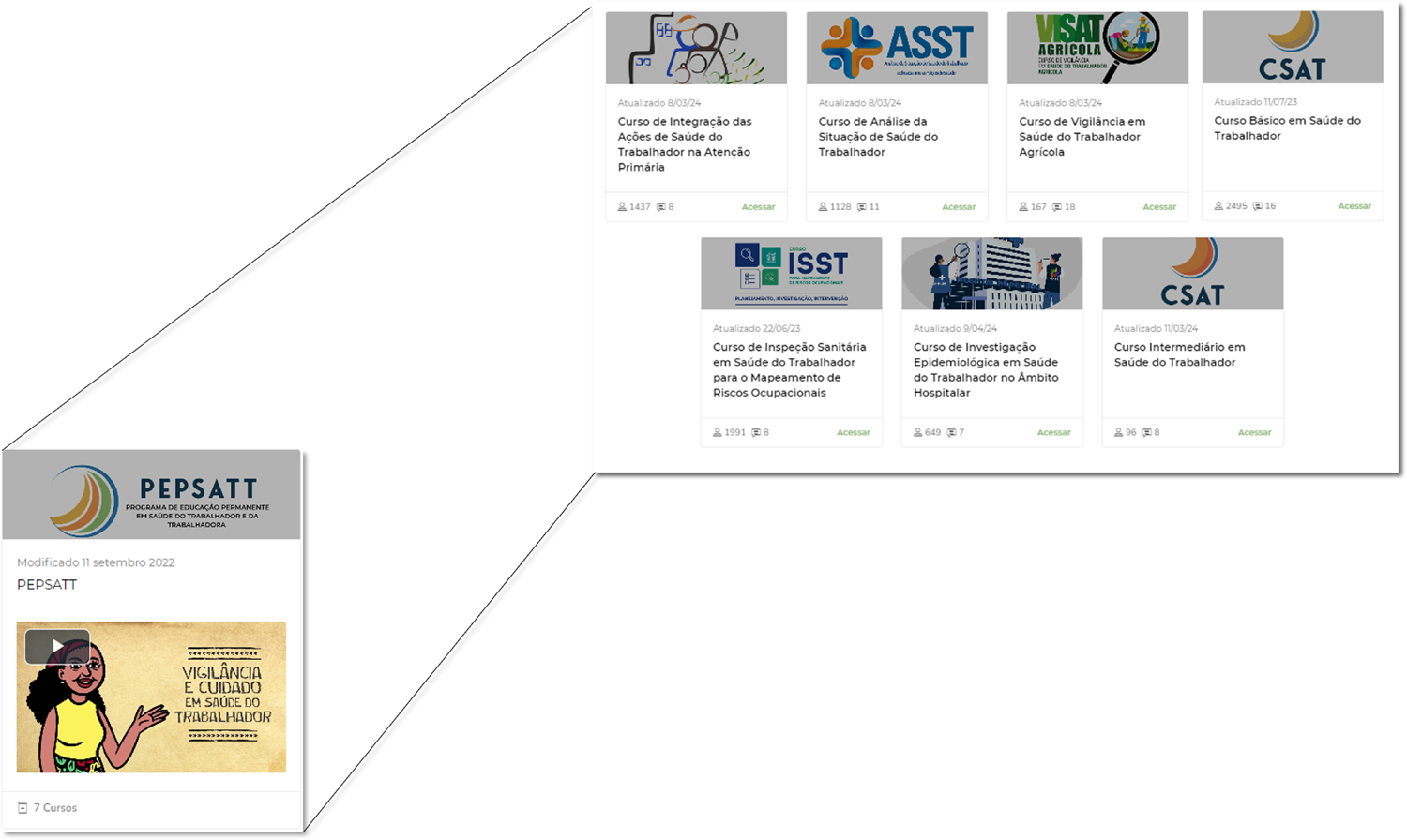
Seven self-instructional distance learning courses were developed (Figure 3), with workloads ranging from 20 to 180 hours, totaling 8,569 registrations and 3,735 participants in all courses (43.6%).

There was a ceremony to launch the program on April 28, 2022, with the presence of authorities from the Ministry of Health’s Health Surveillance Secretariat, representatives from the National Council of Health Secretaries (CONASS), the Pan American Health Organization (PAHO), the Public Ministry of Labor (MPT), the Oswaldo Cruz Foundation (Fiocruz), and the National Health Council (CNS), and with online transmission. The launch of the Program was a historic milestone for Workers’ Health in the SUS and represented recognition of the importance of WH teaching, as well as a commitment to investing in and expanding different training initiatives in the field.
During this period, the courses on Workers’ Health Situation Analysis applied to health services (ASST) and Integration of Workers’ Health Actions in Primary Health Care (PHC) were already available on the platform.
The ASST course was organized into seven modules, with an estimated workload of 96 hours and the offer available to be completed in four months. The content covered the fundamentals of VISAT, the concept of territory and the Social Determinants of Health (SDH), handling secondary databases, Health Information Systems (SIS), frequency measures in epidemiology, planning epidemiological investigations and communication strategies in WH to disseminate the analyses carried out.
The ASST course aimed to contribute to applied training in epidemiology, with the aim of helping to incorporate this knowledge into the routine of SUS health services. A total of 1,238 people enrolled in the course, of which 612 completed it and received certification (49.4%).
The Course on Integrating Workers’ Health Actions into PHC was based on the contents of the Primary Care Handbook (CAB) No. 41 - Workers’ Health32, and its contents were developed in distance learning mode, self-instructional, with 70 hours. It included three learning paths: i) Path from Clinic to VISAT - Empowering the clinical encounter of the user-worker with professionals from the eAB/eSF; ii) Path Surveillance to Clinic - Path of VISAT in the Health Care Network: integrality of actions in PHC; and iii) Path Participation and Social Control - Participation and Social Control in Workers’ Health in the SUS: popular organization and territories. There were 1,488 enrolments and, of these, 585 (39.3%) completed the course and received certification.
Both courses were developed in partnership with the Postgraduate Program in Health, Environment and Work (PPGSAT) at the Federal University of Bahia (UFBA), and the coordination of activities and the course was shared with CGSAT, through PEPSATT. It is worth noting that among the course participants who did not complete the ASST and CAB courses, 14.1% (N = 175) and 27.4% (N = 408), respectively, never accessed their content.
The third course to be completed and launched was the Agricultural Worker Health Surveillance course (Visat Agrícola), in distance learning mode, self-instructional, with an estimated workload of 90 hours, organized into eight modules. The aim of the course was to offer specialized technical training and promote the development of VISAT skills in the context of family farming.
The pedagogical structure was designed to prepare trainees from diagnosis to the construction of participatory interventions in the territories, in line with the need for a comprehensive approach to promoting the health of agricultural workers and offered to Health Surveillance technicians and managers, members of social control and open to other interested parties. The course had 423 enrolments, of which 344 (81.3%) completed it and received certification.
The Epidemiological Investigation in Workers’ Health in Hospitals course, also self-instructional, was the fourth to be launched. The aim of the course was to clarify the role and work process of the Hospital Epidemiology Centers (NHE) in identifying, notifying, processing, and analyzing Work-Related Diseases (WRD) of Compulsory Notification in the Notifiable Diseases Information System (SINAN). With a total workload of 30 hours, the course was structured in a single module, divided into two units. Of the 719 people enrolled, 339 (47.1%) completed all the activities.
Another initiative was the Basic Course in Workers’ Health (Csat Básico), which aimed to introduce essential themes and concepts about the field of WH, with a view to qualifying the practices of professionals, technicians and managers working in the SUS who had no previous knowledge of the subject. The course had a total workload of 72 hours, divided into seven modules, organized in a self-instructional format and lasting four months. The content covered the historical and conceptual background of Workers’ Health, social control and participation, knowledge about RENASTT in the SUS, and the importance of recognizing the user-worker in the health service. It also included an introduction to VISAT, health promotion and its application in the field of WH, as well as management and planning applied to this area. In all, the course had 2,596 enrollees, with 841 (32.3%) graduates, representing the highest dropout rate of all the initiatives offered by the Program.
The course on Workers’ Health Inspection (ISST) for Mapping Occupational Risks aimed to describe the steps for operationalizing ISST actions to be carried out in work environments in different production processes. With a workload of 30 hours, the course was structured in a single module, organized into three units, which illustrated ways of operationalizing the ISST steps, including practical visual examples to support the application of the content in the participants’ work routine. The course had 2,105 registrants, of whom 1,014 (48.2%) were graduates, making it the course with the highest absolute number of graduates in the Program.
Finally, the last course to be completed was the Intermediate Course in Workers’ Health (Csat Intermediário). Although completed, the course was not launched due to management changes and institutional adjustments. This fact highlights the vulnerability of PHE initiatives to administrative discontinuity, which can interrupt professional qualification for the SUS and the use of the investment already made33.
The course was planned in the form of professional development, in distance learning mode, with tutoring, totaling 188 hours. Its structure was organized into 20 modules, divided into five units: four formative (108 hours) and one for the preparation of a Technical-Technological Course Conclusion Product (42 hours), with a maximum duration of eight months.
The PEPSATT courses reached approximately 751 municipalities (13.4%) in all of Brazil’s Federative Units (UF), ensuring a wide territorial coverage. Among the states, Paraná (PR) stands out, with the highest number of graduates, totaling 492 (13.2%), followed by São Paulo (SP), with 363 (9.7%) and Minas Gerais (MG), with 322 (8.6%). Other states, such as Bahia (BA), also had a significant number of participants, with 321 completers (8.6%) (Figure 4). At the municipal level, Brasília (DF) led the way with 142 completers, followed by São Paulo (SP) with 97, Salvador (BA) with 71 and Aracaju (SE) with 61. It should be noted that 5.2% (N = 195) of the registrations did not inform the UF and 200 municipalities were classified as “unknown”. This problem occurred due to the constant updating and changes to the registration form settings. It was not possible to use information on fields such as gender, race/color, age group and schooling.

Number of graduates of the Permanent Education Program in Workers’ Health, by municipality, 2022-2024
Most trainees were linked to Health Surveillance (66.3%; N = 2,475), followed by 19.4% (N = 724) working in Health Care, predominantly in Primary Health Care (PHC) (96.8%; N = 701), as well as 2.8% (N = 105) professionals linked to Health Management.
The PEPSATT courses adopted multiple teaching and learning methods, with extensive use of ICT to organize the content on the platform. Despite this, there was a simple average dropout rate of 50.6%. The causes of this dropout were not investigated directly, but it is possible to raise hypotheses based on the structure of the program and the data observed.
The self-instructional nature of the courses, without tutoring, may have limited the engagement of participants who need more pedagogical support. In addition, the curricular approach, organized under the pedagogy of competencies, although structured, may not have aroused the same level of interest as more critical and participatory methodologies. There was also significant variation between the courses: the Basic Course in Workers’ Health, being a “gateway” course, recorded the highest dropout rate, possibly because it attracted a broader and less specialized audience, with less initial commitment. On the other hand, the Sanitary Inspection in Workers’ Health for Mapping Occupational Risks course, which was short and focused on a specific practice, had the highest absolute number of graduates.
These observations suggest that the subject matter, the workload and the target audience directly influenced the permanence of the course participants. In this way, an in-depth analysis of the participants’ experience is essential to restructure the offer, making it more attractive and effective.
According to Campos (2000) and Coelho (2003), dropout in distance learning courses can have multiple causes, including lack of time, lack of continuous educational support, insufficient technological structure, navigability difficulties, among other situations, justifying the abandonment of students even before the course begins34,35.
Offering educational initiatives entirely at a distance limits the production of critical and in-depth reflections on the relationship between work and health. This limitation stems from the impossibility of promoting the exchange of knowledge and experiences, especially with workers. It also creates the false impression that large-scale training can reach everyone equally and with the same quality.
Hennington, Santos and Pasche16reinforce the importance of the active participation of workers in incorporating and sharing their knowledge and experiences in training processes that deal with the health-work-environment relationship, so that training initiatives are attentive to the view of workers, considering the complexities of the world of work, its transformations and the dynamics involved in the act of working.
Finally, despite the challenges, the Program has achieved important results, such as the development of seven distance learning courses on a variety of topics, including Workers’ Health Surveillance in Family Farming, Analysis of the Health Situation and Workers’ Health in Primary Health Care. The courses sought to stimulate the incorporation of WHS into the different services of the SUS, by expanding the target audience of the initiatives and inserting fictitious scenarios that reinforced integration and interdisciplinarity in the construction of surveillance and health care actions for workers.
Final considerations
PEPSATT was an important initiative for expanding the supply of training in Workers’ Health in Brazil. Through distance learning, the program has helped to expand access to training in the field for professionals from different territorial contexts, overcoming geographical and time barriers. Despite its progress, the program has faced some challenges, such as the high dropout rate, the lack of face-to-face interaction and the discontinuity of resources to improve educational initiatives.
The results achieved, such as the participation of professionals from all Brazilian states and the predominance of course participants from strategic areas such as Health Surveillance and PHC, suggest the program’s potential for technical qualification in the SUS. However, it should be noted that the high drop-out rate and the lack of an impact assessment on professional practices limit more categorical conclusions about their effectiveness. The data demonstrates the initiative’s broad reach, but points to the need for improvements to ensure greater retention of trainees and a more profound impact on services.
Given that this is an experience report, the analysis is conducted using the program’s management documents and the experience of its builders. The study did not include a direct evaluation with the students to capture their perceptions, which is a limitation. As such, the reflections on dropout and impact are hypotheses that require future research using specific methodologies.
To improve the initiatives, with pedagogical adjustments to promote sustainable training that considers the specificities of the territories and professionals in which they work, we recommend to the management of the Ministry of Health’s CGSAT:
-
changing the theoretical approach that guides the organization of the courses’ curriculum, transforming the structure from the pedagogy of competencies to the historical-critical pedagogy, promoting a more critical and transformative training.
-
liaison with the federal, state, Federal District and municipal Health Departments and with higher education and research institutions, technical courses, undergraduate and postgraduate courses in the health area, to broaden dissemination and participation in the processes of adjusting and implementing the course, guaranteeing new offers and greater coverage.
-
the expansion of training in strategic themes for the field of Workers’ Health, with the inclusion of content developed in the face-to-face teaching modality, which favors direct interaction and the exchange of experience, or a hybrid model, which combines face-to-face meetings with distance activities.
-
evaluating and updating the content, adopting a more critical perspective, transforming the classical epidemiology approach into a critical epidemiology, in line with the epistemological needs of the field.
-
reviewing the target audience of the initiatives, incorporating a new line of action based on health education with workers, to strengthen educational practices and generate a positive impact on the health of workers in Brazil.
-
strengthening the participation of workers in the construction of content, involving them directly in the processes of defining themes and preparing materials, promoting greater alignment with the realities of the world of work.
-
longitudinal evaluation of the program’s impact, implementing studies to monitor the results of the training in the medium and long term, evaluating how the graduates have applied the knowledge in their professional practices.
It is also recommended to strengthen the dialog between managers, workers and academic institutions to increase the capillarity and effectiveness of the training, as well as ensuring that the content and methodologies are continually updated. In this way, initiatives such as PEPSATT can contribute more effectively to consolidating OH as a strategic field in the SUS.
Acknowledgments
We would like to thank Ana Cristina Martins de Melo, Daniela Rolfs Buosi, and Flávia Nogueira e Ferreira de Sousa for their valuable contribution to the construction of the Permanent Education Program in Workers’ Health (PEPSATT), offering essential support for its implementation and operationalization. We would also like to thank the coordinators and authors of the courses mentioned in this article, whose dedication was fundamental in preparing the teaching materials and strengthening the training process.
References
-
1 Lacaz FA. O campo Saúde do Trabalhador: resgatando conhecimentos e práticas sobre as relações trabalho-saúde. Cad Saude Publica. 2007 Apr;23(4):757-66. https://doi.org/10.1590/S0102-311X2007000400003
» https://doi.org/10.1590/S0102-311X2007000400003 -
2 Gomez CM, Vasconcellos LC, Machado JM. Saúde do trabalhador: aspectos históricos, avanços e desafios no Sistema Único de Saúde. Cien Saude Colet. 2018 Jun;23(6):1963-70. https://doi.org/10.1590/1413-81232018236.04922018
» https://doi.org/10.1590/1413-81232018236.04922018 - 3 Brasil. Senado Federal. Constituição da República Federativa do Brasil: texto constitucional promulgado em 5 de outubro de 1988, com as alterações determinadas pelas Emendas Constitucionais de Revisão nos 1 a 6/94, pelas Emendas Constitucionais nos 1/92 a 91/2016 e pelo Decreto Legislativo no 186/2008. Brasília, DF: Senado; 2016.
-
4 Ministério da Saúde (BR). Portaria de Consolidação no 3, de 28 de setembro de 2017 [citado 16 set 2024], art. 4o, inciso IV, Anexo X (Origem: Portaria GM/MS no 1.679/2002). Criação da Rede Nacional de Atenção Integral à Saúde do Trabalhador - RENAST no Sistema Único de Saúde - SUS. Disponível em: https://bvsms.saude.gov.br/bvs/saudelegis/gm/2017/prc0003_03_10_2017.html
» https://bvsms.saude.gov.br/bvs/saudelegis/gm/2017/prc0003_03_10_2017.html -
5 Ministério da Saúde (BR). Portaria de Consolidação no 6 de 28 de setembro de 2017 [citado 16 set 2024], Art. 1097 a 1100 (Origem: Portaria GM/MS no 2.728, de 11 de novembro de 2009). Financiamento no SUS. Disponível em: https://bvsms.saude.gov.br/bvs/saudelegis/gm/2017/prc0006_03_10_2017.html
» https://bvsms.saude.gov.br/bvs/saudelegis/gm/2017/prc0006_03_10_2017.html - 6 Souza DO. Saúde do(s) trabalhador(es): análise ontológica da "questão" e do "campo". Maceió: Edufal; 2019. O campo da Saúde do Trabalhador: marcos históricos e teóricos, p. 93-140.
-
7 Dias EC, Silveira AM, Chiavegatto CV, Resende NP. O ensino das relações trabalho-saúde-doença na escola médica: percepção dos alunos e proposta de aperfeiçoamento na UFMG. Rev Bras Educ Med. 2006;30(1):20-6. https://doi.org/10.1590/S0100-55022006000100004
» https://doi.org/10.1590/S0100-55022006000100004 -
8 Ministério da Saúde (BR). Portaria de Consolidação nº 2, de 02 de outubro de 2017 [citado 16 set 2024]. Política Nacional de Educação Permanente em Saúde, Capítulo III, Artigo 8º, Anexo XL. Disponível em: https://bvsms.saude.gov.br/bvs/saudelegis/gm/2017/prc0002_03_10_2017.html
» https://bvsms.saude.gov.br/bvs/saudelegis/gm/2017/prc0002_03_10_2017.html -
9 Ministério da Saúde (BR). Portaria de consolidação nº 2, de 28 de setembro de 2017 [citado 16 set 2024], Anexo XV - Política Nacional de Saúde do Trabalhador e da Trabalhadora (PNSTT). Disponível em: http://bvsms.saude.gov.br/bvs/saudelegis/gm/2017/prc0002_03_10_2017.html
» http://bvsms.saude.gov.br/bvs/saudelegis/gm/2017/prc0002_03_10_2017.html -
10 Mussi RF F. Flores FF, Almeida CB. Pressupostos para a elaboração de relato de experiência como conhecimento científico. Rev Praxis Educ. 2021;17(48):60-77. https://doi.org/10.22481/praxisedu.v17i48.9010
» https://doi.org/10.22481/praxisedu.v17i48.9010 -
11 Carnut L, Mendes A, Guerra LD, Goraieb TT, Lopes TT. Sistematização de experiências como método para elaborar a crítica política. Rev Pesq Qualit. 2020;8(16):1-19. https://doi.org/10.33361/RPQ.2020.v.8.n.16.317
» https://doi.org/10.33361/RPQ.2020.v.8.n.16.317 -
12 Agripino NA, Carnut L, Guerra LD S. Competências comuns no campo da saúde do trabalhador para as profissões da saúde: uma metassíntese qualitativa. Rev Ibero-Am Estud Educ. 2024;19(00):e024101. https://doi.org/10.21723/riaee.v19iesp.2.18598
» https://doi.org/10.21723/riaee.v19iesp.2.18598 - 13 Agripino NA. Competências comuns em saúde do trabalhador: validação qualitativa crítica de uma proposta de especialização [dissertação]. São Paulo: Escola Paulista de Enfermagem, Universidade Federal de São Paulo; 2024.
-
14 Oliveira ES, Freitas TC. Sousa MR, Mendes NCSGM, Almeida TR, Dias LC, et al. A educação a distância (EaD) e os novos caminhos da educação após a pandemia ocasionada pela Covid-19. Braz J Dev. 2020;6(7):52860-52867. https://doi.org/10.34117/bjdv6n7-799
» https://doi.org/10.34117/bjdv6n7-799 -
15 Barcelos RM, et al. Educação permanente em saúde: práticas desenvolvidas nos municípios do estado de Goiás. Trab Educ Saude. 2020;18(2):e0026092. https://doi.org/10.1590/1981-7746-sol00260
» https://doi.org/10.1590/1981-7746-sol00260 -
16 Hennington EA, Santos GB, Pasche DF. Dez anos da Política Nacional de Saúde do Trabalhador e da Trabalhadora e os desafios da formação para (trans)formação do trabalho. Rev Bras Saude Ocup. 2024;49:e4. https://doi.org/10.1590/2317-6369/21622pt2024v49e4
» https://doi.org/10.1590/2317-6369/21622pt2024v49e4 - 17 Laurell AC, Noriega M. Processo de produção e saúde: rabalho e desgaste operário. São Paulo: Cebes Hucitec; 1989.
-
18 Mendes R, Dias EC. Da medicina do trabalho à saúde do trabalhador. Rev Saude Publica. 1991 Oct;25(5):341-9. https://doi.org/10.1590/S0034-89101991000500003
» https://doi.org/10.1590/S0034-89101991000500003 -
19 Minayo-Gomes C. ThedimCosta SMF. Incorporação das ciências sociais na produção de conhecimentos sobre trabalho e saúde. Cienc Saude Coletiva. 2003;8(1):125-136. https://doi.org/10.34117/bjdv6n7-799
» https://doi.org/10.34117/bjdv6n7-799 -
20 Lacaz FAC, Trapé A, Soares CB, Santos APL. Estratégia saúde da família e saúde do trabalhador: um diálogo possível? Interface Com Saúde Educ. 2013;17(44):75-87. https://doi.org/10.1590/S1414-32832013000100007
» https://doi.org/10.1590/S1414-32832013000100007 -
21 Falkenberg MB, et al. Educação em saúde e educação na saúde: conceitos e implicações para a saúde coletiva. Cienc Saude Coletiva. 2014;19(3):847-852. https://doi.org/10.1590/1413-81232014193.01572013
» https://doi.org/10.1590/1413-81232014193.01572013 -
22 Câmara EA, Belo MS, Peres F. Desafios e oportunidades para a formação em Saúde do Trabalhador na Atenção Básica à Saúde: subsídios para estratégias de intervenção. Rev Bras Saude Ocup. 2020;45:e10. https://doi.org/10.1590/2317-6369000009418
» https://doi.org/10.1590/2317-6369000009418 -
23 Mattos RC, Castro HA, Cavalcante AL, Dias E. Formação profissional como ação estratégica para implementação da Política Nacional de Saúde do Trabalhador e da Trabalhadora. Rev Bras Saude Ocup. 2019;44:e24. https://doi.org/10.1590/2317-63690000015218
» https://doi.org/10.1590/2317-63690000015218 -
24 Souza DO. O ensino da Saúde do Trabalhador nos cursos de graduação em saúde de uma universidade federal. Res Soc Dev. 2021;10(12):e597101220798. https://doi.org/10.33448/rsd-v10i12.20798
» https://doi.org/10.33448/rsd-v10i12.20798 - 25 Brasil. Decreto nº 7.508, de 28 de junho de 2011. Regulamenta a Lei nº 8.080, de 19 de setembro de 1990, que dispõe sobre as condições para o acesso aos serviços de saúde no Sistema Único de Saúde (SUS). Diário Oficial União. 29 jun 2011.
-
26 Agripino NA, Carnut L, Guerra LD S, de Souza JA, Vasconcelos KM. Validação qualitativa da proposta de Projeto Político-Pedagógico de um curso de especialização em saúde do trabalhador. Cuadernos Educ Desarro. 2023;15(10):12478-500. https://doi.org/10.55905/cuadv15n10-131
» https://doi.org/10.55905/cuadv15n10-131 - 27 Moran JM. Mudando a educação com metodologias ativas. In: Souza CA, Morales OE, editors. Convergências midiáticas, educação e cidadania: aproximações jovens. PG: Foca Foto-PROEX/UEPG, 2015. v. 2.
-
28 Paese CR. Educação a distância (EaD) e o uso das tecnologias de informação e comunicação (TICs), baseada em ambientes virtuais de aprendizagem (AVA) algumas reflexões sobre a importância da tutoria on-line. Itinerarius Reflectionis. 2012;8(1):12. https://doi.org/10.5216/rir.v1i12.1312
» https://doi.org/10.5216/rir.v1i12.1312 -
29 Sales MV. Uma reflexão sobre a produção de material didático para EAD. Anais do 12º Congresso Internacional de Educação a Distância; Florianópolis. Florianópolis: Universidade Federal de Santa Catarina; 2005 [citado 19 set 2024]. Disponível em https://www.abed.org.br/hotsite/12-ciaed/por/pdf/044tcf5.pdf
» https://www.abed.org.br/hotsite/12-ciaed/por/pdf/044tcf5.pdf -
30 Medeiros PS. Produção de material didático em linguagem EaD por acadêmicos do curso de Pedagogia. Epitaya E-books. 2021;1(3):44-52. https://doi.org/10.47879/ed.ep.2021236p44
» https://doi.org/10.47879/ed.ep.2021236p44 -
31 Freitas IA, Brandão HP. Trilhas de aprendizagem como estratégia para desenvolvimento de competências. Anais do 29° ENANPAD; 2005 out 3-5; Brasília, DF, Brasil. Brasília: ANPAD; 2005 [citado 2 jan 2025]. Disponível em https://arquivo.anpad.org.br/abrir_pdf.php?e=NjU1
» https://arquivo.anpad.org.br/abrir_pdf.php?e=NjU1 -
32 Ministério da Saúde (BR). Secretaria de Atenção à Saúde. Secretaria de Vigilância em Saúde. Saúde do trabalhador e da trabalhadora. Brasília, DF: Ministério da Saúde; 2019 [citado 15 set 2025]. (Cadernos de Atenção Básica, v. 41). Disponível em: https://bvsms.saude.gov.br/bvs/publicacoes/saude_trabalhador_trabalhadora.pdf
» https://bvsms.saude.gov.br/bvs/publicacoes/saude_trabalhador_trabalhadora.pdf -
33 Peres C, Silva RF, Barba PC SD. Desafios e potencialidades do processo de educação permanente em saúde. Trab Educ Saúde. 2016 Sep;14(3):783-801. https://doi.org/10.1590/1981-7746-sol00016
» https://doi.org/10.1590/1981-7746-sol00016 - 34 Campos GH. Vantagens, desvantagens e novidades da EAD. Escola Internet; 2000.
- 35 Coelho ML. Formação continuada do docente universitário em cursos à distância via internet: um estudo de caso [monografia]. Belo Horizonte: ABED; 2003.
-
Data availability:
The complete data set supporting the results of this study is available upon request to the corresponding author.
-
Declaration on the use of Artificial Intelligence:
The authors declare that no artificial intelligence tools were used to prepare the article.
-
Presentation at a scientific event:
The authors declare that the study has not been presented at a scientific event.
-
d
The development of the advanced level of PEPSATT was part of the objectives of the master’s research carried out by Agripino (2024), which was carried out in four stages, with the aim of analyzing the common competencies of the health professions in Workers’ Health in order to structure a proposal for a lato sensu specialization.
-
e
“Learning Trails”: these are alternative and flexible paths for personal and professional development. They constitute an educational strategy for achieving professional excellence and human excellence in the people who make up the organization.
-
Funding:
The General Coordination of Workers’ Health Surveillance (CGSAT), linked to the Department of Health and Environment Surveillance (SVSA) of the Ministry of Health (MS), hired personnel to produce distance learning (DL) content through Cooperation Agreements No. 69 and No. 74, established with the Pan American Health Organization (PAHO).
Edited by
-
Responsible editors:
Andréia Maria Silveira Universidade Federal de Minas Gerais - UFMG https://orcid.org/0000-0002-1180-3875Leila Posenato Garcia Fundação Jorge Duprat Figueiredo de Segurança e Medicina do Trabalho - Fundacentro https://orcid.org/0000-0003-1146-2641
The complete data set supporting the results of this study is available upon request to the corresponding author.

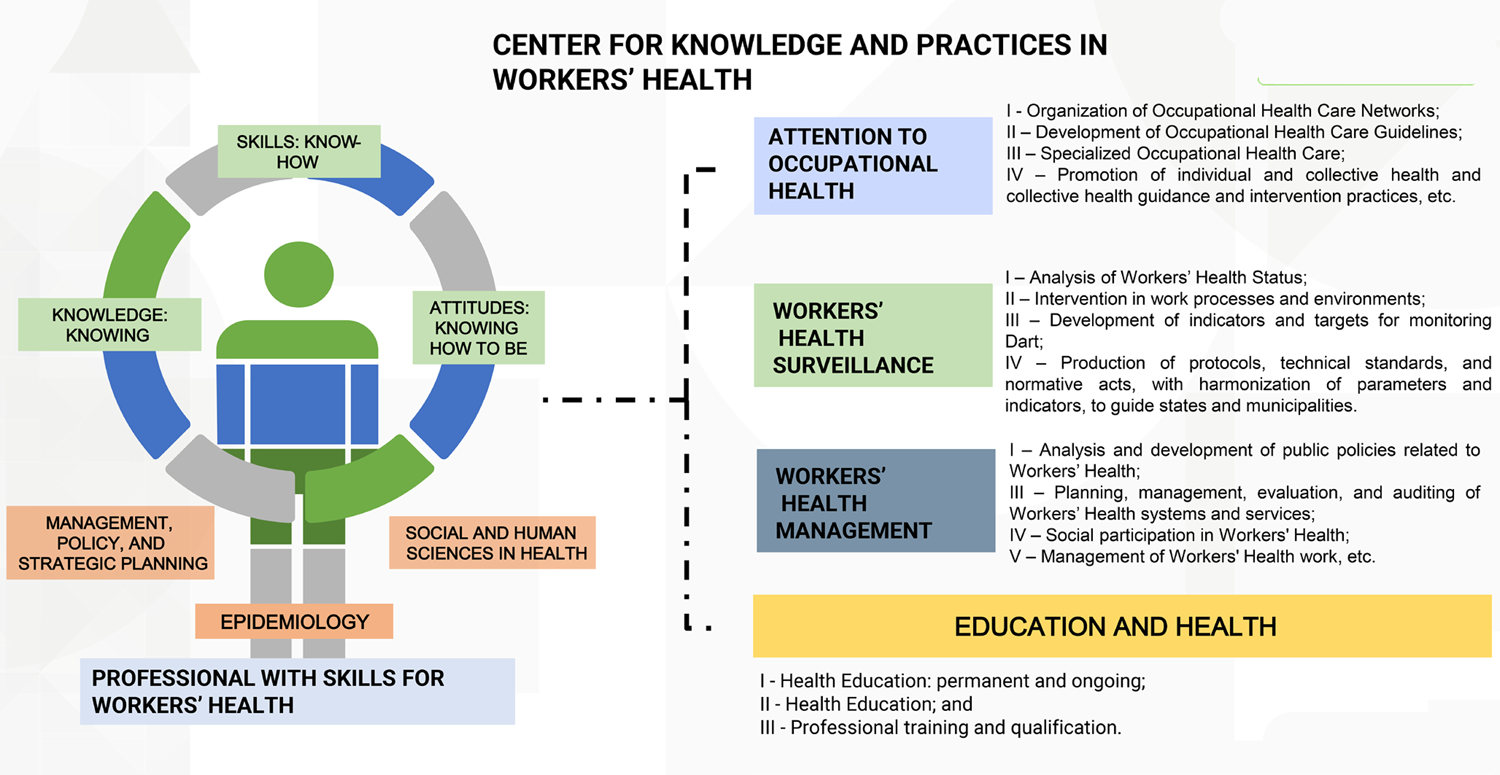 Source: Adapted from Agripino; Carnut; Guerra, 2024
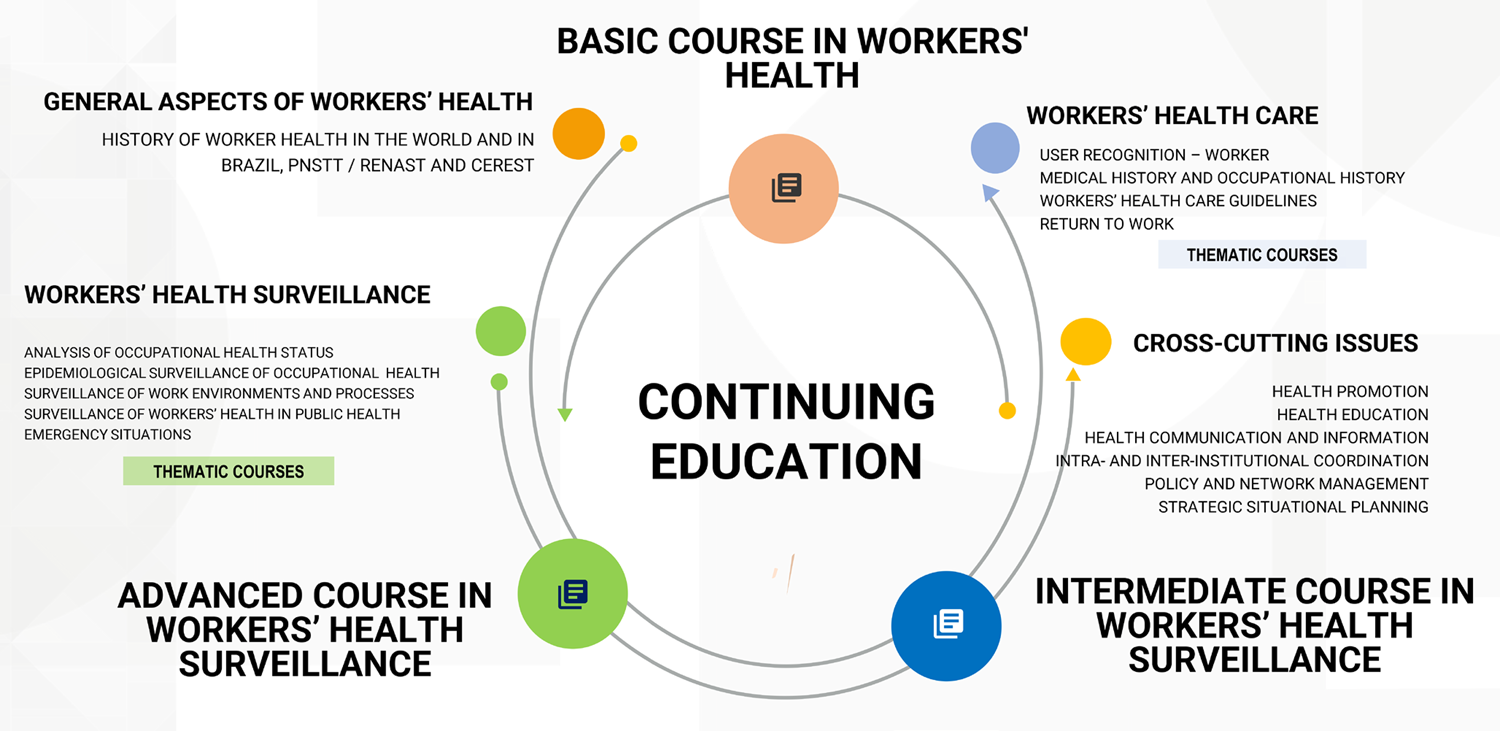 Source: Agripino et al., 2023
 Source: Prepared by the authors.
 Source: Prepared by the authors.