| REDECA: A Novel Framework to Review Artificial Intelligence and Its Applications in Occupational Safety and Health |
Pishgar et al. 20216
|
EUA |
Review |
No |
The REDECA methodology is used to review articles that apply artificial intelligence to assess and prevent accident risks in the work environment in companies from five sectors (oil and gas, mining, transportation, construction, and agriculture). As AI applications across industries continue to increase, further exploration of the benefits and challenges of AI applications in occupational safety and health is needed to optimally protect worker health, safety and well-being. |
| Predictors of working beyond retirement in older workers with and without a chronic disease - results from data linkage of Dutch questionnaire and registry data |
Wind et al. 201813
|
Netherlands |
Original |
No |
Aims to identify the relevant factors that explain the supply of work among individuals after retirement. These were divided into two groups, those with chronic diseases and those without chronic diseases. Factors related to health (better perception of physical health and height) and work (level of job qualification and workload) are significant to explain the supply of work beyond retirement for both groups. The greater difficulty in forecasting among workers with chronic diseases may be associated with the greater degree of heterogeneity of the group compared to their peers without chronic diseases. |
| Determinants of metabolic syndrome in obese workers: gender differences in perceived job-related stress and in psychological characteristics identified using artificial neural networks |
Vigna et al. 201914
|
Italy |
Original |
No |
The study investigated the associations among gender, psychosocial variables, job-related stress, and the presence of metabolic syndrome (MS) in a cohort of obese Caucasian workers. Data analyses were performed with an artificial neural network algorithm called Auto Semantic Connectivity Map (AutoCM), using all available variables, age, BMI, waist circumference, fasting glucose, blood pressure, triglycerides, and HDL cholesterol were collected to define MS. In addition, were evaluated eating behaviors, depressive symptoms, and work-related stress. Was found a complex gender-related association between MS, psychosocial risk factors, and occupational determinants. |
| Prediction of pneumoconiosis by serum and urinary biomarkers in workers exposed to asbestos-contaminated minerals |
Yang 201916
|
Taiwan |
Original |
No |
The objective of this study was to assess the diagnostic accuracy of serum and urinary biomarkers for pneumoconiosis in workers exposed to asbestos-contaminated minerals. The study used machine learning algorithms to identify markers relevant to the diagnosis of pneumoconiosis, a lung disease. |
| A comparison of confounder selection and adjustment methods for estimating causal effects using large healthcare databases |
Benasseur et al. 201817
|
Canada |
Original |
No |
Study using simulations to compare the performance of different machine learning methods to reduce bias by unmeasured and measured variables in large healthcare databases. Were compared Bayesian adjustment for confounding (BAC), generalized Bayesian causal effect estimation (GBCEE), Group Lasso and Doubly robust estimation, high-dimensional propensity score (hdPS), and scalable collaborative targeted maximum likelihood algorithms. The technique helps to reduce bias in LHDs, but the results are still inconclusive. |
| Differential occupational risks to healthcare workers from SARS-CoV-2 observed during a prospective observational study |
Eyre et al. 202018
|
United Kingdom |
Original |
No |
The study evaluated risk differentials for sars-cov-2 between symptomatic and asymptomatic staff of a teaching hospital. The results indicated a higher rate of positive results among professionals who work in an area with direct contact with patients, who were more likely to be contaminated. The lowest rate was observed among intensive care unit staff. Positive results were more likely in Black and Asian staff, independent of role or working location, and porters and cleaners. |
| Availability and accuracy of occupation in cancer registry data among Florida firefighters |
McClure et al. 201919
|
EUA |
Original |
No |
The objective of this study is to determine the frequency and predictors of missing and inaccurate occupation data for a cohort of career firefighters in a state cancer registry. Among the registries of cancer patients, the results of the logistic regression model present a greater probability of attribution of the occupation of firefighters among men, with a more recent diagnosis, and among younger ones. |
| Empirical estimation of the grades of hearing impairment among industrial workers based on new artificial neural networks and classical regression methods |
Farhadian et al. 201520
|
Iran |
Original |
No |
This study aimed to analyze the potential of artificial neural networks and logistic regression techniques for the estimation of hearing impairment among industrial workers. Five features including the age of workers, work experience, noise exposure level, smoking status, and using status of HPD were determined as the final variables to develop the prediction model. The result confirmed that neural networks could be a suitable tool for analysis of a phenomenon such as hearing loss in which required data for different variables are being collected while the mechanisms of interaction effects are complex and not fully understood. |
| Non-cancer morbidity among Estonian Chernobyl cleanup workers: A register-based cohort study |
Rahu et al. 201421
|
Estonia |
Original |
No |
To examine non-cancer morbidity in the Estonian Chernobyl cleanup workers cohort compared with the population sample with special attention to radiation-related diseases and mental health disorders. Elevated morbidity in the exposed cohort was found for diseases of the nervous system, digestive system, musculoskeletal system, ischemic heart disease and for external causes. The most salient excess risk was observed for thyroid diseases, intentional self-harm and selected alcohol-related diagnoses. No obvious excess morbidity consistent with biological effects of radiation was seen in the exposed cohort, except for benign thyroid diseases. |
| Solbase: a databank of solutions for occupational hazards and risks |
Swuste et al. 200322
|
Spain, Italy, Ireland, Germany, the UK and The Netherlands |
Original |
Yes |
Solbase is a database that gathers information from the work environment of different companies and processes in different sectors to map solutions for occupational accident risks. It is a jointly built base between different European countries. It is concluded that the base is a good search tool for work environment solutions, so that the information extracted can be transferred between countries, companies and branches, attributing scalability to the solutions found. |
| Research on workplace health promotion in the Nordic countries: a literature review, 1986-2008 |
Torp et al. 201123
|
Nordic countries: Norway, Sweden, Denmark, Finland and Iceland. |
Review |
No |
This literature review aimed to identify studies on workplace health promotion in the Nordic countries, to describe when, where and how the studies were performed and to further analyze the use of settings approaches and empowerment processes. The results identify three levels of intervention: 1) individual focused on avoiding stress with relaxation and meditation strategies; 2) role definition and peer support, and 3) interventions aimed at physical, social and organizational aspects, potential sources of stress. |
| Intelligent Robotics Incorporating Machine Learning Algorithms for Improving Functional Capacity Evaluation and Occupational Rehabilitation |
Fong et al. 202027
|
Canada |
Review |
No |
This paper reviews efforts to develop robotic functional capacity evaluations (FCE) solutions that incorporate machine learning algorithms. The Rehabilitation System works by simulating more skillful maneuvers and functional tasks. Machine learning-based approaches combine the benefits of robotic systems with the expertise and experience of human therapists. |
| Identification and classification of high-risk groups for Coal Workers’ Pneumoconiosis using an artificial neural network based on occupational histories: a retrospective cohort study |
Liu et al. 200928
|
China |
Original |
No |
The study was performed using longitudinal retrospective data with artificial neural network to predict the probability for coal workers’ pneumoconiosis (CWP) and to categorize the levels of risk. The duration of dust exposure and occupational category were the two most important factors for CWP. Coal miners at different levels of risk for CWP could be classified by the three-layer neural network analysis based on occupational history. |
| Ethical Considerations of Using Machine Learning for Decision Support in Occupational Health: An Example Involving Periodic Workers’ Health Assessments |
Dijkstra et al. 202030
|
Netherlands |
Review |
Yes |
The aim of this study was to explore ethical considerations and potential consequences of using ML based decision support tools (DSTs) in the context of occupational health. Were deliberated about biomedical ethical principles: respect for autonomy, beneficence, non-maleficence and justice. To minimize undesirable adverse effects, the quality of the data (completeness and reliability, including information from different actors) must be observed to reduce possible biases in the results, adhere to social responsibility when designing the models, and observe epidemiological issues around its strengths and weaknesses. |
| From worker health to citizen health: moving upstream |
Sepulveda 201331
|
EUA |
Review |
Yes |
The study discusses the use of longitudinal data related to occupational health to analyze and identify opportunities to support prevention strategies, increasing the return on investments in health and safety. The value of big data lies in the generalization of results by attributing scalability to interventions. The interventions can achieve better outcomes from the multisource data. |
| Quality of the data in the information system for work accidents under exposure to biological materials in Brazil, 2010 to 2015 |
Gomes & Caldas 201732
|
Brazil |
Original |
Yes |
The study aims to analyze accessibility, opportunity, and completeness as criteria for the quality of the information provided by System of Information for Notifiable Conditions (Sistema de Informação sobre Agravos de Notificação – SINAN) on Work Accidents under Exposure to Biological Materials (Acidentes de Trabalho com Exposição a Material Biológico – ATEMB) from 2010 to 2015. Information is accessible and timely. Despite the accessibility of the database and the relevance of its variables, SINAN-ATEMP exhibits problems in its quality that indicate an indisputable need to improve the completeness of information. |

 Big data on Occupational Health: how far are we?
 Thumbnail
 Thumbnail

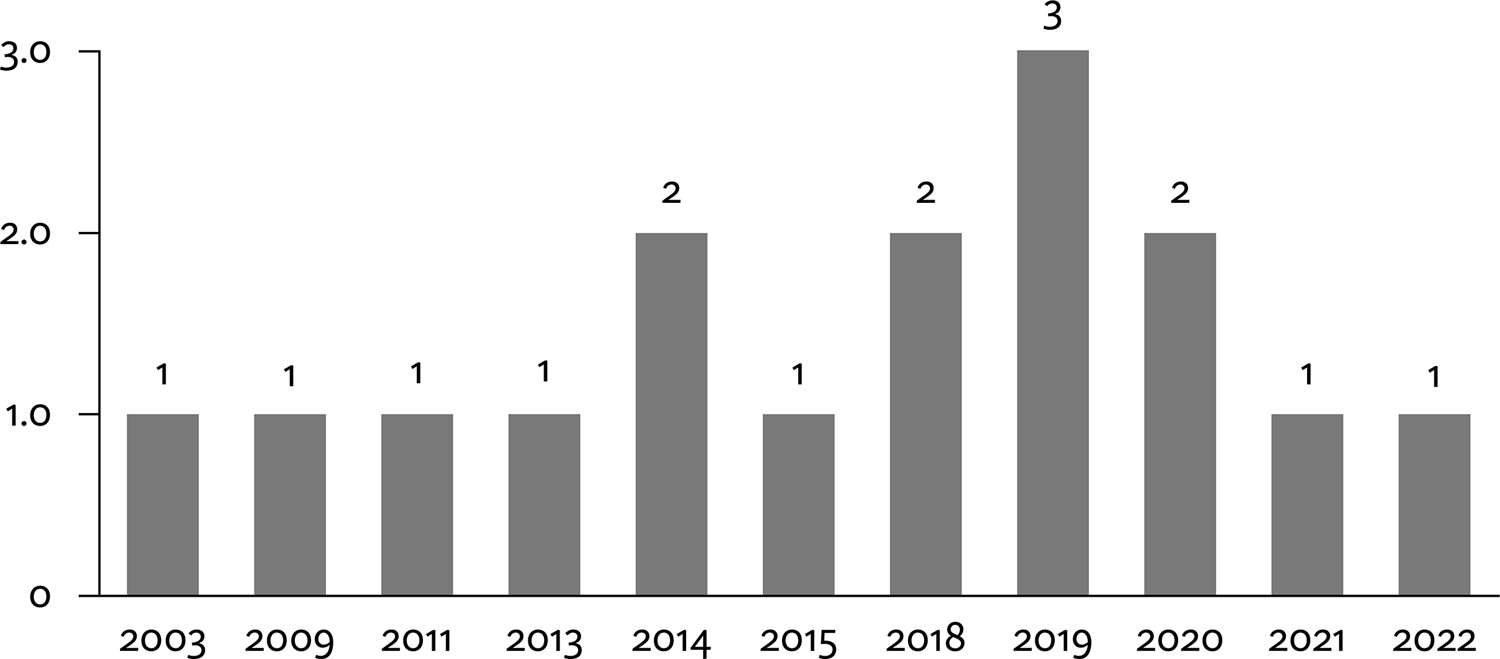 Source: Articles selected by this study in Medline, Embase, BVS and SciELO databases.