 Temporal dynamics in the parasite communities of corocoro grunt Orthopristis rubra (Actinopterygii: Haemulidae) from Sepetiba Bay, southeastern Brazil: a comparative study from 1991 to 2024
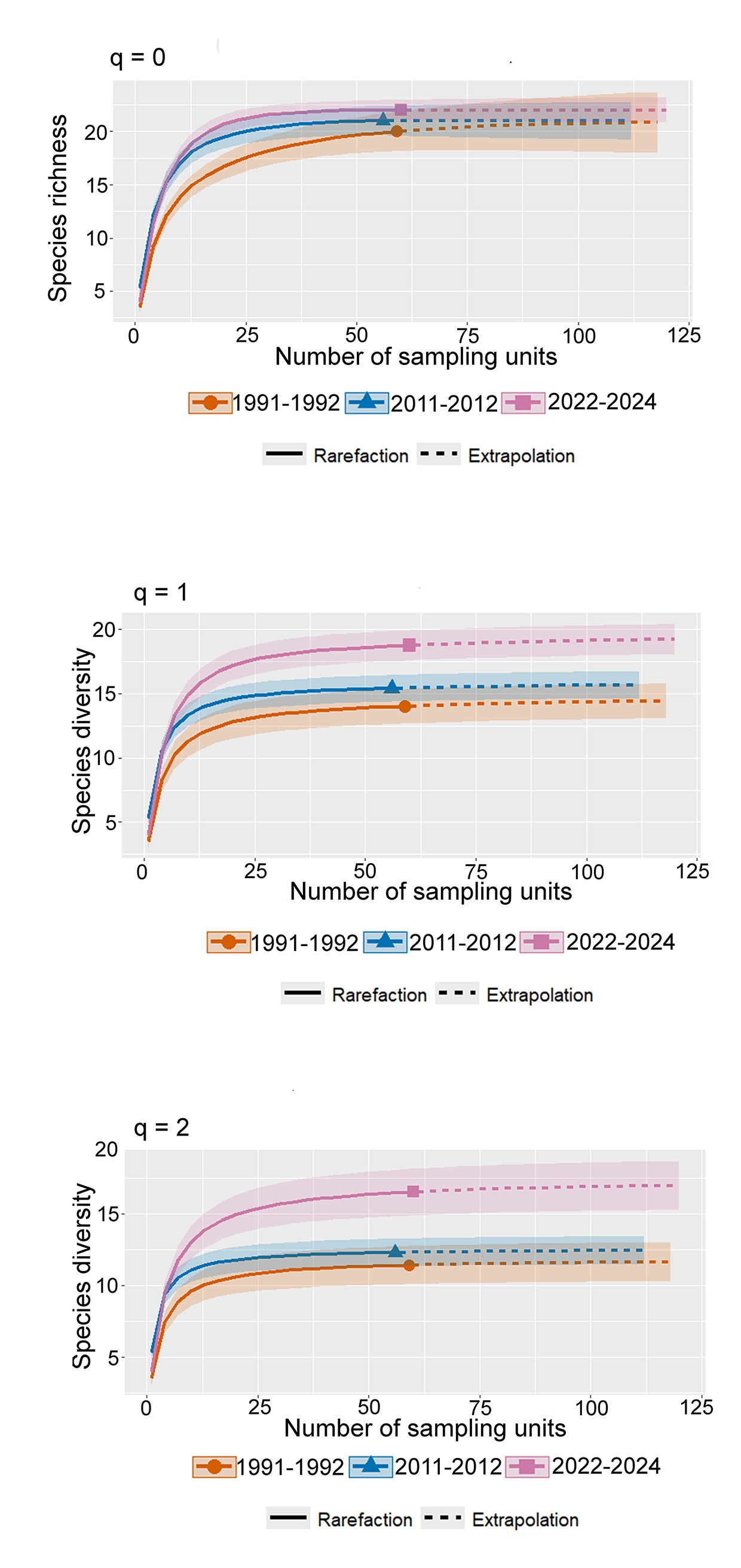
This study investigated the temporal dynamics of metazoan parasite communities of the corocoro grunt Orthopristis rubra (Haemulidae) from State of Rio de Janeiro, Sepetiba Bay, southeastern Brazil, comparing samples collected in 1991–1992, 2011–2012, and 2022–2024. A total of 180 fish were examined, revealing 26 parasite taxa belonging to seven higher groups. The helminth community showed aggregated distributions and a clear temporal pattern in abundance and diversity. Multivariate analyses (nMDS and PERMANOVA) indicated significant but moderate differences among periods, with increased species richness, evenness, and diversity in recent years. Hill diversity profiles revealed higher Shannon and Simpson indices in 2022–2024, suggesting greater balance and reduced dominance. These trends indicate gradual reorganization of parasite assemblages, likely associated with ecological recovery of Sepetiba Bay. The persistence of core digeneans and the appearance of new taxa reflect shifts in food-web structure and host–parasite interactions. The results reinforce the value of long-term parasitological data as bioindicators of ecosystem change in coastal environments under anthropogenic pressure.
Keywords:
Ecological indicators; environmental recovery; Orthopristis rubra; parasite communities; Sepetiba Bay; temporal variation
 Thumbnail
 Thumbnail
 Thumbnail