 Naltrexone-bupropion for the treatment of binge eating disorder: a systematic review and meta-analysis
Abstract
Objective: This meta-analysis aimed to evaluate the efficacy of naltrexone-bupropion in binge eating disorder patients.
Methods: We searched MEDLINE, Embase, and Cochrane databases up to February 2025 for randomized controlled trials comparing naltrexone-bupropion to placebo. The primary outcome was binge eating frequency. Secondary outcomes included body mass index, body weight, depression, lipid profile, and glycated hemoglobin levels. Mean differences (MD) with 95%CI were pooled using appropriate methods.
Results: Three trials were included with a total of 177 patients, of whom 49% received the intervention. There was no significant difference between groups for binge eating (MD -1.25; 95%CI -5.61 to 3.11; 0 = 0.57), body mass index (MD -2.24; 95%CI -8.01 to 3.53; p = 0.45), depression (MD -0.81; 95%CI -3.48 to 1.87; p = 0.55), or total cholesterol (MD -9.98; 95%CI -21.31 to 3.34; p = 0.15). A potential benefit was observed in glycated hemoglobin levels (MD -0.10; 95%CI -0.28 to 0.08; p = 0.26).
Conclusion: This meta-analysis found that naltrexone-bupropion has no significant benefits over placebo in reducing binge eating episodes or in improving metabolic or psychological outcomes. The possible effect on glycated hemoglobin levels warrants further investigation.
Systematic review registration: PROSPERO CRD420250651559
Keywords:
Bupropion; naltrexone; binge eating disorder; meta-analysis
Introduction
Binge eating disorder (BED) is characterized by recurrent episodes of excessive food intake in a short period of time, accompanied by the perception of loss of control over food intake.1 The most prevalent eating disorder, it is often associated with psychiatric and clinical comorbidities, being responsible for significant functional impairments in the lives of affected individuals.2 Its clinical relevance comes from its negative impact on the quality of life and overall health, in addition to its direct relationship with the increased incidence of obesity and its associated complications.3
Several therapeutic strategies are currently used for BED, especially psychological and pharmacological interventions. Cognitive behavioral therapy is the most studied psychotherapeutic approach, with demonstrated efficacy in reducing the frequency of binge episodes and increasing remission rates.4 However, cognitive behavioral therapy has limitations regarding weight loss, a relevant aspect for many patients. Lisdexamfetamine is the only pharmacological treatment for BED approved by the U.S. Food and Drug Administration.5 However, some patients are intolerant to the treatment or have contraindications, especially those with cardiovascular diseases. Thus it is essential to investigate new therapeutic approaches.
This study consolidates evidence on the efficacy of combined naltrexone and bupropion (NB) therapy for BED. In pilot studies and controlled clinical trials, NB has demonstrated safety and promising results.6-8 Although most research focuses on humans, studies in animal models also point to significant therapeutic potential, highlighting the importance of further investigation. From a neurobiological point of view, this combination drugs acts on neural pathways related to the hypothalamus and the reward system, which are fundamental mechanisms in the pathophysiology of BED. This may explain its efficacy in controlling binge episodes.9
However, despite several studies, NB’s efficacy for BED remains unclear. Due to small sample sizes, individual trials do not have sufficient statistical power to detect significant differences in outcome. Therefore, we conducted a systematic review and meta-analysis of randomized controlled trials (RCTs) on the efficacy of naltrexone/bupropion compared to placebo for clinical and laboratory-related outcomes in patients with ED.
Methods
Protocol and registration
This meta-analysis was conducted and reported following the Cochrane Collaboration and the Preferred Reporting Items for Systematic Reviews and Meta-Analysis guidelines.10,11 It is also registered in PROSPERO (CRD420250651559).
Eligibility criteria
Inclusion in this meta-analysis was restricted to studies that met the following eligibility criteria: 1) RCTs; 2) comparing NB vs. placebo in BED; and 3) reporting at least one of the clinical outcomes of interest. We excluded studies that 1) involved overlapping patient populations, 2) lacked a placebo control group, 3) did not report relevant outcomes, or 4) were associated with psychotherapy. There were no restrictions concerning the date or language of publication.
Study selection and data extraction
We searched PubMed, Embase, and the Cochrane Central Register of Controlled Trials from inception to February 5, 2025. The detailed search strategies used are described in Supplementary Box S1. The reference lists of all included studies were also searched manually for relevant studies.
The data collection process commenced on March 11, 2025. Two researchers (JBCM and MVSS) independently screened all titles and abstracts to identify potentially eligible studies. The full texts of publications that passed the initial screening were independently assessed by the same researchers for eligibility. Data from the included studies were then extracted to a table in Google Sheets. Any disagreements were resolved through consensus.
Outcomes
The primary efficacy outcome was binge eating, which was assessed using the Eating Disorder Examination Questionnaire. Secondary efficacy outcomes included depression (assessed using the Beck Depression Inventory), weight, body mass index (BMI), total cholesterol, HDL cholesterol, LDL cholesterol, and glycated hemoglobin levels.
Quality assessment
The quality of the included RCTs was assessed using the Cochrane tool for assessing risk of bias in randomized clinical trials.12 Two authors independently conducted a bias risk assessment (JBCM and MVSS), and discrepancies were resolved through consensus.
Certainty of evidence
Two independent reviewers (JBCM and MVSS) evaluated the certainty of evidence for the primary outcome using the Grading of Recommendations, Assessment, Development and Evaluations framework.13
Statistical analysis
Treatment effects were compared using the mean difference (MD) with 95%CI for continuous outcomes. We used inverse variance for continuous endpoints. Heterogeneity was examined with Cochran’s Q test, the I2 statistic, and tau-square using the restricted maximum-likelihood estimator. Heterogeneity was reported as low (I2 = 0-25%), moderate (I2 = 26-50%), or high (I2 > 50%).11 All statistical analyses were performed in RStudio (2023.12.1).
Results
Study selection and baseline characteristics
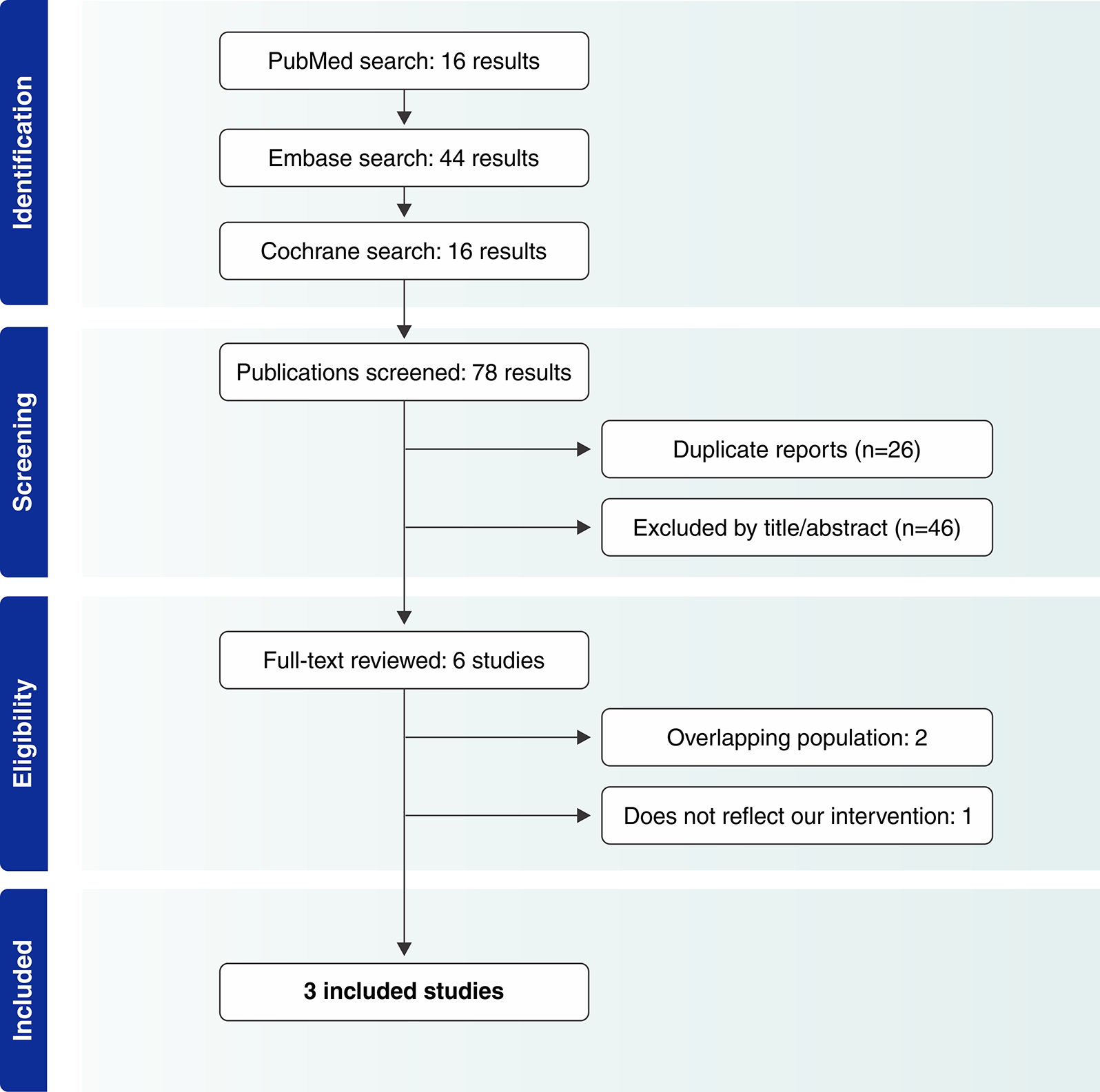
The initial search strategy identified 78 results (Figure 1). After duplicate records were removed and full-text screening was completed, three RCTs6-8 met the eligibility requirements and were included in the meta-analysis.

The analysis included 177 patients, with 87 (49%) receiving naltrexone/bupropion. The follow-up period ranged from 12 to 16 weeks. The patients’ mean age was 46.54 years, and 136 (77%) were female. Additional details about the included studies are presented in Table 1.
Pooled analysis of the studies
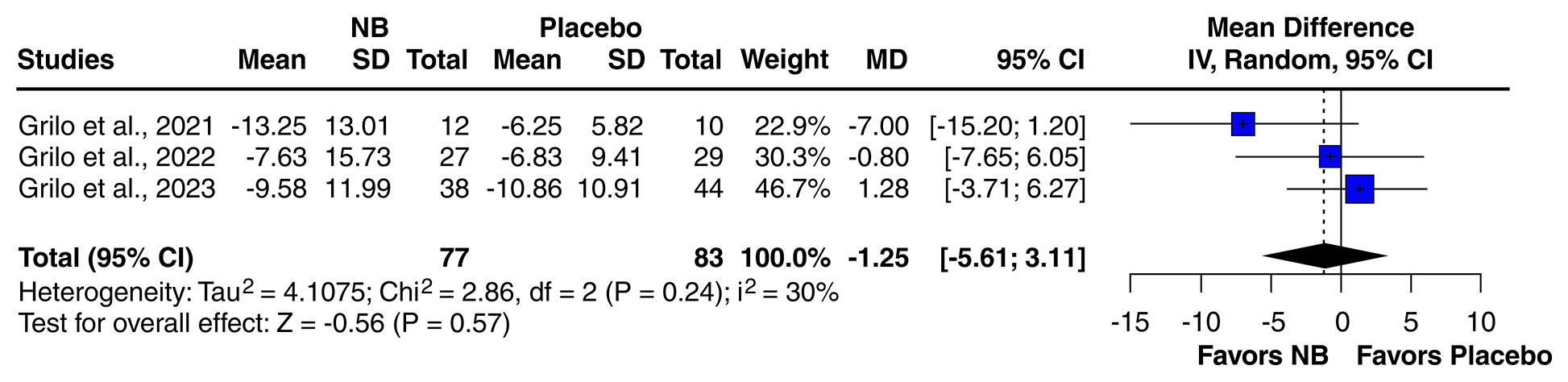
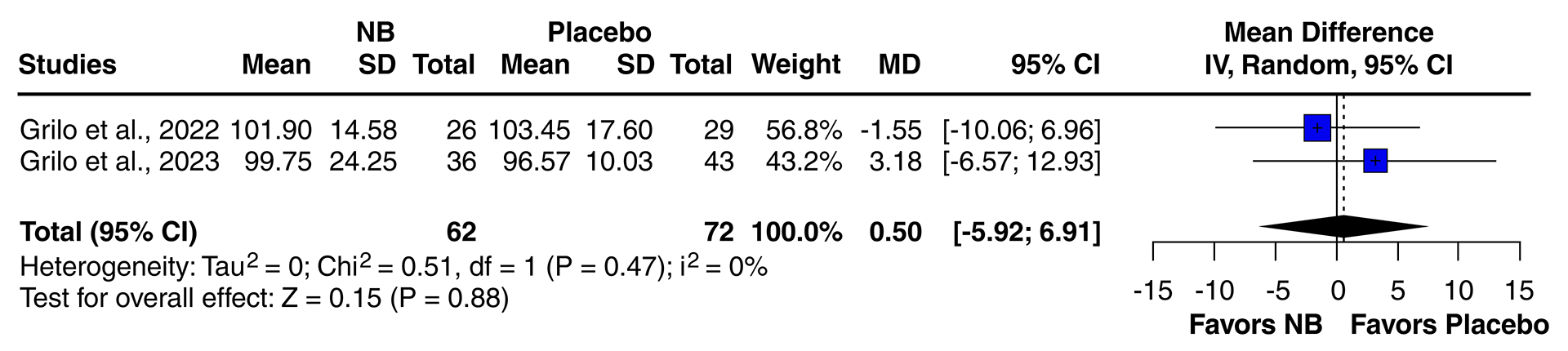
There were no significant differences between groups in terms of compulsion (MD -1.25; 95%CI -5.61 to 3.11; p = 0.57; I2 = 30%) (Figure 2), BMI (MD -2.24; 95%CI -8.01 to 3.53; p = 0.45; I2 = 78%) (Supplementary Figure S1), body weight (MD 0.50; 95%CI -5.92 to 6.91; p = 0.88; I2 = 0%) (Figure 3), depression (MD -0.81; 95%CI -3.48 to 1.87; p = 0.55; I2 = 0%) (Supplementary Figure S2), total cholesterol (MD -9.98; 95%CI -21.31 to 3.34; p = 0.15; I2 = 0%) (Supplementary Figure S3), LDL cholesterol (MD -7.43; 95%CI -17.43 to 2.57; p = 0.15; I2 = 0%) (Supplementary Figure S4), or HDL cholesterol (MD -0.15; 95%CI -5.25 to 4.97; p = 0.95; I2 = 0%) (Supplementary Figure S5). NB therapy resulted in lower glycated hemoglobin levels than placebo (MD -0.10; 95%CI -0.28 to 0.08; p = 0.26; I2 = 0%) (Supplementary Figure S6).

Forest plot of the meta-analysis for compulsion. df = degrees of freedom; MD = mean difference; NB = naltrexone-bupropion.
Forest plot of the meta-analysis for body weight. df = degrees of freedom; MD = mean difference; NB = naltrexone/bupropion.
Risk of bias assessment
As shown in Supplementary Figure S7, all studies were classified as having a low risk of bias.
Certainty of evidence
According to the Grading of Recommendations, Assessment, Development and Evaluations assessment, the quality of evidence for the BE outcome was moderate. This level of certainty indicates that, although the results are relatively reliable, some uncertainty remains that could influence the interpretation of the findings. There was no significant difference between the groups regarding compulsive behavior. The relatively wide confidence interval suggests that the intervention’s effects may vary, introducing a degree of imprecision. However, the heterogeneity was moderate, indicating a reasonable level of consistency among the included studies. Therefore, while these findings are based on moderate-quality evidence, further research could refine this estimate and potentially alter current conclusions regarding the intervention’s effect. A detailed assessment of the certainty of evidence can be found in Supplementary Table S1.
Discussion
This meta-analysis is the first comprehensive examination of NB compared to placebo, based on a cohort of 177 patients diagnosed with BED across three RCTs. The main findings from the combined analysis were: 1) NB therapy was not associated with a significant reduction in binge eating episodes; 2) NB did not lead to an improved lipid profile compared to placebo; 3) BMI and body weight remained equivalent between the groups; 4) NB therapy did not result in significant reductions in depression scale scores; and 5) compared to placebo, NB therapy contributed to improved glycated hemoglobin levels.
Given these findings, it is essential to contextualize NB in relation to existing pharmacological treatments. Currently, lisdexamfetamine dimesylate is the only Food and Drug Administration-approved medication for BED.14 However, despite its efficacy, approximately 50% of patients fail to achieve full remission, continuing to experience binge eating episodes, and most do not attain clinically meaningful weight loss.15 These limitations underscore the need for additional therapeutic strategies to improve clinical outcomes in this population.
NB has been explored as a potential therapeutic alternative, particularly among individuals with comorbid obesity, given its approval for chronic weight management.16,17 This combination exerts its effects by stimulating pro-opiomelanocortin neurons, increasing the release of α-melanocyte-stimulating hormone, a neuropeptide involved in appetite suppression.18-20 Naltrexone enhances this effect by blocking opioid-mediated auto-inhibition, further reducing food intake.21 The combination also modulates mesolimbic dopaminergic reward pathways, thereby attenuating compulsive eating behaviors and diminishing the hedonic response to food.
In contrast, lisdexamfetamine primarily enhances dopaminergic and noradrenergic neurotransmission, leading to improved impulse control and a reduction in binge eating episodes.14,22 However, its stimulant profile is associated with an increased risk of cardiovascular side effects and potential for misuse, which may limit its applicability in certain patient populations.23
Although our meta-analysis identified a trend toward reduced binge-eating episodes, BMI, body weight, depressive symptoms, total cholesterol, LDL cholesterol, and HDL cholesterol, these findings did not reach statistical significance, likely due to the insufficient sample size. This highlights the need for high-quality RCTs to further evaluate the efficacy of NB in BED.
In Grilo et al.,6 adverse events were more frequent in the NB group than the placebo group (57 vs. 21 events, respectively), with a progressive reduction in both groups. In the first month, there was no significant difference between the conditions, while in the second month adverse events were significantly higher in the NB group. In the third month, the difference between the groups was no longer significant. The most common adverse effects in the NB group were nausea, dizziness, insomnia, headache, dry mouth, vomiting, diarrhea, and constipation, with symptoms decreasing over time, which suggests adaptation to treatment. However, these side effects were considered tolerable and, thus, did not have a significant effect on study withdrawal. In the other two studies by Grilo et al.,7,8 the incidence of adverse events was not analyzed, thus preventing a meta-analysis for safety outcomes.
The cardiovascular safety of NB therapy is another critical aspect to consider, particularly in populations with increased cardiovascular risk. Although previous studies have evaluated this combination in patients with obesity and smoking cessation, data specific to individuals with BED remain limited. A comprehensive meta-analysis24 of 12 RCTs with a total of 19,176 patients found no association between therapy with naltrexone, bupropion, or their combination and an increased risk of major adverse cardiovascular events. However, caution is needed when applying these findings to patients with BED, since most of the studies were conducted in populations with distinct characteristics, primarily focused on weight loss or smoking cessation. However, despite these discrepancies, NB may represent a viable alternative for patients who fail to achieve an adequate response with lisdexamfetamine, particularly those with comorbid obesity, given its approval for chronic weight management. However, its use should be carefully considered in patients with contraindications, such as a history of epilepsy or active suicidal ideation, due to the seizure risk associated with bupropion and the potential neuropsychiatric effects of its combination with naltrexone. Further research is warranted to clarify its role as a personalized treatment strategy for BED.
This study has several limitations. First, the relatively small number of included RCTs (n=3) and the modest overall sample size (n=177) limit the statistical power and generalizability of the findings. Second, the trials’ short follow-up duration (ranging from 12 to 16 weeks) may be insufficient to fully assess the long-term effects of NB on BED and metabolic outcomes. Third, a safety analysis was not feasible due to the lack of comprehensive adverse event reporting in most trials; however, the findings of Grilo et al.6 provided data on adverse events, which we discussed. Finally, although heterogeneity was generally low for most outcomes, there was substantial heterogeneity for BMI (I2 = 78%), suggesting variability in treatment response across studies, which may have influenced the pooled results.
Despite these limitations, this meta-analysis is the most comprehensive synthesis of evidence available on the efficacy of NB for BED. Given the paucity of RCTs on this topic, our findings provide valuable insights into the potential therapeutic role of this pharmacological combination. However, the above mentioned limitations highlight the need for additional high-quality RCTs with larger sample sizes and longer follow-up periods to better evaluate the long-term efficacy and safety of NB in this population. Future studies should also include standardized assessments of adverse events to enable a more robust analysis of the treatment’s risk-benefit profile.
In conclusion, this meta-analysis synthesized the available evidence on NB therapy for BED. The findings suggest that it has no significant effect on binge eating episodes, body weight, BMI, depressive symptoms, or lipid profile, although there was a potential benefit in glycated hemoglobin levels. However, the moderate certainty of evidence and small sample size limit the strength of these conclusions. In this regard, further high-quality trials with longer follow-up are needed. Until stronger evidence is available, NB remains a potential but unproven option, particularly for patients with comorbid obesity or contraindications to stimulant-based treatments.
Supplementary Materials
Supplementary Material
Data availability statement
The data that support this study are available from the authors upon request.
Acknowledgements
The authors used ChatGPT to improve the text’s clarity and readability, subsequently reviewing and editing the content to ensure accuracy. The authors assume full responsibility for the final publication.
References
- 1 Brownley KA, Berkman ND, Peat CM, Lohr KN, Cullen KE, Bann CM, et al. Binge-eating disorder in adults: a systematic review and meta-analysis. Ann Intern Med. 2016;165:409-20.
- 2 Ágh T, Kovács G, Pawaskar M, Supina D, Inotai A, Vokó Z. Epidemiology, health-related quality of life and economic burden of binge eating disorder: a systematic literature review. Eat Weight Disord. 2015;20:1-12.
- 3 Perez M, Warren CS. The relationship between quality of life, binge-eating disorder, and obesity status in an ethnically diverse sample. Obesity (Silver Spring). 2012;20:879-85.
- 4 Grilo CM. Psychological and behavioral treatments for binge-eating disorder. J Clin Psychiatry. 2017;78 Suppl 1:20-4.
- 5 Vasile D,Vasiliu O. Evidence-based therapeutic management of binge-eating disorder. Eur Psychiatry. 2021;64:S351.
- 6 Grilo CM, Lydecker JA, Morgan PT, Gueorguieva R. Naltrexone + bupropion combination for the treatment of binge-eating disorder with obesity: a randomized, controlled pilot study. Clin Ther. 2021;43:112-22.e1.
- 7 Grilo CM, Lydecker JA, Fineberg SK, Moreno JO, Ivezaj V, Gueorguieva R. Naltrexone-bupropion and behavior therapy, alone and combined, for binge-eating disorder: randomized double-blind placebo-controlled trial. Am J Psychiatry. 2022;179:927-37.
- 8 Grilo CM, Lydecker JA, Jastreboff AM, Pittman B, McKee SA. Naltrexone/bupropion for binge-eating disorder: A randomized, double-blind, placebo-controlled trial. Obesity (Silver Spring). 2023;31:2762-73.
- 9 Billes SK, Sinnayah P, Cowley MA. Naltrexone/bupropion for obesity: an investigational combination pharmacotherapy for weight loss. Pharmacol Res. 2014;84:1-11.
- 10 Moher D, Liberati A, Tetzlaff J, Altman DG; PRISMA Group. Preferred reporting items for systematic reviews and meta-analyses: the PRISMA statement. PLoS Med. 2009;6:e1000097.
- 11 Higgins JPT, Thomas J, Chandler J, Cumpston M, Li T, Page MJ, et al. Cochrane handbook for systematic reviews of interventions. Chichester: Wiley; 2019.
- 12 Higgins JPT, Altman DG, Gøtzsche PC, Jüni P, Moher D, Oxman AD, et al. The Cochrane Collaboration’s tool for assessing risk of bias in randomised trials. BMJ. 2011;343:d5928.
- 13 Puhan MA, Schünemann HJ, Murad MH, Li T, Brignardello-Petersen R, Singh JA, et al. A GRADE Working Group approach for rating the quality of treatment effect estimates from network meta-analysis. BMJ. 2014;349:g5630.
- 14 Schneider E, Higgs S, Dourish CT. Lisdexamfetamine and binge-eating disorder: a systematic review and meta-analysis of the preclinical and clinical data with a focus on mechanism of drug action in treating the disorder. Eur Neuropsychopharmacol. 2021;53:49-78.
- 15 Linardon J. Rates of abstinence following psychological or behavioral treatments for binge‐eating disorder: meta‐analysis. Int J Eat Disord. 2018;51:785-97.
- 16 Yanovski SZ, Yanovski JA. Naltrexone extended-release plus bupropion extended-release for treatment of obesity. JAMA. 2015;313:1213.
- 17 McIntyre RS, Paron E, Burrows M, Blavignac J, Gould E, Camacho F, et al. Psychiatric safety and weight loss efficacy of naltrexone/bupropion as add-on to antidepressant therapy in patients with obesity or overweight. J Affect Disord. 2021;289:167-76.
- 18 Wang GJ, Tomasi D, Volkow ND, Wang R, Telang F, Caparelli EC, et al. Effect of combined naltrexone and bupropion therapy on the brain’s reactivity to food cues. Int J Obes (Lond). 2014;38:682-8.
- 19 Acosta A, Streett S, Kroh MD, Cheskin LJ, Saunders KH, Kurian M, et al. White Paper AGA: POWER – Practice Guide on Obesity and Weight Management, Education, and Resources. Clin Gastroenterol Hepatol. 2017;15:631-49.e10.
- 20 Grunvald E, Shah R, Hernaez R, Chandar AK, Pickett-Blakely O, Teigen LM, et al. AGA Clinical Practice Guideline on Pharmacological Interventions for Adults With Obesity. Gastroenterology. 2022;163:1198-225.
- 21 Arjumand S, Bhatti M, Qayyum Z, Ghafoor Z, Perveen F. Pharmacotherapy for weight reduction: bupropion/naltrexone drugs for obesity. Pak J Med Health Sci. 2021;15:2293-5.
- 22 Heal DJ, Smith SL. Prospects for new drugs to treat binge-eating disorder: insights from psychopathology and neuropharmacology. J Psychopharmacol. 2022;36:680-703.
- 23 Ward K, Citrome L. Lisdexamfetamine: chemistry, pharmacodynamics, pharmacokinetics, and clinical efficacy, safety, and tolerability in the treatment of binge eating disorder. Expert Opin Drug Metab Toxicol. 2018;14:229-38.
- 24 Sposito AC, Cintra RM, Araújo DB, Santos RD. Cardiovascular safety of naltrexone and bupropion therapy: systematic review and meta‐analyses. Obes Rev. 2021;22:e13224.
-
How to cite this article:
Marçal JBC, Sobral MVS, Ellwanger MP, Rister GP. Naltrexone-bupropion for the treatment of binge eating disorder: a systematic review and meta-analysis. Braz J Psychiatry. 2025;47:e20254258. Epub 2025 Sep 29. http://doi.org/10.47626/1516-4446-2025-4258
Edited by
-
Handling Editor:
Rodolfo Damiano