Epidemiological profile of patients treated at the Cornea's Department of the Reference Center in Ophthalmology, Goiás, Brazil
ABSTRACT
Objective: To describe the epidemiological profile of corneal disorders diagnosed in the Corneal Department of the Ophthalmology Reference Center, Universidade Federal de Goiás, between 2009 and 2018.
Methods: A descriptive, retrospective, cross-sectional study was performed by reviewing of the patients’ medical record. The data collected were registered according to sex, age, and diagnosed eye disorder. The need for corneal transplantation was also assessed.
Results: The charts of 3,079 patients were analyzed, of which 52.7% were men. In the sample studied, 31.9% had the diagnosis of keratoconus, 9.2% had suffered ocular trauma, and 7.8% exhibited bullous keratopathy. Keratoconus was more prevalent among 11 to 40-year-old individuals, and sex differences were absent (p = 0.283). Ocular trauma, as well as bacterial and fungal keratitis (p = 0.001 and p < 0.001, respectively) were more common in men (p < 0.001) aged 41 to 50 years. However, dry eye and corneal dystrophies were more prevalent in women (p < 0.001 for both). Bullous keratopathy was the most prevalent diagnosis in patients aged ≥ 51 years, without sex distinction (0.886). The main causes for transplant indication were keratoconus (31%), ulcer (21.7%), and trauma (15.5%).
Conclusion: During the period analyzed, most patients were male and the most prevalent conditions were keratoconus, ocular trauma, and bullous keratopathy.
Keywords:
Health profile; Epidemiologic studies; Cross-sectional studies; Corneal diseases
RESUMO
Objetivo: Descrever o perfil epidemiológico das doenças corneanas diagnosticadas no Departamento de Córnea do Centro de Referência em Oftalmologia da Universidade Federal de Goiás, entre 2009 e 2018.
Métodos: Foi realizado um estudo descritivo, retrospectivo e transversal por meio da revisão dos prontuários dos pacientes. Os dados coletados foram registrados de acordo com sexo, idade e doença ocular diagnosticada. Também foi avaliada a necessidade de transplante de córnea.
Resultados: Foram analisados os prontuários de 3.079 pacientes, dos quais 52,7% eram homens. Na amostra estudada, 31,9% apresentavam diagnóstico de ceratocone, 9,2% sofreram trauma ocular e 7,8% exibiam ceratopatia bolhosa. O ceratocone foi mais prevalente entre indivíduos de 11 a 40 anos, sem diferenças significativas entre os sexos (p = 0,283). O trauma ocular, assim como a ceratite bacteriana e fúngica (p = 0,001 e p < 0,001, respectivamente), foi mais comum em homens (p < 0,001) na faixa etária de 41 a 50 anos. No entanto, a síndrome do olho seco e as distrofias corneanas foram mais prevalentes em mulheres (p < 0,001 para ambos). A ceratopatia bolhosa foi o diagnóstico mais prevalente em pacientes com 51 anos ou mais, sem distinção entre os sexos (p = 0,886). As principais causas para indicação de transplante foram ceratocone (31%), úlcera (21,7%) e trauma (15,5%).
Conclusão: Durante o período analisado, a maioria dos pacientes era homens, e o ceratocone, o trauma ocular e a ceratopatia bolhosa foram as condições mais prevalentes.
Descritores:
Perfil de saúde; Estudos epidemiológicos; Estudos transversais; Doenças da córnea
INTRODUCTION
Visual loss affects approximately 1.1 billion people worldwide.(1) Corneal diseases as a cause of low vision and/or blindness have been evaluated in many studies from analyses that investigate other causes of blindness. Therefore, it becomes challenging to define the regional epidemiological profile and the actual demand in order to more effectively guide public policies and, consequently, improve health indicators through simple and effective measures for these diseases.
The World Health Organization (WHO) has highlighted this issue, which is related to inequalities in health care coverage, fragmented and poorly integrated services, scarcity of data – mainly related to the monitoring of trends and the evaluation of progress – and finally, the lack of planning according to the needs of populations.(2)
Thus, this study aimed to record the epidemiology found in the Cornea Department of the Reference Center in Ophthalmology of the Universidade Federal de Goiás in Goiânia, State of Goiás, Brazil. This public hospital functions as a tertiary health care unit, which is a part of the Brazilian National Unified Health System, and receives patients from all over the Central-West and Northern regions of Brazil.
METHODS
This research was approved by the Ethics Committee of the Universidade Federal de Goiás with Certificate of Presentation for Ethical Appraisal (CAAE) number 11423019.9.0000.5078.
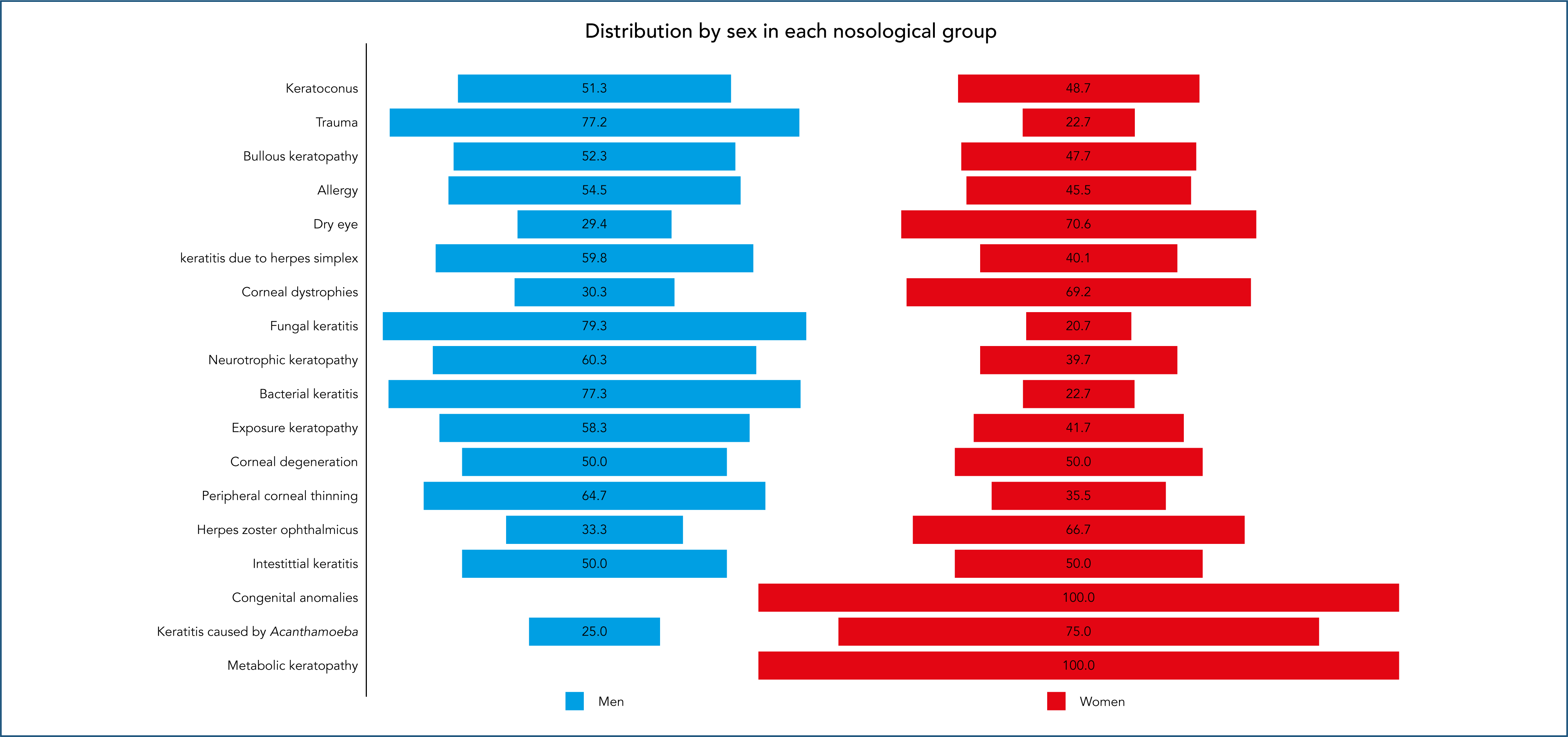
This is a cross-sectional, descriptive, retrospective study that analyzed 3,079 medical records of patients treated between January 1, 2009, and December 31, 2018, at the Cornea and External Diseases outpatient clinic of the Reference Center in Ophthalmology of the Universidade Federal de Goiás in Goiânia. Medical records of patients seen at least once during the aforementioned period were included. Follow-up consultations were not considered, and patients whose medical records or specific consultations could not be located were excluded. The data were included in a Microsoft Excel spreadsheet and classified according to the patient's sex, age (categorized into 10-year groups), and preponderant diagnosis. The diagnosis was broken down into 18 nosological subgroups, as shown in figure 1.

A field was also added for corneal diseases without defined etiology – patients who did not have a confirmed diagnosis and those with diseases that did not match any of the aforementioned nosological groups – in addition to illegible medical records. Furthermore, the number of patients who required corneal transplantation was evaluated.
The patients’ profiles were characterized using absolute and relative frequencies. The diagnoses were associated with patients’ sex by applying either Chi-squared test or Fisher's exact test according to the indication of each statistical test. Data were analyzed using IBM Statistical Package for the Social Sciences (SPSS) software, version 26.0 (IBM Corporation, Armonk, United States). The level of significance adopted was 5% (p < 0.05).
Results
A total of 3,730 patients were treated at the Reference Center in Ophthalmology of the Universidade Federal de Goiás cornea outpatient clinic from January 1st, 2009, to December 31, 2018, but only 3,079 medical records were analyzed in this study as 651 (17.5%) could not be located. However, for a 95% confidence interval, considering a 1% standard error of estimate, a sample with statistical relevance would require a minimum of 2,687 records. Therefore, the research continued with the 3,079 medical records found.
In these records, 1,624 patients were men and 1,455 were women, with different predominance in each nosological group, as shown in figure 1. The age group with most patients was between 11 to 20 years of age (636). Table 1 shows the percentage of the patients’ sex and the number of individuals in each age group. Twenty-seven patients had not provided information on their age during data collection. Figure 2 shows the most prevalent corneal disease in each age group.

Table 2 shows the number of patients for each diagnosis in each age group. When a patient had more than one diagnosis, he or she was counted only in the etiological group that was most relevant to his or her clinical history.
Nosological groups show the highest prevalence of patients were keratoconus, trauma, and bullous keratopathy. The relative and absolute frequencies of these and other diseases in each sex are shown in table 3. Only trauma, dry eye, corneal dystrophies, fungal keratitis, and bacterial keratitis had a statistically significant association with the sex (p < 0.05).
Corneal transplantation was necessary in 27.7% (852) of the studied sample. There was a higher prevalence of the procedure in men. Regarding the age group, a similar distribution was observed in the age groups of 11 to 30 years and 41 to 50 years, approximately 15% (130) in each decade. The most prevalent causes of corneal transplantation were keratoconus (264), corneal diseases with undefined etiology, such as unclassified ulcer and leukoma (185), trauma (132), and bullous keratopathy (131). No information on indication for retransplantation was collected.
The category of corneal diseases with undefined etiology comprised 26.83% (826) of the patients and included the following diagnoses: leukoma, unclassified ulcer, high myopia, high astigmatism/suspicion of keratoconus, limbic insufficiency, phthisis bulbi, various conjunctival tumors, blepharitis, symblepharon, and pterygium. Poorly filled out (undiagnosed) and illegible medical records were also included in this group.
DISCUSSION
Data on the epidemiology of corneal dysfunctions are often divergent owing to their intrinsic relationship with geography and the endemicity of some of the etiologies.(3)
This study analyzed a relevant sample (978) of diagnosed patients, with no sex predilection, in agreement with international studies.(4) Regarding age, 72.32% of the sample studied was between 11 and 30 years of age. Data from the literature reveal a higher number of diagnoses made in the age group of 20 to 30 years.(5,6) The detection of a significant portion of patients with ectasia in the age group of 11 to 20 years suggests the greater exposure of these children to the risk factors of this disease.(4)
One prevalence study analyzed 216 patients and found that men were more affected by eye injuries because they performed more high-risk activities than women, with a 4:1 ratio.(7) In this investigation, the statistically significant association of trauma with the male sex was similar to that found in other studies. Accidents were predominant in the age group of zero to 50 years (75.9% of injuries), affecting children and young people of productive age, evidencing the social and economic importance of eye trauma.
Brazilian studies from different ophthalmological clinics revealed that bullous keratopathy accounted for 14 to 21% of the indications for corneal transplantation but did not provide data on the prevalence of the disease and the specific characteristics of the patients evaluated.(8,9) As the present study was performed in a teaching hospital, it is likely that its prevalence data for bullous keratopathy (7.8%) are significantly different from those observed in non-teaching ophthalmological clinics. The prolonged duration of the surgery and the use of ultrasound by medical residents are the main aggravating factors for triggering this disease.(10)
Ocular allergy presents four different clinical forms: allergic conjunctivitis, spring keratoconjunctivitis, atopic keratoconjunctivitis, and giant papillary conjunctivitis.(3) Therefore, the study of this condition faces a limitation, given the grouping of four etiologies with different epidemiological data. A predominance of children < 11 years of age and a similar distribution between the sexes was found.
The TFOS DEWS II study reported a higher incidence of dry eye in women, which increased with age.(11) Similarly, the present study also showed a greater incidence of dry eye in women aged 41 to 60 years old.
A long-term North American study on ocular involvement by the herpes simplex virus (HSV) observed that the mean age for the first occurrence of herpetic keratitis was 37.4 years, with an estimated annual incidence of 11.8 cases per 100,000 individuals.(12) The data found in the present investigation revealed a low annual incidence of ocular HSV infection (a mean of nine patients per year), and most of the diagnoses were made in the age group of 31 to 50 years, corroborating the aforementioned study.
Corneal dystrophies are a group of progressive, bilateral, noninflammatory disorders that occur from the first to the fourth decade of life and present distinct different types of epidemiology.(3) Two Brazilian studies have performed a genetic evaluation of patients with corneal dystrophy, but the patients in those studies were not characterized with regard to sex and age.(13,14) In the present study, 76 patients were diagnosed with corneal dystrophy, with a significant prevalence in women aged 40 to 80 years (34.21%).
A retrospective study conducted in a tertiary care center in the Brazilian State of São Paulo found that infectious ulcers were more frequent in men (55%) aged 20 to 59 years and that most cases were bacterial ulcers (80.3%), followed by fungal ulcers (7%) and Acanthamoeba ulcers (6%), which corroborates data from international studies.(15–17) However, the present study found a higher absolute number of diagnoses of fungal ulcers (58) than bacterial (44) and Acanthamoeba ulcers (4). These data are similar to those from a study in India that evaluated 3,183 patients and observed 34.4% of fungal, 32.77% of bacterial, and 1.04% of Acanthamoeba ulcers.(18) According to the 2010 Brazilian census, the State of Goiás has a larger percentage of the population working in rural areas than the State of São Paulo (6.9% versus 1.8%, respectively)(19) and thus has a greater exposure to trauma by plants (responsible for fungal keratitis), as in India, where 68.8% of the population live in rural areas.(20)
There are scarce data in the literature on the actual prevalence of neurotrophic keratopathy. Therefore, the prevalence of this disease can only be estimated based on epidemiological data of diseases associated with it, such as herpetic infections, ophthalmological or neurological procedures, brain malformations, vascular occlusions, and other neurological disorders.(21,22) The present study found 58 (1.9%) patients with neurotrophic keratopathy, with no significant sex predilection, in patients aged 71 to 80 years.
Exposure keratopathy is characterized by corneal dryness with subsequent epithelial rupture, mainly due to inadequate closure of the eyelids (lagophthalmos).(23) Studies conducted in different countries have shown a greater prevalence of lagophthalmos in elderly patients (in the sixth and seventh decades of their life), without significant distinction between the sexes,(24,25) which agrees with the results found in the present study.
The present study detected 22 patients with corneal degeneration, with no association with the sex and evenly distributed between 11 and 70 years of age.
Mooren's ulcer, peripheral ulcerative keratitis associated with systemic autoimmune disease, and Terrien's marginal degeneration were the causes of corneal thinning found in this research. There was a low prevalence of corneal thinning (0.6% of all visits).
The numbers of patients in the sample with ophthalmic herpes zoster, interstitial keratitis, congenital anomalies, and metabolic keratopathy were too low to be significant, thus limiting any inference about the epidemiological profiles of these diseases.
Corneal transplantation is the most frequent type of tissue transplantation performed in Brazil.(3) Its main causes include bullous keratopathy, leukoma, keratitis, corneal ectasias (such as keratoconus), and primary or secondary failure (rejection) of previous transplantations.(26–28) Ectasia exhibits large variations in the percentages of indication for transplantation, but there is a general tendency toward a small figure owing to the multiple treatment alternatives that improve visual acuity and postpone the need for transplantation.(26)
In Brazil, there is a higher proportion of infectious keratitis as a cause for transplantation, and ocular trauma ranks high among the etiologies.(8,9,27–30) In this study, in the period evaluated, keratoconus was the leading cause (31.0%), followed by unclassified ulcer and leukoma (21.7%), ocular trauma (15.5%), and bullous keratopathy (15.4%). This observation is similar to studies from the Sorocaba Eye Hospital in the State of São Paulo(8) and from the United States(26) (when considering only penetrating transplantation).
Regarding sex, the data also varied between regions. Ireland (63%),(27) Taiwan (56%),(28) and Sorocaba (59%)(8) had more men undergoing corneal transplantation, and a similar observation was made in the present study (58%). Regarding the age group, patients aged 11 to 30 years (31.8%) and 41 to 60 years (25.9%) had a higher prevalence of indication for transplantation, which corresponded to patients with keratoconus and those with a history of trauma, respectively.
The limitations of the study include the grouping of diseases with different epidemiological data, the significant number of medical records that could either not be found or were poorly filled out or illegible, and the fact that these records were considered in the count along with diseases of unspecified category. The following suggestions were not the objective of this study but would provide relevant information and could be explored in further research: information on the origin of patients for better mapping of the diseases in the State of Goiás; evaluation of the number of consultations (only the number of patients was collected in this study) to better estimate the cost for the Brazilian National Unified Health System and compare the volume with other ophthalmological subspecialties; and the inclusion of data regarding the visual acuity of patients for statistical analysis and prognosis.
It must be emphasized that the present study should be regarded as a pilot groundwork for a series of other studies directed toward specific nosological groups, aiming to gather more details and deepen the knowledge about diseases with relevant samples. In addition, more prevention programs with a massive dissemination of keratoconus risk factors and the creation of occupational health care policies for early diagnosis and treatment of this disease are needed to reduce its incidence.
CONCLUSION
The leading conditions diagnosed in this study were keratoconus, ocular trauma, and bullous keratopathy. Regarding statistically significant associations between disease and sex, trauma, bacterial keratitis, and fungal keratitis showed a higher prevalence in men, whereas dry eye and corneal dystrophies were more prevalent in women. Other diseases showed a homogeneous distribution between both sexes. The main causes for transplant indication were keratoconus, ulcer, and trauma.
REFERENCES
-
1 The International Agency for the Prevention of Blindness (IAPB). Global Vision Database maps project and provision of data to the IAPB Vision Atlas [cited 2022 Mar 22]. Available from: https://www.iapb.org/learn/vision-atlas/
» https://www.iapb.org/learn/vision-atlas/ - 2 Whitcher JP, Srinivasan M, Upadhyay MP. Corneal blindness: a global perspective. Bull World Health Organ. 2001;79(3):214-21.
- 3 Conselho Brasileiro de Oftalmologia. Doenças externas oculares e córnea. 4a ed. Rio de Janeiro: Cultura Médica; 2016.
- 4 Hashemi H, Heydarian S, Hooshmand E, Saatchi M, Yekta A, Aghamirsalim M, et al. The prevalence and risk factors for keratoconus: a systematic review and meta-analysis. Cornea. 2020;39(2):263-70.
- 5 Gadelha DN, Feitosa AF, Silva RG, Antunes LT, Muniz MC, Oliveira MA, et al. Screening for Novel LOX and SOD1 Variants in Keratoconus patients from Brazil. J Ophthalmic Vis Res. 2020;15(2):138-48.
- 6 Santodomingo-Rubido J, Carracedo G, Suzaki A, Villa-Collar C, Vincent SJ, Wolffsohn JS. Keratoconus: An updated review. Cont Lens Anterior Eye. 2022;45(3):101559.
- 7 Aragak GN, Inada ET, Teixeira MF, Almeida Junior GC, Kashiwabuchi LK. Epidemiological study of severe ocular trauma in a University Hospital of São José do Rio Preto - SP. Arq Bras Oftal. 2003;66(4):473-6.
- 8 Netto MJ, Giustina ED, Ramos GZ, Peccini RF, Sobrinho M, Souza LB. Main indications for penetrating corneal transplantation in a reference service in the interior of São Paulo (Sorocaba - SP, Brazil). Arq Bras Oftalmol. 2006;69(5):661-4.
- 9 Sano FT, Dantas PE, Silvino WR, Sanchez JZ, Sano RY, Adams F, et al. Trend of change in indications for penetrating corneal transplantation. Arq Bras Oftalmol. 2008;71(3):400-4.
- 10 Reinhart WJ, Annable WL. Intraocular lens surgery on a resident's service. Ophthalmic Surg. 1977;8(3):156-61.
- 11 Stapleton F, Alves M, Bunya VY, Jalbert I, Lekhanont K, Malet F, et al. TFOS DEWS II Epidemiology report. Ocul Surf. 2017;15:334-65.
- 12 Darougar S, Hunter PA, Viswalingam M, Gibson JA, Jones BR. Acute follicular conjunctivitis and keratoconjunctivitis due to herpes simplex virus in London. Br J Ophthalmol. 1978;62:843-9.
- 13 Coutinho AB, Freitas DD, Souza Filho JP, Corrêa ZM, Odashiro AN, Burnier MN Jr. Cytokeratin expression in corneal dystrophies. Arq Bras Oftalmol. 2011;74(2):118-22.
- 14 Solari HP, Ventura MP, Perez AB, Sallum JM, Burnier Júnior MN, Belfort Júnior R. TGFBI gene mutations in Brazilian patients with corneal dystrophy. Eye (Lond). 2007;21(5):587-90.
- 15 Marujo FI, Hirai FE, Yu MC, Hofling-Lima AL, Freitas DD, Sato EH. Distribution of infectious keratitis in a tertiary hospital in Brazil. Arq Bras Oftalmol. 2013;76(6):370-3.
- 16 Shah A, Sachdev A, Coggon D. Geographic variations in microbial keratitis: An analysis of the peer-reviewed literature. Br J Ophthalmol. 2011;95:762-7.
- 17 Karsten E, Watson SL, Foster LJ. Diversity of microbial species implicated in keratitis: A review. Open Ophthalmol J. 2012; 6:110-24.
- 18 Bharathi MJ, Ramakrishnan R, Meenakshi R, Padmavathy S, Shivakumar C, Srinivasan M. Microbial keratitis in South India: influence of risk factors, climate, and geographical variation. Ophthalmic Epidemiol. 2007;14(2):61-9.
-
19 Instituto Brasileiro de Geografia e Estatística (IBGE). Censo agropecuario. IBGE; 2010 [citado 2023 April 23]. Disponível em: https://cidades.ibge.gov.br/
» https://cidades.ibge.gov.br/ -
20 India. Ministry of Home Affairs, Government of India. Office of the Registrar & Census Commissioner, Population of India as per Census 2011 [cited 2023 Apr 23]. Available in: https://censusindia.gov.in/census.website/data/population-finder
» https://censusindia.gov.in/census.website/data/population-finder - 21 Mertsch S, Alder J, Dua HS, Geerling G. Pathogenese und epidemiologie der neurotrophen keratopathie. Ophthalmologe. 2019;116(2):109-19.
- 22 Bonini S, Lambiase A, Rama P, Sinigaglia F, Allegretti M, Chao W, et al. Phase II randomized, double-masked, vehicle-controlled trial of recombinant human nerve growth factor for neurotrophic keratitis. Ophthalmology. 2018;125(9):1332-43.
- 23 Alhoutan K, Alarfaj K. Exposure Keratopathy: An Idiopathic Lagophthalmos Case Report. Cureus. 2021;13(10):e18945.
- 24 Yoshimura A, Araki-Sasaki K, Toyokawa N, Fujiwara R, Takahashi K, Gomi F. Synthetic rubber sheet to manage exposure keratopathy. Am J Ophthalmol Case Rep. 2021;23:101185.
- 25 Maamari RN, Custer PL, Neimkin MG, Couch SM. Medial canthoplasty for the management of exposure keratopathy. Eye (Lond). 2019;33(6):925-9.
- 26 Ple-Plakon PA, Shtein RM. Trends in corneal transplantation: indications and techniques. Curr Opin Ophthalmol. 2014;25(4):300-5.
- 27 Quigley C, McElnea E, Fahy G. Trends in corneal transplant surgery in Ireland: indications and outcomes of corneal transplant surgery and intraocular lens opacification following Descemet's stripping automated endothelial keratoplasty. Ir J Med Sci. 2018;187(1):231-6.
- 28 Wang TW, Chi YC, Hsu PS, Kuo NW, Chen JL. Changing Indications for Corneal Transplantations in Southern Taiwan From 2008 to 2018. Eye Contact Lens. 2020;46(5):301-5.
-
29 Ximenes CE, Ribeiro MV. Transplante de córnea no estado de Alagoas. SEMPESq – Semana de Pesquisa da UNIT; 2021 [citado 2023 Abr 23]. Disponível em: https://eventos.set.edu.br/al_sempesq/article/view/14983/6760
» https://eventos.set.edu.br/al_sempesq/article/view/14983/6760 - 30 Pedro AS, Araújo PH, Bicalho JA, Alves SS, Magalhães BA, Lemos LD, et al. Analysis of the epidemiological profile of patients undergoing corneal transplantation in Espírito Santo. Rev Bras Oftalmol. 2020;79(6):370-3.