
 Effort-reward imbalance and common mental disorders among firefighters
Introduction: Occupational stress and psychosocial factors at work are recognized as triggers of psychological distress, musculoskeletal disorders, and decreased functional capacity in the contemporary workplace.
Objectives: This study investigated effort-reward imbalance and common mental disorders among 372 firefighters working in Brazil.
Methods: This was a cross-sectional study conducted with a sample of 372 firefighters using a log-binomial regression model.
Results: The prevalence of common mental disorders was 9.7% in the total sample and reached 10.7% in the high-risk group (effort-reward imbalance ratio > 1). Log-binomial regression showed that the effort-reward imbalance model increased the explanatory power of mental distress to 12.1%. High effort was associated with an increased risk of common mental disorders (prevalence ratio = 2.21), whereas overcommitment had the greatest impact on prevalence (prevalence ratio = 2.41). Effort was also the main predictor of symptom severity (β = 0.443; p < 0.001).
Conclusions: These findings indicate that effort-reward imbalance constitutes an important marker of psychosocial risk among firefighters. The population attributable fraction for overcommitment was 51.1%, indicating that more than half of common mental disorder cases may be attributed to this dimension. Thus, occupational demands and perceived recognition emerged as key determinants of mental health in this professional category. The study reinforces the need for mental health surveillance and promotion strategies that consider the specific characteristics of firefighters’ military operational environment.
Keywords
firefighters; occupational stress; occupational health; mental health
 Thumbnail
 Thumbnail
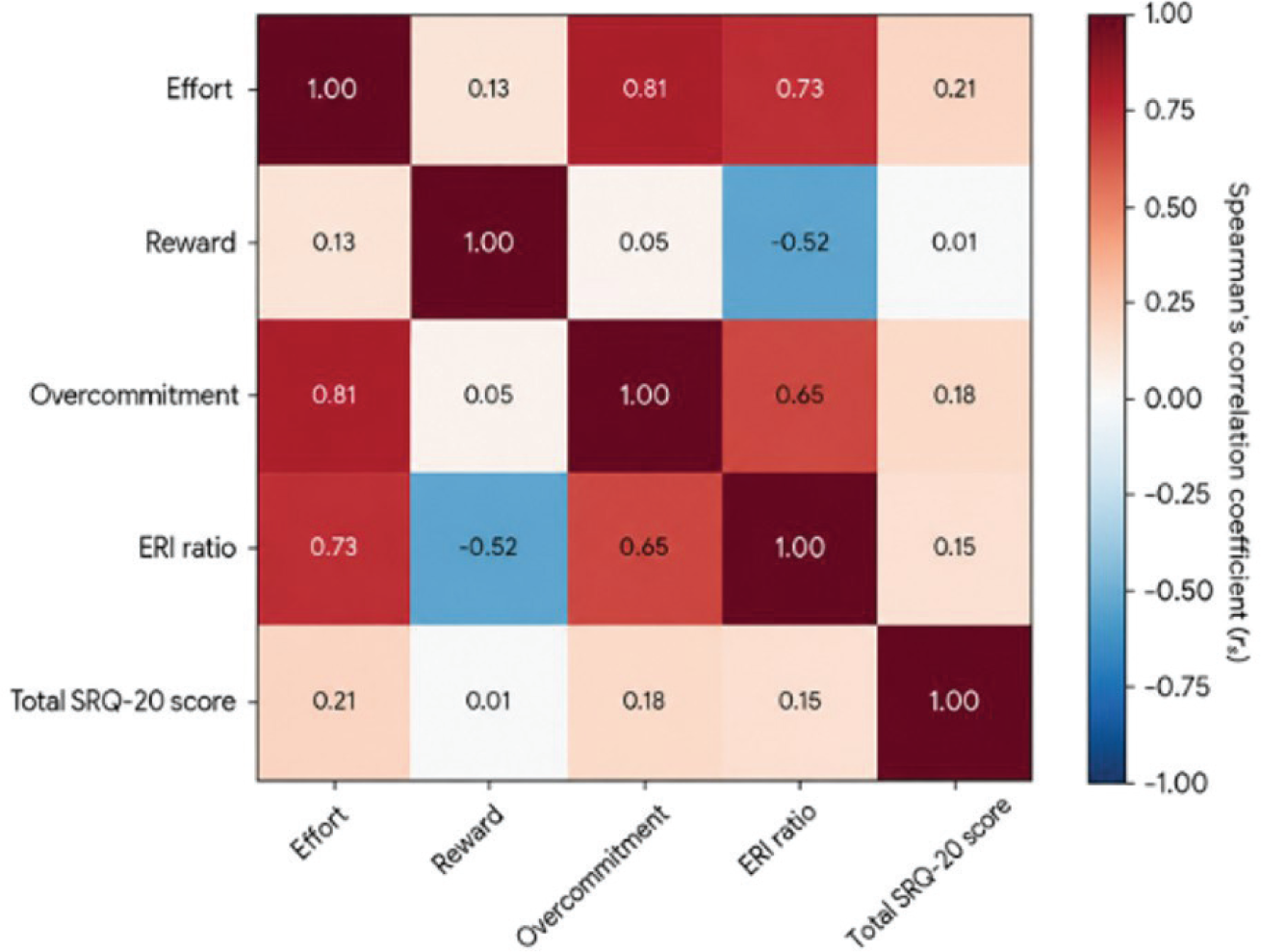 CMD = common mental disorders; ERI = effort-reward imbalance; SRQ-20 = Self-Reporting Questionnaire-20.
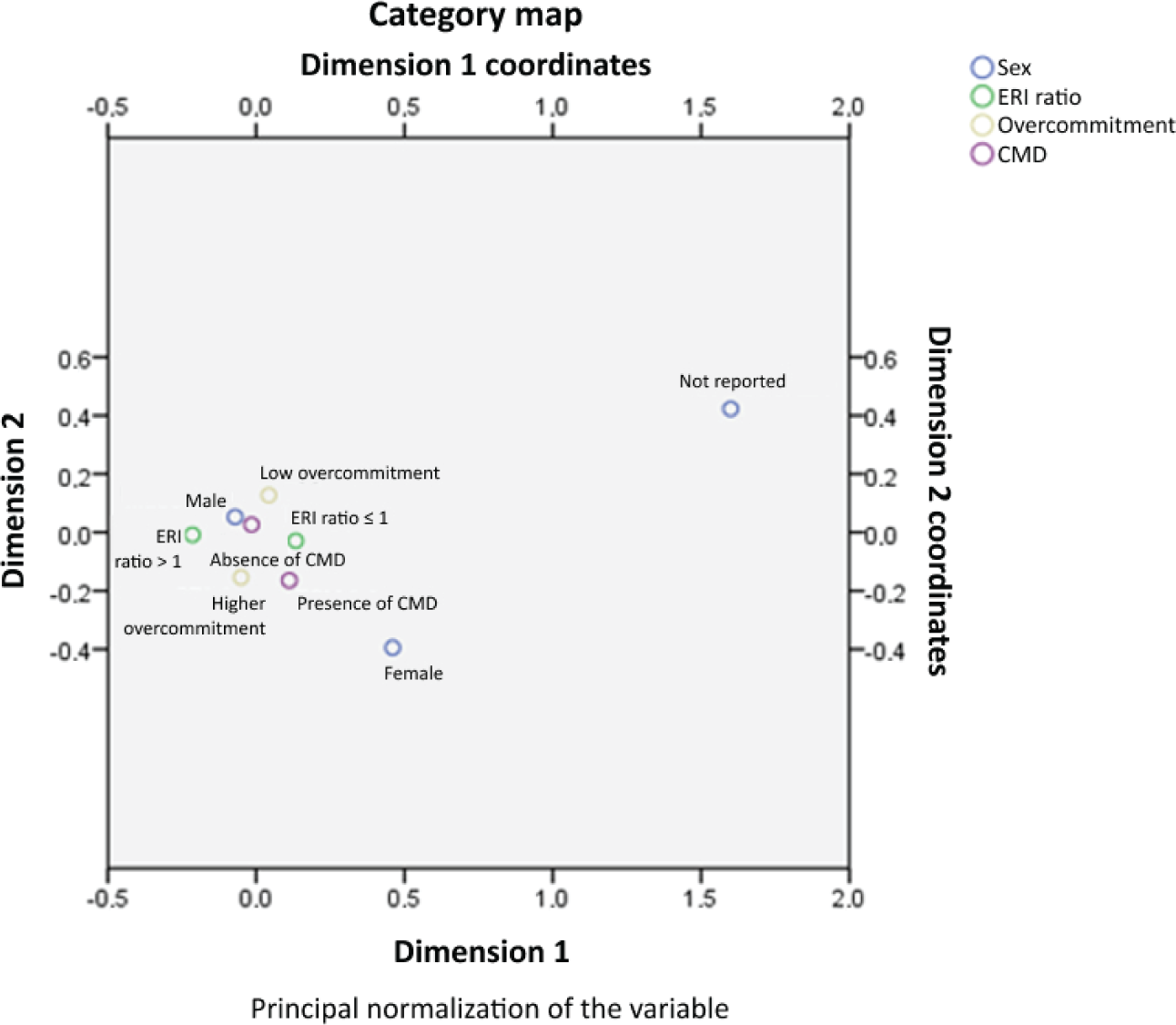 CMD = common mental disorders; ERI = effort-reward imbalance; MCA = multiple correspondence analysis.