
 Pablo de Rokha and Oswald de Andrade: An American Avant-Garde Nappa
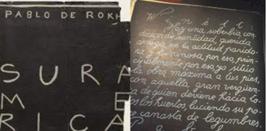
Based on a joint reading of the works of the Chilean poet Pablo de Rokha and the Brazilian Oswald de Andrade, the following article formulates the existence of an American avant-garde napa, from which the idea of race as a “traveling trace” emerges. We analyze manifestos, programmatic texts and essays by both authors and two works that we understand are the apex and turning point of their poetics: Suramérica (1927) by Pablo de Rokha and Pau-Brasil (1927) by Oswald de Andrade. We establish relationships with other expressions and movements of the Latin American avant-garde and what the critical bibliography read about them. Both the relationships between political avant-garde and artistic avant-garde as well as avant-garde and autochthony, including the so-called “rooted avant-garde” (Bosi), are fundamental for our analysis. We affirm the existence of a “napa” and not a river, because its unthinkable connections remained hidden, far from the surface. We affirm that it is “avant-garde”, since the two cases analyzed belong to the historical Latin American avant-garde and this is confirmed, in addition to the critical bibliography on the period, in the aesthetic operations that characterized said movements. And we call it “American” -José Martí and César Vallejo through-, since the term allows us to expand both national borders and those coined by literary criticism, in a “beyond” Latin America and “a more here” of America.
KEYWORDS:
poetry; avant-garde; America; Pablo de Rokha; Oswald de Andrade
 Thumbnail
 Thumbnail

