
 “Colendo Maestro”: epistolary exchanges between Emmanuel Coêlho Maciel and Possidônio Nunes Queiroz in Northeast Brazil
Abstract
This article analyzes correspondence exchanged between the maestros Emmanuel Coêlho Maciel and Possidônio Nunes Queiroz in the early 1990s, focusing on the forms of self-writing activated in the letters. The analysis considers salutation formulas, narrative strategies, and modes of subjective inscription employed by the correspondents. The study is structured around two main fronts: Possidônio’s musical training as a flutist in Oeiras (PI) during the 1920s, in a context without formal music schools; and the investigation carried out by Emmanuel, who transcribed and arranged works by the maestro from Oeiras and published notes in the Memória Piauiense journal (1995). The letters operate as a space for meaning-making, documentation of musical training experiences, and the consolidation of links between education, memory, art, and research.
Keywords:
music education; epistolary practice; memory; personal narrative
Resumo
Este artigo analisa correspondências trocadas entre os maestros Emmanuel Coêlho Maciel e Possidônio Nunes Queiroz no início dos anos 1990, com atenção às formas de escrita de si registradas nas cartas. Por meio desses documentos, coloca-se em baila a formação de Possidônio como flautista em Oeiras (PI), nos anos 1920, em contexto sem escolas de música formais; e a investigação conduzida por Emmanuel, que transcreveu e arranjou obras do maestro oeirense, além de ter publicado apontamentos na revista Memória Piauiense (1995). As cartas operam como espaço de produção de sentido, registro da experiência de formação musical e consolidação de vínculos entre educação, memória, arte e pesquisa.
Palavras-chave:
educação musical; prática epistolar; memória; narrativa pessoal
Resumen
Este artículo analiza correspondencia intercambiada entre los maestros Emmanuel Coêlho Maciel y Possidônio Nunes Queiroz a comienzos de la década de 1990, con atención a las formas de escritura de sí activadas en las cartas. El análisis contempla fórmulas de saludo, estrategias narrativas y modos de inscripción subjetiva empleados por los corresponsales. El estudio se organiza en dos ejes principales: la formación musical de Possidônio como flautista en Oeiras (PI), en la década de 1920, en un contexto sin escuelas de música formales; y la investigación desarrollada por Emmanuel, quien transcribió y arregló obras del maestro oeirense y publicó apuntes en la revista Memória Piauiense (1995). Las cartas operan como espacio de producción de sentido, registro de la experiencia de formación musical y consolidación de vínculos entre educación, memoria, arte e investigación.
Palabras clave:
educación musical; práctica epistolar; memoria; narrativa personal
Introduction
In the information society of the 21st century, the habit of writing and receiving correspondence on paper has become uncommon. In a time marked by instant messaging and digital platforms, the exchange of letters has lost ground in everyday communication practices. On the other hand, as Mignot and Rocha (2022) observed, the study of letters “sharpens the curiosity of researchers, who find in them confidences, secrets, behind-the-scenes details, disputes, and versions of events” (pp. 618-619). These personal messages, especially when preserved in archives, can be understood as forms of recording autobiographical writings, as they articulate fragments of memory, identity, and socio-historical context. From this perspective, letters are built as documents that produce and reveal writings about the self, according to the ways in which subjects narrate experiences and present themselves to their interlocutors.
The study of correspondence between musicians as a documentary source has gained relevance in research focused on understanding artistic trajectories and institutional networks in the Northeast of Brazil, as in the thesis No compasso, ligeiro, da pianista Helena Lorenzo Fernandez: entre práticas pedagógicas, concertos e diplomacia musical brasileira (1931-1985) (Santos, 2020). In this research, the letters exchanged between the pianist Helena Lorenzo Fernandez and the composer Oscar Lorenzo Fernandez were analyzed as documents that revealed aspects of artistic life, work relationships, and the circulation of ideas in the Brazilian musical milieu of the 20th century. The author showed how the letters allowed for an understanding of symbolic, affective, and professional dimensions of Helena's work, which spanned teaching and cultural diplomacy. This approach reinforced the interpretative value of the letters examined in this article, in which educational experiences, practices of sociability, and discourses of legitimation in the field of classical music were also articulated.
This research is situated within this context: an investigation of the epistolary exchange between two conductors from northeastern Brazil in the early 1990s - Emmanuel Coêlho Maciel (1935-2015), a music educator from Minas Gerais who lived in Piauí from 1976 until his death in 2015, and Possidônio Nunes Queiroz (1904-1996), a flautist and composer from Piauí. The study analyzed six letters exchanged between the musicians, aiming to understand how these texts functioned as forms of self-inscription and sources for the History of Music Education.
This article is linked to NEHEMus - the Research Center for Education, History and Music Teaching, a group integrated into the Postgraduate Program in Education at the Federal University of Piauí. Within this collective, research is conducted focusing on the History of Education and Music Education, with an emphasis on the context of Piauí. The analyses encompass the trajectory of music education institutions, educational practices, training trips, and the experiences of individuals linked to the cultural landscape of Northeast Brazil. The investigation presented in this analysis is situated within a field that understands the records of epistolary practices as relevant to historical perspectives on formative trajectories, cultural circulations, and modes of subjectivity production. The methodology adopted articulated documentary analysis with contributions from qualitative research in education and considered both the materiality of the texts and the meanings attributed by the subjects to the experiences narrated in the letters.
The material selected for analysis was defined based on its relevance to the research conducted by Emmanuel Coêlho Maciel on the formative trajectory and musical production of Possidônio Nunes Queiroz. Priority was given to letters containing biographical information, the sending of scores, comments on arrangements and musical reflections, as well as revealing aspects of the dialogue between the two conductors. The selection focused on correspondence that directly contributed to the elaboration of the text written by Maciel in 1995, entitled "The musical work of Possidônio Queiroz," published in the journal Memória Piauiense: Possidônio Queiroz, edited by the José Elias Tajra Foundation, in Teresina. In the 1990s, this institution distinguished itself in preserving the cultural memory of Piauí, through publications such as Memória Piauiense itself and books about regional figures, in addition to the work in public policies, such as the elaboration of the Ten-Year Education Plan of Teresina (Legislative Assembly of the State of Piauí, n.d.; Nascimento, 2013). In the aforementioned study, Emmanuel Maciel addressed Possidônio's musical training process and analyzed his compositions, and also published scores of eleven waltzes and two hymns, which he himself harmonized and arranged.
The content of the letters revealed an exchange marked by respect, collaboration, and mutual interest. While Coelho Maciel reported on the progress of his research, Queiroz responded to requests and shared information about his educational background, compositions, and experiences in the musical field. In delimiting this corpus, the objective was not to establish absolute biographical truths, but to understand how, in the space of writing, the two subjects constructed narratives about themselves and about the contexts in which they were involved as musicians.
This study sought to understand the conditions of musical training of the Flautist1 in the rural context of Piauí, especially in the 1920s, and reflected on the role of letters in the constitution of the research developed by the Violinist2. The analysis drew on approaches that regard correspondence as a significant document for the History of Music Education and for the study of subjectivities, based on the premise that such documents not only record experiences but also actively produce them through discursive constructions.
To meet the proposed objectives, we formulated the following guiding questions: how do the letters reveal aspects of the writers' self-writing? How do the discussions between the musicians reflect the historical and cultural contexts of the time, especially in relation to music education in the city of Oeiras (PI)? What role did these correspondences play in guiding Emmanuel's historical and musicological research on Possidônio's work?
Possidônio Queiroz, from the city of Oeiras in Piauí state, distinguished himself through his intellectual and artistic work. The son of Raimundo Nunes Queiroz and Francisca Soares de Queiroz, he began his basic education at the age of seven in a private school. From childhood, he demonstrated an appreciation for reading, something revealed by the references used in his first public speech, delivered at the age of 18 during the celebrations of the Centenary of Brazil's Independence in 1922, in what was then the capital of Piauí (Lima, 2017; Maciel, 1995; Rêgo, 1995; Silva, 1995).
His musical studies began in adolescence, under the guidance of bandmaster Jeremias Rodrigues, who taught him the rudiments of music theory and introduced him to the scales of the transverse flute - an instrument that would become his favorite. Besides music, Possidônio was involved in various activities, such as teaching, law, cultural activism, journalism, and managing Casa Queiroz, a business inherited from his father. He also worked as a goldsmith, held public office in Oeiras, founded the Orquestra Renascença, and distinguished himself as a composer and intellectual. He left behind a collection of letters, documents, notes, and various records (Carvalho, 2019; Lima, 2017; Maciel, 1995; Rêgo, 1995; Silva, 1995).
Emmanuel Coêlho Maciel, from Minas Gerais, was born in 1935 in Belo Horizonte. He graduated in violin from the Minas Gerais University of Arts (1956) and specialized at the National Conservatory of Orpheonic Singing3 (1960), founded by Heitor Villa-Lobos, in Rio de Janeiro. He worked as a violinist and conductor in several orchestras and educational institutions, including the Minas Gerais Military Police Symphony Orchestra, the Padre José Maria Xavier State Conservatory of Music (MG), and the Federal University of Amazonas. In 1976, he joined the faculty of the Federal University of Piauí (UFPI), where he led the restructuring of the music course, promoted artistic activities, and developed research on Brazilian folk music (Ferreira Filho, 2009; Cunha, 2012).
In addition to his academic and musical activities, he published articles in daily newspapers in Piauí and other states where he previously resided, as well as writing textbooks focused on the study of bowed string instruments and the history of music. He received the Funarte Prize for three of his compositions: Os Sapos (1981), Ema-Sariema (1982), and Módulos (1983). After retiring from teaching, he maintained musical activities, developing projects and directing groups such as the Projeto Coral das Mil Vozes, the Coral de Vaqueiros de União, the Grupo Ars Tupiniquim, and the Orquestra de Câmara de Teresina (Cunha, 2012).
After various experiences and already fully immersed in the musical life of Teresina - where he taught at UFPI and participated in the creation of musical groups inside and outside the institution - Emmanuel became acquainted with two compositions by the Flautist: the waltzes No. 9 and Horas de Melancolia (Maciel, 1995). From this contact with Possidônio's work, the exchange of letters began, which constitutes the object and documentary corpus of this analysis.
This article is structured in four main parts. First, we present the research subjects and the historical and social context in which they were situated. Next, we address the epistolary exchange between the conductors, emphasizing writing practices and the material aspects of the correspondence. Thirdly, we conduct an analytical reading of the letters based on the notion of self-writing and the construction of musical memories. In the final considerations, we reflect on the investigative possibilities opened up by the use of letters as a source for the History of Music Education, as well as on the limitations of the approach adopted in this analysis.
In addition to the analyzed letters, this investigation drew upon other documentary and bibliographic sources, which allowed for the cross-referencing of the accounts contained in the letters with historical, academic, and media records. This strategy contributed to a deeper understanding of the individuals’ formation, the cultural contexts in which they were embedded, and the musical practices they cultivated. Engaging with works such as Lima’s dissertation (2017), Maciel’s monograph (1995), and Rocha’s journalistic text (1995) provided insights that added analytical depth to the study, enabling the integration of the self-writing found in the letters with other forms of memory production.
The letters analyzed in this study, although belonging to the realm of private writings and intimate forums, were accessed with the authorization of those responsible for their respective personal collections: Rodrigo Marley de Queiroz Lima, great-grandson of Possidônio Nunes Queiroz, and Marta Magalhães de Almeida, wife of Emmanuel Coêlho Maciel. The use of this material is in accordance with the ethical guidelines for research in the Humanities and Social Sciences, as approved by the Research Ethics Committee of the Federal University of Piauí, under number 5.086.173.
Dear Friend Professor Possidônio, Dearest and Generous Maestro Emmanuel
Reading Rocha's work (2012) was essential for the foundation of this investigation, as the author detailed the stages of her study on the networks of sociability present in the letters exchanged between the music teachers Liddy Chiaffarelli and Mário de Andrade. Based on this, this research - which focused on the correspondence between the conductors Emmanuel Coêlho Maciel and Possidônio Nunes Queiroz - engaged with this proposal by examining the motivations that drove the writing practices, the epistolary norms adopted, and aspects related to the materiality of the letters, in addition to addressing complementary themes such as greetings and farewells.
The letters investigated are not published documents; they were kindly provided by Rodrigo Marley de Queiroz Lima, the Flautist's great-grandson and guardian of part of the intellectual's collection. In 2017, upon completing his master's degree in Brazilian History at UFPI, Lima presented the dissertation From the Saddlebag of Memory: Possidônio Queiroz, Oeiras (PI) and the narratives of self, through which he introduced to academia an analysis of his great-grandfather's personal archive. According to the author (Lima, 2017), the Flautist's correspondence was organized chronologically. To preserve the copies, Possidônio used carbon paper to duplicate his letters, sent the first copy to the recipient, and kept the second in his collection - both signed and dated.
Possidônio’s practice of retaining copies of his correspondence reflects a broader custom among intellectuals who, by preserving their letters, not only safeguarded the memory of the relationships they cultivated but also actively fashioned records of themselves. As Abreu (1996) observes, the personal archives of men of letters-comprising correspondence, notes, notebooks, and manuscripts-functioned as repositories of memory that revealed networks of sociability, affective ties, and modes of self-construction through writing. This type of practice was also analyzed by Artières (1998), when discussing the archiving of personal documents as a form of self-inscription in history. In this sense, the author's gesture of typing, signing, and preserving copies of his letters placed him within a tradition of subjects who recognized epistolary writing as a practice of memory and identity affirmation. The intergenerational mediation of the collection, currently under the care of his great-grandson Rodrigo Lima, reinforced the value attributed to this documentary set.
By following the unfolding of the main plot - centered on the correspondence between conductors Emmanuel Coêlho Maciel and Possidônio Nunes Queiroz - we also sought to identify other information related to the objectives of this study. In this context, Blas's (2003) analysis indicated that the application of epistolary rules could reflect cultural and social aspects of the authors involved in the exchange of letters:
It is interesting to analyze the letter as an instrument of cultural identification and social differentiation. The way in which the letter is written, according to established norms, indicates the formation and graphic competence of its author and the follow-up of the writing protocol that is used to become an indicator of first order to situate it in another part of the social environment (Blas, 2003, p. 28).
In Possidônio's letters, his erudition was evident through the formal style he adopted, with the use of expressions of respect and admiration, such as "dearest and generous maestro" and "the words with which you gild the portico of your letter" (Possidônio Queiroz, personal communication, December 23, 1992), or even: "when I realized it, the terrible papyrus machines had already devoured my books and music that I was scribbling" (Possidônio Queiroz, personal communication, December 18, 1991). This tone indicated not only his deference to the figure of the professor and musician Emmanuel, but also revealed the use of a cultivated vocabulary evident in his correspondence.
The violinist, in turn, also maintained a consistent formality when using expressions such as "I acknowledge receipt of your esteemed letter" (Emmanuel Coêlho Maciel, personal communication, July 29, 1991), "Initially, I am writing to ensure that you find good health" (Emmanuel Coêlho Maciel, personal communication, October 26, 1994), and "I apologize for bothering you, but, despite the sacrifice imposed, it was my duty to do so" (Emmanuel Coêlho Maciel, personal communication, December 19, 1995). However, in a lexical comparison, the flautist from Piauí demonstrated greater diversity in his use of language.
The aspects related to the materiality of the letters presented limitations, since the documents consulted reached us only in digital format. We did not have direct access to the original papers, which prevented the observation of elements such as color, texture, and degree of preservation. However, the fact that none of the analyzed correspondences were handwritten caught our attention. From the analysis of the images, we sought to infer the means that Possidônio used to produce and record them in writing.
In the case of the Northeastern Flautist, we identified a single type of typeface in his correspondence. Lima (2017) mentioned in his dissertation that he used a Remington Rand N 17 typewriter to type both these letters and other documents he worked with. The use of this equipment seemed to be associated with his role as a merchant and public intellectual, functions that required familiarity with formal writing instruments. The systematic preservation of the records suggested that the musician from Oeiras valued not only the content but also the act of preserving them as part of his legacy. The continuity of this care manifested itself in the figure of Rodrigo Lima, great-grandson and curator of the family collection, which indicated a chain of memory transmission sustained by affective bonds and the valuing of personal history. Below (Figure 1) is an excerpt from one of the musician's letters, which we can assume was written with the same typewriter mentioned by Lima:

Printing errors, misaligned or incomplete letters, and variations in ink intensity were identified in different sections of the text - recurring characteristics in documents produced with typewriters of that period, in which graphic uniformity depended both on the force applied to the keys and on the condition of the ribbon at the time of typing. These visual elements showed similarities to those that could be attributed to the use of the Remington Rand No. 17, mentioned by Lima (2017) as equipment used by Possidônio. The choice of this medium, associated with the formal language and elaborate textual structure, may indicate that the letter writer attributed symbolic and documentary value to these exchanges and, in light of perspectives that relate epistolary writing to self-construction, assumed the role of an active subject in the production of memory, culture, and authorship.
In contrast to the material produced by Possidônio, Professor Emmanuel's correspondence showed greater diversity in printing methods. Three distinct formats were observed: possibly an electric typewriter in 1991 and, in the years 1994 and 1995, two types of printers - one dot matrix and the other electronic or inkjet - appear to have been used. Based on this evidence, it was possible to infer a progressive adoption of technologies by the Violinist educator. However, there was insufficient information to determine whether the letters were typewritten or printed by him personally. Below (Figure 2), we present the beginning of a letter written by Emmanuel in October 1994:

Based on the printed characters and in comparison with Alecrim's (2013) notes, it can be inferred that the printer used by Emmanuel was a dot-matrix type, with needle technology, given that it is possible to observe the small dots that make up each letter. This printing pattern, common in domestic and institutional equipment from the 1980s and 1990s, allows us to identify a moment of transition in the history of written practices, in which the use of digital technologies was beginning to become accessible to certain professional groups. The fragmented texture of the letters, combined with the regularity of their arrangement on the paper, indicates the use of technical resources that gave the document a more standardized appearance, albeit less fluid than handwriting or mechanical typing.
The greetings used by the interlocutors constituted another relevant aspect observed in the correspondence. In the six letters examined, the authors alternated in a balanced way between the roles of sender and recipient. Observing the initial greetings in Emmanuel's correspondence, the use of a constant formula when addressing the maestro from Oeiras was noted: "Dear friend Professor Possidônio". The Flautist, in turn, resorted to different variations. On December 18, 1991, he wrote: "Illustrious and dear Maestro EMMANUEL COELHO MACIEL, Dearest and kind MAESTRO". On December 23, 1992: "Dearest and generous Maestro Emmanuel Coêlho Maciel, Dear Maestro". And on November 10, 1994, he used: "Dearest and Illustrious Compatriot Maestro Emmanuel Coêlho Maciel, Esteemed Maestro."
Just as Possidônio demonstrated appreciation and solemnity in his greetings, Emmanuel also cultivated a respectful and affectionate language. Rocha (2012) stated that it is possible to “assess the closeness between correspondents by the words used” (pp. 135-136). In the case of the Violinist, although he maintained a fixed greeting formula, his vocabulary denoted appreciation and respect: he used the term “dear,” expressed closeness by calling the Piauí Flautist “friend,” and demonstrated deference by referring to him as “Professor,” with an initial capital letter.
Possidônio used to begin his letters with a title in the header, followed by a salutation, as shown in Figure 1. The term "Maestro" appeared prominently in all correspondences: once with all letters in uppercase and, in the other two, with only the initial letter capitalized. In the context of Brazilian musical practice, the term "Maestro" is frequently used broadly and honorifically to designate the conductor of musical groups, even when they do not have formal academic training in conducting. The term "conductor," on the other hand, tends to carry a more technical and institutionalized meaning, associated with pedagogical activity or specific training in musical direction. In correspondence between musicians, however, the use of "Maestro" can transcend the technical function, acting as a symbolic marker of prestige, recognition, and musical authority.
Among the letters sent by Possidônio, one in particular stands out for the way the flautist described his own musical performance. In correspondence dated December 18, 1991, he stated: “everything I sent [the scores] to the dearest and kind Maestro was written by me. The orchestras I conducted at the Cine-Teatro-Oeiras were composed of violins, clarinets, flutes, piston, trombone, mandolins, and guitars.” Although he did not directly name himself as a maestro, the choice of words suggests familiarity with the role and concrete experience in conducting instrumental groups. The mention of the authorship of the works and the direction of local orchestras seems to operate as a presentation of his musical trajectory - written with sobriety, but not without intention.
Despite accounts of his work as a conductor and composer, Possidônio was not addressed as "Maestro" by Emmanuel in the letters. Throughout the correspondence, the violinist maintained a consistent greeting, calling him "Professor"-a respectable title, but distinct from that which usually marks positions of musical leadership in the field of conducting. This choice may have reflected a specific form of recognition, more associated with the figure of an educator or local intellectual. However, Emmanuel explicitly recognized the interlocutor's artistic value, referring to him as a composer. His letters revealed admiration and affection, as in the expressions: "[...] a warm embrace [...] to whom I admire and respect, from the depths of my heart" (letter written on October 26, 1994) and "[...] your esteemed little letter [...] illustrious composer" (letter written on July 29, 1991). These linguistic gestures, even if they don't explicitly name the conductor's role, express bonds of esteem and emotional appreciation.
Farewells in letters also offer clues about the modes of relationship established between the interlocutors. According to Rocha (2012), the final part of the correspondence follows specific epistolary norms and is described as "a space for courtesies, greetings, good wishes, farewell and the sender's signature" (p. 143). Emmanuel and Possidônio followed this convention, but imprinted on it marks of their personal writing styles. The Violinist preferred a more restrained and formal language, as in the expressions: "Without further ado, for the moment, your friend and admirer embraces you" (letter written on July 29, 1991) and "With the admiration of always, I embrace you" (letter written on October 26, 1994). The Flautist, in turn, opted for more elaborate and affectionate formulas, exemplified in the following excerpt: “From a profound admirer who wishes for your continued presence in Piauí for the greatness and development of the Divine Art in our State. Sincerely” (letter written on November 10, 1994).
Beyond the discursive forms used to conclude the messages, another element present in the final part of the correspondence contributes to understanding the modes of self-inscription: the signature. Although the letters investigated here were typed, we identified the presence of handwriting in two of them. Emmanuel signed the letter of July 29, 1991, and Possidônio, the one of December 23, 1992. The addition of their handwriting suggests a form of the author's presence in the document, through a mark that contrasts with the mechanical production of the rest of the text. This stroke, inserted at the end of the letter, introduces an element of individualization within the correspondence as a whole and acts as a gesture of authorship.
The presence of final autographs is not limited to a protocol function: it can be understood as a mark of authorship and individualization. Chartier (2007) highlighted the symbolic value of handwriting as a mark of authenticity, especially when inserted into media dominated by mechanical technologies. Lejeune (2008), when discussing the autobiographical pact, emphasized that the signature represents a seal of authorship and a commitment between author and reader - even in texts that do not follow the traditional structure of autobiography. Together, these perspectives allow us to interpret the act of signing a letter as a form of self-presentation, which articulates the personal and the formal, the subject and the materiality of the text. It is within this interpretative horizon that the joint visualization of the analyzed signatures, reproduced below (Figure 3), is situated.

Although a visual comparison of the strokes reveals differences in the way the names are inscribed, it is not possible, based solely on the signatures, to formulate consistent conjectures about the authors' handwriting. Nevertheless, the theme of legibility as a social marker relates to Blas's (2003) reflections on the relationship between writing and level of education. When analyzing Spanish epistolary manuals published between 1927 and 1945, the author highlighted that “caligraphy depends directly on the degree of training that the person who writes has received, thus making the letter a badge of distinction regarding the degree of graphic competence” (Blas, 2003, p. 129).
Regarding Possidônio's handwriting, we found records in Lima (2017) related to the accounting book of Casa Queiroz, a business that the Flautist inherited and managed in Oeiras. The author observed: “All handwritten, with a fountain pen, dedicated calligraphy - it makes for good reading” (Lima, 2017, p. 54). The musician's signature, presented earlier, is consistent with this description. Emmanuel's handwriting, however, according to the image provided, is less legible. However, to avoid hasty judgments - since it is only his signature - we sought other sources that could offer more information about the Violinist's handwriting.
In addition to correspondence, Emmanuel left a personal collection of various documents related to his musical career. This set of materials, currently kept by his wife, Marta Magalhães de Almeida, includes concert programs with handwritten annotations, which offered further insights into his handwriting, beyond what was already visible in his signature. One of these annotations was found in a copy relating to the performance of the Trio of the Chamber Ensemble “Orpheus”, held at the Teatro Amazonas in Manaus on May 6, 1967. The excerpt is reproduced below (Figure 4). However, even with the aid of digital automatic reading tools, it was not possible to fully decipher the content.

The content of the analyzed writing suggests it is a personal note, not intended to be shared with others. Even so, the record allows us to question the association proposed by Blas (2003) between handwriting legibility and the author's level of education. At the time this note was written, in 1967, Emmanuel had already completed his degree in violin from the Universidade Mineira de Artes and also a specialization in Orpheonic Singing, as indicated in the introduction to this work. This contrast between the violinist's academic training and the lack of clarity in his handwriting suggests that, although epistolary norms and pedagogical discourses associate handwriting with schooling, this relationship is not always directly or uniformly confirmed in individual practices.
"Your letter moved me deeply": an analysis of the epistolary experience
The phrase that titles this section was written by Possidônio Queiroz in a letter dated November 10, 1994, sent to Emmanuel Coêlho Maciel. In stating that the message “moved him extraordinarily,” the writer expressed the affective intensity present in that exchange and highlighted the role of written communication as a space for recognition and sharing between distant interlocutors. This perspective is close to the reflections of Mignot (2010):
Letters are documents that allow us to understand personal and professional formative itineraries, follow the web of elective affinities, and penetrate the intimacies of others. Like other forms of autobiographical writing, their authors resort to the pen, in a writing that establishes a conversation between absent people, expressing ideas, acting as an interpreter and messenger between people (Mignot, 2010, p. 13).
Mignot's reflection proved relevant to this study, since the correspondence between Emmanuel and Possidônio revealed personal journeys as they recounted significant events in their lives during the period of their epistolary exchange. These messages also made it possible to understand aspects of the flautist's musical training trajectory, especially by addressing his learning outside of specialized institutions. In their narratives, both constructed a reciprocal relationship marked by respect, admiration, and affection. From the set of letters exchanged between the two maestros, excerpts were selected that exemplify how this material can be considered a form of autobiographical writing. The first fragment, dated December 18, 1991, is part of Possidônio's response to two previous messages sent by Emmanuel in July and December of the same year. At the beginning of the letter, the musician from Oeiras justified the delay in responding:
Only today am I feeling the energy to respond to your kind and important letters of July 29th and September 12th, 1991. [...] I have been suffering for a long time from glaucoma and cataracts, which leave my vision extremely blurred. Not to mention my deafness.
Joaquim Nabuco once delicately reproached the great Machado de Assis for the delay in responding to his letters. [...] But the immortal Nabuco was not referring to delays due to illness, which is justifiable.
The letter written by Possidônio at the end of 1991 revealed how his health conditions affected the pace of his correspondence during that period. Lima (2017) also noted this aspect, stating: “The elderly Possi entered the 1990s almost completely blind, a situation that prevented him even from corresponding with friends and intellectuals” (p. 83). Even so, it is observed that his intellectual activity remained intensely active. Despite his physical limitations, the writer resorted to metalanguage and intertextuality to justify the delay in responding; to this end, he subtly and critically evoked the exchange of letters between Joaquim Nabuco and Machado de Assis.
On the same occasion, the flautist expressed his gratitude for the arrangements made by Emmanuel Coêlho Maciel and showed appreciation for the adaptations of his compositions for chamber music ensembles. Although the letter was written in 1991, Possidônio only had the opportunity to hear a public performance of these pieces in 1995. The episode was recorded by Rocha (1995) in the text “Tears of a Titan”, published in the newspaper O Dia, in which he recounted his impressions of the tribute paid to the composer from Oeiras. The event marked the launch, in Oeiras, of the book Memória Piauiense: Possidônio Queiroz, which, as mentioned earlier, includes the study written by Emmanuel - a text based, in part, on the correspondence between the two conductors. According to Rocha, the highlight of the evening was the performance of the Teresina Chamber Orchestra, which interpreted some of the waltzes composed by Possidônio and arranged by Emmanuel especially for that ensemble. To ensure the honoree could attend the ceremony, several specific measures were taken.
While the orchestra played some of its waltzes, the honoree, 91 years old, blind and deaf, sat between two flutes, [...], hearing poorly, with the help of a device [...].
Tears welled up in his eyes [...]. They were not the tears of the fearful [...]. They were the tears of the strong. [...] (Rocha, 1995).
The excerpt from Rocha (1995) offers clues about the significance that the 1995 event may have held for Possidônio Queiroz. By describing the composer as "blind and deaf," with "extremely clouded vision" and hearing "with the aid of a device," the author highlighted the physical limitations that marked the final phase of the honoree's life. Even so, it was the emotion recorded during the public listening session of his compositions that gained centrality in the account. The weeping described by Rocha, "not of the fearful," but "of the strong," suggested the emotional force of that moment and allowed a glimpse into the possible subjective impact of the tribute on the Flautist. Below (Figure 5), we present a photograph that documented the occasion, in which Possidônio, then 91 years old, watched the performance of some of his compositions by the Teresina Chamber Orchestra.
The correspondence dated November 10, 1994, provided updates on Possidônio's health condition. In it, the Flautist indicated that he was now completely blind - a situation different from that reported in 1991, when he still had vision, although quite impaired. This information was mentioned at the beginning of the letter, justifying how he responded to the message sent by Emmanuel the previous month. In the musician's words: “Only today am I able to dictate the answer to your kind letter of October 26th. Completely blind, I depend on the charity of people who wish to read the correspondence I receive and allow me to dictate the answer to them.”
Possidônio needed to wait for someone to be available to read the letters he received and then transcribe the responses he dictated. This dynamic involved not only the availability of another person, but also a significant degree of trust on the part of the musician. According to Lima (2017), Possidônio maintained correspondence with various interlocutors in different regions of the country and actively participated, through his letters, in discussions and events that impacted the cultural and political life of Oeiras. In this context, depending on the generosity of others to respond to letters may have required considerable adaptation, especially for someone accustomed to writing as a daily practice of intervention and memory.
Another relevant aspect of the 1994 letter is Possidônio's assertion that the release of his Waltz No. 9 by Emmanuel had brought him out of anonymity. However, as recorded by Maciel (1995), throughout his career, the composer was already a well-known figure in Oeiras, where he used to perform with a small orchestra and included works of his own in the repertoire. His compositions ranged from pieces aimed at local celebrations to waltzes dedicated to close friends or inspired by specific events.
At the time he wrote the letter, however, his reality was different. The Flautist was retired from public activities and, according to Rêgo (1995), lived “very forgotten, in his great modesty, in his lucid old age of an octogenarian” (p. 15). In this context, having his name associated with the performance of his works by a chamber orchestra in the capital took on a new meaning. Emmanuel's gesture, in including his compositions in a repertoire of classical music, seems to have represented a symbolic recognition that the musician from Oeiras attributed to the interest of the violinist from Minas Gerais in his musical production.
In both the letter and Rêgo's testimony, modesty appears as a disposition that may have guided how Possidônio dealt with recognition and his own work. This impression, however, should not be taken as a direct revelation of his intimate personality. As Lejeune (2008) and Chartier (1990) point out, autobiographical texts and personal letters do not offer immediate access to the interiority of the writer, but function as forms of discursive self-constitution. Writing about oneself - even when dictated - constructs a situated identity, traversed by epistolary conventions, the expectations of interlocutors, and the material conditions of enunciation. In this sense, by stating that he only emerged from anonymity thanks to Emmanuel's gesture, Possidônio not only shared a biographical detail, but also outlined a possible way of narrating his trajectory, in accordance with a way of presenting himself to the world at that moment.
Unlike the Pied Piper, his interlocutor in the correspondence analyzed in this study left no records that directly referred to his personal life. In Emmanuel’s case, self-representation remained confined to professional matters, as evidenced in the three letters in which he appears as the sender. This tendency was already evident in the first of these letters, dated July 29, 1991, and written in Brasília, an excerpt of which is presented below:
I acknowledge receipt of your esteemed letter, dated May 1st of this year, and the musical scores informing the esteemed professor that I am already working on the musical arrangements.
The delayed response was due to my unexpected absence from Teresina, since April 20th, to resolve some issues regarding my employment status at the Educational Foundation of the Federal District in Brasília.
This type of restraint may be related to the role Emmanuel assumed in the exchange: that of a researcher interested in Possidônio's trajectory. In this sense, his writing about himself seems to have been limited to aspects strictly linked to the progress of the research, which may reflect a narrative disposition focused on listening to the other. It is also possible to consider that this choice resulted from the social and epistolary expectations attributed to his position in that dialogue - as an interlocutor who mediates, organizes, and documents, rather than shares.
Among the correspondence that makes up the corpus of this analysis, a letter dated December 18, 1991, signed by Possidônio, presented significant reflections on his musical career. At the time, the flautist was already facing health limitations that prevented him from writing without assistance. Even so, he recorded aspects of his artistic development:
I didn't have formal music studies. I studied flute. My first teacher, when I was a young boy, gave me, in manuscript form, a brief theory, a slight definition of music, and knowledge of the notes in the treble clef. [...]
I had three methods, one from a German author, another from a Portuguese author, and a third from a French author. [...]
[...] I didn't study music because there were no teachers here. [...]
I was a student of João Rêgo, but only for a short time, because he fell ill and never recovered. When I played something for him on my little ebony flute with 5 keys, he was very pleased [...]. He laughed at my effort in trying to perform select passages on an instrument lacking resources.
Possidônio's account of his musical training, as quoted in the excerpt, included specific references to the work of two teachers and the technical difficulties imposed by the instrument he used. The mention of the five-key ebony flute, coupled with the recognition of his dedication by Professor João Rego, suggests that the musician sought, in narrating these experiences, to give value to his formative practice. By recalling these memories, he not only recovered fragments of his trajectory but also discursively structured an image of himself as someone committed to musical learning, based on references and experiences accessible in his context.
In this sense, it is possible to perceive that Possidônio's musical training occurred through access to foreign methods - from German, Portuguese, and French authors - which revealed the circulation of Eurocentric musical knowledge even in inland locations in Brazil. The presence of these materials in the Flautist's collection suggests that, despite structural limitations, there was some level of connection with international musical repertoires. This scenario pointed to formative trajectories aligned with European models, but appropriated in a unique way within the regional context of Piauí, which gave rise to unique and situated formative experiences.
In his monograph analyzing Possidônio's musical training, Emmanuel used expressions that contributed to composing a narrative marked by admiration. He referred to the flautist as someone with a vocation, compared his skill to that of the great masters, and described study habits, such as waking up in the early morning to practice scales and melodies in various octaves. These elements were based on an interview and letters exchanged between the two musicians, as the author himself stated, affirming that his objective was to rescue Possidônio from anonymity (Maciel, 1995).
Although Emmanuel's proposal was to highlight Possidônio's journey, some passages of his monograph incorporated aspects that resemble the "biographical illusion," as described by Bourdieu (2006). The emphasis on early vocation, natural talent, and constant discipline tends to construct an image of a trajectory marked by progression and success, without addressing possible ruptures, hesitations, or ambiguities. This type of representation reinforces a narrative organization that chains events in an orderly fashion, with linearity and cohesion, to the detriment of the complexity and possible dissonances of lived experience.
The letters exchanged between Emmanuel Coêlho Maciel and Possidônio Queiroz revealed not only a musical and professional exchange, but also situated ways of writing about themselves, especially regarding musical training. The epistolary experience allowed the musicians to narrate aspects of their trajectories in tune with their personal and social circumstances. Possidônio's messages, for example, brought to light the difficulties faced in the absence of a formal musical education and the resources he found to develop his practice, such as the use of European methods. Emmanuel, although maintaining a more reserved stance regarding his own history, revealed in his letters the position of a researcher interested in understanding and valuing the interlocutor's work. These forms of writing, although different, expressed distinct ways of positioning themselves within the space of personal correspondence.
Final remarks
This article analyzed specific aspects of the correspondence exchanged between Emmanuel Coêlho Maciel and Possidônio Queiroz, focusing on the forms of self-writing employed by the two musicians. The letters revealed fragments of memory and identity, allowing us to observe how each interlocutor constructed an image of themselves within the epistolary space. While the flautist shared formative episodes and musical experiences with rich detail, the violinist opted for a more restrained writing style, focused on the development of his research.
These differences not only reflected distinct trajectories but also indicated diverse ways of positioning oneself in the exchange: Possidônio adopted the letter as a place of memory and recognition, while Emmanuel organized his participation in a manner compatible with the role of researcher. This contrast revealed that epistolary writing functioned as a narrative practice and source for the History of Music Education, while simultaneously structuring the very conduct of the study carried out by Emmanuel. The research developed in a way conditioned by the interlocutor's possibilities - who, despite physical limitations, maintained the active habit of archiving his written production.
Considering the historical and cultural context of Oeiras in the 1920s and 1990s, the analysis of the letters allowed us to understand how Possidônio's musical training took place amidst the absence of specialized institutions, but with access to methods originating from abroad. This fact, articulated with the epistolary practice, contributed to broadening perspectives on forms of musical learning in Brazil, while shifting the focus away from more documented regions and bringing to light experiences situated in rural realities.
We agree with Silva and Monti (2019) in recognizing that any analytical approach implies setting aside dreams, lives, and stories, without the pretension of presenting definitive conclusions. There is still much to be explored in the epistolary universe constructed by Emmanuel and Possidônio, and several nuances certainly escaped this analysis. Despite this, we sought to approach “delicately and carefully the life of the writer [...] seeking to give meaning to what was said and unsaid, walking through clues and shadowy areas” (Mignot, 2010, p. 15).
References
- Abreu, R. (1996). A fabricação do imortal: Memória, história e estratégias de consagração no Brasil. Rocco.
-
Alecrim, E. (2013). Impressoras matriciais, a jato de tinta e a laser. Infowester. https://docentes.ifrn.edu.br/jeangaldino/disciplinas/2016.1/manutencao-de-perifericos/texto-auxiliar-impressoras
» https://docentes.ifrn.edu.br/jeangaldino/disciplinas/2016.1/manutencao-de-perifericos/texto-auxiliar-impressoras - Artières, P. (1998). Arquivar a própria vida. Estudos Históricos, 11(21), 9-34.
-
Assembleia Legislativa do Estado do Piauí. (n.d.). Plano decenal de educação de Teresina: Relatório final. https://www.alepi.pi.gov.br
» https://www.alepi.pi.gov.br - Blas, V. (2003). Aprender a escribir cartas: Los manuales epistolares en la España contemporánea (1927-1945). Trea.
- Bourdieu, P. (2006). A ilusão biográfica. In M. de M. Ferreira, J. Amado, & A. Portelli (Eds.), Usos & abusos da história oral (8ª ed., pp. 183-191). FGV.
-
Carvalho, A. (2019, January 4). A paixão de Possidônio Queiroz pela cultura. Geleia Total. https://www.geleiatotal.com.br/2019/01/04/possidonio-queiroz/
» https://www.geleiatotal.com.br/2019/01/04/possidonio-queiroz/ - Chartier, R. (1990). A história cultural: Entre práticas e representações. Difel.
- Chartier, R. (2007). Inscrever e apagar: Cultura escrita e literatura (séculos XI a XVIII) (L. B. S. Duarte, Trans.). EDUSC.
-
Cunha, B. (2012). Emmanuel Coêlho Maciel. https://mtobeetholven.wixsite.com/emmanuelcoelhomaciel
» https://mtobeetholven.wixsite.com/emmanuelcoelhomaciel - Ferreira Filho, J. V. (2009). História e memória da educação musical no Piauí: Das primeiras iniciativas à universidade [Dissertação de mestrado, Universidade Federal do Piauí]. Universidade Federal do Piauí.
- Lejeune, P. (2008). O pacto autobiográfico: De Rousseau à internet (J. C. Barbosa, Trans.). Autêntica.
-
Lima, R. M. Q. (2017). “Do alforje da memória”: Possidônio Queiroz, Oeiras (PI) e as narrativas de si [Dissertação de mestrado, Universidade Federal do Piauí]. Repositório Institucional da UFPI. http://repositorio.ufpi.br:8080/xmlui/handle/123456789/1250
» http://repositorio.ufpi.br:8080/xmlui/handle/123456789/1250 - Maciel, E. C. (1995). A obra musical de Possidônio Queiroz. In Fundação José Elias Tajra (Ed.), Memória piauiense: Possidônio Queiroz (pp. 19-30). Editora Gráfica Elias João Tajra Ltda.
- Mignot, A. C. V. (2010). Armanda Álvaro Alberto. Fundação Joaquim Nabuco.
- Mignot, A. C. V., & Rocha, I. A. (2022). Apresentação: Dossiê escrita de si na escrita epistolar. Revista Brasileira de Pesquisa (Auto)Biográfica, 7(22), 617-625.
-
Nascimento, F. A. (2013). Oeiras por meio das cartas de Possidônio Queiroz. Fênix - Revista de História e Estudos Culturais, 10(1), 1-20. https://www.revistafenix.pro.br/revistafenix/article/view/470
» https://www.revistafenix.pro.br/revistafenix/article/view/470 - Rêgo, J. E. (1995). Possidônio, o esquecido. In Fundação José Elias Tajra (Ed.), Memória piauiense: Possidônio Queiroz (pp. 14-15). Editora Gráfica Elias João Tajra Ltda.
- Rocha, G. (1995, June 21). Lágrimas de um titã. Jornal O Dia.
- Rocha, I. A. (2012). Canções de amigo: Redes de sociabilidade na correspondência de Liddy Chiaffarelli Mignone para Mário de Andrade. Quartet Editora.
-
Santos, E. S. (2020). No compasso, ligeiro, da pianista Helena Lorenzo Fernandez: Entre práticas pedagógicas, concertos e diplomacia musical brasileira (1931-1985) [Tese de doutorado, Universidade Tiradentes]. Plataforma Sucupira. https://sucupira-legado.capes.gov.br/sucupira/public/consultas/coleta/trabalhoConclusao/viewTrabalhoConclusao.jsf?popup=true&id_trabalho=10556248
» https://sucupira-legado.capes.gov.br/sucupira/public/consultas/coleta/trabalhoConclusao/viewTrabalhoConclusao.jsf?popup=true&id_trabalho=10556248 - Silva, A. L. da, & Monti, E. M. G. do. (2019). O cinema como viagem para o mundo. In A. L. da Silva & E. M. G. do Monti (Orgs.), Viagens pelo cinema: Convites à história da educação (pp. 125-126). EDUFPI.
- Silva, C. de M. F. T. (1995). Apresentação. In Fundação José Elias Tajra (Ed.), Memória piauiense: Possidônio Queiroz (pp. 9-13). Editora Gráfica Elias João Tajra Ltda.
-
Peer review rounds:
R1: three invitations; two reviews received.R2: two invitations; one review received.
-
How to cite this article:
Carvalho, G. D. de., & Monti, E. M. G. do. “Colendo Maestro”: epistolary exchanges between Emmanuel Coêlho Maciel and Possidônio Nunes Queiroz in Northeast Brazil. Revista Brasileira de História da Educação, 26, e405. DOI: https://doi.org/10.4025/rbhe.v26.2026.e405en
-
1
The term Flautist, with an initial capital letter, will be used throughout the text to refer to Possidônio Nunes Queiroz, in order to avoid repeating his full name. This choice is due to his work as a transverse flute player, a central instrument in his musical career.
-
2
The term Violinist, with an initial capital letter, will be used to refer to Emmanuel Coêlho Maciel, in order to avoid repetition of his name. This choice is due to the fact that, in addition to being a conductor, the musician's main instrument was the violin.
-
3
The Specialization Course in Orpheonic Singing was created in 1942 within the National Conservatory of Orpheonic Singing (CNCO), an institution responsible for systematizing the training of teachers for music education in Brazilian schools. The Conservatory continued the actions previously developed by the Superintendency of Musical and Artistic Education (SEMA), created in 1932, which had structured the administrative and pedagogical bases for the teaching of collective singing. The course emerged in a context where the Orpheonic Singing discipline, introduced into the school curriculum by Decree No. 19,941 of April 30, 1931, was already consolidating itself as a regular practice in public schools. This specialized training marked the professionalization of school music teachers and contributed to the constitution of a school culture centered on choral practice, the production of didactic manuals, the creation of choirs, and the holding of orpheonic gatherings in public spaces (Santos, 2016).
-
Funding:
The RBHE has financial support from the Brazilian Society of History of Education (SBHE) and the Editorial Program (Call No. 30/2023) of the National Council for Scientific and Technological Development (CNPq).
-
Licensing:
This article is published under the Creative Commons Attribution 4.0 (CC-BY 4) license.
-
Data availability:
The data that support the findings of this study are available from the corresponding author upon reasonable request.
Edited by
The data that support the findings of this study are available from the corresponding author upon reasonable request.

 Note. Letter sent to Emmanuel Coêlho Maciel on December 18, 1991; typewritten document. From the collection of Rodrigo Marley de Queiroz Lima.
 Note. Letter sent to Possidônio Queiroz on October 26, 1994; typewritten document. From the collection of Rodrigo Marley de Queiroz Lima.
 Note. From the collection of Rodrigo Marley de Queiroz Lima.
 Note. Document dated May 6, 1967, referring to the performance of the Trio "Orpheus" at the Amazonas Theater in Manaus. From the Marta Magalhães de Almeida's collection.
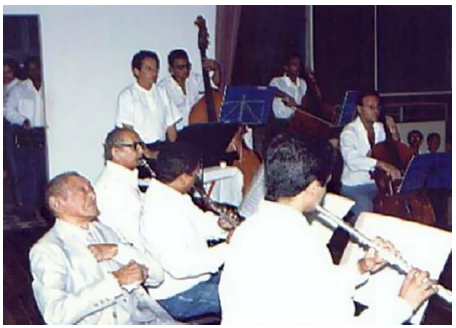 Note. The musicians Vladimir Alexandro Pereira Silva and José Rodrigues (flute), Antonio Marques (clarinet), Eudes Farias (keyboard), Rubens Silva and Antonio do Desterro (double bass), and Victor Maciel (cello), members of the Teresina Chamber Orchestra, appear in the recording. From