
 Photography as a source for the history of education the Lauro Sodré Institute (1900-1904)
Abstract
This article analyzes photography as a historical source for understanding the school culture of Lauro Sodré’ Institute in Belém do Pará between 1900 and 1904. More than just visual records, the images were produced in a specific political and institutional context and represents practices of discipline, work, and professional training. Based on the analysis of photographs and the Institute's Monograph (1904), the study draws on visuality and school material culture references (Dussel, 2006; Kossoy, 2014) to problematize how photography constructs institutional narratives aligned with the republican project in Pará. By proposing the reading of images as historical documents, the research contributes to the historiographical debate on the use of visual sources in the History of Education.
Keywords:
photography; professional education; Lauro Sodré Institute; History of Education
Resumo
O artigo analisa a fotografia como fonte histórica para compreender a cultura escolar do Instituto Lauro Sodré, em Belém do Pará, entre 1900 e 1904. Mais do que registros visuais, as imagens foram produzidas em um contexto político e institucional específico e representam práticas de disciplina, trabalho e formação profissional. A partir da análise de fotografias e da Monografia do Instituto (1904), o estudo mobiliza referenciais sobre visualidade e cultura material escolar (Dussel, 2006; Kossoy, 2014) para problematizar como a fotografia constrói narrativas institucionais alinhadas ao projeto republicano no Pará. Ao propor a leitura das imagens como documentos históricos, a pesquisa contribui para o debate historiográfico sobre o uso de fontes visuais na História da Educação.
Palavras-chave:
fotografia; educação profissional; Instituto Lauro Sodré; História da Educação
Resumen
Este artículo analiza la fotografía como fuente histórica para comprender la cultura escolar del Instituto Lauro Sodré, en Belém, Pará, entre 1900 y 1904. Más que simples registros visuales, las imágenes fueron producidas en un contexto político e institucional específico y representan prácticas de disciplina, trabajo y formación profesional. A partir del análisis de fotografías y de la Monografía del Instituto (1904), el estudio moviliza referencias sobre visualidad y cultura material escolar (Dussel, 2006; Kossoy, 2014) para problematizar cómo la fotografía construye narrativas institucionales alineadas con el proyecto republicano en Pará. Al proponer la lectura de las imágenes como documentos históricos, la investigación contribuye al debate historiográfico sobre el uso de fuentes visuales en la Historia de la Educación.
Palabras clave:
fotografía; educación profesional; Instituto Lauro Sodré; Historia de la Educación
Introduction
Photography is a phenomenon of modernity, a period of great scientific, political, economic, and social discoveries in the civilized world, especially the development of industrialization in European countries with the Industrial Revolution and, consequently, the pace changes in population life (Bobbio, 1992). Photography emerged in the early 19th century.
According to Walter Benjamin (1987), the possibility of reproducing things through photography reveals the image of a reality recorded by the photographer's sensitivity. For Philippe Dubois (1994), the photographic act takes place in three ways: the first is to see photography as a reproduction of reality, that is, photography as a mirror of reality; the second aspect sees photography as a non-neutral production, since there is an intentional, ideological act, so it does not represent reality, but is an "impression" of reality; the third sees photography as a semiotic representation, understood as a sign representing something other than itself.
Registered as an invention by Daguerre in 1839, photography, according to Andrade (2008), represents the advent of the first means of automatic image production, which gradually assumes the role of an instrument of mediation, recording, and archiving. According to Monteiro (2006), photography is a snapshot of reality. That is, a cut in the flow of real time, the freezing of a moment separated from the succession of events. Furthermore, it is a fragment chosen by the photographer through the selection of theme, subjects, setting, meaning, etc. Finally, it transforms the three-dimensional into two-dimensional, reduces the color range, and simulates the depth of the field of vision.
Photography fever took hold of the industrial market. By mid-October 1839, daguerreotypes were being sold in seven European countries and the United States, and by the end of 1840, Daguerre's manual was being marketed in eight languages (Nascimento, 2012). Daguerreotype photography was one of the great discoveries of modernity, which, around 1840, soon arrived in Brazil at the hands of French abbot Louis Compte, chaplain of the frigate L'Orientale and member of an entourage that was traveling around the world. He landed in Rio de Janeiro with the intention of researching and recording the exuberant local nature, gathering information and images for further study. The French abbot produced the first photographic records among us, therefore, one year after it was invented by Daguerre. Emperor Dom Pedro II was a great admirer of the invention, acquiring the equipment in the same year, at the age of 14 (Lopes, 1996; Vazquez, 2002).
During the Empire, many foreign photographers accompanied scientific expeditions that researched not only flora, fauna, and mineral wealth, but also social life, especially in villages, cities, the hinterlands, and the jungles (Borges, 2011). According to Vazquez (2000, pp. 23-24), traveling photographers were required to carry a complete laboratory. And in addition to the laboratory itself with all its accessories."
According to Leite (1993, p. 19), photographic images can reveal, on the one hand, aspects of "behaviors, representations, and ideologies" and, on the other hand, physical characteristics of the photographic image, such as "size, format, support, framing, sharpness, planes, horizontality, and verticality." Finally, it reveals elements such as clothing, objects, area, expressions, and poses.
According to Nascimento (2012), photography is like an instrument for historical analysis, reading, and interpretation of a scene or event. The photographic image is a snapshot of reality, as it captures fragments of life, showing only what is visible to the eyes because not all information is revealed to the eye by photography. For Kossoy and Entler (1996), although the photographic image is crystallized memory itself, its objectivity lies only in appearances. They also say:
Reconstruction through photography is not limited to competent iconographic analysis. This is the primary task of the historian who uses visual sources. The reconstruction of a specific theme from the past, through photography or a set of photographs, requires a succession of imaginary constructions. The particular context that resulted in the materialization of the photograph, the history of the moment of those characters we see represented, in short, the life of the reference model-its inner reality-is, however, invisible to the camera's optical system. It leaves no marks on the photosensitive plate, cannot be revealed by photographic chemistry, nor digitized by a scanner. It can only be imagined (Kossoy & Entler, 1996, pp. 78-81).
According to Santaella (1997), the photographic image is evidence of its existence, that is, it is a trace of a testimony. According to Nascimento (2012, p. 30), photography conveys a message as far as it translates a moment filled with intentionality. It therefore has a documentary purpose, since it is considered a means of expression, information, and even representation. For Armando Silva (2008, pp. 98-99),
The photo is the past. In addition to the literary and narrative capabilities of photography, the photo affirms something that, being the past, constitutes true proof of reality. (...) photography is on the other side. There are no movements. The photo is "silence and mobility." The time of the photo is the past. A record of what is no longer there. The relationship between photography and the object represented goes through this circumstance, and if the photographic record changes to a dynamic medium, a video is produced. If the photo is kept, the representation of time that will never return is privileged. In this way, the photo is time that once existed.
In the early decades of the 20th century, giving portraits as gifts became fashionable and enriched many photographers. The "carte de visite," for example, was interesting because it changed the way people saw themselves, or rather, how they wanted to be seen. Leite (1993) points out that the "carte de visite" is exactly the mirror of how we want to be seen, how we want to be accepted, not for who we are, but for what we appear to be after a photograph. Furthermore, photographic portraits became popular, mainly due to the invention of the "carte de visite," which consisted of a photo glued onto a backing and given to friends and relatives as a token of love and affection. This form of photography was generally used to give gifts to family and friends, filling many family albums. Andre Adolphe Eugene Disderi patented the process in 1854 in France.
According to Borges (2011), many 19th-century photographers began to reproduce photographic images based on criteria that guided the world of painting. Over time, photographic studios became a place where photography was produced and where the setting was part of the image construction. There was a whole aesthetic to the production of photography. However, only a small segment of society in Europe could afford to be photographed by the best studios and photographers in France, England, Germany, and the United States of America.
The photo album became a domestic archiving practice in which there are images of people usually produced in studios portraying faces, bodies, and gestures. The photographs do not narrate, but semiotically capture momentary appearances, physiognomies, objects, and clothing. They do not provide enough information to become traces of what happened, but it is possible to have a representation of the historical context through the photographic image (Leite, 1993).
In 19th-century Brazil, studio photography was used by renowned foreign photographers in the cities of Recife, Salvador, and Rio de Janeiro. In the Amazon, especially in Pará, during the Belle Époque period, this innovative technology of capturing images through photography attracted many photographers to the region for two reasons: first, because it was a place of mystery and exotic fauna and flora; second, because of the modernity of the Amazon, driven by the rubber economy cycle, which was dominated by an elite group of rubber barons. Photographers working in Belém in the early 20th century based their image repertoire on European studio models. In the last decades of the 19th century, Felipe Fidanza, a Portuguese native of Lisbon, opened a studio in Belém called "Photo Fidanza," which remained in operation until the 20th century. Fidanza's photographs became a hallmark of photography in Pará, even after his death.
One of the most important collections of photographs produced in Pará is the famous "Album of Pará in 1899," which was commissioned by then-Governor Paes de Carvalho (1897-1901). The album, with 160 pages and 148 photographs of images of Pará, was published in Berlin in three languages: Portuguese, French, and German. They are photographs of facades and interiors of buildings, public offices, churches, the city's river port, forests, squares, gardens, public roads, as well as school groups and educational institutions. With this album, Paes de Carvalho wanted to promote the beauty and progress of the city of Belém in Europe, to show it as a modern and civilized place. According to Benedito Nunes (1998, p. 30), "The Findazas traveled around Belém and beyond taking photographs, but above all, as demonstrated by the Albums of the State and its Capital, followed the footsteps of the city's great flâneurs, collecting natural and artistic images." According to the author, Fidanza's photographs recorded not only landscapes, streets, squares, monuments, buildings, etc., but also scenes of everyday life with children, caboclos, indigenous people, cart drivers, street vendors, salespeople, and other social groups.
Throughout the history of photography in Pará, we highlight photographs from various educational institutions that played an important role; among them is the Lauro Sodré Institute, founded in 1899 during Paes de Carvalho’ administration, with the goal of welcoming, sheltering, instructing, and educating disadvantaged minors through professional training. The article is divided into two parts. In the first part, we highlight a discussion on the use of photography as a source in the history of education in Brazil. In the second part, we use a photographic collection to address the history of Lauro Sodré’ Institute in Belém do Pará in the professional training of disadvantaged minors, as well as the architecture of the building, the workshop spaces, the material culture such as furniture and teaching objects, and the daily routine of the workshops in professional education.
Thus, this research seeks to analyze, based on photographic records of the time, how professional education was provided to disadvantaged minors who entered the Lauro Sodré Institute in the mid-20th century. To this end, we will use qualitative documentary research, since, according to Pimentel (2001, p. 180): "Studies based on documents as primary material, whether bibliographic reviews or historiographical research, extract all analysis from them, organizing and interpreting them according to the objectives of the proposed investigation." With this in mind, the research was structured through the search, description, and analysis mainly of photographic records and the Monograph of the Lauro Sodré Institute, produced in 1904 during the government of Augusto Montenegro, which assist in the development of this research, which falls within the field of Institutional History.
Thus, this article aims to analyze photography as a historical source to understand the school culture of Lauro Sodré’ Institute between 1900 and 1904. We start from the premise that images are not neutral records, but visual constructions loaded with pedagogical and political intentions (Dussel, 2006; Kossoy, 2014). The problem that guides the research is: how does photography, produced in the institutional context of the First Republic in Pará, represents and legitimizes educational, disciplinary, and labor practices at the Lauro Sodré Institute? In this way, we seek to contribute to the historiographical debate on the use of photography as a source in the History of Education, highlighting the interpretive power of images in the reconstruction of school experiences.
The photographs were treated as primary sources, considered not only as illustrations but also as visual documents that project institutional narratives. The analysis was guided by three main dimensions: (a) the technical and aesthetic aspects of production; (b) the historical and institutional contexts in which they were commissioned; and (c) the representations of educational, disciplinary, and work practices present in the images. Following Dussel's (2006) perspective, we understand that "we look at images, but we do not always see them"; therefore, we adopted categories of reading that allowed us to observe both the visible (spaces, gestures, materials, subjects) and the silences and concealments that the images carry.
This study seeks to problematize photography as a historical document in the history of education. By using images from the Lauro Sodré Institute as central sources, it seeks to reinforce the importance of visual culture in expanding the possibilities for reading educational practices, going beyond traditional written records.
Photography as a source in the history of education
In the history of education, photography has gained status as a historical source because it portrays elements of a reality preserved in time to researchers. From this perspective, photography as a historical source can be understood as a document/monument that preserves the memory of education. For Ciavatta (1998, p. 19), as “photography has an informative character, it is always, simultaneously, a recreation of reality according to the particular vision of the group that produces it.” Undoubtedly, photography is a primary source and is becoming increasingly important in our research on educational institutions in Pará. A photo is not just an image itself, but a symbolic representation of the recorded reality of a historical period.
In the context of the history of educational institutions, photography is a rich source that we can use to understand personal, political, educational, and social aspects. In addition, it allows researchers to understand the history of the institution and its material and heritage culture, costumes, postures, expressions, settings, teaching materials, and recorded environments. Undoubtedly, photography is a fragment of the past that allows for different interpretations when combined with other official and unofficial documents.
Photographic images of educational institutions require researchers to interpret them in conjunction with other sources, such as newspapers, magazines, laws, decrees, official letters, reports, and other written documents. Generally, photographs found in official public archives and in the archives of the schools researched are largely in poor condition, lost in time. The researcher, using the data collected from the photographic image, establishes an "imagery reading," seeking to read what is said and what is not said.
Regarding the use of photography as a source in the field of education, we agree with Ciavatta (1998) when he says that methodology is still under construction. In History of Education field, photography is a way of understanding educational reality, cultural practices, and material school culture. Photography of school environments provides a set of historical narratives and is not seen as a mere image fragment, but as a concrete record of an environment loaded with representations of school material culture. The author points out that the most common references to this type of study are concentrated in areas such as communication and history. Only during the decade from 1990 to 2000, according to Fischmann (2008, p. 109), did “the field of American educational research see the emergence of several works that critically questioned issues related to visual culture and education.”
Working with photography in the history of educational institutions is not as simple as it seems, as it involves a challenge that requires the researcher to commit to photographic images to reconstruct an institutional history for which there are no longer any witnesses. How, then, can we arrive at what has not been revealed by the photographic gaze? Certainly, for researchers of educational history, this task is a great interpretation challenge. The challenge requires them to unravel an intricate network of meanings, whose elements-people and signs-interact dialectically in the composition of reality.
The history of Lauro Sodré’ institute and professional education in Pará through photography
The analysis of images from Lauro Sodré Institute allows us to mobilize the notion of “visuality” proposed by Dussel (2006), according to which photographs not only show, but also produce ways of seeing. When we observe, for example, the organization of dormitories or garages in operation, we are not faced with a reflection of reality, but rather a construction that seeks to highlight discipline, hygiene, and productivity, central values of the republican pedagogy of the period. Thus, the images should not be read as simple illustrations, but as sources that reveal the political and cultural projects of the State.
From this, we can see that the history of professional education in Pará is closely linked to the work of Lauro Sodré, who was the first governor of the state of Pará by the Constituent Congress of the Republic, in addition to being elected three times as senator for Pará (1897, 1912, 1922), and was therefore considered a prominent figure in the state's politics and education at the end of the 19th century and beginning of the 20th century. As senator and governor, Sodré implemented a series of reforms aimed at modernizing public education, emphasizing the need for professional training for the young population, especially disadvantaged minors. His vision of progress and development was in line with the demands of a changing society, driven by economic growth resulting from the rubber cycle, a period in which the Amazon entered the global capitalist market through the development of the rubber economy, beginning in 1840. Consequently, Belém entered the modern era and faced the basic components of the industrialization process, such as urbanization, the technical division of labor, the formation of an elite, and indicators of progress.
Before the creation of the Lauro Sodré Institute, there was a professional education initiative in Pará aimed at vulnerable minors, the Instituto Paraense de Educando Artífices (Pará Institute for Educating Artisans). Founded in 1872, this institution's main objective was to shelter and educate disadvantaged minors, orphans, and abandoned children, providing training in occupations that would enable them to enter the job market. The institution, created under the Enlightenment ideals produced in Europe and under the aegis of a civilizing project in the Amazon, transformed indigenous and mestizo boys into distinguished and well-behaved citizens, as it offered basic education and training in various productive activities, ensuring a form of social and economic inclusion for these minors who would otherwise have been marginalized.
With the rise of Lauro Sodré to governor and his commitment to the modernization of education in Belém, the Instituto Paraense de Educando Artífices was reformulated and expanded, culminating in the founding of the Instituto Lauro Sodré in the early 20th century. This new institution established itself as a benchmark in professional education, being recognized by the state and society as a center of excellence in the training of young workers.
The Lauro Sodré Institute incorporated the pedagogical foundations of the Institute for Artisan Apprentices, but with significant improvements in its physical structure and curriculum. Teaching was organized to offer both theoretical and practical training, with an emphasis on specialized workshops in carpentry, typography, tailoring, metalworking, bodywork, and other areas geared toward meeting the demands of the labor market at the time. In this way, students received a comprehensive education that sought not only to train them technically, but also to discipline them from a productive and civilizing perspective.
Another important aspect of Lauro Sodré's management was the improvement of educational infrastructure. The Lauro Sodré Institute building was designed to house a large number of students, offering adequate conditions for learning. The institution had a well-planned infrastructure with spacious accommodation, well-equipped classrooms, and modern workshops for the time. The quality of the infrastructure was a direct reflection of the educational policy adopted by Sodré, who sought to raise teaching standards and bring them closer to European models, especially French vocational training institutes.
The professional education offered at the Lauro Sodré Institute also had a strong disciplinary component. Students were subjected to a rigorous routine, which included educational activities, physical training, and strict rules of behavior. This approach reflected the prevailing view that the education of disadvantaged minors should go beyond the simple transmission of knowledge, also incorporating a process of moralization and social control.
From then on, at the beginning of the 20th century, the Lauro Sodré Institute became a recognized institution for providing professional training to disadvantaged minors. Boys entered the institution in accordance with the provisions used by other institutions in Brazil, whose ideology was to welcome, instruct, and educate. Disadvantaged minors were referred by judicial authorities, such as the orphan court, which, unable to find guardians for orphaned minors, turned to the institution to provide them with vocational training. Minors involved in crime who needed disciplinary and vocational training as a form of correction were also referred to the institution.
Understanding Lauro Sodré's initial steps, it is clear that his goal was, as seen, to use public education aimed at disadvantaged minors in Pará as means of promoting the construction of social integrity aligned with republican and patriotic ideals, inserting these children and adolescents into a society shaped by such values, so that they could "share the benefits of the institution and (...) take an interest in the progress of the homeland" (Sodré, 1891, p. 2).
The drive toward the development of technical education did not stagnate during his administration. On the contrary, Lauro Sodré encouraged the creation of the Agricultural School and agronomic stations as fundamental representatives of technical education and agricultural development in Pará. Thus,
Technical education is fundamental, not because it is restricted to pedagogical issues, but because it is "a vital issue for all modern people engaged in this struggle in the field ofproduction and exchange. In the tournaments that today weave the drama of the lives of policed nations, victory will belong to the best equipped, that is, the most educated" (Sodré, 1892, p. 29).
From Lauro Sodré's accounts in his messages, we see his relentless work in spreading vocational education in Pará, so that this education can fix problems related to working-class education and bring them into society, giving them a future. For this, vocational education should keep being encouraged, since we should "make the intellectual and moral capital of humanity a property of all, not a privilege of a few. Armed with such education, workers will have in their hands a useful and fruitful instrument for their own improvement and perfection" (Sodré, 1893, pp. 17-18).
Thus, Sodré attaches importance to the vocational education provided at the Instituto Paraense de Educandos Artífices (Paraense Institute for Artisan Students), since this was a public technical education institution that constituted a large workshop, "training artists and workers according to the most advanced knowledge about the industrial mechanisms that engender the greatness of nations, thus developing "the intellectual skills that make man, and the practical skills that make the worker" (Abreu Junior, 2011, p. 64).
With the end of Lauro Sodré's government, public education underwent reforms that kept alive the republican ideals of civility through education. This legacy, marked by the prestige achieved through efforts to develop educational institutions and expand vocational training, was continued by José de Paes de Carvalho, the new governor and most voted senator for Pará in 1890, who continued educational policies based on these same principles.
After nine years as a senator, Paes de Carvalho returned to Belém at a very delicacy moment due to major epidemics in the Amazon region, such as smallpox, yellow fever, cholera, measles, and the Black Death, becoming governor of the state of Pará in 1896. He governed alongside the municipal mayor of Belém, Antônio Lemos, who established an investment policy to modernize Belém as a result of the rubber economy cycle in Pará. This was officially stipulated through Decree No. 414, dated February 1, 1897, the nominal change from Instituto Paraense de Educandos Artífices (Pará Institute for Artisan Students) to Instituto Lauro Sodré (Lauro Sodré Institute), seeking to honor the man who did so much for public education in Pará.
Building architecture
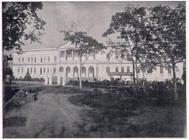
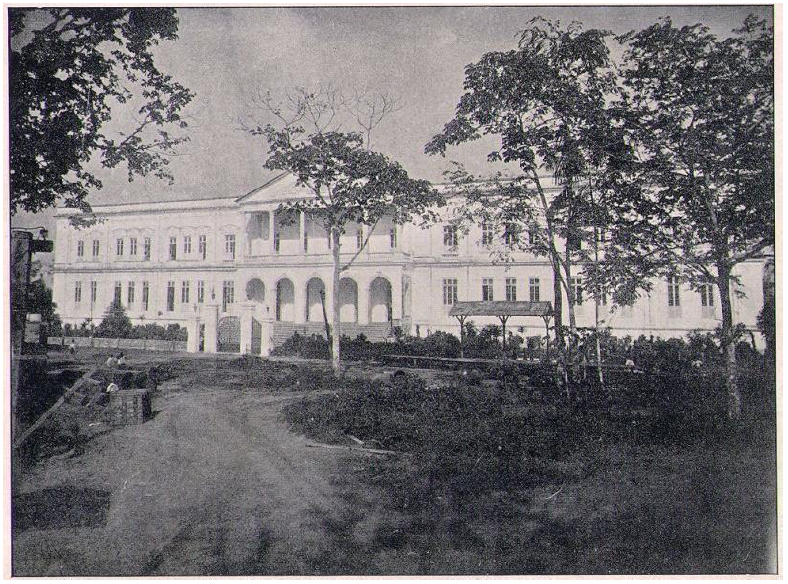
In 1899, with the construction of Lauro Sodré’ Institute building in Marco da Légua, during the administrations of Paes de Carvalho and, later, Augusto Montenegro, the institution began to gain notoriety, equating itself with renowned schools in Europe. This building symbolized the importance of education in the development of vulnerable children. Designed based on hygienist principles, the main building of Lauro Sodré’ Institute measured 93 meters wide by 88 meters deep.
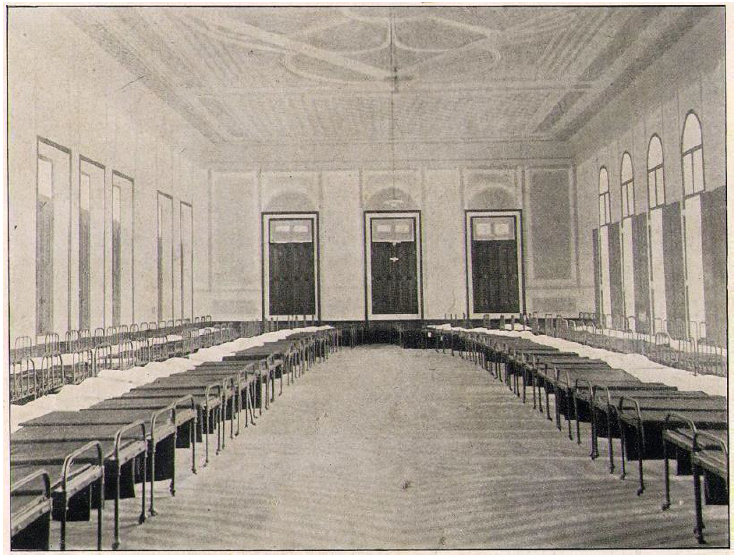
The dormitories offered a space measuring 35.5 meters long and 13.7 meters wide, as illustrated. Figure 1 reveals, through a photographic image, the grandeur of the architecture of the Lauro Sodré Institute. During the rubber boom, this majestic building gave the Institute a significant role in the field of education. Its splendor went beyond its external appearance, encompassing mainly the various environments, such as the study room, the gym, the cafeterias, the meteorological observatories, and, especially, the workshops where professional training courses were offered.
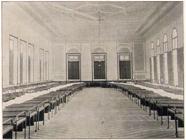
The dining hall measured 36 meters long by 18.1 meters wide, while the study hall measured 35.5 meters long by 13.7 meters wide. We note that the institution's building had an extensive infrastructure, organized on military levels, due to the hygienist ideology that dictated the standards on which institutes should be established.
It was hoped that, with large windows and corridors, the air circulation between rooms would reduce the incidence of diseases affecting society at that time, especially those related to respiratory problems, such as pneumonia. Like the dormitory (Figure 2), the dining hall was designed to accommodate most of the students, conveying an organizational order among them.
It is worth noting that the photographs of Lauro Sodré’ Institute were commissioned and recorded in a context of political affirmation by the republican government in Pará. In this sense, they are not mere technical records: they are carefully constructed representations designed to project an image of order, discipline, and progress. The framing of the uniformed students, the emphasis on large, sanitized spaces, and the display of well-equipped workshops reveal intentions to legitimize the institution as a symbol of Amazonian modernity.
Theoretical teaching
The Lauro Sodré Institute assumed a fundamental position in professional education in Pará, integrating practical and theoretical training for minors in vulnerable conditions. While specialized workshops trained students in a variety of work practices, theoretical teaching provided an essential foundation for their intellectual and technical improvement. This approach aimed to ensure that students not only mastered a practical skill but also assimilated fundamental knowledge for understanding and applying theoretical concepts in their professional activities.
The curriculum at Lauro Sodré Institute comprised a set of subjects focused on elementary and technical training, enabling students to acquire skills in reading, writing, and mathematics. These skills were seen as fundamental for any professional who needed to interpret technical manuals, prepare administrative records, or take precise measurements in their activities. In this way, the educational institution provided a more holistic education, enabling its students to face the challenges of both job market and everyday life.
Among the theoretical subjects available, Portuguese Language, Mathematics, and Natural Sciences stood out. The first aimed to develop students' oral and written communication skills, while Mathematics proved essential for logical reasoning and solving practical problems. Natural Sciences, in turn, presented the fundamentals of chemistry, physics, and biology, integrated into the context of workshops and professional activities carried out by students.
The interconnection between theory and practice made learning more dynamic and attuned to the demands of the period. In addition to the knowledge mentioned above, the pedagogical structure of Lauro Sodré’ Institute encompassed principles of technical drawing and geometry, fundamental areas of study to professional practices such as carpentry, metalwork, and typography. Proficiency in these skills enabled students to decipher plans and projects, optimizing the performance of their activities with greater accuracy and efficiency. Thus, theoretical instruction was not merely a formality in the Institute's educational structure, but a crucial strategy to enrich and amplify the professional training of students.
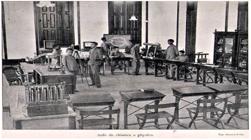
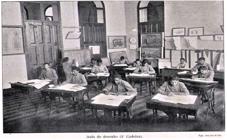
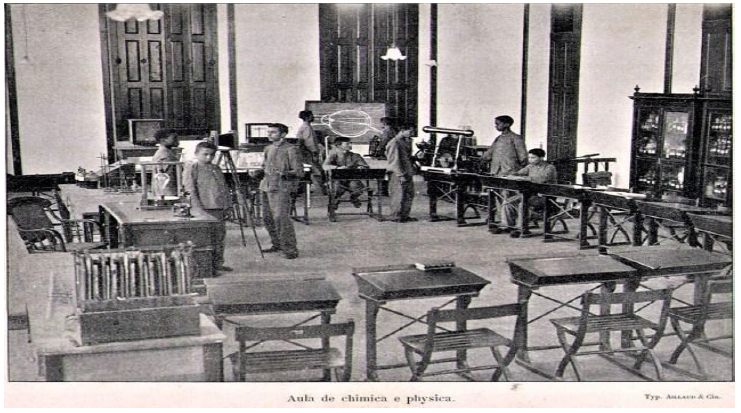
The classrooms at Lauro Sodré Institute were designed to provide an environment conducive to theoretical learning, complementing the students' practical training. These environments were spacious and well lit, with large windows that ensured adequate ventilation, especially to prevent the spread of diseases. The desks were arranged in such a way as to promote interaction among students and facilitate teacher observation, as shown in the photographs in Figures 3 and 4. The photographs taken in the physics-chemistry and drawing classrooms show all the furniture, objects, and teaching materials that were used by the students.
A significant element of theoretical training at the Lauro Sodré Institute was its disciplinary function. The curriculum structure was rigorous, characterized by clearly established schedules and teaching methods that prioritized discipline, punctuality, and commitment to learning. This model mirrored the educational concept of that time, recognizing professional education not only as an instrument of technical improvement, but also as an essential tool for the moral and social development of individuals.
Thus, the theoretical instruction provided by the Lauro Sodré Institute played a crucial role in the training of students from Pará, ensuring that they obtained a harmonious education between theoretical and practical aspects. This methodology offered students not only professional training, but also a vast store of knowledge that enabled them to perform their duties with autonomy and in depth understanding. In this way, the Institute established itself as a notable reference in professional education, playing a fundamental role in the educational and economic advancement of the region.
Vocational education workshops
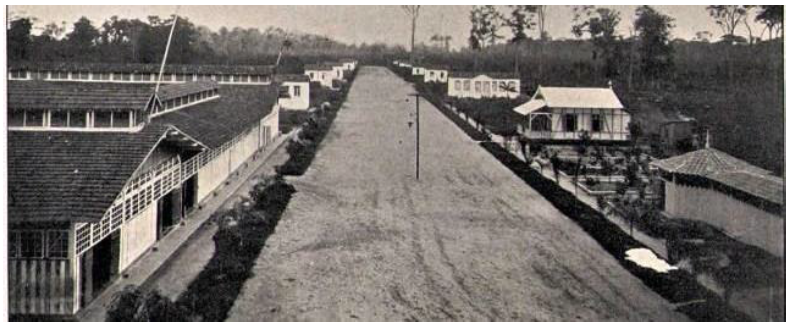
In addition to the institute's big classrooms, when leaving through the back of the building, it was possible to see a long avenue lined with several buildings. Among these was a large wooden building where vocational workshops were held, as shown in Figure 5.
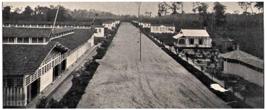
According to the Monograph of Lauro Sodré’ Institute (1904) - which contains reports on the functioning of the Lauro Sodré Institute, covering in detail its constitution and infrastructure, primary and vocational education classes, teaching staff at the time, among other things - construction of the workshops began on February 20, 1900, and was completed around September of that same year. The infrastructure consisted of wooden structures organized into four rectangular volumes, measuring 56 meters long, 3 meters wide, and 6 meters high. The roofs were covered with Marseille tiles and equipped with skylights, which provided adequate ventilation for the environment. In addition, the building was almost completely glazed around its perimeter to protect against bad weather and provide the necessary light and ventilation for activities, as shown in the photographic record in Figure 6.
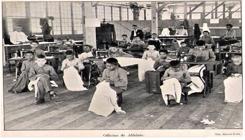
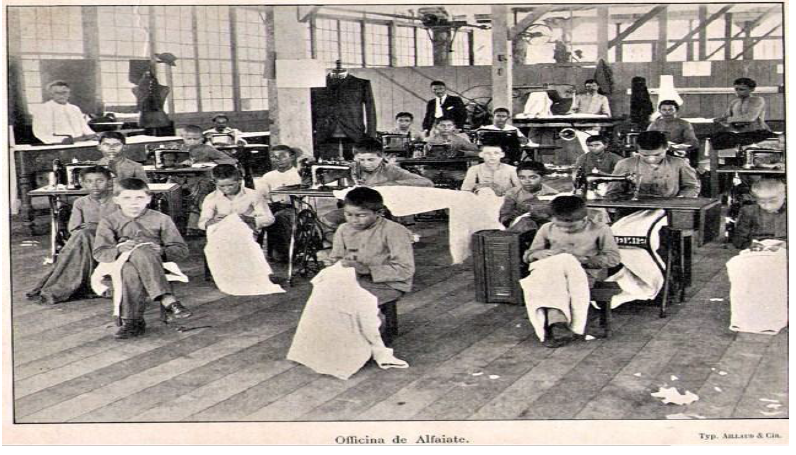
At the Lauro Sodré Institute, workshops were designed to improve the manual skills of apprentices, with the aim of providing professional training that would enable them to apply this knowledge after leaving the institution. Among the workshops offered at the Lauro Sodré Institute, tailoring stood out, providing students with specialized training in cutting, sewing, and operating sewing machines. The work carried out by approximately 29 students who were part of the tailoring workshop was focused on improving and producing manual sewing techniques, as well as taking measurements and making patterns.
In addition, it included machine sewing, cutting done both manually and mechanically, as well as general clothing manufacture, encompassing the ability to sew on buttons, both by hand and by machine, along with haberdashery work, exemplified by the manufacture of hats, caps, badges, among others. In Figure 6, we can see a representation of how classes were conducted in the Tailor's workshop.
In the shed, the students were organized according to their tasks: one group was responsible for applying the patterns; another cut the fabric; a third operated the sewing machines, while a final group finished the pieces by hand. The skilled seamstresses sat on small stools to perform their work.
The carpentry workshop had a total of 80 apprentices who were dedicated to manufacturing a variety of products, with an emphasis on production for the state, such as desks for the pharmacy school, blackboards for educational institutions, and tables for teachers. In addition, their production was directed to the Institute, covering items such as handles, desks, benches, and bookshelves.
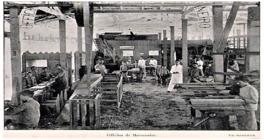
In addition, they performed services for clients outside the institution, including, among others, the manufacture of door handles, frames, cabinets, small shelves, balusters, and small drawing boards. The workshop areas were considered spacious and aimed to bring together all the necessary materials for the complete development of the student in their chosen profession, as illustrated below.
In Figure 7, we see the use of wood cutting machines. In this workshop, older students were usually the ones who operated the machines under the coordination of the master craftsman. The other students selected pieces of wood and made the furniture. Accidents involving students in this workshop were rare.
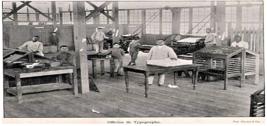
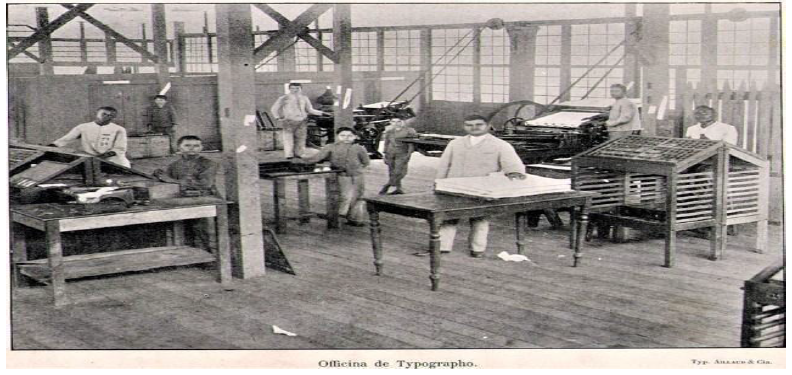
For students who did not identify with the tailoring and carpentry workshops, there was an alternative of participating in the typography workshop (Figure 8). This workshop was dedicated to the production of black and white prints, covering a variety of works, such as artwork, maps, brochures, print runs with specific deadlines, and the composition and printing of books. During this period in 1904, the workshop had 15 students who carried out various projects for institutions, including the State Military Regiment, the Department of Justice, the Chamber of Deputies, the Department of Public Works, the governor's office, the water service, and the Goeldi Museum, in addition to fulfilling private requests.
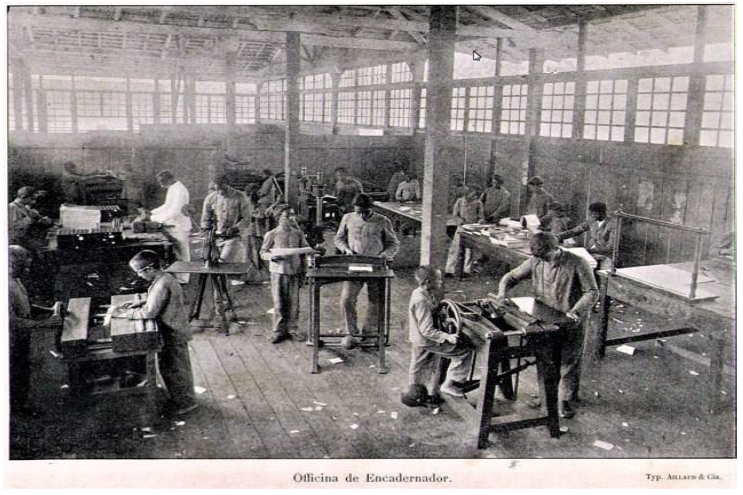
Another craft taught at the institution was bookbinding. The students were responsible for developing and producing bindings and brochures. In 1903, for example, the workshop had 39 apprentices, who produced, in that same year, about 766 bindings and 5,568 brochures. These productions, like the previous ones, were intended for both public institutions and private individuals in the state. In Figure 09, we can see in the bookbinding workshop classes various machines that cut paper, made brochures, and performed bookbinding. This image shows that the workshop was very popular with students, reflecting the importance of this learning in their professional training.

The variety of occupations offered by the Lauro Sodré Institute provided great advantages to students, allowing them to explore their skills in activities such as sewing, carpentry, and metalwork.
In 1904, the metalworking workshop had 19 students learning cutting and welding techniques. They worked with zinc and copper sheets, manufacturing gutters, pipes for storage tanks, kitchen utensils, sheet metal chests, and wire screens, in addition to acquiring a good understanding of how the machines used in these processes worked. That same year, the workshop produced approximately 703 pieces for state institutions and carried out various repairs for both external customers and the Lauro Sodré Institute itself.
The activities in the institute's workshops were quite intense. In the blacksmith and mechanical locksmithing workshop, students devoted themselves to forging and filing, learning about metals and alloys (Figure 10). They were involved in the production of railings, casting ornaments, applied locksmithing, and mechanics, as well as engraving and welding iron. The students also adjusted pipes and expanded their knowledge of cutting, drilling, bending, and hammering machines, as well as steam and oil engines.
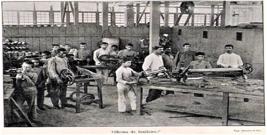
In 1904, 38 apprentices worked in this workshop, making various products. The students produced around 26 grids, 24 columns, 150 screws, 2 gates, and a flag for the Hospício de Alienados (Insane Asylum). For the workshops, they produced 5 tongs, 2 griffins, a bolt, 2 gloves, among other items. For the establishment itself, the students produced balusters for bathroom plumbing, brackets for installing machines, and for the institution's cart.
The students' daily routine in the workshop, developing their work as blacksmiths and locksmiths, was supervised by masters who guided them in the use of the machines. It was up to the teachers to observe the students' manual skills during the production activity. In Figure 11, we can see the dynamics of the classes in the blacksmith and locksmith workshop.

Another occupation taught by the Lauro Sodré Institute was that of shoemaker-saddler. In this workshop, apprentices worked with hand sewing, learned to nail and assemble shoes, cut and sew, manufacture shoes and harnesses, and learned how to operate the machines used for these purposes. In 1903, this workshop had 22 apprentices responsible for producing shoes for the institution's own students and for members of the military regiment, for whom boots and combat boots were produced. They also produced products for private orders.
In the following photograph (Figure 12), it is possible to see that the shed where the shoemaker's workshop operated was divided by tasks to produce the pieces. There was a group that cut the leather and other groups of apprentices who worked on operating machines to sew the pieces. Finally, there was a group of apprentices who did the sewing by hand.
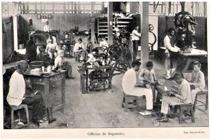
The Lauro Sodré Institute aimed to educate disadvantaged minors through theoretical and vocational education, the latter being divided into agricultural and industrial, as seen. At the end of their education, students left the institution with professional training for work. In other words, during their stay at the Institute, the manual skills developed in the workshops prepared them for the outside world, more specifically, to meet the needs for skilled labor to serve the demands of the local elite, who mainly needed the services of shoemakers, tailors, carpenters, and typographers.
From what has been presented, we understand that the education provided at the Lauro Sodré Institute was based on primary education, drawing, geometry, music, and, especially, vocational workshops that trained disadvantaged minors in a trade. The intention was to educate boys, but above all to provide them with vocational training, that is, to give apprentices the opportunity to discover their vocational aptitudes. It is true that the boys did not always discover their skills and aptitudes or, in many cases, had no ability to perform the tasks in the workshops. It was then up to the workshop masters to identify the apprentices' aptitudes and encourage them to specialize in a workshop.
The typography, plumbing, metalworking, carpentry, shoemaking, and locksmith workshops were attended daily by apprentices from the Lauro Sodré Institute under the guidance of teachers who had a dual role: on the one hand, to develop the boys' manual and cognitive skills, that is, to identify, among the groups of apprentices, those who had manual talents and aptitudes; on the other hand, through the pieces produced in practical classes, to ensure that the boys met the demands of the Pará state government. In addition, students from Pará found, at the Lauro Sodré Institute, the best incentive to study and qualify themselves to perform multiple learning specialties.
Final remarks
Vocational education for disadvantaged minors at the Lauro Sodré Institute was a significant educational experiment in the early decades of the 20th century, reflecting educational concepts that combined theoretical and practical teaching. Created with the aim of offering education and professional training to vulnerable minors, the institute became a technical teaching space that sought to prepare them for the job market, providing them with skills in various areas, such as carpentry, tailoring, typography, and other productive activities.
The educational model adopted by the institution was in line with the educational and social guidelines of the time, which saw vocational education as an effective strategy to curb marginalization and integrate these disadvantaged boys into society through work. However, this training was not limited to an emancipatory pedagogical project, but also fulfilled a disciplinary function, seeking to mold students to perform specific roles in the local economic structure. The education offered was thus directly linked to the demands of the state and the elites who emerged from the prosperous period of rubber commercialization in the Amazon, who saw the training of the workforce involved as a means of strengthening strategic productive sectors.
The importance of Lauro Sodré’ Institute can be seen not only in documentary records, but also in an iconographic collection that allows for a visual analysis of the institution and its educational practices. Photographs from the period depict the spaces of the institute and the students' routine, offering concrete commitments based on this information. These images are historical sources of education in the early 20th century in republican Pará, as they enable us to understand the materiality of professional education, revealing details that written documents do not always express.
The photographic records show the organization of the workshops, the distribution of classes in practical activities, and the interaction between teachers and students. In addition, they allow us to observe aspects such as clothing, school objects, furniture, postures, and expressions of students and teachers, which help to contextualize the experience of minors within the institution. The analysis of these images contributes to a broader understanding of the dynamics of professional training and the values that guided technical education at that time.
The relationship between education and work, as practiced at the Lauro Sodré Institute, reflects a model of vocational education aimed at placing students in specific productive roles. While, on the one hand, the institution offered learning and qualification opportunities, on the other, it limited the prospects of these minors to narrow technical training linked to market needs. This raises questions about the functionalist nature of vocational education, which often restricts the potential of teaching by directing it toward essentially economic ends.
Thus, the trajectory of Lauro Sodré’ Institute offers important reflections on the history of vocational education in Brazil and on educational policies aimed at disadvantaged minors at the time. The study of this institution allows us to understand how education was used as a tool for social control and workforce training, highlighting the tension between the ideals of inclusion and the demands of the market.
Finally, by recovering the memory of Lauro Sodré’ Institute and its experience with professional education for disadvantaged minors through photographic records, it becomes possible to understand parts of the history of this educational institution, which achieved prestige by disseminating professional education to disadvantaged minors in Pará.
References
-
Abreu Junior, L. de M., & Carvalho, E. V. de. (2012). O discurso médico-higienista no Brasil do início do século XX. Trabalho, Educação e Saúde, 10(3), 427-451. https://doi.org/10.1590/S1981-77462012000300005
» https://doi.org/10.1590/S1981-77462012000300005 -
Andrade, M. C. R. de. (2008). O gabinê fluidificado e a fotografia dos espíritos no Brasil: A representação do invisível no território da arte em diálogo com a figuração de fantasmas, aparições luminosas e fenômenos paranormais [Tese de Doutorado, Universidade de São Paulo]. Repositório da USP. https://teses.usp.br/teses/disponiveis/27/27159/tde-13072009-190522/pt-br.php
» https://teses.usp.br/teses/disponiveis/27/27159/tde-13072009-190522/pt-br.php - Benjamin, W. (1987). Magia e técnica, arte e política: Ensaios sobre literatura e história da cultura (3ª ed.). Brasiliense.
- Bobbio, N. (1992). Dicionário de política. Editora da UnB.
-
Borges, M. E. L. (2011). Cultura dos ofícios: patrimônio cultural, história e memória. Varia Historia, 27(46), 481-508. https://doi.org/10.1590/S0104-87752011000200005
» https://doi.org/10.1590/S0104-87752011000200005 - Ciavatta, M. (1998). O mundo do trabalho em imagens: A fotografia como fonte histórica: Conceitos fundamentais para a interpretação da imagem fotográfica (Vol. 1) [Relatório de Pesquisa]. Universidade Federal Fluminense, Faculdade de Educação.
- Dubois, P. (1994). O ato fotográfico. Papirus Editora.
- Dussel, I. (2006). La escuela y la mirada: Imágenes escolares y prácticas de visualidad. FLACSO.
- Fischmann, R. (Org.). (2008). Ensino religioso em escolas públicas: Impactos sobre o Estado laico (Vol. 1, pp. 109-122). Factash.
-
Instituto Lauro Sodré. (1904). Monografia do Instituto Lauro Sodré (Escola Profissional do Estado) de 1904. Typographia e Encadernação do Instituto Lauro Sodré. Recuperado de http://obrasraras.fcp.pa.gov.br/
» http://obrasraras.fcp.pa.gov.br/ - Kossoy, B. (2009). Fotografia e história. Ateliê Editorial.
- Kossoy, B. (2014). Os tempos da fotografia: O efêmero e o perpétuo. Ateliê Editorial.
- Kossoy, B., & Entler, R. (1996). Fotografia brasileira: Nova geração. Revista Photo, 329.
- Leite, M. M. (Org.). (1993). A condição feminina no Rio de Janeiro, século XIX. Hucitec; Editora da Universidade de São Paulo.
- Lopes, A. E. R. de C. (1996). Foto-grafando: Sobre arte-educação e educação especial [Dissertação de Mestrado, Universidade do Estado do Rio de Janeiro].
-
Monteiro, C. (2006). História, fotografia e cidade: Reflexões teórico-metodológicas sobre o campo de pesquisa. MÉTIS: História & Cultura, 5(9), 11-26. https://doi.org/10.18226/22365691.v5.n9.01
» https://doi.org/10.18226/22365691.v5.n9.01 - Nascimento, S. V. S. do. (2012). A criança na fotografia: O retrato da infância na primeira metade do século XX em Belém do Pará (1900 a 1950) [Dissertação de Mestrado, Universidade Federal do Pará].
- Nunes, B. (1998). Amazônia reinventada. In Foto Norte II: Amazônia, o olhar sem fronteiras (pp. 19-38). Funarte.
-
Pimentel, A. (2001). O método da análise documental: Seu uso numa pesquisa historiográfica. Cadernos de Pesquisa, 114, 179-195. https://www.scielo.br/j/cp/a/FGx3yzvz7XrHRvqQBWLzDNv/?lang=pt
» https://www.scielo.br/j/cp/a/FGx3yzvz7XrHRvqQBWLzDNv/?lang=pt - Santaella, L., & Nöth, W. (1997). Imagem: Cognição, semiótica, mídia. Iluminuras.
- Silva, A. (2008). Álbum de família: A imagem de nós mesmos (p. 38). Sesc; Senai.
- Sodré, L. (1891). Mensagem dirigida pelo Senr. Governador Dr. Lauro Sodré ao Congresso do Estado do Pará em sua primeira reunião, em 30 de outubro de 1891. Typographia do Diário Official.
- Sodré, L. (1892). Mensagem dirigida pelo Governador Dr. Lauro Sodré ao Congresso do Estado do Pará em 1º de julho de 1892. Typographia do Diário Official.
- Sodré, L. (1893). Mensagem apresentada ao Congresso do Estado do Pará em 1893. Typographia do Diário Official.
- Vazquez, P. K. (2000). Fotógrafos alemães no Brasil do século XIX (pp. 23-24). Metalivros.
- Vazquez, P. K. (2002). A fotografia no Império (Coleção Descobrindo o Brasil). Jorge Zahar Ed.
-
Note:
This article is part of the dossier “Photography as a Source for Research in the History of Education”. The set of texts was jointly evaluated by the associate editor responsible, within the scope of the RBHE Editorial Board, as well as by the dossier proponents.
-
Peer review rounds:
R1: two invitations; two reports received.
-
How to cite this article:
Sena, M. T., & Alves, L. M. S. A. Photography as a source for the history of education: the Lauro Sodré Institute (1900-1904). Revista Brasileira de História da Educação, 25, e394. DOI: https://doi.org/10.4025/rbhe.v25.2025.e394en
-
Funding:
The RBHE has financial support from the Brazilian Society of History of Education (SBHE) and the Editorial Program (Call No. 30/2023) of the National Council for Scientific and Technological Development (CNPq).
-
Licensing:
This article is published under the Creative Commons Attribution 4.0 (CC-BY 4) license.
-
Data availability:
All data generated or analyzed during this study are included in this published article.
Edited by
All data generated or analyzed during this study are included in this published article.

 Note. Source: Monografia do Instituto Lauro Sodré (Escola Profissional do Estado) de 1904 (Lauro Sodré Institute, 1904, [n.p.]). Retrieved from
  Note. Source: Monografia do Instituto Lauro Sodré (Escola Profissional do Estado) de 1904 (Instituto Lauro Sodré, 1904, [s.p.]). Retrieved from http://obrasraras.fcp.pa.gov.br/
 Note. Source: Monografia do Instituto Lauro Sodré (Escola Profissional do Estado) de 1904 (Instituto Lauro Sodré, 1904, [s.p.]). Retrieved from http://obrasraras.fcp.pa.gov.br/
 Note. Source: Monografia do Instituto Lauro Sodré (Escola Profissional do Estado) de 1904 (Instituto Lauro Sodré, 1904, [s.p.]). Retrieved from http://obrasraras.fcp.pa.gov.br/
 Note. Source: Monografia do Instituto Lauro Sodré (Escola Profissional do Estado) de 1904 (Instituto Lauro Sodré, 1904, [s.p.]). Retrieved from http://obrasraras.fcp.pa.gov.br/
 Note. Source: Monografia do Instituto Lauro Sodré (Escola Profissional do Estado) de 1904 (Instituto Lauro Sodré, 1904, [s.p.]). Retrieved from http://obrasraras.fcp.pa.gov.br/
 Note. Source: Monografia do Instituto Lauro Sodré (Escola Profissional do Estado) de 1904 (Instituto Lauro Sodré, 1904, [s.p.]). Retrieved from http://obrasraras.fcp.pa.gov.br/
 Note. Source: Monografia do Instituto Lauro Sodré (Escola Profissional do Estado) de 1904 (Instituto Lauro Sodré, 1904, [s.p.]). Retrieved from http://obrasraras.fcp.pa.gov.br/.
 Note. Source: Monografia do Instituto Lauro Sodré (Escola Profissional do Estado) de 1904 (Instituto Lauro Sodré, 1904, [s.p.]). Retrieved from http://obrasraras.fcp.pa.gov.br/
 Note. Source: Monografia do Instituto Lauro Sodré (Escola Profissional do Estado) de 1904 (Instituto Lauro Sodré, 1904, [s.p.]). Retrieved from http://obrasraras.fcp.pa.gov.br/
 Note. Source: Monografia do Instituto Lauro Sodré (Escola Profissional do Estado) de 1904 (Instituto Lauro Sodré, 1904, [s.p.]). Retrieved from http://obrasraras.fcp.pa.gov.br/
 Note. Source: Monografia do Instituto Lauro Sodré (Escola Profissional do Estado) de 1904 (Instituto Lauro Sodré, 1904, [s.p.]). Retrieved http://obrasraras.fcp.pa.gov.br/