
 The Normal School of the Campanha/MG in the context of the transition to the Republic: projects, conflicts and teacher training (1873-1890)
Abstract
This article presents the results of research on the Escola Normal da Campanha and its role in the local historical context. We seek to analyze this public educational institution in the city of Campanha in its first phase - 1873 to 1890 - based on its political and social aspects, inserted in a period of disputes over the nation's project, between the end of the Monarchy and the beginning of the Republic. From this perspective, we adopted the theoretical contributions of Edward Thompson to analyze the sources obtained through research in two documentation centers: the Arquivo Público Mineiro and the Monsenhor Lefort Center. With this, we hope to contribute, through the Social History of Education, to new reflections around the presence of the Official Normal School in this city.
Keywords:
teacher training; social history of education; public school
Resumo
Este artigo apresenta os resultados da pesquisa sobre a Escola Normal da Campanha e o seu papel no contexto histórico local. Buscou-se analisar esta instituição pública de ensino da cidade da Campanha, em sua primeira fase - 1873 a 1890 -, a partir de aspectos políticos e sociais, inserida em um período de disputas por um projeto de Nação, entre o fim da Monarquia e o início da República. Nessa perspectiva, as contribuições teóricas de Edward Thompson foram adotadas para analisar as fontes obtidas por meio de pesquisas em dois centros de documentação: o Arquivo Público Mineiro e o Centro de Estudos Campanhenses Monsenhor Lefort. Com isso, espera-se contribuir, por meio da História Social da Educação, com as novas reflexões em torno da presença da Escola Normal Oficial nessa cidade.
Palavras-chave:
formação de professores; história social da educação; escola pública
Resumen
Este artículo presenta los resultados de una investigación sobre la Escuela Normal de Campanha y su papel en el contexto histórico local. Buscamos analizar la institución educativa pública de Campanha en su primera fase - 1873 a 1890 - a partir de sus aspectos políticos y sociales, en un período de disputas por el proyecto de nación, entre el fin de la Monarquía y el inicio de la República. Desde esta perspectiva, adoptamos los aportes teóricos de Edward Thompson para analizar las fuentes obtenidas a través de investigaciones en dos centros de documentación: el Arquivo Público Mineiro y el Centro Monsenhor Lefort. Con esto esperamos haber contribuido, a través de la Historia Social de la Educación, a nuevas reflexiones en torno a la presencia de la Escuela Normal Oficial en esta ciudad.
Palabras clave:
formación de maestros; historia social de la educación; escuela pública
Introduction
Throughout the 20th century, the struggle to establish a general public school system became consolidated in Brazil and worldwide. Regardless of the societal project to which theorists, debaters, activists, and political agents adhered, public schooling gained a certain centrality in the construction of society, primarily as an instrument within the superstructure, aiming both to consolidate and intervene in the transformations occurring at the structural level.
In all these contexts, educational policies have placed the role of public schools at the center of discussions, whether regarding their expansion or their qualitative and quantitative reduction. The same applies to teacher education through public policies designed to shape a body of professionals who would engage in the instructional and educational processes of children, youth, and adults.
The bourgeois revolutions of the 18th and 19th centuries consolidated these ideals and political actions in nations considered the "center of capital"-notably Western European countries and the United States. Within the logic of their societal projects, shaped by the capitalist mode of production, these nations defined the structure, roles, and objectives of public schools. However, in peripheral countries such as Brazil, this process did not unfold within the same historical timeframe. On the contrary, the 19th and 20th centuries were still marked by extensive debates and conflicts that delayed the consolidation of public schooling, despite significant initiatives undertaken by both the state and civil society.
Reflecting on 19th-century Brazil is highly relevant to understanding the early stages of public school development, as well as the efforts to train teachers who would serve in these institutions, particularly in literacy and basic education for specific social groups. The construction of a nation, shaped by its contradictory social and economic characteristics, involved numerous political disputes among those with the "privilege" of participation. However, at a more granular level, it also involved other actors-previously marginalized-who, through various channels, challenged the status quo and sought to dismantle barriers to introduce their own proposals. Inspired by external models, the education of the population also became a field of debate, in which progress, continuity, and setbacks in its conceptions, objectives, and social roles can be observed.
Within this perspective, understanding the Escola Normal in the city of Campanha, located in the interior of Minas Gerais, is central to analyzing these dynamics in Brazilian society during the second half of the 19th century. This research is justified for two main reasons: first, because it examines a public educational institution maintained by the state (at different levels) and embedded within a societal and political project that spanned two opposing regimes (monarchical and republican); and second, because it focuses on the training of teachers who would be responsible for primary education. In both cases, the investigation encompasses not only national and societal projects but also social, cultural, and political conflicts that unfolded amid decades of disputes at local, regional, and national levels.
Classical historiography-still prevalent in many studies on the history of education-has traditionally centered the development of Brazilian public schooling and teacher training on the analysis of legislation and public policies, often attributing these advancements to the actions of individual historical figures. Another common approach has been to examine schools as autonomous entities that can be understood in isolation. However, it is essential to shift this perspective toward an analysis that considers social actors collectively. Rather than focusing solely on individuals, this study highlights the collective actions that contributed to debates and struggles in the construction of Brazil’s public school system. Although this research focuses on a single educational institution in a small city in Minas Gerais, it aims to emphasize the broader social processes that shaped public education.
The Escola Normal of Campanha
We consider the historical study of this institution, located in the interior of Minas Gerais, to be highly relevant. In this research, we aim to analyze and understand, through the theoretical framework of Social History, how different social and political actors contributed to the construction of a public school project within a politically, culturally, and ideologically contested environment.
At the same time, it is essential to underscore the importance of examining the early stages of teacher professionalization in Brazil through the experiences of Minas Gerais, specifically in the city of Campanha. This case study offers valuable insights into the historical transition of teaching-from an artisanal and informal practice to an established professional status. This transformation was also embedded within a broader cultural and ideological struggle concerning the role of education in the nation-building process, shaped both by contemporary public policies and by alternative educational models emerging at the time.

Building that housed the Escola Normal da Campanha, in a 1908 photograph. Noteworthy is the significant female presence, primarily represented by the students
The Escola Normal of Campanha (Figure 1) was established by Provincial Law No. 1,769 in 1871 and began operating in 1873. It was the second official (public/state-run) Escola Normal to function in the then-province of Minas Gerais, following the pioneering institution founded in Ouro Preto, the provincial capital, in 1835. The initial project was part of a broader reformulation of Brazilian education under the monarchy, a period marked primarily by renewed debates on public instruction and initiatives that culminated, years later, in the Leôncio de Carvalho1 Reform and the subsequent wave of Escola Normal establishments across the provinces throughout the 1860s and 1870s.
The creation of the Escola Normal of Campanha was also intertwined with discussions concerning the urgent need for the participation of previously marginalized social groups in public life, particularly women. A significant example of this involvement was the presence of Professor Francisca Senhorinha da Mota Diniz, founder and editor of the first periodical to openly identify as "feminist," O Sexo Feminino (1872). Her engagement, alongside that of other figures, highlights the growing presence of women in the educational sphere. This suggests that the Escola Normal of Campanha was embedded in the unprecedented debates that emerged during the late Empire and early Republic, albeit in a diffuse and limited manner. Such developments underscore Campanha’s prominent role in Brazil’s cultural and educational landscape, a status that led memorialists to refer to the city as the "Athens of Southern Minas" (Souza, 2006).
In addition to the gender debate, the Escola Normal of Campanha was also involved in discussions concerning the new educational perspective introduced by positivist philosophy within the republican project for public schooling. Colonel Benjamin Constant, a professor at the Military School of Rio de Janeiro, a renowned positivist educator, and a key figure in the republican movement, visited the city and the school in 1889, shortly before the military coup that proclaimed the Republic. He was deeply impressed by the progressive curricular and structural reforms implemented at the Campanha public institution. As a result, he wrote an extensive letter in the school’s guestbook, outlining the principles of republican education and its role in the civilizing project of the new regime. These ideas would later materialize in the educational reform of the Federal Capital in 1890.
Finally, the Escola Normal of Campanha played a central role in a significant political episode during the early years of the republican regime in Minas Gerais. In the turbulent process of consolidating the new regime after 1889, several members of the institution were involved in the armed uprising known in local history as the Separatist Movement of 1892, which sought to establish a new state independent of Minas Gerais.
The involvement of Escola Normal teachers suggests that the institution served as a gathering place for individuals engaged in local and regional political life. Consequently, it also experienced the repercussions of the movement’s defeat in the months that followed.
Class and Gender: Essential Considerations
The city of Campanha is located in southern Minas Gerais and emerged from territorial disputes between the captaincies of São Paulo and Minas Gerais in the early 18th century. Initially occupied by Paulistas in search of gold, it officially became part of Minas Gerais on October 2, 1737, following an expedition led by Cipriano José da Rocha, magistrate of Vila de São João Del Rei (Araujo, 2008b). He formally established the settlement as Arraial de São Cipriano, a name that was soon changed to Campanha do Rio Verde.
Understanding the historical context of Campanha’s formation provides deeper insight into both the region’s development and its social structure. The search for gold deposits attracted not only wealthy landowners eager to exploit mineral resources but also enslaved individuals who provided the labor necessary for mining operations. Alongside them, various other social groups, including free yet impoverished individuals, arrived in pursuit of financial and social opportunities. This migration pattern gave rise to a society deeply rooted in slavery while simultaneously shaping an economic elite, with other social segments forming a rigid hierarchical structure.
In 1798, following political disputes with the Chamber of Vila de São João Del Rei, the settlement of Campanha was elevated to the status of vila within the Comarca de Rio das Mortes through a decree issued by Queen Maria I on October 20 of that year (Araujo, 2008b). However, by this time, the region's gold production was already in decline. While a detailed analysis of this decline falls beyond the scope of this study, it is important to note that, in the following decades, this downturn forced a shift in Campanha’s economic model-from gold extraction to agriculture. As a result, the region became a significant supplier of foodstuffs, which were essential to the markets of Rio de Janeiro, the seat of the Portuguese Empire from 1808 onward and, later, the capital of the Brazilian Empire after 1822 (Souza, 2006).
This economic transition led the former elites, who had risen to prominence through gold mining, to transform into the new landowning aristocracy of the region. As landowners, they shifted their economic base while maintaining the exploitation of enslaved people, solidifying their status as the dominant social class and further deepening the social contradictions of the newly independent nation.
Within this context, the urbanization process of Campanha also took shape. Having been designated a vila since 1798, Campanha became the administrative center of a vast area in southern Minas Gerais, extending to the borders of the province of São Paulo. The local landowning elite gradually occupied the urban space of the vila, which was granted municipal status in 1840. As a consequence of this urbanization process-and in response to economic stagnation, as well as the consolidation of the Brazilian state and its bureaucratic structure-these elites sought to provide their members with access to education and the appropriation of erudite culture (Souza, 2006).
With economic growth, the educational demands of the elites and affiliated middle sectors could no longer be met solely by sending children and young people to the Court or the provincial capital. As a result, primary and secondary education became more widely available than in previous periods, leading to the emergence of educational opportunities in Campanha-whether through private lessons (the former aulas régias from colonial times) or institutions such as colleges and boarding schools. Initially, only primary education was offered, but over the course of the 19th century, secondary education also became available.
It is important to highlight the objectives behind the expansion of educational opportunities in Campanha. Secondary education, with its propaedeutic nature, was primarily intended to prepare young individuals for admission to the higher education courses available at the time in the capitals, particularly in Law and Medicine. This reveals that the social groups benefiting from the establishment of these schools belonged to the elites-not only those with the financial means to access such education but also those who could afford to send their children to higher education institutions in other regions. Although many of these 19th-century faculties were created with state funding, the boundary between public and private education was often blurred, as private financing-sometimes provided by the students themselves-played a significant role. This reality already signaled the existing limitations on access to education.
Thus, when analyzing education in Campanha in the 19th century, it is essential to consider gender alongside class distinctions. As Maria Lúcia Spedo Hilsdorf (2011) points out, in the first half of the 19th century, there was virtually no institutionalized public education for women in Brazil. Access to education for women was largely restricted to home tutoring, provided by private instructors for young women from economic elites, or to philanthropic initiatives such as the Seminário das Educandas de São Paulo, which was intended for the daughters of military officers who had died in the War of Independence.
In both Brazil and Campanha, the presence of women in educational institutions only became a relevant issue in the second half of the 19th century. As Jane Soares de Almeida (2014) observes, this process must be analyzed through both economic and cultural lenses, considering the transformations that shaped the country during this historical period, marked by both change and continuity. Among the key changes were the end of the transatlantic slave trade, the first industrial initiatives, the expansion of commercial and financial activities, and the growth of urban centers. At the same time, elements of continuity included the persistence of a slave-based society, the maintenance of land monopolies, and deep social inequality. These transformations increasingly demanded formal education for women while also creating the need for female teachers to serve the growing student population.
Female labor in education began to prove necessary, primarily due to the moral constraints placed on male teachers in educating girls and society's rejection of coeducation, which was considered morally dangerous (Almeida, 2014, p. 130).
Until that point, female education had been largely confined to the family environment. However, with Campanha’s urbanization-by then one of the most important cities in the province-the demand for institutions dedicated to women’s education became increasingly urgent. According to Hércules Alfredo Batista Alves, this growing demand led to efforts to establish schools specifically for this audience, mirroring developments in other regions. One notable example was the Collegio Mariano, an initiative led by Francisca Cândido Marianno and her brothers (Alves, 2014).
As the author points out, the initial purpose of these institutions was “[...] the maintenance of Christian values and the application of knowledge that would bring some aspects of modernization to the women of society” (p. 104). In other words, this form of education remained aligned with the traditional social roles imposed on women within a patriarchal and sexist society. However, the same author also highlights that the increasing necessity for women to occupy new public spaces gradually gained momentum. This shift, though initially driven by private initiatives, ultimately contributed to the broader development of female education in Campanha.
The need to educate girls, the opportunity for elite women to engage in socially acceptable professional activities, and the establishment of schools as sources of income were the primary factors contributing to the emergence of various educational initiatives in the southern region of Minas Gerais during the last quarter of the 19th century (Alves, 2014, p. 106, emphasis in the original).
Within this context, the demand for greater female participation in the public sphere became increasingly evident. In 1873, O Sexo Feminino-the first Brazilian periodical dedicated to women's education, instruction, and emancipation-was founded in Campanha by Dona Francisca Senhorinha da Mota Diniz. Notably, this milestone coincided with the establishment of the Escola Normal da Campanha in the same year.
Teacher Training and the Role of Female Educators
The establishment of a normal school dedicated to training primary school teachers was widely celebrated by the society of Campanha, as evidenced by numerous newspaper articles from the period. Research into one of the city's most prominent newspapers from the second half of the 19th century, Monitor Sul Mineiro, reveals extensive coverage of the creation of the Escola Normal da Campanha, instituted by provincial law in 1871. However, nearly two years elapsed between the enactment of this legislation and the school's official opening. Throughout this period, the institution was frequently mentioned in the newspaper, reflecting the editors' keen interest in monitoring its development. A notable example is an article published in the February 25, 1872 edition:
Public Education in Minas - This important branch of public service is soon to be improved. At a time when a true revolution in education is taking place across the country, the province of Minas- which in the past set an example for its sister provinces, being the first among them to recognize the necessity of and establish a Normal School, and which had already decreed compulsory education in 1835-could not remain indifferent to the movement now observed throughout Brazilian society. Authorized by Law No. 1769 of April 4, 1871, His Excellency Dr. Portella is working to implement this significant reform. As the former Director of Public Education in the important province of Pernambuco, and having already carried out a similar reform in Pará, the current president of Minas possesses specialized knowledge on the subject. It is to be expected that he will mark his administration in Minas with this great achievement, for which the people of Minas will always be grateful. (Monitor Sul-Mineiro, 1872a, p. 03).
The engagement of this journalistic entity reflects the broader interests of the hegemonic social sectors in Campanha and its surrounding region. Drawing on Thompson’s theoretical contributions, we observe that the formation of a social class-in this case, the dominant local landowning elite-extends beyond the consolidation of economic and political power to encompass, in an interconnected manner, the establishment of cultural hegemony. In a context where education, even public education, remained a privilege restricted to a select few within a slaveholding society, the push for the professionalization of Professores de Primeiras Letras (Primary School Teachers) underscores this elite’s intent to secure quality education for its own ranks. This was accomplished by leveraging state resources while simultaneously formalizing and regulating the teaching profession.
Normal schools were the designated institutions for disseminating a standardized body of knowledge intended to shape the "new" primary school teacher, distinguishing them from their predecessors, the mestre-escolas. Under the influence of the state, the poorly educated teachers of the early 19th century gradually gave way, over the course of a few decades, to trained professionals prepared for the teaching profession.
[...] The same state that established the means for teacher training also implemented additional mechanisms for regulating the profession, such as competitive examinations for selection and the oversight of inspection and surveillance systems. (Nascimento &Gouveia, 2002, p. 240, emphasis in the original).
According to historian Heloisa Villela (2020, p. 101), the political actors who assumed control of the public apparatus-such as provincial and municipal governments-between the 1830s and 1850s were firmly committed to maintaining and strengthening their economic groups as the “[...] class holding monopolies [...]” over land and/or physical violence. In practical terms, this translated into control over enslaved individuals. Their dedication to elite education arose from the necessity of adapting to a new era-marked by industrialization, the expansion of wage labor, and shifting international economic relations-while simultaneously safeguarding the enduring interests of large slaveholding landowners. However, as Villela (2020, p. 102) highlights, this adaptation occurred “without profoundly altering the structures that upheld the Empire.” To further analyze the coverage of Monitor Sul Mineiro, we now turn to an article published in its November 4, 1872 edition:
Normal School - In a very short time, a normal school will be established in this city. This represents yet another significant step for Campanha on the path to progress, and it must be acknowledged that much of this achievement is due to our esteemed fellow citizen, the distinguished and honorable Dr. Francisco Luiz da Veiga. He has been a tireless advocate for the interests of southern Minas before the provincial government. In a future issue, we will present some considerations on this valuable institution that is about to be inaugurated in Campanha. (Monitor Sul-Mineiro, 1872, p. 4).
This brief yet significant note reflects the newspaper’s enthusiasm regarding the future establishment of the Normal School, explicitly stating its commitment to following and reporting on the next steps of this process. Additionally, the note highlights the pivotal role of a specific individual in bringing the public institution in Campanha to fruition: ‘Mr. Francisco Luiz da Veiga’2.
Archival research conducted at the Arquivo Público Mineiro, specifically within the Instrução Pública (1818-1899) collection, uncovered records of the appointment of the first lentes (professors) for both the Normal School and its affiliated practical classes. Among those appointed, we identified members of prominent local families, such as Joaquim Leonel de Rezende Alvim, Bernardo Saturnino da Veiga, and Francisco Honório Ferreira Brandão (Arquivo Público Mineiro [APM], IP-26, 1872-1879).
The latter two figures were influential politicians with both regional and national prominence, with Francisco Honório Ferreira Brandão later becoming involved in a significant event that, albeit indirectly, implicated the Escola Normal da Campanha decades later. Furthermore, it is noteworthy that Bernardo Saturnino da Veiga was one of the editors and proprietors of Monitor Sul Mineiro, which may explain the newspaper’s keen interest in closely following the establishment process of the educational institution, as demonstrated in the following news report:
Normal School - On October 25 of the past year, Dr. Joaquim Leonel de Resende Alvim and Bernardo Saturnino da Veiga were appointed as professors at this institution. The esteemed Mrs. Francisca Senhorinha da Motta Diniz was appointed on the 15th of the previous month as the instructor for the practical class attached to the school. (Monitor Sul-Mineiro, 1872b, p. 04).
Among the records of the first appointments to the Escola Normal and its affiliated practical classes, the majority of names listed are men. However, one notable exception is the appointment of Dona Francisca Senhorinha da Mota Diniz (Figure 2), which took place alongside the others on October 25, 1872. The official document recording this appointment provides details regarding her position, as well as notifications of leaves and extensions.
This archival material is particularly significant, as it expands the body of evidence beyond previous research, which had relied primarily on reports from the newspaper Monitor Sul Mineiro. By confirming her official appointment, these records reinforce her role within the institution and offer further insight into the presence of women in the educational landscape of 19th-century Campanha.


The presence of Dona Francisca Senhorinha da Mota Diniz and Dona Mathilde Xavier Marianno3 (Figure 3) (Souza, 2006) as teachers at the Escola Normal da Campanha and as instructors in the attached practical classes is crucial for analyzing the role of women in both the educational sphere and public life within the municipality. This highlights the integration of women into the teaching profession to meet the demand for female educators, a phenomenon also observed in other provinces of the Empire. As Villela (2008, p. 36, author's emphasis) points out in the case of the institution in Niterói: “It was from the year '62 that the first women began attending the Escola Normal. Their initially modest numbers grew in the 1870s, reaching parity with men, and in the 1880s, they surpassed them.” This phenomenon is mirrored in other Brazilian normal schools.
Founder and editor of the newspaper O Sexo Feminino, Dona Francisca aligned herself with the positions expressed in the periodical. However, her involvement was also a consequence of the emerging debate within civil society regarding the role of women in contemporary times. This debate unfolded under complex and contradictory conditions, intersecting with the feminization of the teaching profession, which began in Brazil in the 1870s. As Villela points out:
The new social status of women in teaching also gave rise to mechanisms of control and discrimination against women, while rooting ideologies of domesticity and motherhood (reinforced by positivist and hygienist discourse). However, as a feminine countermeasure, this ideology was used as an element of resistance, since, by embracing this discourse, women cleared the path for quick professional insertion (2020, p. 120).
The process of feminization of the teaching profession, also identified through the analysis of women's presence in normal schools, is marked by contradictions. Unlike the first institutions that emerged from 1835 onward and were exclusively male, from the 1860s and 1870s, there was a significant increase in the presence of women in these spaces (Gouveia, 2002, p. 263). This shift also brought changes to the knowledge structures within these institutions, which began to align with the feminine sphere as endorsed by the status quo of the time. This connection was associated with tasks and duties linked to virtues considered typical of the established norms, such as docility, obedience, and modesty. Thus, we observe two processes that characterize women's presence in teaching during this period. As Silvia Yannoulas (2011, p. 271) points out:
It is noteworthy that, in the specialized literature on gender and work, two different meanings for the category of feminization of professions and occupations are used alternately, corresponding to distinct methodologies and techniques for collecting and analyzing relevant information. One quantitative meaning, which we choose to call feminilization, refers to the increase in the relative weight of women in the composition of a profession or occupation; its measurement and analysis are carried out through statistical data. The other, a qualitative meaning, which we will refer to as feminization, alludes to the transformations in the meaning and social value of a profession or occupation, stemming from the feminization or quantitative increase, and linked to the prevailing gender conception of a given time.
It is important to emphasize that this process was not disconnected from women's own integration into the educational sphere, even during their initial literacy. The aforementioned practical classes attached to the Escola Normal, which served as training laboratories for the course's students, consisted of primary education groups with children and pre-adolescents. In the early years, girls were enrolled in these classes; however, they were placed in separate groups from boys, as coeducation was not yet considered at that time.
Through research at the Arquivo Público Mineiro, particularly in the Instrução Pública collection (APM, IP-85, 1873-1889), we accessed the list of girls enrolled in the practical classes attached to the Escola Normal da Campanha, where Dona Francisca initially served as a teacher from 1873 to 1889. According to this enrollment book, over the course of 16 years, two hundred girls were registered in this class, a number we consider highly significant.
Consequently, the Escola Normal da Campanha was embedded within a historical context of debate and redefinition of women's roles in society, within a process that revealed deep contradictions between modernization and traditionalism. This process was also intertwined with the broader national project, unfolding alongside the political disputes that would eventually lead to the fall of the monarchy and the establishment of the republican regime in Brazil.
Monarchy vs. Republic: Conflicting National Projects at the Escola Normal da Campanha
In Brazil, the training of primary education teachers and the establishment of a public professional status began with the creation of the first Escola Normal in Niterói in 1835. Based on the model introduced in France decades earlier, this type of teacher training institution faced numerous challenges in its consolidation. As a result, some of these early initiatives, such as the one in São Paulo, were discontinued in subsequent years.
The creation of the Escola Normal da Campanha, the second such institution in the province of Minas Gerais, occurred as part of a second wave of normal schools established in the 1860s. During this period, the pioneering Escola Normal in Niterói was reestablished, followed by the reopening of the Escola de Ouro Preto in 1872. The rationale behind this second wave of normal school establishments was the need to modernize Brazilian society in accordance with European standards of civilization, influenced by the ongoing Second Industrial Revolution.
In the meantime, much like what had occurred decades earlier with Colégio Pedro II in relation to other secondary schools, the escolas normais became the model for shaping Brazilian education at the time. As part of a governmental effort to modernize public instruction, “[...] the Escola Normal is conceived as a standard and a model, with the aim of normalizing and regulating all other schools” (Araujo, 2008a, p. 322). Furthermore,
[...] the establishment of a public education system has as its fundamental strategy for consolidation the institutionalization of a space for the training of existing schoolteachers, who were assessed as unprepared for teaching (Gouveia, 2002, p. 260).
Despite these idealized visions, reality was marked by numerous contradictions. In the provincial capitals-particularly in Niterói, São Paulo, and the capital (Rio de Janeiro)-the process of urbanization, modest economic dynamism, and the emergence of new middle-class social sectors led to a growing demand for education that extended beyond the needs of the elites. From the 1860s onward, pressure increased for a public education system capable of accommodating the children of these middle sectors, who were eager for social mobility and the acquisition of knowledge.
However, this movement was more subdued in inland cities such as Campanha, where education was still viewed as a privilege of the economic elites. Even the girls who reached primary school and, particularly, the Escola Normal, belonged to a social stratum that held economic, political, and cultural control. This effectively excluded the children of the enslaved, wage laborers, and the impoverished from access to education.
It was within this process that political struggles over a new national and societal project for Brazil also unfolded. On a national level, this manifested through attempts to modernize the monarchy, the creation of the Partido Republicano Paulista (1873), the emergence of various regional political groups with republican tendencies, and the growing influence of positivist ideas among the literate public and within the Brazilian Army. These transformations unfolded in a contradictory manner within political culture, philosophy, and ideology, characterized by both change and continuity-dynamics inherent to the development of capitalist society (Thompson, 1998, p. 20). In the city of Campanha, these tensions were played out within the space of the Escola Normal. As Vera Lúcia do Lago Souza states:
Starting in 1871, the newspaper O Colombo was founded in Campanha under the direction of Francisco Honório Ferreira Brandão and Lúcio Mendonça, with the explicit goal of defending the republican cause. Campanha, already divided into liberals and conservatives, would become a hub of republican propaganda with a significant presence. Many of the teachers from the First Escola Normal and Externato, as well as its director Dr. Brandão, were part of this core. Dr. Joaquim Leonel de Rezende Alvim was one of the most active republicans (Souza, 2006, pp. 133-134).
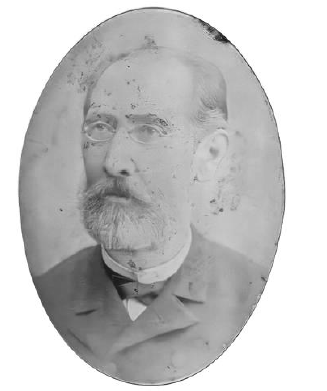
One of the first professors at the Escola Normal was Francisco Honório Ferreira Brandão (Figure 4), who taught History and Geography at the institution from 1873/74 (APM, IP-15, 1840-1890; IP-21, 1871-1890). He was appointed as a lifetime chair professor in 1887 and also served as the director of the Escola Normal for several years. Additionally, he was active in politics and was one of the founders of the Partido Republicano do Sul de Minas while Brazil was still under the Empire. After the proclamation of the Republic, he was elected to the National Constituent Congress on September 15, 1890, and served as a federal deputy until December 31, 1893. His brother, Martiniano da Fonseca Reis Brandão, was also an influential local politician who would later become the leader of the 1892 Separatist Movement.


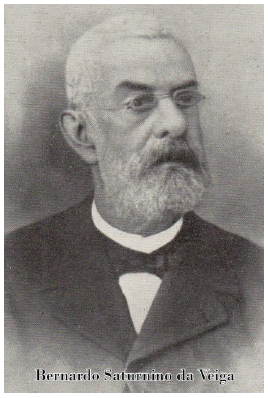
With a history rooted in a republican political framework, inspired by the positivist philosophy prevalent in "modern literary circles," it is unsurprising that Dr. Brandão subtly implemented republican educational ideals during the final decade of the monarchy. His actions also led to conflicts with other figures-whether over the positivist conception of education or political disputes-particularly with monarchists such as Bernardo Saturnino da Veiga (Figure 5), who was also a professor at the Escola Normal, and, more significantly, with the government of the Province of Minas Gerais. Research conducted at the Arquivo Público Mineiro uncovered numerous correspondences between Ferreira Brandão and the General Inspectorate of Public Instruction of the Province of Minas Gerais, represented by Secretary Delfino Clemente Dias Bicalho. Some of these documents highlight disputes over the administration of the Escola Normal, which was under Ferreira Brandão’s management at the time, as well as conflicts related to the financial governance overseen by the provincial government.
One example of this is the Inspectorate’s demand regarding the work of certain teachers at local educational institutions under the director’s supervision, dated January 12, 1887 (APM, IP2.1, Cx-01, 1871-1889). Another instance is a request from Director Brandão for funding to renovate the building housing both the Escola Normal and the Externato (APM, IP-15, 1883). Additionally, there are several correspondences in which the professor pressed for the payment of overdue salaries.
Dear Sir, As I have not yet received my salary corresponding to the last quarter of the current year, as the Director of the Escola Normal [and the Externato] of this city, as well as a professor of geography and Portuguese at the Externato and of literature and the national language at the Escola Normal, I kindly request that Your Excellency [...] issue the necessary certificates, designating the City Treasury for payment (APM, IP-84, 1884).
We might interpret these correspondences as mere managerial issues. However, within a patrimonial and personalist political model-where friendships and proximity often facilitate the resolution of problems-the explicit nature of these disputes in institutional correspondence suggests that political and personal conflicts were at play. In other words, individuals representing different political spectrums, yet belonging to the same social strata, were clashing within the public administration. Nevertheless, this alone would be insufficient to conclusively assert the existence of a broader struggle over societal and national projects within Instrução Pública Mineira and the Escola Normal da Campanha. To gain a clearer understanding, we must examine other events that unfolded within the educational institution.
Benjamin Constant’s Visit in 1889: An Ode to the Republican School at the End of the Monarchy
On April 13, 1889, the Escola Normal da Campanha received a distinguished visitor. While passing through the city, Benjamin Constant had the opportunity to visit the institution. He later recorded his observations and remarks in the school's guestbook. This document is now preserved at the Centro de Estudos Campanhenses Monsenhor Lefort in the same city.
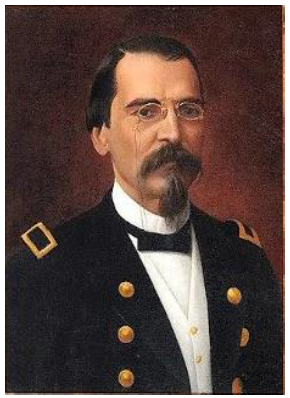
Colonel Benjamin Constant Botelho de Magalhães (Figure 6) was one of the leading exponents of positivist philosophy in Brazil. A professor at the Escola Militar da Praia Vermelha in Rio de Janeiro, he also served as the director of the Instituto dos Meninos Cegos in the imperial capital and was a founding member of the Clube Militar. Despite his involvement in the Paraguayan War, he was a critic of the conflict and its leadership. As a staunch republican, he viewed Positivism not only as a political philosophy but also as a set of principles essential for the nation's progress and for overcoming the monarchical regime.
For our study, Benjamin Constant’s greatest legacy lies in his contributions to the debate on Brazilian public education and his early efforts to establish educational policies in the early years of the Republic. His years of study and teaching at the Escola Militar provided him with a profound understanding of positivist philosophy, which he later applied to the field of education. In 1880, he became the first director of the Escola Normal da Corte (Rio de Janeiro), where he sought to implement his educational ideals. Consequently, shortly after the Proclamation of the Republic, he had a brief tenure as Minister of War before being appointed Minister of Public Instruction, Postal Services, and Telegraphs-a position he held until his death in January 1891.
During his visit to Campanha, Benjamin Constant was already deeply involved in the debates and preparations leading up to the military coup that overthrew the monarchy on November 15, 1889. The conspiracy had been orchestrated within the Clube Militar, where he presided over the decisive "session of the 9th" that set the uprising in motion. However, these political maneuvers did not divert the military leader from his educational concerns. His commitment to education is evident in the letter he wrote in the guestbook of the Escola Normal da Campanha, a document that reflects his vision for the future of public education in the newly established Republic.
It is important to note that the text was not directly written in the guestbook but rather drafted separately. Upon analyzing the document, we found a note at the end from Mrs. Maria Joaquina da Costa Botelho de Magalhães, the wife of Benjamin Constant, explaining the circumstances under which the text was transcribed into the guestbook by her daughter in July 1892-more than a year after the author's death. Only after this event did the book return to the Escola Normal da Campanha. Therefore, the handwriting in the document does not belong to the military leader, but rather to his daughter and wife. The signature was extracted from another letter and affixed at the end of the transcription, accompanied by a certificate of authenticity signed by Mrs. Maria Joaquina.
This circumstance does not diminish the historical value of the document; on the contrary, a thorough analysis allows us to recognize its invaluable significance for the educational debate in Brazil during the final decades of the 19th century. This perspective is particularly important when considering the theoretical and pedagogical contributions of an individual whose vision was oriented toward a republican future, even while living under a monarchical regime. Benjamin Constant's letter can be divided into two parts. The first part is dedicated to explaining the positivist doctrine concerning education and culture, summarizing its key principles and even outlining an ideal educational model, which he encapsulated in the so-called Synthèse Subjective, described by him as:
[...] a memorable philosophical conception that by itself would be enough to recommend to the eternal gratitude of mankind the memory of Auguste Comte, the immortal founder of the Religion of Humanity, which is the doctrine of the noblest and holiest duties that ever existed in human nature [...] (Constant, 1889, p. 14).
A positivist teaching plan is even outlined in the book, detailing a set of disciplines-the "378 general lessons"-which, in his own words, constitute "[...] the most complete and perfect plan of general scientific instruction that we have formulated" (Constant, 1889, p. 18). According to him, this plan was intended to serve as the guiding framework for the curricula of Brazilian Normal Schools.
In our research, however, the second part of his text stands out. This section is devoted to a brief description of the author's impressions of the Escola Normal da Campanha, formed during the short time he spent at the institution.


It is important to highlight that, at the time of Benjamin Constant's visit, the director of the institution was Comendador Manuel Ignacio Gomes Valladão (Figure 7), not Francisco Honório Ferreira Brandão, the well-known republican from Minas Gerais. Brandão had been a professor at the Escola Normal since its early years and, in 1887, had been granted lifetime tenure, having previously served as the institution's director, as indicated by documents from the Arquivo Público Mineiro.
In the documentation found, including both official records and contemporary newspapers, we observed a frequent turnover of administrators at the Escola Normal, whether through new appointments or elections by the faculty assembly. This phenomenon reflects what Vera Lúcia do Lago Souza pointed out in her dissertation: “[...] as in the Empire, the alternation between conservatives and liberals in the school's administration remained constant until the Republic” (Souza, 2006, p. 93). Such alternation occurred both in the final years of the monarchy and under the new regime. Evidence of this reality can be found in a document convening an election on October 31 for a new director, vice-director, and secretary (APM, Cx. IP-2.1, Cx. 02, 1889), as well as in Souza’s research.
The new election for director of the I Escola Normal, held on September 30, 1890, was won by the radical republican and separatist Dr. Francisco Honório Ferreira Brandão with eight votes, against the other candidate, Canon José Teóphilo Moinhos de Vilhena, who received only one vote. Priest Francisco Araújo Lobato was elected vice and José Gomes de Moraes (professor) as secretary. (Souza, 2006, p. 123)
In the visitors' book, starting on page 23, we find the beginning of Benjamin Constant’s comments and impressions regarding the Escola Normal da Campanha. Subdivided into four sections-"Building in which the school operates; Teaching plan; School regimen; and Number of students"-the letter offers a concise analysis, praising the positivist and republican characteristics of the school's organization, despite the institution still being situated within the Monarchy, both temporally and politically.
In the first section, there is a brief-yet significant-remark regarding the physical structure of the building that housed the Escola Normal.
1st Building in which the school operates:
The building where the school is located, one of the best in the city, is conscientiously adapted to its purpose by intelligent modifications made to its internal divisions. It contains spacious, well-ventilated, and well-lit classrooms, both for the different lessons of the normal course and for the library, school museum, laboratories, and annex school. All rooms are furnished as they should be, not with wealth or luxury, but with careful taste and in accordance with the soundest pedagogical principles.
2nd - The majority of the not insignificant expenses with the renovation of the building, school furniture, etc., were covered by private donations. The diligent and dedicated Director, who performs this role without compensation, has found in the intelligent and generous population all the moral and material support needed for the institution to develop and thrive (Constant, 1889, pp. 24-25).
An important aspect to analyze, based on Benjamin Constant’s account of the physical structure housing the Escola Normal, is the ownership of the building. Various sources indicate that the property was a public asset belonging to the provincial government. This information is cited in the Almanak Sul-Mineiro, edited by Bernardo Saturnino da Veiga (Figure 5) and published in 1884, which not only confirms the state ownership of the building but also denounces the deplorable conditions of the educational establishment.
This city has a normal school where those destined for the teaching profession are trained, and an externato where various secondary school subjects are taught. The classes are held in a building owned by the province, which is in a deplorable condition, lacking many of the windows it once had, with damaged walls, etc. (Veiga, 1884, p. 84)
The same information is repeated in the Almanach do Município da Campanha, edited by Julio Bueno and José Pedro da Costa and published in 1900. However, this document praises the improvements made by the directors:
It operates in a large building owned by the State, having undergone notable improvements under its last three directors: Comendador Manoel Ignacio Gomes Valladão, Francisco de Paula Araújo Lobato, and Dr. Francisco Honório Ferreira Brandão, to whose proficient leadership this important professional educational institution is currently entrusted (Bueno & Costa, 1900, p. 83).
Nevertheless, research conducted at the Arquivo Público Mineiro revealed an important set of correspondences that indicated a different piece of information-namely, that the building housing the Escola Normal da Campanha did not belong to the public authorities but rather to a private individual. In this case, the use of the building was contingent upon the payment of rent, which was often delayed.
In an official letter from the Secretariat of the General Inspectorate of Public Instruction of the Province of Minas Gerais, dated January 17, 1887, and signed by Delfino Clemente Dias Bicalho, the signatory requests information from the director of the Escola Normal regarding the duration of the lease contract for the property owned by Mr. Francisco de Paula Ferreira Lopes.
Most Illustrious Sir,
I kindly request that Your Excellency inform this Department of the date when the lease contract for the building housing the Externato and Escola Normal in this city, made with the citizen Francisco de Paula Ferreira Lopes, expired. Additionally, if the contract has already expired, please provide information on whether it was extended, and if so, the date of this extension (APM, IP2.1, Cx-02, 1887).
In an official letter dated February 26 of the same year, the same correspondent revisits the issue of the building's lease, reaffirming Mr. Lopes's status as the property owner.
Most Illustrious Sir,
As it is possible that a document related to the lease contract for the building, made with the citizen Francisco de Paula Ferreira Lopes, for the operation of the Externato and Escola Normal in this city, accompanied Official Letter No. 10 of January 7th of this year, I kindly ask Your Excellency to return it to this Secretariat so that it may receive the appropriate handling. (APM, IP2.1, Cx-02, 1887).
Such correspondence challenges what was publicly announced in newspapers and almanacs-and, consequently, reproduced by public opinion-by revealing the true ownership status of the building housing the Escola Normal da Campanha. This revelation may explain Benjamin Constant's enthusiasm in reporting on the renovation of the building’s structure and the financial support provided by the Campanha community to accomplish this endeavor.
However, it is also important to reflect on the meaning of what is considered state-owned/public versus private. This distinction is crucial because the Brazilian state-along with its provincial and municipal spheres-was undergoing a slow and contradictory process of formation, in which the boundaries between the public and private sectors were still being defined within the political culture of the time. This process was particularly influenced by the persistence of personalist and patrimonialist practices in state administration.
In the second part of the commentary, we observe a brief yet laudatory analysis of the curriculum of the Escola Normal, emphasizing its modern conception with the inclusion of updated encyclopedic subjects, which align with the broader proposal for the modernization of literate culture and the Nation.
The course of studies, still evolving, is nonetheless comparable to those of our best provincial normal schools. The director and the highly esteemed teaching staff, convinced of the need to give, in an increasingly pronounced manner, a scientific character to normal education and, consequently, to popular education, have made and continue to make commendable efforts to obtain from the government and the provincial legislative assembly the desired improvements regarding this important matter.
Courses in physics and chemistry, as well as corresponding natural history courses, have already been decreed; and this year, the necessary cabinets and laboratories will be installed to ensure the effectiveness of these valuable studies.
It is expected that other essential subjects will be successively and gradually incorporated into the teaching plan in accordance with the irreplaceable and imperative demands of comprehensive, complete education. (Constant, 1889, pp. 26-27).
In the final section, we observe a brief remark on the number of students enrolled at the school. Benjamin Constant praises the fact that enrollment was not restricted to a predetermined number, allowing interested individuals to join without limitation. From a contemporary perspective, this may seem irrational, particularly when considering the conditions necessary for quality education, which appear unattainable in overcrowded classrooms or without investment in physical and human resources to support the expansion of instruction. However, for that time and within the positivist doctrine advocated by Benjamin Constant, the absence of a predetermined limitation...
[...] the number of students, adopted as a beneficial principle in some European normal schools and slavishly copied for the Escola Normal da Corte in the recent and disastrous reform that the school underwent-so deserving of better fortune-however, presents no important reason to justify it; it is merely the fatal consequence of the illusory belief held by some outdated pedagogues regarding the miraculous efficacy of pedagogical processes that, moreover, are not based on scientific knowledge of our cerebral nature, nor even on prudent empiricism. (Constant, 1889, pp. 29-30).
Finally, in this same section of the text, there are remarks on the presence of women as students at the Escola Normal da Campanha and on the process of feminization of the teaching profession that was shaped within these institutions. Benjamin Constant comments that:
Women, due to the natural preponderance of their noble affective qualities, are incomparably more suited than men for the instruction and education of children. In all normal schools for both sexes, female students stand out remarkably from male students, not only for their greater enrollment rates, attendance in classes, application, academic performance, and impeccable conduct but also for their vocation and far superior aptitude for carrying out the multiple and delicate duties inherent to both the instruction and moral education of childhood.
This circumstance is not at all fortuitous: it is the result of natural dispositions that drive them toward this sacred mission, peculiar to their sex - "to every being, its role is revealed by instinct."
The recognition of this natural and indisputable superiority is one of the happy consequences of coeducation in normal schools and has strongly contributed to the growing trend in all countries to prefer female teachers over male teachers in the management of primary schools; it is the greatest step taken to effectively associate women with the regenerative movement of our species, intimately linked to the proper cultivation of sentiment. (Constant, 1889, pp. 30-32, emphasis in the original).
Even considering data from various studies in the field that highlight the increasing presence of women as students in Normal Schools and in the teaching profession, we cannot overlook the ongoing debate surrounding the feminization of the teaching career. This discussion persisted, encompassing both favorable views, as pointed out by Benjamin Constant, and opposing perspectives. Maria de Lourdes Mariotto Haidar (1972), in O ensino secundário no Império Brasileiro, notes that the opposing positions were notably forceful, with strong resistance against women's participation in teaching. Such resistance was grounded in social and biological arguments of female inferiority, as well as concerns about the alleged negative consequences of women’s involvement in teaching for society as a whole.
Benjamin Constant’s defense of female education and the role of women as teachers in elementary instruction, as recorded in the visitors’ book of the Escola Normal, exemplifies the progressive stance within a segment of Brazilian positivism. This perspective mirrored a broader movement already present in the educational landscape, as highlighted in studies by Jane Soares de Almeida (2014) and Heloisa de Oliveira Santos Villela (2020). Ultimately, Benjamin Constant’s impressions reflect this reality within the Escola Normal da Campanha, reinforcing a viewpoint that had been present since the institution’s founding in 1871-1873, particularly through the contributions of teachers like Dona Francisca Senhorinha da Mota Diniz and Dona Mathilde Xavier Marianno.
Final Considerations
Research on the Escola Normal da Campanha, even in its early stages, offers valuable insight into the educational debates that spanned from the late 19th century to the present stage of investigation, which coincides with the emergence of a new political regime. So far, we have identified three key dimensions surrounding our subject of study: the social dimension, which examines the relationships between local elites and the Escola Normal, along with the conflicts and disputes within this sphere; the cultural dimension, which explores the rise of the debate on women’s roles in the “modern” 19th-century society; and the political dimension, which addresses the struggle between monarchists and republicans over the vision for the nation within the context of this educational institution.
The social, political, and cultural struggles are materialized in the primary sources we have gathered, including official documents, correspondence, newspapers, and almanacs. These sources illustrate how the educational debate became a central point of contention among the different visions of Nation and society put forth by various groups. As Edward P. Thompson argues, the formation of a social class-specifically, in this case, the regional dominant class-extends beyond the consolidation of its economic and political power. It also involves the establishment of its cultural hegemony, creating a more interconnected and comprehensive form of dominance.
The Escola Normal da Campanha, located in a city that had previously been prominent in the provincial and state political landscape, became a battleground for competing nation-building projects. These disputes often transcended ideological debates, as exemplified by the Separatist Movement of 1892 and the conflicts that ultimately led to the institution's closure in 1905. Future research and deeper analyses of these events could provide new insights into the educational dynamics during the transition from the 19th to the 20th century, shedding light on the central role played by the Escola Normal da Campanha in the region's social context.
References
- Almeida, J. S. (2014). Vestígios para uma reinterpretação do magistério feminino em Portugal e no Brasil a partir do século XIX. In: D. Saviani, J. S. Almeida, R. F. Souza, & V. T. Valdemarin (Orgs.), O legado educacional do século XIX (3a ed., pp. 127-202). Autores Associados.
- Alves, H. A. B. (2014). A educação feminina na região da Campanha-MG: o Collegio Mariano (1867-1907) [Tese de doutoramento]. Universidade São Francisco.
- Araujo, J. C. S. (2008a). A gênese da Escola Normal de Uberlândia, MG: o contexto estadual e a independência cultural em 1926. In: J. C. S. Araujo, A. G. Freitas, & A. P. C. Lopes (Orgs.), As escolas normais no Brasil: do império à república (pp. 321-340): Alínea.
- Araujo, P. V. L. (2008b). Vila de Campanha da Princesa: urbanidade e civilidade em Minas Gerais, 1798-1840 [Tese de doutoramento]. [s.n.].
- Arquivo Público Mineiro [APM]. (1840-1890). Acervo da Secretaria de Instrucção Pública (IP) de Minas Gerais. IP-15.
- Arquivo Público Mineiro [APM]. (1871-1889). Acervo da Secretaria de Instrucção Pública (IP) de Minas Gerais. IP2.1, Cx-01
- Arquivo Público Mineiro [APM]. (1871-1890). Acervo da Secretaria de Instrucção Pública (IP) de Minas Gerais. IP-21.
- Arquivo Público Mineiro [APM]. (1872-1879). Acervo da Secretaria de Instrucção Pública (IP) de Minas Gerais. IP-26.
- Arquivo Público Mineiro [APM]. (1873-1889). Acervo da Secretaria de Instrucção Pública (IP) de Minas Gerais. IP-85.
- Arquivo Público Mineiro [APM]. (1883, 28 de dezembro). Acervo da Secretaria de Instrucção Pública (IP) de Minas Gerais. IP-15.
- Arquivo Público Mineiro [APM]. (1884, 07 de julho). Acervo da Secretaria de Instrucção Pública (IP) de Minas Gerais. IP-84.
- Arquivo Público Mineiro [APM]. (1887, 17 de janeiro). Acervo da Secretaria de Instrucção Pública (IP) de Minas Gerais. IP2.1, Cx-02.
- Arquivo Público Mineiro [APM]. (1889). Acervo da Secretaria de Instrucção Pública (IP) de Minas Gerais. IP-2.1, Cx. 02.
-
Benjamin Constant (militar). (n.d.). Recuperado de: https://pt.wikipedia.org/wiki/Benjamin_Constant_%28militar%29
» https://pt.wikipedia.org/wiki/Benjamin_Constant_%28militar%29 -
Bernardo Saturnino da Veiga - 1842. (2018). Recuperado de: https://istoecampanha.blogspot.com/2018/02/bernardo-saturnino-da-veiga-1842.html
» https://istoecampanha.blogspot.com/2018/02/bernardo-saturnino-da-veiga-1842.html - Bueno, J., & Costa, J. P. (Orgs.). (1900). Almanach do Município de Campanha. Typographia do Monitor Sul-Mineiro. Centro de Estudos Campanhenses Monsenhor Lefort.
- Constant, B. (1889). Livro de visitas da Escola Normal da Campanha. Acervo Centro de Estudos Campanhenses Monsenhor Lefort.
-
Ferreira Brandão. (n.d.). Recuperado de: https://arquivohistorico.camara.leg.br/index.php/ferreira-brandao
» https://arquivohistorico.camara.leg.br/index.php/ferreira-brandao - Gouveia, M. C. S. (2002). A construção de um projeto de formação de professores: as escolas normais mineiras no período imperial. In: A. A. M. Lopes, I. A. Gonçalves, & L. M. F. Filho (Orgs.), História da Educação em Minas Gerais. FCH/FUMEC.
- Haidar, M. L. M. (1972). O ensino secundário no Império Brasileiro. Grijalbo/EDUSP.
- Hilsdorf, M. L. S. (2011). Tão longe, tão perto: as meninas do seminário. In: M. Stephanou, & M. H. Bastos (Orgs.), Histórias e memórias da educação no Brasil vol. II - século XIX (5a ed., pp. 52-67). Vozes.
- Machado, M. C. G. (2014). O decreto de Leôncio de Carvalho e as pareceres de Rui Barbosa em debate: a criação da escola para o povo no Brasil no século XIX. In: M. Stephanou, & M. H. Bastos (Orgs.), Histórias e memórias da educação no Brasil vol. II - século XIX (5a ed., 91-103). Vozes.
- Monitor Sul-Mineiro. (1872a, 25 de fevereiro). p. 03.
- Monitor Sul-Mineiro. (1872b, 17 de novembro). p. 04.
- Monitor Sul-Mineiro. (1972, 04 de novembro). p. 4.
- Nascimento, C. V., & Gouveia, M. C. S. (2002). Estratégias de apropriação dos saberes docentes pelos(as) professores(as) mineiros(as) no interior dos espaços de formação - 1879-1889. In: A. A. M. Lopes, I. A. Gonçalves, & L. M. F. Filho (Orgs.), História da educação em Minas Gerais (pp. 239-243). FCH/FUMEC.
- Souza, V. L. L. (2006). Athenas do sul de Minas entre a memória e história da educação: práticas e representações das elites de Campanha - 1870/1930 [Dissertação de mestrado]. Unicamp.
-
Tapioca Neto, R. D. (2015). Emancipação feminina na imprensa: as jornalistas brasileiras do século XIX! Recuperado de: https://rainhastragicas.com/2015/11/21/jornalistas-do-seculo-xix/
» https://rainhastragicas.com/2015/11/21/jornalistas-do-seculo-xix/ - Thompson, E. P. (1998). Costumes em comum: estudos sobre a cultura popular tradicional. Companhia das Letras.
- Valladão, A.V. (1945). Campanha da Princesa (Vol. 4). Centro Monsenhor Lefort.
- Veiga, B. S. (Org.). (1884). Almanak Sul Mineiro para 1884. Typographia do Monitor Sul-Mineiro. Centro de Estudos Campanhenses Monsenhor Lefort.
-
Veiga, F. L. (n.d.). *const.1891; dep. fed. MG 1891-1914. Recuperado de: https://cpdoc.fgv.br/sites/default/files/verbetes/primeira-republica/VEIGA,%20Francisco%20Lu%C3%ADs%20da.pdf
» https://cpdoc.fgv.br/sites/default/files/verbetes/primeira-republica/VEIGA,%20Francisco%20Lu%C3%ADs%20da.pdf - Villela, H. O. S. (2008). A primeira escola normal do Brasil. In J. C. S. Araujo, A. G. Freitas, & A. P. C. Lopes (Orgs.), As escolas normais no Brasil: do império à república (pp. 29-45). Alínea.
- Villela, H. O. S. (2020). O mestre-escola e a professora. In E. M. Lopes, L. M. F. Filho, & C. G. Veiga (Orgs.), 500 anos de educação no Brasil (5a ed., pp. 95-134). Autentica.
-
Yannoulas, S. (2011). Feminização ou feminilização? apontamentos em torno de uma categoria. Temporalis, 11(22), 271-292. https://doi.org/10.22422/2238-1856.2011v11n22p271-292
» https://doi.org/10.22422/2238-1856.2011v11n22p271-292
-
Peer review rounds:
R1: three invitations; two reports received.
-
How to cite this article:
Diniz Hiro, C. H., & Figueiredo, G. A. (2025). The Normal School of the Campanha/MG in the context of the transition to the Republic: projects, conflicts and teacher training (1873-1890). Revista Brasileira de História da Educação, 25, e360. DOI: https://doi.org/10.4025/rbhe.v25.2025.e360.en
-
1
Decree No. 7,247, of April 19, 1879, on the reorganization of primary and secondary education (in the Municipality of the Court), preparatory exams in the provinces, and the statutes of the Faculties of Law and Medicine. The Leôncio de Carvalho Reform (introduced by the then Minister of State and of the Affairs of the Empire) has been the subject of numerous studies due to its significant role in education during the second half of the 19th century (Machado, 2014).
-
2
Dr. Francisco Luiz da Veiga, son of Bernardo Jacinto da Veiga, who served as president of the Province of Minas Gerais for two terms between 1838 and 1843. Born in Campanha, Francisco graduated in Law in Ouro Preto and became a provincial deputy in 1877. He was re-elected in 1890 as a constituent deputy for Minas Gerais (Veiga, n.d.).
-
3
An educator born in 1856, from an important family dedicated to education in the city. Along with her siblings Bernardo José Marianno and Francisca Candido Marianno, she founded the Collegio Marianno in Campanha in 1867, which lasted until 1907. Dona Mathilde, in addition to being a teacher at the Escola Normal, also served as a teacher and director of the Zoroastro de Oliveira School Group in the same city (Alves, 2014).

 Source: Acervo Paulino Araújo - CEMEC-SM.
 Source:
  Source: Centro de Estudos Campanhenses Monsenhor Lefort - Campanha.
 Source: Ferreira Brandão (n.d.).
 Source: Bernardo Saturnino da
  Source: Benjamin Constant... (n.d.).
 Source: