
 Strategies, Frontiers, and Mining: Mining Sector Operations in the Border Strip of Brazil’s Legal Amazon
Abstract
The expansion of frontiers into new lands and resources constitutes an inherent demand of the capitalist model, necessary to sustain its vigorous reproduction. This article analyzes how the political-administrative boundary of the Border Strip in Brazil has operated as a mineral frontier. It seeks to identify, systematize, and categorize the strategies employed by actors in the mining sector to gain access to mineral resources in a portion of the Legal Amazon previously restricted by state regulations. The methodological approach involved the collection and analysis of spatial data from Brazilian government agencies and research institutions regarding corporate appropriation of the subsoil. Five main types of strategies were identified-securing exploration rights, speculative, political-institutional, outsourcing, and garimpo (artisanal mining)-which reflect the practices through which the mining frontier is opened and appropriated.
Keywords:
Resource frontier; Securing exploration rights; Gold; Garimpo; Political ecology; Neoextractivism; Spatial conflicts of capitalism
Resumo
A expansão de fronteiras por novas terras e recursos surge como uma demanda inerente ao modelo capitalista para manter sua reprodução pujante. Neste artigo, analisamos como o limite político-administrativo da Faixa de Fronteira vem funcionando como uma fronteira mineral. O objetivo dele é identificar, sistematizar e categorizar as estratégias utilizadas pelos agentes do setor da mineração para avançar sobre os recursos minerais em um espaço da Amazônia Legal anteriormente interditado por regulamentações estatais. O processo metodológico consistiu no levantamento e análise de dados espaciais do governo brasileiro e de organizações de pesquisa sobre a apropriação empresarial do subsolo. Identificamos cinco estratégias principais: reserva de lugar, especulativa, político-institucional, terceirização e garimpo, que refletem práticas de abertura e apropriação da fronteira mineral.
Palavras-chave:
Fronteira de recursos; Reserva de lugar; Ouro; Garimpo; Ecologia política; Neoextrativismo; Conflitos espaciais do capitalismo
Introduction
The consolidation of the capitalist system is intrinsically tied to the relentless exploitation of the environment, which extends beyond the mere process of extraction. Within the context of the Capitalocene (Moore, 2013; 2015), the pursuit of “cheap nature”, conceived not only as a resource but also as a strategy of control, domination, and the devalorization of life, has emerged as a central element facilitating capital reproduction and the expansion of new economic frontiers.
Over the past two decades, mineral resource exploitation has intensified in Brazil (KPMG; IBRAM, 2023; OECD, 2022), driven by the rising global demand (Rubbers, 2020; Moore, 2007), fueled by Chinese imports, the gold-based financial asset system (Verbrugge; Geenen, 2019), and more recently, the industrial requirements of the so-called “energy transition” sectors (Milanez, 2021; Silva; Cunha; Costa, 2023). The valorization and devalorization of mineral commodities (Svampa, 2019; Wanderley, 2017) serve to justify increases in production, either to capitalize on favorable price cycles or to offset capital losses.
In response to the depletion of high-grade deposits with easy logistical access (Koch; Schilling; Upton, 2015), the spatial horizons of the mining sector have expanded-even in regions with a longstanding history of mineral exploitation, such as the Legal Amazon. Following decades of mineral extractivism, advances in extraction technologies, combined with fluctuations in commodity prices, have enabled the (re)opening of areas that had previously been mined and rendered economically exhausted, as well as the revalorization of others that had been restricted by regulatory constraints or previously deemed unprofitable from the perspective of mineral capital (Tsing, 2003; Verbrugge; Geenen, 2019; Chagnon et al., 2022).
New and reactivated areas attracting economic agents focused on the intensive extraction of natural goods can be understood as resource frontiers (Becker, 1982), new spaces of extraction (Tsing, 2003), or commodity frontiers (Kröger; Nygren, 2020). While this is not a new phenomenon in the Legal Amazon (Becker, 1982; Garrido Filha, 1980; Coelho; Monteiro, 2007), it has taken on new characteristics within the neoextractivist context of the early twenty-first century, in which frontiers are opened and operated primarily by private actors (Waroux et al., 2018; Svampa, 2019). Although the presence of the State is less direct, it continues to enable this expansion through the concession of public goods, funding mechanisms, and regulatory flexibilization.
The notion of a resource frontier originally refers to the existence of “free lands”2 available for occupation (Becker, 1982; 2015a; 2015b). These are typically public lands that are either undesignated or not subject to direct State management (Kröger; Nygren, 2020). They may also encompass lands with untapped mineral resources or those experiencing low levels of appropriation. Furthermore, these territories become targets for productive expansion, making it possible to observe how the neoextractive mode of appropriation (re)organizes space and (re)structures policies and social relations (Chagnon et al., 2022).
The incorporation of new areas does not occur without significant costs. In frontier zones of capital accumulation, given the high inherent risks, it becomes necessary to stage what are referred to as “strategic performances” in order to valorize assets and justify investments (Milanez; Mansur; Wanderley, 2019). These performances are deliberate initiatives within financial markets aimed at crafting narratives that bolster investor confidence, often translating into exaggerated estimates of mineral grades or reserves. In a sector embedded in the speculative economy, such as mining, the ability to attract investors is amplified by overstated projections of financial returns, since profit, before being produced, must first be imagined (Tsing, 2003; Campbell, 2015).
This process also demands overcoming significant obstacles. In the Brazilian case, the portion of national territory corresponding to the Legal Amazon planning region accounts for approximately 60% of the country, with 53% of that area overlapping territories that impose restrictions on mining, such as the Border Strip (BS), Indigenous Lands (ILs),3 and both strictly protected and some sustainable-use Conservation Units (CUs)4. The BS in particular, has emerged as one of the primary areas for the sector’s expansion through the development of new mining projects. However, faced with legal constraints, many companies adopt practices aimed at circumventing or bypassing these restrictions. This article therefore highlights how different actors employ distinct strategies to operate within restricted mining areas inside the Border Strip around the Legal Amazon. We understand these strategies as mechanisms not only for expanding operations but also for managing regulatory densities (Harvey, 2003),5 enabling the opening of new mining frontiers. This process entails the reconfiguration of existing policies and regulations-or the development of ways to circumvent them.
The construction of the strategies analyzed in this article has drawn on the conceptual framework developed by Santos and Milanez (2017) and further expanded by Milanez et al. (2018). These authors define strategy as a coordinated set of actions undertaken by one or more actors to achieve specific objectives-whether by creating, expanding, or capturing value, or by modifying environmental, social, and political conditions to serve their interests. However, rather than applying typologies found in the literature, the strategies in this study have been constructed by identifying the behavioral patterns of actors in the mining sector observed in the specific context of the Border Strip of the Legal Amazon.
Regulated by Law 6,634 of 1979 and ratified by the 1988 Constitution, the BS is an internal zone 150 km wide, which runs parallel to Brazil’s international borders with neighboring countries. It is subject to specific restrictions on the use of land and subsoil. According to definitions adopted by the Ministry of National Integration (Brazil, 2005) and the Ministry of Justice (Brazil, 2016), the BS encompasses all municipalities that are either partially or entirely located within it.
This is a political-administrative definition designed to address the complex challenge of determining how far the effects stemming from the international political boundary extend into the interior of the territory (Steiman, 2002; Monteiro; Steiman, 2020). In the framework proposed by these authors, this polygon thus represents the mechanism through which the Brazilian State seeks to assert territorial jurisdiction by implementing specific measures to manage phenomena related to the international border. In practice, however, the BS may not be so restrictive. As Steiman (2002) observed, it is commonly understood, not only among scholars but also within the legislation itself, as a development region. The unifying element, therefore, lies precisely in the shared experience of the impacts of the international boundary as well as benefiting from cross-border interactions.
To achieve the objective of identifying, systematizing, and categorizing the strategies employed by actors in the mining sector within the Border Strip of the Legal Amazon, this study begins with the premise that this territorial study area is subject to a set of legal restrictions that limit mining activities. Despite these constraints, the analysis has identified the coexistence of both legal and illegal operations and appropriations of mineral resources.
Legal mining was identified through mining processes registered with the National Mining Agency (ANM) and operations reported via the Financial Compensation for the Exploitation of Mineral Resources (CFEM). The first step involved mapping the active mining processes using data from the Mining Geographic Information System (SIGMINE). As of the data download date (December 31, 2022), there were 226,208 mining processes registered across Brazil, 13,548 within the entire BS, 4,979 within the portion overlapping the 150-kilometre polygon, and an additional 9,014 in the remaining areas of municipalities located within the Border Strip of the Legal Amazon. The available data include the following variables: year, area, process number, stage, most recent event, applicant name, target mineral, type of use, and state. Based on this dataset, an initial screening was conducted to classify the processes according to their stage and type of mining-whether garimpo6 or industrial.
The Brasil.IO platform was used to access corporate ownership data and map connections between the applicant companies. This made it possible to identify relationships between the owners of mining processes and other companies in the sector, revealing strategies aimed at frontier expansion and/or resource appropriations within the study area. Additionally, the stage of each mining process (e.g., application, exploration, or extraction) and the year of application were also analyzed to assess whether there was effective subsoil exploitation, an imminent prospect of extraction, or merely an attempt to secure a territorial position and speculate on the appropriation of mining rights.
Data on active illegal garimpos were obtained from the Amazon Georeferenced Socio-Environmental Information Network (RAISG), which provides updated spatial (vector) data through 2022, including information on location, target mineral, mechanization level, the name of the garimpo (if applicable), and data sources. The mapping of airstrip locations, using data from MapBiomas (2023), further contributed to understanding the infrastructure supporting garimpo activities. This information was supplemented with reports from local and regional media, which provided additional insights into the expansion of garimpo activities within the Border Strip of the Legal Amazon.
1. Mining Strategies: a focus on the Border Strip of the Legal Amazon
Strategies are understood in a broad sense when referring to the planned actions undertaken by different actors to achieve specific objectives in the use and management of geographic space. Such strategies are employed to address challenges, seize opportunities, or resolve problems in adverse geographic contexts. Thus, they consist of actions implemented to address specific issues and to achieve goals related to the territorial ordering, adaptation, appropriation, or exploitation of a given space. While inherently intentional and, therefore, planned, strategies may also emerge as patterns of behavior as a particular actor or organization adapts to its environment or competes with others (Certeau, 2014; Milanez, 2014).
In the mining sector, it is possible to identify strategies aimed at controlling the subsoil, appropriating and exploiting mineral resources, managing the labor force, governing the territory surrounding infrastructures, securing financing and investors, and shaping relationships with society (Milanez et al., 2018). For mining companies, the deployment of strategies is essential for territorial management at the local scale (comprising mines, operational facilities, company towns, etc.), with the aim of safeguarding their assets through the establishment of rules and norms that regulate space and activities within it.
In the work of Santos and Milanez (2017), several key elements concerning the operations of mining and oil companies are discussed. The authors emphasis that these extractive corporations face multiple challenges, among which locational rigidity stands out as a primary obstacle. Due to their limited spatial mobility, this constraint compels companies to develop and implement corporate strategies. According to the authors, strategies are defined as a coordinated set of actions undertaken by one or more stakeholders to enhance the capacity to create, expand, or capture value, to increase or reduce the power of other actors, and to modify the conditions affecting their operations in ways that favor their interests (Santos; Milanez, 2017). Strategies are shaped by social norms and are intrinsically linked to political factors, even though they are not always consciously or explicitly formulated. Thus, Santos and Milanez (2017) argue that a strategy is not always the result of deliberate action; it may also encompass decisions regarding what an extractive corporation chooses not to do.
Santos and Milanez (2017) further emphasize the importance of distinguishing the concept of strategy from the operational notion of tactic. Drawing on this distinction, it can be understood that while actions are always singular, they may exhibit similar characteristics. Accordingly, following the reasoning of Santos and Milanez (2017), each strategy encompasses a diversity of tactics, underscoring the multiplicity of possible approaches that can be deployed within the same strategic framework.
It is not our intention to provide an exhaustive account of all the strategies employed by the mining sector, not even within the BS. Instead, this analysis addresses those actions directly involved in the expansion of the resource frontier into territories previously considered restricted. We examine the five strategies summarized in Chart 1, which are employed by actors of varying natures and scales to capture value and exert power through the extraction, exploration, and control of subsoil rights. It is important to clarify from the outset that this is an analytical systematization, and a single corporate action may simultaneously embody more than one strategy.
1.1 The securing exploration rights strategy
The securing exploration rights strategy involves an interested party filing a research application over a specific territory, especially one protected from mineral exploitation, which represents the first step toward obtaining future research authorization. As established in the Mining Code (Decree-Law 227/1967), the right of priority for obtaining research authorization or license registration is granted to the first applicant whose request covers an area considered free at the date the application was submitted to the National Mining Agency (ANM).
This strategy aims to exploit the “right of priority”, whereby the first to apply for a given area secures the right to use it in a future scenario involving capitalization, deposit discovery, and even a potential loosening of the legal framework. Although applicants are aware that the likelihood of their research requests being approved in special protected areas is almost negligible, they proceed nonetheless, with a view to securing precedence for a future opportunity.
This strategy is intrinsically linked to the spatial practice that Corrêa (2011) terms spatial anticipation, which seeks to secure the precedence of a given actor’s activities in a specific area at a future point in time. This concept closely aligns with the tactics employed by mining companies and applicants for mining processes in the Border Strip of the Legal Amazon. In effect, the very regulations that restrict the operations of foreign mining companies in the BS transform the area into a zone oriented toward securing exploration rights.
The strategy of securing exploration rights, when applied to the BS, arises from the fact that this area is subject to specific7 - and restrictive - conditions for exploration and/or extraction within 150 kilometers of the international political boundary. However, these restrictions do not apply uniformly to all types of applicants, minerals, or operational phases. For this analysis, we selected mining processes at the research authorization stage and/or applications for metallic minerals that remained active as of December 31, 2022 (Map 1).
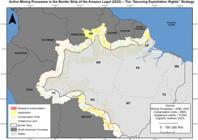
Active Mining Processes in the Border Strip of the Legal Amazon (2022) associated with the characteristics of the securing exploration rights strategy
Map 1 shows more than 6,000 active mining processes associated with the strategy of securing exploration rights. Together, these processes occupy an area of 189,962 km2, which is larger than the Northeastern state of Pernambuco, and equivalent to 10% of the Border Strip polygon of the Legal Amazon (1,811,785 km2). There is a notable concentration of mining processes in the Border Strip areas of the states of Mato Grosso, Rondônia, Roraima, and Amapá.
In addition to the potential presence of mineral deposits, other factors contribute to the concentration of mining processes in these four states. In Mato Grosso and Rondônia, the BR-364 highway functions as a key logistical infrastructure, facilitating the transport of metallic minerals and, especially, non-metallic minerals for export. Simultaneously, it connects these producing areas to regions that consume construction minerals, driven by the urban-industrial dynamics of both states.
In Amapá, industrial mining, consolidated since the 1950s, helps explain both the persistent continued interest in securing new extraction sites and the ongoing operations in other areas. In Roraima, the strong tradition of garimpo mining takes on new dimensions in territories such as the Yanomami Indigenous Land, where growing pressure for gold and cassiterite has intensified the number of research applications filed by mining companies of various sizes.
Within this context, it is important to highlight the overlap between mining interests and other special protected areas located within the BS. Across 67 CUs, there are 908 active processes, covering an area of 34,564 km2. In the 119 ILs, there are 1,046 active processes, occupying an area of 58,287 km2.
As is common in mineral frontier areas (Fernandes; Dias, 2024), gold-accounting for 57% of the processes-is the most sought-after mineral within the strategy of securing exploration rights. This predominance is driven by factors such as the high market value of gold and the geological characteristics of these regions, which are marked by spatial dispersion and low-density deposits, enabling operations by mining companies of various sizes. In addition to gold, minerals associated with the so-called energy transition are also prominent, including cassiterite (7%), copper (3%), nickel (2%), tantalum (1%), and tin (1%).
This strategy is employed by actors operating at varying scales. Among the most economically prominent are Brazilian large-scale mining companies8, such as Nexa S.A., part of the Votorantim Group, alongside lesser-known firms that maintain robust operations outside the BS, such as Guanhães Mineração, part of the Aterpa Group. There is also a notable presence of junior companies, such as Santa Elina Mineração, owned by businessman Paulo Carlos de Brito Filho, whose activities will be discussed in greater detail later in this article.
The primary tactic employed by these diverse economic groups involves filing research applications over protected areas and within the BS, thereby exerting pressure to ease restrictions on mining activities in these areas. The companies themselves, along with their industry associations, actively engage in lobbying efforts directed at the executive branch, the National Congress, and state legislatures to amend prohibitive mining regulations or to change the legal classification of conservation units (Mascia et al., 2014; WWF Brasil, 2019).
Within the strategy of securing exploration rights, mining titles often do not advance toward active research, deposit confirmation, or conversion into extraction sites. Instead, the primary objective is to secure appropriation of the subsoil and prevent competitors from gaining access. Nevertheless, these titles represent a latent threat to the peoples and communities of the overlapping territories.
1.2 The outsourcing strategy
The failed attempt by Vale S.A. and BHP Billiton to dissociate themselves from Samarco following the Mariana tailings dam disaster in 2015 illustrates one of the key advantages of using subsidiaries to shield parent companies from legal and moral liabilities. Direct accountability can negatively impact stock value in a global market that is increasingly subject to environmental, social, and corporate governance standards. Associating the name of a multinational corporation with controversial mining projects, such as mining in ILs and CUs, is likely to be viewed unfavorably by financial markets, investors, and society at large, given the significant threats these activities pose to Indigenous peoples and the Amazonian biodiversity.
In the specific case of the BS, the outsourcing strategy involves the use of subsidiaries by major mining corporations. This serves as a key mechanism for circumventing the restrictions imposed on foreign capital by Law 6.634/1979, as the “Brazilian” subsidiaries are the formal holders of research permit applications. A clear example of this is the British multinational Anglo American, which, through its subsidiaries Mineração Tanagra and Mineração Itamaracá, ranked among the leading applicants for mining permits in the BS (Fernandes, 2021).
In addition to the use of subsidiaries, the formation of joint ventures is also a common strategy in the Amazon region, bringing together national and foreign companies (Garrido Filha, 1980; Monteiro, 2005). Joint ventures enable companies to pool financial resources, technical expertise, and market access to implement exploration projects in the region. These partnerships often involve foreign companies working alongside Brazilian mining firms not only to comply with the country’s legal and regulatory requirements-such as restrictions on foreign capital in the BS-but also to gain social legitimacy by embedding themselves within local communities.
The case of the mining company DEV Mineração S.A., currently undergoing judicial reorganization, also illustrates the outsourcing strategy. The company operated its iron ore mine in the municipality of Pedra Branca do Amapari (AP) and reported revenues exceeding BRL 1 billion in 2013 (Fernandes, 2024). According to information published on its LinkedIn page, DEV Mineração is part of the Pedra Branca Alliance group, which includes Indo Sino PTE, based in Singapore, and Cadence Minerals PLC, based in the United Kingdom. These companies assumed control of the former project initiated by the Indian mining company Zamin. Since its inception, with MMX, part of Eike Batista’s group, later acquired by Anglo American, and subsequently by Zamin, the project has been marked by significant economic and environmental risks. The DEV Mineração joint venture took over the operations to act directly at the mine in Pedra Branca do Amapari and at the port in Santana (AP).
Also in Amapá, in Pedra Branca do Amapari, the company Mina Tucano stands out, having reported revenues close to BRL 800 million in 2021 (Fernandes, 2024), but has been undergoing judicial reorganization9 since the end of 2022. The company is primarily responsible for gold extraction, most of which is exported to Canada, according to a report by the Amapá Government Portal.10 Until 2023, Mina Tucano was a subsidiary of Great Panther Mining Limited, a group headquartered in Canada that controls other gold mines in Latin America. In 2023, the company was sold to the Pilar Gold group, a junior company also based in Canada.
The largest joint venture controlled by foreign capital in the area is Mineração Rio do Norte (MRN).11 At the outset of its operations in 1979, MRN was required to maintain a predominantly national shareholding composition, led by Companhia Vale do Rio Doce as the majority shareholder, alongside minority foreign partners. However, as of 2025, neither Vale, Companhia Brasileira de Alumínio (CBA), nor other Brazilian companies are part of the shareholder base. The Anglo-Swiss miner Glencore now holds 45% of MRN’s shares, while the Australian South32 and the Anglo-Australian Rio Tinto own 33% and 22%, respectively. In other words, in cases where enterprises have been resold and acquired during operation, the restriction on the predominance of foreign capital in the BS has been effectively circumvented.
According to Map 2, there are 679 applications submitted by subsidiaries of large mining companies as well as by firms involved in joint ventures. In this context, restrictive legislation can be circumvented, allowing profits from mining activities in the Border Strip of the Amazon Legal to be transferred to international mining corporations. The highest concentrations of these applications occur in the states of Mato Grosso and Rondônia, predominantly outside or adjacent to protected territories. While extraction permits are more common in Rondônia and Mato Grosso, where the mineral economy is more active, applications for exploration predominate in other areas.

Active Mining Processes in the Border Strip of the Legal Amazon (2022) associated with the characteristics of the outsourcing strategy
In analyzing data from SIGMINE, we identified over 2,000 active mining permit applicants in the Border Strip of the Legal Amazon. For the methodology adopted in this study, this broad universe was refined by identifying and prioritizing key agents, including major companies (large mining corporations), junior companies, and their affiliations.
Major companies, due to their relevance and scale of operations, provide an overall picture of mining activities, while junior companies, although smaller in capital, often adopt innovative and more flexible exploration strategies (Dougherty, 2011; 2013). Furthermore, the analysis of major and junior companies expanded the understanding of mining dynamics in the Border Strip of the Legal Amazon. In Table 2, based on the available data on applicants in the mining processes, it is possible to observe the presence of at least five12 foreign mining companies or groups with subsidiaries that carry out the “outsourcing” of mining permits within the spatial scope of this research.
Table 1 highlights the predominance of Canadian mining companies, alongside the presence of a major British corporation. This reflects the growing interest of Canadian mining companies in advancing into the mineral frontiers of the Amazon. Gold stands out as the primary attractor for foreign companies, particularly Aura Minerals, a mid-sized firm listed on the São Paulo Stock Exchange (B3) and the third-largest Canadian company in terms of number of projects in Brazil (Fernandes; Dias, 2024). Another significant trend is the widespread use of subsidiaries by foreign mining companies to facilitate their operations in the BS. This tactic serves to disconnect the company from the public spotlight, thereby enabling it to operate more freely in these areas.
With regard to the spatial distribution of these companies, data from ANM reveal specific areas of interest for foreign mining firms within the Border Strip of the Legal Amazon. In Mato Grosso, Aura Minerals and Yamana Gold are prominent, both focusing on gold exploration, with the latter also targeting nickel. In the state Rondônia, Aura Minerals holds permits for gold and copper exploration. In Roraima, Anglo American and Aura Minerals have concentrated their efforts on applications for gold exploration. Anglo American is also engaged in gold exploration in Pará. In Amapá, a wider range of companies-including Canada Rare Earth Corp, Anglo American, Pilar Gold, and Aura Minerals-is seeking to secure permits for gold exploration.
Despite the restrictive legislation governing foreign capital in activities such as mining within the BS, foreign mining companies continue to operate in this region. This situation undermines the legal principle that the BS is intended to safeguard national sovereignty over the territory and its associated natural resources. It also challenges recurring claims from the mining sector that such legislation poses a significant barrier to the entry of foreign capital into this part of the national territory.
The presence of transnational companies in the Border Strip of the Legal Amazon exposes an intrinsic paradox in relation to national sovereignty. Although this area was conceived as a strategic zone, governed by regulations designed to protect the sovereignty of the Brazilian state, these legal provisions have not however prevented transnational corporations from employing lawful corporate and legal strategies to consolidate their presence and assert control over regional resources. While formally compliant with the law, these practices ultimately undermine the spirit of Law No. 6,634/1979 and the broader objective of protecting national sovereignty.
Drawing on Wendy Brown (2010), the notion of “waning sovereignty” provides a valuable framework for interpreting this recent dynamic. Brown contends that under neoliberal logic, the sovereignty of nation-states is increasingly reconfigured to serve private interests, often under the guise of the state apparatus itself. In the case of the BS, the legislation designed to protect national sovereignty is appropriated by transnational corporations which, while formally adhering to legal requirements, subvert the original intent of these norms to facilitate their expansion into strategically sensitive territories.
Moreover, the erosion of state sovereignty is not merely the consequence of a weakened state apparatus, but rather a structural feature of neoliberalism itself, which redefines the role of the state as a facilitator of private interests, including through legal frameworks (Brown, 2010). In the Border Strip of the Legal Amazon, this decline in national sovereignty manifests in two key dimensions. The first concerns the legally sanctioned circumvention of protective legislation, as transnational corporations exploit legal loopholes and deploy corporate strategies-such as the use of subsidiaries, the formation of joint ventures, and the acquisition of operating companies-even when these practices contradict the original intent of territorial sovereignty. The second dimension refers to the State’s inability to exert effective control over illicit activities in this part of the territory, particularly cross-border illegal gold mining. These operations not only contribute to the degradation of Amazonian socio-biodiversity but also create conditions for legitimizing corporate interests under the rhetoric of promoting a legal, environmentally sound and socially responsible mining industry that generates fiscal benefits.
1.3 The speculative strategy
Filing a research application-the initial step toward potentially securing authorization to conduct exploration and/or mining-is relatively inexpensive, costing BRL 1,118.00, which is less than the minimum wage in 2025. Applicants are often driven not by immediate operational intentions but by increasing the company’s market value through speculative and performative actions (Milanez; Mansur; Wanderley, 2019). By generating expectations of future profitability through the acquisition of mining concessions and the potential discovery of commercially viable deposits, companies seek to enhance their position on the stock exchange. Among these applications, those for gold exploration are the most prevalent.
The speculative strategy, like other approaches, does not apply uniformly across all types of applicants, mineral resources, or phases of the mining process. It is most commonly associated with metallic minerals, which are both higher in market value and scarcer in the subsoil. Companies listed on stock exchanges, particularly those seeking the valorization of their assets, are best positioned to benefit from this strategy. In other words, it is primarily major and junior companies, along with their subsidiaries, that make use of the speculative strategy and related tactics.
Junior companies, which typically adopt this strategy, do not focus primarily on mine operations. Instead, their core business lies in identifying new areas for prospecting, often with the intention of reselling them at a later date. The most common outcome is the sale of such areas to major companies, which then undertake the actual mining operations. This dynamic resembles a kind of “casino” logic, in which junior companies bear the financial risks and potential losses associated with failed discoveries of a profitable mine, as well as the reputational controversies tied to applications for exploration in special protected areas. In doing so, they shield major companies from direct scrutiny, allowing them to continue with their greenwashing campaigns. Nevertheless, they too may use this strategy to boost the value of their stock market assets, although the impact of securing research authorizations is proportionally smaller for them than it is for junior companies.
Research applications submitted to ANM are often converted into assets incorporated into a company’s portfolios. By filing an application, the mining company obtains the “right of priority” to explore a specific area, which can be used either carry out the mining activities or to commercialize the mining rights. According to a report by the newspaper Gazeta do Povo (2017), until the 1990s, there were restrictions on the number of applications that a company could submit, limited to five areas of no more than 10,000 hectares per type of mineral. In response, many companies distributed their applications across their affiliates-subsidiaries and partners. Although this restriction was later lifted, a fee of approximately BRL 3.00 per hectare was introduced.
This would appear to be the case of Mineração Silvana, a company owned by the Santa Elina Group and linked to Aura Minerals, previously discussed in this study. The company has submitted relatively few applications outside the BS and special protected areas (such as CUs and ILs), suggesting a deliberate strategy aimed at wagering on the future legislation of activities within these territories. Although most of these applications do not lead to economically viable mining operations, they serve as entry points for a variety of transactions within the mining sector, including foreign investment, stock market dealings, and capital flows to tax havens. In response to such practices, the Federal Public Prosecutor’s Office (MPF) has filed multiple lawsuits13 against both the ANM and mining companies, in an effort to address these shortcomings and curb financial speculation through applications in ILs, for example.
1.4 The political-institutional strategy
Within this strategy, members of the legislative (deputies and senators) and executive branches are the primary targets of influence by leaders in the mining sector and company representatives (Milanez et al., 2022). A notable example is the Brazilian Mining Institute (IBRAM), which actively lobbies for the loosening of legal restrictions on mining in ILs and within the BS (IBRAM, 2022; Fernandes, 2024). The most emblematic tactic associated with this strategy is the introduction of Bills aimed at either reducing or eliminating the BS or easing restrictions on foreign capital operating within Brazil’s political-administrative borderlands (see Table 2). The following legislative proposals serve or have served these purposes: Bill 2153/2023, Bill 3037/2022, Bill 398/2014, Bill 1144/2019, Bill 7860/2014, PL 3068/2008, PEC14 235/2008, Bill 2817/2008, Bill 2275/2007, and Bill 6856/2006.
It is important to underscore the tactic of directly influencing the executive branch, which can be observed in the issuance of decrees and sub-legal measures that align with the interests of mining companies-such as Decree No. 11,076, published on May 20, 2022 (BRASIL, 2022). While some restrictive provisions remained in place, such as the requirement that at least 51% of the share capital of companies engaged in mining activities within the BS be held by Brazilian nationals, and the obligation to obtain prior approval from the National Defense Council (CDN) for mining companies to establish themselves and/or operate within the political-administrative boundary, other changes were introduced. Notably, the publication of these prior approvals was relocated from the Federal Official Gazette (Diário Oficial da União), to an unspecified website, thereby reducing the transparency of such decisions. Additional modifications were made that affected the updating of applicant information in the ANM database and procedures involving state Boards of Trade. Collectively, these alterations hinder efforts to monitor, track, and analyze the prior approvals granted.
In alignment with the proposals put forth by IBRAM15-the largest association representing major mining companies in Brazil-Ciro Nogueira, then Chief of Staff (2021-2022), included the loosening of legislation restricting mining in the BS among the 45 items listed in the Federal Government’s 2022 Priority Legislative Agenda16. At the time, it was publicly announced that the proposal was already under review within the executive branch.
1.5 The garimpo strategy
As in other extractive activities in the Amazon, legality and illegality coexist within this strategy. Mining is no exception, nor are the artisanal gold miners, known as garimpeiros, who operate in the region. Garimpeiro cooperatives are responsible for hundreds of active gold mining processes within the BS. Meanwhile, Securities and Exchange Dealers (DTVMs) move millions of reais, according to CFEM data (Fernandes, 2024), and play a central role in structuring gold mining in the region acting as the main buyers.
Based on 202117 mineral operations data from the ANM, DTVMs that handled volumes exceeding BRL 50 million include: in Poconé (MT), Fênix (BRL 550 million) and Parmetal (BRL 102 million); in Porto Velho (RO), Parmetal (BRL 340 million) and FD Gold (BRL 76 million); and in Jutaí (AM), FD Gold (BRL 58 million) and Fênix (BRL 6 million).
Law No. 7,805/1989, which establishes the Garimpeiro Mining Permit (PLG)18, does not require prior research. Nor does the PLG framework differentiate garimpeiro activity by scale, technique, or the equipment used in mining operations. As a result, mining operations that extract significant quantities of gold and other minerals are still classified as “artisanal”. For years, gold could be sold in Brazil under the “presumption of good faith”,19 which required only that sellers declare the legal origin of the gold-without imposing any due diligence obligations on the buyer. For more than a decade, this legal loophole facilitated the widespread “laundering” of illegally extracted gold, by attributing its origin to legalized PLGs registered with the ANM and environmental agencies (MPF, 2020). Numerous territories within the BS- most notably the Yanomami Indigenous Lands-have been severely impacted by the effects of illegal garimpo mining.
The presence of garimpo mining in the Amazon, particularly within the Border Strip of the Legal Amazon, can trigger a ripple effect (Fearnside, 2020), by stimulating the interest of mining companies in areas perceived by the market as having relatively unexplored subsoil. On one hand, this growing interest is evidenced by the rising number of research applications in regions with ongoing illegal garimpo mining. On the other, such activity can deter investment by large corporations, which may begin to view these areas as zones of economic risk and social instability (Wanderley, 2015). Nevertheless, the context tends to attract companies more willing to take risks. Thus, illegal garimpo operations may act as a catalyst, encouraging companies to stake claims in these areas for formal mining.
From a discursive standpoint, garimpo mining functions as a form of legitimation for the entry of industrial-scale mining into special protected areas in the Amazon, as well as for efforts to loosen restrictive legislation within the BS. Both IBRAM and the mining companies frequently promote the discourse that large-scale mining-ostensibly safer and more lucrative in terms of tax revenues-offers a solution to eliminating illegal garimpo mining and the disorder it generates (IBRAM, 2023).
Although they may pursue similar ends, the garimpeiros and industrial gold mining companies differ significantly in their extraction methods and operational scale, resulting in distinct types of impacts on the BS. Nonetheless, garimpeiros and industrial miners often operate in close proximity, and may compete for or even “share” space in the Legal Amazon. A notable example is the presence of garimpeiros near a project operated by Aura Minerals in the municipality of Pontes e Lacerda (MT) (Garcia, 2024).
Currently, at least 177 active illegal mining sites in BS municipalities (Map 3) are contributing to significant environmental degradation. The most emblematic case is the Yanomami Indigenous Lands, where, at the peak of the COVID-19 pandemic, more than 20,000 illegal garimpeiros were extracting gold and cassiterite from the subsoil. According to the Hutukara Yanomami Association and the Instituto Socioambiental (2022), these increasingly mechanized illegal miners expanded their area of activity within the ILs by 46% in 2021 compared to the previous year, reaching a total of 3,272 hectares. This illustrates how garimpo mining has also served as a strategy for the direct appropriation of mineral resources within the BS-particularly in legally protected areas where mining is prohibited, such as the ILs.
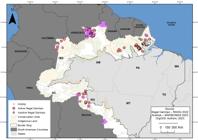
Bolstered by the dismantling of the command, control, and enforcement policies, intensified during the administration of President Jair Bolsonaro (2019-2022) (Gusmão; Pavão, 2020; Fernandes, 2022), garimpeiros were responsible for widespread deforestation, contamination of water and air resources, and the spread of infectious diseases such as COVID-19 and malaria among the Yanomami and Ye’kuana Indigenous peoples (Fernandes, 2021b). The impacts of illegal garimpeiro activity are not confined to the Brazilian side of the international border but also affects the Yanomami communities residing in Venezuela, among other Indigenous groups (Machado, 2020).
The arrival of the garimpeiros and the transport of various supplies, such as fuel, mercury, weapons, etc., to remote areas requires a high level of logistical sophistication,20 often involving the use of aircraft. Based on data made available by MapBiomas (2023), a total of 530 legal and clandestine airstrips have been identified within the Border Strip of the Legal Amazon (Map 3). By applying a 5 km buffer zone around illegal garimpo sites, we found that 41 airstrips are located within or exactly at this distance from these garimpo mining areas.21
The garimpo strategy-whether legal or illegal-facilitates the direct appropriation of mineral resources within the BS, generating economic dynamism and regional attractiveness. Legal garimpo activity, particularly focused on gold extraction, plays a significant role in the local mining landscape, often legitimized through prior approvals granted by the CDN to individuals and cooperatives. A notable example is the existence of 591 active PLGs in the Border Strip of the Legal Amazon-far exceeding the 33 mining concessions currently operated by companies in the same territory.
In an effort to legitimize their activities and deflect criticism, garimpeiros often invoke a narrative of artisanal and small-scale mining, portraying their operations as low-impact and environmentally benign. At the same time, illegality serves as a deliberate tactic to bypass restrictive legislation and enable direct extraction without formal authorization-even in protected areas where mining is explicitly prohibited. Both garimpeiros and mining companies, by appropriating mineral resources via productive activity, assert territorial control and contribute to the consolidation of the BS as a mineral frontier.
Final remarks
This analysis of the strategies employed by the mining sector in the Border Strip of the Legal Amazon has underlined the dynamic, contradictory nature of this territory as a resource frontier. The strategies described and analyzed reaffirm the significance of the BS as a critical area for mining expansion, reflecting the broader advance of neoextractivism in the Legal Amazon. This process is evidenced by the increase in mining applications, extraction activities, and in the rising volume and monetary value of minerals extracted across the 125 municipalities that comprise the Border Strip of the Legal Amazon (Fernandes, 2024).
The specific legislation governing the BS, originally designed to ensure national sovereignty, presupposes a territory under state control. However, as demonstrated throughout this study, the involvement of numerous actors in the mineral sector-both legal and illegal-reveals how this political-administrative boundary has been continuously reshaped to advance private interests. This article has sought to identify, systematize, and categorize the strategies employed by actors in the mineral sector within the Border Strip of the Legal Amazon, highlighting how these practices influence the dynamics of frontier expansion and mineral appropriation in areas previously subject to restrictions. The strategies presented are neither exhaustive nor exclusive to the study area.
The strategies identified for circumventing restrictions and facilitating resource appropriation can be grouped into two broad categories. The first comprises frontier-opening strategies, including political-institutional, outsourcing, and garimpo, which create the conditions for expansion into the BS. The second consists of appropriation strategies, such as speculative practices, securing exploration rights, and garimpo mining itself, which consolidate control over and enable extraction of mineral resources. For example, the securing exploration rights strategy focuses on obtaining future rights in protected areas, while garimpo, almost invariably linked to illegality, functions dually to open frontiers and appropriate resources. Outsourcing, meanwhile, enables multinational corporations to circumvent legal restrictions, securing a presence in the BS often to the detriment of national sovereignty-paradoxically, with the complicity of the State itself. The political-institutional strategy seeks to permanently open the frontier through regulatory reforms that ease access to protected territories.
These dynamics reveal a progressive erosion of State sovereignty, whether deliberate or unintended, driven by the expanding influence of transnational corporations and illegal garimpo activities. This phenomenon exemplifies the logic of neoextractivism, where legal and illegal practices coexist and interact in the ongoing reconfiguration of territories, social relations, and power structures. Within the Brazilian neoextractivist context, the Border Strip is not simply a specially regulated zone under State control; rather, it is a contested space where private capital strategies actively reshape sovereignty, legal frameworks, and state territorialities with the aim of opening the frontier and appropriating mineral resources.
References
-
ANM. Agência Nacional de Mineração, 2022. Sistema de Informação Geográfica da Mineração, Brasília. Disponível em: https://geo.anm.gov.br/portal/apps/webappviewer/index.html?id=6a8f5ccc4b6a4c2bba79759aa952d908 Acesso em: 16 jun. 2025.
» https://geo.anm.gov.br/portal/apps/webappviewer/index.html?id=6a8f5ccc4b6a4c2bba79759aa952d908 - BECKER, B. Geopolítica da Amazônia A nova fronteira de recursos. Rio de Janeiro: Zahar, 1982.
- BECKER, B. Fronteira e urbanização repensadas. In: VIEIRA, I. C. G. (Org.). As Amazônias de Bertha Becker: ensaios sobre geografia e sociedade na região amazônica. Rio de Janeiro: Garamond, 2015a. p. 357-371.
- BECKER, B. Significância contemporânea da fronteira: uma interpretação geopolítica a partir da Amazônia brasileira. In: VIEIRA, I. C. G. (Org.). As Amazônias de Bertha K. Becker: ensaios sobre geografia e sociedade na região amazônica. Rio de Janeiro: Garamond , 2015b. p. 373-410.
- BROWN, W. Walled States: waning sovereignty. New York: Zone Books, 2010.
-
BRASIL. Decreto nº 11.076, de 20 de maio de 2022. Institui a Política Mineral Brasileira. Diário Oficial da União: seção 1, Brasília, DF, 20 maio 2022. Disponível em: https://www.planalto.gov.br/ccivil_03/_ato2019-2022/2022/decreto/D11076.htm Acesso em: 8 jun. 2025.
» https://www.planalto.gov.br/ccivil_03/_ato2019-2022/2022/decreto/D11076.htm -
BRASIL. Lei nº 7.805, de 18 de julho de 1989 Altera o Decreto-Lei nº 227, de 28 de fevereiro de 1967, cria o regime de permissão de lavra garimpeira, extingue o regime de matrícula, e dá outras providências. Disponível em: http://www.planalto.gov.br/ccivil_03/LEIS/L7805.htm Acesso em: 17 jun. 2025.
» http://www.planalto.gov.br/ccivil_03/LEIS/L7805.htm - CAMPBELL, J. M. Conjuring Property: Speculation and Environmental Futures in the Brazilian Amazon. Seattle: University of Washington Press, 2015.
- CERTEAU, M. de. A invenção do cotidiano 22. ed. Petrópolis: Vozes, 2014.
- CHAGNON, C. W. et al From extractivism to global extractivism: the evolution of an organizing concept. Journal of Peasant Studies, v. 49, n. 4, p. 760-792, 2022.
- CORRÊA, R. L. Espaço, um conceito-chave para a Geografia. In: Castro, I. E.; Gomes, P. C. C.; Corrêa, R. L. (Orgs.). Geografia: conceitos e temas. 14. ed. Rio de Janeiro: Bertrand Brasil, 2011. p. 15-48.
- DOUGHERTY, M. L. The global gold mining industry, junior firms and civil society resistance in Guatemala. Bulletin of Latin American Research, v. 30, n. 4, p. 403-418, 2011.
- DOUGHERTY, M. L. The global gold mining industry: materiality, rent-seeking, junior firms and Canadian corporate citizenship. Competition & Change, v. 17, n. 4, p. 339-354, 2013.
- FEARNSIDE, P. M. O avanço da soja como ameaça à biodiversidade na Amazônia. In: WATANABE, S. (Org.). Anais do V Simpósio de Ecossistemas Brasileiros: Conservação Vol. I: Conservação e Duna. Vitória: Universidade Federal do Espírito Santo; São Paulo: Academia de Ciências do Estado de São Paulo (ACIESP), 2000.
-
FERNANDES, R. M. S. A Faixa de Fronteira como nova frente de exploração mineral: um panorama através dos processos minerários. 2021. Trabalho de Conclusão de Curso (TCC) - Graduação em Geografia, Universidade Federal do Rio de Janeiro, Rio de Janeiro, 2021a. Disponível em: https://pantheon.ufrj.br/handle/11422/15269 Acesso em: 16 jun. 2025.
» https://pantheon.ufrj.br/handle/11422/15269 - FERNANDES, R. M. S. A epidemia do garimpo ilegal e o avanço da covid-19 na terra indígena Yanomami. Revista Ensaios de Geografia, Niterói, v. 7, n. 14, p. 214-226, 2021b.
- FERNANDES, R. M. S. A política mineral do governo Bolsonaro para a Amazônia Legal: Um balanço a partir dos processos minerários ativos. AMBIENTES: Revista de Geografia e Ecologia Política, Paraná, v. 4, n. 2, p. 149-172, 2022.
-
FERNANDES, R. M. S. Mineração na fronteira e as fronteiras da mineração: o avanço do neoextrativismo mineral para a Faixa de Fronteira da Amazônia Legal. 2024. Dissertação (Mestrado em Geografia) - Centro de Ciências Matemáticas e da Terra, Universidade Federal do Rio de Janeiro, Rio de Janeiro, 2024. Disponível em: http://objdig.ufrj.br/16/teses/948433.pdf Acesso em: 16 jun. 2026.
» http://objdig.ufrj.br/16/teses/948433.pdf - FERNANDES, R. M. S.; DIAS, T. H. Quem são as mineradoras canadenses no Brasil? Panorama e estratégias de atuação: AMBIENTES: Revista de Geografia e Ecologia Política , Paraná, v. 6, n. 1, p. 187-224, 2024.
-
GARCIA, I. Em menos de uma semana, 18 pessoas são presas e dois garimpos são desativados durante operações da PF em MT. G1, 04 mar. 2024. Disponível em: https://g1.globo.com/mt/mato-grosso/noticia/2024/03/04/em-menos-de-uma-semana-18-pessoas-sao-presas-e-dois-garimpos-sao-desativados-durante-operacoes-da-pf-em-mt.ghtml Acesso em: 16 jun. 2025.
» https://g1.globo.com/mt/mato-grosso/noticia/2024/03/04/em-menos-de-uma-semana-18-pessoas-sao-presas-e-dois-garimpos-sao-desativados-durante-operacoes-da-pf-em-mt.ghtml - GARRIDO FILHA, I. O projeto Jari e os capitais estrangeiros na Amazônia Petrópolis: Vozes , 1980.
-
GAZETA DO POVO. Mineradoras estrangeiras usam subsidiárias para ampliar áreas em terras indígenas. Gazeta do Povo, Curitiba, 19 mai. 2017. Disponível em: https://www.gazetadopovo.com.br/vozes/lucio-vaz/mineradoras-estrangeiras-usam-subsidiarias-para-ampliar-areas-em-terras-indigenas/. Acesso em: 8 jun. 2025.
» https://www.gazetadopovo.com.br/vozes/lucio-vaz/mineradoras-estrangeiras-usam-subsidiarias-para-ampliar-areas-em-terras-indigenas - HARVEY, D. The New Imperialism Oxford: Oxford University Press, 2003.
-
IBRAM apresenta agenda política da mineração para candidatos à presidência e governos estaduais, IBRAM - Mineração do Brasil [Notícia], Brasília, 29 ago. 2022. Disponível em: https://ibram.org.br/noticia/ibram-apresenta-agenda-politica-da-mineracao-para-candidatos-a-presidencia-e-governos-estaduais/. Acesso em: 1º jul. 2024.
» https://ibram.org.br/noticia/ibram-apresenta-agenda-politica-da-mineracao-para-candidatos-a-presidencia-e-governos-estaduais -
IBRAM defende mineração responsável e combate ao garimpo ilegal em encontro estadual dos extrativistas de Rondônia, IBRAM - Mineração do Brasil [Notícia], Brasília, 17 jun. 2023. Disponível em: https://ibram.org.br/noticia/ibram-defende-mineracao-responsavel-e-combate-ao-garimpo-ilegal-em-encontro-estadual-dos-extrativistas-de-rondonia/. Acesso em: 13 fev. 2025.
» https://ibram.org.br/noticia/ibram-defende-mineracao-responsavel-e-combate-ao-garimpo-ilegal-em-encontro-estadual-dos-extrativistas-de-rondonia - GUSMÃO, P. P. DE; PAVÃO, B. B. M. (Des)construção da gestão ambiental no Brasil: De Paulo Nogueira Neto (1973) a Ricardo Salles (2020). AMBIENTES: Revista de Geografia e Ecologia Política , Paraná, v. 2, n. 2, p. 218-277, 2020.
-
HUTUKARA ASSOCIAÇÃO YANOMAMI; INSTITUTO SOCIOAMBIENTAL (ISA). Yanomami sob ataque: garimpo ilegal na Terra Indígena Yanomami e propostas para combatê-lo, Boa Vista: Hutukara Associação Yanomami, Instituto Socioambiental, 2022. Disponível em: https://acervo.socioambiental.org/acervo/documentos/yanomami-sob-ataque-garimpo-ilegal-na-terra-indigena-yanomami-e-propostas-para Acesso em: 28 jun.2024.
» https://acervo.socioambiental.org/acervo/documentos/yanomami-sob-ataque-garimpo-ilegal-na-terra-indigena-yanomami-e-propostas-para -
KOCH, A.; SCHILLING, D.; UPTON, D. Tackling the crisis in mineral exploration. Boston Consulting Group - BCG, Boston, p. 3-26, jun. 2015. Disponível em: https://web-assets.bcg.com/img-src/BCG-Tackling-the-Crisis-in-Mineral-Exploration-June-2015_tcm9-72495.pdf Acesso em: 17 jun. 2025.
» https://web-assets.bcg.com/img-src/BCG-Tackling-the-Crisis-in-Mineral-Exploration-June-2015_tcm9-72495.pdf -
KPMG; IBRAM. Brazil Country Mining Guide - 2023 [S. l.]: KPMG, IBRAM, 2023. Disponível em: https://ibram.org.br/wp-content/uploads/2023/03/1677590829_dead89_14141_kpmg_brazil_country_mining_web_digital_v2-1.pdf Acesso em: 15 abr. 2024.
» https://ibram.org.br/wp-content/uploads/2023/03/1677590829_dead89_14141_kpmg_brazil_country_mining_web_digital_v2-1.pdf - KRÖGER, M.; NYGREN, A. Shifting frontier dynamics in Latin America. Journal of Agrarian Change, v. 20, n. 3, p. 364-386, 2020.
-
MACHADO, A. M. et al Xawara: rastros da covid-19 na Terra Indígena Yanomami e a omissão do Estado. São Paulo: Instituto Socioambiental, 2020. Disponível em: https://acervo.socioambiental.org/acervo/publicacoes-isa/xawara-rastros-da-covid-19-na-terra-indigena-yanomami-e-omissao-do-estado Acesso em: 28 jun. 2024.
» https://acervo.socioambiental.org/acervo/publicacoes-isa/xawara-rastros-da-covid-19-na-terra-indigena-yanomami-e-omissao-do-estado -
MAPBIOMAS. Mapa de pistas de pouso da Amazonia 2021 (v1). [S. l.]: Mapbiomas, 2023. Disponível em: https://brasil.mapbiomas.org/wp-content/uploads/sites/4/2023/08/MapBiomas_ Pistas_de_Pouso_06.02.2023_1.pdf Acesso em: 17 jun. 2025.
» https://brasil.mapbiomas.org/wp-content/uploads/sites/4/2023/08/MapBiomas_ Pistas_de_Pouso_06.02.2023_1.pdf - MASCIA, M. B. et al Protected area downgrading, downsizing, and degazettement (PADDD) in Africa, Asia, and Latin America and the Caribbean, 1900-2010. Biological Conservation, v. 169, p. 355-361, 2014.
- MILANEZ, B. Crise climática, extração de minerais críticos e seus efeitos para o Brasil Belo Horizonte: Diálogo dos Povos; Sinfrajupe; MAM; PoEMAS, 2021.
- MILANEZ, B. et al A Estratégia Corporativa da Vale S.A.: um modelo analítico para Redes Globais Extrativas. Versos - Textos para Discussão, v. 2, n. 2, p. 1-43, 2018.
- MILANEZ, B.; MANSUR, M.; WANDERLEY, L. Financeirização e o mercado de commodities: uma avaliação a partir do setor de mineral. Rev. Tamoios, São Gonçalo (RJ), ano 15, n. 1, p. 104-125, 2019.
- MILANEZ, B.; WANDERLEY, L. J. M.; MAGNO, L. Mineração e políticas públicas: conflitos, retrocessos e propostas para um outro modelo mineral. Revista da ANPEGE, v. 18, n. 36, p.388-433, 2022.
- MONTEIRO, M. A. Meio século de mineração industrial na Amazônia e suas implicações para o desenvolvimento regional. Estudos Avançados, v. 19, n. 53, p. 187-207, 2005.
- MOORE, J. S. Ecology, and the origins of the modern world, 1450-1640. In: HORNBORG, A.; MCNEILL, J. R.; MARTINEZ-ALIER, J. (Orgs.). Rethinking environmental history: World-system history and global environmental change. Lanham: AltaMira Press, 2007. p. 123-142.
- MOORE, J. S. El auge de la ecología-mundo capitalista. Parte I: Laberinto. Tradução de Emilio Santiago Muiño. Laberinto. Revista de Estudios Interdisciplinarios, v. 37, p. 33-57, 2013.
- MOORE, J. S. Capitalism in the Web of Life: Ecology and the Accumulation of Capital. London: Verso, 2015.
-
MPF. Ministério Público Federal. Mineração ilegal de ouro na Amazônia: marcos jurídicos e questões controversas. Brasília: MPF, 2020. (Série manuais de atuação; v. 7). Disponível em: https://www.mpf.mp.br/atuacao-tematica/ccr4/dados-da-atuacao/publicacoes/roteiros-da-4a-ccr/ManualMineraoIlegaldoOuronaAmazniaVF.pdf Acesso em: 16 jun. 2025.
» https://www.mpf.mp.br/atuacao-tematica/ccr4/dados-da-atuacao/publicacoes/roteiros-da-4a-ccr/ManualMineraoIlegaldoOuronaAmazniaVF.pdf - OECD. Recent performance of the mining sector in Brazil. In: OECD. Regulatory Governance in the Mining Sector in Brazil, Paris: OECD Publishing, 2022. p. 35-51. Disponível em: https://www.oecd.org/en/publications/regulatory-governance-in-the-mining-sector-in-brazil_63d60aa8-en.html. Acesso em: 17 jun. 2025.
-
RAISG. Shapefile do Garimpo Ilegal na Amazônia 2022. 2022. Disponível em: https://www.raisg.org/pt-br/mapas/. Acesso em: 19 jun. 2026.
» https://www.raisg.org/pt-br/mapas - RUBBERS, B. Mining boom, labour market segmentation and social inequality in the Congolese Copperbelt. Development and Change, v. 51, n. 6, p. 1555-1578, 2020.
- SANTOS, R. S. P.; MILANEZ, B. Estratégias corporativas no setor extrativo: uma agenda de pesquisa para as ciências sociais. [Apresentação do dossiê Extrativismo Mineral: estratégias, impactos e conflitos]. Caderno Eletrônico de Ciências Sociais, Vitória, v. 5, n. 1, p. 1-26, 2017.
- SILVA, G.F.; CUNHA, I. A.; COSTA, I.S.L. (Orgs.) An overview of Critical Minerals Potential of Brazil Serviço Geológico do Brasil: Brasília - DF, 2023.
- TSING, A. L. Natural Resources and Capitalist Frontiers. Economic and Political Weekly, v. 38, n. 48, p. 5100-5106, 2003.
- WANDERLEY, L. J. Geografia do Ouro na Amazônia brasileira: uma análise a partir da porção meridional. 2015. Tese (Doutorado em Geografia) - Programa de Pós-Graduação em Geografia, Universidade Federal do Rio de Janeiro, Rio de Janeiro, 2015.
-
WWF-BRASIL. PADDD em Unidades de Conservação na Amazônia: Mapeamento e análise das tendências de redução, recategorização e extinção de unidades de conservação no bioma. São Paulo: WWF-Brasil, 2019. Disponível em: https://d3nehc6yl9qzo4.cloudfront.net/downloads/padddunidadesconservacaoamazonia_final.pdf Acesso em: 25 jun. 2024.
» https://d3nehc6yl9qzo4.cloudfront.net/downloads/padddunidadesconservacaoamazonia_final.pdf - WAROUX, Y. L. P. et al Land use policies and corporate investments in agriculture in the Gran Chaco and Chiquitano. Proceedings of the National Academy of Sciences, v. 115, n. 13, p. E3241-E3249, 2018.
- VERBRUGGE, B.; GEENEN, S. The gold commodity frontier: A fresh perspective on change and diversity in the global gold mining economy. The Extractive Industries and Society, v. 6, n. 2, p. 413-423, 1 abr. 2019.
-
1
This research was made possible thanks to support from the Coordination for the Improvement of Higher Education Personnel (CAPES) through the Academic Excellence Program (PROEX), during the master’s and doctoral studies of the researcher Rhuan Muniz Sartore Fernandes. This article was funded by the Carlos Chagas Filho Foundation for Research Support of the State of Rio de Janeiro (FAPERJ, SEI Processes 260003/013162/2024; E-26/211.394/2019; and E-26/211.129/2019).
-
2
The notion of a frontier transcends physical space and presupposes a dynamic and relatively “open” social structure. It is a social, political, and value-laden space where processes of appropriation or reappropriation of natural resources, including land, coexist (Becker, 2015a). As Becker (2015b, p. 381) argues, “what distinguishes the frontier is not the type of physical space in which it occurs, but the social, political, and economic relations it engenders” (Author’s translation).
-
3
The BS occupies 36% of the planning region, while CUs account for 24% and ILs for 22%. These figures cannot be added cumulatively, as there are overlaps among these territories at various points within the Legal Amazon, resulting in a combined coverage of 53%.
-
4
Included in this group are all Strict Protection Units and some categories of Sustainable Use Conservation Units, among them: Extractive Reserves, Sustainable Development Reserves, and Private Natural Heritage Reserves. In the case of Environmental Protection Areas, Areas of Relevant Ecological Interest, and Wildlife Reserve Forests, the legislation does not prohibit mining. However, such activity may only occur if it is provided for in the Management Plan.
-
5
.Harvey (2003) understands “regulatory densities” as a set of rules, laws, regulations, and norms that structure and influence the spatial organization and socioeconomic development of a given territory. These norms are not static; they may be shaped and adjusted to serve specific interests, such as economic development or resource extraction. Harvey argues that the production and adaptation of these regulatory densities are often driven by political and economic forces seeking to enable particular forms of development—frequently to the detriment of other interests, such as environmental preservation or the rights of local communities.
-
6
Small-scale, often informal or artisanal mining operations—typically targeting alluvial gold deposits—prevalent in Brazil.
-
7
According to Law No. 6,634/1979, the exploitation of mineral resources located in the area is subject to prior approval from the National Defense Council (CDN), except when the substances requested are for immediate use in civil construction, as established in Article 1 of Ordinance No. 23/2000 of the Ministry of Mines and Energy. Among the conditions required to obtain prior approval, the following are most prominent: (i) at least 51% of the capital must belong to Brazilians; (ii) at least two-thirds of the workers must be Brazilian; and (iii) the company’s management and administration must be predominantly Brazilian.
-
8
The term “large-scale mining” is used in various ways but generally refers to mining companies that employ more than 500 or 1,000 workers, with capital exceeding 5 or 10 billion dollars, may operate across multiple spatial units, and can be either national or multinational in origin, including those headquartered in Brazil.
-
9
Cf. RIBEIRO, I. Canadense Tucano Gold assume controle de mina de ouro no Amapá de empresa em recuperação judicial [Canadian company Tucano Gold takes control of gold mine in Amapá from company undergoing judicial reorganization]. Valor Econômico, São Paulo, 12 Aug. 2023. Available at: https://valor.globo.com/empresas/noticia/2023/08/12/canadense-tucano-gold-assume-controle-de-mina-de-ouro-no-amap-de-empresa-em-recuperao-judicial.ghtml. Accessed on: June 8, 2025.
-
10
The report provides a clearer view of the export agenda of the state of Amapá. Cf. COSTA, W. Para impulsionar exportações, Governo institui o comitê para qualificação dos produtos do setor primário. [To boost exports, government establishes committee to qualify primary sector products]. Amapá Government Portal, Macapá, Feb. 11, 2022. Available at: https://www.portal.ap.gov.br/noticia/1102/para-impulsionar-exportacoes-governo-institui-o-comite-para-qualificacao-dos-produtos-do-setor-primario. Accessed on: June 8, 2025.
-
11
The location where Mineração Rio do Norte operates its bauxite deposits in Oriximiná (PA) is not within an area overlapping the 150 km Border Strip. Nevertheless, it illustrates how the structure of a joint venture can serve the interests of major foreign companies, such as Rio Tinto, within the 125 municipalities that comprise the Border Strip of the Legal Amazon.
-
12
In the studies by Fernandes (2024) and Fernandes and Dias (2024), it is possible to verify that, although some foreign mining companies do not have active mining permits within the 150 km polygon of the BS, they hold applications through their subsidiaries in other areas within the 125 municipalities of the Border Strip in the Legal Amazon. Examples include AngloGold Ashanti (3 applications), Brazil Potash Mining (87), Minsur (14), and Rio Tinto (44). In this regard, these companies also benefit, to some extent, from the outsourcing strategy.
-
13
A common legal action is the submission of requests to the ANM for the cancellation of active mining processes that are underway within ILs. Cf. Assessoria de Comunicação (MPF/Pará). “MPF requests urgent cancellation of mining processes in 48 Indigenous Territories in Pará”. Conselho Indigenista Missionário (Cimi), Brasília, November 22, 2019. Available at: https://cimi.org.br/2019/11/mpf-pede-cancelamento-urgente-de-processos-minerarios-em-48-terras-indigenas-no-para/. Accessed on: June 8, 2025.
-
14
Constitutional Amendment Proposal.
-
15
On its website, IBRAM states that it comprises more than 160 members responsible for 85% of Brazil’s mineral production. Currently, Raul Jungmann serves as IBRAM’s CEO; he previously held the position of Minister of Defense (2018-2019). At the end of 2022, the institute published a “Mining Political Agenda,” which was submitted to candidates for the presidency and state governments. This agenda included a series of guidelines, among them the commitment to “ensure broad access to territories, many of which face legal restrictions on economic activity, such as the Border Strip” (IBRAM, 2022, n.p.).
-
16
Cf. BRAZIL. Chief of Staff Office. Ordinance No. 667, February 9, 2022. Federal Government’s Priority Legislative Agenda for 2022. Diário Oficial da União, Edition 28-A, Section 1 - Extra A, Brasília, DF, February 9, 2022. Available at: https://www.in.gov.br/en/web/dou/-/portaria-n-667-de-9-de-fevereiro-de-2022-379226707. Accessed on: June 8, 2025.
-
17
Regarding monetary values, adjustments were made using the IPCA (Broad Consumer Price Index) to reflect amounts as of December 2023, employing the Central Bank’s online calculator.
-
18
The Garimpeiro Mining Permit refers to the extraction of mineable mineral substances carried out by Brazilian garimpeiros (artisanal miners) or Brazilian cooperatives of garimpeiros that are authorized to operate as mining enterprises. Mineable minerals are considered those that occur naturally in alluvial deposits and do not require any form of processing prior to extraction. Mineral exploitation under the garimpeiro mining regime is directed toward mineral substances that allow for the immediate use of the deposit, which—due to their nature, size, location, and economic use—may be mined without the need for prior research work (Brasil, 1989).
-
19
The provision remained in effect for over a decade and was suspended in April 2023. Cf. CRUZ, I. Como a presunção de boa-fé favoreceu o garimpo ilegal [How the presumption of good faith favored illegal mining]. Nexo Jornal, São Paulo, April 7, 2023. Available at: https://www.nexojornal.com.br/expresso/2023/04/07/Como-a-presun%C3%A7%C3%A3o-de-boa-f%C3%A9-favoreceu-o-garimpo-ilegal. Accessed on: June 8, 2025.
-
20
In addition to using backhoes and dredging rafts—some of which can cost up to one million reais—garimpeiros also rely on satellite internet, which provides high-speed connectivity even in remote areas such as the Yanomami Indigenous Territory. This access has contributed to increasing the productivity of illegal mining operations. Cf. PAJOLLA, M. Internet de Elon Musk é vendida a garimpeiros da Terra Yanomami por compradores de ouro ilegal [Elon Musk’s internet is sold to gold miners in Yanomami Territory by illegal gold buyers]. Brasil de Fato, Lábrea, AM, February 20, 2023. Available at: https://www.brasildefato.com.br/2023/02/20/internet-de-elon-musk-e-vendida-a-garimpeiros-da-terra-yanomami-por-compradores-de-ouro-ilegal/. Accessed on: June 8, 2025.
-
21
According to a report by Intercept Brasil (2022), there were 87 airstrips located within the Yanomami Indigenous Territory, 34% of which were situated within 5 km or less of an illegal garimpo site. POTTER, H. As pistas da destruição [The airstrips of destruction]. Intercept Brasil, August 2, 2022. Available at: https://www.intercept.com.br/2022/08/02/amazonia-pistas-clandestinas-garimpo/. Accessed on: June 8, 2025.

 Source: Own elaboration based on
  Source: Own elaboration based on
  Source: Own elaboration based on data from