
 The Voice that Moves the Body: scenic implications of the Laban na Voz Method in Menandro - dying should be sweet
ABSTRACT
This article investigates the Laban na Voz Method, an approach that highlights the voice as a central element in the construction of theatrical characters. Through autoethnography, the study narrates the creative process of actor Felipe Rio Ruas in composing the soliloquy Menandro - Dying Should Be Sweet, exploring the voice as a driver of the corporeal-vocal event. The article seeks to deepen the theoretical discourse of the Laban na Voz Method through both experimentation and practice, expanding the understanding of the character and the range of vocal and physical intentions it can embody, thereby enriching the performance with greater complexity.
Keywords:
Laban na Voz Method; Performance; Creative Process; Laban/Bartenieff System; Voice
RESUMO
Este artigo investiga o Método Laban na Voz uma abordagem que destaca a voz como elemento central na construção de personagens teatrais. Utilizando a autoetnografia, o estudo narra o processo criativo do ator Felipe Rio Ruas na composição do solilóquio Menandro - morrer deveria ser doce, explorando a voz como impulsionadora do evento corpóreo-vocal. O artigo visa aprofundar a discussão teórica do Método Laban na Voz pela experimentação e a prática, aprofundando a compreensão do personagem e a diversidade de intenções vocais e corporais que ele pode abrigar, assim enriquecendo-o com camadas mais complexas.
Palavras-chave:
Método Laban na Voz; Performance; Processo Criativo; Sistema Laban/Bartenieff; Voz.
RÉSUMÉ
Cet article étudie la Méthode Laban na Voz, une approche qui met en avant la voix comme élément central dans la construction des personnages théâtraux. À l'aide de l'autoethnographie, l'étude raconte le processus créatif de l'acteur Felipe Rio Ruas dans la composition du monologue Menandro - mourir devrait être doux, explorant la voix en tant que moteur de l'événement corporel-vocal. L'article vise à approfondir la discussion théorique de la Méthode Laban na Voz à travers l'expérimentation et la pratique, en approfondissant la compréhension du personnage et de la diversité des intentions vocales et corporelles qu'il peut abriter, l'enrichissant ainsi de couches plus complexes.
Mots-clés:
Méthode Laban na Voz; Performance; Processus Créatif; Système Laban/Bartenieff; Voix
Introduction
The Laban na Voz Method emerges from the intersection of the Laban/Bartenieff System with studies on vocal expressiveness, offering a practical tool for vocal training and artistic creation. Focused on the voice as a creative catalyst, it directly applies the System’s terminology to vocal practice. Conceived as a guide for actors - especially those in training - it positions the voice as the foundation for character creation. Each individual has a unique vocal dynamic that characterizes them, given that the voice is not a fixed entity, but rather the expressive movement/vibration of the vocal folds that produce vocality. According to Sundberg (2015, p. 21, our translation):
The term ‘voice’ will be used to designate the sounds generated by the phonatory system when the vocal folds are vibrating or, more precisely, by the pulmonary airflow that is first modified by the vibrating vocal folds and then by the vocal tract, and sometimes also by the nasal cavity. In this context, 'voice' becomes synonymous with vocal sound.
Sundberg (2015) further argues that speech sounds are among the primary sonic codes used in interpersonal communication. When discussing vocality, Zumthor (2001) calls attention to the historicity of the voice and its usage, linking it to its historical dimension and evolution over time. Poetic vocality, in contrast, refers to the voice in performance, as conceptualized by Zumthor (2000). To develop our vocal repertoire, we begin by drawing on elements rooted in our own vocal experiences found in our personal repertoire. In contemporary performance, the voice is no longer viewed simply as a tool for expression or as an apparatus of technical skills used to manipulate the phonatory system for effective stage communication. Rather, it is understood as the locus and driving force of the corporeal-vocal event, as described by Icle and Alcântara (2011). According to Adrian (2008), the voice is intrinsically connected to the body, serving as an extension of its movements. The author states that voice is influenced by breath, spatial intention, and core alignment - which involves the body’s deep structures, such as bones, muscles, and organs - facilitating a connection of the interior of the body with the outside. Adrian (2008) introduces the concept of the vocal kinesphere, showing how the voice projects beyond the body in the same way the body moves through space. As she states (2008, p. 137) “your vocal kinesphere can be defined as the space that is revealed through the resonance of your voice when your body is in active stillness”. This perspective treats the voice as inseparable from physical actions, emphasizing the connection between vocal sound and bodily movement. In her research, Adrian highlights breath support and core support as fundamental to both movement and voice, positioning the voice as a direct outcome of physical involvement. She stresses that breathing underlies all vocal expression, while core strength and flexibility contribute to vocal power and resonance. Moreover, dynamic postural alignment and weight shifts - core movement principles - are vital to vocal performance, reinforcing an integrated approach in which body and voice function as a unified whole. This approach establishes the voice as a product of the body, with vocal and physical expression unified through the principles of the Laban/Bartenieff System. Lima (2020b), who also applies the Laban/Bartenieff framework to vocal practice, emphasizes that vocalization - whether in speech, singing, or other expressive forms - is not simply the result of intercostal, pharyngeal, oral, or respiratory movements. Rather, it is a manifestation - through sound waves - of movement occupying both the internal and external spaces of the body, and is therefore understood as movement itself. According to the author:
Voice, as movement, is therefore produced from motivations that articulate the body - as a complex system - with spaces, environments, and other beings. In this sense, understanding voice both as movement and as the product of a series of movements involves reflecting on the potential of vocal production to create connections, especially between parts of the body (Lima, 2020b, p. 32, our translation).
Lima (2020b) also highlights that, for Laban, vocal production in performance is fundamentally an act of communication - made possible because the voice transcends the body’s physical boundaries and expands into space. The Laban/Bartenieff System frames the voice as a dynamic component of human movement, integrating physical and expressive elements that go well beyond simple vocalization. This system allows the voice to be understood as an extension of the body, not merely a sound, but a fully embodied form of expression involving breathing, posture, structural alignment, and spatial interaction. From various perspectives, authors such as Laban (1978), Adrian (2008), Gayotto (2015), Hackney (2020), and Lima (2020a) emphasize that vocal expression stems from a complex articulation of bodily processes, linking the body to communicative intentions and the surrounding environment. Thus, exploring the voice through the Laban/Bartenieff System not only deepens performers’ vocal expressiveness but also enhances their ability to engage with space and undergo continuous transformation. It establishes the voice as a living, expansive movement capable of generating meaning and shaping diverse identities, as required by the process of character creation.
Ertel (2020) first engaged with the Laban System during her undergraduate studies in Performing Arts at the Universidade Federal de Santa Maria, which she began in 2007. Her academic interest evolved into a research project, culminating in the publication of a book based on her Master’s degree in Performing Arts from the Escola Superior de Artes Célia Helena (2020). In her current doctoral research, supervised by the second author, she seeks to deepen the discussion surrounding the Laban na Voz Method, providing it with a stronger theoretical foundation and exploring strategies for its broader dissemination. This article examines the creative process of actor Felipe Rio Ruas in his 2020 performance of the soliloquy Menandro - dying should be sweet, using procedures from the Laban na Voz Method. Due to the COVID-19 pandemic, the majority of the process was conducted online. The analysis employs autoethnography, as outlined by Cano and Opazo (2014), focusing on the researcher’s personal experience through systematic description and reflection to deepen contextual understanding. The initial motivation stemmed from the need to explore more deeply the role of voice in the artistic practice of the first author - both as an actress and singer, and as an educator.
Thus, the development observed throughout the sessions is presented from the perspective of the first author, who also served as both director and instructor, in collaboration with the second author, exploring how each element of the Method contributed to the construction of the performance.
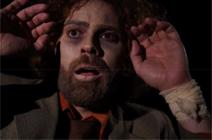
The process, carried out over 13 sessions, explored elements such as Rhythm, Effort, Shape, Kinesphere, Dimensional Cross, Dynamics, Balance, Imbalance, Recovery, Fall, Rise, and Character. These terms were primarily derived from the Laban/Bartenieff System, also known as LMA (Laban Movement Analysis) or LMA/BF (Laban Movement Analysis/Bartenieff Fundamentals). As noted by Fernandes (2002), it is a language for mapping the body, based on four categories: Expressiveness (or Effort), Shape, Body, and Space. In other words, it is a system designed to train the observation, analysis, and description of bodily movement, applicable in the Performing Arts (Dance, Theatre, and Performance), as well as in Education, Psychology, and Medical Sciences.
For this System, bodily experimentation is crucial for developing the experience of movement and, subsequently, mastering a vocabulary of options. Both Laban’s research and the Laban na Voz Method recognize the body - and its voice - as a site of knowledge production, as Laban laid the foundations of “[...] technical-analytical parameters to understand and work with what the body is capable of, developing the Fundamentals of the Art of Movement, a praxis that blends theory and practice into a body-centered mode of thinking that occurs through movement” (Scialom, 2021, p. 8, our translation).
The Laban System proposes a structure for bodily research that has been disseminated worldwide by his students. This system is open to updates, but its foundation can be accessed in his book The Mastery of Movement, “[...] where the Labanian theory of thought/movement is explained” (Azevedo, 2012, p. 354, our translation). This book, along with other materials, is cited in this article due to its significance as a foundational reference for the artist’s work and as an inspiration for the Laban na Voz Method.
When applying the LMA System in the method in question, this vocabulary inspires a distinct approach, in which the elements that comprise the vocabulary of bodily movement are used with a focus on the voice. It is therefore important to note that the Laban/Bartenieff System focuses on bodily movement, whereas the Laban na Voz Method focuses on vocal processes.
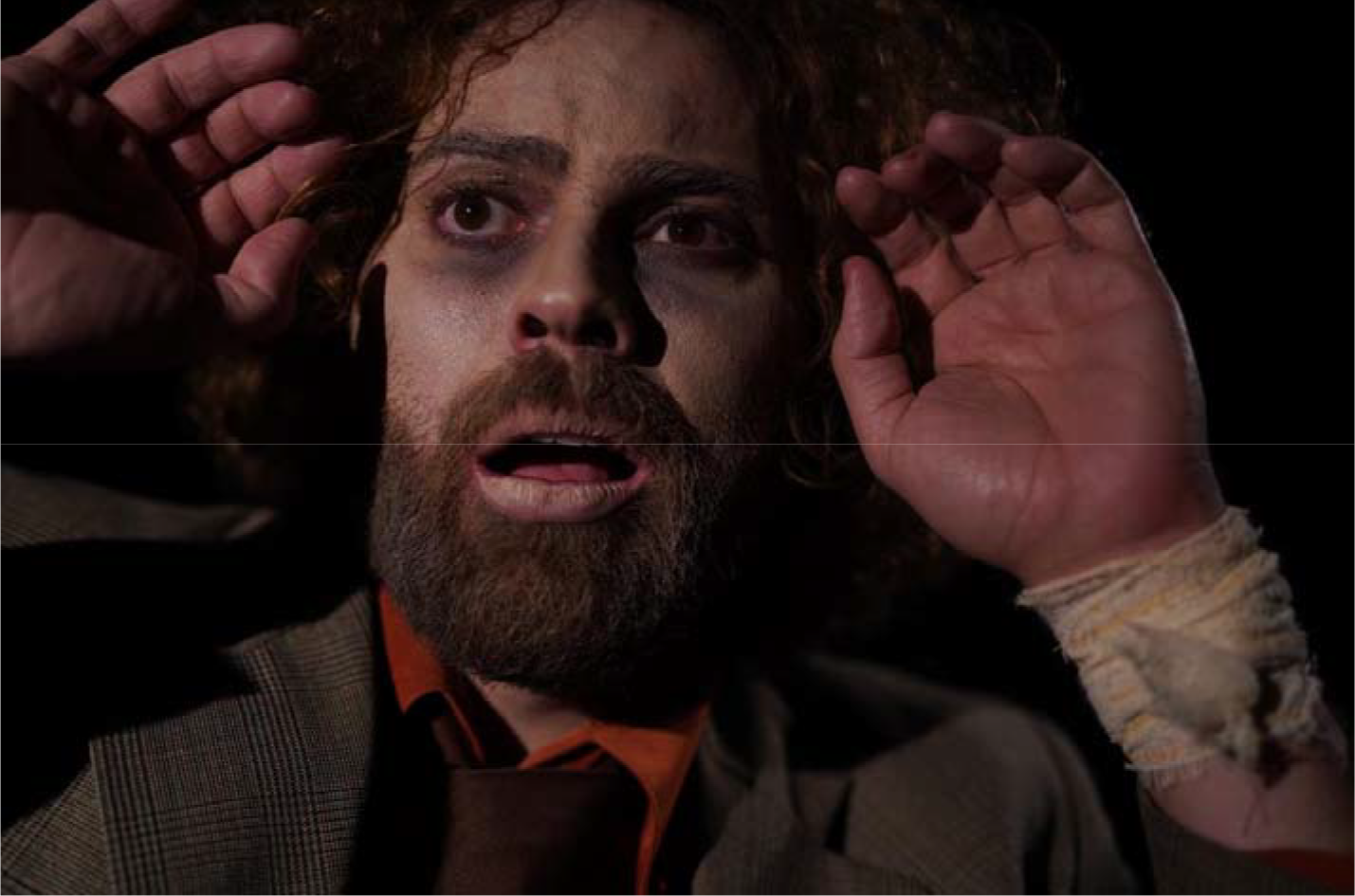
The performance developed in this process was based on an adapted excerpt from the novel Incidente em Antares (Veríssimo, 1997), specifically from the character Menandro Olinda, a pianist who committed suicide by cutting the veins in his wrists. The following is the excerpt used:
It was the devil's time, Dona Quitéria. The devil's time... I was at home alone, trying to play the Appassionata, and once again I failed. I realized I had been wrong my entire life, that there would never be a public concert, fame. And who was to blame for my failure? My hands, these ungrateful hands! What I did was not kill myself; if I had wanted to, I would have taken poison or shot myself in the head, but no, I wanted to punish them. One hand helped to kill the other hand. They are fratricides! Fratricides! After I cut the veins in my wrists, I felt pain, and when I saw the blood, I had a panic attack. I saw the portraits in the living room, Beethoven's death mask, my old piano... My vision started to blur, and suddenly it felt as if I were in my mother's womb. Mother... Then the moment I was born, my hands could move, I could touch myself. Until the day I first touched the keys of a piano... Oh, the music was mine, the world was mine. The courses came, the recitals, and Menandro Olinda's night at the São Pedro Theatre. My mother was sitting in the front row, proud! I tried to play the Appassionata, and my hands failed, failed! The laughter from the audience, the jeers, the boos from the galleries, the pitying silence. Then everything began to fade, I realized that dying should be sweet, forever away from anguish, loneliness, fear... From everything! And return to my mother's womb. Mother! (Veríssimo, 1997, p. 144, our translation)1.
Description of the Process
The steps for the Laban na Voz Method are, therefore, didactic-creative procedures applied to work on the actor's vocal interpretation, whether in theatrical text, improvisations, action verbs, song interpretation, among other possibilities. The character reveals itself through what it says, what it does, how it speaks, and how it acts. The character is action. And this action manifests through vocal and bodily movements in space and time, organized in sequence to bring the character to life. The steps can be performed out of order, but at the actor’s request, the sequence described in Ertel's book (2020) was followed. This experience, therefore, involved 13 sessions, with only the director and the actor, 11 of which were taught remotely, each lasting 1.5 hours, and two in-person meetings, each lasting 3 hours, one for the final class and the other for the video recording. In total, 22.5 hours were spent on the creation of the performance. Below, the procedure is presented sequentially, with a detailed description of each step of the classes.
Lesson 1 - Rhythm: pulse, division, nuance
In this class, the exercises were designed with a focus on the text, exploring the temporal, spatial, and expressive dimensions of the voice. We explored the concept of duration, defined as “the time of sound production” (Lacerda, 1961, p. 01). If the text needed to be faster, the tempo2 was accelerated. Various pieces of music with different rhythms and variations in accentuation were used to explore vocal rhythm. Additionally, other approaches were employed to work on rhythm, considering variations in dynamics, including moments that were fast and slow, as well as intense and soft. One exercise that helped develop rhythm was the Word Attitude exercise (Ertel, 2020, p. 54). In this exercise, specific words from the text were selected to explore the meaning of each one. For example, when analyzing the word sanatorium, the type of place this word evoked was explored. Was the character in an isolation ward? Wearing a straitjacket? Was he involuntarily committed, or did he admit himself voluntarily? Some words generated especially creative responses from the actor, such as: mother, womb, severed, veins, wrist, failed, piano, music, and Appassionata. During the class, the actor was encouraged to reflect on how these words resonated in the pianist's story and how they affected his actions.
Laban (1971, p. 133) states that, “The elements of movement when arranged in sequences constitute rhythms. One can discern space-rhythms, time-rhythms, and weight-rhythms”. He also adds that “these three forms of rhythm are always united, though one can occupy the foreground of an action” (Laban, 1971, p. 134). As previously mentioned, the author addresses different rhythms in his work. When applied to the study of voice, space-rhythm can be understood as the visual (imaginary) rhythm, in which the voice can traverse distinct paths in space, varying between direct and flexible approaches. According to Laban (1971, p. 134):
Space-rhythm is created by the related use of directions resulting in spatial forms and shapes. Two aspects are herein relevant: (a) the one in which there is successive development of changing directions, and (b) the other where shapes are produced through simultaneous actions of different parts of the body.
To facilitate the understanding of this concept, an analogy is often made with music. In this analogy, melodic movements are considered sequential, occurring successively, while harmonic movements are structured simultaneously. In the context of the voice, a melodic movement is understood as a sequence that emphasizes the syllables of a word/phrase, while a harmonic movement involves emphasizing the word/phrase as a whole, without highlighting syllables in a cadenced (or segmented) manner.
The spatialization of the voice, in the theatrical context, is related to its imagistic nature, since the set often does not exactly correspond to the representation of the play, and the voice takes on the role of describing this space. According to Adrian (2008, p. 45):
The sound of your voice radiates beyond your body’s corporeal boundaries. You cannot propel your body, without serious consequences, through walls, off rooftops, or instantaneously up six flights of stairs. But the voice can and does make such leaps. It continues its flight into space, where the corporeal body cannot go. The voice can shrink to travel through the narrowest of passages or expand to fill an amphitheatre of two thousand seats. Once set free from the body, voice is unhindered by joints, bones, ligaments, and muscles and, therefore, has a potential for flexibility that the body can never achieve. While producing sound is as much a muscular action as reaching for a fork, vocal resonance extends beyond the muscular initiation using the oral (mouth) and architectural space (room, theatre, out-of-doors) as sounding boards. The resulting vibrations produce waves of sound that radiate into the environment much like the disturbance that results by throwing a stone into still water or the trace lines of a Fourth of July sparkler waving in the night. And it all begins with the breath and the impulse to breathe.
It is important to note that the voice is not perceived or projected the same way across different environments. In Felipe’s case, he wondered what Menandro’s voice might have sounded like when recalling moments in the sanatorium, when at the São Pedro Theatre hearing the audience's boos, or when confronted with either the compassionate smile or piercing gaze of his mother in the front row. What would the voice of shame sound like in the face of failure? Laban (1971, p. 134-135) states that:
Besides the space-rhythm of movement, we must consider its rhythm in time. Man´s attitude towards time is characterized on the one hand by fighting against time in sudden, quick movements, and on the other hand by an indulgence in time with sustained, slow movements. Rhythms produced by bodily movements are characterized by a division of the continuous flux of movement into parts, each of which has a definite duration in time. These parts of a rhythm can be of equal or unequal length. In the latter case, some parts of the movement are relatively quick while others are relatively slow.
The time-rhythm (temporal rhythm), when applied to vocality, is linked to aspects of the speed of the voice. In this context, the rhythms adopted by the voice can involve equal or unequal tempos, regular or irregular. At certain moments, the speed of the voice may be fast, while at others, slow. This rhythmic pattern is one that everyone is accustomed to associating with the voice, and is intuitively grasped through listening. The fluency of the time-rhythm (temporal rhythm) can vary from one vocal action to another. The voice can flow unobstructed, or it can be controlled or interrupted by internal or external constraints. This control is associated with the introduction of a restriction in speech (obstacle), which can be either visible or invisible - for example, speaking quickly because someone is arriving and cannot hear what is being said.
In other words, the voice already possesses elements of spatialization and temporality; what remains is to consider the element of weight-rhythm, that is, its expressive character. This is the final division proposed by Laban (1971, p. 136), who states that “in associating short and long duration with weight-rhythm of accented and unaccented parts of a movement sequence, six fundamental rhythms have been found.” Laban (1978) continues by describing the six rhythms as follows: Trochee (calm, placid, or graceful rhythm); Iambus (aggressive, joyful, energetic, rude, or belligerent rhythm); Dactylus (grave, serious, solemn rhythm); Anapestus (marching, advancing rhythm); Peon (rhythm of excitement, foolishness, alternating between terrifying and pitiable states of mind); Ionian (rhythm of violent agitation, or profound depression, languor, despair). The author also mentions that the Greeks considered all other rhythms to be variations of these six fundamentals, evoking the active principle of vitality.
In relation to weight-rhythm, Ertel (2020) uses the terminology sensory, arguing that the perception of vocal weight is primarily auditory rather than physical. Within this context, the voice assumes different intensities, which can vary between strong or weak, balanced or imbalanced. This variety allows for the expression of various psychophysical sensations, such as enthusiasm, fatigue, tension, nervousness, happiness, emotion, passion, anger, hatred, among others.
Lesson 2 - Effort: internal, impulse, goal X obstacle
This lesson focused on the element of Effort, which is associated with the process that precedes the vocalization of sound, being considered its pre-expressive artifact. At this stage, the voice is prepared for projection into space. The stimuli that motivate speech - those that occur before physical movement becomes action - are imperceptible, yet they evoke impulses that energize the character and drive expression. The voice can embody a wide range of characteristics: fluent, resistant, whispering, weak, breathy, rough, deep, high-pitched, soft, and many others. However, the effort required to project the voice should not involve tension that could damage the vocal apparatus. As Laban (1971, p. 22) states when discussing Effort in bodily movement:
Each phase of movement, every small transference of weight, every single gesture of any part of the body reveals some feature of our inner life. Each movement originates from an inner excitement of the nerves, caused either by an immediate sense impression, or by a complicated chain formerly experienced sense impression stored in the memory. The excitement results in the voluntary or involuntary inner effort or impulse to move.
In the process of Menandro - dying should be sweet, several aspects were explored:
-
1. Connection to the text: Work began with an analysis of the scene’s script. Special attention was given to the character’s emotional and mental states - especially during moments of crisis, given the narrative’s focus on suicide.
-
2. Controlled breathing: Breathing techniques were introduced as the foundation for vocal production. When paired with the text, breathing helped the actor understand and connect with how the character breathes. This not only contributed to scene development but also supported proper vocal projection.
-
3. Vocal relaxation: The actor was invited to talk about their day and physical condition to raise awareness of their throat and larynx. This helped relax areas that often tense up under stress - tension that can impair vocal quality.
-
4. Emphasis on key words: Building on the first lesson, which identified key words and phrases, this phase emphasized Effort - shifting from soft to loud tones, from gentle to aggressive deliveries, using dynamics of opposition.
Lesson 3 - Form: external, contour, action
In this third lesson, the focus shifted to Form - expressed through facial expressions and body language, both essential to communication. While the concept of Form inspired the Laban na Voz Method, it is interpreted differently than in the contemporary LMA/BF System. In that System, which emphasizes bodily movement, Form includes Modes of Sustaining Form - static poses linked to images like pins, balls, walls, or screws - and Modes of Changing Form, which relate to the body in motion (Hackney, 2020).
In the Laban na Voz Method, different approaches to Form were explored. The soliloquy was practiced multiple times to discover the vocal intensity and interpretation that best suited the scene. Imagined spatial changes were used to shape relationships and intentions. The environment, the character’s imagined interactions, and Menandro’s physical postures were all examined - for example, imagining himself inside his mother’s womb.
In this method, the body's contour is viewed as a manifestation of Form, as bodily posture and facial expression should reflect the character’s inner desires. Moreover, the physical shapes assumed by the body influence the vocal shapes that emerge. A heavy or grounded posture may lead to a heavy-sounding voice - or, by contrast, the actor may choose to vocalize with lightness. These associations or contrasts between body and voice offer a wide range of expressive possibilities. During exercises with lines from the text, the actor repeated the passages using different approaches: at times, the voice aligned with the body’s movement; at others, it contrasted with it. When body and voice were in sync, the character’s true intentions were revealed. In emotionally uncontrolled moments - so characteristic of this character - body and voice were deliberately dissociated. This exploration of bodily and vocal movements can also be seen as an investigation of bodily and vocal actions.
The Form of the voice is shaped not only by the performer’s imagination but also by the listener’s. It’s up to the audience to complete the vocal forms suggested in space, filling in meaning with their own perception and imagination.
Lesson 4 - Kinesphere: personal space, range
In performance, an actor’s space is not limited to the physical outline of their body. It also encompasses an invisible, personal sphere that moves with them - this is known as the kinesphere. Laban (1975, p. 85) defines it as the “sphere of movement [...] the circumference of which can be reached by normally extended limbs without changing one’s stance, that is, the place of support”. Martins (2011, p. 03, our translation) describes the Kinesphere (K) as “a crystalline body in motion, through which Earth’s gravitational force, spatial three-dimensionality, and kinetic energy are in harmony with individual perception and creativity.”
This sphere allows for “variable movement ranges: when movement expands toward the outer edge of the kinesphere, its amplitude increases; when it contracts inward toward the center of the body, amplitude decreases” (Ertel, 2020, p. 29, our translation). The goal of this lesson was to explore these variations in vocal amplitude and their relationship to the surrounding space and to others.
Internal: when it remains within the interior of the kinesphere; Central: when it moves from the center of the body toward the periphery of the kinesphere; Reversal: when it goes from the periphery back to the center of the body; Peripheral: when it stays only at the periphery of the kinesphere; Transversal: when it moves between the center and the periphery of the kinesphere (Ertel, 2020, p. 29, our translation).
These categories reflect varying degrees of intimacy and interaction. Internal space represents the most private domain of the character - a space for inner monologues, thoughts spoken aloud, or deeply personal revelations. It invites someone into the character’s most intimate realm. During the lesson, Felipe worked on Menandro’s most vulnerable moments - instances where the character reveals profound emotions, even if he doesn’t consciously intend to be heard.
Central movements, in contrast, are activated when the character directly addresses someone. This can be conveyed through the actor’s gaze, drawing the audience’s attention to a specific point to deliver a message. Menandro used central movements to explain that he wasn’t trying to end his life but rather punish his hands for remembering his failure at Teatro São Pedro. These movements also helped him describe surrounding objects, such as paintings, Beethoven’s death mask, and his old piano.
Peripheral movements were highlighted during emotional outbursts - moments of anger or impulsive speech. This choice emphasized the character’s disconnection from his own body during such intense episodes. A prime example was Menandro’s account of the audience’s reaction to his failed performance: boos, laughter, and a pitying silence. These peripheral movements generally occur when the character addresses multiple people or describes the environment around him.
Transversal movements, which the actor used most frequently, facilitated transitions between internal, central, and peripheral zones. These vocal shifts were key in expressing the pianist’s anguish and shame. Through them, Felipe could choose when to bring his voice into direct contact with the audience, and when to retreat into the character’s private emotional space. One of the most revealing moments came through the line: My mother was sitting in the front row, proud. In delivering this, Felipe combined three distinct movements: My mother with a peripheral movement, was sitting in the front row with a central one, and proud with an internal inflection. This vocal composition conveyed the emotional climax - the shattering of Menandro’s world - as he processed his failure in the presence of his mother and the audience.
Lesson 5 - Dimensional Cross: vectors, directions, paths
In this lesson, the dimensional cross was discussed, which is part of the dimensional scale described as:
[...] figure related to the pyramidal octahedron, a geometric shape with eight triangular faces of the same area. The center of gravity, as the center of the imaginary figure, when we move in each of the directions of the scale, we are sliding our center through each of the spatial dimensions that form the axial cross within the octahedron (Lima, 2020b, p. 59, our translation).
The focus in this lesson was primarily on the trajectory the voice would take through space. The voice in motion was explored, projecting into the six dimensional directions - up, down, left, right, back, and forward. While it may seem ambiguous to think of vocal directionality, since the voice projects in multiple directions, this approach helps emphasize the scene or highlight specific elements we want to accentuate vocally. Following the order of the book, it became clear that addressing the kinesphere before the dimensional cross was crucial, as understanding the concepts related to the vectorization of vocal paths became much clearer for Felipe.
In this videoconference, more than in any of the others, there was a review of what had been worked on so far, with an emphasis on enriching the vocal repertoire. Furthermore, by analyzing the scene from a vocal perspective, it was noted that it already contained several nuances and intentions. Through the application of the dimensional cross, it became possible to map arrows in the text to visualize the vocal vectors. In this context, vocal accents were identified, where words gained intensity and then faded, conveying a sense of abandonment. These variations highlighted the state of confusion the character was experiencing. It is important to note that Menandro was not attempting suicide; that was not his intention. Instead, he sought to punish his hands for their failed action. The dimensional cross approach was essential for the actor to understand, through the analysis of the sound of speech, the character's purpose. According to Quinteiro (1989, p. 100, our translation):
The search for the sound of each character's speech is a constant for the actor. One could say that they ‘dress’ the character sonically, creating their ‘sonic costume’ as something tangible and material that belongs uniquely to that character, something very personal and intimate. The sound with which the actor weaves the character’s ‘garment’ is, for the listener - the audience - a very rich, quite tangible image, and it is up to the actor to explore it in the best way possible.
This study of the text also bears similarities to the analysis of a musical score. Just like in a score, where symbols not only represent musical notes but also indicate tempo, accents, intentions, and provide guidelines for performing a piece, the actor takes on the role of composer of their own vocal melody. They are responsible for technically deconstructing their voice, much like a composer does when creating a piece of music.
Lesson 6 - Dynamics: possibilities, experimentation
At this point, the eight basic effort actions, also recognized as Laban's Movement Dynamics (1971), are discussed. These dynamics are identified as gliding, floating, flicking, pressing, wringing, thrusting, slashing, and punching. For a more precise understanding, these actions can be explored through their corresponding factors and qualities in the table below:
According to Laban's assumptions (1971, p. 78-79):
The eight basic effort actions represent an order of Weight, Time, Space combinations which is built up on two main mental attitudes, involving on the one hand objective function and the other movement sensation. While neither is ever entirely without the other, owing to the unity of effort, each can be dominant that for practical reasons it can be referred to its own. […] The basic action springing from an attitude of fighting is: firm, sudden and direct […]. The basic action completely unrelated to this, springing from an attitude of indulging, is gentle or fine touch, sustained and flexible […].
When applying the eight basic effort actions to the voice, it is important to understand these dynamics as sensations, since, as previously discussed, a firm, deep, or hoarse vocal quality should not imply excessive vocal effort. Therefore, to avoid straining the vocal folds, the aim is to use an efficient vocal technique that maximizes performance while minimizing effort. Each dynamic has a counterpart when one of the three factors - Time, Space, or Weight - is altered. For example, float (light, indirect, slow /sustained) contrasts with glide (light, direct, slow/sustained) in terms of space -float being indirect and glide being direct. Understanding these oppositions allows the performer to transition fluidly between vocal dynamics during performance. In her research on vocal action, Gayotto (2015, p. 50, our translation) emphasizes:
The words in ‘vocal action’ take on form and must be explored through the lens of movement dynamics. Laban’s research into the dynamics of bodily movement is founded on the conviction that any individual can expand their movement repertoire. [...] It is possible to perceive that vocal emission during movement evokes similar sensations. The construction of words, phrases, and speech generates dynamic patterns that not only convey meaning but also enhance the expressive capacities of the voice.
These dynamic verbs (glide, punch, flick, etc.) can be combined with other action verbs to create new layers of meaning, such as running while slashing or jumping while wringing, and these combinations were explored vocally in practice. During these exercises, Felipe investigated how Menandro played the piano as a child, under the strict gaze of his mother, and how different it felt when he played alone, free of external pressure. It became evident that in his mother’s presence, Felipe conveyed tension - manifesting in the wringing of his hands, his voice, and facial expressions - reflecting a sense of responsibility, fear, and anxiety triggered by that distressing experience. In contrast, when playing the piano alone, he felt freer, as if floating in his solitude.
As vocal exploration progressed through physical space, the dynamics within phrases and words were deliberately manipulated to examine whether the subtext conveyed meanings that contradicted the text. Various strategies were explored: performing an entire line with a consistent dynamic from beginning to end; gradually increasing the speed to create a subtle, linear shift in expression; or constructing a vocal staircase, where intensity rose incrementally - as though ascending steps - until, at a pivotal moment, the vocal quality shifted abruptly, particularly in the first phrase or word, evoking something akin to a shout or vocal attack. These dynamic variations profoundly altered the actor’s experience of the scene, drawing him more deeply into Menandro’s emotional complexity - from the repression at the beginning of the monologue to the release at its conclusion.
At this point, a significant amount of material had been provided to the actor for vocal work, and Felipe began to act and speak as Menandro - attuning himself to the character’s breath and clearly reflecting his emotions through his gaze, body, and voice. He no longer referred to Menandro in the third person but spoke in the first, using phrases such as I felt pain and I felt shame, fully taking ownership of the character’s story. This sense of embodiment resonates with Quinteiro’s words (1989, p. 15, our translation), who, in reflecting on the actor’s craft, emphasizes that “the actor is one of the professionals who works most deeply with the verb - that immense energetic force of sound. From the verb, the actor ‘makes’ people, and through their voice, utters words that give voice to the thoughts of others.”
Lesson 7 - Balance: stability, moderation
According to Laban (1971), balance can be understood as the state in which a character finds themselves in a condition of stability, where their movements and actions reflect harmony and a sense of control over both themselves and their surroundings:
In fact, when the body is in a stable balance the center of gravity is placed in a vertical line with the point of support. When standing on feet or hands it is above the support, when crouching it is at the same level with it and when hanging, for example from a bar, it is bellow (Laban, 1971, p. 66).
When it comes to voice, balance refers to the state in which a character speaks in a typical, everyday situation - without extreme emotions or significant changes in vocal patterns. This implies that the character is acting according to their everyday nature, using ordinary language in their expressions. Understanding what constitutes balance for a particular character is a fundamental step before analyzing their state of imbalance.
It is important to emphasize that balance does not necessarily mean that all characters will speak in a calm or neutral manner, since what is considered everyday speech varies according to each character’s individual traits. For example, if a character is naturally stressed in their daily life, their state of balance may be reflected in a more agitated vocal behavior. In this context, imbalance could be represented by moments of calm speech that contrast with their usual pattern of vocal agitation.
In Menandro’s case, it was found that his state of vocal balance was associated with the guilt he carried and the shame that constantly accompanied him. These emotions were part of his usual state and were reflected in his relationships. On the other hand, when Menandro experienced anger, joy, or ecstasy, these emotions represented moments of imbalance in his life. They contrasted with his typically troubled nature, offering a deeper understanding of his complex psychology.
Lesson 8 - Imbalance: instability, loss of control
In lesson eight, the study of imbalance - or what Laban (1971) refers to as an “unstable balance” - was explored in greater depth, building on earlier discussions of balance. At this stage, the focus shifted toward the character’s expressive texture (composition), encompassing the extremes of vocal, physical, and emotional expression. This analysis embraced not only moments of heightened intensity and aggression but also those of calm and serenity, capturing the full range of contrasts present in the character’s speech and actions. From a physical standpoint:
In the mastery of movement the unstable or labile state of equilibrium plays an important part. This is when the centre of gravity is apt to change its normal vertical relation to the point of support. Special co-ordinations of bodily actions often be observed in the human being in order to counteract loss of balance, or to re-establish balance. […] If the body does not undertake any suitable counteraction a fall will result in both cases (Laban, 1971, p. 66-67).
To explore imbalance, scenarios were introduced that disrupted the character’s state of balance, placing them in a condition of instability. A physical analogy helps illustrate this: in a balanced state, the character stands with both feet firmly on the ground, spine upright, and head held high. In a state of imbalance, one foot is lifted off the ground as the character struggles to remain standing, seeking new ways to maintain balance and avoid falling. This dynamic of movement and posture reflects the character’s emotional imbalance.
Initially, balance was seen as a place of safety, while imbalance represented insecurity for the pianist. However, as the study progressed, it became clear that in Menandro’s case, the opposite was true. His insecurity was a constant condition, and he was familiar with failure and mistakes. On the day of the performance at Teatro São Pedro - when everything seemed to indicate that he was on the verge of achieving fame and success - he made a mistake. At one point, Felipe even began to wonder whether the mistake had been intentional, since, as previously observed, the pianist was only accustomed to receiving harsh treatment from his mother - which had become part of his emotional routine. He was unprepared to deal with praise, affection, or the spotlight being directed at him. The imminence of success would have deeply unsettled him. This realization led to a reassessment of the previous lesson. Since balance and imbalance are complementary polarities, as described by Valle (2020), it is essential to work with both simultaneously. One cannot fully understand balance without also understanding imbalance - and vice versa. The two are intrinsically connected and play a fundamental role in shaping the character’s expressive texture.
Lesson 9 - Recovery: return, comeback
Working with recovery involves reflecting on how a character transitions from a state of balance to imbalance and back again. This process introduces subtle nuances into the dynamics of vocal movement, along with the elements of jumping and falling, which will be explored later. According to Valle (2020, p. 487):
While the theme of exertion or exhaustion refers to a certain expenditure of energy, the term recovery suggests rest. However, rest is not always the absence of activity-it can also represent a tendency to recover from action through a complementary, contrasting, or even opposite movement. [...] Improvise with the whole body, and recover with just one part. [...] Exertion can be converted into rest through variations in timing.
To illustrate this concept, consider the following question: how does a character who was nervous regain their calm? There are several ways to approach these transitions in action. For example, the character may move from a state of vocal agitation to one of vocal serenity gradually, in a smooth, linear, almost imperceptible way - like a gentle ramp. The transition could also be more noticeable, following a staircase-like pattern, where each step represents a gradual change, such as in the tone of voice or speech speed. Another possibility is a sudden recovery, where the character moves quickly and dramatically from one state to another. In some cases, alternating moments of excitement and serenity can be used to create a caricatured effect, often found in comedic performances - for instance, a quick, highpitched voice suddenly switching to a deep/low, slow one.
In the context of the monologue, the actor made expressive use of moments of recovery, especially when metaphorically transporting himself back into the mother’s womb. His vocal recovery was expressed in a linear fashion, shifting from a voice of strong intensity back to the womb of my mother, mother. Felipe’s main objective was to provoke reflection on the loneliness of the misunderstood artist, and the recovery actions in his voice effectively served that purpose.
Lesson 10 - Fall: decline, downward movement
Exploring the concept of fall brought a new perspective to performance, as it can be approached in various ways and greatly expands the actor’s expressive possibilities. A vocal fall can be understood as a shift from a higher to a lower pitch, or as a reduction in volume, effort, weight, time, or space. These changes in vocal register can alter both the character and the narrative.
Recovery, fall, and leap can all be executed with different movement qualities - linear, staircase-like, sudden, or alternating - depending on the actor’s intention behind the movement. As discussed earlier, recovery involves a transition from imbalance to balance. The fall is a downward movement, while the leap - explored in the next lesson - is an upward one. Since these actions serve different dramatic purposes, the resulting sound and intention will also differ.
A vocal fall can be performed independently of physical movement, meaning that voice and body can move in different directions. For example, the body might collapse to the ground while the voice intensifies - or vice versa. Alternatively, a fall can be choreographed in tandem with bodily movement, occurring when the body drops to the floor, resists falling, faints, or moves freely toward the ground. In all these scenarios, the voice mirrors the subtle nuances of the body’s motion, adding complexity and depth to the performance.
In the scene in question, the concept of falling was explored both physically and vocally. Physically, for instance, when Menandro’s pants fall at the beginning of the scene, prompting him to suddenly drop to the ground to pick them up. Vocally, the fall is symbolically expressed when, through his speech, Menandro returns to the mother’s womb at the end of the excerpt. In this lesson, Felipe was instructed to draw a horizontal line across his script to represent the notion of balance and to examine how it intersects with concepts of imbalance, recovery, fall, and leap. Elements below the line were interpreted as forms of imbalance - whether resulting from a fall or not. Likewise, elements above the line denoted imbalance - whether initiated by a leap or not (will be discussed in the next lesson). The idea of recovery was presented as a transitional process, bridging both fall and leap as pathways back to balance. Below is an image showing the markings made in the text. This example corresponds to the timestamp 3:20 in the final video:

This insight proved to be very enlightening for Felipe, who admitted he had never considered the layers of interpretation that occur below the character’s balance line. With this new understanding, Felipe noticed that most of the physical and vocal actions in the scene took place in that lower space. The vocal fall, therefore, is a powerful element of theatrical expression, offering the actor a wide range of possibilities to deepen characterization and express emotion to the audience.
Lesson 11 - Leap: ascension, upward movement
The concept opposing the vocal fall is the vocal leap, and its comprehension significantly expands the character’s expressive range, thereby offering a full spectrum of interpretative possibilities. The vocal leap can be defined as a transition from a lower to a higher register, or as an increase in parameters such as volume, effort, weight, duration, and spatial dimension. It serves as the antithesis of the fall, which is characterized by a reduction in these elements. The execution of the vocal leap may be gradual and seamless, manifesting as a subtle ascension through the progressive elevation of vocal parameters. Conversely, it may be abrupt and distinct, constituting a rapid transformation of the character’s voice that mimics the dynamics of a punch or a slash. A pertinent example of this phenomenon occurs when a character unexpectedly slams their finger in a car door, resulting in an immediate vocal shift from a composed tone to one conveying acute pain, thereby reflecting the intensity of the experience. This instantaneous vocal transition/modulation exemplifies the leap’s capacity to generate dramatic impact.
In the scene under analysis, Felipe demonstrated considerable proficiency in employing the vocal leap, particularly when evoking the maternal figure. His voice adopted a higher, softer quality, reminiscent of a child’s timbre. These vocal modulations/transitions effectively conveyed the character’s vulnerability and longing for comfort when calling for his mother. Felipe’s nuanced application of the vocal leap rendered this emotional state palpable to the audience, deepening their understanding of the character’s psychological condition. This sensitive use of the leap contributed significantly to the overall quality of his interpretative performance.
Like the vocal fall, the vocal leap can be synchronized with physical movement or performed independently. The actor may choose to combine vocal elevation with physical gestures that enhance the scene’s emotional intensity or, alternatively, use the vocal leap alone to highlight key emotional moments.
Lesson 12 - Character: choice, decision
In this twelfth lesson, we reached the final stage before recording the video: the moment of choice and decision regarding what will be included in the scene. By this point, the monologue was clearly structured, and only final adjustments remained before filming. In previous lessons, Felipe had already practiced the scene standing several times, feeling his body moving fluidly through the space.
During this in-person class, it became evident how practical, efficient, and intuitive the distance-based process grounded in the Laban na Voz Method had been. This approach raised several questions related to theatrical interpretation, but in a dynamic way. It was now time for the actor to carefully select portions of the material developed throughout the process, choosing those that would most effectively support his character.
Moreover, it is essential to discard anything that does not align with the story, the established relationships, the director’s vision, the author’s intent, and the overall conception of the performance. At this point, the concept of character essentially revolves around the actor’s decision about what to convey in the scene. In other words:
When depicting a character, an actor has not only to mirror the general effort make-up of the character, but he must also be able to convey the development of that character´s inner attitudes during the happenings of the play. Some characters might remain unchanged, presaging their tragic or comic fate. Others will develop either a positive or negative direction, and their adaptation to these new situations might be the essential feature of the play. In this respect the change of habitual effort make up expressed in bodily carriages and actions will be one of the essential means by which the actors builds up his characterization (Laban, 1971, p. 117).
This process allowed for the understanding that the character was created with the voice as its starting point. During development, it became clear that basing choices solely on the most confident decisions about the character could limit the vocal repertoire and restrict interpretive possibilities. Therefore, the process aimed to expand options by providing a range of resources from which one can select what best fits each future situation.
At the outset, during the choice phase of character construction, subsequent stages of experimentation, practice, and execution often remain superficial, as the initially assumed character is developed with limited exploration. However, by adopting a reversed approach, beginning with experimentation and practice, the understanding of the character deepens, along with the range of vocal and physical intentions it can embody, thereby enriching it with greater complexity.
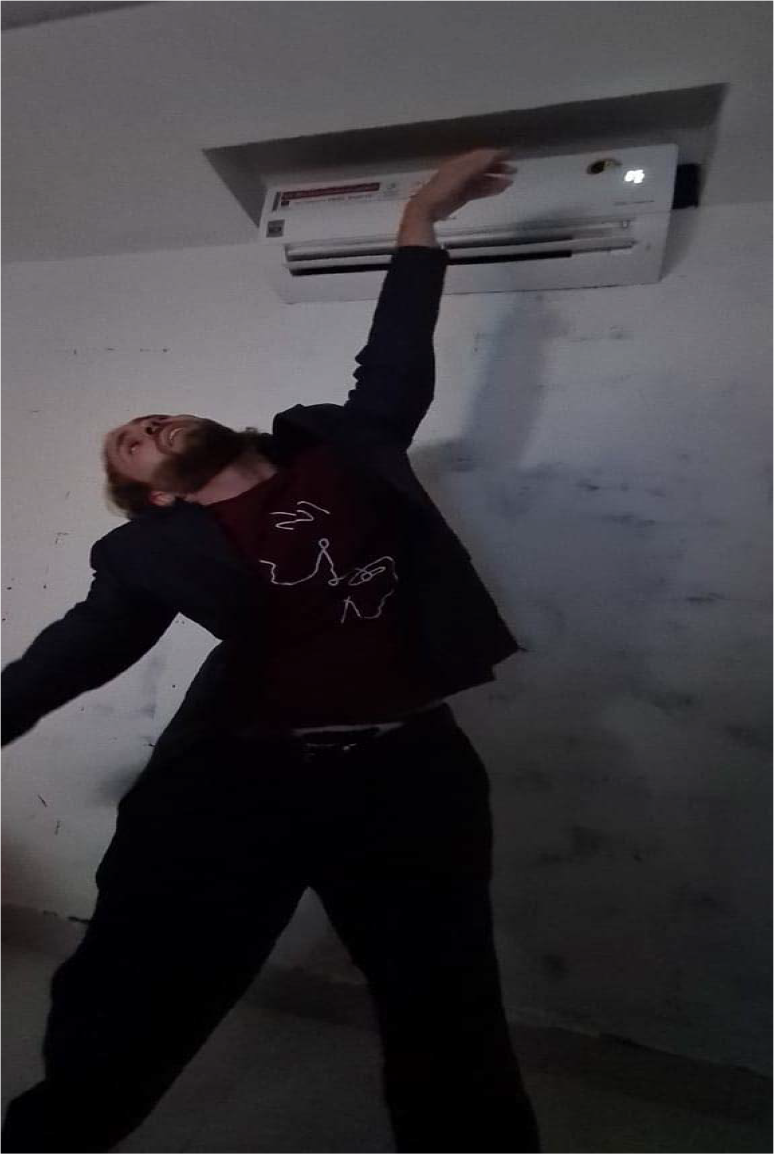
In this context, the audience is presented not only with a fully realized character but also with an intriguing puzzle that gradually unfolds throughout the performance. In the case of Menandro Olinda, it can be considered unquestionably one of the most complex and captivating puzzles ever explored. Below is the record of the in-person rehearsal:
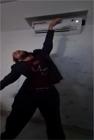
Final meeting - video recording
Witnessing the construction of Menandro Olinda’s voice by actor Felipe Rio Ruas, without the mediation of the camera, was a truly singular experience. On screen, the actor’s body appeared small yet charged with intention; however, observing his physical expansion during the in-person class offered a new layer to the experience. The body-voice came alive, becoming pulsatile and dynamic, as Laban (1966) aptly describes it as “living architecture”:
Movement is, so to speak, living architecture - living in the sense of changing emplacements as well as changing cohesion. This architecture is created by human movements and is made up of pathways tracing shapes in space […]. A building can hold together only if its parts have definite proportions which provide a certain balance […]. Dream-architectures can neglect the laws of balance. So can dream-movements, yet a fundamental sense of balance will always remain with us even in the most fantastic aberrations from reality (Laban, 1966, p. 05).
The recording took place at Estúdio Caló4, a space familiar to the team due to previous courses held there. For the filming, a handheld camera was employed to capture medium and wide shots, alternating focus across various parts of Felipe’s body. This approach was designed with the objective of creating an artistic monologue suitable for inclusion in his professional portfolio. Below is a QR code linking to the final performance video:

Final Considerations
The use of the Laban na Voz Method to explore the actor’s voice has proven to be instructive, offering an organized methodology that clarifies the actor’s work by understanding the voice as the driving force behind artistic expression through character creation. This Method provides opportunities for both independent study and guided direction, granting autonomy, choice, and creative guidance regardless of the type of text being explored - whether a dramatic script, poem, song, or other material.
The primary focus lies in the actor’s process of creating an environment and context for the character - whether through a poem, a narrative, or another form of storytelling. The actor can produce varied vocal textures shaped by both text and context, thereby bringing characters to life or developing distinct dimensions of their voices. Ultimately, studying the voice as a foundation for character construction, based on the Laban na Voz Method, offers actors a pathway to explore and enhance their performance and vocal expression skills. The process of constructing this scene proved to be a meaningful and expressive experience for Felipe, prompting the further development of the monologue into a full-length performance. The project remains in the stages of text expansion and rehearsal. The results achieved thus far reflect actor Felipe Rio Ruas’s dedication to embodying the character Menandro and elaborating the untold narrative in Menandro - dying should be sweet.
One documentation of this process is the visual mosaic created by the actor, drawing on references used during the composition. This piece conveys the essence of the character and the central theme, as illustrated below:

This initial creative phase represents only a portion of the artistic journey, in which Felipe Rio Ruas assumes a decisive role as both creator and interpreter alongside the lead author. Ultimately, Felipe’s creative process in interpreting Menandro - dying should be sweet demonstrated the effective application of the principles of the Laban na Voz Method to enhance the character’s vocal and interpretative expression. The actor’s strategy of concentrating on one nomenclature per lesson proved pivotal in deepening his vocal research until he connected with specific aspects of the character’s voice. This approach culminated in a performance rich in expressive nuance. It is believed that the material explored by the actor will contribute both to the expansion of his vocal repertoire and to the development of new characters.
Notes
-
1
Text adapted by Cléber Lorenzoni, actor and director of the Máschara Theater Group, from Cruz Alta/RS.
-
2
It refers to the speed of the music or phrase.
-
3
Laban uses the term “firm”, however the term “heavy” was chosen as it is con-sidered clearer when applied to the voice.
-
4
Flamenco Studio, directed by Cárol Zanforlin, São Paulo/SP.
-
5
Scene access via link: https://youtu.be/WG0OXkFxEuw?si=XgFSh7q6jde_ig2q. Accessed on: November 11, 2024.
Availability of research data:
the dataset supporting the findings of this study is published in the article itself.
-
The original text, translated by Angélica Ertel, Flavia Pilla do Vale e Alexandra Alexandrovna Heubel, is also published in Portuguese in this issue of the journal.
References
- ADRIAN, Barbara. Actor Training the Laban way: An integrated approach to voice, speech, and movement. New York: Allworth Press, 2008.
-
AZEVEDO, Sônia. Machado. Delsarte e Laban: raízes e princípios de uma revolução estética. Revista Brasileira de Estudos da Presença, Porto Alegre, v. 2, n. 2, p. 351-369, 2012. Disponível em: https://seer.ufrgs.br/index.php/presenca/article/view/30294 Acesso em: 7 nov. 2024.
» https://seer.ufrgs.br/index.php/presenca/article/view/30294 - CANO, Rubén. López; OPAZO, Úrsula São Cristóbal. Investigación artística en música: problemas, métodos, experiencias y modelos. Barcelona: FoncaEsmuc, 2014.
- ERTEL, Angélica. Laban na Voz São Paulo: Editora Giostri, 2020.
- FERNANDES, Ciane. O corpo em movimento: o Sistema Laban/Bartenieff na formação e pesquisa em artes cênicas. São Paulo: Annablume, 2002.
- GAYOTTO, Lúcia Helena. Voz, partitura da ação São Paulo: Editora Plexus, 2015.
-
HACKNEY, Peggy. Forma. Porto Alegre: Revista Cena, Porto Alegre, n. 32, p. 21-37, 2020. Disponível em: https://seer.ufrgs.br/index.php/cena/article/view/109742 Acesso em: 9 out. 2024.
» https://seer.ufrgs.br/index.php/cena/article/view/109742 -
ICLE, Gilberto; ALCÂNTARA, Celina. Teatro, palavra, performance: pensar a voz para além da expressão. Revista Repertório teatro & dança, Salvador, v. 14, n. 17, p. 129-135, 2011. Disponível em: https://lume.ufrgs.br/handle/10183/225795 Acesso em: 14 dez. 2023.
» https://lume.ufrgs.br/handle/10183/225795 - LABAN, Rudolf. The Language of Movement: a guidebook to choreutics. Annotated and edited by Lisa Ullmann. London: MacDonald and Evans, 1966.
- LABAN, Rudolf. The Mastery of Movement 3rd edition. Boston: Plays, Inc., 1971.
- LABAN, Rudolf. Modern Educational Dance 3rd edition. London: Macdonald and Evans Ltd., 1975.
- LABAN, Rudolf. Domínio do Movimento São Paulo: Editora Summus, 1978.
- LABAN, Rudolf. Dança Educativa Moderna São Paulo: Editora Ícone, 1990.
- LACERDA, Osvaldo. Teoria elementar da música São Paulo: Editora Ricordi, 1961.
-
LIMA, Daniel Magalhães de Andrade. As vozes pelo caminho do mover: som, cinestesia e o si mesmo como processo na somática do Sistema Laban/Bartenieff. Revista Cena, Porto Alegre, n. 32, p. 83-93, 2020a. Disponível em: https://seer.ufrgs.br/index.php/cena/article/view/104242 Acesso em: 05 nov. 2023.
» https://seer.ufrgs.br/index.php/cena/article/view/104242 -
LIMA, Daniel Magalhães de Andrade. Corporeidades vocais: abordagens somáticas e analíticas para movimento corporal e vocal pelo Sistema Laban/Bartenieff. 2020. Monografia (Especialização no Sistema Laban/Bartenieff) - Faculdade Angel Vianna, Rio de Janeiro, 2020b. Disponível em: https://www.academia.edu/53262278/Corporeidades_Vocais_abordagens_som%C3%A1ticas_e_anal%C3%ADticas_para_movimento_corporal_e_vocal_pelo_Sistema_Laban_Bartenieff Acesso em: 12 fev. 2024.
» https://www.academia.edu/53262278/Corporeidades_Vocais_abordagens_som%C3%A1ticas_e_anal%C3%ADticas_para_movimento_corporal_e_vocal_pelo_Sistema_Laban_Bartenieff -
MARTINS, Marina. Corpo Prismático: Estudo do Movimento. Rio de Janeiro: LAPECC/DAC/UFRJ, 2011. Disponível em: https://docplayer.com.br/84619835-Sistema-laban-bartenieff-estudos-do-movimento.html Acesso em: 23 set. 2023.
» https://docplayer.com.br/84619835-Sistema-laban-bartenieff-estudos-do-movimento.html - QUINTEIRO, Eudósia Cunha. Estética da Voz: Uma voz para o ator. São Paulo: Summus, 1989.
-
SCIALOM, Melina. Laboratório de Pesquisa: metodologia de pesquisa corporalizada em artes cênicas. Revista Brasileira de Estudos da Presença, Porto Alegre, v. 11, n. 4, 2021. Disponível em: https://seer.ufrgs.br/index.php/presenca/article/view/111236 Acesso em: 7 nov. 2024.
» https://seer.ufrgs.br/index.php/presenca/article/view/111236 - SUNDBERG, Johan. Ciência da Voz: Fatos sobre a voz na fala e no canto. São Paulo: Editora Edusp, 2015.
-
VALLE, Flavia Pilla. Relações integradas: Os quatro grandes temas do Sistema Laban Movement Analysis/Bartenieff Fundamentals (LMA/BF). In: FAGUNDES, Patrícia; DANTAS, Mônica; MORAES, Andréa (Org.). Pesquisa em Artes Cênicas em Tempos Distópicos: rupturas, distanciamentos e proximidades. Porto Alegre: UFRGS, 2020. p. 113-131. Disponível em: https://lume.ufrgs.br/handle/10183/224209 Acesso em: 09 nov. 2024.
» https://lume.ufrgs.br/handle/10183/224209 - VERÍSSIMO, Erico. Incidente em Antares. São Paulo: Editora Globo, 1997.
- ZUMTHOR, Paul. Performance, recepção e leitura São Paulo: Editora da PUC, 2000.
- ZUMTHOR, Paul. A letra e a voz São Paulo: Editora Companhia das Letras, 2001.
-
Editors-in-charge:
Ana Wegner; Rafaella Uhiara


 Source: YouTube Archive (2021)