
 Trends and distribution of pediatric medical residency programs over Brazil, in the last decade
ABSTRACT
Introduction: Pediatric medical residency has undergone significant transformations in recent years, reflecting broader social changes and shifts in health policies. Beyond technical training, this specialization emphasizes a comprehensive approach to pediatric care, integrating aspects of prevention and health promotion. Understanding the growth trends and demand for specialization in Pediatrics is crucial for the development of public policies, allowing the anticipation of impacts on the medical workforce. This study examines the trends and distribution of Pediatric medical residency programs and their fields of practice in Brazil between 2015 and 2024.
Methodology: The research was based on data recorded in the system of the National Medical Residency Commission (SisCNRM), accessible through public consultation on the Integrated Ombudsman and Access to Information Platform (Fala.BR).
Results: Pediatric medical residency in Brazil has experienced significant growth over the past decade, with a total of 52,978 positions offered and a 79% increase between 2015 and 2024. Despite this progress, a substantial number of positions remain unfilled, with an accumulated 14,499 vacancies without candidates. The positions remain concentrated in major urban centers, with 53.00% of them filled in the Southeast Region in 2024. During the same period, there was a 22.87% increase in opportunities for subspecialties. Neonatology remains the most sought-after field, followed by Pediatric Intensive Care and Pediatric Neurology. Emergency Pediatrics has recently gained prominence, along with the recent incorporation of Adolescent Medicine as a recognized subspecialty.
Discussion/Conclusion: Persistent challenges remain regarding the equitable distribution and occupancy of pediatric and subspecialty residency positions, indicating that the expansion of opportunities is not always accompanied by corresponding adherence to the programs. The shortage of pediatricians in healthcare services highlights a systemic weakness and compromises the quality of care provided to children. The evolving health needs of the pediatric population demand continuous analysis to guide policy decisions in education and healthcare. In this context, the implementation of strategic actions aimed at training specialists in underserved regions becomes necessary as a means to expand access to quality pediatric care.
Keywords:
Demographics; Medical Residency; Pediatrics; Specialization; Medical Education
RESUMO
Introdução: A residência médica em pediatria passou por transformações significativas nos últimos anos, refletindo mudanças sociais e políticas de saúde. Além da formação técnica, essa especialização enfatiza uma abordagem abrangente do cuidado pediátrico, integrando aspectos de prevenção de doenças e promoção da saúde. Compreender as tendências de crescimento e a procura pela especialização em pediatria é crucial para a criação de políticas públicas, de modo a antecipar impactos na força de trabalho médica.
Objetivo: Este estudo examina as tendências e a distribuição dos programas de residência médica em pediatria e suas áreas de atuação no Brasil, entre 2015 e 2024.
Método: Foram utilizados como base para a pesquisa os dados registrados no Sistema da Comissão Nacional de Residência Médica (SisCNRM), acessível a partir de consulta pública na Plataforma Integrada de Ouvidoria e Acesso à Informação (Fala.BR).
Resultado: No Brasil, a residência médica em pediatria cresceu significativamente na última década, totalizando 52.978 vagas oferecidas e um aumento de 79% entre 2015 e 2024. Apesar do avanço, ainda há um número significativo de vagas ociosas, com um acúmulo de 14.499 vagas sem candidatos. As vagas seguem concentradas nos grandes centros urbanos, com 53,00% delas preenchidas na região Sudeste, em 2024. No mesmo período, nota-se um aumento de oportunidades para subespecialidades em 22,87%. Destaca-se a manutenção da neonatologia como a área de atuação mais procurada, seguida da medicina intensiva e neurologia pediátricas. A emergência pediátrica ganhou proeminência recente, bem como a recente incorporação da medicina do adolescente como área de atuação reconhecida.
Conclusão: Há desafios persistentes na distribuição equitativa e no preenchimento de vagas em pediatria e suas áreas de atuação, indicando que a ampliação das oportunidades nem sempre é acompanhada de adesão aos programas. A falta de pediatras nos serviços de saúde evidencia uma fragilidade no sistema e compromete a qualidade da assistência prestada à saúde infantil. A evolução das necessidades de saúde da população pediátrica requer análise contínua para orientar decisões políticas em educação e saúde. Nesse contexto, torna-se necessária a implementação de ações estratégicas voltadas à formação de especialistas em locais de maior carência, como forma de ampliar o acesso a cuidados pediátricos de qualidade.
Palavras-chave:
Distribuição de Médicos; Residência Médica; Pediatria; Especialização; Educação Médica
INTRODUCTION
Residency is a stage of advanced training aimed at health graduates who have already completed their undergraduate degree1, and is considered the “gold standard” of training in the in-service training modality. During medical residency, professionals specialize in a specific area of medicine, acquiring experience and knowledge under the supervision of seniors. This is a period of great dedication to the development of professional skills, in which learning through the practical application of theory as a teaching method is proposed2. Among the medical specialties available, significant changes have been observed in Pediatrics in recent years, which reflects an evolution in the demands and approaches of professional training.
These changes reflect socioeconomic dynamics, changes in health system policies, and evolutions in professional preferences among new medical graduates. The role of pediatricians in the Unified Health System (SUS, Sistema Único de Saúde) is becoming increasingly broader, going far beyond clinical care and encompassing aspects of health prevention and promotion3. In addition to the treatment of diseases, the pediatrician considers the biopsychosocial context of each child, that is, they evaluate the impact of factors such as socioeconomic conditions, family structure, access to education and safety. Most of these attributions can be developed during the medical residency period, as a way to respond to the current demands in child and adolescent health and to train specialists with a comprehensive view of care4.
For these reasons, the duration of the medical residency program in Pediatrics was extended in 2013 by a proposal approved by the National Commission for Medical Residency1. This was a decision supported by the Brazilian Society of Pediatrics (SBP) in line with the curriculum developed by the Global Pediatric Education Consortium5, under the argument that modern pediatrics in the twenty-first century does not fit into just two years of qualification. The deadline for reorganization and implementation in the services occurred in 2019. Currently, the program lasts three years in Brazil, which can be extended for another two or three years if the pediatrician chooses a subspecialty - also called area of expertise6 by the Brazilian Federal Council of Medicine. This article will use both terminologies, as the term “subspecialty” is still more common in the published literature.
The SBP defines the minimum requirements for residency in Pediatrics, with the objective of training professionals able to offer comprehensive care to human beings in growth and development. This training provides for participation in educational processes of patients and caregivers, as well as dynamic action in interdisciplinary teams, in order to stimulate adaptation to contemporary social contexts. Foe this purpose, the standardization published in 2016 proposes that the residency program be developed at an increasing level of complexity, with a preference for active methodologies,(7),(8. The Curricular Guidelines for Medical Residency reinforce this model by prioritizing competency-based training, overcoming the traditional focus centered on theoretical contents9. The adoption of entrustable professional activities - EPAs - as an evaluative tool also contributes to the clear definition of training objectives, optimizing the teaching-learning process for residents and preceptors9.
Despite this evolution in terms of training, there is a shortage of pediatricians working in the SUS in the country, which generates difficulties in the care of children, especially in more vulnerable regions. An important milestone related to this gap was the loss of the role of this figure in primary care childcare, a phenomenon that intensified from the end of the 1990s, with the consolidation of the Family Health Program (FHP)10 . The reorganization of health teams and the expansion of the attributions of other professionals, such as family physicians and nurses11),(12, resulted in the reduction of a space traditionally occupied by pediatricians, contributing to the crisis in the specialty. In addition, the progressive decrease in the operation of pediatric emergencies in emergency care units and hospitals highlights the lack of these specialists also at the secondary and tertiary levels of care, culminating in work overload and low adherence of new pediatricians to public positions8.
The so-called “crisis in Pediatrics” and the insufficient presence of this medical class in health services distributed throughout the country have been a matter of debate in the media, but few studies have been dedicated to deeply investigating the origin of this problem. Important gaps persist in the understanding of the relationship between working conditions and quality of life of pediatricians, which may be associated with the lower demand for this specialty among medical graduates. Among the demotivating elements, the precariousness of work relationships in emergency shifts - associated with the physical and emotional exhaustion of pediatricians in practice - the fragility of the referral and counter-referral mechanisms necessary to ensure the longitudinal care of the child, in addition to the perception of a monthly income lower than the expectation and the difficulty in achieving professional fulfillment13), (14.
However, the decision to specialize in child care is not based only on individual interests, but also depends on factors such as opportunities for specialization, availability of vacancies, and the geographic distribution of residency programs9),(15),(16. It is important to ensure that the offer of residencies in Pediatrics considers the need for specialist physicians according to the demographic, social, and epidemiological profile of the Brazilian population, in line with the principles of the SUS17. As Brazil faces challenges related to regional health disparities, there is a need to explore how these trends align with the goals of improving access to pediatric care for all its citizens.
The literature is still limited regarding the analysis of growth trends and the demand for vacancies in pediatric specialties. The analysis of these movements can support the planning of public health policies, as well as to anticipate possible consequences on the composition and distribution of the workforce in Pediatrics. Considering this scenario, this article assesses the current trends in the distribution, supply, and occupation of vacancies for medical residency in Pediatrics in Brazil. By analyzing the data of recent years, we seek to better understand the future of the health of the pediatric population in the country and its implications for the organization and operation of the Brazilian health system as a whole.
METHOD
This is a cross-sectional and descriptive study based on a structured spreadsheet of data related to medical residency programs in Pediatrics and their areas of expertise in Brazil, between the years 2015 and 2024. Data recorded in the National Commission for Medical Residency (SisCNRM) System were used for the research, accessible from public consultation registered in the Integrated Platform for Ombudsman and Access to Information (Fala.BR).
The following information was available in the spreadsheet: accredited institutions by Region, Federation Unit (FU), municipalities, and authorized and occupied vacancies in medical residency programs in Pediatrics and its subspecialties. For the total number of vacancies in each institution, the number of vacancies - offered and filled - in each year of residency (R1, R2, R3, R4 and R5) was considered. From the “institutions” column, services in which vacancies were not filled, were excluded in Tables 1 and 3. Among different institutions, the subspecialties “Cancerology” and “Oncology”, whose curricula are similar, were considered as a single entity.
The data were presented in an EXCEL spreadsheet (Microsoft 365), from which all calculations in absolute numbers and percentages were performed, and graphs and tables were made. Information related to the population was obtained from the IBGE website, 2022 demographic census. This is the last year in which an updated demographic census was carried out, disregarding population projections. The heat map was constructed using the Q-gis program, version 3.38.
As these data are in the public domain, there was no need to obtain the free and informed consent form, and it was not possible to identify the study participants. Likewise, there was no need to submit the project to the Research Ethics Committee.
RESULTS
Residency in Pediatrics
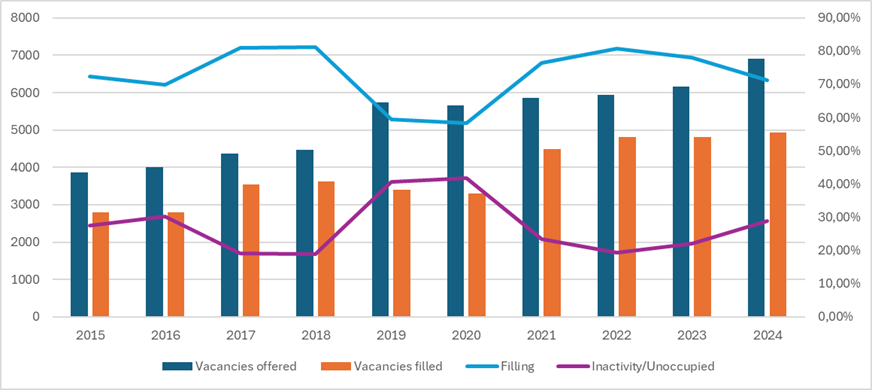
Between 2015 and 2024, a total of 52,978 medical residency vacancies in Pediatrics were offered in Brazil (Graph 1). Of these, 72.63% were filled. The peak of occupancy happened in 2018, when the rate reached 81.14%, while 2020 recorded the lowest value, with only 58.30% of the vacancies filled. Inactivity, on the other hand, remained significant, with a total of 14,499 vacancies without candidates in the last decade.
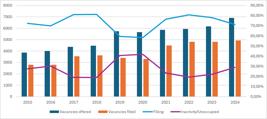
Relationship between supply, filling and inactivity of medical residency vacancies in Pediatrics in Brazil, between 2015 and 2024.
In 2015, 72.44% of the vacancies for direct access to Pediatrics were filled - of the 3,862 available, only 2,798 had candidates. In 2024, with the offer expanded to 6,913 vacancies, the occupancy rate was 71.25%, totaling 4,926 residents. Despite the increase of 79.00% in the offer of vacancies between the years, the inactivity rate remained proportionally similar.
In 2024, more than half of the physicians who entered the residency in Pediatrics were in the Southeast Region, whose density of residents per inhabitant exceeded the national average (Table 1). In this region, the state of São Paulo alone accumulated more than 20% of the offering institutions, and almost 30% of the national interest in residency in Pediatrics. In contrast, the North and Northeast regions recorded a significantly lower presence of residents in the specialty.
All the FUs that did not offer vacancies outside the capitals in 2024 are located in the North Region of the country - Acre, Amapá, Amazonas, and Roraima (Figure 1). In these states, there were no vacancies in the interior in any of the years covered by the study. On the other hand, Minas Gerais, São Paulo, Santa Catarina and Paraná stood out for a higher supply of vacancies in the interior of the states than that recorded in their respective capitals, a trend observed in most of the analyzed period.

Residency in pediatric areas of expertise
In the last 10 years in Brazil, medical residency programs have been available in the pediatric subspecialties highlighted in Table 2. The most recent residencies are Pediatric Emergency, starting in 2016, and Adolescent Medicine, which began to be offered in 2024. In the set of areas, Neonatology, Intensive Care Medicine, Cardiology and Neurology stand out as the most expressive subspecialties in terms of vacancies, in addition to their high demand for pediatricians.
A total of 28,150 vacancies were made available for subspecialization programs in Pediatrics in the analyzed period. The highest occupancy rate was recorded in 2018, with 62.93% of candidates, while the lowest occurred in 2022, with only 42.21% of vacancies occupied. In all, 14,242 pediatricians decided to continue their training as specialists, which corresponds to about half of the number of vacancies offered.
Between the years, there was an increase in the supply of vacancies by 22.87%, with inactivity maintained at very close values. Intensive Care Medicine and Emergency, as well as pediatric neurology, were the areas that grew the most in the country, while oncology/cancerology and pediatric rheumatology were the subspecialties with the least expansion in the analyzed period.
Similar to the pattern observed in direct access, the Southeast Region has an important concentration of vacancies for pediatric subspecialties, with a strong contribution from the state of São Paulo (Table 3). The North Region has the lowest percentage of institutions that offer residency programs for pediatrician specialization (4.22%). The presented data follow very similar trends when analyzing the number of vacancies offered and filled.
DISCUSSION
The data from this study indicate a significant increase in the supply of vacancies for Pediatrics in recent years. This movement accompanies the expansion of the number of doctors in the country, which has been intensifying with the opening of new undergraduate schools in Medicine. This is a recent phenomenon, widely attributed to strategies to democratize access to higher education, which resulted in a 214.9% increase in the number of medical schools in Brazil in the last two decades18. However, the scenario was achieved with a strong contribution from private institutions, in addition to being marked by the maintenance of regional inequalities in its distribution. This scenario is particularly relevant because, like access to undergraduate medical education, training in Pediatrics must be equitable and aligned with regional demands. Considering the territorial extension of Brazil and the persistent challenges of the interiorization of health care19, it is necessary for Pediatrics to respond to local demands in an articulated and contextualized way.
Among the public policies engaged with this purpose, the National Program to Support the Training of Specialist Doctors, the Pro-Residency, established in 2009, stands out. By encouraging the expansion of vacancies and medical qualification in strategic regions, the program sought to align the demands of the SUS with the interests of the training institutions, encouraging the consolidation of health care networks. Pediatrics and Neonatology were among the covered areas, with important repercussions in states such as Tocantins and Acre9. But, of all the actions, the More Doctors Program (PMM, Programa Mais Médicos) continues to be one of the most significant and successful tools for medical decentralization in the country. The program provides for the expansion of courses and vacancies, both in undergraduate and residency programs, with the prioritization of regions with a lower ratio of vacancies and physicians per inhabitant20. In fact, a study in the state of Rio de Janeiro indicated that, since the institution of the PMM in 2013, Pediatrics has been one of the specialties with the highest increase in vacancies for direct access4.
Despite this, there is a persistent trend of underemployment throughout the analyzed period. This suggests that, despite the effectiveness of the mentioned initiatives in facilitating access to medical residency, many programs remain unattractive to candidates for the specialty. This scenario worsened in 2019 and 2020, possibly due to the transition phase for the incorporation of the third year (R3) in the institutions, in addition to the impact of the “academic burnout” associated with the COVID-19 pandemic. During this period, a multicenter study identified greater emotional exhaustion and academic demotivation among medical students, with an effect on the loss of professional engagement and specialization decisions21. Although the effects of the health crisis may have contributed to the reduction in adherence to Pediatrics, there are still few studies that robustly prove this relationship.
In addition, it was found that residency in Pediatrics continues to be strongly concentrated in large urban centers. Some programs offered in less populated cities were unable to attract candidates, which may also have contributed to the maintenance of vacancies in the time frame of the study. In other words, although the process of internalization of medical graduation has become a reality4, it may not have contributed to the retention of physicians in these municipalities after graduation. These findings indicate the need for investment in other areas, such as the infrastructure of municipalities and their respective education and health care services - including the provision of adequate medical resources and equipment22),(23.
In fact, our study shows that the supply of vacancies for Pediatrics is more considerable in Brazilian capitals, a common reality in most states. The concentration of Brazilian physicians in large urban centers and in more developed regions is historical, which may be due to the preference for regions with better social indicators and working conditions, in addition to the greater supply of goods and services and the possibility of continuing education20),(24. Considering that physicians tend to seek their specialization in reference places where they can practice their profession and maintain an employment relationship in the future25, the establishment of these professionals in other regions of the country still encounters many barriers.
The North and Northeast regions have less decentralization of the pediatric workforce, which may be both a reflection of the precariousness of mobility networks and the representation of a national scenario marked by profound socioeconomic differences. In contrast, the Southeast-South axis offers more opportunities outside the capitals. The “Medical Demography in Brazil 2024” highlights that São Paulo concentrates almost a third of the country’s resident physicians, followed by Minas Gerais and Rio de Janeiro, both with about 10% each26. These states stand out for their higher per capita income and for the density of medical schools that precede the main policies of interiorization. Some studies even reveal that the presence of medical schools in the interior favors the retention of physicians in these places and that their proximity to vulnerable areas increases the attraction and permanence of graduates27),(28.
Parallel to these motivators, it is impossible to disregard the multifactorial context that leads to the choice of a specialty after medical graduation. Some studies point to affinity as the main psychosocial factor involved in this process15),(29, influenced by feelings of belonging, lifestyle, personal value and notable experiences during training. Pediatrics has been among the main choices for specialization in professional aspiration research carried out with students16),(30, in addition to representing an important percentage of the total vacancies offered for direct access residencies31. The results of a study conducted by the Faculty of Medicine of Universidade de São Paulo showed that the choice for Pediatrics was related to affection for children, preference for working with this population, and the generalist characteristic of the specialty14. Despite this, 22% were partially fulfilled after entering the residency due to lower than expected income or lack of academic qualification.
What has been observed, in practice, is the scarcity of doctors with specialization in Pediatrics in public services, especially in primary care. Studies carried out in Rio Grande do Sul and Bahia pointed to the lack of pediatricians and difficulties in the provision of childcare as factors that compromise the search of families for child health services32)-(33. As discussed before, the redefinition of the role of the pediatrician in the FHS care model changed the professional work relationships. Thus, although general practitioners can manage common childhood diseases in the context of primary care, pediatricians should also be called upon to monitor patients with chronic or complex diseases, which require continuous and specialized care. Conditions such as diabetes, epilepsy, asthma, and cystic fibrosis require close monitoring and coordination between different levels of care. However, many FHS professionals report a lack of counter-referral from specialized services, and a 2020 study shows that 35% to 60% of pediatric consultations in primary care are referred to specialists, with no return in most cases7.
This scenario highlights failures in the problem-solving capacity of primary care, the prioritization of curative actions to the detriment of preventive strategies, and the fragmentation of care. Moreover, the absence of the figure of the pediatrician in these moments exposes important gaps in the insertion of this professional in the health system, as well as having repercussions on the overload of emergency services. When inserted strategically, the pediatrician can act as a matrix, ensuring longitudinal follow-up, adjusting conducts and guiding families, in addition to collaborating with subspecialists to ensure comprehensive and multidisciplinary care. Their presence should be understood not as a point of referral, but as an active and essential part of teamwork in the FHS12.
Similar to the behavior observed in direct access, there was an expansion of programs offering pediatric subspecialization. A study conducted in the United States also showed an increase of about 92% between 2001 and 2018 in the country, but with uneven growth patterns among subspecialties34. In the American context, as in Brazil, pediatric emergency was one of the areas with the greatest growth. In our context, this expansion of vacancies is still closely related to the recent consolidation of this area of activity in several Brazilian regions, since the homologation that allowed the resumption of this specific training only occurred in 201535.
This is an important achievement for the care of the child population, since emergency care services still face many challenges. There is a shortage of workforce in emergency care units in hospitals and public health centers throughout Brazil, with gaps in the number of professionals becoming more pronounced in recent years36),(37. Several factors contribute to this, such as recruitment difficulties, retention issues and system-wide pressures. However, it is observed that emergency medicine requires highly specialized competencies and there is a limited pool of trained professionals to deal with the challenges. Pediatricians specializing in this area are still scarce, but it is expected that this reality will change with the consolidation of training programs at the national level.
Neonatology, on the other hand, stood out for being one of the most accessible areas of activity, offering an important percentage of vacancies for residency throughout the national territory. In fact, this is one of the most sought-after areas by pediatricians, which is extremely timely in the current epidemiological context. Between 1990 and 2022, the infant mortality rate in Brazil decreased from 47.1 to 13.8/1000 live births, thanks to socioeconomic changes in the population, basic sanitation, access to drinking water, wide vaccination coverage, measures to encourage breastfeeding, and improved nutritional conditions38),(39. Currently, the main component of infant mortality is neonatal, with most causes being considered preventable40. Thus, the neonatologist pediatrician represents an indispensable workforce in the fight to reduce Brazilian infant mortality rates.
Considering this scenario, technological advances and the improvement of techniques in Neonatology have contributed to the increase in the survival of extremely preterm infants. However, this evolution has also resulted in complications and long-term consequences, such as neuropsychomotor developmental disorders and neurological pathologies41),(42. These factors may explain the growing demand for the area of pediatric neurology, which is in wide demand in the labor market and has future prospects for even greater growth.
In summary, the pediatrician must be prepared to meet all these complexities, following the changes in health care models, as well as labor relations in the public and private sectors. Adapting the workforce to the new demands of the production system is a constant challenge. In recent years, we have observed the growth of the non-state public sector, and with it, the pronounced outsourcing of services through management contracts with Social Organizations (SO). This model has a direct impact on the employment structure and the work process, with a view to more vulnerable relationships, especially with the weakening of employment relationships and the precariousness of working conditions43. Such dynamics can result in the hiring of doctors without specific training, which narrows the salary difference between specialists and non-specialists, generating demotivation among qualified professionals.
FINAL CONSIDERATIONS
The present study showed the unequal distribution of Pediatrics among the regions, with a significant concentration of programs in large urban centers, while the most distant places continue to face challenges in attracting physicians and in the equitable distribution of vacancies. Among the main trends, the growing presence of residency programs in more peripheral locations stands out, in an effort to meet the health needs of populations in more underserved areas. The filling of these vacancies, however, is still insufficient to meet the shortage of doctors, which requires more effective public policies, such as the continuity of interiorization initiatives and encouraging the training of doctors in areas of difficult access.
It is clear that the so-called “crisis in Pediatrics” in Brazil reflects a complex set of structural, organizational and sociopolitical factors that directly impact the valorization and performance of pediatricians. The effective insertion of this specialist in the FHS as an articulator of child care will allow significant gains in problem-solving, continuity of care and rationalization of referrals to other levels of care. Finally, strengthening the presence of pediatricians in the main emergency centers in the country is essential in the face of the growing demand and complexity of cases treated in these scenarios. However, the precariousness of labor relations, overload and the absence of adequate working conditions make this performance less and less attractive.
A relevant limitation of this study refers to the possible overestimation of the inactivity rates in the vacancies offered, since some programs, although authorized, may not have been effectively made available in the admission notices of the respective year. In addition, the possibility of discrepancies in the Brazilian population estimate for the years 2022 and 2024 is recognized, whose updated data are not yet available on the official IBGE portal.
The continuity of research on the evolution of medical residency programs in Brazil can help monitor advances and identify new challenges that support the planning of public policies on training strategies and resource allocation, with the objective of meeting the demands of the SUS in relation to the Brazilian pediatric population.
References
- 1 Campos VD, Fidelis FA, Silva PH, Teixeira AS, Batista AS. Recorte demográfico da residência médica brasileira em 2019. Revista Consensus. 2019;32:34-45.
- 2 Ruiz PF. Preceptoria em residência médica: uma avaliação sob a perspectiva dos preceptores. Rev Bras Educ Med. 2024;48:e116.
- 3 Vaz ES, Campos Junior D. Currículo pediátrico global. Barueri: Manole; 2015.
- 4 Silva Junior AG, Andrade HS, Alexandre GC, Alves MG, Costa BR. Oferta de vagas de graduação e residência médicas no estado do rio de janeiro a partir do programa mais médicos (2013-2015). Rev Eletr Gestão Sociedade. 2016;10(26):1347-59.
- 5 Villar MA, Cardoso MH. Residência médica em pediatria: no campo de prática. Cad Saude Publica. 2022;18:329-39.
- 6 Brasil. Resolução CFM nº 2.148, de 26 de outubro de 2016. Define e reconhece as especialidades médicas e respectivas áreas de atuação. Diario Oficial da União; 11 nov 2016. Seção 1, p. 138.
- 7 Moraes MM, Afonso JM, Nascimento MK, Pereira GR, Pereira SC, Souza BS. Estratégia Saúde da Família e a saúde da criança no Extremo Sul da Bahia, Brasil. Rev Baiana Saude Publica. 2023;47(2):144-62.
- 8 Souza RR, Vieira MG, Lima CJ. A rede de atenção integral à saúde da criança no Distrito Federal, Brasil. Cien Saude Colet. 2019;24(6):2075-84.
- 9 Guerra Junior P, Daltro MR. Fatores contribuintes para escolha da pediatria como especialidade médica. Rev Bras Educ Med . 2022;46(2):e073.
- 10 Del Ciampo LA, Ricco RG, Daneluzzi JC, Del Ciampo IRL, Ferraz IS, Almeida CAN. O Programa de Saúde da Família e a Puericultura. Cien Saude Colet . 2006;11(3):765-72.
- 11 Secretaria de Estado de Saúde do Distrito Federal. Atenção à saúde da criança e fluxogramas. Brasília: SES-DF; 2018.
- 12 Rivorêdo CRSF, Oliveira GN, Mendes RT. A prática pediátrica no SUS: reflexões sobre o papel dos pediatras na Estratégia de Saúde da Família. Cien Saude Colet . 2011;16(10):4221-8.
- 13 Araujo SQ de. A pediatria como especialidade: uma perspectiva sobre o dimensionamento desse médico especialista no Brasil. Brasília: Universidade de Brasília; 2018.
- 14 Koch VHK, Doria Filho U, Bollela VR. Avaliação do programa de residência médica do Departamento de Pediatria da Faculdade de Medicina da Universidade de São Paulo. Rev Bras Educ Med . 2011;35(4):454-9.
- 15 Silva MS, Deslandes A, Sanchez ALS, Aníci RAF, Campos LR, Marinho PVS, et al. Fatores e motivações associados à escolha da especialidade pediatria. Rev Bras Educ Med . 2014;38:427-34.
- 16 Cruz JA, Sandy NS, Vannucchi TR, Gouveia EM, Passerotti CC, Bruschini H, et al. Fatores determinantes para a escolha da especialidade médica no Brasil. Rev Med. 2010;89(1):32-42.
- 17 Brasil. Decreto nº 11.999, de 17 de abril de 2024. Dispõe sobre a Comissão Nacional de Residência Médica e sobre o exercício das funções de regulação, supervisão e avaliação de programas de residência médica e das instituições que os ofertem. Diário Oficial da União; 2024.
- 18 Couto RC, Rego S, Pinto HA. Expansão de vagas e qualidade dos cursos de Medicina no Brasil: “Em que pé estamos?” Rev Bras Educ Med . 2021;45(2):e00205.
- 19 Nassar LM, Passador JL, Pereira Junior GA. Programa Mais Médicos, uma tentativa de solucionar o problema da distribuição médica no território brasileiro. Saude Debate. 2021;45:1165-82.
- 20 Martins ACP, Sant’Anna PA, Durães Rocha JF, Vieira MA, et al. Programa Mais Médicos: uma revisão integrativa. Rev Bras Promoc Saude. 2017;30(4):587-94.
- 21 Jezzini-Martinez S, Martinez-Garza JH, Quiroga-Garza A, Quiroz-Perales XG, Gil-Flores L, de la Fuente-Villarreal D, et al. Assessment of burnout syndrome and associated factors among medical students during the COVID-19 pandemic. J Affect Disord Rep. 2023 Dec;14:100616.
- 22 Almeida Junyor CG, Madeira LSC, Sousa MFJ, Juscelino PAC, Silva TC, Zanuzzi TRL, et al. Efeitos da interiorização da medicina no Brasil: um olhar social e acadêmico. J Health Biol Sci. 2014;12(1):1-9.
- 23 Mourão JJ, Rodrigues ARM, Aragão OC, Goyanna NF, Cavalcante AES, Vasconcelos MAS, et al. Programa Mais Médicos e suas contribuições para a saúde no Brasil: revisão integrativa. Rev Panam Salud Publica. 2018;42:e2.
- 24 Scheffer M, Guilloux AGA, Miotto BA, Almeida CJ, Guerra A, Cassenote A, et al. Demografia médica no Brasil 2023. São Paulo: FMUSP; 2023.
- 25 Povoa L, Andrade MV. Distribuição geográfica dos médicos no Brasil: uma análise a partir de um modelo de escolha locacional. Cad Saude Publica . 2006;22(8):1555-64.
- 26 Scheffer MC, David LA, Xavier MO, Almeida CJ. Radar da demografia médica no Brasil. Panorama da residência médica: oferta, evolução e distribuição de vagas (2018-2024). São Paulo: Universidade de São Paulo; 2024.
- 27 Almeida CJ. Interiorização de cursos e vagas de graduação em Medicina e movimentação territorial de médicos no Brasil [dissertação]. São Paulo: Universidade de São Paulo ; 2022.
- 28 Rocha EMS, Boiteux PA, Azevedo GD, Siqueira CEG, Andrade MAC. Preditores educacionais para fixação de médicos em áreas remotas e desassistidas: uma revisão narrativa. Rev Bras Educ Med . 2020;44(01):e025.
- 29 Façanha CR, Ribeiro MC, Montenegro Junior RM, Bomfim ZA. As escolhas das especialidades médicas e a afetividade: revisão de literatura. Rev Bras Educ Med . 2024;48(3):e070.
- 30 Belarmino LN, Martins MF, Franco MC. Aspirações médicas: análise dos alunos do internato das instituições de ensino superior do estado do Pará. Rev Bras Educ Med . 2016;40(4):685-93.
- 31 Chaves HL, Borges LB, Guimarães DC, Cavalcanti LP. Vagas para residência médica no Brasil: onde estão e o que é avaliado. Rev Bras Educ Med . 2013;37(4):557-65.
- 32 Santos ML, Silva RB, Vogt MS, Haeffner LS, Michelotti MR. Pronto atendimento infantil: quem utiliza e por que motivo. Saude (Santa Maria). 2013;39(2):79-88.
- 33 Silva PL, Aleluia IR, Santana AF, Ribeiro LT. Avaliação da puericultura na Estratégia Saúde da Família em município-sede de macrorregião de saúde. Physis. 2024;34:e34007.
- 34 Macy ML, Leslie LK, Turner A, Freed GL. Growth and changes in the pediatric medical subspecialty workforce pipeline. Pediatr Res. 2021;89(6):1297-303.
- 35 Piva JP, Lago PM, Garcia PCR. Pediatric emergency in Brazil: the consolidation of an area in the pediatric field. J Pediatr (Rio J). 2017;93(1):68-74.
- 36 Peixoto BV, Piazzetta E, Rischini FA, Guimarães MNC, Cuziol M, Lodo PB, et al. A difícil realidade do pronto atendimento infantojuvenil mostrando a situação de saúde de uma cidade. Rev Paul Pediatr. 2013;31:231-6.
- 37 Melo EM, Assunção AA, Ferreira RA. O trabalho dos pediatras em um serviço público de urgências: fatores intervenientes no atendimento. Cad Saude Publica . 2007;23:3000-10.
- 38 Roma JC. Os objetivos de desenvolvimento do milênio e sua transição para os objetivos de desenvolvimento sustentável. Cienc Cult. 2019;71(1):33-9.
- 39 Victora CG, Aquino EML, Leal MC, Monteiro CA, Barros FC, Szwarcwald CL. Maternal and child health in Brazil: progress and challenges. Lancet. 2011;377(9780):1863-76.
- 40 Ministério da Saúde, Secretaria de Vigilância em Saúde. Mortalidade infantil no Brasil. Boletim Epidemiológico. 2012;52(37):1-9.
- 41 Fuentefria RN. Desenvolvimento e crescimento de uma coorte de recém-nascidos prematuros de muito baixo peso ao nascer comparados aos de recém-nascidos de termo saudáveis [tese]. Porto Alegre: Universidade Federal do Rio Grande do Sul; 2016.
- 42 Morais MCS, Turbano MEN, Carneiro MP, Rodrigues AA. A prematuridade associada a fatores neurológicos: uma revisão integrativa de literatura. Recima21. 2024;5(12):e5126013.
- 43 Rodrigues MLC, Silva MCP. A precarização das relações de trabalho no setor público e a terceirização de serviços no Brasil. Rev Bras Saude Trab. 2018;6(1):15-28.
Research data is available in the body of the document

 Source: SisCNRM. Prepared by the authors.
 Source: SisCNRM. Prepared by the authors.