
 Simulation-based training in medicine: a scientometric investigation of Scopus-indexed articles
ABSTRACT
Introduction: Simulated training (ST) in healthcare is a method that exposes students to complex clinical scenarios in controlled environments, allowing them to practice and develop skills without risk to the patient. However, few studies have analyzed the scenario of ST in medical education in the university environment for the development of medical skills.
Objective: The study analyzed the use of ST in universities in the field of medical education.
Method: We identified relevant articles on simulated training and medical education using the main search terms. The Scopus database was used. VOSviewer was used to carry out the bibliometric analysis.
Results: The analysis included 3,968 articles. There has been an increase in publications on ST in medical education. Most of the publications came from developed countries, especially the United States, the United Kingdom and Canada. BMC Medical Education was the journal that published the most articles on the subject. The main research hotspots identified were clinical competence, curriculum and computer simulation.
Conclusion: Simulated training in medical education has attracted the attention of researchers over the years, with an increase in scientific production in the area. Bibliometric analysis suggests that this area will continue to grow, with an emphasis on clinical competence, interns and residencies, curriculum, computer simulation, surgical training, resuscitation and artificial intelligence.
Keywords:
Simulation training; Medical education; Universities
RESUMO
Introdução: O treinamento simulado (TS) na área da saúde é um método que expõe estudantes a cenários clínicos complexos em ambientes controlados, permitindo a prática e o desenvolvimento de habilidades sem risco ao paciente. No entanto, poucos estudos têm analisado o cenário do TS na educação médica no ambiente da universidade para o desenvolvimento de habilidades médicas.
Objetivo: O estudo analisou o tema treinamento por simulação em saúde na educação médica, na universidade.
Método: Identificamos artigos relevantes sobre TS e educação médica usando os principais termos de busca. A base de dados utilizada foi a Scopus. O VOSviewer foi utilizado para realizar a análise bibliométrica.
Resultado: A análise incluiu 3.968 artigos. Houve um aumento de publicações sobre TS em educação médica. A maioria das publicações provém de países desenvolvidos, com destaque para os Estados Unidos, o Reino Unido e o Canadá. O jornal BMC Medical Education foi o que mais publicou artigos sobre o tema. Identificaram-se os principais hotspots de pesquisa, tais como competência clínica, currículo e simulação por computador.
Conclusão: O TS na educação médica vem ao longo dos anos chamando a atenção dos pesquisadores, com um aumento da produção científica na área. A análise bibliométrica sugere que essa área continuará a crescer, com ênfase em competência clínica, internos e residências, currículo, simulação por computador, treinamento cirúrgico, ressuscitação e inteligência artificial.
Palavras-chave:
Treinamento por Simulação; Educação Médica; Universidades
INTRODUCTION
Simulated training (ST) is a method that provides systematic, proactive, and controlled exposure of students to progressively more complex clinical challenges, including those life-threatening situations, which could not be trained otherwise1. The objective of the ST is to recreate the real world in a student’s practice situation, which must be faced with realism, in a safe environment that allows the student to make mistakes, aiming to preserve patient safety and prevent possible damage.
ST also enables the training of rare situations in daily practice2. After the end of the scenario, the debriefing is carried out with the students, providing a new opportunity for training and mitigation of medical errors and the development of medical skills3. Therefore, among other learning situations, this type of method has drawn the attention of researchers and teachers in medical education.
Preventable medical errors are the third leading cause of death, and nonfatal iatrogenesis causes disability in more than 3.5 million patients per year in the U.S.4. In this scenario, the emergence and the need for training with simulated patients to reduce iatrogenic events and prevent deaths related to health care was evidenced. In addition, ST enables increased learning, knowledge retention, and the development of medical skills5. Non-technical skills such as decision-making and communication can also be effectively developed through ST6. On the other hand, in the context of universities, understanding and evaluating under which conditions ST is more effective in medical education is a challenge for researchers in the area7.
The use of ST in the context of medical education in universities requires well-planned and structured criteria, with an appropriate method, trained professionals, and efficient resources to achieve the proposed objectives8. The scenarios developed for the simulation practice should be similar to reality and in well-defined scopes regarding the aspects to be developed during the simulation activity9. However, there is a variability in teaching practices, i.e., non-compliance with the criteria described above8, as well as different ST methods used, among other conditions, which affect the quality of training, negatively impacting results and modulating the potential benefit that students could obtain through ST3.
Although there is a growing interest in ST and medical education, we did not find any bibliometric analysis in the context of universities. General research trends in the field remain unclear. Bibliometric analysis is a widely used method to present the research basis and critical points of a topic or field of research; it evaluates and statistically quantifies large amounts of bibliometric data10. It examines the distribution of search components such as countries, journals, keywords, authors, hotspots, and search trending topics10.
Moreover, we identified some gaps in the scientific literature, such as the majority of studies aimed at professionals and not undergraduate students11, in health most studies are in the field of nursing12, simulated training environments are generally carried out in hospitals and not in health universities, thus our interest in understanding how this happens in universities in undergraduate training13. Finally, we reinforce that we did not identify any bibliometric analysis in holistic/comprehensive topics only in specific topics, such as Virtual Reality, ST in surgeries, Artificial Intelligence, among others. Therefore, the objective of this article is to analyze the topic of simulation training in health in medical education at the university.
METHOD
Bibliometric methods are an integral part of research evaluation methodology within scientific fields and are increasingly used in the study of various aspects of science14. In this study, the database used was Scopus. This database was used due to its wide scope, as it is the largest with citation data from peer-reviewed articles in the literature of various disciplines, and is a product of Elsevier15. After screening, 3,968 articles were included for bibliometric analysis. The schematic flowchart for article recruitment was carried out according to the following steps: a) In Scopus, the search was made using “ALL FIELDS, TITLE, ABS, KEY, b) using the search strategy (N=4.625), c) The type of filtered documents were articles and English language (N=3961), d) The data were tabulated in MS-Excel and VOSviewer, e) The results were analyzed with bibliometric parameters and d) Discussion and conclusion of the study.
Search strategy
The data for this article were acquired from the Scopus database, and no analysis period was defined. The search was started on February 20, 2024 and contained all articles with the terms using the combination shown in Chart 1. This strategy enabled a broader analysis of the field of study, simulation training in health, medical education, and university. Therefore, these keywords were used so that as many relevant publications as possible were incorporated into the extracted data. The search strings were: “simulation”[All Fields] OR “simulation training”[All Fields] OR “patient simulation”[All Fields] OR “high fidelity simulation”[All Fields] OR “simulation-based education”[All Fields] OR “simulation-based research”[All Fields] OR “computer simulation”[All Fields] OR “simulation teaching”[All Fields] OR “low fidelity simulation”[All Fields] OR “virtual reality”[All Fields] OR “VR”[All Fields] OR “role playing”[All Fields] OR “augmented reality”[All Fields] OR “AR”[All Fields] OR “manikins”[All Fields] OR “manikin”[All Fields] OR “mannequin”[All Fields] OR “mannequins”[All Fields] OR “task-trainer”[All Fields] OR “standardized patient”[All Fields]) AND “Health Care”[All Fields] AND medical education”[Article title, Abstract, Keywords ] AND NOT “ nursing”[Article title, Abstract, Keywords ] AND “universities”[Article title, Abstract, Keywords ].
Inclusion and Exclusion Criteria
All data from the Scopus database, including article information such as author names, titles, journals, keywords, institutional affiliations, citations, and abstracts were downloaded. All of these data were converted into xls. file (Microsoft Excel) to check data error. Then, the downloaded data were filtered by inclusions, which were: (1) only publications in the form of articles were considered, (2) articles published in English. The corresponding authors of the present study, WL and LSSN, reviewed the titles of all articles for inclusion in the analysis. Any differences between them were discussed and resolved by a third author. Duplicate documents were defined as articles with the same title, authors, and year and were identified using Microsoft Excel software.
Statistical analysis
Scientometrics is involved in the analysis of productivity and measurement of scientific fields. The quantitative evaluation of the productivity of the publication through scientometric parameters is a very reliable technique to understand the impact of any research on a community16. This study explores the global publications related to simulation training, using scientific research through quantitative metrics of Scientiometry and Bibliometrics. In this study, Excel version 2019 (16.0) and VOSviewer were used to separately describe the basic characteristics of publications, countries, institutions, keywords, and citations. VOSviewer is a software with text mining and advanced visual analysis functions, which is used to construct co-occurrence analyses16),(17. Co-occurrence analysis helps to quantify the common information in various data, revealing the association of content and common relationships of the information18. The type of co-occurrence analysis research is broad, including co-country analysis, co-institution analysis, and co-keyword analysis and co-citation. After searching the literature, the time of publication, journals, countries, institutions, and keywords from the literature were extracted using Excel. Subsequently, the analysis was separated into three stages: (1) a descriptive statistical analysis of the growth pattern, number, year, institution, country and main journals of the publications; (2) a co-citation analysis to rank the most influential articles in this field, and then (3) a co-occurrence analysis on the keywords and burst using VOSviewer.
The results and the discussion are presented in topics together for better presentation. The topics are: Research Status, Hotspots and Co-Institutions, and Hotspots Research and Top Topics.
RESULTS AND DISCUSSION
With this bibliometric analysis, it was possible to observe the increase in the number of articles between the years 1968-2024. In this study, we searched the Scopus database to analyze the state of the art, development of research trends, contribution of different countries in the field of study on simulation training in medical education at the university. The search hotspots were presented using keyword clustering through the bibliometric map generated in Vosviewer. Co-citation analyses, most cited articles and research trends were performed using the Scopus database and burst analysis to verify trends in hotspot topics. We conducted this review as a way to encourage dialogue among researchers in this field of study.
Survey status, Hotspots, and co-institutions
The 3,961 articles analyzed in the Scopus database, published between 1968 and 2024, confirmed the upward trend in publications on simulated health training at the university. This information can be explained by the changes in the pedagogical perspective that occurred in the curricula of health courses, especially in medicine and nursing in the analyzed period. Changes, such as greater incorporation of active methodologies, learning process built on the exercise of learning by doing, constant relationships between theory and practice, creative thinking, and meaningful learning may partially explain this increase in publications19. Another aspect is the concern with medical education based on scientific evidence as a way to reduce errors in professional practice and increase patient safety20. The advancement of technology is another factor to be considered for the increase in the number of studies in the field of study, which may have contributed to the development of new instruments, procedures and research methods3. We emphasize that from 2010 onwards the number of publications exceeded 100 per year, reaching 411 in 2023, which demonstrates the important growth of the area. This approach is in line with the concept of meaningful learning proposed by David Ausubel, in which new knowledge is substantially integrated into the student’s preexisting cognitive structure45.
The articles were published in 1,225 journals. The three journals with the highest contributions were BMC Medical Education (IF = 3.2) , Journal Of Surgical Education (IF = 2.9) and Education Academic Medicine (IF = 8). The scope of these journals is in medical education, with a more interdisciplinary approach, only the Journal of Surgical Education is specific in the topic of surgical medical education. Academic Medicine is the journal with the highest Impact Factor (IF) and is among the most cited; these data are in accordance with previous studies of the scientometric type in medical education 13),(21.
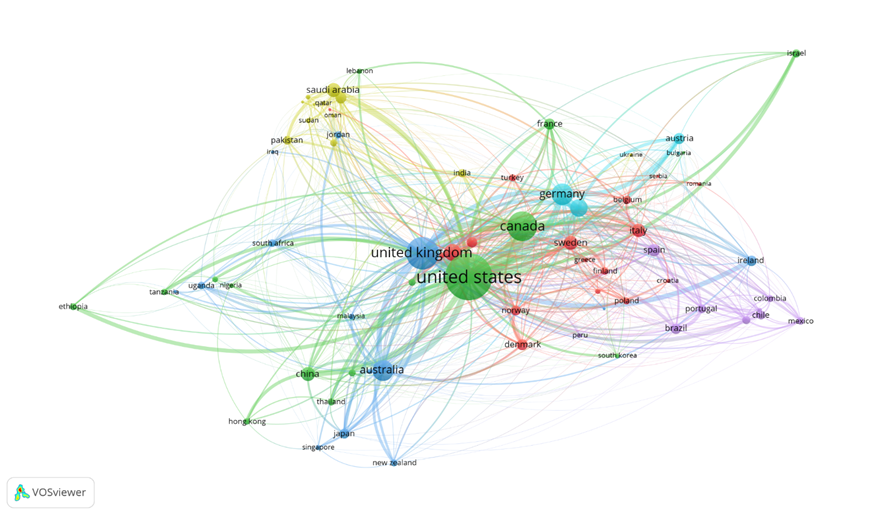
In the scientometric analysis of co-countries the USA (n = 1,545) was the country with the highest number of publications in the field of simulation training in health, followed by Canada (n = 328), the United Kingdom (n = 298), Germany (n = 267) and Australia (n = 196), as shown in the map in Figure 1. This result demonstrates an imbalance of publications between countries/regions of the world; on the other hand, it points out that this topic has attracted the attention of some countries. The economic factor is a determinant of investments in scientific research, the countries with the highest number of publications are considered economically developed. Another aspect is the investment and concern of these countries with patient safety, which is why there is greater investment in studies and research on simulated training in health22.

We observed a collaborative network between North America and Europe as well as Australia. The USA was the country with the highest number of publications, which reinforces its dominance in this field of study, in accordance with what has been reported in other scientometric analyses on ST in health22. In addition, it was in the USA that the first studies and the first simulators in health emerged20. Greater investments are needed for a greater participation of other countries/regions in understanding this field in different contexts.
In the co-citation analysis, the article published in 1993, entitled “Evidence for the effectiveness of CME: a review of 50 randomized controlled trials” was the most cited (n = 1306) (Table 2). This study is an adjuvant in the field of research because it systematizes knowledge about continuing medical education, in addition to proposing new interventions, using strategies to activate or reinforce medical practice, including the simulated patient22. According to the metrics of the Scopus database (2024) this article has had more than 935 citations since its publication.
We classified the studies in Table 2 by macro topics, which revealed two topics:: Medical Education (articles #1, #5, #6, and #10) and simulated training (articles #2, #3, #4, #7, #8, #9, and #10).
Although Artificial Intelligence (AI) has appeared as a trend in the most recent publications, its approach in the reviewed studies has proven to be incipient and often superficial. AI has the potential to revolutionize medical education by personalizing teaching, providing real-time feedback, and simulating complex clinical scenarios with high fidelity. However, few studies critically discuss ethical limits, technological dependence, or the risk of dehumanization of medical care. It is therefore necessary to expand research on how AI can contribute to meaningful learning (Ausubel, 1968)45, integrating students’ previous knowledge with new experiences in a contextualized and active way.
Research Hotspot and Key Topics
We analyzed 12,867 keywords. Analysis of the research hotspots showed that the top global research topics in simulated training were humans (n = 3366), medical education (n = 2750), education (n = 1620), and medical students (n = 1030). These hotspots gradually expanded to include educational and research terms, such as controlled study (n = 993), curriculum (n = 914), questionnaire (n = 884), and clinical competence (n = 869) (Table 3 and Figure 2).
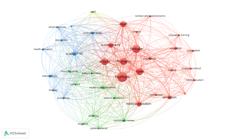
In contrast, the term simulation training, which was highlighted in the studies above, appeared only (n= 457) times as a keyword in the co-occurrence analysis. We attribute this contrary finding to the choice of database and search sequences. On the other hand, terms such as learning (n=520), medical school (n=463), patient care (n=432) and skills (n=408) are considered hot topics in this context of simulated training and university. These terms also appear in bibliometric research on the synthesis of medical education13.
Of interest in the article by these authors mentioned above, the most cited synthesis of knowledge was a systematic review on simulated training33. In another scientometric analysis of medical education, the term “Medical simulation and standardized patient” was among the most cited topics, with 7.1% of the total number of articles21. In contrast, another scientometric-type study on simulated training, but in nursing, pointed out that simulation using virtual reality (VR) is the main trend for future studies12. We believe that in our study, the term VR with the objective of using the concept of computer technology to create and maintain an environment in which the physical presence of a user is projected, allowing the user to interact with this environment, can appear as synonyms, such as computer simulation or simulation.
A burst analysis of the keywords was also performed to verify the trends and the results were; clinical competence related to the development of clinical skills, essential in simulated training34. Internships and residencies: stages in which simulated training is used to prepare students for clinical practice35. Medical education that includes simulations for practical learning in the curriculum, indicating in the curricular structure that simulations can be integrated as a teaching tool36),(37. Computer simulation specifically associated with the use of technology and computer simulations in training. Surgical training that benefits from simulations for the practice of procedures without real risks for patients38),(39. Resuscitation where simulated training is essential to teach cardiopulmonary resuscitation techniques and other emergencies40),(41.
Another topic is Artificial Intelligence (AI); researchers have shown that in medical education it can modify traditional learning methods22. AI can offer tools for simulation, diagnosis, and personalized learning. Thus, it is possible to redefine the training of students for the challenges of modern medical education. Some AI tools, such as high-fidelity scenarios with virtual reality (VR)42, 3D printer43, and surgical skills training44 are topics considered as trending.
Limitations and Strengths
First, the data from this study were retrieved only from Scopus without searching other databases such as Web of Science and Pubmed. Second, our study did not include gray and non-English language literature, which can lead to publication bias. Third, the co-word analysis was conducted based on the high-frequency DECS terms; some new emerging or low-attention topics may have been missed, affecting the clustering results. Therefore, in the future, it is necessary to search a variety of databases and combine them with other methods of analysis, including a qualitative assessment, to better understand the application of simulated training in medical education at the university. On the other hand, our study has strengths; to the best of our knowledge, studies that use holistic bibliometric analysis to assess critical points and boundaries in the field of simulation training and medical education are scarce. Simulation-based medical education is a widely used method, being considered a priority for countries worldwide, and scientometric analyses can reveal the factors that drive knowledge advancements in the medical education agenda, such as vital academic institutions, individual researchers, and research groups.
FINAL CONSIDERATIONS
The objective of this article is to analyze the topic of simulation training in health in medical education at the university. By analyzing this field of study, we can say that the topic has been drawing the attention of researchers over the years, with an increase in scientific production in the area, especially after the year 2010. The United States has the largest number of publications in this field. BMC MEDICAL EDUCATION is the journal with the most publications. Literature review suggests that this area will continue to grow, with an emphasis on clinical competency, interns and residencies, curriculum, computer simulation, surgical training, resuscitation, and artificial intelligence. The challenge of future research will be to evaluate under which conditions ST is more effective in medical education and how new methodologies, with the use of more effective and intelligent technologies, can promote this greater effectiveness in the teaching and learning of medical students.
References
-
1 McGaghie WC, Issenberg SB, Petrusa ER, Scalese RJ. A critical review of simulation-based medical education research: 2003-2009. Med Educ. 2020;44(1):50-63. doi: https://doi.org/10.1111/j.1365-2923.2009.03547.x.
» https://doi.org/https://doi.org/10.1111/j.1365-2923.2009.03547.x -
2 Salvador CA de B, Toniosso JP, Nogueira LDP, Laredo SP. Simulação realística, estratégia metodológica para a formação de profissionais na área da saúde: uma revisão integrativa. Revista Brasileira de Educação e Saúde. 2019;9(4):58-64. https://scispace.com/pdf/simulacao-realistica-estrategia-metodologica-para-a-formacao-3acffmsyix.pdf
» https://scispace.com/pdf/simulacao-realistica-estrategia-metodologica-para-a-formacao-3acffmsyix.pdf -
3 Stefanidis D, Cook D, Kalantar-Motamedi S-M, Muret-Wagstaff S, Calhoun AW, Lauridsen KG, et al. Society for simulation in healthcare guidelines for simulation training. Simulation in Healthcare. 2024 Jan 1;19(1S):S4-S22. doi: https://doi.org/10.1097/SIH.0000000000000776.
» https://doi.org/https://doi.org/10.1097/SIH.0000000000000776 -
4 Jones F, Passos-Neto C, Melro Braghiroli O. Simulation in medical education: brief history and methodology. Principles and Practice of Clinical Research Journal. 2015 Sept 16;1(2):56-63. doi: https://doi.org/10.21801/ppcrj.2015.12.8.
» https://doi.org/https://doi.org/10.21801/ppcrj.2015.12.8 -
5 Zendejas B, Brydges R, Wang AT, Cook DA. Patient outcomes in simulation-based medical education: a systematic review. J Gen Intern Med. 2013 Apr 18;28(8):1078-89. doi: https://doi.org/10.1007/s11606-012-2264-5.
» https://doi.org/https://doi.org/10.1007/s11606-012-2264-5 -
6 Qureshi AA, Zehra T. Simulated patient’s feedback to improve communication skills of clerkship students. BMC Med Educ . 2020 Jan 15;20(1): 15. doi: https://doi.org/10.1186/s12909-019-1914-2.
» https://doi.org/https://doi.org/10.1186/s12909-019-1914-2 -
7 Walsh C, Lydon S, Byrne D, Madden C, Fox S, O'Connor P. The 100 most cited articles on healthcare simulation. Simulation in Healthcare: The Journal of the Society for Simulation in Healthcare . 2018 June;13(3):211-20. doi: https://doi.org/10.1097/sih.0000000000000293.
» https://doi.org/https://doi.org/10.1097/sih.0000000000000293 -
8 Bienstock J, Heuer A. A review on the evolution of simulation-based training to help build a safer future. Medicine. 2022 June 24;101(25):e29503. doi: https://doi.org/10.1097/MD.0000000000029503.
» https://doi.org/https://doi.org/10.1097/MD.0000000000029503 -
9 Almeida RG dos S, Mazzo A, Martins JCA, Pedersoli CE, Fumincelli L, Mendes IAC. Validation for the Portuguese language of the simulation design scale. Texto & Contexto - Enfermagem. 2015;24(4):934-40. doi: https://doi.org/10.1590/0104-0707201500004570014.
» https://doi.org/https://doi.org/10.1590/0104-0707201500004570014 -
10 Donthu N, Kumar S, Mukherjee D, Pandey N, Lim WM. How to conduct a bibliometric analysis: an overview and guidelines. J Bus Res. 2021 Sept;133(1):285-96. doi: https://doi.org/10.1016/j.jbusres.2021.04.070.
» https://doi.org/https://doi.org/10.1016/j.jbusres.2021.04.070 -
11 Rojas-Sánchez MA, Palos-Sánchez PR, Folgado-Fernández JA. Systematic literature review and bibliometric analysis on virtual reality and education. Educ Inf Technol. 2022 June 27;28(1):155-192. doi: https://doi.org/10.1007/s10639-022-11167-5.
» https://doi.org/https://doi.org/10.1007/s10639-022-11167-5 -
12 Wang Y, Li X, Liu Y, Shi B. Mapping the research hotspots and theme trends of simulation in nursing education: a bibliometric analysis from 2005 to 2019. Nurse Educ Today. 2022 June;1(2):105426. doi: https://doi.org/10.1016/j.nedt.2022.105426.
» https://doi.org/https://doi.org/10.1016/j.nedt.2022.105426 -
13 Maggio LA, Meyer HS, Artino AR. Beyond citation rates. Acad Med. 2017 Oct;92(10):1449-55. doi: https://doi.org/10.1097/acm.0000000000001897.
» https://doi.org/https://doi.org/10.1097/acm.0000000000001897 -
14 Khiste G, Maske DB, Deshmukh RK. Knowledge management output in scopus during 2007 to 2016. Asian J Res Soc Sci Humanit. 2018;8(1):10:10-19 doi: https://doi.org/10.5958/2249-7315.2018.00002.3.
» https://doi.org/https://doi.org/10.5958/2249-7315.2018.00002.3 -
15 Onchonga D, Mohamed EA. Integrating social determinants of health in medical education: a bibliometric analysis study. Public Health. 2023 Nov 1;224(1):203-8. doi: https://doi.org/10.1016/j.puhe.2023.09.005.
» https://doi.org/https://doi.org/10.1016/j.puhe.2023.09.005 -
16 Aparicio-Martinez P, Perea-Moreno A-J, Martinez-Jimenez MP, Redel-Macías MD, Vaquero-Abellan M, Pagliari C. A bibliometric analysis of the health field regarding social networks and young people. Int J Environ Res Public Health . 2019 Oct 21;16(20):4024. doi: https://doi.org/10.3390/ijerph16204024.
» https://doi.org/https://doi.org/10.3390/ijerph16204024 -
17 van Eck NJ, Waltman L. Software survey: VOSviewer, a computer program for bibliometric mapping. Scientometrics. 2010 Dec 31;84(2):523-38. doi: https://doi.org/10.1007/s11192-009-0146-3.
» https://doi.org/https://doi.org/10.1007/s11192-009-0146-3 -
18 Kleminski R, Kazienko P, Kajdanowicz T. Analysis of direct citation, co-citation and bibliographic coupling in scientific topic identification. Journal of Information Science. 2020 Oct 7;27(1):349-373doi: https://doi.org/10.1177/0165551520962775.
» https://doi.org/https://doi.org/10.1177/0165551520962775 -
19 Bienstock J, Heuer A. A review on the evolution of simulation-based training to help build a safer future. Medicine. 2022 June 24;101(25):e29503. doi: https://doi.org/10.1097/MD.0000000000029503.
» https://doi.org/https://doi.org/10.1097/MD.0000000000029503 -
20 McGaghie WC, Issenberg SB, Cohen ER, Barsuk JH, Wayne DB. Does simulation-based medical education with deliberate practice yield better results than traditional clinical education? A meta-analytic comparative review of the evidence. Acad Med . 2011 June;86(6):706-11. doi: https://doi.org/10.1097/acm.0b013e318217e119.
» https://doi.org/https://doi.org/10.1097/acm.0b013e318217e119 -
21 Azer SA. Exploring the top-cited and most influential articles in medical education. J Contin Educ Health Prof. 2016;36(1):S32-41. doi: https://doi.org/10.1097/ceh.0000000000000085.
» https://doi.org/https://doi.org/10.1097/ceh.0000000000000085 -
22 Sun W, Jiang X, Dong X, Yu G, Feng Z, Shuai L. The evolution of simulation-based medical education research: from traditional to virtual simulations. Heliyon. 2024 Aug 1;10(15):e35627-7. doi: https://doi.org/10.1016/j.heliyon.2024.e35627.
» https://doi.org/https://doi.org/10.1016/j.heliyon.2024.e35627 -
23 Davis DA. Evidence for the effectiveness of CME: a review of 50 randomized controlled trials. JAMA. 1993 Sept 2;268(9):1111-7. doi: https://doi.org/10.1001/jama.268.9.1111.
» https://doi.org/https://doi.org/10.1001/jama.268.9.1111 -
24 Burden A, Bekes C. Simulation-based education improves quality of care during cardiac arrest team responses at an academic teaching hospital: a case-control study. Chest. 2008 Jan;2009(1):245-6. doi: https://doi.org/10.1016/s0734-3299(08)79117-2.
» https://doi.org/https://doi.org/10.1016/s0734-3299(08)79117-2 -
25 Boulos MNK, Hetherington L, Wheeler S. Second life: an overview of the potential of 3-D virtual worlds in medical and health education. Health Info Libr J. 2007 Dec;24(4):233-45. doi: https://doi.org/10.1111/j.1471-1842.2007.00733.x.
» https://doi.org/https://doi.org/10.1111/j.1471-1842.2007.00733.x -
26 Rosser JC, Lynch PJ, Cuddihy L, Gentile DA, Klonsky J, Merrell R. The impact of video games on training surgeons in the 21st century. Archives of Surgery. 2007 Feb 1;142(2):181. doi: https://doi.org/10.1001/archsurg.142.2.181.
» https://doi.org/https://doi.org/10.1001/archsurg.142.2.181 -
27 Komoroski EM. Use of e-mail to teach residents pediatric emergency medicine. Arch Pediatri Adolesc Med. 1998 Nov 1;152(11): 1141-1146,doi: https://doi.org/10.1001/archpedi.152.11.1141
» https://doi.org/https://doi.org/10.1001/archpedi.152.11.1141 -
28 Cook DA, Levinson AJ, Garside S, Dupras DM, Erwin PJ, Montori VM. Instructional design variations in internet-based learning for health professions education: a systematic review and meta-analysis. Acad Med . 2010 May;85(5):909-22. doi: https://doi.org/10.1097/acm.0b013e3181d6c319.
» https://doi.org/https://doi.org/10.1097/acm.0b013e3181d6c319 -
29 Edelson DP, Litzinger B, Arora V, Walsh D, Kim S, Lauderdale DS, et al. Improving in-hospital cardiac arrest process and outcomes with performance debriefing. Arch Intern Med. 2008;168(10):1063-9. doi: https://doi.org/10.1001/archinte.168.10.1063.
» https://doi.org/https://doi.org/10.1001/archinte.168.10.1063 -
30 Curtis JR, Back AL, Ford DW, Downey L, Shannon SE, Doorenbos AZ, et al. Effect of communication skills training for residents and nurse practitioners on quality of communication with patients with serious illness. JAMA . 2013 Dec 4;310(21):2271-2281. doi: https://doi.org/10.1001/jama.2013.282081.
» https://doi.org/https://doi.org/10.1001/jama.2013.282081 -
31 MacKenzie A. Effect of communication skills training for residents and nurse practitioners on quality of communication with patients with serious illness: a randomized trial. The Journal of Emergency Medicine. 2014 Mar;46(3):447. doi: https://doi.org/10.1016/j.jemermed.2014.01.010.
» https://doi.org/https://doi.org/10.1016/j.jemermed.2014.01.010 -
32 Østergaard D. National medical simulation training program in Denmark. Critical Care Medicine. 2004 Feb;32(Supp):S58-60. doi: https://doi.org/10.1097/01.ccm.0000110743.55038.94.
» https://doi.org/https://doi.org/10.1097/01.ccm.0000110743.55038.94 -
33 Kyrkjebø JM, Brattebø G, Smith-Strøm H. Improving patient safety by using interprofessional simulation training in health professional education. J Interprof Care. 2006 Jan;20(5):507-16. doi: https://doi.org/10.1080/13561820600918200.
» https://doi.org/https://doi.org/10.1080/13561820600918200 -
34 Issenberg SB, McGaghie WC, Petrusa ER, Lee Gordon D, Scalese RJ. Features and uses of high-fidelity medical simulations that lead to effective learning: a BEME systematic review. Med Teach. 2005;27(1):10-28. doi: https://doi.org/10.1080/01421590500046924.
» https://doi.org/https://doi.org/10.1080/01421590500046924 -
35 Williams B, Song JJY. Are simulated patients effective in facilitating development of clinical competence for healthcare students? A scoping review. Adv Simul. 2016 Jan;1(1). doi: https://doi.org/10.1186/s41077-016-0006-1.
» https://doi.org/https://doi.org/10.1186/s41077-016-0006-1 -
36 Erdmann MA, Paramel IS, Marshall CM. Lean health care internships: a novel systems-based practice education program for undergraduate medical students. Acad Med . 2023 July 3;99(1):52-7. doi: https://doi.org/10.1097/acm.0000000000005312.
» https://doi.org/https://doi.org/10.1097/acm.0000000000005312 -
37 Sawaya RD, Mrad S, Rajha E, Saleh R, Rice J. Simulation-based curriculum development: lessons learnt in global health education. BMCMed Educ . 2021 Jan 7;21(1).33 doi: https://doi.org/10.1186/s12909-020-02430-9.
» https://doi.org/https://doi.org/10.1186/s12909-020-02430-9 -
38 Khamis NN, Satava RM, Alnassar SA, Kern DE. A stepwise model for simulation-based curriculum development for clinical skills, a modification of the six-step approach. Surgical Endoscopy. 2015 Apr 22;30(1):279-87. doi: https://doi.org/10.1007/s00464-015-4206-x.
» https://doi.org/https://doi.org/10.1007/s00464-015-4206-x -
39 Robertson V, Davies R. Provision of simulation-based training (SBT) within UK vascular surgery training programmes. The Surgeon. 2019 Dec;17(6):321-5. doi: https://doi.org/10.1016/j.surge.2018.10.001.
» https://doi.org/https://doi.org/10.1016/j.surge.2018.10.001 -
40 Thomsen ASS, Bach-Holm D, Kjærbo H, Højgaard-Olsen K, Subhi Y, Saleh GM, et al. Operating room performance improves after proficiency-based virtual reality cataract surgery training. Ophthalmology. 2017 Apr;124(4):524-31. doi: https://doi.org/10.1016/j.ophtha.2016.11.015.
» https://doi.org/https://doi.org/10.1016/j.ophtha.2016.11.015 -
41 Chang Y-T, Wu K-C, Yang H-W, Lin C-Y, Huang T-F, Yu Y-C, et al. Effects of different cardiopulmonary resuscitation education interventions among university students: a randomized controlled trial. PloS One. 2023 Mar 14;18(3):e0283099-9. doi: https://doi.org/10.1371/journal.pone.0283099.
» https://doi.org/https://doi.org/10.1371/journal.pone.0283099 -
42 Anderson KL, Niknam K, Laufman L, Sebock-Syer SS, Andrabi S. Multi-community cardiopulmonary resuscitation education by medical students. Cureus. 2020 June 15;1(1). doi: https://doi.org/10.7759/cureus.8647.
» https://doi.org/https://doi.org/10.7759/cureus.8647 -
43 Bakshi SK, Lin SR, Ting DSW, Chiang MF, Chodosh J. The era of artificial intelligence and virtual reality: transforming surgical education in ophthalmology. Br J Ophthalmol. 2020 Aug 12;1(1).: 1325-1328. https://doi.org/10.1136/bjophthalmol-2020-316845
» https://doi.org/https://doi.org/10.1136/bjophthalmol-2020-316845 -
44 Ma L, Yu S, Xu X, Moses Amadi S, Zhang J, Wang Z. Application of artificial intelligence in 3D printing physical organ models. Mater Today Bio. 2023 Dec 1;23(2):100792. https://doi.org/10.1016/j.mtbio.2023.100792
» https://doi.org/https://doi.org/10.1016/j.mtbio.2023.100792 - 45 Ausubel DP. Educational psychology: a cognitive view. New York: Holt, Rinehart and Winston; 1968.
Research data are available in the body of the document

 Source: Generated by Vosviewer Software.
 Source: Generated by Vosviewer Software.