 Becoming an editor: trajectory, training, profile and role of professors in Brazilian scientific journals in the field of education
ABSTRACT
The objective of this research was to analyze the trajectory, training, profile, and role of Brazilian scientific journal editors in the field of education. Data collection was conducted on the International Standard Serial Number portal to select the participants, and a list of 352 journals was compiled, including the names of their editors and contacts. A survey and interview were used as instruments. Descriptive statistics and content analysis were employed for data analysis. A total of 131 respondents completed the survey, and 19 were interviewed. Most editors join journals without prior experience, and their training happens primarily through self-learning. Their work is characterized by informality, with no specific work hours allocated within their academic activity plan, leading to work overload. With this research, it was possible to conclude that the editors’ role lacks recognition, which signals the need to consider succession plans and discuss policies to formalize their function.
Keywords:
Editor; Scientific Publishing; University Professors; Scientific Journal
RESUMO
O objetivo da pesquisa foi analisar a trajetória, formação, perfil e atuação dos editores de periódicos científicos brasileiros da área de educação. Para a seleção dos participantes, foi realizado um levantamento no portal do International Standard Serial Number e elaborada uma lista com 352 periódicos, incluindo os nomes dos editores e contatos. Como instrumentos, foram utilizados o questionário e a entrevista. Para a análise dos dados, empregaram-se a estatística descritiva e a análise de conteúdo. Obtiveram-se 131 respondentes ao questionário e 19 entrevistados. A maior parte dos editores integra os periódicos sem experiência prévia, e a formação se dá pelo autoaprendizado. A atuação é marcada pela ausência de formalização, sem destinação de horas no plano de atividade docente e com sobrecarga de trabalho. Conclui-se que há ausência de reconhecimento da função do editor, com a necessidade de pensar em planos sucessórios e discutir políticas de formalização dessa atuação.
Palavras-chave:
Editor; Editoração Científica; Professores Universitários; Periódico Científico
RESUMEN
El objetivo es analizar la trayectoria, formación, perfil y actuación de los editores de revistas científicas brasileñas del área de Educación. Se realizó un levantamiento en el Portal Internacional del ISSN y se elaboró una lista de 352 revistas, con nombres de sus editores y contactos. Se utilizaron como instrumentos el cuestionario y la entrevista. Para el análisis de los datos se utilizó estadística descriptiva y análisis de contenido. Respondieron al cuestionario 131 personas y 19 fueron entrevistadas. La mayoría de los editores se incorporan a las revistas sin experiencia previa y la formación se realiza mediante el autoaprendizaje. Su trabajo está marcado por la falta de formalización, la ausencia de asignación de horas en el plan de actividades docentes y la sobrecarga de trabajo. Se pudo concluir que existe una falta de reconocimiento de la función del editor, siendo necesario pensar en planes de sucesión y discutir políticas para formalizar este papel.
Palabras clave:
Editor; Publicación Científica; Profesores Universitarios; Revista Científica
INTRODUCTION
In the Brazilian editorial landscape, within the field of education, there were approximately 120 journal titles by the end of the 1990s (Ortega, Fávero and Garcia, 1998). Over time, the number of published journals increased by 100% within a decade (Dionísio, 2016). In the Qualis Journals (Qualis Periódicos) classification for the 2017–2020 four-year period, a total of 655 Portuguese-language titles with education as their primary field were evaluated (Capes, 2022). This scenario demonstrates that, within the field of education, a large number of individuals are involved in the editorial process of publishing scientific journals in the country.
Given that in Latin America, and particularly in Brazil, most journals are published by higher education institutions (HEIs) (Rodrigues and Abadal, 2014; Lujano Vilchis, 2021; Silveira, 2023), and those who hold editorial positions are predominantly university professors. These faculty members accumulate a wide range of responsibilities in teaching, research, extension, and administration, alongside increasingly complex demands such as securing funding, establishing projects and partnerships, representing the university across various arenas, and pursuing internationalization, among others (Zabalza, 2004), to which editorial work is added.
In addition to all aspects of teaching and other university activities, it is necessary to understand the complexities of scientific publishing. This includes the use of technological tools for editorial work, compliance with the criteria established by indexing databases, moral and ethical considerations, as well as the continuous pursuit of improvement in the skills required for the routine of the editor's role.
In this context, the institutional recognition of the editorial role performed by university professors remains far from ideal. Unlike other countries, particularly those in the Global North, that allocate resources and investments to support this activity (Davis and Müllner, 2002; Delgado, 2014; López-López, 2019), editors in Brazil do not benefit from the professionalization of their role. This results in complex work being carried out on a voluntary basis, often remaining invisible even to their own peers (Delgado, 2014; Moreira, 2014), in which knowledge is developed intuitively and/or through exchanges with colleagues engaged in the same function (Deslandes and Maksud, 2022).
This issue has already been identified by editors’ forums across various fields of knowledge, such as the humanities, social sciences, applied social sciences, literature, linguistics, and the arts (FCHSSALLA, 2021), public health (Goldbaum, Antunes and Camargo Júnior, 2021), history (ANPUH, 2021; Castellucci, 2022), physical education (Fórum de Editores de Periódicos Científicos da Área de Educação Física, 2019), and education (ANPEd, 2017; Mainardes et al., 2022), the focal field of this research, which have discussed and put forward considerations regarding the sustainability and funding of journals, the neglect of editorial work by institutions and regulatory agencies, the need for training within graduate programs, and the recognition of the editor's role.
From an academic perspective, within the Brazilian context, research focusing on professionals involved in the editorial process, more specifically, editors, remains limited when compared to studies that focus strictly on journals themselves. With a focus on the field of information science, Felix's study (2021) investigated editors’ perceptions of the Qualis Journals system; Neves (2022) focused on gender issues in editorial work; and Eluan (2009) examined editors’ perceptions regarding the use of the Open Journal Systems (OJS). Fontes’ (2021) research focused on the competencies required of editors of scientific journals in the field of administration. Meanwhile, Werlang's study (2019) investigated the institutional support Brazilian editors received in carrying out their roles in journal management.
No studies were identified that adopt a broader focus on the role of the editor or that were developed within the field of education. This reinforces the need to investigate the proposed topic in greater depth, bringing to light the working realities of editors, as noted by Kern and Uriona-Maldonado (2022), who argue that the details of the voluntary work carried out by editors remain largely unknown, as well as Oliveira et al. (2020), who point to the precarization of the role.
In this context, the purpose of this study is to analyze the trajectory, training, profile, and performance of editors of Brazilian scientific journals in the field of education. Systematizing these four dimensions of the editors’ role within a structured study may also contribute to the discussion and critical examination of the notion that scientific publishing in Brazil contributes yet another of the many functions performed by university professors, as previously noted by Stigger, Fraga, and Molina Neto (2014), Oliveira et al. (2020), and Garcia (2021).
The documentation of this reality through scientific research contributes to knowledge production about a form of work that is often concealed, as there has, historically, been greater interest in scientific output focused on the technical aspects of journals. In this sense, this study advances in another direction: by turning attention to the individuals involved, their knowledge, experiences, and challenges.
METHODOLOGICAL APPROACHES
This research is framed as a mixed-methods study that integrates quantitative and qualitative approaches. The research universe covers Brazilian scientific journals in education, and the sample comprises university professors who serve as journal editors. As a basis for participant selection, journals published in Brazil were mapped through a search on the International Standard Serial Number (ISSN) International Portal, using the subscriber interface and following the parameters combined with the AND operator: Country: Brazil; Subject: Education; Type of record: Confirmed; Resource status: Currently published; Resource type: Periodical; Medium: Online.
The search was conducted on June 16, 2022, and returned a total of 1,386 results, which were saved in .csv format on a computer. Conference proceedings were excluded, resulting in 729 records. Subsequently, the journals were accessed for verification based on their relevance to the research criteria, resulting in 352 valid journals. This stage was carried out between September 14 and November 15, 2022.
During the verification process, we identified individuals listed on the journals’ websites who held potential leadership roles within the editorial teams, totaling 588 people. Their contact email was also collected. Data collection was structured to be conducted in two sequential stages, using a questionnaire and interviews, following approval from the Research Ethics Committee.
The questionnaire was developed using Google Forms and consisted of 50 questions, including 34 closed-ended, ten open-ended, and six spaces for comments. The sample size calculation yielded a suggested sample size of 133 respondents, with a 95% confidence level and a 7.5% margin of error. The questionnaire was distributed to participants in two rounds: the first between November 23 and December 14, 2022, and the second between March 21 and April 10, 2023.
For the interviews, a semi-structured model was adopted, with a 12-question interview guide. The sample was defined by the number of journals published in each region of the country to ensure geographic proportionality and reduce the risk of bias. Accordingly, it was determined that the region with the fewest journals would correspond to one interviewee, and, from this baseline, a rule-of-three calculation was used to establish the numbers for the other regions. After rounding up, there were 19 participants in total: one from the North region, four from the Northeast, two from the Central-West, eight from the Southeast, and four from the South. Participants were selected through a random draw from the pool of questionnaire respondents, respecting their geographic origin. The 19 interviews were conducted online between May 25 and July 26, 2023, using Microsoft Teams software.
Data analysis followed the dimensions established for the study, integrating quantitative and qualitative aspects in the discussion of the results (Figure 1).

The questionnaire results were subjected to descriptive analyses conducted in R version 4.3.0, considering a significance level of 5%. For the analysis of interview transcripts, ATLAS.ti version 23.2.3 was used, and content analysis was performed (Gibbs, 2009; Saldaña, 2016; Bardin, 2020). Figure 2 summarizes the stages of the research.

RESULTS AND DISCUSSION
The questionnaire yielded 131 valid responses from university faculty members who serve as editors of scientific journals in education, which closely approximates the initially estimated 133 participants. The respondents represent 118 different journals. The number of journals is lower than the number of participants because some editors represent the same publication.
All regions of the country were represented, with the largest share of respondents from the Southeast region (39.7%), which also hosts the greatest concentration of published journals due to its hosting most graduate programs in education (Capes, 2023b). Thus, according to the χ2 goodness-of-fit test, there are no statistically significant differences between the proportions of respondents by region and the proportions of journals (χ2(4) = 4.140; p = 0.387).
Editors range in age from 31 to 81 years old, and most of them identify as women (53.4%). The mean age is 49 years-old, and the median is 47. According to the χ2 goodness-of-fit test, there are statistically significant differences between gender proportions by segment (χ2(2) = 17,747; p < 0,001) (Table 1). In other words, although women predominate as editors, they are underrepresented on editorial teams relative to the proportion of female faculty members in graduate programs in education nationwide.
Expected and observed quantities from the χ2 test of independence for the association between gender and segment.
This scenario is consistent with the so-called "scissor effect," a term used to indicate a decline in the proportion of women as careers progress (Candido et al., 2023; Candido, Campos and Moschkovich, 2023). Other studies comparing the proportion of female higher education faculty with that of women holding doctoral degrees have found that, according to CAPES's own classification, the scissor effect is present in 93% of fields, including education (Candido et al., 2023; GEMAA, 2023). In the context of journal editing, studies from the field of education on the composition of editorial teams and gender remain scarce, limiting possibilities for comparison.
Regarding educational background, regardless of qualification level, most respondents come from the field of humanities (undergraduate 64.12%; master's 69.47%; doctoral 70.87%) and have completed a doctoral degree (96.94%). Given the nature of the study, all participants are university faculty members, with the majority (52.3%) having more than 15 years of experience. Most professors are currently active (88.5%), and only 11.4% of the respondents reported being retired. These results suggest that most editors take on the role after spending considerable time in the profession; that is, they are senior faculty members, indicating that the field of education values academic maturity for this role.
As for the interview participants, 19 editors were randomly selected from the questionnaire respondents, in accordance with methodological criteria for regional distribution nationwide. The selected editors represent journals coming from public HEIs (78.95%) and private ones (10.52%), as well as associations (10.52%), are between 32 and 68 years old, and are mostly women (73.68%).
TRAJECTORY: MOTIVATION AND START IN THE ROLE
Regarding prior experience in scientific journal editing, when asked whether they had previously worked in any editorial role, 65.6% of questionnaire respondents reported that they had not. Among those who reported previous experience, the duration ranged from one to five years (73.9%). The most common reported experience, however, was in the role of author and/or reviewer, which provides some understanding of the flow of scientific communication but does not prepare faculty members for issues inherent to journal management. The research findings highlight what has been shown in the literature: editors often assume this responsibility without prior publishing experience (Gomes, 2010; García Romero and Martinez-Guerrero, 2018; Deslandes and Maksud, 2022).
To understand faculty members’ motivations for taking on the role of scientific journal editors, as well as the characteristics of this initial stage, interview data were used. Based on the content analysis, this trajectory was organized into the categories of entry motivation and entry into the role.
The entry motivation (Figure 3) category is subdivided into three subcategories that illustrate how faculty members became involved in editing the journal in which they work: institutional demand, contextual factors, and personal motivation.

Institutional demand was cited by four interviewees, and relates to taking a position in a journal to fulfill a regulation, mandate, or internal request, without necessarily reflecting genuine personal interest in the role. The subcategories of contextual factors and personal motivation, each mentioned by nine faculty members and sometimes overlapping, suggest that, in some cases, a specific situation or opportunity led to an invitation or involvement in the journal's editorial work, even when the individual already had an interest in being part of the publication or contributing to it. "I ended up not wanting to let the journal die, so I said, no, I'll take it on. And I am still there […]. All these journals exist because someone doesn't want to drop the ball. They step in, hold things together, and do almost everything on their own" (E15, emphasis added).
The quantitative data also show that of the 131 survey respondents, 54 (41.2%) participated in creating the journal in which they work. This dynamic of keeping the journal founder at the helm can, in some cases, create sustainability problems, since when this faculty member steps away from any reason, there is no one to take over the responsibility. Consequently, the publication often remains tied to the motivation of a single individual (Guedes, 2011), rather than to an institutional publishing project. The founder's continued role as editor may also be linked to the absence of succession plans (Werlang and Blattmann, 2022).
Regarding the category entry into the role, the interviewees unanimously reported how challenging it was to take on the journal's editorship. Initially, the main obstacles were related to technological issues, using the editorial system, and understanding the editorial workflow. "it was nerve-racking in the sense of having to understand the behind-the-scenes of the journal, the system itself, and how to work within it. I had to manage a system I didn't understand and handle a process I didn't grasp either, because we had a journal number to publish" (E17, emphasis added).
The interviewees also reported difficulties in obtaining institutional support, whether in terms of physical, technological, financial, or human resources, or guidance for fulfilling the editorial role, as well as challenges in transitioning between editorial teams. This context underscores the artisanal nature of journal editing, making it a challenging task to perform. (Alfonso Manzanet and Silva Ayçaguer, 2014).
PROFESSIONAL DEVELOPMENT: LEARNING AND AREAS FOR IMPROVEMENT
The results of the qualitative analysis from the interviews were organized into the categories learning pathways and development needs (Figure 4).
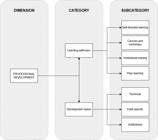
The learning pathways category is divided into the subcategories self-directed learning, peer learning, courses and workshops, and institutional learning, which sometimes overlapped in the respondents’ accounts.
The editors learn their roles largely through self-directed learning during daily practice, a process mentioned by 16 of the 19 interviewees. This finding aligns with the literature, which indicates that faculty editors typically do not receive formal training in editorial work; instead, they acquire knowledge on the job, guided by experience and through trial and error (Deslandes and Maksud, 2022; Fontes and Menegon, 2022; Werlang and Blattmann, 2022).
As they do not receive proper training, editors invest time learning on their own and figuring out what is expected of them in their new role. Often, when they have developed proficiency in editorial work, they must hand over their position to someone else, who then starts the learning cycle anew (García Romero and Martinez-Guerrero, 2018).
In second place, mentioned by nine interviewees, is the peer learning subcategory, which highlights learning that occurs through contact with colleagues, either individually or collectively. The courses and workshops subcategory was mentioned by six interviewees.
Regarding the questionnaire results on participation in training through courses, events, or other formats, most faculty reported having participated (54.2%), and in most cases, this training occurred during their time as editors (74%). The training sessions attended were primarily provided by the Forum of Education Area Journal Editors (Fórum de Editores de Periódicos da Área de Educação FEPAE) (51.32%), the Brazilian Association of Scientific Editors (Associação Brasileira de Editores Científicos ABEC) (47.37%), and the institutional journals portal associated with their publication (35.53%).
The topic most frequently addressed in the training sessions attended by the editors was OJS, underscoring a priority on learning about the editorial system used for the journal's scientific management. The Qualis Journals system and indexing were also substantially covered in the training programs attended (Figure 4).
Finally, the subcategory with the lowest frequency in the interviewees’ accounts regarding how they learned their activities was institutional training, mentioned by only four faculty members. It is evident that this low adherence in the interviews is also reflected in the survey's quantitative results. When asked whether institutional training was provided, 52.6% of the faculty responded "no," 40.4% "yes," and 6.8% "do not know." Since most journals are edited by HEIs, these institutions need to plan and implement training not only for editors but also for other members of the editorial board, as this directly impacts the country's scientific output (García Romero and Martinez-Guerrero, 2018).
Regarding needs, the questionnaire included an open-ended question in which faculty members could indicate the topics in which they felt a lack of training. The main demands were indexing (32.06%), OJS (15.27%), editorial management (14.50%), peer review (8.40%), and Qualis (8.40%). Notably, the same topics the editors have already received training in (Figure 5) continue to be cited as areas of need.

In the qualitative analysis, the development needs category was subdivided into technical, institutional, and field-specific. Technical training was mentioned by 18 of 19 interviewed faculty members and involves mastering technological tools and learning to use the journal's editorial system, especially OJS. This result aligns with the training editors have already undertaken and with the needs identified through the quantitative analysis previously presented. From the institutional training subcategory standpoint, the demand came from four interviewees and concerns the need to learn the perspectives and policies of the institution to which the journal is affiliated.
Given the need for field-specific training, this subcategory concerns understanding how knowledge production occurs within the journal's own area of publication and was mentioned by two interviewees. Such training can help ensure, for example, the scientific rigor of published articles (Vasconcellos, 2017). This type of training also aligns with the editor's expertise in research and scientific publishing, as will be discussed next in the profile analysis dimension.
PROFILE: COMPETENCIES, CHARACTERISTICS, AND KNOWLEDGE
Research participants were asked to rate the importance of different competencies they considered necessary to fulfill the editorial role in scientific journals. The results showed that, from the faculty members’ perspective, all competencies are considered relevant, with a majority ranking research skills (83.97%), scholarly publishing (90.08%), and managerial competence (90.08%) as the most important. Emotional competency showed the lowest level of agreement among respondents (Figure 5).
Based on the qualitative analysis of interview data, the results were organized into two categories: characteristics and knowledge (Figure 6).

The characteristics category (Figure 7) encompasses elements that qualify the editor's profile in terms of experience, attitude, or personality. These elements were present in the statements of 15 interviewed faculty members. The main characteristic mentioned was experience with scientific publication, which aligns with and complements the quantitative results of the study and with what is indicated in the literature, suggesting that it is desirable for an editor to be a specialist in the journal's field, with experience in research and publications (Gomes, 2010; Rodríguez Yunta and Tejada Artigas, 2013; Fontes and Menegon, 2022).
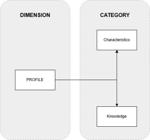
Another element mentioned was the ability to establish relationships and maintain a networking posture, since journal editing is also linked to building communities that connect regionally and internationally (López-López, 2019; Fontes and Menegon, 2022) and form invisible colleges, responsible for the flow of scientific communication.
The knowledge category was present in the statements of nine faculty members. Among them, the need for a deep understanding of the field in which the journal is published was mentioned, which relates to the characteristic of being a researcher with publications, as discussed earlier. From a technical perspective, mastery of technological tools and language is expected, enabling the editor to ensure the journal's quality.
Less frequently, management aspects were mentioned, in the sense that the editor should have a profile capable of overseeing the journal's organization and administration. Although less cited in the interviews, this knowledge was identified in the quantitative analysis as the third most important and is linked to managerial competence, which encompasses the ability to make decisions, maintain a strategic vision, and manage the journal's process (Fontes and Menegon, 2022).
EDITORIAL PRACTICE: EXPERIENCE AND DEVELOPMENTS
Most respondents reported having between one and five years of experience (58.7%) as editors of their current journals. As noted earlier in the trajectory dimension of the analysis, most respondents (65.7%) are in their first term as journal editors. Experienced editors, with more than 15 years of experience, account for 4.5%.
The length of time in editorial roles coincides with the finding of Silveira (2023) in a study conducted with 351 editors of Brazilian journals across all fields of knowledge indexed in Latindex. The author identified that most editors had up to three years of experience (28.21%), whom she characterized as "young editors," or up to six years in the role (25.36%).
Regarding the composition of editorial teams, 90.8% of faculty reported having other individuals involved in the journal's daily activities. The majority indicated having at least one person on the team (17.8%), with an average of approximately four people. This study did not investigate the positions or roles of the other individuals mentioned; therefore, it is not possible to infer how this may impact the editors’ day-to-day tasks.
The results of the qualitative analysis, derived from interviews, were organized into six categories: editorial activities, work organization, challenges, recognition, productivity, and associations and professional networks (Figure 8).

EDITORIAL ACTIVITIES
The most frequently reported activities were scientific publishing (86.26%) and technical matters (80.92%). On the other hand, social activities were classified as less frequent.
In the category of activities performed (Figure 9), the same pattern identified in the questionnaires was observed in the interview results. Most faculty members are responsible for scientific publication activities. Editors who have more structured teams tend to concentrate on supervision and management of the journal's scientific quality rather than on technical tasks. In contrast, editors who rely solely on scholarship holders or fellow editors with similar roles, a situation reported by most of the interviewees, are responsible for both activities inherent to scientific publishing and technical tasks, which range from the moment an article is submitted to the journal's system to its final publication.

These results reveal a scenario where faculty members "do everything," making journal management more complex and demanding. One of the main motivators behind this situation is lack of funding, which leads to a shortage of human resources and an inability to hire specialized services, such as layout editing. This is typical of journals edited by HEIs in Latin America, where the editorial role is not professionalized, unlike in countries with more resources or in journals published by commercial publishers (Delgado, 2014; López-López, 2019).
Editors devote many hours to processing and managing a single article, even when it is ultimately rejected (Chaitow, 2019), which renders this work somewhat invisible despite its demanding nature. As a result, journals are often sustained through the individual efforts of faculty members, a situation that entails increased workload (Delgado, 2014), as will be discussed further below.
To a lesser degree, editors reported engaging in administrative and managerial tasks, such as team meetings, as well as seeking and participating in funding calls, among other activities. Only three faculty members mentioned engaging in social activities, which involved building networks to publish special issues.
WORK ORGANIZATION
Regarding the time devoted to activities inherent in the scientific journal, most editors reported allocating, on average, between four and eight hours per week (51.14%). Given that faculty members hold multiple responsibilities arising from research, teaching, and extension, in addition to the journal's editorial duties, this study sought to investigate how they integrate editorial activities into their schedules and routines. In this context, the category "work organization" was subdivided into three subcategories: fixed schedule, on-demand, and weekends. These categories may overlap in the interviewees’ statements, since the same faculty member may adopt different organizational strategies.
In the subcategory fixed schedule, reports that mention the allocation of a specific workload, day of the week, or time interval for the journal's activities on a regular basis were considered. This practice was reported by nine faculty members, who seek some form of order or pattern in their schedules.
In the on-demand subcategory, however, the reports from 12 editors who stated that they work on the journal as needed were grouped together. Some mentioned receiving system notifications via email. In many cases, these notifications are also received on their mobile phones, underscoring that this work, which "has neither time nor place," always permeates faculty members’ lives.
Finally, the weekend subcategory was mentioned by 15 of the 19 editors interviewed, who reported dedicating part of their Saturdays and Sundays to handling the journals’ demands. In some accounts, there is also mention of working during holidays, such as Christmas and New Year. "I have done something foolish; to get it finished, a colleague who manages the journal's layout and I […] worked on December 31st, literally on December 31st, so that we could finish it by the afternoon. So, this has almost become routine" (E3, emphasis added).
The accumulation of roles and this work dynamic may culminate in the impairment of private life because of editorial activities. There are academic and personal costs associated with performing this role, which lead editors to seek to replace themselves with another faculty member, even if they enjoy what they do (Guedes, 2011). The required dedication is highly demanding and even consumes time that should be allocated to rest (Hernández Fernández, 2012).
CHALLENGES
The faculty members interviewed in this study were invited to discuss the main challenges associated with the role of editor. Their responses were categorized under challenges and further divided into practice-related challenges and work overload. These subcategories also include other statements collected beyond this initial question, reflecting comments made at various points throughout the interviews.
The first subcategory, practice-related challenges, encompasses practical accounts related to the work of scientific journal editors. Nearly all faculty members mentioned the difficulty of securing reviewers, a dynamic that consumes editors’ time. These results are similar to those found by Deslandes and Maksud (2022), who interviewed editors in the field of social and human sciences in health.
Editors also mentioned challenges related to maintaining the editorial team and also the physical, technological, and financial infrastructure, which are strongly tied to institutional issues. It is characteristic of Latin America that journals are edited by higher education institutions, which influence administrative and funding matters (Sandes-Guimarães and Diniz, 2014), and many of these institutions lack adequate infrastructure to support editorial activities (Corera-Álvarez and Molina-Molina, 2016).
Unlike in other countries, particularly in the Global North, where editorial work is a professional activity requiring full-time dedication, in Brazil it is added to other faculty responsibilities, leading to work overload. This subcategory was linked to statements from 12 interviewees, who, to varying degrees, juggle multiple roles, one of which is that of editor. "We keep asking ourselves, every time we have to release an issue, we say: My God, what am I doing with my life?" (E15, emphasis added).
Yes, I'd say it's the work overload, right? […] But it is Saturday and Sunday, and we're sitting here, working. The sun is out there, such a beautiful sun, and we're sitting here, working. These are activities that affect our health and stress, right? Our quality of life (E16, emphasis added).
Thus, being an editor in Latin America is more challenging compared to editors in countries that provide greater resources, as faculty members combine the various editorial responsibilities with other roles, such as teaching and research (López-López, 2019), and this work is often not even recognized in their employment contracts (Guedes, 2011). Such a conjecture, which can lead to health issues as noted by one of the interviewees, is nonetheless often normalized.
Because being involved in journal editing doesn't reduce our workload at all, right? You just pile on more work […]. And the logic is […] that we keep getting sick while working, you know? So, a colleague who is ill, with a broken arm, is still working because the journal is just another job, right? […] I think the main issue, the biggest challenge, I would say the crux of it all, is the overload of faculty work (E11, emphasis added).
Kern and Uriona-Maldonado (2022), in their work on modeling and simulating scenarios related to the workload of Brazilian information science editors, concluded that this excessive workload can lead to burnout, which, in turn, can result in the collapse of the journal for which they are responsible. According to the authors, editorial work in Brazil is precarious, and the health of editors is generally not taken into account.
The same is noted by Garcia (2021), who highlights that faculty members are compelled to intrude on their private lives and experience the precarization of work to meet the demands of the current university model. According to the author, this situation leads to the university's decline, professional dissatisfaction, and faculty overload, as it reduces time for rest, leisure, social activities, and family.
RECOGNITION
The recognition category was subdivided into formal recognition and volunteering. Both aim to clarify the conditions under which scientific journal editors operate from an institutional and administrative stance.
As for formal recognition, 52.6% of faculty members reported having an institutional document recognizing them as the journal's editor. However, the absence of a formal allocation of working hours for this role predominates among faculty members (Table 2).
In a study conducted with editors affiliated with ABEC, Werlang and Blattmann (2022) found that there is no specific classification for the role of editor within Brazilian institutions, and 70% of participants do not have formalized working hours for this activity, a result similar to that observed among education editors in the present study. According to the authors, this scenario is not conducive to journals achieving the quality required by regulatory and funding agencies. From Lujano Vilchis’ (2021) perspective, it is necessary to include editors’ work in university policies, since universities are responsible for the publication system in Latin America.
Based on the qualitative data, it was observed that obtaining an official document designating the faculty member as the journal's editor was difficult. In many cases, the only place where the information that the professor is an editor appears is the journal's website, which has administrative consequences in that it is difficult to verify this role. When the editorial team changes, previous editors are "erased" from the website and replaced by the new ones. At best, the journal maintains a history page and/or preserves editorials when assigned.
It is noteworthy, based on one interviewee's statement, that when she formally requested an official decree recognizing her role as an editor, the institution responded that such a position does not exist at the university. This highlights the devaluation of work related to managing a journal, which is responsible for disseminating the knowledge produced, particularly by the university itself through its own outputs. "I no longer have an official decree because they said such a decree doesn't exist. […] So, I requested it, right? And then my immediate supervisor and the center's administration […] said that this position doesn't exist at the university" (E19, emphasis added).
Among those who have some form of official recognition are journal editors affiliated with associations. In this case, the situation differs, and there is a mandate with the editor's designation formalized in a document. However, since the faculty member is operating outside their HEI in a parallel activity, there is also no allocation of work hours.
Thus, the work of Brazilian editors is complex, invisible, and often anonymous, even within the scientific community of their own field. Time and energy are spent voluntarily to develop the journal, yet they receive no recognition from their peers (Moreira, 2014).
When comparing the responses regarding actual hours worked, as previously presented in the category work organization, with what is stipulated in the institutional document, it is noticeable that the real working hours of most editors are formalized at up to 25%, regardless of how many hours are actually dedicated to the journal per week. Since most respondents reported spending a maximum of eight hours on editorial activities, formalizing 25% of this workload is likely a very low allocation to meet the various demands. Only two faculty members reported having a document that assigns 100% of the hours actually worked (Table 3).
Actual time spent on journal work per week in relation to the hours specified in the institutional document (n = 26)*.
According to Kern and Uriona-Maldonado (2022, p. 484), lacking sufficient resources and adequate time for editorial work "erodes the health of editors and promotes submission interruptions, delays, and even the collapse of journals." Editors take on many responsibilities within a single workday, so journal editing is often not formally included in this workload, much less financially compensated (García Romero and Martinez-Guerrero, 2018). This situation shows that support for the professionalization of editorial work in Latin America is virtually nonexistent (Lujano Vilchis, 2021).
The volunteering subcategory emerged in the statements of 11 interviewed faculty members. The accounts highlight that they do not receive allocated work hours or any additional remuneration for the activities they perform. Since the workload extends beyond the official work period, it cannot be considered overtime, and thus takes on the nature of voluntary work.
PRODUCTIVITY
As for the productivity category, the aim of this study was to investigate whether serving as a scientific journal editor impacts teaching and research activities, the latter more specifically related to authorship and publication. The motivation for including the question on the impact on productivity in the researchers’ and authors’ careers was driven by the literature, which indicates a dilemma faced by editors between allocating time to their own research and/or to editorial work (Aguinis et al., 2010; Aguinis and Vaschetto, 2011).
From a quantitative standpoint, editors firmly stated that their teaching activities are unaffected by editorial work (78.2%). In comparison, only 49.6% reported that their productivity as researchers/authors is not negatively impacted (Figure 10).

To validate and better understand the results obtained from the questionnaire, the issue of productivity was explored further during interviews with faculty members. For organizational purposes, the enhances and hinders subcategories were created, which at times overlapped in the editors’ statements, as they presented arguments supporting both aspects simultaneously.
The enhances subcategory was mentioned by 15 of the 19 interviewed faculty members. The two main arguments were related to gaining a deeper understanding of the scientific publication process, which facilitates the submission and publication of articles, and to being at the forefront of discussions in the field. The subcategory hinders, in turn, was mentioned by eight editors. Their main argument is that time that should have been spent on their own scientific work had to be redirected to editorial tasks, which aligns with the dilemma discussed in the literature.
One of the editors pointed out that the quantitative results may have indicated a smaller impact of scientific editing on faculty productivity because it is customary for these professionals to take on tasks even if this entails some overload, as discussed earlier, or health issues. This argument can be contextualized within the culture of overwork, as highlighted by Barnett, Mewburn, and Schroter (2019). The authors conducted a study with 49 thousand manuscript submissions and 76 thousand peer reviews between 2012 and 2019 in medical journals, and identified high levels of work outside regular hours, including weekends and holidays, compared to weekdays. Brazil was represented in the study by a late peak in manuscript submissions.
Although originating from a field outside education, this study aligns with research findings from editors on work overload and the use of weekends to meet demands, as previously discussed. If faculty members dedicate these periods to editorial activities, it is reasonable to assume they also use them to write their own articles and advance the research projects they are involved in.
ASSOCIATIONS AND PROFESSIONAL NETWORKS
Most faculty members (81.68%) reported having contact with other scientific journal editors to exchange experiences. This contact occurs mainly via email (51.43%), either individually or through discussion lists, and through the WhatsApp application (46.67%). Based on the qualitative analysis, the interviewees’ reports were distributed into the subcategories FEPAE, other editorgroups, non-participation, and no contact.
Nine interviewees mentioned participation in FEPAE. This involvement ranges from a more active engagement in the group's activities to a passive stance of not participating in discussions and initiatives, but, for example, reading emails. Regarding the association, 44.2% of editors reported having a connection with FEPAE, 42.7% do not, and 12.9% of questionnaire respondents were unaware of the Forum's existence.
The other editor groups subcategory, in turn, relates to the statements of 12 faculty members. These are often collectives formed by editors from various knowledge areas on an institutional basis, sometimes encouraged by the HEI's journals portal. This subcategory also includes groups created through the initiative of certain faculty members, along with those colleagues. Other spaces mentioned include exchanges facilitated by ABEC, the group formed by editors from the Federal Network, and peer interactions among journals indexed in the Scientific Electronic Library Online (SciELO).
The subcategory non-participation refers to editors who are aware of the existence of groups but do not join them, primarily due to lack of time caused by work overload, as discussed earlier. Finally, the no contact subcategory pertains to two editors who reported having no interactions with their peers.
FINAL CONSIDERATIONS
Based on the scenario revealed by the research findings, it is possible to conclude that editors work on a voluntary basis, since the time dedicated to the journals exceeds their contracted working hours, there is no payment for overtime, nor is there an appropriate allocation of hours for the role as an inherent part of the faculty position. The lack of recognition for this function occurs at the institutional level and often among peers in the field, rendering journal editing an invisible practice.
Scientific journal editors are, to some extent, co-responsible for shaping careers, since their work provides visibility to authors’ knowledge through scientific publications that legitimize them, thereby enabling professional advancement or success in various selection processes. However, editors are generally unable to leverage journal editing, which consumes many hours, including time that would otherwise be dedicated to rest and leisure, for the progression and recognition of their own careers. This highlights a significant gap in understanding the importance of this role in driving Brazilian science.
That said, the research findings point to the need, first and foremost, to consider succession plans for journals, so that there is renewal, distribution of work among faculty members, and that the journal is not discontinued due to a lack of interest or institutional support. Similarly, the provision of specific training to meet editors’ needs should be continuous.
Equally important is the need to discuss and formulate policies that can formalize the role of scientific journal editors, both institutionally, through official documents and the allocation of actual work hours, and within the other systems inherent in the academic profession, such as calls for proposals, activity plans, competitions, and selection processes.
Future research could examine whether the presence of an editorial team reduces the editor's workload and whether this is reflected in the journal's indexing and bibliometric indicators. It is suggested to expand investigations into gender within the editorial teams of Brazilian scientific journals in education, as well as in the different leadership roles held by faculty members, to identify potential disparities. Additionally, it is important to investigate, in a transversal manner, the scientific output of editors to determine whether publication patterns change during their editorial tenure compared to periods before and after holding this role. Moreover, further research could explore faculty health and its relationship with journal editing.
Finally, future research could examine the same issues presented in this research across other fields of knowledge to determine whether there are similarities or differences by comparing the results obtained, thereby broadening understanding of the landscape of scientific editing in the country and its relationship with faculty work.
Data availability statement:
Research data are available in the body of the article.
References
-
AGUINIS, Herman; DE BRUIN, Gideon P.; CUNNINGHAM, Danielle; HALL, Nicole L.; CULPEPPER, Steven A.; GOTTFREDSON, Ryan K. What does not kill you (sometimes) makes you stronger: productivity fluctuations of journal editors. Academy of Management Learning & Education, v. 9, n. 4, p. 683-695, dez. 2010. https://doi.org/10.5465/amle.9.4.zqr683
» https://doi.org/10.5465/amle.9.4.zqr683 -
AGUINIS, Herman; VASCHETTO, Sofia J. Editorial responsibility: managing the publishing process to do good and do well. Management and Organization Review, v. 7, n. 3, p. 407-422, 2011. https://doi.org/10.1111/j.1740-8784.2011.00223.x
» https://doi.org/10.1111/j.1740-8784.2011.00223.x - ALFONSO MANZANET, José E.; SILVA AYÇAGUER, Luis C. Gestión automatizada en el proceso editorial de una revista científica como demanda inaplazable para favorecer la cultura comunicacional. Educación Médica Superior, Havana, v. 28, n. 1, p. 145-153, mar. 2014.
-
ASSOCIAÇÃO NACIONAL DE HISTÓRIA (ANPUH). Minuta técnica sobre sustentabilidade das revistas acadêmicas na área de História Fórum de Editores, 30 nov. 2021. Disponível em: https://zenodo.org/record/6023505 . Acesso em: 2 out. 2023.
» https://zenodo.org/record/6023505 -
ASSOCIAÇÃO NACIONAL DE PÓS-GRADUAÇÃO E PESQUISA EM EDUCAÇÃO (ANPED). Relatório sobre encontro dos editores de periódicos ligados ao FEPAE Sudeste São Paulo: FEPAE Sudeste, 2017. Disponível em: https://legado.anped.org.br/biblioteca/item/relatorio-sobre-encontro-dos-editores-de-periodicos-ligados-ao-fepae-sudeste . Acesso em: 2 out. 2023.
» https://legado.anped.org.br/biblioteca/item/relatorio-sobre-encontro-dos-editores-de-periodicos-ligados-ao-fepae-sudeste - BARDIN, Laurence. Análise de conteúdo 4. ed. Lisboa: 70, 2020.
-
BARNETT, Adrian; MEWBURN, Inger; SCHROTER, Sara. Working 9 to 5, not the way to make an academic living: observational analysis of manuscript and peer review submissions over time. BMJ, p. 1-6, 2019. https://doi.org/10.1136/bmj.l6460
» https://doi.org/10.1136/bmj.l6460 -
CANDIDO, Marcia Rangel; ALVES, Luciana; OLIVEIRA, Letícia de; STANISCUASKI, Fernanda. O efeito tesoura na ciência Nota Técnica n. 15. Rede Brasileira de Mulheres Cientistas, 2023. https://doi.org/10.13140/RG.2.2.22406.96322
» https://doi.org/10.13140/RG.2.2.22406.96322 -
CANDIDO, Marcia R.; CAMPOS, Luiz A.; MOSCHKOVICH, Marília. Glossário: gênero e ciência. Nexo: Políticas Públicas, 2023. Disponível em: https://pp.nexojornal.com.br/glossario/G%C3%AAnero-e-ci%C3%AAncia . Acesso em: 30 set. 2023.
» https://pp.nexojornal.com.br/glossario/G%C3%AAnero-e-ci%C3%AAncia -
CASTELLUCCI, Aldrin. Por uma política de valorização das revistas acadêmicas na área de História. Revista Mundos do Trabalho, Florianópolis, v. 14, p. 1-6, 3 jan. 2022. https://doi.org/10.5007/1984-9222.2022.e85186
» https://doi.org/10.5007/1984-9222.2022.e85186 -
CHAITOW, Sasha. The life-cycle of your manuscript: from submission to publication. Journal of Bodywork & Movement Therapies, v. 23, n. 4, p. 683-689, 2019. https://doi.org/10.1016/j.jbmt.2019.09.007
» https://doi.org/10.1016/j.jbmt.2019.09.007 -
COORDENAÇÃO DE APERFEIÇOAMENTO DE PESSOAL DE NÍVEL SUPERIOR (CAPES). Relatório de avaliação: Educação. Brasília, DF: Capes, 2022. Disponível em: https://www.gov.br/capes/pt-br/centrais-de-conteudo/documentos/avaliacao/19122022_RELATORIO_AVALIACAO_QUADRIENAL_comnotaEducao.pdf . Acesso em: 26 set. 2023.
» https://www.gov.br/capes/pt-br/centrais-de-conteudo/documentos/avaliacao/19122022_RELATORIO_AVALIACAO_QUADRIENAL_comnotaEducao.pdf -
COORDENAÇÃO DE APERFEIÇOAMENTO DE PESSOAL DE NÍVEL SUPERIOR (CAPES). [2021 a 2024] Docentes da pós-graduação stricto sensu no Brasil Brasília: Capes, 23 jun. 2023a. Disponível em: https://dadosabertos.capes.gov.br/dataset/2021-a-2024-docentes-da-pos-graduacao-stricto-sensu-no-brasil . Acesso em: 27 set. 2023.
» https://dadosabertos.capes.gov.br/dataset/2021-a-2024-docentes-da-pos-graduacao-stricto-sensu-no-brasil -
COORDENAÇÃO DE APERFEIÇOAMENTO DE PESSOAL DE NÍVEL SUPERIOR (CAPES). Geocapes: Dados Estatísticos. Distribuição de programas de pós-graduação no Brasil - 2022 Área de avaliação: Educação. Brasília: Capes, 21 ago. 2023b. Disponível em: https://geocapes.capes.gov.br/geocapes/ . Acesso em: 23 set. 2023.
» https://geocapes.capes.gov.br/geocapes/ -
CORERA-ÁLVAREZ, Elena; MOLINA-MOLINA, Silvia. La edición universitaria de revistas científicas. Revista Interamericana de Bibliotecología, Medelín, v. 39, n. 3, p. 277-288, set. 2016. https://doi.org/10.17533/udea.rib.v39n3a05
» https://doi.org/10.17533/udea.rib.v39n3a05 -
DAVIS, R. M.; MÜLLNER, M. Editorial independence at medical journals owned by professional associations: a survey of editors. Science and Engineering Ethics, v. 8, n. 4, p. 513-528, dez. 2002. https://doi.org/10.1007/s11948-002-0004-7
» https://doi.org/10.1007/s11948-002-0004-7 -
DELGADO, Jorge E. Revistas científicas de Universidades de Chile, Colombia y Venezuela: actores y roles. Education Policy Analysis Archives, v. 22, n. 34, p. 1-26, 2014. https://doi.org/10.14507/epaa.v22n34.2014
» https://doi.org/10.14507/epaa.v22n34.2014 -
DESLANDES, S.; MAKSUD, I. Editores de ciências sociais na saúde coletiva: práticas e limites na conformação de um habitus científico. Cadernos de Saúde Pública, Rio de Janeiro, v. 38, n. 9, e00076922, 2022. https://doi.org/10.1590/0102-311XPT076922
» https://doi.org/10.1590/0102-311XPT076922 -
DIONÍSIO, Débora A. Trabalho, educação e conhecimento: da universalização do ensino superior ao produtivismo acadêmico – o Homo Lattes 2016. Dissertação (Mestrado em Educação) – Universidade Estadual do Ceará, Fortaleza, 2016. Disponível em: http://siduece.uece.br/siduece/trabalhoAcademicoPublico.jsf?id=83587 . Acesso em: 2 out. 2023.
» http://siduece.uece.br/siduece/trabalhoAcademicoPublico.jsf?id=83587 -
ELUAN, Andrenizia A. Análise do uso da plataforma Open Journal System para o processo de editoração eletrônica: um estudo focado nos editores de periódicos científicos eletrônicos de acesso livre em Ciência da Informação e Biblioteconomia no Brasil. 2009. Dissertação (Mestrado em Ciência da Informação) – Universidade Federal de Santa Catarina, Florianópolis, 2009. Disponível em: https://bdtd.ibict.br/vufind/Record/UFSC_6e4347485afa907db5ac34f321f8d0d4 . Acesso em: 2 out. 2023.
» https://bdtd.ibict.br/vufind/Record/UFSC_6e4347485afa907db5ac34f321f8d0d4 -
FELIX, Victória L. Percepção de editores brasileiros da ciência da informação sobre critérios Qualis Periódicos 2021. Dissertação (Mestrado em Ciência da Informação) – Universidade Federal da Paraíba, João Pessoa, 2021. Disponível em: https://repositorio.ufpb.br/jspui/handle/123456789/21497 . Acesso em: 2 out. 2023.
» https://repositorio.ufpb.br/jspui/handle/123456789/21497 -
FONTES, Ilda. Competências do editor-chefe de periódico científico: gaps e tendências. 2021. 120f. Dissertação (Mestrado em Gestão e Competitividade) – Fundação Getúlio Vargas, São Paulo, 2021. Disponível em: https://hdl.handle.net/10438/30207 . Acesso em: 12 nov. 2023.
» https://hdl.handle.net/10438/30207 -
FONTES, Ilda; MENEGON, Letícia F. The competences of the editor-in-chief of a scientific journal: gaps and trends. Revista de Gestão, São Paulo, v. 29, n. 2, p. 199-213, 2022. https://doi.org/10.1108/REGE-04-2021-0062
» https://doi.org/10.1108/REGE-04-2021-0062 -
FÓRUM DE CIÊNCIAS HUMANAS, SOCIAIS, SOCIAIS APLICADAS, LINGUÍSTICA, LETRAS E ARTES (FCHSSALLA). [Carta de editores e representantes de entidades]. FCHSSALLA, 2021. Disponível em: https://anpoll.org.br/forumeditores/wp-content/uploads/2021/09/Carta-Forum-de-Editores-F-.pdf . Acesso em: 2 out. 2023.
» https://anpoll.org.br/forumeditores/wp-content/uploads/2021/09/Carta-Forum-de-Editores-F-.pdf -
FÓRUM DE EDITORES DE PERIÓDICOS CIENTÍFICOS DA ÁREA DE EDUCAÇÃO FÍSICA. Carta de Porto Alegre Porto Alegre: FNEPCEF, 29 nov. 2019. Disponível em: https://revistas.ufg.br/fef/libraryFiles/downloadPublic/336 . Acesso em: 02 out. 2023.
» https://revistas.ufg.br/fef/libraryFiles/downloadPublic/336 -
GARCIA, Olga Regina Z. Você trabalha ou só dá aula? Vivências e entrelugares de uma trajetória docente no ensino superior público. Florianópolis: Tribo da Ilha, 2021. Disponível em: https://repositorio.ufsc.br/handle/123456789/229983 . Acesso em: 28 set. 2023.
» https://repositorio.ufsc.br/handle/123456789/229983 - GARCÍA ROMERO, Marisol; MARTINEZ-GUERRERO, Christian A. El perfil del editor en la gestión de las revistas científicas venezolanas. Revista Venezolana de Gerencia, Maracaibo, v. 23, n. 1, p. 311-327, 2018.
- GIBBS, Graham. Análise de dados qualitativos Porto Alegre: Artmed, 2009.
-
GOLDBAUM, Moisés; ANTUNES, José Leopoldo F.; CAMARGO JÚNIOR, Kenneth R. Relevância dos periódicos de saúde coletiva em informar a pesquisa, a educação, os serviços de saúde e a cidadania. Ciência & Saúde Coletiva, v. 26, n. 4, p. 1401-1405, abr. 2021. https://doi.org/10.1590/1413-81232021264.33992018
» https://doi.org/10.1590/1413-81232021264.33992018 -
GOMES, Valdir P. O editor de revista científica: desafios da prática e da formação. Informação e Informação, Londrina, v. 15, n. 1, p. 147-172, jul./jun. 2010. https://doi.org/10.5433/1981-8920.2010v15n1p147
» https://doi.org/10.5433/1981-8920.2010v15n1p147 -
GRUPO DE ESTUDOS MULTIDISCIPLINARES DA AÇÃO AFIRMATIVA (GEMAA). Dados de participação das mulheres na ciência Rio de Janeiro: UERJ, 2023. Disponível em: https://gemaa.iesp.uerj.br/infografico/participacao-de-mulheres-na-ciencia/ . Acesso em: 30 set. 2023.
» https://gemaa.iesp.uerj.br/infografico/participacao-de-mulheres-na-ciencia/ -
GUEDES, Maria do Carmo. Equívocos na publicação científica: algumas considerações. Psicologia USP, São Paulo, v. 22, n. 2, p. 387-398, 2011. https://doi.org/10.1590/S0103-65642011000200006
» https://doi.org/10.1590/S0103-65642011000200006 -
HERNÁNDEZ FERNÁNDEZ, Lissette. El rol de editor en las revistas científicas. Revista Venezolana de Gerencia, Maracaibo, v. 17, n. 58, p. 203-205, 2012. Disponível em: https://www.redalyc.org/pdf/290/29023348001.pdf . Acesso em: 27 set. 2023.
» https://www.redalyc.org/pdf/290/29023348001.pdf -
KERN, Vinícius M.; URIONA-MALDONADO, Mauricio. O custo da precariedade: o colapso da saúde dos editores é também o colapso da revista. Em Questão, Porto Alegre, v. 28, n. 1, p. 484-504, jan./mar. 2022. https://doi.org/10.19132/1808-5245281.484-504
» https://doi.org/10.19132/1808-5245281.484-504 -
LÓPEZ-LÓPEZ, Wilson. What is an editor of a scientific journal in Latin America? Universitas Psychologica, Bogotá, v. 18, n. 3, p. 1-4, 2019. https://doi.org/10.11144/Javeriana.upsy18-3.qerc
» https://doi.org/10.11144/Javeriana.upsy18-3.qerc -
LUJANO VILCHIS, Ivonne. Los editores de revistas latinoamericanas de educación: reflexiones sobre sus roles en la investigación educativa y en el sistema de publicación académica. Revista del IICE, n. 50, p. 147-162, 2021. Disponível em: http://revistascientificas.filo.uba.ar/index.php/iice/article/view/11270 . Acesso em: 30 set. 2023.
» http://revistascientificas.filo.uba.ar/index.php/iice/article/view/11270 -
MAINARDES, Jefferson; GANDIN, Luís Armando; GUIZZO, Bianca Salazar; SCHMIDT, Carlo; PIANOVSKI VIEIRA, Alboni Marisa Dudeque. Histórico do Fórum de Editores de Periódicos de Educação da Região Sul (2008–2021). Revista de Gestão e Avaliação Educacional, Santa Maria, v. 11, n. 20, e69221, 2022. https://doi.org/10.5902/2318133869221
» https://doi.org/10.5902/2318133869221 -
MEIRELES, Fernando. genderBR: predict gender from Brazilian first names. 2021. Disponível em: https://github.com/meirelesff/genderBR . Acesso em: 2 out. 2023.
» https://github.com/meirelesff/genderBR -
MOREIRA, Alexandre. A busca continuada pela qualidade, visibilidade, interatividade e popularização do conhecimento: o caso da Revista Brasileira de Educação Física e Esporte Revista Brasileira de Ciências do Esporte, Brasília, v. 36, n. 4, p. 759-764, 2014. https://doi.org/10.1016/j.rbce.2014.11.009
» https://doi.org/10.1016/j.rbce.2014.11.009 -
NEVES, Tatiely M. de Oliveira. Editoras-chefes de revistas em ciência da informação do Brasil: representação e representatividade. 2022. Dissertação (Mestrado em Ciência da Informação) – Universidade Federal da Bahia, Salvador, 2022. Disponível em: https://bdtd.ibict.br/vufind/Record/UFBA-2_2a5e077ba015fd4f6d71f6bf14a01c4a . Acesso em: 2 out. 2023.
» https://bdtd.ibict.br/vufind/Record/UFBA-2_2a5e077ba015fd4f6d71f6bf14a01c4a -
OLIVEIRA, Thaiane; HOLZBACH, Ariane; GROHMANN, Rafael; TAVARES, Camilla Quesada. E se os editores de revistas científicas parassem? A precarização do trabalho acadêmico para além da pandemia. Contracampo, Niterói, v. 39, n. 2, p. 1-14, ago./nov. 2020. https://doi.org/10.22409/contracampo.v39i2.45574
» https://doi.org/10.22409/contracampo.v39i2.45574 - ORTEGA, Cristina; FÁVERO, Osmar; GARCIA, Walter. Análise dos periódicos brasileiros de educação. Revista Brasileira de Estudos Pedagógicos, Brasília, v. 79, n. 193, p. 161-195, set./dez. 1998.
-
RODRIGUES, Rosângela S.; ABADAL, Ernest. Scientific journals in Brazil and Spain: alternative publishing models. Journal of the Association for Information Science and Technology, v. 65, n. 10, p. 2145-2151, out. 2014. https://doi.org/10.1002/asi.23115
» https://doi.org/10.1002/asi.23115 -
RODRÍGUEZ YUNTA, Luis; TEJADA ARTIGAS, Carlos M. El editor técnico: un perfil necesario para la profesionalización de la edición de revistas científicas en el entorno digital. Anales de Documentación, Múrcia, v. 16, n. 2, p. 1-9, 2013. https://doi.org/10.6018/analesdoc.16.2.176391
» https://doi.org/10.6018/analesdoc.16.2.176391 - SALDAÑA, Johnny. The coding manual for qualitative researchers Los Angeles: SAGE, 2016.
-
SANDES-GUIMARÃES, Luisa Veras de; DINIZ, Eduardo H. Gestão de periódicos científicos: estudo de casos em revistas da área de Administração. Revista de Administração, São Paulo, v. 49, n. 3, p. 449-461, 2014. https://doi.org/10.5700/rausp1160
» https://doi.org/10.5700/rausp1160 -
SILVEIRA, Lúcia da. Políticas editoriais de periódicos no ecossistema da ciência aberta: impactos da avaliação pelos pares aberta, preprint e dados abertos. 2023. Tese (Doutorado em Comunicação e Informação) – Universidade Federal do Rio Grande do Sul, Porto Alegre, 2023. Disponível em: https://lume.ufrgs.br/bitstream/handle/10183/265494/001177357.pdf?sequence=1 . Acesso em: 6 out. 2023.
» https://lume.ufrgs.br/bitstream/handle/10183/265494/001177357.pdf?sequence=1 -
STIGGER, Marco Paulo; FRAGA, Alex Branco; MOLINA NETO, Vicente. Os editoriais contam histórias: experiências do ofício de editor na Revista Movimento. Revista Brasileira de Ciências do Esporte, Brasília, v. 36, n. 4, p. 790-801, 2014. https://doi.org/10.1016/j.rbce.2014.11.013
» https://doi.org/10.1016/j.rbce.2014.11.013 -
VASCONCELLOS, Vinícius. G. Editorial: a função do periódico científico e do editor para a produção do conhecimento no Direito e nas ciências criminais. Revista Brasileira de Direito Processual Penal, Porto Alegre, v. 3, n. 1, p. 9-17, jan./abr. 2017. https://doi.org/10.22197/rbdpp.v3i1.34
» https://doi.org/10.22197/rbdpp.v3i1.34 -
WERLANG, Elisabete. Aporte institucional para editores de periódicos científicos: autoavaliar para (re)conhecer. 2019. Tese (Doutorado em Ciência da Informação) – Universidade Federal de Santa Catarina, Florianópolis, 2019. Disponível em: https://repositorio.ufsc.br/handle/123456789/215461 . Acesso em: 27 set. 2023.
» https://repositorio.ufsc.br/handle/123456789/215461 -
WERLANG, Elisabete; BLATTMANN, Ursula. Aporte institucional das instituições de ensino superior aos editores de periódicos científicos. Perspectivas em Ciência da Informação, Belo Horizonte, v. 27, n. 4, p. 81-107, 16 jan. 2023. https://doi.org/10.1590/1981-5344/26694
» https://doi.org/10.1590/1981-5344/26694 - ZABALZA, Miguel A. O ensino universitário: seu cenário e seus protagonistas. Porto Alegre: Artmed, 2004.
Edited by
-
Responsible editor:
Décio Gatti Júnior https://orcid.org/0000-0002-5876-6733

 Source: prepared by the authors.
 Source: prepared by the authors.
 Source: research data.
 Source: research data.
 Source: research data.
 Source: research data.
 Source: research data.
 Source: prepared by the authors.
 Source: research data.
 Source: research data.